


BILL vs. Brex: Vergleich und Expertenbewertungen für 2026
Ich vergleiche BILL und Brex, um herauszufinden, welche Plattform wachsenden Unternehmen eine bessere Kontrolle über Kreditorenbuchhaltung, Ausgaben, Karten und Finanzprozesse bietet.

Wir bewerten Tools unabhängig; Provisionen helfen, unsere Tests zu finanzieren. Siehe unsere Transparenzrichtlinie und unsere Methodik.
If you’re comparing BILL and Brex, you’re probably trying to simplify financial operations—not add more complexity to your workflows. Maybe your team is struggling with disconnected approvals, manual expense tracking, AP bottlenecks, or limited visibility into company spending. While both BILL and Brex help finance teams automate payments, expenses, and financial workflows, they take very different approaches to spend management and operational control.
In this article, I’ll break down where each financial management tool shines—and where they come up short. You’ll get a clear look at their pros and cons, use cases, pricing, security, and usability, so you can pick the best fit for your business.
BILL
4.5/5
- Free plan + free demo available
- From$49/user/month
Brex
4.5/5
- Free plan available
- From $12/user/month
Warum Sie unseren Software-Empfehlungen vertrauen können
6,700+
Reviews
20
Industry experts
16+
Evaluation factors
14
Years
Unsere Bewertungen spiegeln unser unabhängiges Urteilsvermögen wider – keine Verkaufsstrategie. Erfahren Sie, wie wir transparent bleiben.
Für diesen Leitfaden haben wir Tools mithilfe von praktischen Tests und unabhängiger Recherche bewertet und dabei unsere Bewertungskriterien angewendet.
Unsere Bewertungen spiegeln unser menschliches redaktionelles Urteilsvermögen wider, keine Verkaufsstrategie.
| BILL | Brex | |
|---|---|---|
| Free Trial | Free plan + free demo available | Free plan available |
| Pricing | From$49/user/month | From $12/user/month |
BILL vs. Brex Preise & Versteckte Kosten
BILL und Brex kombinieren beide Abonnementpreise mit transaktionsbasierten Kosten, strukturieren jedoch ihre Preisgestaltung unterschiedlich. BILL erhebt nutzerbasierte Gebühren für seine AP- und AR-Plattform sowie Transaktionsgebühren für Zahlungen und Überweisungen. Zudem gibt es einen kostenlosen Spend & Expense-Tarif mit Firmenkarten und Budgetierungswerkzeugen. Brex bietet eine kostenlose Einstiegsebene sowie kostenpflichtige Premium-Abonnements an. Für fortgeschrittene globale Funktionen, Implementierungsservices und Unternehmensfunktionen können jedoch höhere oder individuelle Preise anfallen.
Aus meiner Sicht skalieren die Kosten von BILL meist mit dem Zahlungsvolumen und den AP-Workflows durch ACH-, Scheck-, Karten- und internationale Transaktionsgebühren, während sich die Kosten von Brex stärker auf Nutzerstufen, globale Fähigkeiten, Implementierungsservices und Premium-Kontrollen beziehen.
Sowohl BILL als auch Brex bieten grundlegende Finanzoperationsfunktionen wie Rechnungszahlungen, Freigabeworkflows, Ausgabenmanagement, Buchhaltungsintegrationen und Echtzeit-Transparenz bei Ausgaben. Beide Plattformen helfen zudem, sich wiederholende Finanzaufgaben durch Workflows, Richtlinienkontrollen und zentrale Dashboards zu automatisieren, die den Teams mehr Überblick über die Unternehmensausgaben verschaffen.
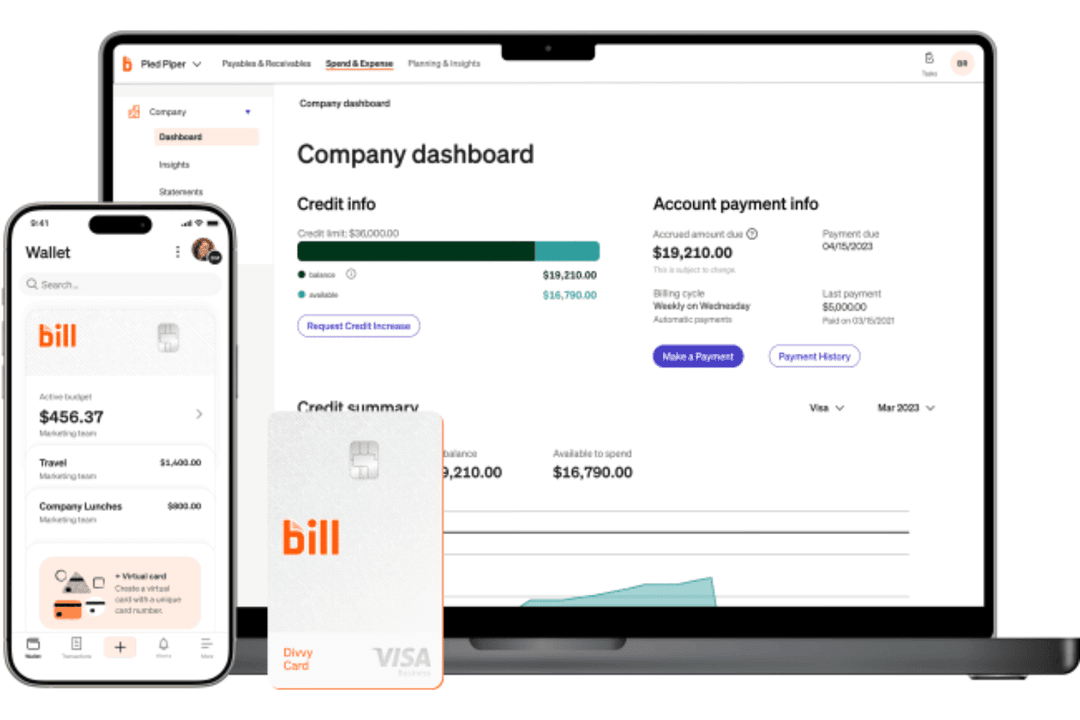
Die Unterschiede liegen im jeweiligen Fokus. BILL ist stärker auf Finanzoperationen ausgerichtet, bietet umfassendere Automatisierungen für Kreditoren- und Debitorenbuchhaltung, tiefere Workflows für Rechnungen und Lieferantenzahlungen sowie zentrale Steuerungsmöglichkeiten für die Buchhaltungs- und Finanzteams. Darüber hinaus geht BILL über traditionelle AP-Software hinaus mit BILL Spend & Expense und der BILL Divvy Card, die Firmenkarten, virtuelle Karten, Budgetkontrollen, Prämien und Echtzeit-Transparenz über Ausgaben in einheitliche Finanzworkflows integriert.
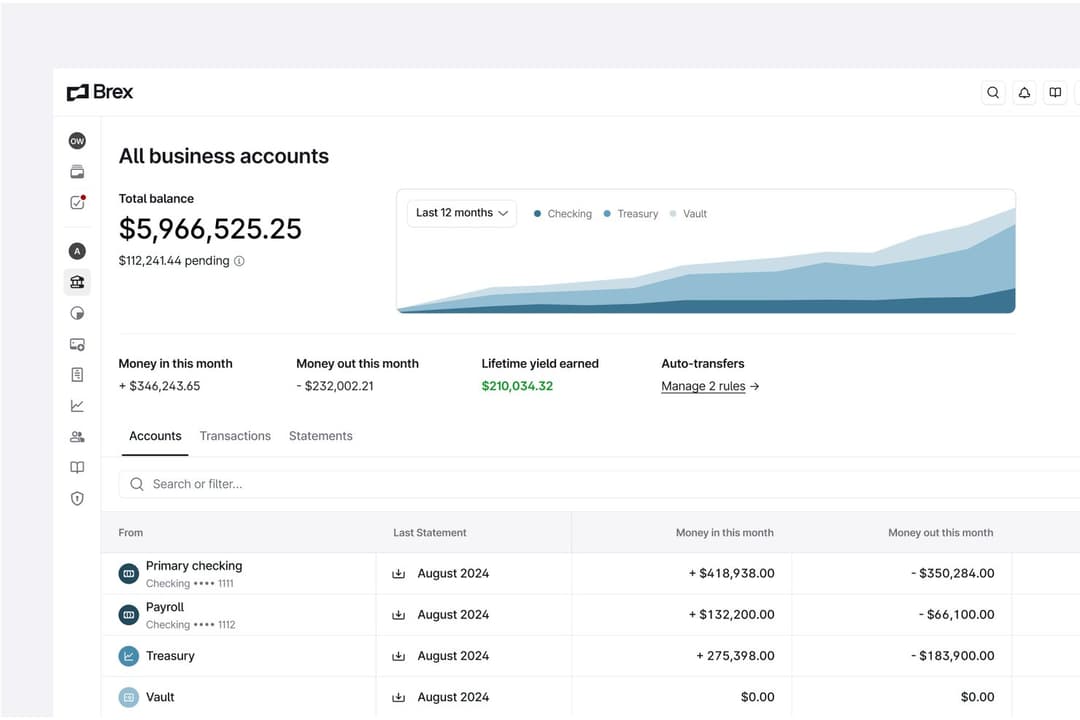
Brex hingegen konzentriert sich stärker auf Mitarbeiterausgaben, indem Firmenkarten, Ausgabenmanagement, Reisen, Rückerstattungen, Geschäftskonten und Live Budgets auf einer Plattform kombiniert werden, die schnell agierenden und global verteilten Teams mehr Geschwindigkeit und Flexibilität beim Ausgabenmanagement bietet.
| BILL | Brex | |
|---|---|---|
| 2-Factor Authentication | Yes | No |
| Accounts Payable | Yes | Yes |
| Accounts Receivable | Yes | Yes |
| API | Yes | Yes |
| Balance Sheet | No | No |
| Billing/Invoicing | Yes | Yes |
| BitCoin | No | No |
| Budgeting | Yes | Yes |
| Calendar Management | No | No |
| Contact Management | No | Yes |
| CRM Integration | No | Yes |
| Customer Management | No | Yes |
| Dashboard | Yes | Yes |
| Data Export | Yes | Yes |
| Data Import | Yes | Yes |
| Data Visualization | Yes | Yes |
| Expense Tracking | Yes | Yes |
| External Integrations | Yes | Yes |
| Forecasting | Yes | Yes |
| General Account Ledger | No | No |
| Inventory Tracking | No | No |
| Multi-Currency | Yes | No |
| Multi-User | Yes | Yes |
| Notifications | Yes | Yes |
| P&L | No | No |
| PayPal | Yes | No |
| Payroll | No | No |
| SAP Integration | No | No |
| Stripe | No | No |
| Supplier Management | Yes | Yes |
| Tax Management | Yes | Yes |
| Integration | BILL | Brex |
|---|---|---|
| IntegrationQuickBooks Online | BILL✅ | Brex✅ |
| IntegrationNetSuite | BILL✅ | Brex✅ |
| IntegrationXero | BILL✅ | Brex✅ |
| IntegrationSage Intacct | BILL✅ | Brex✅ |
| IntegrationMicrosoft Dynamics 365 | BILL✅ | Brex✅ |
| IntegrationExpensify | BILL❌ | Brex✅ |
| IntegrationGusto | BILL✅ | Brex✅ |
| IntegrationRippling | BILL❌ | Brex✅ |
| IntegrationAPI | BILL✅ | Brex✅ |
| IntegrationZapier | BILL❌ | Brex✅ |
Sowohl BILL als auch Brex integrieren sich mit wichtigen Buchhaltungs- und ERP-Systemen und ermöglichen Finanzteams eine verlässliche Synchronisierung über Plattformen wie QuickBooks, NetSuite, Xero, Sage Intacct und Microsoft Dynamics 365 hinweg. Der größte Unterschied ist die Bandbreite: Brex bietet ein breiteres Ökosystem an Integrationen über HRIS-, Automatisierungs- und ausgabenbezogene Tools wie Expensify, Rippling und Zapier, während sich BILL stärker auf Finanz- und Buchhaltungsworkflows konzentriert.
| Faktor | BILL | Brex |
|---|---|---|
| FaktorDatenverschlüsselung | BILLVerwendet Verschlüsselung und sichere Übertragungsprotokolle zum Schutz finanzieller Daten. | BrexVerwendet AES-256-Verschlüsselung im Ruhezustand und TLS 1.2+ während der Übertragung. |
| FaktorRegulatorische Compliance | BILLSOC 1, SOC 2 Typ II und PCI-DSS konform. | BrexSOC 1 Typ II, SOC 2 Typ II und PCI-DSS konform. |
| FaktorMulti-Faktor-Authentifizierung | BILLUnterstützt MFA und rollenbasierte Nutzerberechtigungen. | BrexUnterstützt MFA, SSO, SCIM-Provisionierung und individuelle Rollen. |
| FaktorVerfügbarkeit & Zuverlässigkeit | BILLBietet Echtzeit-Zahlungsverfolgung und operatives Monitoring. | BrexÖffentlicher Statusbereich mit veröffentlichter Verfügbarkeitschronik und Störungsmeldung. |
| FaktorBetrugserkennung | BILLEnthält Audit-Trails, Freigabekontrollen und Zahlungsüberwachung. | BrexBietet Echtzeit-Betrugsüberwachung, Geräteverifizierung und KI-gestützten Schutz. |
Sowohl BILL als auch Brex bieten starke Sicherheitsgrundlagen mit Verschlüsselung, Compliance-Zertifizierungen, Auditing-Kontrollen und rollenbasierter Zugriffsverwaltung. BILL punktet besonders mit finanzspezifischen Kontrollen wie Freigabeverfolgung, Audit-Trails und Zahlungsaufsicht, während Brex mehr Funktionen für Enterprise Identity Management, operative Transparenz und Echtzeit-Betrugsüberwachung bereitstellt.
| Faktor | BILL | Brex |
|---|---|---|
| FaktorBenutzeroberfläche | BILLÜbersichtliche Dashboards und auf Finanzen ausgerichtete Workflows, entwickelt für die Verwaltung von Kreditoren- und Debitorenbuchhaltung. | BrexModerne, intuitive Benutzeroberfläche, optimiert für Karten, Ausgaben und Workflows rund um Mitarbeiterausgaben. |
| FaktorOnboarding | BILLEinfach für kleine und mittlere Unternehmen, aber komplexe ERP- oder Multi-Entity-Setups erfordern mehr Konfiguration. | BrexSchnelles Onboarding für kleine Teams, mit strukturierterem Setup für Unternehmenseinsätze. |
| FaktorAufgabenautomatisierung | BILLStarke Automatisierung von Kreditoren und Debitoren für Rechnungen, Freigaben, Zahlungen und Abstimmungsprozesse. | BrexKraftvolle Automatisierung der Ausgaben für Karten, Erstattungen, Richtlinien, Budgets und Spesenabrechnungen. |
| FaktorSupport | BILLBietet Live-Chat, telefonischen Support, Onboarding-Sitzungen und Ressourcen im Hilfe-Center. | BrexBietet 24/7-Multichannel-Support mit VIP- und Enterprise-Support-Stufen. |
| FaktorLernkurve | BILLKernworkflows sind leicht erlernbar, aber fortgeschrittene Finanzkonfigurationen benötigen mehr Einrichtung. | BrexIm Allgemeinen für Mitarbeitende und Manager leichter anwendbar, mit nur minimalem Schulungsbedarf. |
Brex wirkt zugänglicher für Unternehmen, die Wert auf Mitarbeiterausgabenmanagement, Firmenkarten und schnelle, tägliche Nutzbarkeit legen. BILL hingegen ist stärker auf Finanzprozesse fokussiert, mit tieferen Kreditoren- und Debitoren-Workflows, die zwar länger für eine vollständige Einrichtung benötigen, aber nach Implementierung umfassendere Buchhaltungs- und Zahlungskontrollen ermöglichen.
BILL
- Built for finance and accounting teams managing AP, AR, spend controls, and payment operations at scale.
- Combines approvals, payments, invoicing, expense management, and corporate cards in one centralized financial workflow.
- Strong accounting integrations streamline AP and AR financial workflows.
- ERP syncs sometimes require manual troubleshooting or cleanup.
- Reporting customization feels limited for complex organizational requirements.
- Transaction and international payment fees can be higher than others.
Brex
- Strong AI automation streamlines expense tracking, approvals, and invoice processing.
- Real-time budgeting and reporting improve financial visibility and spending control.
- Extensive integrations support seamless workflows across finance and HR systems.
- International transactions may incur costly foreign exchange markup fees.
- Not ideal for sole proprietors and many international-only businesses.
- Brex's approval workflow can be frustrating for larger teams.
BILL
- Midsize BusinessesBILL’s automation and approval workflows help growing companies scale financial operations without adopting a full ERP system.
- Accounting & Finance TeamsDeep accounting integrations and centralized workflows simplify reconciliations, approvals, and month-end financial management.
- NonprofitsAudit trails, approval controls, and digital payment workflows support stronger financial accountability and compliance oversight.
- Multi-Entity OrganizationsCentralized controls and shared workflows help finance teams manage subsidiaries, locations, or multiple business units more efficiently.
- Professional Service FirmsRecurring vendor payments, invoice management, and streamlined approvals help service-based businesses reduce administrative overhead.
- Businesses with Complex Approval WorkflowsCustom approval routing and role-based permissions improve oversight for organizations with layered financial approval structures.
Brex
- Tech StartupsBrex helps fast-growing startups manage corporate cards, approvals, budgets, and reimbursements within one scalable platform.
- Global and Multi-Entity BusinessesBrex supports local-currency cards, reimbursements, and multi-entity spend management for internationally distributed companies.
- Finance TeamsAI-powered automation, ERP integrations, and real-time reporting help finance teams streamline expense and bill workflows.
- Remote WorkforcesMobile expense management and virtual cards simplify spending controls for employees working across multiple locations.
- Companies Seeking Unified Financial OperationsBrex combines cards, expense management, bill pay, travel, and reporting within one centralized finance platform.
- Scaling Mid-Market CompaniesAdvanced approvals, policy controls, and live budgets help growing businesses manage increasingly complex financial operations.
Wer sollte BILL nutzen und wer sollte Brex nutzen?
BILL ist die bessere Wahl für Finanz- und Buchhaltungsteams, die eine starke Kontrolle über Kreditoren, Debitoren, Ausgabenmanagement und Zahlungsprozesse auf einer zentralen Plattform haben wollen. Ich finde, es eignet sich besonders gut für wachsende Unternehmen, Non-Profits und Organisationen mit mehreren Einheiten, die strukturierte Freigabeworkflows, Synchronisierung der Buchhaltung, Lieferantenmanagement, Ausgabenüberwachung und bessere Transparenz beim Unternehmensausgaben benötigen. Wenn Ihre Prioritäten in der Automatisierung von Finanzprozessen liegen, bei gleichzeitiger Einhaltung strengerer Buchhaltungs- und Compliance-Kontrollen, ist BILL die stärkere Wahl.
Brex ist die bessere Option für Unternehmen, die eine stärker mitarbeiterzentrierte Ausgabenplattform suchen, die auf Firmenkarten, Erstattungen, Reisen, Budgetierung und Echtzeit-Ausgabenkontrollen ausgelegt ist. Meiner Erfahrung nach ist Brex besonders geeignet für Startups, wachsende Unternehmen und global verteilte Teams, die möchten, dass Mitarbeitende schnell agieren können, während das Finanzteam mit Richtlinien, Live-Budgets und Automatisierung die Kontrolle behält. Teams, die eine sehr moderne Oberfläche mit umfangreichen Funktionen für Reisen, Karten und Budgetierung suchen, werden wahrscheinlich mehr Nutzen aus Brex ziehen.
| BILL | Brex | |
|---|---|---|
| Accounts Receivable | BILL Built-in AR workflows for invoicing and receivables management. | Brex More focused on spend controls than dedicated AR automation. |
| Core Focus | BILL AP, AR, spend management, and financial operations automation. | Brex Corporate cards, spend management, travel, and employee expense workflows. |
| Global Capabilities | BILL Supports payments across 130+ countries with local-currency transfers, international payment workflows, and multi-entity financial controls. | Brex More focus on global employee spend management and localized controls rather than finance-operations-focused payments and multi-entity governance. |
| Rewards & Perks | BILL Balances operational controls with rewards programs, cash-back incentives, and card-based payment workflows designed to improve cash flow management. | Brex Places greater emphasis on employee spend perks, travel rewards, partner discounts, and card incentives rather than finance-operations-focused cash flow management and AP controls. |
| Travel Management | BILL Offers integrated travel management through BILL Travel, including booking, policy controls, travel budgets, receipt syncing, and centralized expense reporting tied closely to AP and spend workflows. | Brex Provides a more travel-centric experience with integrated booking, travel policies, employee reimbursements, global card support, and spend controls designed for fast-moving and distributed teams. |
| Automated Workflows | Both automate approvals, payments, expense processes, and repetitive finance workflows. |
|---|---|
| Corporate Card Support | Both offer corporate card capabilities tied to spend controls and policy management. |
| Mobile Accessibility | Both offer mobile-friendly experiences for approvals, expense tracking, and spend management. |
| Multi-Level Approvals | Both support customizable approval chains for stronger financial oversight and compliance. |
| Real-Time Visibility | Both provide centralized dashboards for monitoring spend, payments, and financial activity. |