

Zendesk Sell im Test: Vorteile, Nachteile, Funktionen und Preise erklärt
Zendesk Sell überzeugt mit seinen intuitiven CRM-Tools, doch wer umfangreiche Buchhaltungsfunktionen benötigt, könnte diese im Vergleich zu spezialisierten Lösungen vermissen.

Wir bewerten Tools unabhängig; Provisionen helfen, unsere Tests zu finanzieren. Siehe unsere Transparenzrichtlinie und unsere Methodik.
Zendesk Sell is an accounting CRM designed for sales teams that need pipeline visibility, contact management, and deal tracking without a heavy implementation. I'd look at it if your team is already running Zendesk for customer support and wants sales data tied directly to that customer history. That's where it pulls ahead of HubSpot CRM, which requires more configuration to connect support interactions and sales activity in the same view.
Zendesk Sell Evaluation Summary
4.4/5
- From $19/user/month (billed annually)
- 14-day free trial
Warum Sie unseren Software-Empfehlungen vertrauen können
6,700+
Reviews
20
Industry experts
16+
Evaluation factors
14
Years
Unsere Bewertungen spiegeln unser unabhängiges Urteilsvermögen wider – keine Verkaufsstrategie. Erfahren Sie, wie wir transparent bleiben.
Für diesen Leitfaden haben wir Tools mithilfe von praktischen Tests und unabhängiger Recherche bewertet und dabei unsere Bewertungskriterien angewendet.
Unsere Bewertungen spiegeln unser menschliches redaktionelles Urteilsvermögen wider, keine Verkaufsstrategie.
Zendesk Sell Overview
When judging Zendesk Sell as accounting CRM software, I think its clean interface and easy onboarding make it a top pick for teams new to CRM tools. The customizable sales pipelines and strong integration options help finance teams connect customer data across platforms. Pricing is competitive, and support is responsive, but you might notice fewer advanced accounting features than some alternatives. If you're selecting a CRM for a mid-sized business that values usability and quick setup over deep accounting automation, Zendesk Sell is a smart choice. For example, its reporting tools are straightforward, but may not satisfy complex accounting needs.
Pros
- Clean, intuitive interface for managing sales pipelines
- Strong alignment between sales and support teams
- Mobile app supports on-the-go deal management
Cons
- Lacks advanced accounting and invoicing features
- Reporting tools are basic for complex finance needs
- Limited customization for accounting-specific workflows
Is Zendesk Sell Right For Your Needs?
Who Would be a Good Fit for Zendesk Sell?
Zendesk Sell is a good fit for teams that want a straightforward CRM to manage sales and client relationships without needing deep accounting automation. Its clean interface, mobile app, and strong sales-support alignment make it ideal for service-driven businesses, smaller finance teams, and small businesses that value quick onboarding. If your business needs to track deals, manage contacts, and collaborate between sales and finance, Zendesk Sell's feature set is likely to meet your needs across the entire sales process.
- Small Accounting FirmsZendesk Sell helps manage client pipelines and communications efficiently.
- Professional ServicesThe platform supports tracking client projects and sales activities.
- SaaS StartupsQuick onboarding and mobile access suit fast-moving teams.
- Sales DepartmentsSales pipeline tools and reporting keep team members organized and on target.
- Consulting AgenciesEasy collaboration between sales and support improves client handoffs.
- Real Estate TeamsContact management and deal tracking fit property sales cycles.
Who Would be a Bad Fit for Zendesk Sell?
Zendesk Sell is not the best choice for organizations that need advanced accounting features, deep financial reporting, or highly customized workflows. Large enterprises that require advanced analytics, finance-heavy industries, and teams with complex compliance needs may find its accounting capabilities too limited. If your business relies on detailed invoicing, multi-entity management, or granular financial analytics, you'll likely need a more specialized accounting CRM.
- Large EnterprisesZendesk Sell lacks advanced accounting and multi-entity support.
- Manufacturing CompaniesComplex inventory and order management are not supported.
- Nonprofit OrganizationsGrant tracking and donation management features are missing.
- Finance DepartmentsAdvanced reporting and accounting integrations are limited.
- E-commerce BusinessesNo built-in tools for order or payment processing.
- Healthcare ProvidersDoes not offer compliance or patient billing features.
Wie wir Tools testen und bewerten
Wir haben jahrelang daran gearbeitet, unser System zur Softwarebewertung zu entwickeln, zu verfeinern und stetig zu verbessern. Der Bewertungsleitfaden wurde entworfen, um die Feinheiten der Softwareauswahl und die Qualitätskriterien eines effektiven Tools präzise zu erfassen, mit Fokus auf entscheidende Aspekte im Auswahlprozess. Im Folgenden sehen Sie genau, wie unsere Prüfungen und Bewertungen nach sieben Kriterien funktioniert. So können wir eine objektive Bewertung der Software auf Grundlage der Kernfunktionalitäten, herausragenden Eigenschaften, Benutzerfreundlichkeit, Einführung, Kundensupport, Integrationen, Kundenbewertungen sowie Preis-Leistungs-Verhältnis bieten.
Kernfunktionalität (25 % der Gesamtbewertung)
Der Ausgangspunkt unserer Bewertung ist immer die Kernfunktionalität des Tools. Verfügt es über die grundlegenden Features und Funktionen, die ein Nutzer erwarten würde? Sind einige dieser Kernfunktionen auf höherpreisige Tarife beschränkt? Im Kern erwarten wir, dass ein Tool mit den Basisfunktionen seiner Wettbewerber mithalten kann.
Herausragende Funktionen (25 % der Gesamtbewertung)
Im nächsten Schritt bewerten wir ungewöhnliche, herausragende Funktionen, die über die üblichen Kernfunktionen vergleichbarer Tools hinausgehen. Eine hohe Punktzahl erhält, wer spezialisierte oder einzigartige Funktionen bietet, die das Produkt schneller, effizienter oder besonders wertvoll für den Nutzer machen. Wir prüfen auch, wie einfach sich das Tool mit anderen Programmen des typischen Tech-Stacks integrieren lässt, um den Funktionsumfang und die Nützlichkeit der Software zu erweitern. Vielseitige native Integrationen, Drittanbieter-Anbindungen sowie API-Zugänge für individuelle Integrationen schneiden am besten ab.
Benutzerfreundlichkeit (10 % der Gesamtbewertung)
Wir bewerten, wie schnell und einfach sich die wichtigsten Aufgaben im Tool erledigen lassen. Hoch bewertete Software ist gut gestaltet, intuitiv bedienbar, bietet mobile Apps, Vorlagen und macht selbst komplexere Aufgaben handhabbar.
Einführung (10 % der Gesamtbewertung)
Wir wissen, wie wichtig eine rasche Teamakzeptanz bei neuen Plattformen ist. Deshalb prüfen wir, wie einfach sich ein Tool mit minimalem Trainingsaufwand erlernen und bedienen lässt. Wir bewerten auch, wie schnell ein Teammitglied ohne vorherige Erfahrung startklar ist. Hoch bewertete Lösungen benötigen wenig oder gar keinen Support.
Kundensupport (10 % der Gesamtbewertung)
Wir prüfen, wie leicht und schnell Sie mit Telefon, Live-Chat oder Wissensdatenbank Hilfe erhalten können. Tools und Unternehmen, die Echtzeit-Support bieten, erzielen die besten Ergebnisse, während Chatbots am schlechtesten abschneiden.
Kundenbewertungen (10 % der Gesamtbewertung)
Neben unseren eigenen Tests berücksichtigen wir den Net-Promoter-Score aktueller und ehemaliger Kunden. Wir prüfen, wie wahrscheinlich sie sich erneut für das Tool entscheiden würden, basierend auf der Kernfunktionalität. Hoch bewertete Software spiegelt einen hohen Net-Promoter-Score wider.
Preis-Leistungs-Verhältnis (10 % der Gesamtbewertung)
Abschließend vergleichen wir alle Kriterien und bewerten den Durchschnittspreis der Einstiegstarife im Verhältnis zu den Kernfunktionen und dem Nutzen der weiteren Bewertungskriterien. Software, die mehr für weniger bietet, erhält die besten Bewertungen.
Core Features
Sales Pipeline Management
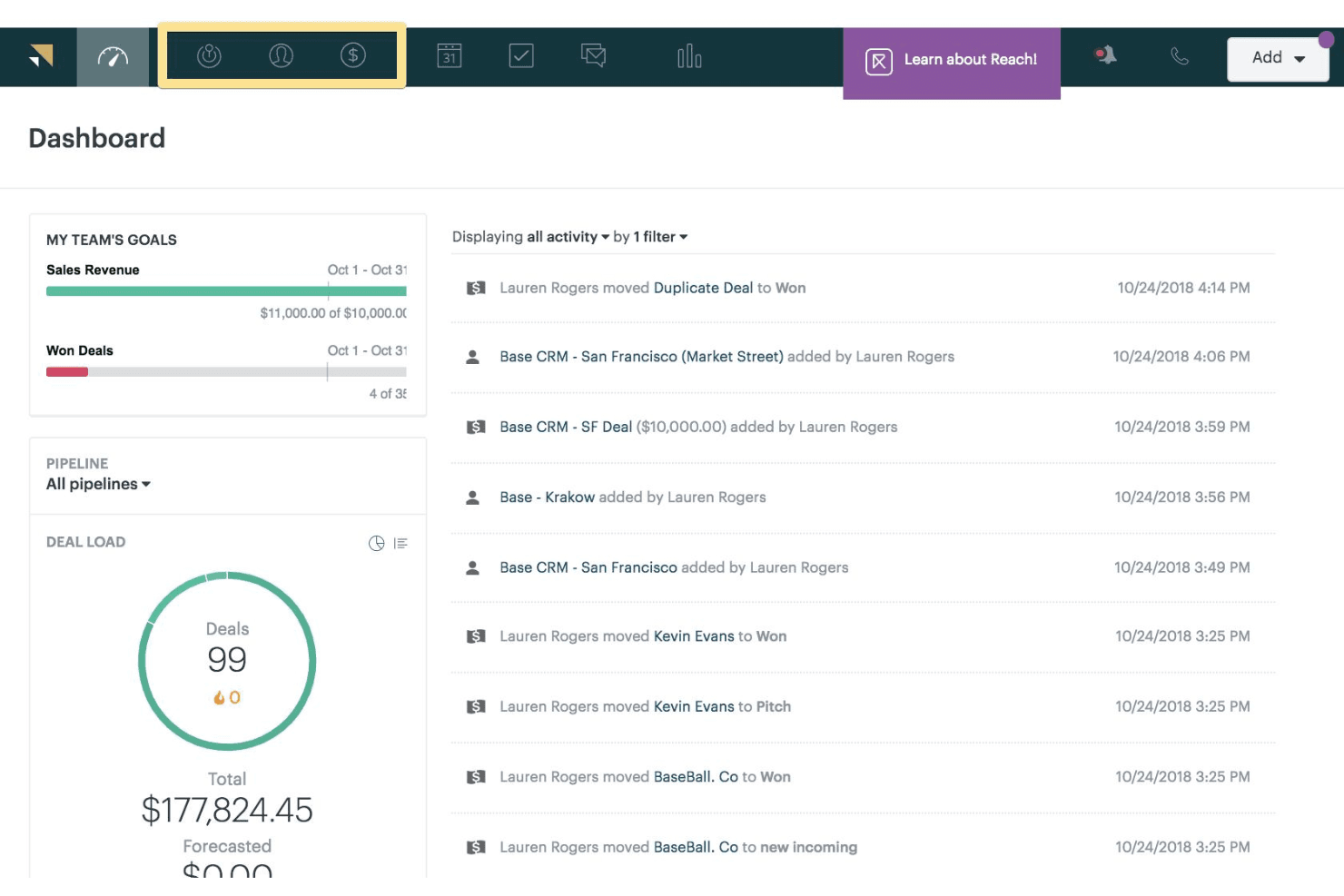
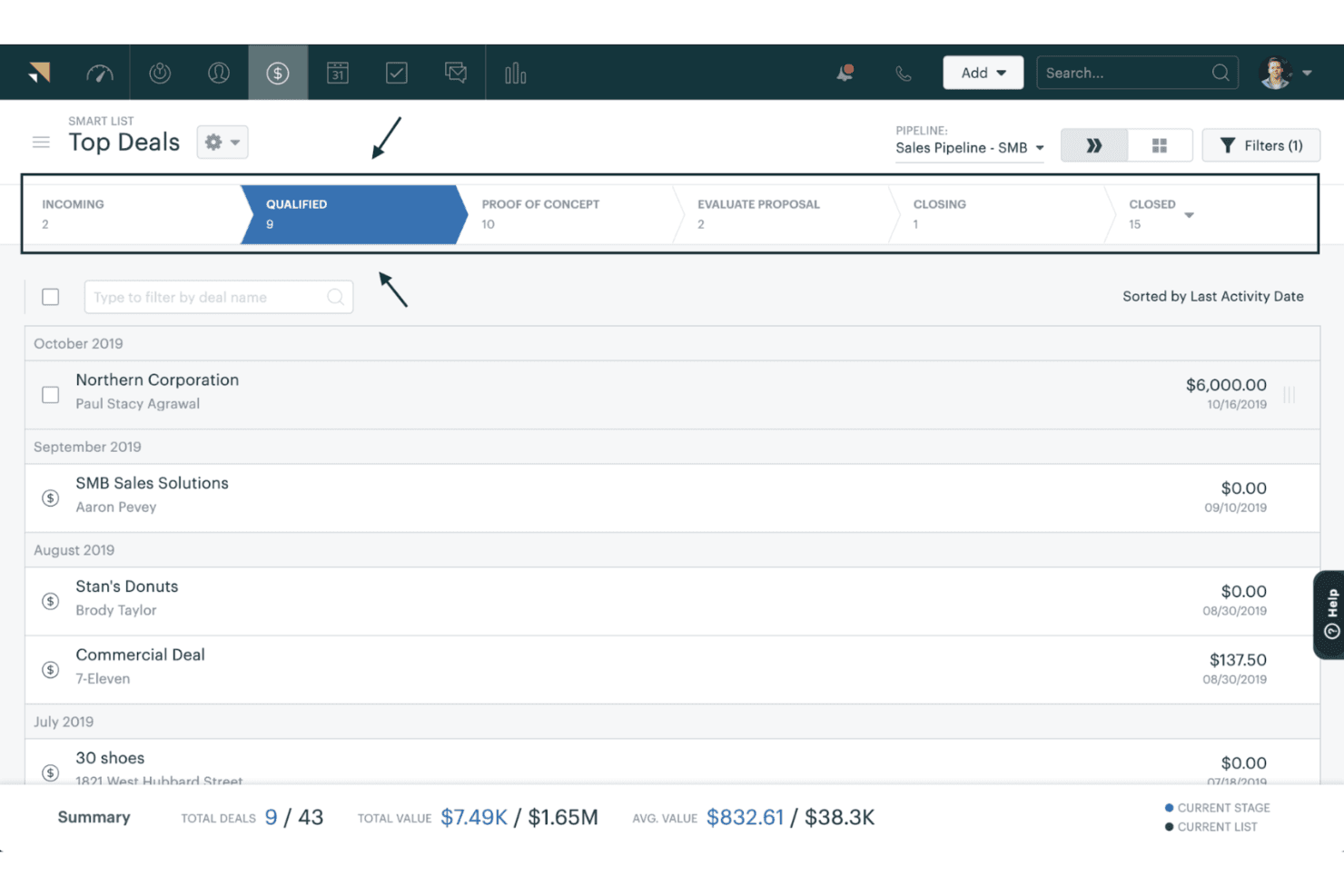
Track deals through customizable stages with drag-and-drop controls and visualizes progress in real-time. Teams get clear pipeline visibility to prioritize leads and forecast revenue.
Contact and Account Management
Store, organize, and update customer data in one centralized workspace. Users access full communication history and key account details instantly, with support for custom fields.
Task and Activity Tracking
Assign, schedule, and monitor tasks tied to deals and clients across the sales process. Automated notifications keep team members on top of follow-ups and deadlines without manual effort.
Reporting and Analytics
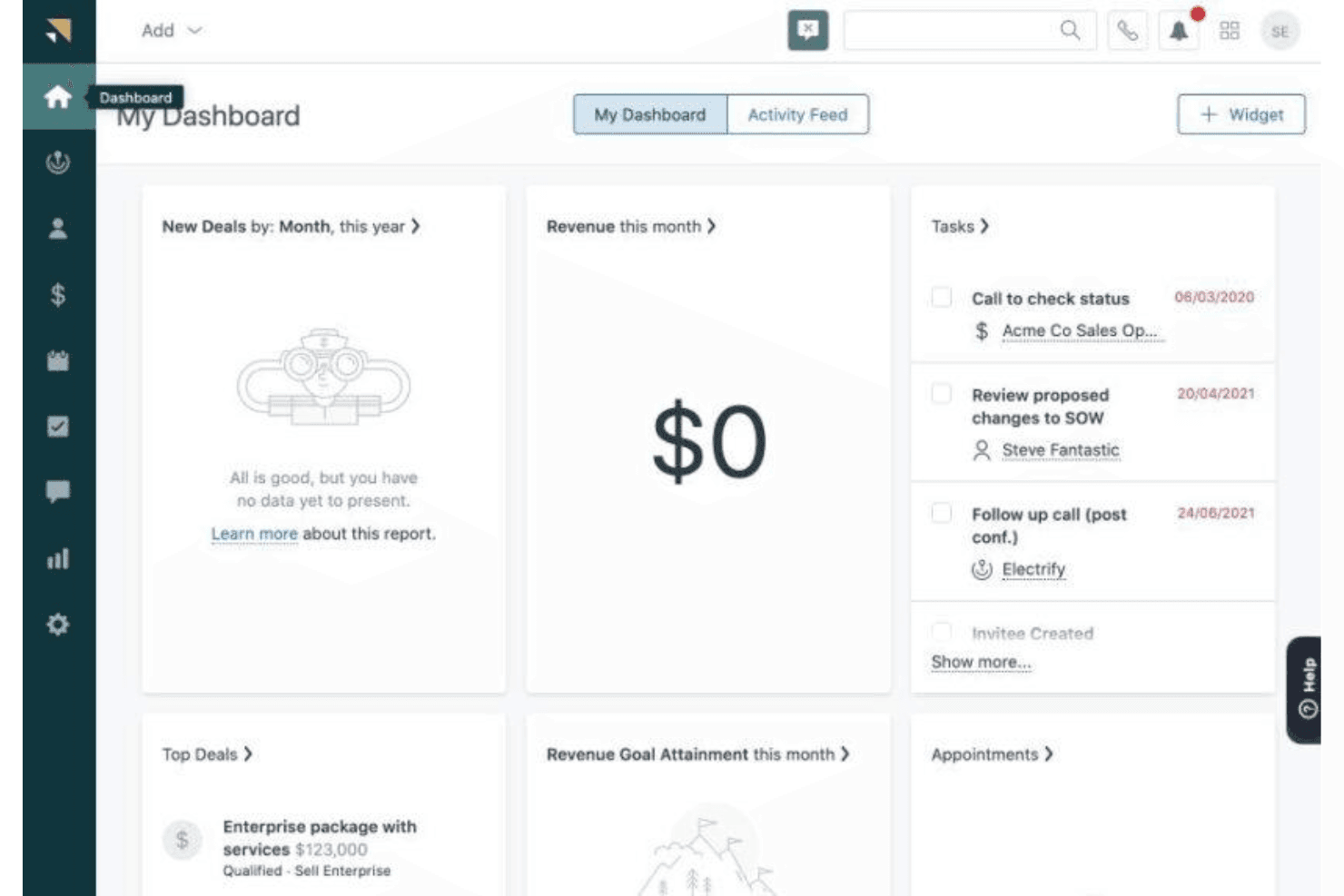
Generate sales reports and dashboards to monitor key metrics in real-time. The system surfaces insights into pipeline health and team productivity for smarter sales management.
Mobile CRM App
Access customer data, update deals, and log activities from anywhere via the mobile app. The app supports field-based sales reps and remote work scenarios with equal reliability.
Email Integration and Tracking
Send, receive, and track emails—including Outlook—directly within the CRM. Users can see when clients open messages and link all customer interactions to the right deals.
Ease of Use
Zendesk Sell is one of the most user-friendly accounting CRM software options I've seen. The interface is clean, navigation is straightforward, and onboarding is quick—even for teams new to CRM tools. Users often mention how easy it is to manage contacts, track deals, and generate reports without extra training. The drag-and-drop pipeline builder, mobile app, and in-app guidance also help teams stay productive, making it a strong choice for small businesses and larger organizations alike that want simplicity and speed.
Integrations
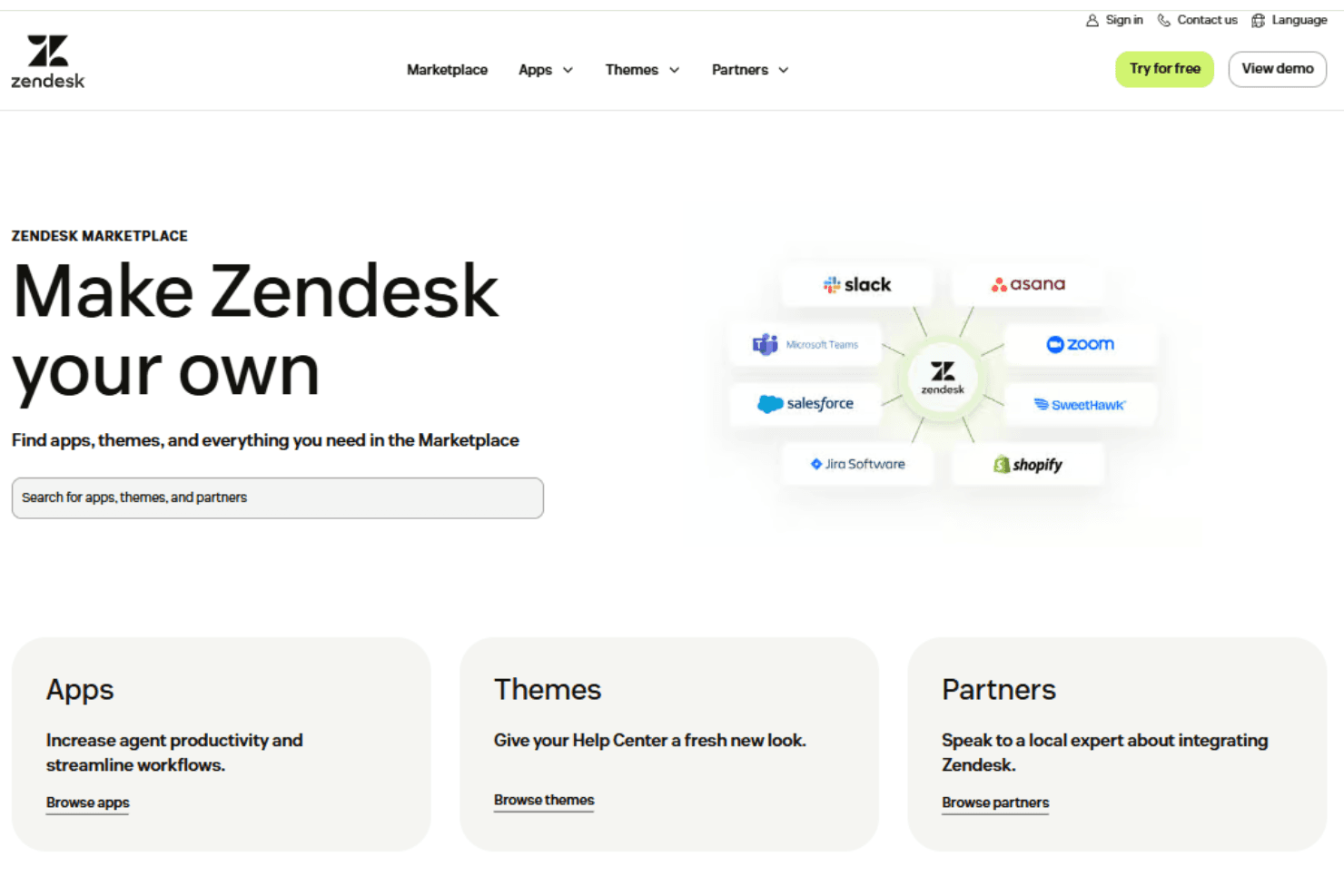
Zendesk Sell integrates with HubSpot, Salesforce, Pipedrive, Zoho CRM, Slack, Shopify, and Zapier, among others.
Zendesk Sell also offers a robust API and connects with third-party integration tools—for expanded functionality across email marketing, social media management, and more.
Zendesk Sell Specs
- 2-Factor Authentication: Yes
- API: Yes
- Calendar Management: Yes
- Call Tracking: Yes
- Campaign Management: Yes
- Click-to-Dial: Yes
- Contact Management: Yes
- Contact Sharing: Yes
- Custom Data Forms: Yes
- Customer Management: Yes
- Dashboard: Yes
- Data Export: Yes
- Data Import: Yes
- Data Visualization: Yes
- Email Integration: Yes
- External Integrations: Yes
- File Sharing: Yes
- File Transfer: Yes
- Google Apps Integration: Yes
- Lead Management: Yes
- Lead Scoring: Yes
- Marketing Automation: Yes
- Mobile App: Yes
- Multi-User: Yes
- Notifications: Yes
- Pipeline Management: Yes
- Sales Automation: Yes
- Scheduling: Yes
- Social-Media Integration: Yes
- Task Scheduling/Tracking: Yes
- Third-Party Plugins/Add-Ons: Yes


