

Avis Stax : Avantages, Inconvénients, Fonctionnalités et Tarifs Expliqués
Stax se distingue par sa tarification transparente et ses fonctionnalités complètes, en faisant un excellent choix pour les petites entreprises à la recherche d'une solution de paiement évolutive et rentable.

Nous évaluons les outils indépendamment ; les commissions aident à financer nos tests. Consultez notre politique de transparence et notre méthodologie.
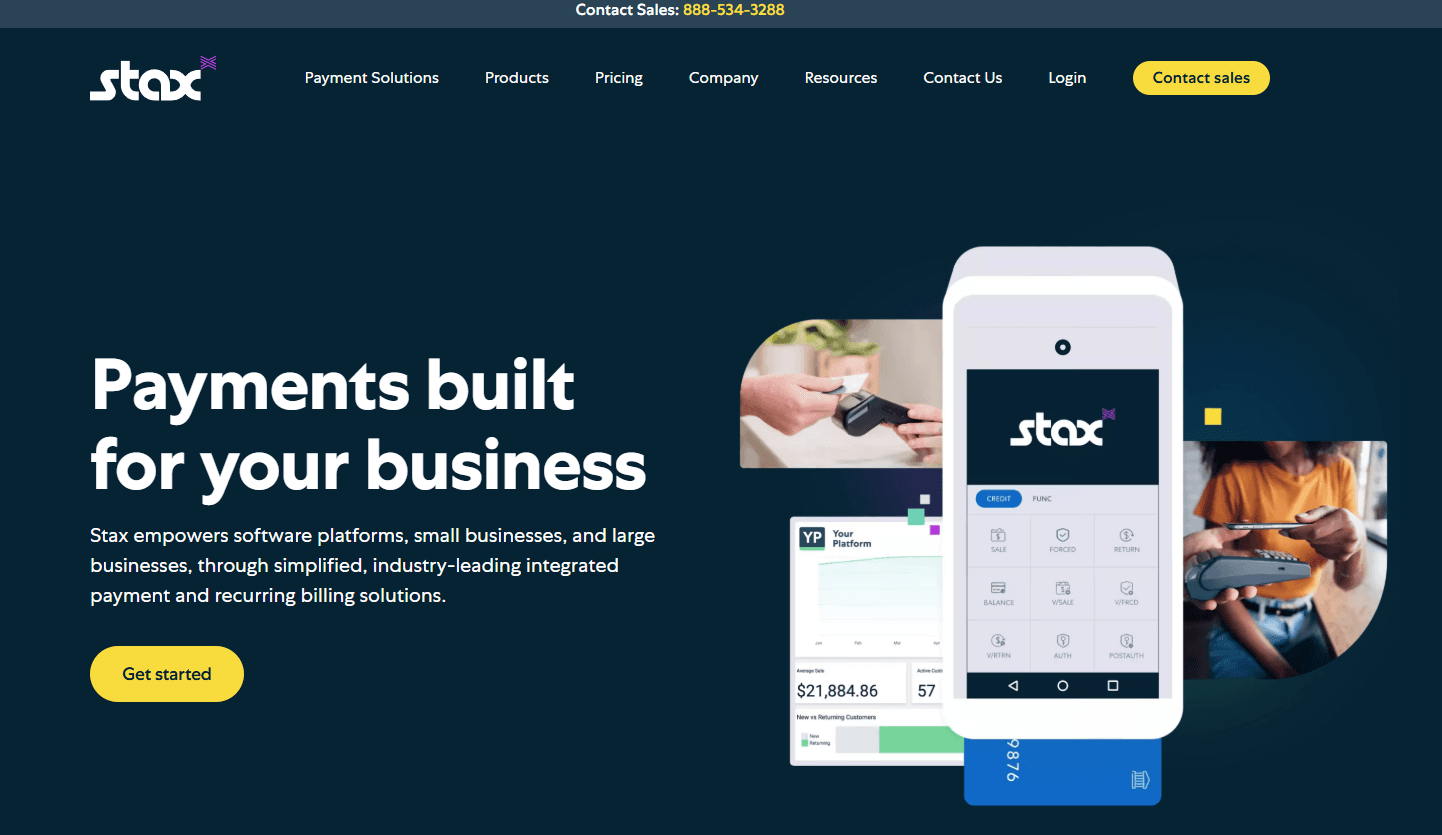
Stax is a payment solution for small businesses built on a subscription pricing model. You pay a flat monthly fee plus interchange costs instead of a percentage of every transaction. Compared to Square, Stax tends to cost less as your sales volume grows, since Square's per-transaction fees compound quickly. I'd consider it most seriously if your business processes a high volume of card payments each month and you want more predictable, lower per-transaction costs as revenue scales.
Stax Evaluation Summary
4.2/5
- Pricing upon request
- Free quote available
Pourquoi faire confiance à nos recommandations de logiciels
6,700+
Reviews
20
Industry experts
16+
Evaluation factors
14
Years
Nos avis reflètent notre jugement indépendant — et non un argumentaire de vente. Découvrez comment nous restons transparents.
Pour ce guide, nous avons évalué les outils grâce à des tests pratiques et une recherche indépendante, en notant les outils selon nos critères de sélection.
Nos avis reflètent notre jugement éditorial humain, et non un argumentaire de vente.
Stax Overview
If you're judging Stax against other payment processors for small businesses, its flat-rate subscription pricing and detailed analytics dashboard set it apart — especially for business owners managing higher monthly volumes. The interface is clean, onboarding is straightforward, and integrations cover most accounting and e-commerce needs. Support is responsive, though some advanced features require extra setup. Stax is best for teams who want predictable costs and value in-depth reporting, but it may not be ideal if you process very low volumes or need highly specialized integrations.
Pros
- Flat-rate subscription pricing with no markup on interchange
- Detailed analytics and reporting included in all plans
- Surcharge program helps offset credit card processing fees
Cons
- Monthly fees are high for low-volume businesses
- Some advanced features require additional setup or cost
- Customer support response times can be inconsistent
Is Stax Right For Your Needs?
Who Would be a Good Fit for Stax?
Stax is a strong choice for businesses that process high transaction volumes, need transparent pricing, and value in-depth analytics. Its flat-rate subscription model and robust reporting tools make it especially appealing for established companies, multi-location retailers, and finance teams who want predictable costs and actionable insights. Stax's surcharge program and support for both in-person and online payments also suit organizations looking to offset processing fees and unify payment methods across channels.
- Multi-Location RetailStax supports centralized reporting and unified payment processing across locations.
- Medical PracticesHIPAA-compliant payment tools and recurring billing fit healthcare needs.
- Professional ServicesDetailed invoicing and analytics help track client payments and revenue.
- Ecommerce StoresIntegrated online payment gateways and analytics support digital sales growth.
- Franchise OperationsCentralized management and reporting simplify oversight for franchise owners.
- Finance DepartmentsAdvanced analytics and export options streamline reconciliation and reporting.
Who Would be a Bad Fit for Stax?
Stax may not be the best option for very small businesses, startups with low transaction volumes, or organizations needing highly specialized integrations. Its monthly fees can outweigh the benefits for low-volume users, and some advanced features require extra setup or cost. Businesses with unique payment needs or limited budgets might find more value in other payment systems.
- MicrobusinessesMonthly fees can outweigh cost savings for very low transaction volumes.
- Early-Stage StartupsStartups with unpredictable revenue may not benefit from flat-rate pricing.
- NonprofitsNonprofits needing donation-specific tools may find Stax lacking.
- RestaurantsLack of restaurant-specific POS system features limits suitability for food service.
- Field Service TeamsMobile payments are present, but industry-specific tools are limited.
- International BusinessesStax primarily supports U.S.-based payments, limiting global reach.
Comment nous testons et évaluons les outils
Nous avons passé des années à construire, affiner et améliorer notre système de test et d’évaluation des logiciels. Notre grille vise à saisir toute la subtilité de la sélection logicielle et les facteurs déterminant l’efficacité d’un outil, en mettant l’accent sur les aspects essentiels du processus de décision. Ci-dessous, vous pouvez voir exactement comment notre test et notre notation fonctionnent selon sept critères. Cela nous permet de fournir une évaluation impartiale des logiciels sur la base des fonctionnalités principales, des fonctionnalités distinctives, de la facilité d’utilisation, de la prise en main, du service client, des intégrations, des avis clients et du rapport qualité/prix.
Fonctionnalité principale (25 % de la note finale)
Le point de départ de notre évaluation est toujours la fonctionnalité principale de l’outil. Dispose-t-il des caractéristiques de base attendues ? Certaines de ces fonctions de base sont-elles réservées aux plans tarifaires supérieurs ? Fondamentalement, nous attendons d’un outil qu’il soit au moins l’égal de ses concurrents en capacités essentielles.
Fonctionnalités Distinctives (25 % de la note finale)
Ensuite, nous évaluons les fonctionnalités rares ou uniques, allant au-delà de la fonctionnalité principale habituellement trouvée dans ce type d’outil. Un score élevé traduit des fonctionnalités spécialisées ou innovantes qui rendent le produit plus rapide, plus efficace, ou apportent une valeur supplémentaire à l’utilisateur. Nous évaluons aussi la facilité d’intégration avec d’autres outils courants de l’écosystème technologique pour étendre les capacités du logiciel. Les outils offrant de nombreuses intégrations natives, des connexions tierces et un accès API pour des intégrations personnalisées obtiennent le meilleur score.
Facilité d’utilisation (10 % de la note finale)
Nous considérons la rapidité et la facilité d’exécution des tâches essentielles avec l’outil. Un logiciel bien conçu, intuitif, proposant des applications mobiles, des modèles et permettant de simplifier des tâches complexes obtient la meilleure note.
Prise en Main (10 % de la note finale)
Nous savons combien il est important d’adopter rapidement une nouvelle plateforme, c’est pourquoi nous évaluons la facilité d’apprentissage et d’utilisation du logiciel avec un minimum de formation. Nous évaluons la rapidité de mise en place d’un nouveau membre d’équipe sans expérience. Un outil ayant un bon score requiert peu voire aucun support pour la prise en main.
Service Client (10 % de la note finale)
Nous évaluons s’il est rapide et facile d’obtenir de l’aide ou de dépanner par téléphone, chat en direct ou base de connaissances. Les outils et entreprises offrant une assistance en temps réel obtiennent le meilleur score, tandis que les chatbots sont moins bien notés.
Avis Clients (10 % de la note finale)
Au-delà de nos propres tests et évaluations, nous prenons en compte le net promoter score fourni par les clients actuels et passés. Nous vérifions leur probabilité de recommander l’outil et d’en refaire le choix pour ses fonctionnalités principales. Un logiciel bien noté se traduit par un net promoter score élevé.
Rapport Qualité/Prix (10 % de la note finale)
Enfin, en tenant compte de tous les autres critères, nous comparons le prix moyen des plans d’entrée de gamme avec les fonctionnalités principales, et le rapport de valeur avec les autres critères d’évaluation. Les logiciels offrant plus pour moins obtiennent la meilleure note.
Core Features
Flat-Rate Subscription Pricing
Stax charges a predictable monthly fee with no markup on interchange or separate compliance fees. This helps business owners forecast costs and avoid additional fees.
Integrated Analytics Dashboard
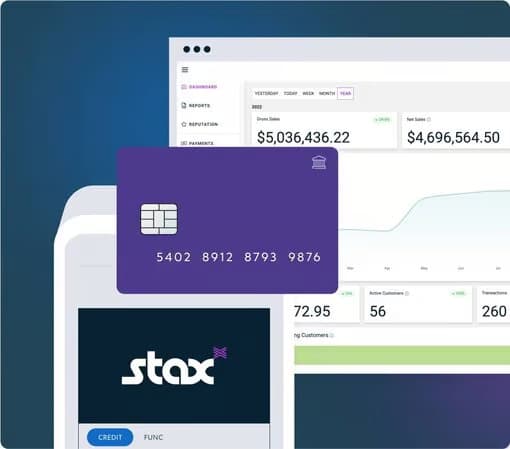
The platform includes real-time reporting and analytics for all transactions. Users can track sales trends and payment activity from a single dashboard.
Automated Recurring Billing
Stax offers tools for setting up and managing recurring payments. Ideal for businesses with membership or retainer models.
Compliant Surcharging Program
Stax enables businesses to pass credit card processing fees to customers legally. This feature helps protect margins without violating regulations.
In-Person and Online Payments
Accept payments via terminals, card reader, or e-commerce checkout. Stax supports both card-present and card-not-present transactions.
Customer Support Access
Stax provides access to real support agents for troubleshooting and onboarding. This ensures users get help with setup and ongoing questions.
Ease of Use
Stax is user-friendly, with a clean dashboard and intuitive navigation that make daily payment tasks straightforward for finance teams. Users often mention that onboarding is quick, and the platform's guided setup helps reduce confusion. The analytics and reporting tools are easy to access and understand, even for non-technical users. While some advanced features require extra setup, most small businesses can get up and running with minimal training or IT support.
Integrations
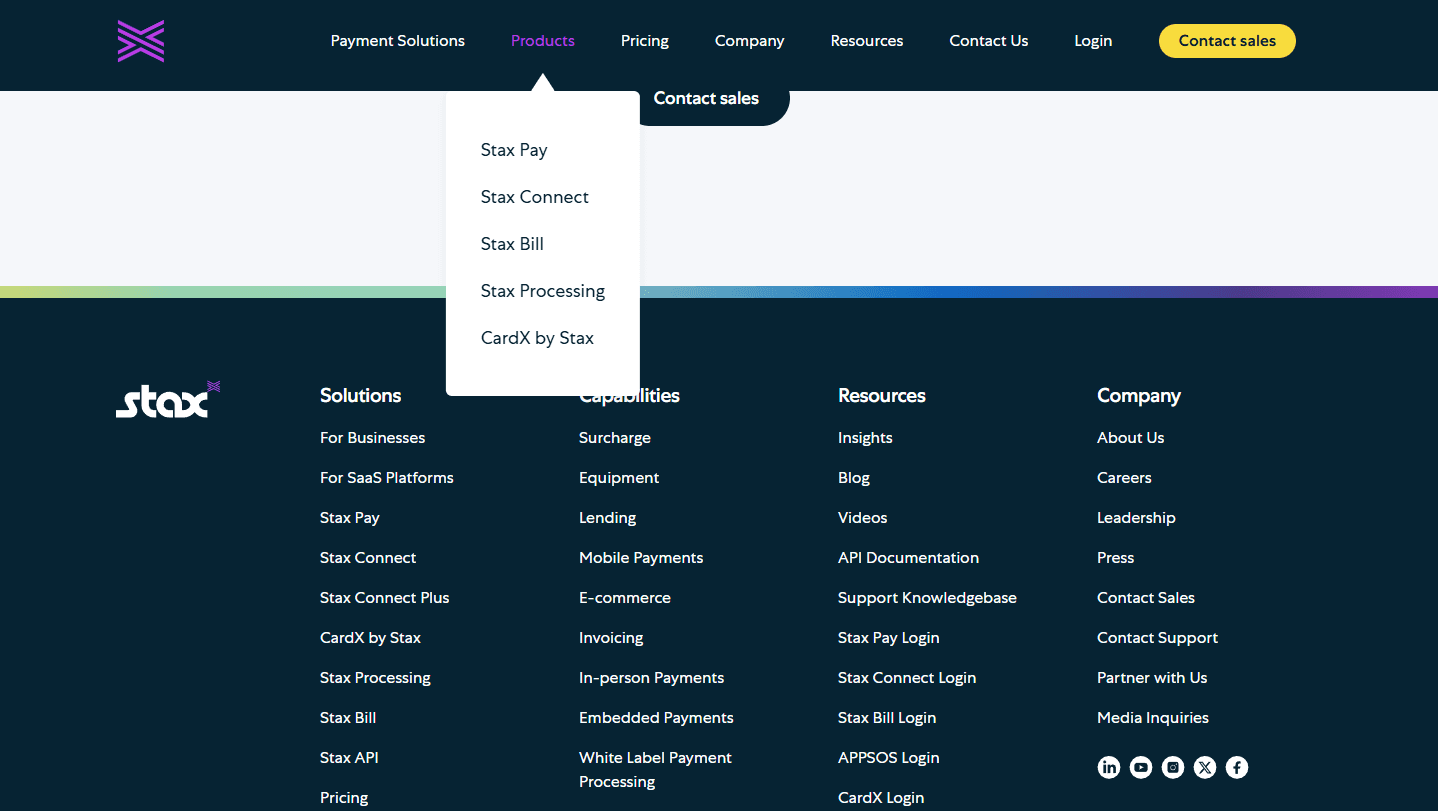
Stax integrates with QuickBooks, WooCommerce, BigCommerce, Magento, Shopify, Zapier, FreshBooks, and WooPOS, among others.
Stax also offers a robust API and connects with third-party integration tools for custom workflows.

Stax Specs
- 2-Factor Authentication: Yes
- Accounts Receivable: Yes
- API: Yes
- Balance Sheet: Yes
- Billing/Invoicing: Yes
- BitCoin: No
- Budgeting: Yes
- Calendar Management: Yes
- Contact Management: Yes
- CRM Integration: Yes
- Customer Management: Yes
- Dashboard: Yes
- Data Export: Yes
- Data Import: Yes
- Data Visualization: Yes
- Expense Tracking: Yes
- External Integrations: Yes
- Forecasting: Yes
- Inventory Tracking: Yes
- Multi-Currency: Yes
- Multi-User: Yes
- Notifications: Yes
- P&L: Yes
- Payment Gateway Integration: No
- Payment Processor: Yes
- PayPal: No
- Payroll: Yes
- SAP Integration: Yes
- Scheduling: Yes
- Stripe: No
- Supplier Management: Yes
- Tax Management: Yes


