
Recensione di Zoho CRM: Pro, Contro, Caratteristiche e Prezzi
Zoho CRM si distingue per i suoi prezzi accessibili e l'integrazione fluida con gli altri prodotti Zoho, rendendolo ideale per i team che utilizzano la suite Zoho.

Recensiamo gli strumenti in modo indipendente e le commissioni aiutano a finanziare i nostri test. Consulta la nostra politica sulla trasparenza, la nostra metodologia, oppure suggerisci uno strumento.
Zoho CRM is an accounting crm built to help finance teams manage client pipelines, track deals, and connect sales activity to accounting workflows. I'd consider it when your team needs a CRM that integrates natively with tools like Zoho Books—without the steep licensing costs and configuration demands that come with Salesforce.
Zoho CRM Evaluation Summary
4.2/5
- From $14/user/month (billed annually)
- 15-day free trial + free plan available
Perché fidarsi dei nostri consigli sui software
6,700+
Reviews
20
Industry experts
16+
Evaluation factors
14
Years
Le nostre recensioni riflettono il nostro giudizio indipendente, non un discorso di vendita. Scopri come manteniamo la trasparenza.
Per questa guida, abbiamo valutato gli strumenti attraverso test pratici e ricerche indipendenti, assegnando un punteggio agli strumenti in base ai nostri criteri di selezione.
Le nostre recensioni riflettono il nostro giudizio editoriale umano, non un discorso di vendita.
Zoho CRM Overview
In my opinion, Zoho CRM is a solid choice for small to medium-sized businesses looking for an affordable accounting CRM system. Its integration with other Zoho tools makes it a good fit for companies already in the Zoho ecosystem. While its core features are competitive, the onboarding process could be smoother, and customer support has room for improvement. Compared to other solutions, Zoho CRM offers great value for money but may not satisfy users needing advanced features or extensive customization. For teams seeking basic CRM functionalities with financial management capabilities, Zoho CRM is worth considering.
Pros
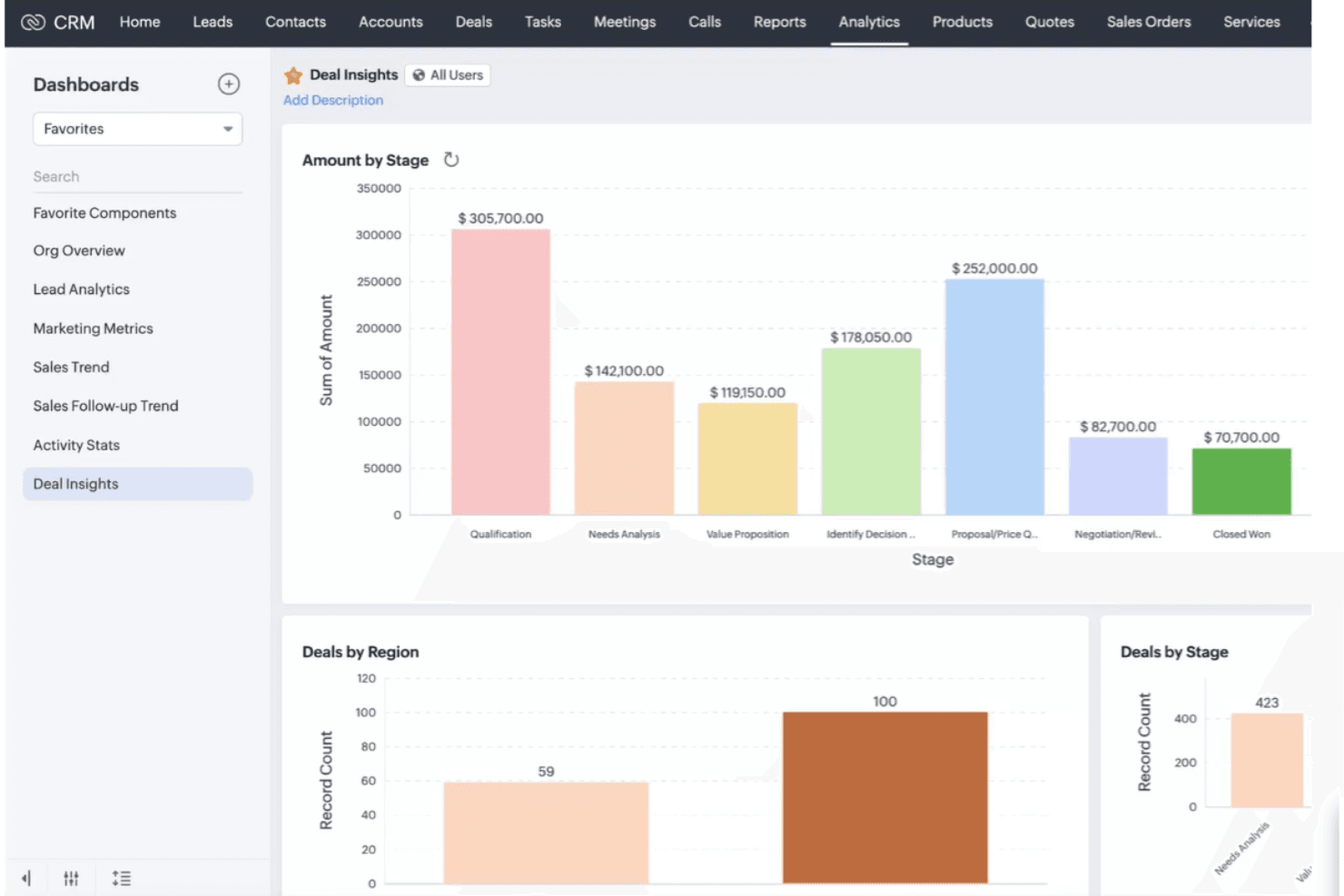
- You can easily track customer interactions with real-time dashboards.
- Your team benefits from its customizable dashboards for tailored insights.
- It offers automation features that save time on repetitive tasks.
Cons
- Your team might find the customer support response time slower than expected.
- You may experience a steep learning curve during initial setup.
- It sometimes lacks advanced reporting features compared to competitors.
Is Zoho CRM Right For Your Needs?
Who Would be a Good Fit for Zoho CRM?
Zoho CRM is a good fit for small to medium-sized businesses and startups, especially those in retail or service industries that need marketing automation and sales management tools. Your team will appreciate its user-friendly interface and automation features that help manage customer interactions efficiently. Sales and marketing departments benefit from its customizable dashboards and automation tools. If your business values seamless integration with other Zoho products, this CRM is a great choice.
- Retail BusinessesZoho CRM helps you manage customer relationships with ease through its intuitive sales tracking features.
- Service IndustriesYour team can automate routine tasks, freeing up time to focus on client interactions.
- Small BusinessesZoho CRM offers cost-effective solutions that fit your budget while providing essential CRM functionalities.
- Sales TeamsWith customizable dashboards, your sales team gets insights tailored to their specific needs.
- Marketing DepartmentsAutomated marketing tools in Zoho CRM help your team nurture leads effectively.
- Consulting FirmsTrack and manage client interactions efficiently with Zoho CRM's comprehensive customer data management.
Who Would be a Bad Fit for Zoho CRM?
Zoho CRM might not suit large enterprises or highly specialized industries needing extensive customization and advanced reporting features. Your team could struggle with its limited customization options and lack of advanced analytics, which you might find restrictive. If your organization relies heavily on complex data analysis or requires extensive customer support, Zoho CRM may fall short of your expectations.
- Large EnterprisesYou might find Zoho CRM lacks the advanced customization and reporting needed for complex operations.
- Manufacturing CompaniesYour team may require industry-specific features that Zoho CRM doesn't offer.
- Finance DepartmentsZoho CRM might not provide the detailed financial reporting you need for in-depth analysis.
- Tech CompaniesIf your work involves heavy data analysis, Zoho CRM's limited analytics features could be a drawback.
- Healthcare ProvidersYou might need specialized CRM features that Zoho CRM doesn't support.
- Government AgenciesZoho CRM may not meet the strict regulatory compliance and reporting standards you require.
Come testiamo e valutiamo gli strumenti
Abbiamo impiegato anni a costruire, perfezionare e migliorare il nostro sistema di test e valutazione dei software. Il nostro schema è progettato per cogliere le sfumature della scelta del software e ciò che rende uno strumento efficace, concentrandosi sugli aspetti critici del processo decisionale. Di seguito puoi vedere esattamente come funzionano i nostri test e le nostre valutazioni in base a sette criteri. Questo ci permette di offrire una valutazione imparziale del software basata su funzionalità di base, caratteristiche distintive, facilità d’uso, onboarding, assistenza clienti, integrazioni, recensioni dei clienti e rapporto qualità-prezzo.
Funzionalità principali (25% del punteggio finale)
Il punto di partenza della nostra valutazione è sempre la funzionalità principale dello strumento. Dispone delle funzionalità base che un utente si aspetterebbe di trovare? Alcune di queste funzionalità sono riservate ai piani a pagamento più elevati? In sostanza, ci aspettiamo che uno strumento sia all’altezza delle capacità minime dei concorrenti.
Caratteristiche distintive (25% del punteggio finale)
Successivamente, valutiamo le caratteristiche distintive che vanno oltre la funzionalità principale normalmente presente negli strumenti di questo tipo. Un punteggio elevato riflette funzionalità specializzate o uniche che rendono il prodotto più rapido, efficiente o offrono valore aggiunto all’utente. Valutiamo inoltre quanto sia semplice integrare il software con altri strumenti tipicamente presenti nello stack tecnologico, per estenderne la funzionalità e l’utilità. Gli strumenti che offrono numerose integrazioni native, connessioni di terze parti e accesso API per creare integrazioni personalizzate ottengono il punteggio migliore.
Facilità d’uso (10% del punteggio finale)
Consideriamo quanto sia rapido e semplice eseguire le attività fondamentali previste dallo strumento. Un software con punteggio elevato è ben progettato, intuitivo da usare, offre app mobile, modelli predefiniti e semplifica operazioni complesse.
Onboarding (10% del punteggio finale)
Sappiamo quanto sia importante l’adozione rapida da parte del team quando si introduce una nuova piattaforma: per questo valutiamo quanto sia facile imparare e utilizzare lo strumento con una formazione minima. Valutiamo la rapidità con cui un membro del team può impostare e iniziare a utilizzare lo strumento senza esperienza pregressa. Le soluzioni con punteggio alto richiedono poco o nessun supporto.
Assistenza clienti (10% del punteggio finale)
Analizziamo quanto sia semplice e veloce ottenere aiuto tramite telefono, live chat o knowledge base. Gli strumenti e le aziende che offrono supporto in tempo reale ottengono i punteggi migliori, mentre i chatbot ricevono i punteggi più bassi.
Recensioni dei clienti (10% del punteggio finale)
Oltre ai nostri test e valutazioni, consideriamo il net promoter score dei clienti attuali e passati. Verifichiamo la probabilità che i clienti scelgano nuovamente lo strumento per le funzionalità di base. Un software con punteggio elevato riflette un net promoter score alto da parte dei clienti vecchi e attuali.
Rapporto qualità-prezzo (10% del punteggio finale)
Infine, considerando tutti gli altri criteri, valutiamo il prezzo medio dei piani base rispetto alle funzionalità principali e agli altri criteri di valutazione. I software che offrono di più, a un costo inferiore, ottengono punteggi migliori.
Core Features
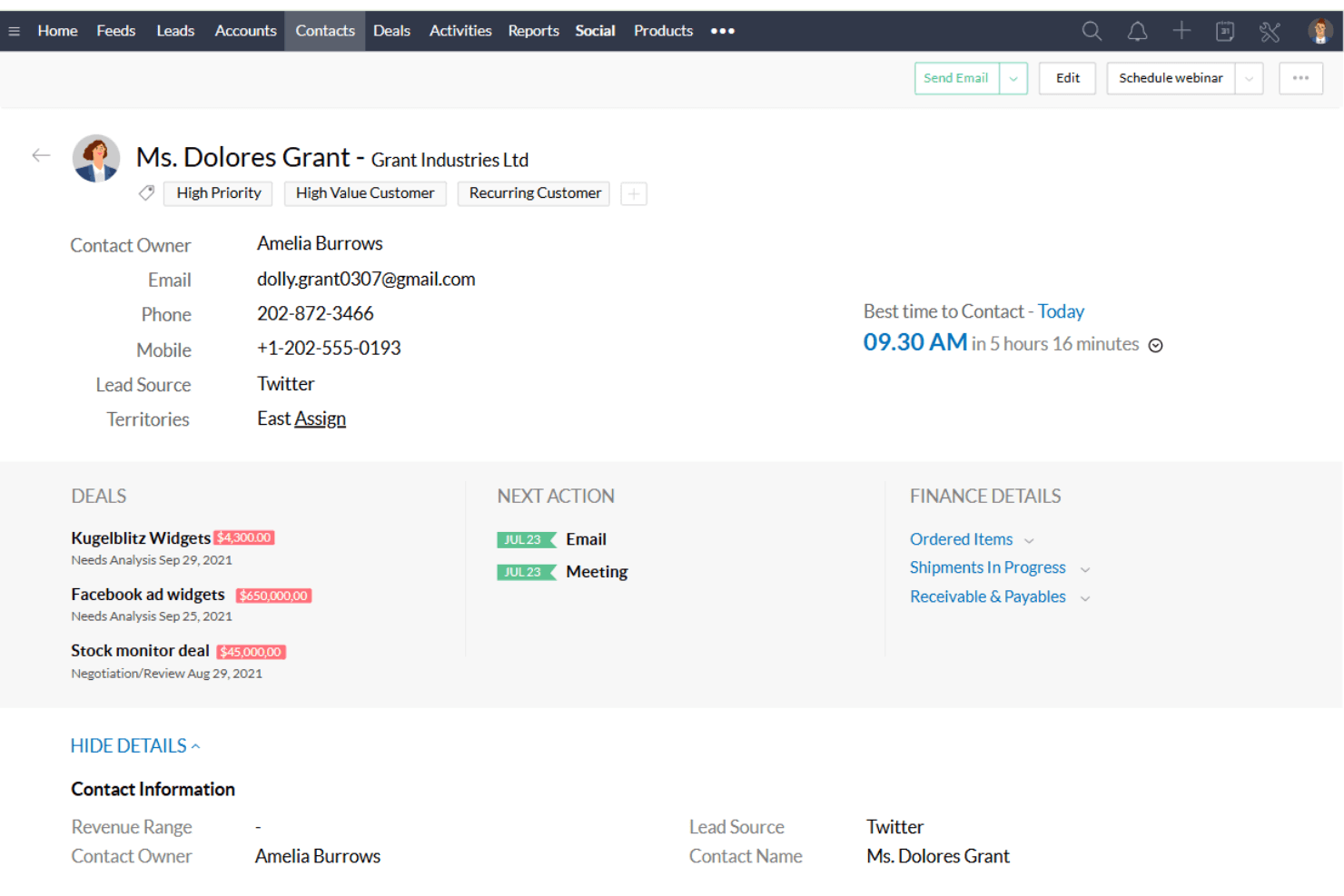
Contact Management: Zoho CRM lets you store and manage all your customer information in one place. Your team can easily track interactions and updates.
Sales Automation: Automate repetitive sales tasks, lead scoring, and sales pipeline updates to save time and focus on closing deals.
Lead Management: Capture, track, and manage leads effectively with Zoho CRM's lead management tools. You can prioritize and convert leads with ease.
Reporting and Analytics: Generate insightful reports to understand your sales performance better. Your team can make data-driven decisions quickly.
Workflow Automation: Set up automated workflows to manage routine tasks without manual intervention. It boosts your team's productivity.
Email Integration: Sync your email accounts to manage communications, email templates, and follow-ups directly within the CRM.
Ease of Use
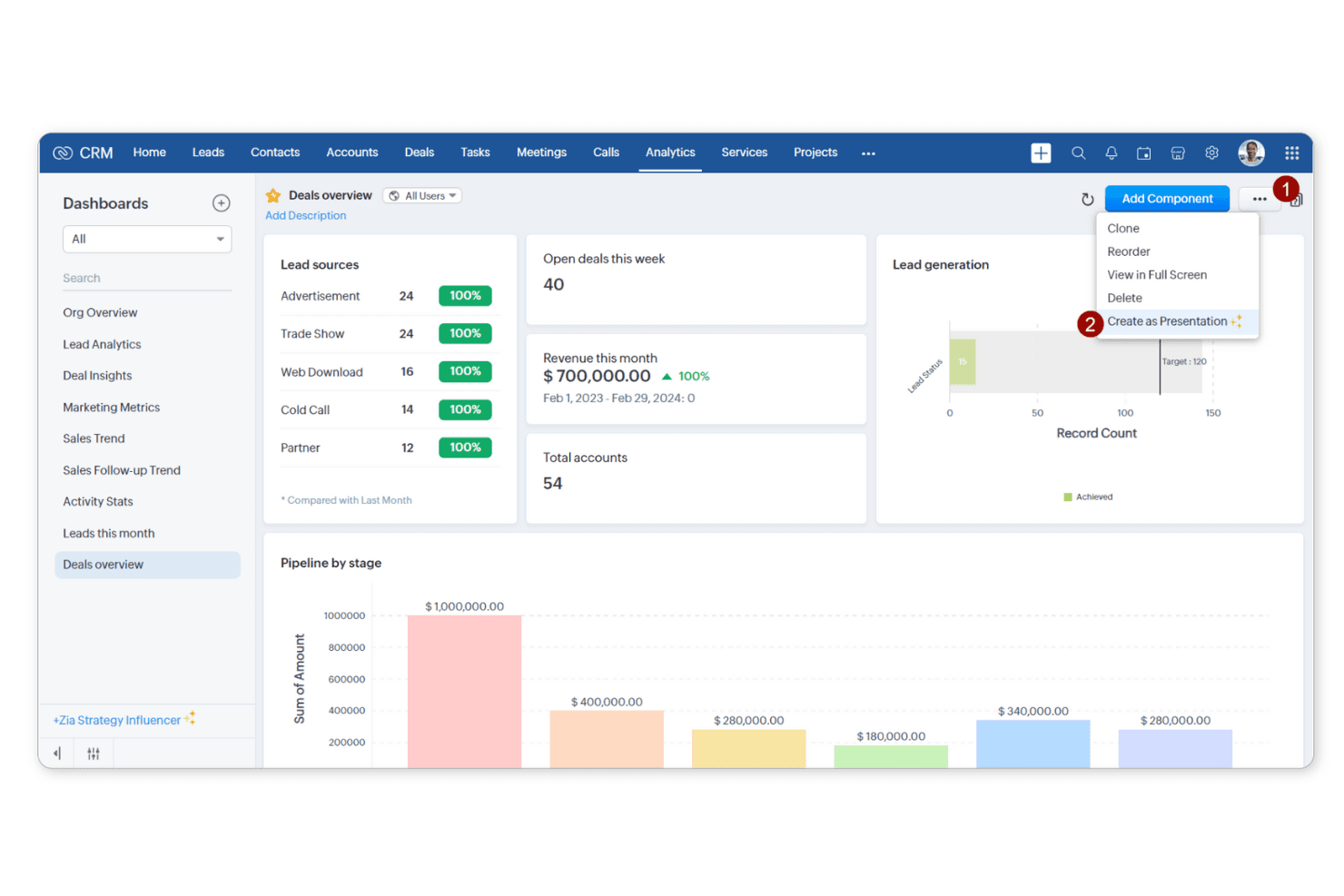
Zoho CRM is user-friendly with an intuitive interface that makes navigation straightforward for your team. Its drag-and-drop customization allows you to tailor dashboards easily, enhancing your work efficiency. However, the initial setup might feel a bit complex, requiring some time to get used to. Despite this, once you're familiar, the automation tools simplify daily tasks, boosting productivity. Overall, Zoho CRM offers a balance between functionality and ease, making it a solid choice for your team's needs.
Integrations
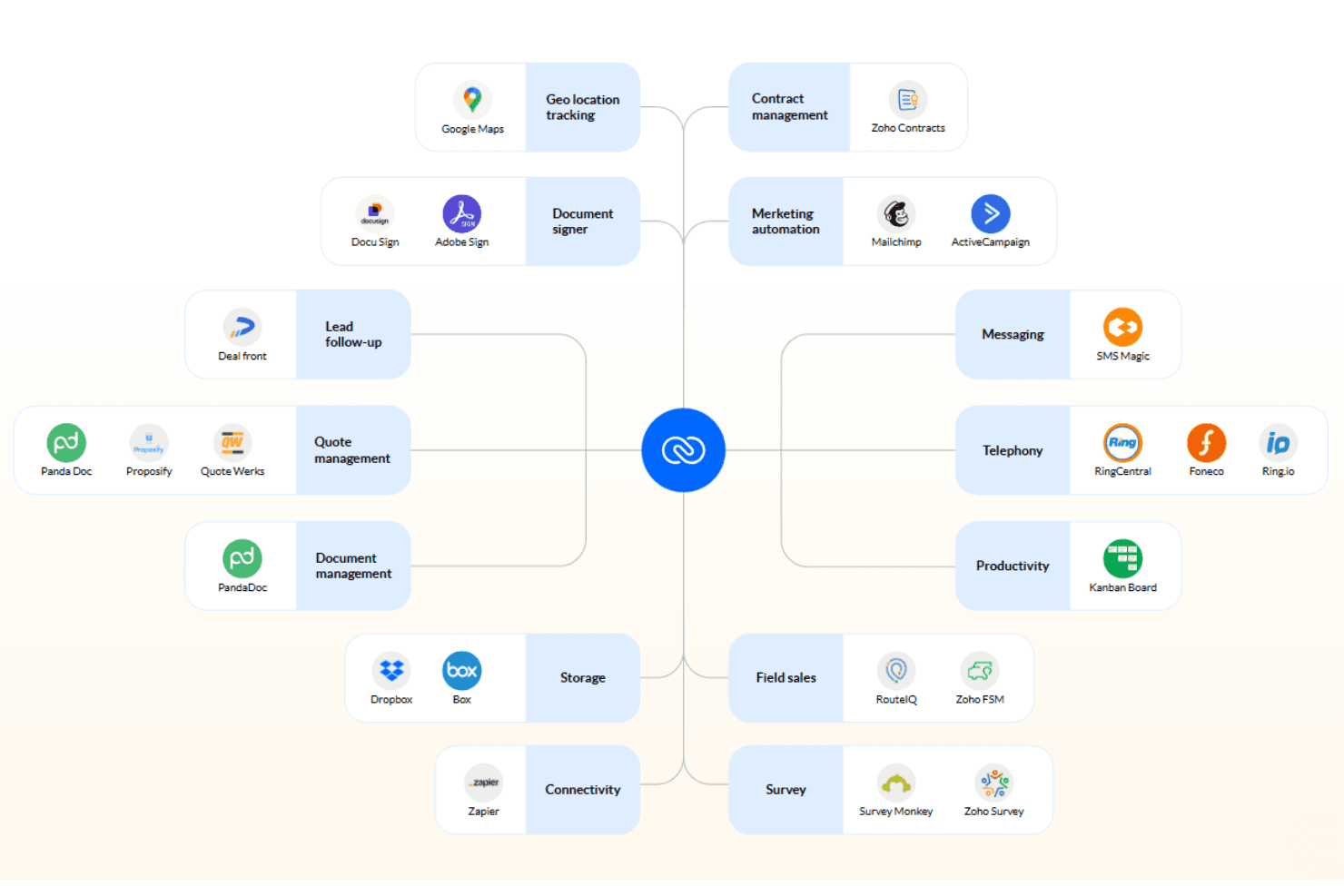
Zoho CRM integrates with Google Workspace, Microsoft Office 365, Mailchimp, QuickBooks, Slack, Shopify, LinkedIn, Salesforce, Dropbox, Hubspot, and Trello.
Zoho CRM also offers an API and connects with third-party integration tools to enhance its capabilities.
Zoho CRM Specs
- 2-Factor Authentication: Yes
- API: Yes
- Calendar Management: Yes
- Call Tracking: Yes
- Campaign Management: Yes
- Click-to-Dial: Yes
- Contact Management: Yes
- Contact Sharing: Yes
- Custom Data Forms: Yes
- Customer Management: Yes
- Dashboard: Yes
- Data Export: Yes
- Data Import: Yes
- Data Visualization: Yes
- Email Integration: Yes
- External Integrations: Yes
- File Sharing: Yes
- File Transfer: Yes
- Google Apps Integration: Yes
- Lead Management: Yes
- Lead Scoring: Yes
- Marketing Automation: Yes
- Mobile App: Yes
- Multi-User: Yes
- Notifications: Yes
- Pipeline Management: Yes
- Sales Automation: Yes
- Scheduling: Yes
- Social-Media Integration: Yes
- Task Scheduling/Tracking: Yes
- Third-Party Plugins/Add-Ons: Yes


