

Betalingsløsninger for kryptovaluta gjør det mulig for bedriften din å ta imot, sende og administrere betalinger i digitale valutaer som Bitcoin eller Ethereum. Når du håndterer digitale aktiva, trenger du fleksible verktøy som er tilpasset komplekse krav til etterlevelse, markeder i rask utvikling og forretningsmodeller i stadig endring.
Ved å velge riktig plattform får du færre utfordringer med regnskapet, enklere avstemming av transaksjoner og muligheten til å støtte strategisk vekst. I denne veiledningen kan du raskt sammenligne de beste betalingsløsningene for kryptovaluta, slik at du trygt kan finne den som passer til betalingsflytene, kontrollene og rapporteringsbehovene dine.
Hvorfor du kan stole på våre programvareanbefalinger
6,700+
Reviews
20
Industry experts
16+
Evaluation factors
14
Years
Teamet vårt har testet og anmeldt programvare siden 2012. Vi er selv økonomiledere, så vi vet hvor vanskelig og hvor viktig det er å velge riktig programvare.
I denne guiden har vi vurdert verktøyene gjennom praktisk testing og uavhengig research og gitt dem poeng ut fra våre utvelgelseskriterier.
Anmeldelsene våre bygger på vår egen redaksjonelle vurdering. De er ikke et salgsargument.
Sammenligningstabell for betalingsløsninger for kryptovaluta
Tabellen nedenfor sammenligner prisopplysningene for mine beste utvalgte betalingsløsninger for kryptovaluta.
| Tool | Best For | Trial Info | Price | ||
|---|---|---|---|---|---|
| 1 | Best for crypto-funded global vendor payouts | Free plan available | Pricing upon request | Website | |
| 2 | Best for zero withdrawal fee management | Free plan available | From 0.23% processing fee + transaction fee | Website | |
| 3 | Best for open-source, self-hosted payment control | Free demo available | Free forever | Website | |
| 4 | Best for accounting reconciliation | Free demo available | Pricing upon request | Website | |
| 5 | Best for enterprise-grade regulatory compliance | Free demo available | Pricing upon request | Website | |
| 6 | Best for ecommerce store plugin compatibility | Free demo available | From 0.5% transaction fee | Website | |
| 7 | Best for global business-to-business transactions | Free demo available | Pricing upon request | Website | |
| 8 | Best for crypto treasury management | Not available | Pricing upon request | Website | |
| 9 | Best for automated fiat payouts to bank accounts | Free demo available | From 1% transaction fee | Website | |
| 10 | Best for instant onramp integration at checkout | Not available | Pricing upon request | Website |


Anmeldelser av de beste betalingsløsningene for kryptovaluta
Nedenfor finner du mine detaljerte sammendrag av de beste betalingsløsningene for kryptovaluta som kom med på kortlisten. Anmeldelsene mine gir en detaljert oversikt over funksjonene, integrasjonene og prisene til hver plattform, slik at du kan finne den beste løsningen for deg.
 Best for crypto-funded global vendor payouts
- Free plan available
- Pricing upon request
Visit WebsiteCustomer Rating:4.5/5
Payouts provides instant payout capabilities for quick transactions. Payouts.com is a B2B financial operations platform that consolidates crypto pay-ins, global vendor payouts, AP/AR automation, multi-currency wallets, and on-chain reconciliation into a single system.
Who Is Payouts.com Best For?
Payouts.com is a strong fit for finance and treasury teams that fund global vendor or contractor payouts from a crypto treasury and need reconciliation built in.
Why I Picked Payouts.com
Payouts.com earns its spot on my shortlist because of how it handles crypto-funded vendor payouts specifically. I love that you can fund bulk payouts to up to 50,000 recipients using BTC, ETH, USDC, or USDT from your crypto treasury, with locked FX quotes converting to local fiat before funds hit recipient bank accounts in 190+ countries. Every transaction is tied to an on-chain hash and synced to NetSuite, so reconciliation doesn't require manual intervention.
Payouts.com Key Features
- Bulk payouts: Send payments to up to 50,000 recipients simultaneously via CSV batch or API across any rail, currency, or country.
- AP invoice OCR: Automatically extracts vendor name, amount, tax ID, dates, and payment terms from uploaded invoices to reduce manual data entry.
- AI agent wallets: Issues each AI agent its own wallet with a real balance, spend limits, scoped API keys, and a full audit trail.
- 1099 and W-form e-filing: Collects W-9 and W-8 forms, runs real-time IRS TIN verification, and e-files 1099-NEC, 1099-MISC, W-2G, and 1042-S directly with the IRS.
Payouts.com Integrations
Documented integrations include NetSuite, Priority ERP, Avalara, ComplyAdvantage, Persona, Plaid, and Bridge. Payouts.com also offers REST APIs, TypeScript and Python SDKs, OpenAPI 3.1, and webhooks for custom connectivity.
Pros and Cons
Pros:
- AI agents receive unique wallets and permissions
- Crypto pay-ins settle into 135+ fiat currencies
- On-chain hash tags every crypto transaction
Cons:
- No consumer checkout plugins for e-commerce platforms
- Only supports four crypto assets for payments
Learn more about Payouts: Best for zero withdrawal fee management
- Free plan available
- From 0.23% processing fee + transaction fee
Visit WebsiteCustomer Rating:4.6/5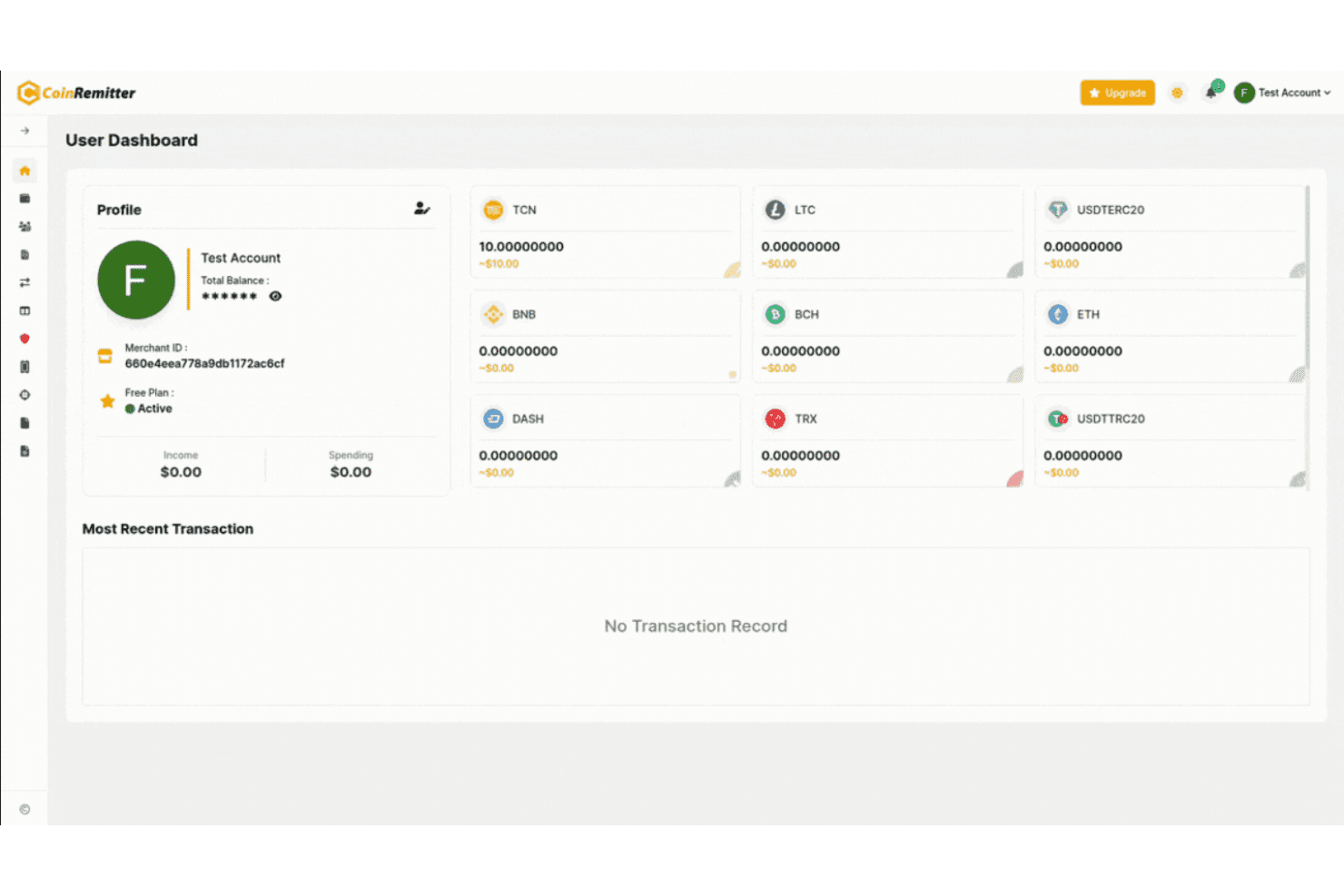
CoinRemitter features a user dashboard with multi-cryptocurrency wallet balances, merchant ID, and transaction history. Coinremitter is a crypto payment gateway that lets merchants accept payments in multiple cryptocurrencies via APIs, plugins, invoicing tools, and embeddable widgets across ecommerce and web platforms.
Who Is Coinremitter Best For?
Coinremitter is a good fit for small to mid-size ecommerce merchants and developers who need a lightweight, low-fee crypto payment gateway with minimal onboarding friction.
Why I Picked Coinremitter
I've included Coinremitter in my top picks because of how its Gas Station feature handles withdrawal fees. Rather than passing network gas costs directly to merchants, it absorbs and reduces them on supported cryptocurrencies like ETH and USDT. Combined with a flat 0.23% processing fee and free deposits, withdrawal cost management here is more predictable than most competing gateways I've tested.
Coinremitter Key Features
- REST API integration: Generate wallets, validate addresses, handle invoices, and automate payment flows using Coinremitter’s documented API.
- No-code payment widgets: Add embeddable pricing tables, payment buttons, and presale widgets to websites without custom coding.
- Multi-platform plugins: Use open-source plugins for Adobe Commerce, WooCommerce, Prestashop, Laravel, and more to start accepting crypto easily.
- Hosted custodial wallets: Store, send, and receive multiple cryptocurrencies within user-managed Coinremitter wallets secured by 2FA.
Coinremitter Integrations
Coinremitter offers native integrations with Adobe Commerce, WooCommerce, PrestaShop, OpenCart, Laravel, PHP, and Node.js. An API is available for custom integrations.
Pros and Cons
Pros:
- Simple payment button and invoice creation
- Merchants control crypto wallet balances
- Zero gas fees on select blockchains
Cons:
- Lacks tax and regulatory compliance features
- No fiat withdrawal or off-ramp support
Learn more about Coinremitter: Best for open-source, self-hosted payment control
- Free demo available
- Free forever
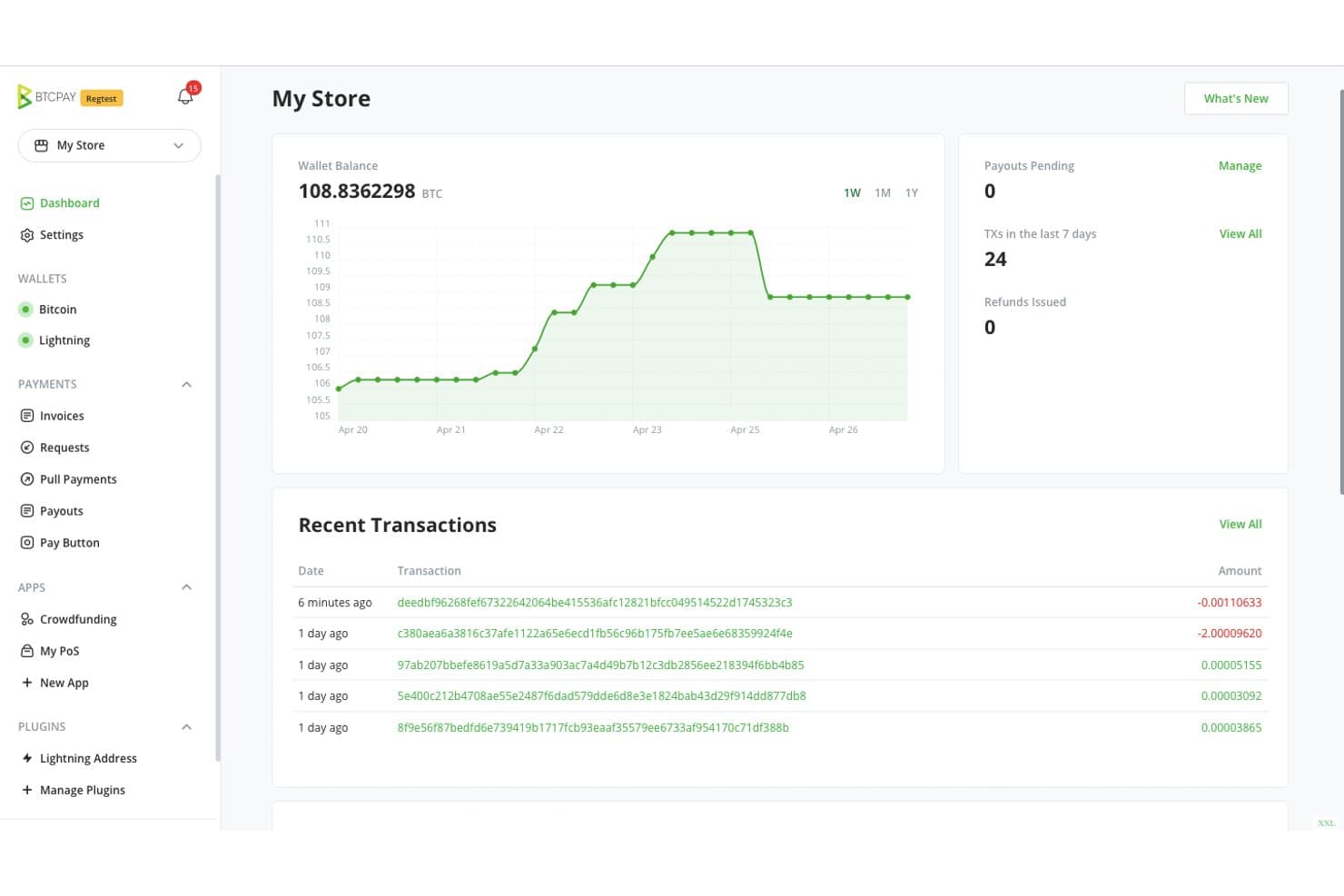
BTCPay Server offers a store dashboard displaying wallet balance, recent transactions, and payment analytics in one view. BTCPay Server is an open-source, self-hosted cryptocurrency payment processor that supports Bitcoin and altcoin acceptance, invoicing, a point-of-sale app, payment links, and a built-in non-custodial wallet with Lightning Network support.
Who Is BTCPay Server Best For?
BTCPay Server suits technically capable merchants, crypto-native businesses, and developers who need full sovereignty over their Bitcoin payment infrastructure.
Why I Picked BTCPay Server
BTCPay Server earns its spot on my shortlist because no other crypto payment solution gives merchants this level of direct control over their payment infrastructure. I like that it's genuinely self-hosted: your keys, your node, your coins, with no platform sitting between you and your customers. The built-in Lightning Network support means you can process fast, low-fee Bitcoin microtransactions directly to your own wallet, with no custodian involved.
BTCPay Server Key Features
- Multi-store management: Run and organize multiple distinct stores from the same BTCPay Server instance.
- Crowdfunding tools: Launch customizable crowdfunding campaigns with built-in crypto payment acceptance.
- Ecommerce platform plugins: Integrate with platforms like WooCommerce, Shopify, Adobe Commerce, and PrestaShop for easier crypto checkouts.
- Invoice export options: Export transaction data and invoices in multiple formats for reconciliation and bookkeeping needs.
BTCPay Server Integrations
BTCPay Server offers native integrations with WooCommerce, Shopify, PrestaShop, OpenCart, Odoo, Wix, Pretix, BigCommerce, Xenforo, Drupal, Joomla, Ghost, WHMCS, and Easy Digital Downloads. An API is available for custom integrations.
Pros and Cons
Pros:
- Open-source with active community development
- Supports Lightning Network Bitcoin payments
- Fully non-custodial self-hosted payment processing
Cons:
- Lacks native compliance and KYC features
- No built-in fiat settlement or conversion
Learn more about BTCPay Server:
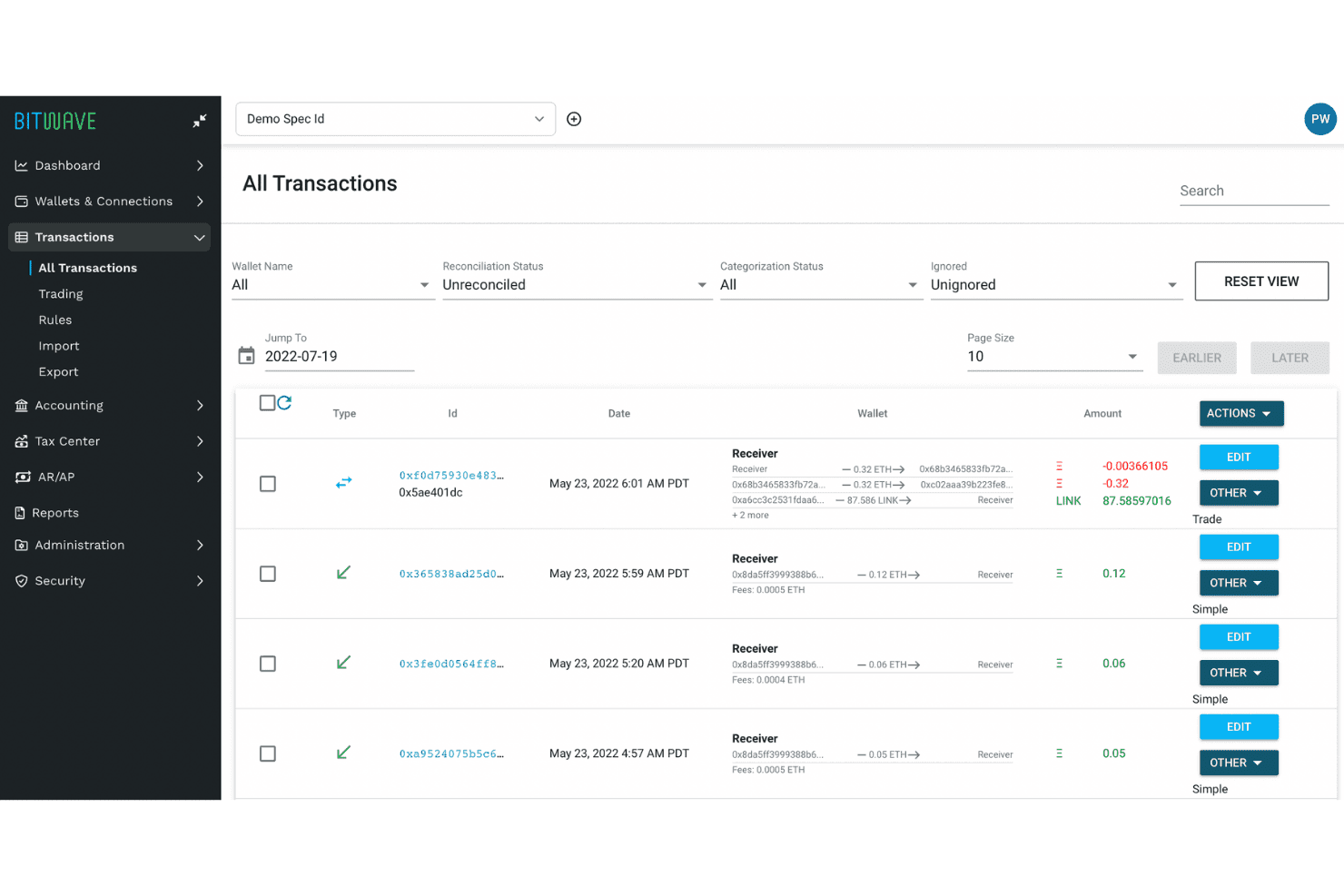
Bitwave offers an All Transactions view with reconciliation filters, wallet details, and categorized crypto transaction entries. Bitwave is an enterprise digital asset accounting and stablecoin payments platform that handles on-chain AP workflows, batch vendor payouts, and automated reconciliation with ERP systems like NetSuite, QuickBooks, Xero, and Sage.
Who Is Bitwave Best For?
Bitwave is a strong fit for controllers and accounting managers at mid-to-large enterprises running active digital asset or stablecoin payment programs.
Why I Picked Bitwave
I picked Bitwave as one of the best because its accounting reconciliation capabilities go well beyond basic CSV exports. It maintains an enterprise-grade subledger with an immutable audit trail for every on-chain transaction, keeping records audit-ready without extra prep at close. I also rely on its support for FIFO, LIFO, and Specific Identification lot tracking, which keeps cost basis calculations accurate across high-volume stablecoin payment runs.
Bitwave Key Features
- Native ERP integration: Connect directly with NetSuite, QuickBooks, Xero, or Sage for real-time data sync across systems.
- Batch stablecoin payments: Send hundreds of USDC or USDT payouts to multiple vendors in one workflow.
- Vendor payment network: Access a directory of pre-verified, allow-listed wallet addresses to reduce payment risk.
- Multi-chain support: Track and manage digital asset transactions across 50+ supported blockchains.
Bitwave Integrations
Bitwave offers native integrations with NetSuite, QuickBooks, Xero, Sage, Anchorage, BitGo, Coinbase, Fireblocks, Gemini, Kraken, and Paxos. An API is available for custom integrations.
Pros and Cons
Pros:
- Strong audit trail for on-chain transactions
- Supports 50+ blockchains and stablecoins
- Enterprise-grade crypto accounting automation
Cons:
- No transparent or self-serve pricing
- Lacks native merchant checkout features
Learn more about Bitwave: Best for enterprise-grade regulatory compliance
- Free demo available
- Pricing upon request
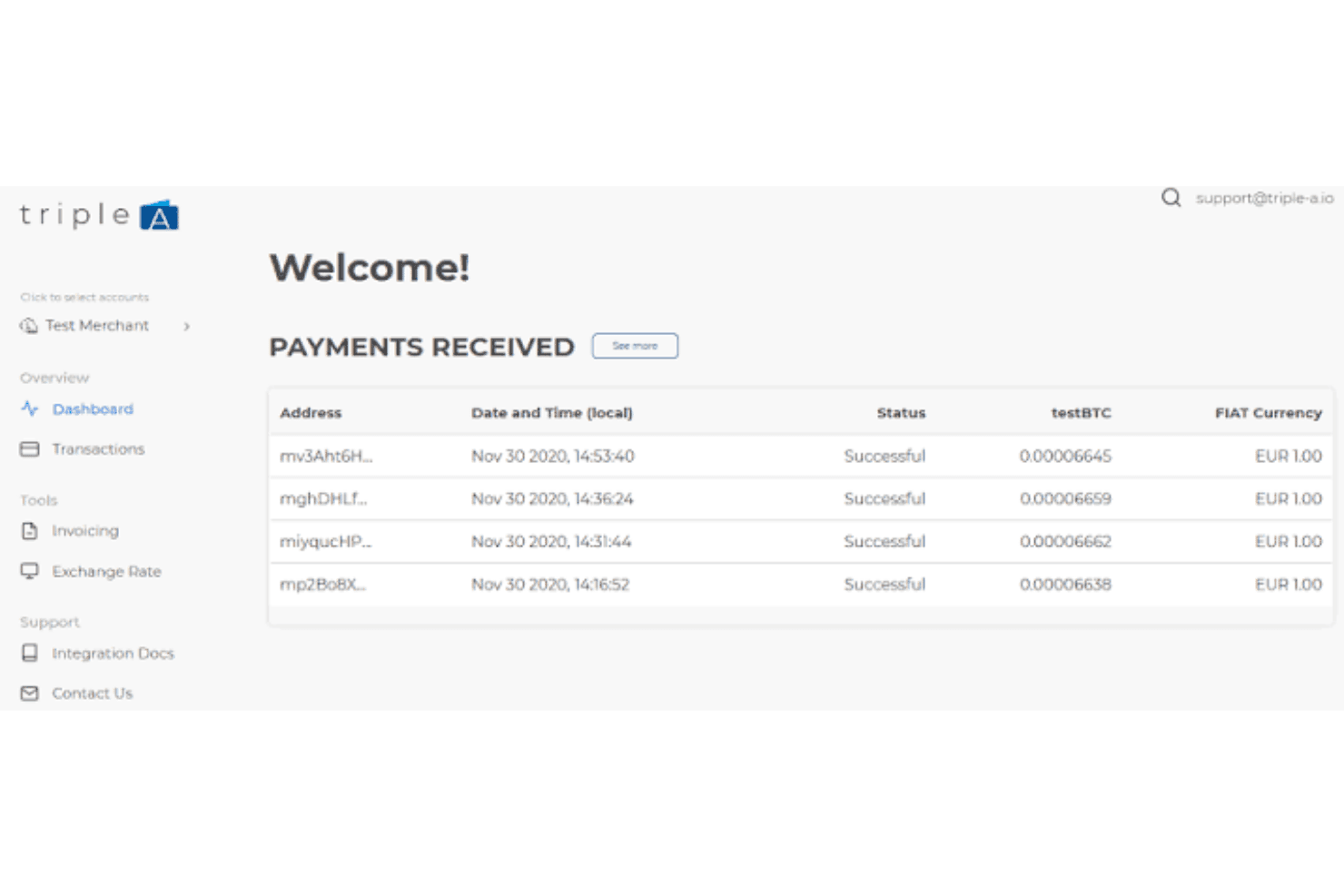
Triple-A offers a merchant dashboard with a payments received table showing successful Bitcoin transactions converted to EUR fiat currency. Triple-A is a licensed crypto payment gateway that lets businesses accept stablecoin and cryptocurrency payments, issue payouts in 30+ local currencies, and settle funds directly to a bank account via API, checkout, or invoicing tools.
Who Is Triple-A Best For?
Triple-A suits mid-market and enterprise businesses in regulated industries that need multi-jurisdiction crypto payment compliance across Asia-Pacific, Europe, and the US.
Why I Picked Triple-A
Triple-A earns its spot on my shortlist because it holds more regulatory licenses than any other crypto payment gateway I've reviewed: MAS (Singapore), ACPR and AMF DASP (France/EU), and FinCEN MSB (US). In practice, that means my team can operate across Asia-Pacific, Europe, and North America without separate compliance infrastructure. I also like that exchange rates lock at the moment of payment, so there's zero crypto on the balance sheet while settlement processes.
Triple-A Key Features
- Checkout plugins and API integration: Supports ecommerce sites and custom platforms via plugins and developer APIs.
- Multicurrency IBAN accounts: Lets businesses receive payments to unique IBANs with conversion to preferred currencies.
- Stablecoin and local currency payouts: Enables sending business payments in USDT, USDC, and 30+ local currencies worldwide.
- Exportable transaction and settlement reports: Provides downloadable reports for auditing and financial reconciliation needs.
Triple-A Integrations
Triple-A offers integrations via its API. Native integrations are not clearly documented beyond the API access.
Pros and Cons
Pros:
- Multi-currency IBAN accounts for businesses
- Zero-volatility instant settlement to fiat
- Singapore MAS licensed payment provider
Cons:
- Custom pricing for smaller merchants
- Limited selection of supported cryptocurrencies
Learn more about Triple-A: Best for ecommerce store plugin compatibility
- Free demo available
- From 0.5% transaction fee
Visit WebsiteCustomer Rating:4.9/5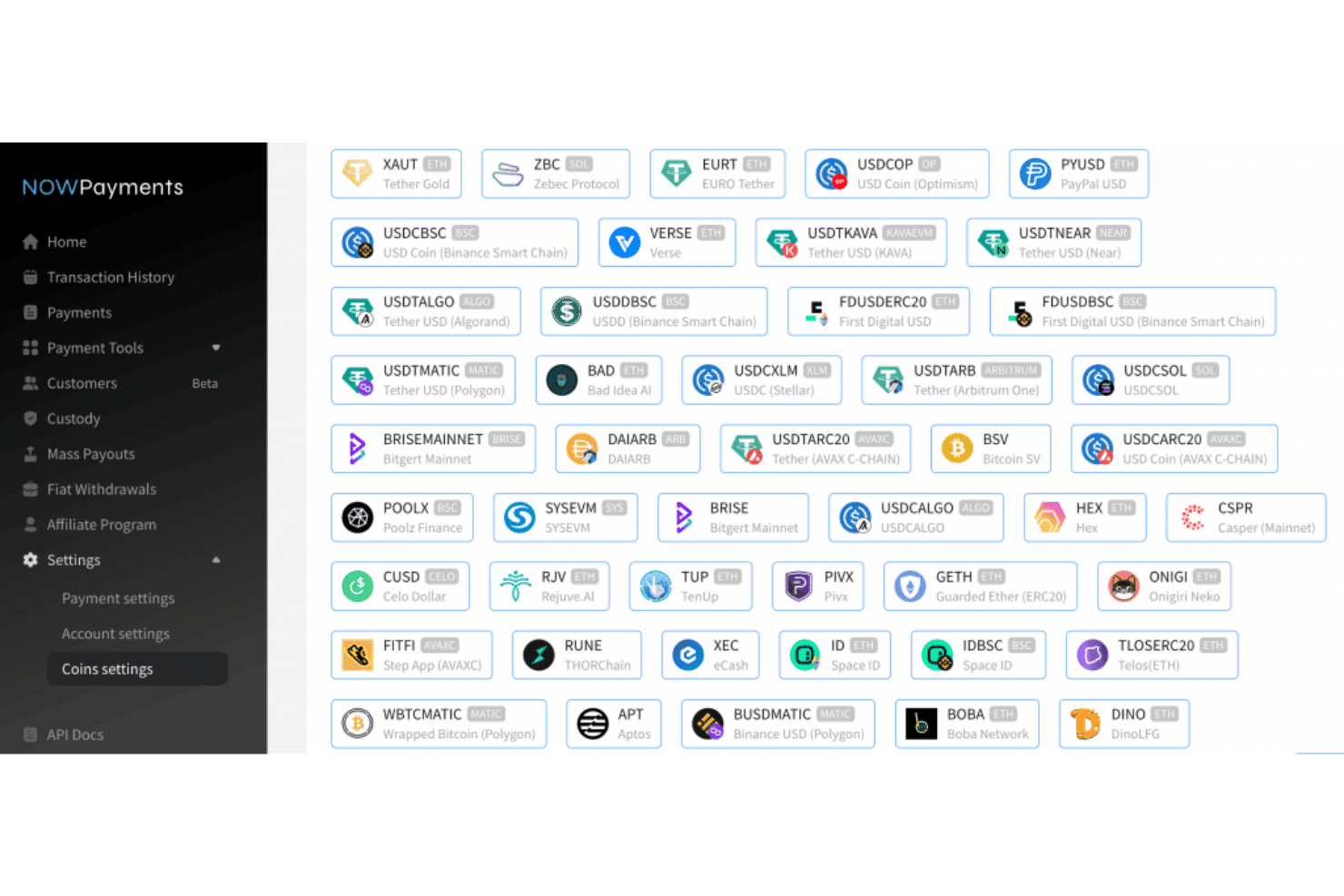
NOWPayments offers a wide range of supported cryptocurrencies accessible through its Coins Settings dashboard. NOWPayments is a non-custodial crypto payment gateway that lets merchants accept 350+ cryptocurrencies, issue invoices, run subscriptions, and process mass payouts via API, plugins, or a hosted checkout widget.
Who Is NOWPayments Best For?
NOWPayments is a strong fit for ecommerce merchants and SMB operators who need plug-and-play crypto payment acceptance across platforms like WooCommerce, Shopify, or Adobe Commerce.
Why I Picked NOWPayments
NOWPayments earns its spot on my shortlist because of how many ecommerce platforms it supports natively, without needing custom development. I've installed the WooCommerce plugin and it's fully compatible with WooCommerce Blocks and the modern block-based checkout, which matters when you're running a headless or block-theme storefront. Beyond WooCommerce, ready-built plugins for Adobe Commerce, PrestaShop, OpenCart, and WHMCS mean I can add crypto acceptance to almost any stack without touching the API.
NOWPayments Key Features
- Multi-currency crypto acceptance: Accept payments in 350+ cryptocurrencies including BTC, ETH, and stablecoins from anywhere in the world.
- Fiat on- and off-ramp support: Enable customers to buy crypto with fiat and merchants to convert crypto payments to over 75 fiat currencies.
- Non-custodial and custody wallet options: Choose between non-custodial direct settlement or platform-based custody for holding and disbursing funds.
- Subscription and recurring billing: Set up automated recurring crypto payments for SaaS, memberships, or ongoing services.
NOWPayments Integrations
NOWPayments offers native integrations with WooCommerce and WHMCS, and provides an API for custom integrations.
Pros and Cons
Pros:
- Option for non-custodial or custodial wallets
- Full plugin support for major ecommerce platforms
- Supports email-based zero-fee payouts
Cons:
- Lacks published regulatory compliance certifications
- Requires intermediate wallet routing step
Learn more about NOWPayments:
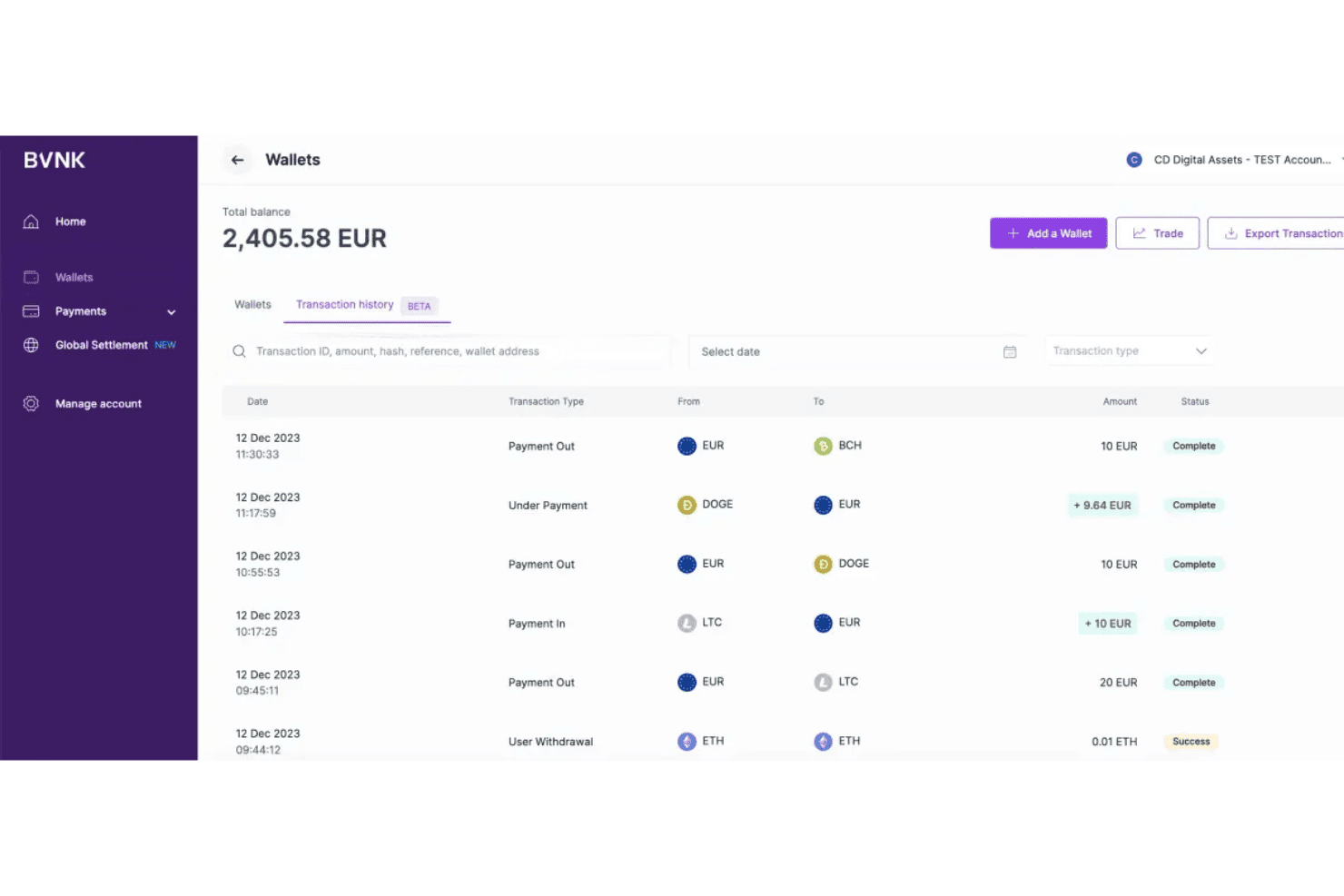
BVNK offers a multi-currency wallet dashboard with transaction history, showing EUR, crypto payments, and real-time statuses. BVNK is a stablecoin payments infrastructure platform that lets businesses send, receive, convert, and store crypto and fiat currencies through APIs, hosted checkout pages, invoicing, and multi-currency wallets across 130+ countries.
Who Is BVNK Best For?
BVNK is a strong fit for enterprise fintech companies, marketplaces, and global payroll platforms that need stablecoin payment infrastructure at scale.
Why I Picked BVNK
I've included BVNK in my top picks because its cross-border B2B payout infrastructure is genuinely built for volume. My team can fund payouts in fiat and deliver stablecoins to partners across 130+ countries, or do the reverse, all settled 24/7 through SWIFT, SEPA, and ACH. The mass payout tooling via CSV or API is where it gets practical: I can push high-volume payments to suppliers or contractors without manual processing per transaction.
BVNK Key Features
- Multi-chain asset support: Accept and send payments in USDC, USDT, DAI, BTC, ETH, and other leading cryptocurrencies across major blockchains.
- Regulatory compliance infrastructure: Leverage MiCA passporting, full KYC/AML onboarding, and SOC 2 Type II certification for global transaction oversight.
- API-first integration: Access REST APIs and SDKs in multiple languages for automating payment, reconciliation, and treasury workflows.
- Customizable hosted checkout: Deploy branded payment pages supporting crypto and fiat, with auto-convert and multi-language options for customer payments.
BVNK Integrations
BVNK offers native integrations with Payment IQ, Praxis Checkout, Bridgerpay, PremierCashier, and Stratified. An API is available for custom integrations.
Pros and Cons
Pros:
- Regulated in US, UK, and EU
- Multi-currency wallets for crypto and fiat
- Global B2B stablecoin settlement capabilities
Cons:
- Requires minimum monthly transaction commitment
- No direct integration with accounting software
Learn more about BVNK:
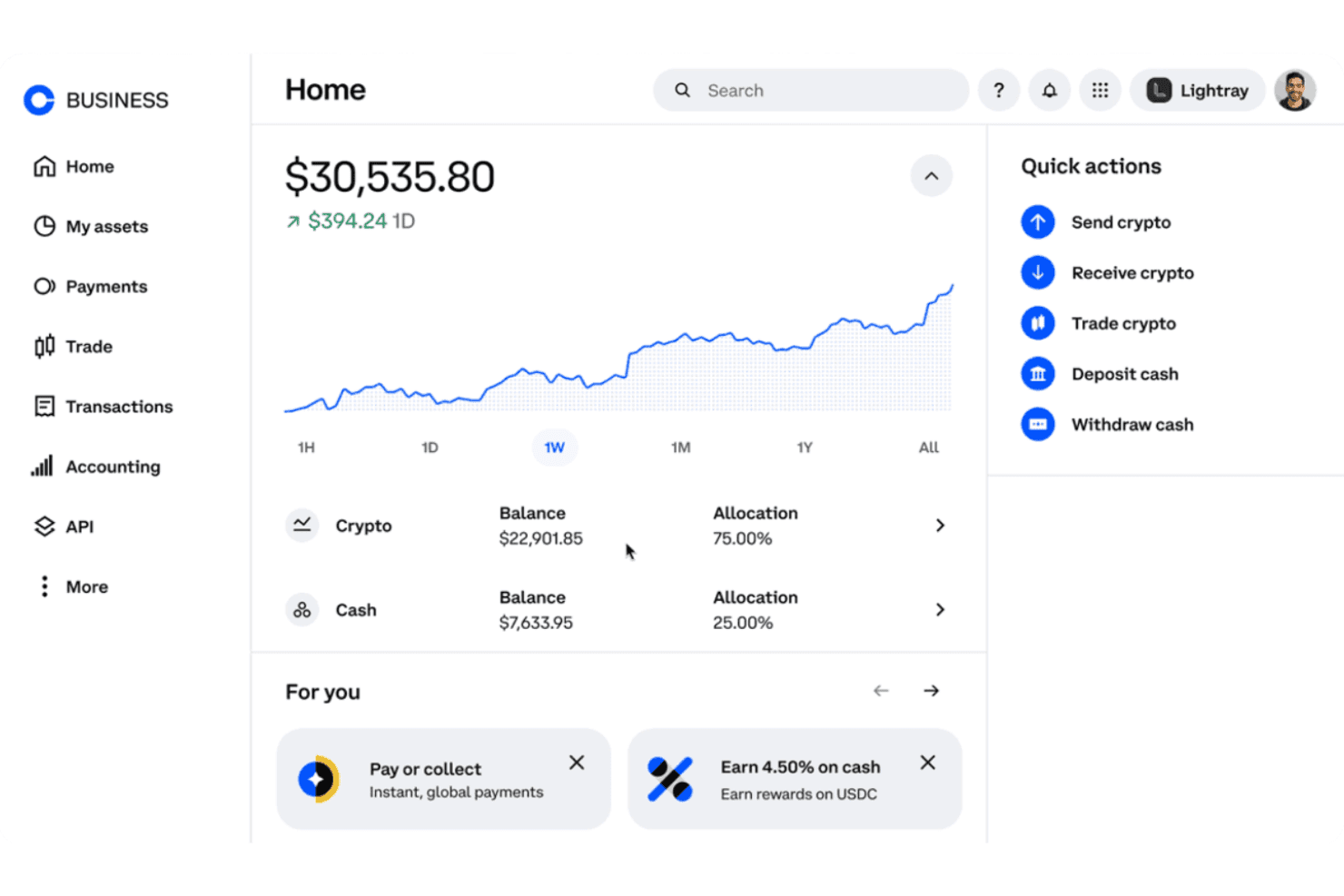
Coinbase Business offers a home dashboard with total portfolio balance, crypto and cash allocations, a performance chart, and quick action shortcuts. Coinbase Business is a regulated crypto financial platform that combines merchant payment acceptance, invoicing, payouts, custody, USDC treasury yield, and trading in a single business account.
Who Is Coinbase Business Best For?
It's a strong fit for CFOs and corporate treasurers at startups and growth-stage companies that want institutional-grade crypto custody, payments, and yield management under one regulated account.
Why I Picked Coinbase Business
Coinbase Business earns its spot on my shortlist because no other crypto payment platform bundles institutional custody with a live 3.35% APY on idle USDC balances. I like that the custody side is NYDFS-regulated and SOC 2 audited, so I'm not trading compliance for yield. Payments settle in seconds across Ethereum, Base, Polygon, Optimism, and Arbitrum with no chargebacks.
Coinbase Business Key Features
- Global payouts infrastructure: Send USDC payments instantly to vendors or contractors in supported regions with low fees.
- Native QuickBooks and Xero integrations: Sync crypto transactions directly with leading accounting software for reconciliation and reporting.
- Checkouts API and ecommerce plugins: Add crypto payment options to online checkout flows using developer APIs or ready-made storefront integrations.
- Automated compliance monitoring: Every transaction is screened for sanctions, KYC, and AML within a regulated custodial framework.
Coinbase Business Integrations
Native integrations are not publicly documented. Coinbase Business offers an API for custom integrations.
Pros and Cons
Pros:
- Built-in treasury yield on USDC balances
- Multi-chain USDC payments and settlements
- Regulated NYDFS-qualified custody for businesses
Cons:
- Fiat settlement limited to select countries
- Only supports USDC for merchant payments
Learn more about Coinbase Business: Best for automated fiat payouts to bank accounts
- Free demo available
- From 1% transaction fee
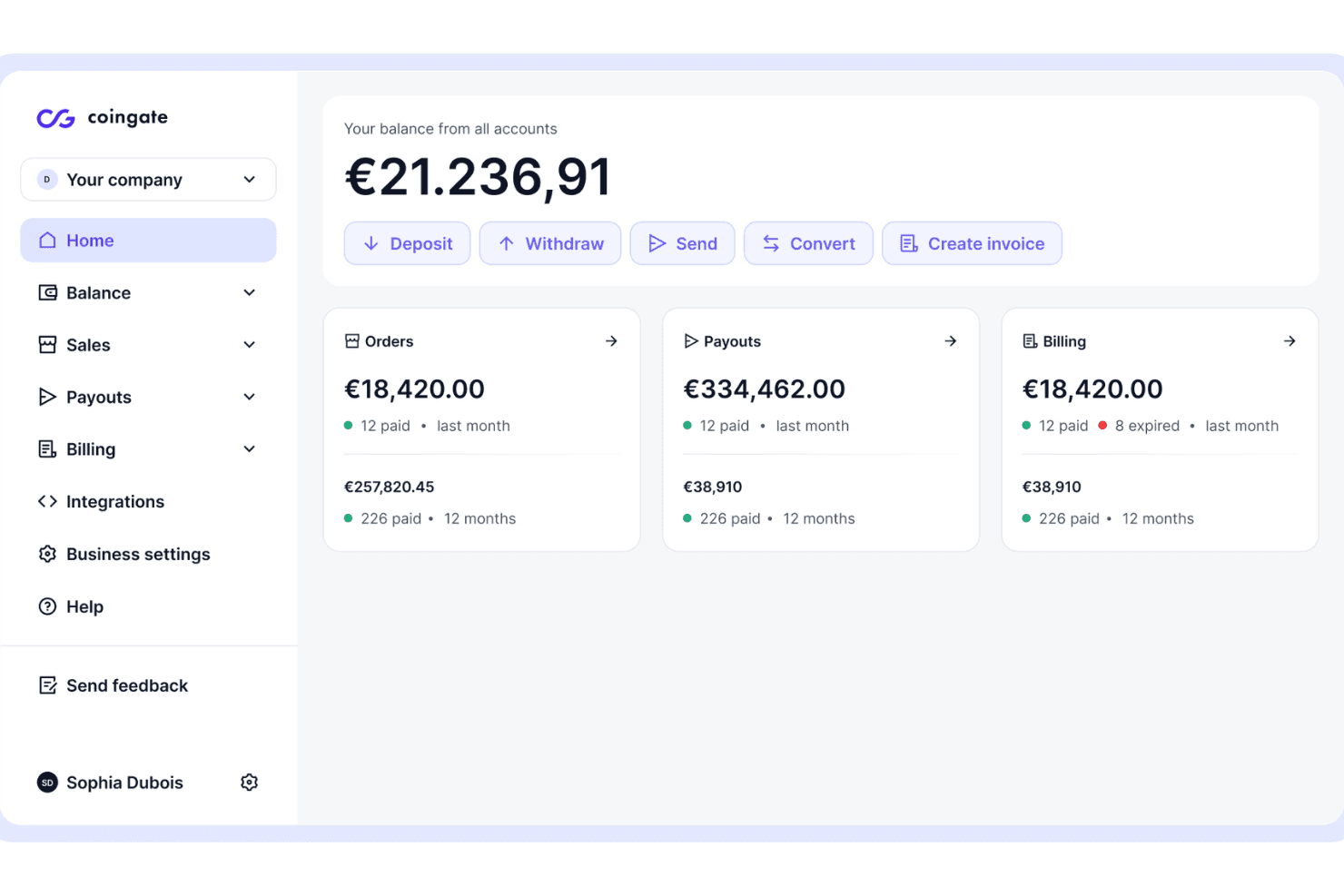
CoinGate offers a centralized dashboard showing account balance, orders, payouts, and billing summaries with quick-action buttons. CoinGate is a crypto payment gateway that lets merchants accept 10+ cryptocurrencies, auto-convert to fiat or stablecoins, issue invoices, and send mass payouts via API, no-code dashboard, or ecommerce plugins.
Who Is CoinGate Best For?
CoinGate suits ecommerce operators and digital platforms that need to accept crypto globally and receive automatic fiat settlements directly into a business bank account.
Why I Picked CoinGate
I picked CoinGate as one of the best because of how its fiat settlement pipeline actually works. The platform locks the exchange rate at the exact moment a customer pays, so volatility between payment and payout doesn't eat into your margins. SEPA bank settlements run automatically on a weekly schedule at no extra cost, and Enterprise clients can switch to on-demand payouts when cash flow timing matters.
CoinGate Key Features
- Multi-chain crypto acceptance: Accept payments in BTC, ETH, USDT, USDC, and several other leading cryptocurrencies across popular blockchains.
- Ecommerce plugin integrations: Connect with WooCommerce, Adobe Commerce (Magento), PrestaShop, and OpenCart for easy merchant onboarding.
- Role-based account permissions: Assign team members different access levels for managing crypto payments, payouts, and reconciling transactions.
- Customizable reporting tools: Generate account statements and filter, export, or download structured CSVs for compliance and bookkeeping.
CoinGate Integrations
CoinGate offers native integrations with WooCommerce, PrestaShop, OpenCart, and WHMCS for ecommerce platforms. An API is available for building custom integrations.
Pros and Cons
Pros:
- Customizable reporting for transaction reconciliation
- Supports multi-asset settlements including stablecoins
- Automated SEPA payouts for EU businesses
Cons:
- Custodial-only wallet without MPC or insurance
- High minimum bank withdrawal amounts
Learn more about CoinGate: Best for instant onramp integration at checkout
- Not available
- Pricing upon request
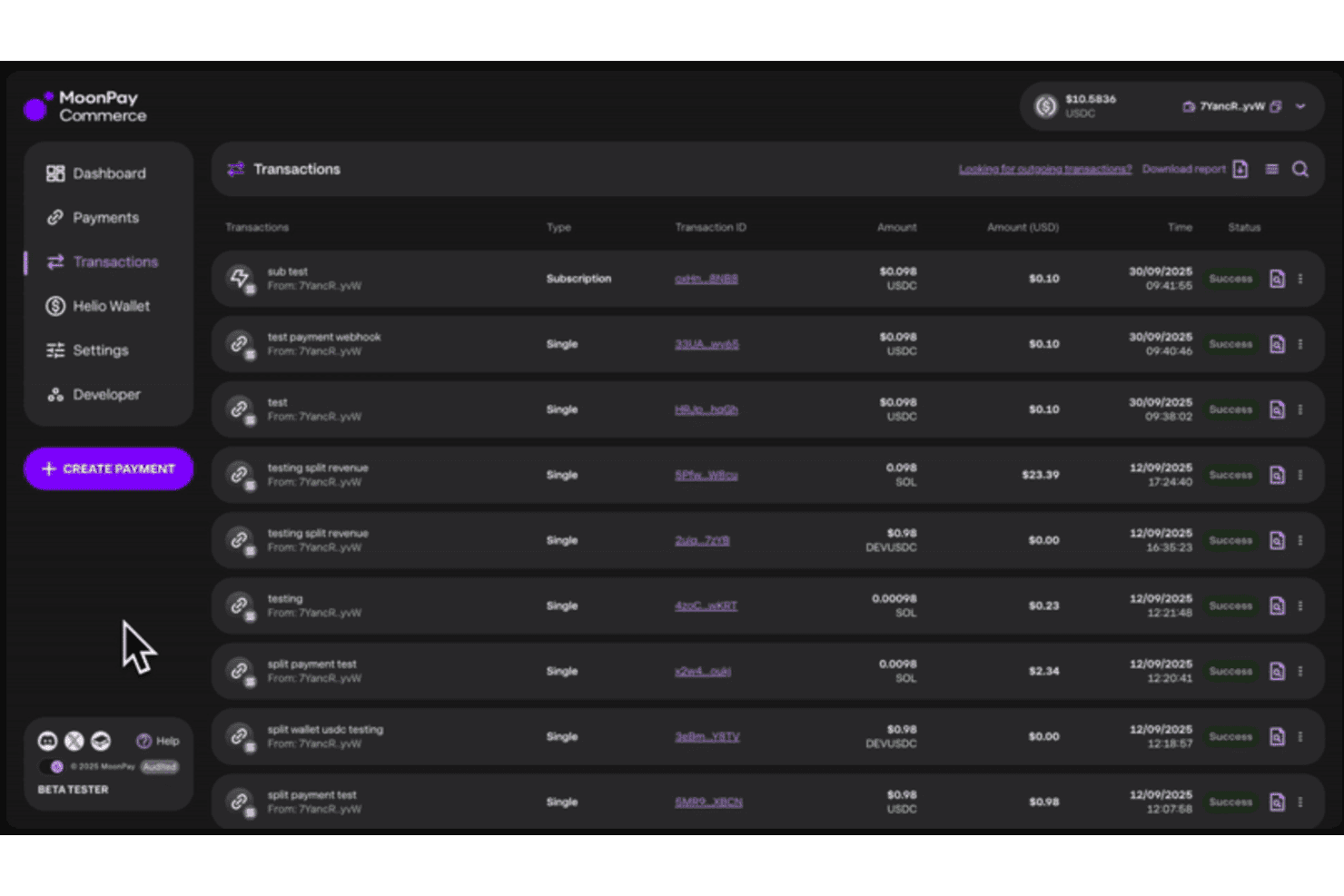
MoonPay Commerce displays a transactions dashboard listing payment history with statuses, amounts, and transaction IDs. MoonPay Commerce is a crypto payment platform that lets merchants accept multi-chain cryptocurrency payments via checkout widgets, pay links, APIs, and plugins, with built-in fiat settlement and KYC/AML compliance.
Who Is MoonPay Commerce Best For?
MoonPay Commerce is a strong fit for ecommerce merchants and digital platforms that need to accept crypto payments without building payment infrastructure from scratch.
Why I Picked MoonPay Commerce
I picked MoonPay Commerce as one of the best because the card-to-crypto onramp lives inside the checkout widget itself. Shopify merchants, for instance, can activate the Solana Pay plugin and let customers pay by card while receiving crypto in real time. The "Pay with Card" feature handles non-crypto buyers without redirecting anyone off-site, keeping the transaction fully within the checkout experience.
MoonPay Commerce Key Features
- Multi-chain token support: Accept payments in hundreds of cryptocurrencies across major blockchains like Solana, Ethereum, Bitcoin, and Polygon.
- Auto-offramp to fiat: Enable automated conversion of crypto payments to USD or EUR, with settlement to your linked bank account.
- APIs and webhooks: Access developer endpoints for custom payment flows, real-time notifications, and back-office automation.
- Regulatory compliance stack: Includes SOC 2, PCI DSS, and ISO 27001 certifications, plus multi-jurisdiction KYC/AML coverage.
MoonPay Commerce Integrations
MoonPay Commerce offers native integrations with Shopify (including Solana Pay) and Discord, and provides an API and webhooks for custom integrations.
Pros and Cons
Pros:
- Granular payment control via APIs and plugins
- Instant fiat settlement for select currencies
- Built-in onramp for non-crypto-native buyers
Cons:
- Fiat settlement limited to USD and EUR
- No native accounting software integrations
Learn more about MoonPay Commerce:
Andre betalingsløsninger for kryptovaluta
Her er noen flere betalingsløsninger for kryptovaluta som ikke kom med på kortlisten min, men som likevel er verdt å se nærmere på:
- 11BlockBeeBest for simple payment link creation
- 12CryptoProcessingBest for high-volume merchant settlements
- 13B2BINPAYBest for multi-chain and token acceptance
- 14StripeBest for unified crypto and fiat checkout flows
- 150xProcessingBest for flexible wallet custody options
- 16MESHBest for API-driven digital asset integration
- 17PassimPayBest for fast merchant onboarding worldwide
- 18BitPayBest for payment card rewards with digital assets
How I Evaluate Crypto Payment Solutions
I split my evaluation into what a platform must handle—like fiat settlement and KYC—and what separates the best from the rest, like multi-chain reach and reconciliation depth.
Core Functionality (Table Stakes for This List)
When I'm selecting tools for my list, I rank each one on a scale from 0 (does not offer the functionality) to 5 (excels in this area) for each core functionality listed below. Then, I calculate the tool's total score into a percentage. Each tool needs to achieve a minimum total score of 65% to be considered for inclusion.
- Multi-Currency Crypto Acceptance: I check how many cryptocurrencies and stablecoins a platform supports, since your customers may want to pay in BTC, ETH, USDC, or tokens on chains like Solana or Tron.
- Fiat Settlement & Conversion: A platform should auto-convert crypto payments into fiat currencies and settle to your bank account, so your treasury team isn't manually managing exchange risk.
- Payment Processing Infrastructure: I evaluate the checkout tools, invoicing options, payment links, and API access each platform provides for merchant or B2B transaction workflows.
- Accounting & Reconciliation Tools: Finance teams need exportable reports or native integrations with platforms like QuickBooks, Xero, or NetSuite to close the books without manual data entry.
- Regulatory Compliance & KYC/AML: I look at each platform's licensing, KYC/AML enforcement, and sanctions screening to confirm it can support your obligations across the jurisdictions you operate in.
- Wallet & Custody Management: Whether custodial or self-hosted, I evaluate how each platform handles fund storage, including security measures like MPC wallets or multi-signature controls.
Once I have a list of tools that meet the criteria, I consider what sets each platform apart.
Differentiating Factors (What Sets Vendors Apart)
Here's how I compare and contrast different vendors:
Standout Features
Multi-chain support matters because your customers may hold tokens on Ethereum, Solana, Tron, or Polygon—and a platform that covers more chains means fewer lost sales at checkout. I also look at auto-conversion to fiat, which shields your treasury from price swings by settling payments in local currency before volatility hits. For crypto-native businesses, non-custodial wallet options let you keep full control of funds without relying on a third party's security. On/off-ramp integration is another differentiator I evaluate, since it lets buyers who don't yet hold crypto purchase it directly during checkout.
Beyond Features
Fee structure is a big differentiator—I look at how gas fees are handled and whether settlement happens in real time or on a T+1 cycle. Regulatory posture also shapes my view, since I check for multi-jurisdictional licensing and chain analytics partnerships with providers like Chainalysis or Elliptic for sanctions screening. Integration quality rounds out my evaluation, from ecommerce plugins for Shopify or WooCommerce to REST APIs and sandbox environments for pre-launch testing.
Slik velger du betalingsløsninger for kryptovaluta
Det er lett å gå seg vill i lange funksjonslister og komplekse prismodeller. For å hjelpe deg med å holde fokus når du arbeider deg gjennom den unike prosessen med å velge programvare, får du her en sjekkliste over faktorer du bør ha i bakhodet:
| Faktor | Hva du bør vurdere |
|---|---|
| FaktorSkalerbarhet | Hva du bør vurdereVil plattformen holde tritt med økende transaksjonsvolum og ekspansjon til nye markeder eller valutaer? Vurder kapasiteten til å håndtere topper eller plutselige volumøkninger. |
| FaktorIntegrasjoner | Hva du bør vurdereKan løsningen kobles til ERP-systemet, netthandelsplattformen eller regnskapssystemet ditt? Se etter ferdig utviklede programtillegg eller API-er som passer til arbeidsflyten og teknologistakken din. |
| FaktorTilpasningsmuligheter | Hva du bør vurdereKan du tilpasse betalingsflyter, fakturaformater eller oppgjørsplaner? Vurder hvor mye konfigurasjon som er mulig for prosessene dine. |
| FaktorBrukervennlighet | Hva du bør vurdereHvor intuitivt er kontrollpanelet for økonomi- og brukerstøtteteam? Ta hensyn til opplæringsbehov, daglig navigering og hvor tydelig transaksjonsrapporteringen er. |
| FaktorImplementering og oppstart | Hva du bør vurdereHvilken tidsplan, hvilke interne ressurser og hvilken støtte kreves for å komme i gang? Spør om migreringsmuligheter, testmiljøer og støtte til opplæring av ansatte. |
| FaktorKostnad | Hva du bør vurdereSe ikke bare på transaksjons- og vekslingsgebyrer, men også eventuelle kostnader for oppsett, abonnement eller utbetalinger. Vær oppmerksom på skjulte nettverks- eller uttaksgebyrer. |
| FaktorSikkerhetstiltak | Hva du bør vurdereHvilke beskyttelser av lommebøker, tilgangskontroller og historikk for hendelser opprettholder leverandøren? Be om dokumentasjon på sertifiseringer, forsikring eller revisjoner. |
| FaktorKrav til etterlevelse | Hva du bør vurdereOppfyller leverandøren kravene til KYC/AML eller lisensiering i jurisdiksjonene dine? Er rapporteringsverktøyene egnet for skatte-, revisjons- eller myndighetskravene dine? |
Hva er betalingsløsninger for kryptovaluta?
Kryptobetalingsløsninger er plattformer som lar virksomheten din motta, gjøre opp og administrere betalinger i digitale valutaer som Bitcoin, Ethereum og stablecoins. Disse verktøyene støtter mottak av flere valutaer, konvertering til fiatvaluta, betaling i nettbutikk og arbeidsflyter for etterlevelse, slik at økonomiteam kan håndtere transaksjoner med digitale aktiva sammen med tradisjonelle betalinger på tvers av ulike regioner og kundetyper.
Funksjoner i kryptobetalingsløsninger
Når du velger kryptobetalingsløsninger, bør du se etter følgende viktige funksjoner:
- Mottak av flere valutaer: Motta betalinger i et bredt utvalg kryptovalutaer og stablecoins for å betjene globale kunder og utvide rekkevidden din.
- Konvertering til fiatvaluta og oppgjør: Konverter kryptobetalinger automatisk til fiatvalutaer og overfør midler til bankkontoen din, slik at du håndterer volatilitet og forenkler økonomidriften.
- Betalingslenker og betalingsverktøy: Generer lenker eller bygg inn betalingsmoduler for kundebetalinger på nettstedet, fakturaer eller digitale kanaler.
- Integrasjon med fakturering og betaling: Opprett, send og administrer kryptobaserte fakturaer direkte fra plattformen, med støtte for gjentakende og engangsbetalinger.
- Integrasjoner med regnskapssystemer: Koble til plattformer som QuickBooks eller Xero for å synkronisere transaksjonsdata automatisk, slik at avstemming og rapportering blir enkelt.
- KYC/AML- og etterlevelsesverktøy: Håndhev kravene til kundekontroll (KYC) og tiltak mot hvitvasking (AML), slik at transaksjonene dine oppfyller regulatoriske standarder.
- Administrasjon av lommebøker: Lagre, motta og utbetale kryptomidler på en sikker måte ved hjelp av forvaringsbaserte eller ikke-forvaringsbaserte lommebøker med passende tilgangskontroller.
- API- og utviklerstøtte: Benytt API-er og SDK-er for å bygge inn kryptobetalinger i tilpassede apper eller interne systemer.
- Rapportering og analyse: Få tilgang til transaksjonshistorikk, utbetalingsplaner og kontrollpaneler i sanntid som gir innsikt til revisjoner og beslutningstaking.
- Muligheter for konvertering mellom krypto og fiat: La kundene konvertere mellom krypto og fiat i betalingsflyten, slik at nye brukere enklere kan komme i gang og midler kan gjøres opp effektivt.
Fordeler med kryptobetalingsløsninger
Implementering av kryptobetalingsløsninger gir flere fordeler for teamet og virksomheten din. Her er noen av fordelene du kan se frem til:
- Større kunderekkevidde: Mottak av krypto og stablecoins tiltrekker seg en bredere, global kundebase som foretrekker betalinger med digitale aktiva.
- Raskere oppgjør: Kryptobetalinger kan gjøres opp på minutter eller timer i stedet for dager, noe som forbedrer styringen av kontantstrømmen.
- Lavere transaksjonskostnader: Kryptotransaksjoner medfører ofte lavere gebyrer enn kortbetalinger, særlig ved grensekryssende salg og B2B-transaksjoner.
- Forbedret sikkerhet: Avanserte lommebokskontroller, etterlevelseskontroller og krypteringsfunksjoner beskytter midler og transaksjonsdata mot svindel eller tyveri.
- Redusert valutarisiko: Automatisk konvertering til fiat beskytter inntektene mot prissvingninger i krypto og bidrar til mer stabil regnskapsføring.
- Forbedret etterlevelse: KYC/AML, skatterapportering og regulatoriske kontroller som er innebygd i disse løsningene, forenkler kravene for økonomi- og revisjonsteam.
- Forenklet avstemming: Direkte integrasjoner med regnskapssystemer og innebygde rapporteringsverktøy reduserer manuelt arbeid ved månedsslutt og avslutning.
Kostnader og priser for kryptobetalingsløsninger
Valg av kryptobetalingsløsninger krever en forståelse av de ulike prismodellene og abonnementene som er tilgjengelige. Kostnadene varierer basert på funksjoner, teamstørrelse, tillegg og mer. Tabellen nedenfor oppsummerer vanlige abonnementer, gjennomsnittsprisene deres og typiske funksjoner som er inkludert i kryptobetalingsløsninger:
Sammenligningstabell for abonnementer for kryptobetalingsløsninger
| Abonnementstype | Gjennomsnittspris | Vanlige funksjoner |
|---|---|---|
| AbonnementstypeGratisabonnement | Gjennomsnittspris$0 | Vanlige funksjonerGrunnleggende mottak av krypto, begrenset transaksjonsvolum, standardrapportering og viktige lommebokverktøy. |
| AbonnementstypePersonlig abonnement | Gjennomsnittspris$10–$40/måned | Vanlige funksjonerStøtte for flere valutaer, betalingslenker, grunnleggende fakturering, manuell avstemming og kundestøtte via e-post. |
| AbonnementstypeForretningsabonnement | Gjennomsnittspris$49–$199/måned | Vanlige funksjonerTilpassbare betalingsverktøy, automatisert konvertering til fiat, integrasjoner med regnskapsplattformer, økte transaksjonsgrenser og KYC/AML-verktøy. |
| AbonnementstypeAbonnement for større virksomheter | Gjennomsnittspris$200+/måned eller tilpasset | Vanlige funksjonerAvanserte API-integrasjoner, støtte for flere blokkjeder og fiat, dedikert oppstart, regulatorisk rapportering og prioritert kundestøtte. |
Vanlige spørsmål om løsninger for kryptobetalinger
Her er noen svar på vanlige spørsmål om løsninger for kryptobetalinger:
Hvordan håndterer løsninger for kryptobetalinger regelverksetterlevelse?
De fleste betalingstjenester som tilbyr en betalingsgateway for kryptovaluta, inkluderer innebygde KYC/AML-kontroller, identitetsbekreftelse og overholder lisenskrav fastsatt av finansinstitusjoner og tilsynsmyndigheter i regionene der de opererer.
Du bør kontrollere om tjenesteleverandøren gjennomfører nødvendig blokkjedeanalyse og leverer rapportering som oppfyller virksomhetens krav til revisjon, skatt og juridiske forpliktelser på tvers av globale betalinger.
Kan jeg godta flere kryptovalutaer med én betalingsløsning?
Ja, de beste betalingsgatewayene for kryptovaluta lar deg godta dusinvis eller til og med hundrevis av digitale valutaer, inkludert store kryptovalutaer og stablemynter, direkte gjennom et samlet grensesnitt for digitale lommebøker. Et variert utvalg av betalingsmetoder forbedrer den generelle brukeropplevelsen, optimaliserer konverteringsfrekvensene og reduserer friksjon i kassen ved at globale kunder kan betale med den foretrukne tokenen sin.
Vil jeg motta betalinger i fiatvaluta eller kryptovaluta?
Du kan vanligvis velge å gjøre opp direkte til den digitale kryptolommeboken din, gjennomføre automatiserte overføringer via en smartkontrakt eller få midlene konvertert til støttede fiatvalutaer som USD, EUR eller GBP. Fleksible oppgjørsalternativer fra en moderne betalingsbehandler for kryptovaluta gjør det enklere å dekke behovene dine innen likviditetsstyring, regnskap og kontantstrøm.
Kan løsninger for kryptobetalinger integreres med regnskapsprogramvare?
Ja, ledende plattformer integreres med tradisjonelle betalingssystemer, netthandelsplattformer og regnskapssystemer som QuickBooks, Xero eller NetSuite. Enten du bruker dem til netthandel, B2B-pengeoverføringer eller bredere finansielle tjenester, effektiviserer disse verktøyene bruksområder på tvers av teknologimiljøet ditt og gjør det enklere å avslutte regnskapet.
Hva bør jeg være oppmerksom på når det gjelder sikkerhet?
Kontroller om leverandøren bruker kalde lommebøker, multisignatur- eller MPC-kontroller, SOC 2-sertifiseringer, overvåking av transaksjoner i sanntid og flerfaktorautentisering. Disse funksjonene beskytter forhandlerens midler og kundedata mot tyveri, svindel og uautorisert tilgang i alle transaksjoner.