

En plattform for tokenisering av aktiva lar deg opprette, administrere og handle digitale token som representerer aktiva i den virkelige verden, som verdipapirer, eiendom eller gjeld. Hvis du ser etter måter å frigjøre likviditet, automatisere etterlevelse eller føre tradisjonelle aktiva over på blokkjeder, er det avgjørende å finne den beste plattformen for tokenisering av aktiva.
Med regelverk i endring og markedsbehov som endrer seg raskt, trenger du løsninger som passer til dine spesifikke krav til sikkerhet, arbeidsflyt og introduksjon av investorer. Denne veiledningen går gjennom de beste plattformene i 2026, slik at du kan se hvordan de sammenlignes – og velge det riktige verktøyet for dine mål.
Hvorfor du kan stole på våre programvareanbefalinger
6,700+
Reviews
20
Industry experts
16+
Evaluation factors
14
Years
Teamet vårt har testet og anmeldt programvare siden 2012. Vi er selv økonomiledere, så vi vet hvor vanskelig og hvor viktig det er å velge riktig programvare.
I denne guiden har vi vurdert verktøyene gjennom praktisk testing og uavhengig research og gitt dem poeng ut fra våre utvelgelseskriterier.
Anmeldelsene våre bygger på vår egen redaksjonelle vurdering. De er ikke et salgsargument.
Sammenligningstabell for plattformer for tokenisering av aktiva
Denne sammenligningstabellen oppsummerer prisopplysningene for mine utvalgte plattformer for tokenisering av aktiva:
| Tool | Best For | Trial Info | Price | ||
|---|---|---|---|---|---|
| 1 | Best for regulated secondary trading venue | Not available | Pricing upon request | Website | |
| 2 | Best for DeFi-based real-world asset financing | Not available | Pricing upon request | Website | |
| 3 | Best for automated cap table management | Free demo available | From $300/month | Website | |
| 4 | Best for customizable investor onboarding portals | Free demo available | Pricing upon request | Website | |
| 5 | Best for no-code workflow token launches | Free demo available | From $195.64/month | Website | |
| 6 | Best for on-chain compliance automation | Not available | From $3,250/month | Website | |
| 7 | Best for US-regulated digital securities issuance | Not available | Pricing upon request | Website | |
| 8 | Best for multi-chain security token deployment | Free plan available | Pricing upon request | Website | |
| 9 | Best for tokenized exposure to US Treasuries | Not available | Pricing upon request | Website | |
| 10 | Best for institutional-grade custody integrations | Free demo available | From $999/month | Website |


Anmeldelser av de beste plattformene for tokenisering av aktiva
Nedenfor finner du mine detaljerte sammendrag av de beste plattformene for tokenisering av aktiva som kom med på kortlisten min. Anmeldelsene mine gir et detaljert innblikk i funksjonene, integrasjonene og de beste bruksområdene for hver plattform, slik at du kan finne den beste for deg.

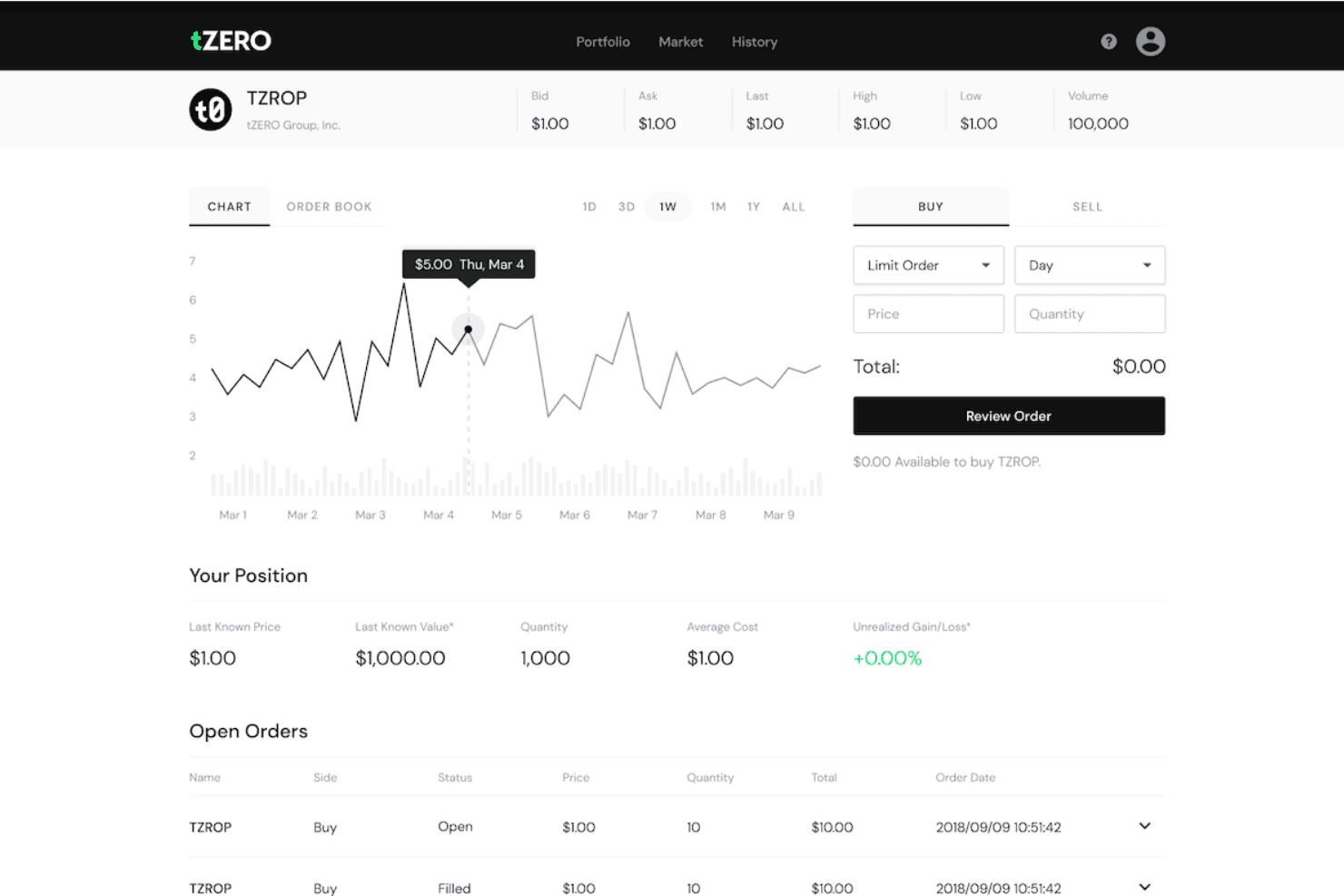
tZERO offers a trading interface displaying TZROP token with buy/sell order functionality, position tracking, and price chart history. tZERO is a regulated digital securities platform that combines token issuance, on-chain cap table management, KYC/AML compliance, and secondary market trading through its own SEC- and FINRA-regulated alternative trading system.
Who Is tZERO Best For?
tZERO is a strong fit for broker-dealers, RIAs, and capital markets teams that need a fully regulated infrastructure for issuing and trading tokenized securities.
Why I Picked tZERO
tZERO earns its spot as one of the best on my shortlist because no other tokenization platform comes with a live, SEC-regulated ATS built in. I particularly like True Settlement®, which completes trade execution and settlement simultaneously at T+0, eliminating the multi-day settlement windows you'd find on traditional exchanges. tZERO is also the second-ever SEC-registered Special Purpose Broker-Dealer, meaning it can custody tokenized securities directly without relying on a third-party custodian.
tZERO Key Features
- Multi-chain tokenization: Issue and manage digital securities across Ethereum, Stellar, Solana, Avalanche, Algorand, and Polymesh blockchains.
- White-label API platform: Access tokenization, cap table, and compliance tools through APIs for integrated or branded solutions.
- Automated compliance screening: Enforce KYC/AML and investor accreditation directly at onboarding and transfer stages.
- Real-time on-chain cap table: Maintain a real-time, auditable record of tokenholder ownership and transfer history.
tZERO Integrations
Native integrations are not clearly documented. tZERO offers an API for custom integrations.
Pros and Cons
Pros:
- Operates as SEC-registered Special Purpose Broker-Dealer
- T+0 settlement eliminates multi-day clearing delays
- Native ATS enables continuous digital securities trading
Cons:
- Primarily US-focused, limiting cross-border issuance support
- Platform UX is dated compared to modern brokerage interfaces
Learn more about tZERO: Best for DeFi-based real-world asset financing
- Not available
- Pricing upon request
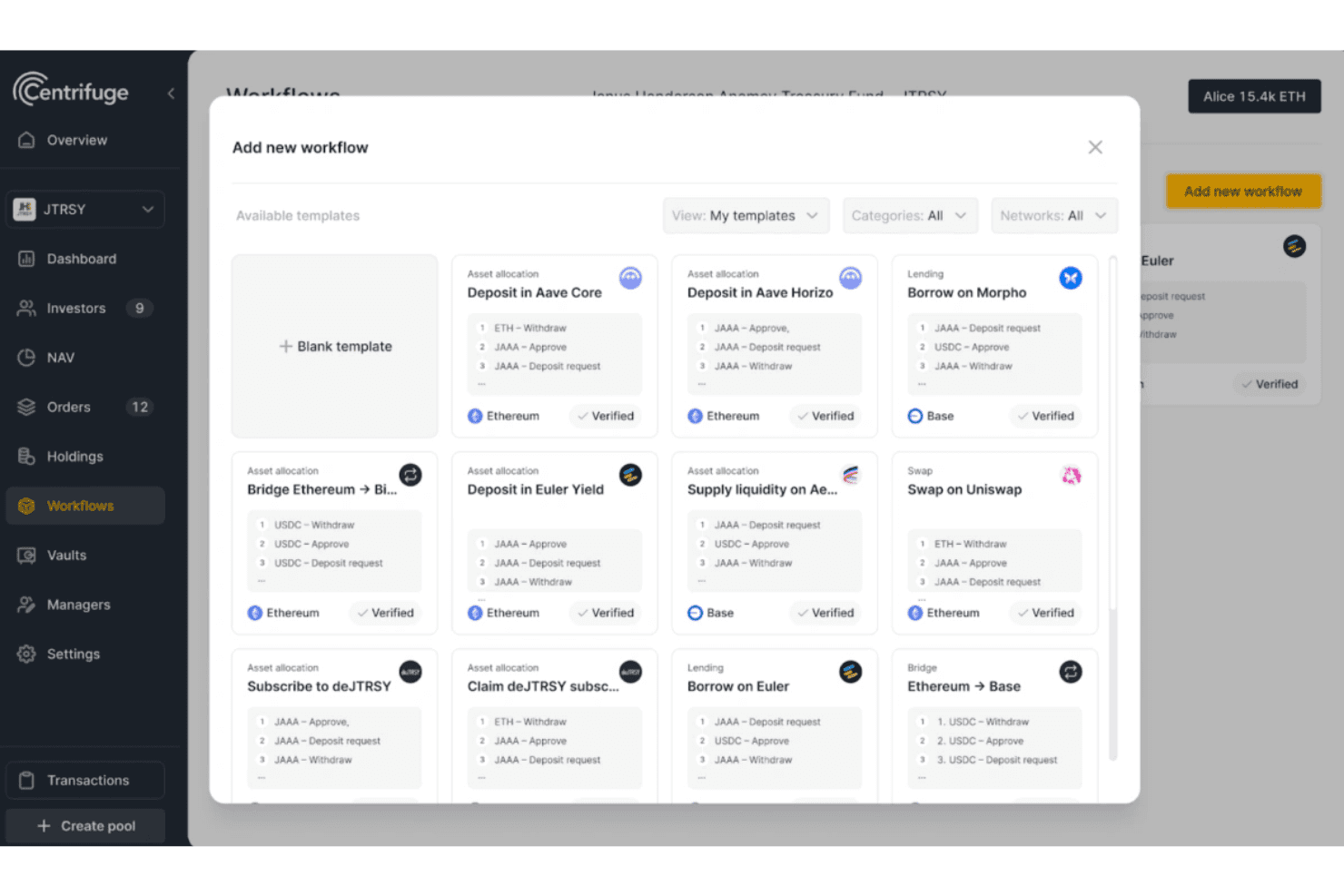
Centrifuge offers a workflow template library with pre-built DeFi actions like deposits, borrows, swaps, and bridges across Ethereum and Base networks. Centrifuge is a DeFi-native asset tokenization platform that lets institutions mint, manage, and distribute tokenized real-world assets—including bonds, private credit, equity indices, and structured credit—across multiple blockchain networks.
Who Is Centrifuge Best For?
Centrifuge is a strong fit for institutional asset managers and fund administrators looking to launch tokenized funds across DeFi-native blockchain infrastructure.
Why I Picked Centrifuge
I picked Centrifuge because its deRWA product wraps tokenized real-world assets into freely transferable tokens that plug directly into DeFi lending markets like Aave and Morpho and DEXs like Uniswap. ERC-4626 and ERC-7540 vault standards make those tokens immediately compatible with the broader DeFi ecosystem. Automated waterfall payments and onchain NAV calculation then handle the full financing lifecycle without manual intervention.
Centrifuge Key Features
- Multichain issuance support: Launch tokenized funds and assets across Ethereum, Avalanche, Base, Solana, and several EVM and non-EVM chains.
- Onchain cap table management: Maintain real-time records of tokenholder positions, transfers, and ownership history within the protocol.
- White-labeled admin UI: Deploy a customizable interface for managing tokenized offerings and compliance workflows.
- Integrated audit trails: Record all transactions, NAV calculations, and corporate actions onchain for clear regulatory visibility.
Centrifuge Integrations
Centrifuge offers native integrations with DeFi protocols including Aave, Morpho, Uniswap, Aerodrome, and Pendle. An API is available for building custom integrations.
Pros and Cons
Pros:
- Supports multiple asset tiers under one infrastructure set
- Onchain NAV published in real time via public API
- Deep DeFi liquidity access via established lending protocols
Cons:
- No public secondary market exit for fund token holders
- Flagship funds are restricted to non-US investors only
Learn more about Centrifuge:
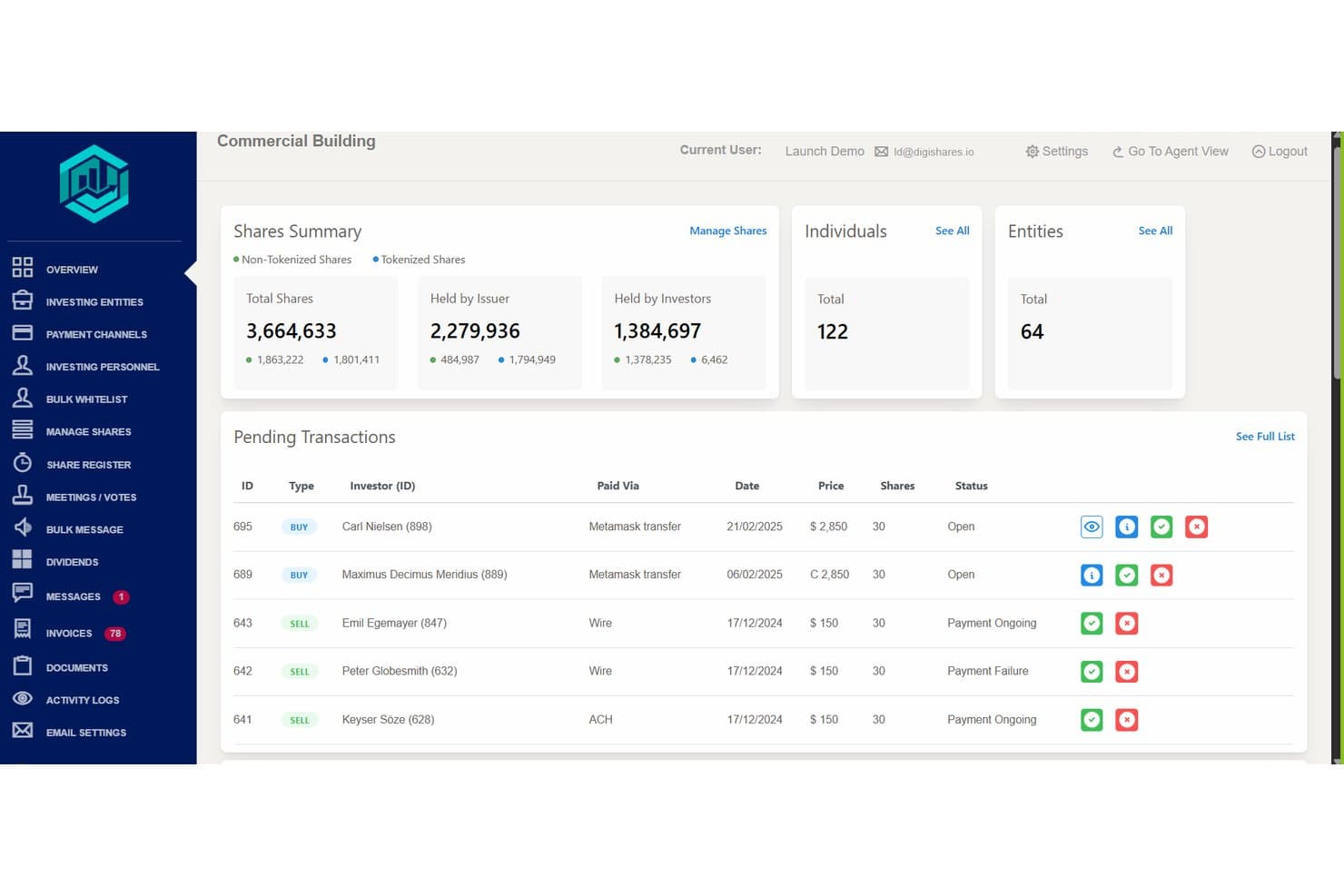
DigiShares offers a commercial building asset overview dashboard displaying shares summary, pending transactions, and investor data for tokenized and non-tokenized shares. DigiShares is an end-to-end asset tokenization platform that covers token issuance, KYC/AML compliance, on-chain cap table management, smart contract automation, and secondary market trading for real-world assets.
Who Is DigiShares Best For?
DigiShares is a strong fit for real estate sponsors, fund managers, and capital markets teams running security token offerings across multiple jurisdictions.
Why I Picked DigiShares
DigiShares earns its spot as one of the best on my shortlist because of how it handles cap table automation post-issuance, not just during the token sale. I like that the on-chain cap table tracks multiple share classes and automatically whitelists new investors as they complete KYC, keeping the registry current without manual updates. Automated dividend payouts in both fiat and crypto run directly from the same cap table, so distributions reflect the exact ownership record at payout time.
DigiShares Key Features
- Multi-chain token issuance: Issue and manage tokens across Ethereum, Polygon, Binance Smart Chain, Fantom, Polymesh, and Aptos.
- Integrated KYC/AML and accreditation: Onboard investors using SumSub or BlockPass with compliance checks at both platform and smart contract level.
- White-label investor dashboard: Offer branded, customizable onboarding, portfolio views, and document signing modules.
- Internal secondary marketplace: Use a built-in bulletin board or integrated RealEstate.Exchange for compliant secondary trading.
DigiShares Integrations
DigiShares offers native integrations with SumSub and BlockPass for KYC/AML and accreditation, and connects directly with RealEstate.Exchange for secondary trading. An API is available for custom integrations.
Pros and Cons
Pros:
- Smart contract-enforced transfer restrictions and lock-ups
- White-label investor portal with embedded KYC
- Multi-chain issuance across six public blockchains
Cons:
- Not ideal for non-real-estate asset classes
- Secondary market is bulletin board only
Learn more about DigiShares: Best for customizable investor onboarding portals
- Free demo available
- Pricing upon request
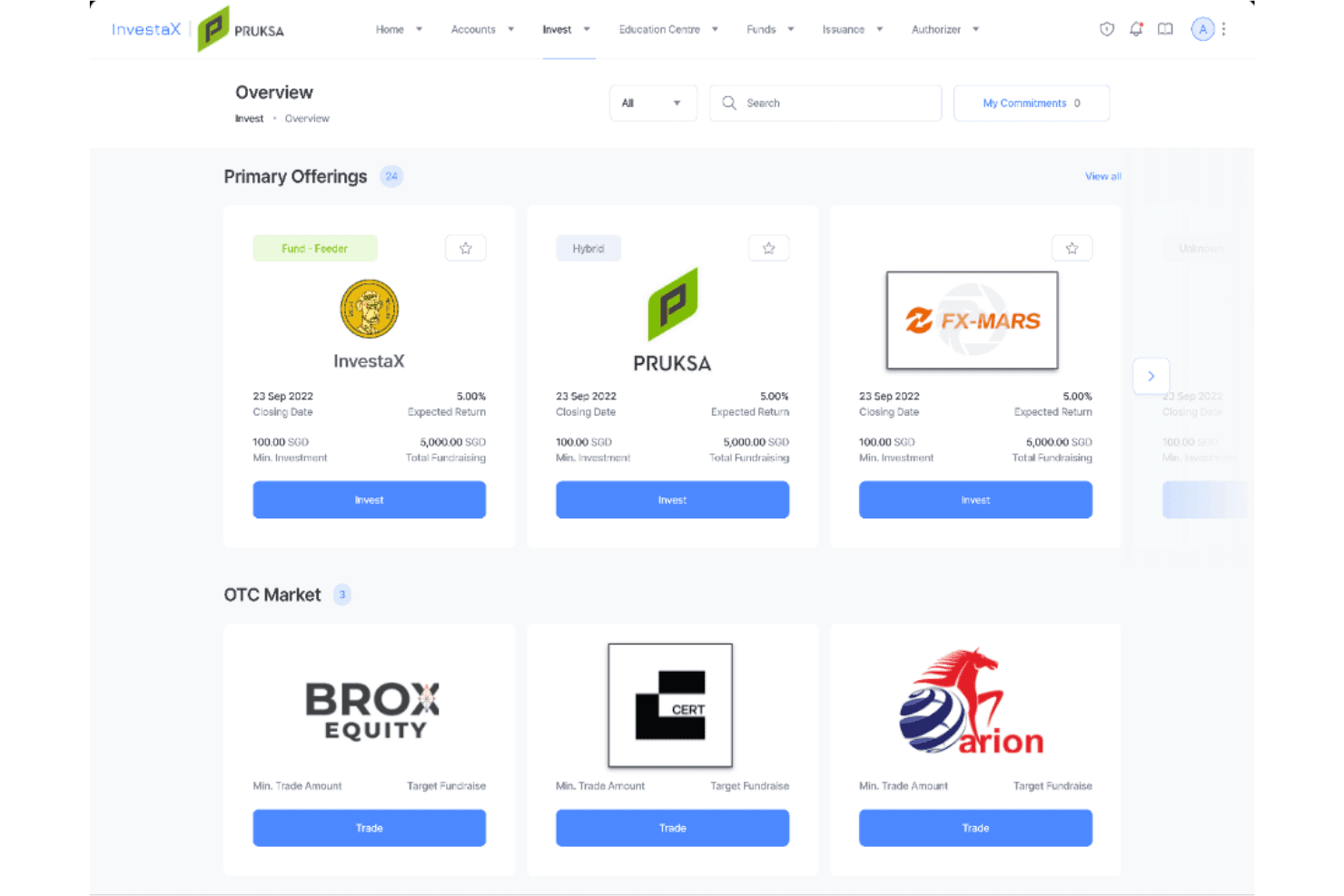
InvestaX offers a marketplace overview with Primary Offerings and OTC Market investment opportunities from multiple issuers. InvestaX is a regulated asset tokenization platform that covers token issuance, primary distribution, secondary trading, custody, and lifecycle management across multiple blockchains and real-world asset classes.
Who Is InvestaX Best For?
InvestaX is a strong fit for institutional asset managers and fund administrators in APAC and EMEA who need a MAS-licensed platform for regulated securities tokenization.
Why I Picked InvestaX
I picked InvestaX as one of the best because its co-branded platform module lets issuers launch a customized investor portal under their own domain and logo, with InvestaX's MAS licensing already in place. The built-in KYC/AML onboarding, powered by ComplyCube, covers document verification, biometric checks, and AML screening within that branded flow. I like that verified investors are whitelisted at the smart contract level, so only accredited participants can hold or transfer tokens.
InvestaX Key Features
- Multi-asset class support: Tokenize funds, private credit, bonds, real estate, and intellectual property on a single platform.
- Multi-chain issuance: Issue and manage securities on Ethereum, Polygon, BASE, Algorand, Tezos, and Hedera blockchain networks.
- Integrated primary and secondary markets: Access a centralized offering venue and P2P trading marketplace for compliant liquidity.
- Regulated custody integration: Custody digital securities with Hex Trust, a licensed custodian offering insurance and reporting.
InvestaX Integrations
InvestaX offers native integrations with ComplyCube for KYC/AML verification, Hex Trust for regulated custody, and supports API access for custom integrations.
Pros and Cons
Pros:
- White-label investor portals with embedded KYC
- Supports multiple blockchains for token issuance
- MAS-licensed for regulated securities issuance
Cons:
- Setup complexity may slow first issuance launch
- Primarily positioned for APAC regulatory markets
Learn more about InvestaX:
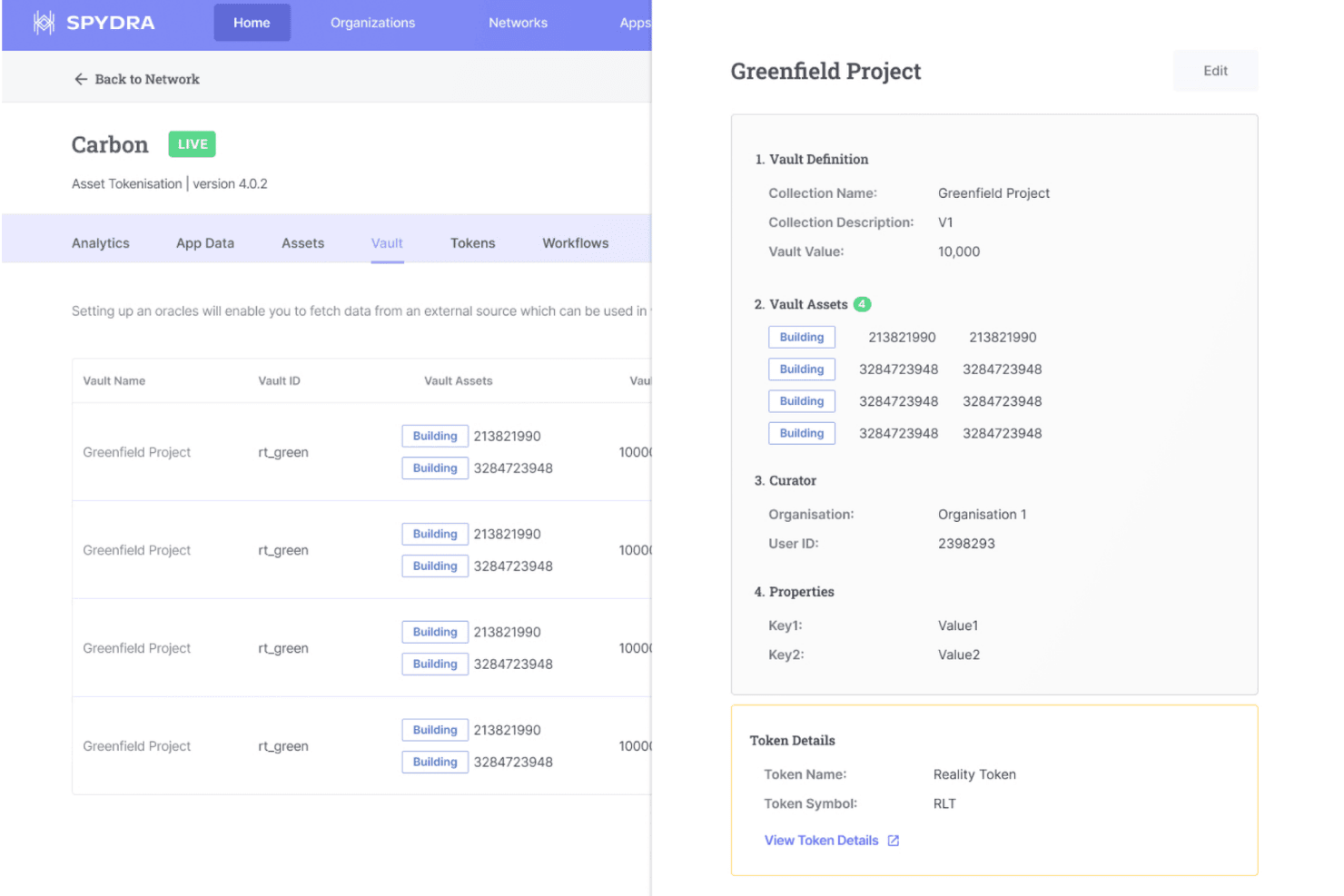
Spydra offers a Vault management interface within its Asset Tokenisation app, displaying vault definitions, assets, curator details, and token information. Spydra is a low-code asset tokenization platform built on Hyperledger Fabric that lets enterprises mint and manage digital tokens across private permissioned networks and public chains, with tools for smart contract automation, token lifecycle management, and multi-asset class support.
Who Is Spydra Best For?
Spydra is a good fit for enterprises in banking, finance, and real estate that want to launch tokenized asset programs without a dedicated blockchain engineering team.
Why I Picked Spydra
Spydra earns its spot on my shortlist because its no-code Workflow builder lets you design and launch token automation without writing smart contract code. The Token Engine handles fractionalization, issuance, and lifecycle management across both private (Hyperledger Fabric) and public chains. I also like that Listeners trigger real-time notifications on blockchain events, so distributions and lifecycle updates run automatically once configured.
Spydra Key Features
- Graph query ledger access: Query blockchain ledger data using GraphQL for custom analytics and reporting.
- Oracle integration: Connect off-chain data sources directly to the blockchain for real-time input and validation.
- IPFS document storage: Store and share asset-related documents on-chain using decentralized file storage.
- Multi-asset class support: Tokenize a wide range of assets including real estate, debt instruments, and intellectual property.
Spydra Integrations
Native integrations are not clearly documented. Spydra offers an API for custom integrations.
Pros and Cons
Pros:
- Responsive implementation support team
- Supports private and public chain deployment
- Fast no-code token launch in minutes
Cons:
- Limited onboarding resources for non-technical users
- Advanced customizations need technical knowledge
Learn more about Spydra:
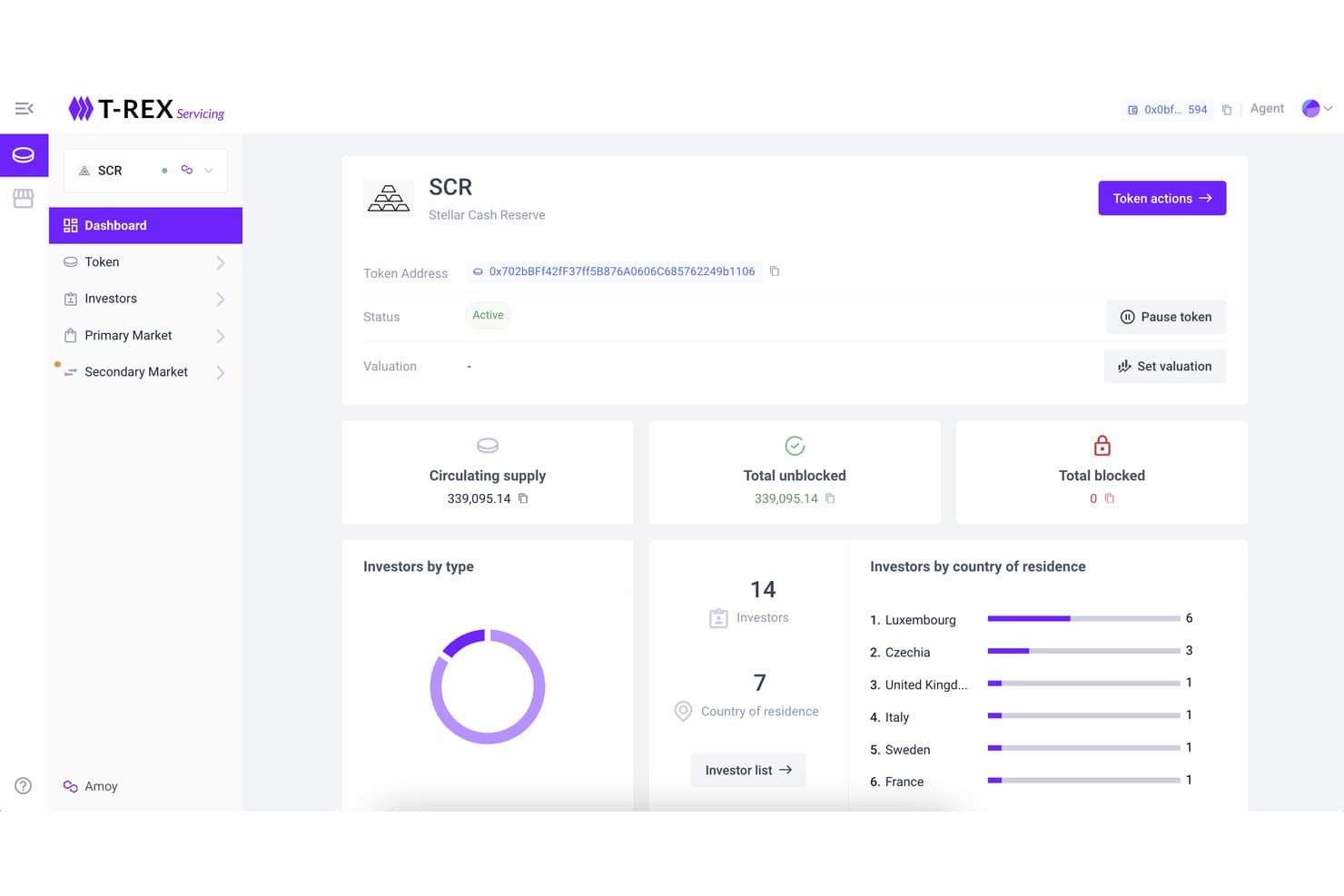
Tokeny offers a token dashboard with circulating supply, investor distribution by type and country, and token management actions for asset servicing. Tokeny is an asset tokenization platform built around the ERC-3643 (T-REX) permissioned token standard, offering no-code token issuance, on-chain compliance enforcement, cap table management, and secondary market distribution across EVM blockchains.
Who Is Tokeny Best For?
Tokeny is a strong fit for regulated financial institutions, fund managers, and capital markets teams issuing security tokens across multiple jurisdictions, particularly in Europe.
Why I Picked Tokeny
Tokeny earns its spot as one of the best on my shortlist because of how it handles compliance at the smart contract level. The ERC-3643 (T-REX) standard it created embeds investor eligibility rules directly into each token, so transfer restrictions are enforced automatically at execution, not checked after the fact. I particularly like the compliance setup tool, which lets me configure and update jurisdictional rules across 60+ markets without redeploying contracts.
Tokeny Key Features
- No-code token issuance dashboard: Launch and configure permissioned tokens across multiple EVM blockchains without custom development.
- On-chain cap table management: Maintain a real-time, immutable record of tokenholders and transactions directly on the blockchain.
- White-label investor portal: Provide investors with a branded interface for onboarding, subscription, and portfolio tracking.
- Automated corporate actions module: Trigger and manage distributions, redemptions, and other events through smart contract logic.
Tokeny Integrations
Tokeny offers native integrations with secondary trading venues such as Archax, Blocktrade, OpenFinance, 1xchange, and Ownera. An API is available for custom integrations.
Pros and Cons
Pros:
- Supports equity, debt, funds, and real estate
- On-chain compliance updates without contract redeployment
- ERC-3643 standard is open-source and auditable
Cons:
- No publicly documented uptime SLAs available
- High entry cost limits smaller issuer access
Learn more about Tokeny: Best for US-regulated digital securities issuance
- Not available
- Pricing upon request
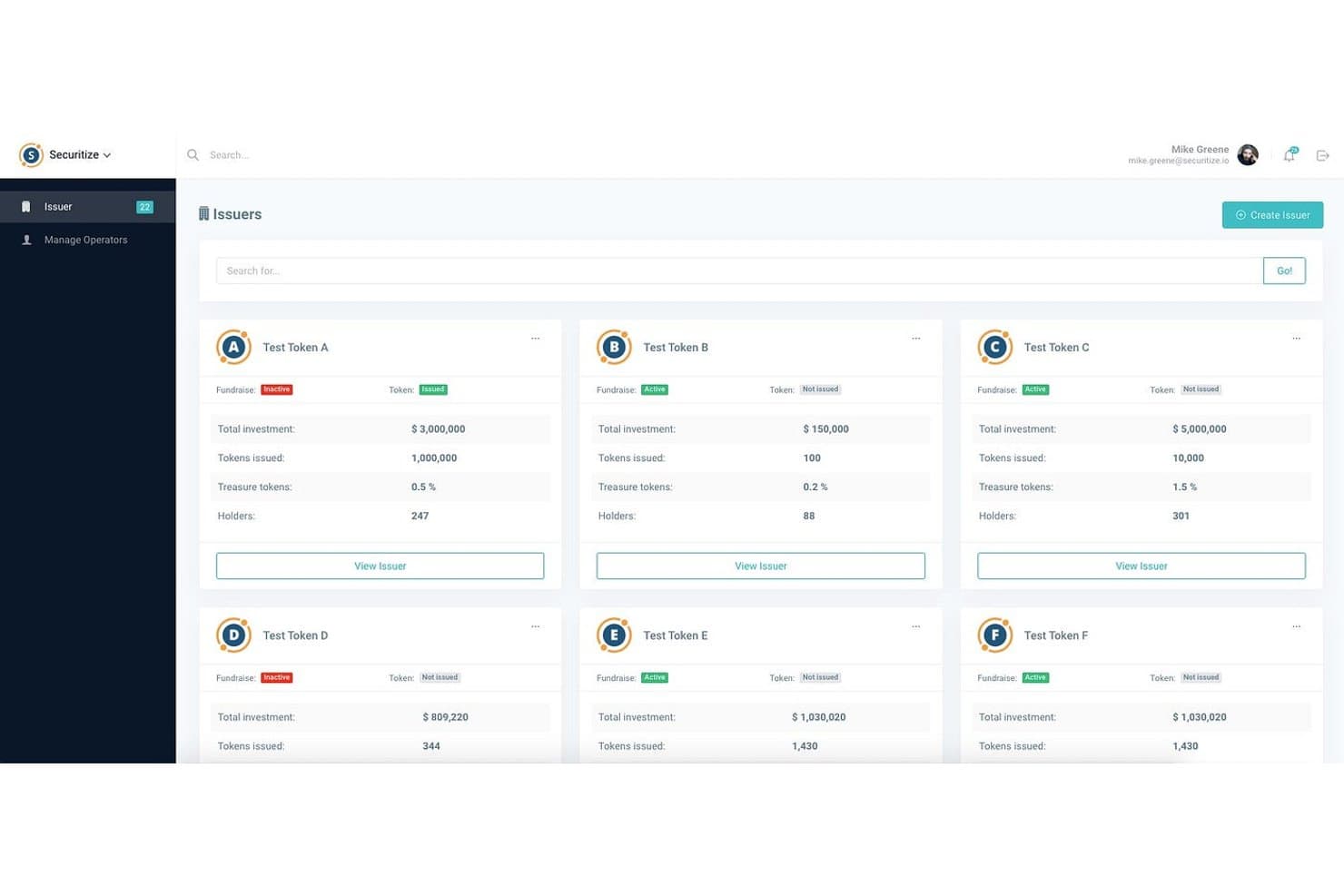
Securitize offers an issuers dashboard where users can manage multiple tokenized asset listings with investment totals, token issuance status, and holder counts. Securitize is a regulated end-to-end digital securities platform that covers token issuance, KYC/AML compliance, transfer agent services, cap table management, and secondary trading through its own licensed alternative trading system.
Who Is Securitize Best For?
Securitize is a strong fit for institutional asset managers, fund administrators, and capital markets teams that need SEC-compliant infrastructure for issuing and managing tokenized securities.
Why I Picked Securitize
Securitize earns its spot on my shortlist because it's the only platform that combines SEC-registered transfer agent services with a native FINRA-regulated ATS in a single stack. I particularly like that compliance rules are embedded directly into the token's smart contracts, so transfer restrictions and investor accreditation checks enforce automatically at the protocol level. That means I don't have to bolt on a separate compliance layer when issuing a tokenized fund or debt instrument.
Securitize Key Features
- Multi-chain token issuance: Issue and manage digital securities across leading blockchains like Ethereum, Avalanche, Polygon, Aptos, Solana, and BNB Chain.
- On-chain cap table management: Maintain immutable, up-to-date ownership records and transfer history on-chain for each tokenized asset.
- Automated fund administration: Access fund accounting, NAV calculations, crypto fund servicing, and investor services through Securitize Fund Services.
- White-label investor onboarding: Customize branded investor registration, KYC/AML flows, and portfolio portals for investor journeys.
Securitize Integrations
Securitize offers native integrations with Polygon, Ethereum, Avalanche, Solana, Arbitrum, Optimism, Aptos, BNB Chain, and Stellar for direct on-chain token issuance and management. An API is available for custom integrations.
Pros and Cons
Pros:
- Compliance rules embedded in smart contracts
- Native ATS for secondary trading included
- SEC-registered transfer agent built in
Cons:
- Implementation requires significant issuer resources
- Primarily US-focused regulatory framework
Learn more about Securitize: Best for multi-chain security token deployment
- Free plan available
- Pricing upon request
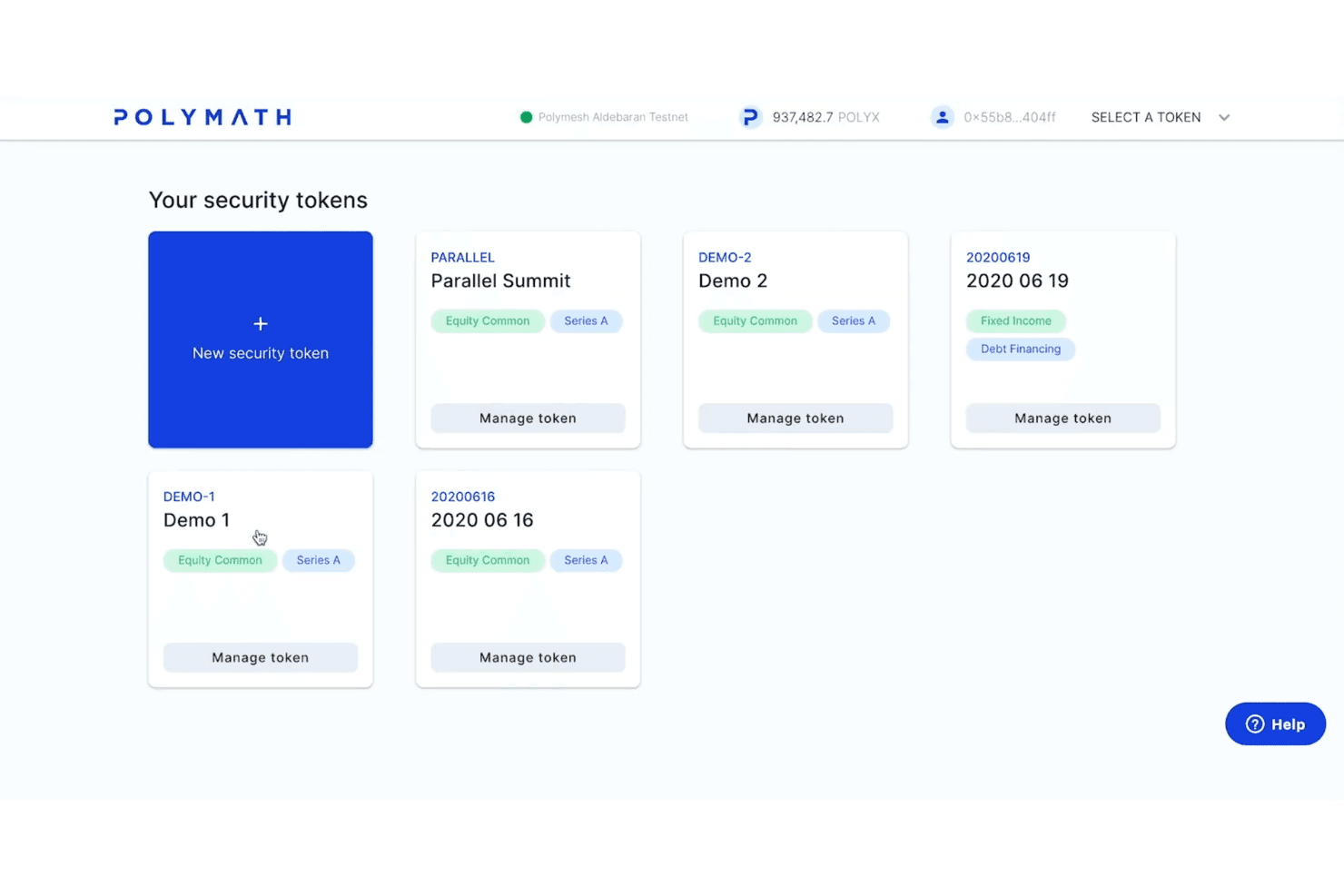
Polymath offers a security token dashboard where users can view and manage multiple tokenized assets with their associated equity and financing classifications. Polymath is an asset tokenization platform built on its own purpose-built Layer 1 blockchain, Polymesh, offering security token issuance, on-chain compliance enforcement, cap table management, and secondary market infrastructure.
Who Is Polymath Best For?
Polymath is a strong fit for capital markets teams and fund administrators at mid-size to enterprise firms issuing regulated security tokens.
Why I Picked Polymath
Polymath earns its spot on my shortlist because its architecture spans both Polymesh, a purpose-built Layer 1, and Ethereum via the ST-20/ERC-1400 standard, giving issuers a genuine multi-chain deployment path. I particularly like that Polymesh embeds identity verification and compliance rules directly at the protocol level, so transfer restrictions are enforced on-chain without relying on a separate middleware layer. That deterministic settlement model is something you simply don't get on a general-purpose chain.
Polymath Key Features
- White label investor portal: Lets issuers customize onboarding, investor dashboards, and communication workflows under their own branding.
- Automated corporate actions: Handles distributions, dividends, and voting directly through smart contracts tied to each token.
- Real-time on-chain cap table management: Tracks investor positions, transfers, and audit trails on a live, immutable ledger.
- API and SDK access: Offers developers programmatic tools to integrate tokenization, compliance, and reporting into custom applications.
Polymath Integrations
Polymath offers native integrations with Sumsub, Web3Auth, Stripe, Fireblocks, and tZERO. An API is available for custom integrations.
Pros and Cons
Pros:
- Supports multi-chain issuance across major networks
- Purpose-built blockchain for regulated security tokens
- On-chain compliance rules enforced at protocol level
Cons:
- Steeper technical setup than no-code alternatives
- Smaller developer ecosystem than Ethereum-native platforms
Learn more about Polymath: Best for tokenized exposure to US Treasuries
- Not available
- Pricing upon request
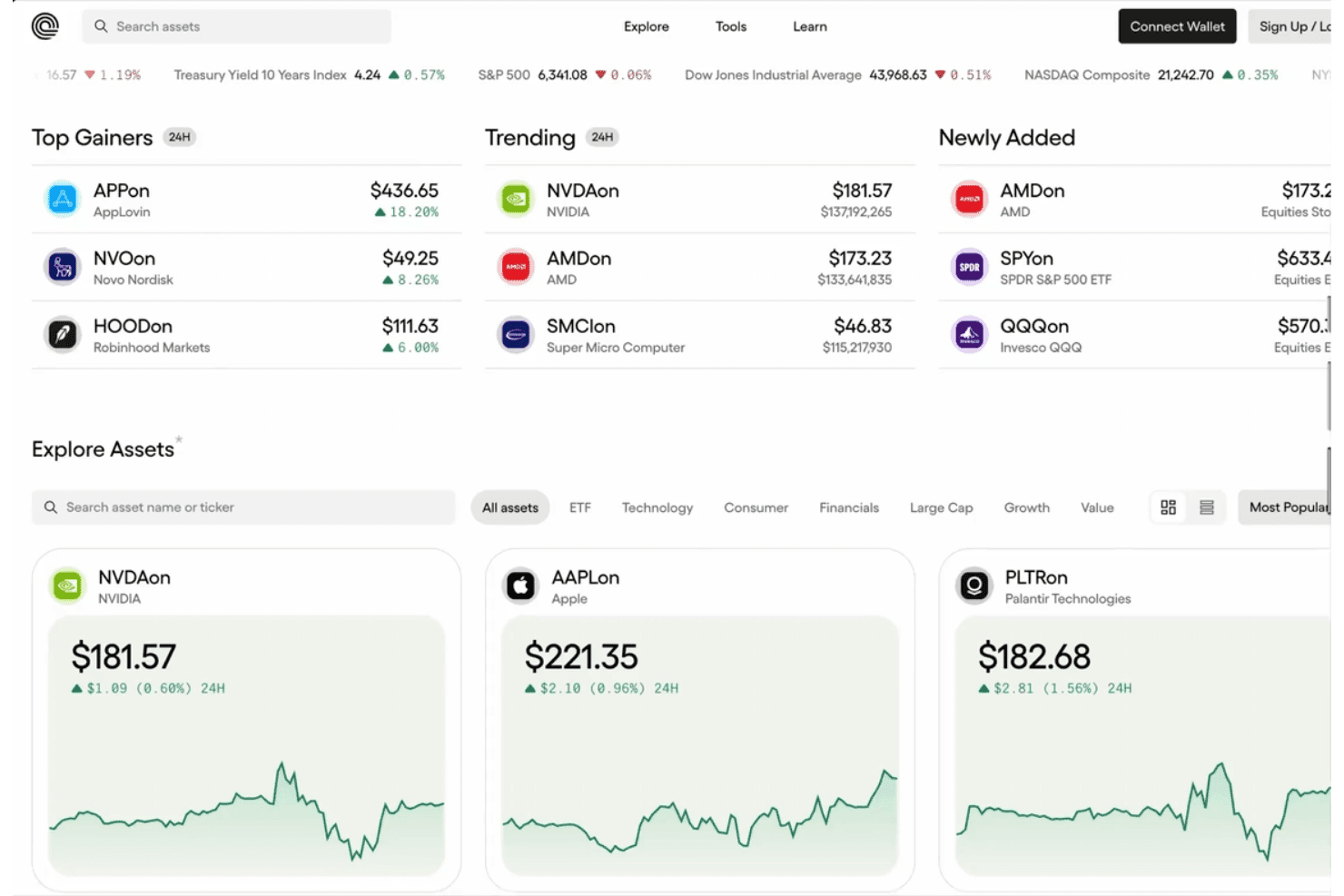
Ondo Finance offers a tokenized asset explorer dashboard featuring top gainers, trending assets, and newly added equities with real-time price data. Ondo Finance is a blockchain-based platform for issuing and distributing tokenized real-world assets, covering US Treasuries, money-market instruments, and equities across multiple blockchain networks.
Who Is Ondo Finance Best For?
Ondo Finance suits institutional investors and accredited investors seeking on-chain exposure to US Treasury yields and tokenized equities without using traditional brokerage accounts.
Why I Picked Ondo Finance
I picked Ondo Finance as one of the best because its OUSG token gives direct, 24/7 on-chain exposure to BlackRock's BUIDL fund and other US Treasury money-market vehicles, with instant minting and redemption via USDC. I also like that USDY accrues daily Treasury yield directly in your wallet across 10+ blockchains, with a collateralization ratio above 104%. Every position is legally ring-fenced from Ondo's operational balance sheet, which is a structural protection you don't get from most crypto-native yield products.
Ondo Finance Key Features
- Tokenized equities platform: Offers over 260 tokenized U.S. stocks and ETFs tradable on Ethereum, Solana, and BNB Chain.
- Chainlink oracle integration: Uses Chainlink Price Feeds for accurate asset price data and secure cross-chain settlement.
- Cross-chain asset access: Provides instant minting and redemption of tokenized assets across multiple networks including Ethereum, Polygon, Solana, and more.
- Broadridge-enabled voting: Enables shareholders to submit voting instructions for tokenized stocks and ETFs directly from their wallets.
Ondo Finance Integrations
Ondo Finance offers native integrations with Chainlink for price oracles and Broadridge for on-chain proxy voting. An API is available for custom integrations.
Pros and Cons
Pros:
- Wide tokenized equity and ETF selection
- Transparent reserve disclosures and regular audits
- Instant redemption with no lock-up periods
Cons:
- Restricted to accredited or institutional investors
- No custom asset class issuance tools
Learn more about Ondo Finance: Best for institutional-grade custody integrations
- Free demo available
- From $999/month
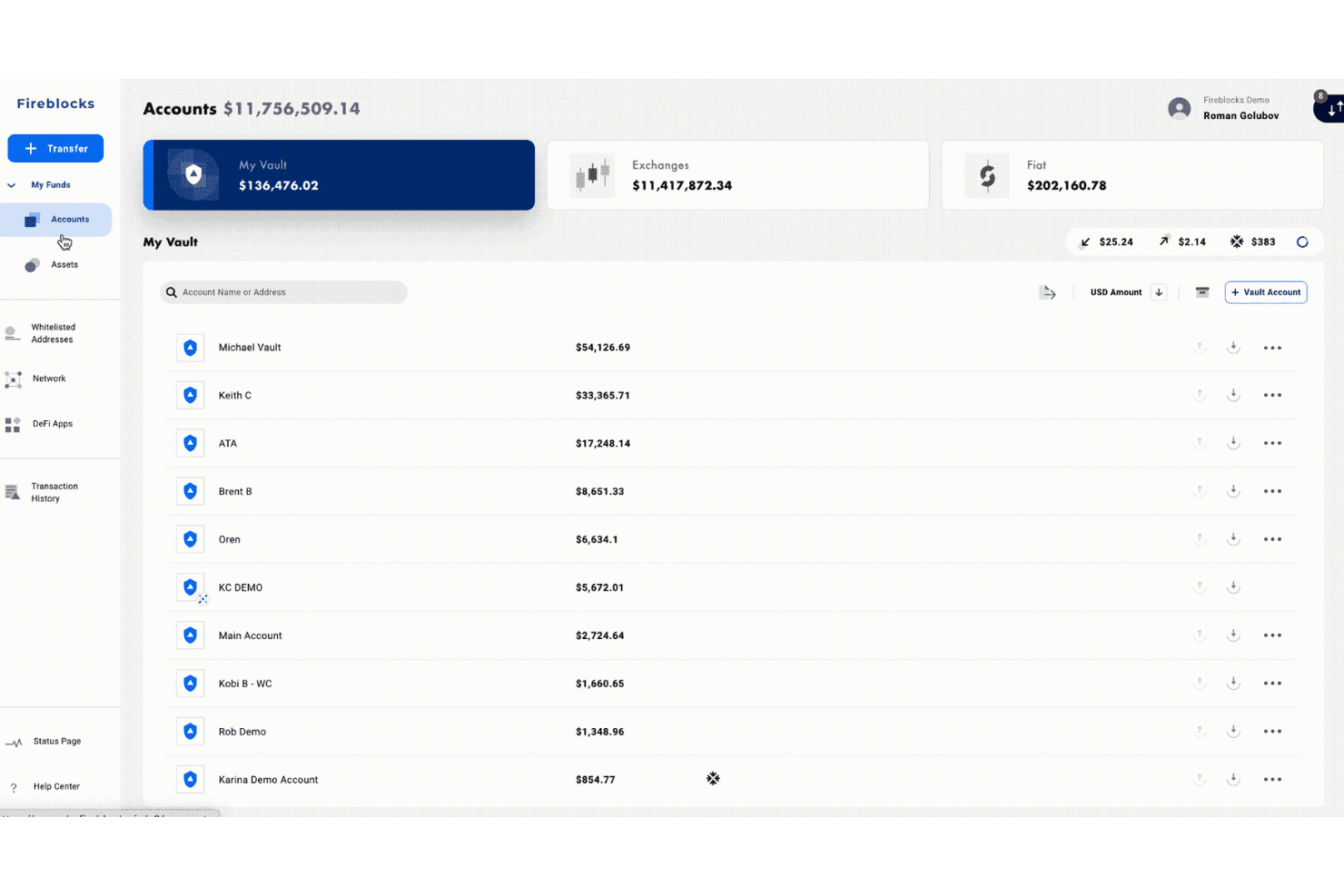
Fireblocks offers a multi-account vault dashboard with total holdings of $11,756,509.14 across vault, exchange, and fiat accounts. Fireblocks is a digital asset infrastructure platform that combines token issuance, MPC-based custody, smart contract deployment across 35+ blockchains, and secondary market connectivity for institutional tokenization programs.
Who Is Fireblocks Best For?
Fireblocks is built for banks, asset managers, and financial institutions that need enterprise-grade security controls and network connectivity as the foundation of their tokenization infrastructure.
Why I Picked Fireblocks
Fireblocks earns its spot on my shortlist because the combination of MPC-based custody and a granular Policy Engine is hard to replicate at scale. I like that every token operation, from minting to redemption, can be locked behind multi-step approval workflows tied to transaction size and destination. I've also found the Fireblocks Network valuable: when a tokenized bond needs to settle, my team can route directly to 2,400+ pre-authenticated counterparties without rebuilding trust relationships from scratch.
Fireblocks Key Features
- Multi-chain smart contract deployment: Use pre-built or customizable smart contracts across more than 35 blockchains.
- Automated lifecycle management: Schedule and monitor token issuances, settlements, and secondary trading on a unified dashboard.
- API-driven token operations: Integrate directly with your existing back-office or treasury systems using REST APIs.
- Granular governance controls: Define user permissions and automated approval steps for token operations through a policy engine.
Fireblocks Integrations
Fireblocks offers native integrations with Chainalysis and Notabene for compliance and risk monitoring, connects directly to over 30 digital asset exchanges, and provides an API for custom integrations.
Pros and Cons
Pros:
- Multi-chain token deployment across 35+ blockchains
- Pre-authenticated network of 2,400+ counterparties included
- MPC custody is battle-tested at institutional scale
Cons:
- Setup complexity requires significant technical resources
- Not purpose-built for token issuance workflows
Learn more about Fireblocks:
Andre plattformer for tokenisering av aktiva
Her er noen flere alternativer for plattformer for tokenisering av aktiva som ikke kom med på kortlisten min, men som likevel er verdt å se nærmere på:
- 11Maple FinanceBest for undercollateralized on-chain lending
- 12Taurus-CAPITALBest for multi-asset class tokenization tools
- 13KaleidoBest for rapid token deployment
- 14ADDXBest for fractionalized access to private markets
- 15ZoniqxBest for enterprise-grade tokenization APIs
- 16BitbondBest for digital asset issuance in Europe
- 17SuperstateBest for blockchain-powered fund administration
How I Evaluate Asset Tokenization Platforms
I look at two layers: the baseline every platform must clear—on-chain KYC, token issuance, cap table management—and what separates a real estate tool from a regulated multi-asset securities platform.
Core Functionality (Table Stakes For This List)
When I'm selecting tools for my list, I rank each one on a scale from 0 (does not offer the functionality) to 5 (excels in this area) for each core functionality listed below. Then, I calculate the tool's total score into a percentage. Each tool needs to achieve a minimum total score of 65% to be considered for inclusion.
- Token Issuance Engine: I evaluate how many blockchain networks and token standards a platform supports, and whether issuers can configure and deploy tokens without custom development work.
- Compliance & KYC/AML: Platforms should enforce investor accreditation and jurisdictional transfer restrictions at the smart contract level, not just through a bolted-on third-party link.
- Cap Table & Registry Management: I look for an on-chain record of tokenholders with transfer history and audit trails—especially useful when fund administrators need real-time ownership data.
- Smart Contract Automation: Automated dividend distributions, lock-up enforcement, and corporate actions matter. I check whether the platform handles waterfall logic for structured products or only basic payouts.
- Multi-Asset Class Support: Some platforms only handle equity tokens. I evaluate whether they also support debt, real estate, fund interests, and commodities with asset-specific templates.
- Secondary Market Infrastructure: I consider whether the platform integrates with regulated trading venues or offers its own marketplace, since liquidity options directly affect investor appetite.
Once I have a list of tools that meet the criteria, I consider what sets each platform apart.
Differentiating Factors (What Sets Vendors Apart)
Here's how I compare and contrast different vendors:
Standout Features
Multi-chain support matters when your investors hold wallets on different networks—issuing on Ethereum alone can limit your reach. I also evaluate whether a platform offers built-in primary and secondary markets, since bundling distribution and trading in one place removes the need to integrate separate ATS venues. White-label investor portals are another differentiator. They let you brand the onboarding experience and embed KYC, subscription docs, and wallet setup under your own identity.
Beyond Features
Regulatory coverage is a big one—I check whether a platform holds its own licenses or relies on partners for issuance and secondary trading, especially for cross-border offerings. Custody infrastructure also varies widely. Some platforms integrate with qualified custodians like Fireblocks or Anchorage, while others offer MPC-based wallets or account abstraction for non-crypto-native investors. I also evaluate connections to traditional payment rails and APIs for fund administrators and accounting systems, since most tokenized assets still need fiat on-ramps for subscriptions and distributions.
Slik velger du en plattform for tokenisering av aktiva
Det er lett å gå seg vill i lange funksjonslister og kompliserte prisstrukturer. For å hjelpe deg med å holde fokus mens du går gjennom din unike prosess for programvarevalg, får du her en sjekkliste over faktorer du bør ha i mente:
| Faktor | Hva du bør vurdere |
|---|---|
| FaktorSkalerbarhet | Hva du bør vurdereHvor godt håndterer plattformen et økende antall aktivaklasser, investorer og utstedelser på tvers av blokkjeder etter hvert som tilbudet ditt vokser? |
| FaktorIntegrasjoner | Hva du bør vurdereKobler den seg til systemene dine for fondsadministrasjon, regnskap, KYC og banktjenester, eller trenger du tilpassede koblinger for sentrale arbeidsflyter? |
| FaktorTilpasningsmuligheter | Hva du bør vurdereKan du tilpasse maler for smarte kontrakter, arbeidsflyter og investorportaler til unike avtalestrukturer, merkevarebygging eller regulatoriske krav? |
| FaktorBrukervennlighet | Hva du bør vurdereKan teammedlemmer uten kryptobakgrunn utstede, administrere og rapportere om aktiva uten støtte fra utviklere? |
| FaktorImplementering og introduksjon | Hva du bør vurdereHvor mye tid, intern støtte og oppslutning fra interessenter krever utrullingen? Er juridiske maler og verktøy for introduksjon inkludert? |
| FaktorKostnad | Hva du bør vurdereKrever leverandøren oppstartsgebyrer, gebyrer per utstedelse, gebyrer basert på forvaltede aktiva eller variable transaksjonskostnader? Hvordan øker kostnadene etter hvert som utstedelsesvolumet vokser? |
| FaktorSikkerhetstiltak | Hva du bør vurdereHvilke tiltak for lommebøker, oppbevaring og nøkkelhåndtering er på plass? Spør om støtte for kvalifisert depotmottaker og forsikring for oppbevaring av digitale aktiva. |
| FaktorEtterlevelseskrav | Hva du bør vurdereStøtter plattformen nødvendige krav til KYC/AML, jurisdiksjonsspesifikke regler og rapporteringsstandarder for målmarkedene og utstedelsene dine? |
Hva er plattformer for tokenisering av aktiva?
Plattformer for tokenisering av aktiva lar deg opprette, administrere og overføre digitale token som representerer aktiva i den virkelige verden – som egenkapital, gjeld eller eiendom – på en blokkjede. Disse plattformene automatiserer etterlevelseskontroller, forenkler administrasjon av eierregistre og muliggjør funksjoner som brøkdelte eierandeler og handel på sekundærmarkedet, alt i et sikkert, regelbasert miljø som sikrer at regulatoriske krav oppfylles.
Funksjoner i plattformen for tokenisering av eiendeler
Vær oppmerksom på følgende nøkkelfunksjoner når du velger en plattform for tokenisering av eiendeler:
- Motor for utstedelse av tokener: Opprett og distribuer digitale tokener knyttet til eierskap av eiendeler, med støtte for flere blokkjedenettverk og tokenstandarder basert på behovene dine.
- Administrasjon av eiertabell: Vedlikehold en sanntidsbasert hovedbok på blokkjeden over alle tokeninnehavere, slik at det blir enkelt å spore eierskap, overføringer og historiske endringer for etterlevelse eller revisjoner.
- Integrert KYC/AML-etterlevelse: Automatiser registrering av investorer, akkreditering og jurisdiksjonsbaserte begrensninger for å sikre at tilbud oppfyller regulatoriske retningslinjer på plattform- og smartkontraktnivå.
- Automatisering av smartkontrakter: Angi regler for utbetaling av utbytte, rentebetalinger, bindingstider og avstemninger, slik at manuelt administrativt arbeid reduseres gjennom hele eiendelens livssyklus.
- Støtte for flere eiendelstyper: Tokeniser ulike eiendelsklasser – inkludert fast eiendom, private fond, egenkapital og gjeld – ved hjelp av innebygde eller tilpassbare maler for ulike strukturer.
- Tilgang til sekundærmarked: Muliggjør peer-to-peer-overføringer eller integrert markedsplasshandel, slik at investorer kan kjøpe, selge eller handle tokener med tydelige regler og tilsyn.
- Investorportal med egen merkevare: Tilpass plattformgrensesnittet til merkevaren din, og forenkle registrering av investorer, tokenabonnementer og løpende porteføljeforvaltning under din egen identitet.
- Rapportering og revisjonsspor: Generer automatiserte rapporter om tokenoverføringer, distribusjoner og etterlevelseshandlinger, som støtter både intern oppfølging og eksterne revisjoner.
- API-integrasjoner: Koble plattformen til regnskaps-, fondsadministrasjons-, tradisjonelle bank- eller regulatoriske rapporteringssystemer for å forenkle arbeidsflyter i backoffice.
- Alternativer for oppbevaring og lommebøker: Tilby sikker opprettelse av lommebøker for både privatpersoner og institusjonelle investorer, med alternativer for selvforvaring eller integrasjon med kvalifiserte forvaltere av digitale eiendeler.
Fordeler med plattformen for tokenisering av eiendeler
Implementering av en plattform for tokenisering av eiendeler gir flere fordeler for teamet og virksomheten din. Her er noen av fordelene du kan se frem til:
- Større likviditet: Ved å muliggjøre brøkdelseierskap og handel på sekundærmarkedet kan du frigjøre likviditet for typisk illikvide eiendeler som private equity eller fast eiendom.
- Automatisert etterlevelse: Innebygde KYC/AML-, akkrediterings- og jurisdiksjonskontroller reduserer regulatorisk risiko og tiden som brukes på manuell kontroll av investorer.
- Forenklet administrasjon: Automatisert administrasjon av eiertabeller, utbytteutbetalinger og selskapsrelaterte tiltak reduserer den administrative belastningen for både utstedere og fondsadministratorer.
- Økt åpenhet: Alle transaksjoner, tildelinger og distribusjoner spores på blokkjeden, noe som gir sanntidsrapportering og et komplett revisjonsspor for hele investorbasen din.
- Skalerbar utstedelse: Du kan raskt tokenisere ulike eiendelsklasser og håndtere store investorbaser på tvers av flere geografiske områder uten å bygge om arbeidsflytene dine.
- Tilpassbar registrering av investorer: Portaler med egen merkevare og konfigurasjon av smartkontrakter lar deg tilpasse registrering, abonnementer og porteføljetilgang til merkevaren og de regulatoriske behovene dine.
- Bedre sikkerhet: Oppbevaring på institusjonelt nivå, kontroll over lommebøker og programmerbar etterlevelse gir ekstra beskyttelse for både utstedere og investorer.
Kostnader og priser for plattformen for tokenisering av eiendeler
Valg av plattform for tokenisering av eiendeler krever en forståelse av de ulike prismodellene og abonnementene som er tilgjengelige. Kostnadene varierer basert på funksjoner, teamstørrelse, tillegg og mer. Tabellen nedenfor oppsummerer vanlige abonnementer, gjennomsnittsprisene deres og typiske funksjoner som er inkludert i plattformløsninger for tokenisering av eiendeler:
Sammenligningstabell for abonnementer for plattformen for tokenisering av eiendeler
| Abonnementstype | Gjennomsnittspris | Vanlige funksjoner |
|---|---|---|
| AbonnementstypeGratisabonnement | Gjennomsnittspris$0 | Vanlige funksjonerTilgang til grunnleggende verktøy for utstedelse av tokener, begrenset administrasjon av eiertabeller og begrenset rapporteringsfunksjonalitet. |
| AbonnementstypePrivatabonnement | Gjennomsnittspris$150-$500/måned | Vanlige funksjonerStøtte for én eiendelsklasse, grunnleggende etterlevelseskontroller, enkel registrering av investorer og begrensede API-integrasjoner. |
| AbonnementstypeBedriftsabonnement | Gjennomsnittspris$1,000-$5,000/måned | Vanlige funksjonerStøtte for flere eiendeler, utvidet etterlevelse, sanntidssporing av eiertabeller, automatiserte distribusjoner og portal med egen merkevare. |
| AbonnementstypeEnterprise-abonnement | Gjennomsnittspris$8,000-$25,000/måned | Vanlige funksjonerTilpasset arbeidsflytautomatisering, avansert regulatorisk dekning, prioritert kundestøtte, dedikert oppstart og API-tilgang. |
Vanlige spørsmål om plattform for tokenisering av eiendeler
Her er noen svar på vanlige spørsmål om plattformer for tokenisering av eiendeler:
Hvordan skiller tokenisering av eiendeler seg fra tradisjonell verdipapirisering?
Tokenisering av eiendeler legger eierskap og regler direkte inn i tokenene på blokkjeden, noe som muliggjør programmerbar etterlevelse, umiddelbare overføringer og transparente revisjonsspor. Tradisjonell verdipapirisering er avhengig av flere mellomledd, langsommere behandling og mer manuell dokumentasjon.
Kan plattformer for tokenisering av eiendeler håndtere flere aktivaklasser?
Ja, de fleste plattformer håndterer ulike aktivatyper – som private equity, eiendom, gjeld og fond – ved hjelp av spesialiserte maler og arbeidsflyter tilpasset de regulatoriske kravene og administrasjonsbehovene til hver struktur.
Hvilke regulatoriske standarder støtter disse plattformene vanligvis?
Plattformer støtter vanligvis viktige standarder som Reg D, Reg S, Reg A+, MiCA og lokale tilsvarende standarder, og håndhever relevante begrensninger både ved utstedelse av tokenene og ved løpende overføringer mellom investorer.
Er transaksjoner på sekundærmarkedet tilgjengelige?
Ja, noen plattformer integrerer innebygde markedsplasser for direkte handel mellom parter eller basert på ATS, som muliggjør sekundærhandel med tokenene og gir investorer økt likviditet og flere alternativer for uttreden.
Hva må virksomheter forberede før de implementerer en plattform for tokenisering av eiendeler?
Dere bør ha tydelig definerte juridiske strukturer, KYC/AML-retningslinjer, samarbeidspartnere for etterlevelse og interne ressurser klare til å føre tilsyn med registrering, investorkommunikasjon og periodisk rapportering. Det er også viktig å planlegge integrasjon med eksisterende regnskaps- eller administrasjonssystemer.