

10 beste internationale betalingsgateways beoordeeld in 2026

10 Selectie van de beste internationale betalingsgateways


Bij het beheren van internationale transacties moeten CFO's toezicht houden op valutaconversies, naleving van regelgeving en transactiekosten. Het afhandelen van deze elementen in meerdere regio's zorgt voor extra operationele complexiteit. U hebt een eenvoudige oplossing nodig die deze taken gemakkelijker en efficiënter maakt.
Uit mijn ervaring zijn internationale betalingsgateways ontworpen om grensoverschrijdende betalingen te ondersteunen en deze processen te centraliseren. Door deze tools te gebruiken, kunnen financiële teams handmatig werk verminderen en consistentere betalingsprocessen onderhouden.
In dit artikel deel ik mijn beste keuzes voor internationale betalingsgateways. Ik heb elke optie onafhankelijk getest en beoordeeld om u een objectief perspectief te bieden. U vindt informatie over functies, voordelen en mogelijke nadelen, zodat u de beste keuze voor uw organisatie kunt maken.
Waarom u onze softwareaanbevelingen kunt vertrouwen
Onze reviews weerspiegelen ons onafhankelijke oordeel — geen verkooppraatje. Ontdek hoe we transparant blijven.
Voor deze gids hebben we tools geëvalueerd met behulp van praktijktests en onafhankelijk onderzoek, waarbij we tools beoordeelden aan de hand van onze selectiecriteria.
Onze reviews weerspiegelen ons menselijke redactionele oordeel, geen verkooppraatje.
Samenvatting van de beste internationale betalingsgateways
Deze vergelijkingsgrafiek vat de prijsgegevens van mijn beste internationale betalingsgateways samen, zodat u de beste optie voor uw budget en zakelijke behoeften kunt vinden.
| Tool | Best For | Trial Info | Price | ||
|---|---|---|---|---|---|
| 1 | Best for global reach | Not available | From $620/month | Website | |
| 2 | Best for digital products | Free trial available | Pricing upon request | Website | |
| 3 | Best for small businesses | Free plan + free demo available | From $0.30/transaction | Website | |
| 4 | Best for SaaS businesses | Not available | Pricing upon request | Website | |
| 5 | Best for recurring payments | Free demo available | From 0.5% + $0.05/transaction | Website | |
| 6 | Best for Amazon shoppers | Free demo available | From 2.9% domestic processing fee + $0.30 authorization fee | Website | |
| 7 | Best for education payments | Free demo available | Pricing upon request | Website | |
| 8 | Best for fraud protection | Not available | From $25/month | Website | |
| 9 | Best for trade compliance | Free demo available | Pricing upon request | Website | |
| 10 | Best for enterprise solutions | Not available | Pricing upon request | Website |
Beoordelingen van de beste internationale betalingsgateways
Hieronder vindt u mijn uitgebreide samenvattingen van de beste internationale betalingsgateways die op mijn shortlist zijn gekomen. In mijn beoordelingen bespreek ik de belangrijkste functies, voor- en nadelen, integraties en ideale gebruiksscenario’s van elke tool in detail, zodat u de beste optie voor u kunt vinden.

Stripe
Best for global reach

Stripe is a payment processing platform popular among businesses of all sizes, from startups to large enterprises. It enables online payments and financial transactions, making it a go-to choice for companies needing to handle international payments.
Why I picked Stripe: It offers extensive global reach with support for multiple currencies and countries, making it an ideal choice for businesses looking to expand internationally. Stripe's features include payment processing, billing, and fraud prevention, all designed to facilitate global transactions. It also provides a customizable checkout experience, allowing you to tailor the payment process to your brand. With its powerful API, your team can easily integrate Stripe into your existing systems.
Standout features and integrations:
Features include custom billing solutions that adjust to your business needs, a fraud prevention system that helps protect your transactions, and the ability to manage subscriptions and recurring billing with ease.
Integrations include Shopify, WooCommerce, Xero, QuickBooks, Salesforce, NetSuite, Zapier, FreshBooks, Adobe Commerce, Squarespace, and more.
Pros and Cons
Pros:
- Strong developer tools
- Customizable checkout options
- Supports multiple currencies
Cons:
- Limited direct customer support on lower tiers
- Complex pricing structure

Best for digital products

FastSpring is an e-commerce platform designed for businesses selling digital products, such as software and online services. It provides tools for global payments, subscription management, and digital storefront creation, catering mainly to digital content creators and software developers.
Why I picked FastSpring: It specializes in digital products, offering features that make it easy for your team to manage online sales and subscriptions. FastSpring handles global transactions with built-in tax compliance, ensuring you can sell your products internationally without hassle. The platform provides customizable storefronts, allowing you to create a branded shopping experience. Additionally, its subscription management tools help you retain customers and manage recurring revenue effectively.
Standout features and integrations:
Features include advanced reporting tools that give you insights into sales performance, automated tax calculation to simplify compliance, and promotional tools that help you drive sales with discounts and offers.
Integrations include Shopify, WordPress, WooCommerce, Zapier, Mailchimp, Google Analytics, Salesforce, HubSpot, Slack, PayPal, and more.
Pros and Cons
Pros:
- Automated tax compliance
- Offers customizable storefronts
- Supports global transactions
Cons:
- Requires technical setup for advanced features
- Limited suitability for physical goods

PayPal
Best for small businesses

PayPal is a versatile online payment platform widely used by small businesses for its ease of setup and global reach. It facilitates secure transactions, allowing businesses to accept payments from customers worldwide.
Why I picked PayPal: It's particularly beneficial for small businesses due to its straightforward setup and wide acceptance. You can use features like invoicing and payment tracking to manage your transactions efficiently. In my experience, these capabilities help businesses maintain smooth operations with minimal effort. PayPal's buyer and seller protection also adds an extra layer of security, making it a reliable choice for small enterprises.
Standout features & integrations:
Features include invoicing tools that let you create and send professional invoices quickly. Payment tracking helps you monitor your transactions with ease. You also get buyer and seller protection, which supports security for your team and customers.
Integrations include QuickBooks, Shopify, WooCommerce, BigCommerce, Adobe Commerce, Salesforce, Xero, FreshBooks, Squarespace, and Etsy.
Pros and Cons
Pros:
- Supports multiple currencies
- Widely accepted globally
- Easy to set up
Cons:
- Can be difficult for dispute resolution
- Occasional account verification delays

Paddle
Best for SaaS businesses

Paddle is a subscription billing and revenue delivery platform tailored for SaaS companies. It helps businesses manage billing, payments, and tax compliance, helping software companies simplify their financial operations.
Why I picked Paddle: It caters specifically to SaaS businesses, providing tools to manage subscriptions and recurring billing with ease. Paddle handles all aspects of payment processing, including global tax compliance, so you can focus on your product. It supports multiple currencies and payment methods, making it easy for your business to operate internationally. Additionally, Paddle’s analytics and reporting tools give you an understanding of your revenue and growth.
Standout features and integrations:
Features include a built-in fraud detection system that protects your transactions, customizable checkout pages that support your brand, and detailed revenue reporting that helps you track business performance.
Integrations include Salesforce, HubSpot, Xero, QuickBooks, Zapier, Slack, Mailchimp, Google Analytics, Stripe, and PayPal.
Pros and Cons
Pros:
- Provides built-in fraud protection
- Offers detailed revenue reports
- Supports global tax compliance
Cons:
- Limited customization options
- No monthly or hidden fees


GoCardless is an online payment solution designed for businesses of all sizes, focusing on automating recurring payments. It serves industries that rely on subscriptions and membership fees, offering an easy way to handle Direct Debit payments.
Why I picked GoCardless: It specializes in recurring payments, providing a reliable option for businesses with subscription models. GoCardless allows you to easily collect payments through its automated Direct Debit system. It offers features such as flexible payment scheduling, making it easy for you to manage recurring billing. The platform's global reach allows you to collect customer payments from multiple countries, ensuring you can expand your business without payment barriers.
Standout features and integrations:
Features include a user-friendly dashboard that gives you a clear view of your transactions, automated payment retries to reduce failed payments, and real-time notifications to keep you informed of payment statuses.
Integrations include Xero, QuickBooks, Salesforce, Zuora, Sage, KashFlow, and more.
Pros and Cons
Pros:
- Simple payment tracking
- Supports multiple currencies
- Reliable payment collection
Cons:
- Geographic coverage depends on Direct Debit systems
- Limited payment method support


Amazon Pay is an online payment service tailored for businesses of all sizes, focusing on enhancing the shopping experience. It primarily serves merchants looking to offer convenient payment options to their customers, such as buy now, pay later and quick transactions.
Why I picked Amazon Pay: This tool is particularly beneficial for Amazon shoppers, as it integrates with their existing Amazon accounts. You can leverage features like Express Payout and invoice payment capabilities to provide your customers with flexible payment options. These features can enhance customer satisfaction by offering convenience and speed. The integration with major e-commerce platforms makes it easy for your team to implement and use Amazon Pay effectively.
Standout features & integrations:
Features include buy now, pay later with Affirm, Express Payout for quick transactions, and invoice payment capabilities. These features provide you and your customers with flexible payment options, augmenting their shopping experience.
Integrations include Shopify, Stripe, BigCommerce, WooCommerce, PrestaShop, and Adobe Commerce.
Pros and Cons
Pros:
- Recognized branding and trust
- Supports buy now, pay later
- Easy integration for Amazon users
Cons:
- Higher fees compared to some peers
- Limited to Amazon customers


Flywire is a global payment platform that specializes in processing international payments for educational institutions. It caters primarily to universities and students, facilitating tuition payments and other educational fees across borders.
Why I picked Flywire: It excels in managing education payments, offering tailored solutions for institutions and students. Flywire simplifies the payment process with multiple payment options, including card payments and bank transfers, as well as currency support, making it easier for your team to handle international transactions. The platform provides real-time tracking and transparent fee structures, so both students and institutions know what to expect. Additionally, Flywire offers customer support in multiple languages, supporting the customer experience for international students.
Standout features and integrations:
Features include a customizable payment portal that aligns with your institution's branding, automated reconciliation processes that reduce manual effort, and detailed reporting tools that reveal payment trends.
Integrations include Ellucian, Oracle, SAP, Workday, PeopleSoft, Technolutions Slate, Salesforce, and more.
Pros and Cons
Pros:
- Transparent fee structures
- Specialized solutions for education
- Provides real-time tracking
Cons:
- Limited relevance outside education
- Slower settlement for certain payment methods


Authorize.net is a payment gateway solution that caters to small and medium-sized businesses, providing tools for processing payments securely. Its primary function is to facilitate online and in-person transactions while offering fraud prevention features to protect your business and customers.
Why I picked Authorize.net: It excels in fraud protection, offering advanced security measures to safeguard transactions. The platform includes features such as fraud detection tools, which help you minimize risk and protect your revenue. Authorize.net supports multiple payment methods, giving your team flexibility in how you accept payments. Additionally, the platform offers customizable checkout options, allowing you to tailor the purchase experience to your business needs.
Standout features and integrations:
Features include recurring billing options that help you manage subscriptions easily, a virtual terminal for manually processing credit card and ACH payments, and detailed reporting tools that provide awareness of your transactions and financial health.
Integrations include QuickBooks, Shopify, Adobe Commerce, Xero, Zoho Books, WooCommerce, BigCommerce, FreshBooks, Squarespace, PrestaShop, and more.
Pros and Cons
Pros:
- Offers a virtual terminal
- Highly customizable checkout options
- Strong AI fraud detection tools
Cons:
- Requires a separate merchant account
- Initial setup can be complex
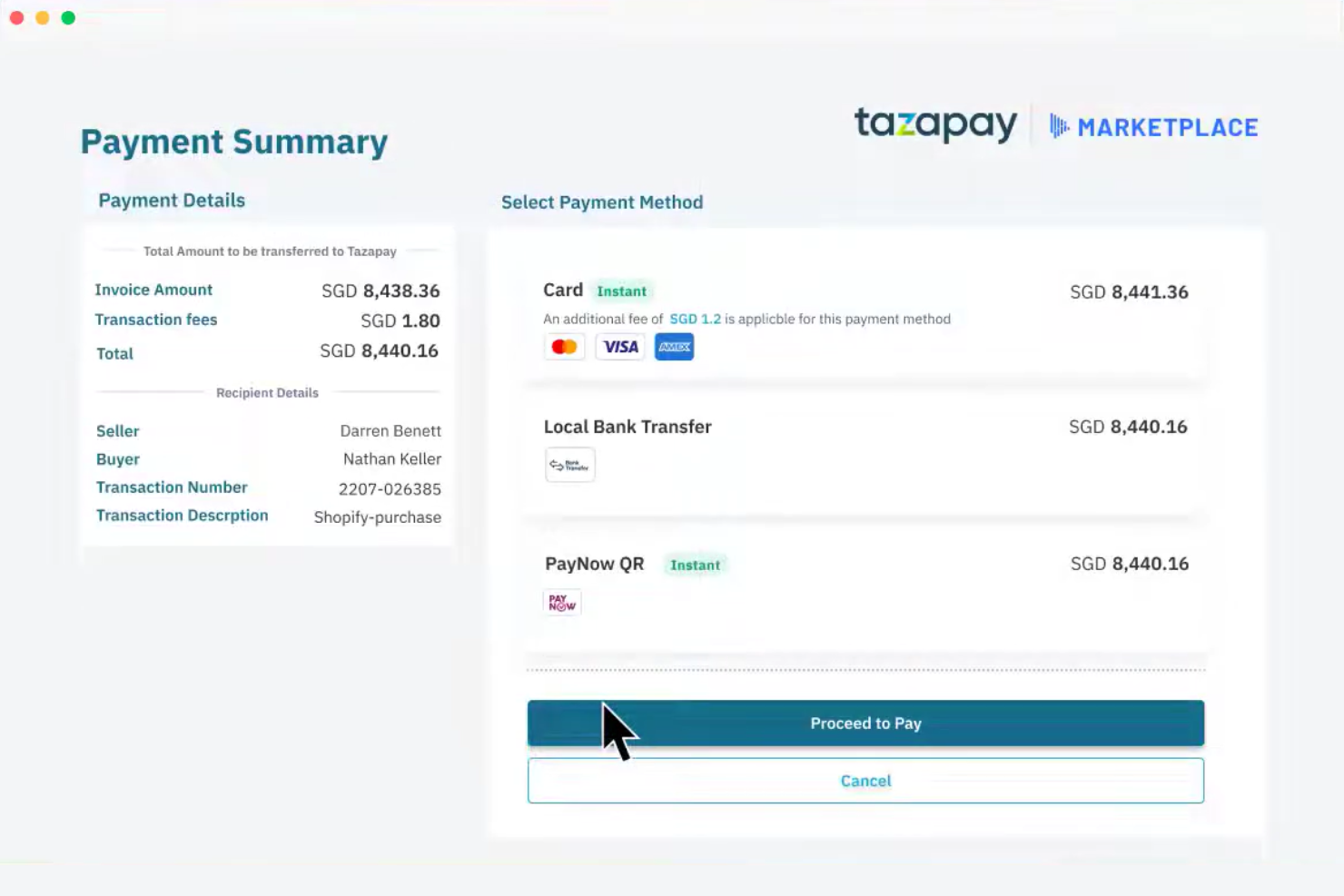
Tazapay is a cross-border payment platform designed for businesses needing secure international transactions. It serves industries such as e-commerce and fintech, providing solutions for accepting payments from over 173 countries.
Why I picked Tazapay: Tazapay excels in trade compliance, offering features such as buyer protection and compliance with international regulations. Its global collection accounts allow you to hold and disburse funds in multiple currencies. The platform supports same-day payouts in numerous markets, providing quick access to funds. With tailored solutions for various industries, Tazapay meets the specific needs of most businesses engaging in international trade.
Standout features and integrations:
Features include secure transaction management across multiple countries, instant bank settlements, and strong foreign exchange management. You can also benefit from simplified global compliance and risk management features.
Integrations include Shopify, WooCommerce, Adobe Commerce, BigCommerce, and more.
Pros and Cons
Pros:
- High compliance standards
- Offers local payment methods
- Supports multi-currency transactions
Cons:
- Smaller integration ecosystem Limited public documentation
- Smaller integration ecosystem


Nium is a global payment platform designed for enterprises that facilitate cross-border transactions and financial management. It serves large businesses by providing tools for international payments, card issuance, and currency conversion.
Why I picked Nium: It's tailored for enterprise solutions, providing all-in-one services for managing global payments. Nium offers multi-currency accounts, helping your team easily handle transactions in different currencies. The platform supports instant money transfers across numerous countries, supporting your business’s ability to operate internationally. Additionally, Nium provides a secure environment for transactions and compliance with international regulations.
Standout features and integrations:
Features include real-time currency conversion that helps you manage foreign exchange risks, a unified platform for managing multiple financial services, and advanced security measures to protect your transactions.
Integrations include SAP, Oracle, Microsoft Dynamics, Salesforce, Xero, QuickBooks, NetSuite, Stripe, PayPal, Shopify, and more.
Pros and Cons
Pros:
- Real-time currency conversion
- Compliance with international regulations
- Provides a secure transaction environment
Cons:
- Limited self-serve configuration
- Primarily suited for large enterprises


How I Evaluate International Payment Gateways
When a global AR team needs to settle invoices in 30 currencies without a tangle of FX fees, I split my evaluation into baseline must-haves and the differentiators that separate good from great.
Core Functionality (Table Stakes For This List)
When I'm selecting tools for my list, I rank each one on a scale from 0 (does not offer the functionality) to 5 (excels in this area) for each core functionality listed below. Then, I calculate the tool's total score into a percentage. Each tool needs to achieve a minimum total score of 65% to be considered for inclusion.
- Multi-Currency Processing: I check how many currencies a gateway can accept and settle in, and whether a merchant needs separate accounts per region or can manage everything from one.
- Local Payment Method Support: Coverage of region-specific options like iDEAL, SEPA, Alipay, or Boleto matters because card-only gateways lose conversions in markets where wallets dominate.
- Cross-Border FX Handling: I evaluate whether conversion happens at checkout or settlement, how transparent the markup is, and whether options like dynamic currency conversion are available.
- Global Compliance & Security: PCI DSS Level 1 is the baseline, but I also look for SCA and 3D Secure 2.0 support plus adherence to regional frameworks like PSD2.
- Multi-Region Payout & Settlement: The ability to settle funds into bank accounts across multiple countries in local currencies saves teams from costly intermediary bank fees.
- Fraud Prevention & Risk Tools: I evaluate whether fraud screening accounts for cross-border patterns, such as mismatched billing and IP geolocation, beyond basic rule-based filters.
Once I have a list of tools that meet this criteria, I consider what sets each platform apart.
Differentiating Factors (What Sets Vendors Apart)
Here's how I compare and contrast different vendors:
Standout Features
Smart payment routing is a big one. Gateways that automatically direct transactions to the best-performing acquirer based on currency, region, or card type can meaningfully lift authorization rates. I also look for a unified global dashboard that consolidates multi-currency transaction data into one view, which makes month-end reconciliation far less painful. Merchant of record services are worth evaluating too, since they shift the burden of tax collection, remittance, and regional compliance off your team entirely.
Beyond Features
ERP and accounting integrations matter a lot here. A gateway with native connectors to systems like NetSuite, SAP, or Xero saves your team hours of manual reconciliation across currencies. I also evaluate pricing transparency, specifically whether the vendor clearly breaks out interchange, cross-border, and FX markup fees or buries them. Geographic licensing is another factor I check. Gateways that hold direct acquiring licenses in your target markets tend to deliver better approval rates and faster settlements than those relying on third-party processors.
Hoe kiest u internationale betalingsgateways?
Het is gemakkelijk om te verdwalen in lange lijsten met functies en ingewikkelde prijsstructuren. Om u te helpen gefocust te blijven terwijl u uw unieke selectieproces voor software doorloopt, vindt u hier een checklist met factoren om rekening mee te houden:
| Factor | Waar u rekening mee moet houden |
|---|---|
| Schaalbaarheid | Kan de betalingsgateway meegroeien met uw bedrijf? Houd rekening met limieten voor het transactievolume en of de tool toenemende eisen aankan zonder extra kosten of prestatieproblemen. |
| Integraties | Werkt deze samen met uw bestaande systemen? Zoek naar compatibiliteit met uw CRM, boekhoudsoftware en andere bedrijfstools die u dagelijks gebruikt. |
| Aanpasbaarheid | Kunt u de betalingsgateway aanpassen aan uw behoeften? Beoordeel in hoeverre u gebruikersinterfaces, werkstromen en betalingsopties kunt aanpassen aan uw bedrijfsprocessen. |
| Gebruiksgemak | Is de betalingsgateway intuïtief voor uw team? Test de gebruikersinterface en let op eenvoudige navigatie om de trainingstijd en het aantal fouten te beperken. |
| Implementatie en ingebruikname | Hoe lang duurt het voordat u aan de slag kunt? Beoordeel het installatieproces, de beschikbaarheid van ondersteuning en eventuele trainingsmiddelen voor een soepele overgang. |
| Kosten | Wat zijn de totale kosten? Kijk verder dan de initiële prijs en houd rekening met transactiekosten, installatiekosten en eventuele verborgen kosten die uw budget kunnen beïnvloeden. |
| Beveiligingsmaatregelen | Hoe beschermt deze uw gegevens? Controleer of er sprake is van versleuteling, fraudedetectie en naleving van beveiligingsnormen om transacties veilig te houden. |
| Nalevingsvereisten | Kan deze aan uw wettelijke vereisten voldoen? Controleer of de betalingsgateway voldoet aan lokale en internationale regelgeving die relevant is voor uw bedrijf, zoals de AVG of PCI DSS. |
Wat is een internationale betalingsgateway?
Een internationale betalingsgateway is een dienst die betalingen voor bedrijven over de grens autoriseert en verwerkt. Deze tools worden vaak gebruikt door financiële professionals en bedrijfseigenaren om veilige en efficiënte internationale transacties mogelijk te maken. Functies zoals valutaomrekening, het volgen van transacties en ondersteuning voor meerdere valuta helpen bedrijven om grensoverschrijdende betalingen effectief te beheren. Over het algemeen vereenvoudigen deze tools de wereldwijde handel door veilige en soepele betalingsverwerking te garanderen.
Functies
Let bij het kiezen van een internationale betalingsgateway op de volgende belangrijke functies:
- Valutaomrekening: Zet valuta automatisch om om internationale transacties te vereenvoudigen en handmatige berekeningen te beperken.
- Ondersteuning voor meerdere valuta: Stelt bedrijven in staat betalingen in verschillende valuta te accepteren, waardoor hun wereldwijde bereik wordt vergroot.
- Transacties volgen: Biedt realtime updates over de betalingsstatus, zodat bedrijven hun kasstroom en afstemming kunnen beheren.
- Fraudedetectie: Omvat beveiligingsmaatregelen om frauduleuze transacties te identificeren en voorkomen, zodat uw bedrijf en klanten worden beschermd.
- Aanpasbare afrekenpagina: Biedt opties om de betalingservaring aan uw merk aan te passen, wat de klanttevredenheid ondersteunt.
- Periodieke facturering: Vergemakkelijkt het beheer van abonnementen en terugkerende betalingen, wat stabiele inkomstenstromen ondersteunt.
- Directe betalingsmeldingen: Waarschuwt u bij voltooide transacties, zodat uw team geïnformeerd en snel kan reageren.
- Naleving van beveiligingsnormen: Voldoet aan internationale beveiligingsnormen en beschermt gevoelige financiële gegevens.
- Geavanceerde analyses: Biedt inzicht in betalingstrends en bedrijfsprestaties en ondersteunt strategische besluitvorming.
Voordelen
De implementatie van een internationale betalingsgateway biedt verschillende voordelen voor uw team en uw bedrijf. Hier zijn enkele voordelen waar u naar kunt uitkijken:
- Wereldwijd bereik: Accepteer betalingen van klanten over de hele wereld dankzij ondersteuning voor meerdere valuta en internationaal bereik.
- Verbeterde kasstroom: Het realtime volgen van transacties en directe betalingsmeldingen helpen u uw kasstroom efficiënt te beheren.
- Sterke beveiliging: Functies voor fraudedetectie en naleving van beveiligingsnormen beschermen uw bedrijf tegen frauduleuze transacties.
- Klanttevredenheid: Aanpasbare afrekenopties zorgen voor een gepersonaliseerde betalingservaring, waardoor de klanttevredenheid toeneemt.
- Stabiele inkomsten: Functies voor periodieke facturering ondersteunen een stabiel inkomen uit abonnementen en terugkerende klanten.
- Goed geïnformeerde beslissingen: Geavanceerde analyses bieden inzicht in betalingstrends en helpen bij strategische bedrijfsplanning.
- Minder handmatig werk: Geautomatiseerde valutaomrekening en afstemmingsprocessen besparen tijd en beperken fouten.
Kosten & prijzen
Voor het selecteren van een internationale betalingsgateway is inzicht nodig in de verschillende beschikbare prijsmodellen en abonnementen. De kosten variëren op basis van functies, teamgrootte, uitbreidingen en meer. In de onderstaande tabel worden veelvoorkomende abonnementen, hun gemiddelde prijzen en de gebruikelijke functies van internationale betalingsgatewayoplossingen samengevat:
Vergelijkingstabel voor internationale betalingsgateways
| Type abonnement | Gemiddelde prijs | Veelvoorkomende functies |
|---|---|---|
| Gratis abonnement | $0 | Basisverwerking van transacties, beperkte valutaondersteuning en eenvoudige rapportage. |
| Persoonlijk abonnement | $5-$25/gebruiker/maand | Ondersteuning voor meerdere valuta, basisfraudedetectie en aanpasbare afrekenopties. |
| Zakelijk abonnement | $50-$150/gebruiker/maand | Geavanceerde analyses, functies voor terugkerende facturering en beveiligingsmaatregelen. |
| Abonnement voor grote ondernemingen | $200-$500/gebruiker/maand | Volledige integratiemogelijkheden, speciale klantenondersteuning en geavanceerde tools voor fraudepreventie. |
Veelgestelde vragen over internationale betalingsgateways
Hier vindt u antwoorden op veelgestelde vragen over internationale betalingsgateways:
Hoe weet ik zeker dat een internationale betalingsgateway veilig is en aan de regelgeving voldoet?
Let op PCI DSS-naleving, gegevensversleuteling tijdens overdracht en in rust, krachtige fraudetools en duidelijke beleidsregels voor geschillen en terugboekingen. Gateways die wereldwijd actief zijn, moeten ook regionale regelgeving ondersteunen, zoals PSD2/SCA in Europa en privacyregels voor gegevens, zoals de AVG.
Zijn internationale betalingsgateways alleen bedoeld voor grote ondernemingen?
Nee. Veel opties op deze selectie zijn specifiek gericht op mkb-bedrijven en startups, met lage instapdrempels en een eenvoudige ingebruikname. Het belangrijkste is dat u de complexiteit en kosten afstemt op de fase waarin uw bedrijf zich bevindt. Kleine bedrijven kunnen beginnen met één eenvoudig te implementeren gateway en meer geavanceerde tools toevoegen, zoals handelsnaleving of virtuele rekeningen, naarmate hun grensoverschrijdende volume groeit.
Kan ik meerdere internationale betalingsgateways tegelijkertijd gebruiken?
Ja, dat kan, en veel CFO’s doen dat. Een strategie met meerdere gateways kan de autorisatiepercentages in belangrijke markten verbeteren, redundantie bieden als één gateway uitvalt en u in staat stellen transacties te routeren op basis van geografie, kaarttype of kosten. Dit voegt wel operationele complexiteit toe. Zorg daarom voor een duidelijke strategie voor routering, reconciliatie en rapportage.
Hoe lang duurt het om een internationale betalingsgateway in te stellen?
De doorlooptijden variëren. Eenvoudige gateways in SaaS-stijl met standaardrisicoprofielen kunnen vaak binnen enkele dagen operationeel zijn. Oplossingen met handelsfinanciering, lokale incassorekeningen of naleving voor grote ondernemingen (bijvoorbeeld voor gereguleerde sectoren of zeer grote volumes) kunnen uitgebreidere KYC-controles, kredietbeoordeling en technische integratie vereisen.
Wat nu:
Als u internationale betalingsgateways onderzoekt, kunt u gratis contact opnemen met een SoftwareSelect-adviseur voor aanbevelingen.
U vult een formulier in en voert een kort gesprek waarin zij ingaan op de specifieke behoeften van uw bedrijf. Vervolgens ontvangt u een selectie software om te beoordelen. Zij ondersteunen u zelfs tijdens het volledige aankoopproces, inclusief prijsonderhandelingen.