

O software de contabilidade de chamadas monitoriza, analisa e atribui a utilização e os custos telefónicos da sua empresa. Se está à procura das melhores ferramentas de contabilidade de chamadas, é provável que esteja focado em obter controlo sobre as despesas de comunicação, melhorar os relatórios ou identificar tendências de utilização entre equipas ou localizações.
Este guia analisa as principais soluções de contabilidade de chamadas, com informações detalhadas sobre funcionalidades, integrações e abordagens de implementação — para que possa escolher com confiança a opção mais adequada para obter uma melhor visibilidade das telecomunicações e gerir os custos.
Why Trust Our Software Recommendations
6,700+
Reviews
20
Industry experts
16+
Evaluation factors
14
Years
Our team has been testing and reviewing software since 2012. As finance leaders ourselves, we know how difficult—and important—it is to choose the right software.
For this guide, we evaluated tools using hands-on testing and independent research, scoring tools using our selection criteria.
Our reviews reflect our human editorial judgment, not a sales pitch.
Tabela comparativa de software de contabilidade de chamadas
Compare os detalhes de preços das minhas principais seleções de software de contabilidade de chamadas na tabela abaixo.
Sorted by: Default
| Tool | Starting Price | Website | |
|---|---|---|---|
Best for advanced usage analytics and alerts | Not rated | Pricing upon request Free demo available | Website |
Best for real-time dashboard visualizations | Not rated | $89/month 14-day free trial available | Website |
Best for historical call trend analysis | Not rated | Pricing upon request Free demo available | Website |
Best for hospitality sector deployments | Not rated | Pricing upon request Not available | Website |
Best for flexible deployment options | Not rated | Pricing upon request Not available | Website |
Best for enterprise-scale telecom oversight | Not rated | Pricing upon request Free demo available | Website |
Best for customizable reporting options | Not rated | Pricing upon request Free demo available | Website |
Best for integration with major UC platforms | Not rated | $300/month Free demo available | Website |
Best for centralized multi-site management | Not rated | Pricing upon request Free demo available | Website |
Best for integration with property management | Not rated | Pricing upon request Free demo available | Website |


Avaliações do melhor software de contabilidade de chamadas
Seguem-se os meus resumos detalhados do melhor software de contabilidade de chamadas incluído na minha lista restrita. As minhas avaliações apresentam uma análise detalhada das funcionalidades, integrações e melhores casos de utilização de cada software, para o ajudar a encontrar a melhor opção para si.
 Best for advanced usage analytics and alerts
- Free demo available
- Pricing upon request
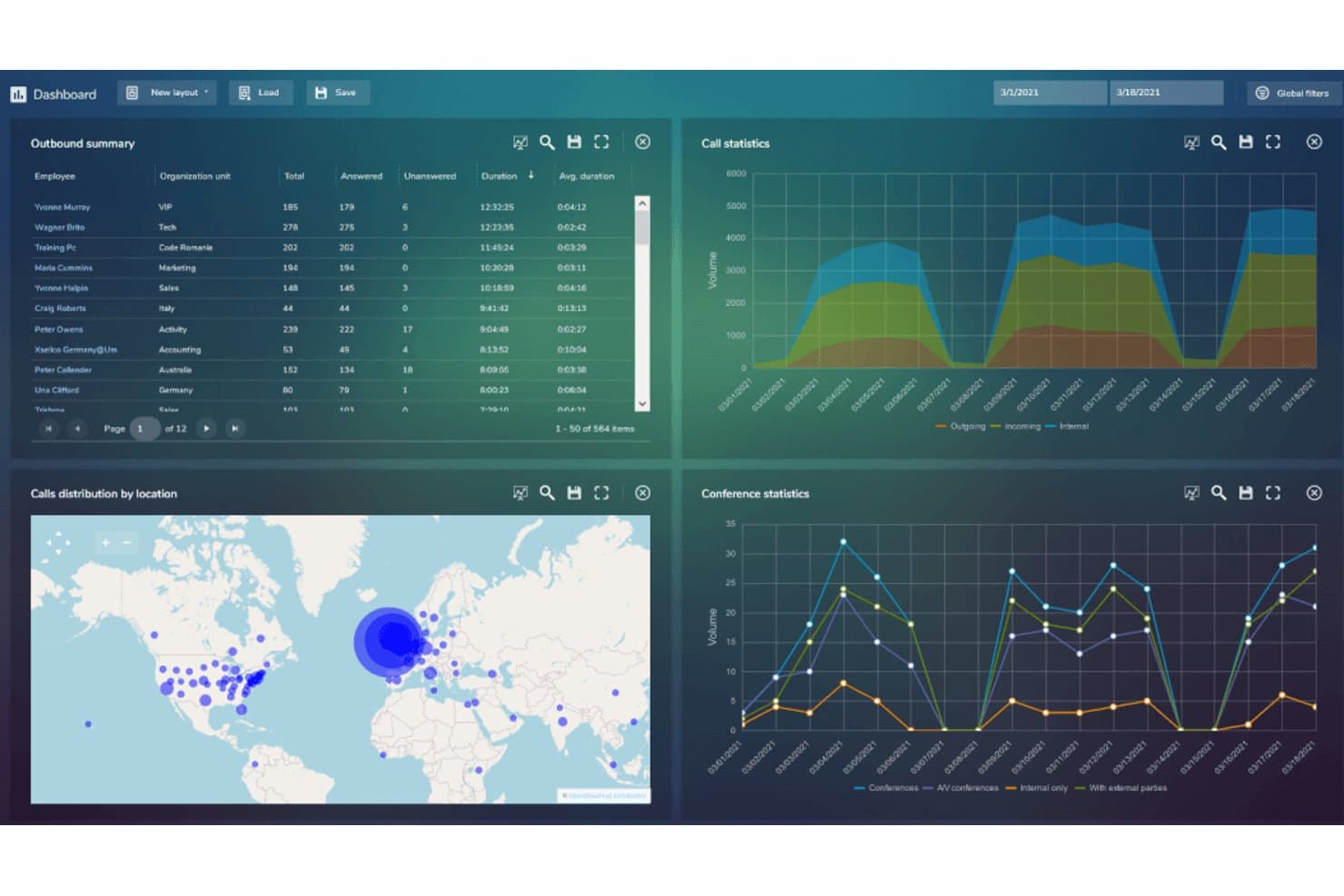
Avotus features a call accounting dashboard with outbound summaries, call statistics, geographic call distribution, and conference statistics. Avotus EUR is a call accounting platform that captures and reports on call detail records across legacy PBX, VoIP, and unified communications environments, with modules for cost allocation, rate management, trunk utilization, and compliance reporting.
Who Is Avotus Best For?
Avotus EUR is a strong fit for enterprise telecom and IT finance teams managing multi-site, multi-vendor environments that mix legacy PBX systems with modern VoIP and UC platforms.
Why I Picked Avotus
Avotus EUR earns its spot on my shortlist because the depth of its usage analytics goes well beyond standard CDR reporting. I particularly like the trunk utilization reporting, which calculates Grade of Service using Erlang-B and Erlang-C formulas, so I can identify capacity strain before it causes problems. The exception-based alerting covers 911 threat call notifications and suspicious call pattern detection, which I've found valuable when reviewing telecom security and compliance logs.
Avotus Key Features
- Multi-PBX and UC integration: Connects with over 140 legacy and IP PBX systems plus unified communications platforms.
- Departmental cost allocation: Assigns call costs to users or departments for internal chargeback and budget tracking.
- Rates and tariff module: Applies custom carrier rate tables to call records for accurate cost calculation across regions.
- Compliance and retention reporting: Supports legal audit needs and regulatory call data retention requirements.
Avotus Integrations
Avotus integrates with ReflectR and Cloudbeds.
Pros and Cons
Pros:
- Custom rate tables for multi-carrier billing
- Detailed departmental call and cost allocation
- Advanced trunk and capacity analytics dashboards
Cons:
- User interface feels outdated compared to peers
- Invoice audit features require additional modules
Learn more about Avotus: Best for real-time dashboard visualizations
- 14-day free trial available
- From $89/month (billed annually)
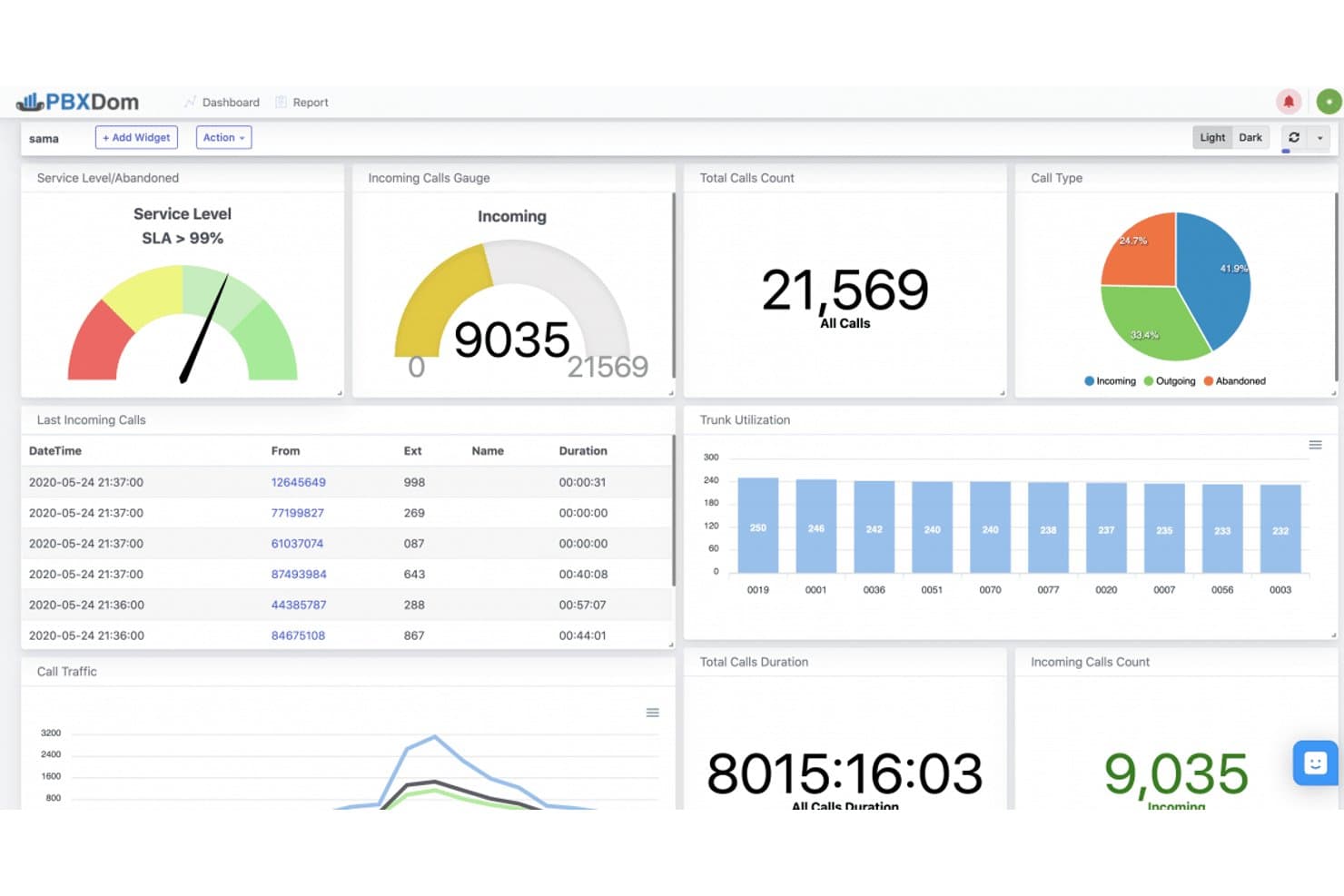
PBXDom offers a dashboard covering total calls, service levels, trunk utilization, call types, and traffic metrics for Cisco CallManager. PBXDom is a cloud-based call accounting and telecom expense platform that captures CDRs from major PBX systems, allocates call costs by user, department, and client, and delivers real-time reporting through customizable dashboards.
Who Is PBXDom Best For?
It's a strong fit for telecom expense managers and IT finance teams at multi-site organizations running Cisco, Avaya, Mitel, Panasonic, 3CX, or Asterisk-based phone systems.
Why I Picked PBXDom
PBXDom earns its spot on my shortlist because of how much real-time visibility it gives me into call activity across every extension and department. I can build custom dashboards from up to 70 widgets, combining live call volumes, cost-per-department breakdowns, and extension-level data in a single view. With dashboard sharing built in on Pro plans and up, I can push those views directly to department heads without giving them full system access.
PBXDom Key Features
- Advanced call reporting: Generate detailed call logs with filtering by user, department, extension, and time period.
- Account and client matter codes: Assign calls to specific employees, departments, or clients using unique codes for precise allocation.
- Custom carrier rate management: Configure and manage telecom provider rate tables to calculate call costs before invoices arrive.
- Multi-PBX integration: Connects with Cisco, Avaya, Mitel, Panasonic, 3CX, and Asterisk platforms for consolidated call data capture.
PBXDom Integrations
PBXDom offers native integrations with Cisco, Avaya, Mitel, Panasonic, 3CX, Asterisk, and Slack. It also connects with Zapier and provides an API and webhooks for custom integrations.
Pros and Cons
Pros:
- Extensive PBX support for on-premise systems
- Custom reporting for departments and users
- Real-time dashboards with live call data
Cons:
- Doesn’t support modern UCaaS platforms like Teams
- No automated telecom invoice reconciliation
Learn more about PBXDom: Best for historical call trend analysis
- Free demo available
- Pricing upon request
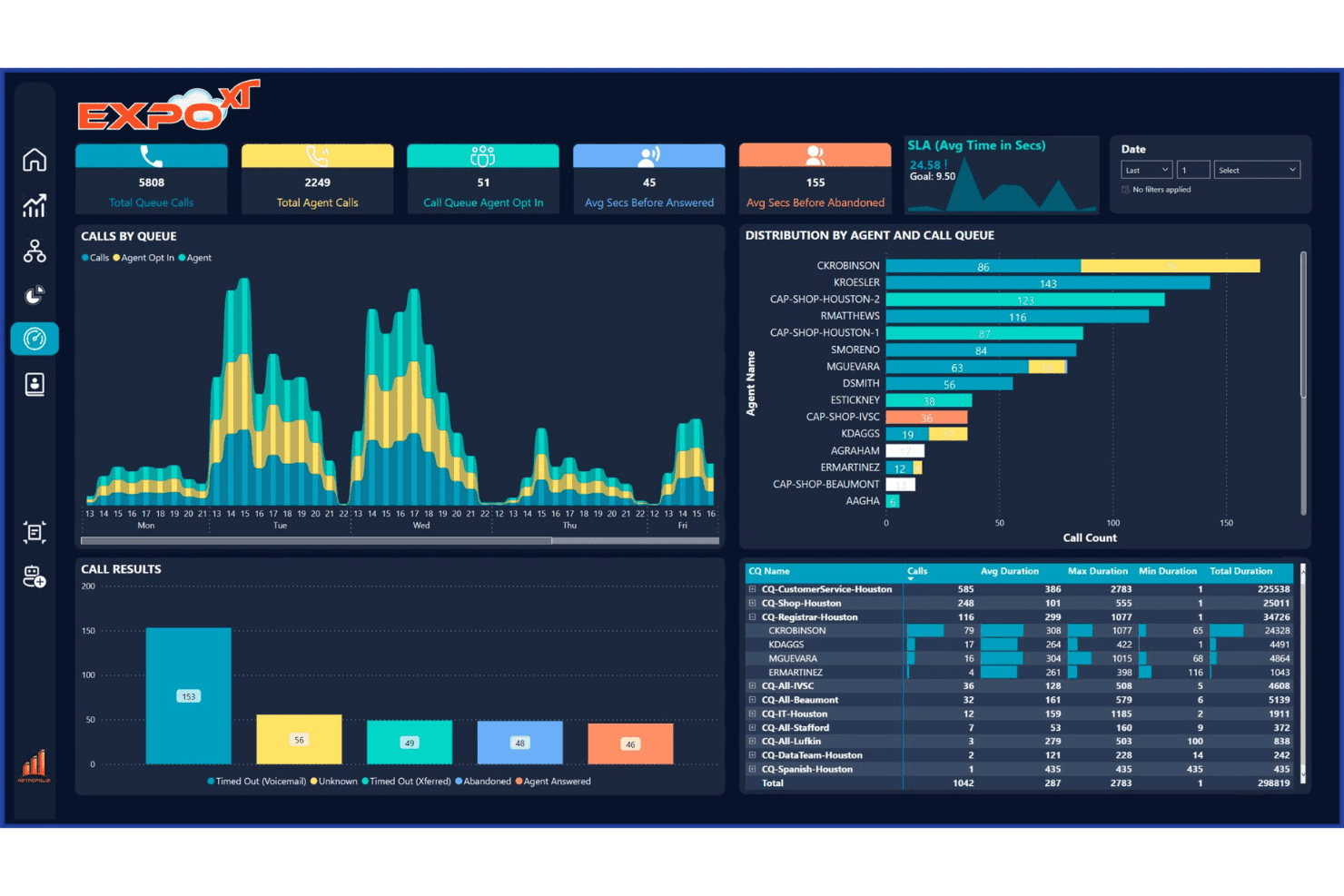
Metropolis ProftWatch lets users access historical call trends and performance insights. Metropolis ProfitWatch is a hospitality-focused call accounting system that captures CDRs, applies customizable rate tables, and bills guest calls back to your property management system.
Who Is Metropolis ProfitWatch Best For?
It's a strong fit for hotels, resorts, and casinos that need to track and bill guest calls through an existing property management system.
Why I Picked Metropolis ProfitWatch
I picked ProfitWatch as one of the best because its trunk analysis and multi-level usage reporting give you a genuine longitudinal view of call activity across your organization. I find the geographic hot spot map especially useful for identifying call volume concentrations by region over time. Scheduled HTML report delivery means I'm getting consistent data snapshots on a set cadence, without manual exports every time I need to review trends.
Metropolis ProfitWatch Key Features
- Customizable rate tables: Set up unique rate structures to match various carrier requirements and special hotel promotions.
- PMS integration: Smoothly connects with major property management systems to automate call billing to guest accounts.
- 911 and toll-fraud alerts: Instantly notifies staff about emergency calls or suspicious calling patterns.
- Multi-PBX compatibility: Works with a wide range of PBX systems, including Avaya, Mitel, Cisco, and NEC.
Metropolis ProfitWatch Integrations
Metropolis ProfitWatch offers native integrations with Power BI, Avaya, Cisco, NEC, Mitel, Samsung, ShoreTel, WebRezPro, Microsoft Teams, Zoom, Webex Calling, and NICE. Their collaboration analytics can be integrated with CRM systems like Salesforce, Zoho, and Microsoft Dynamics.
Pros and Cons
Pros:
- Telephony hardware compatibility across major brands
- PMS integration for automated guest billing
- Historical call volume trend reporting
Cons:
- Department-level cost allocation not supported
- Lacks telecom invoice reconciliation workflow
Learn more about Metropolis ProfitWatch:
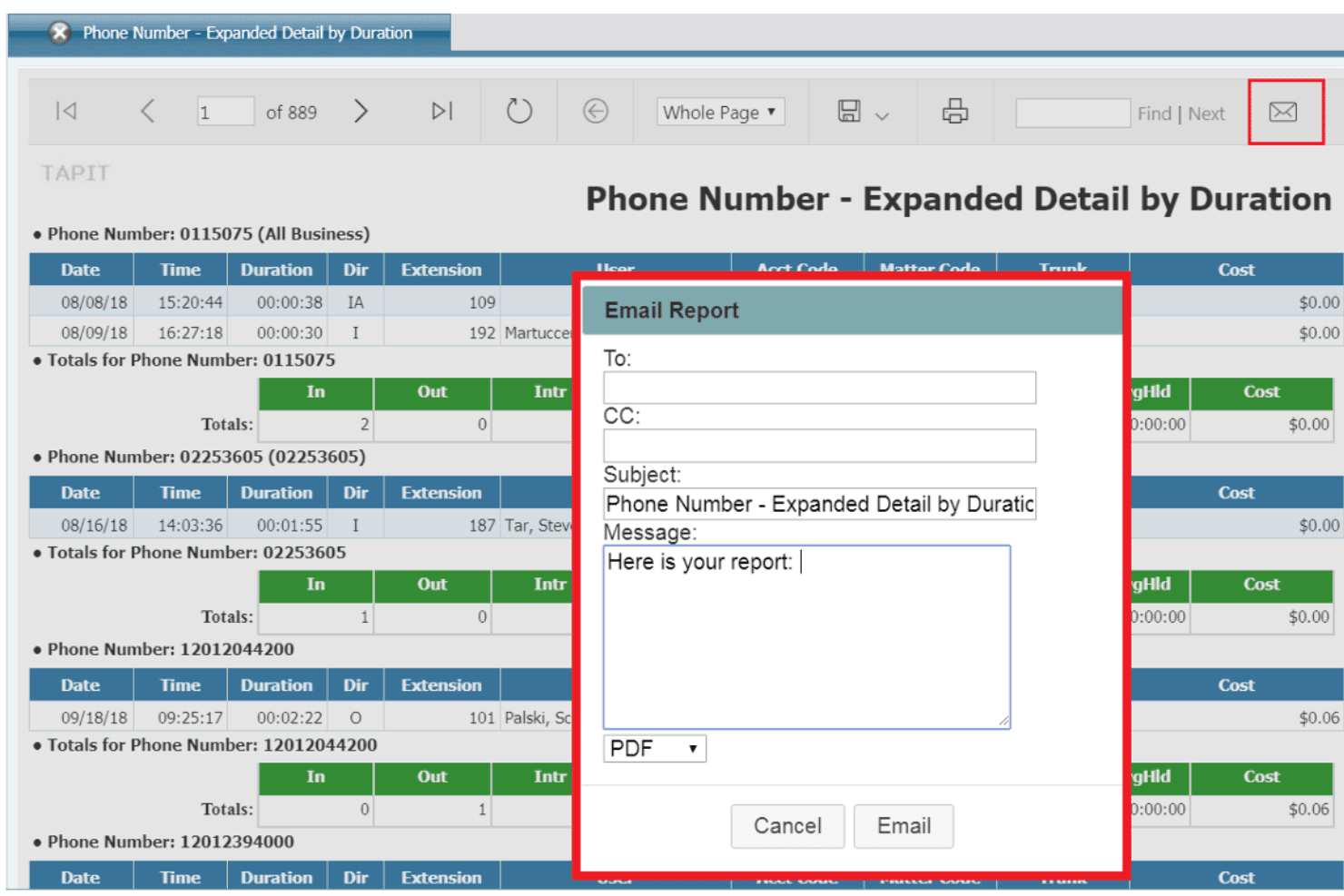
TAPIT 6 lets users access detailed call reports and email sharing. TAPIT 6 is an on-premise call accounting platform that captures call detail records across virtually any PBX or VoIP system, with cost allocation reporting, toll fraud detection, and multi-site call data management built in.
Who Is Cross Soft Best For?
TAPIT 6 is a strong fit for IT and finance teams in hospitality, healthcare, and government organizations running on-premise PBX systems across single or multiple sites.
Why I Picked Cross Soft
I picked TAPIT 6 as one of the best because its PBX-agnostic architecture fits the mixed telephony environments common in hotels and resorts. I like that its multi-site call data management lets a property group track call costs by extension and department across locations from a single installation. The toll fraud detection feature, which flags after-hours or international call patterns, is particularly valuable in hospitality where front desk lines see heavy, round-the-clock use.
Cross Soft Key Features
- Customizable reporting templates: Choose from over 125 report templates and tailor data views to your organizational structure.
- Permission-based user access: Set granular access controls with unlimited users for compliance and operational oversight.
- Emergency call alerts: Receive email or SMS notifications automatically when 911 or other emergency numbers are dialed.
- Multi-format data export: Export reports and call records in PDF, Excel, or Word formats for flexible data handling.
Cross Soft Integrations
Native integrations are not publicly listed.
Pros and Cons
Pros:
- Emergency call alerts for compliance monitoring
- Multi-site call data management is included
- Handles legacy and modern PBX call records
Cons:
- No cloud-native or UCaaS phone system support
- No built-in telecom invoice reconciliation
Learn more about Cross Soft: Best for flexible deployment options
- Not available
- Pricing upon request
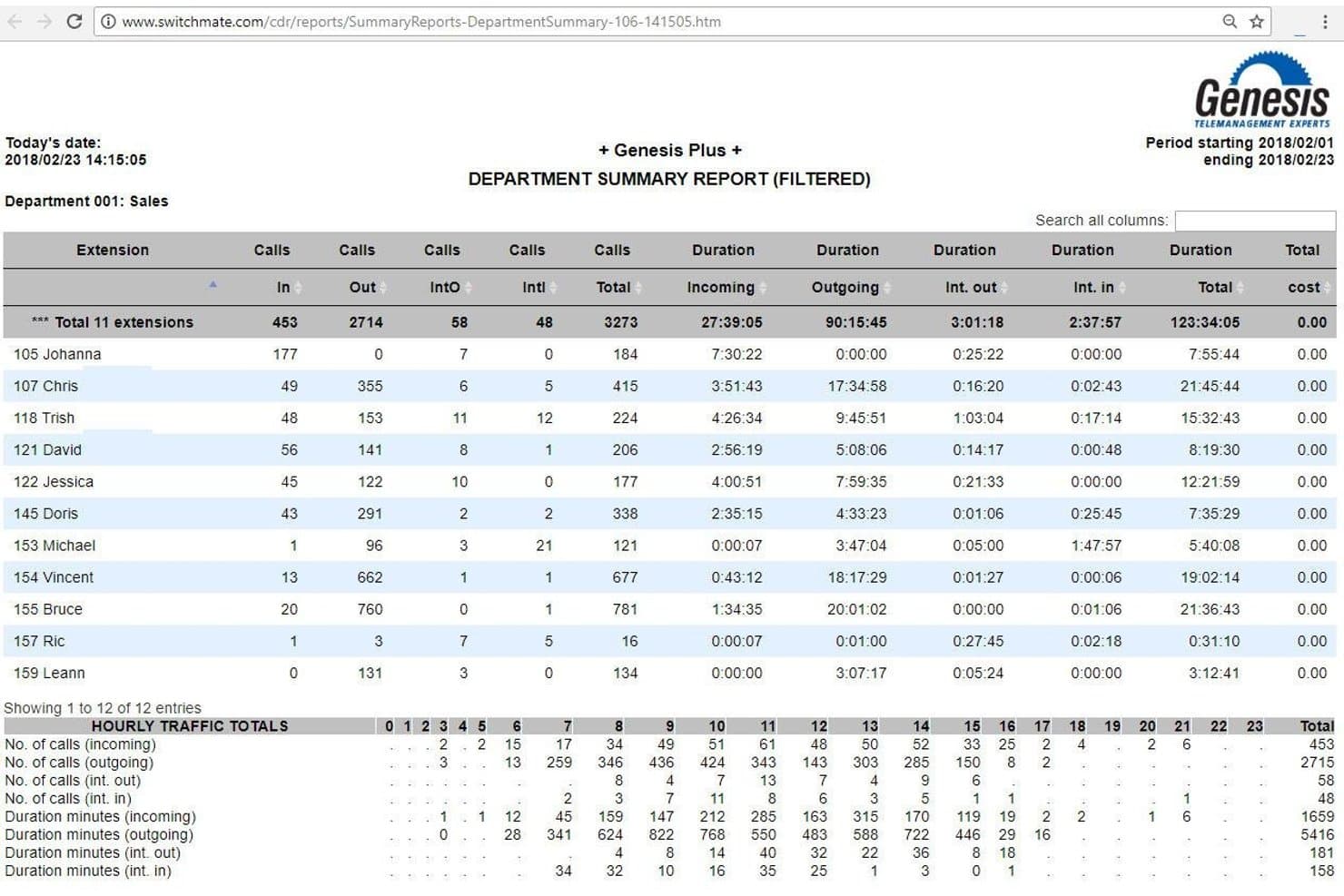
Genesis Call Accounting offers access to a detailed Department Summary Report with call volumes, durations, and hourly traffic totals per extension. Genesis Call Accounting is a call detail recording and telecom cost management platform that captures CDRs from PBX, VoIP, and cloud systems, with cost allocation, usage reporting, and chargeback billing across SME, enterprise, and hospitality environments.
Who Is Genesis Call Accounting Best For?
It's a strong fit for multi-location enterprises and hospitality operators managing telecom costs across mixed on-premises, cloud, and hybrid telephony environments.
Why I Picked Genesis Call Accounting
Genesis Call Accounting earns its spot on my shortlist because no other tool I've tested gives you this much control over how and where the software runs. You can deploy it as a cloud/SaaS solution, fully on-premises, or in a hybrid configuration, which matters when your organization runs a mixed telephony environment. I particularly like that it captures CDRs from multiple voice platforms simultaneously and maintains consistent reporting even during a PBX migration.
Genesis Call Accounting Key Features
- Analytics dashboard: Tracks and displays call activity, usage, and costs in real time.
- Automatic 911 and fraud detection: Flags emergency calls and unusual calling patterns for security purposes.
- Customizable report scheduling: Lets you deliver recurring reports by email, SMS, or print.
- Guest billing and PMS integration: Enables call charge management and connects to property management systems in hospitality settings.
Genesis Call Accounting Integrations
Genesis Call Accounting offers native integrations with RingCentral, Cloudbeds, Stayntouch, and Webex.
Pros and Cons
Pros:
- Offers guest billing for hospitality environments
- Supports cost allocation by department or tenant
- Captures data from multiple PBX systems simultaneously
Cons:
- Limited documentation for large enterprise deployments
- No built-in carrier invoice reconciliation
Learn more about Genesis Call Accounting: Best for enterprise-scale telecom oversight
- Free demo available
- Pricing upon request
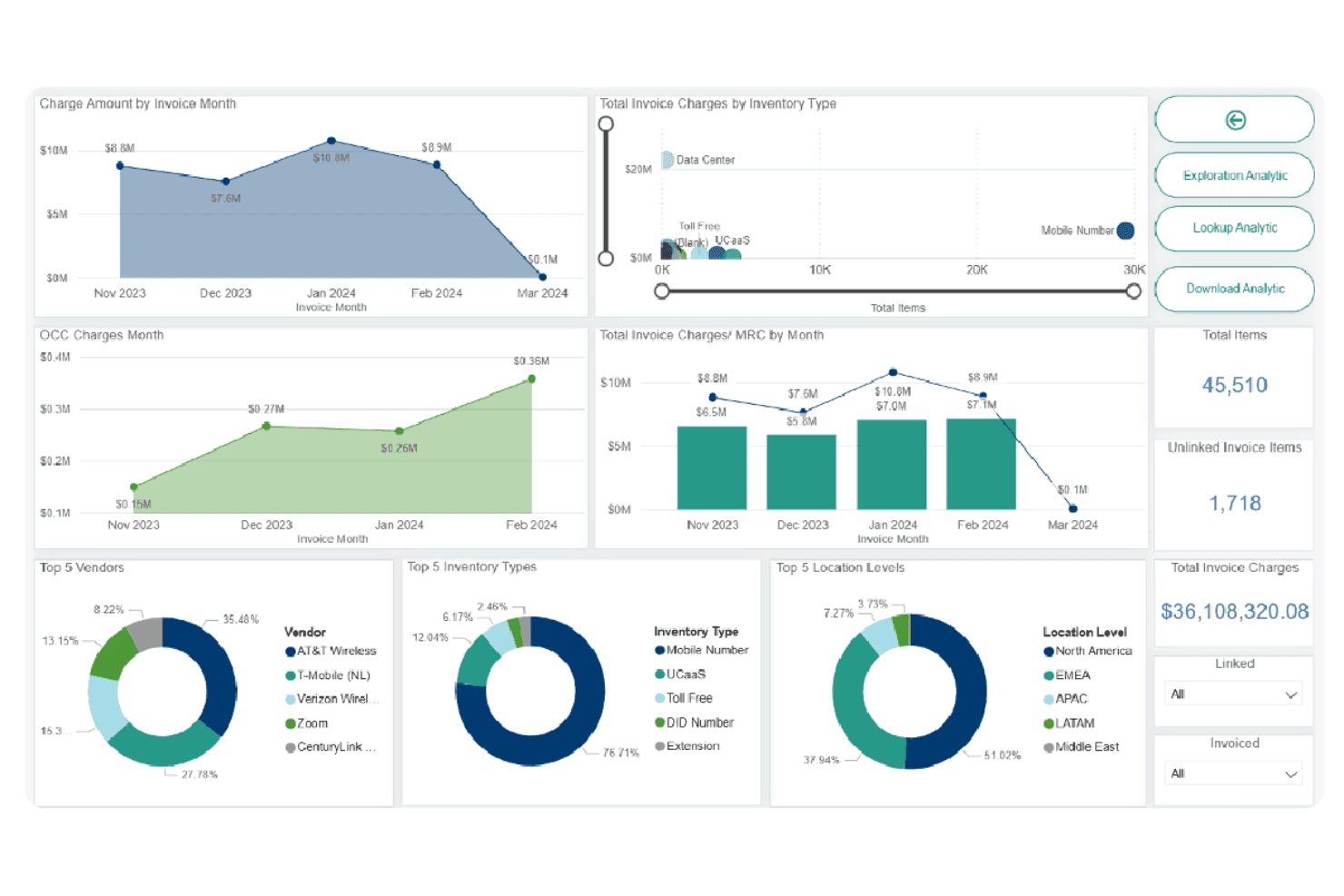
Calero enables telecom expense analytics for enterprise-wide cost visibility. Calero is a telecom expense management platform that combines call detail recording, cost allocation, invoice reconciliation, and usage reporting across hybrid PBX and UCaaS environments.
Who Is Calero Best For?
Calero is a strong fit for large enterprises managing complex, multi-site telecom environments across fixed, mobile, and cloud communication systems.
Why I Picked Calero
I picked Calero as one of the best because it handles call accounting at a scale most tools simply aren't built for. I particularly like how it captures CDRs across both legacy PBX systems and UCaaS platforms like Microsoft Teams and Webex in a single unified view. Its automated invoice reconciliation, paired with built-in dispute management, means my team can catch billing discrepancies across thousands of carrier invoices without relying on manual side-by-side review.
Calero Key Features
- Customizable reporting dashboards: Build and share tailored reports on telecom usage and cost allocation.
- HRIS integration: Syncs with your human resources system to automate onboarding and offboarding for telecom access.
- Multi-carrier rate management: Maintain and update rate tables for various carriers and international billing scenarios.
- Centralized inventory lifecycle management: Track telecom assets from procurement through decommissioning across your organization.
Calero Integrations
Calero offers native integrations with Asana, Atlassian, Box, Five9, NetSuite, Okta, RingCentral, Zendesk, ServiceNow, DocuSign, and more. An API is available for custom integrations.
Pros and Cons
Pros:
- Manages extensive telecom invoice reconciliation
- Handles chargebacks and cost allocation natively
- Real-time analytics across enterprise telecom systems
Cons:
- Core features require extensive initial setup
- Not designed for smaller organizations
Learn more about Calero: Best for customizable reporting options
- Free demo available
- Pricing upon request
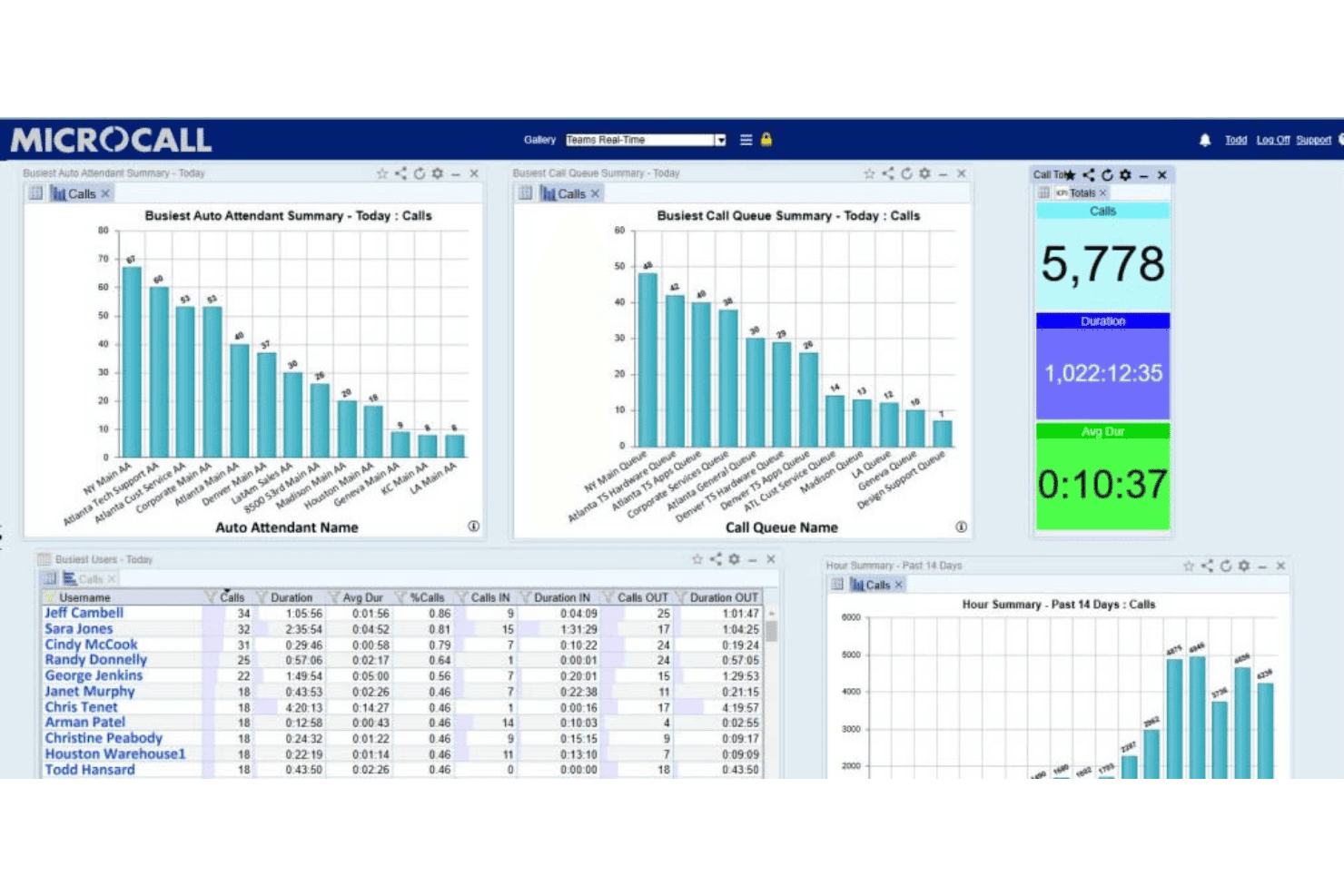
Microcall offers a dashboard with auto attendant summaries, call queue charts, busiest user stats, and total call metrics. Microcall is a call accounting platform that captures CDRs from PBX, VoIP, and UCaaS systems and allocates telecom costs across departments, business units, and locations.
Who Is Microcall Best For?
Microcall suits mid-to-large enterprises — particularly in healthcare, government, and higher education — that manage telecom costs across multiple systems and locations.
Why I Picked Microcall
I picked Microcall as one of the best because the Galleries Reporting Dashboard gives me something I don't see elsewhere: bookmarkable, real-time report URLs I can share directly with department heads. I can schedule unlimited custom reports to auto-distribute via email, so finance and operations teams each get the cost allocation data they actually need. The SimpleSearch feature also lets me pull records across every connected platform using any call criteria, without rebuilding queries from scratch.
Microcall Key Features
- Cradle to grave tracking: See every step of a call’s lifecycle for auditing and accountability.
- Multi-platform CDR capture: Collect call detail records like call duration from PBX, VoIP, and UCaaS platforms like Cisco, Avaya, and Microsoft Teams.
- Toll fraud alerts: Detect and alert on suspicious call patterns to help protect against telecom fraud.
- Real-time emergency notifications: Instantly alert teams to emergency 911 calls or system failures as they occur.
Microcall Integrations
Microcall offers 100+ native integrations including Microsoft Teams, Cisco CUCM, Avaya, Webex, Genesys, RingCentral, Zoom, 3CX, 8x8, Five9, and Dialpad. An API is available for custom integrations.
Pros and Cons
Pros:
- Real-time alerts for emergency calls and fraud
- Cradle to grave call tracking included
- Custom report generator supports advanced filtering
Cons:
- Limited international rate management options
- No carrier invoice reconciliation tools
Learn more about Microcall: Best for integration with major UC platforms
- Free demo available
- From $300/month
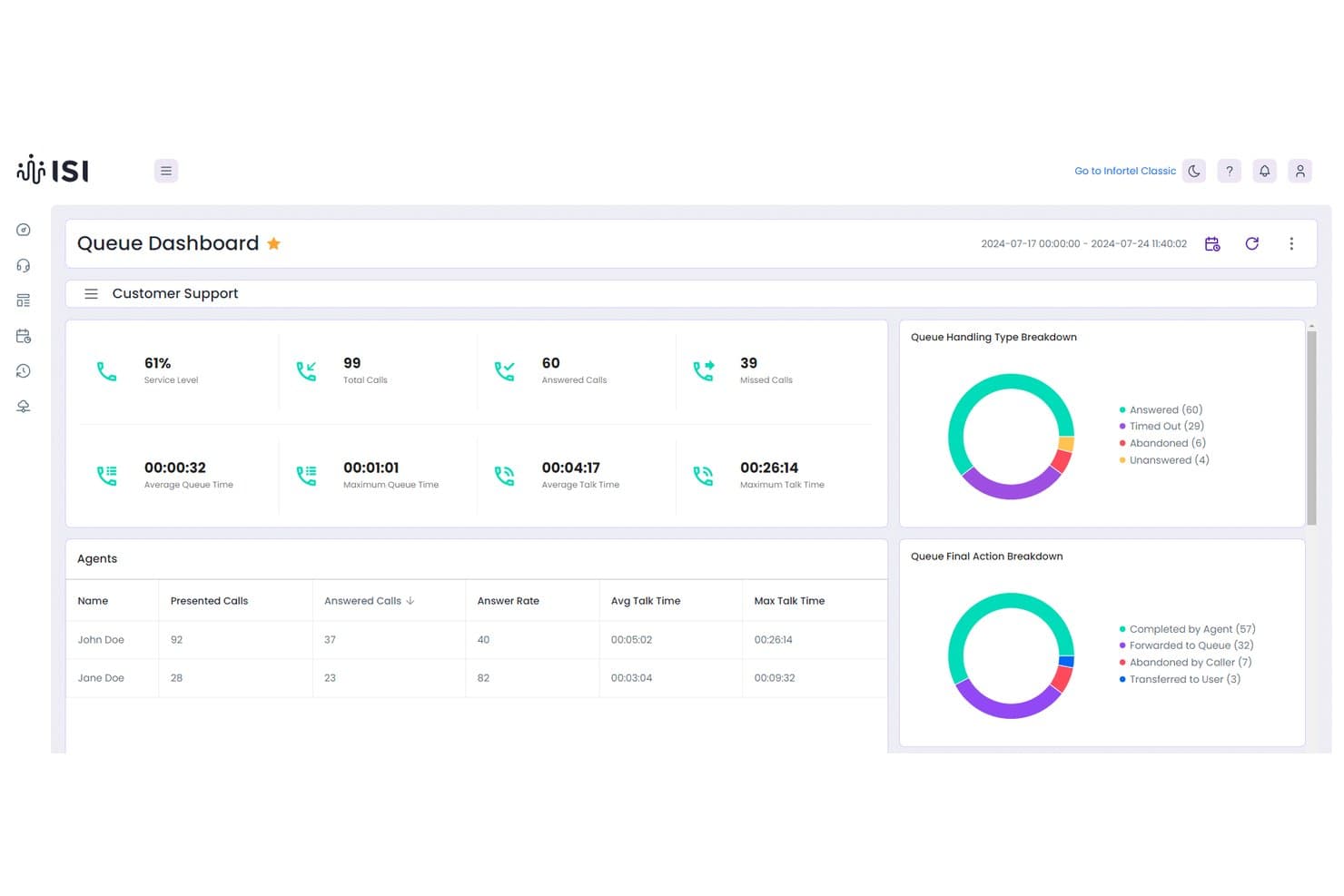
ISI Infortel Select enables access to a Queue Dashboard with call metrics, agent performance tables, and call handling and final action type analysis. ISI Infortel Select is a cloud-based call accounting and CDR reporting platform that captures, rates, and allocates call costs across Cisco UCM, Microsoft Teams, Webex Calling, and Avaya from a single interface.
Who Is ISI Infortel Select Best For?
It's a strong fit for telecommunications managers and IT finance teams at mid-to-large enterprises running mixed or multi-platform UC environments.
Why I Picked ISI Infortel Select
I picked ISI Infortel Select because no other call accounting tool I've tested handles multi-platform UC environments as natively. When my team runs a Cisco UCM to Microsoft Teams migration, Infortel Select pulls CDRs from both platforms simultaneously, so cost allocation and chargeback reports stay uninterrupted across the transition. It also retains call data for 13 months by default, compared to the 30-90 day purge cycles built into most native UC tools.
ISI Infortel Select Key Features
- Organizational summary and location roll-up: View consolidated call data across your entire company and by specific sites.
- Exception reporting: Flag patterns of potential abuse or misuse directly from CDR analytics.
- Customizable call rating engine: Apply actual carrier rate tables or your own rates to calls for precise cost allocation.
- Department cost allocation and chargeback: Assign charges to departments, tenants, or clients for internal billing and audits.
ISI Infortel Select Integrations
Native integrations are not publicly listed.
Pros and Cons
Pros:
- Detailed custom reporting and automated exports
- Highly granular cost allocation and chargebacks
- Real-time CDR capture for major UC platforms
Cons:
- Limited international rate management features
- No automated carrier invoice reconciliation
Learn more about ISI Infortel Select: Best for centralized multi-site management
- Free demo available
- Pricing upon request
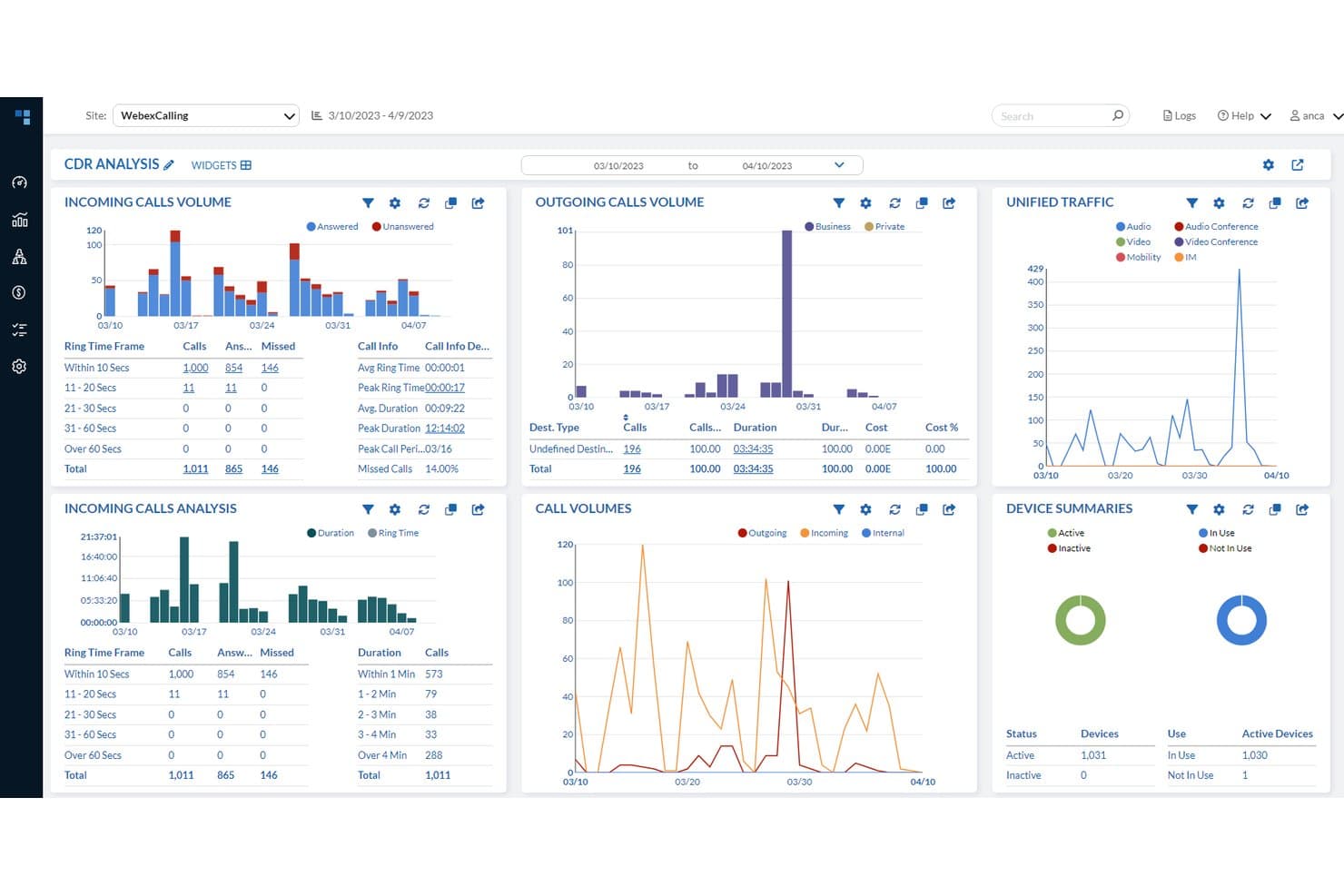
PhonEX ONE (MIND CTI) provides CDR analysis with call volumes, traffic insights, and device summaries. PhonEX ONE is a call accounting and UC analytics platform that captures CDRs across traditional PBX, VoIP, and unified communications systems, with cost allocation, chargeback reporting, fraud detection, and multi-site traffic analysis built in.
Who Is PhonEX ONE (MIND CTI) Best For?
PhonEX ONE is a strong fit for IT finance and telecom expense teams in large enterprises managing communications across multiple sites, systems, and currencies.
Why I Picked PhonEX ONE (MIND CTI)
PhonEX ONE earns its spot as one of the best on my shortlist because of how it handles multi-site call accounting without forcing you to commit to a single UC platform. I like that its dynamic hierarchy structure automatically syncs with your organization's layout, so cost allocation and chargeback reports stay accurate across sites without manual reorganization. The platform's support for multiple currencies and languages in a single instance means I'm not managing separate installs for different regions.
PhonEX ONE (MIND CTI) Key Features
- Personalized dashboards: Create custom widgets for real-time and historical telecom analysis.
- Quality of service monitoring: Track and quantify user audio call quality across platforms.
- Fraud detection and alerting: Receive real-time alerts about usage anomalies and potential toll fraud.
- Contact center analytics: Access detailed call statistics for contact centers, including agent and group performance.
PhonEX ONE (MIND CTI) Integrations
PhonEX ONE offers native integrations with Cisco, Microsoft, Avaya, and Redbox.
Pros and Cons
Pros:
- Real-time fraud detection and usage alerts
- Multi-currency and multi-language support in one instance
- Dynamic hierarchy auto-syncs with organizational changes
Cons:
- UI is available in English only
- No public API for custom integrations
Learn more about PhonEX ONE (MIND CTI): Best for integration with property management
- Free demo available
- Pricing upon request
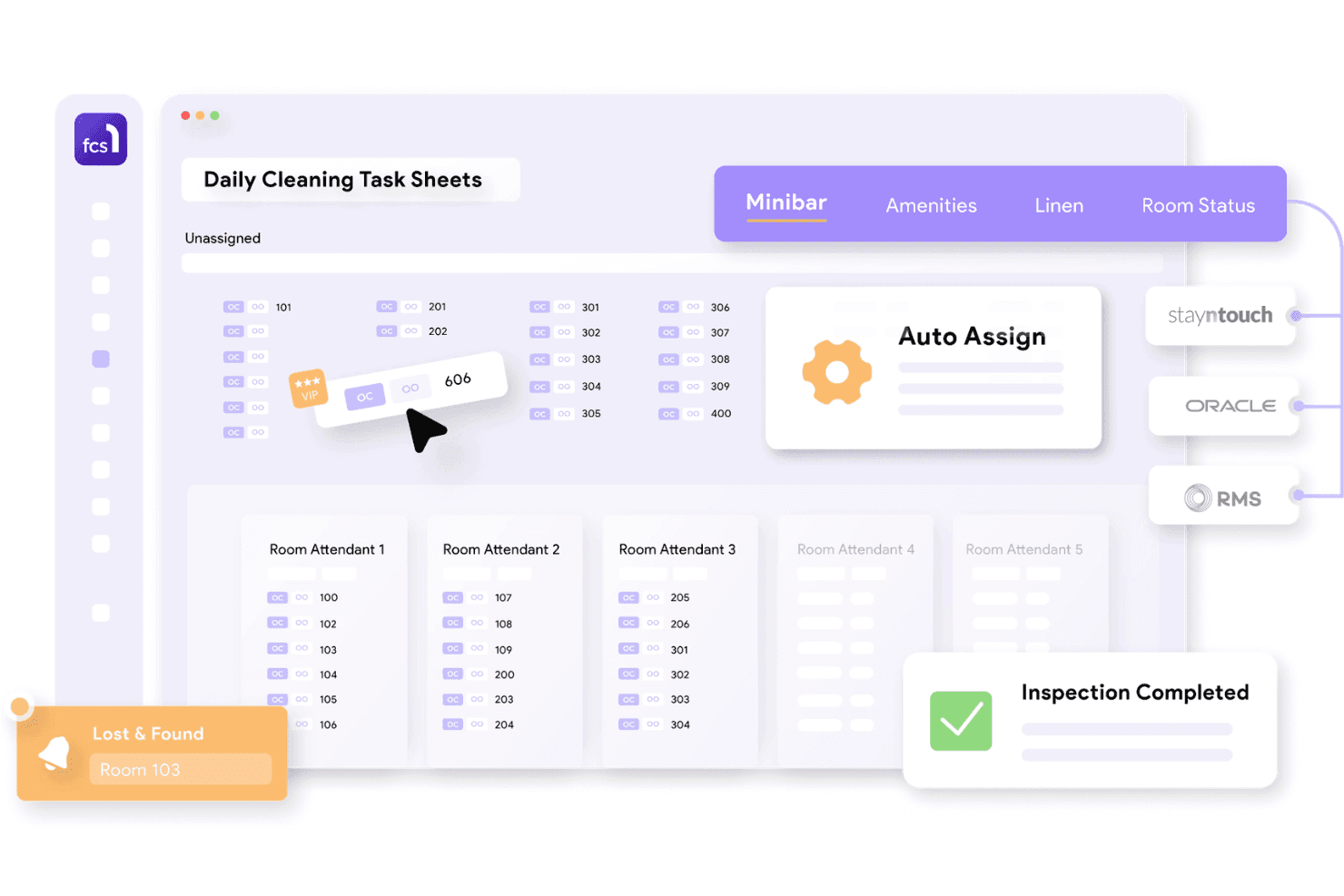
FCS1 integrates hotel operations with leading property management systems. FCS1 Call Accounting is a hospitality-focused call accounting module that captures call detail records, applies billing rates to guest calls, and posts charges to property management systems via PABX integration.
Who Is FCS1 Call Accounting Best For?
FCS1 Call Accounting is built for hotels and resorts that need to bill guest calls directly through their existing property management system.
Why I Picked FCS1 Call Accounting
FCS1 Call Accounting earns its spot on my shortlist because of how tightly it connects to hotel property management systems. I like that it automatically posts guest call charges directly to folios via real-time PMS integration with platforms like Oracle, MEWS, and Shiji. It also captures call data from PABX systems like Avaya and Cisco, eliminating manual entry between the phone system and the guest bill, and optimize operational efficiency.
FCS1 Call Accounting Key Features
- Call reporting tools: Generate detailed reports on call activity, volumes, and trends for auditing and compliance.
- Multi-property management: Monitor and administer call accounting functions across several properties from a single interface.
- Integration with major PABX vendors: Connect directly with Alcatel Lucent, Mitel, NEC, Siemens, and more for call data.
- Mobile-first dashboard: Access call records and system settings through a user-friendly, mobile-optimized portal.
FCS1 Call Accounting Integrations
FCS1 Call Accounting offers native integrations with Avaya, Cisco, Mitel, Oracle, Mews, Infor, Signify, RMS, Siemens, Trevo, and Vouch. An API is available for custom integrations.
Pros and Cons
Pros:
- Handles minibar and in-room service billing
- Automates posting call charges to guest folios
- Designed for multi-property hotel environments
Cons:
- Limited reporting beyond guest billing needs
- Not built for corporate telecom expense management
Learn more about FCS1 Call Accounting:
How I Evaluate Call Accounting Software
I split my evaluation into baseline requirements—CDR capture, chargebacks, and invoice reconciliation—and differentiators that matter for law firms, MSPs, or distributed enterprises.
Core Functionality (Table Stakes For This List)
When I'm selecting tools for my list, I rank each one on a scale from 0 (does not offer the functionality) to 5 (excels in this area) for each core functionality listed below. Then, I calculate the tool's total score into a percentage. Each tool needs to achieve a minimum total score of 65% to be considered for inclusion.
- Call Detail Recording: I check whether the tool captures CDRs in real time from multiple sources, since gaps in call logging make downstream cost reports unreliable.
- Cost Allocation & Chargeback: Granular allocation by user, department, project, and client matters here—especially for firms that bill telecom costs back to specific matters.
- Rate Plan Management: Each tool should support custom carrier rate tables and multi-currency tariffs, so per-call costs stay accurate across providers and regions.
- Telecom Expense Reporting: Report customization, scheduled delivery, and export compatibility with accounting systems like QuickBooks or SAP are what I evaluate here.
- Invoice Reconciliation: Matching CDRs against carrier invoices to catch overcharges is key, so I look for automated discrepancy flagging and audit trail support.
- Multi-PBX/VoIP Integration: I check compatibility with platforms like Cisco, Avaya, Microsoft Teams, and RingCentral, plus support for hybrid on-prem-to-cloud setups.
Once I have a list of tools that meet the criteria, I consider what sets each platform apart.
Differentiating Factors (What Sets Vendors Apart)
Here's how I compare and contrast different vendors:
Standout Features
Fraud and toll abuse detection is a major differentiator. I look for automated alerts that flag suspicious patterns like off-hours international calls or premium-rate dialing on unused extensions. Multi-tenant cost allocation also separates vendors—law firms and MSPs need chargeback by client matter or project code, not just by department. Unified communications reporting matters too, since many organizations now split activity across voice, video, and chat on platforms like Teams and Webex.
Beyond Features
PBX and UC platform compatibility is the first thing I check—your tool needs native CDR/SMDR support for your specific system, whether that's Cisco, Avaya, or Microsoft Teams. Deployment model matters too, especially for regulated industries like healthcare or finance where data residency controls dictate whether cloud, on-premise, or hybrid is viable. I also evaluate licensing transparency, since per-extension versus per-site pricing can shift total cost of ownership dramatically as you scale across locations.
Como escolher software de contabilidade de chamadas
É fácil ficar atolado em listas extensas de funcionalidades e estruturas de preços complexas. Para o ajudar a manter o foco enquanto percorre o seu processo único de seleção de software, eis uma lista de verificação dos fatores a ter em conta:
| Fator | O que considerar |
|---|---|
| FatorEscalabilidade | O que considerarA ferramenta suportará o crescimento do número de utilizadores, locais e sistemas nos próximos 3–5 anos sem custos ocultos? |
| FatorIntegrações | O que considerarEstabelece ligação nativa ao seu PBX, VoIP, UC ou sistemas de contabilidade, ou será necessária configuração adicional? |
| FatorPersonalização | O que considerarPode adaptar as regras de atribuição, elaboração de relatórios e tarifas aos departamentos, projetos e modelos de faturação da sua organização? |
| FatorFacilidade de utilização | O que considerarQuem na sua equipa utilizará a plataforma diariamente? Os colaboradores de TI, telecomunicações ou finanças precisarão de formação significativa? |
| FatorImplementação e integração inicial | O que considerarQuão complexa é a configuração inicial — especialmente a importação de CDR e a configuração de tabelas de tarifas — para o seu ambiente? |
| FatorMedidas de segurança | O que considerarOs dados das chamadas são encriptados em repouso e em trânsito? Existem registos de auditoria e acesso baseado em funções para informações de telecomunicações sensíveis? |
| FatorCusto | O que considerarOs preços favorecem licenças anuais, por local ou por extensão? Esteja atento às taxas de suporte ou integrações. |
| FatorRequisitos de conformidade | O que considerarO fornecedor cumpre as normas de residência de dados e privacidade do seu setor, como o RGPD, SOX ou HIPAA? |
O que é o software de contabilidade de chamadas?
O software de contabilidade de chamadas monitoriza, analisa e atribui a utilização e os custos telefónicos em toda a sua organização. Recolhe dados das chamadas dos seus sistemas PBX ou VoIP, ajudando as equipas financeiras e de telecomunicações a atribuir despesas, gerar cobranças internas e detetar erros de faturação ou atividades de chamadas invulgares. Os relatórios detalhados permitem um melhor controlo das despesas de telecomunicações, apoiam as necessidades de conformidade e simplificam as auditorias, ao tornar transparentes a utilização e os custos das chamadas ao nível do departamento, projeto ou cliente.
Funcionalidades
Ao selecionar software de contabilidade de chamadas, procure as seguintes funcionalidades essenciais:
- Registo detalhado das chamadas: Capta e armazena dados de todas as chamadas recebidas, efetuadas e internas, incluindo a duração, o destino e a hora, para controlo de custos e auditorias.
- Alocação de custos e refaturação: Atribui as despesas de telecomunicações a utilizadores, departamentos ou projetos, permitindo um orçamento rigoroso e a faturação interna em toda a organização.
- Gestão de planos tarifários: Aplica tabelas tarifárias personalizadas e as tarifas dos operadores a cada chamada, garantindo que os custos por chamada são calculados corretamente, mesmo entre vários fornecedores ou moedas.
- Relatórios de despesas de telecomunicações: Produz relatórios detalhados sobre a utilização das chamadas, o encaminhamento, os padrões e os custos, ajudando as equipas financeiras e de TI a analisar tendências, garantir a conformidade e apoiar a estratégia.
- Reconciliação de faturas: Compara os registos de dados das chamadas com as faturas dos operadores para identificar discrepâncias, atividades fraudulentas ou erros de faturação antes de efetuar os pagamentos.
- Integração com vários sistemas: Liga-se a plataformas PBX, VoIP e de comunicações unificadas para consolidar toda a atividade de chamadas, mesmo em ambientes híbridos ou com vários fornecedores.
- Painéis de análise em tempo real: Apresenta visualmente o tráfego de chamadas, as despesas e a utilização atual do sistema, permitindo aos gestores lidar com anomalias ou utilizações excessivas à medida que ocorrem.
- Deteção de fraude e utilização indevida: Monitoriza padrões de chamadas invulgares ou suspeitos, como números de valor acrescentado ou atividade fora do horário, e fornece alertas para limitar o risco financeiro.
- Relatórios personalizáveis: Permite aos utilizadores criar, filtrar e agendar relatórios personalizados, suportando diversos fluxos de trabalho internos e requisitos de clientes externos ou regulamentares.
- Controlos de segurança dos dados: Disponibiliza acesso baseado em funções, armazenamento encriptado dos dados das chamadas e registos de auditoria detalhados para proteger informações sensíveis de telecomunicações e apoiar a conformidade.
Benefícios
A implementação de software de contabilidade de chamadas proporciona vários benefícios à sua equipa e à sua empresa. Eis alguns dos benefícios que pode esperar:
- Transparência dos custos: Obtenha informações claras sobre as despesas de telecomunicações por departamento, projeto ou cliente, através de funcionalidades detalhadas de alocação e elaboração de relatórios.
- Maior precisão na refaturação: Atribua e refature automaticamente os custos das chamadas às equipas internas ou aos clientes, reduzindo o trabalho manual e os erros.
- Deteção proativa de fraude: Receba alertas em tempo real sobre atividades de chamadas suspeitas ou não autorizadas, limitando o risco financeiro e potenciais utilizações indevidas.
- Auditorias de faturas melhoradas: Compare rapidamente as faturas dos operadores com os registos reais das chamadas para assinalar cobranças excessivas, utilizações não autorizadas ou erros antes do pagamento.
- Conformidade simplificada: Mantenha registos de auditoria e acesso baseado em funções para dados sensíveis das chamadas, apoiando os requisitos financeiros, legais e regulamentares.
- Planeamento otimizado de recursos: Utilize painéis de análise em tempo real e tendências de utilização para gerir a capacidade, identificar ineficiências e orientar futuros investimentos em telecomunicações.
- Monitorização das comunicações unificadas: Monitorize e crie relatórios sobre atividades de voz, vídeo e conversação em várias plataformas, obtendo uma visão abrangente de todos os custos de comunicação.
Custos e preços
A seleção de software de contabilidade de chamadas exige uma compreensão dos vários modelos de preços e planos disponíveis. Os custos variam consoante as funcionalidades, a dimensão da equipa, os complementos, entre outros fatores. A tabela abaixo resume os planos comuns, os respetivos preços médios e as funcionalidades normalmente incluídas nas soluções de software de contabilidade de chamadas:
Tabela de comparação de planos de software de contabilidade de chamadas
| Tipo de plano | Preço médio | Funcionalidades comuns |
|---|---|---|
| Tipo de planoPlano gratuito | Preço médio$0 | Funcionalidades comunsExportação básica do registo de chamadas, armazenamento limitado de CDR, integração com um único sistema e apoio da comunidade. |
| Tipo de planoPlano pessoal | Preço médio$10-$25/utilizador/mês | Funcionalidades comunsGravação de chamadas, alocação de custos por utilizador, relatórios predefinidos, integrações limitadas e apoio por e-mail. |
| Tipo de planoPlano empresarial | Preço médio$30-$60/utilizador/mês | Funcionalidades comunsAlocação entre vários departamentos, gestão das tarifas dos operadores, análises em painéis, reconciliação de faturas e acesso à API. |
| Tipo de planoPlano empresarial avançado | Preço médio$70-$150/utilizador/mês | Funcionalidades comunsIntegrações ilimitadas, segurança avançada, deteção de fraude em tempo real, relatórios personalizados e apoio dedicado. |
Perguntas frequentes sobre software de contabilização de chamadas
Eis algumas respostas a perguntas comuns sobre software de contabilização de chamadas:
Que tipos de sistemas telefónicos são compatíveis com software de contabilização de chamadas?
A maioria dos softwares de contabilização de chamadas é compatível com uma vasta gama de plataformas PBX, VoIP e de comunicações unificadas — incluindo Cisco, Avaya, Mitel, Microsoft Teams e RingCentral — através da captura e do processamento de registos detalhados de chamadas diretamente a partir destes sistemas.
O software de contabilização de chamadas pode atribuir custos a clientes ou projetos específicos?
Sim, muitas soluções permitem atribuir custos de chamadas por departamento, assunto do cliente, código de projeto ou utilizador, o que ajuda as equipas a imputar com precisão as despesas de telecomunicações relativas a trabalho jurídico, de consultoria ou baseado na prestação de serviços.
Como é que o software de contabilização de chamadas ajuda a prevenir fraudes nas telecomunicações?
O software de contabilização de chamadas pode enviar alertas automáticos quando deteta padrões de chamadas invulgares, como chamadas internacionais frequentes ou utilização de extensões inativas, permitindo à sua equipa investigar rapidamente e travar possíveis utilizações abusivas.
É difícil implementar software de contabilização de chamadas num ambiente com vários locais?
Não, a maioria das plataformas modernas é compatível com configurações distribuídas e com vários locais. Certifique-se de que a solução escolhida consegue importar registos detalhados de chamadas e métricas de cada sistema e fornecer relatórios centralizados para todas as localizações.
Que controlos de segurança estão disponíveis para dados de chamadas sensíveis?
As soluções líderes oferecem encriptação dos dados em repouso e em trânsito, bem como acesso baseado em funções e registos de auditoria detalhados, para manter os registos de chamadas sensíveis seguros e preparados para a conformidade.