

Software-ul pentru impozitare internațională vă ajută echipa să gestioneze conformitatea fiscală transfrontalieră, să automatizeze declarațiile și să urmărească obligațiile fiscale globale într-un singur loc. Dacă sunteți în căutarea celui mai bun software pentru impozitare internațională, probabil vă confruntați cu cerințe complexe de raportare, reglementări în schimbare și necesitatea de a susține dezvoltarea afacerii în mai multe țări. Acest ghid prezintă instrumente evaluate de experți, concepute pentru a vă ajuta să rămâneți în conformitate, să reduceți munca manuală și să țineți pasul cu evoluția normelor fiscale internaționale, astfel încât să vă puteți concentra pe raportarea corectă și luarea deciziilor strategice. Iată ce trebuie să știți pentru a alege soluția potrivită pentru afacerea dumneavoastră.
Why Trust Our Software Recommendations
6,700+
Reviews
20
Industry experts
16+
Evaluation factors
14
Years
Our team has been testing and reviewing software since 2012. As finance leaders ourselves, we know how difficult—and important—it is to choose the right software.
For this guide, we evaluated tools using hands-on testing and independent research, scoring tools using our selection criteria.
Our reviews reflect our human editorial judgment, not a sales pitch.
Tabel comparativ pentru software-ul de impozitare internațională
Acest tabel comparativ sintetizează detaliile de preț pentru principalele mele selecții de software pentru impozitare internațională:
Score legend (out of 5)
- Excellent4.5–5
- Good4–4.4
- Average3–3.9
- Below average2–2.9
- Poor1–1.9
Sorted by: Default
| Tool | Starting Price | Website | ||||||||||||
|---|---|---|---|---|---|---|---|---|---|---|---|---|---|---|
Best for indirect VAT and e-invoicing at scale | Not rated | Not rated | Not rated | Not rated | Not rated | 5 | 2 | Not rated | Not rated | Not rated | Not rated | Not rated | Pricing upon request Free demo available | Website |
Best for SAP-native tax compliance workflows | Not rated | Not rated | Not rated | Not rated | Not rated | Not rated | 3 | 2 | 4 | 4 | 4 | 2 | Pricing upon request Free demo available | Website |
Best for automated VAT calculations | Not rated | Not rated | Not rated | Not rated | Not rated | Not rated | 2 | 1 | 4 | 5 | 4 | 2 | Pricing upon request Free demo available | Website |
Best for digital sales tax automation | Not rated | Not rated | Not rated | Not rated | Not rated | Not rated | 1 | Not rated | 4 | 5 | 4 | 2 | $29/month 7-day free trial available | Website |
Best for Pillar Two compliance at scale | Not rated | Not rated | Not rated | Not rated | Not rated | Not rated | 4 | Not rated | 5 | 4 | 3 | 3 | Pricing upon request Free demo available | Website |
Best with global tax research tools | Not rated | Not rated | Not rated | Not rated | Not rated | Not rated | 4 | 1 | 5 | 1 | 2 | 2 | Pricing upon request Free demo available | Website |
Best with real-time regulatory updates | Not rated | Not rated | Not rated | Not rated | Not rated | Not rated | 1 | Not rated | 5 | 5 | 4 | 2 | Pricing upon request Free demo available | Website |
Best with ERP system compatibility | Not rated | Not rated | Not rated | Not rated | Not rated | Not rated | 3 | Not rated | 4 | 5 | 5 | 2 | Pricing upon request Free demo available | Website |
Best for SaaS revenue tax management | Not rated | Not rated | Not rated | Not rated | Not rated | Not rated | 2 | Not rated | 4 | 5 | 4 | 1 | $100/month Free demo available | Website |
Best for cross-border compliance support | Not rated | Not rated | Not rated | Not rated | Not rated | Not rated | 4 | 2 | 4 | Not rated | 2 | 3 | Pricing upon request Free demo available | Website |


Recenzii ale celor mai bune soluții software pentru impozitare internațională
Mai jos sunt prezentate rezumatele mele detaliate ale soluțiilor software pentru impozitare internațională care au ajuns pe lista mea scurtă. Recenziile mele oferă o analiză detaliată a funcțiilor, a celor mai potrivite cazuri de utilizare și a integrărilor fiecărui software, pentru a vă ajuta să îl găsiți pe cel mai potrivit pentru dumneavoastră.
 Best for indirect VAT and e-invoicing at scale
- Free demo available
- Pricing upon request
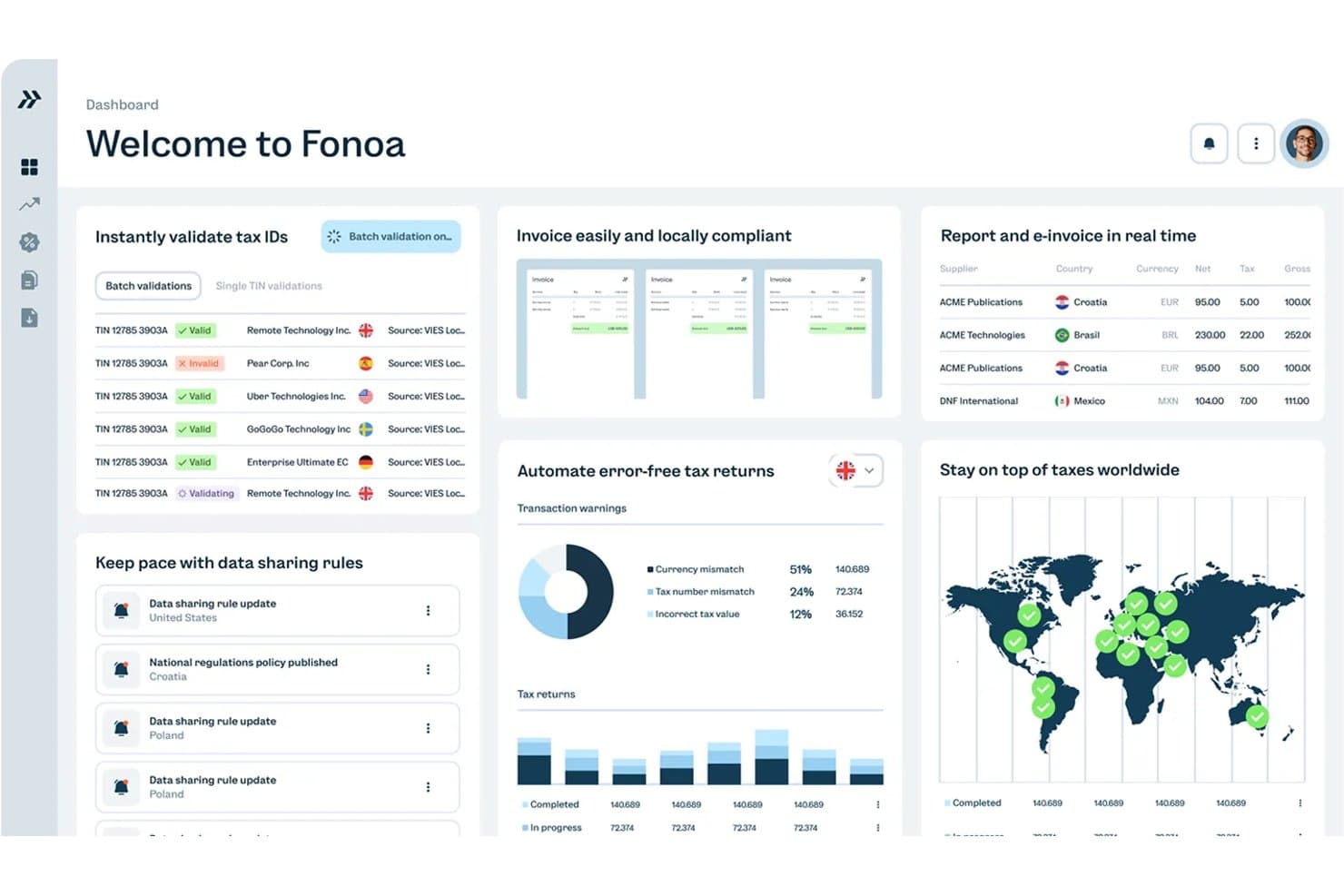
Fonoa centralizes tax validation, invoicing, and returns in one dashboard. Fonoa is an API-first indirect tax automation platform that handles VAT, GST, and sales tax across the full compliance lifecycle—covering tax ID validation, real-time calculation, e-invoicing, and return filing across 100+ jurisdictions.
Who Is Fonoa Best For?
Fonoa is a strong fit for finance and tax teams at high-volume digital businesses—SaaS companies, marketplaces, and platforms—that need to automate VAT, GST, and e-invoicing across dozens of jurisdictions without building compliance infrastructure from scratch.
Why I Picked Fonoa
I've included Fonoa in my top picks because it handles the full indirect tax lifecycle—validation, calculation, e-invoicing, and return filing—through a single data model, which is rare at this scale. I love that the Tax Engine processes each transaction in real time (under 200ms) and automatically updates rules across 100+ jurisdictions, so your team isn't manually maintaining rate tables. The E-Invoicing module connects directly to tax authorities via accredited API connections, covering both outgoing and incoming invoices across 50+ countries.
Fonoa Key Features
- Tax ID validation: Checks tax IDs in real time against live government registries across 120+ countries, with fuzzy matching to correct bad data and batch processing of up to 50,000 records.
- Audit trail automation: Compiles every tax determination, override, and approval by jurisdiction and period into versioned, tamper-proof evidence to support SOX and SOC 2 governance.
- Regulatory alerts: Delivers compliance alerts tailored to your company's profile, ranked by materiality and linked directly to the tax platform so rule changes can be deployed immediately.
- AP and AR tax coverage: Applies the same calculation logic to both sales and purchase transactions, giving your team consistent indirect tax treatment across accounts receivable and accounts payable.
Fonoa Integrations
Fonoa integrations include SAP, Oracle Fusion Cloud, and NetSuite, although connection depth isn’t publicly detailed. Its API supports custom connections to checkout, billing, invoicing, and AP/AR systems.
Pros and Cons
Pros:
- Strong support for high-volume transactions
- Audit trails support SOX and SOC 2
- Real-time VAT/GST coverage across jurisdictions
Cons:
- No tax provision or entity consolidation
- No transfer pricing or treaty logic
Learn more about Fonoa: Best for SAP-native tax compliance workflows
- Free demo available
- Pricing upon request
Visit WebsiteCustomer Rating:4.8/5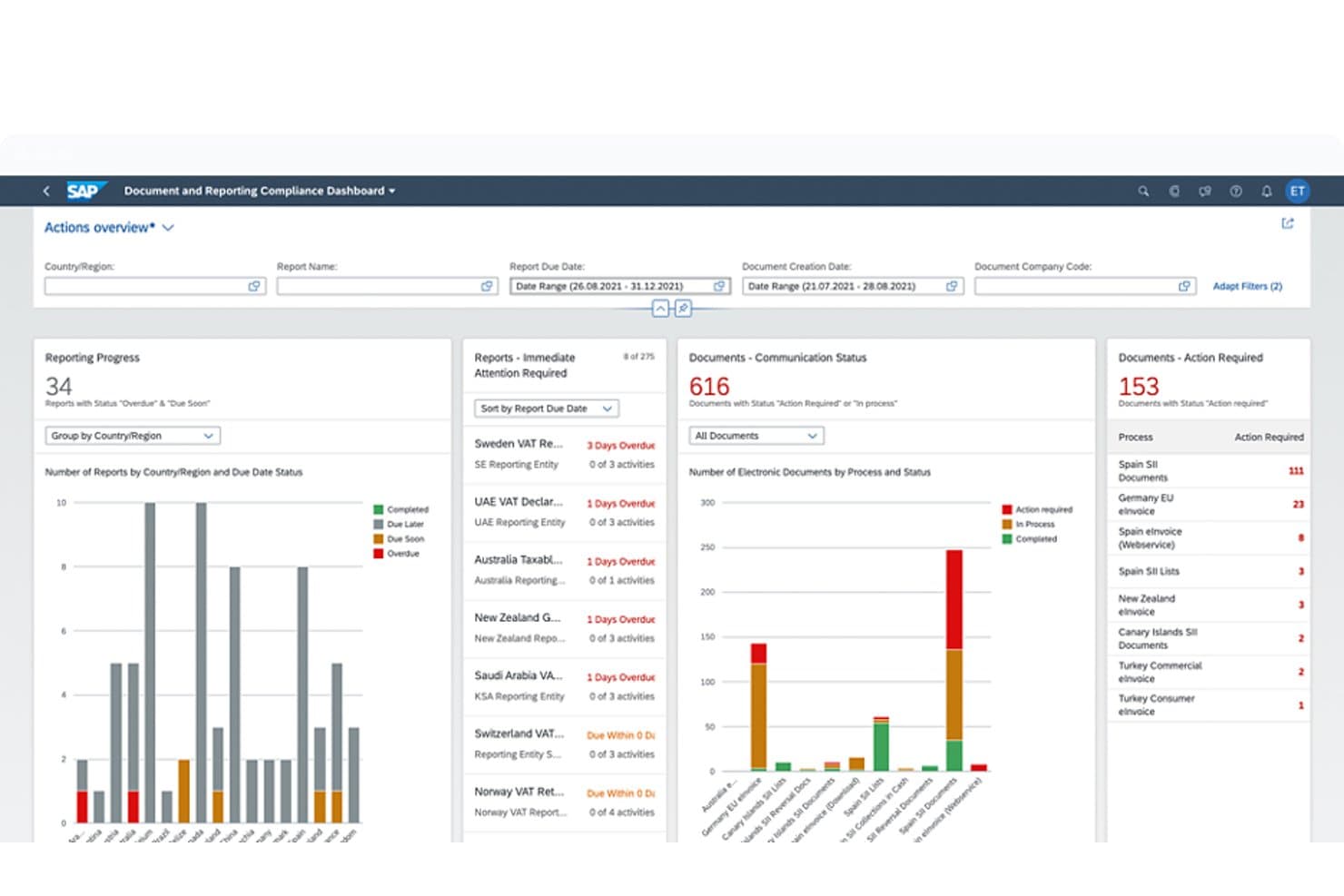
SAP Tax Compliance tracks document and reporting compliance across regions. SAP Tax Compliance is a modular tax and trade management suite built natively into SAP ERP, covering e-invoicing, VAT/GST reporting, indirect tax compliance, transfer pricing, and BEPS 2.0 across 60+ countries.
Who Is SAP Tax Compliance Best For?
SAP Tax Compliance is the right fit for enterprise tax teams already running SAP ERP who need multi-jurisdiction VAT, e-invoicing, and BEPS 2.0 compliance built directly into their existing stack.
Why I Picked SAP Tax Compliance
SAP Tax Compliance earns its spot on my shortlist because it's the only solution I'd recommend to enterprise teams already running SAP ERP who can't afford compliance gaps across dozens of jurisdictions. I like that SAP Document and Reporting Compliance handles e-invoicing, VAT returns, and SAF-T audit files across 60+ countries natively, with automated submissions via Peppol and local tax authority standards. The Joule AI assistant's Tax Posting and Statutory Report Analysis agents actively flag anomalies before filings go out, which I find genuinely useful during close cycles.
SAP Tax Compliance Key Features
- Regulatory change manager: Tracks upcoming legal changes, identifies which SAP products they affect, and delivers updates through SAP Notes at no additional cost.
- Scenario modeling: Lets tax teams run "what-if" simulations to evaluate the tax impact of business decisions before committing to them.
- BEPS 2.0 Tax Manager: Runs on SAP PaPM Cloud Universal Model to handle Pillar Two data validation, top-up tax calculation and allocation, and real-time recalculation.
- Compliance calendar: Provides a centralized dashboard with checklists for adjustments, approvals, and submissions so your team can track filing deadlines across jurisdictions.
SAP Tax Compliance Integrations
SAP Tax Compliance has native integrations with SAP S/4HANA, SAP ECC, SAP Concur, SAP Business Network, SAP Integration Suite, and SAP BTP. It also connects with Peppol and local tax-authority networks, plus partner integrations for Avalara, Sovos, and insightsoftware Longview Tax.
Pros and Cons
Pros:
- Strong audit trails and compliance visibility
- Automatic regulatory updates through SAP Notes
- Broad multi-country filing and e-invoicing coverage
Cons:
- Transfer pricing documentation tools are limited
- Treaty-rate automation remains undocumented
Learn more about SAP Tax Compliance: Best for automated VAT calculations
- Free demo available
- Pricing upon request
Visit WebsiteCustomer Rating:4/5
Avalara automates tax calculations and compliance across regions. Avalara offers automated VAT calculation and compliance tools for businesses selling across borders. The platform is especially useful for ecommerce companies, finance teams, and tax professionals who need to manage complex, multi-country VAT rules. Its real-time tax determination and filing features help reduce manual errors and keep international transactions compliant.
Why I Picked Avalara
When it comes to handling automated VAT calculations, Avalara offers a level of precision and coverage that’s hard to match. The platform automatically applies the correct VAT rates and rules for each transaction, even as regulations change across countries. I appreciate that Avalara also supports VAT registration and digital filing, which helps businesses stay compliant without manual intervention. These features make it a strong choice for companies managing high volumes of cross-border sales and complex VAT obligations.
Avalara Key Features
Some other features that make Avalara stand out include:
- Cross-border tax determination: Calculate taxes for international transactions based on real-time location and product data.
- Returns preparation and filing: Generate and submit VAT returns to tax authorities in multiple countries.
- Document management: Store and retrieve tax documents, certificates, and compliance records in a centralized portal.
- Tax exemption certificate management: Collect, validate, and manage exemption certificates for eligible customers.
Avalara Integrations
Integrations include Shopify, NetSuite, QuickBooks, Magento, Salesforce, Epicor, Sage, and Microsoft Dynamics.
Pros and Cons
Pros:
- Built-in HS code mapping
- Real-time rate calculation
- Massive integration library
Cons:
- Setup can be complicated
- Focuses only on indirect
Learn more about Avalara: Best for digital sales tax automation
- 7-day free trial available
- From $29/month
Visit WebsiteCustomer Rating:4.8/5
Quaderno automates sales tax, VAT, and GST compliance for sellers. Quaderno is built for digital businesses and SaaS companies that need to automate sales tax compliance across global markets. The platform tracks tax thresholds, applies the correct rates, and generates tax-compliant invoices for every sale. This makes it especially useful for online sellers managing VAT, GST, and US sales tax in multiple countries.
Why I Picked Quaderno
For digital-first businesses, Quaderno stands out for its ability to automate sales tax compliance across borders. The platform automatically detects when you cross tax thresholds in different countries and applies the correct VAT, GST, or US sales tax rates to each transaction. I appreciate how Quaderno generates tax-compliant invoices and keeps detailed records for every sale, which is especially important for SaaS and ecommerce companies selling internationally. This focus on digital sales tax automation makes it a strong choice for teams that need to stay compliant without manual intervention.
Quaderno Key Features
Some other Quaderno features that international sellers may find valuable include:
- Multi-currency support: Issue invoices and process payments in multiple currencies for global customers.
- Automated credit note generation: Create and send credit notes automatically when refunds or adjustments are needed.
- Customizable invoice templates: Design and brand invoices to meet local and business requirements.
- Real-time tax reports: Access up-to-date tax summaries and export data for filings at any time.
Quaderno Integrations
Integrations include Stripe, PayPal, Shopify, WooCommerce, Amazon, Zapier, Xero, and QuickBooks Online.
Pros and Cons
Pros:
- Sends compliant receipts
- Easy Stripe integration
- Beautiful user interface
Cons:
- No transfer pricing tools
- Lacks deep ERP syncing
Learn more about Quaderno: Best for Pillar Two compliance at scale
- Free demo available
- Pricing upon request
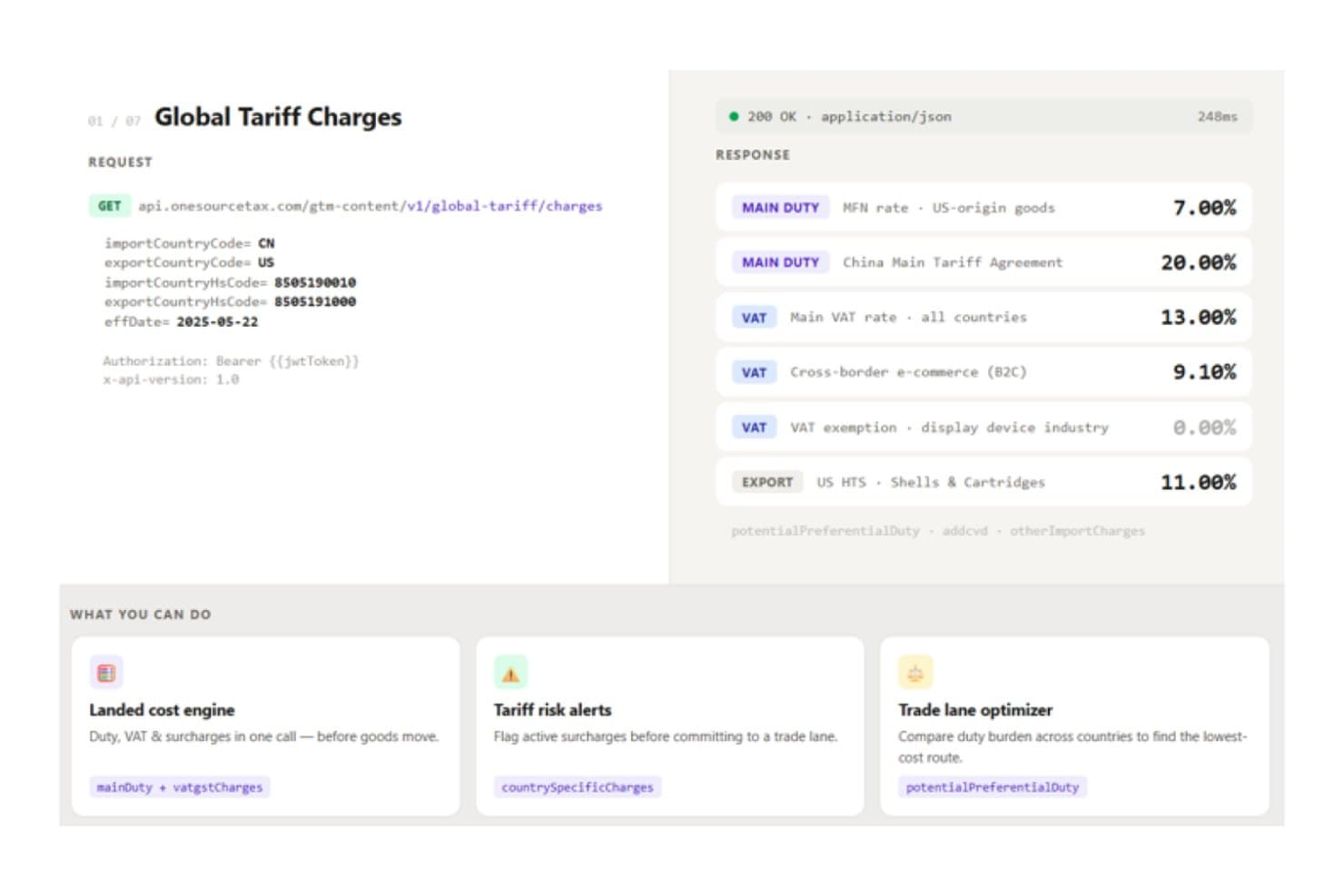
ONESOURCE delivers real-time global tariff rates via API for trade compliance. ONESOURCE is a modular enterprise tax suite from Thomson Reuters that covers direct tax compliance, tax provision, indirect tax calculation and reporting, e-invoicing, statutory reporting, and Pillar Two (GloBE) compliance across multinational entities.
Who Is ONESOURCE Best For?
ONESOURCE is a strong fit for multinational tax teams that need to manage Pillar Two compliance, indirect tax automation, and multi-entity provision under a single enterprise vendor.
Why I Picked ONESOURCE
I've included ONESOURCE in my top picks because its Pillar Two compliance depth is unlike anything else I've seen at enterprise scale. The Orbitax Global Minimum Tax integration automates GloBE calculations and safe-harbor analysis across 190+ countries, and it connects directly to Tax Provision so your existing data mappings carry over. I also like that the tool logged 1,700+ GloBE Information Return filings across 34 jurisdictions in under a year, which tells me this isn't theoretical coverage.
ONESOURCE Key Features
- Indirect tax determination: Calculates sales tax, VAT, GST, and excise in real time across 205+ countries and 60,000+ jurisdictions, processing up to 10M transactions per hour.
- Statutory reporting: Generates statutory financial statements in 45+ jurisdictions using local-language templates, with audit trails and one-click machine translation.
- VAT return automation: Prepares and reconciles VAT/GST returns, SAF-T/SII digital reports, and prefilled-return comparisons across 38+ countries through Indirect Compliance.
- E-invoicing compliance: Supports e-invoicing requirements in 80–85+ countries via the integrated Pagero network, with line-level matching of e-invoices to returns.
ONESOURCE Integrations
ONESOURCE has 12 SAP integrations, including SAP ERP, S/4HANA, and Ariba, plus certified connectors for Oracle ERP Cloud, Oracle Cloud Infrastructure, and Microsoft Dynamics 365 F&O. Determination offers 60+ prebuilt integrations, while REST APIs, OData, and SFTP support custom data connections.
Pros and Cons
Pros:
- Multi-entity provision supports global reporting
- Frequent tax-content updates across jurisdictions
- Pillar Two automation across 190+ countries
Cons:
- Non-U.S. income-tax filing remains unclear
- Transfer pricing documentation requires another vendor
Learn more about ONESOURCE: Best with global tax research tools
- Free demo available
- Pricing upon request

Bloomberg Tax helps enterprises manage global tax compliance and planning. With Bloomberg Tax, tax professionals and multinational finance teams get access to a deep library of global tax research tools. The platform is designed for those who need to navigate complex international tax regulations and stay current with evolving compliance standards. Its unique strength lies in delivering expert analysis, country-by-country guides, and up-to-date legislative tracking for cross-border operations.
Why I Picked Bloomberg Tax
What sets Bloomberg Tax apart for me is its unmatched suite of global tax research tools, which are essential for professionals handling international tax matters. The platform offers detailed country-by-country tax guides and expert commentary, helping users interpret complex regulations in multiple jurisdictions. I appreciate the real-time legislative tracking and analysis, which keeps your team informed about changes that could impact cross-border compliance. These research-focused features make Bloomberg Tax a strong choice for organizations that need authoritative, up-to-date tax intelligence on a global scale.
Bloomberg Tax Key Features
Some other features that stood out to me include:
- Tax treaty comparison tool: Compare provisions across multiple international tax treaties in a single view.
- Interactive tax charts: Visualize key tax rates and rules for different countries.
- Document management system: Organize, store, and retrieve research and compliance documents securely.
- Personalized news alerts: Receive updates on tax developments tailored to your selected jurisdictions and topics.
Bloomberg Tax Integrations
Integrations include Advantax, Vertex, Avalara, and various ERP systems through Advantage Fixed Assets.
Pros and Cons
Pros:
- Strong planning tools
- Highly trusted data source
- Tracks treaty networks
Cons:
- Overkill for small firms
- Focuses mostly on research
Learn more about Bloomberg Tax:

Sovos automates VAT compliance for businesses across regions. Sovos is designed for finance teams and tax professionals who need to keep pace with constantly changing global tax regulations. The platform specializes in delivering real-time regulatory updates and automating compliance across multiple jurisdictions. This makes it especially useful for multinational businesses facing frequent changes in tax rules and reporting requirements.
Why I Picked Sovos
What sets Sovos apart is its focus on real-time regulatory updates, which is essential for businesses operating in multiple countries. The platform monitors global tax law changes and automatically updates compliance processes, so your team can respond quickly to new requirements. I like that Sovos also provides automated reporting and e-invoicing features that help you stay ahead of shifting international tax obligations. This makes it a strong fit for organizations that need to minimize compliance risk in a fast-changing regulatory environment.
Sovos Key Features
Some other Sovos features that international tax teams may find useful include:
- Multi-jurisdiction tax determination: Calculate taxes for transactions across different countries and regions in real time.
- Automated VAT return preparation: Generate VAT returns for multiple jurisdictions within the platform.
- Audit trail and compliance documentation: Maintain detailed records of tax calculations and filings for audit support.
- Tax data analytics dashboard: Visualize and analyze tax data trends across your global operations.
Sovos Integrations
Integrations include SAP, NetSuite, Microsoft Dynamics, Magento, QuickBooks, Shopify, and Oracle.
Pros and Cons
Pros:
- High volume processing
- Good for enterprise scale
- Real-time regulatory sync
Cons:
- Slow customer service
- Lacks direct tax features
Learn more about Sovos:

Vertex automates tax calculation and compliance for large enterprises. Vertex is designed for organizations that need to manage complex tax requirements across multiple countries and business systems. The platform stands out for its deep compatibility with leading ERP systems, making it a strong fit for enterprises with integrated finance and operations. This helps tax teams automate calculations, maintain compliance, and adapt quickly to changing international tax regulations.
Why I Picked Vertex
For businesses that rely on ERP systems to manage global operations, Vertex offers a level of compatibility that’s hard to match in the international tax software space. I picked Vertex because it integrates directly with major ERP platforms, allowing tax calculations and compliance processes to run within your existing financial workflows. The platform supports real-time tax determination and automated updates for changing tax rules across multiple jurisdictions. This makes it especially valuable for organizations that need to keep tax processes tightly aligned with their broader finance and operations infrastructure.
Vertex Key Features
Some other features that make Vertex a strong choice for international tax management include:
- Global content database: Provides up-to-date tax rates and rules for over 19,000 jurisdictions worldwide.
- Tax data analytics dashboard: Offers visualizations and reporting tools for monitoring tax exposure and compliance.
- Automated exemption certificate management: Tracks, stores, and validates exemption certificates for sales and use tax.
- Batch processing capabilities: Handles large volumes of transactions for bulk tax calculations and filings.
Vertex Integrations
Integrations include SAP, Oracle, NetSuite, Microsoft Dynamics, Salesforce, and Workday.
Pros and Cons
Pros:
- Highly customizable rules
- Handles massive data loads
- Accurate VAT/GST rules
Cons:
- Expensive maintenance
- Requires IT support
Learn more about Vertex:

Anrok automates sales tax compliance for SaaS businesses. Anrok is purpose-built for SaaS companies that need to manage tax compliance on recurring software revenue across global markets. It’s especially relevant for finance and operations teams navigating complex digital tax rules, such as VAT, GST, and US sales tax. The platform automates tax calculations, registration, and filings for SaaS revenue, helping you keep pace with evolving international requirements.
Why I Picked Anrok
For SaaS companies dealing with recurring revenue, Anrok addresses the unique tax challenges that come with digital product sales across borders. I picked Anrok because it specializes in automating tax calculations and filings for subscription-based software, which is often subject to complex and shifting international tax rules. The platform tracks tax thresholds, manages registrations in multiple jurisdictions, and generates compliant invoices tailored to SaaS billing models. These features make Anrok a strong fit for finance teams that need to stay compliant as they scale their software business globally.
Anrok Key Features
Some other features that make Anrok useful for SaaS tax management include:
- Real-time tax liability dashboard: Gives you a live view of tax obligations across all jurisdictions.
- Automated exemption certificate management: Collects, validates, and stores customer exemption certificates.
- Audit-ready reporting tools: Prepares detailed reports to support audits and regulatory reviews.
- Multi-currency support: Handles tax calculations and invoicing in different currencies for global customers.
Anrok Integrations
Integrations include Stripe, Chargebee, Recurly, Zuora, NetSuite, and QuickBooks Online.
Pros and Cons
Pros:
- Clean and modern interface
- Easy global threshold alerts
- Syncs with billing systems
Cons:
- Narrow global use case
- No employee tax features
Learn more about Anrok: Best for cross-border compliance support
- Free demo available
- Pricing upon request

Forte International Tax supports global payroll and tax compliance needs. Forte International Tax offers tailored solutions for businesses navigating complex cross-border tax compliance. It’s especially relevant for multinational corporations, finance teams, and tax professionals managing multi-jurisdictional reporting and regulatory requirements. The platform stands out for its focus on proactive compliance management and support for evolving international tax laws.
Why I Picked Forte International Tax
What drew me to Forte International Tax is its specialized focus on cross-border compliance support, which is a major concern for organizations operating in multiple countries. The platform provides in-depth guidance on international tax regulations and helps users manage compliance with country-specific rules and deadlines. I appreciate that Forte International Tax offers ongoing monitoring of regulatory changes, so your team can stay ahead of evolving requirements. These features make it a strong choice for businesses that need to reduce risk and maintain compliance across different jurisdictions.
Forte International Tax Key Features
In addition to its compliance monitoring and regulatory guidance, I also found these features worth noting:
- Customizable reporting templates: Generate country-specific tax reports tailored to your organization’s needs.
- Secure document management: Store, organize, and retrieve sensitive tax documents within a protected environment.
- Multi-entity management: Oversee tax compliance for several subsidiaries or business units from a single dashboard.
- Direct access to tax advisors: Connect with international tax experts for case-specific questions and support.
Forte International Tax Integrations
Integrations include Oracle, SAP, Microsoft Dynamics 365, and Corptax.
Pros and Cons
Pros:
- Tracks foreign tax credits
- Good for mid-market firms
- Handles transfer pricing
Cons:
- Implementation takes time
- Interface can feel dated
Learn more about Forte International Tax:
Alte soluții software pentru impozitare internațională
Iată câteva opțiuni suplimentare de software pentru impozitare internațională care nu au ajuns pe lista mea scurtă, dar care merită totuși analizate:
- 11OrbitaxBest for multinational entity reporting
- 12PwC SightlineBest for enterprise-scale integrations
- 13CCH IntegratorBest for group tax provisioning and Pillar Two filing
- 14Longview TaxBest for provision-led CbCR and Pillar Two reporting
- 15CCH TagetikBest for group tax provision and close on one platform
- 16CSC CorptaxBest for consolidated global tax data
- 17TaxuallyBest for VAT and e-invoicing firm white-labeling
- 18AibidiaBest for transfer pricing documentation at scale
How I Evaluate International Tax Software
I split my evaluation into three parts, led by the most-weighted core: calculate cross-border tax and meet filing rules across countries. Then I consider standout features such as treaty scenario modeling. Finally, I weigh onboarding, tax expertise, support, and pricing value beyond the feature set.
Core Functionality (Table Stakes For This List)
When I'm selecting tools for my list, I score each one on a scale from 0 (does not offer the functionality) to 5 (excels in this area) for each core functionality listed below. I then convert the total into a percentage to help assess each tool's overall fit, with extra weight on any functionalities I’ve deemed essential.
- Multi-Jurisdiction Compliance (Essential): I look for country-specific calculation, reporting, and filing support that can handle obligations as a company adds markets.
- Cross-Border Tax (Essential): I assess how the engine handles international transactions, including treaty treatment and withholding across relevant jurisdictions.
- Regulatory Updates: I consider how regularly tax rules and rates are updated, and whether teams receive alerts about changes that affect filing or reporting.
- VAT/GST Handling: I look for calculation, validation, and reporting across jurisdictions, including support for filing-ready indirect tax data.
- Transfer Pricing Support: I evaluate documentation tools and coverage of common pricing methods for intercompany transactions across related entities.
- Currency and Entity Consolidation: I check whether teams can consolidate tax data across legal entities and currencies, then report by entity or jurisdiction.
Once I have a list of tools that meet the criteria, I consider what sets each platform apart.
Differentiating Factors (What Sets Vendors Apart)
Here's how I compare and contrast different vendors:
Standout Features
I look for scenario modeling that lets tax teams simulate restructurings or treaty elections before committing—useful when evaluating Pillar Two exposure across new entity structures. I also evaluate how well each platform generates audit-ready workpapers automatically, since defensible documentation saves significant time during tax authority inquiries. API-driven extensibility matters too; I check whether a tool can connect to internal data warehouses and BI layers so tax data fits into the broader reporting stack.
Beyond Features
I evaluate how well a platform scales as entity structures change. M&A activity or new market entries shouldn't force a re-implementation, and licensing should grow predictably with added jurisdictions. I also check vendor regulatory depth—whether updates come from in-house tax research teams or partnerships with firms like IBFD—because stale rates or missed rule changes create real compliance exposure. Total cost of ownership matters too: I weigh implementation, training, and ongoing fees against reduced reliance on external advisors and faster close cycles.
Cum să alegeți software-ul pentru impozitare internațională
Este ușor să vă pierdeți în liste lungi de funcții și structuri de prețuri complexe. Pentru a vă ajuta să rămâneți concentrat în timp ce parcurgeți procesul unic de selectare a software-ului, iată o listă de verificare a factorilor de care trebuie să țineți cont:
| Factor | Ce trebuie avut în vedere |
|---|---|
| FactorScalabilitate | Ce trebuie avut în vedereVa putea software-ul să gestioneze volumele actuale și estimate ale tranzacțiilor, creșterea numărului de entități și intrarea pe piețe noi fără actualizări majore? |
| FactorIntegrări | Ce trebuie avut în vedereSe conectează instrumentul în mod nativ la sistemele dumneavoastră ERP, de facturare și contabilitate sau veți avea nevoie de dezvoltare personalizată ori de un middleware? |
| FactorPosibilitate de personalizare | Ce trebuie avut în vederePuteți adapta regulile fiscale, formatele de raportare și fluxurile de lucru la modelul de afaceri și la nevoile dumneavoastră de conformitate sau sunteți limitați la setările prestabilite? |
| FactorUșurință în utilizare | Ce trebuie avut în vedereVor putea echipa financiară și utilizatorii care nu au cunoștințe tehnice să navigheze în sistem, să îl actualizeze și să remedieze problemele fără asistență IT permanentă? |
| FactorImplementare și integrare inițială | Ce trebuie avut în vedereCât timp va dura să puneți sistemul în funcțiune și ce resurse (interne sau furnizate de furnizor) sunt necesare pentru migrarea datelor și instruire? |
| FactorCost | Ce trebuie avut în vedereSunt incluse toate modulele necesare în prețul ofertat sau există taxe suplimentare pentru țări, utilizatori ori declarații suplimentare? |
| FactorMăsuri de securitate | Ce trebuie avut în vedereRespectă furnizorul standardele organizației dumneavoastră privind confidențialitatea datelor, criptarea și controlul accesului, în special pentru datele fiscale sensibile? |
| FactorCerințe de conformitate | Ce trebuie avut în vedereAcceptă software-ul jurisdicțiile, tipurile de impozite și standardele de raportare specifice pe care afacerea dumneavoastră trebuie să le respecte acum și în viitor? |
Ce este software-ul pentru impozitare internațională?
Software-ul pentru impozitare internațională este o soluție digitală care ajută companiile să gestioneze, să calculeze și să raporteze impozitele în mai multe țări și jurisdicții. Acesta automatizează sarcini complexe, precum calcularea TVA-ului, GST-ului și impozitului pe vânzări, urmărește cerințele de conformitate și generează rapoarte pregătite pentru audit. Echipele financiare folosesc aceste instrumente pentru a reduce erorile manuale, a ține pasul cu reglementările în schimbare și a asigura depunerea corectă a declarațiilor pentru tranzacțiile transfrontaliere.
Funcții
Iată funcțiile esențiale pe care ar trebui să le ofere orice software excelent pentru impozitare internațională:
- Calcularea automată a impozitelor: Calculează TVA-ul, GST-ul și impozitul pe vânzări pentru fiecare tranzacție, pe baza celor mai recente reguli din fiecare jurisdicție relevantă, reducând munca manuală și erorile.
- Asistență pentru mai multe jurisdicții: Gestionează conformitatea fiscală în mai multe țări, state sau provincii, permițându-vă să administrați operațiunile globale de pe o singură platformă.
- Monitorizarea pragurilor: Monitorizează vânzările și volumele tranzacțiilor pentru a vă alerta atunci când vă apropiați de pragurile de înregistrare fiscală din diferite regiuni sau le depășiți.
- Automatizarea depunerii declarațiilor fiscale: Pregătește și transmite electronic declarațiile fiscale către autoritățile competente, ajutându-vă să respectați termenele și să reduceți riscul de neconformitate.
- Raportare pregătită pentru audit: Generează rapoarte detaliate, care pot fi exportate, pentru a sprijini auditurile și verificările interne, cu evidențe clare ale calculelor și declarațiilor depuse.
- Gestionarea certificatelor de scutire fiscală: Colectează, validează și stochează certificatele de scutire fiscală ale clienților, asigurând aplicarea cotelor corecte de impozitare și menținerea conformității.
- Panouri de control în timp real: Oferă vizibilitate în timp real asupra obligațiilor fiscale, declarațiilor depuse și statutului de conformitate în toate jurisdicțiile.
- Asistență pentru mai multe monede: Gestionează tranzacții, facturare și raportare în diverse monede, ceea ce este esențial pentru companiile cu clienți internaționali.
- Capacități de integrare: Se conectează direct la sistemele dumneavoastră ERP, de contabilitate și de facturare pentru a sincroniza datele tranzacțiilor și a eficientiza fluxurile de lucru.
- Actualizări de reglementare: Integrează automat modificările legislației și cotelor fiscale, astfel încât calculele și declarațiile dumneavoastră să rămână corecte pe măsură ce reglementările evoluează.
Beneficii
Implementarea unui software fiscal internațional oferă mai multe beneficii pentru echipa și compania dumneavoastră. Iată câteva dintre acestea:
- Reducerea riscului de neconformitate: Calculele automatizate și modificările de reglementare actualizate vă ajută să evitați erorile costisitoare și penalitățile în mai multe jurisdicții.
- Economisirea timpului: Depunerea automată a declarațiilor fiscale, raportarea și monitorizarea pragurilor eliberează echipa de sarcinile manuale și repetitive.
- Precizie îmbunătățită: Panourile de control în timp real și rapoartele pregătite pentru audit asigură precizia datelor fiscale și facilitează verificarea acestora.
- Operațiuni globale scalabile: Asistența pentru mai multe jurisdicții și monede facilitează extinderea pe piețe noi fără restructurarea proceselor fiscale.
- Gestionare fiscală centralizată: Integrarea cu sistemele dumneavoastră ERP, de contabilitate și de facturare vă permite să gestionați toate obligațiile fiscale de pe o singură platformă.
- Pregătire mai bună pentru audit: Păstrarea detaliată a evidențelor și gestionarea certificatelor de scutire fiscală simplifică răspunsul la audituri și verificări de reglementare.
- Vizibilitate îmbunătățită: Informațiile în timp real despre obligațiile fiscale și statutul de conformitate vă ajută să luați decizii informate și să planificați în mod proactiv.
Costuri și prețuri
Selectarea unui software fiscal internațional necesită înțelegerea diverselor modele de preț și planuri disponibile. Costurile variază în funcție de funcții, dimensiunea echipei, suplimente și alți factori. Tabelul de mai jos prezintă pe scurt planurile comune, prețurile medii ale acestora și funcțiile incluse de obicei în soluțiile software fiscale internaționale:
Tabel comparativ al planurilor pentru software fiscal internațional
| Tipul planului | Preț mediu | Funcții comune |
|---|---|---|
| Tipul planuluiPlan gratuit | Preț mediu$0 | Funcții comuneCalcul fiscal de bază, asistență limitată pentru jurisdicții, introducere manuală a datelor și raportare de bază. |
| Tipul planuluiPlan individual | Preț mediu$30-$100/utilizator/lună | Funcții comuneCalcul fiscal automatizat, acces pentru un singur utilizator, instrumente de conformitate de bază și asistență standard. |
| Tipul planuluiPlan pentru companii | Preț mediu$150-$1500/lună | Funcții comuneAcces pentru mai mulți utilizatori, asistență pentru mai multe jurisdicții, depuneri automatizate, opțiuni de integrare și rapoarte pregătite pentru audit. |
| Tipul planuluiPlan pentru întreprinderi | Preț mediu$2,000+/lună | Funcții comuneGestionarea avansată a conformității, integrări personalizate, asistență dedicată pentru gestionarea contului, analize avansate și asistență la integrare. |
Întrebări frecvente
Iată câteva răspunsuri la întrebări frecvente despre software-ul fiscal internațional:
Cum gestionează software-ul fiscal internațional modificarea reglementărilor fiscale?
Software-ul fiscal internațional actualizează automat cotele și regulile fiscale pe măsură ce reglementările se modifică. Acest lucru ajută echipa să rămână conformă fără cercetări sau actualizări manuale, reducând riscul de erori și de nerespectare a termenelor-limită.
Se poate integra software-ul fiscal internațional cu sistemele mele existente de contabilitate sau ERP?
Da, majoritatea soluțiilor software fiscale internaționale oferă integrări cu platforme populare de contabilitate, ERP și facturare. Acest lucru vă permite să sincronizați datele tranzacțiilor, să automatizați fluxurile de lucru și să evitați introducerea duplicată a datelor.
Ce ar trebui să iau în considerare atunci când evaluez software-ul fiscal internațional pentru o companie în creștere?
Urmăriți scalabilitatea, compatibilitatea cu mai multe jurisdicții și prețurile flexibile. Asigurați-vă că software-ul poate gestiona volume mai mari de tranzacții, piețe noi și utilizatori suplimentari pe măsură ce compania dumneavoastră se extinde.
Sunt incluse de obicei implementarea inițială și instruirea în software-ul fiscal internațional?
Majoritatea furnizorilor oferă resurse pentru implementarea inițială, precum ghiduri de configurare, videoclipuri de instruire și asistență live. Unii oferă tururi interactive ale produsului sau seminare online pentru a ajuta echipa să înceapă rapid și cu încredere.
Cum sprijină software-ul fiscal internațional pregătirea pentru audit?
Software-ul fiscal internațional generează rapoarte detaliate, care pot fi exportate, și păstrează evidențe clare ale calculelor, declarațiilor depuse și certificatelor de scutire. Această documentație facilitează răspunsul la audituri și evaluări de reglementare.