

10 Best Avalara Alternatives for Sales Tax in 2026

Best Avalara Alternatives Shortlist


The best Avalara alternatives are tax software solutions that give you accurate calculations, smooth integrations, and reliable support for evolving compliance needs. If you’re searching for Avalara alternatives, you’re likely balancing steep compliance pressures, unpredictable rule changes, and the need to scale as your business grows. G
Getting the right solution means finding a tool that not only matches Avalara’s core features but also addresses the pain points you’ve run into—whether that’s pricing, support, usability, or handling specialized tax scenarios. In this guide, you’ll get a clear breakdown of top tax technology options, so you can quickly compare what matters most and make an informed decision.
What is Avalara?
Avalara is a tax automation software platform that helps businesses calculate, collect, and file sales tax and other transaction-based taxes. It connects with accounting, e-commerce, and ERP systems to automate compliance tasks for different tax jurisdictions.
Avalara’s software reduces manual effort by keeping tax rates and rules up to date, helping users reduce errors and support timely reporting. It’s used by businesses of all sizes that want to simplify tax management.
Best Avalara Alternatives Summary
This comparison chart summarizes pricing details for my top Avalara alternative selections to help you find the best one for your budget and business needs.
| Tool | Best For | Trial Info | Price | ||
|---|---|---|---|---|---|
| 1 | Best for global VAT and e-invoicing mandates | Free demo available | Pricing upon request | Website | |
| 2 | Best for e-commerce platform integrations | 30-day free trial available | From $39/month | Website | |
| 3 | Best for effortless digital product tax compliance | 7-day free trial available | From $29/month | Website | |
| 4 | Best for unified marketplace sales tax | 30-day free trial | From $19/month | Website | |
| 5 | Best for global regulatory compliance automation | Free demo available | Pricing upon request | Website | |
| 6 | Best for complex enterprise transaction management | Free demo available | Pricing upon request | Website | |
| 7 | Best for multinational tax determination workflows | Not available | Pricing upon request | Website | |
| 8 | Best for SaaS company sales tax automation | Free demo available | From $100/month | Website | |
| 9 | Best for scalable telecom tax solutions | Free demo available | Pricing upon request | Website | |
| 10 | Best for white-glove managed filing services | Free plan available | Pricing upon request | Website |
Why Trust Our Software Recommendations
Our team has been testing and reviewing software since 2012. As finance leaders ourselves, we know how difficult—and important—it is to choose the right software.
For this guide, we evaluated tools using hands-on testing and independent research, scoring tools using our selection criteria.
Our reviews reflect our human editorial judgment, not a sales pitch.
Best Avalara Alternatives Reviews
Below are my detailed summaries of the best Avalara alternatives that made it onto my shortlist. My reviews offer a detailed look at the features, integrations, and best use cases of each tax software platform to help you find the best one for you.

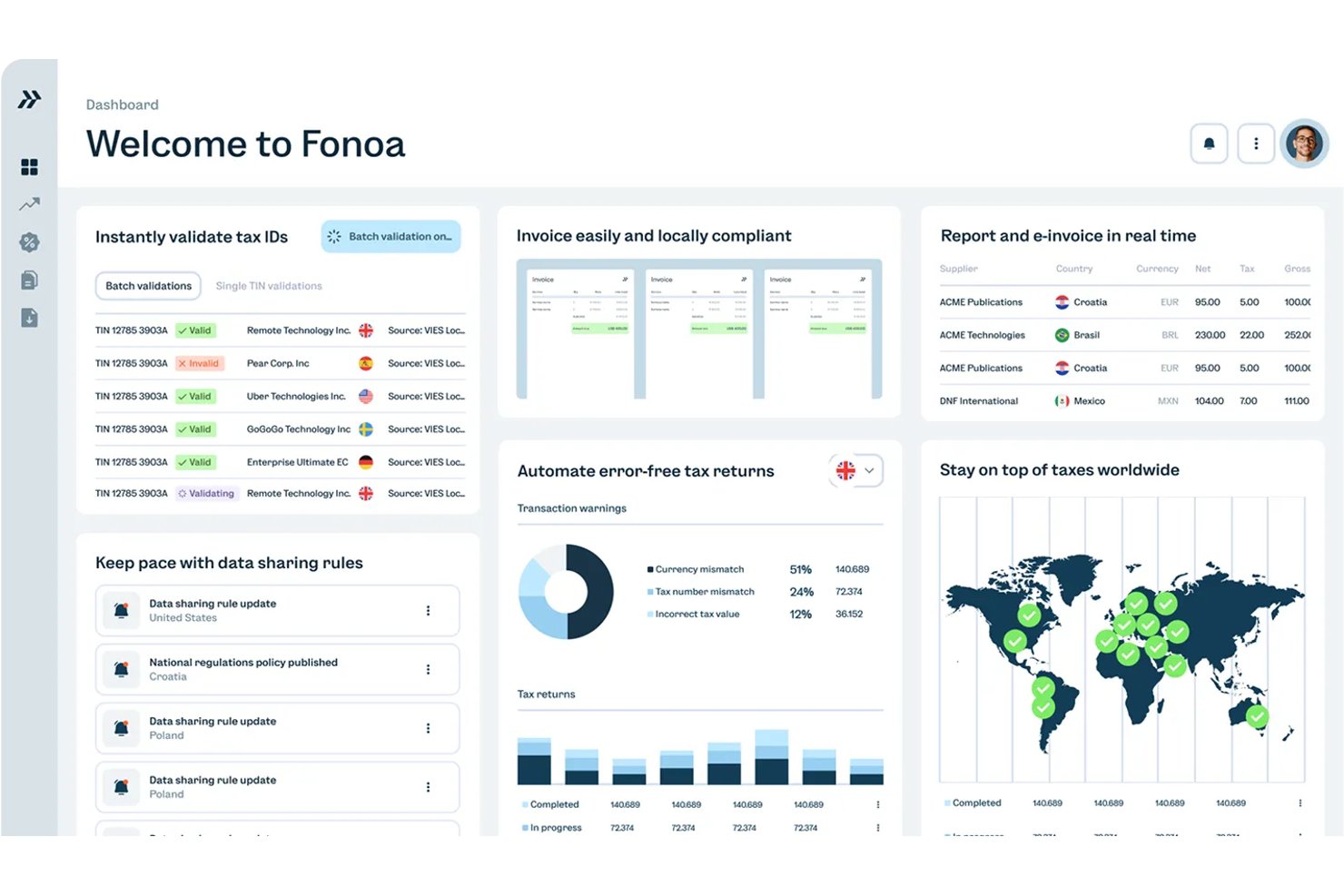
Fonoa is a tax automation platform designed for finance teams and global businesses looking to simplify indirect tax compliance, streamline complex VAT calculations, and manage real-time e-invoicing across multiple countries.
Who Is Fonoa Best For?
Fonoa suits global finance teams at multinational companies that need to handle cross-border VAT compliance and real-time e-invoicing.
Why Fonoa Is a Good Avalara Alternative
I picked Fonoa as a top choice because it covers global VAT rules and e-invoicing mandates across different countries in real time. My team is able to automate complex cross-border tax compliance and quickly adapt to changing regulations, all within one platform. That’s especially valuable for businesses operating in multiple international markets.
Fonoa Key Features
- API integration: Connect Fonoa with your ERP, billing, or ecommerce platforms for automated tax workflows.
- Real-time tax validation: Instantly verify tax IDs and customer data from within your systems.
- Audit-ready data exports: Generate downloadable transaction and tax reports to simplify audits.
- Multi-currency support: Manage calculations and invoicing in different currencies without manual conversion.
Fonoa Integrations
Native integrations are not clearly documented. Fonoa supports integrations via its API for custom connections with ERP, billing, and ecommerce platforms.
Pros and Cons
Pros:
- Handles multi-currency e-invoicing requirements
- Supports real-time validation of global tax IDs
- Covers complex cross-border VAT scenarios globally
Cons:
- Documentation for native integrations is limited
- API-focused setup can require technical resources

TaxJar
Best for e-commerce platform integrations
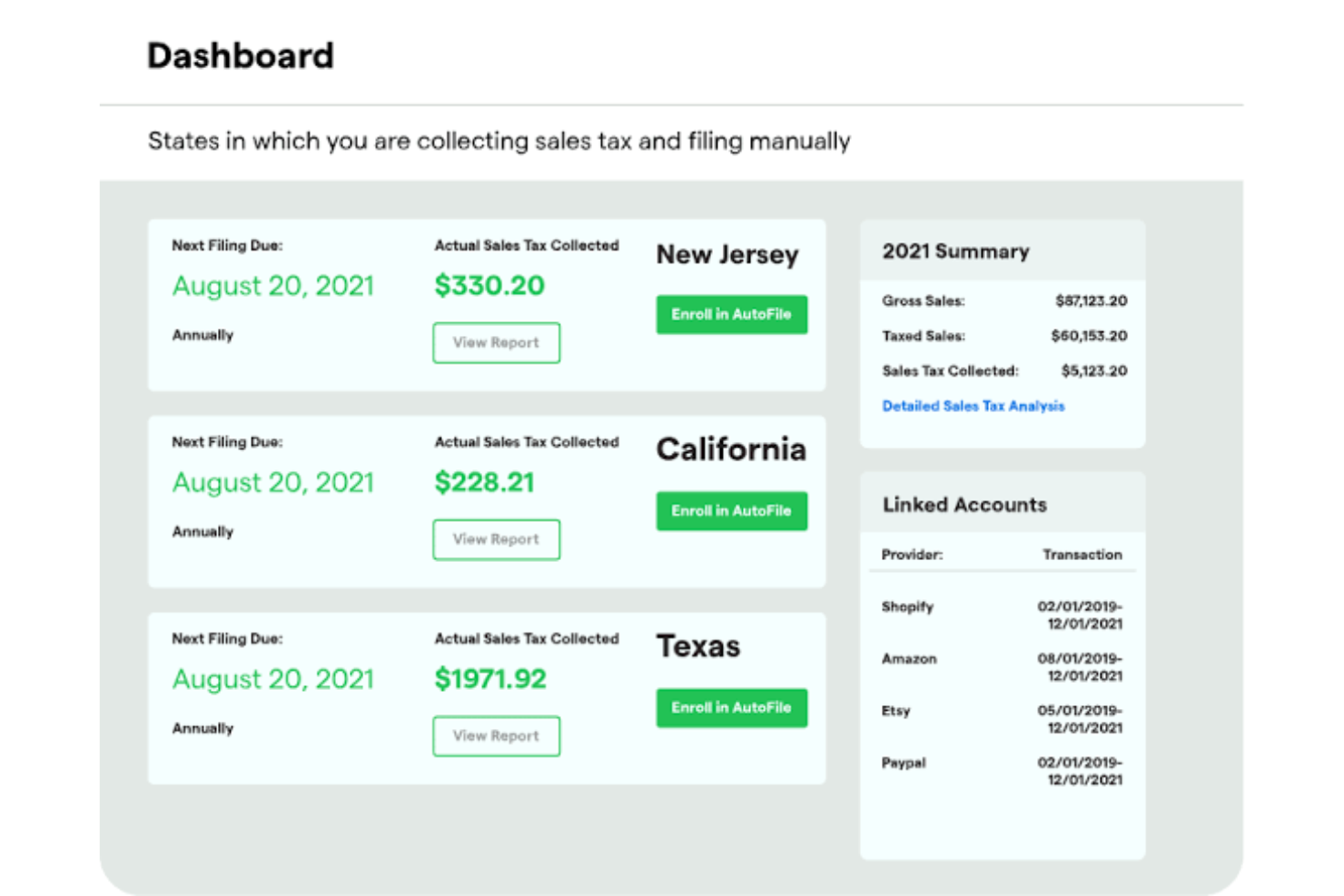
TaxJar is a sales tax management automation platform built for e-commerce businesses and online sellers that need to manage nexus tracking, product taxability, and automated return filing across multiple US states.
Who Is TaxJar Best For?
TaxJar is a strong fit for e-commerce retailers selling across multiple US states who need automated sales tax calculation and filing without a dedicated tax team.
Why TaxJar Is a Good Avalara Alternative
I picked TaxJar as one of the best because its e-commerce integration depth is genuinely hard to match. TaxJar builds and maintains its own native integrations with platforms like Amazon, Shopify, and WooCommerce, and every integration is tested and certified against the full sales tax process, from calculations to reporting.
I also like its AI-driven product categorization, which automatically maps SKUs to the correct tax codes at checkout across all connected channels, cutting out the manual taxability work that trips up multichannel sellers.
TaxJar Key Features
- Nexus Insights Dashboard: Monitors your sales tax exposure by state and flags when you're approaching economic nexus thresholds, with recommended next steps.
- AutoFile: Automatically prepares and submits sales tax returns and remittances to every state where you're enrolled, on each state's filing schedule.
- Multichannel reporting dashboard: Consolidates transaction data from all your sales channels into one view, with state-by-state breakdowns by city, county, and special district.
- Real-time sales tax API: Delivers rooftop-level, product-specific tax calculations with sub-20ms response times and 99.999% historical uptime.
TaxJar Integrations
TaxJar offers native integrations with Amazon, Shopify, BigCommerce, WooCommerce, Etsy, eBay, Walmart, Squarespace, Square, and Stripe, along with additional integrations for QuickBooks, Xero, NetSuite, Magento, Ecwid, and PayPal. An API with open source clients on GitHub is also available for custom integrations.
Pros and Cons
Pros:
- Fast self-service setup without tax expertise
- Pulls sales data from multiple platforms
- AI-driven product tax code categorization
Cons:
- International filing requires external partners
- No exemption certificate management built in

Quaderno
Best for effortless digital product tax compliance
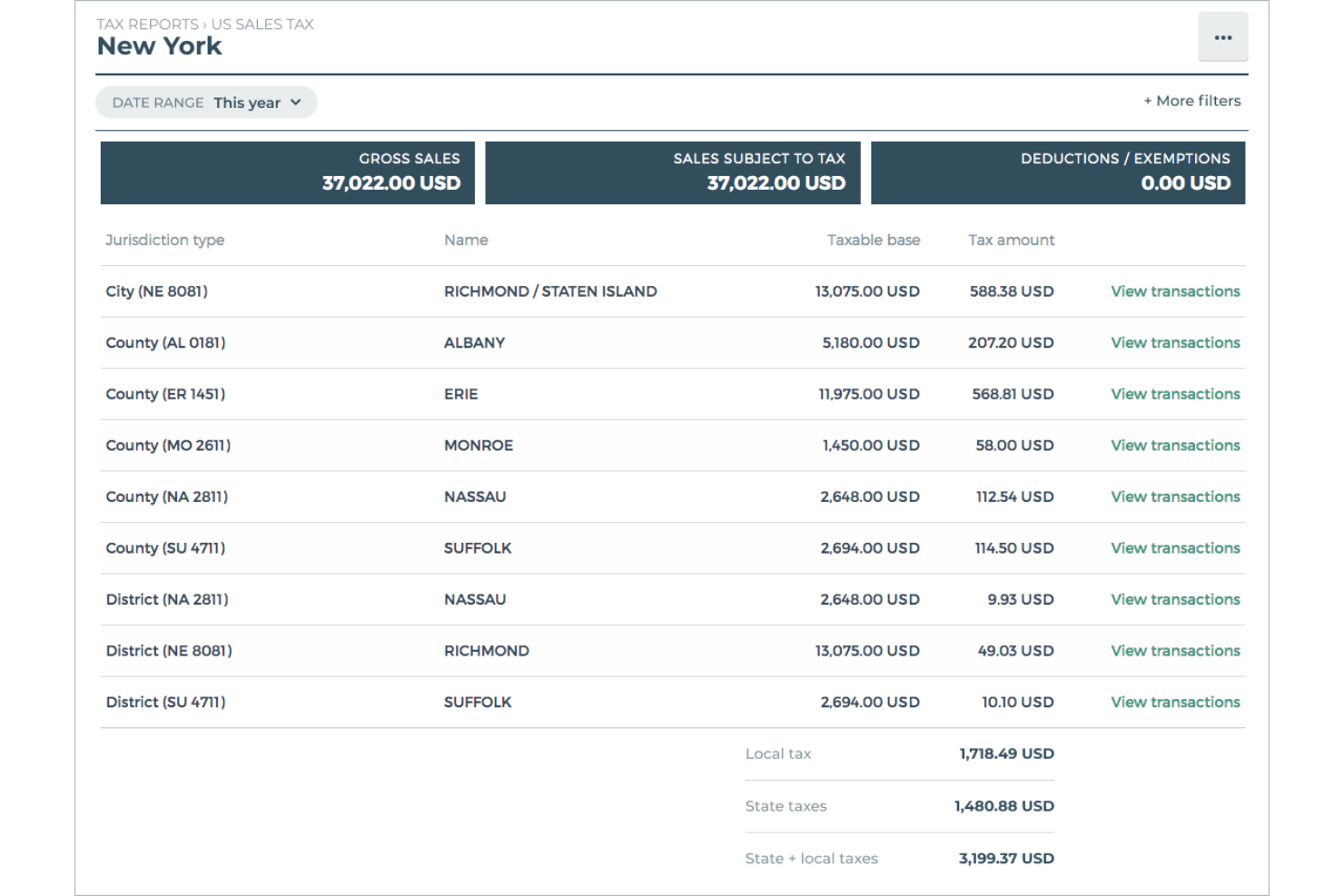
Quaderno is a tax compliance platform built for SaaS businesses, digital product sellers, and online course creators who need to manage VAT, GST, and sales tax across multiple jurisdictions without building out a dedicated tax function.
Who Is Quaderno Best For?
Quaderno is a strong fit for small to mid-sized digital businesses selling across borders that need automated tax compliance without a dedicated tax team.
Why Quaderno Is a Good Avalara Alternative
I picked Quaderno as one of the best because it handles digital product tax compliance with a level of specificity that broader tax platforms don't match. I especially like the automatic threshold monitoring, which tracks when you're approaching registration requirements in a new jurisdiction before you're already liable.
Quaderno also generates tax-compliant invoices in the customer's local language and currency automatically, which removes a manual step I'd otherwise have to manage separately.
Quaderno Key Features
- Tax rate calculation: Applies the correct local tax rate to every transaction instantly at checkout across 12,000+ jurisdictions.
- Tax filing assistance: Files tax returns on your behalf using data already captured in the app, or generates reports for you to file independently.
- Economic nexus tracking: Monitors your sales activity in real time to identify where you have active tax obligations.
- Tax-compliant checkout embed: Lets you add a tax-compliant checkout flow directly to your existing storefront without rebuilding your payment setup.
Quaderno Integrations
Quaderno offers native integrations with Stripe, PayPal, Braintree, GoCardless, WooCommerce, Shopify, Amazon FBA, Square, Kajabi, and Xero, among others, covering online course platforms and e-commerce tools. It also connects with Zapier and provides an API for custom integrations.
Pros and Cons
Pros:
- Invoices issued without manual edits needed
- Automatic tax threshold alerts per jurisdiction
- Handles both VAT and sales tax globally
Cons:
- Report date ranges are limited to three months
- No live chat or phone support

TaxCloud
Best for unified marketplace sales tax
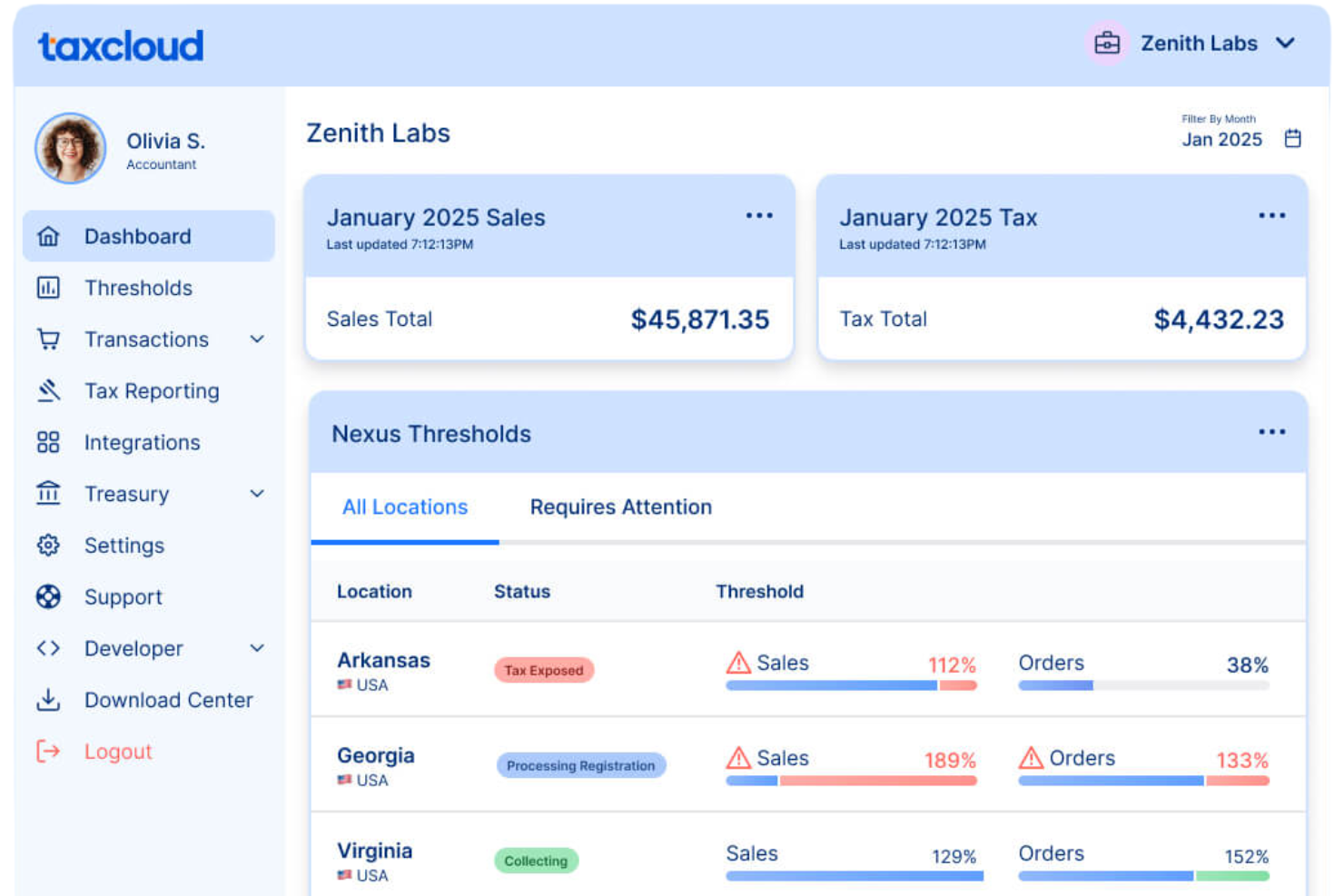
TaxCloud is a cloud-based sales tax compliance platform built for e-commerce sellers who need to manage nexus, automate filings, and stay compliant across dozens of states without hiring a tax team.
Who Is TaxCloud Best For?
TaxCloud is well-suited to US-based online retailers and marketplace sellers who manage sales tax compliance in-house without a dedicated tax department.
Why TaxCloud Is a Good Avalara Alternative
TaxCloud earns its spot on my shortlist because of how well it handles marketplace facilitator laws. When you sell on platforms like Amazon or Etsy, those platforms remit tax on your behalf, and TaxCloud automatically accounts for that so your returns don't double-count collected tax.
I also like its product-level taxability controls, where you can assign Tax Information Codes (TICs) to map each SKU to the correct tax treatment across every state you sell in.
TaxCloud Key Features
- Real-time tax rate calculation: Applies current tax rates across 13,000+ jurisdictions at the point of transaction.
- Automated return filing: Prepares, files, and remits sales tax returns on your filing schedule across all states.
- State registration management: Registers your business for sales tax permits in states where you've established nexus.
- Dedicated onboarding specialist: Guides you through data migration, tax code mapping, and setup during your switch.
TaxCloud Integrations
TaxCloud offers native integrations with BigCommerce, Shopify, Stripe, Odoo, QuickBooks Online, WooCommerce, Adobe Commerce, Ability Commerce, and AcctVantage, with Xero and Zoho integrations listed as coming soon. An API is also available for custom integrations.
Pros and Cons
Pros:
- Handles multi-store compliance across 31+ states
- Manual tax rate lookup for offline orders
- Certified SST provider reduces costs in 24 states
Cons:
- Remittance totals can be hard to reconcile
- Lacks advanced features for large enterprises

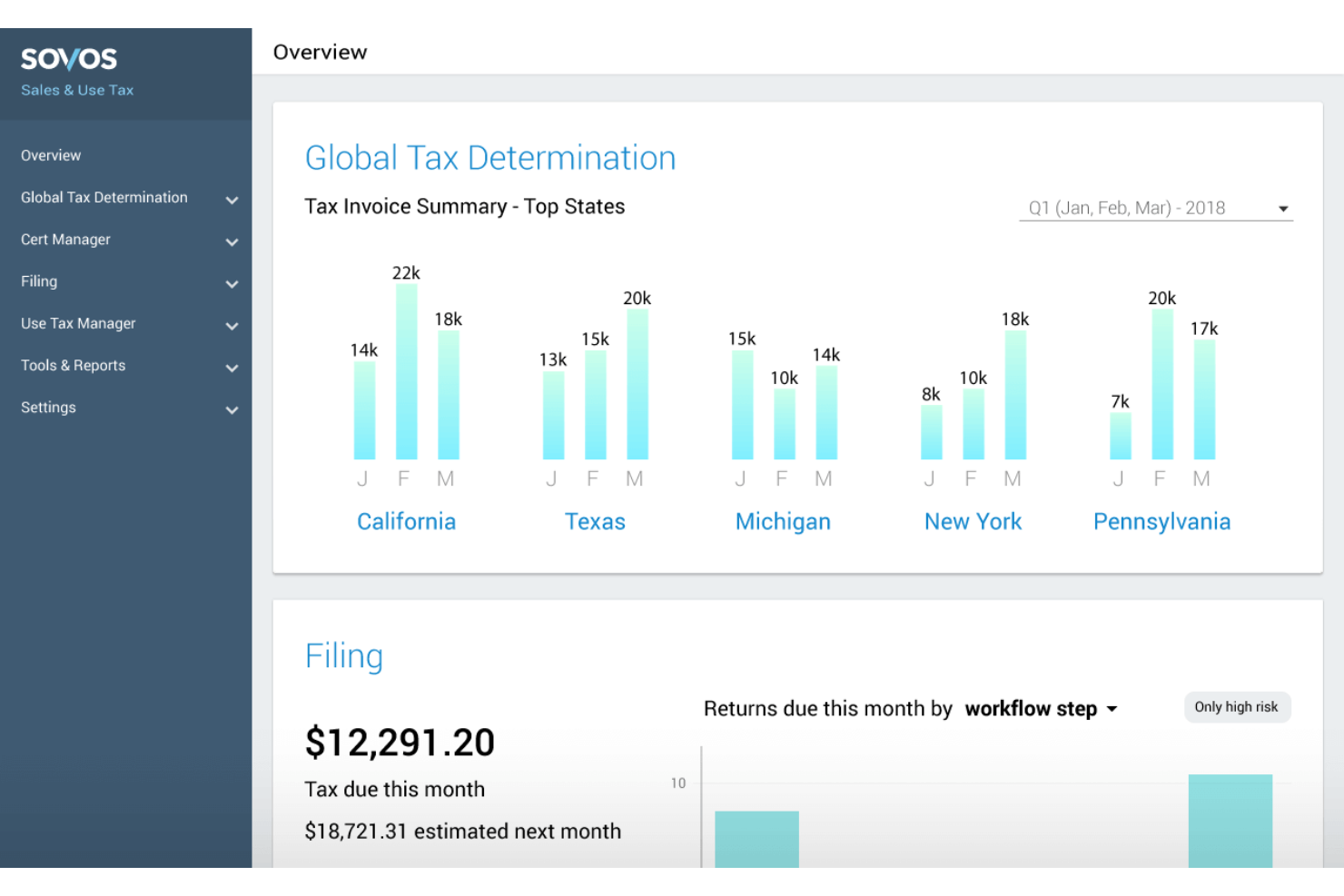
Sovos is a sales and use tax compliance platform designed with input from a tax expert that handles tax determination, exemption certificate management, and filing across more than 12,000 U.S. jurisdictions, with additional coverage for global indirect tax obligations.
Who Is Sovos Best For?
Sovos is a strong fit for multinational companies managing indirect tax obligations across multiple countries, particularly where e-invoicing mandates and continuous transaction controls apply.
Why Sovos Is a Good Avalara Alternative
I picked Sovos as one of the best because of how it handles government-mandated e-invoicing and continuous transaction controls (CTCs), which Avalara covers less thoroughly. Sovos monitors regulatory changes across 70+ countries and pushes those updates into the compliance engine automatically, so my team isn't manually tracking mandate rollouts in markets like Brazil, Italy, or Saudi Arabia.
I also like the pre-built regulatory content library, which covers country-specific invoice formats, reporting schemas, and validation rules without custom configuration.
Sovos Key Features
- SUT determination: Calculate sales and use tax in real time across more than 12,000 U.S. state and local jurisdictions per transaction.
- CertManager: Collect, store, and validate exemption certificates with automated outreach to customers when certificates are missing or expired.
- Use tax accrual management (OptiTax): Identify and manage use tax obligations on purchases, with built-in analytics to flag accrual errors.
- Filing managed services: Outsource sales tax filing and remittance to Sovos tax professionals who handle preparation and submission on your behalf.
Sovos Integrations
Sovos offers connectors through its Connector Marketplace, including SAP, NetSuite, and Microsoft Dynamics, along with Oracle Cloud, Oracle EBS, Oracle PeopleSoft, JD Edwards EnterpriseOne, Magento, Coupa, and Zuora. An API is also available for custom integrations.
Pros and Cons
Pros:
- Supports VAT, GST, e-invoicing, and statutory reporting
- Managed filing with a consistent tax professional
- Covers 1099, ACA, and FATCA reporting
Cons:
- Troubleshooting and manual adjustments feel complex
- Implementation timelines run three to six months


Vertex is a tax determination and compliance platform built for large enterprises that need to manage indirect tax—sales tax, VAT, and e-invoicing—across multiple systems, jurisdictions, and geographies.
Who Is Vertex Best For?
Vertex is a strong fit for enterprise tax and finance teams managing high transaction volumes across multiple ERP systems, business units, or countries.
Why Vertex Is a Good Avalara Alternative
I picked Vertex as one of the best because of how it handles transaction complexity at scale. The O Series tax engine covers tax rules and rates across 19,000 jurisdictions globally, and it lets you customize taxability rules around your specific company structure and tax policy.
What I find most useful is the edge computing deployment option, which runs the tax engine at the point of transaction for better performance and availability across high-volume environments. For enterprises running multiple ERPs or billing systems, you can connect a single Vertex tax engine across all of them to enforce consistency without duplicating configuration.
Vertex Key Features
- Exemption certificate management: Manage and validate exemption certificates in real time through a centralized system, reducing manual certificate handling.
- Filing and returns automation: Compile, validate, and submit tax filings for sales and use tax, VAT, e-invoicing, and related obligations across multiple jurisdictions.
- Audit traceability tools: Access consolidated historical transaction data across systems to support audit defense, reconciliation, and tax position reporting.
- VAT ID validation: Verify global VAT IDs through a standardized verification process to support accurate tax determination on cross-border transactions.
Vertex Integrations
Vertex offers 290+ integrations through its partner ecosystem, including native integrations with SAP, Oracle, Microsoft, Salesforce, Workday, NetSuite, Acumatica, and Adobe Commerce, spanning ERP, e-commerce, CRM, procurement, subscription billing, and POS systems. An API is also available for custom integrations through the Vertex Developer Hub.
Pros and Cons
Pros:
- Geolocation-based jurisdiction mapping over zip codes
- Flexible tax rule configuration beyond ERP
- Automatic tax rate and rule updates
Cons:
- Custom reporting can be difficult to configure
- Implementation costs often exceed initial estimates

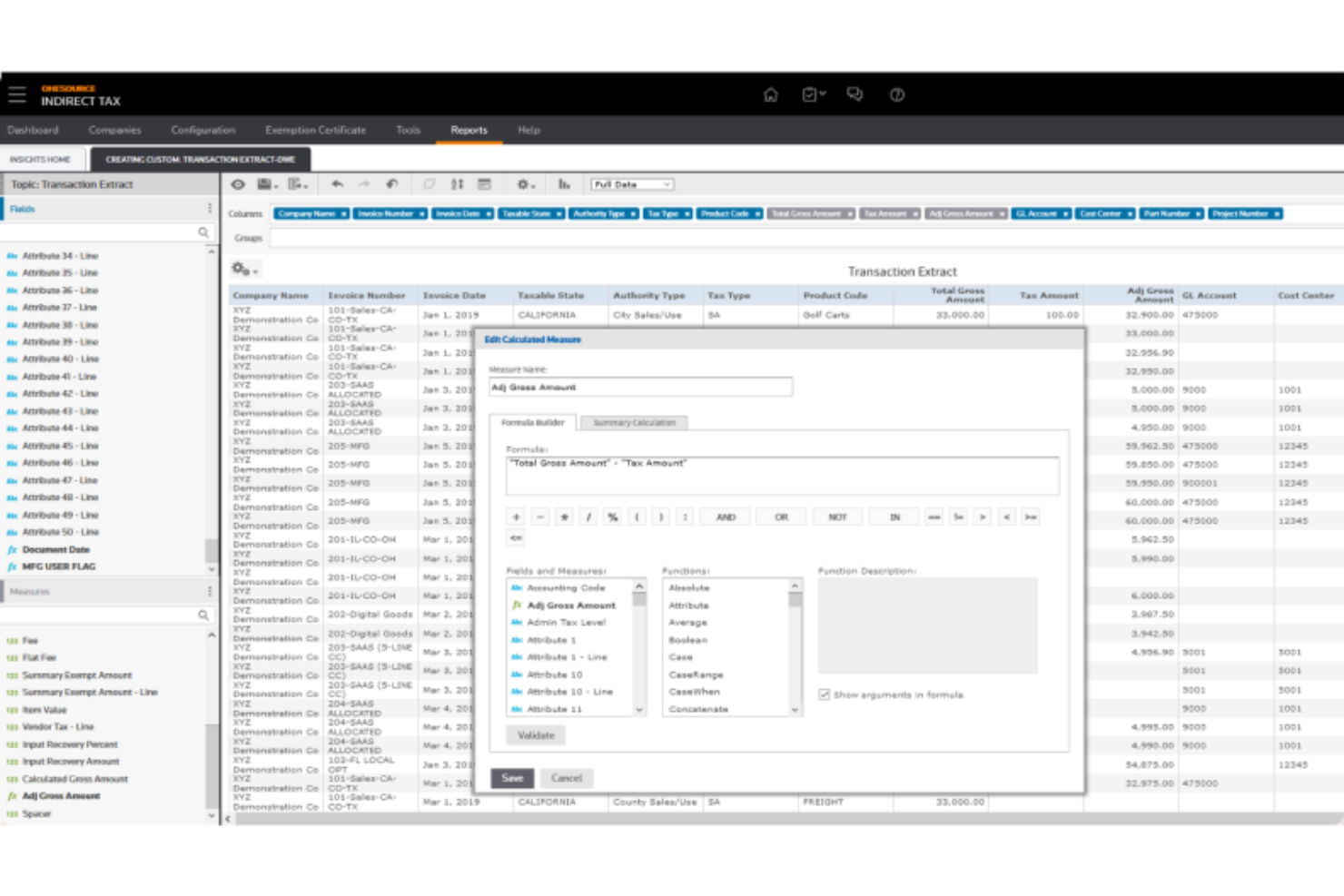
Thomson Reuters ONESOURCE Indirect Tax Determination is a comprehensive solution and tax engine built for corporate tax teams that need to automate indirect tax calculations, including sales tax, use tax, VAT, GST, and excise tax, across multiple countries and business systems.
Who Is Thomson Reuters ONESOURCE Best For?
ONESOURCE is a strong fit for large enterprises and multinational corporations with high transaction volumes and complex cross-border indirect tax obligations.
Why Thomson Reuters ONESOURCE Is a Good Avalara Alternative
I picked Thomson Reuters ONESOURCE as one of the best because of its single tax engine architecture, which handles sales tax, use tax, VAT, GST, and excise tax in one system across global jurisdictions. I particularly like ONESOURCE Determination Anywhere, which runs at the edge to deliver real-time tax calculations without downtime during content or system updates, even under high transaction volumes.
It also covers highly specialized industries, including oil and gas volumetric taxes like Superfund, which most alternatives simply don't address.
Thomson Reuters ONESOURCE Key Features
- ONESOURCE Certificate Manager: Manage exemption certificate tracking and validation through a secure online portal where customers upload certificates directly.
- ONESOURCE Indirect Compliance: Automate sales and use tax, GST, and VAT return preparation and filing across global jurisdictions from a single platform.
- Company structure configuration: Set up and manage multi-entity company structures with jurisdiction-specific tax calculation rules inside ONESOURCE Determination.
- SSAE 18 and ISAE 3402 certified processes: Built-in audit-readiness controls that reduce the risk of errors that could trigger tax authority scrutiny.
Thomson Reuters ONESOURCE Integrations
Thomson Reuters ONESOURCE offers pre-built integrations that connect ERP, POS, and e-commerce systems with its Determination engine. These include certified and endorsed integrations for SAP ERP, SAP S/4HANA, and SAP Ariba, as well as Oracle ERP Cloud, Microsoft Dynamics 365 Finance and Operations, and NetSuite.
Pros and Cons
Pros:
- Handles Superfund and excise tax types
- Tax rates update with zero downtime
- Covers 200+ countries for indirect tax
Cons:
- Support response slows during peak periods
- Bug fixes require full regression testing

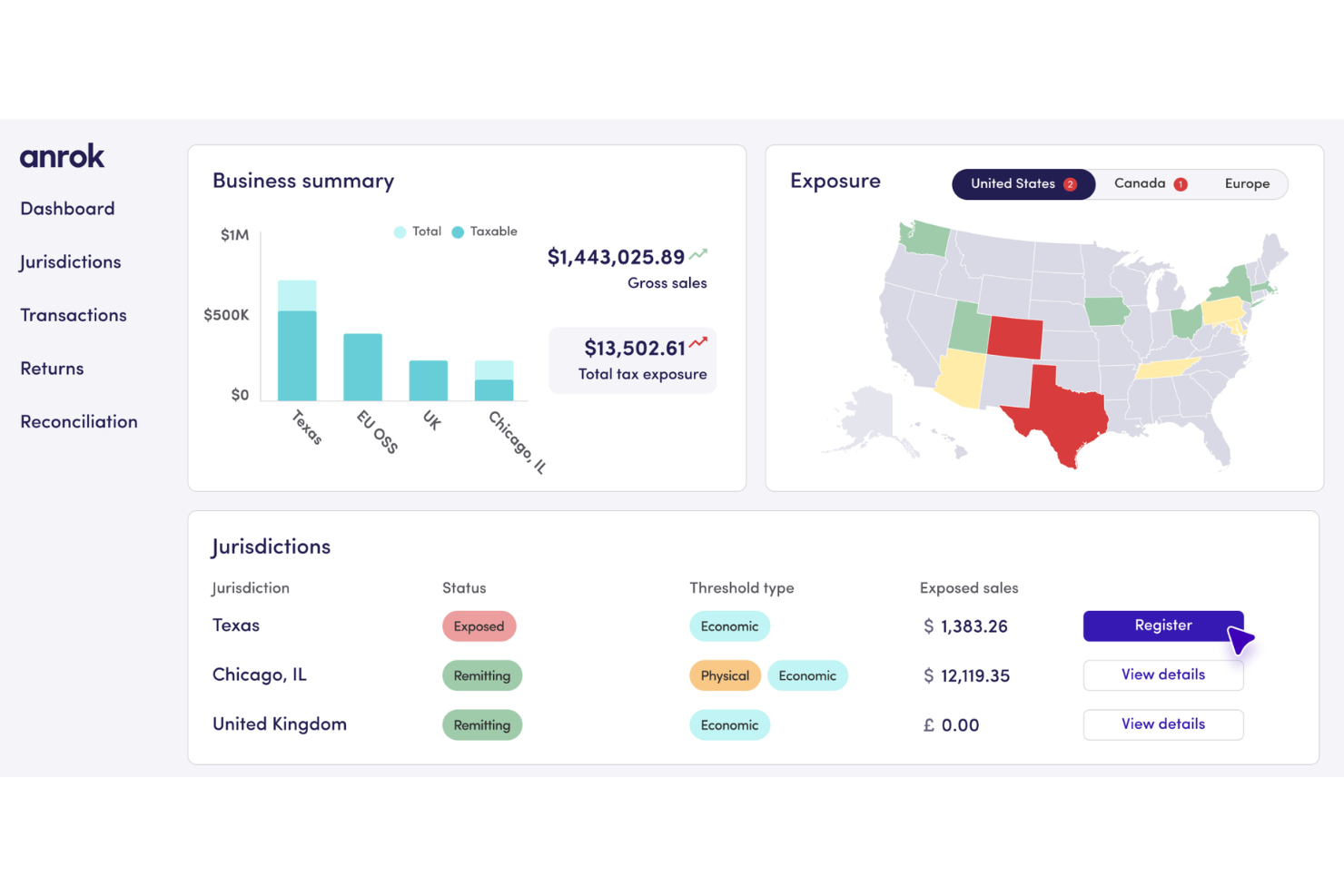
Anrok is a sales tax and VAT compliance platform built specifically for SaaS and digital-first companies with an emphasis on ease of use that need to manage nexus monitoring, real-time tax calculation, and automated filing across global jurisdictions.
Who Is Anrok Best For?
Anrok is a natural fit for SaaS companies at the growth stage that are hitting economic nexus thresholds and need automated tax compliance without building in-house processes.
Why Anrok Is a Good Avalara Alternative
I picked Anrok as one of the best because it's purpose-built for SaaS billing models, which most tax platforms handle poorly. It connects to your HR information system to automatically detect when a new remote hire creates physical nexus, a scenario Avalara won't catch on its own.
I also like that Anrok handles product taxability mapping specifically for digital goods, and its built-in VAT ID validation means international B2B transactions are correctly zero-rated without manual workarounds.
Anrok Key Features
- Anrok Atlas AI interface: An AI-native assistant built into the platform that flags compliance issues and answers tax questions, with answers verified by Big 4 accountants.
- Home-rule jurisdiction registration: Anrok handles US registrations for free, including state and city-level filings in home-rule jurisdictions that most platforms overlook.
- Audit trail export: Every transaction, associated tax record, return, and payment is stored and exportable at any level of detail for audit preparation.
- Exposure modeling reports: Built-in configurable reports let you run sales tax and VAT reconciliation and model future exposure scenarios across regions.
Anrok Integrations
Anrok offers over 30 no-code integrations across billing, payments, and HR systems, including Stripe, NetSuite, QuickBooks, Shopify, Rippling, Chargebee, Zuora, Xero, Sage Intacct, and Salesforce. An API is also available for custom integrations with the help of Anrok's integrations team.
Pros and Cons
Pros:
- Free state and local registrations included
- Tracks physical nexus via HR data
- Built for SaaS subscription billing complexity
Cons:
- Lacks extensive physical inventory tools
- Revenue-based pricing scales with growth

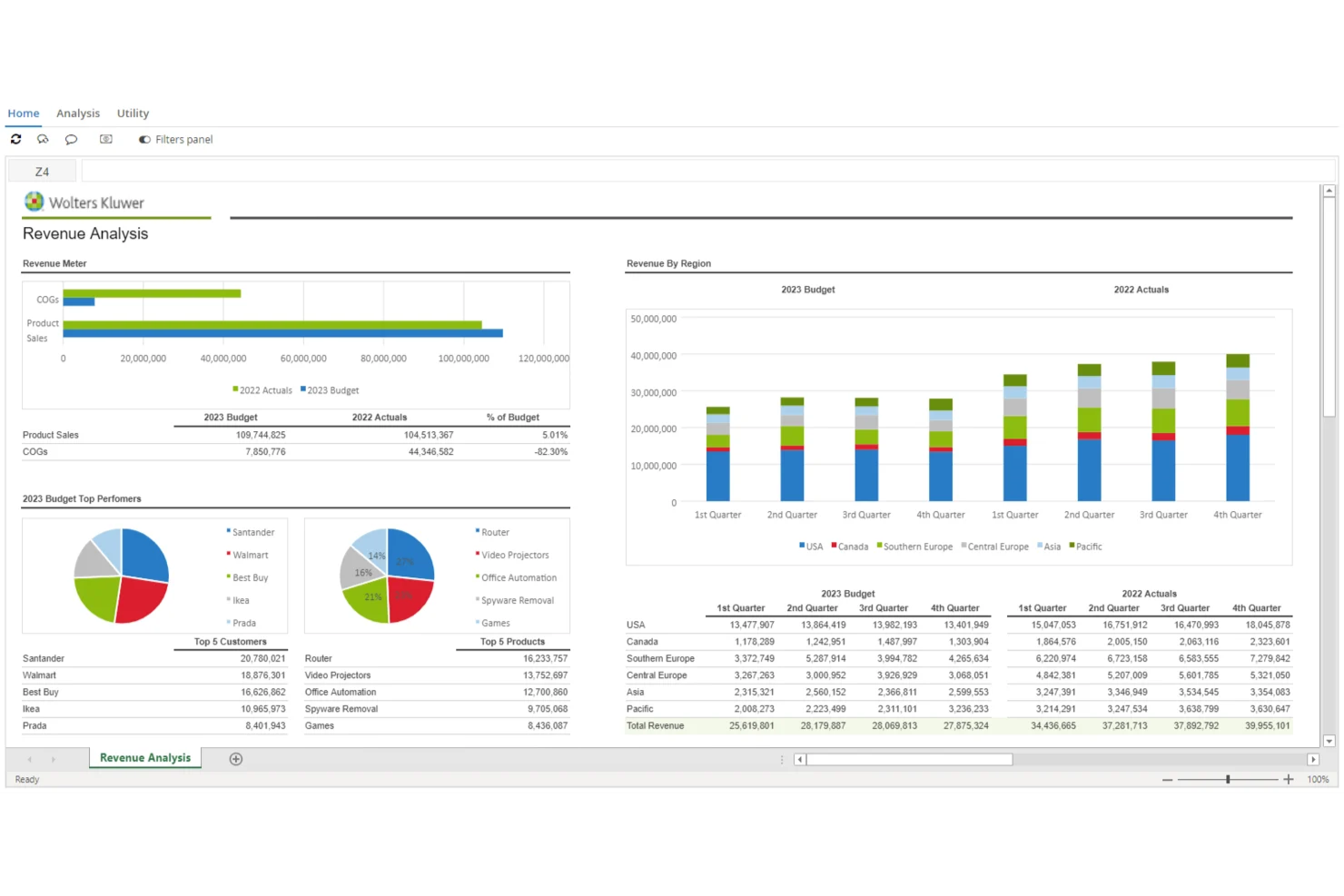
CCH SureTax is a tax compliance engine from Wolters Kluwer built for communications service providers that need to manage complex, multi-jurisdictional telecom tax calculations and surcharges.
Who Is CCH SureTax Best For?
CCH SureTax works well for mid-to-enterprise-sized businesses in communications, utilities, and SaaS that bill customers across multiple US jurisdictions.
Why CCH SureTax Is a Good Avalara Alternative
I picked CCH SureTax because I love how purpose-built it is for telecom and other regulated industries where tax complexity goes well beyond standard sales and use tax. While Avalara covers a broad range of business types, CCH SureTax goes deeper on telecom-specific surcharges, multi-jurisdictional federal and state calculations, and transaction-level tax breakdowns.
I also appreciate the Power BI analytics integration, which lets you slice transaction data by jurisdiction to spot trends or catch nexus thresholds before they become compliance issues.
CCH SureTax Key Features
- Exemption certificate management: Track and update exempt certificates directly from the dashboard, with alerts when certificates are approaching expiration.
- Proven API integration: Connect CCH SureTax to your existing ERP, billing, and eCommerce systems using pre-built APIs designed for complex, industry-specific tax environments.
- Transaction-level tax breakdown: View a full tax breakdown at the individual transaction level or look up a specific rate for any jurisdiction directly in the system.
- Dedicated implementation team: A project manager, technical consultant, and functional consultant guide your setup, with a typical go-live timeline of 60 to 90 days.
CCH SureTax Integrations
CCH SureTax offers certified, out-of-the-box integrations with Acumatica, Adobe Commerce (Magento), Microsoft Business Central, Microsoft Dynamics 365, NetSuite SuiteTax, Salesforce Commerce Cloud, and SAP (ECC, S/4HANA, and S/4HANA Cloud), and billing systems like BillingPlatform, BluLogix, and Datagate for telecom-specific workflows. An API is available for custom integrations.
Pros and Cons
Pros:
- Proactive nexus threshold alerts across states
- Tracks 100,000+ annual tax rule changes
- Telecom tax expertise built over a decade
Cons:
- Product-to-tax-category mapping is difficult to configure
- Billing practices lack transparency per reviewers


Zamp is an alternative to what Avalara offers, acting as a sales tax compliance platform built for e-commerce, SaaS, and digital service businesses that need expert-led management of registrations, filings, and notices without handling them themselves.
Who Is Zamp Best For?
Zamp suits finance teams at scaling businesses that have recently triggered sales tax nexus and need immediate, fully managed compliance support across multiple US states.
Why Zamp Is a Good Avalara Alternative
Zamp earns its spot on my shortlist because the white-glove managed service model means your finance team isn't tracking filing deadlines or responding to state tax notices. I like that Zamp handles multi-state registrations and filings on your behalf, which sets it apart from Avalara's more self-serve approach.
I also appreciate that nexus monitoring is built in, flagging economic thresholds before you fall out of compliance.
Zamp Key Features
- 80% threshold alert: Zamp notifies your team when you reach 80% of a state's economic nexus threshold, giving you time to plan before a registration is required.
- Tax credit recovery: Zamp ingests refunds and chargebacks as credit memos and applies them against your liability automatically, so you don't overpay.
- Return approval dashboard: Before any return is filed, your team can review and approve it in the dashboard, giving finance full governance over submissions.
- First-party tax content library: Zamp maintains and continuously updates its own rule library, covering tax holidays, reduced rates, and sourcing rules without relying on third-party data.
Zamp Integrations
Zamp offers 37 native integrations across e-commerce, accounting, ERP, marketplace, and recurring billing categories, including Shopify, BigCommerce, WooCommerce, Adobe Commerce, QuickBooks Online, Xero, NetSuite, MS Business Central, Stripe, and Amazon. An API is also available for custom integrations.
Pros and Cons
Pros:
- Dedicated former state auditors on staff
- Filings require only one-click approval
- Shared liability for filing errors included
Cons:
- Limited international tax coverage currently
- Filings require manual approval each cycle
Other Avalara Alternatives
Here are some additional Avalara alternatives that didn’t make it onto my shortlist, but are still worth checking out:
- Numeral
For automated reconciliation of tax payments
- Stripe Tax
For instant tax calculations at checkout
- Kintsugi
For real-time US tax compliance insights
- Paddle
For SaaS vendor global tax handling
- Sphere
For hybrid human and automation support
- Commenda
For dynamic threshold monitoring
- TaxValet
For fully managed filing partnership
- Galvix
For developer-first tax integration APIs
- TaxConnex
For dedicated compliance consultants
- TaxHero
For automated sales tax data checks


How I Evaluate Avalara Alternatives
I split my evaluation into two layers: baseline criteria a tool must meet—like real-time rate calculation and automated filing—and differentiators like global coverage and ERP integration depth.
Core Functionality (Table Stakes For This List)
When I'm selecting tools for my list, I rank each one on a scale from 0 (does not offer the functionality) to 5 (excels in this area) for each core functionality listed below. Then, I calculate the tool's total score into a percentage. Each tool needs to achieve a minimum total score of 65% to be considered for inclusion.
- Real-Time Tax Calculation: I check whether the engine returns accurate rates at the transaction level, down to product taxability rules for scenarios like SaaS subscriptions or mixed-use goods.
- Automated Return Filing: Each tool should handle return prep, filing, and remittance to authorities—not just generate reports you still have to submit manually.
- Nexus & Compliance Tracking: I look for dashboards that monitor economic nexus exposure as your sales volumes shift, with alerts when you cross thresholds in new jurisdictions.
- Exemption Certificate Management: I evaluate how each platform handles the full certificate lifecycle, from collecting resale certs at checkout to flagging expired documents before they cause audit exposure.
- ERP & Commerce Integrations: Pre-built connectors for platforms like NetSuite, QuickBooks, Shopify, and Salesforce matter here—I look at connector depth, not just a logo on the integrations page.
- Multi-Jurisdiction Tax Content: The vendor's tax rule database needs to cover state, local, and international jurisdictions with frequent updates that reflect legislative changes as they take effect.
Once I have a list of tools that meet this criteria, I consider what sets each platform apart.
Differentiating Factors (What Sets Vendors Apart)
Here's how I compare and contrast different vendors:
Standout Features
AI-driven product classification is a big one—if you manage thousands of SKUs, manual tax code mapping is a time sink, and tools that automate this step save hours during catalog updates. Cross-border and customs capabilities also matter for sellers shipping internationally, where landed cost calculations need to account for duties and import taxes at checkout. I also look at audit defense tooling, like transaction-level drill-downs and reconciliation dashboards that help you respond to state audits with confidence instead of scrambling through spreadsheets.
Beyond Features
Integration ecosystem quality is one of the first things I evaluate—a tax engine is only as useful as its connection to your ERP or billing platform, so I check API documentation, sandbox availability, and connector depth for systems like NetSuite or Shopify. Implementation support also varies widely; some vendors pair you with tax specialists for nexus studies during onboarding, while others hand you a knowledge base. For multinational teams, I look at how each vendor handles data residency requirements and whether uptime SLAs match the demands of real-time tax calculation at checkout.
Why Look For an Avalara Alternative?
While Avalara is a good choice of tax software, there are a number of reasons why some users seek out alternative solutions. You might be looking for an Avalara alternative because…
- You need deeper support for the telecom tax
- You want customizable tax calculation rules
- You require hands-on onboarding assistance
- You serve clients outside the United States
- You prefer predictable all-inclusive pricing
If any of these sound like you, you’ve come to the right place. My list contains several tax software options that are better suited for teams facing these challenges with Avalara and looking for alternative solutions.
Avalara Key Features
Here are some of the key features of Avalara, to help you contrast and compare what alternative solutions offer:
- Automated tax calculation: Calculates the correct sales, use, and VAT tax on transactions across all supported jurisdictions, reducing manual intervention and errors.
- Exemption certificate management: Collects, stores, and monitors customer exemption certificates in a secure, centralized repository to help you stay compliant during audits.
- Returns preparation and filing: Automatically compiles tax data to prepare and file returns with tax authorities across states and countries on your behalf.
- Nexus monitoring: Tracks your business activity by state and country to alert you when you reach economic nexus thresholds, helping you avoid registration gaps.
- Audit readiness reporting: Generates detailed, exportable transaction reports and audit trails, ensuring you can quickly respond to compliance inquiries.
- Real-time address validation: Checks and corrects customer addresses during transactions, applying the most accurate local tax rates possible.
- Marketplace facilitator compliance: Applies correct tax rules for marketplace sales where facilitators and third-party sellers have shared tax responsibilities.
- ERP, e-commerce, and POS integrations: Connects to major business systems like Shopify, NetSuite, and QuickBooks, so you can automate tax within your everyday workflows.
- Multi-country tax compliance: Supports calculation, filing, and reporting for VAT, GST, and other taxes in multiple countries, simplifying international operations.
- Fast API access: Enables teams to build custom integrations and automate complex tax scenarios unique to their business cases.