

Briefcase Testbericht 2026 : Funktionen, Preise, Vorteile und Nachteile erklärt
Ich habe Briefcase auf Herz und Nieren geprüft – das sticht hervor: echte KI-gestützte Buchhaltung, die Sie wirklich entlastet. Finden Sie heraus, ob es dem Automatisierungs-Hype 2026 gerecht wird.

Wir bewerten Tools unabhängig; Provisionen helfen, unsere Tests zu finanzieren. Siehe unsere Transparenzrichtlinie und unsere Methodik.
Briefcase is an AI accounting software built for finance teams that need to automate transaction categorization, reconciliation, and financial close processes. I'd lean toward it over Botkeeper if you want more direct control of your AI-driven workflows. Botkeeper takes more of a managed service approach, where a third party handles your books rather than your own team doing it in-house.
Briefcase Evaluation Summary
5/5
- From $12/client/month
- 14-day free trial
Warum Sie unseren Software-Empfehlungen vertrauen können
6,700+
Reviews
20
Industry experts
16+
Evaluation factors
14
Years
Unsere Bewertungen spiegeln unser unabhängiges Urteilsvermögen wider – keine Verkaufsstrategie. Erfahren Sie, wie wir transparent bleiben.
Für diesen Leitfaden haben wir Tools mithilfe von praktischen Tests und unabhängiger Recherche bewertet und dabei unsere Bewertungskriterien angewendet.
Unsere Bewertungen spiegeln unser menschliches redaktionelles Urteilsvermögen wider, keine Verkaufsstrategie.
Briefcase Overview
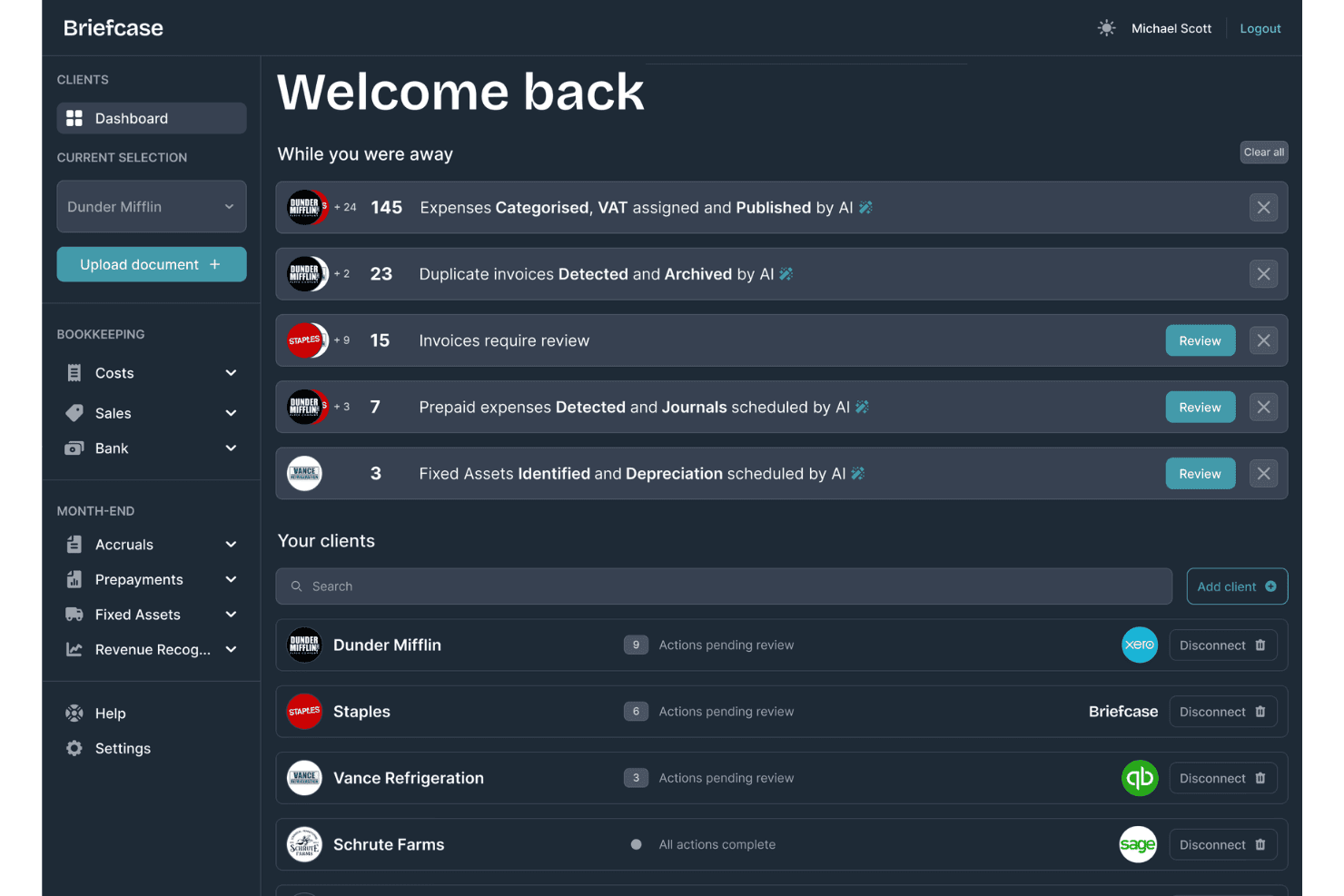
I think Briefcase stands out for its smooth interface and rapid onboarding, especially when compared to other AI accounting software. Its automation cuts down on data entry, and support is quick to respond. Pricing is reasonable for small to mid-size teams, though deep integrations with legacy ERP systems are limited. If you’re weighing options for a tech-forward finance function or a lean startup, I’d judge Briefcase as a smart pick—particularly for teams open to embracing workflow automation without heavy customization.
Pros
- Automates invoice data extraction and categorization with high accuracy
- Offers real-time financial dashboards and reporting tools
- Slack integration streamlines approvals and communication in-app
Cons
- No built-in payroll or HR modules available yet
- Limited support for complex global tax compliance needs
- Custom reporting options are not fully flexible
Is Briefcase Right For Your Needs?
Who Would be a Good Fit for Briefcase?
Briefcase is a smart pick for growing businesses, digital-first teams, or finance departments who want fast automation and user-friendly workflows without heavy IT overhead. Teams dealing with frequent approvals, remote work, and dynamic expense flows will see the most value. The intuitive interface, Slack integration, and AI-driven features cut down manual work and improve transparency, especially for organizations with moderate complexity and rapid scaling needs.
- SaaS StartupsBriefcase fits SaaS startups that need to digitize all finance ops quickly—its Slack integration and AI routing boost speed and accuracy.
- Marketing AgenciesAgencies handling multiple clients benefit from fast expense approvals and clear audit trails to keep client billing transparent.
- Hybrid WorkplacesCompanies with distributed finance teams can approve, track, and reconcile on the go with Briefcase’s real-time, cloud-based dashboards.
- Series A Finance TeamsEarly-stage but growing companies can automate payables and reporting, freeing up lean teams to focus on analysis.
- Professional Services FirmsFirms with frequent billable hours and client reimbursements get value from categorized expenses and built-in documentation matching.
- Nonprofit Finance DepartmentsNonprofits managing grants and donor funds gain from real-time spend tracking and audit-ready activity logs built into Briefcase.
Who Would be a Bad Fit for Briefcase?
Briefcase isn’t built for global enterprises, heavy manufacturing, or businesses with specialized regulatory needs—it lacks deep customization, multi-entity support, and industry-focused compliance features. If you require granular, country-specific tax handling, complex inventory management, or full-service HR modules, you'll likely outgrow the platform fast. Briefcase is best for nimble, finance-led teams, not complex multinational operations.
- Multinational CorporationsLarge global firms will find Briefcase’s tax compliance and entity management too limited for their complex structures.
- Manufacturing EnterprisesManufacturers who need advanced inventory tracking or supply chain integrations don’t get those features built in.
- Government AgenciesAgencies with stringent regulatory or auditing requirements miss out on deep compliance controls and workflows.
- Retail ChainsRetailers with large, physical inventory and omnichannel platforms need more extensive POS and logistics integrations.
- Healthcare ProvidersOrganizations requiring industry-specific controls and HIPAA compliance will find Briefcase unsuitable for their unique needs.
- In-House Payroll TeamsCompanies seeking a unified payroll and HR solution need more than Briefcase’s core accounting and bill pay functions.
Wie wir Tools testen und bewerten
Wir haben jahrelang daran gearbeitet, unser System zur Softwarebewertung zu entwickeln, zu verfeinern und stetig zu verbessern. Der Bewertungsleitfaden wurde entworfen, um die Feinheiten der Softwareauswahl und die Qualitätskriterien eines effektiven Tools präzise zu erfassen, mit Fokus auf entscheidende Aspekte im Auswahlprozess. Im Folgenden sehen Sie genau, wie unsere Prüfungen und Bewertungen nach sieben Kriterien funktioniert. So können wir eine objektive Bewertung der Software auf Grundlage der Kernfunktionalitäten, herausragenden Eigenschaften, Benutzerfreundlichkeit, Einführung, Kundensupport, Integrationen, Kundenbewertungen sowie Preis-Leistungs-Verhältnis bieten.
Kernfunktionalität (25 % der Gesamtbewertung)
Der Ausgangspunkt unserer Bewertung ist immer die Kernfunktionalität des Tools. Verfügt es über die grundlegenden Features und Funktionen, die ein Nutzer erwarten würde? Sind einige dieser Kernfunktionen auf höherpreisige Tarife beschränkt? Im Kern erwarten wir, dass ein Tool mit den Basisfunktionen seiner Wettbewerber mithalten kann.
Herausragende Funktionen (25 % der Gesamtbewertung)
Im nächsten Schritt bewerten wir ungewöhnliche, herausragende Funktionen, die über die üblichen Kernfunktionen vergleichbarer Tools hinausgehen. Eine hohe Punktzahl erhält, wer spezialisierte oder einzigartige Funktionen bietet, die das Produkt schneller, effizienter oder besonders wertvoll für den Nutzer machen. Wir prüfen auch, wie einfach sich das Tool mit anderen Programmen des typischen Tech-Stacks integrieren lässt, um den Funktionsumfang und die Nützlichkeit der Software zu erweitern. Vielseitige native Integrationen, Drittanbieter-Anbindungen sowie API-Zugänge für individuelle Integrationen schneiden am besten ab.
Benutzerfreundlichkeit (10 % der Gesamtbewertung)
Wir bewerten, wie schnell und einfach sich die wichtigsten Aufgaben im Tool erledigen lassen. Hoch bewertete Software ist gut gestaltet, intuitiv bedienbar, bietet mobile Apps, Vorlagen und macht selbst komplexere Aufgaben handhabbar.
Einführung (10 % der Gesamtbewertung)
Wir wissen, wie wichtig eine rasche Teamakzeptanz bei neuen Plattformen ist. Deshalb prüfen wir, wie einfach sich ein Tool mit minimalem Trainingsaufwand erlernen und bedienen lässt. Wir bewerten auch, wie schnell ein Teammitglied ohne vorherige Erfahrung startklar ist. Hoch bewertete Lösungen benötigen wenig oder gar keinen Support.
Kundensupport (10 % der Gesamtbewertung)
Wir prüfen, wie leicht und schnell Sie mit Telefon, Live-Chat oder Wissensdatenbank Hilfe erhalten können. Tools und Unternehmen, die Echtzeit-Support bieten, erzielen die besten Ergebnisse, während Chatbots am schlechtesten abschneiden.
Kundenbewertungen (10 % der Gesamtbewertung)
Neben unseren eigenen Tests berücksichtigen wir den Net-Promoter-Score aktueller und ehemaliger Kunden. Wir prüfen, wie wahrscheinlich sie sich erneut für das Tool entscheiden würden, basierend auf der Kernfunktionalität. Hoch bewertete Software spiegelt einen hohen Net-Promoter-Score wider.
Preis-Leistungs-Verhältnis (10 % der Gesamtbewertung)
Abschließend vergleichen wir alle Kriterien und bewerten den Durchschnittspreis der Einstiegstarife im Verhältnis zu den Kernfunktionen und dem Nutzen der weiteren Bewertungskriterien. Software, die mehr für weniger bietet, erhält die besten Bewertungen.
Core Features
Automated Invoice Processing
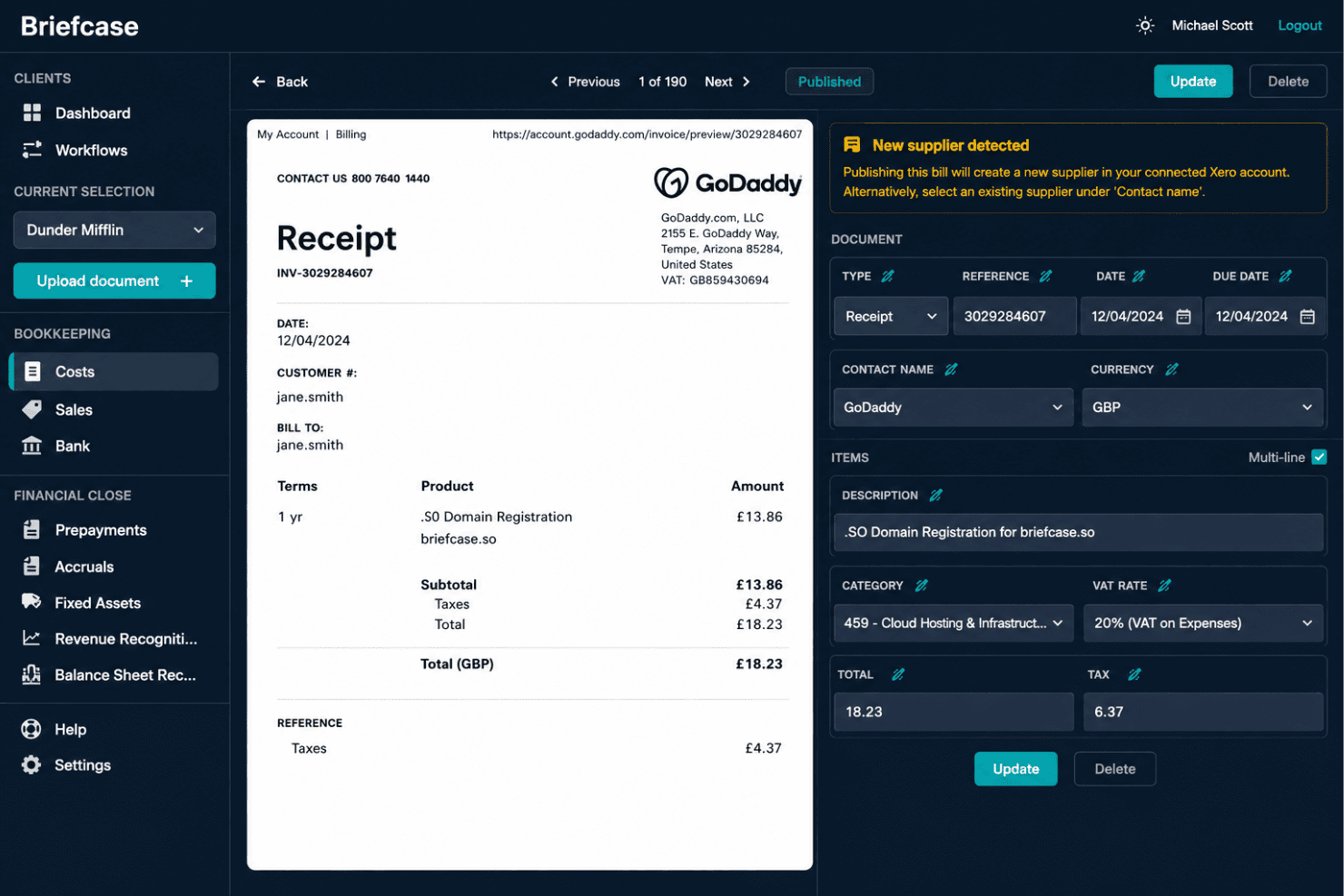
Briefcase uses AI to capture, extract, and categorize invoice data automatically. This eliminates manual data entry and speeds up invoice approvals.
Real-Time Financial Dashboards
View live snapshots of cash flow, expenses, and revenue trends in customizable dashboards. Finance teams can track KPIs and spot anomalies instantly.
AI-Powered Categorization
Transactions are sorted and labeled by AI to match your chart of accounts. This keeps financial data clean and ready for reporting with little effort.
Smart Approval Workflows
Route bills and expenses to the right approvers with automated logic. Approvals happen in one place, making audits and reviews easier.
PDF and Email Receipt Matching
Upload or email receipts and let Briefcase match them to transactions automatically. This reduces missing documentation and speeds up month-end close.
Audit Trail and Activity Log
Each transaction includes a timestamped, tamper-proof audit history. You can review who made edits or approved invoices for total transparency.
Ease of Use
Briefcase has a straightforward interface and requires minimal setup or manual configuration. Its AI-driven categorization learns from accounting history and user corrections, reducing repetitive work, while dashboards keep completed tasks, pending reviews, and client activity accessible.
Integrations
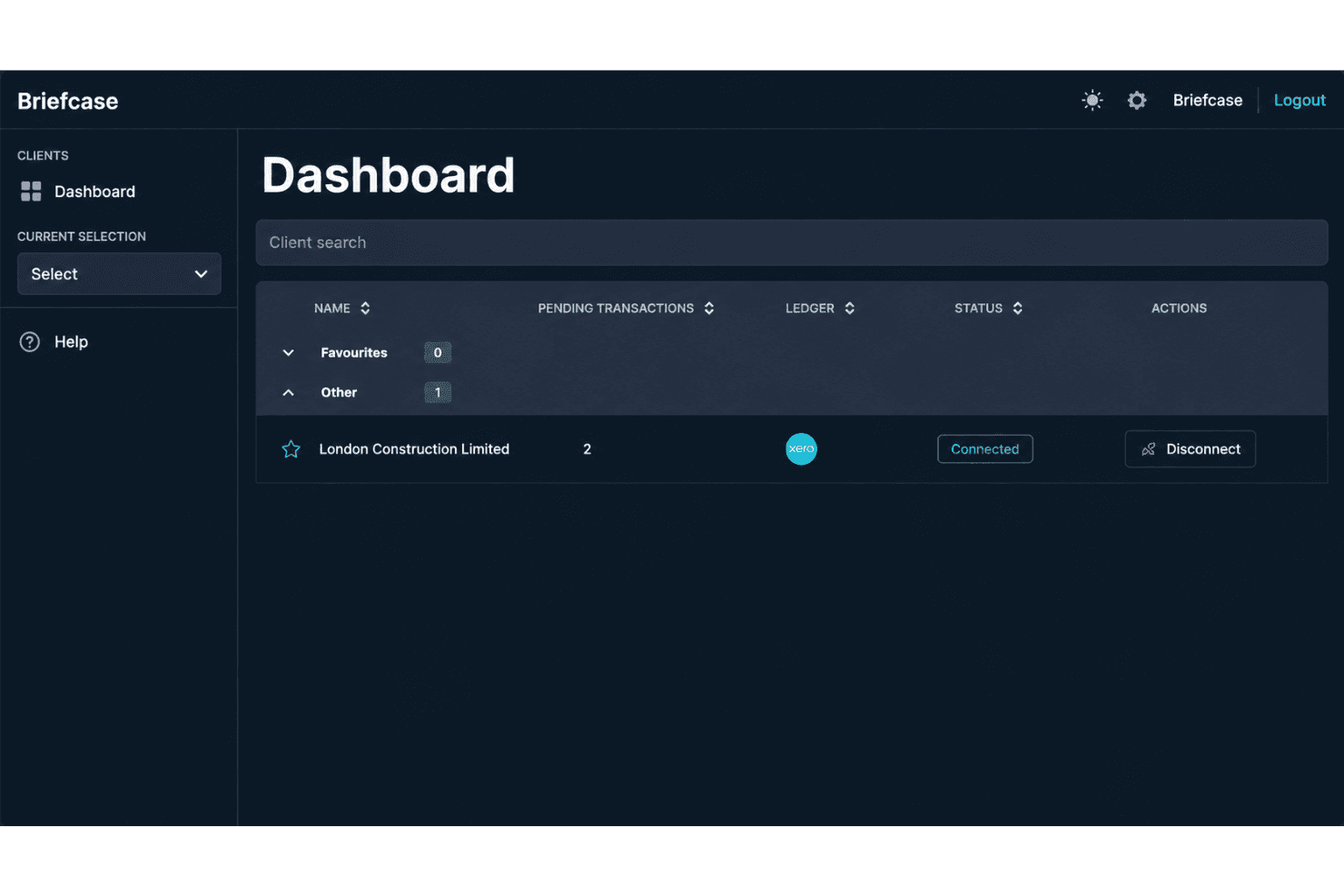
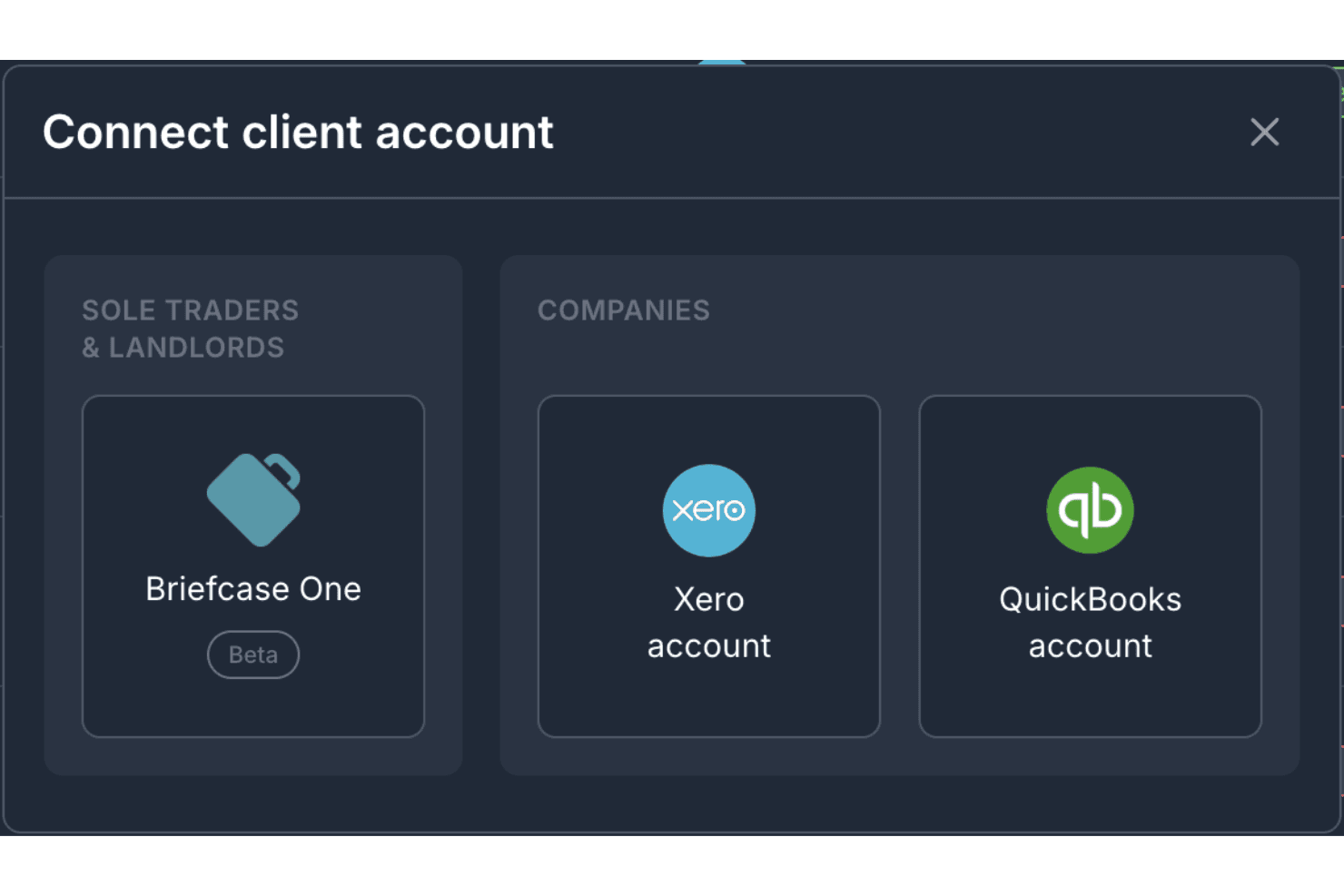
Briefcase integrates with Xero and QuickBooks to synchronize accounting data and publish processed transactions. However, it does not currently advertise a public API, which may limit teams that need custom integrations beyond its supported accounting platforms.
Briefcase Specs
- 2-Factor Authentication: Yes
- Accounts Payable: Yes
- Accounts Receivable: No
- API: Yes
- Balance Sheet: Yes
- Billing/Invoicing: No
- BitCoin: No
- Budgeting: No
- Calendar Management: No
- Contact Management: No
- CRM Integration: No
- Customer Management: No
- Dashboard: Yes
- Data Export: Yes
- Data Import: Yes
- Data Visualization: Yes
- Expense Tracking: Yes
- External Integrations: Yes
- Forecasting: Yes
- General Account Ledger: No
- Inventory Tracking: No
- Multi-Currency: Yes
- Multi-User: Yes
- Notifications: No
- P&L: No
- PayPal: No
- Payroll: No
- SAP Integration: No
- Stripe: No
- Supplier Management: Yes
- Tax Management: Yes


