

Reseña de QuickBooks Workforce: Características clave, ventajas, desventajas y explicación de precios



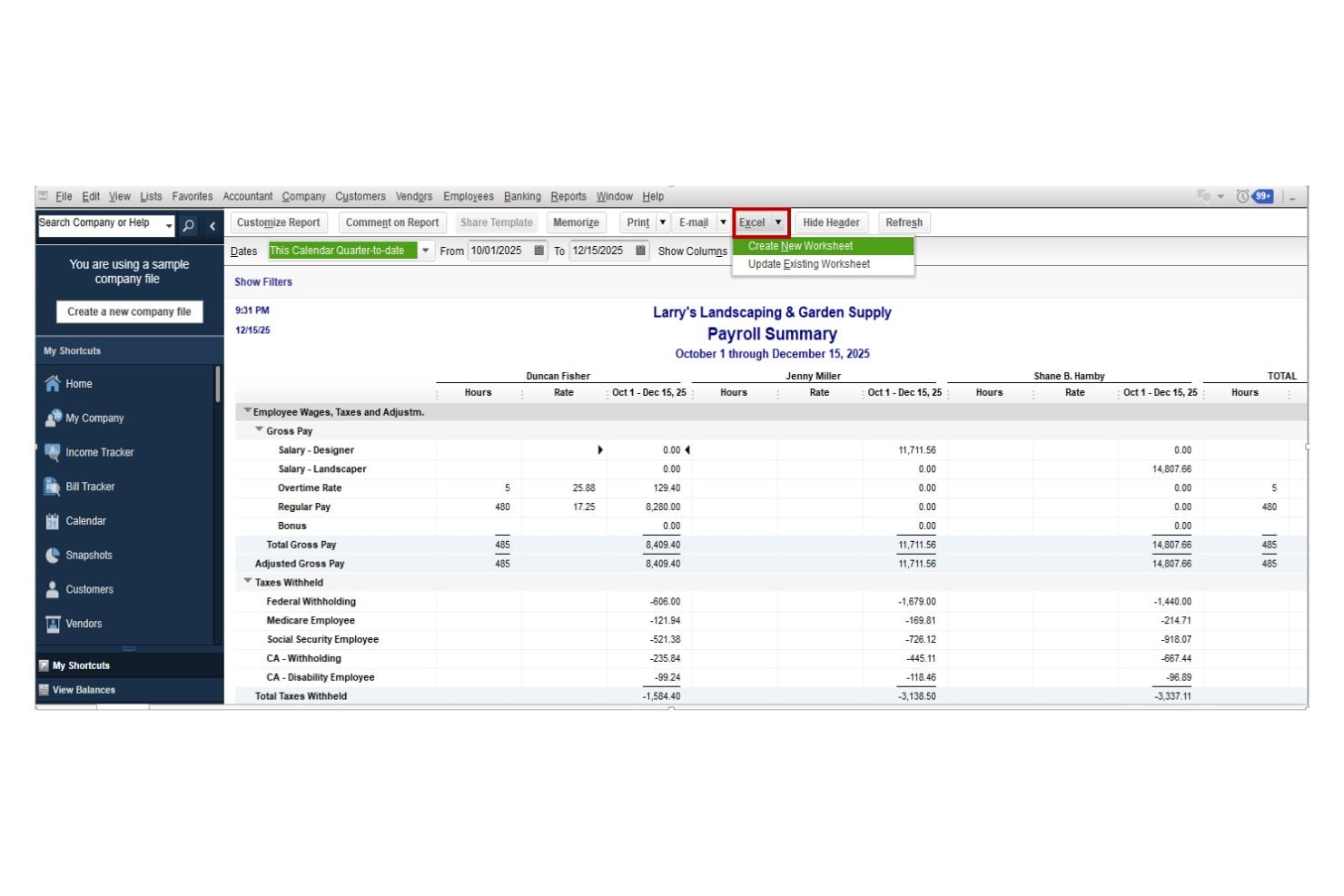
La nómina se vence, las declaraciones de impuestos se acumulan y los números en tus libros deben coincidir con lo que acaba de salir para los empleados. Quieres un software de nómina y contabilidad que funcione en conjunto sin hojas de cálculo extras ni arreglos manuales.
Ahí es donde entra esta reseña de QuickBooks Workforce. Explico cómo gestiona la nómina, los impuestos, los precios y las integraciones para que puedas ver si realmente simplifica tu flujo de trabajo o añade otra capa de complejidad.
QuickBooks Workforce Evaluation Summary
- From $88/month
- 30-day free trial
Por qué confiar en nuestras recomendaciones de software
Nuestras reseñas reflejan nuestro criterio independiente, no un discurso de ventas. Descubra cómo mantenemos la transparencia.
Para esta guía, evaluamos las herramientas mediante pruebas prácticas e investigación independiente, puntuando las herramientas según nuestros criterios de selección.
Nuestras reseñas reflejan nuestro criterio editorial humano, no un discurso de ventas.
QuickBooks Workforce Overview
pros
-
User-friendly interface designed for easy setup and management, even without extensive accounting experience.
-
Automated payroll calculations and tax filings help reduce manual work.
-
Clear payroll workflows and task tracking make pay runs easier to manage.
cons
-
Customer support experiences can vary, particularly during complex payroll issues.
-
Best suited for those already using QuickBooks Online; otherwise, it may feel restrictive.
-
May not suit complex payroll scenarios that require high customization.
Is QuickBooks Workforce Right For Your Needs?
Who Would be a Good Fit for QuickBooks Workforce?
QuickBooks Workforce works best for small to mid-sized businesses that want automated payroll inside the QuickBooks ecosystem. It is especially suitable for companies that value tax compliance automation, streamlined workflows, contractor support, and direct deposit flexibility without needing a full accounting platform.
-
Small Businesses Using QuickBooks Online
If you’re already running your books in QuickBooks Online, adding payroll keeps everything synced in one system. Payroll expenses, tax payments, and reports flow directly into your accounting without manual reconciliation.
-
Businesses Without a Dedicated HR Team
QuickBooks Workforce’s guided setup, automated tax filings, and employee self-service tools make it manageable for small teams that don’t have in-house payroll or HR specialists.
-
Employers Who Want Automated Tax Handling
Companies that prefer payroll taxes calculated, filed, and paid automatically will benefit from full-service payroll options and tax penalty protection on higher tiers.
-
Companies With Employees and Contractors
Businesses with mixed workforces can pay W-2 employees and 1099 contractors in the same system, with built-in 1099 e-file support.
-
Growing Businesses That Need Faster Payroll
Companies with tighter payroll timelines can take advantage of next-day or same-day direct deposit options to ensure employees are paid on time.
-
QuickBooks Desktop Users Who Want Payroll Add-On
Businesses using QuickBooks Desktop can add payroll services designed specifically for that environment.
Who Would be a Bad Fit for QuickBooks Workforce?
QuickBooks Workforce may not be ideal for large enterprises, globally distributed teams, or organizations that require advanced HR and accounting systems, complex compensation logic, or deep workforce analytics. Businesses operating outside the QuickBooks accounting environment may also find less value in its integrated structure.
-
Large Enterprises With Complex Global Payroll
QuickBooks Workforce has separate products for the US, Canada, UK, and Australia, designed to align with each of those countries’ compliance requirements. It doesn’t have a native global payroll system to enable paying multiple countries in one place.
-
Companies Needing a Full HR Suite
If you require advanced HR features like performance management, talent development, and structured onboarding workflows, this platform may feel limited.
-
Highly Complex Compensation Structures
Organizations with intricate pay rules, union requirements, or advanced labor costing may outgrow their standard payroll framework.
-
Businesses Not Using QuickBooks for Accounting
If your accounting system is not QuickBooks, you lose the main integration advantage and may face additional reconciliation work.
-
Organizations Requiring Advanced Workforce Analytics
If your strategy depends on deep people analytics and predictive reporting, QuickBooks Workforce’s reporting capabilities may not be robust enough.
-
Very Small Businesses Seeking the Lowest Cost Option
Companies with only one or two employees and very simple payroll needs may find lower cost payroll tools more suitable, especially if they don’t need automated tax handling or additional payroll features.
Cómo probamos y puntuamos las herramientas
Hemos dedicado años a construir, perfeccionar y mejorar nuestro sistema de evaluación y puntuación de software. La rúbrica está diseñada para capturar los matices de la selección de software y lo que hace que una herramienta sea efectiva, enfocándose en los aspectos críticos del proceso de toma de decisiones. A continuación, puedes ver exactamente cómo funcionan nuestras pruebas y puntuación en siete criterios. Esto nos permite proporcionar una evaluación imparcial del software basada en la funcionalidad principal, características destacadas, facilidad de uso, onboarding, atención al cliente, integraciones, opiniones de clientes y relación calidad-precio.
Funcionalidad principal (25% de la puntuación final)
Nuestro punto de partida siempre es la funcionalidad principal de la herramienta. ¿Tiene las funciones básicas que un usuario esperaría ver? ¿Alguna de estas características principales está limitada a planes de precios superiores? En esencia, esperamos que una herramienta esté a la altura de las capacidades básicas de sus competidores.
Características destacadas (25% de la puntuación final)
A continuación, evaluamos las características únicas y sobresalientes que van más allá de la funcionalidad principal normalmente encontrada en herramientas de este tipo. Una puntuación alta refleja funciones especializadas o únicas que hacen el producto más rápido, eficiente o que aportan valor adicional al usuario. También evaluamos lo fácil que es integrarse con otras herramientas que normalmente forman parte del stack tecnológico para ampliar la funcionalidad y utilidad del software. Las herramientas que ofrecen numerosas integraciones nativas, conexiones con terceros y acceso API para crear integraciones personalizadas obtienen la mejor puntuación.
Facilidad de uso (10% de la puntuación final)
Consideramos cuán rápido y fácil es ejecutar las tareas definidas en la funcionalidad principal usando la herramienta. El software que obtiene la puntuación más alta está bien diseñado, es intuitivo, ofrece aplicaciones móviles, proporciona plantillas y hace que tareas relativamente complejas parezcan simples.
Onboarding (10% de la puntuación final)
Sabemos lo importante que es una adopción rápida del equipo para una nueva plataforma, por lo que evaluamos cuán sencillo es aprender y utilizar una herramienta con una formación mínima. Analizamos lo rápido que un miembro del equipo puede configurarse y empezar a usar la herramienta sin experiencia previa. Las soluciones con alta puntuación indican que se requiere poco o ningún soporte.
Atención al cliente (10% de la puntuación final)
Revisamos cuán rápido y sencillo es salir de un atasco y encontrar ayuda por teléfono, chat en vivo o base de conocimiento. Las herramientas y empresas que proporcionan soporte en tiempo real obtienen la mejor puntuación, mientras que los chatbots obtienen la peor.
Opiniones de clientes (10% de la puntuación final)
Además de nuestras propias pruebas y evaluaciones, consideramos el net promoter score de clientes actuales y anteriores. Revisamos la probabilidad de que, de tener la opción, elijan nuevamente la herramienta por su funcionalidad principal. Un software con alta puntuación refleja un alto net promoter score de clientes presentes o pasados.
Relación calidad-precio (10% de la puntuación final)
Por último, considerando todos los demás criterios, revisamos el precio medio de los planes de entrada frente a las funciones principales y analizamos el valor de los demás criterios de evaluación. El software que ofrece más por menos obtiene una puntuación superior.
Core Features
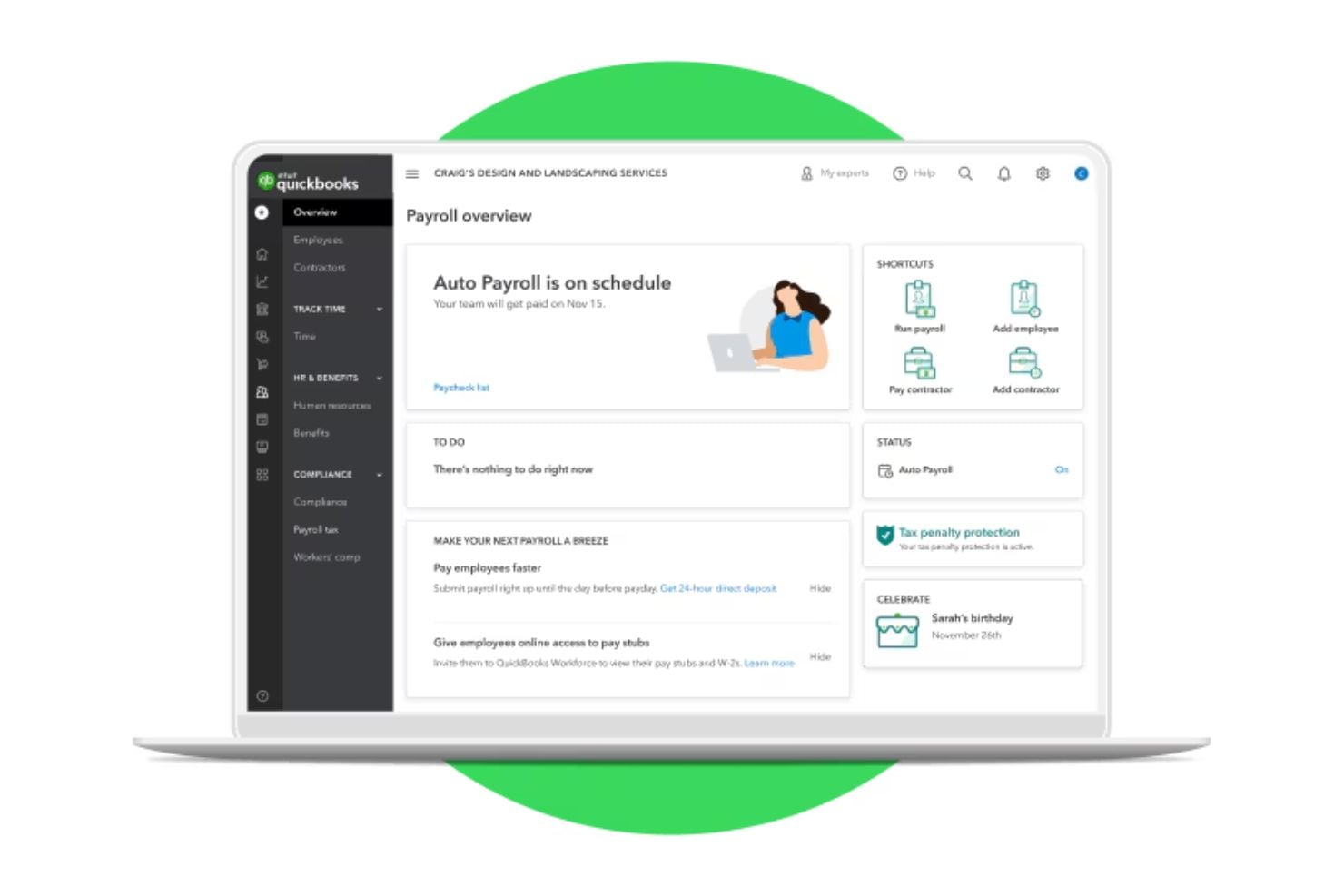
Full-Service Payroll
Handles payroll runs, tax calculations, and payments in one place so you don’t have to manually manage each step.
Direct Deposit Options
Lets you pay employees directly into their bank accounts with fast next-day processing included on most plans.
Employee Self-Service (Workforce App)
Employees can access pay stubs, tax forms, and payroll information online, reducing administrative workload.
1099 E-File
Allows you to generate and electronically file 1099 forms for contractors directly through the payroll system.
Contractor Payments
Supports paying contractors and managing contractor tax documentation within the platform.
Paycheck Calculator
Estimate take-home pay after taxes and deductions before running payroll to help avoid errors.
Standout Features
Tax Penalty Protection
Provides coverage if certain payroll tax filing errors occur, offering peace of mind for compliance risk.
Intuit Assist
QuickBooks’ AI-powered Payroll Agent that proactively collects employee time and attendance, flags inconsistencies, and alerts admins so payroll can be run quickly and confidently from anywhere.
Ease of Use
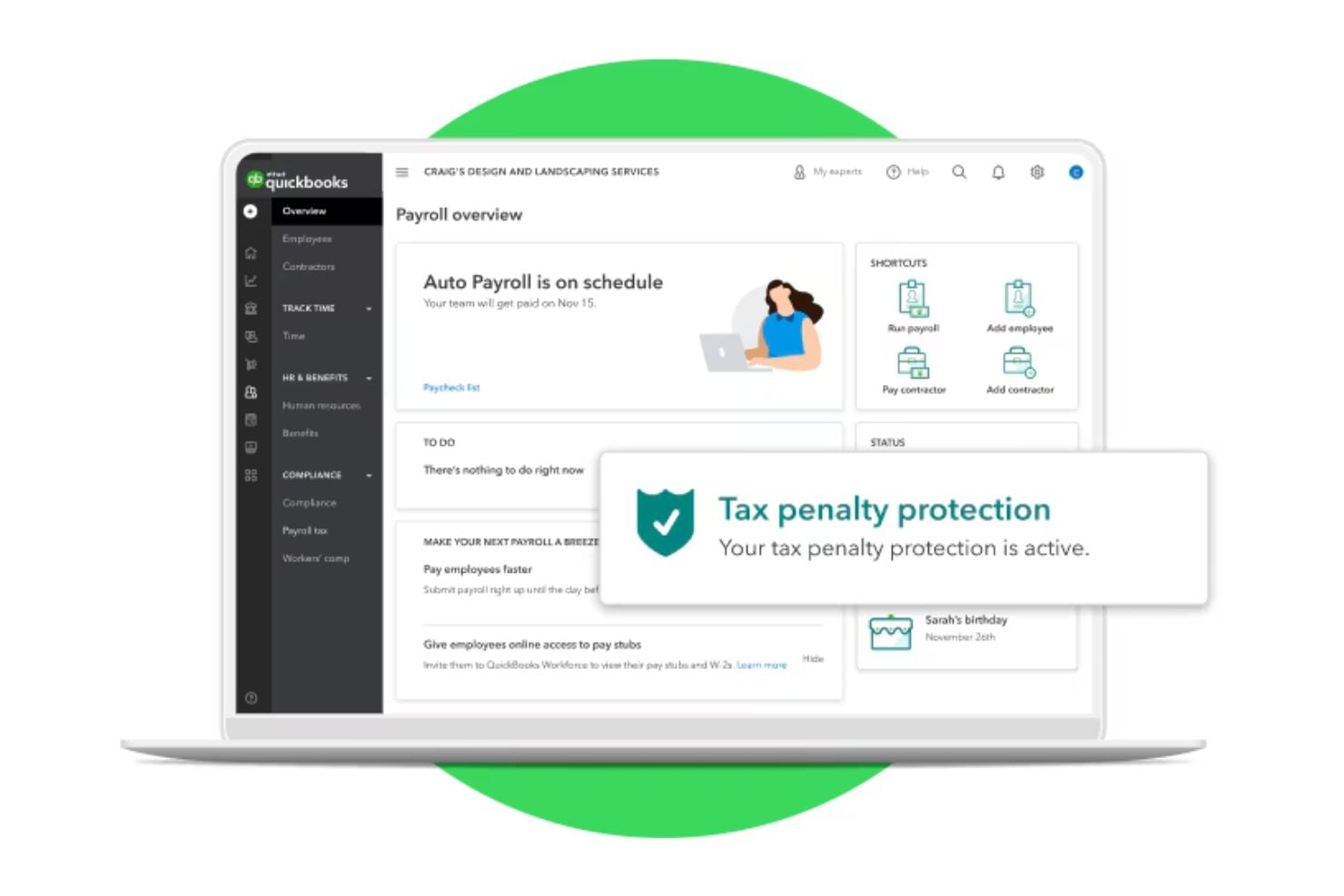
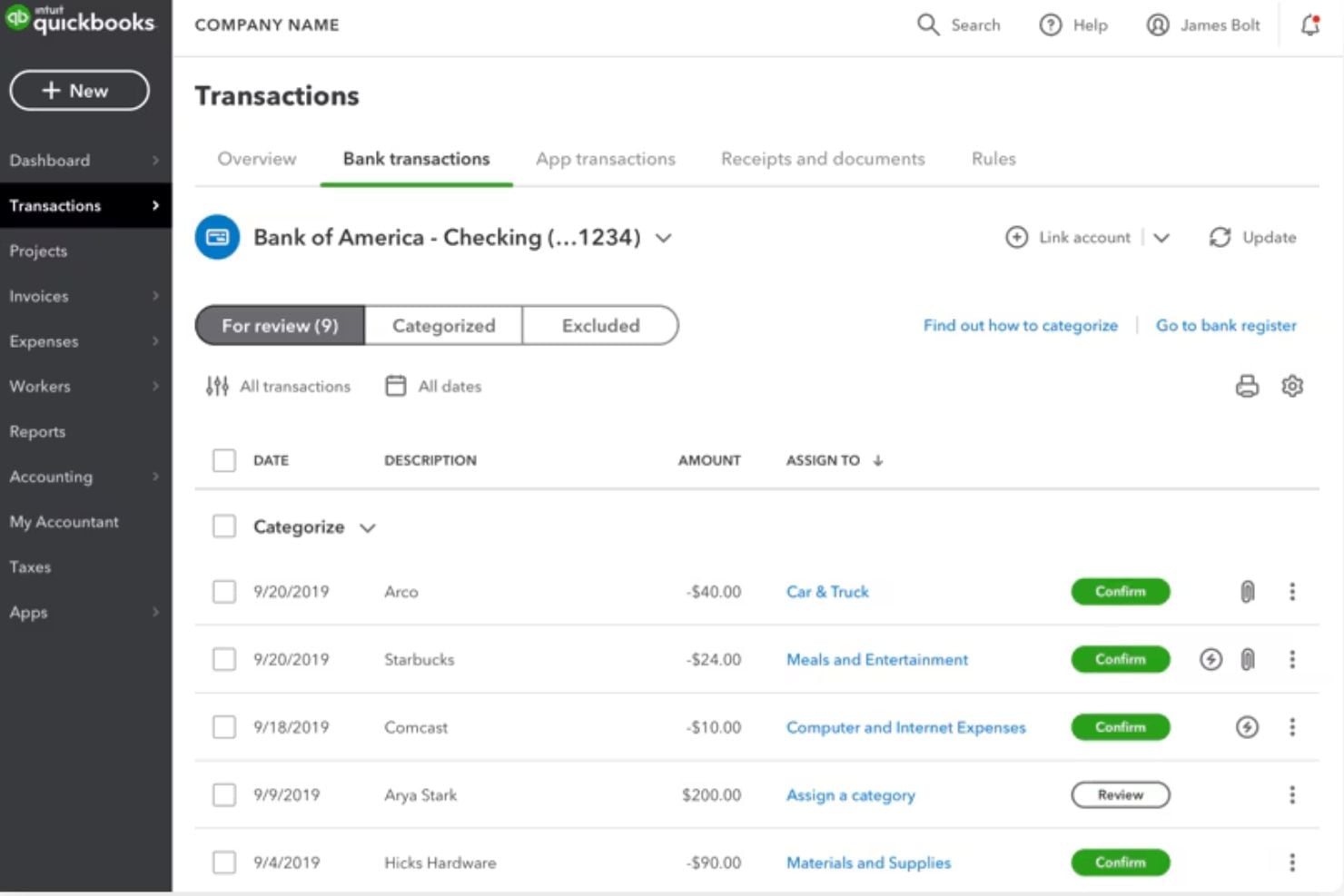
QuickBooks Workforce offers an intuitive interface for running and tracking payroll, with automated calculations that simplify each pay cycle.
Navigation is customizable, allowing users to prioritize frequently used tools, and role-based permissions help control access for administrators and staff. Reporting is organized within a dedicated dashboard, making payroll summaries and tax records easy to locate.
Onboarding
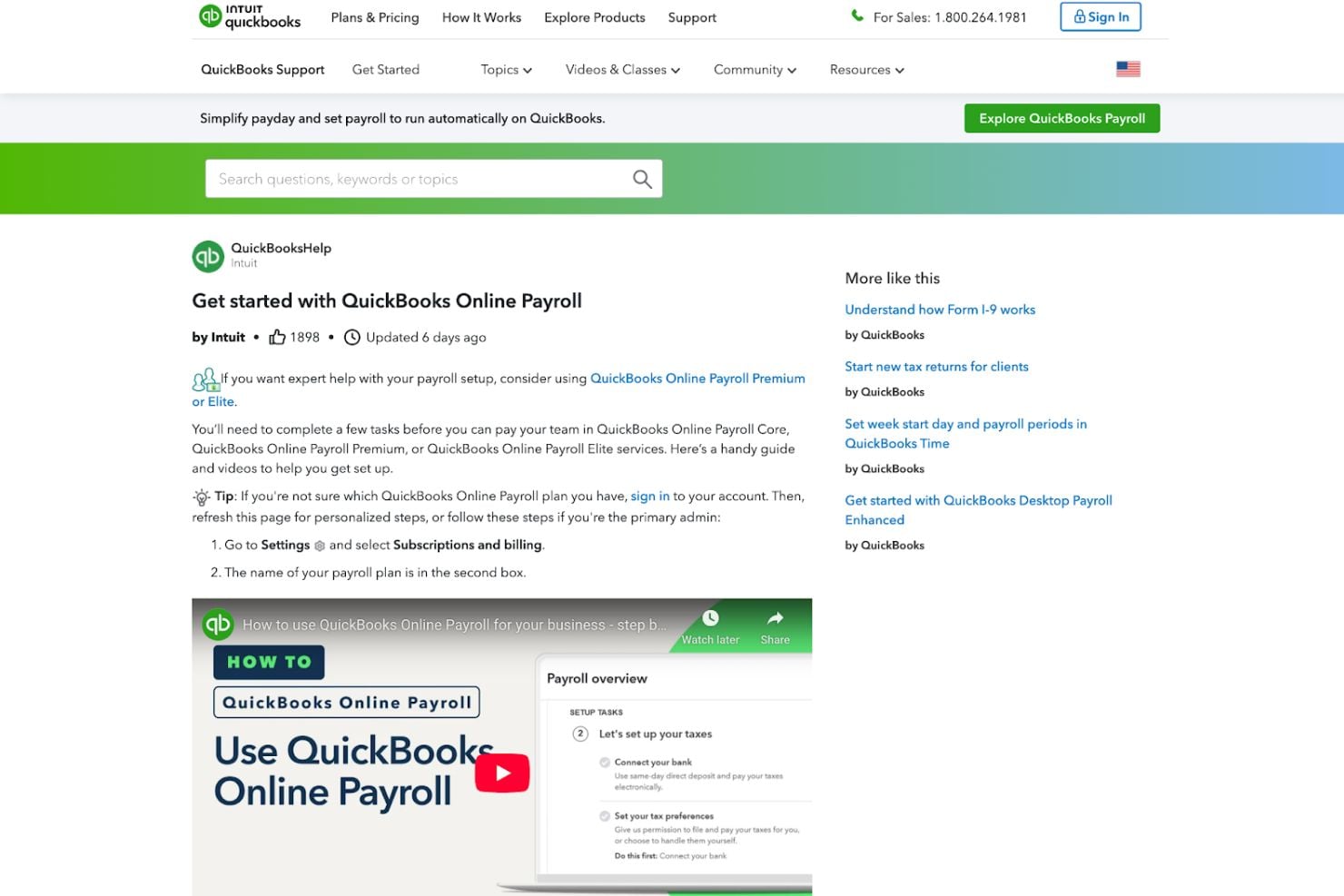
You’ll start by signing in as the primary admin and following a guided setup that walks you through entering your business details, choosing your first payroll date, and confirming whether you’ve already paid employees this year. You’ll then add your employees and their pay and tax information, connect your bank account for direct deposit, and set up your federal and state tax details — with the option to get help from a QuickBooks expert to ensure you’re ready to confidently run your first payroll.
Customer Support
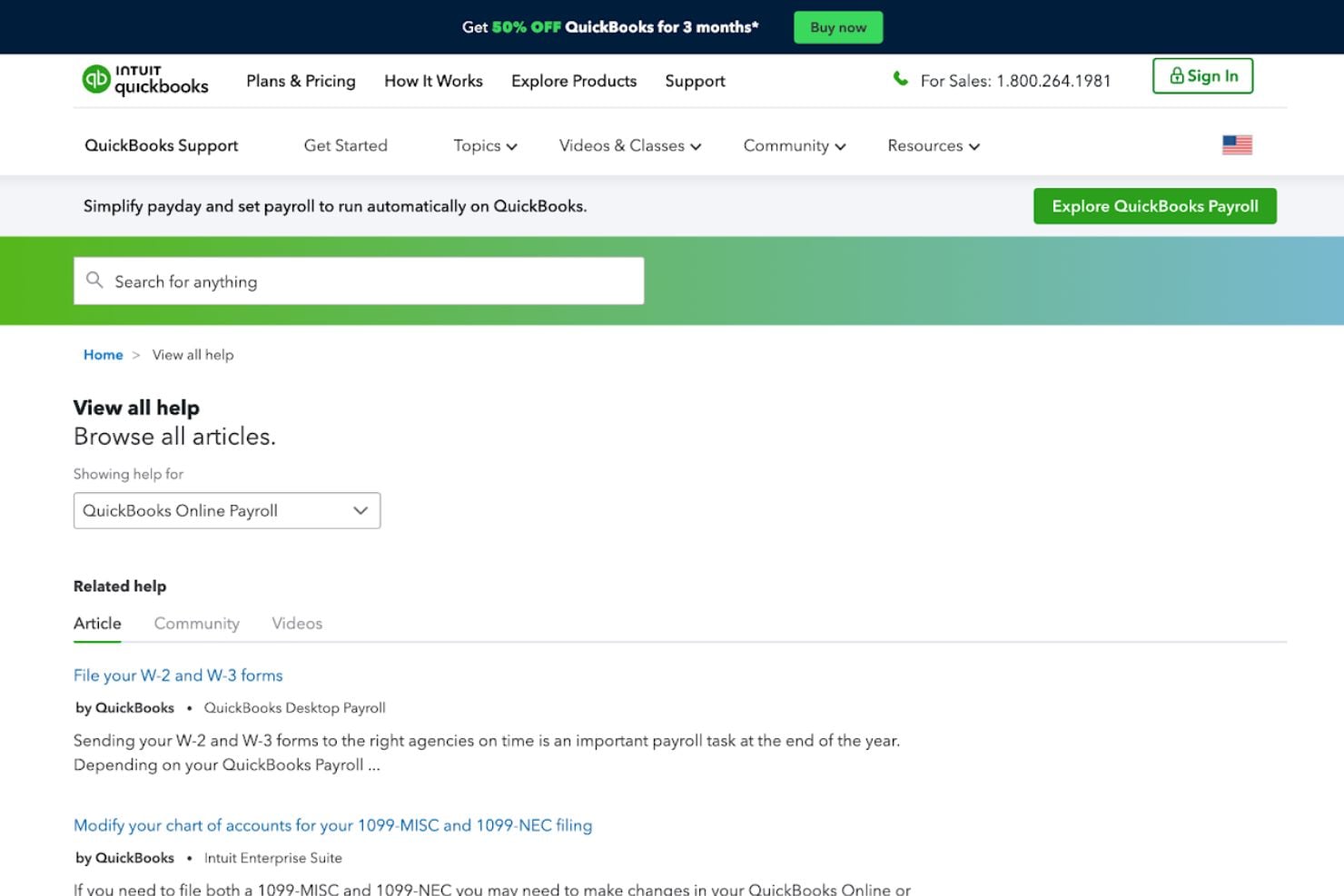
You can access a dedicated QuickBooks Online Payroll help hub as well as payroll troubleshooting resources for urgent issues. Higher-tier plans also include HR advisory services, while broader account-related concerns are handled through the general QuickBooks support portal.
Together, these resources provide structured self-service guidance with access to live support when needed.
Integrations
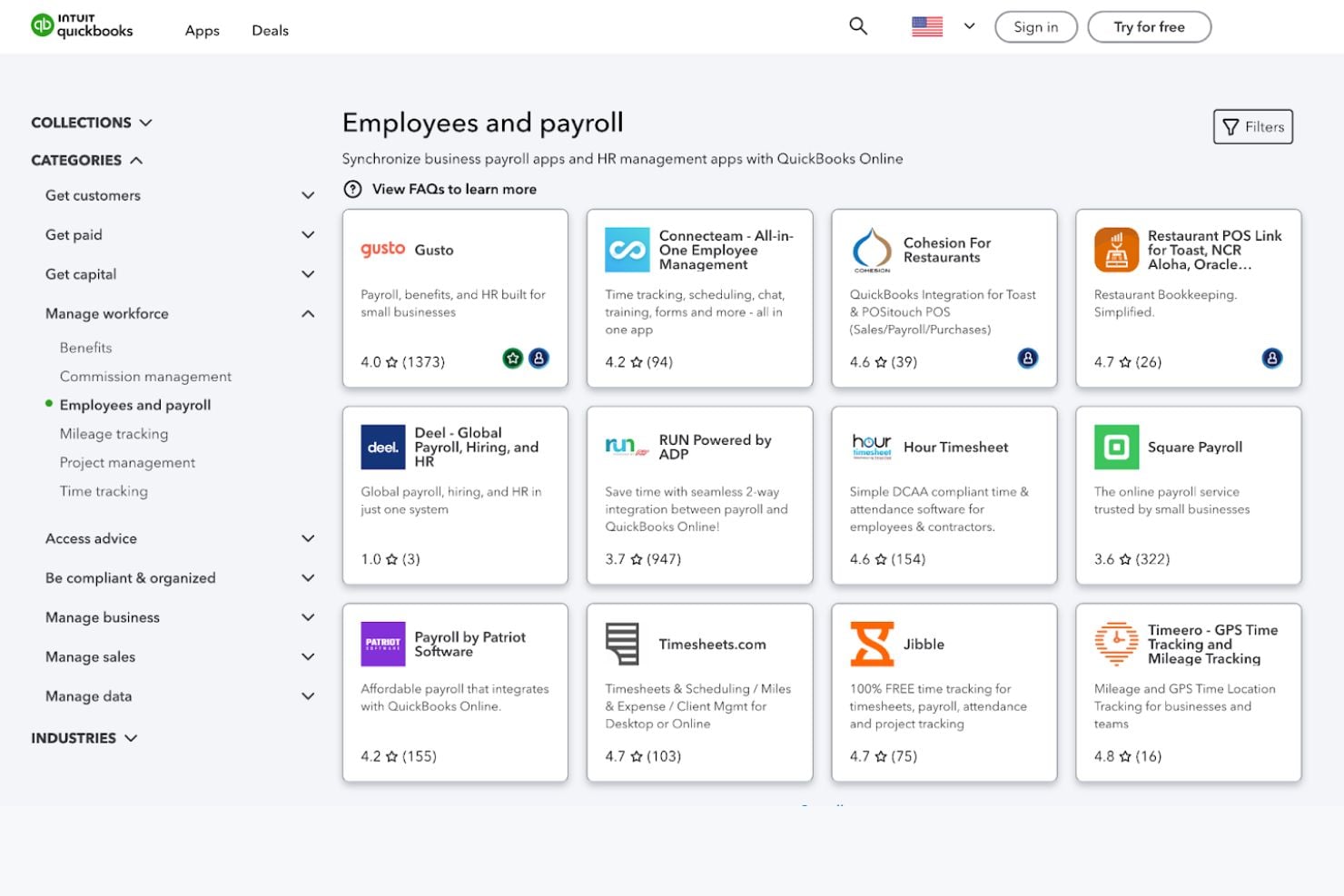
Payroll data syncs directly with QuickBooks Online, keeping wages, taxes, and expenses aligned with your accounting records.
It also connects with payroll and workforce apps through the QuickBooks App Store, including tools like RUN Powered by ADP, Square Payroll, Patriot Payroll, Hour Timesheet, and Jibble.
Value for Money
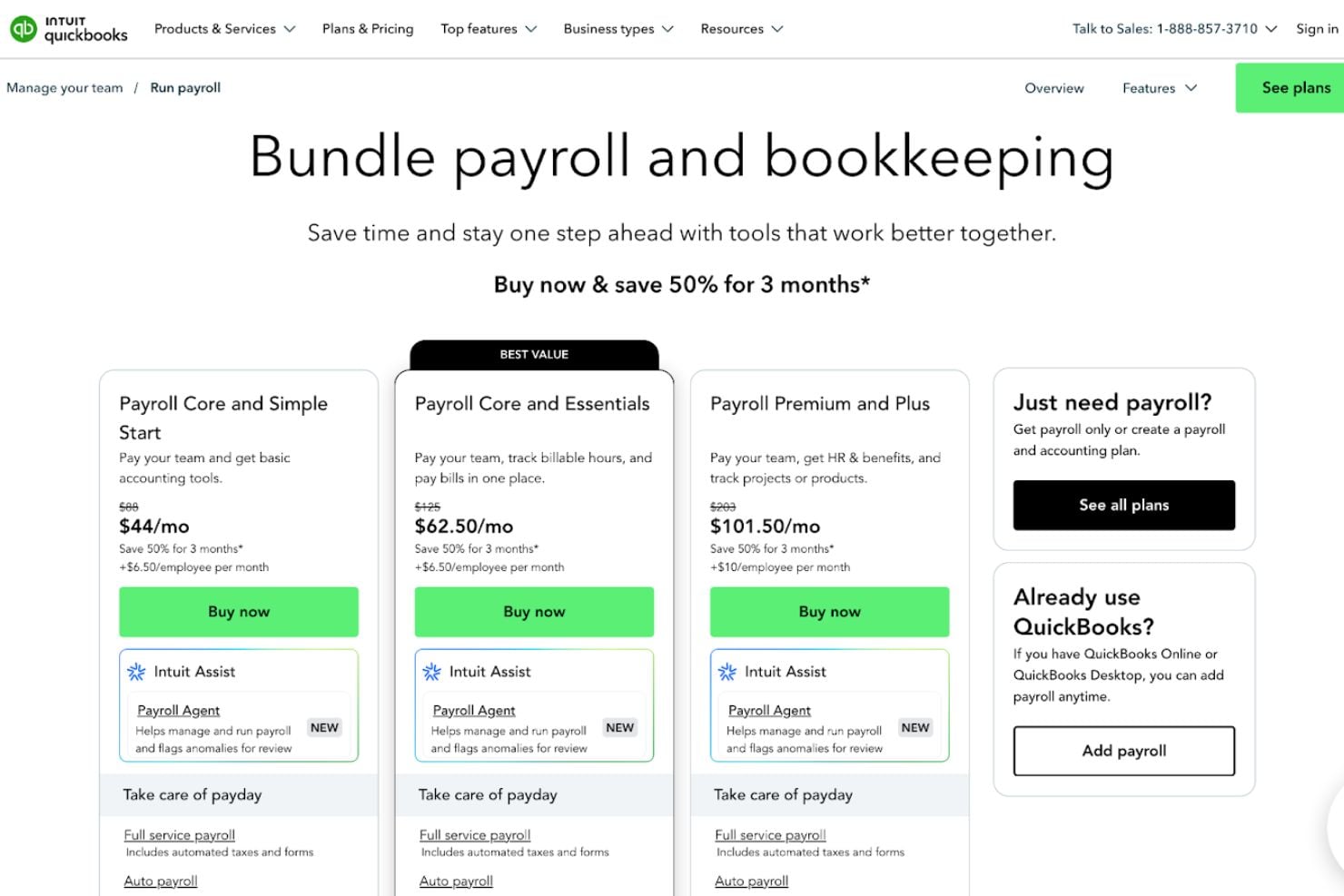
QuickBooks Workforce is offered in tiered plans that bundle payroll features with bookkeeping, with additional options for businesses that only need payroll.
- Payroll Core and Simple Start: Combines payroll with basic bookkeeping features, including automated payroll, tax calculations and filings, employee self-service, and standard reporting.
- Payroll Core and Essentials: Includes everything in the Core bundle, with expanded bookkeeping capabilities such as bill management and additional reporting tools.
- Payroll Premium and Plus: Adds enhanced payroll features such as faster direct deposit options, time tracking, workers’ comp administration support, and access to HR resources and compliance tools.
- Just Payroll: A standalone payroll option for businesses that already use QuickBooks and want to add payroll without switching accounting plans.
Plans scale based on the level of bookkeeping features, payroll speed options, and HR support included.
QuickBooks Workforce Specs
- API
- Application Tracking
- Approval Workflows
- Attendance Tracking
- Budgeting
- Calendar Management
- Compliance Tracking
- Dashboard
- Data Export
- Data Import
- Data Visualization
- Employee Database
- Employee Incentive Management
- Employee Onboarding
- Expense Tracking
- External Integrations
- Feedback Management
- Forecasting
- Multi-Currency
- Multi-User
- Notifications
- Payroll
- Scheduling
- Tax Management
- Time Management
- Timesheets
- Travel Management
- Vacation & Absence Calendar
QuickBooks Workforce FAQs
Can QuickBooks Workforce handle both salaried and hourly employees?
How does QuickBooks Workforce manage payroll tax compliance?
What data security measures does QuickBooks Workforce use to protect sensitive information?
How quickly can employees receive their pay with direct deposit?
What kind of customer support is available if I have payroll issues?
Can I access QuickBooks Workforce from mobile devices?
QuickBooks Workforce Company Overview & History
QuickBooks Workforce is part of the broader QuickBooks product family developed by Intuit Inc., a financial software company founded in 1983 by Scott Cook and Tom Proulx in Mountain View, California. QuickBooks itself was later introduced in the early 1990s as an easy-to-use accounting solution for small and midsize businesses.
QuickBooks Workforce Major Milestones
- 1983: Intuit Inc. is founded, eventually becoming known for financial and business software.
- 1992: QuickBooks accounting software is launched, bringing accessible bookkeeping and payroll functions to small businesses.
- 1999: Intuit introduces the QuickBooks Online Payroll service, which allowed QuickBooks users to connect with banks and tax agencies for online payroll processing.
- 2005: QuickBooks Online Payroll Edition is launched as an integrated payroll solution tied to QuickBooks Online, expanding payroll capabilities for cloud users.
- 2019: Intuit expands QuickBooks Payroll with automated tax penalty protection and on-demand HR services.
- 2020: Enhanced automation features and faster direct deposit options are introduced to support small businesses.
- 2021–2022: Payroll plans are structured into Core, Premium, and Elite tiers, adding expanded HR support and compliance services.
- 2026: QuickBooks Payroll gets rebranded as QuickBooks Workforce.