

Reseña de Wrike: Ventajas, Desventajas, Características y Precios
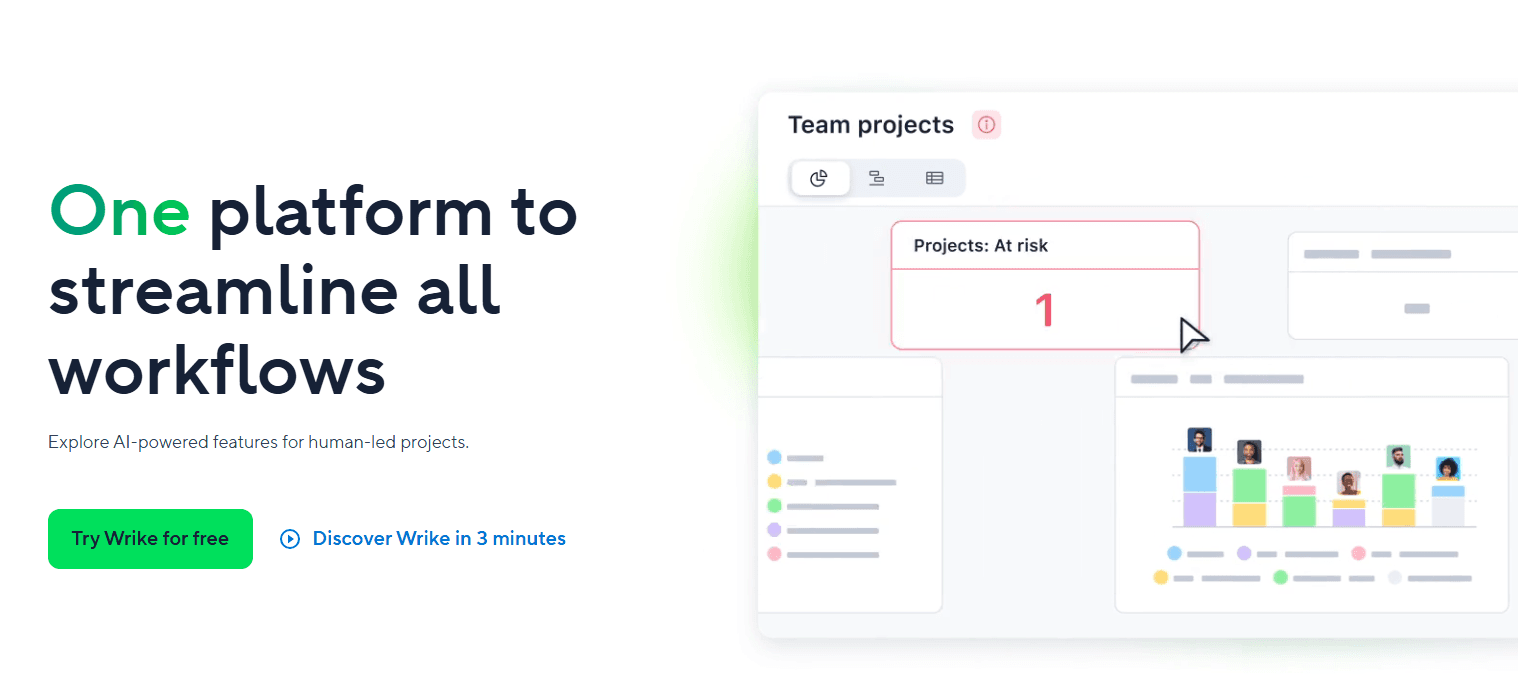
Wrike destaca por su interfaz fácil de usar y su adaptabilidad, lo que lo convierte en una de las mejores opciones para equipos que buscan una gestión de proyectos eficiente dentro de las alternativas gratuitas de ERP.

Revisamos las herramientas de forma independiente, y las comisiones ayudan a financiar nuestras pruebas. Consulta nuestra política de transparencia, nuestra metodología o sugiere una herramienta.
Wrike is a free ERP software that brings project tracking, workflow automation, and cross-department visibility into a single platform. It's worth considering if your team needs ERP-adjacent capabilities without a lengthy implementation. I'd especially look at Wrike if tools like Odoo feel too technically demanding to configure and maintain without dedicated IT support—Wrike gives you structured operational oversight with a much lighter setup burden.
Wrike Evaluation Summary
4.3/5
- From $10/user/month (billed annually)
- Free plan + 14-day free trial + free demo available
Por qué confiar en nuestras recomendaciones de software
6,700+
Reviews
20
Industry experts
16+
Evaluation factors
14
Years
Nuestras reseñas reflejan nuestro criterio independiente, no un discurso de ventas. Descubra cómo mantenemos la transparencia.
Para esta guía, evaluamos las herramientas mediante pruebas prácticas e investigación independiente, puntuando las herramientas según nuestros criterios de selección.
Nuestras reseñas reflejan nuestro criterio editorial humano, no un discurso de ventas.
Wrike Overview
In my opinion, Wrike offers a decent set of tools for teams needing all-in-one project management and ERP capabilities. Its integration options, like Salesforce, and customizable dashboards are appealing, but the pricing might be a hurdle for budget-conscious teams. It performs well in task and resource management but can be overwhelming for small businesses with simple needs. Compared to other free ERP software, Wrike is suitable for marketing teams and creative agencies needing detailed project tracking and collaboration features. If you’re judging software based on flexibility and integration, consider Wrike, but weigh its cost against your budget.
Pros
- You can customize dashboards to fit your team's workflow.
- Wrike's task management tools help keep your projects organized.
- You can easily collaborate with team members using Wrike's communication features.
Cons
- The interface can feel cluttered and overwhelming for new users.
- It takes time to learn all of Wrike's features.
- Your team might find the mobile app less intuitive than the desktop version.
Is Wrike Right For Your Needs?
Who Would be a Good Fit for Wrike?
Wrike is a good fit for marketing teams, creative agencies, and project-driven departments that need detailed project tracking and collaboration. If your work involves managing multiple projects with various stakeholders, Wrike's customizable dashboards and task management tools can keep everything organized. Teams that value communication will benefit from its collaboration features, which help streamline discussions and feedback. Wrike's capabilities are particularly useful for industries where project timelines and resource allocation are critical.
- Marketing TeamsWrike helps your team manage campaigns and track progress with its detailed task management.
- Creative AgenciesYour agency can benefit from Wrike’s collaboration features, which facilitate feedback and revisions.
- Project-Based DepartmentsWrike's dashboards let your department manage multiple projects efficiently and keep stakeholders informed.
- Event PlanningIf your work involves complex logistics, Wrike's task tracking and communication tools keep everything on schedule.
- Product DevelopmentWrike supports your team in managing timelines and resources for successful product launches.
- Remote TeamsWrike's communication and collaboration features help your remote team stay connected and productive.
Who Would be a Bad Fit for Wrike?
Wrike isn’t ideal for small businesses or teams with straightforward needs that don’t require complex project management. If your work involves simple tasks without the need for extensive tracking or resource management, Wrike’s features may feel excessive and overwhelming. Additionally, if your team struggles with adopting new technology, Wrike's interface might be too complex and time-consuming to learn. It's not the best fit for organizations looking for a basic, easy-to-use tool.
- Small BusinessesIf your team needs basic task management, Wrike's extensive features might overwhelm rather than help.
- Simple OperationsWrike's complex interface can be unnecessary for operations that don't need detailed project tracking.
- Low-Tech TeamsWrike's learning curve can be steep for teams not comfortable with technology.
- Budget-Conscious DepartmentsIf you’re focused on cost-efficiency, Wrike's advanced features may not justify its expense.
- Single-Person TeamsFor individuals, Wrike's collaboration tools won't offer much value.
- Non-Project RolesRoles without project management needs might find Wrike's features redundant.
Cómo probamos y puntuamos las herramientas
Hemos dedicado años a construir, perfeccionar y mejorar nuestro sistema de evaluación y puntuación de software. La rúbrica está diseñada para capturar los matices de la selección de software y lo que hace que una herramienta sea efectiva, enfocándose en los aspectos críticos del proceso de toma de decisiones. A continuación, puedes ver exactamente cómo funcionan nuestras pruebas y puntuación en siete criterios. Esto nos permite proporcionar una evaluación imparcial del software basada en la funcionalidad principal, características destacadas, facilidad de uso, onboarding, atención al cliente, integraciones, opiniones de clientes y relación calidad-precio.
Funcionalidad principal (25% de la puntuación final)
Nuestro punto de partida siempre es la funcionalidad principal de la herramienta. ¿Tiene las funciones básicas que un usuario esperaría ver? ¿Alguna de estas características principales está limitada a planes de precios superiores? En esencia, esperamos que una herramienta esté a la altura de las capacidades básicas de sus competidores.
Características destacadas (25% de la puntuación final)
A continuación, evaluamos las características únicas y sobresalientes que van más allá de la funcionalidad principal normalmente encontrada en herramientas de este tipo. Una puntuación alta refleja funciones especializadas o únicas que hacen el producto más rápido, eficiente o que aportan valor adicional al usuario. También evaluamos lo fácil que es integrarse con otras herramientas que normalmente forman parte del stack tecnológico para ampliar la funcionalidad y utilidad del software. Las herramientas que ofrecen numerosas integraciones nativas, conexiones con terceros y acceso API para crear integraciones personalizadas obtienen la mejor puntuación.
Facilidad de uso (10% de la puntuación final)
Consideramos cuán rápido y fácil es ejecutar las tareas definidas en la funcionalidad principal usando la herramienta. El software que obtiene la puntuación más alta está bien diseñado, es intuitivo, ofrece aplicaciones móviles, proporciona plantillas y hace que tareas relativamente complejas parezcan simples.
Onboarding (10% de la puntuación final)
Sabemos lo importante que es una adopción rápida del equipo para una nueva plataforma, por lo que evaluamos cuán sencillo es aprender y utilizar una herramienta con una formación mínima. Analizamos lo rápido que un miembro del equipo puede configurarse y empezar a usar la herramienta sin experiencia previa. Las soluciones con alta puntuación indican que se requiere poco o ningún soporte.
Atención al cliente (10% de la puntuación final)
Revisamos cuán rápido y sencillo es salir de un atasco y encontrar ayuda por teléfono, chat en vivo o base de conocimiento. Las herramientas y empresas que proporcionan soporte en tiempo real obtienen la mejor puntuación, mientras que los chatbots obtienen la peor.
Opiniones de clientes (10% de la puntuación final)
Además de nuestras propias pruebas y evaluaciones, consideramos el net promoter score de clientes actuales y anteriores. Revisamos la probabilidad de que, de tener la opción, elijan nuevamente la herramienta por su funcionalidad principal. Un software con alta puntuación refleja un alto net promoter score de clientes presentes o pasados.
Relación calidad-precio (10% de la puntuación final)
Por último, considerando todos los demás criterios, revisamos el precio medio de los planes de entrada frente a las funciones principales y analizamos el valor de los demás criterios de evaluación. El software que ofrece más por menos obtiene una puntuación superior.
Core Features
Task Management
You can break down projects into tasks and subtasks, making it easy to assign responsibilities and track progress. Wrike’s task management helps your team stay organized and on schedule.
Time Tracking
Wrike lets you log time spent on tasks, helping you manage your team’s workload and improve productivity. This feature supports accurate billing and resource allocation.
Custom Dashboards
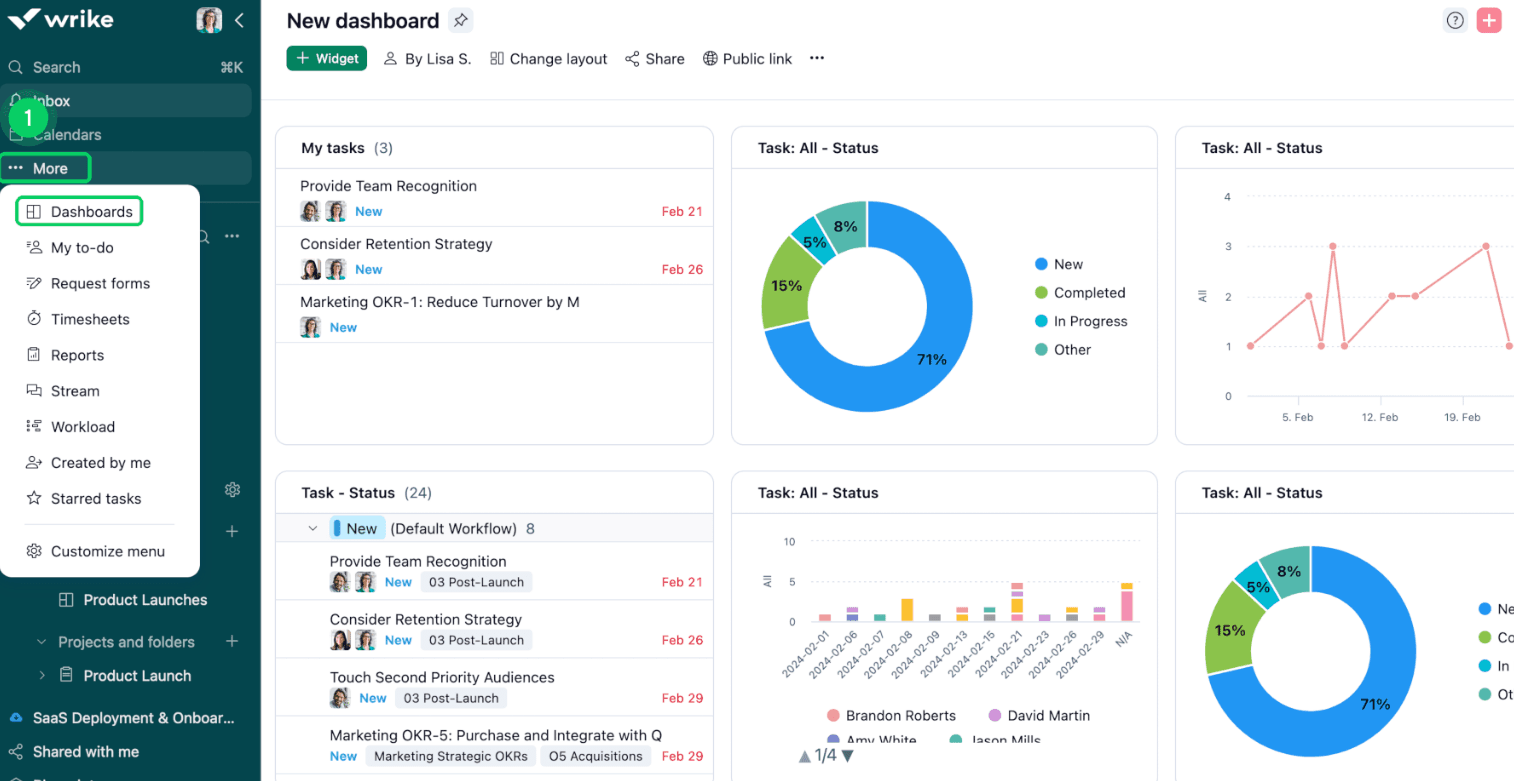
Customize your dashboard to highlight the data that matters most to your team. You can easily monitor project status, receive notifications, and prioritize tasks.
Multiple Project Views
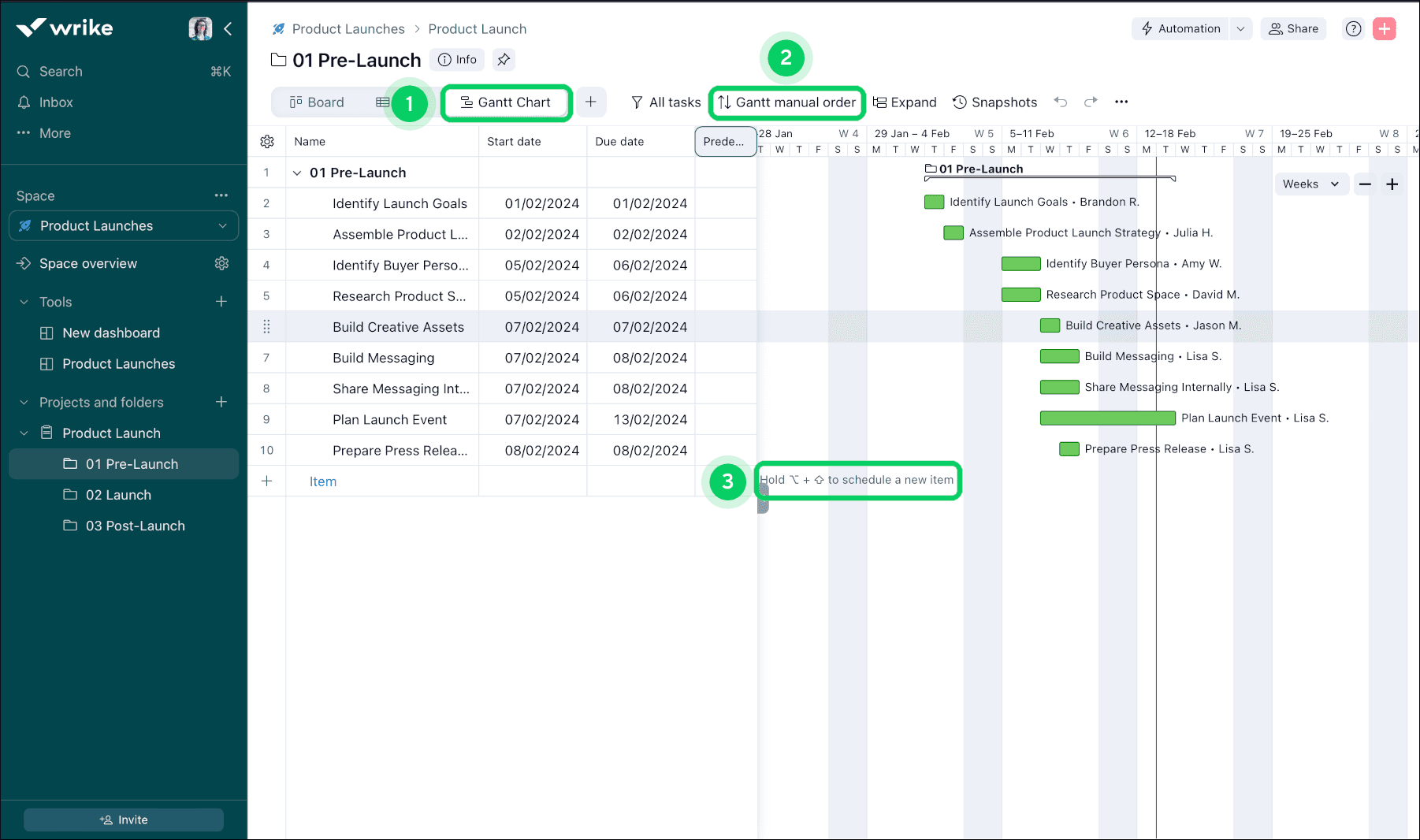
Wrike's Gantt charts and Kanban boards give you a visual timeline of your projects, helping you plan and track tasks. They’re great for seeing dependencies and deadlines at a glance.
File Sharing
You can share files directly within Wrike, making collaboration on documents seamless. This feature keeps your team’s resources centralized and accessible with role-based permissions.
Reporting
Wrike’s real-time reporting tools let you generate insights into your projects, helping you make informed decisions. You can customize reports to show key metrics and performance indicators.
Standout Features
Request Forms
Your team can use request forms to standardize and streamline how work is requested. This feature helps you avoid miscommunication and manage incoming work efficiently.
Proofing and Approval
Wrike's proofing and approval tools let your team review and approve creative work directly within the platform. This feature speeds up feedback loops.

Ease of Use
Wrike’s interface is relatively clean and intuitive. While the customization options and drag-and-drop workflows are powerful, they might overwhelm those unfamiliar with project management tools. If your team invests time in learning its features, Wrike offers valuable tools for project tracking and collaboration. However, the initial learning curve might be steep, especially for small teams or those without dedicated IT support. Despite these challenges, once mastered, Wrike can significantly enhance your team's productivity.
Onboarding
Wrike's onboarding process can be daunting due to its complex interface and multitude of features. While Wrike offers tutorials and guides, your team might still find the initial setup challenging. The time to value can be longer compared to simpler tools, requiring patience and persistence. However, once your team gets accustomed to the system, Wrike's robust project management capabilities can significantly benefit your operations. The available support and resources are helpful, but they demand a proactive approach to learning.
Customer Support
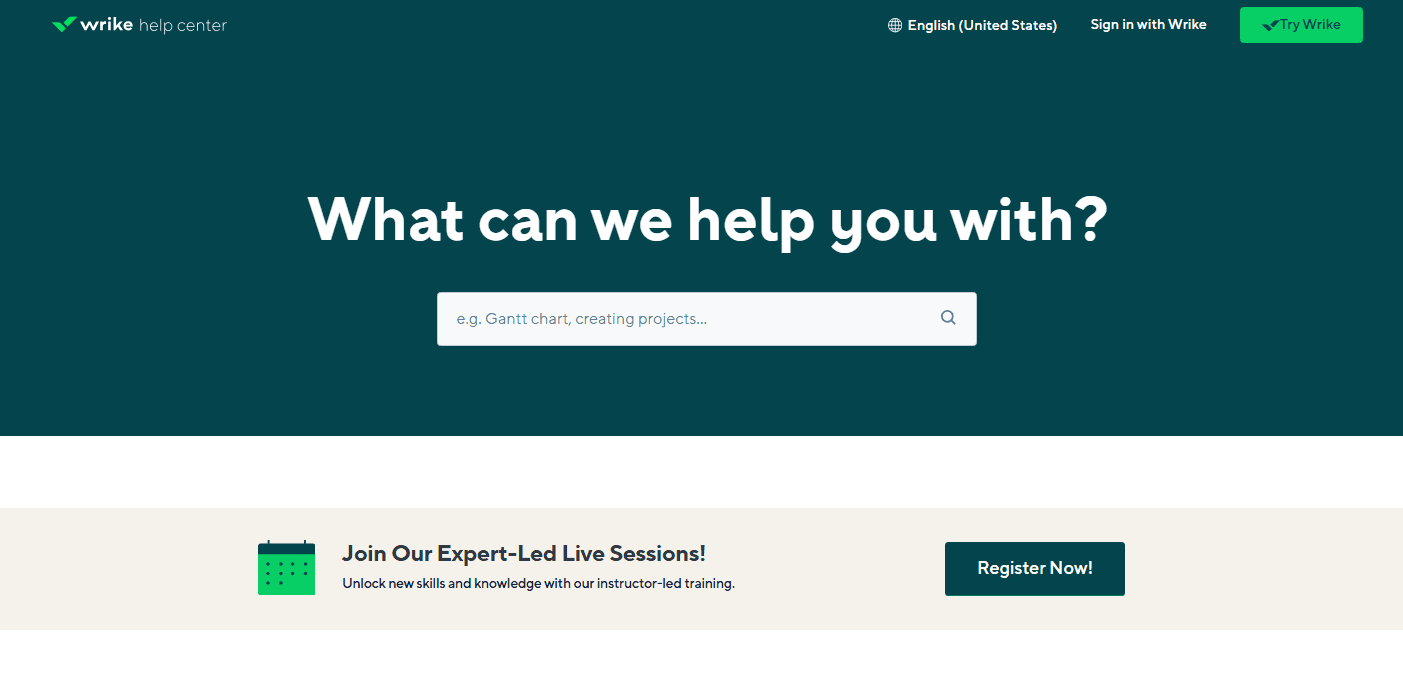
Wrike offers decent customer support, but users might experience delays in response times. If your team needs immediate assistance, this can be frustrating. Wrike provides a range of resources like its comprehensive knowledge base, webinars, and community forums that can help resolve common issues. However, personalized support might not always be readily available. Your team should be prepared to utilize self-help resources and tutorials to navigate challenges, as direct support may not meet all expectations promptly.
Integrations
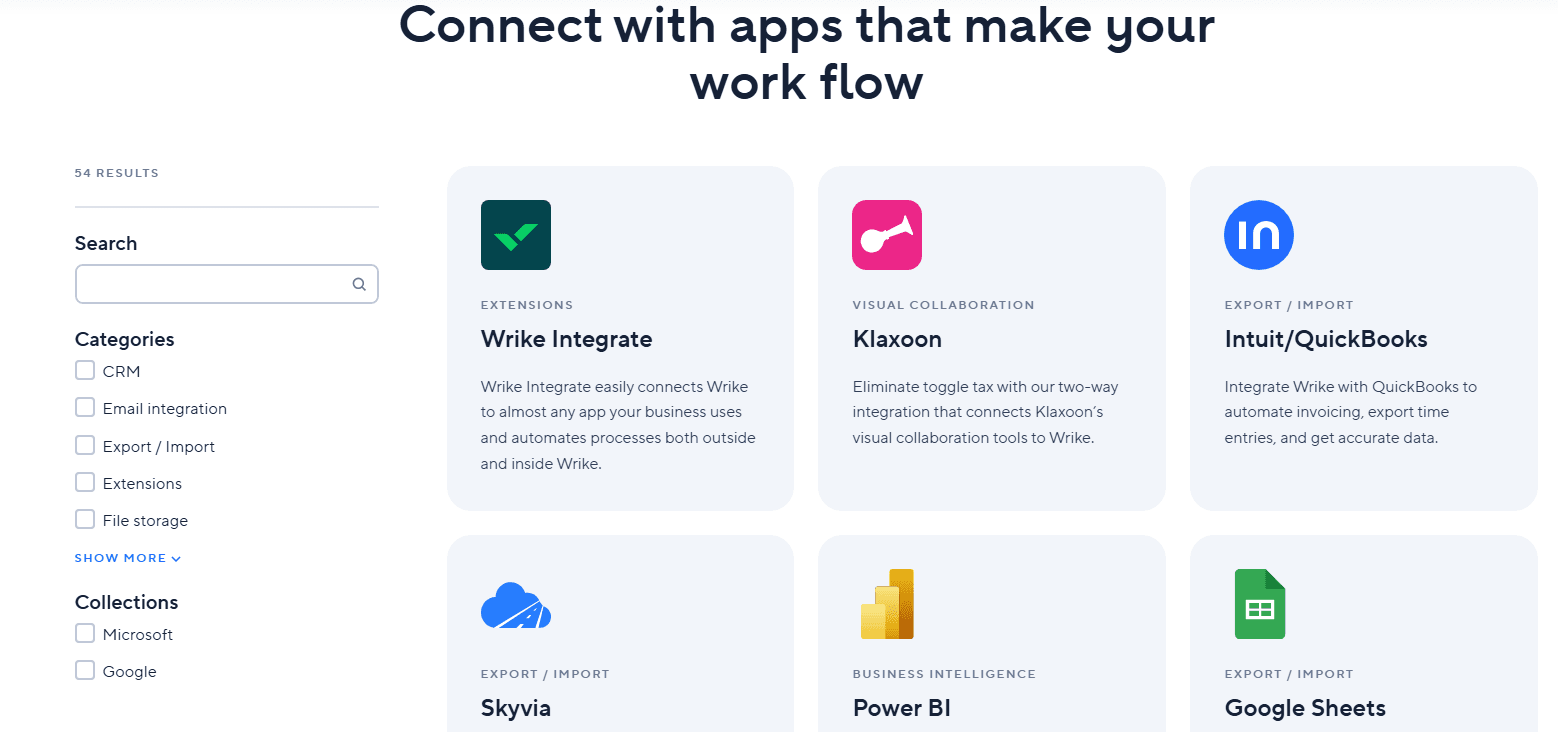
Wrike integrates with Microsoft Teams, Salesforce, Slack, Google Workspace, Dropbox, Box, OneDrive, Adobe Creative Cloud, JIRA, and QuickBooks.
Wrike also offers an API and connects with third-party integration tools to expand its functionality.
Value for Money
Wrike’s pricing offers strong value by letting teams start for free and scale only when they need more power. The Free plan covers essential task management, while paid tiers add automation, AI, and advanced planning tools. With plans starting at $10 per user, Wrike balances affordability with enterprise-grade capabilities, making it cost-effective for growing teams and large organizations alike.
- Free: Includes Web, desktop, and mobile apps, project & task management, and board & table views.
- Team: Adds essential AI features, shareable dashboard, and interactive Gantt charts.
- Business: Adds AI elite feature, templatization features, standard integrations, and workflow customizations.
- Pinnacle: Includes advanced reporting and BI, budgeting, advanced resource and capacity planning, and advanced security and compliance.
- Apex: Includes unlimited whiteboards, 30 million records on Wrike Datahub, and bi-directional integrations with third-party solutions.

Wrike Specs
- API: Yes
- Batch Permissions & Access: Yes
- Budgeting: Yes
- Calendar Management: Yes
- Collaboration Support: Yes
- Contact Management: Yes
- Contact Sharing: No
- Customer Management: No
- Dashboard: Yes
- Dashboards: Yes
- Data Export: Yes
- Data Import: Yes
- Data Visualization: Yes
- Dependency Tracking: Yes
- Document Sharing: Yes
- Expense Tracking: Yes
- External Integrations: Yes
- File Sharing: Yes
- Gantt Charts: Yes
- Kanban Boards: Yes
- Multi-User: Yes
- Notifications: Yes
- Project Management: Yes
- Resource Management: Yes
- Scheduling: Yes
- Task Scheduling/Tracking: Yes
- Third-Party Plugins/Add-Ons: Yes
- Time Management: Yes
- Travel Management: No
- Workflow Management: Yes
Wrike FAQs
Wrike Company Overview & History
Wrike is a project management software company headquartered in San Jose, California, with a workforce of over 1,000 employees. The company is known for its versatile project management solutions that cater to various methodologies like Agile and waterfall. Wrike integrates with numerous third-party applications, enhancing its utility for diverse business needs. Notable clients include major corporations such as Google and Airbnb, which rely on Wrike for efficient project tracking and team collaboration.
Wrike Major Milestones
- 2006: Founded by Andrew Filev.
- 2013: Secured $10 million in Series A funding led by Bain Capital Ventures.
- 2018: Acquired by Vista Equity Partners, a significant private equity firm.
- 2021: Became part of Citrix Systems through acquisition.