

ERPNext : Avis, avantages, inconvénients, fonctionnalités et tarification expliqués
Au cours de ma carrière, j'ai utilisé de nombreux outils ERP, dont ERPNext. Permettez-moi de vous présenter l'objectif de cet outil, ses fonctionnalités, ses points forts et faibles, sa facilité d'utilisation et bien plus encore dans cet avis complet.

Nous évaluons les outils indépendamment ; les commissions aident à financer nos tests. Consultez notre politique de transparence et notre méthodologie.
ERPNext is open-source CFO ERP software for finance and operations teams that need full-cycle visibility across accounting, procurement, inventory, and payroll. I'd consider it a strong fit if your organization wants the functional depth of a platform like NetSuite. ERPNext gives you that depth as a self-hosted option without the licensing costs or a large implementation budget.
ERPNext Evaluation Summary
4.2/5
- Pricing upon request
- Free trial available
Pourquoi faire confiance à nos recommandations de logiciels
6,700+
Reviews
20
Industry experts
16+
Evaluation factors
14
Years
Nos avis reflètent notre jugement indépendant — et non un argumentaire de vente. Découvrez comment nous restons transparents.
Pour ce guide, nous avons évalué les outils grâce à des tests pratiques et une recherche indépendante, en notant les outils selon nos critères de sélection.
Nos avis reflètent notre jugement éditorial humain, et non un argumentaire de vente.
ERPNext Overview
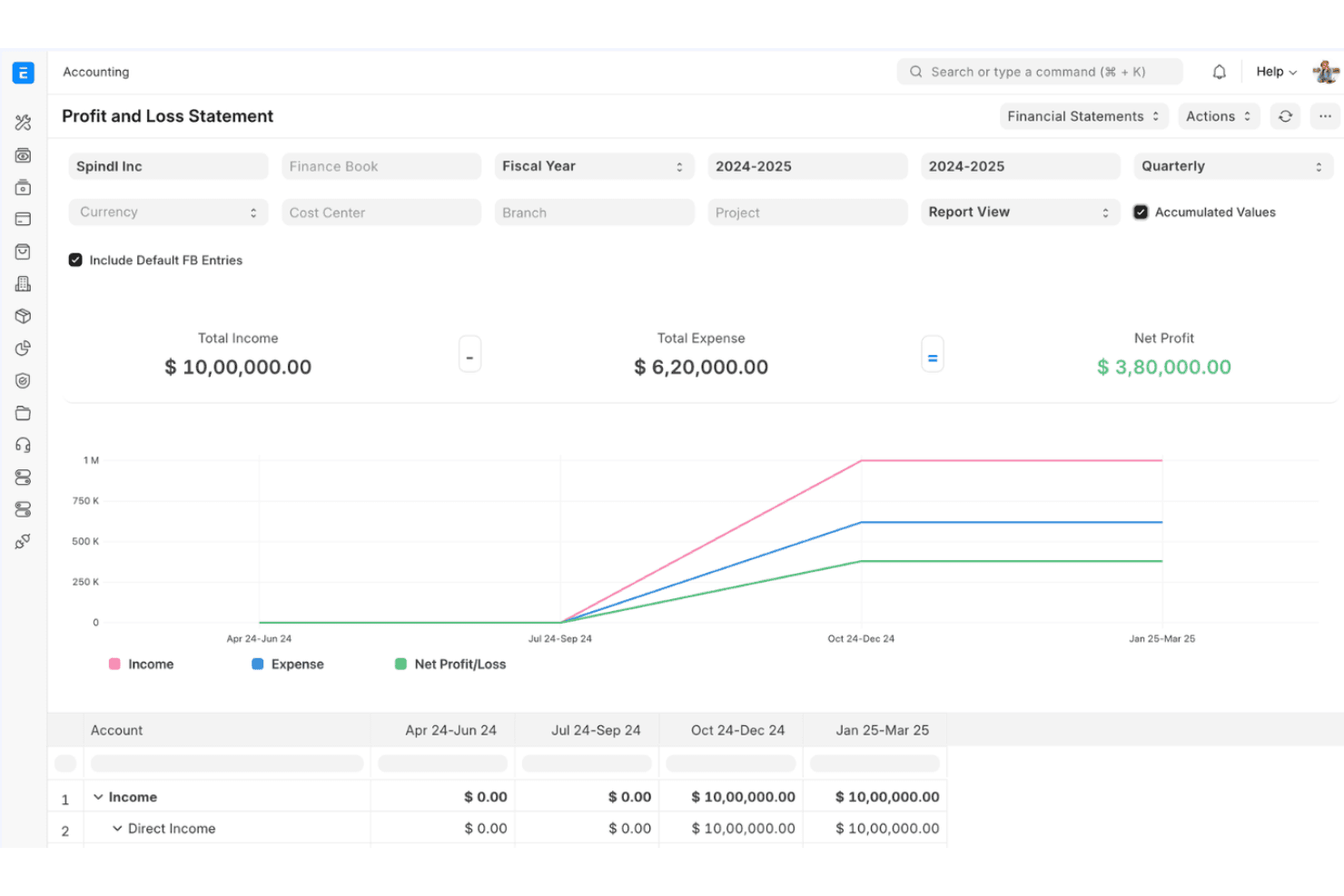
ERPNext offers a rare mix of flexibility, affordability, and open-source transparency that appeals to finance teams wanting control over their ERP environment. Its modular features and strong customization options make it a top pick for organizations with unique workflows or limited budgets. While its interface and onboarding can feel less polished than some competitors, and support relies heavily on community resources, ERPNext’s pricing and adaptability often outweigh these drawbacks.
It’s best suited for teams comfortable with hands-on configuration and those who value the ability to tailor their ERP to specific business needs, such as manufacturing or multi-entity operations.
Pros
- You can easily customize ERPNext to fit your business needs.
- ERPNext's open-source nature lets your team modify and enhance the software.
- It supports a wide range of industries, making it versatile for your work.
Cons
- You might find the initial setup requires a significant time investment.
- Your team may experience a learning curve with its extensive features.
- You may encounter limited third-party integrations compared to other ERPs.
Is ERPNext Right For Your Needs?
Who Would be a Good Fit for ERPNext?
ERPNext is perfect for small to medium-sized businesses in industries like retail, manufacturing, and services. If your team values customization and the ability to tweak software to fit your unique processes, ERPNext is ideal. Its open-source nature allows you to make adjustments without hefty costs. For example, a manufacturing company can customize workflows to match production schedules, while a retail business can tailor inventory management. ERPNext’s versatility means it can adapt to your specific industry needs.
- Retail BusinessesERPNext’s inventory management helps you track stock levels and manage orders efficiently.
- Manufacturing CompaniesERPNext allows you to customize production workflows to match your manufacturing processes.
- Service ProvidersYou can use ERPNext’s project management features to streamline your service delivery.
- Educational InstitutionsERPNext’s student management features support enrollment, attendance, and grading efficiently.
- Healthcare FacilitiesERPNext offers patient management and billing solutions that fit healthcare needs.
- Non-Profit OrganizationsERPNext’s donation tracking and volunteer management tools help streamline operations.
Who Would be a Bad Fit for ERPNext?
If your business relies heavily on specific third-party integrations, ERPNext might not be the best fit. Large enterprises with complex systems and those needing extensive integration with niche software could face challenges. For example, businesses requiring deep integration with proprietary systems or specialized software may find ERPNext’s integration capabilities limited. Additionally, if your team isn’t prepared for a significant learning curve or lacks the time for customization, ERPNext’s robust features might overwhelm rather than assist.
- Large EnterprisesERPNext might struggle with the complexity and scale of large enterprises needing intricate integrations.
- Highly Regulated IndustriesIndustries with strict compliance requirements might find ERPNext lacks specialized regulatory features.
- Tech-Dependent TeamsTeams that rely on niche software integrations might face limitations with ERPNext’s integration options.
- Finance-Specific FirmsERPNext’s general accounting features might not meet the advanced needs of finance-specific firms.
- Logistics CompaniesLogistics companies requiring specialized tracking and routing features may find ERPNext lacking.
- High-Growth StartupsStartups rapidly scaling might find ERPNext’s setup and customization time-consuming.
Comment nous testons et évaluons les outils
Nous avons passé des années à construire, affiner et améliorer notre système de test et d’évaluation des logiciels. Notre grille vise à saisir toute la subtilité de la sélection logicielle et les facteurs déterminant l’efficacité d’un outil, en mettant l’accent sur les aspects essentiels du processus de décision. Ci-dessous, vous pouvez voir exactement comment notre test et notre notation fonctionnent selon sept critères. Cela nous permet de fournir une évaluation impartiale des logiciels sur la base des fonctionnalités principales, des fonctionnalités distinctives, de la facilité d’utilisation, de la prise en main, du service client, des intégrations, des avis clients et du rapport qualité/prix.
Fonctionnalité principale (25 % de la note finale)
Le point de départ de notre évaluation est toujours la fonctionnalité principale de l’outil. Dispose-t-il des caractéristiques de base attendues ? Certaines de ces fonctions de base sont-elles réservées aux plans tarifaires supérieurs ? Fondamentalement, nous attendons d’un outil qu’il soit au moins l’égal de ses concurrents en capacités essentielles.
Fonctionnalités Distinctives (25 % de la note finale)
Ensuite, nous évaluons les fonctionnalités rares ou uniques, allant au-delà de la fonctionnalité principale habituellement trouvée dans ce type d’outil. Un score élevé traduit des fonctionnalités spécialisées ou innovantes qui rendent le produit plus rapide, plus efficace, ou apportent une valeur supplémentaire à l’utilisateur. Nous évaluons aussi la facilité d’intégration avec d’autres outils courants de l’écosystème technologique pour étendre les capacités du logiciel. Les outils offrant de nombreuses intégrations natives, des connexions tierces et un accès API pour des intégrations personnalisées obtiennent le meilleur score.
Facilité d’utilisation (10 % de la note finale)
Nous considérons la rapidité et la facilité d’exécution des tâches essentielles avec l’outil. Un logiciel bien conçu, intuitif, proposant des applications mobiles, des modèles et permettant de simplifier des tâches complexes obtient la meilleure note.
Prise en Main (10 % de la note finale)
Nous savons combien il est important d’adopter rapidement une nouvelle plateforme, c’est pourquoi nous évaluons la facilité d’apprentissage et d’utilisation du logiciel avec un minimum de formation. Nous évaluons la rapidité de mise en place d’un nouveau membre d’équipe sans expérience. Un outil ayant un bon score requiert peu voire aucun support pour la prise en main.
Service Client (10 % de la note finale)
Nous évaluons s’il est rapide et facile d’obtenir de l’aide ou de dépanner par téléphone, chat en direct ou base de connaissances. Les outils et entreprises offrant une assistance en temps réel obtiennent le meilleur score, tandis que les chatbots sont moins bien notés.
Avis Clients (10 % de la note finale)
Au-delà de nos propres tests et évaluations, nous prenons en compte le net promoter score fourni par les clients actuels et passés. Nous vérifions leur probabilité de recommander l’outil et d’en refaire le choix pour ses fonctionnalités principales. Un logiciel bien noté se traduit par un net promoter score élevé.
Rapport Qualité/Prix (10 % de la note finale)
Enfin, en tenant compte de tous les autres critères, nous comparons le prix moyen des plans d’entrée de gamme avec les fonctionnalités principales, et le rapport de valeur avec les autres critères d’évaluation. Les logiciels offrant plus pour moins obtiennent la meilleure note.
Core Features
Accounting and Finance
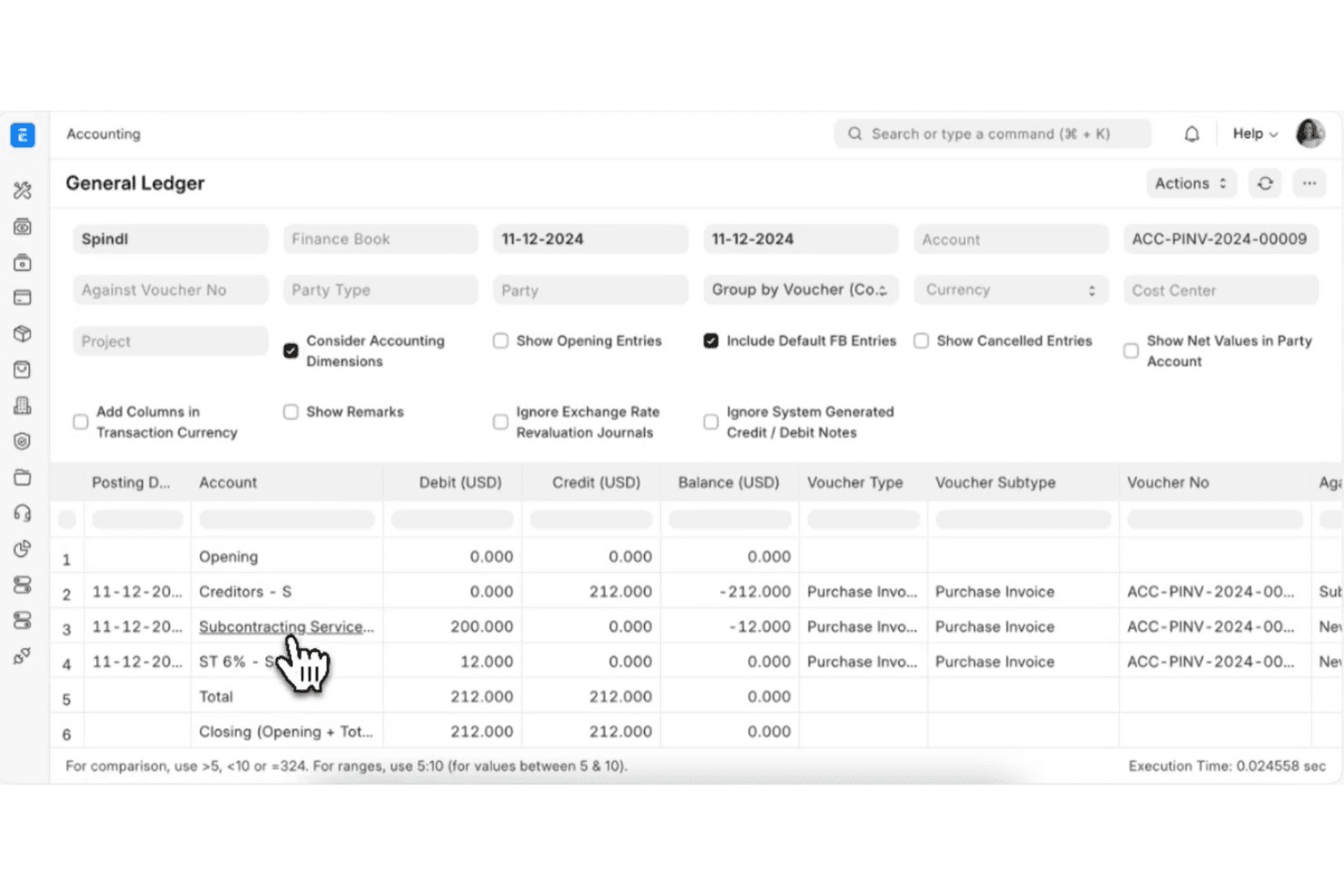
Manage general ledger, accounts payable, receivable, and automated bank reconciliation. Multi-currency support and real-time financial reporting help teams stay audit-ready.
Inventory Management
Track stock levels, warehouse transfers, and batch or serial numbers. Automated reorder points and valuation methods support complex inventory needs.
Manufacturing Module
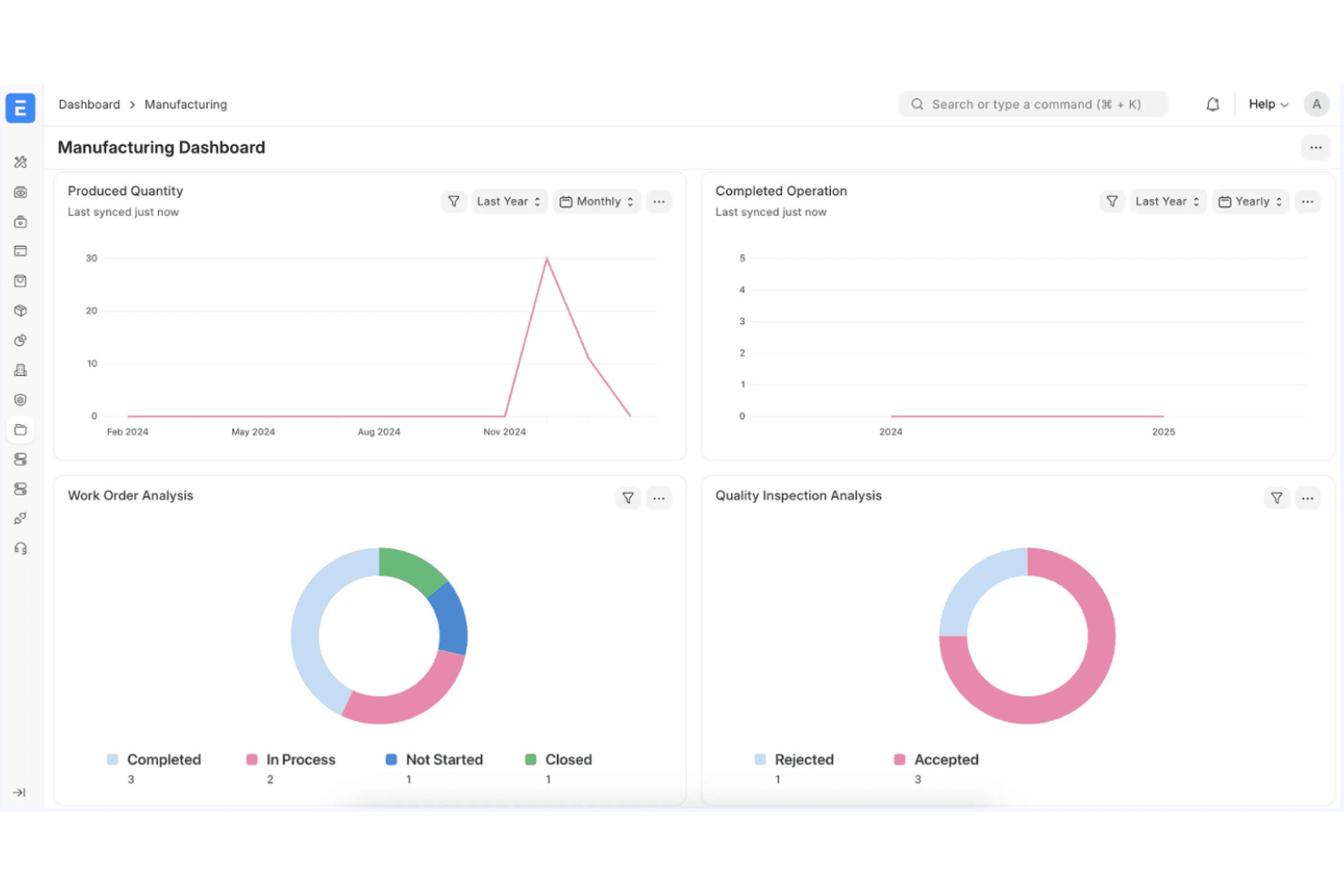
Handle bill of materials, work orders, and production planning from a single dashboard. Shop floor tracking and job cards help optimize manufacturing workflows.
HR and Payroll
Manage employee records, attendance, payroll, and leave policies in one place. Built-in payroll processing supports compliance with local tax rules.
Sales and Purchase Management
Create and track quotations, sales orders, purchase orders, and supplier invoices. Automated workflows streamline approvals and document management.
Project Management
Plan, assign, and monitor tasks, milestones, and budgets for multiple projects. Integrated timesheets and cost tracking connect project work to financials.
Ease of Use
ERPNext’s interface is functional but can feel less intuitive than other ERP software, especially for new users or non-technical teams. Navigation relies on a modular layout, which some users find overwhelming at first. Documentation and in-app guidance are improving, but setup and advanced configuration often require technical skills. Users who value flexibility and are comfortable with hands-on learning will appreciate the control ERPNext offers, but others may face a steeper onboarding process.
Integrations
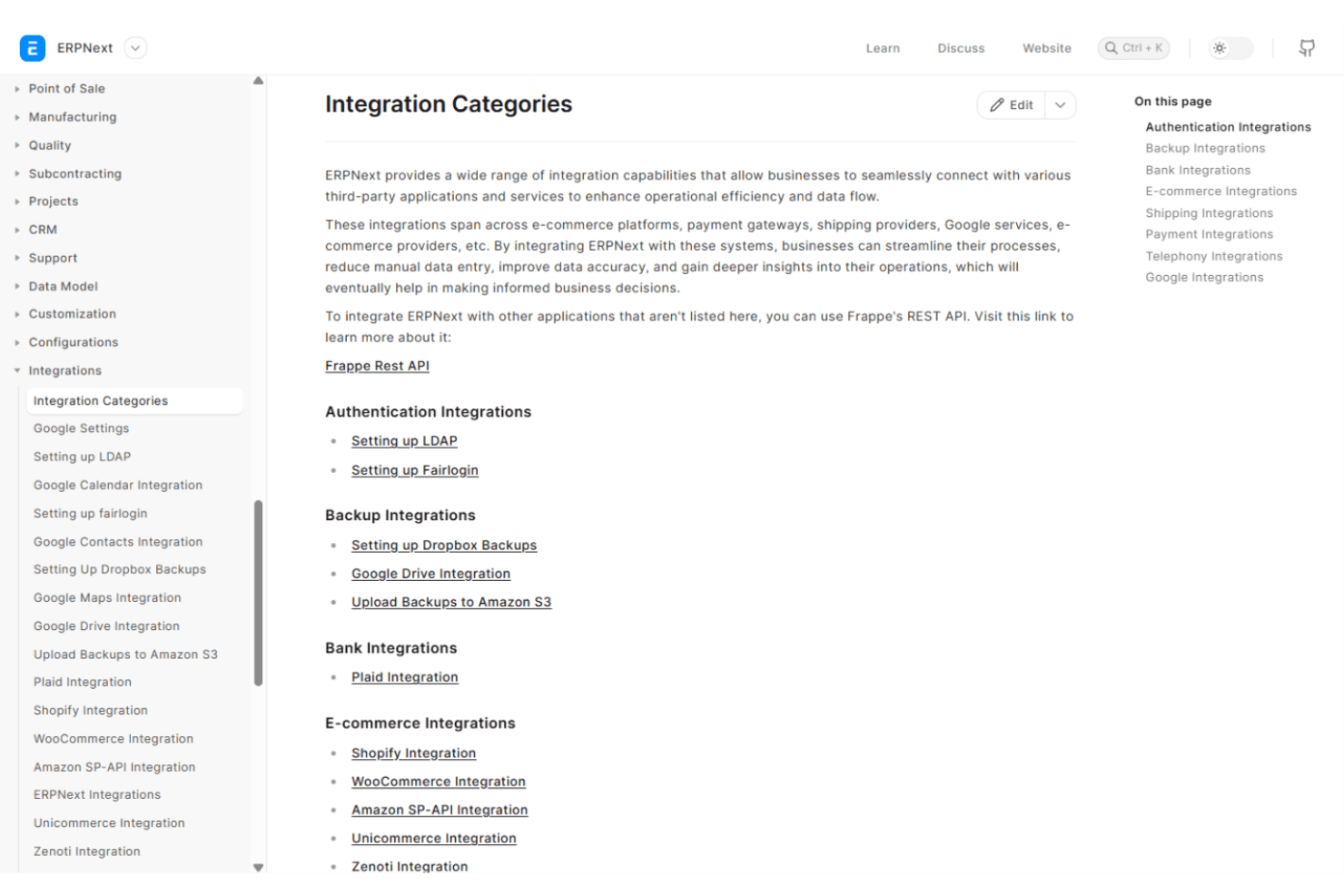
ERPNext integrates with PayPal, Stripe, Amazon Web Services, Google Drive, Dropbox, Slack, Shopify, WooCommerce, LDAP, and SMS gateways, among others.
ERPNext also offers a REST API and can connect with third-party integration tools for custom workflows.
ERPNext Specs
- Accounts Payable: Yes
- Accounts Receivable: Yes
- API: Yes
- Budgeting: Yes
- Calendar Management: Yes
- Compliance Tracking: No
- Customer Management: Yes
- Dashboard: Yes
- Data Export: Yes
- Data Import: Yes
- Data Visualization: Yes
- Expense Tracking: Yes
- External Integrations: Yes
- Financial Analysis: No
- Forecasting: No
- Inventory Tracking: Yes
- Multi-Currency: Yes
- Multi-User: Yes
- Notifications: Yes
- Order Management: Yes
- Payroll: Yes
- Project Management: Yes
- Purchase Orders: No
- Resource Management: Yes
- Scheduling: Yes
- Supplier Management: Yes
- Task Scheduling/Tracking: Yes
- Third-Party Plugins/Add-Ons: Yes
- Warehouse Management: No
- Workflow Management: Yes


