

Avis sur IFS : Avantages, Inconvénients, Fonctionnalités et Tarification
IFS se distingue par ses solutions ERP spécifiques à l’industrie, offrant une fonctionnalité approfondie pour les entreprises complexes. Il convient particulièrement aux organisations prêtes à investir dans la personnalisation et un support solide.

Nous évaluons les outils indépendamment ; les commissions aident à financer nos tests. Consultez notre politique de transparence et notre méthodologie.
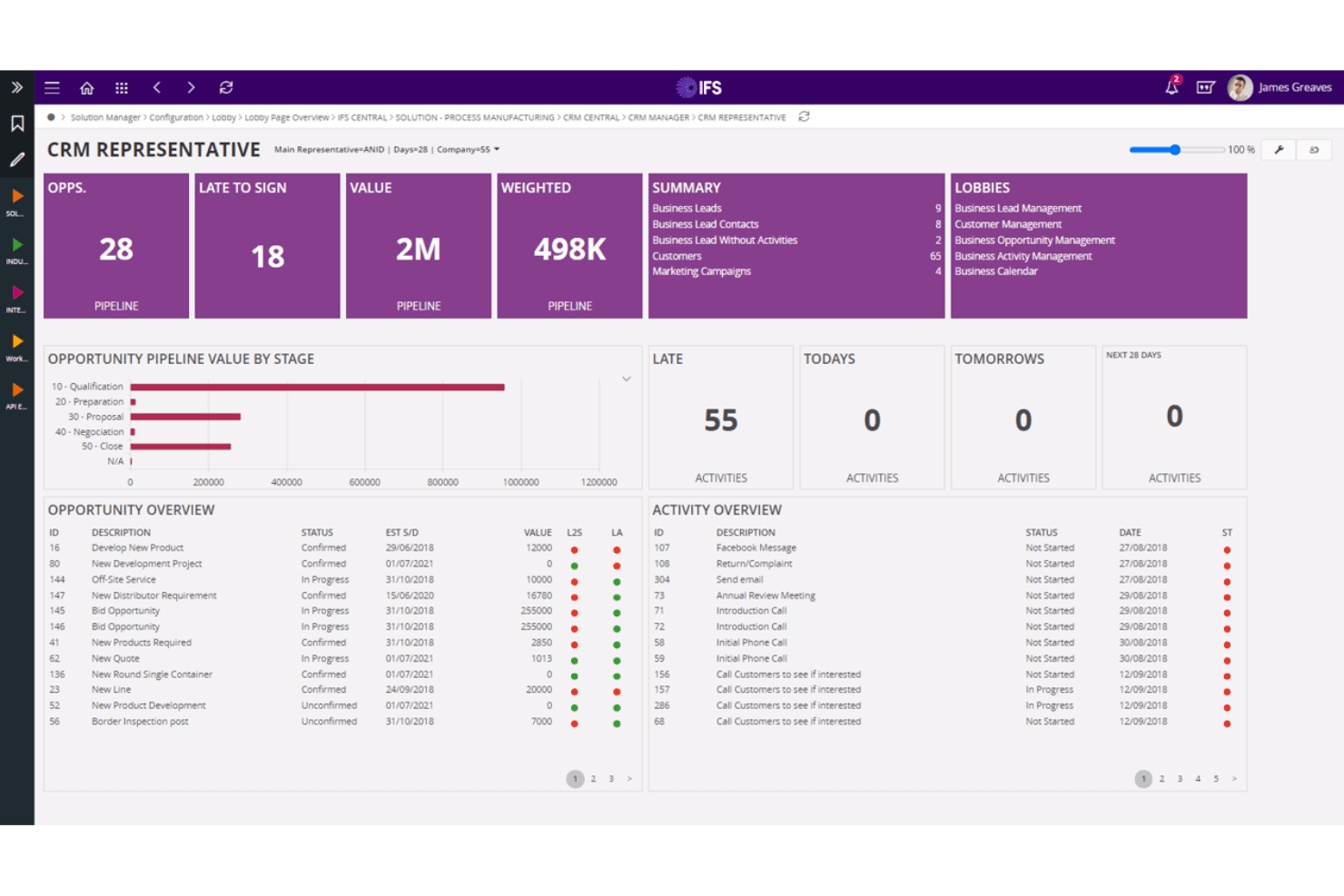
IFS is a CFO ERP software built for asset-intensive industries like manufacturing, aerospace, defense, and field service management. I'd consider it if your finance team needs deep project accounting, asset lifecycle tracking, and financial controls that map closely to how your operations actually run. Compared to SAP S/4HANA, IFS tends to deploy faster and comes with tighter industry-specific workflows out of the box—without the extensive customization overhead that SAP's broader platform typically requires.
IFS Evaluation Summary
4/5
- Pricing upon request
- Free demo available
Pourquoi faire confiance à nos recommandations de logiciels
6,700+
Reviews
20
Industry experts
16+
Evaluation factors
14
Years
Nos avis reflètent notre jugement indépendant — et non un argumentaire de vente. Découvrez comment nous restons transparents.
Pour ce guide, nous avons évalué les outils grâce à des tests pratiques et une recherche indépendante, en notant les outils selon nos critères de sélection.
Nos avis reflètent notre jugement éditorial humain, et non un argumentaire de vente.
IFS Overview
When judging IFS as an ERP software, its industry-specific depth, flexible deployment, and strong asset management set it apart for organizations in manufacturing, aerospace, and service industries. The interface is modern and intuitive, though onboarding can require significant planning. Pricing is competitive for large enterprises but may be high for smaller teams.
IFS’s integration capabilities and responsive support make it a strong choice for businesses prioritizing customization and scalability. If you’re selecting an ERP for complex, asset-heavy operations, IFS often outperforms alternatives, though it may underperform for companies seeking rapid, out-of-the-box implementation.
Pros
- Flexible deployment options including cloud and on-premises
- Strong asset management and project management capabilities
- Industry-specific modules for manufacturing, aerospace, and service sectors
Cons
- Customer service and support responsiveness can be inconsistent
- Implementation and onboarding require significant planning and resources
- User interface can be confusing for daily navigation
Is IFS Right For Your Needs?
Who Would be a Good Fit for IFS?
IFS is best suited for organizations with complex, asset-intensive operations or those requiring deep industry-specific functionality. Its strong project management, asset lifecycle management, and flexible deployment options make it a solid choice for sectors like manufacturing, aerospace, and utilities.
Large enterprises and teams managing field service or capital projects will find IFS’s advanced modules and customization options especially valuable, as the platform is designed to handle intricate workflows and regulatory requirements.
- Large EnterprisesIFS scales to support multi-site, global operations with complex needs.
- Field Service TeamsIFS enables real-time scheduling, dispatch, and mobile workforce management.
- Project-Based OrganizationsIFS’s project management features support complex, multi-phase projects.
- Utilities ProvidersIFS manages asset maintenance, field service, and regulatory reporting.
- Aerospace and DefenseIFS offers compliance tools and asset tracking for regulated environments.
- Manufacturing EnterprisesIFS supports advanced production planning, supply chain, and quality management.
Who Would be a Bad Fit for IFS?
IFS may not be the best choice for smaller businesses, startups, or organizations seeking rapid deployment and minimal customization. Its implementation complexity and resource requirements can outweigh the benefits for teams with straightforward needs or limited IT support.
Companies in industries with simple workflows or those prioritizing quick, out-of-the-box solutions may find IFS’s depth unnecessary.
- Companies With Limited ITIFS requires significant IT resources for setup and maintenance.
- HR-Only DepartmentsIFS’s core strengths don’t focus on standalone HR needs.
- NonprofitsIFS’s advanced modules are unnecessary for simple fund management.
- Retail ChainsIFS lacks specialized retail inventory and point-of-sale features.
- StartupsIFS’s long implementation timeline doesn’t suit fast-moving teams.
- Small BusinessesIFS’s complexity and cost are excessive for basic operations.
Comment nous testons et évaluons les outils
Nous avons passé des années à construire, affiner et améliorer notre système de test et d’évaluation des logiciels. Notre grille vise à saisir toute la subtilité de la sélection logicielle et les facteurs déterminant l’efficacité d’un outil, en mettant l’accent sur les aspects essentiels du processus de décision. Ci-dessous, vous pouvez voir exactement comment notre test et notre notation fonctionnent selon sept critères. Cela nous permet de fournir une évaluation impartiale des logiciels sur la base des fonctionnalités principales, des fonctionnalités distinctives, de la facilité d’utilisation, de la prise en main, du service client, des intégrations, des avis clients et du rapport qualité/prix.
Fonctionnalité principale (25 % de la note finale)
Le point de départ de notre évaluation est toujours la fonctionnalité principale de l’outil. Dispose-t-il des caractéristiques de base attendues ? Certaines de ces fonctions de base sont-elles réservées aux plans tarifaires supérieurs ? Fondamentalement, nous attendons d’un outil qu’il soit au moins l’égal de ses concurrents en capacités essentielles.
Fonctionnalités Distinctives (25 % de la note finale)
Ensuite, nous évaluons les fonctionnalités rares ou uniques, allant au-delà de la fonctionnalité principale habituellement trouvée dans ce type d’outil. Un score élevé traduit des fonctionnalités spécialisées ou innovantes qui rendent le produit plus rapide, plus efficace, ou apportent une valeur supplémentaire à l’utilisateur. Nous évaluons aussi la facilité d’intégration avec d’autres outils courants de l’écosystème technologique pour étendre les capacités du logiciel. Les outils offrant de nombreuses intégrations natives, des connexions tierces et un accès API pour des intégrations personnalisées obtiennent le meilleur score.
Facilité d’utilisation (10 % de la note finale)
Nous considérons la rapidité et la facilité d’exécution des tâches essentielles avec l’outil. Un logiciel bien conçu, intuitif, proposant des applications mobiles, des modèles et permettant de simplifier des tâches complexes obtient la meilleure note.
Prise en Main (10 % de la note finale)
Nous savons combien il est important d’adopter rapidement une nouvelle plateforme, c’est pourquoi nous évaluons la facilité d’apprentissage et d’utilisation du logiciel avec un minimum de formation. Nous évaluons la rapidité de mise en place d’un nouveau membre d’équipe sans expérience. Un outil ayant un bon score requiert peu voire aucun support pour la prise en main.
Service Client (10 % de la note finale)
Nous évaluons s’il est rapide et facile d’obtenir de l’aide ou de dépanner par téléphone, chat en direct ou base de connaissances. Les outils et entreprises offrant une assistance en temps réel obtiennent le meilleur score, tandis que les chatbots sont moins bien notés.
Avis Clients (10 % de la note finale)
Au-delà de nos propres tests et évaluations, nous prenons en compte le net promoter score fourni par les clients actuels et passés. Nous vérifions leur probabilité de recommander l’outil et d’en refaire le choix pour ses fonctionnalités principales. Un logiciel bien noté se traduit par un net promoter score élevé.
Rapport Qualité/Prix (10 % de la note finale)
Enfin, en tenant compte de tous les autres critères, nous comparons le prix moyen des plans d’entrée de gamme avec les fonctionnalités principales, et le rapport de valeur avec les autres critères d’évaluation. Les logiciels offrant plus pour moins obtiennent la meilleure note.
Core Features
Asset Management
Track, maintain, and optimize the lifecycle of physical assets with real-time data and predictive maintenance tools. This feature is especially valuable for industries with heavy equipment or infrastructure.
Project Management
Plan, execute, and monitor complex projects with integrated budgeting, scheduling, and resource allocation. Users can manage multi-phase projects and track progress against milestones.
Field Service Management
Schedule, dispatch, and support mobile workforces with real-time updates and mobile access. This helps teams deliver service efficiently and capture data from the field.
Manufacturing Management
Control production planning, shop floor operations, and quality assurance in one system. Users can manage everything from materials to finished goods with traceability.
Financial Management
Handle accounting, budgeting, and financial reporting across multiple entities and currencies. This supports compliance and provides CFOs with consolidated financial visibility.
Supply Chain Management
Manage procurement, inventory, and logistics with end-to-end visibility. Users can optimize stock levels and supplier relationships to reduce costs and delays.
Ease of Use
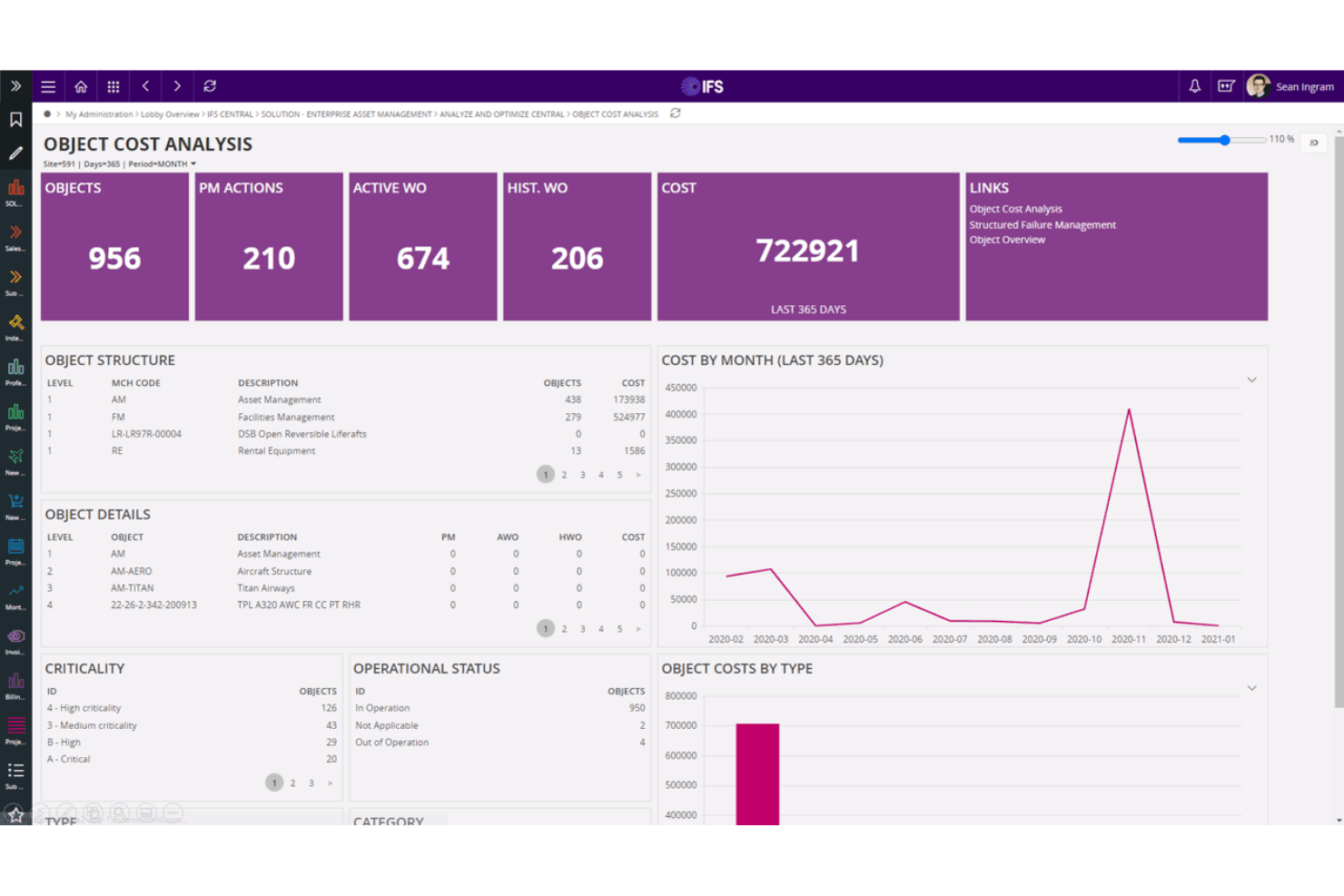
IFS offers a modern, customizable interface, but users often report that navigation can feel complex, especially during initial setup and daily operations. The platform’s depth and flexibility require significant onboarding and training, which can slow adoption for teams unfamiliar with ERP systems.
However, once configured, IFS provides powerful dashboards and workflow tools that experienced users appreciate for managing detailed, industry-specific processes.
Integrations
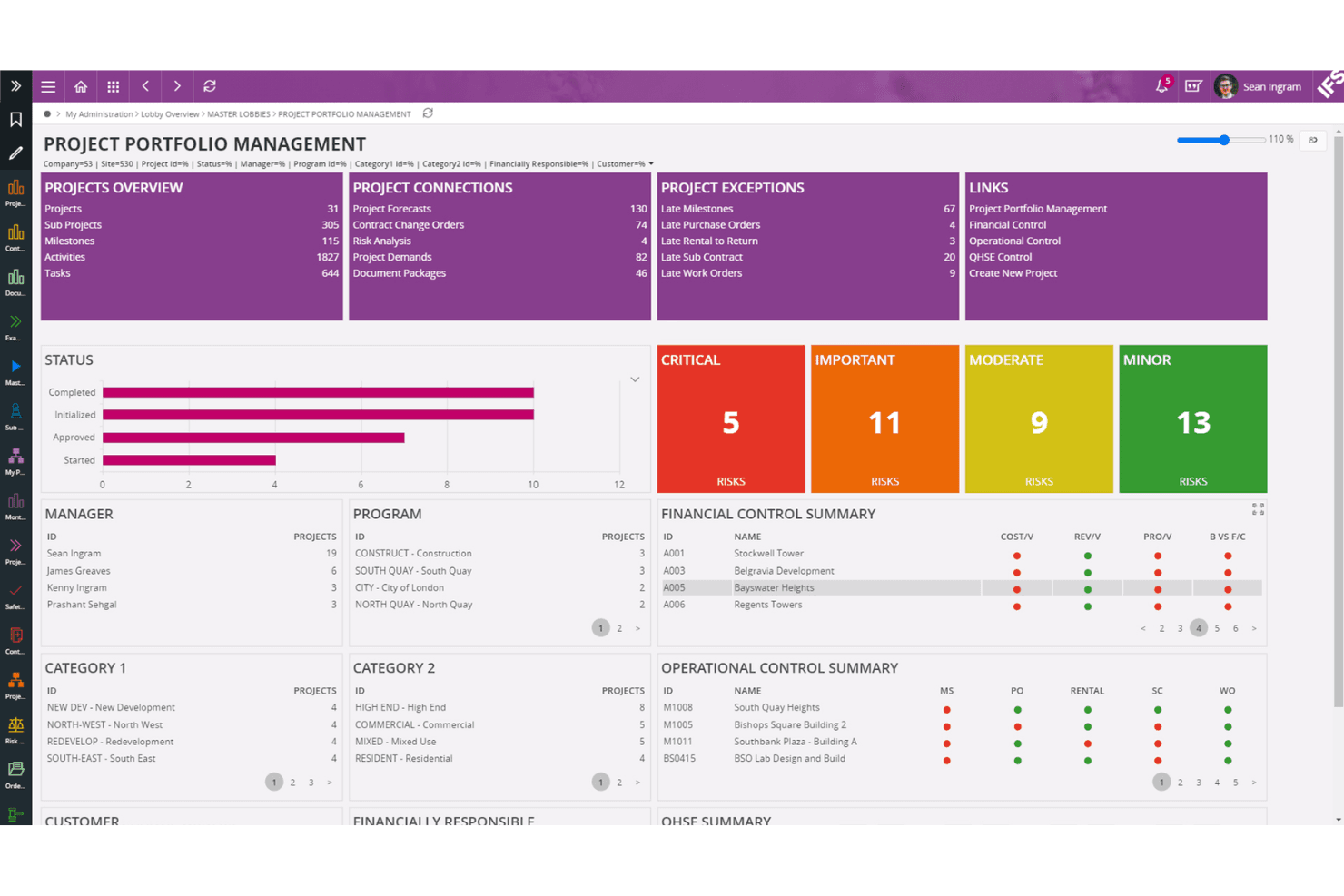
IFS integrates with enterprise systems like Salesforce, SAP, Oracle, and ServiceNow, among others, typically through APIs, middleware, and partner solutions.
IFS also offers a robust API and supports connections with third-party tools to enable custom workflows and integrations.
IFS Specs
- Accounts Payable: Yes
- Accounts Receivable: Yes
- API: Yes
- Budgeting: Yes
- Calendar Management: No
- Compliance Tracking: Yes
- Customer Management: Yes
- Dashboard: Yes
- Data Export: Yes
- Data Import: Yes
- Data Visualization: Yes
- Expense Tracking: Yes
- External Integrations: Yes
- Financial Analysis: Yes
- Forecasting: Yes
- Inventory Tracking: Yes
- Multi-Currency: Yes
- Multi-User: Yes
- Notifications: Yes
- Order Management: Yes
- Payroll: No
- Project Management: Yes
- Purchase Orders: Yes
- Resource Management: Yes
- Scheduling: Yes
- Supplier Management: Yes
- Task Scheduling/Tracking: Yes
- Third-Party Plugins/Add-Ons: Yes
- Warehouse Management: Yes
- Workflow Management: Yes


