

I 10 migliori ERP per il settore dei servizi recensiti nel 2026

I migliori ERP per il settore dei servizi: selezione


Trovare il miglior software di pianificazione delle risorse aziendali (ERP) per il settore dei servizi è fondamentale per le aziende che puntano a semplificare le proprie operazioni e migliorare la soddisfazione dei clienti. Tuttavia, con diverse opzioni disponibili, ricercare ogni software per trovare quello giusto può essere difficile e richiedere molto tempo.
Per aiutare i team nella loro ricerca, ho utilizzato la mia vasta esperienza nel software ERP e nelle operazioni finanziarie per testare e confrontare alcuni dei migliori software ERP per il settore dei servizi. Che si tratti di una SMB o di una grande azienda, potete contare sul fatto che le mie recensioni approfondite vi guideranno verso la vostra prossima soluzione, aiutandovi a migliorare l'efficienza, ottenere informazioni in tempo reale e offrire esperienze di servizio eccezionali.
Perché fidarsi dei nostri consigli sui software
Le nostre recensioni riflettono il nostro giudizio indipendente, non un discorso di vendita. Scopri come manteniamo la trasparenza.
Per questa guida, abbiamo valutato gli strumenti attraverso test pratici e ricerche indipendenti, assegnando un punteggio agli strumenti in base ai nostri criteri di selezione.
Le nostre recensioni riflettono il nostro giudizio editoriale umano, non un discorso di vendita.
Riepilogo dei migliori ERP per il settore dei servizi
| Tool | Best For | Trial Info | Price | ||
|---|---|---|---|---|---|
| 1 | Ideale per il consolidamento multi-entità | Demo gratuita disponibile | Prezzo su richiesta | Website | |
| 2 | Ideale per la gestione di portafogli di servizi complessi | Prova gratuita disponibile | Da $16/utente/mese (fatturazione annuale) | Website | |
| 3 | Ideale per integrazioni estese con app | Demo gratuita disponibile | $9.10/mese | Website | |
| 4 | Ideale per uno spazio di lavoro online gratuito con gestione delle attività | Prova gratuita di 15 giorni + piano gratuito + demo gratuita disponibile | Da $49/organizzazione/mese (fatturazione annuale) | Website | |
| 5 | Ideale per aziende con esigenze orientate ai servizi | Not available | Prezzi su richiesta | Website | |
| 6 | Ideale per soluzioni ERP e PSA native Salesforce | Demo gratuita disponibile | Prezzo su richiesta | Website | |
| 7 | Ideale per la gestione finanziaria multi-valuta | Demo gratuita disponibile | Prezzo su richiesta | Website | |
| 8 | Ideale per soluzioni specifiche di settore con funzionalità IA | Demo gratuita disponibile | Prezzi su richiesta | Website | |
| 9 | Ideale per processi incentrati sulle persone e soluzioni HCM | Demo gratuita disponibile | Prezzo su richiesta | Website | |
| 10 | Il migliore per la gestione completa del lavoro nei servizi professionali | Prova gratuita di 14 giorni + demo gratuita disponibile | Da $19.90/utente/mese (fatturati annualmente) | Website |
Recensioni dei migliori ERP per il settore dei servizi
Le seguenti analisi approfondite forniscono una panoramica di ciascun software ERP pensato per il settore dei servizi. Vi illustrerò i pro e i contro di ogni strumento, le sue funzionalità e i casi d’uso migliori per aiutarvi a prendere una decisione informata.

Ideale per il consolidamento multi-entità

DualEntry è un ERP potenziato dall'IA costruito attorno alla contabilità, coprendo libro mastro generale, gestione multi-entità, conti da pagare e da ricevere, riconoscimento dei ricavi, gestione della chiusura e budgeting all'interno di un'unica piattaforma.
Per chi è ideale DualEntry?
DualEntry è particolarmente adatto a team finanziari di medie e grandi aziende che gestiscono più entità, filiali o unità aziendali e necessitano di una contabilità centralizzata.
Perché ho scelto DualEntry
Ho incluso DualEntry tra le mie scelte principali perché la sua consolidazione multi-entità è tra le più automatizzate che abbia mai visto in un ERP. Gestisce le transazioni tra società contabilizzando contemporaneamente AR e AP su entrambi i lati, eliminando le riconciliazioni manuali di fine mese. Le conversioni valutarie, le eliminazioni infragruppo e le registrazioni degli aggiustamenti cumulativi sulle traduzioni vengono eseguite automaticamente a fine periodo, con tassi di cambio aggiornati applicati senza dover effettuare ricerche manuali o inserire scritture contabili. Mi piace anche la possibilità di passare dalla visualizzazione finanziaria a livello di entità a quella consolidata con un solo clic, tutto utilizzando gli stessi dati sottostanti.
Funzionalità chiave di DualEntry
- Riconoscimento dei ricavi: Automatizza i piani di ricavo su più contratti utilizzando regole conformi ad ASC 606 integrate direttamente nel libro mastro generale.
- Fatturazione a sottoscrizione: Crea e gestisci piani di fatturazione ricorrente con fatturazione automatizzata collegata al libro mastro generale.
- Budgeting e previsioni: Costruisci e gestisci budget per dipartimento o entità con monitoraggio delle variazioni rispetto ai dati reali in tempo reale.
- Gestione della chiusura finanziaria: Esegui un processo di chiusura strutturato e guidato da checklist con assegnazione dei compiti, tracciamento degli stati e tracce di audit.
Pros and Cons
Pros:
- Il riconoscimento dei ricavi automatizzato garantisce la conformità agli standard
- Supporta operazioni multi-entità e multi-valuta
- Funzionalità avanzate di IA supportano compiti contabili complessi
Cons:
- Essendo un ERP, può offrire più funzionalità di quelle necessarie per esigenze contabili semplici
- Le opzioni di personalizzazione richiedono una configurazione accurata

VOGSY
Ideale per la gestione di portafogli di servizi complessi
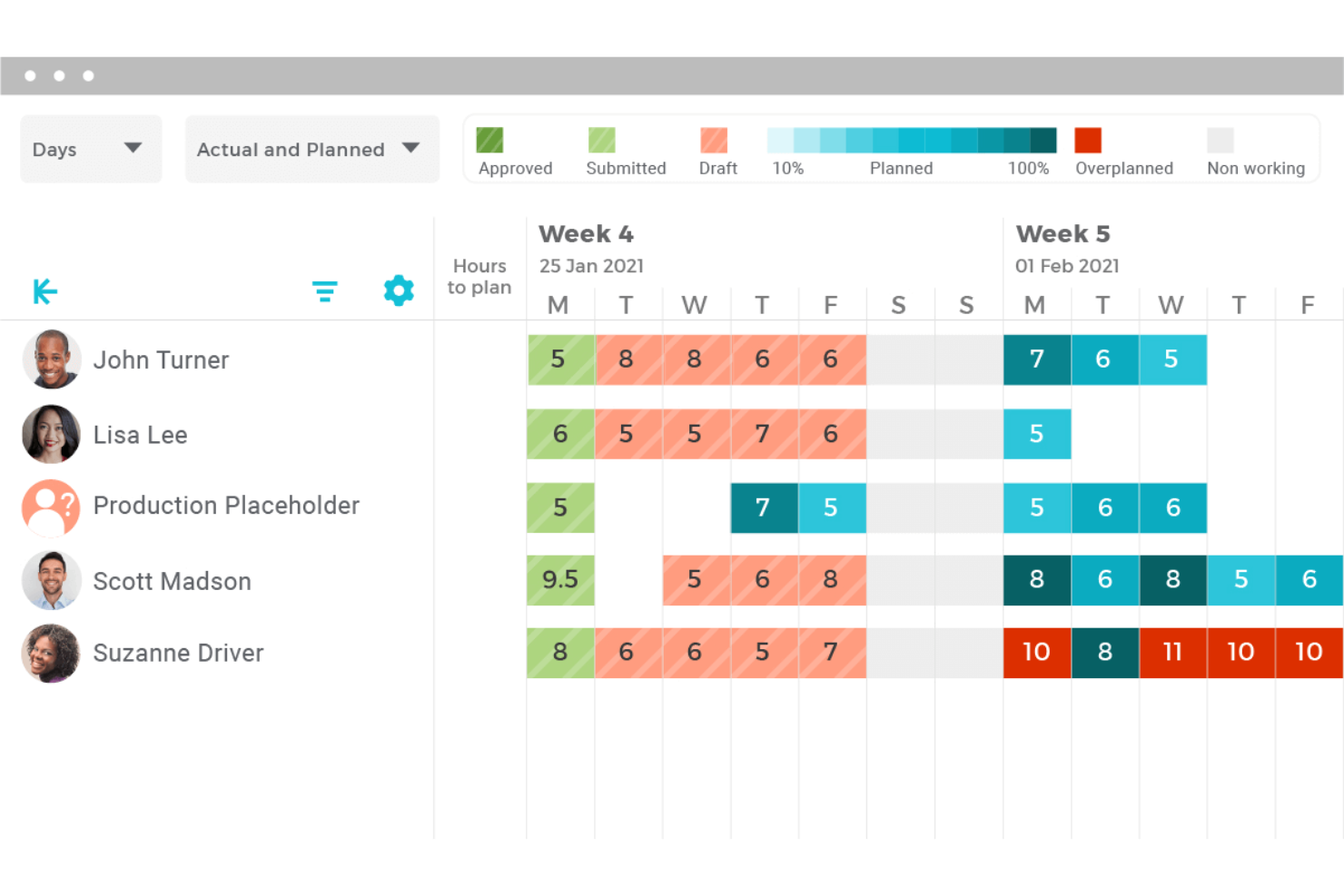
VOGSY è un ERP basato su progetti, creato per società di servizi professionali, che copre l'intero ciclo dalla lead al pagamento con contabilità di progetto, gestione delle risorse, fatturazione multi-entità e consolidamento finanziario globale su più valute e paesi.
Per chi è più adatto VOGSY?
VOGSY è ideale per società di servizi professionali di medie dimensioni con 50-1.000 dipendenti che operano su più entità, valute o aree geografiche.
Perché ho scelto VOGSY
VOGSY si guadagna un posto tra i migliori nella mia lista perché nessun altro ERP gestisce la complessità di un portafoglio multi-servizio e multi-entità con la stessa semplicità. Mi piace che sia possibile gestire un singolo progetto con fatturazioni miste—combinando T&M, prezzo fisso, retainer e fatturazione in abbonamento in un unico incarico—cosa per cui la maggior parte degli ERP obbliga a trovare delle soluzioni alternative. La funzione di budgeting dal basso permette di calcolare i prezzi usando tariffe specifiche per dipendente invece che schede tariffarie generiche, così le stime di margine restano valide quando inizia l'esecuzione. Insieme al monitoraggio del WIP che segnala i lavori non ancora fatturati prima che passino inosservati, si ottiene un controllo finanziario reale su un ampio portafoglio di servizi diversificati.
Funzionalità principali di VOGSY
- Pianificazione della capacità delle risorse: Visualizza la disponibilità di tutto il team, le competenze e i tassi di utilizzo per pianificare le persone giuste su progetti attivi e futuri.
- Riconoscimento dei ricavi: Automatizza le regole di riconoscimento dei ricavi a livello di progetto per garantire una reportistica finanziaria conforme e accurata in tutti i tipi di fatturazione.
- Consolidamento finanziario multi-entità: Consolida i dati del P&L su più entità legali e valute in una singola visualizzazione in tempo reale.
- Gestione della pipeline delle opportunità: Monitora le trattative, le previsioni di prenotazione e trasforma le opportunità vinte direttamente in progetti fatturabili senza reinserire i dati.
Pros and Cons
Pros:
- Strumenti solidi per la pianificazione delle risorse
- Configurazione e onboarding rapidi
- Panoramica finanziaria globale in tempo reale
Cons:
- Le opzioni di personalizzazione di base risultano restrittive
- Funzionalità mobile limitata
New Product Updates from VOGSY
VOGSY Adds Practices and Financial Totals in Planning Views
VOGSY adds a new Practices layer for consolidated reporting and displays revenue and cost totals directly in planning views so you get high-level insights and instant financial context without extra steps. For more information, visit VOGSY’s official site.
 .
.
Odoo
Ideale per integrazioni estese con app
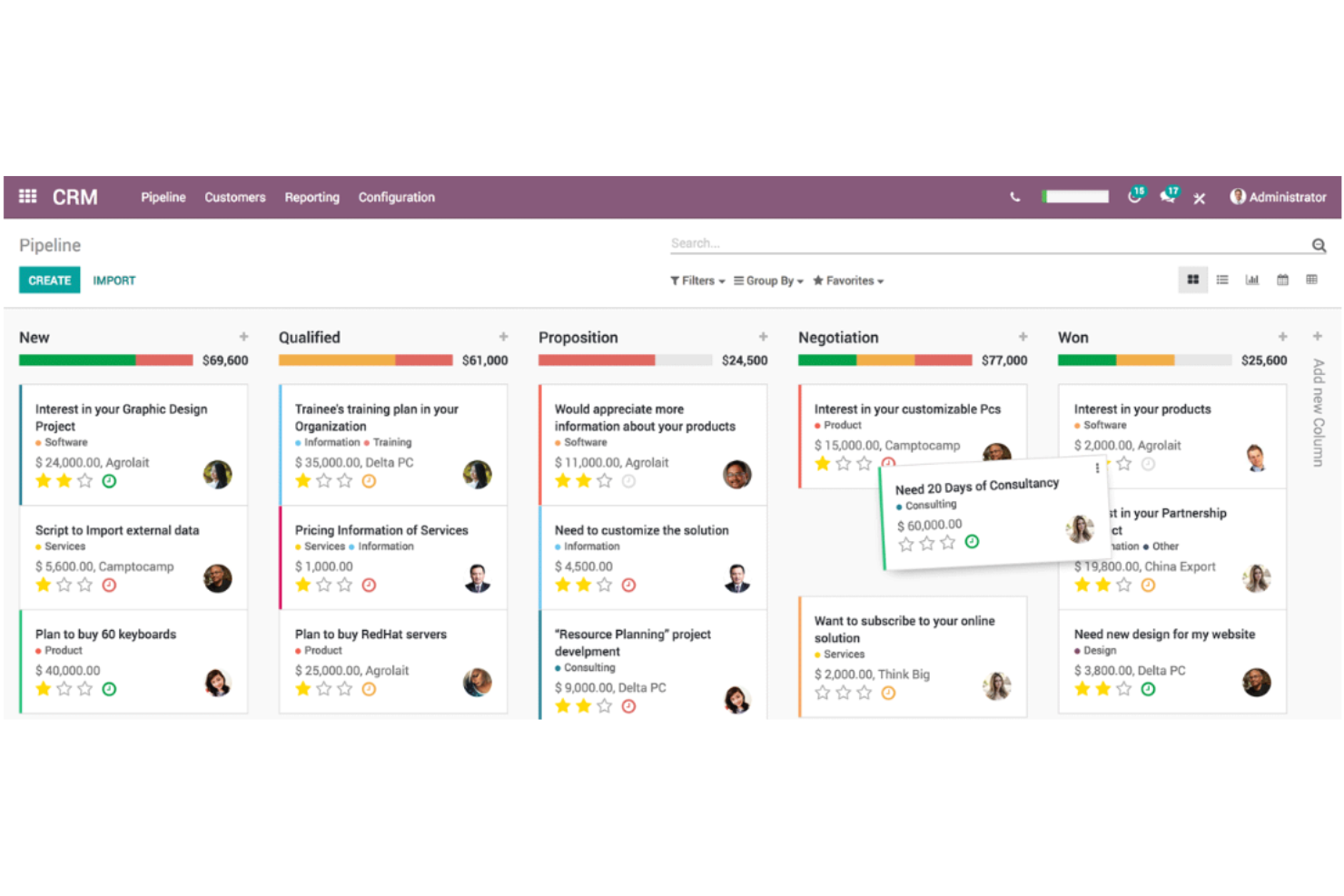
Odoo è una piattaforma ERP open-source che copre contabilità, gestione dei progetti, fogli presenze, servizi sul campo, helpdesk, CRM, risorse umane e vendite attraverso una suite di app modulari e installabili con un clic, pensata per le aziende orientate ai servizi.
Per chi è Odoo?
Odoo è adatto a piccole e medie imprese di servizi che hanno bisogno di un ERP completamente modulare, costruibile app dopo app man mano che le loro operazioni crescono.
Perché ho scelto Odoo
Ho incluso Odoo tra le mie migliori scelte perché nessun altro ERP in questo elenco si avvicina alla sua ampiezza di copertura delle app. Con oltre 40.000 app nel suo marketplace, puoi collegare Odoo praticamente a qualsiasi strumento che la tua azienda di servizi già utilizza, da Shopify e Amazon a Stripe e fornitori di VoIP, senza dover fare affidamento su middleware di terze parti. Mi piace anche che Odoo Studio consenta di creare app personalizzate direttamente all'interno della piattaforma, quindi quando un connettore non esiste già, non sei bloccato.
Funzionalità principali di Odoo
- Gestione dei servizi sul campo: Pianifica attività, traccia tempi e materiali e gestisci ordini di lavoro in loco tramite un'app mobile.
- Fogli presenze: Registra ore fatturabili e non fatturabili direttamente su progetti o compiti per una fatturazione cliente precisa.
- Helpdesk: Crea, assegna e traccia ticket di supporto clienti con fasi configurabili e politiche SLA.
- Gestione dei progetti: Organizza il lavoro di servizio in compiti, imposta scadenze e monitora i progressi usando le visualizzazioni Kanban o Gantt.
Pros and Cons
Pros:
- Ampia libreria di app
- Flessibilità open-source
- Forte supporto della community
Cons:
- Configurazione iniziale complessa
- Costi aggiuntivi per alcune funzionalità

Bitrix24
Ideale per uno spazio di lavoro online gratuito con gestione delle attività
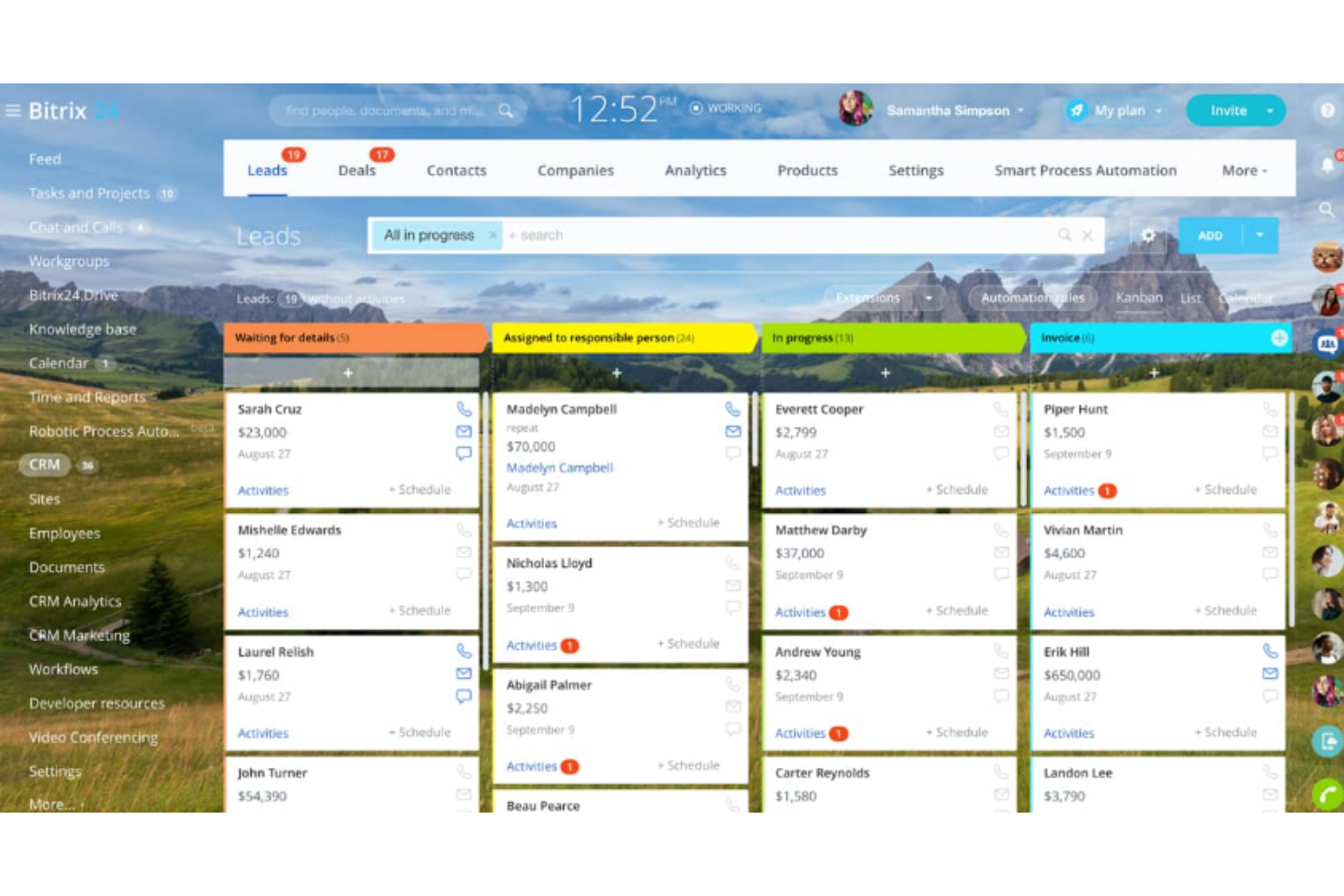
Bitrix24 è uno spazio di lavoro online tutto-in-uno che riunisce CRM, gestione di attività e progetti, strumenti HR, automazione dei flussi di lavoro e fatturazione su un'unica piattaforma a tariffa fissa.
Per chi è ideale Bitrix24?
Bitrix24 è una scelta solida per le piccole e medie imprese di servizi che necessitano di CRM, gestione progetti e strumenti di collaborazione del team senza dover pagare per utente.
Perché ho scelto Bitrix24
Ho incluso Bitrix24 tra le mie scelte migliori perché è una delle poche piattaforme che offre ai team di servizi un vero piano gratuito utilizzabile — non solo un'anteprima ridotta. Il piano gratuito include bacheche Kanban, diagrammi di Gantt, checklist delle attività e monitoraggio del tempo, il che significa che un piccolo team può assegnare il lavoro ai clienti, monitorare le consegne e registrare le ore senza spendere nulla. Apprezzo anche il modello di prezzo a tariffa fissa dei piani a pagamento, che non penalizza la crescita del team. Per le aziende di servizi che gestiscono più progetti per clienti contemporaneamente, gli strumenti di gestione del carico di lavoro e reportistica delle attività danno ai responsabili di team una visibilità chiara su chi sta facendo cosa.
Caratteristiche principali di Bitrix24
- Gestione pipeline CRM: Traccia lead, trattative e contatti dei clienti attraverso pipeline di vendita personalizzabili con cronologia completa delle attività.
- Creazione di preventivi e fatture: Crea e invia preventivi e fatture direttamente dalle schede delle trattative CRM senza cambiare strumento.
- Automazione dei flussi di lavoro: Crea processi di approvazione basati su regole per richieste di servizi, firme di documenti e passaggi di consegna delle attività.
- Gestione delle assenze: Tieni traccia delle richieste di permesso, orari di lavoro e approvazioni delle assenze in un'unica vista centralizzata.
Pros and Cons
Pros:
- Piano gratuito completo
- Set di funzionalità molto ricco
- Strumenti potenziati dall'AI
Cons:
- Curva di apprendimento ripida
- Il supporto clienti può essere lento

Ideale per aziende con esigenze orientate ai servizi
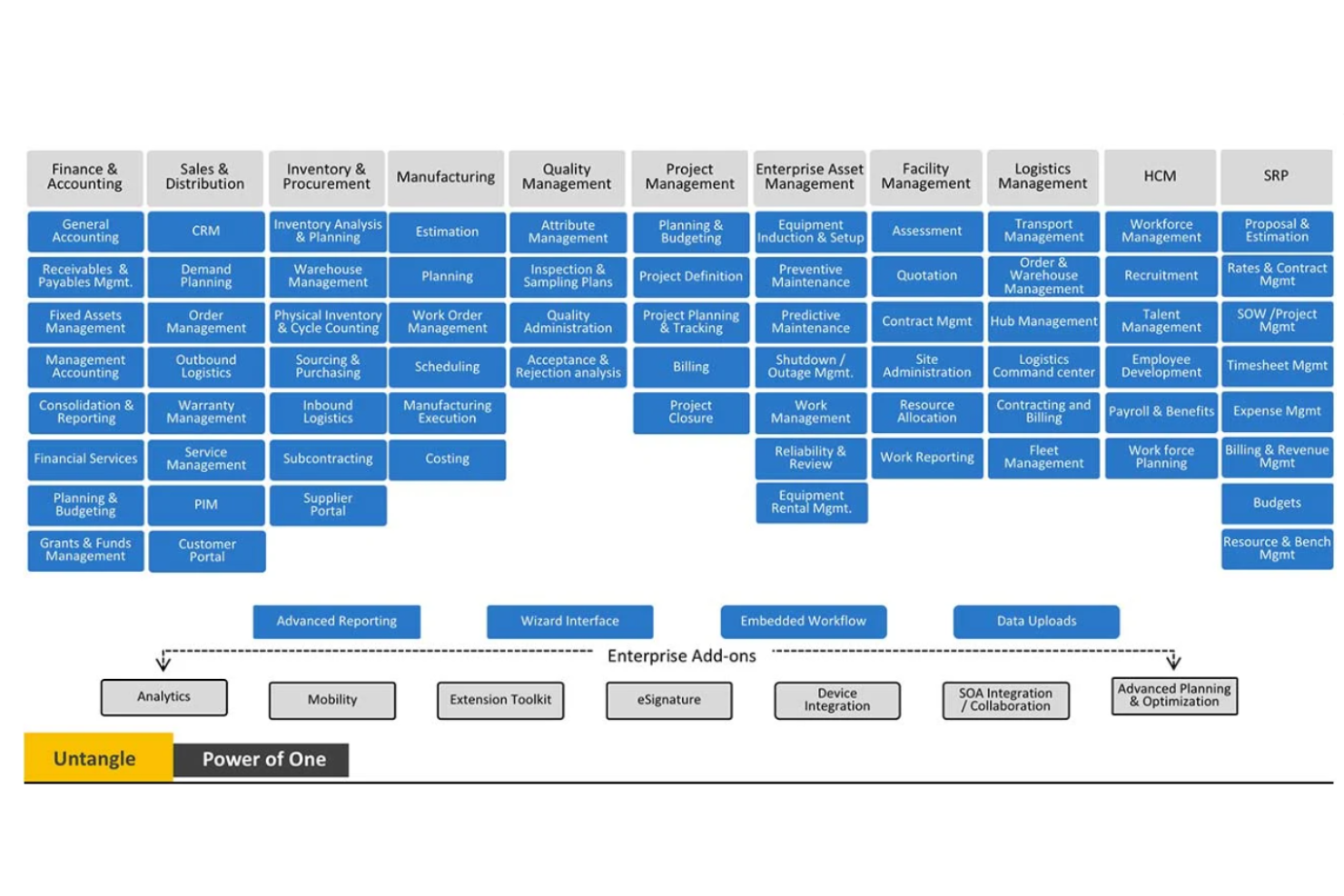
Ramco ERP è una piattaforma cloud-native di pianificazione delle risorse aziendali pensata per organizzazioni orientate ai servizi, con moduli dedicati che coprono gestione dei progetti, risorse umane e paghe, finanza, gestione della forza lavoro e operazioni dei servizi professionali.
Per chi è più indicato Ramco ERP?
Ramco ERP è particolarmente adatto a imprese di servizi di medie e grandi dimensioni—come agenzie di personale, società di servizi professionali e aziende di gestione delle strutture—che necessitano di un ERP specifico per il proprio settore.
Perché ho scelto Ramco ERP
Ho incluso Ramco ERP tra le mie principali scelte perché è una delle poche piattaforme ERP progettate fin dall'inizio per organizzazioni orientate ai servizi e non adattate da un modello produttivo. Ciò che trovo particolarmente interessante è il suo framework di Services Resource Planning (SRP), che collega la gestione dei contratti, l'esecuzione dei progetti, la gestione delle ore lavorate e la fatturazione dei clienti in un unico luogo—così, ad esempio, uno studio di consulenza può gestire l'intero ciclo da avvio progetto a fatturazione senza cambiare sistema. Apprezzo anche che il motore di fatturazione supporti configurazioni di tariffari per cliente e per ruolo, includendo progetti a milestone, a tempo e materiali e T&M con tetto massimo, coprendo così l'intero spettro di strutture di fatturazione che la maggior parte delle aziende di servizi deve gestire.
Caratteristiche principali di Ramco ERP
- Payroll multi-paese: Gestisce l'elaborazione delle paghe su più paesi in un unico sistema, inclusi adempimenti fiscali e detrazioni obbligatorie.
- Gestione CRM dal contatto al contratto: Tiene traccia dell'intero ciclo di vendita dal primo contatto fino al contratto firmato, integrandosi direttamente con l'esecuzione del progetto.
- Gestione spese e rimborsi: Permette ai dipendenti di inviare e monitorare le richieste di rimborso spese digitalmente, con workflow di approvazione e integrazione diretta nella rilevazione dei costi di progetto.
- Dashboard e analisi per dirigenti: Fornisce dashboard finanziari e operativi in tempo reale e basati sui ruoli, dedicati ai decisori senior, su progetti, ricavi e organico.
Pros and Cons
Pros:
- Analisi guidate da intelligenza artificiale
- Elaborazione dati in tempo reale
- Moduli completi
Cons:
- Curva di apprendimento più elevata
- Opzioni di personalizzazione limitate
Certinia
Ideale per soluzioni ERP e PSA native Salesforce
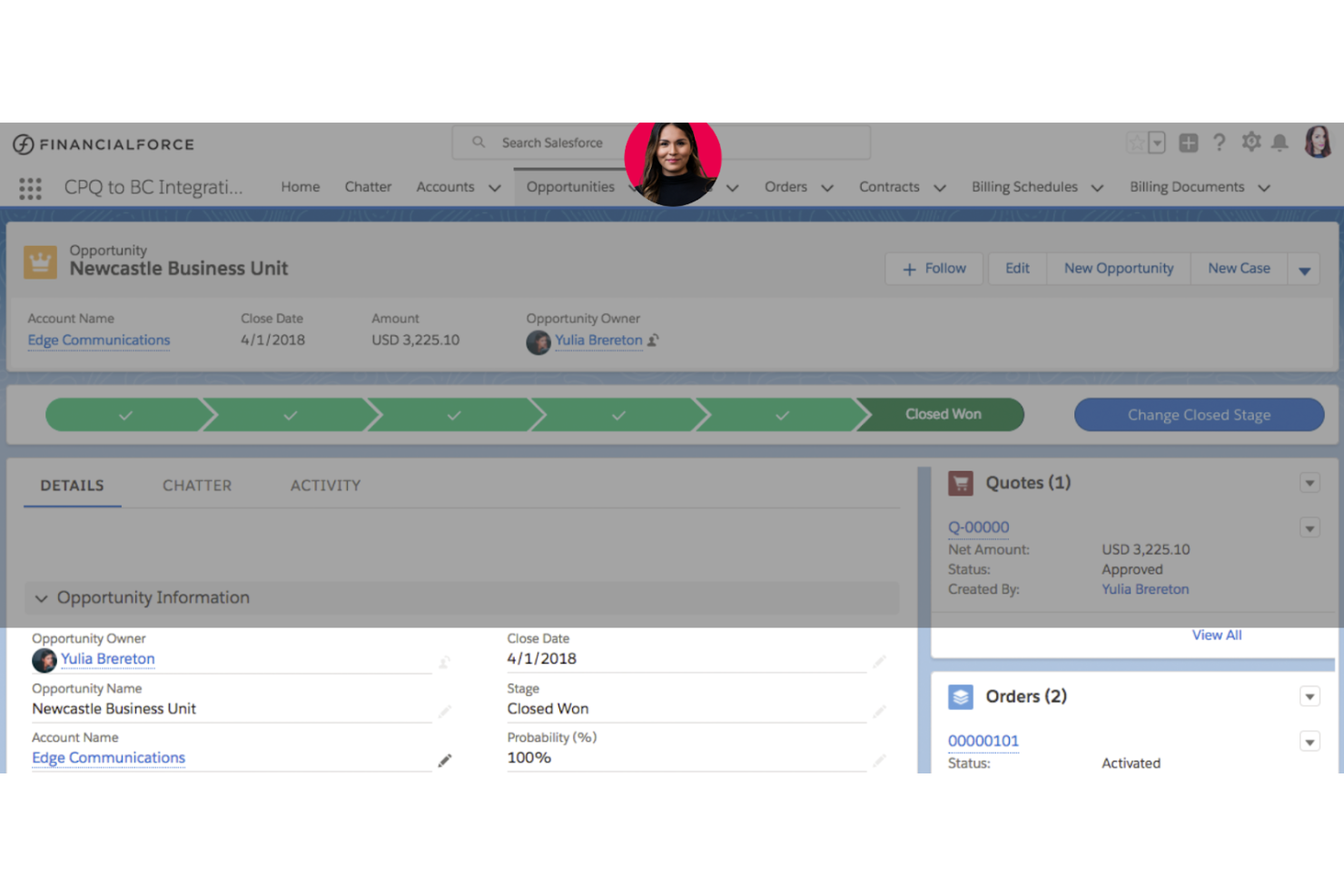
Certinia è un ERP cloud nativo su Salesforce che combina gestione finanziaria, automazione dei servizi professionali e gestione del successo del cliente in un'unica piattaforma.
Per chi è ideale Certinia?
Certinia è particolarmente adatto per aziende di servizi professionali di livello medio e enterprise che utilizzano già Salesforce e necessitano di ERP e PSA in un'unica soluzione.
Perché ho scelto Certinia
Ho incluso Certinia tra le mie scelte principali perché nessun altro ERP in questo elenco è costruito direttamente su Salesforce come Certinia. Non si tratta di un dettaglio secondario. Quando CRM ed ERP condividono lo stesso modello di dati, ogni ora registrata, ogni costo sostenuto e ogni evento di fatturazione fluisce attraverso un unico sistema in tempo reale. Apprezzo in particolare il livello PSA, che collega insieme la gestione delle risorse, la consegna dei progetti e la fatturazione dei servizi senza bisogno di riconciliazioni manuali tra strumenti separati. La suite Veda AI è stata addestrata su oltre 90 milioni di progetti e utilizza i dati live di Salesforce per segnalare rischi di margine e automatizzare le decisioni di assegnazione delle risorse prima che si manifestino i problemi.
Funzionalità principali di Certinia
- Riconoscimento dei ricavi: Automatizza la conformità ad ASC 606 e IFRS 15 configurando regole di riconoscimento legate direttamente alle milestone contrattuali o ai calendari di consegna.
- Billing Central: Genera fatture basate su tempo e materiali, tariffa fissa o milestone direttamente da un'unica area di fatturazione.
- Customer Success Cloud: Monitora gli score di salute dei clienti, le tempistiche dei rinnovi e i piani di successo insieme ai dati finanziari sulla stessa piattaforma.
- Pianificazione e analisi finanziaria: Crea previsioni continue e modelli di scenario utilizzando dati operativi in tempo reale estratti direttamente dai tuoi progetti e contratti.
Pros and Cons
Pros:
- Integrazione nativa con Salesforce
- Funzionalità PSA complete
- Tracciamento dei progetti in tempo reale
Cons:
- Richiede l'ecosistema Salesforce
- Integrazioni limitate al di fuori di Salesforce

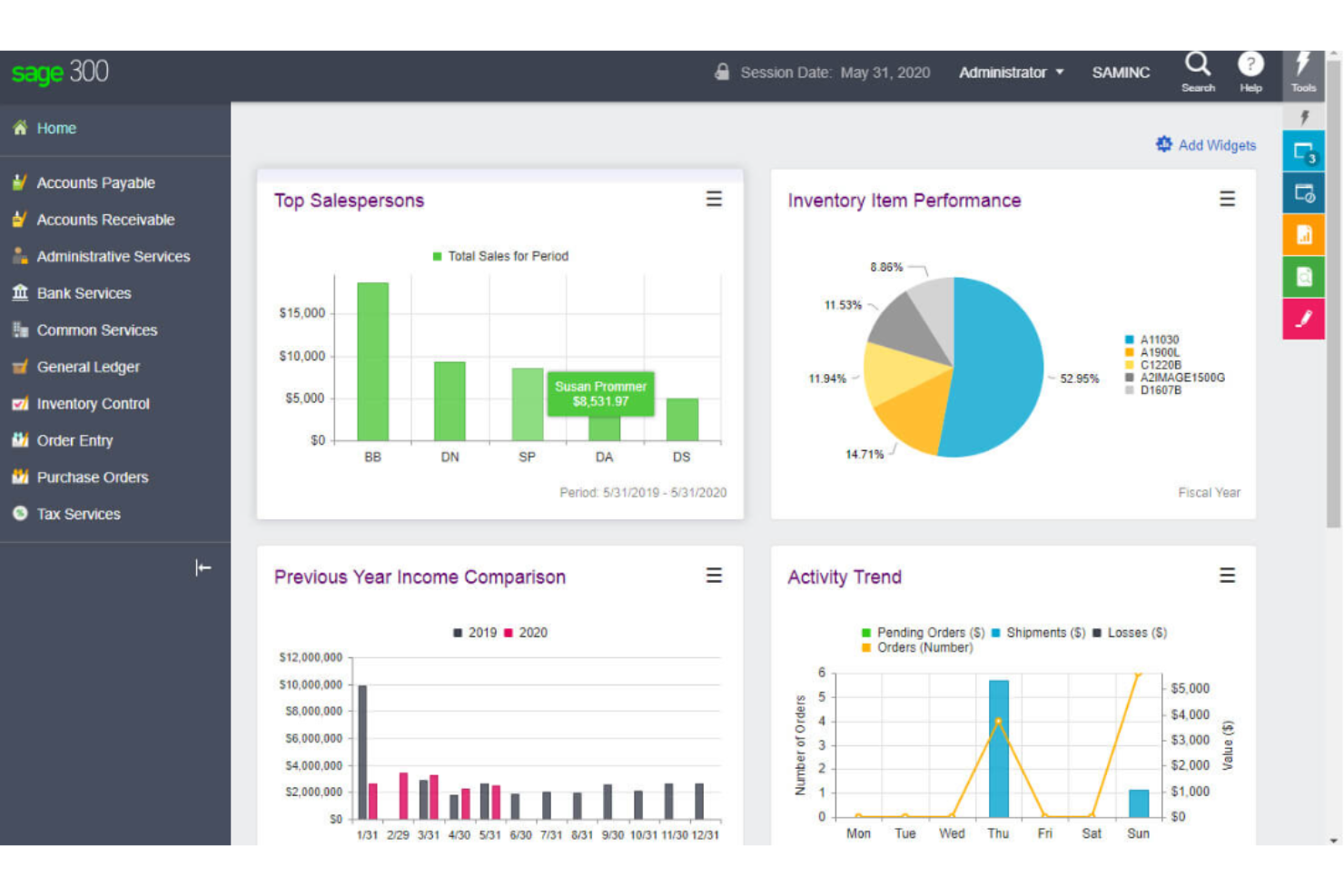
Sage 300 è una piattaforma ERP abilitata al cloud per le medie aziende che copre la contabilità multi-ente, la gestione degli ordini di vendita, il controllo dell'inventario, il monitoraggio di tempo e spese dei contrattisti e i pagamenti integrati.
Per chi è ideale Sage 300?
Sage 300 è adatto per le aziende di servizi di medie dimensioni che operano in più sedi o paesi e che necessitano di gestione contabile e valutaria multi-ente in un unico sistema.
Perché Sage 300 si distingue
L'interfaccia finanziaria multi-valuta e multi-lingua di Sage 300 è progettata per aziende di servizi con attività oltreconfine. È possibile operare in ogni valuta attraverso tutte le entità senza conversioni manuali. Il modulo di transazioni intercompany consente di chiudere i bilanci, generare report per singola azienda o entità consolidata e automatizzare le transazioni che coinvolgono più soggetti giuridici. La funzione di tracciamento automatico registra ogni azione chiave da parte degli utenti con data e ora, fornendo una completa traccia di audit su tutte le entità senza alcuna configurazione aggiuntiva.
Funzionalità principali di Sage 300
- Gestione dei progetti e dei costi: Monitora e gestisci costi, pagamenti e crediti per progetto, appaltatore o subappaltatore con piena visibilità sul budget e consuntivo.
- Contabilità clienti: Gestisci fatturazione ai clienti, incassi e riscossioni con piena integrazione nel libro mastro.
- Ordini di acquisto: Crea, monitora e ricevi ordini di acquisto presso i fornitori, con abbinamento automatico a fatture e contabilità fornitori.
- Libro mastro generale: Configura e mantieni i conti, registra le transazioni dai moduli collegati e genera report, inclusi saldi di prova e registri di scritture.
Pros and Cons
Pros:
- Supporto multi-valuta
- Opzioni di implementazione flessibili
- Strumenti finanziari completi
Cons:
- Configurazione complessa
- Personalizzazione limitata

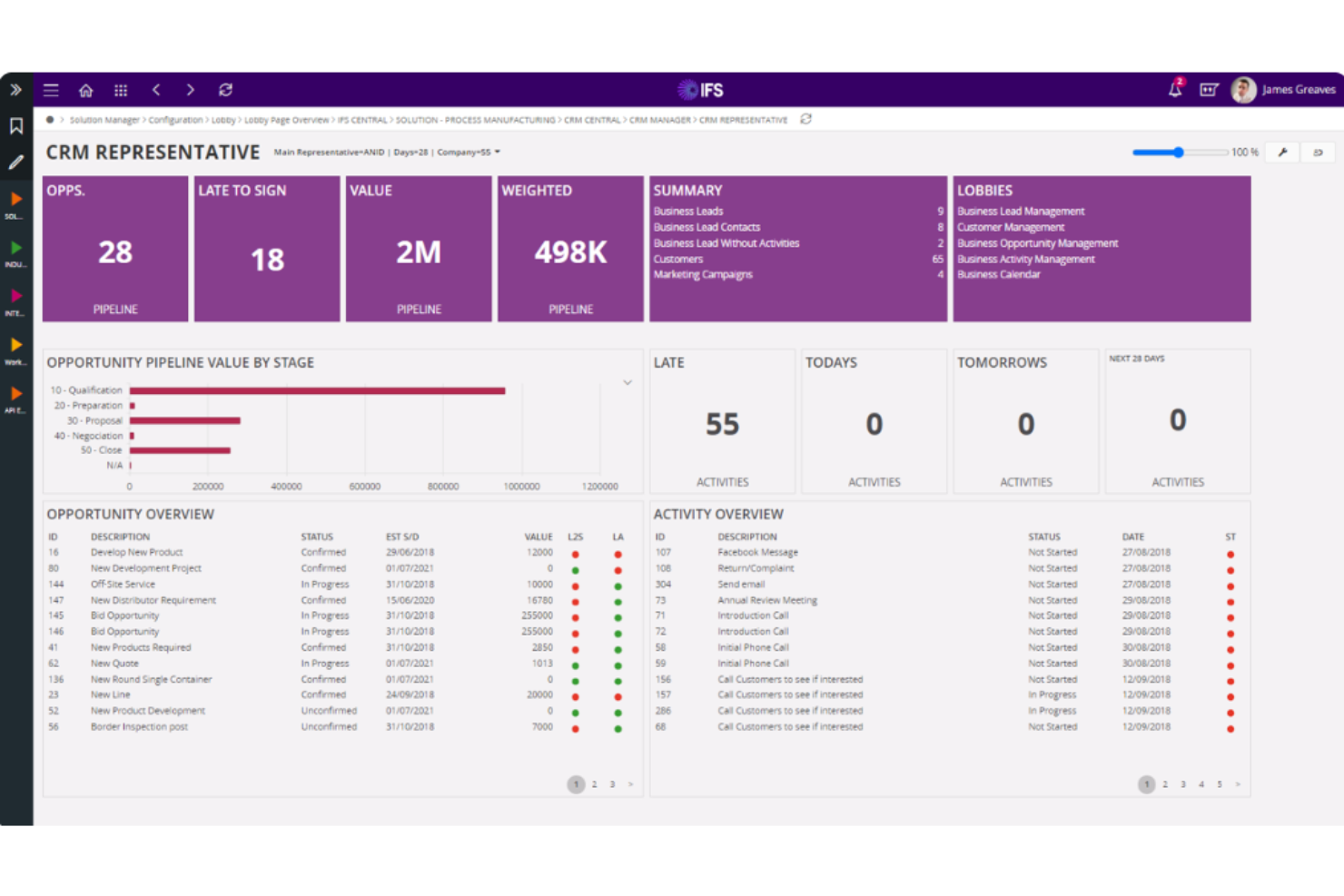
IFS Cloud è una piattaforma ERP basata su cloud che unifica finanza, gestione dei servizi sul campo, gestione degli asset aziendali e gestione dei servizi aziendali in un'unica suite potenziata dall'intelligenza artificiale, progettata per settori orientati ai servizi.
Per chi è più adatto IFS Cloud?
IFS Cloud è particolarmente indicato per aziende di servizi di medie e grandi dimensioni in settori come servizi sul campo, utilities, aerospaziale, difesa e gestione delle strutture.
Perché ho scelto IFS Cloud
Ho incluso IFS Cloud tra le mie scelte principali perché nessun altro ERP offre la stessa profondità di configurazione specifica per settore pensata per le aziende di servizi, già pronta all'uso. Ogni verticale del servizio—dai servizi gestiti al testing, ispezione e certificazione—riceve flussi di lavoro dedicati invece dei classici moduli generici da adattare alle proprie esigenze. Mi piace anche il modo in cui IFS.ai è integrato direttamente nella piattaforma, offrendo pianificazione guidata dall'IA che prevede le necessità di servizio e ottimizza l'invio dei tecnici per raggiungere gli obiettivi SLA. Questa combinazione di progettazione verticale e intelligenza artificiale integrata è difficile da trovare in un'unica piattaforma.
Funzionalità principali di IFS Cloud
- Gestione degli asset aziendali: Traccia, mantieni e gestisci gli asset durante tutto il loro ciclo di vita, dall'installazione alla dismissione, all'interno della stessa piattaforma utilizzata per le finanze.
- Gestione degli appaltatori: Gestisci assegnazioni, credenziali e performance della forza lavoro esterna all'interno dei flussi di lavoro di erogazione dei servizi.
- Gestione dei contratti di servizio: Crea e gestisci contratti cliente con regole di prezzo integrate, diritti e monitoraggio dei rinnovi.
- Contabilità per progetti: Gestisci la parte finanziaria dei progetti, il controllo dei costi e la fatturazione degli incarichi di servizio direttamente nell'ERP.
Pros and Cons
Pros:
- Soluzioni specifiche per settore
- Funzionalità guidate dall'intelligenza artificiale
- Piattaforma completa
Cons:
- Implementazione complessa
- Richiede personalizzazione

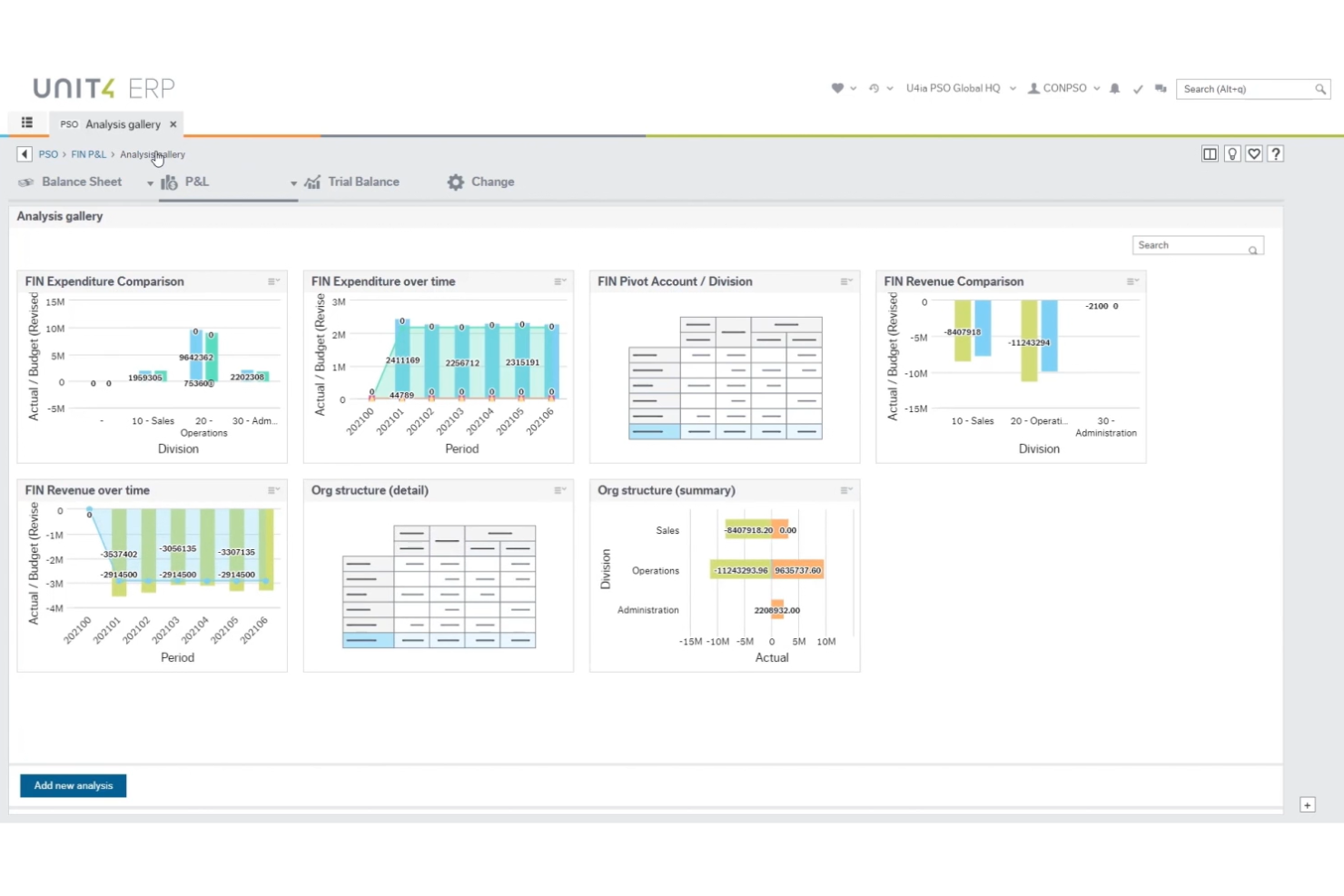
Unit4 è un ERP cloud progettato specificamente per le organizzazioni orientate ai servizi, coprendo la gestione finanziaria, risorse umane, approvvigionamento, gestione dei progetti e FP&A in un'unica piattaforma incentrata sulle persone.
Per chi è Unit4?
Unit4 è particolarmente adatto per organizzazioni di servizi di medie e grandi dimensioni nei servizi professionali, settore pubblico, non profit o istruzione superiore che necessitano di un ERP unificato.
Perché ho scelto Unit4
Unit4 guadagna il suo posto come uno dei migliori nella mia classifica perché la sua suite HCM è strettamente integrata nell’ERP, non aggiunta come un accessorio secondario. Mi piace che HR, payroll e pianificazione delle risorse umane condividano lo stesso database con la finanza e la gestione dei progetti, così quando un consulente cambia ruolo, il suo centro di costo, l’allocazione delle risorse e i dati delle buste paga si aggiornano tutti nello stesso posto. Il modulo di pianificazione e analisi delle persone combina HCM con strumenti FP&A, il che significa che posso modellare scenari di organico direttamente rispetto al budget e alle previsioni di progetto senza esportazioni manuali di dati. Questo livello di integrazione tra la pianificazione della forza lavoro e quella finanziaria è davvero difficile da trovare in un’unica piattaforma.
Funzionalità principali di Unit4
- Gestione del ciclo di vita dei progetti: Gestisci cicli di progetto completi dalla creazione alla fatturazione finale, con monitoraggio incorporato della redditività su tutti i tipi e le scale di progetto.
- Approvvigionamento source-to-pay: Automatizza e standardizza tutte le fasi del ciclo di acquisto, dalla ricerca dei fornitori fino al pagamento, con strumenti per la gestione delle relazioni e dei contratti con i fornitori.
- Assistente virtuale Ava AI: L’agente AI integrato di Unit4 gestisce automazione dei compiti, esecuzione dei workflow e fornisce insight basati sui dati direttamente nella piattaforma ERP.
- Gestione finanziaria e ciclo record-to-report: Gestisci l’intero ciclo record-to-report in un sistema integrato, con consolidamento dati in tempo reale tra finanza, approvvigionamento e progetti.
Pros and Cons
Pros:
- Approccio centrato sulle persone
- Modelli specifici per settore
- ERP e HCM completi
Cons:
- Configurazione complessa
- Opzioni di prova gratuite limitate

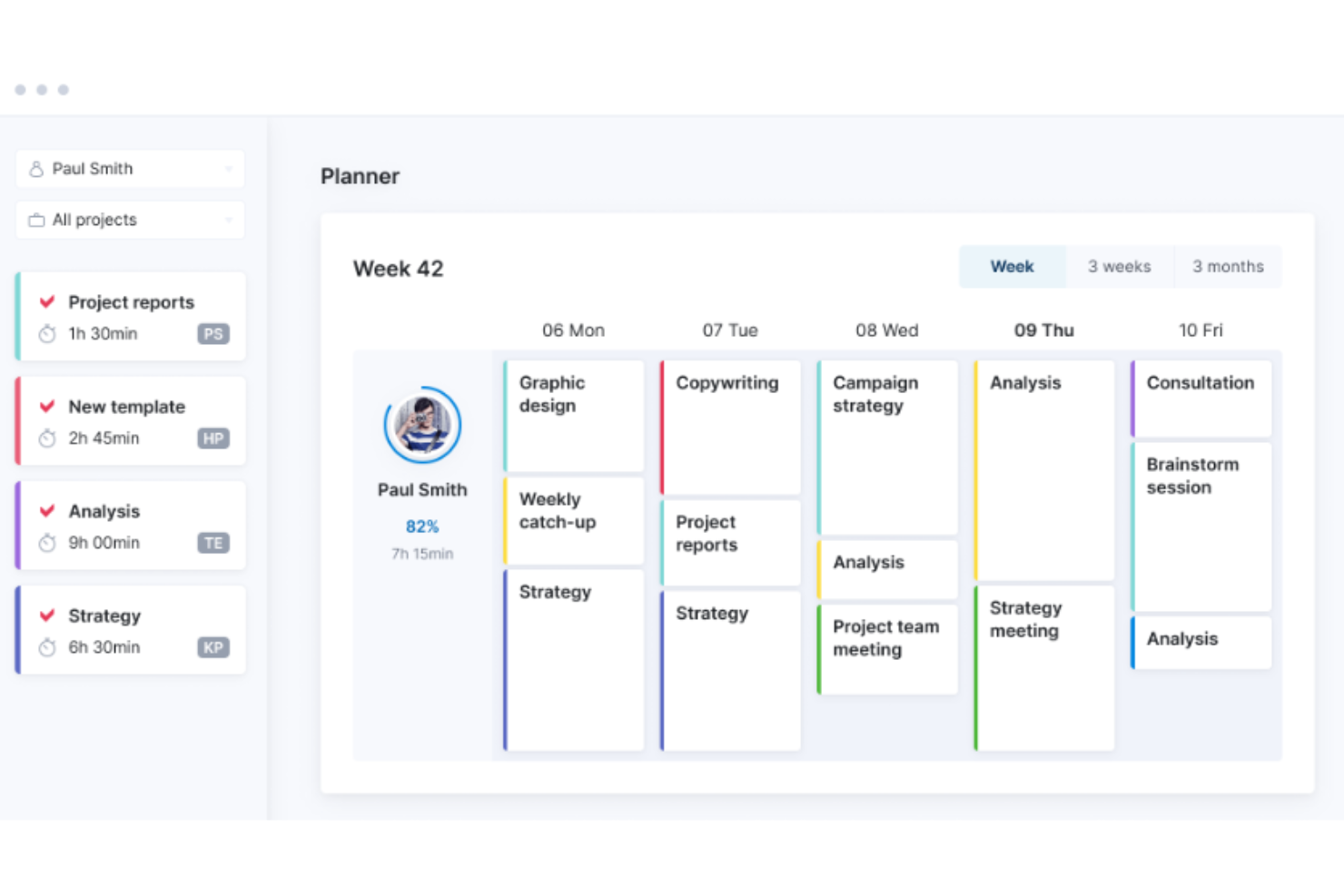
Scoro è una piattaforma di automazione dei servizi professionali (PSA) potenziata dall'IA, che riunisce gestione dei progetti, pianificazione delle risorse, CRM, monitoraggio del tempo, fatturazione e reportistica finanziaria in un unico sistema per consulenze, agenzie e aziende IT, di architettura e di ingegneria.
Per chi è consigliato Scoro?
Scoro è particolarmente adatto per aziende di servizi professionali di medie dimensioni che devono gestire l'intero ciclo di vita dei progetti, dalle vendite alla fatturazione, in un'unica piattaforma.
Perché scegliere Scoro
Scoro copre l'intero arco delle attività dei servizi professionali in un solo sistema, dal preventivo iniziale alla fattura finale, senza la necessità di utilizzare una serie di strumenti separati. Quello che apprezzo particolarmente è la matrice di stima dei preventivi, che permette di suddividere le consegne per ruolo e impegno con visibilità in tempo reale su costi e margini ancora prima dell'inizio del progetto. Affiancata al monitoraggio in tempo reale del consumo del budget e alle previsioni di redditività per ruolo e servizio, Scoro offre ai team finanziari un livello di dettaglio sui dati di progetto che la maggior parte delle piattaforme PSA non offre.
Funzionalità principali di Scoro
- Pianificatore delle risorse: Visualizza la disponibilità del team e assegna il lavoro tra i progetti sulla base dei dati di capacità in tempo reale.
- Monitoraggio del tempo: Registra ore fatturabili e non fatturabili direttamente su attività, progetti o clienti da qualsiasi dispositivo.
- Fatturazione automatica: Genera fatture dal tempo tracciato o da milestone a tariffa fissa, con fatturazione ricorrente per clienti con contratto di mantenimento.
- CRM e gestione pipeline: Tieni traccia dei lead, gestisci i clienti e avanza le opportunità lungo una pipeline di vendita personalizzabile.
Pros and Cons
Pros:
- Gestione progetti completa
- Approfondite analisi finanziarie
- Integrazioni contabili superiori
Cons:
- Limitazioni dell'app mobile
- Curva di apprendimento più ripida per la personalizzazione
Altri ERP per il settore dei servizi
Di seguito è riportato un elenco di ulteriori ERP per il settore dei servizi che ho selezionato. Sebbene non siano rientrati tra i primi 10, sono comunque validi e meritano ulteriori ricerche.
- Opstech
Ideale per soluzioni flessibili nel settore dei luoghi di lavoro
- ERPNext
Ideale per un ERP cloud gratuito e open-source
- Absolute ERP
Ideale per ERP cloud personalizzabile per la produzione
- Striven
Ideale per le piccole imprese che necessitano di una soluzione di gestione tutto-in-uno


Come Valuto il Software ERP per il Settore dei Servizi
Divido la mia valutazione in criteri di base—come la contabilità di progetto e la fatturazione secondo ASC 606—e fattori differenzianti che separano l'opzione più adatta per una società di consulenza da un fornitore di servizi gestiti.
Funzionalità Principali (Requisiti Minimi per Questa Lista)
Quando seleziono gli strumenti per la mia lista, valuto ciascuno su una scala da 0 (non offre la funzionalità) a 5 (eccelle in quest'area) per ogni funzionalità principale elencata di seguito. Poi, calcolo il punteggio totale dello strumento in percentuale. Ogni strumento deve raggiungere un punteggio totale minimo del 65% per essere preso in considerazione per l'inclusione.
- Contabilità di Progetto: Verifico se è possibile monitorare i dati finanziari a livello di progetto, fase e attività—come pianificazioni WIP, calcoli EAC e visibilità in tempo reale dei margini collegati direttamente al GL.
- Fatturazione Dei Servizi e Riconoscimento dei Ricavi: Ogni piattaforma dovrebbe gestire i modelli di fatturazione T&M, a tariffa fissa e per milestone con piani automatizzati di riconoscimento dei ricavi allineati agli standard ASC 606 e IFRS 15.
- Gestione delle Risorse e del Tempo: Cerco la registrazione dei timesheet, l'inserimento delle spese e l'assegnazione delle risorse che confluiscono direttamente nella fatturazione e nei dati finanziari di progetto senza necessità di reinserimento manuale tra i sistemi.
- Gestione Finanziaria Principale: I moduli GL, AP, AR e la gestione della cassa devono funzionare come un vero sistema ufficiale, con reportistica dimensionale e controlli pronti per l'audit integrati.
- Multi-Entità e Multi-Valuta: Per le aziende che operano in più regioni o entità legali, valuto quanto bene la piattaforma gestisce transazioni intercompany, consolidamenti automatizzati e rivalutazione multi-valutaria.
- Analisi dei Servizi e KPI: Dashboard preconfigurati che coprono tassi di utilizzo, realizzazione, backlog di progetto e anzianità del WIP mi dicono se il fornitore comprende veramente la finanza dei servizi, e non solo la reportistica ERP generica.
Una volta che ho una lista di strumenti che soddisfano questi criteri, considero cosa distingue ciascuna piattaforma.
Fattori Differenzianti (Cosa Distingue i Fornitori)
Ecco come confronto e metto in contrasto i diversi fornitori:
Caratteristiche di Spicco
Una suite PSA integrata è importante perché collega l'intero ciclo opportunità-incasso all'interno dell'ERP, eliminando la necessità di sincronizzare uno strumento PSA separato coi dati finanziari. Valuto anche la gestione del ciclo di vita dei contratti—quanto bene la piattaforma gestisce rinnovi, modifiche e ordini di variazione che aggiornano automaticamente la fatturazione e i piani di riconoscimento dei ricavi. Un'altra area che valuto è la previsione guidata dall'IA, in particolare nella previsione dei margini di progetto e della domanda di risorse prima che emergano lacune nel tuo conto economico.
Oltre Le Caratteristiche
Il primo elemento che valuto è l'aderenza verticale ai servizi—se la piattaforma offre configurazioni predefinite per il tuo sotto-settore specifico, come consulenza rispetto a servizi gestiti o architettura e ingegneria. Anche l'ecosistema di integrazione è importante: controllo la presenza di connettori CRM nativi e API aperte affinché i dati di progetto fluiscano senza problemi tra il tuo ERP, Salesforce o HubSpot e le paghe. Infine, esamino implementazione e costo complessivo di proprietà, inclusa la disponibilità di partner d'implementazione focalizzati sui servizi e prezzi trasparenti per utente.
Come scegliere un ERP per il settore dei servizi
Durante il vostro personale e unico processo di selezione del software, tenete presenti i seguenti punti:
- Esigenze aziendali specifiche: Ogni settore dei servizi ha requisiti unici. Ad esempio, una società di gestione immobiliare potrebbe aver bisogno di solide funzionalità di gestione dei progetti, mentre uno studio legale potrebbe dare priorità alla gestione dei casi e alla fatturazione. Assicuratevi che il sistema ERP scelto sia in grado di soddisfare queste esigenze specifiche.
- Capacità di integrazione: La capacità del software ERP di integrarsi con i sistemi esistenti è fondamentale. Molti settori dei servizi utilizzano diverse soluzioni software per funzioni differenti, come CRM, risorse umane e gestione finanziaria. Pertanto, un ERP in grado di integrarsi perfettamente con questi sistemi, soprattutto nei settori sanitari, può fornire una visione unificata delle operazioni e migliorare l'accuratezza dei dati.
- Scalabilità e flessibilità: Man mano che la vostra azienda cresce, il sistema ERP dovrebbe essere in grado di crescere con essa. Cercate una soluzione che offra flessibilità in termini di aggiunta di nuovi utenti, moduli o funzionalità senza interruzioni significative.
- Interfaccia intuitiva e formazione: Il sistema ERP dovrebbe essere facile da usare e richiedere una formazione minima per il personale. Un'interfaccia intuitiva può ridurre la curva di apprendimento e migliorare i tassi di adozione. Inoltre, valutate la disponibilità di formazione e supporto da parte del fornitore ERP.
- Supporto e collaborazione del fornitore: Il livello di supporto e collaborazione offerto dal fornitore ERP è un aspetto fondamentale da considerare. Cercate un fornitore con una comprovata esperienza nel supporto dei propri prodotti e nell'offerta di un eccellente servizio clienti.
Investire tempo nella scelta del sistema giusto porterà in definitiva a una maggiore soddisfazione dei clienti e a un successo a lungo termine. Considerando questi fattori e conducendo una ricerca approfondita, potete trovare una soluzione ERP che migliori l'efficienza, semplifichi le operazioni e sostenga la crescita della vostra azienda basata sui servizi.
Tendenze degli ERP per il settore dei servizi
Il software ERP per il settore dei servizi è in rapida evoluzione. Ecco alcune tendenze chiave da tenere d’occhio nei prossimi anni:
- Integrazione dell’intelligenza artificiale e dell’apprendimento automatico: l’intelligenza artificiale e l’apprendimento automatico vengono integrati nei sistemi ERP. Queste tecnologie supportano l’analisi predittiva e il processo decisionale e sono importanti per migliorare efficienza e precisione.
- Soluzioni basate sul cloud: le soluzioni ERP basate sul cloud stanno diventando più popolari rispetto ai software installati localmente, poiché offrono flessibilità e scalabilità alle aziende. Questa tendenza è fondamentale per il lavoro da remoto e le attività globali.
- Accessibilità da dispositivi mobili: i sistemi ERP sono sempre più accessibili tramite dispositivi mobili, consentendo ai dipendenti di accedere ai dati e svolgere attività ovunque si trovino. Questo è importante per migliorare produttività e reattività.
- Personalizzazione e adattamento: i software ERP offrono un numero crescente di opzioni di personalizzazione. Ora le aziende possono adattare il software alle proprie esigenze specifiche, un aspetto importante per soddisfare requisiti aziendali unici.
- Maggiore sicurezza dei dati: le funzionalità di sicurezza dei dati nei sistemi ERP vengono potenziate con strumenti quali la crittografia avanzata e l’autenticazione a più fattori. Queste misure sono fondamentali per proteggere le informazioni aziendali sensibili.
Grazie ai progressi nell’intelligenza artificiale, nell’accessibilità da dispositivi mobili e nell’analisi dei dati in tempo reale, le moderne soluzioni ERP sono meglio equipaggiate per soddisfare le esigenze dinamiche delle aziende basate sui servizi. Rimanere aggiornate su queste tendenze garantisce alle aziende la possibilità di sfruttare le tecnologie più recenti per migliorare efficienza, soddisfazione dei clienti e competitività complessiva.
Che cos’è un ERP per il settore dei servizi?
Il software ERP è un sistema avanzato progettato per gestire e integrare i processi aziendali fondamentali, come la finanza, le risorse umane, la gestione dei progetti e la gestione delle relazioni con i clienti. Quando viene utilizzato nel settore dei servizi, un ERP migliora l’efficienza, fornisce informazioni sui dati in tempo reale e migliora il processo decisionale, consentendo alle aziende basate sui servizi di offrire un servizio clienti migliore e raggiungere l’eccellenza operativa.
Funzionalità degli ERP per il settore dei servizi
Selezionare il sistema ERP giusto può migliorare significativamente i processi aziendali, dalla gestione finanziaria alla gestione delle relazioni con i clienti. Quando scegli il tuo prossimo ERP, ecco alcune funzionalità chiave da prendere in considerazione:
- Gestione finanziaria: questa funzionalità include strumenti per la gestione dei debiti, dei crediti, della liquidità e della contabilizzazione dei ricavi. Centralizza tutti i processi finanziari, semplificando la gestione dei budget e delle previsioni e garantendo la conformità alle normative finanziarie.
- Contabilità: i sistemi ERP offrono funzionalità contabili complete, come il libro mastro, i flussi di cassa, i crediti e debiti e la gestione delle spese. Queste funzionalità integrano i dati finanziari provenienti da diverse fonti, fornendo una visione unificata della situazione finanziaria dell’azienda.
- Elaborazione degli ordini: questa funzionalità gestisce il ciclo di vita degli ordini di acquisto, dalla registrazione iniziale alla fatturazione, alla consegna e al pagamento. Automatizza l’elaborazione degli ordini, riducendo il lavoro manuale e gli errori.
- Gestione dei progetti: i sistemi ERP includono strumenti per la pianificazione, l’esecuzione e il monitoraggio dei progetti. Funzionalità come la gestione delle attività, il monitoraggio delle tappe fondamentali e il controllo del budget sono essenziali per gestire progetti complessi.
- Gestione delle relazioni con i clienti (CRM): le funzionalità CRM memorizzano i dati dei clienti, monitorano le interazioni e gestiscono i potenziali clienti. Questa integrazione contribuisce a migliorare il servizio clienti e i processi di vendita.
- Gestione dell’inventario: questa funzionalità monitora i livelli delle scorte, gestisce le ubicazioni dei prodotti e controlla le condizioni degli articoli in inventario. Garantisce la disponibilità della quantità di scorte necessaria a soddisfare la domanda dei clienti.
- Gestione degli acquisti e della catena di approvvigionamento: i sistemi ERP gestiscono i processi di approvvigionamento, i rapporti con i fornitori e la logistica della catena di approvvigionamento. Aiutano a ottimizzare le decisioni di acquisto e a mantenere efficiente la catena di approvvigionamento.
- Gestione delle risorse umane (HR): le funzionalità HR includono la gestione delle informazioni sui dipendenti, delle buste paga, dei benefit e della pianificazione della forza lavoro. Questi strumenti aiutano a gestire l’intero ciclo di vita dei dipendenti.
- Intelligence aziendale (BI): gli strumenti di BI integrati nei sistemi ERP forniscono funzionalità di analisi dei dati, reportistica e visualizzazione. Aiutano a ricavare informazioni utili dai dati aziendali.
- Automazione: i sistemi ERP automatizzano i processi aziendali di routine, come la fatturazione, l’evasione degli ordini e la gestione dell’inventario. L’automazione riduce il lavoro manuale e minimizza gli errori.
Investire in un sistema ERP dotato di queste funzionalità chiave può trasformare la tua azienda del settore dei servizi, migliorando l’efficienza, aumentando la soddisfazione dei clienti e fornendo informazioni preziose per il processo decisionale strategico. Con la continua evoluzione del settore dei servizi, disporre di un sistema ERP solido sarà fondamentale per rimanere competitivi e raggiungere il successo a lungo termine.
Vantaggi di avere un ERP per il settore dei servizi
L'implementazione di un software ERP nel settore dei servizi può apportare cambiamenti trasformativi al modo in cui operano le aziende. Ecco alcuni dei principali vantaggi associati all'implementazione di un sistema ERP nella propria azienda:
- Maggiore efficienza: Il software ERP integra diversi processi aziendali in un'unica piattaforma, riducendo le ridondanze e garantendo che tutti i reparti lavorino in modo coordinato.
- Migliore processo decisionale: Grazie ai dati in tempo reale e alle analisi avanzate, i sistemi ERP consentono ai responsabili di prendere decisioni informate, migliorando la strategia e le operazioni aziendali complessive.
- Riduzione dei costi: Automatizzando le attività di routine e ottimizzando l'allocazione delle risorse, il software ERP aiuta le aziende a ridurre i costi operativi e ad aumentare la redditività.
- Maggiore soddisfazione dei clienti: I sistemi ERP migliorano la gestione delle relazioni con i clienti fornendo informazioni tempestive e accurate, con conseguente miglioramento del servizio e aumento dei tassi di fidelizzazione dei clienti.
- Scalabilità: Con la crescita delle aziende, il software ERP può facilmente adattarsi per gestire carichi di lavoro maggiori, garantendo che le operazioni rimangano fluide e senza interruzioni.
La scelta del software ERP giusto può migliorare significativamente la produttività e la redditività delle aziende del settore dei servizi. Integrando le funzioni essenziali e fornendo informazioni dettagliate in tempo reale, i sistemi ERP offrono una base solida per una crescita e un successo duraturi.
Costi e prezzi degli ERP per il settore dei servizi
I costi e le opzioni di prezzo dei software ERP possono variare notevolmente in base a diversi fattori, tra cui le dimensioni dell'azienda, le esigenze specifiche del settore e il modello di implementazione scelto. Di seguito è riportato un riepilogo dei piani tariffari ERP più comuni, inclusa un'opzione gratuita, per aiutarti a capire cosa aspettarti.
Tabella comparativa dei piani ERP per il settore dei servizi
| Tipo di piano | Prezzo medio | Funzionalità comuni |
| Piano gratuito | $0 | Moduli di base, numero limitato di utenti, assistenza della comunità e funzionalità essenziali |
| Piano base | $50 - $100 al mese per utente | Funzionalità ERP fondamentali, personalizzazione limitata e assistenza standard |
| Piano standard | $100 - $200 al mese per utente | Moduli avanzati, personalizzazione moderata, assistenza potenziata e formazione |
| Piano premium | $200 - $400 al mese per utente | Suite completa di moduli ERP, ampia personalizzazione, assistenza premium, formazione dedicata e servizi di consulenza |
| Piano aziendale | $400+ al mese per utente | Soluzione ERP completa, personalizzazione totale, assistenza 24 ore su 24 e 7 giorni su 7, formazione approfondita e servizi di consulenza |
Quando scegli un piano ERP, considera le dimensioni, la complessità e le esigenze specifiche della tua azienda. Ogni piano offre diversi livelli di funzionalità, personalizzazione e assistenza, quindi è essenziale selezionare quello più in linea con gli obiettivi e il budget della tua azienda.
Domande frequenti sul software ERP per il settore dei servizi
Il software ERP è personalizzabile in base alle esigenze specifiche del settore dei servizi?
Sì, molte soluzioni ERP offrono moduli personalizzabili, adattati ai requisiti unici dei diversi settori dei servizi. In questo modo il software può soddisfare esigenze e processi aziendali specifici.
Il software ERP può integrarsi con gli strumenti aziendali esistenti?
Sì, la maggior parte dei software ERP offre integrazioni native con strumenti aziendali diffusi, come sistemi CRM, software di contabilità e servizi cloud. Questo garantisce un flusso di dati continuo e funzionalità potenziate.
Il software ERP è adatto alle piccole aziende di servizi?
Il software ERP può apportare vantaggi ad aziende di qualsiasi dimensione, migliorando l’efficienza e riducendo i costi operativi. Alcuni fornitori offrono soluzioni scalabili progettate per le piccole e medie imprese.
Quanto tempo occorre per implementare un software ERP?
I tempi di implementazione variano in base alla complessità dell’azienda e della soluzione ERP. Possono variare da alcune settimane a diversi mesi, includendo personalizzazione e formazione.
Qual è il prossimo passo?
Vuoi ampliare le tue competenze come professionista della finanza? Iscriviti alla nostra newsletter gratuita.