

Il software per la gestione delle detrazioni aiuta i team di contabilità clienti a identificare, convalidare, contestare e recuperare le detrazioni e gli addebiti dei clienti. I migliori strumenti automatizzano l'acquisizione delle richieste, la corrispondenza dei documenti, la codifica delle detrazioni, i flussi di lavoro per le contestazioni e il monitoraggio dei recuperi. Possono inoltre connettersi ai sistemi ERP e ai portali dei rivenditori. Ho valutato i principali software per la gestione delle detrazioni della contabilità clienti per diversi settori, flussi di lavoro e volumi di detrazioni.
Perché fidarsi dei nostri consigli sui software
6,700+
Reviews
20
Industry experts
16+
Evaluation factors
14
Years
Le nostre recensioni riflettono il nostro giudizio indipendente, non un discorso di vendita. Scopri come manteniamo la trasparenza.
Per questa guida, abbiamo valutato gli strumenti attraverso test pratici e ricerche indipendenti, assegnando un punteggio agli strumenti in base ai nostri criteri di selezione.
Le nostre recensioni riflettono il nostro giudizio editoriale umano, non un discorso di vendita.
Tabella comparativa dei software per la gestione delle detrazioni
Questa tabella comparativa riassume i dettagli sui prezzi delle mie migliori selezioni di software per la gestione delle detrazioni:
| Tool | Best For | Trial Info | Price | ||
|---|---|---|---|---|---|
| 1 | Ideale per i flussi di lavoro delle controversie dalla fattura all'incasso | Demo gratuita disponibile | Prezzi su richiesta | Website | |
| 2 | Ideale per la gestione dei riaddebiti SAP | Demo gratuita disponibile | Prezzo su richiesta | Website | |
| 3 | Ideale per le deduzioni CPG con supporto di esperti | Demo gratuita disponibile | Prezzi su richiesta | Website | |
| 4 | Ideale per il rilevamento dei pagamenti inferiori al dovuto nell'applicazione degli incassi | Demo gratuita disponibile | Prezzo su richiesta | Website | |
| 5 | Ideale per l'automazione dei flussi di lavoro delle deduzioni CPG | Demo gratuita disponibile | Prezzi su richiesta | Website | |
| 6 | Ideale per flussi di lavoro sulle deduzioni basati sull'IA | Demo gratuita disponibile | Prezzi su richiesta | Website | |
| 7 | Ideale per la convalida delle detrazioni basata sull'intelligenza artificiale | Demo gratuita disponibile | Prezzi disponibili su richiesta | Website | |
| 8 | Ideale per la risoluzione autonoma delle deduzioni | Demo gratuita disponibile | Prezzi su richiesta | Website | |
| 9 | Ideale per l'automazione delle richieste sui portali dei rivenditori | Demo gratuita disponibile | Prezzi su richiesta | Website | |
| 10 | Ideale per il recupero esternalizzato dei ricavi al dettaglio | Demo gratuita disponibile | Prezzi su richiesta | Website |


Recensioni dei migliori software per la gestione delle detrazioni
Di seguito sono riportati i miei riepiloghi dettagliati dei migliori software per la gestione delle detrazioni inclusi nel mio elenco. Le mie recensioni offrono un’analisi dettagliata delle funzionalità, delle capacità e delle integrazioni di ciascuna piattaforma per aiutarti a trovare quella più adatta a te.
 Ideale per i flussi di lavoro delle controversie dalla fattura all'incasso
- Demo gratuita disponibile
- Prezzi su richiesta
Visit WebsiteCustomer Rating:4.5/5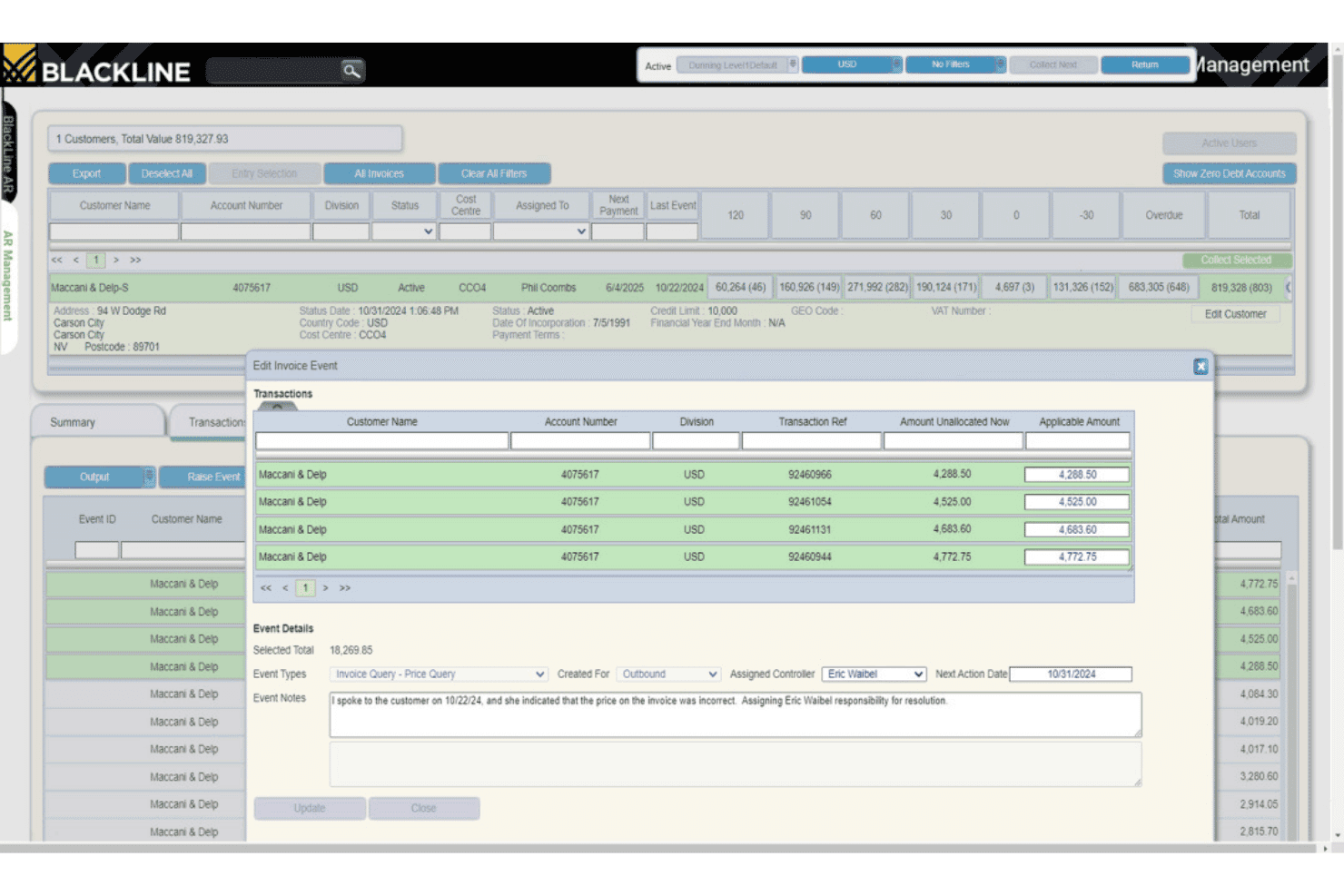
BlackLine consente agli utenti di registrare le controversie relative alle fatture e assegnarle per la risoluzione. BlackLine Gestione delle controversie e delle detrazioni è un modulo AR aziendale che combina flussi di lavoro automatizzati per le controversie, riepiloghi delle contestazioni assistiti dall'AI, monitoraggio degli SLA e gestione della documentazione integrata con l'ERP all'interno di una piattaforma più ampia dalla fattura all'incasso.
Per chi è più adatto BlackLine?
BlackLine è adatto ai team finanziari di aziende di medie e grandi dimensioni che gestiscono controversie relative a fatture in grandi volumi all'interno di un ambiente ERP esistente e necessitano di flussi di lavoro basati sugli SLA con tracce di audit complete.
Perché ho scelto BlackLine
Ho scelto BlackLine come una delle soluzioni migliori perché il suo motore per i flussi di lavoro delle controversie è progettato attorno a cicli di risoluzione misurabili, non solo al monitoraggio delle attività. Mi piace molto il modo in cui Verity Summarize utilizza l'AI per analizzare istantaneamente le controversie complesse e mettere in evidenza i passaggi successivi consigliati, riducendo il tempo che dovrei dedicare alla revisione manuale della cronologia delle fatture. Il livello di misurazione degli SLA è direttamente collegato ai report sui debiti scaduti e sugli accantonamenti, così posso vedere esattamente dove le controversie si stanno bloccando e quali stanno mettendo a rischio la liquidità.
Funzionalità principali di BlackLine
- Integrazione con ERP e CRM: Sincronizza i dati relativi a detrazioni e controversie direttamente con le piattaforme ERP e CRM supportate.
- Gestione della documentazione pronta per gli audit: Centralizza e allega tutti i documenti di supporto a ciascuna controversia per garantire la conformità.
- Monitoraggio di KPI e SLA: Tiene traccia dei tempi dei cicli delle controversie e dei tassi di risoluzione rispetto agli accordi sui livelli di servizio.
- Controlli dei flussi di lavoro basati sui ruoli: Assegna, limita e gestisce gli accessi degli utenti e i poteri di approvazione nei team AR, vendite e finanza.
Integrazioni di BlackLine
BlackLine offre integrazioni native con SAP, Oracle, NetSuite, Microsoft Dynamics 365, Salesforce e Workday. È inoltre disponibile un'API per le integrazioni personalizzate.
Pros and Cons
Pros:
- Monitoraggio delle controversie basato sugli SLA con cicli di risoluzione misurabili
- Il riepilogo tramite AI riduce il tempo dedicato alla revisione manuale delle fatture
- Una solida traccia di audit supporta i requisiti di conformità SOX
Cons:
- Non è progettato specificamente per i flussi di lavoro delle detrazioni dei beni di consumo confezionati
- L'implementazione richiede in genere un coinvolgimento significativo delle risorse IT
Learn more about BlackLine: Ideale per la gestione dei riaddebiti SAP
- Demo gratuita disponibile
- Prezzo su richiesta
Visit WebsiteCustomer Rating:4.3/5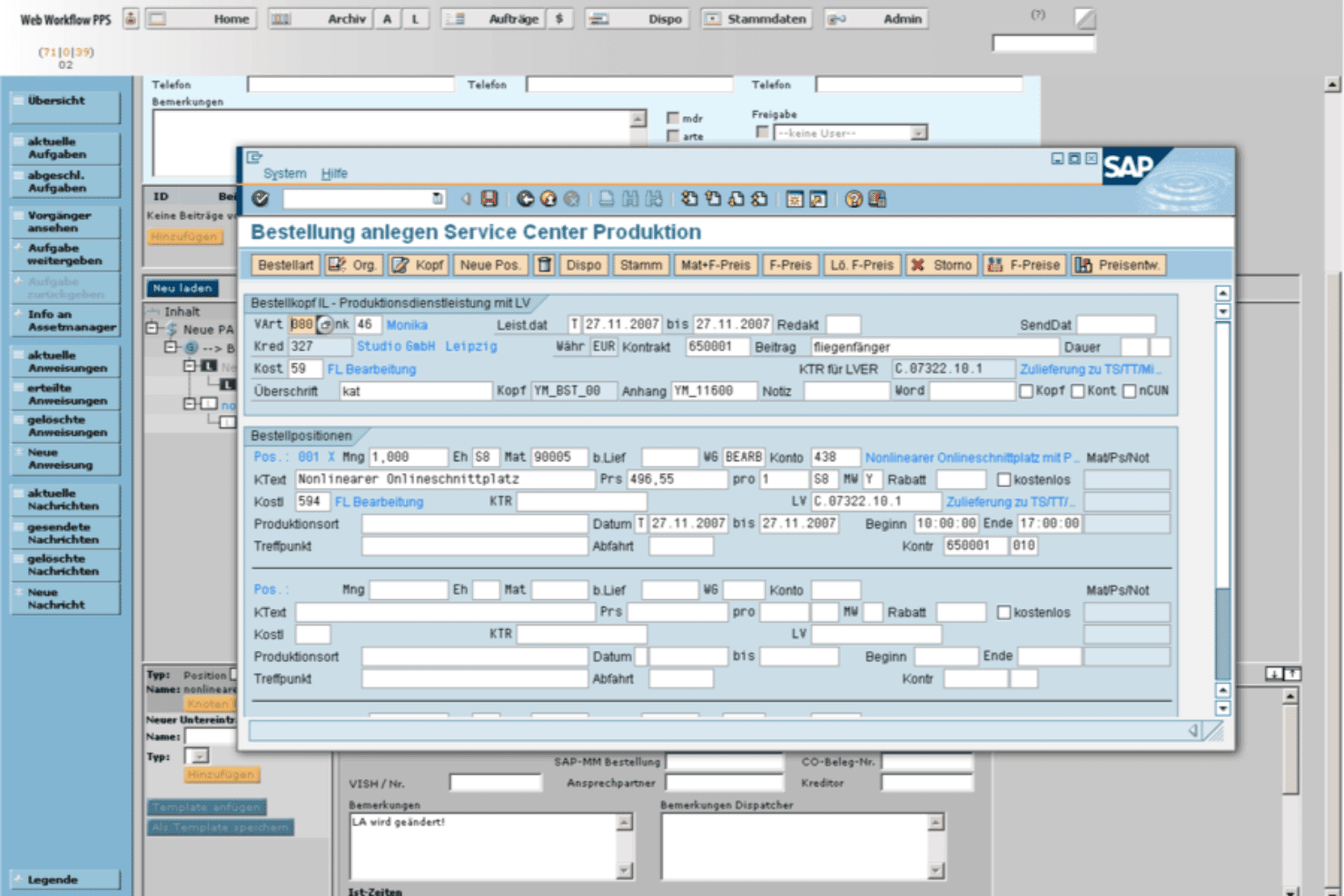
Vistex consente di creare ordini di servizio strutturati all'interno dei flussi di lavoro SAP. Vistex è una piattaforma nativa SAP per la gestione di riaddebiti e richieste che gestisce l'avvio delle richieste, la classificazione dei codici causale, la riconciliazione, gli accantonamenti e il regolamento, direttamente integrata negli ambienti SAP S/4HANA ed ECC.
Per chi è più adatto Vistex?
Vistex è particolarmente adatto alle grandi aziende nei settori dei beni di consumo confezionati, della produzione o della distribuzione che utilizzano già SAP S/4HANA o ECC e gestiscono elevati volumi di riaddebiti.
Perché ho scelto Vistex
Vistex rientra nella mia selezione finale grazie al livello di integrazione con SAP S/4HANA per la gestione dei riaddebiti. Apprezzo il fatto che gestisca l'intero ciclo di vita delle richieste, dall'avvio alla riconciliazione e al regolamento, senza richiedere un livello separato di integrazione dei dati. Gli strumenti automatizzati per gli accantonamenti e la simulazione consentono inoltre al mio team di prevedere il recupero dei costi prima dell'invio delle richieste, offrendo un livello di visibilità precedente alla richiesta davvero difficile da trovare in uno strumento integrato nativamente in SAP.
Funzionalità principali di Vistex
- Flussi di lavoro per il regolamento nativi SAP: Integrati direttamente in SAP S/4HANA ed ECC per l'elaborazione completa delle richieste e la riconciliazione finanziaria.
- Categorizzazione delle detrazioni basata su regole: Classifica addebiti e detrazioni utilizzando regole aziendali personalizzabili collegate ai termini contrattuali e alle strutture degli accordi.
- Strumenti per accantonamenti e previsioni: Supporta la gestione degli accantonamenti in tempo reale e la modellazione predittiva per i futuri recuperi dei costi.
- Traccia di audit dettagliata: Registra la cronologia dettagliata delle richieste, dei regolamenti e delle rettifiche ai fini della conformità e del controllo finanziario.
Integrazioni di Vistex
Vistex è integrato negli ambienti SAP S/4HANA ed ECC e offre un'integrazione nativa con i moduli SAP principali. È disponibile un'API per le integrazioni personalizzate.
Pros and Cons
Pros:
- Regolamento SAP nativo senza middleware di terze parti
- Monitoraggio dell'intero ciclo di vita delle richieste all'interno di SAP
- Gestione efficace degli accantonamenti per il recupero dei costi
Cons:
- Non adatto agli ambienti non SAP
- Tempi di implementazione lunghi per le installazioni aziendali
Learn more about Vistex: Ideale per le deduzioni CPG con supporto di esperti
- Demo gratuita disponibile
- Prezzi su richiesta
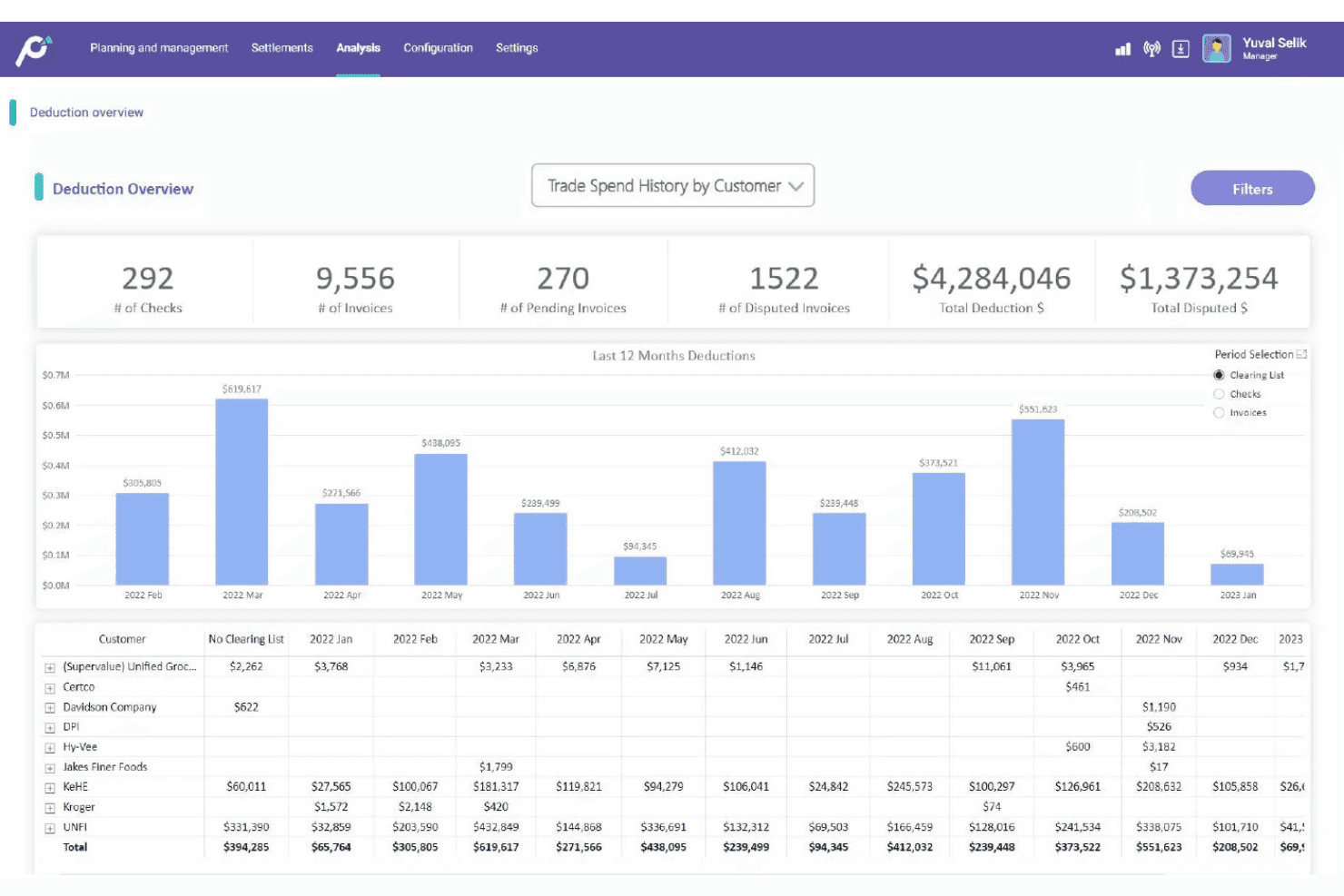
Promomash tiene traccia nel tempo delle deduzioni relative alla spesa promozionale per cliente. Promomash è una piattaforma per la gestione delle deduzioni focalizzata sui prodotti di largo consumo (CPG), che combina l'acquisizione, la codifica, la validazione e il recupero delle contestazioni delle deduzioni assistiti dall'intelligenza artificiale con un team di specialisti dedicati che gestisce l'intero ciclo di vita delle deduzioni per tuo conto.
Per chi è più adatto Promomash?
Promomash è particolarmente adatto ai marchi CPG in crescita che vendono tramite grandi rivenditori e distributori, ma non dispongono di un team interno dedicato alla gestione delle deduzioni.
Perché ho scelto Promomash
Promomash è entrato nella mia lista ristretta grazie al modo in cui gestisce le due attività più dispendiose in termini di tempo della gestione delle deduzioni: la codifica e la contestazione. Apprezzo il fatto che la piattaforma utilizzi un catalogo proprietario di codici causali creato per i rivenditori e i distributori CPG, in modo che le deduzioni provenienti da Walmart, KEHE e UNFI vengano categorizzate accuratamente senza intervento manuale. Quando è necessario contestare una deduzione non valida, il team CPGenius interviene per preparare il caso e presentarlo per tuo conto.
Funzionalità principali di Promomash
- Integrazioni con rivenditori e distributori: Si connette direttamente a portali leader come Walmart, Target, Amazon, UNFI e KEHE per aggregare i dati sulle deduzioni.
- Componente aggiuntivo per l'applicazione degli incassi: Abbina i pagamenti bancari alle fatture aperte e sincronizza l'attività di pagamento con il tuo ERP.
- Dashboard analitica delle deduzioni: Fornisce dashboard in tempo reale per monitorare lo stato delle deduzioni, le tendenze e la suddivisione delle cause principali.
- Abbinamento tra promozioni e deduzioni: Collega automaticamente le deduzioni a specifiche promozioni commerciali per una corretta validazione e chiusura.
Integrazioni di Promomash
Promomash offre integrazioni native con NetSuite, QuickBooks, Sage Intacct, Microsoft Dynamics 365, Walmart Retail Link, Target Partners Online, Amazon Vendor Central, UNFI e KEHE. È disponibile un'API per le integrazioni personalizzate.
Pros and Cons
Pros:
- I servizi di contestazione gestiti riducono il carico di lavoro interno dei crediti clienti
- La libreria di codici causali specifica per il CPG migliora l'accuratezza della codifica
- Copre sia i tipi di deduzioni commerciali sia quelli non commerciali
Cons:
- Adatto in misura limitata ai settori al di fuori del CPG e della distribuzione alimentare
- La personalizzazione dei report richiede il coinvolgimento del team di supporto
Learn more about Promomash: Ideale per il rilevamento dei pagamenti inferiori al dovuto nell'applicazione degli incassi
- Demo gratuita disponibile
- Prezzo su richiesta
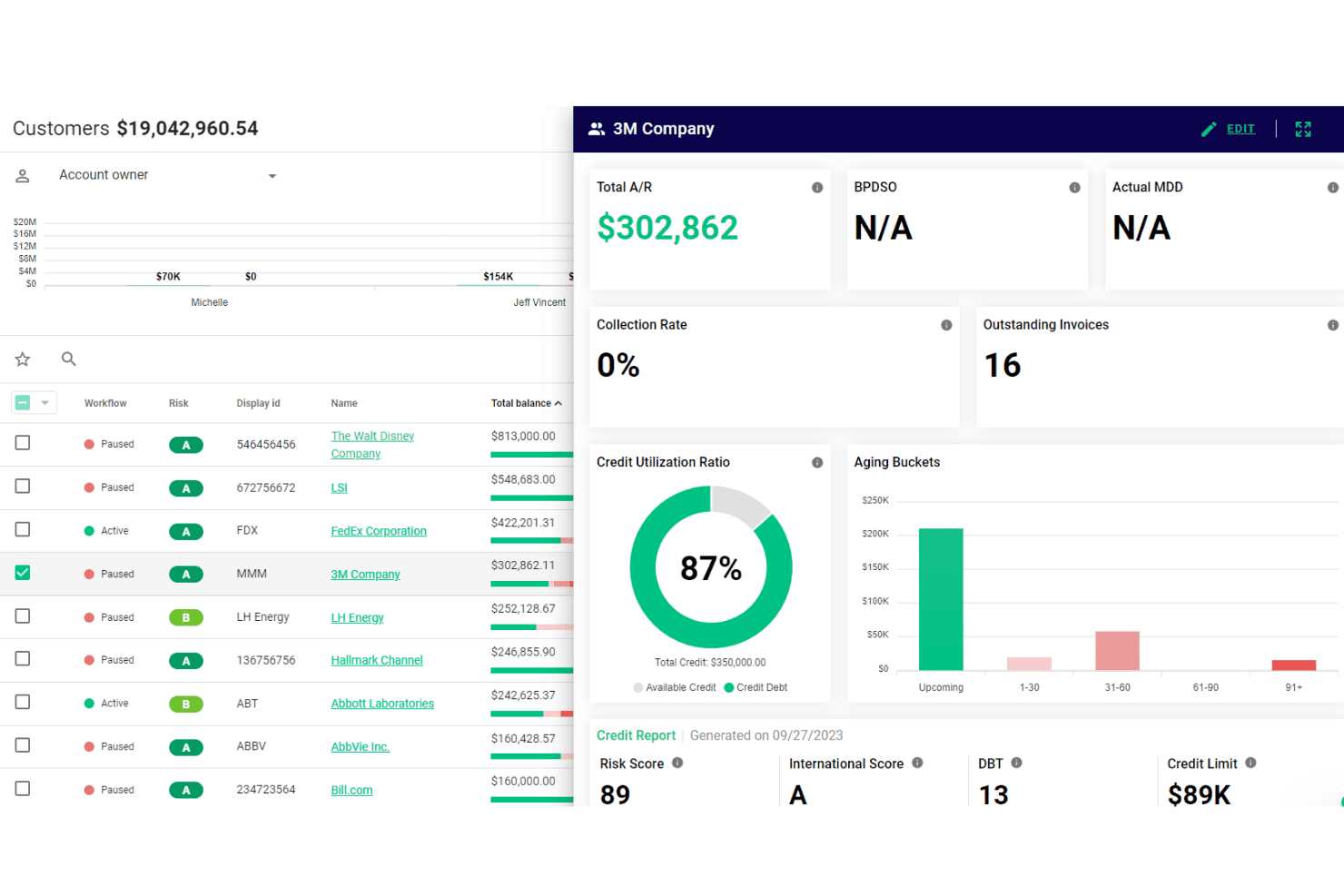
Cforia mostra in un'unica schermata i punteggi di rischio dei clienti e l'anzianità dei crediti clienti. Cforia è una piattaforma di automazione dei crediti clienti dal pagamento all'incasso, con moduli per l'applicazione degli incassi, la gestione del recupero crediti, la risoluzione integrata delle controversie e il monitoraggio delle deduzioni, basati sul rilevamento dei pagamenti inferiori al dovuto.
Per chi è più adatta Cforia?
Cforia è adatta ai team aziendali che si occupano di crediti clienti e recupero crediti, elaborano elevati volumi di pagamenti dei clienti e hanno bisogno che il rilevamento automatico dei pagamenti inferiori al dovuto sia integrato nel flusso di lavoro per l'applicazione degli incassi.
Perché ho scelto Cforia
Ho scelto Cforia come una delle migliori soluzioni perché il suo modulo per l'applicazione degli incassi rileva i pagamenti inferiori al dovuto durante l'abbinamento dei pagamenti, anziché come fase manuale di follow-up. Quando una distinta di pagamento arriva con un importo inferiore al dovuto, Cforia la segnala automaticamente e crea nello stesso momento una registrazione della deduzione e della controversia. Mi piace anche la funzionalità di collegamento automatico dei clienti, che abbina i pagamenti tra gerarchie di account principali e secondari, evitando così che gli account con più entità generino falsi avvisi di deduzione.
Funzionalità principali di Cforia
- Gestione integrata delle controversie: Consente ai team di registrare, monitorare e risolvere le controversie sulle deduzioni direttamente all'interno della piattaforma.
- Abbinamento automatico dei clienti: Collega i pagamenti e le fatture aperte tra strutture di account principali e secondari per acquisire con precisione le deduzioni.
- Dashboard in tempo reale per i crediti clienti: Fornisce ai team che si occupano dei crediti clienti dashboard configurabili per monitorare lo stato delle deduzioni, la cronologia delle attività e gli indicatori chiave di prestazione.
- Acquisizione di dati da più fonti: Supporta l'importazione di dati relativi a distinte di pagamento, pagamenti e importi inferiori al dovuto da banche, file di cassette di sicurezza e sistemi ERP.
Integrazioni di Cforia
Le integrazioni native non sono documentate in modo chiaro. Cforia offre un'API per le integrazioni personalizzate e può collegarsi ai sistemi ERP tramite una configurazione personalizzata.
Pros and Cons
Pros:
- Il rilevamento dei pagamenti inferiori al dovuto è integrato nell'applicazione degli incassi
- Gestisce strutture complesse di account principali e secondari
- Registrazioni delle controversie create automaticamente al momento della segnalazione
Cons:
- I tempi di implementazione possono durare diversi mesi
- La personalizzazione dei report richiede il coinvolgimento del fornitore
Learn more about Cforia: Ideale per l'automazione dei flussi di lavoro delle deduzioni CPG
- Demo gratuita disponibile
- Prezzi su richiesta
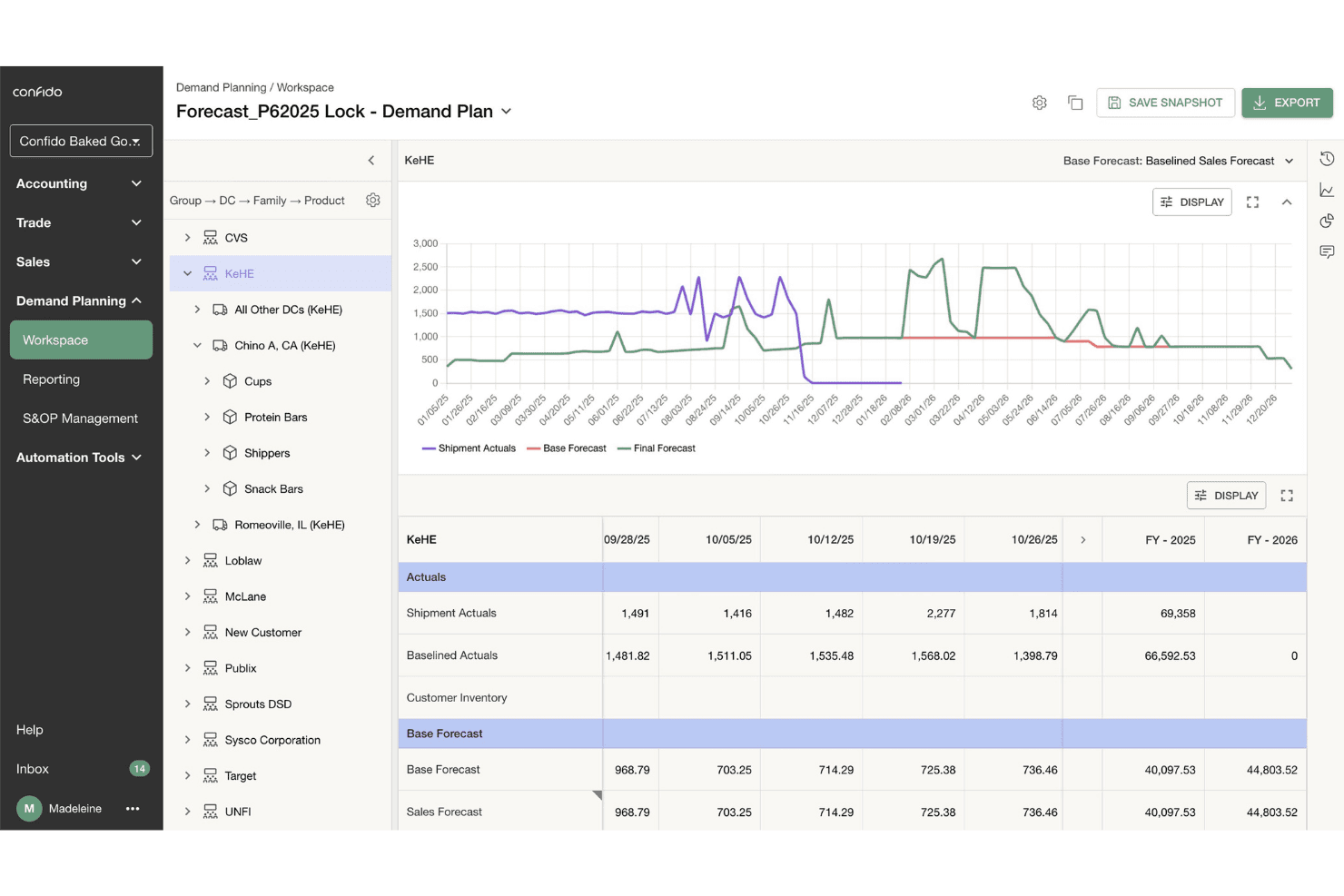
Confido consente agli utenti di prevedere la domanda con grafici visivi e dati settimanali. Confido è una piattaforma per la gestione delle deduzioni progettata specificamente per i marchi CPG, che combina l'acquisizione automatizzata delle deduzioni, la classificazione basata sull'intelligenza artificiale, i flussi di lavoro per l'invio delle contestazioni e integrazioni dirette con i principali rivenditori, distributori e sistemi ERP.
Per chi è più adatto Confido?
Confido è particolarmente adatto ai team di contabilità clienti e finanza dei marchi CPG che vendono attraverso la grande distribuzione fisica e gestiscono regolarmente volumi elevati di deduzioni da parte dei principali rivenditori e distributori.
Perché ho scelto Confido
Ho scelto Confido come una delle soluzioni migliori perché il suo flusso di lavoro automatizzato per la gestione delle deduzioni è progettato specificamente in base al modo in cui i marchi CPG interagiscono con i principali rivenditori. Apprezzo il fatto che segnali automaticamente le deduzioni che non rientrano negli accordi approvati, così il mio team può dare priorità alle contestazioni senza dover esaminare manualmente ogni voce. Il flusso di approvazione indirizza le deduzioni direttamente agli stakeholder appropriati nei team di finanza, vendite e broker, riducendo gli scambi che rallentano la risoluzione.
Caratteristiche principali di Confido
- Estrazione automatizzata dei documenti di supporto: Confido estrae automaticamente fatture, deduzioni e dettagli dei documenti di rimessa dalle email e dai portali dei rivenditori.
- Abbinamento delle deduzioni alle promozioni commerciali: Abbina le deduzioni a promozioni o accordi specifici utilizzando connettori integrati per i dati commerciali.
- Integrazioni ERP e con i rivenditori multicanale: La piattaforma si connette a NetSuite, QuickBooks, SAP, Sage, Microsoft Dynamics 365 e a oltre 40 portali di rivenditori.
- Flussi di lavoro di approvazione basati sui ruoli: Assegna, inoltra e monitora le voci relative alle deduzioni con autorizzazioni configurabili specifiche per il team e conversazioni centralizzate.
Integrazioni di Confido
Confido offre integrazioni native con NetSuite, QuickBooks, SAP, Sage, Microsoft Dynamics 365, Walmart, Kroger, Target, KeHE, UNFI e Meijer. È disponibile un'API per le integrazioni personalizzate.
Pros and Cons
Pros:
- Abbina automaticamente le deduzioni direttamente alle promozioni e ai codici causale
- Si adatta da piccoli team snelli a marchi di maggiori dimensioni
- Certificato SOC 2 per i dati finanziari e dei rivenditori
Cons:
- Progettato esclusivamente per il settore CPG, non per altri settori
- Prezzi e parametri di riferimento del ROI non disponibili pubblicamente
Learn more about Confido: Ideale per flussi di lavoro sulle deduzioni basati sull'IA
- Demo gratuita disponibile
- Prezzi su richiesta
Visit WebsiteCustomer Rating:4.5/5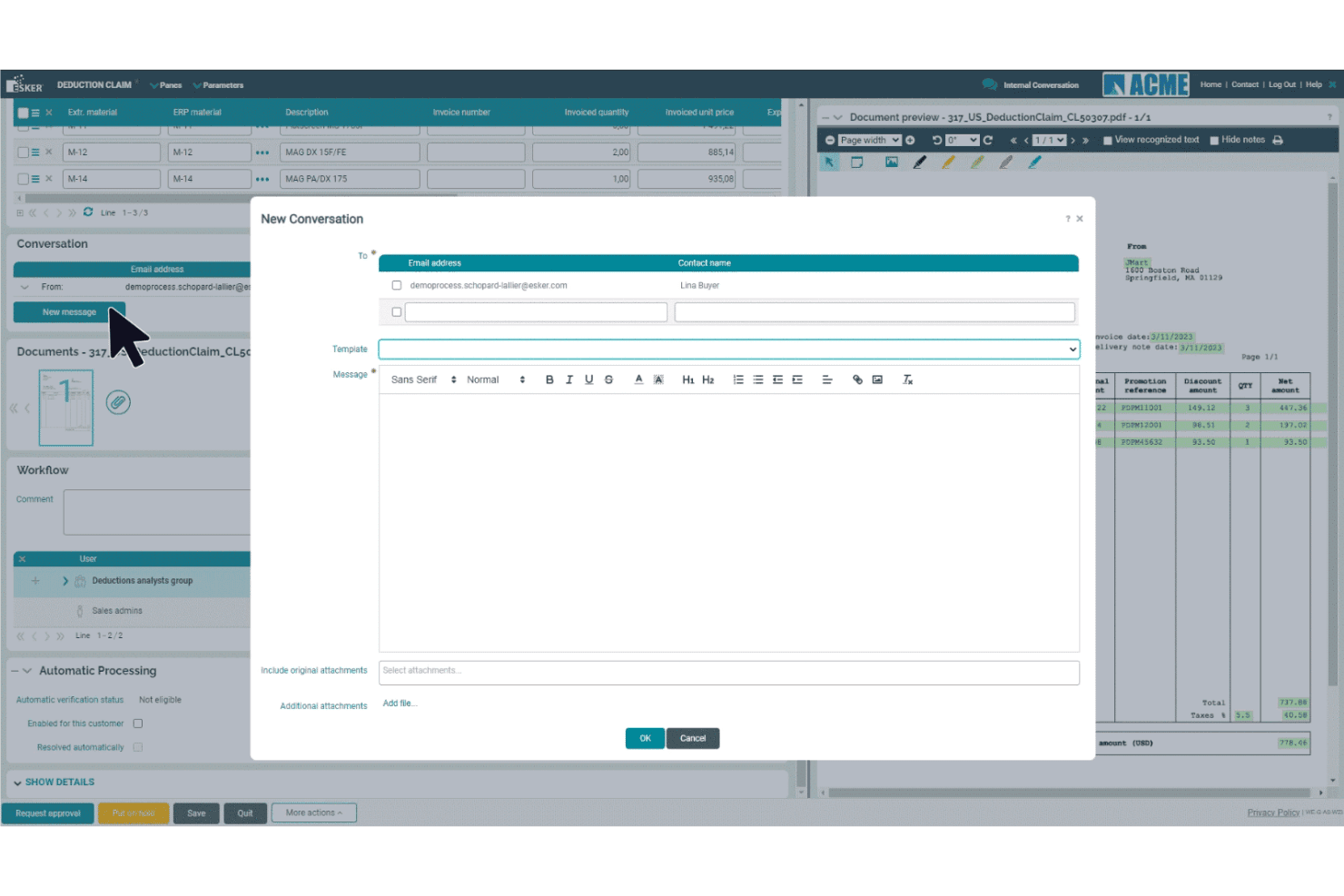
Esker consente agli utenti di inviare conversazioni interne direttamente da una richiesta di deduzione. Esker è una piattaforma cloud per l'automazione della contabilità clienti (AR) con un modulo per la gestione delle deduzioni che utilizza l'acquisizione dei dati tramite IA, il recupero dei documenti tramite RPA e flussi di lavoro configurabili per gestire le richieste di deduzione dei clienti sia commerciali sia non commerciali.
Per chi è più indicato Esker?
Esker è particolarmente adatto alle aziende manifatturiere del mercato medio e alle grandi imprese, nonché alle aziende di beni di consumo confezionati e del settore alimentare e delle bevande, che gestiscono elevati volumi di deduzioni dei clienti commerciali e non commerciali.
Perché ho scelto Esker
Esker merita un posto tra le migliori soluzioni della mia selezione per il modo in cui Esker Synergy AI gestisce la parte più impegnativa del lavoro sulle deduzioni. Mi piace il fatto che estragga e classifichi automaticamente le deduzioni da rimesse, note di addebito e fatture promozionali nelle categorie commerciali o non commerciali. I bot RPA recuperano i documenti giustificativi, come POD e BOL, direttamente dai portali dei rivenditori. Inoltre, l'IA apprende nel tempo dalle correzioni degli analisti, migliorando la precisione della codifica automatica quanto più la utilizzo.
Funzionalità principali di Esker
- Configurazione dei flussi di lavoro multilivello: Configura processi di approvazione personalizzati in base al tipo e al valore della deduzione, coinvolgendo i team della contabilità clienti, delle vendite e della catena di approvvigionamento.
- Recupero dei documenti basato su RPA: Automatizza la ricerca dei documenti giustificativi direttamente dai portali di rivenditori e vettori.
- Dashboard analitica integrata per la contabilità clienti: Monitora in un'unica schermata i KPI in tempo reale, come DDO, anzianità delle deduzioni e analisi delle cause principali.
- Integrazione con Salesforce: Sincronizza i dati dei casi relativi alle deduzioni e collabora con i team di vendita tramite una connessione API diretta.
Integrazioni di Esker
Esker offre integrazioni native con SAP, Oracle, Microsoft Dynamics 365, NetSuite, Sage, Salesforce e QuickBooks, oltre a fornire un'API per le integrazioni personalizzate.
Pros and Cons
Pros:
- La precisione della codifica automatica migliora con le correzioni degli analisti
- Gestisce richieste sia commerciali sia non commerciali
- Visibilità in tempo reale su DDO e sull'anzianità delle deduzioni
Cons:
- I tempi di implementazione possono estendersi per diversi mesi
- La configurazione completa richiede il supporto dedicato di un amministratore
Learn more about Esker: Ideale per la convalida delle detrazioni basata sull'intelligenza artificiale
- Demo gratuita disponibile
- Prezzi disponibili su richiesta
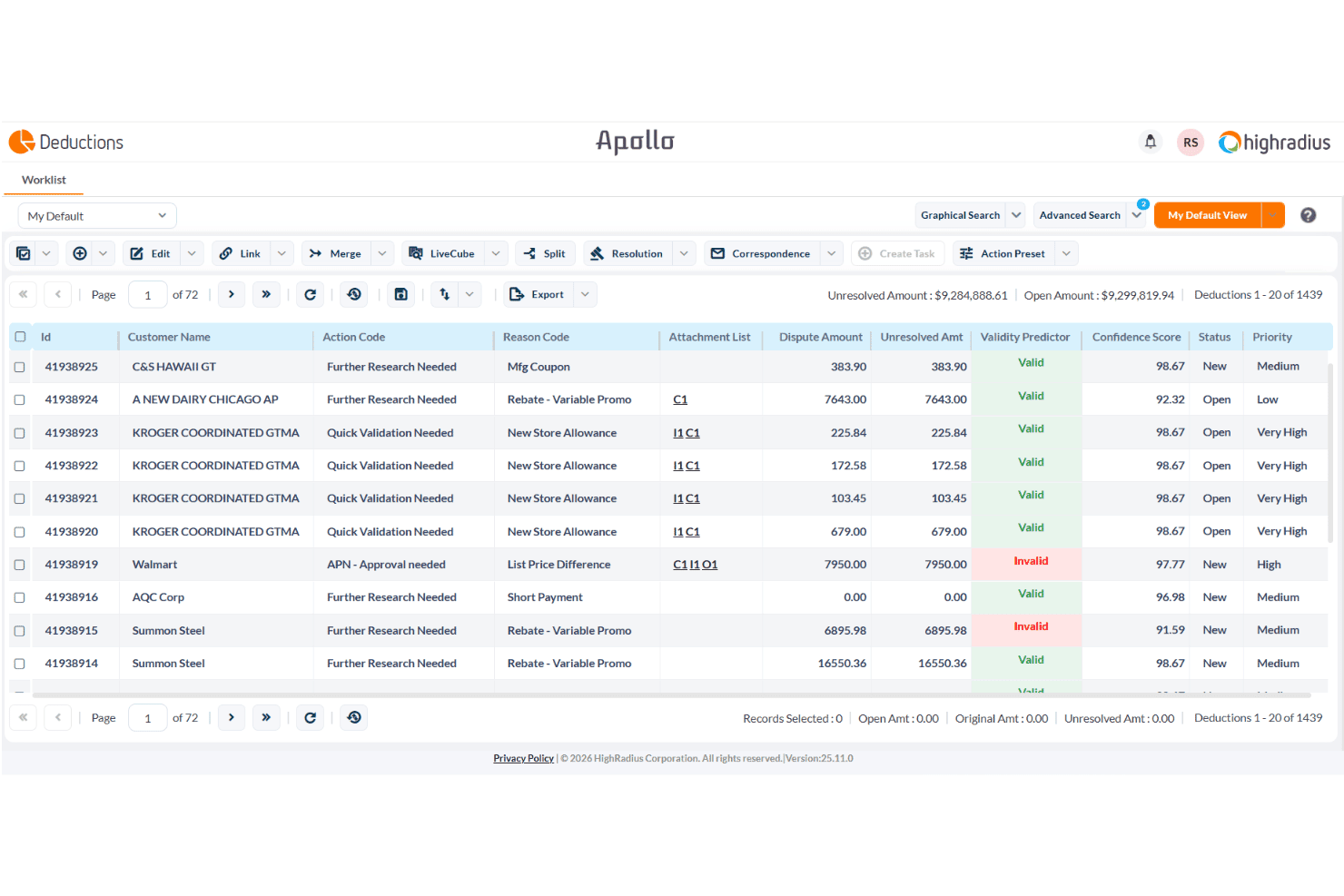
HighRadius aiuta gli utenti a gestire e stabilire le priorità delle detrazioni con previsioni di validità basate sull'intelligenza artificiale. HighRadius è una piattaforma per la gestione delle detrazioni basata sull'intelligenza artificiale che automatizza l'acquisizione delle richieste dai portali dei rivenditori, l'associazione dei documenti giustificativi, la codifica delle detrazioni e i flussi di lavoro per la risoluzione delle contestazioni nei team AR.
Per chi è più adatto HighRadius?
HighRadius è particolarmente adatto ai team AR aziendali nei settori CPG, alimentare e delle bevande e manifatturiero che gestiscono elevati volumi di detrazioni provenienti dai portali dei rivenditori.
Perché ho scelto HighRadius
HighRadius si è guadagnato un posto tra i migliori della mia selezione grazie al Predittore di validità delle detrazioni, che utilizza un punteggio di affidabilità basato sull'intelligenza artificiale per segnalare se una detrazione è valida o non valida prima che qualcuno la esamini manualmente. Apprezzo il fatto che l'agente Scaricamento delle richieste dal portale navighi automaticamente nei principali portali dei rivenditori, come Amazon e Kroger, per recuperare direttamente i documenti delle richieste, eliminando i ripetitivi accessi ai portali. L'agente Corrispondenza delle promozioni commerciali confronta quindi queste richieste con i dati TPM di SAP e i record POS per una convalida a più livelli.
Funzionalità principali di HighRadius
- Analisi delle variazioni delle carenze: Aggrega la prova di consegna e la documentazione del vettore per collegare le richieste alle carenze ai fini della convalida.
- Definizione delle priorità della lista di lavoro: Crea elenchi dinamici basati sull'intelligenza artificiale per organizzare e delegare le attività di ricerca sulle detrazioni nei team AR.
- Caricamento delle richieste non valide e gestione delle contestazioni: Prepara automaticamente i dossier delle contestazioni con gli allegati e li invia ai portali dei rivenditori.
- Collegamento dei documenti giustificativi delle detrazioni: Abbina e allega automaticamente tutta la documentazione giustificativa pertinente a ogni record di detrazione aperto.
Integrazioni di HighRadius
HighRadius offre integrazioni native con i sistemi ERP SAP, Oracle, NetSuite, Microsoft Dynamics 365, QuickBooks e Sage, oltre a un'API per integrazioni personalizzate.
Pros and Cons
Pros:
- Punteggio di validità basato sull'intelligenza artificiale prima dell'inizio della revisione manuale
- Navigazione automatica nei portali dei rivenditori per recuperare i documenti delle richieste
- Corrispondenza a più livelli delle promozioni commerciali con i dati TPM
Cons:
- Tempi di implementazione lunghi per le distribuzioni aziendali
- La personalizzazione dei report richiede il supporto dell'IT o del fornitore
Learn more about HighRadius: Ideale per la risoluzione autonoma delle deduzioni
- Demo gratuita disponibile
- Prezzi su richiesta
Visit WebsiteCustomer Rating:3.5/5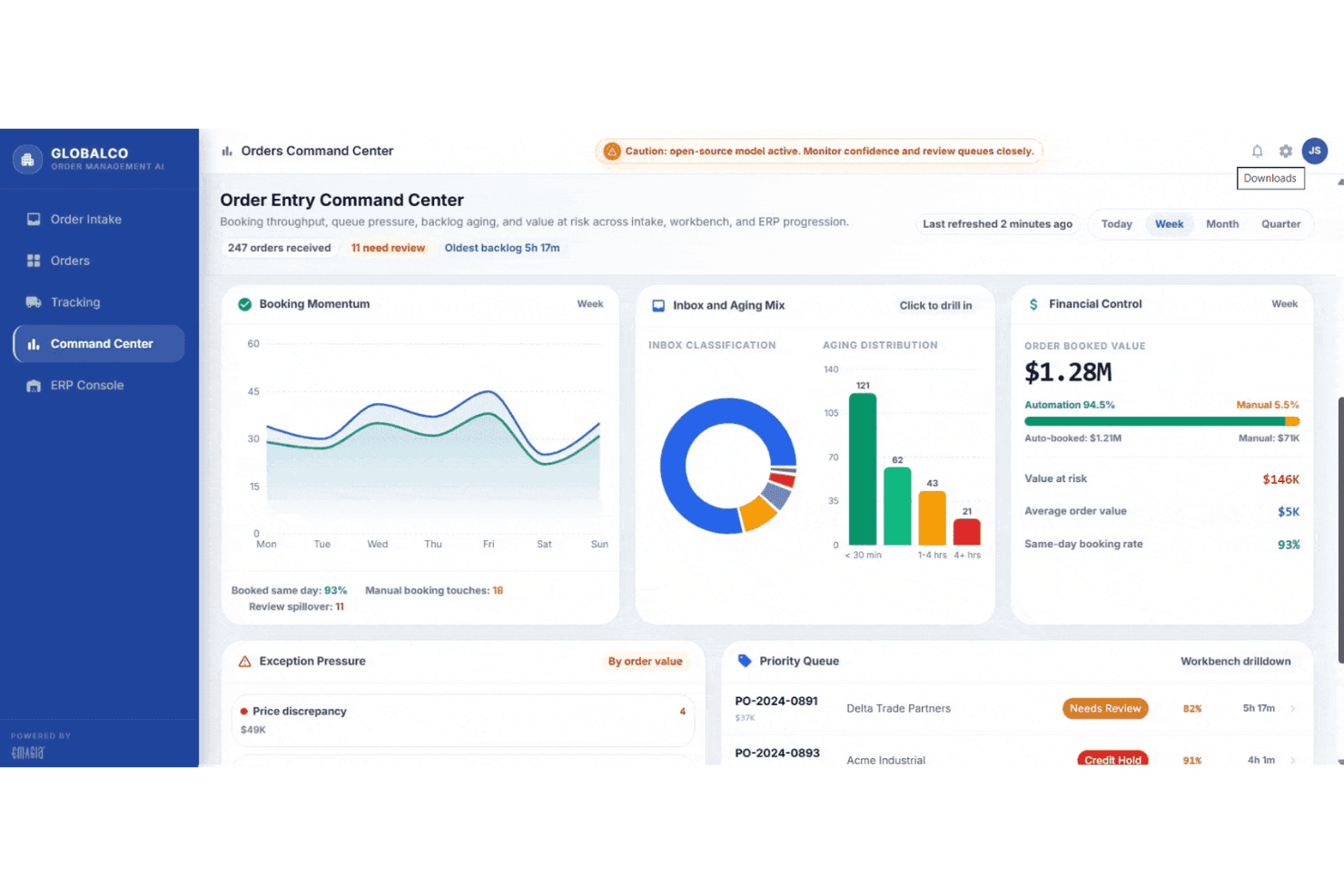
Emagia centralizza la gestione degli ordini con la registrazione basata sull'intelligenza artificiale e il monitoraggio delle eccezioni. Emagia è una piattaforma di gestione delle deduzioni basata sull'intelligenza artificiale che automatizza l'identificazione dei pagamenti inferiori, la classificazione dei codici causali, l'instradamento del flusso di lavoro delle contestazioni e il monitoraggio della risoluzione nell'intera funzione della contabilità clienti.
Per chi è più adatta Emagia?
Emagia è particolarmente adatta ai team finanziari aziendali e ai centri servizi condivisi che gestiscono grandi volumi di deduzioni su più sistemi ERP e unità aziendali.
Perché ho scelto Emagia
Ho scelto Emagia come una delle migliori soluzioni per il livello di autonomia che offre concretamente nella risoluzione. L'elaborazione in blocco delle richieste basata su regole approva automaticamente le deduzioni in base a decisioni aziendali predefinite, senza richiedere l'intervento di un analista. Inoltre, Gia AI identifica automaticamente i pagamenti inferiori e superiori, assegna i codici causali e instrada immediatamente ogni elemento nel flusso di lavoro corretto; ciò significa che il mio team non deve esaminare manualmente un arretrato prima ancora di poter iniziare il lavoro di risoluzione.
Caratteristiche principali di Emagia
- Libreria configurabile dei codici causali: Crea e gestisce codici causali personalizzati per le deduzioni, adattati alle esigenze aziendali.
- Integrazione con sistemi ERP e finanziari: Si connette a SAP, Oracle, Microsoft Dynamics, NetSuite, Sage e altre importanti piattaforme ERP.
- Aggregazione e collegamento dei documenti: Aggrega e allega documenti di supporto come fatture, POD e BOL ai casi di deduzione per una facile consultazione.
- Pannello di controllo analitico: Monitora l'anzianità delle deduzioni, i tassi di risoluzione e le tendenze per cliente o causa principale, per la revisione da parte della direzione.
Integrazioni di Emagia
Emagia offre integrazioni native con SAP, Oracle, NetSuite, PeopleSoft, Workday, Microsoft Dynamics e Sage. È disponibile un'API per le integrazioni personalizzate.
Pros and Cons
Pros:
- L'intelligenza artificiale risolve automaticamente fino all'80% delle deduzioni
- Dettaglio delle singole voci a livello di contestazione per le contestazioni delle fatture
- Matrice di delega delle autorità per i flussi di lavoro di approvazione
Cons:
- Nessun prezzo o accesso alla prova autonoma
- Complessità di implementazione negli ambienti con più sistemi ERP
Learn more about Emagia: Ideale per l'automazione delle richieste sui portali dei rivenditori
- Demo gratuita disponibile
- Prezzi su richiesta
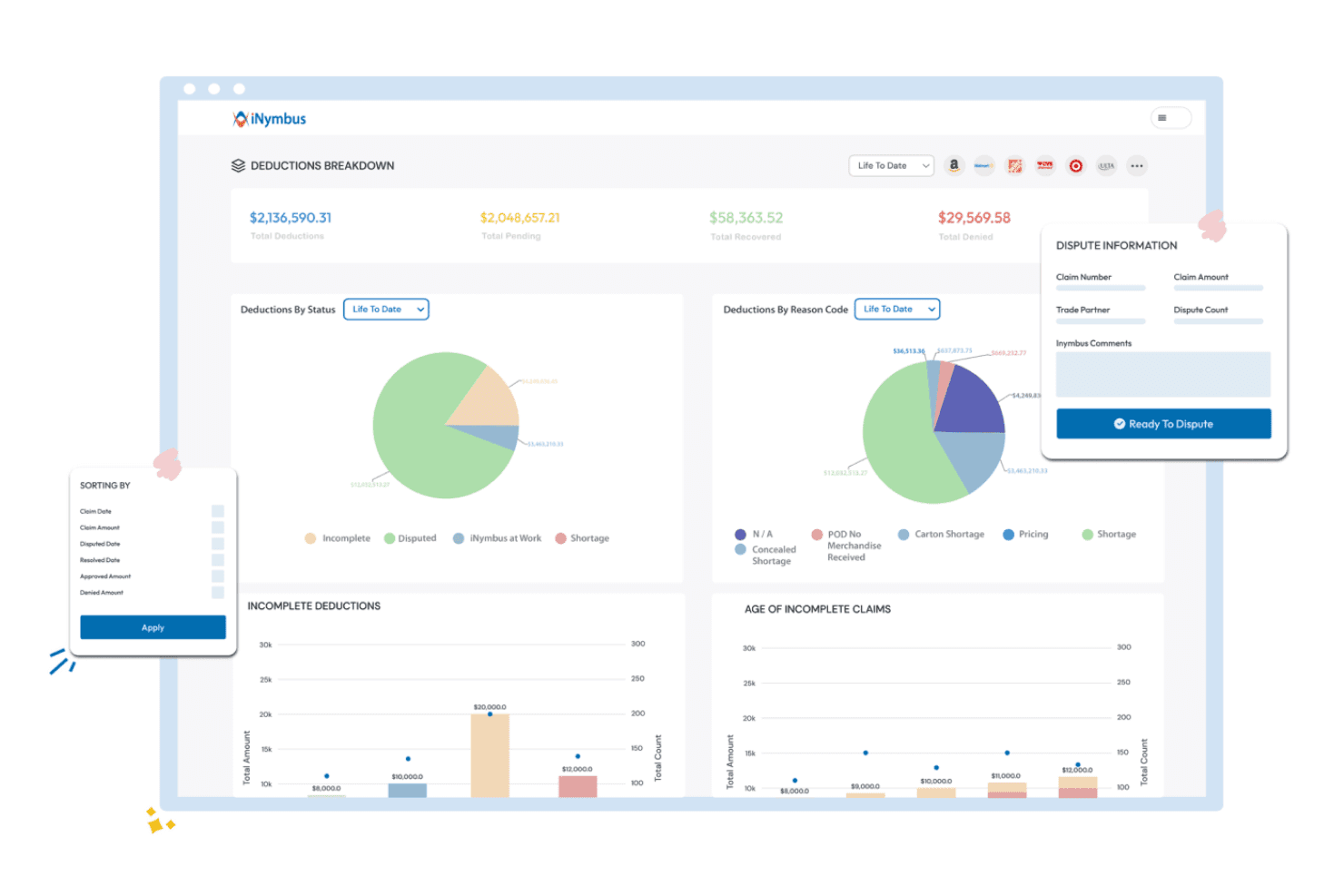
iNymbus DeductionXchange monitora e visualizza le deduzioni in base allo stato e al codice del motivo. iNymbus DeductionXchange è una piattaforma cloud per la gestione delle deduzioni che utilizza l'automazione robotica dei processi per acquisire, abbinare e contestare addebiti e richieste di rimborso dei rivenditori attraverso oltre 50 portali di rivenditori, transazioni EDI e canali basati sulla posta elettronica.
Per chi è più indicato iNymbus DeductionXchange?
È particolarmente adatto a produttori, distributori e fornitori di beni di largo consumo che gestiscono elevati volumi di deduzioni da parte dei rivenditori, inclusi grandi account come Walmart, Amazon o Target.
Perché ho scelto iNymbus DeductionXchange
Ho scelto iNymbus DeductionXchange come una delle soluzioni migliori per il modo in cui gestisce end-to-end l'invio tramite i portali dei rivenditori. I robot RPA recuperano i documenti relativi alle richieste, assemblano i fascicoli delle contestazioni e compilano automaticamente i campi obbligatori sui portali Walmart Retail Link, Amazon Vendor Central e oltre 50 altri portali, senza alcun accesso manuale. Apprezzo inoltre l'abbinamento con precisione al centesimo Walmart SQEP, che rileva le discrepanze negli importi prima dell'invio e riduce le contestazioni respinte.
Funzionalità principali di iNymbus DeductionXchange
- Pannello centralizzato delle deduzioni: Visualizza e gestisci tutte le deduzioni di più rivenditori in un unico luogo.
- Aggregazione automatizzata dei documenti: Recupera i documenti di supporto da fonti EDI, ERP, e-mail e portali.
- Supporto flessibile dei formati di file: Integra formati di file personalizzati per un'elaborazione fluida dei dati provenienti da diverse fonti.
- Strumenti di analisi delle cause principali: Visualizza i modelli e le cause principali delle deduzioni attraverso pannelli analitici dettagliati.
Integrazioni di iNymbus DeductionXchange
iNymbus DeductionXchange offre integrazioni native con SAP, Oracle, NetSuite, Microsoft Dynamics e QuickBooks e si collega alle piattaforme dei rivenditori, tra cui Walmart Retail Link e Amazon Vendor Central. È disponibile un'API per le integrazioni personalizzate.
Pros and Cons
Pros:
- Gestisce automaticamente gli invii a oltre 50 portali di rivenditori
- Abbina le deduzioni Walmart con precisione al centesimo
- Riduce significativamente il tempo necessario per la preparazione manuale delle contestazioni
Cons:
- Le opzioni di personalizzazione dei report sono limitate nella configurazione predefinita
- L'implementazione richiede una configurazione approfondita delle credenziali dei portali dei rivenditori
Learn more about iNymbus DeductionXchange: Ideale per il recupero esternalizzato dei ricavi al dettaglio
- Demo gratuita disponibile
- Prezzi su richiesta
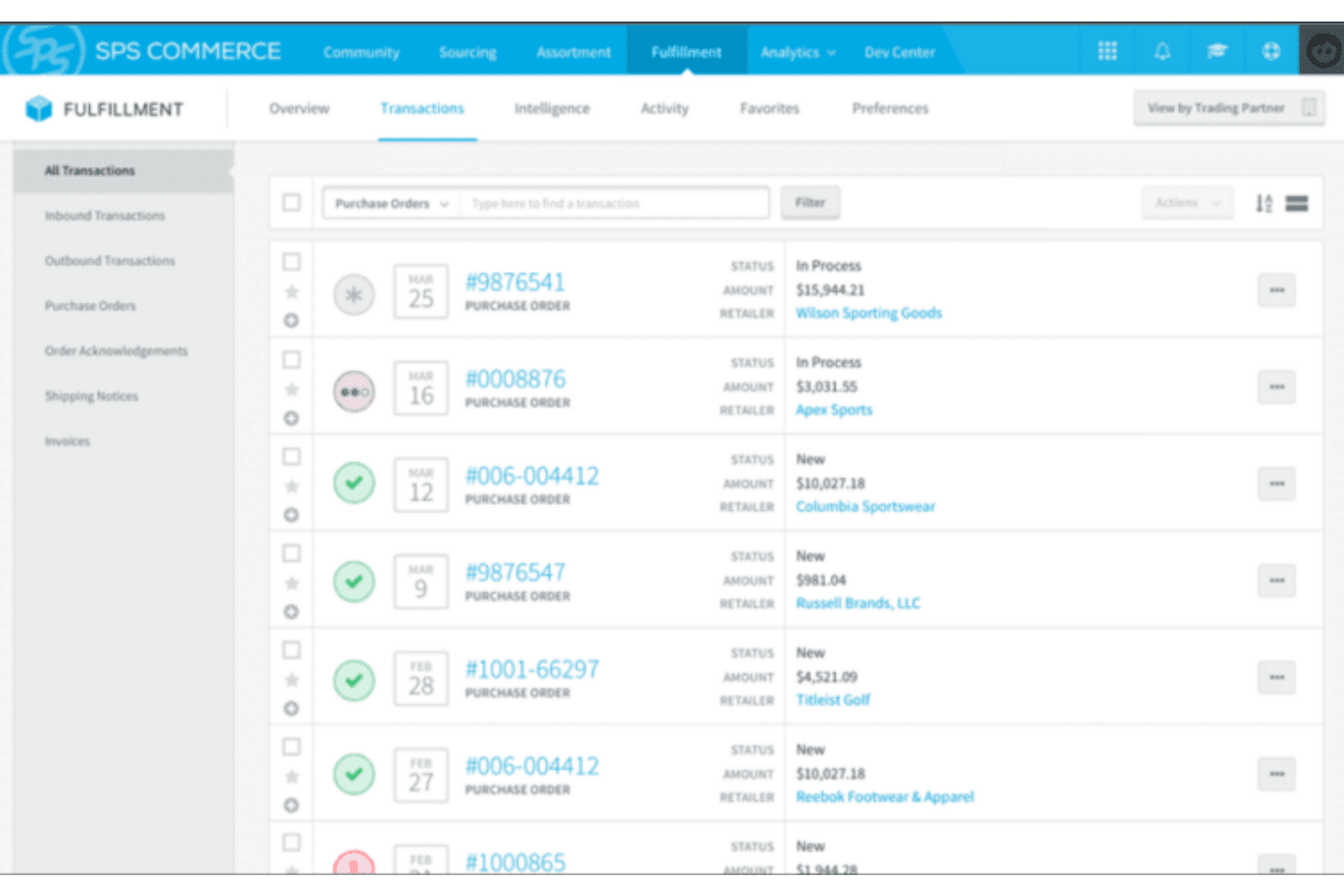
SPS Commerce centralizza il monitoraggio degli ordini di acquisto per individuare le lacune nei ricavi. SPS Commerce Revenue Recovery è una piattaforma per la gestione delle detrazioni al dettaglio che automatizza la registrazione delle detrazioni, il recupero dei documenti giustificativi, l'invio delle contestazioni e la creazione di report sulle cause principali presso i principali rivenditori, distributori e canali marketplace.
Per chi è più indicato SPS Commerce Revenue Recovery?
Marchi CPG e fornitori di beni di consumo che vendono attraverso le principali catene di vendita al dettaglio e desiderano un approccio gestito e guidato da esperti al recupero delle detrazioni.
Perché ho scelto SPS Commerce Revenue Recovery
Ho incluso SPS Commerce Revenue Recovery tra le mie scelte principali perché è l'unica piattaforma che conosco a offrire un modello di recupero realmente esternalizzato, in cui gli esperti SPS gestiscono per tuo conto l'intero ciclo di contestazione. Apprezzo il fatto che la piattaforma recuperi automaticamente i documenti giustificativi specifici di ciascun rivenditore e li alleghi alle detrazioni aperte prima dell'invio. I flussi di lavoro predefiniti per partner come Walmart, Amazon e Kroger garantiscono che i fascicoli di contestazione siano creati secondo le specifiche esatte di ogni rivenditore.
Funzionalità principali di SPS Commerce Revenue Recovery
- Dashboard centralizzata delle detrazioni: Visualizza, monitora e gestisci ogni detrazione, contestazione e risoluzione in un'unica interfaccia.
- Mappatura della conformità specifica per rivenditore: La logica integrata gestisce i requisiti per i chargeback di Walmart, Amazon, Kroger, CVS e altri.
- Analisi automatizzata delle cause principali: Evidenzia tendenze e modelli delle detrazioni tra clienti, codici causali e periodi, per consentire interventi mirati sui processi.
- Sicurezza dei dati SOC 2 di tipo II: Protegge i dati finanziari con backup orari, crittografia e gestione degli accessi basata sui ruoli.
Integrazioni di SPS Commerce Revenue Recovery
SPS Commerce Revenue Recovery offre integrazioni native con i principali portali dei rivenditori, come Walmart Retail Link, Amazon Vendor Central, Target Partners Online, Kroger Partners Portal e CVS Supplier Portal. È disponibile un'API per le integrazioni personalizzate.
Pros and Cons
Pros:
- Il ciclo di contestazione completamente gestito riduce il carico interno sui crediti
- Tasso di recupero fino al 99% sulle richieste valide
- Gli approfondimenti sulle cause principali prevengono il ripetersi dei tipi di detrazione
Cons:
- Nessun prezzo autonomo; è necessario parlare con il reparto vendite
- Meno adatto ai canali non al dettaglio o diretti al consumatore
Learn more about SPS Commerce Revenue Recovery:
Altri software per la gestione delle detrazioni
Ecco alcune ulteriori opzioni di software per la gestione delle detrazioni che non sono state incluse nel mio elenco, ma che vale comunque la pena valutare:
- 11UpClear BluePlannerIdeale per l'abbinamento tra promozioni commerciali e detrazioni
- 12VividlyIdeale per il monitoraggio delle deduzioni nel settore CPG
- 13BilltrustIdeale per i casi di contestazione AR centralizzati
- 14VersapayIdeale per le contestazioni delle fatture da parte dei clienti
- 15GavitiIdeale per le detrazioni nei flussi di lavoro AR
How I Evaluate Deduction Management Software
I split my evaluation into baseline requirements—like automated deduction capture and dispute workflows—and the differentiators, like retailer coverage and ERP fit, that separate good from great.
Core Functionality (Table Stakes For This List)
When I'm selecting tools for my list, I rank each one on a scale from 0 (does not offer the functionality) to 5 (excels in this area) for every core functionality below. I then calculate the total score as a percentage. I use 65% as a benchmark to assess overall fit for the list.
- Deduction Capture: I check whether the tool pulls deduction data from ERP systems, bank remittances, EDI 812/820 feeds, and retailer portals without manual uploads.
- Document Matching: Automatic retrieval and matching of PODs, BOLs, and invoices to open claims saves hours of portal-hopping across retailer systems.
- Deduction Coding: I evaluate how the tool classifies deductions by reason code—shortages, pricing errors, promotional claims—to support root-cause analysis.
- Dispute Workflows: Multi-role workflows with audit trails matter here, especially when AR, sales, and trade teams all need to collaborate on approvals and escalations.
- Recovery Management: I look for automated chargeback packet assembly and submission, plus tracking through to repayment—manual packet building doesn't scale.
- Analytics & Reporting: Dashboards should track deduction aging, recovery rates, and root causes by customer or reason code to surface trends worth acting on.
Next, once I have a list of tools that meet the criteria, I consider what sets each platform apart.
Differentiating Factors (What Sets Vendors Apart)
Here's how I compare and contrast different vendors:
Standout Features
AI-powered deduction coding can automatically classify claims by reason code using historical patterns. This can cut triage time on high-volume accounts. Automated backup document retrieval is another key differentiator. Native retailer portal connectors can pull PODs and claim documents without manual downloads. For CPG brands, I also evaluate trade promotion matching. This helps validate deductions against TPM systems or promotional calendars.
Beyond Features
ERP integration depth also matters. I check whether a platform syncs with AR aging and cash application data in systems like SAP, NetSuite, or Oracle. Similarly, retailer coverage is important for companies selling through major retail or foodservice channels. Pricing models also vary across this space. Some vendors use SaaS subscriptions, while others charge contingency-based recovery fees.
Come scegliere un software per la gestione delle detrazioni
Quando confronti i software per la gestione delle detrazioni, concentrati su quanto ogni piattaforma si adatti al tuo flusso di lavoro per la contabilità clienti, al volume delle detrazioni, all'ambiente ERP e alle fonti delle richieste.
| Se la tua priorità è | Cerca |
| Corrispondenza rapida dei documenti | Connettori preconfigurati per i portali dei rivenditori |
| Comprensione della causa principale delle detrazioni | Codifica basata sull'intelligenza artificiale e analisi granulari |
| Gestione della combinazione di EDI/portali dei rivenditori | Acquisizione automatica da EDI 812 e portali non EDI |
| Recupero semplificato degli addebiti | Invio automatico dei documenti con monitoraggio dei rimborsi |
| Integrazione con ERP e TPM | Sincronizzazione bidirezionale con il tuo stack finanziario principale |
Come valutare il tuo elenco
- Prova l'acquisizione automatica con documenti di pagamento di esempio: carica almeno 3 file di detrazioni variati dei rivenditori e confronta le acquisizioni automatiche entro 48 ore.
- Richiedi un report di esempio sugli allegati delle richieste di rimborso: Ottieni una dimostrazione dal vivo che mostri come POD, fattura e BOL vengono associati automaticamente alle richieste di rimborso di un cliente attuale.
- Mappa le fasi del flusso di lavoro rispetto alle tue SOP: Richiedi lettere di contestazione preimpostate, ruoli utente e percorsi di escalation, quindi confrontali con il tuo processo AR.
- Esigi una traccia di controllo: Richiedi un registro di audit di esempio che includa tutte le azioni relative alle detrazioni, gli identificativi degli utenti e i timestamp per la convalida della conformità.
- Compromesso—automazione dall'inizio alla fine rispetto alla personalizzazione: Decidi se hai bisogno di un'automazione completa o di una maggiore personalizzazione. Gli strumenti più configurabili possono richiedere una supervisione aggiuntiva.
Che cos'è il software per la gestione delle detrazioni?
Il software per la gestione delle detrazioni è uno strumento specializzato per la gestione dei crediti commerciali. Automatizza l'acquisizione, la codifica, l'associazione dei documenti e la risoluzione delle richieste di detrazione dei clienti. Queste piattaforme possono connettersi al tuo ERP, ai flussi EDI e ai portali dei rivenditori. Ciò contribuisce a ridurre il lavoro manuale, migliorare i tempi di gestione delle contestazioni e individuare le cause dei pagamenti inferiori o degli addebiti. Di conseguenza, i team finanziari possono utilizzare questi strumenti per accelerare il recupero e monitorare le tendenze relative alle detrazioni.
Funzionalità del software per la gestione delle detrazioni
Quando confronti software per la gestione delle richieste di rimborso e delle detrazioni, cerca funzionalità che supportino l'intero processo, dall'acquisizione e convalida della richiesta fino alla risoluzione della contestazione e al recupero:
- Acquisizione e aggregazione delle detrazioni: Raccoglie automaticamente i dati sulle detrazioni dai sistemi ERP, dai flussi EDI, dalle rimesse e dai portali dei rivenditori, eliminando la raccolta manuale.
- Associazione delle richieste e dei documenti di supporto: Recupera, associa e allega prove di consegna, polizze di carico e fatture alle relative richieste di detrazione, semplificandone la convalida.
- Categorizzazione per codice causale: Assegna ogni detrazione a codici causali specifici, come ammanchi, prezzi o conformità, aiutando i team AR ad analizzare e affrontare le cause principali.
- Flusso di lavoro per contestazioni e approvazioni: Gestisce ogni fase di convalida, escalation, contestazione o storno delle detrazioni utilizzando tracce di controllo e percorsi di approvazione chiaramente definiti.
- Generatore di pacchetti per addebiti e recuperi: Riunisce la documentazione e i moduli pertinenti in pacchetti per gli addebiti. I team possono quindi inviarli ai clienti per recuperare le detrazioni non valide.
- Integrazione con rivenditori ed EDI: Si connette nativamente ai principali portali dei rivenditori e supporta i formati EDI 812/820. Ciò aiuta i team a gestire sia i formati elettronici sia quelli manuali delle richieste.
- Dashboard e report configurabili: Offre dashboard che visualizzano le tendenze delle detrazioni, l'anzianità e i tassi di recupero, aiutando i team a monitorare i KPI e individuare gli schemi ricorrenti.
- Autorizzazioni e ruoli utente: Consente di configurare diversi livelli di accesso, garantendo la tracciabilità e la conformità mentre i team AR, vendite e finanza collaborano.
- Monitoraggio del registro di audit: Registra ogni azione e modifica degli utenti all'interno della piattaforma, semplificando il monitoraggio della cronologia delle decisioni e il supporto ai controlli finanziari.
- Notifiche automatiche: Invia avvisi per nuove richieste, scadenze delle approvazioni o escalation del flusso di lavoro, così nulla viene trascurato.
Funzionalità AI nel software per la gestione delle detrazioni
Le funzionalità AI nei software per la gestione delle detrazioni possono aiutare i team che si occupano dei crediti commerciali a classificare le detrazioni, convalidare le richieste, associare i documenti di supporto, definire la priorità delle contestazioni e identificare schemi che possono contribuire al ripetersi delle detrazioni. Dai un'occhiata qui sotto:
- Codifica delle detrazioni basata sull'AI: Utilizza l'apprendimento automatico per classificare automaticamente le detrazioni in base al codice causale, basandosi sugli schemi storici delle richieste e riducendo il tempo dedicato alla revisione manuale.
- Risoluzione predittiva delle contestazioni: Analizza gli esiti passati per suggerire le strategie di contestazione più efficaci e prevedere la probabilità di recupero per ogni richiesta.
- Associazione automatica dei documenti: Utilizza l'AI per identificare, estrarre e collegare i documenti di supporto, come POD e fatture, alla detrazione corretta, anche quando i formati o le convenzioni di denominazione variano.
- Analisi delle tendenze delle cause principali: utilizza l'IA per individuare schemi e anomalie emergenti nei dati delle deduzioni. Questo aiuta i team ad affrontare i problemi ricorrenti e a prevenire richieste future.
- Instradamento intelligente dei flussi di lavoro: assegna dinamicamente i casi di deduzione ai membri del team o ai percorsi di escalation appropriati in base alla complessità della richiesta, alla cronologia del cliente e all'equilibrio del carico di lavoro.
- Elaborazione del linguaggio naturale per la revisione delle richieste: utilizza l'IA per interpretare e riepilogare descrizioni non strutturate delle richieste o documentazione di supporto. Questo può rendere più semplici da convalidare e risolvere le deduzioni complesse.
Vantaggi del software per la gestione delle deduzioni
Il software per la gestione delle deduzioni aiuta i team della contabilità clienti a ridurre il lavoro manuale, risolvere più rapidamente le deduzioni, migliorare i tassi di recupero e ottenere una visibilità maggiore sulle cause delle deduzioni dei clienti. Ecco alcuni vantaggi da aspettarsi:
- Risoluzione più rapida delle richieste: l'acquisizione automatizzata dei dati, la corrispondenza dei documenti e il monitoraggio dei flussi di lavoro aiutano i team a elaborare più rapidamente le richieste di deduzione.
- Migliori tassi di recupero: la generazione dei pacchetti di chargeback e l'automazione delle contestazioni aiutano a identificare e recuperare un numero maggiore di deduzioni non valide.
- Analisi più approfondita delle cause principali: la categorizzazione, l'analisi e gli approfondimenti basati sull'IA rendono più semplice individuare le tendenze e affrontare i problemi ricorrenti relativi alle deduzioni.
- Minore impegno manuale: le integrazioni con ERP, EDI e i portali dei rivenditori riducono al minimo download, caricamenti e inserimenti ripetitivi dei dati.
- Migliore collaborazione tra i team: i flussi di lavoro basati sui ruoli e i registri di audit collegano i team della contabilità clienti, delle vendite e delle attività commerciali, così nulla viene trascurato o duplicato.
- Maggiore sicurezza in materia di conformità: i registri di audit e i controlli delle autorizzazioni facilitano l'applicazione delle policy interne e la conformità al SOX o a normative finanziarie simili.
- Maggiore visibilità finanziaria: i dashboard personalizzati e i report in tempo reale chiariscono l'attività relativa alle deduzioni, i tassi di recupero e i rischi residui per i responsabili finanziari.
Costi e prezzi
Il prezzo del software per la gestione delle deduzioni si basa generalmente su un preventivo. I costi possono variare in base al volume delle deduzioni, al numero di utenti, alle integrazioni ERP, alla copertura dei rivenditori e ai requisiti di implementazione. Molti fornitori orientati alle aziende non pubblicano prezzi standard. Di solito è necessario contattare il fornitore per ottenere un preventivo personalizzato. Di seguito sono riportate alcune opzioni di prezzo tipiche:
Tabella di confronto dei piani per il software di gestione delle deduzioni
| Tipo di piano | Prezzo medio | Funzionalità comuni |
|---|---|---|
| Tipo di pianoPiano gratuito | Prezzo medio$0 | Funzionalità comuniMonitoraggio di base delle deduzioni, caricamenti di documenti limitati, accesso per un singolo utente e supporto via e-mail. |
| Tipo di pianoPiano personale | Prezzo medio$50-$150/utente/mese | Funzionalità comuniAcquisizione standard delle richieste, corrispondenza automatizzata dei documenti, modelli di flussi di lavoro e dashboard di analisi di base. |
| Tipo di pianoPiano aziendale | Prezzo medio$200-$700/utente/mese | Funzionalità comuniCollaborazione tra più utenti, integrazione ERP ed EDI, report personalizzati, flussi di lavoro di approvazione configurabili e registri di audit. |
| Tipo di pianoPiano per grandi aziende | Prezzo medio$1,000+/mese | Funzionalità comuniFunzionalità avanzate di IA, integrazioni illimitate con i portali dei rivenditori, supporto premium, strumenti completi per la conformità e integrazione con i sistemi TPM. |