

I 10 migliori software per richieste di acquisto recensiti nel 2026

Selezione dei migliori software per le richieste di acquisto


In qualità di CFO, affronti sfide costanti nella gestione dei budget, nella riduzione dei costi e nel garantire che le spese del tuo team siano in linea con gli obiettivi aziendali. Il software per le richieste di acquisto può aiutarti a controllare le spese e a migliorare l'efficienza degli approvvigionamenti. Automatizza il processo di approvazione, riducendo gli errori e risparmiando tempo.
Da anni esamino software finanziari e so cosa funziona. In questo articolo condividerò le mie migliori scelte tra i software per le richieste di acquisto. Ogni opzione è stata testata in modo indipendente, così puoi avere una valutazione imparziale.
Troverai informazioni sulle funzionalità, sui prezzi e sui vantaggi esclusivi più adatti alle tue esigenze. Il mio obiettivo è aiutarti a prendere decisioni informate, così il tuo team può concentrarsi su ciò che conta di più.
Perché fidarsi dei nostri consigli sui software
Le nostre recensioni riflettono il nostro giudizio indipendente, non un discorso di vendita. Scopri come manteniamo la trasparenza.
Per questa guida, abbiamo valutato gli strumenti attraverso test pratici e ricerche indipendenti, assegnando un punteggio agli strumenti in base ai nostri criteri di selezione.
Le nostre recensioni riflettono il nostro giudizio editoriale umano, non un discorso di vendita.
Riepilogo dei migliori software per le richieste di acquisto
Questa tabella comparativa riassume i dettagli dei prezzi delle mie migliori selezioni di software per le richieste di acquisto, per aiutarti a trovare quello più adatto al tuo budget e alle esigenze della tua azienda.
| Tool | Best For | Trial Info | Price | ||
|---|---|---|---|---|---|
| 1 | Best for automated contract compliance | 30-day free trial | Pricing upon request | Website | |
| 2 | Best for customizable procurement workflows | Free trial + free demo available | From $225/user/month (billed annually) | Website | |
| 3 | Best for AI-driven purchasing recommendations | Free demo available | From $699/month | Website | |
| 4 | Best for simple requisitions with quick approvals | Free 14-day trial + demo available | Pricing upon request | Website | |
| 5 | Best for multi-user collaborative purchasing | Free 14-day trial + demo available | From $250/month | Website | |
| 6 | Best for centralized purchasing and vendor control | Free demo available | From $598/month | Website | |
| 7 | Best for hardware sourcing | Free trial available | From $249/month | Website | |
| 8 | Best for in-depth spend and trend analytics | Free demo available | Pricing upon request | Website | |
| 9 | Best for tool and asset management | Free demo available | Pricing upon request | Website | |
| 10 | Best for policy-driven budget tracking | Free demo + 14-day trial available | From $499/month (billed annually) | Website |
Recensione dei migliori software per le richieste di acquisto
Di seguito trovi i miei riepiloghi dettagliati dei migliori software per le richieste di acquisto inclusi nella mia selezione. Le mie recensioni offrono un’analisi approfondita delle funzionalità principali, dei pro e dei contro, delle integrazioni e dei casi d’uso ideali di ogni strumento, per aiutarti a trovare quello più adatto a te.
Best for automated contract compliance

CobbleStone Software is a contract management solution tailored for businesses that need precise contract compliance. It serves legal and procurement teams by refining contract lifecycle management and ensuring adherence to compliance standards.
Why I picked CobbleStone Software: Its advanced contract compliance features help your team maintain regulatory standards. The platform provides automated notifications and alerts for contract renewals, ensuring timely actions. It includes detailed audit trails that provide your team with transparency and accountability. CobbleStone's focus on compliance helps mitigate risks associated with contract management.
Standout features and integrations:
Features include a user-friendly dashboard that gives your team a clear view of contract statuses. It offers customizable templates for contract creation, which simplify the drafting process. Additionally, the software supports electronic signatures, making contract execution efficient.
Integrations include Salesforce, Microsoft Dynamics 365, HubSpot, Sage Intacct, and more.
Pros and Cons
Pros:
- Customizable contract templates
- Detailed audit trails
- Advanced contract compliance features and alerts
Cons:
- Requires significant implementation and customization time
- Extensive functionality may be overwhelming for smaller teams

Best for customizable procurement workflows

Tradogram is a purchase requisition software designed for businesses that need flexible procurement solutions. It caters to teams seeking customizable workflows to manage purchasing, supplier, and stakeholder relationships effectively.
Why I picked Tradogram: It offers adaptable workflow settings to allow your team to tailor procurement processes to specific needs. The software supports detailed supplier management, helping you maintain strong vendor relationships. With budget control features, your team can keep track of spending with precision. Tradogram's focus on customization ensures it merges into your existing workflows.
Standout features and integrations:
Features include multi-currency support to enable your team to handle international transactions with ease. The platform provides detailed reporting tools, giving you insights into procurement trends. Additionally, its contract management capabilities help you manage agreements efficiently.
Integrations include QuickBooks, Xero, NetSuite, Sage Intacct, Microsoft Dynamics, and more.
Pros and Cons
Pros:
- Multi-currency support
- Detailed supplier management
- Customizable approval workflows
Cons:
- Limited mobile app functionality
- Reporting lacks advanced analytics

Zapro
Best for AI-driven purchasing recommendations

Zapro is a procurement software solution designed for businesses looking to leverage AI-driven insights in their purchasing processes. It caters to procurement teams by automating data analysis and enhancing decision-making capabilities.
Why I picked Zapro: It excels in providing AI-driven insights that help your team make informed purchasing decisions. The platform's predictive analytics offer foresight into market trends and assist in strategic planning. Real-time data visualization allows you to track procurement metrics effortlessly. Zapro's focus on AI-driven insights enables your team to optimize its procurement strategies.
Standout features and integrations:
Features include customizable dashboards that let your team tailor data views to specific needs. The platform supports advanced reporting tools, providing detailed insights into procurement activities. Additionally, it offers supplier performance tracking, helping you maintain strong vendor relationships.
Integrations include SAP, Oracle, Microsoft Dynamics 365, Salesforce, QuickBooks, Xero, NetSuite, Slack, and more.
Pros and Cons
Pros:
- Real-time data visualization
- Predictive analytics capabilities
- Refined procurement and AP automation
Cons:
- Limited contract authoring functionality
- Advanced features can be hard to navigate

Best for simple requisitions with quick approvals

eRequisition is a purchase order approval system tailored for businesses of all sizes, focusing on efficient procurement management. It serves various industries by automating workflows and enhancing financial controls through defined user roles and permissions.
Why I picked eRequisition: The tool simplifies the requisition process with automated approval workflows, ensuring quick approvals. It integrates with ERP systems, such as QuickBooks, reducing manual entry errors for requesters. The platform offers real-time tracking, providing approvers and the broader team with valuable insights for better decision-making. Its focus on rapid approvals helps maintain efficiency throughout the entire process of procurement.
Standout features and integrations:
Features include master data management, which allows your team to organize and maintain essential business data. Requisition management simplifies the creation and tracking of purchase requests. The platform also supports purchase order receiving to ensure accurate order fulfillment.
Integrations include QuickBooks Online, QuickBooks Desktop, and NetSuite.
Pros and Cons
Pros:
- Automates and centralizes procurement processes
- Real-time requisition tracking capabilities
- Automated approval workflows
Cons:
- Limited advanced purchasing features
- Some reporting capabilities are basic

Best for multi-user collaborative purchasing

Team Procure is a procurement management software aimed at businesses looking to enhance collaboration in purchasing. It helps procurement teams manage purchase requests, approvals, and supplier relationships efficiently.
Why I picked Team Procure: It excels in facilitating collaborative purchasing with features such as custom approval workflows, enabling your team to tailor processes to fit your needs. Real-time tracking of purchase requests helps maintain transparency and accountability. The software also supports managing multiple warehouses and delivery schedules, which ensures smooth operations. Team Procure's focus on collaboration helps manage the flow of procurement activities across departments.
Standout features and integrations:
Features include advanced eAuction tools, allowing your team to optimize procurement costs. The platform supports detailed spend analysis and provides insights into purchasing patterns. Additionally, its AI-powered reporting tools support enhanced decision-making capabilities.
Integrations include QuickBooks.
Pros and Cons
Pros:
- Advanced eAuction tools
- Centralized vendor and order management
- Facilitates collaborative purchasing
Cons:
- Reporting and analytics may lack depth
- Limited financial system integrations


ProcureDesk is a procurement management solution designed for mid-sized businesses. It focuses on efficient purchasing and cost control to help finance and procurement teams automate their buying processes and manage supplier relationships effectively.
Why I picked ProcureDesk: It offers tailored solutions for mid-sized businesses, with such features as budget management and customized approval workflows. It enables you to track spending in real-time, ensuring financial control across departments. The platform's reporting tools allow your team to analyze procurement data and make informed decisions. ProcureDesk can automate the purchase requisition process for mid-sized businesses that have outgrown spreadsheets.
Standout features and integrations:
Features include purchase order automation to improve the efficiency of your team's buying process. The platform's vendor management tools can help you maintain strong supplier relationships. Additionally, ProcureDesk offers spend analytics that give insights into procurement trends and help you optimize costs.
Integrations include QuickBooks, Xero, Sage Intacct, NetSuite, Microsoft Business Central, and more.
Pros and Cons
Pros:
- Effective vendor management
- Real-time spend tracking
- Tailored for mid-sized businesses
Cons:
- Limited native support for ERPs
- Initial setup can seem complex

Best for hardware sourcing

ControlHub is a procurement management software tailored for businesses focusing on hardware acquisition and inventory management. It serves operations and procurement teams by automating purchase requests, approvals, and inventory tracking.
Why I picked ControlHub: It specializes in hardware procurement, with features such as automated purchase order creation and inventory management. Your team can benefit from real-time stock level monitoring, ensuring you never run out of essential hardware. The software's approval workflows organize decision-making and reduce delays in procurement processes. ControlHub's focus on hardware procurement makes it an ideal choice for businesses that rely heavily on physical inventory.
Standout features and integrations:
Features include detailed vendor management tools that allow your team to maintain strong supplier relationships. The platform supports budget tracking, helping you control spending effectively. Additionally, it offers advanced reporting capabilities and provides insights into procurement trends and performance.
Integrations include QuickBooks, Slack, and more.
Pros and Cons
Pros:
- Detailed vendor management tools
- Real-time stock level monitoring
- Focused on hardware procurement
Cons:
- Reporting and analytics may be basic
- Limited ERP integration coverage


Fraxion is a spend management solution designed for businesses seeking enhanced visibility into their procurement processes. It serves finance teams by providing tools to control expenses and monitor spending patterns effectively.
Why I picked Fraxion: It offers real-time spend visibility, helping your team stay on top of budget management. The software includes built-in compliance features to ensure purchasing aligns with company policies. With its intuitive dashboard, you can quickly access key financial data, while Fraxion's focus on spend visibility supports informed financial decisions.
Standout features and integrations:
Features include customizable approval workflows that allow your team to define purchasing protocols. The platform supports detailed reporting, giving insights into spending trends and budget performance. Additionally, mobile access enables you to manage approvals and track expenses on the go.
Integrations include QuickBooks, Xero, NetSuite, Microsoft Dynamics 365, Sage Intacct, Oracle, and more.
Pros and Cons
Pros:
- Customizable approval workflows
- Advanced mobile apps
- AI-powered spend analytics
Cons:
- Some invoice adjustment limitations
- Too many features for small businesses


TDM Systems is a tool management software designed for manufacturing companies seeking to track and organize production tool information. It helps production teams optimize tool usage, reduce tool-related costs, and improve production planning.
Why I picked TDM Systems: It offers extensive tool management features that enhance operational efficiency in manufacturing settings. The software provides detailed tool tracking, helping your team maintain optimal inventory levels. Its integration with CAD/CAM systems simplifies tool data transfer and setup. TDM Systems' focus on tool management ensures your production processes run smoothly and efficiently.
Standout features and integrations:
Features include advanced tool lifecycle management, enabling your team to track tool usage and maintenance schedules. The platform supports detailed reporting, providing insights into tool performance and usage patterns. Additionally, it offers customizable tool catalogs, allowing you to manage tool data effectively.
Integrations include Siemens NX, Autodesk Inventor, SolidWorks, Mastercam, Edgecam, TopSolid, and more.
Pros and Cons
Pros:
- Centralized tool data repository
- Integration with CAD/CAM systems
- Extensive tool and asset management features
Cons:
- Complex for smaller businesses
- Requires initial investment in planning, setup, and training

Precoro
Best for policy-driven budget tracking
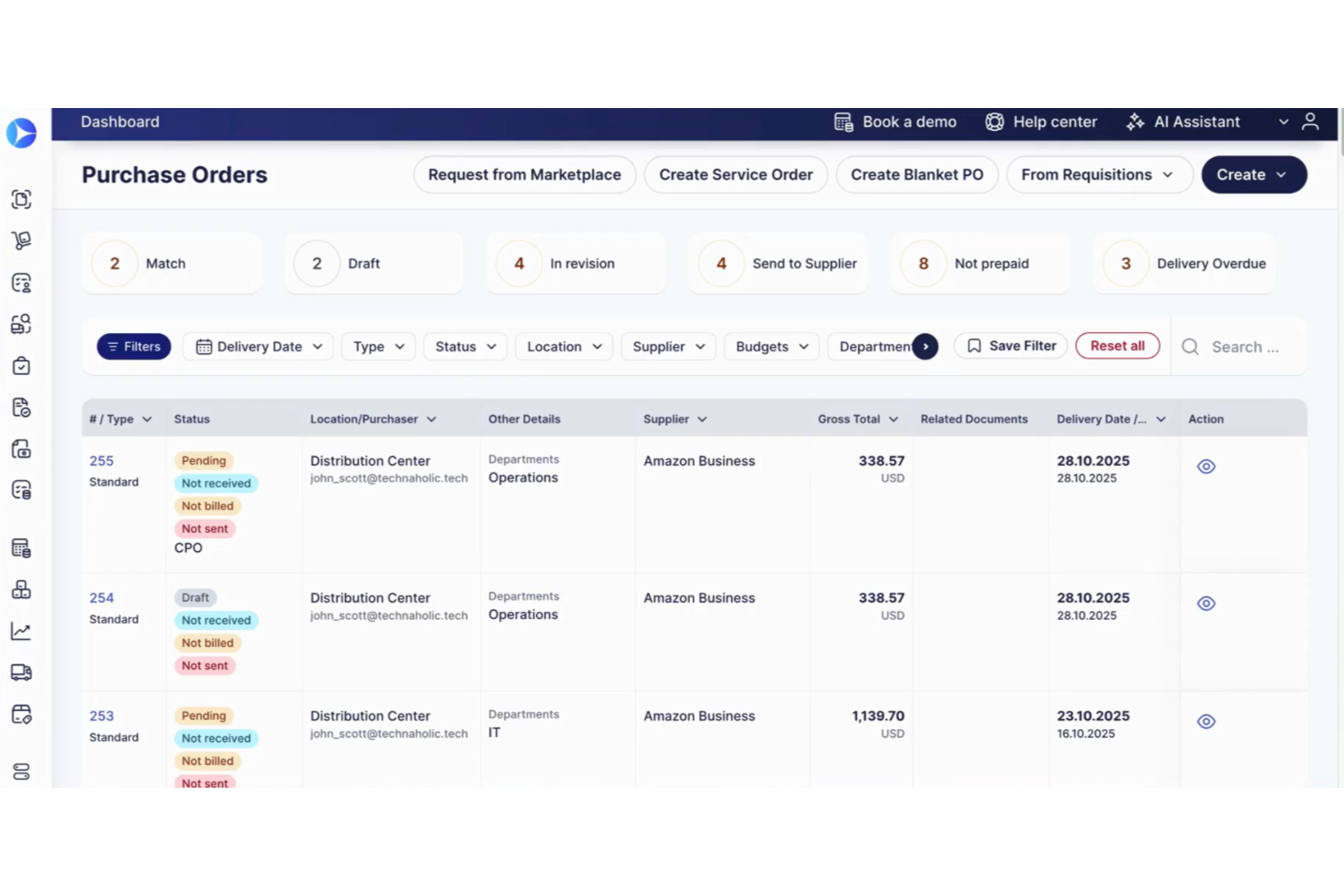
Precoro is a purchase requisition software designed for businesses focused on effective budget management. It serves finance teams by automating purchasing processes and enhancing financial oversight.
Why I picked Precoro: It simplifies budget tracking with real-time spend visibility to ensure your team stays within financial thresholds. The software offers complete purchase order management, allowing you to oversee each step of the procure-to-pay process. With automated approval workflows, your team can reduce manual data entry errors and speed up approvals. Its focus on budget tracking helps maintain financial control across different departments.
Standout features and integrations:
Features include detailed reporting capabilities, customizable purchase order templates, and supplier management tools. Your team can generate reports that provide insights into spending trends. The software supports supplier relationship management, enhancing procurement efficiency.
Integrations include QuickBooks Online, Xero, NetSuite, Microsoft Dynamics 365, Google Workspace, Slack, Amazon Business, and more.
Pros and Cons
Pros:
- Flexible approval workflows
- Automated purchase orders
- Real-time budget insights
Cons:
- Automation depth varies by integration
- Limited advanced analytics and customization options
New Product Updates from Precoro

Precoro Adds Virtual Cards for Business Spending
Precoro adds virtual cards with configurable spend limits, digital wallet support, and transaction matching. This gives teams a controlled way to pay for online and local purchases while tracking spend in Precoro. For more information, visit Precoro’s official site.
 .
.Altri software per le richieste di acquisto
Ecco alcune ulteriori opzioni di software per le richieste di acquisto che non sono entrate nella mia selezione, ma che vale comunque la pena valutare:
- Procurify
For fast setup with minimal training overhead
- SAP Ariba
For global supplier networks
- Coupa
For spend management analytics and insights
- Nutrient SDK
For integration flexibility


How I Evaluate Purchase Requisition Software
I split my evaluation into two layers: the baseline capabilities—like approval workflows and budget enforcement—every tool must have, and the differentiators that set the best options apart.
Core Functionality (Table Stakes For This List)
When I'm selecting tools for my list, I rank each one on a scale from 0 (does not offer the functionality) to 5 (excels in this area) for each core functionality listed below. Then, I calculate the tool's total score into a percentage. Each tool needs to achieve a minimum total score of 65% to be considered for inclusion.
- Requisition Creation & Catalogs: I check whether requesters can submit structured purchase requests with item catalogs, vendor details, and pricing rather than relying on email or spreadsheet workarounds.
- Configurable Approval Workflows: Approval routing should adapt to real-world rules like amount thresholds, department, or GL code so a $500 office supply request and a $50,000 software contract follow different paths.
- Budget & Policy Controls: I look for tools that enforce spending limits and procurement policies at the point of request, flagging or blocking requisitions that exceed a department's remaining budget.
- PO Conversion & Tracking: Approved requisitions should automatically generate purchase orders with status tracking through fulfillment, so finance teams aren't manually re-keying data into a separate system.
- ERP & Accounting Integrations: I evaluate how well each tool syncs with platforms like NetSuite, SAP, QuickBooks, or Sage Intacct to keep GL codes, vendor records, and financial data aligned.
- Audit Trail & Reporting: Every requisition action—submission, approval, rejection, edit—should be logged and reportable, giving controllers clear visibility into cycle times and spend patterns.
Once I have a list of tools that meet this criteria, I consider what sets each platform apart.
Differentiating Factors (What Sets Vendors Apart)
Here's how I compare and contrast different vendors:
Standout Features
Mobile approvals matter when a department head is traveling and a time-sensitive requisition stalls in the queue—one-click approval from a phone keeps things moving. I also evaluate whether a tool offers OCR invoice matching, which lets AP teams auto-match incoming invoices against the original requisition and PO without manual lookups. AI spend insights are another differentiator, especially for controllers who want duplicate spend or vendor consolidation opportunities surfaced automatically rather than discovered in a quarterly review.
Beyond Features
Compliance matters here because requisition data touches sensitive financial records. I check for SOC 2 Type II certification and role-based access controls that support segregation of duties. User adoption is another factor I weigh, since the whole point breaks down if non-finance requesters avoid the tool and revert to email. Slack or Teams integrations tend to drive higher adoption. I also consider pricing models, particularly whether per-user fees penalize organizations that need every employee to submit requests.
Come scegliere il software per le richieste di acquisto
È facile perdersi in lunghi elenchi di funzionalità e strutture tariffarie complesse. Per aiutarti a rimanere concentrato mentre affronti il tuo particolare processo di selezione del software, ecco un elenco dei fattori da tenere presenti:
| Fattore | Cosa considerare |
|---|---|
| Scalabilità | Il software può crescere insieme alla tua azienda? Cerca opzioni in grado di gestire un aumento degli utenti e delle transazioni senza costi o complessità aggiuntivi. |
| Integrazioni | Si collega ai sistemi esistenti? Verifica la compatibilità con il tuo ERP, il software di contabilità e gli altri strumenti essenziali. |
| Personalizzazione | Quanto è adattabile ai tuoi flussi di lavoro? Assicurati di poter personalizzare i processi in base alle esigenze del tuo team senza dover ricorrere al supporto di uno sviluppatore. |
| Facilità d'uso | L'interfaccia è intuitiva per tutti gli utenti? Prova la demo per assicurarti che sia semplice da utilizzare, riducendo al minimo il tempo di formazione del team. |
| Implementazione e avviamento | Con quale rapidità il tuo team può iniziare a utilizzarlo? Cerca tempistiche chiare, supporto disponibile e risorse formative per garantire una transizione senza problemi. |
| Costo | In che modo i prezzi si adattano al tuo budget? Considera il costo totale di proprietà, comprese le commissioni nascoste, e confronta i modelli di abbonamento. |
| Misure di sicurezza | Quali protezioni sono previste per i tuoi dati? Verifica che il software rispetti gli standard del settore e offra la crittografia e aggiornamenti regolari. |
| Trasparenza del fornitore | Quanto è trasparente il fornitore riguardo alle proprie pratiche? Cerca comunicazioni chiare sulle funzionalità, sugli aggiornamenti e sugli impegni relativi all'assistenza clienti. |
Che cos'è il software per le richieste di acquisto?
Il software per le richieste di acquisto è uno strumento che automatizza il processo di richiesta, approvazione e monitoraggio degli acquisti all'interno di un'organizzazione. Professionisti come responsabili degli approvvigionamenti, team finanziari e responsabili di reparto utilizzano questi strumenti per mantenere il controllo sulle spese e garantire il rispetto del budget.
I flussi di lavoro automatizzati, il monitoraggio delle approvazioni e le funzionalità di reportistica in tempo reale aiutano a gestire gli approvvigionamenti e a prendere decisioni in modo efficiente. Nel complesso, questi strumenti fanno risparmiare tempo e riducono gli errori nel processo di acquisto.
Funzionalità
Quando selezioni un software per le richieste di acquisto, presta attenzione alle seguenti funzionalità principali:
- Flussi di lavoro automatizzati: Ottimizzano il processo di approvazione, riducono gli errori manuali e accelerano il processo decisionale.
- Reportistica in tempo reale: Fornisce informazioni sui modelli di spesa per aiutare i team a prendere decisioni informate sugli approvvigionamenti.
- Monitoraggio del budget: Monitora la spesa rispetto ai budget, garantendo il controllo finanziario e la conformità.
- Gestione dei fornitori: Mantiene registri dettagliati dei fornitori per favorire relazioni solide e approvvigionamenti efficienti.
- Modelli personalizzabili: Consentono agli utenti di adattare gli ordini e le richieste di acquisto alle proprie esigenze specifiche.
- Accesso da dispositivi mobili: Consente agli utenti di gestire richieste e approvazioni ovunque si trovino, aumentando la flessibilità.
- Funzionalità di integrazione: Si collegano ai sistemi esistenti, come i software ERP e di contabilità, per garantire un flusso di dati efficiente.
- Misure di sicurezza: Proteggono i dati sensibili mediante la crittografia e la conformità agli standard del settore.
- Interfaccia intuitiva: Garantisce facilità d'uso, riducendo al minimo i tempi di formazione e favorendo l'adozione da parte degli utenti.
- Analisi della spesa: Offrono un'analisi dettagliata delle attività di approvvigionamento per supportare la pianificazione strategica e l'ottimizzazione dei costi.
Vantaggi
L'implementazione di un software per le richieste di acquisto offre diversi vantaggi al tuo team e alla tua azienda. Ecco alcuni dei benefici che puoi aspettarti:
- Maggiore efficienza: I flussi di lavoro automatizzati riducono le attività manuali, accelerano il processo di approvazione e liberano tempo per il tuo team.
- Migliore controllo del budget: Il monitoraggio del budget in tempo reale aiuta a controllare la spesa, mantenere sotto controllo le finanze ed evitare spese eccessive.
- Processo decisionale migliorato: L'accesso alla reportistica in tempo reale e all'analisi della spesa offre informazioni utili per orientare decisioni informate sugli approvvigionamenti.
- Relazioni più solide con i fornitori: Le funzionalità di gestione dei fornitori garantiscono registri accurati che favoriscono una migliore comunicazione e collaborazione con i fornitori.
- Maggiore flessibilità: L'accesso da dispositivi mobili consente ai membri del team di gestire richieste e approvazioni ovunque si trovino, aumentando la produttività.
- Integrazione dei dati: La semplice integrazione con i sistemi esistenti garantisce un flusso di dati coerente e accurato all'interno dell'organizzazione.
- Garanzia di sicurezza: Le misure di sicurezza proteggono i dati sensibili relativi agli approvvigionamenti, garantiscono la conformità agli standard del settore e offrono tranquillità.
Costi e prezzi
La selezione di un software per le richieste di acquisto richiede una conoscenza dei vari modelli e piani tariffari disponibili. I costi variano in base alle funzionalità, alle dimensioni del team, ai componenti aggiuntivi e ad altri fattori. La tabella seguente riassume i piani più comuni, i relativi prezzi medi e le funzionalità generalmente incluse nelle soluzioni software per le richieste di acquisto:
Tabella comparativa dei piani per il software per le richieste di acquisto
| Tipo di piano | Prezzo medio | Funzionalità comuni |
|---|---|---|
| Piano gratuito | $0/user/month | Creazione di ordini di acquisto di base, gestione limitata dei fornitori e reportistica di base. |
| Piano personale | $50-$100/user/month | Monitoraggio degli ordini di acquisto, avvisi sul budget e assistenza via e-mail. |
| Piano aziendale | $200-$500/user/month | Reportistica avanzata, flussi di lavoro personalizzabili e accesso da dispositivi mobili. |
| Piano per aziende | $300-$1000/user/month | Integrazione completa con ERP, analisi avanzate e gestione dedicata dell'account. |
Domande frequenti sul software per le richieste di acquisto
Ecco alcune risposte alle domande più comuni sul software per le richieste di acquisto:
Quanto tempo occorre in genere per implementare un software per le richieste di acquisto?
I tempi di implementazione variano in base al fornitore, alla complessità dei dati e al livello di standardizzazione dei processi attuali. I team più piccoli con flussi di lavoro semplici possono spesso diventare operativi in poche settimane, mentre le organizzazioni con più entità possono aver bisogno di diversi mesi per le integrazioni, i test e la formazione. Un’implementazione graduale per reparto riduce generalmente in modo significativo i rischi e le interruzioni.
In che modo il software per le richieste di acquisto riduce la spesa non autorizzata?
Il software per le richieste di acquisto riduce la spesa non autorizzata obbligando tutte le richieste a passare attraverso flussi di lavoro standardizzati e controlli di budget prima dell’inoltro degli ordini. Grazie alle autorizzazioni basate sui ruoli e a un catalogo degli acquisti, i dipendenti vengono indirizzati verso i fornitori preferenziali e i prezzi negoziati. La visibilità in tempo reale sulle richieste in sospeso e approvate aiuta i team finanziari a individuare rapidamente le eccezioni e a colmare le lacune nelle policy.
Quali dati devono essere preparati prima di implementare un software per le richieste di acquisto?
Prima dell’implementazione, è necessario ripulire e standardizzare i dati fondamentali, come fornitori, centri di costo, codici GL, prodotti, regole fiscali e gerarchie di approvazione. Rimuovi i duplicati, verifica i fornitori attivi e allinea le convenzioni di denominazione al tuo ERP. Definire in anticipo responsabili chiari per categorie e budget rende più semplice la configurazione e riduce le rilavorazioni e la confusione dopo l’avvio operativo.
Come possono i CFO misurare il ROI di un software per le richieste di acquisto?
Per misurare il ROI, monitora metriche come il tempo del ciclo dalla richiesta all’ordine di acquisto, la percentuale della spesa sotto gestione, la spesa soggetta o non soggetta a contratto e i colli di bottiglia nelle approvazioni eliminati. Confronta i valori di riferimento dell’inizio dell’anno con i risultati successivi all’implementazione. Includi i risparmi derivanti dagli acquisti oltre il budget evitati, dagli sconti negoziati grazie a una maggiore visibilità e dal tempo risparmiato tramite l’automazione e il controllo.
In che modo il software per le richieste di acquisto supporta gli audit e le verifiche di conformità?
Il software per le richieste di acquisto supporta gli audit centralizzando tutte le richieste, le approvazioni e i documenti di supporto in un unico sistema dotato di registri con marcatura temporale. Gli auditor possono tracciare ogni transazione dalla richiesta alla fattura, verificando chi ha approvato cosa e quando. I flussi di lavoro standardizzati riducono le deviazioni dalle policy e semplificano la produzione delle evidenze per verifiche interne, esterne e normative rapide.
Qual è il prossimo passo:
Se stai valutando un software per le richieste di acquisto, contatta gratuitamente un consulente SoftwareSelect per ricevere consigli.
Compili un modulo e svolgi una breve conversazione durante la quale il consulente approfondirà le tue esigenze specifiche. Riceverai quindi una selezione ristretta di software da valutare. Ti supporterà anche durante l'intero processo di acquisto, comprese le trattative sul prezzo.