

Recensione Cleo: Vantaggi, Svantaggi, Caratteristiche e Prezzi
Cleo eccelle nell'integrazione, rendendolo una scelta eccellente per le aziende che cercano una connettività senza interruzioni tra più sistemi.

Recensiamo gli strumenti in modo indipendente e le commissioni aiutano a finanziare i nostri test. Consulta la nostra politica sulla trasparenza, la nostra metodologia, oppure suggerisci uno strumento.
Cleo is a CFO ERP software built for finance and operations teams managing high-volume B2B integrations and supply chain data flows. I'd consider it a strong fit if you need deeper ERP connectivity and trading partner visibility than a platform like SAP Business One offers, without the long implementation cycles that typically come with full enterprise ERP deployments.
Cleo Evaluation Summary
4.4/5
- Pricing upon request
- Free demo available
Perché fidarsi dei nostri consigli sui software
6,700+
Reviews
20
Industry experts
16+
Evaluation factors
14
Years
Le nostre recensioni riflettono il nostro giudizio indipendente, non un discorso di vendita. Scopri come manteniamo la trasparenza.
Per questa guida, abbiamo valutato gli strumenti attraverso test pratici e ricerche indipendenti, assegnando un punteggio agli strumenti in base ai nostri criteri di selezione.
Le nostre recensioni riflettono il nostro giudizio editoriale umano, non un discorso di vendita.
Cleo Overview
In my opinion, Cleo is a top choice for a reliable ERP software, especially for businesses needing strong integration capabilities. It stands out for its connectivity features, making it a perfect fit for industries like manufacturing and logistics. However, its onboarding process might not be as smooth as other tools, which could be a hurdle for some teams. User reviews indicate that Cleo's pricing seems fair, but also that you might find better deals with similar features elsewhere. If your focus is on finding an ERP solution known for seamless data exchange and system integration, Cleo is worth considering.
Pros
- Offers excellent data exchange capabilities.
- Has strong supply chain management features.
- Provides reliable support for electronic data interchange.
Cons
- The onboarding process might feel slow for your team.
- Some users find the interface less intuitive than other ERP options.
- Occasional delays in customer support response.
Is Cleo Right For Your Needs?
Who Would be a Good Fit for Cleo?
My overall review of Cleo is that it is ideal for manufacturing and logistics businesses needing strong integration and data exchange capabilities. Your team will find Cleo’s EDI support and supply chain management features valuable, particularly if your work involves complex data flows. Cleo’s functionality helps ensure smooth operations while keeping data integrity high.
- Manufacturing IndustryCleo excels at supporting complex supply chain operations in need of comprehensive and feature-rich data integration options.
- Logistics CompaniesYour team will benefit from Cleo’s strong data exchange and EDI capabilities, perfect for this data-intensive industry.
- IT DepartmentsCleo's integration features make it a solid choice for managing disparate IT systems, as it excels when it comes to multi-system integration.
- Supply Chain ManagementIt offers reliable tools for data flow and connectivity in complex and high-volume supply chain processes.
- Finance TeamsCleo's data management helps maintain accurate financial reporting for analysis functions such as direct deposit calculations and interest rate calculations.
- Medium-Sized EnterprisesMany users ask if this software is legit, but most verified reviews find value in Cleo's scalable integration solutions that are lightweight enough for medium-sized enterprises while remaining comprehensive.
Who Would be a Bad Fit for Cleo?
Cleo might not suit small businesses or startups with limited tech resources, as its onboarding process can be challenging. If your team lacks the technical expertise, Cleo's complex features might feel overwhelming if you're looking for a simple, intuitive interface. In that case, Cleo's design may not meet your expectations.
- Small StartupsUser reviews indicate that Cleo's initial setup and onboarding can be complex and daunting for small, agile teams.
- Retail BusinessesYour operations might find Cleo’s interface less intuitive than those of ERP solutions focused on high-volume retail throughput.
- Non-Technical TeamsWithout technical expertise, your team could struggle with Cleo's advanced features.
- Simple OperationsIf your work involves straightforward processes, Cleo's end-to-end business processes might be excessive.
- Artisanal CompaniesYour small-scale production may not need Cleo’s extensive supply chain functionalities.
- FreelancersCleo's ERP system features may be too robust and unnecessary for your solo operations.
Come testiamo e valutiamo gli strumenti
Abbiamo impiegato anni a costruire, perfezionare e migliorare il nostro sistema di test e valutazione dei software. Il nostro schema è progettato per cogliere le sfumature della scelta del software e ciò che rende uno strumento efficace, concentrandosi sugli aspetti critici del processo decisionale. Di seguito puoi vedere esattamente come funzionano i nostri test e le nostre valutazioni in base a sette criteri. Questo ci permette di offrire una valutazione imparziale del software basata su funzionalità di base, caratteristiche distintive, facilità d’uso, onboarding, assistenza clienti, integrazioni, recensioni dei clienti e rapporto qualità-prezzo.
Funzionalità principali (25% del punteggio finale)
Il punto di partenza della nostra valutazione è sempre la funzionalità principale dello strumento. Dispone delle funzionalità base che un utente si aspetterebbe di trovare? Alcune di queste funzionalità sono riservate ai piani a pagamento più elevati? In sostanza, ci aspettiamo che uno strumento sia all’altezza delle capacità minime dei concorrenti.
Caratteristiche distintive (25% del punteggio finale)
Successivamente, valutiamo le caratteristiche distintive che vanno oltre la funzionalità principale normalmente presente negli strumenti di questo tipo. Un punteggio elevato riflette funzionalità specializzate o uniche che rendono il prodotto più rapido, efficiente o offrono valore aggiunto all’utente. Valutiamo inoltre quanto sia semplice integrare il software con altri strumenti tipicamente presenti nello stack tecnologico, per estenderne la funzionalità e l’utilità. Gli strumenti che offrono numerose integrazioni native, connessioni di terze parti e accesso API per creare integrazioni personalizzate ottengono il punteggio migliore.
Facilità d’uso (10% del punteggio finale)
Consideriamo quanto sia rapido e semplice eseguire le attività fondamentali previste dallo strumento. Un software con punteggio elevato è ben progettato, intuitivo da usare, offre app mobile, modelli predefiniti e semplifica operazioni complesse.
Onboarding (10% del punteggio finale)
Sappiamo quanto sia importante l’adozione rapida da parte del team quando si introduce una nuova piattaforma: per questo valutiamo quanto sia facile imparare e utilizzare lo strumento con una formazione minima. Valutiamo la rapidità con cui un membro del team può impostare e iniziare a utilizzare lo strumento senza esperienza pregressa. Le soluzioni con punteggio alto richiedono poco o nessun supporto.
Assistenza clienti (10% del punteggio finale)
Analizziamo quanto sia semplice e veloce ottenere aiuto tramite telefono, live chat o knowledge base. Gli strumenti e le aziende che offrono supporto in tempo reale ottengono i punteggi migliori, mentre i chatbot ricevono i punteggi più bassi.
Recensioni dei clienti (10% del punteggio finale)
Oltre ai nostri test e valutazioni, consideriamo il net promoter score dei clienti attuali e passati. Verifichiamo la probabilità che i clienti scelgano nuovamente lo strumento per le funzionalità di base. Un software con punteggio elevato riflette un net promoter score alto da parte dei clienti vecchi e attuali.
Rapporto qualità-prezzo (10% del punteggio finale)
Infine, considerando tutti gli altri criteri, valutiamo il prezzo medio dei piani base rispetto alle funzionalità principali e agli altri criteri di valutazione. I software che offrono di più, a un costo inferiore, ottengono punteggi migliori.
Core Features
Data Exchange
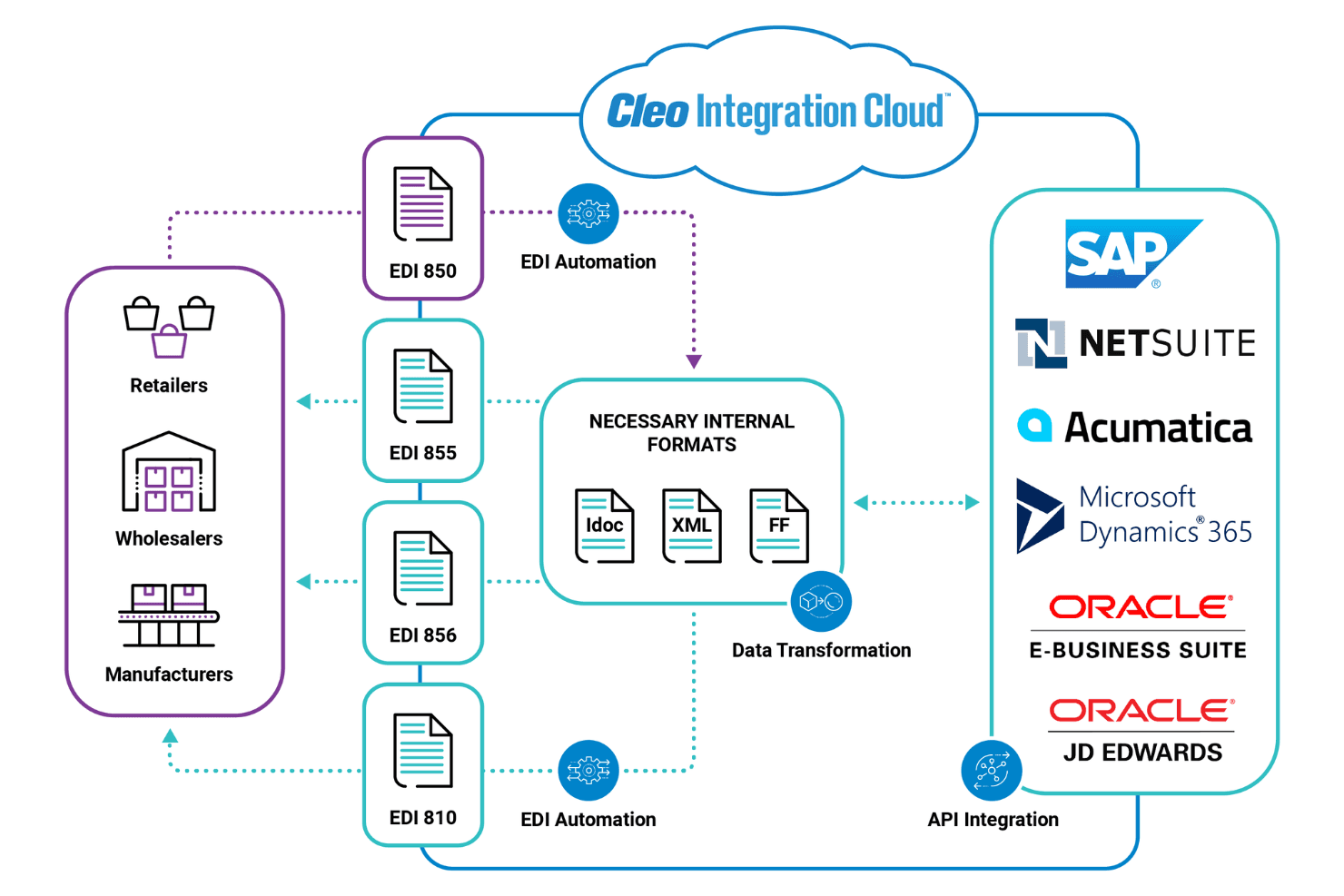
Cleo ensures smooth data transfers between your systems, supporting a wide range of formats. This feature helps your team manage complex data flows efficiently.
Supply Chain Management
This industry benefits from tools that streamline supply chain operations. Cleo helps maintain visibility and control over data-rich supply chain management processes.
EDI Support
Cleo's electronic data interchange capabilities aid in automating file transfers. It boosts your team's efficiency by reducing manual data entry.
Order Management
This functionality lets your team track and manage orders seamlessly. Cleo helps ensure timely deliveries and accurate order processing.
Inventory Management
Cleo’s single platform provides real-time inventory tracking, helping your team avoid stockouts.
Financial Reporting
Cleo offers tools for detailed financial analysis and reporting
Ease of Use
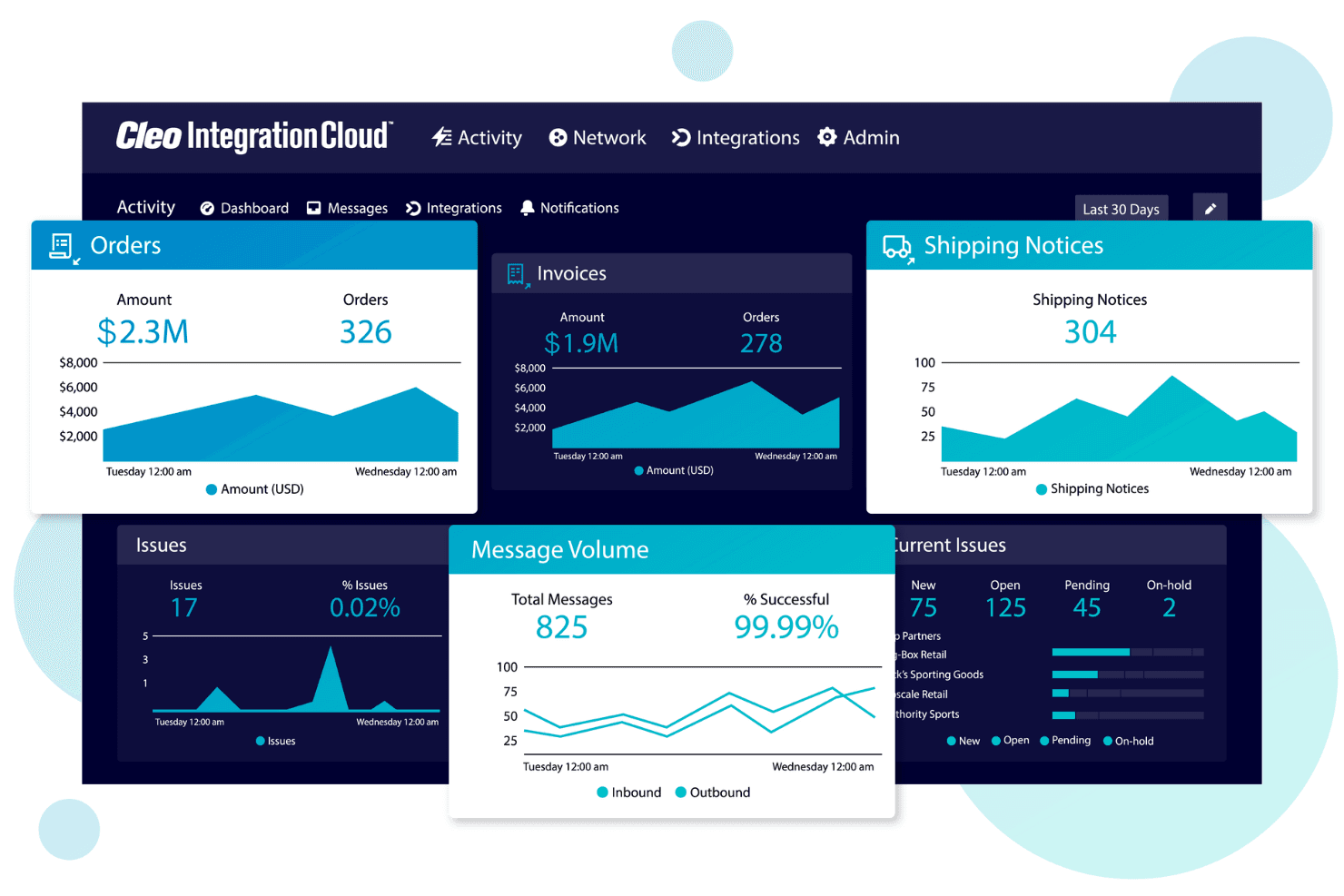
Cleo offers a decent user experience, but your team might need time to get comfortable with its interface. While it provides powerful features, you may find the navigation less intuitive than expected. Users often mention that training is needed to fully leverage Cleo’s capabilities. However, once familiar, your team will find the system user-friendly, and it can efficiently manage data and processes. If you're willing to invest in learning, Cleo can be quite effective for your operations.
Integrations
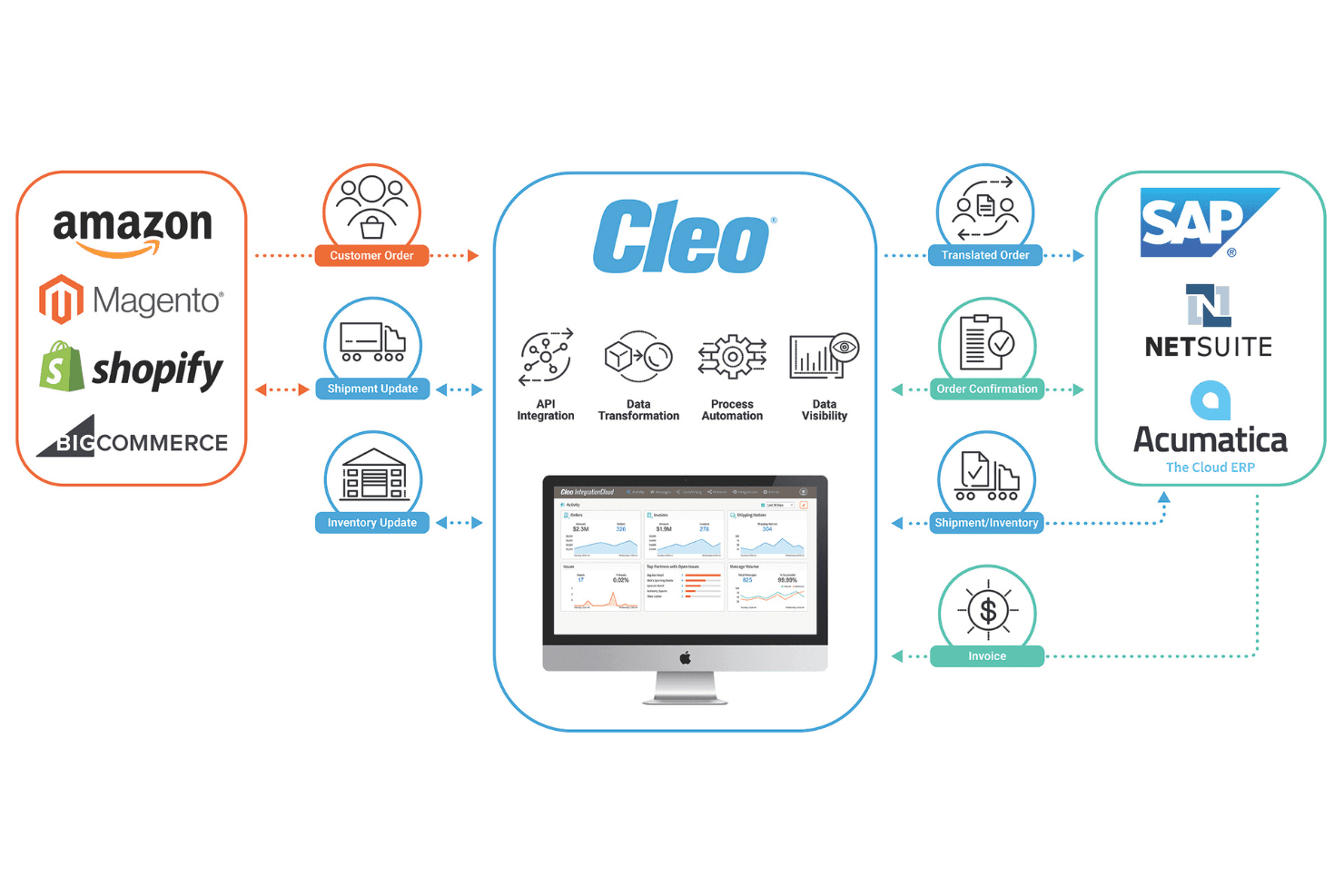
Cleo integrates with Dynamics 365, NetSuite, SAP, QuickBooks, Salesforce, ShipStation, Shopify, Adobe Commerce, Amazon S3, and FedEx. Cleo also offers API integration capabilities and connects with third-party integration platform tools.
Cleo Specs
- AI Integration: No
- Analytics: No
- API: Yes
- API Connectors: No
- Big Data: No
- Call Integration: No
- Call Logging: No
- Candidate Database: No
- CRM Integration: No
- Custom Data Forms: No
- Customer Management: Yes
- Customer Rewards: No
- Customization & Scalability: No
- Dashboard: Yes
- Dashboards: No
- Data Conversion: No
- Data Export: Yes
- Data Import: Yes
- Data Mining: No
- Data Transformation: No
- Data Visualization: No
- Database: No
- Database Search: No
- Downloading: No
- Email Integration: No
- Employee Database: No
- ETL: No
- External Integrations: Yes
- Forecasting: Yes
- Form Builder: No
- Google Apps Integration: No
- Hardware Integration: No
- HIPAA Compliance: No
- Historical Data Analysis: No
- History/Version Control: No
- HRIS Integration: No
- Instant Chat Integration: No
- Map Visualization: No
- Materials Library: No
- Metadata Management: No
- Notifications: Yes
- Optimized Search Processing: No
- Order Management: Yes
- Payment Gateway Integration: No
- Payment Processor: No
- POS Integration: No
- Project Management: Yes
- Real-time Alerts: No
- Report & Compliance: Yes
- Reports: No
- SAP Integration: No
- Scheduling: No
- Social Media Integration: No
- Social-Media Integration: No
- Software Integration: No
- Software Modernization: No
- Spatial Analysis: No
- Student Registration: No
- Third-Party Plugins/Add-Ons: Yes
- Time Series Modeling: No
- Visualization: No