

Recensione di Cora PPM: Pro, Contro, Caratteristiche e Prezzi
Cora PPM eccelle nell'offrire solide capacità di gestione del portafoglio progetti, rendendolo una scelta eccezionale per i team che cercano una supervisione completa e un allineamento strategico.

Recensiamo gli strumenti in modo indipendente e le commissioni aiutano a finanziare i nostri test. Consulta la nostra politica sulla trasparenza, la nostra metodologia, oppure suggerisci uno strumento.
Cora PPM is a portfolio management software built for organizations managing large, complex project portfolios across departments or regulated industries. I'd consider it if you need enterprise-level governance and real-time portfolio visibility but want something that's faster to configure than tools like Planview—without sacrificing the depth of reporting and risk tracking that complex programs demand.
Cora PPM Evaluation Summary
4.7/5
Perché fidarsi dei nostri consigli sui software
6,700+
Reviews
20
Industry experts
16+
Evaluation factors
14
Years
Le nostre recensioni riflettono il nostro giudizio indipendente, non un discorso di vendita. Scopri come manteniamo la trasparenza.
Per questa guida, abbiamo valutato gli strumenti attraverso test pratici e ricerche indipendenti, assegnando un punteggio agli strumenti in base ai nostri criteri di selezione.
Le nostre recensioni riflettono il nostro giudizio editoriale umano, non un discorso di vendita.
Cora PPM Overview
In my opinion, Cora PPM stands out as a reliable portfolio management software. The platform excels in its core and standout features, offering robust tools that cater to project and portfolio management needs. Users appreciate its ease of use, although there might be a slight learning curve during the onboarding phase. The customer support is notably strong, providing responsive and helpful assistance.
Cora PPM offers good value for money, especially for organizations seeking comprehensive project oversight. It competes well against other PPM software, particularly in environments where customer support and feature richness are prioritized. However, it might not be the best fit for teams looking for the most intuitive interface right out of the box.
Overall, if your team values strong support and feature depth, Cora PPM is worth considering.
Pros
- Offers advanced features for prioritization and roadmapping.
- Intuitive design simplifies complex tasks.
- Enhances team visibility with clear roadmaps and proactive notifications.
Cons
- Onboarding can be time-consuming.
- Steep learning curve for new users.
- Limited templates available for quick starts.
Is Cora PPM Right For Your Needs?
Who Would be a Good Fit for Cora PPM?
Cora PPM is ideal for large enterprises and organizations with complex project portfolios. If your team needs advanced prioritization and roadmapping, Cora PPM's features can support your strategic goals. It’s particularly useful for industries like IT and finance, where managing multiple projects effectively is crucial. The software's intuitive design helps your team streamline tasks, optimize resources, and improve visibility, making it a great fit for departments focused on project management and strategic planning.
- Large EnterprisesCora PPM supports complex projects with its advanced prioritization tools, making it perfect for large organizations.
- IT DepartmentsIts roadmapping features help IT teams manage multiple projects and resources efficiently.
- Financial ServicesCora PPM enhances visibility and planning, essential for financial institutions managing diverse portfolios.
- Project ManagersThe intuitive interface simplifies task management for project managers overseeing large teams.
- Strategic PlannersIts features support strategic planning and execution, crucial for planners aligning projects with business goals.
- Consulting FirmsCora PPM aids consultants in delivering detailed project insights and roadmaps to clients.
Who Would be a Bad Fit for Cora PPM?
Small businesses or startups with limited projects won’t benefit much from Cora PPM. The software's robust features are designed for managing complex portfolios, which might overwhelm smaller teams. If your work involves straightforward projects without the need for detailed roadmapping or prioritization, Cora PPM's capabilities could be more than you need, leading to unnecessary complexity and learning curves.
- Small StartupsThe extensive features of Cora PPM may overwhelm startups with simple project management needs.
- FreelancersFreelancers managing individual projects will find Cora PPM's capabilities excessive for their requirements.
- NonprofitsNonprofits with limited resources may struggle with the complexity and cost of Cora PPM.
- Retail OperationsRetail teams focused on straightforward inventory and sales processes don't need advanced project management tools.
- Education InstitutionsSchools and universities may find the software's focus on complex project portfolios unnecessary.
- Local BusinessesLocal businesses with simple operational tasks will not benefit from Cora PPM's extensive features.
Come testiamo e valutiamo gli strumenti
Abbiamo impiegato anni a costruire, perfezionare e migliorare il nostro sistema di test e valutazione dei software. Il nostro schema è progettato per cogliere le sfumature della scelta del software e ciò che rende uno strumento efficace, concentrandosi sugli aspetti critici del processo decisionale. Di seguito puoi vedere esattamente come funzionano i nostri test e le nostre valutazioni in base a sette criteri. Questo ci permette di offrire una valutazione imparziale del software basata su funzionalità di base, caratteristiche distintive, facilità d’uso, onboarding, assistenza clienti, integrazioni, recensioni dei clienti e rapporto qualità-prezzo.
Funzionalità principali (25% del punteggio finale)
Il punto di partenza della nostra valutazione è sempre la funzionalità principale dello strumento. Dispone delle funzionalità base che un utente si aspetterebbe di trovare? Alcune di queste funzionalità sono riservate ai piani a pagamento più elevati? In sostanza, ci aspettiamo che uno strumento sia all’altezza delle capacità minime dei concorrenti.
Caratteristiche distintive (25% del punteggio finale)
Successivamente, valutiamo le caratteristiche distintive che vanno oltre la funzionalità principale normalmente presente negli strumenti di questo tipo. Un punteggio elevato riflette funzionalità specializzate o uniche che rendono il prodotto più rapido, efficiente o offrono valore aggiunto all’utente. Valutiamo inoltre quanto sia semplice integrare il software con altri strumenti tipicamente presenti nello stack tecnologico, per estenderne la funzionalità e l’utilità. Gli strumenti che offrono numerose integrazioni native, connessioni di terze parti e accesso API per creare integrazioni personalizzate ottengono il punteggio migliore.
Facilità d’uso (10% del punteggio finale)
Consideriamo quanto sia rapido e semplice eseguire le attività fondamentali previste dallo strumento. Un software con punteggio elevato è ben progettato, intuitivo da usare, offre app mobile, modelli predefiniti e semplifica operazioni complesse.
Onboarding (10% del punteggio finale)
Sappiamo quanto sia importante l’adozione rapida da parte del team quando si introduce una nuova piattaforma: per questo valutiamo quanto sia facile imparare e utilizzare lo strumento con una formazione minima. Valutiamo la rapidità con cui un membro del team può impostare e iniziare a utilizzare lo strumento senza esperienza pregressa. Le soluzioni con punteggio alto richiedono poco o nessun supporto.
Assistenza clienti (10% del punteggio finale)
Analizziamo quanto sia semplice e veloce ottenere aiuto tramite telefono, live chat o knowledge base. Gli strumenti e le aziende che offrono supporto in tempo reale ottengono i punteggi migliori, mentre i chatbot ricevono i punteggi più bassi.
Recensioni dei clienti (10% del punteggio finale)
Oltre ai nostri test e valutazioni, consideriamo il net promoter score dei clienti attuali e passati. Verifichiamo la probabilità che i clienti scelgano nuovamente lo strumento per le funzionalità di base. Un software con punteggio elevato riflette un net promoter score alto da parte dei clienti vecchi e attuali.
Rapporto qualità-prezzo (10% del punteggio finale)
Infine, considerando tutti gli altri criteri, valutiamo il prezzo medio dei piani base rispetto alle funzionalità principali e agli altri criteri di valutazione. I software che offrono di più, a un costo inferiore, ottengono punteggi migliori.
Core Features
Project Prioritization: Cora PPM helps you rank projects based on strategic goals, ensuring your team focuses on what matters most. This feature stands out by providing clear criteria for project selection with measurable metrics.
Roadmapping: Create visual roadmaps that align with your business objectives, keeping your team on track. It simplifies complex timelines into easy-to-understand visuals.
Resource Management: Allocate resources efficiently across projects, avoiding overallocation and bottlenecks. This ensures your team operates at optimal capacity.
Risk Management: Identify potential risks early with Cora PPM’s risk assessment tools. It helps your team mitigate issues before they escalate.
Budget Tracking: Monitor project budgets in real-time, preventing overspending. This feature gives your team financial control and transparency.
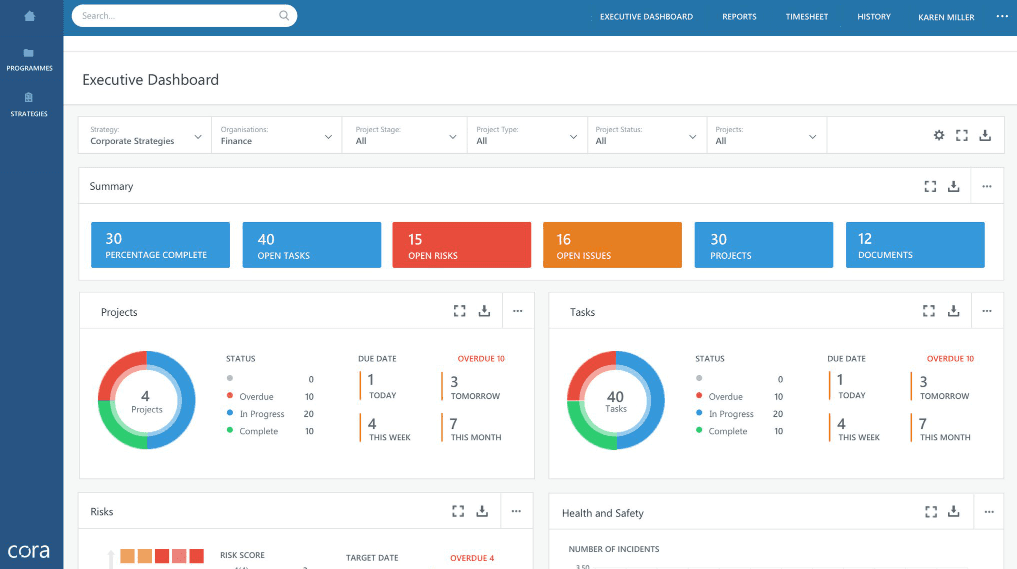
Reporting and Analytics: Generate detailed reports that provide insights into project performance. It empowers your team with data-driven decision-making and trend forecasting.

Ease of Use
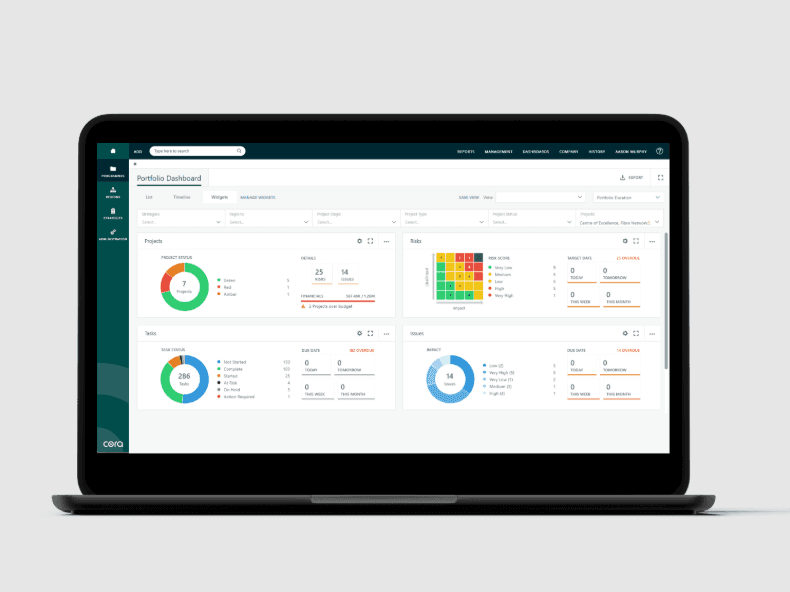
Cora PPM offers a clean interface that simplifies complex project management tasks for your team. While it provides powerful features like roadmapping and resource management, new users might face a steep learning curve initially. However, once you get the hang of it, the intuitive design helps streamline your work processes. Compared to other tools, Cora PPM stands out for its ability to present detailed information in a user-friendly manner, enhancing your team's productivity.
Integrations
Cora PPM integrates natively with Salesforce, Jira, Workday, SAP, Azure, REST API, iPaaS, Data Imports, Connectivity Framework, and direct data transfer to data lakes.
Cora PPM also provides an API for secure data access and supports integration with third-party tools through iPaaS.

Cora PPM Specs
- API: Yes
- Batch Permissions & Access: No
- Budgeting: Yes
- Calendar Management: No
- Collaboration Support: Yes
- Contact Management: Yes
- Contact Sharing: No
- Customer Management: No
- Dashboard: Yes
- Dashboards: Yes
- Data Export: Yes
- Data Import: Yes
- Data Visualization: Yes
- Dependency Tracking: No
- Document Sharing: No
- Expense Tracking: Yes
- External Integrations: Yes
- File Sharing: No
- Gantt Charts: Yes
- Kanban Boards: No
- Multi-User: Yes
- Notifications: Yes
- Project Management: Yes
- Resource Management: Yes
- Scheduling: Yes
- Task Scheduling/Tracking: Yes
- Third-Party Plugins/Add-Ons: Yes
- Time Management: Yes
- Travel Management: No
- Workflow Management: Yes


