

Cora PPM Review: Pros, Cons, Features & Pricing
Cora PPM excels in offering robust project portfolio management capabilities, making it a standout choice for teams seeking comprehensive oversight and strategic alignment.

We review tools independently, and commissions help fund our testing. See our transparency policy, our methodology, or suggest a tool.
Cora PPM is a portfolio management software built for organizations managing large, complex project portfolios across departments or regulated industries. I'd consider it if you need enterprise-level governance and real-time portfolio visibility but want something that's faster to configure than tools like Planview—without sacrificing the depth of reporting and risk tracking that complex programs demand.
Cora PPM Evaluation Summary
4.7/5
Why Trust Our Software Recommendations
6,700+
Reviews
20
Industry experts
16+
Evaluation factors
14
Years
Our team has been testing and reviewing software since 2012. As finance leaders ourselves, we know how difficult—and important—it is to choose the right software.
For this guide, we evaluated tools using hands-on testing and independent research, scoring tools using our selection criteria.
Our reviews reflect our human editorial judgment, not a sales pitch.
Cora PPM Overview
In my opinion, Cora PPM stands out as a reliable portfolio management software. The platform excels in its core and standout features, offering robust tools that cater to project and portfolio management needs. Users appreciate its ease of use, although there might be a slight learning curve during the onboarding phase. The customer support is notably strong, providing responsive and helpful assistance.
Cora PPM offers good value for money, especially for organizations seeking comprehensive project oversight. It competes well against other PPM software, particularly in environments where customer support and feature richness are prioritized. However, it might not be the best fit for teams looking for the most intuitive interface right out of the box.
Overall, if your team values strong support and feature depth, Cora PPM is worth considering.
Pros
- Offers advanced features for prioritization and roadmapping.
- Intuitive design simplifies complex tasks.
- Enhances team visibility with clear roadmaps and proactive notifications.
Cons
- Onboarding can be time-consuming.
- Steep learning curve for new users.
- Limited templates available for quick starts.
Is Cora PPM Right For Your Needs?
Who Would be a Good Fit for Cora PPM?
Cora PPM is ideal for large enterprises and organizations with complex project portfolios. If your team needs advanced prioritization and roadmapping, Cora PPM's features can support your strategic goals. It’s particularly useful for industries like IT and finance, where managing multiple projects effectively is crucial. The software's intuitive design helps your team streamline tasks, optimize resources, and improve visibility, making it a great fit for departments focused on project management and strategic planning.
- Large EnterprisesCora PPM supports complex projects with its advanced prioritization tools, making it perfect for large organizations.
- IT DepartmentsIts roadmapping features help IT teams manage multiple projects and resources efficiently.
- Financial ServicesCora PPM enhances visibility and planning, essential for financial institutions managing diverse portfolios.
- Project ManagersThe intuitive interface simplifies task management for project managers overseeing large teams.
- Strategic PlannersIts features support strategic planning and execution, crucial for planners aligning projects with business goals.
- Consulting FirmsCora PPM aids consultants in delivering detailed project insights and roadmaps to clients.
Who Would be a Bad Fit for Cora PPM?
Small businesses or startups with limited projects won’t benefit much from Cora PPM. The software's robust features are designed for managing complex portfolios, which might overwhelm smaller teams. If your work involves straightforward projects without the need for detailed roadmapping or prioritization, Cora PPM's capabilities could be more than you need, leading to unnecessary complexity and learning curves.
- Small StartupsThe extensive features of Cora PPM may overwhelm startups with simple project management needs.
- FreelancersFreelancers managing individual projects will find Cora PPM's capabilities excessive for their requirements.
- NonprofitsNonprofits with limited resources may struggle with the complexity and cost of Cora PPM.
- Retail OperationsRetail teams focused on straightforward inventory and sales processes don't need advanced project management tools.
- Education InstitutionsSchools and universities may find the software's focus on complex project portfolios unnecessary.
- Local BusinessesLocal businesses with simple operational tasks will not benefit from Cora PPM's extensive features.
How We Test & Score Tools
We’ve spent years building, refining, and improving our software testing and scoring system. The rubric is designed to capture the nuances of software selection and what makes a tool effective, focusing on critical aspects of the decision-making process.
Below, you can see exactly how our testing and scoring works across seven criteria. It allows us to provide an unbiased evaluation of the software based on core functionality, standout features, ease of use, onboarding, customer support, integrations, customer reviews, and value for money.
Core Functionality (25% of final scoring)
The starting point of our evaluation is always the core functionality of the tool. Does it have the basic features and functions that a user would expect to see? Are any of those core features locked to higher-tiered pricing plans? At its core, we expect a tool to stand up against the baseline capabilities of its competitors.
Standout Features (25% of final scoring)
Next, we evaluate uncommon standout features that go above and beyond the core functionality typically found in tools of its kind. A high score reflects specialized or unique features that make the product faster, more efficient, or offer additional value to the user.
We also evaluate how easy it is to integrate with other tools typically found in the tech stack to expand the functionality and utility of the software. Tools offering plentiful native integrations, 3rd party connections, and API access to build custom integrations score best.
Ease of Use (10% of final scoring)
We consider how quick and easy it is to execute the tasks defined in the core functionality using the tool. High scoring software is well designed, intuitive to use, offers mobile apps, provides templates, and makes relatively complex tasks seem simple.
Onboarding (10% of final scoring)
We know how important rapid team adoption is for a new platform, so we evaluate how easy it is to learn and use a tool with minimal training. We evaluate how quickly a team member can get set up and start using the tool with no experience. High scoring solutions indicate little or no support is required.
Customer Support (10% of final scoring)
We review how quick and easy it is to get unstuck and find help by phone, live chat, or knowledge base. Tools and companies that provide real-time support score best, while chatbots score worst.
Customer Reviews (10% of final scoring)
Beyond our own testing and evaluation, we consider the net promoter score from current and past customers. We review their likelihood, given the option, to choose the tool again for the core functionality. A high scoring software reflects a high net promoter score from current or past customers.
Value for Money (10% of final scoring)
Lastly, in consideration of all the other criteria, we review the average price of entry level plans against the core features and consider the value of the other evaluation criteria. Software that delivers more, for less, will score higher.
Core Features
Project Prioritization: Cora PPM helps you rank projects based on strategic goals, ensuring your team focuses on what matters most. This feature stands out by providing clear criteria for project selection with measurable metrics.
Roadmapping: Create visual roadmaps that align with your business objectives, keeping your team on track. It simplifies complex timelines into easy-to-understand visuals.
Resource Management: Allocate resources efficiently across projects, avoiding overallocation and bottlenecks. This ensures your team operates at optimal capacity.
Risk Management: Identify potential risks early with Cora PPM’s risk assessment tools. It helps your team mitigate issues before they escalate.
Budget Tracking: Monitor project budgets in real-time, preventing overspending. This feature gives your team financial control and transparency.
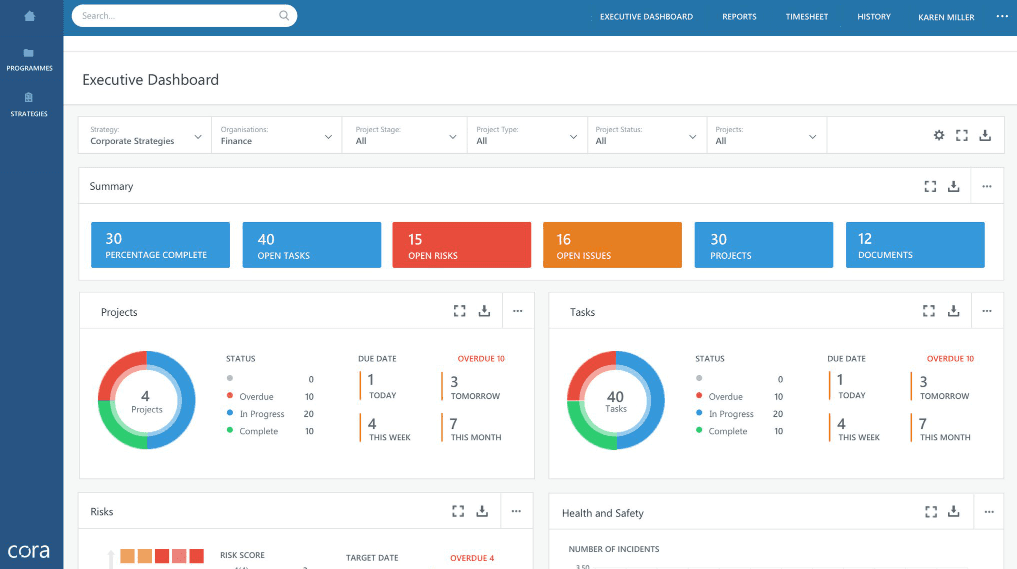
Reporting and Analytics: Generate detailed reports that provide insights into project performance. It empowers your team with data-driven decision-making and trend forecasting.

Ease of Use
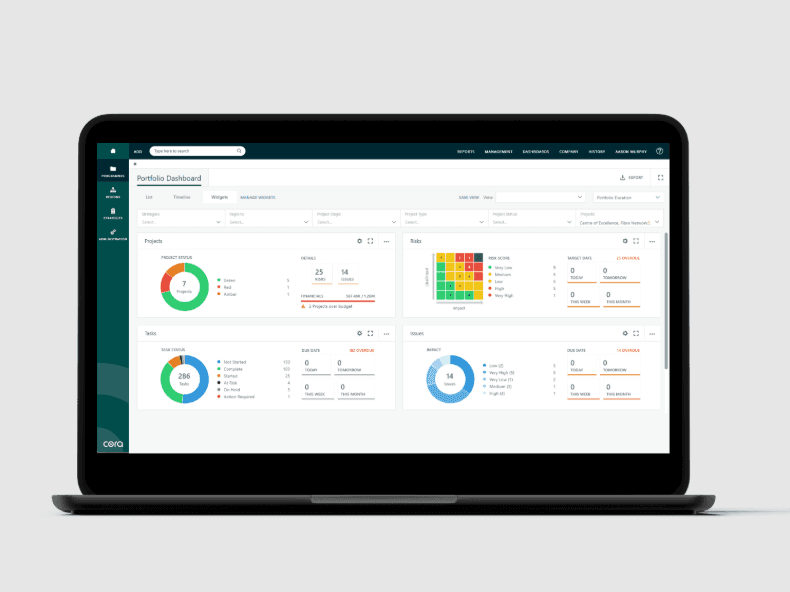
Cora PPM offers a clean interface that simplifies complex project management tasks for your team. While it provides powerful features like roadmapping and resource management, new users might face a steep learning curve initially. However, once you get the hang of it, the intuitive design helps streamline your work processes. Compared to other tools, Cora PPM stands out for its ability to present detailed information in a user-friendly manner, enhancing your team's productivity.
Integrations
Cora PPM integrates natively with Salesforce, Jira, Workday, SAP, Azure, REST API, iPaaS, Data Imports, Connectivity Framework, and direct data transfer to data lakes.
Cora PPM also provides an API for secure data access and supports integration with third-party tools through iPaaS.

Cora PPM Specs
- API: Yes
- Batch Permissions & Access: No
- Budgeting: Yes
- Calendar Management: No
- Collaboration Support: Yes
- Contact Management: Yes
- Contact Sharing: No
- Customer Management: No
- Dashboard: Yes
- Dashboards: Yes
- Data Export: Yes
- Data Import: Yes
- Data Visualization: Yes
- Dependency Tracking: No
- Document Sharing: No
- Expense Tracking: Yes
- External Integrations: Yes
- File Sharing: No
- Gantt Charts: Yes
- Kanban Boards: No
- Multi-User: Yes
- Notifications: Yes
- Project Management: Yes
- Resource Management: Yes
- Scheduling: Yes
- Task Scheduling/Tracking: Yes
- Third-Party Plugins/Add-Ons: Yes
- Time Management: Yes
- Travel Management: No
- Workflow Management: Yes


