

Recensione dell’ERP adattivo QAD: vantaggi, svantaggi, funzionalità e prezzi
QAD Adaptive ERP isn’t just another upgrade—it’s a rethink on ERP flexibility. Here’s how it can actually scale with your manufacturing needs, minus the usual headaches.

Recensiamo gli strumenti in modo indipendente e le commissioni aiutano a finanziare i nostri test. Consulta la nostra politica sulla trasparenza, la nostra metodologia, oppure suggerisci uno strumento.
QAD Adaptive ERP is a cloud-based ERP software built specifically for manufacturing companies in industries like automotive, life sciences, consumer products, food and beverage, high-tech, and industrial. I'd consider it if you run a mid-market or global manufacturing operation that needs deep production, supply chain, and financial capabilities without the heavy customization overhead of SAP S/4HANA. Compared with general-purpose cloud suites, QAD gives you stronger out-of-the-box manufacturing depth and industry-specific process models, so your finance team spends less time bending a generic ERP to fit shop-floor and compliance realities. QAD Cloud ERP is the deployment most mid-market buyers land on.
QAD Adaptive ERP Evaluation Summary
3.4/5
- Pricing upon request
- Free demo available
Perché fidarsi dei nostri consigli sui software
6,700+
Reviews
20
Industry experts
16+
Evaluation factors
14
Years
Le nostre recensioni riflettono il nostro giudizio indipendente, non un discorso di vendita. Scopri come manteniamo la trasparenza.
Per questa guida, abbiamo valutato gli strumenti attraverso test pratici e ricerche indipendenti, assegnando un punteggio agli strumenti in base ai nostri criteri di selezione.
Le nostre recensioni riflettono il nostro giudizio editoriale umano, non un discorso di vendita.
QAD Adaptive ERP Overview
If you’re judging ERP systems for manufacturing, I think QAD Adaptive ERP is an option that earns serious consideration. Its built-in industry models, manufacturing-centric features, and strong compliance tools are far ahead when you need out-of-the-box depth—instead of endless tailoring. QAD frames its buyers as adaptive manufacturing enterprises, and the ERP solution genuinely is built around change rather than a fixed template. The interface is modern, though you’ll notice a learning curve during onboarding. Integrations target real factory requirements, and the modular design keeps support and upgrades simple. Pricing is best suited to companies ready for enterprise capabilities. I’d suggest it especially for mid-sized and global manufacturers who want rapid deployment without sacrificing industry fit.
Pros
- Built-in industry-specific manufacturing and compliance process models
- Advanced supply chain planning and analytics for manufacturers
- Modular deployment speeds up rollout and future upgrades
Cons
- Limited vendor support for niche non-manufacturing workflows
- Complex configuration for international tax and localization needs
- User interface feels dated compared to top-tier ERP competitors
Is QAD Adaptive ERP Right For Your Needs?
Who Would be a Good Fit for QAD Adaptive ERP?
QAD Adaptive ERP is a strong fit for manufacturing-driven businesses or finance teams handling complex global operations. You’ll get the most out of it if you need industry-specific modules, advanced multinational compliance tools, and deep customization. Customer relationship management sits alongside the production and finance modules rather than in a separate system, which matters for order-to-cash visibility. I think midsize to large enterprises with multiple entities, controlled environments, or highly regulated workflows are going to benefit most from the adaptive features and integration options QAD provides.
- Global ManufacturingQAD Adaptive ERP’s manufacturing-specific modules, localization features, and support for multinational tax compliance are designed for complex production and global distribution environments.
- Automotive SuppliersQAD’s support for electronic data interchange (EDI), compliance, and supply chain traceability aligns well with the demands of automotive supplier networks.
- Life SciencesBuilt-in validation, QMS audit trails, and regulatory reporting features help life sciences companies meet FDA, EMA, and other compliance requirements.
- Multinational FinanceQAD handles international financial operations, sophisticated tax calculations, and multi-entity consolidations for companies operating across borders.
- Enterprise OperationsLarge organizations with intricate processes can leverage QAD’s modular workflows, role-based dashboards, and API-based integrations to coordinate finance, supply chain, and manufacturing.
- Project-Based ManufacturingCompanies with engineer-to-order or configure-to-order needs will find QAD’s adaptive project management and production planning tools useful for non-standard workflows.
Who Would be a Bad Fit for QAD Adaptive ERP?
QAD Adaptive ERP is not a good match for small organizations with straightforward needs or businesses outside manufacturing-focused industries. If your team relies on out-of-the-box simplicity, avoids heavy customization, or works in sectors with few regulatory obligations, you’re likely to find QAD too complex and costly for your operations.
- Small RetailersThe setup complexity, higher costs, and manufacturing-centered features do not align with the needs of a small retail business.
- Creative AgenciesQAD lacks specialized tools for client billing, campaign management, and project workflows common to design and marketing agencies.
- Local NonprofitsNonprofits with basic accounting requirements and minimal compliance obligations will not benefit from QAD’s advanced finance features or pricing.
- Early-Stage StartupsStartups needing quick setup, low overhead, and simple accounting would find QAD’s onboarding and customization unnecessary and cumbersome.
- Food Service ChainsFood service and hospitality businesses require point-of-sale, inventory turnover, and scheduling features not prioritized in QAD’s manufacturing focus.
- Construction ManagementConstruction firms typically need industry-specific field operations, subcontractor management, and project costing tools not provided by QAD Adaptive ERP.
Come testiamo e valutiamo gli strumenti
Abbiamo impiegato anni a costruire, perfezionare e migliorare il nostro sistema di test e valutazione dei software. Il nostro schema è progettato per cogliere le sfumature della scelta del software e ciò che rende uno strumento efficace, concentrandosi sugli aspetti critici del processo decisionale. Di seguito puoi vedere esattamente come funzionano i nostri test e le nostre valutazioni in base a sette criteri. Questo ci permette di offrire una valutazione imparziale del software basata su funzionalità di base, caratteristiche distintive, facilità d’uso, onboarding, assistenza clienti, integrazioni, recensioni dei clienti e rapporto qualità-prezzo.
Funzionalità principali (25% del punteggio finale)
Il punto di partenza della nostra valutazione è sempre la funzionalità principale dello strumento. Dispone delle funzionalità base che un utente si aspetterebbe di trovare? Alcune di queste funzionalità sono riservate ai piani a pagamento più elevati? In sostanza, ci aspettiamo che uno strumento sia all’altezza delle capacità minime dei concorrenti.
Caratteristiche distintive (25% del punteggio finale)
Successivamente, valutiamo le caratteristiche distintive che vanno oltre la funzionalità principale normalmente presente negli strumenti di questo tipo. Un punteggio elevato riflette funzionalità specializzate o uniche che rendono il prodotto più rapido, efficiente o offrono valore aggiunto all’utente. Valutiamo inoltre quanto sia semplice integrare il software con altri strumenti tipicamente presenti nello stack tecnologico, per estenderne la funzionalità e l’utilità. Gli strumenti che offrono numerose integrazioni native, connessioni di terze parti e accesso API per creare integrazioni personalizzate ottengono il punteggio migliore.
Facilità d’uso (10% del punteggio finale)
Consideriamo quanto sia rapido e semplice eseguire le attività fondamentali previste dallo strumento. Un software con punteggio elevato è ben progettato, intuitivo da usare, offre app mobile, modelli predefiniti e semplifica operazioni complesse.
Onboarding (10% del punteggio finale)
Sappiamo quanto sia importante l’adozione rapida da parte del team quando si introduce una nuova piattaforma: per questo valutiamo quanto sia facile imparare e utilizzare lo strumento con una formazione minima. Valutiamo la rapidità con cui un membro del team può impostare e iniziare a utilizzare lo strumento senza esperienza pregressa. Le soluzioni con punteggio alto richiedono poco o nessun supporto.
Assistenza clienti (10% del punteggio finale)
Analizziamo quanto sia semplice e veloce ottenere aiuto tramite telefono, live chat o knowledge base. Gli strumenti e le aziende che offrono supporto in tempo reale ottengono i punteggi migliori, mentre i chatbot ricevono i punteggi più bassi.
Recensioni dei clienti (10% del punteggio finale)
Oltre ai nostri test e valutazioni, consideriamo il net promoter score dei clienti attuali e passati. Verifichiamo la probabilità che i clienti scelgano nuovamente lo strumento per le funzionalità di base. Un software con punteggio elevato riflette un net promoter score alto da parte dei clienti vecchi e attuali.
Rapporto qualità-prezzo (10% del punteggio finale)
Infine, considerando tutti gli altri criteri, valutiamo il prezzo medio dei piani base rispetto alle funzionalità principali e agli altri criteri di valutazione. I software che offrono di più, a un costo inferiore, ottengono punteggi migliori.
Core Features
Manufacturing Process Modeling
Prebuilt process models cover automotive, life sciences, high-tech, and industrial manufacturing. Manufacturing ERP setup shortens because the rules already fit.
Advanced Supply Chain Planning
Forecast demand and plan inventory with multi-site MRP, supplier management, and scenario modeling. QAD DSCP handles supply chain management when orders shift.
Global Financial Management
Multi-entity, multi-currency accounting with automated tax, consolidation, and asset management. Financial close stays accurate and group reporting meets standards.
Compliance and Quality Management
Track regulations, automate documentation, and manage audit trails for certifications. QAD EQMS runs the quality management system, so traceability is provable.
Analytics and Reporting
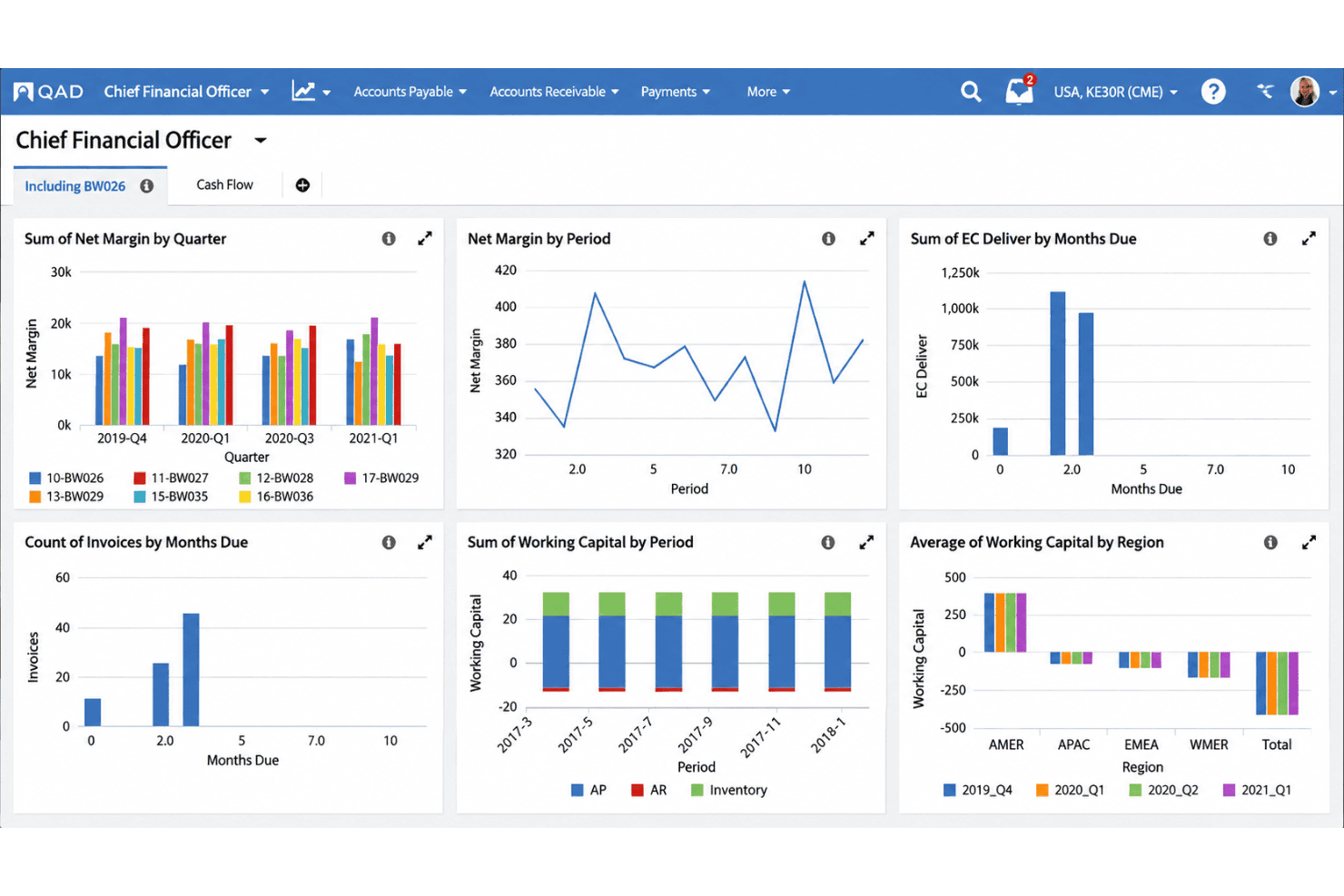
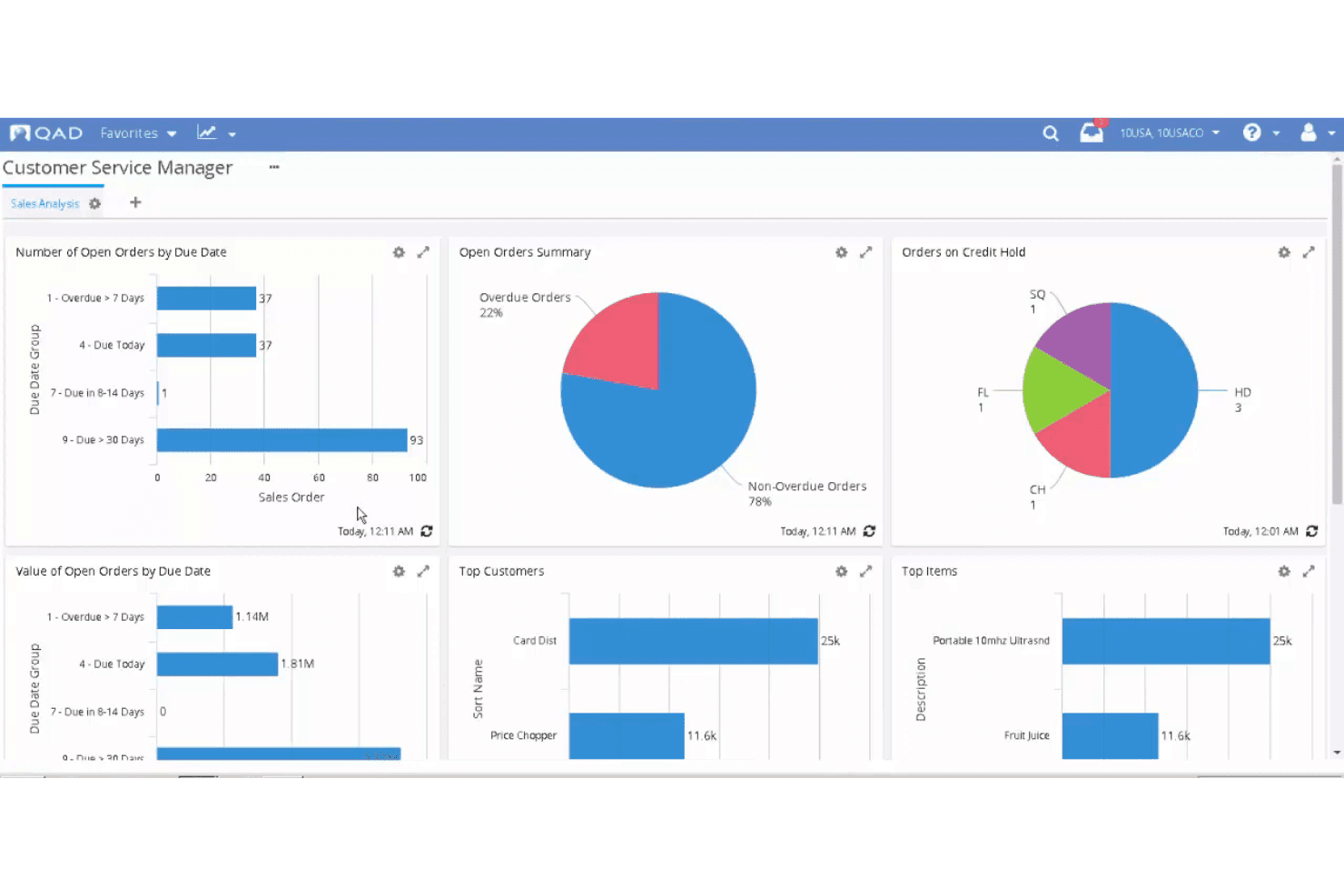
Real-time dashboards and role-based analytics for finance, operations, and supply chain. Mobile access lets you drill into transactions or trends wherever you are.
Modular Platform Upgrades
Add or update modules—production, inventory management, procurement—without breaking existing workflows. Upgrades stay manageable as ERP functions scale.
Ease of Use
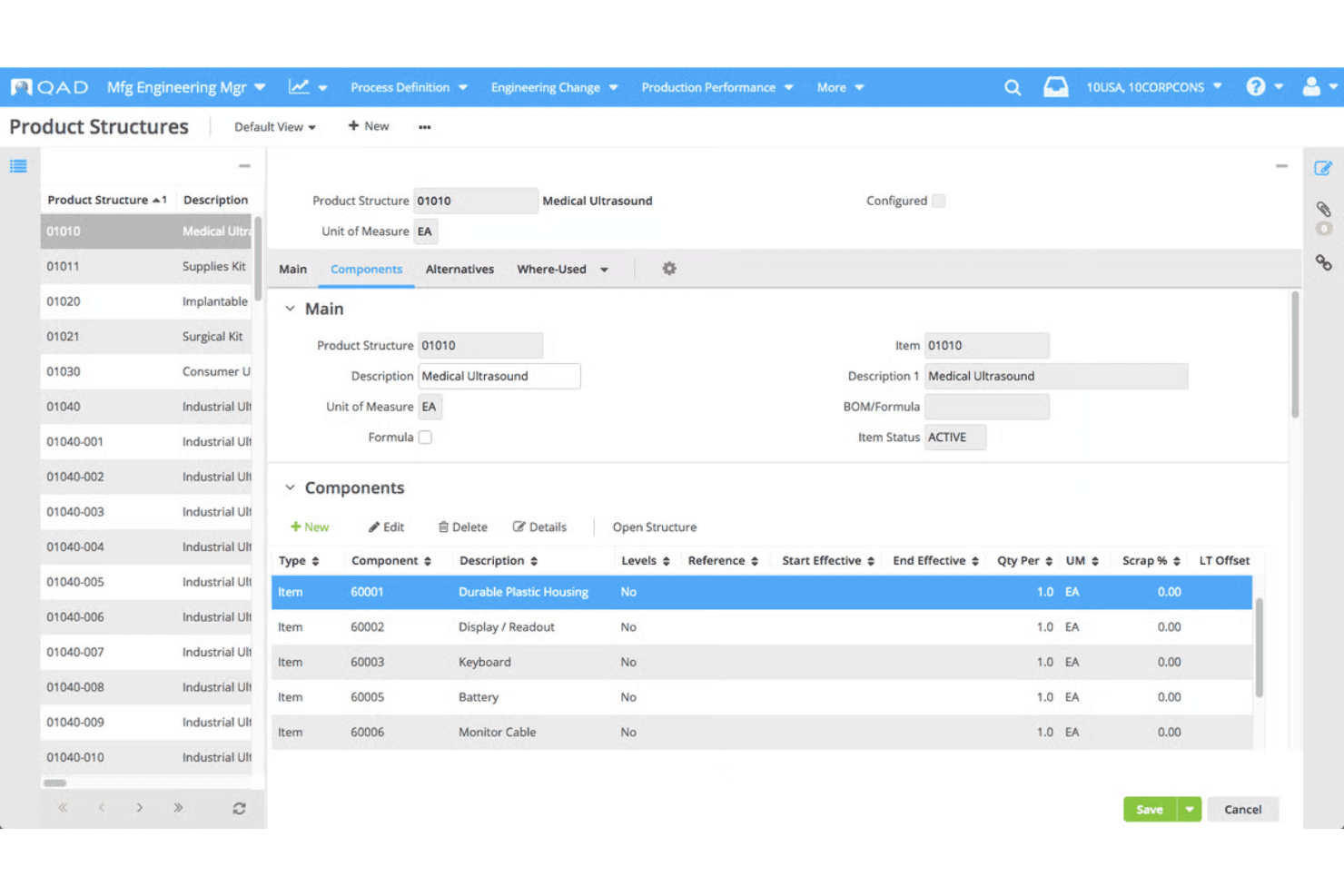
QAD Adaptive ERP’s interface feels modern but has a learning curve, especially for teams used to less specialized ERP platforms. Once configured, I think the modular workflows, customizable dashboards, and adaptive user features make it much easier to use for ongoing operations. Routine tasks become faster as users tailor screens by role, but initial setup and complex configurations like multinational tax rules can slow down adoption.
Integrations
QAD Adaptive ERP integrates with Salesforce, Oracle NetSuite, Microsoft Dynamics 365, SAP, ADP, Avalara, Vertex, Shopify, Dell Boomi, and Tableau, among others.
QAD Adaptive ERP also offers a robust API and supports integration with third-party tools such as Dell Boomi and MuleSoft.
QAD Adaptive ERP Specs
- API: Yes
- Calendar Management: Yes
- Customer Management: Yes
- Dashboard: Yes
- Data Export: Yes
- Data Import: Yes
- Data Visualization: Yes
- External Integrations: Yes
- Inventory Tracking: Yes
- Multi-User: Yes
- Natural Resources: Yes
- Notifications: Yes
- Order Management: Yes
- Project Management: Yes
- Scheduling: Yes
- Shipping Management: Yes
- Supplier Management: Yes


