

Recensione Express Accounts: Pro, Contro, Caratteristiche e Prezzi
Express Accounts offre un approccio semplice alla contabilità, eccellendo per facilità d'uso e convenienza, rendendolo ideale per le piccole imprese.

Recensiamo gli strumenti in modo indipendente e le commissioni aiutano a finanziare i nostri test. Consulta la nostra politica sulla trasparenza, la nostra metodologia, oppure suggerisci uno strumento.
Express Accounts is an accounting software for small businesses that need to track sales, expenses, receipts, and basic financial reporting without a lot of setup or overhead. I'd consider it if you're running a lean operation and find something like QuickBooks more than you actually need—Express Accounts covers core bookkeeping at a much lower cost and with a noticeably shorter learning curve.
Express Accounts Evaluation Summary

3.9/5
- From $295
Perché fidarsi dei nostri consigli sui software
6,700+
Reviews
20
Industry experts
16+
Evaluation factors
14
Years
Le nostre recensioni riflettono il nostro giudizio indipendente, non un discorso di vendita. Scopri come manteniamo la trasparenza.
Per questa guida, abbiamo valutato gli strumenti attraverso test pratici e ricerche indipendenti, assegnando un punteggio agli strumenti in base ai nostri criteri di selezione.
Le nostre recensioni riflettono il nostro giudizio editoriale umano, non un discorso di vendita.
Express Accounts Overview
In my opinion, Express Accounts is a solid choice for small businesses seeking affordable accounting software. It provides essential features like invoicing, accounts receivable, purchase orders, general ledger tasks, and balance sheet reporting. Its biggest strengths are its affordability and straightforward workflows. But onboarding is not the smoothest, the interface feels largely dated, and its lack of a mobile app or deep add-ons limits the experience compared to cloud tools like QuickBooks Online, Zoho, Xero, or FreshBooks.
If you're looking for advanced integrations or a highly intuitive interface, you might find it lacking. However, for those prioritizing budget over bells and whistles, Express Accounts is worth considering.
Pros
- It offers easy-to-use invoicing and billing tools.
- You can track expenses and payments efficiently.
- It's great for small business financial management.
- For the services it offers, Express Accounts is very affordable.
- Customized invoice templates.
Cons
- The user interface isn't very intuitive.
- Onboarding can be a bit challenging for new users.
- Customer support isn't always responsive or helpful.
- Limited add-ons and very few third-party integrations.
- No mobile app (Android or iOS).
Is Express Accounts Right For Your Needs?
Who Would be a Good Fit for Express Accounts?
Express Accounts is a great choice for small businesses, freelancers, and sole proprietors who need basic accounting tools without unnecessary complexity. Its simple invoicing and expense tracking make it ideal for those who need to manage finances efficiently without a steep learning curve. If you're running a small retail shop or providing services independently, this software helps you keep track of your finances in an organized manner. Its straightforward approach suits those who prefer a no-frills accounting solution.
- Small Retail ShopsExpress Accounts helps you manage sales and track daily expenses effortlessly without expensive subscriptions.
- FreelancersSend customized invoices, track payments, and stay ready for tax returns without expensive subscriptions.
- Sole ProprietorsKeep your business finances organized with simple expense and payment tracking.
- Service ProvidersYou can easily manage your billing and customer accounts with Express Accounts's straightforward features.
- NonprofitsTrack donations and expenses efficiently, making financial management less of a burden.
- Local BusinessesGreat fit for teams who want offline management software without cloud dependency.
Who Would be a Bad Fit for Express Accounts?
Express Accounts isn’t a good choice for large corporations or businesses that need advanced accounting features and integrations. Companies in need of extensive data analysis, multi-currency support, or detailed financial forecasting might find the software lacking. If your work involves complex financial operations or requires seamless integration with other business tools, Express Accounts may not meet your needs. Its limited customer support and basic interface can also be a drawback for larger teams requiring more robust functionality. It also doesn’t provide a mobile app.
- Large CorporationsExpress Accounts lacks the advanced features, enterprise-grade modules, and scalability needed for extensive corporate accounting.
- Manufacturing CompaniesThe software doesn't support complex inventory management or production cost tracking.
- International BusinessesExpress Accounts doesn't handle multi-currency transactions well, which is crucial for global operations.
- Financial AnalystsThe lack of advanced data analysis and reporting tools limits its usefulness for in-depth financial analysis.
- Tech StartupsStartups needing seamless integration with other tech tools will find Express Accounts insufficient.
- Enterprise-Level TeamsThe software's basic features and limited support don't meet the demands of large, diverse teams.
Come testiamo e valutiamo gli strumenti
Abbiamo impiegato anni a costruire, perfezionare e migliorare il nostro sistema di test e valutazione dei software. Il nostro schema è progettato per cogliere le sfumature della scelta del software e ciò che rende uno strumento efficace, concentrandosi sugli aspetti critici del processo decisionale. Di seguito puoi vedere esattamente come funzionano i nostri test e le nostre valutazioni in base a sette criteri. Questo ci permette di offrire una valutazione imparziale del software basata su funzionalità di base, caratteristiche distintive, facilità d’uso, onboarding, assistenza clienti, integrazioni, recensioni dei clienti e rapporto qualità-prezzo.
Funzionalità principali (25% del punteggio finale)
Il punto di partenza della nostra valutazione è sempre la funzionalità principale dello strumento. Dispone delle funzionalità base che un utente si aspetterebbe di trovare? Alcune di queste funzionalità sono riservate ai piani a pagamento più elevati? In sostanza, ci aspettiamo che uno strumento sia all’altezza delle capacità minime dei concorrenti.
Caratteristiche distintive (25% del punteggio finale)
Successivamente, valutiamo le caratteristiche distintive che vanno oltre la funzionalità principale normalmente presente negli strumenti di questo tipo. Un punteggio elevato riflette funzionalità specializzate o uniche che rendono il prodotto più rapido, efficiente o offrono valore aggiunto all’utente. Valutiamo inoltre quanto sia semplice integrare il software con altri strumenti tipicamente presenti nello stack tecnologico, per estenderne la funzionalità e l’utilità. Gli strumenti che offrono numerose integrazioni native, connessioni di terze parti e accesso API per creare integrazioni personalizzate ottengono il punteggio migliore.
Facilità d’uso (10% del punteggio finale)
Consideriamo quanto sia rapido e semplice eseguire le attività fondamentali previste dallo strumento. Un software con punteggio elevato è ben progettato, intuitivo da usare, offre app mobile, modelli predefiniti e semplifica operazioni complesse.
Onboarding (10% del punteggio finale)
Sappiamo quanto sia importante l’adozione rapida da parte del team quando si introduce una nuova piattaforma: per questo valutiamo quanto sia facile imparare e utilizzare lo strumento con una formazione minima. Valutiamo la rapidità con cui un membro del team può impostare e iniziare a utilizzare lo strumento senza esperienza pregressa. Le soluzioni con punteggio alto richiedono poco o nessun supporto.
Assistenza clienti (10% del punteggio finale)
Analizziamo quanto sia semplice e veloce ottenere aiuto tramite telefono, live chat o knowledge base. Gli strumenti e le aziende che offrono supporto in tempo reale ottengono i punteggi migliori, mentre i chatbot ricevono i punteggi più bassi.
Recensioni dei clienti (10% del punteggio finale)
Oltre ai nostri test e valutazioni, consideriamo il net promoter score dei clienti attuali e passati. Verifichiamo la probabilità che i clienti scelgano nuovamente lo strumento per le funzionalità di base. Un software con punteggio elevato riflette un net promoter score alto da parte dei clienti vecchi e attuali.
Rapporto qualità-prezzo (10% del punteggio finale)
Infine, considerando tutti gli altri criteri, valutiamo il prezzo medio dei piani base rispetto alle funzionalità principali e agli altri criteri di valutazione. I software che offrono di più, a un costo inferiore, ottengono punteggi migliori.
Core Features
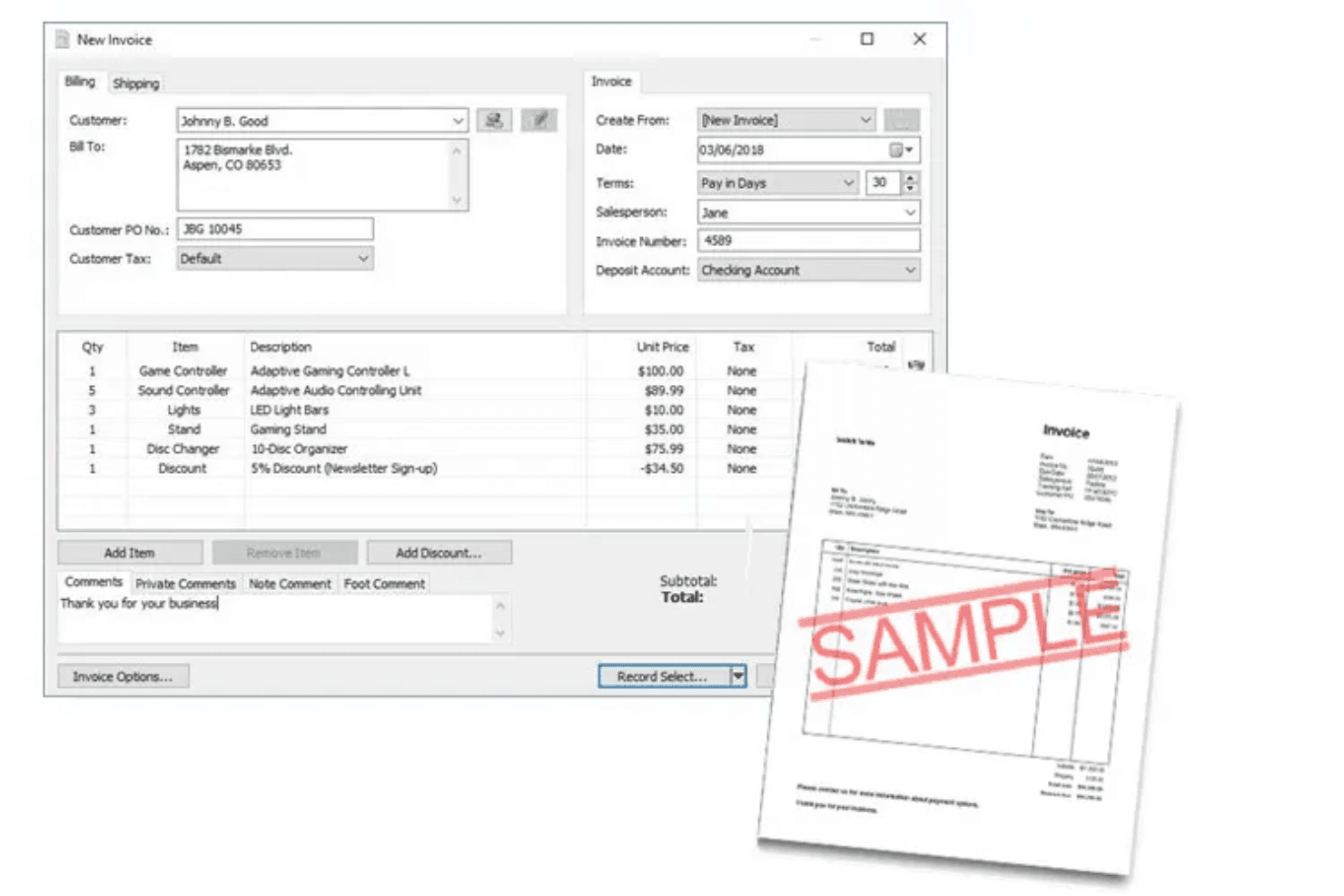
Invoicing and Billing: Create and send professional invoices easily with Express Accounts. It simplifies tracking payments and outstanding invoices for your work.
Expense Tracking: Keep an eye on your business expenses with straightforward tracking tools. You can categorize and manage costs efficiently.
Financial Reporting: Helps you generate essential financial reports, including your balance sheet, profit or loss, and cash flow statement, to enable you understand your business's health and make informed decisions.
Accounts Payable and Receivable: Manage incoming and outgoing payments with ease. This feature ensures you stay on top of what’s owed to you and what you owe.
Bank Reconciliation: Match your accounting records with bank statements quickly. This helps you catch discrepancies and maintain accurate records.
Multi-User Access: Web access allows multiple team members to securely log in and work on financial tasks simultaneously. This feature supports collaboration without sacrificing control over your data.
Ease of Use
Express Accounts is generally considered user-friendly and easy to use, especially for those new to accounting software and small business owners who want a fairly straightforward tool. Its simple interface makes navigation straightforward, though some users might find the design a bit dated. While it covers essential tasks like invoicing and expense tracking well, onboarding can be tricky without prior experience, and more advanced accounting tasks may feel less intuitive. Express Accounts is a desktop program available for Windows and Mac, with some users noting that the Mac version is slightly harder to learn. Compared to more complex solutions, it stands out for its simplicity but might not satisfy those needing advanced features. If you and your team prefer straightforward tools, Express Accounts could be a fit.
Integrations
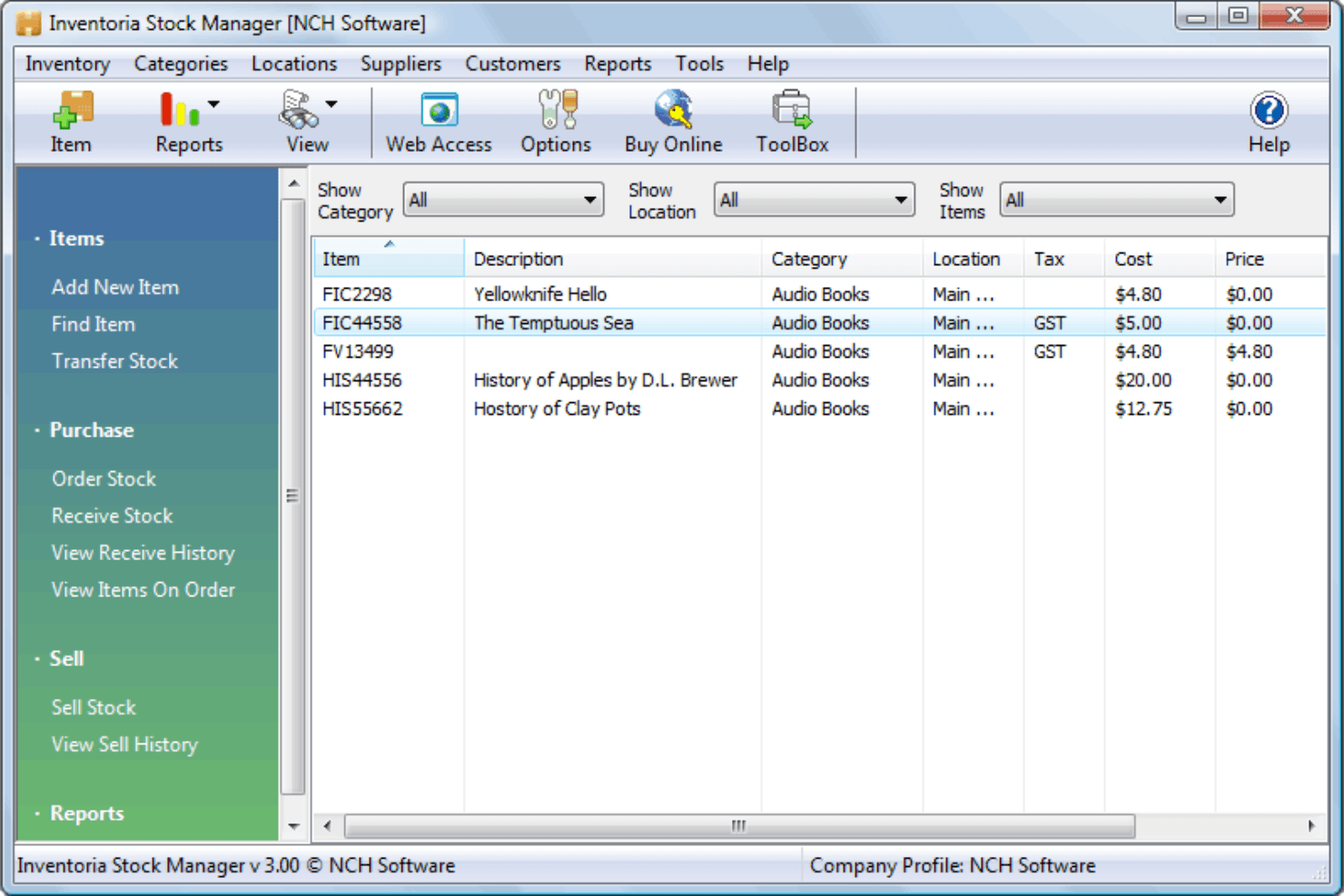
Express Accounts integrates with Inventoria, Express Invoice, and Ramp's Universal CSV. It does not have a wide array of native integrations beyond these. Express Accounts does not offer an API or connect with third-party integration tools.

Express Accounts Specs
- 2-Factor Authentication: Yes
- Accounts Payable: Yes
- Accounts Receivable: No
- API: Yes
- Balance Sheet: Yes
- Billing/Invoicing: Yes
- BitCoin: Yes
- Budgeting: Yes
- Calendar Management: Yes
- Contact Management: Yes
- CRM Integration: Yes
- Customer Management: Yes
- Dashboard: Yes
- Data Export: Yes
- Data Import: Yes
- Data Visualization: Yes
- Expense Tracking: Yes
- External Integrations: Yes
- Forecasting: Yes
- General Account Ledger: Yes
- Inventory Tracking: Yes
- Multi-Currency: Yes
- Multi-User: Yes
- Notifications: Yes
- P&L: Yes
- PayPal: Yes
- Payroll: Yes
- SAP Integration: Yes
- Stripe: Yes
- Supplier Management: Yes
- Tax Management: Yes


