

Recensione di OneUp: Pro, Contro, Caratteristiche e Prezzi
OneUp eccelle nella contabilità automatizzata e nell'integrazione CRM, diventando una scelta ideale per le piccole imprese che cercano efficienza e prezzi accessibili.

Recensiamo gli strumenti in modo indipendente e le commissioni aiutano a finanziare i nostri test. Consulta la nostra politica sulla trasparenza, la nostra metodologia, oppure suggerisci uno strumento.
OneUp is an accounting software built for small businesses that need invoicing, inventory tracking, and CRM tools without juggling multiple platforms. I'd mainly consider it if you sell physical products and want tighter inventory-accounting integration than QuickBooks offers, at a price point that makes more sense for leaner operations.
OneUp Evaluation Summary
4.8/5
- Pricing upon request
- Not available
Perché fidarsi dei nostri consigli sui software
6,700+
Reviews
20
Industry experts
16+
Evaluation factors
14
Years
Le nostre recensioni riflettono il nostro giudizio indipendente, non un discorso di vendita. Scopri come manteniamo la trasparenza.
Per questa guida, abbiamo valutato gli strumenti attraverso test pratici e ricerche indipendenti, assegnando un punteggio agli strumenti in base ai nostri criteri di selezione.
Le nostre recensioni riflettono il nostro giudizio editoriale umano, non un discorso di vendita.
OneUp Overview
In my opinion, OneUp is a solid choice for small businesses looking for affordable accounting solutions. Its standout feature is its CRM integration, which is a plus for teams that need both financial and customer management in one place. The pricing is competitive, but onboarding can be a bit challenging if you're new to accounting software. Compared to similar products, OneUp excels in ease of use and customer support, though it might not have all the advanced features larger enterprises need. It's best for businesses that prioritize user-friendly interfaces and require basic to intermediate accounting tools.
Pros
- It provides automated bookkeeping, saving time on manual entries.
- It's easy to use, even if you're not tech-savvy.
- Customer support is responsive and helpful when you need it.
Cons
- Onboarding can be tricky if you're new to accounting software.
- It might not have the advanced features large enterprises need.
- Some users find the report customization options limited.
Is OneUp Right For Your Needs?
Who Would be a Good Fit for OneUp?
OneUp is a great fit for small businesses, startups, and freelancers seeking efficient accounting without a steep learning curve. If your team values automated bookkeeping and integrated CRM functions, OneUp can save you time and effort. Its user-friendly interface makes it ideal for those who aren't tech-savvy but still need reliable financial management. If you run a business that doesn't require complex, enterprise-level features, OneUp offers the essential tools you need to manage your finances effectively.
- Small BusinessesOneUp provides automated bookkeeping and CRM integration, perfect for small businesses needing simple, efficient accounting tools.
- FreelancersWith its ease of use, OneUp suits freelancers who need to manage finances without complex software.
- StartupsStartups benefit from OneUp's cost-effective solution that offers essential accounting features, including tracking cash flow and bank transactions, without overwhelming new users.
- Retail ShopsRetailers can use OneUp's inventory management features to efficiently track inventory and sales orders.
- ConsultantsConsultants can leverage OneUp's invoicing, expense tracking, and notifications for straightforward and organized client billing.
- NonprofitsNonprofits value the ability to handle basic accounting tasks with OneUp, keeping their focus on their mission.
Who Would be a Bad Fit for OneUp?
OneUp might not suit the business needs of large enterprises or complex organizations that require advanced accounting features and customization. If your team relies on in-depth reporting and extensive feature sets, OneUp's basic offerings might fall short. Industries with intricate financial regulations or those that seek specialized accounting functions could find OneUp lacking. It's not ideal for businesses that need a high level of customization or integration with a wide array of third-party tools.
- Large CorporationsLarge corporations need advanced features and customization that OneUp doesn’t offer.
- Manufacturing CompaniesManufacturers often require complex inventory and production tracking, which OneUp might not be able to address.
- Financial ServicesFinancial services demand advanced reporting and compliance tools that OneUp lacks.
- Healthcare ProvidersHealthcare providers need specialized billing and regulatory features that aren't available in OneUp.
- Government AgenciesGovernment agencies often require extensive customization and compliance features not found in OneUp.
- Educational InstitutionsEducational institutions need specific accounting features for handling grants and funds, which OneUp doesn’t provide.
Come testiamo e valutiamo gli strumenti
Abbiamo impiegato anni a costruire, perfezionare e migliorare il nostro sistema di test e valutazione dei software. Il nostro schema è progettato per cogliere le sfumature della scelta del software e ciò che rende uno strumento efficace, concentrandosi sugli aspetti critici del processo decisionale. Di seguito puoi vedere esattamente come funzionano i nostri test e le nostre valutazioni in base a sette criteri. Questo ci permette di offrire una valutazione imparziale del software basata su funzionalità di base, caratteristiche distintive, facilità d’uso, onboarding, assistenza clienti, integrazioni, recensioni dei clienti e rapporto qualità-prezzo.
Funzionalità principali (25% del punteggio finale)
Il punto di partenza della nostra valutazione è sempre la funzionalità principale dello strumento. Dispone delle funzionalità base che un utente si aspetterebbe di trovare? Alcune di queste funzionalità sono riservate ai piani a pagamento più elevati? In sostanza, ci aspettiamo che uno strumento sia all’altezza delle capacità minime dei concorrenti.
Caratteristiche distintive (25% del punteggio finale)
Successivamente, valutiamo le caratteristiche distintive che vanno oltre la funzionalità principale normalmente presente negli strumenti di questo tipo. Un punteggio elevato riflette funzionalità specializzate o uniche che rendono il prodotto più rapido, efficiente o offrono valore aggiunto all’utente. Valutiamo inoltre quanto sia semplice integrare il software con altri strumenti tipicamente presenti nello stack tecnologico, per estenderne la funzionalità e l’utilità. Gli strumenti che offrono numerose integrazioni native, connessioni di terze parti e accesso API per creare integrazioni personalizzate ottengono il punteggio migliore.
Facilità d’uso (10% del punteggio finale)
Consideriamo quanto sia rapido e semplice eseguire le attività fondamentali previste dallo strumento. Un software con punteggio elevato è ben progettato, intuitivo da usare, offre app mobile, modelli predefiniti e semplifica operazioni complesse.
Onboarding (10% del punteggio finale)
Sappiamo quanto sia importante l’adozione rapida da parte del team quando si introduce una nuova piattaforma: per questo valutiamo quanto sia facile imparare e utilizzare lo strumento con una formazione minima. Valutiamo la rapidità con cui un membro del team può impostare e iniziare a utilizzare lo strumento senza esperienza pregressa. Le soluzioni con punteggio alto richiedono poco o nessun supporto.
Assistenza clienti (10% del punteggio finale)
Analizziamo quanto sia semplice e veloce ottenere aiuto tramite telefono, live chat o knowledge base. Gli strumenti e le aziende che offrono supporto in tempo reale ottengono i punteggi migliori, mentre i chatbot ricevono i punteggi più bassi.
Recensioni dei clienti (10% del punteggio finale)
Oltre ai nostri test e valutazioni, consideriamo il net promoter score dei clienti attuali e passati. Verifichiamo la probabilità che i clienti scelgano nuovamente lo strumento per le funzionalità di base. Un software con punteggio elevato riflette un net promoter score alto da parte dei clienti vecchi e attuali.
Rapporto qualità-prezzo (10% del punteggio finale)
Infine, considerando tutti gli altri criteri, valutiamo il prezzo medio dei piani base rispetto alle funzionalità principali e agli altri criteri di valutazione. I software che offrono di più, a un costo inferiore, ottengono punteggi migliori.
Core Features
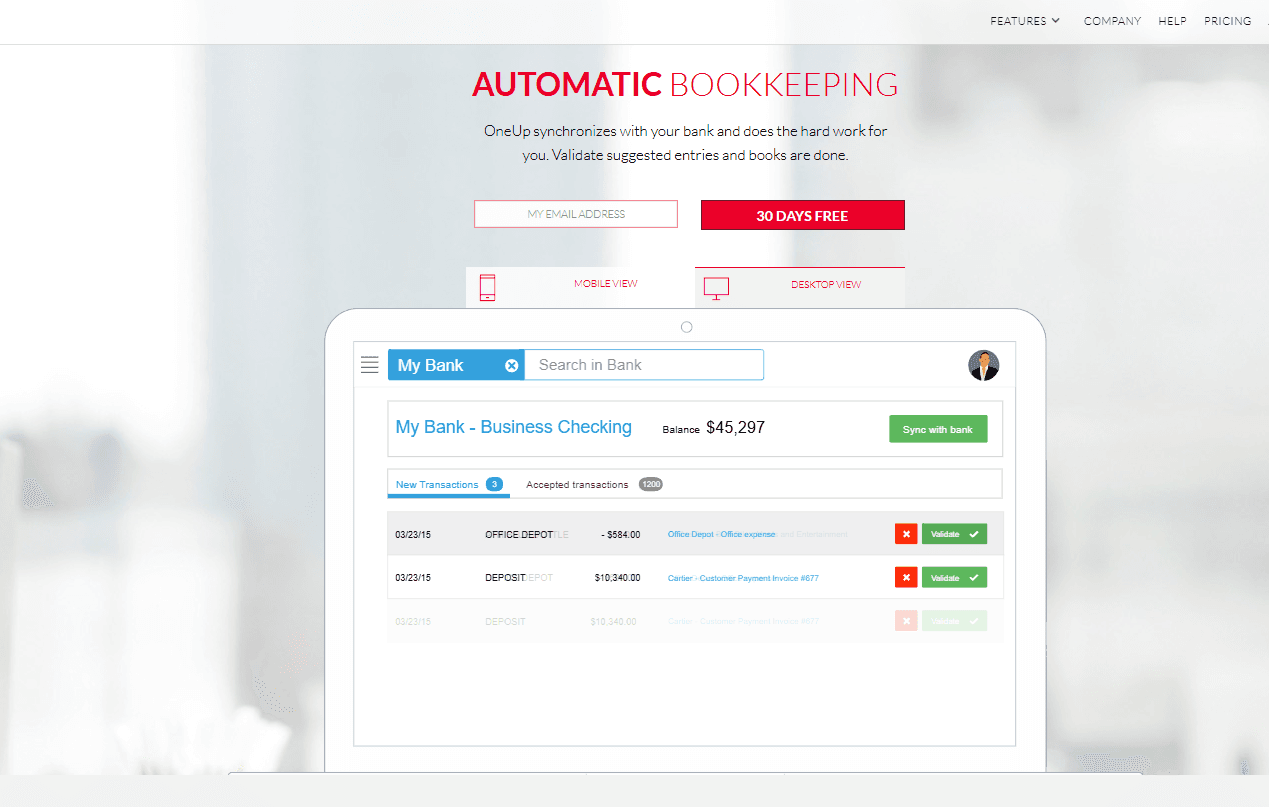
Automated Bookkeeping: OneUp automates your bookkeeping tasks, reducing the need for manual data entry. This saves you time and minimizes errors in your records.
Invoicing: You can create and send professional invoices with ease. OneUp allows customization, so your invoices always reflect your brand.
Expense Tracking: Track your expenses efficiently with OneUp's intuitive interface. It helps you keep an eye on your spending and manage your budget effectively.
Inventory Management: OneUp offers simple tools to manage your inventory, keeping you informed of stock levels. This feature helps avoid overstocking or running out of products.
Financial Reporting: You can generate financial reports with just a few clicks. OneUp provides clear insights into your business's financial health, helping you make informed decisions.
CRM Integration: With CRM integration, you can manage customer relationships alongside your finances. This feature ensures your customer data is always up to date.

Ease of Use
OneUp stands out for its user-friendly interface, making it accessible even if you’re not tech-savvy. The intuitive design lets you and your team quickly navigate tasks such as invoicing, bank reconciliation, and expense tracking without the need for extensive training. Users appreciate how straightforward it is to generate reports and manage inventory.

OneUp Specs
- 2-Factor Authentication: No
- Accounts Payable: Yes
- Accounts Receivable: Yes
- API: Yes
- Balance Sheet: Yes
- Billing/Invoicing: Yes
- BitCoin: No
- Budgeting: No
- Calendar Management: No
- Contact Management: Yes
- CRM Integration: No
- Customer Management: Yes
- Dashboard: Yes
- Data Export: Yes
- Data Import: Yes
- Data Visualization: Yes
- Expense Tracking: Yes
- External Integrations: Yes
- Forecasting: Yes
- General Account Ledger: Yes
- Inventory Tracking: Yes
- Multi-Currency: Yes
- Multi-User: Yes
- Notifications: Yes
- P&L: Yes
- PayPal: No
- Payroll: No
- SAP Integration: No
- Stripe: No
- Supplier Management: Yes
- Tax Management: Yes


