
Recensione di Archer: Pro, Contro, Funzionalità e Prezzi
Archer si distingue per la fornitura di soluzioni complete di gestione del rischio, rendendolo una scelta eccellente per i team che necessitano di capacità robuste di conformità e valutazione dei rischi.

Recensiamo gli strumenti in modo indipendente e le commissioni aiutano a finanziare i nostri test. Consulta la nostra politica sulla trasparenza, la nostra metodologia, oppure suggerisci uno strumento.
Archer is an enterprise risk management solution built for large organizations that need to manage risk, compliance, audit, and third-party programs within a single, highly configurable platform. I'd consider it if your organization has complex, cross-functional risk governance needs and wants more flexibility than something like ServiceNow GRC, which tends to center its workflows around IT operations rather than broader enterprise risk programs.
Archer Evaluation Summary
3.6/5
- Pricing upon request
- Free demo available
Perché fidarsi dei nostri consigli sui software
6,700+
Reviews
20
Industry experts
16+
Evaluation factors
14
Years
Le nostre recensioni riflettono il nostro giudizio indipendente, non un discorso di vendita. Scopri come manteniamo la trasparenza.
Per questa guida, abbiamo valutato gli strumenti attraverso test pratici e ricerche indipendenti, assegnando un punteggio agli strumenti in base ai nostri criteri di selezione.
Le nostre recensioni riflettono il nostro giudizio editoriale umano, non un discorso di vendita.
Archer Overview
In my opinion, Archer is a strong contender for organizations seeking dependable financial risk management solutions. It stands out for its automation capabilities, which streamline processes like risk assessment, regulatory compliance, and reporting. While new users may find the platform’s configuration and onboarding somewhat complex due to its breadth of features, the overall usability and flexibility of its integrated modules make it a powerful tool once deployed.
Compared to other enterprise risk systems, Archer’s standout qualities lie in its scalability and robust governance framework rather than flashy interfaces or plug-and-play simplicity. It’s particularly well-suited for mid-to-large enterprises in sectors such as finance, insurance, and energy, industries where regulatory oversight and operational resilience are paramount. If your organization values control, auditability, and automation in risk management, Archer deserves a serious look.
Pros
- Archer provides customizable dashboards for tailored risk management insights.
- It offers flexible reporting tools that enhance risk oversight and management.
- The software is highly regarded for its strong security assessments.
Cons
- The interface can be complex and challenging for new users.
- Onboarding may require significant time investment from your team.
- Users occasionally report difficulty accessing customer support
Is Archer Right For Your Needs?
Who Would be a Good Fit for Archer?
Archer suits large enterprises, especially in finance and insurance, where your team needs detailed risk assessments and governance controls. Its customizable dashboards and flexible reporting are ideal for departments that require tailored insights and robust security features. If your team values comprehensive risk oversight and detailed analysis, Archer is well-suited for your needs.
- Finance DepartmentsArcher excels in providing detailed risk assessments, which are crucial for effective financial oversight.
- Insurance CompaniesIt offers robust risk management, essential for evaluating and mitigating insurance risks.
- Large EnterprisesArcher's customizable features cater to complex organizational structures and diverse risk profiles.
- Security TeamsThe software's security assessments are invaluable for identifying vulnerabilities.
- Risk Management TeamsIts flexible reporting tools enhance your team's ability to oversee and manage risks effectively.
- Governance TeamsArcher provides comprehensive governance controls that align well with regulatory compliance needs.
Who Would be a Bad Fit for Archer?
Archer may not be suitable for small businesses or startups with limited budgets and resources. Its complex interface and comprehensive features can overwhelm teams with fewer risk management needs. If your team is seeking a straightforward solution without extensive customization, Archer may not meet your expectations. The onboarding process can be time-consuming and might not align with your team's fast-paced environment.
- Small BusinessesArcher's complexity and cost may not align with your limited resources and simpler needs.
- StartupsThe extensive onboarding process could hinder your fast-paced and adaptable work culture.
- Non-Financial SectorsIndustries with minimal risk management needs might find Archer's features excessive.
- FreelancersIndividual users don't need Archer's comprehensive risk management capabilities.
- Basic Compliance TeamsTeams with simple compliance requirements may find Archer's features unnecessarily complex.
- Low-Tech EnvironmentsOrganizations without tech-savvy teams may struggle with Archer's intricate interface and setup process.
Come testiamo e valutiamo gli strumenti
Abbiamo impiegato anni a costruire, perfezionare e migliorare il nostro sistema di test e valutazione dei software. Il nostro schema è progettato per cogliere le sfumature della scelta del software e ciò che rende uno strumento efficace, concentrandosi sugli aspetti critici del processo decisionale. Di seguito puoi vedere esattamente come funzionano i nostri test e le nostre valutazioni in base a sette criteri. Questo ci permette di offrire una valutazione imparziale del software basata su funzionalità di base, caratteristiche distintive, facilità d’uso, onboarding, assistenza clienti, integrazioni, recensioni dei clienti e rapporto qualità-prezzo.
Funzionalità principali (25% del punteggio finale)
Il punto di partenza della nostra valutazione è sempre la funzionalità principale dello strumento. Dispone delle funzionalità base che un utente si aspetterebbe di trovare? Alcune di queste funzionalità sono riservate ai piani a pagamento più elevati? In sostanza, ci aspettiamo che uno strumento sia all’altezza delle capacità minime dei concorrenti.
Caratteristiche distintive (25% del punteggio finale)
Successivamente, valutiamo le caratteristiche distintive che vanno oltre la funzionalità principale normalmente presente negli strumenti di questo tipo. Un punteggio elevato riflette funzionalità specializzate o uniche che rendono il prodotto più rapido, efficiente o offrono valore aggiunto all’utente. Valutiamo inoltre quanto sia semplice integrare il software con altri strumenti tipicamente presenti nello stack tecnologico, per estenderne la funzionalità e l’utilità. Gli strumenti che offrono numerose integrazioni native, connessioni di terze parti e accesso API per creare integrazioni personalizzate ottengono il punteggio migliore.
Facilità d’uso (10% del punteggio finale)
Consideriamo quanto sia rapido e semplice eseguire le attività fondamentali previste dallo strumento. Un software con punteggio elevato è ben progettato, intuitivo da usare, offre app mobile, modelli predefiniti e semplifica operazioni complesse.
Onboarding (10% del punteggio finale)
Sappiamo quanto sia importante l’adozione rapida da parte del team quando si introduce una nuova piattaforma: per questo valutiamo quanto sia facile imparare e utilizzare lo strumento con una formazione minima. Valutiamo la rapidità con cui un membro del team può impostare e iniziare a utilizzare lo strumento senza esperienza pregressa. Le soluzioni con punteggio alto richiedono poco o nessun supporto.
Assistenza clienti (10% del punteggio finale)
Analizziamo quanto sia semplice e veloce ottenere aiuto tramite telefono, live chat o knowledge base. Gli strumenti e le aziende che offrono supporto in tempo reale ottengono i punteggi migliori, mentre i chatbot ricevono i punteggi più bassi.
Recensioni dei clienti (10% del punteggio finale)
Oltre ai nostri test e valutazioni, consideriamo il net promoter score dei clienti attuali e passati. Verifichiamo la probabilità che i clienti scelgano nuovamente lo strumento per le funzionalità di base. Un software con punteggio elevato riflette un net promoter score alto da parte dei clienti vecchi e attuali.
Rapporto qualità-prezzo (10% del punteggio finale)
Infine, considerando tutti gli altri criteri, valutiamo il prezzo medio dei piani base rispetto alle funzionalità principali e agli altri criteri di valutazione. I software che offrono di più, a un costo inferiore, ottengono punteggi migliori.
Core Features
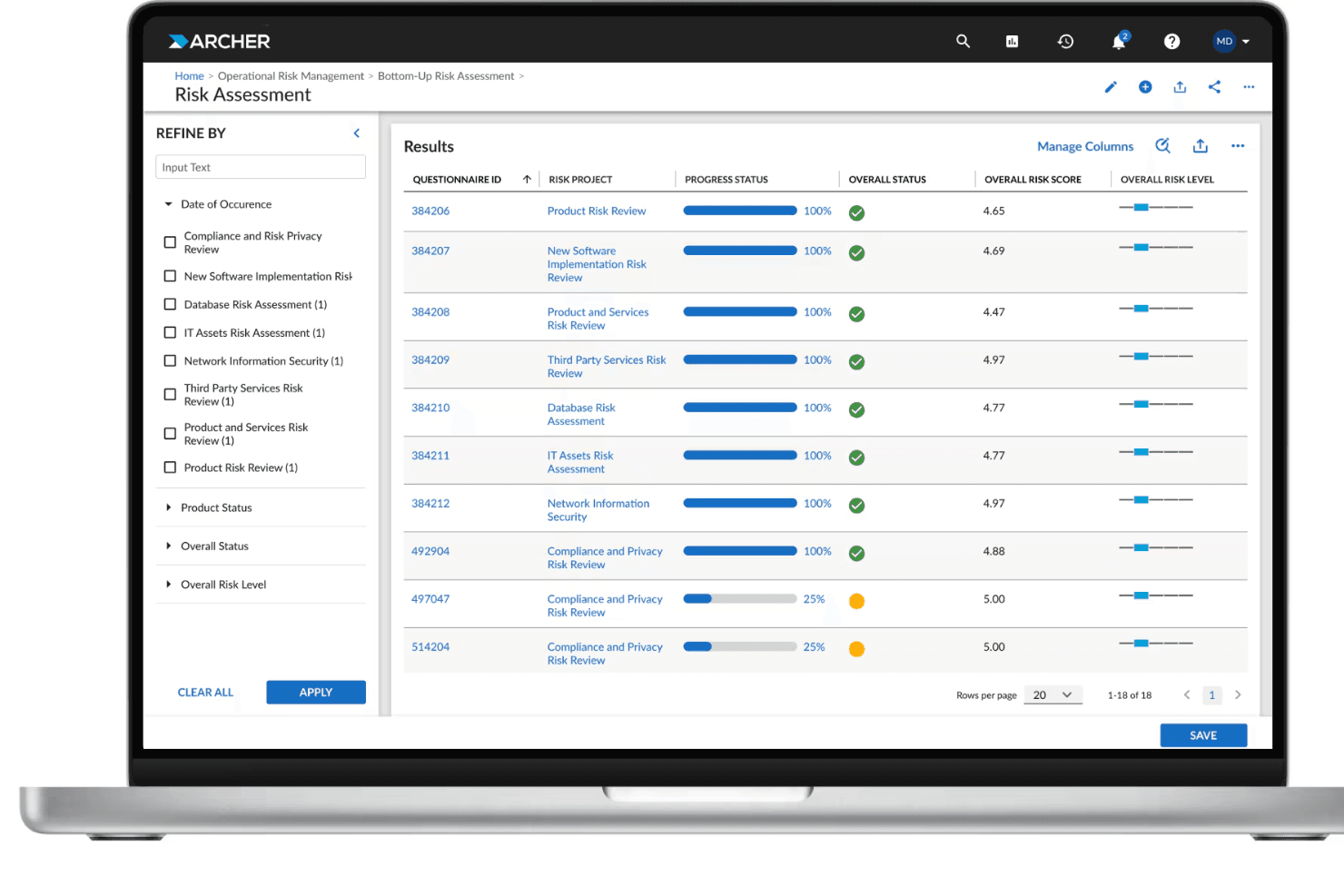
Risk Assessment Tools: Archer provides tools to identify and evaluate risks across your organization. These tools help your team prioritize and mitigate threats effectively.
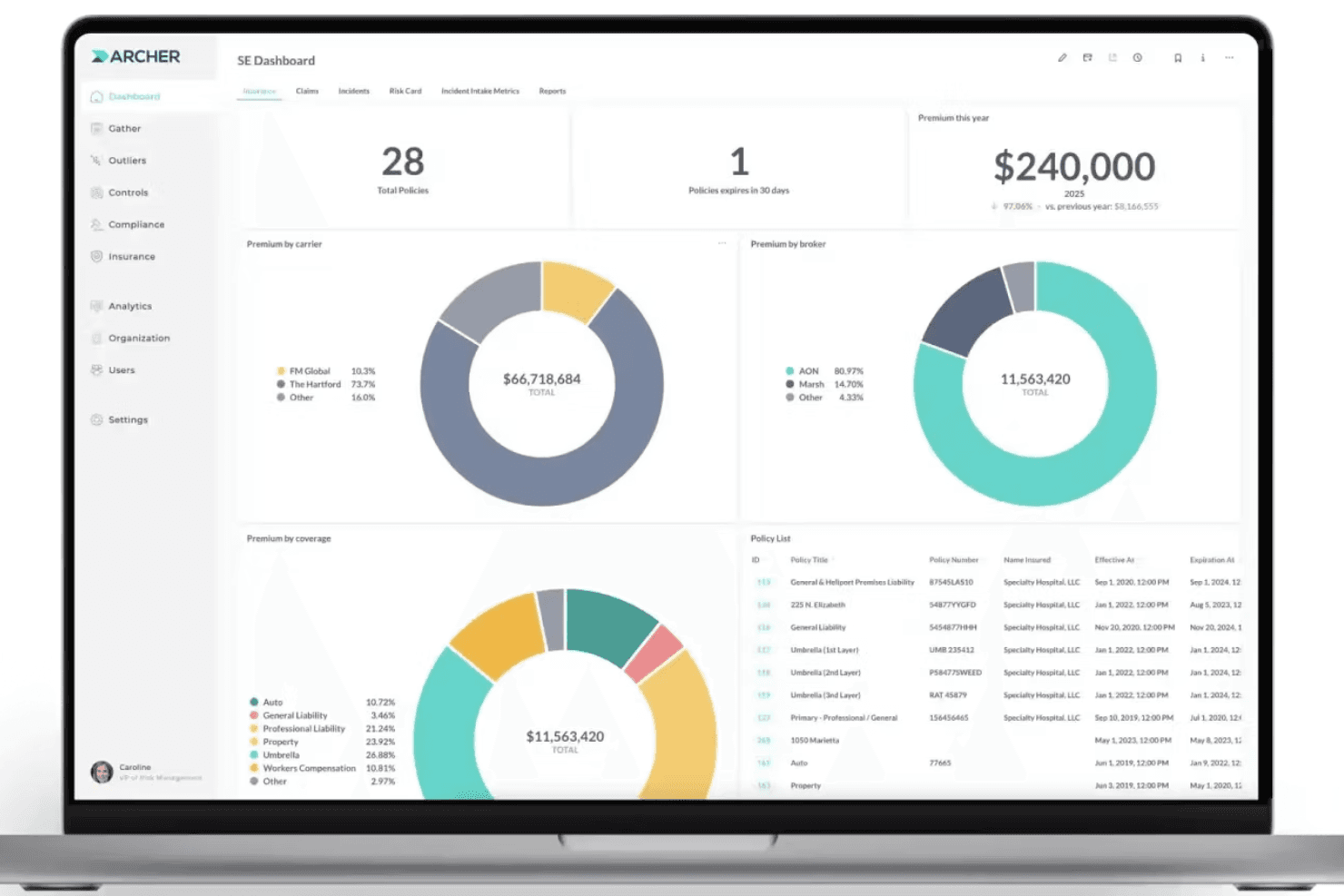
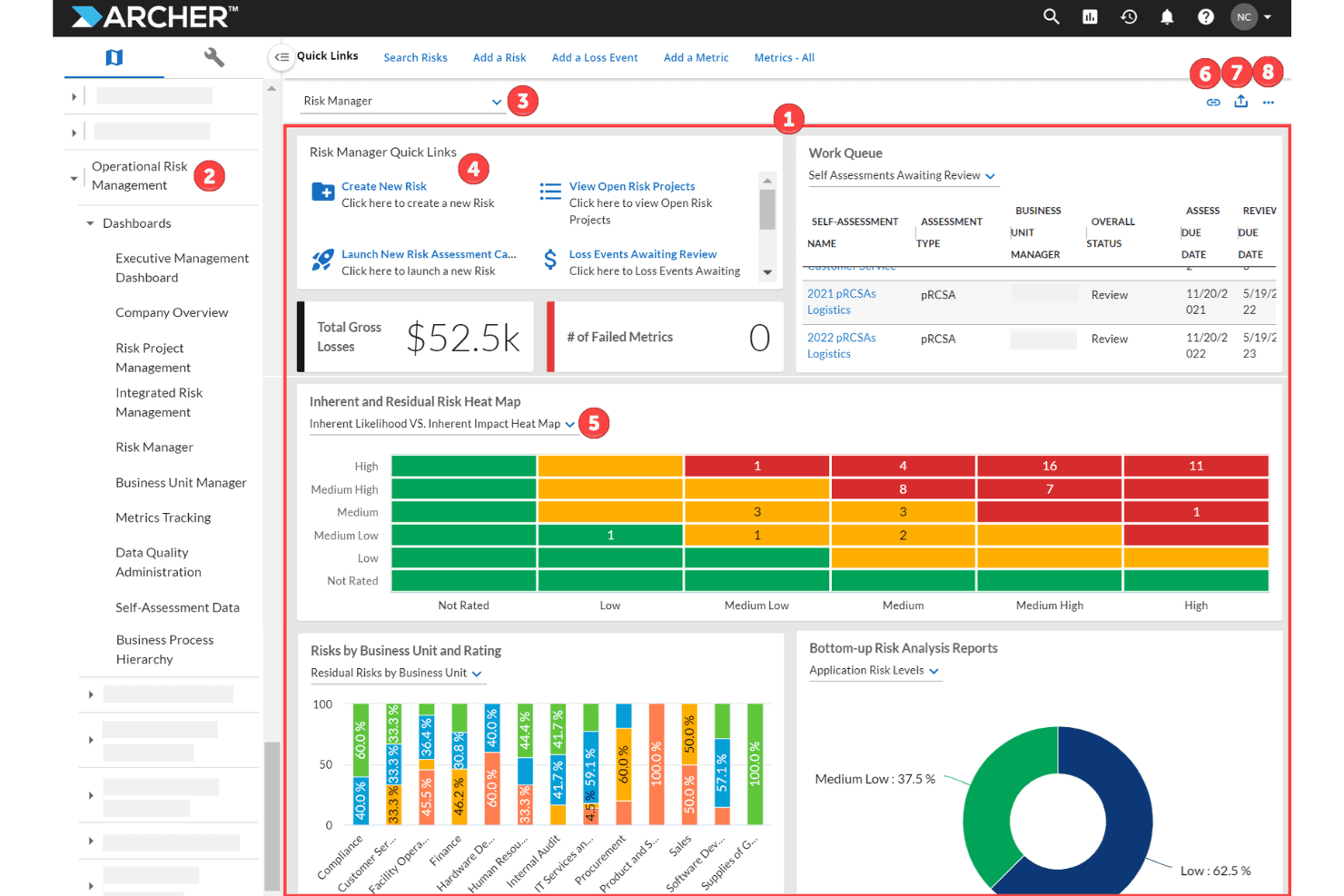
Customizable Dashboards: You can tailor dashboards to fit your specific risk management needs. This ensures your team gets the insights that matter most to your work.
Compliance Management: Archer helps you track and manage compliance requirements. This feature keeps your team aligned with industry regulations effortlessly.
Incident Management: Quickly log and respond to incidents with Archer's tracking system. Your team can ensure timely resolution and minimize impact.
Audit Management: Archer streamlines the audit process by tracking findings and actions. This feature helps your team maintain accountability and transparency.
Reporting Tools: Generate detailed reports with Archer's flexible reporting tools. Your team benefits from clear, actionable insights for decision-making.
Ease of Use
Archer's interface can be daunting, especially for new users, due to its comprehensive feature set. Your team might find the learning curve steep, but once you're familiar with it, the customization options offer great flexibility. User reviews suggest that while the initial setup may require effort, the payoff comes in efficient risk management and tailored insights. If your team is ready to invest time in learning, Archer's capabilities can significantly enhance your risk management processes
Integrations
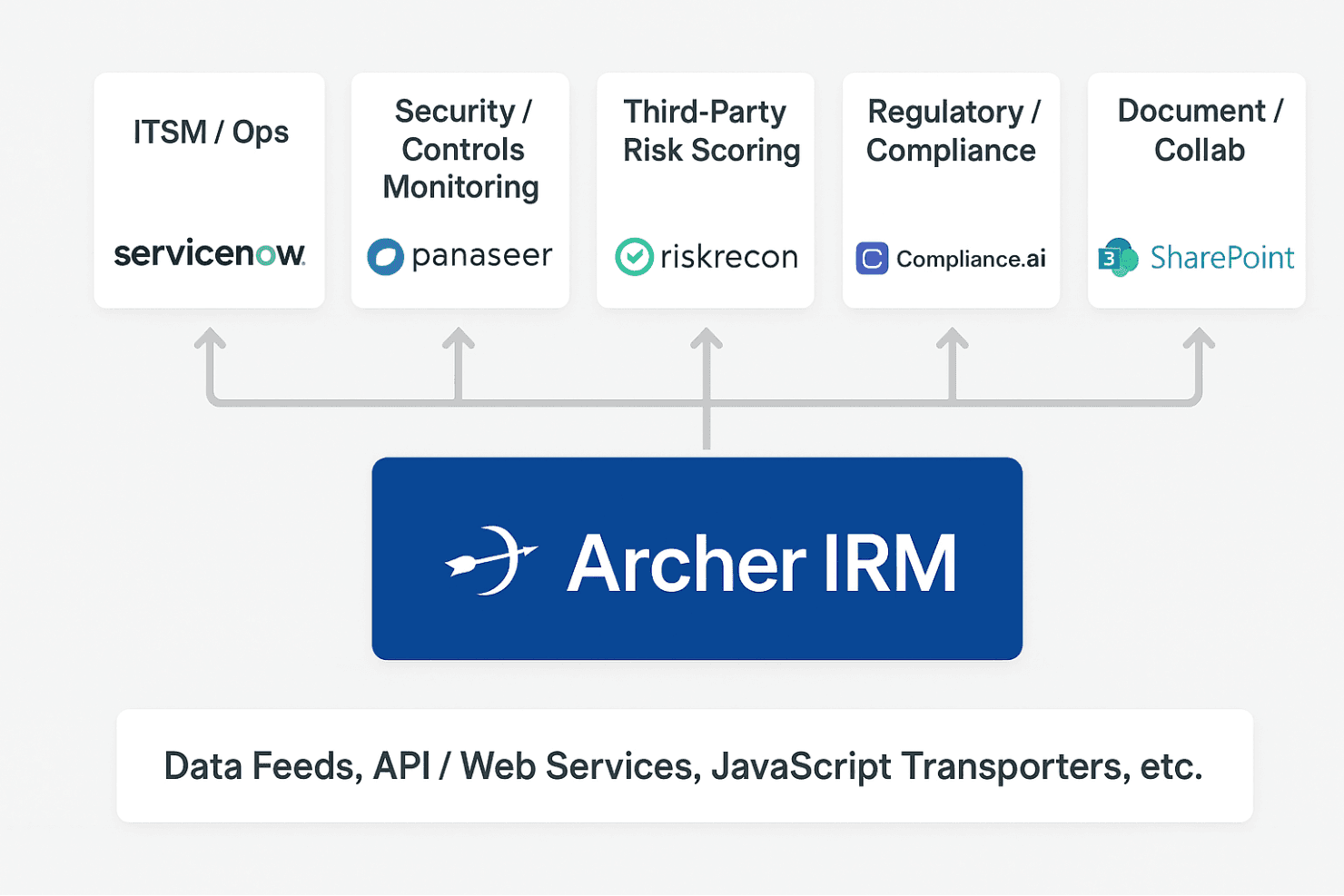
Archer integrates with ServiceNow, Tenable.io, Rapid7, Qualys, Microsoft 365 OneDrive and SharePoint, Microsoft Entra ID, Tableau, Power BI, BitSight, and SecurityScorecard.
Archer also provides an API for custom integrations and connects with third-party integration tools.
Archer Specs
- Access Management: No
- API: Yes
- Approval Workflows: Yes
- Audit Management: Yes
- Compliance Tracking: Yes
- Dashboards: Yes
- Data Export: No
- Data Import: No
- Document Management: Yes
- Environmental Management: Yes
- External Integrations: Yes
- Incident Management: Yes
- Multi-User: Yes
- Notifications: Yes
- Policy Management: Yes
- Regulatory Alerts: Yes
- Remediation: Yes
- Report & Compliance: No
- Reports: Yes
- Risk Assessment: Yes
- Safety Management: No
- Status Notifications: Yes
- Threat Detection: No


