

Recensione Younium 2026: Pro, Contro, Caratteristiche e Prezzi Spiegati
Younium si distingue per la sua gestione degli abbonamenti robusta e l’automazione, rendendolo ideale per la scalabilità delle aziende SaaS B2B.

Recensiamo gli strumenti in modo indipendente e le commissioni aiutano a finanziare i nostri test. Consulta la nostra politica sulla trasparenza, la nostra metodologia, oppure suggerisci uno strumento.
If you’re evaluating Younium, you’re likely dealing with more than simple subscriptions—you’re managing evolving contracts, usage-based pricing, recurring billing, and the pressure to get revenue recognition exactly right. The challenge is being able to invoice your customers while keeping your financial data accurate, audit-ready, and aligned with how your business actually operates.
In this review, you’ll get a clear breakdown of what Younium does well as a subscription management and billing platform, where it can fall short, and whether it matches the complexity of your billing and finance workflows. By the end, you should have a solid sense of whether it fits your business needs—or if you’re better off with another alternative.
Younium Evaluation Summary

4.2/5
- Pricing upon request
- Free demo available
Perché fidarsi dei nostri consigli sui software
6,700+
Reviews
20
Industry experts
16+
Evaluation factors
14
Years
Le nostre recensioni riflettono il nostro giudizio indipendente, non un discorso di vendita. Scopri come manteniamo la trasparenza.
Per questa guida, abbiamo valutato gli strumenti attraverso test pratici e ricerche indipendenti, assegnando un punteggio agli strumenti in base ai nostri criteri di selezione.
Le nostre recensioni riflettono il nostro giudizio editoriale umano, non un discorso di vendita.
Younium Overview
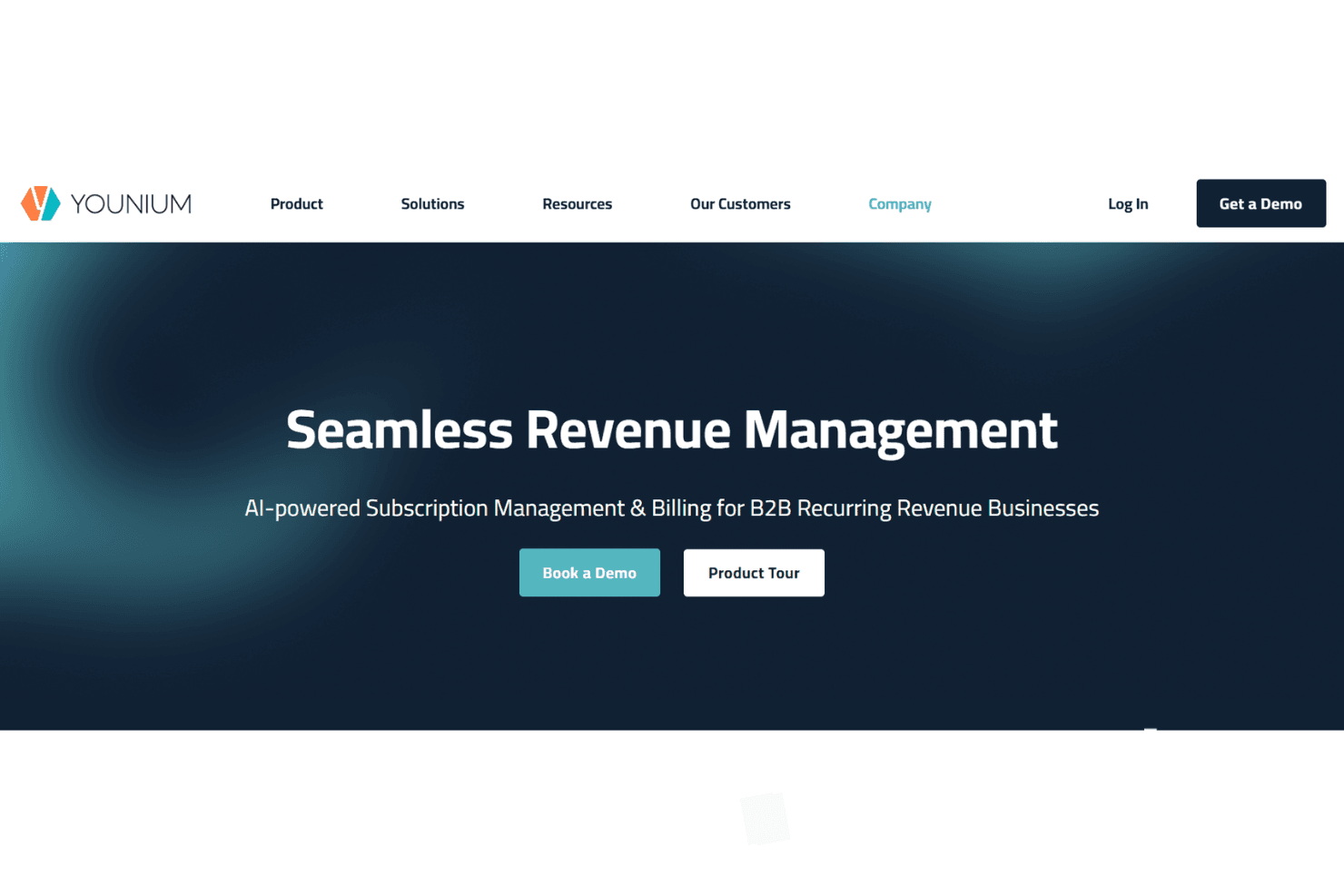
Younium focuses on managing the operational and financial complexity of B2B subscriptions, positioning itself as a system of record for recurring revenue rather than a general-purpose subscription billing tool. It brings together contract management, billing, and revenue recognition in a way that supports evolving subscription agreements—such as upgrades, usage-based pricing, and renewals—while maintaining financial accuracy.
The platform is particularly oriented toward finance-led teams that need reliable data for reporting, audits, and compliance. It also includes a growing set of capabilities beyond billing, such as analytics, quoting workflows, and customer self-service. While the interface is modern and the integration ecosystem is broad, Younium typically requires a more structured implementation process and may introduce unnecessary complexity for businesses with simpler billing requirements.
Pros
- Strong support for complex B2B subscription models, including usage-based, tiered, and milestone billing.
- Built-in revenue recognition aligned with ASC 606 and IFRS 15, with audit-ready financial workflows.
- End-to-end automation across billing, invoicing, payments, and dunning processes.
Cons
- Implementation is structured and guided, which can make onboarding longer than simpler, self-serve tools.
- May feel overly complex for companies with basic or low-volume billing needs.
- Pricing is not publicly available and requires a quote, which hinders upfront evaluation.
Is Younium Right For Your Needs?
Who Would be a Good Fit for Younium?
Younium is best suited for B2B companies with complex subscription models and a strong need for financial accuracy. It’s particularly effective when subscription contracts evolve over time—such as upgrades, add-ons, renewals, and usage-based pricing—and where finance teams require reliable data for billing, reporting, and compliant revenue recognition.
The platform is a strong fit for finance-led organizations that prioritize audit readiness, structured workflows, and centralized control over subscription data. Companies moving beyond basic billing tools—and needing a dedicated subscription system-of-record that integrates with CRM and ERP systems—will get the most value from Younium.
- B2B SaaS CompaniesSupports complex customer subscriptions, including upgrades, downgrades, usage-based pricing, and renewals.
- Finance-Led OrganizationsDesigned for CFOs and finance teams that need accurate reporting, audit trails, and ASC 606/IFRS 15–compliant revenue recognition.
- Companies With Evolving Subscription ContractsHandles contract changes, proration, add-ons, and multi-component pricing within a single subscription structure.
- Mid-Market and Enterprise BusinessesBest suited for organizations with dedicated finance resources and more complex operational requirements.
- Product-Led Growth (PLG) CompaniesSupports self-service signup, checkout (via paywall), and subscription changes without heavy sales involvement.
- Multi-Entity or Multi-Currency OperationsSupports global operations with multiple legal entities, currencies, and localized tax configurations.
Who Would be a Bad Fit for Younium?
Younium is not ideal for businesses with simple, transactional billing models or limited operational complexity. Companies that rely on one-time sales or straightforward invoicing often won’t benefit from the platform’s depth and may find it unnecessarily complex. It also assumes a level of financial ownership and structure that smaller teams or early-stage companies may not yet have in place. Additionally, organizations looking for an all-in-one system may find Younium better suited as a specialized layer alongside existing CRM and ERP tools rather than a replacement for them.
- Small RetailersPrimarily focused on one-time product sales rather than recurring subscription-based revenue models.
- Ecommerce/DTC BrandsTools like Shopify or Stripe are better suited for transactional, high-volume product-based sales environments.
- Early-Stage StartupsBasic invoicing tools are often sufficient before subscription complexity and billing requirements increase.
- Organizations Without Dedicated Finance TeamsYounium is built for finance-led operations and may be difficult to manage without specialized internal roles.
- Local Service ProvidersBusinesses with straightforward, project-based or one-off billing don’t benefit from Younium’s advanced capabilities.
- Companies Seeking an All-in-One CRM or ERPYounium is not designed to replace core systems like CRM or ERP, requiring additional integrated tools.
Come testiamo e valutiamo gli strumenti
Abbiamo impiegato anni a costruire, perfezionare e migliorare il nostro sistema di test e valutazione dei software. Il nostro schema è progettato per cogliere le sfumature della scelta del software e ciò che rende uno strumento efficace, concentrandosi sugli aspetti critici del processo decisionale. Di seguito puoi vedere esattamente come funzionano i nostri test e le nostre valutazioni in base a sette criteri. Questo ci permette di offrire una valutazione imparziale del software basata su funzionalità di base, caratteristiche distintive, facilità d’uso, onboarding, assistenza clienti, integrazioni, recensioni dei clienti e rapporto qualità-prezzo.
Funzionalità principali (25% del punteggio finale)
Il punto di partenza della nostra valutazione è sempre la funzionalità principale dello strumento. Dispone delle funzionalità base che un utente si aspetterebbe di trovare? Alcune di queste funzionalità sono riservate ai piani a pagamento più elevati? In sostanza, ci aspettiamo che uno strumento sia all’altezza delle capacità minime dei concorrenti.
Caratteristiche distintive (25% del punteggio finale)
Successivamente, valutiamo le caratteristiche distintive che vanno oltre la funzionalità principale normalmente presente negli strumenti di questo tipo. Un punteggio elevato riflette funzionalità specializzate o uniche che rendono il prodotto più rapido, efficiente o offrono valore aggiunto all’utente. Valutiamo inoltre quanto sia semplice integrare il software con altri strumenti tipicamente presenti nello stack tecnologico, per estenderne la funzionalità e l’utilità. Gli strumenti che offrono numerose integrazioni native, connessioni di terze parti e accesso API per creare integrazioni personalizzate ottengono il punteggio migliore.
Facilità d’uso (10% del punteggio finale)
Consideriamo quanto sia rapido e semplice eseguire le attività fondamentali previste dallo strumento. Un software con punteggio elevato è ben progettato, intuitivo da usare, offre app mobile, modelli predefiniti e semplifica operazioni complesse.
Onboarding (10% del punteggio finale)
Sappiamo quanto sia importante l’adozione rapida da parte del team quando si introduce una nuova piattaforma: per questo valutiamo quanto sia facile imparare e utilizzare lo strumento con una formazione minima. Valutiamo la rapidità con cui un membro del team può impostare e iniziare a utilizzare lo strumento senza esperienza pregressa. Le soluzioni con punteggio alto richiedono poco o nessun supporto.
Assistenza clienti (10% del punteggio finale)
Analizziamo quanto sia semplice e veloce ottenere aiuto tramite telefono, live chat o knowledge base. Gli strumenti e le aziende che offrono supporto in tempo reale ottengono i punteggi migliori, mentre i chatbot ricevono i punteggi più bassi.
Recensioni dei clienti (10% del punteggio finale)
Oltre ai nostri test e valutazioni, consideriamo il net promoter score dei clienti attuali e passati. Verifichiamo la probabilità che i clienti scelgano nuovamente lo strumento per le funzionalità di base. Un software con punteggio elevato riflette un net promoter score alto da parte dei clienti vecchi e attuali.
Rapporto qualità-prezzo (10% del punteggio finale)
Infine, considerando tutti gli altri criteri, valutiamo il prezzo medio dei piani base rispetto alle funzionalità principali e agli altri criteri di valutazione. I software che offrono di più, a un costo inferiore, ottengono punteggi migliori.
Core Features
Subscription Management
Model and manage complex B2B subscriptions and pricing models, including recurring, usage-based, one-time, and milestone billing. Track contract changes such as upgrades, downgrades, add-ons, proration, and flexible pricing structures over time.
Billing & Accounts Receivable Automation
Automate invoice generation across the subscription lifecycle, including recurring and usage-based billing. Support payment collection, settlements, and dunning workflows with configurable billing rules and schedules.
Revenue Recognition & Financial Operations
Apply rule-based revenue recognition aligned with ASC 606 and IFRS 15. Automatically capture subscription activity into segmented journals to support reconciliation, monthly close, and audit processes.
Real-Time Metrics & Reporting
Access pre-calculated subscription KPIs such as MRR, ARR, NRR, churn, and retention through Younium’s Insights layer. These dashboards reduce the need for custom data pipelines with built-in reporting and analytics capabilities.
Quote-to-Cash Workflow Support
Connect quoting, subscription management, billing, and financial outputs in a unified workflow. Maintain traceability across the full lifecycle from quote creation to invoicing and revenue recognition.
Self-Service Portal
Launch a branded portal for customers to manage their subscriptions and billing details. Enable users to view invoices, update payment methods, and handle renewals independently.
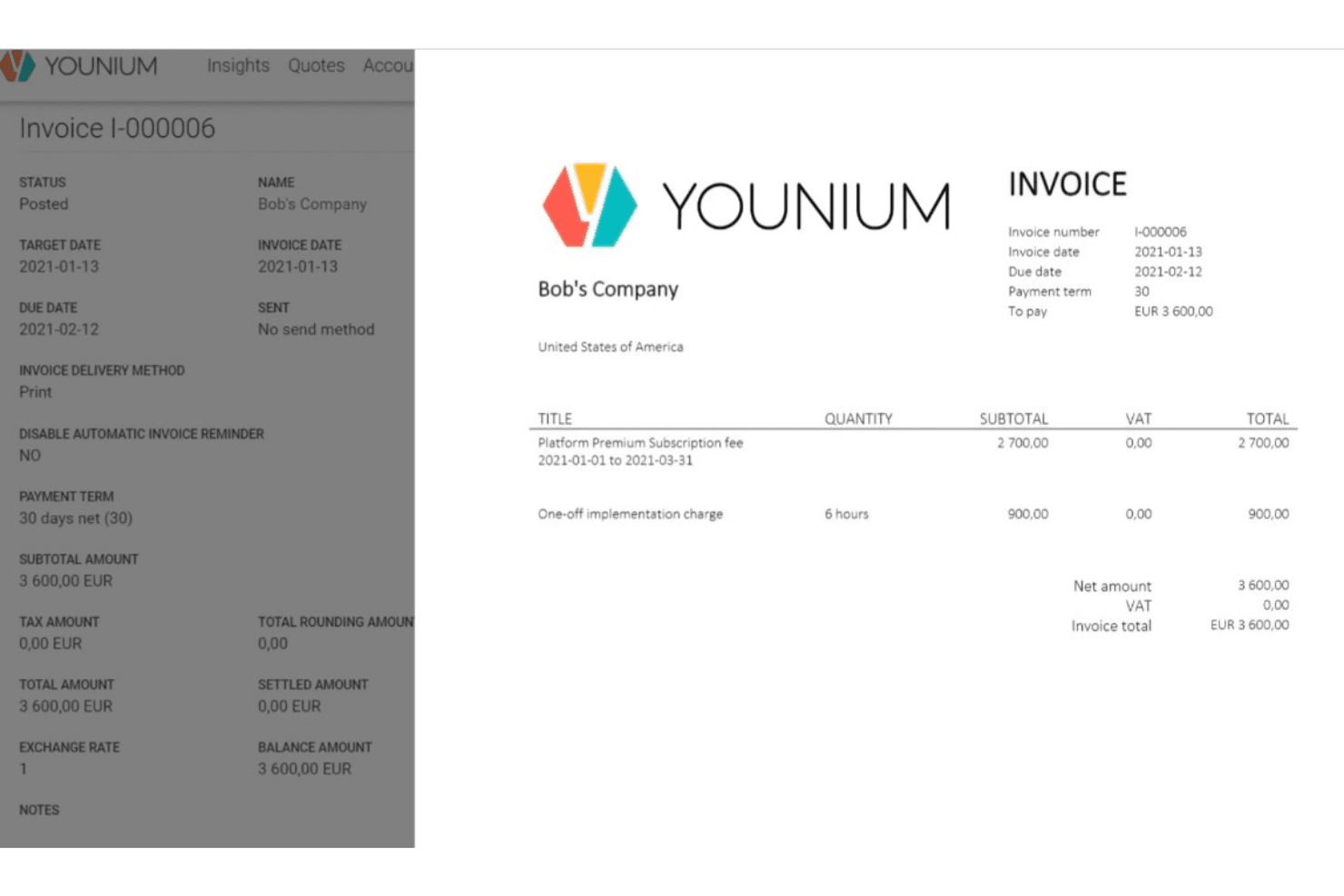
Standout Features
AI-Powered Contract Import Agent
Younium provides a single source of truth for all customer contracts, amendments, and terms. This centralization streamlines contract management and ensures finance teams always reference the latest agreements.
Model Context Protocol (MCP)
Enables secure, read-only access for AI tools (like ChatGPT or Claude) to query subscription and financial data. This allows teams to analyze revenue data using AI without compromising system integrity.
No-Code Paywall & Checkout
A functionality that lets you launch a subscription-ready checkout experience via a simple JavaScript snippet. Supports product-led growth motions with integrated billing, renewals, and payment handling.
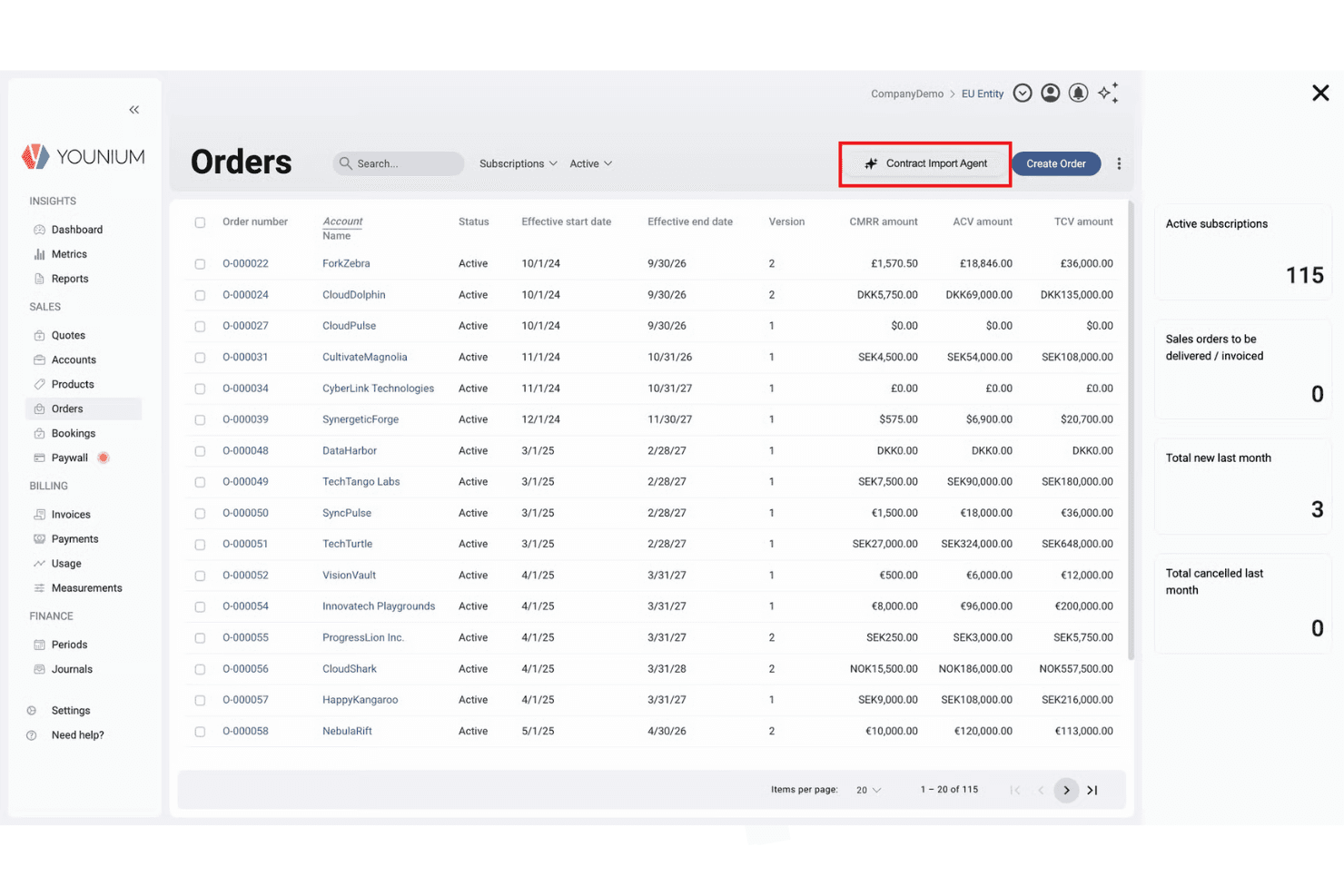
Ease of Use
Younium offers a modern, structured interface designed around subscription and financial workflows, with improvements from its newer UI focused on performance and usability. However, the platform’s depth can feel overwhelming for teams with simple billing needs or limited experience managing subscription complexity. Navigation and day-to-day operations become more intuitive once the system is fully configured, particularly for finance teams working with detailed subscription data and compliance requirements. Overall, Younium is best suited for organizations that prioritize control, accuracy, and scalable and structured workflows over simplicity.
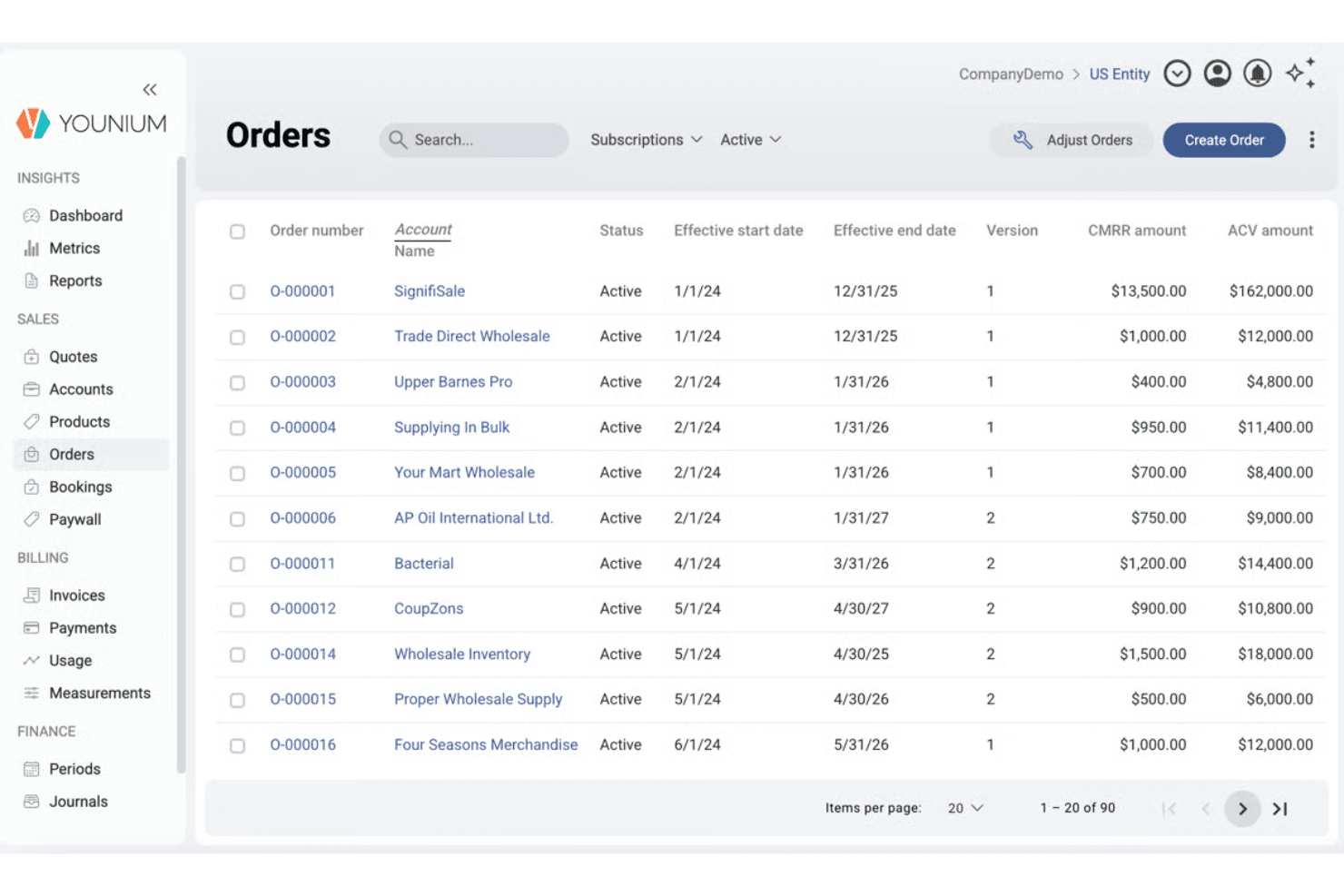
Onboarding
Younium’s onboarding is guided and implementation-driven rather than self-serve, typically involving a dedicated Customer Success Manager and structured setup process. Initial configuration includes system setup, data migration, and workflow customization, which can take time—especially for organizations with complex subscription models. Younium provides onboarding support, documentation, and a short “hypercare” period after go-live to help stabilize operations. As a result, time to value is strongest for teams with well-defined billing processes and the internal resources to support implementation.
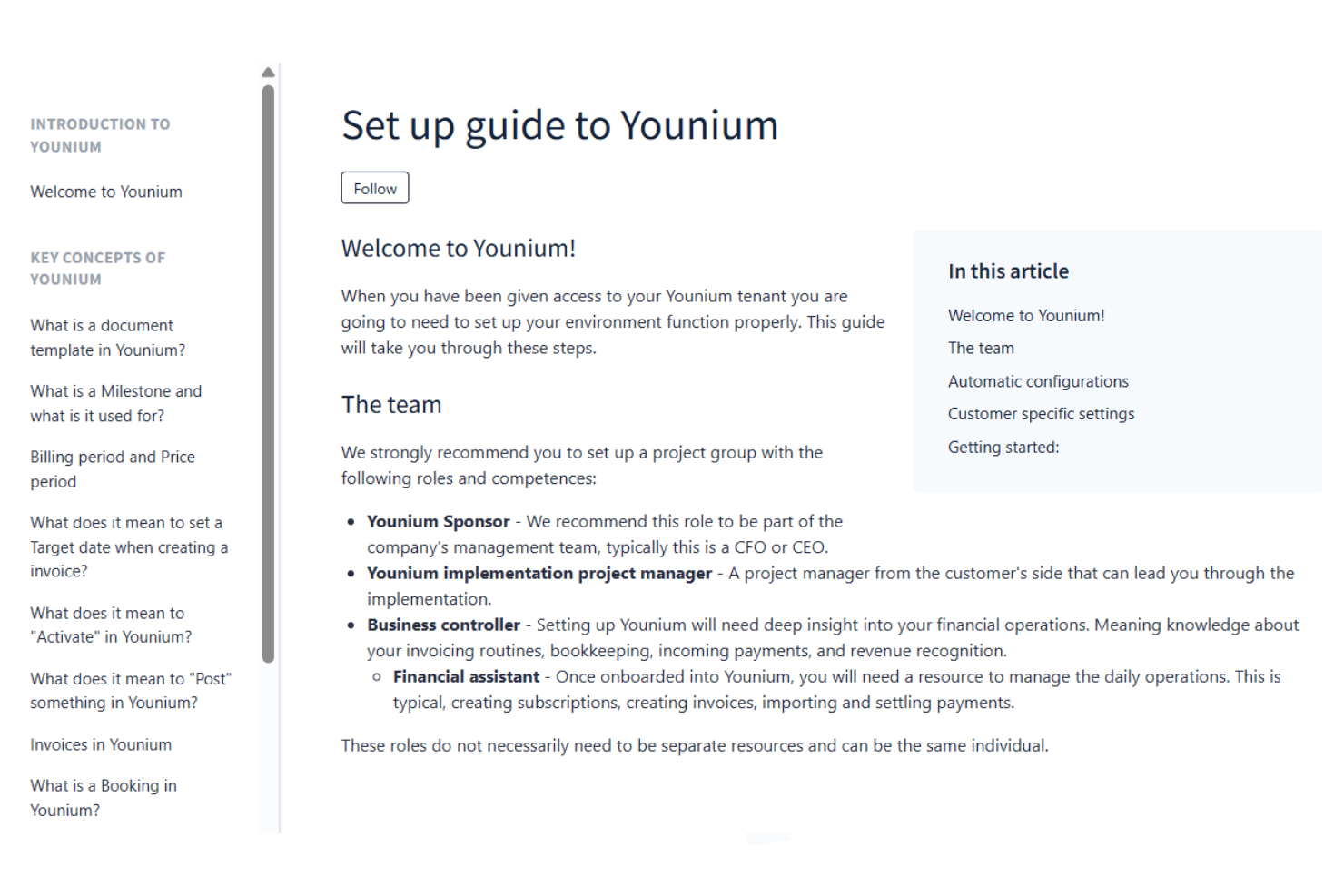
Customer Support
Younium has responsive and knowledgeable customer support, with especially helpful guidance during onboarding and troubleshooting. Support is available through email and scheduled calls. In addition to direct support, users have access to a knowledge base and documentation for self-service troubleshooting and guidance. Support availability is not fully detailed publicly, and response times or SLAs are not clearly specified.

Integrations
Younium integrates with a wide range of CRM, ERP/accounting, payment, and tax platforms. Key integrations include Salesforce, HubSpot, Oracle NetSuite, Microsoft Dynamics 365, QuickBooks Online, Xero, Fortnox, Stripe, GoCardless, Planhat, Avalara and TaxJar.
In addition to native connectors, Younium offers an open REST API with webhooks and supports integration through platforms like Zapier, enabling connectivity with thousands of additional applications.

Value for Money
Younium delivers the most value for organizations managing complex B2B subscription models that require automation, financial accuracy, and compliance. Its strengths in billing automation, revenue recognition, and subscription analytics can reduce manual work and improve audit readiness for finance teams. However, pricing is not publicly available and requires engaging with sales, which can make it harder to evaluate and compare upfront. Overall, Younium is generally better suited to mid-market and enterprise companies rather than smaller teams with simpler billing needs.
Younium Specs
- 2-Factor Authentication: Yes
- A/B Testing: No
- API: Yes
- Batch Permissions & Access: Yes
- BitCoin: No
- Budgeting: Yes
- Calendar Management: Yes
- Conversion Tracking: No
- Customer Management: Yes
- Dashboard: Yes
- Data Export: Yes
- Data Import: Yes
- Data Visualization: Yes
- External Integrations: Yes
- Forecasting: Yes
- Lead Management: No
- Lead Scoring: No
- Marketing Automation: No
- Multi-Currency: Yes
- Multi-User: Yes
- Notifications: Yes
- Password & Access Management: Yes
- PayPal: No
- Scheduling: Yes
- Stripe: Yes
- Third-Party Plugins/Add-Ons: Yes
Younium FAQs
Younium Company Overview & History
Younium is a subscription management and billing software company headquartered in Stockholm, Sweden. The company is known for its strong growth, recently being featured in the Financial Times FT1000 list for rapid expansion. Notable clients include Quinyx, Signicat, Kognity, Voyado, Topdesk, Ardoq, Chargepoint, Superoffice, Spotler, Visma, and Catalystone.
Younium Major Milestones
- 2017: Younium founded in Stockholm, Sweden.
- 2018: Official launch of the Younium subscription management platform.
- 2023: Secured a major funding round to accelerate growth.
- 2024: Reached over 200 customers and $7.9M in annual revenue.
- 2025: Recognized for 319% growth and ranked 292 on the Financial Times FT1000 list.