


Sage Intacct contro Acumatica: confronto e recensioni degli esperti per il 2026
Vuoi conoscere la verità su Sage Intacct contro Acumatica? Analizzo funzionalità, prezzi e casi d'uso per aiutarti a scegliere la soluzione ERP più adatta alla tua azienda nel 2026.

Recensiamo gli strumenti in modo indipendente e le commissioni aiutano a finanziare i nostri test. Consulta la nostra politica sulla trasparenza, la nostra metodologia, oppure suggerisci uno strumento.
As finance teams scale, small differences in how a system handles reporting, automation, and workflows start to matter a lot more. What looks similar on paper can feel very different once it is part of your daily close and planning process.
Deciding between Sage Intacct and Acumatica can feel like a high-stakes puzzle, especially when your team needs flexible reporting, automation, and reliability from your ERP accounting software. Maybe you’re up against tight close deadlines, or trying to make sense of ever-shifting business priorities. Either way, choosing the right platform can free up your time and help you deliver sharper financial insights. Both tools promise visibility, efficiency, and control, but the devil’s in the details.
I’ll break down where each tool shines (and where it doesn’t), with direct pros and cons, use cases, pricing, security, and usability. By the end, you’ll know exactly what to expect and which option makes the most sense for your business.
Sage Intacct

4.3/5
- Free demo available
- Pricing upon request
Acumatica
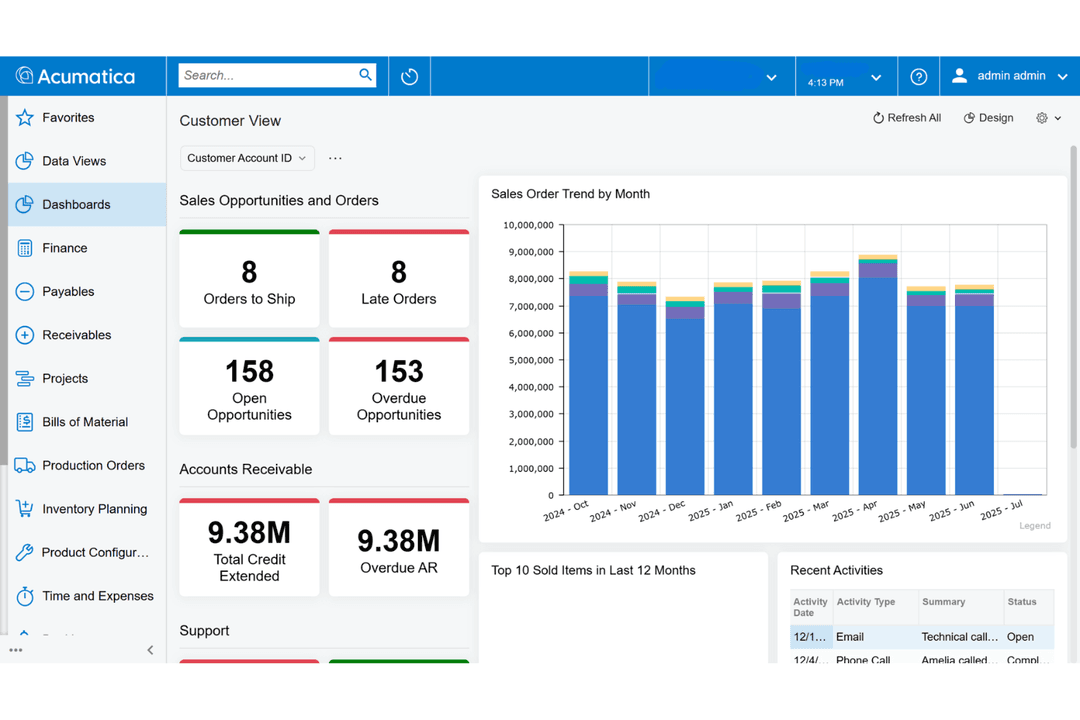
4.4/5
- Free demo available
- Pricing upon request
Perché fidarsi dei nostri consigli sui software
6,700+
Reviews
20
Industry experts
16+
Evaluation factors
14
Years
Le nostre recensioni riflettono il nostro giudizio indipendente, non un discorso di vendita. Scopri come manteniamo la trasparenza.
Per questa guida, abbiamo valutato gli strumenti attraverso test pratici e ricerche indipendenti, assegnando un punteggio agli strumenti in base ai nostri criteri di selezione.
Le nostre recensioni riflettono il nostro giudizio editoriale umano, non un discorso di vendita.
| Sage Intacct | Acumatica | |
|---|---|---|
| Free Trial | Free demo available | Free demo available |
| Pricing | Pricing upon request | Pricing upon request |
Prezzi e costi nascosti di Sage Intacct e Acumatica
Sage Intacct e Acumatica utilizzano entrambe una tariffazione basata su preventivo, ma arrivano alla cifra in modo diverso. Sage Intacct stabilisce i prezzi in base ai moduli, alle licenze utente e al volume delle transazioni, quindi i costi aumentano quando aggiungi funzionalità o persone. Acumatica si basa sulle applicazioni che attivi, sul volume di transazioni che gestisci e sulle risorse di sistema che consumi, una soluzione interessante per i team stanchi di pagare in base al numero di utenti. Tuttavia, i suoi attuali livelli di licenza prevedono un numero di utenti nominativi incluso per ciascuna edizione del prodotto; considera quindi gli utenti illimitati come un aspetto da verificare nel preventivo, non come qualcosa da dare per scontato. Entrambe fanno pagare un extra per i moduli avanzati, i connettori di terze parti, la formazione e l'assistenza, e questi costi aggiuntivi fanno rapidamente aumentare il totale.
Per scegliere la soluzione più adatta, penso che tu debba confrontare i tuoi modelli di utilizzo reali e i piani di crescita con il modo in cui ciascun fornitore stabilisce i prezzi. Valuta il costo totale su più anni, non solo la cifra mensile indicata in evidenza. Con Acumatica, chiedi in che modo i livelli delle transazioni, i livelli di risorse, lo spazio di archiviazione e la scelta di implementazione incidano sulla fattura quando il volume cresce, e se gli aumenti al rinnovo siano soggetti a un tetto massimo. Con Sage Intacct, calcola quali moduli ti serviranno e quante licenze utente saranno necessarie in ogni fase della crescita. Prima di prendere un impegno, fatti mettere per iscritto i dettagli da entrambi i fornitori, così saprai esattamente cosa aspettarti quando inizierai a espanderti.
| Sage Intacct | Acumatica | |
|---|---|---|
| Accounts Payable | Yes | Yes |
| Accounts Receivable | Yes | Yes |
| API | Yes | Yes |
| Budgeting | Yes | Yes |
| Calendar Management | No | Yes |
| Customer Management | Yes | Yes |
| Dashboard | Yes | Yes |
| Data Export | Yes | Yes |
| Data Import | Yes | Yes |
| Data Visualization | Yes | Yes |
| Expense Tracking | Yes | Yes |
| External Integrations | Yes | Yes |
| Forecasting | Yes | Yes |
| Inventory Tracking | Yes | Yes |
| Multi-Currency | Yes | Yes |
| Multi-User | Yes | Yes |
| Notifications | Yes | Yes |
| Payroll | Yes | Yes |
| Supplier Management | Yes | Yes |
| Integrazione | Sage Intacct | Acumatica |
|---|---|---|
| IntegrazioneSalesforce | Sage Intacct✅ | Acumatica✅ |
| IntegrazioneAvalara | Sage Intacct✅ | Acumatica✅ |
| IntegrazioneADP | Sage Intacct✅ | Acumatica✅ |
| IntegrazioneExpensify | Sage Intacct✅ | Acumatica❌ |
| IntegrazioneShopify | Sage Intacct❌ | Acumatica✅ |
| IntegrazioneStripe | Sage Intacct✅ | Acumatica❌ |
| IntegrazioneBill.com | Sage Intacct✅ | Acumatica✅ |
| IntegrazioneMicrosoft 365 | Sage Intacct❌ | Acumatica✅ |
| IntegrazioneAPI | Sage Intacct✅ | Acumatica✅ |
| IntegrazioneZapier | Sage Intacct✅ | Acumatica❌ |
Sage Intacct e Acumatica coprono le principali integrazioni finanziarie e operative che i team finanziari si aspettano, con connettori preconfigurati su entrambi i lati per strumenti essenziali come Avalara e ADP. Entrambi espongono un'API aperta, quindi il tuo team può collegare quasi tutto ciò che manca dall'elenco dei connettori preconfigurati; Acumatica aggiunge inoltre webhook, feed OData e partner di piattaforme di integrazione che gestiscono connessioni come Salesforce. Le differenze tra gli elenchi sono indicative. Sage Intacct si orienta verso gli strumenti finanziari e per la gestione delle spese, mentre Acumatica offre connettori nativi per il commercio destinati a negozi online e marketplace, oltre a moduli propri per le spese e i pagamenti che riducono la necessità di applicazioni esterne in queste categorie.
| Fattore | Sage Intacct | Acumatica |
|---|---|---|
| FattoreCrittografia dei dati | Sage IntacctCrittografa i dati a riposo e in transito utilizzando i protocolli attualmente standard del settore. | AcumaticaCrittografa i dati a riposo e in transito, con autenticazione basata su token a protezione del traffico API. |
| FattoreConformità normativa | Sage IntacctSupporta SOC 1, SOC 2, ISO 27001, PCI e GDPR, oltre a HIPAA per i clienti idonei del settore sanitario se configurato di conseguenza. | AcumaticaDispone delle attestazioni SOC 1, SOC 2 e SOC 3 ed è allineato al GDPR, con supporto alle normative sulla conservazione dei registri per il settore manifatturiero regolamentato. |
| FattoreDisponibilità e resilienza | Sage IntacctElevata disponibilità media pubblicata, supportata da ridondanza e monitoraggio continuo. | AcumaticaInfrastruttura cloud di primo livello con backup georidondanti, una procedura di ripristino documentata verso un centro dati alternativo e brevi finestre di manutenzione programmate. |
| FattoreControlli degli accessi degli utenti | Sage IntacctAccessi e autorizzazioni basati sui ruoli, fino al livello delle transazioni, con flussi di approvazione sovrapposti. | AcumaticaAccessi basati sui ruoli con restrizioni a livello di campo e riga, accesso singolo, autenticazione a più fattori e controlli delle sessioni. |
| FattoreRegistrazione degli audit | Sage IntacctTracce di audit complete che coprono le azioni degli utenti, le modifiche alla configurazione e la cronologia dei dati, con monitoraggio più approfondito disponibile per i record sensibili. | AcumaticaRegistra le attività degli utenti e del sistema con tracciamento delle modifiche e report sulle azioni sensibili. |
Sia Sage Intacct sia Acumatica offrono sicurezza e conformità di livello aziendale, ma con priorità diverse. Sage Intacct offre il più ampio insieme di certificazioni, comprese le disposizioni specifiche per il settore sanitario di cui si informano i team finanziari degli ambiti regolamentati. Acumatica funziona su un'infrastruttura cloud di primo livello con un database separato per ogni cliente, controlli degli accessi stratificati e opzioni per i produttori regolamentati. Ritengo che i responsabili della sicurezza apprezzeranno l'ampiezza delle attestazioni di Sage Intacct, mentre i team che necessitano di una configurazione pratica o di un modello di hosting a propria scelta troveranno Acumatica più adattabile.
| Fattore | Sage Intacct | Acumatica |
|---|---|---|
| FattoreInterfaccia utente | Sage IntacctCruscotti moderni, anche se gli alberi dei menu più profondi possono risultare affollati per i nuovi utenti. | AcumaticaSchermate personalizzabili e spazi di lavoro personali che gli utenti aziendali possono riorganizzare autonomamente. |
| FattoreInserimento | Sage IntacctConfigurazione guidata con il coinvolgimento del fornitore e configurazione che richiede tempo per le organizzazioni complesse. | AcumaticaImplementazione guidata dal partner, con percorsi graduali o accelerati che possono arrivare alla messa in produzione in circa un trimestre. |
| FattorePersonalizzazione | Sage IntacctPersonalizzazione granulare, ma i campi e i layout personalizzati richiedono competenze da amministratore. | AcumaticaStrumenti senza codice per schermate, flussi di lavoro e avvisi, con modifiche sovrapposte al nucleo, così che gli aggiornamenti le mantengano intatte. |
| FattoreSupporto | Sage IntacctSupporto del fornitore per telefono e chat, affiancato da un'ampia base di conoscenze e risorse formative. | AcumaticaIl supporto e la formazione sono forniti principalmente dal partner di implementazione, insieme a una comunità di utenti aperta e alla documentazione. |
| FattoreFlusso di lavoro dei report | Sage IntacctCollegamenti rapidi per i report frequenti, anche se la configurazione dei report avanzati richiede diversi passaggi da apprendere. | AcumaticaRicerche e cruscotti senza codice con filtri, tabelle pivot, analisi dettagliate ed esportazione in fogli di calcolo. |
Acumatica tende a essere più accessibile per i team che si avvicinano per la prima volta a un ERP, soprattutto perché gran parte della configurazione non richiede codice e le modifiche vengono applicate sopra il prodotto principale anziché al suo interno, evitando che gli aggiornamenti annullino il lavoro svolto. Sage Intacct premia gli utenti che desiderano controlli dettagliati e sono disposti a investire tempo per imparare a usare il sistema. Vale la pena considerare una differenza pratica: Acumatica vende e implementa tramite partner, quindi la qualità del lancio e dell'assistenza quotidiana dipende molto dall'azienda scelta, mentre Sage Intacct gestisce implementazione e supporto tramite il fornitore, affiancato dalla propria rete di partner.
Sage Intacct
- Handles multi-entity consolidations without ERP-level complexity
- Offers granular dimensional reporting for detailed financial analysis
- Automates approvals, invoice coding, and close tasks for stricter financial controls
- Advanced reporting and workflow setup usually needs partner or admin help
- Not built for manufacturing, warehousing, or supply chain operations
- No on-premises option for teams with local hosting requirements
Acumatica
- Responsive customer support and active user community.
- Strong reporting and dashboard customization options.
- Transparent pricing with unlimited user licensing.
- Some updates can disrupt custom workflows or settings.
- Mobile app functionality is limited compared to desktop.
- Advanced manufacturing features require extra configuration.
Sage Intacct
- Multi-Entity OrganizationsSage Intacct simplifies consolidations, intercompany transactions, and multi-currency workflows for businesses operating across subsidiaries or global entities.
- Healthcare ProvidersAudit-ready tracking, dimensional reporting, and support for strict HIPAA-eligible configurationss help healthcare finance teams uphold regulatory requirements and control costs.
- SaaS CompaniesYou can automate revenue recognition, manage complex contracts, and integrate with Salesforce for clear, GAAP-compliant SaaS reporting.
- Nonprofit OrganizationsDimensional chart of accounts, strong fund accounting, and grant tracking features make it much easier for nonprofits to manage restricted funds and donor reporting.
- Professional Services FirmsProject accounting, expense management, and real-time dashboards help project-based teams bill accurately and keep a close eye on profitability.
- Fast-Growth Mid-MarketsRapidly scaling companies with layered structures and evolving systems benefit from Sage Intacct’s flexible modules, integrations, and scalable user-based pricing.
- Nonprofit OrganizationsDimensional chart of accounts, strong fund accounting, grant tracking, and prebuilt FASB-compliant statements make it much easier for nonprofits to manage restricted funds.
Acumatica
- Growing Mid-Sized CompaniesScalable modules and unlimited users accommodate rapid business growth.
- Field Service TeamsMobile field service management tools support dispatch and scheduling.
- Multi-Entity OrganizationsCentralized financials and intercompany accounting simplify multi-entity management.
- Professional ServicesTime tracking and billing modules help manage client projects and resources.
- Wholesale DistributionInventory management and order automation tools fit distribution operations.
- Construction FirmsAcumatica’s project accounting and job costing features support complex construction workflows.
Chi dovrebbe usare Sage Intacct e chi dovrebbe usare Acumatica?
Sage Intacct è adatto ai responsabili finanziari che necessitano di controlli rigorosi, report dettagliati e una conformità approfondita in settori come servizi professionali, organizzazioni non profit, sanità e aziende basate su abbonamenti. Acumatica è la scelta migliore quando le attività operative sono l'aspetto più complesso, con edizioni per produzione, distribuzione e attività aziendali generali, oltre a opzioni di distribuzione che includono cloud, cloud privato e installazione autonoma.
La linea di demarcazione è generalmente chiara. Se la complessità finanziaria, la preparazione agli audit e l'analisi dimensionale dominano i requisiti, scegli Sage Intacct. Se produzione, inventario, gestione del magazzino o attività sul campo sono al centro dell'azienda e desideri un unico sistema che li copra, orientati verso Acumatica.
| Sage Intacct | Acumatica | |
|---|---|---|
| Customization | Sage Intacct Custom fields and layouts need admin skills and setup time. | Acumatica Configuration aimed at business users, with no coding required for most screen and workflow changes. |
| Deployment Options | Sage Intacct Cloud-only, with no self-hosted option. | Acumatica Cloud, private cloud, or self-hosted, with the ability to switch later. |
| Industry Focus | Sage Intacct Finance-first depth for nonprofits, healthcare, professional services, subscription businesses, and construction finance. | Acumatica Operations-first editions for manufacturing, distribution, retail and commerce, construction, and professional services. |
| Pricing Model | Sage Intacct Priced by modules, seats, and transaction volume, so costs rise as you add features or users. | Acumatica Priced by the applications you license, transaction volume, and resource use, with named user allowances set by product tier. |
| Reporting Depth | Sage Intacct Dimensional reporting across entity, department, location, project, fund, and more, without expanding the chart of accounts. | Acumatica Flexible inquiries, dashboards, and pivots with AI-assisted anomaly detection, though dimensional analysis is less deep out of the box. |
| Advanced Reporting | Both provide advanced reporting that helps finance teams analyze performance, track KPIs, and deliver insights quickly, with real-time data and drill-down to source transactions. Sage Intacct is known for dimensional reporting; Acumatica leans on inquiries and dashboards that business users can build without code. |
|---|---|
| Automation | Automation is a core theme in both platforms, covering recurring invoices, bank reconciliations, routine approvals, and workflow triggers, and both now apply AI to the repetitive parts. Sage Intacct focuses that automation on audit and controls; Acumatica on workflow flexibility and business process tweaks. |
| Compliance & Security | Both platforms invest in enterprise-grade security, independent audits, and recognized attestations, with detailed permissions, audit logging, and encryption throughout. Sage Intacct carries the wider certification list including healthcare provisions, while Acumatica adds hosting choices and per-customer data separation for teams with specific requirements. |
| Core Financials | Both systems cover all essential accounting needs, offering modules for accounts payable, accounts receivable, general ledger, budgeting, fixed assets, and financial dashboards. Each delivers this core toolkit out-of-the box, letting you build a reliable finance foundation regardless of company size. |
| Integration Options | Both offer open APIs plus marketplaces of prebuilt connectors for widely used applications like Avalara, ADP, and BILL, with integration platforms covering the rest. Sage Intacct carries more finance and expense tooling, while Acumatica adds native commerce connectors for storefronts and marketplaces. |