

En betalingsplattform for virksomheter er et digitalt system som lar virksomheten din sende, motta og spore betalinger med høyt volum på en sikker måte, i stor skala og på tvers av flere kanaler. Hvis du ser etter de beste alternativene, opplever du sannsynligvis kompliserte betalingsprosesser, press for å overholde regelverk og en voksende global virksomhet som eldre verktøy ikke kan håndtere.
Den rette løsningen kan hjelpe deg med å få kontroll, oppfylle revisjonskravene og holde teamet fokusert på virksomheten – ikke bare på å løse betalingsproblemer. I denne listen finner du de beste betalingsplattformene for virksomheter for 2026, samt de viktigste funksjonene for økonomiteam.
Hvorfor du kan stole på våre programvareanbefalinger
6,700+
Reviews
20
Industry experts
16+
Evaluation factors
14
Years
Teamet vårt har testet og anmeldt programvare siden 2012. Vi er selv økonomiledere, så vi vet hvor vanskelig og hvor viktig det er å velge riktig programvare.
I denne guiden har vi vurdert verktøyene gjennom praktisk testing og uavhengig research og gitt dem poeng ut fra våre utvelgelseskriterier.
Anmeldelsene våre bygger på vår egen redaksjonelle vurdering. De er ikke et salgsargument.
Sammenligningstabell for betalingsplattformer for virksomheter
Bruk denne sammenligningstabellen til å se gjennom prisdetaljer for mine utvalgte betalingsplattformer for virksomheter.
| Tool | Best For | Trial Info | Price | ||
|---|---|---|---|---|---|
| 1 | Best for AI-native global payout automation | Free plan available | Pricing upon request | Website | |
| 2 | Best for extensive supplier network reach | Free demo available | Pricing upon request | Website | |
| 3 | Best for SaaS payment operations | Free demo available | From $599/month | Website | |
| 4 | Best for multi-currency international payments | Free plan + free demo available | From $12/user/month | Website | |
| 5 | Best for payment insights | Free demo available | Pricing upon request | Website | |
| 6 | Best for unified global payment acceptance | Free demo available | From 0.4% per paid invoice | Website | |
| 7 | Best for global multi-entity payment automation | Free demo available | From $99/month | Website | |
| 8 | Best for treasury-led payment control | Free demo available | Pricing upon request | Website | |
| 9 | Best for cross-border transaction routing | Free demo available | Pricing upon request | Website | |
| 10 | Best for digital wallet payouts | Not available | Pricing upon request | Website |


Anmeldelser av betalingsplattformer for virksomheter
Nedenfor finner du mine detaljerte sammendrag av de beste betalingsplattformene for virksomheter som kom med på kortlisten min. Anmeldelsene mine gir et detaljert innblikk i funksjonene, integrasjonene og prisene for hver plattform, slik at du kan finne den beste for deg.
 Best for AI-native global payout automation
- Free plan available
- Pricing upon request
Visit WebsiteCustomer Rating:4.5/5
Smart Payouts lets users execute bulk payments across multiple currencies at once. Payouts.com is an AI-native enterprise payment platform that consolidates global payouts, AP and AR automation, multi-currency treasury management, corporate card issuing, tax filing, and reconciliation across 40+ payment rails and 190+ countries.
Who Is Payouts.com Best For?
Payouts.com is a strong fit for enterprise finance teams managing high-volume, cross-border disbursements across multiple vendors, entities, or currencies.
Why I Picked Payouts.com
Payouts.com earns its spot on my shortlist because its AI-native architecture goes well beyond typical payment automation. I'm particularly impressed by how its AI Digital Employees autonomously handle invoice approvals, vendor onboarding, and payout releases across 40+ rails spanning ACH, SEPA, PIX, and crypto. The three-gate payout lifecycle (Approval, Authorization, Execution) enforces true separation of duties programmatically, so no single user can approve and release a $48M vendor batch.
Payouts.com Key Features
- Multi-currency wallet management: Hold, convert, and sweep funds across 40+ currencies in ring-fenced wallets per entity or agent.
- Vendor self-serve portal: Recipients manage their own payout methods, tax form submissions, and banking details without AP team involvement.
- 1099 and 1042-S tax filing: The platform collects W-9 and W-8BEN forms, verifies TINs in real time, and files contractor tax forms across 190+ jurisdictions.
- Batch payout API: Send payments to up to 50,000 recipients in a single API call across multiple rails simultaneously.
Payouts.com Integrations
Payouts.com lists 52 active connectors, including NetSuite, QuickBooks, Xero, SAP, Workday, Salesforce, Plaid, ComplyAdvantage, Persona, and Very Good Security. It also offers a REST API, webhooks, SFTP, and universal connectors for custom integrations.
Pros and Cons
Pros:
- Advanced compliance and fraud protections included
- AI automates invoice and payout workflows
- Handles 40+ payment rails worldwide
Cons:
- Mobile app only accessible in some regions
- Limited user and peer reviews available
Learn more about Payouts: Best for extensive supplier network reach
- Free demo available
- Pricing upon request
Visit WebsiteCustomer Rating:4.4/5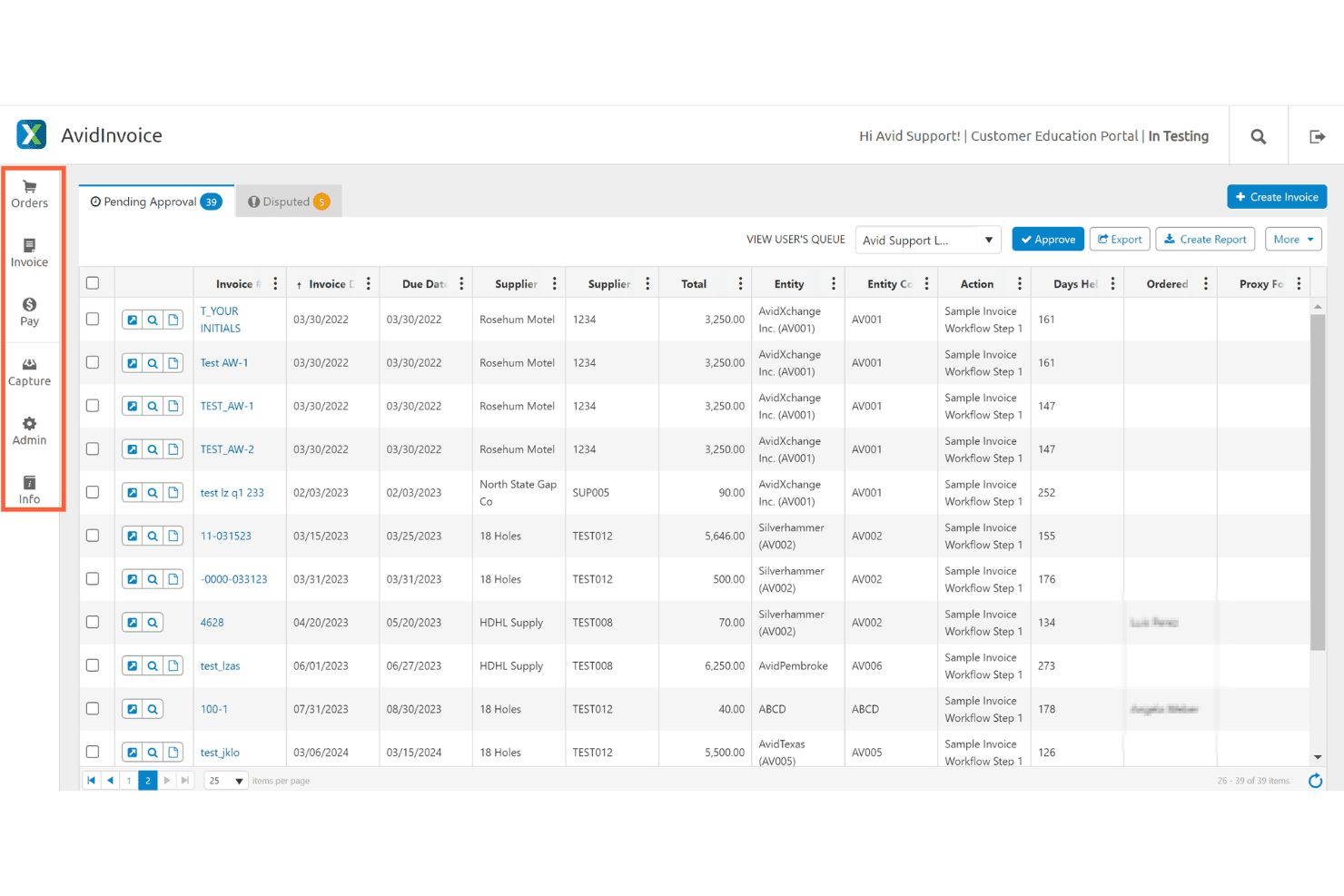
AvidXchange's AvidInvoice displays a pending approval queue with invoice details, supplier info, and workflow actions for accounts payable management. AvidXchange is an AP automation and payment platform that combines invoice capture, multi-tier approval workflows, and electronic payment execution across a supplier network of over 700,000 vendors.
Who Is AvidXchange Best For?
AvidXchange is a strong fit for middle-market AP teams in real estate, construction, and property management who handle high invoice volumes domestically.
Why I Picked AvidXchange
I picked AvidXchange as one of the best because its supplier network is genuinely unmatched in the middle market. The AvidPay Network connects over 700,000 suppliers who can receive payment via virtual card, AvidPay Direct, or check directly through the Supplier Hub portal. When a supplier isn't already enrolled, AvidXchange handles the outreach and onboarding, so my team isn't stuck chasing vendors to accept electronic payments.
AvidXchange Key Features
- Multi-tier approval workflows: Configure complex approval paths with role-based controls for invoice and payment processing.
- ERP and accounting integrations: Connect natively with NetSuite, Sage, QuickBooks, Microsoft Dynamics, Workday, and over 260 additional platforms.
- Invoice automation: Digitize invoice capture, coding, and approval using AI-powered data extraction.
- Audit trail and reporting dashboard: Track all AP activity with centralized logs and visualize metrics through a built-in dashboard.
AvidXchange Integrations
AvidXchange offers native integrations with NetSuite, Sage, Microsoft Dynamics, QuickBooks, Acumatica, MRI Software, Yardi, and Workday, with more than 260 total ERP and accounting system integrations. An API is available for custom integrations.
Pros and Cons
Pros:
- Strong domestic AP invoice automation and coding
- Configurable multi-tier payment approval workflows available
- Large pre-enrolled supplier base for electronic payments
Cons:
- Implementation and onboarding require significant time investment
- Limited cross-border and multi-currency payment options
Learn more about AvidXchange: Best for SaaS payment operations
- Free demo available
- From $599/month
Visit WebsiteCustomer Rating:4.3/5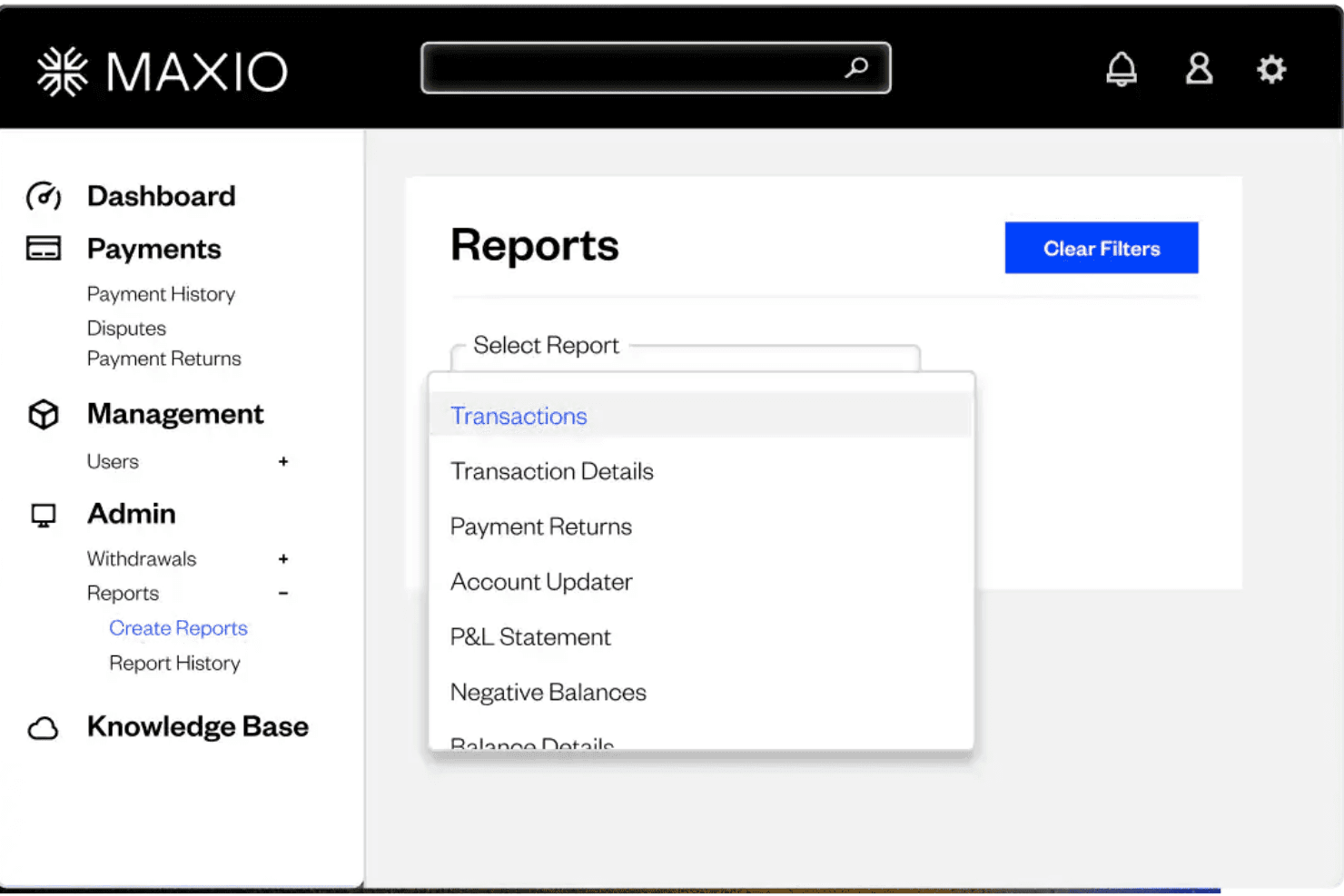
Maxio offers a Reports section with a dropdown menu featuring report types such as Transactions, Transaction Details, Payment Returns, Account Updater, P&L Statement, and Negative Balances. Maxio is a subscription billing and revenue management platform built for B2B SaaS and AI companies, combining usage-based billing, automated invoicing, revenue recognition, and SaaS metrics reporting in a single system.
Who Is Maxio Best For?
Maxio is a strong fit for finance teams at B2B SaaS and AI companies managing complex subscription models, particularly at the growth stage where billing and revenue recognition are becoming harder to handle manually.
Why I Picked Maxio
I picked Maxio as one of the best because of how it handles usage-based billing alongside traditional subscription models. I like that you can meter and rate live usage events, set minimum commitments, and trigger overages automatically, all without custom billing logic. The 30+ canned SaaS metrics reports, covering ARR, DSO, and deferred revenue, give finance teams real visibility into what's actually happening inside the subscription portfolio.
Maxio Key Features
- Multi-entity management: Configure separate catalogs, gateways, and settings for multiple subsidiaries from one central platform.
- Native NetSuite, QuickBooks, and Xero integration: Sync customer, contract, and revenue data directly with leading accounting and ERP systems.
- Automated dunning and collections: Create rules-based payment reminders and escalations to manage overdue receivables.
- Customizable financial reporting: Access a library of 30+ pre-built financial and SaaS metrics reports with drill-down and dashboard options.
Maxio Integrations
Maxio offers native integrations with NetSuite, QuickBooks Online, QuickBooks Desktop, Xero, Sage Intacct, Rillet, and Salesforce. An API is available for custom integrations.
Pros and Cons
Pros:
- Supports hybrid subscription and usage pricing
- Built-in SaaS revenue recognition reporting
- Handles complex usage-based billing natively
Cons:
- Not built for AP disbursement workflows
- Limited multi-currency and cross-border support
Learn more about Maxio: Best for multi-currency international payments
- Free plan + free demo available
- From $12/user/month
Visit WebsiteCustomer Rating:4.4/5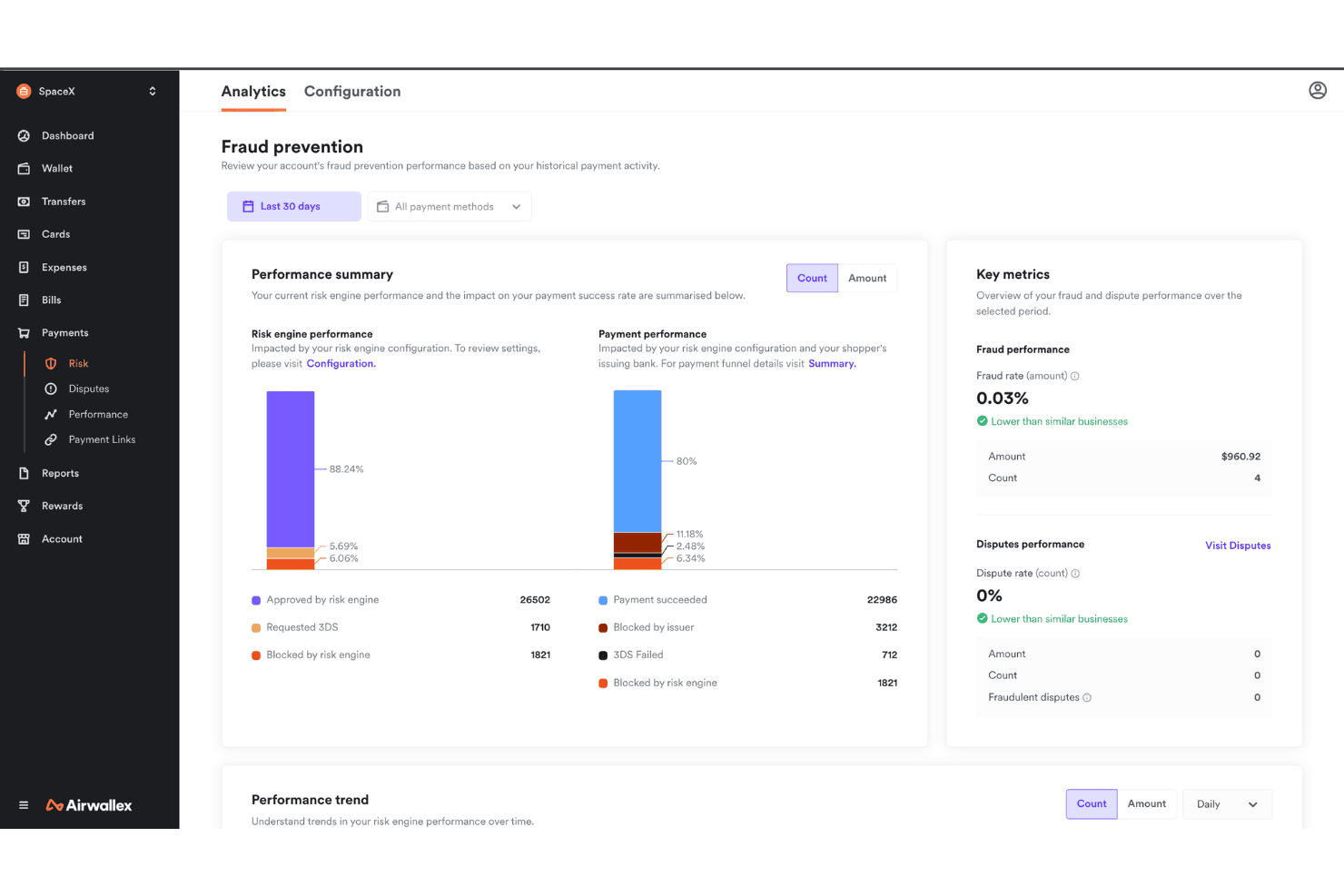
Airwallex offers a fraud prevention analytics dashboard that displays risk engine performance, payment success rates, and key fraud metrics. Airwallex is a global enterprise payments platform that combines multi-currency accounts, cross-border payment execution, AP automation, spend management, and embedded finance APIs in one unified system.
Who Is Airwallex Best For?
Airwallex is a strong fit for mid-market and enterprise finance teams managing payments across multiple countries, currencies, and legal entities.
Why I Picked Airwallex
I picked Airwallex as one of the best because of how it handles like-for-like currency settlement. Instead of forcing FX conversion on every incoming payment, my team can collect and hold funds in 20+ currencies, then pay out via local rails across 120+ countries at 0.5% above interbank rates. The Optimize 360 engine also routes card transactions through local acquiring in 35+ markets, which meaningfully improves authorization rates on international volume.
Airwallex Key Features
- Global payment method acceptance: Accepts 160+ local payment methods across 180+ countries through a single checkout.
- ERP integration suite: Provides native connectors for NetSuite, Microsoft Dynamics 365, Xero, and QuickBooks for synchronized accounting and spend data.
- AI-powered fraud engine: Uses machine learning for transaction monitoring, pattern analysis, and automated anomaly detection to reduce manual intervention.
- Multi-entity account management: Centralizes management of multiple legal entities with configurable permissions and consolidated reporting.
Airwallex Integrations
Airwallex offers native integrations with NetSuite, Microsoft Dynamics 365 Business Central, Xero, and QuickBooks. An API is available for custom integrations.
Pros and Cons
Pros:
- Multi-currency wallets without forced conversion
- Local acquiring in 35+ markets
- Competitive FX rates on cross-border payments
Cons:
- Onboarding verification can be slow
- Limited phone support for account issues

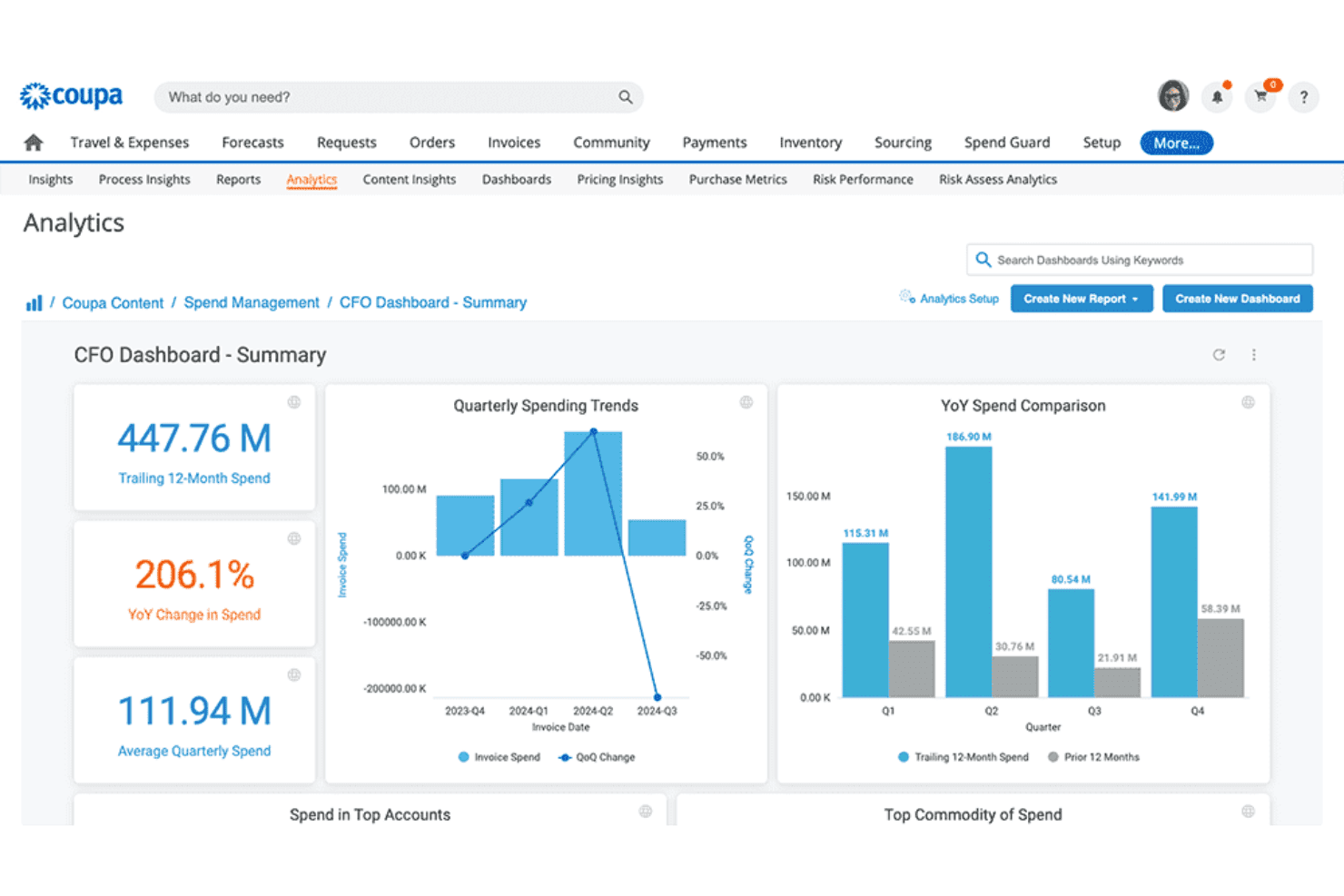
Coupa offers a CFO Dashboard with analytics including quarterly spending trends, YoY spend comparison, and key financial KPIs. Coupa Pay is an enterprise AP payments platform embedded within Coupa's spend management suite, supporting multi-rail disbursements, virtual cards, cross-border payments, fraud controls, and AI-driven invoice reconciliation across multiple entities and currencies.
Who Is Coupa Best For?
Coupa Pay is built for large enterprises managing high-volume, multi-entity AP operations where payment visibility, ERP integration, and working capital control are priorities.
Why I Picked Coupa
Coupa earns its spot on my shortlist because of how it surfaces payment data across the entire AP workflow. I love that real-time payment tracking and AI-driven document intelligence feed reconciled, enriched invoice data directly into a single dashboard, so my team can see where every payment stands without hunting through multiple systems. The fraud detection layer also flags suspicious transactions before they clear, adding a risk control dimension most standalone payment tools don't offer.
Coupa Key Features
- Multi-rail payment execution: Handle ACH, wires, checks, digital wallets, and virtual cards from a single unified workspace.
- ERP and accounting integration: Connect natively to major ERPs including SAP, Oracle, NetSuite, and Microsoft Dynamics.
- Working capital optimization tools: Leverage early pay discounts, dynamic discounting, and extend DPO with virtual card programs.
- Supplier risk and compliance management: Monitor supplier performance, run sanctions screening, and enforce audit trails directly within the payments flow.
Coupa Integrations
Coupa Pay provides native integrations with SAP, Oracle, NetSuite, Workday, and Microsoft Dynamics. An API is available for custom integrations.
Pros and Cons
Pros:
- Virtual card program extends supplier payment terms
- AI-driven fraud detection on outgoing payments
- Real-time payment visibility across all entities
Cons:
- Steep configuration requirements for multi-entity setups
- Long implementation timelines for enterprise rollouts
Learn more about Coupa: Best for unified global payment acceptance
- Free demo available
- From 0.4% per paid invoice
Visit WebsiteCustomer Rating:4.6/5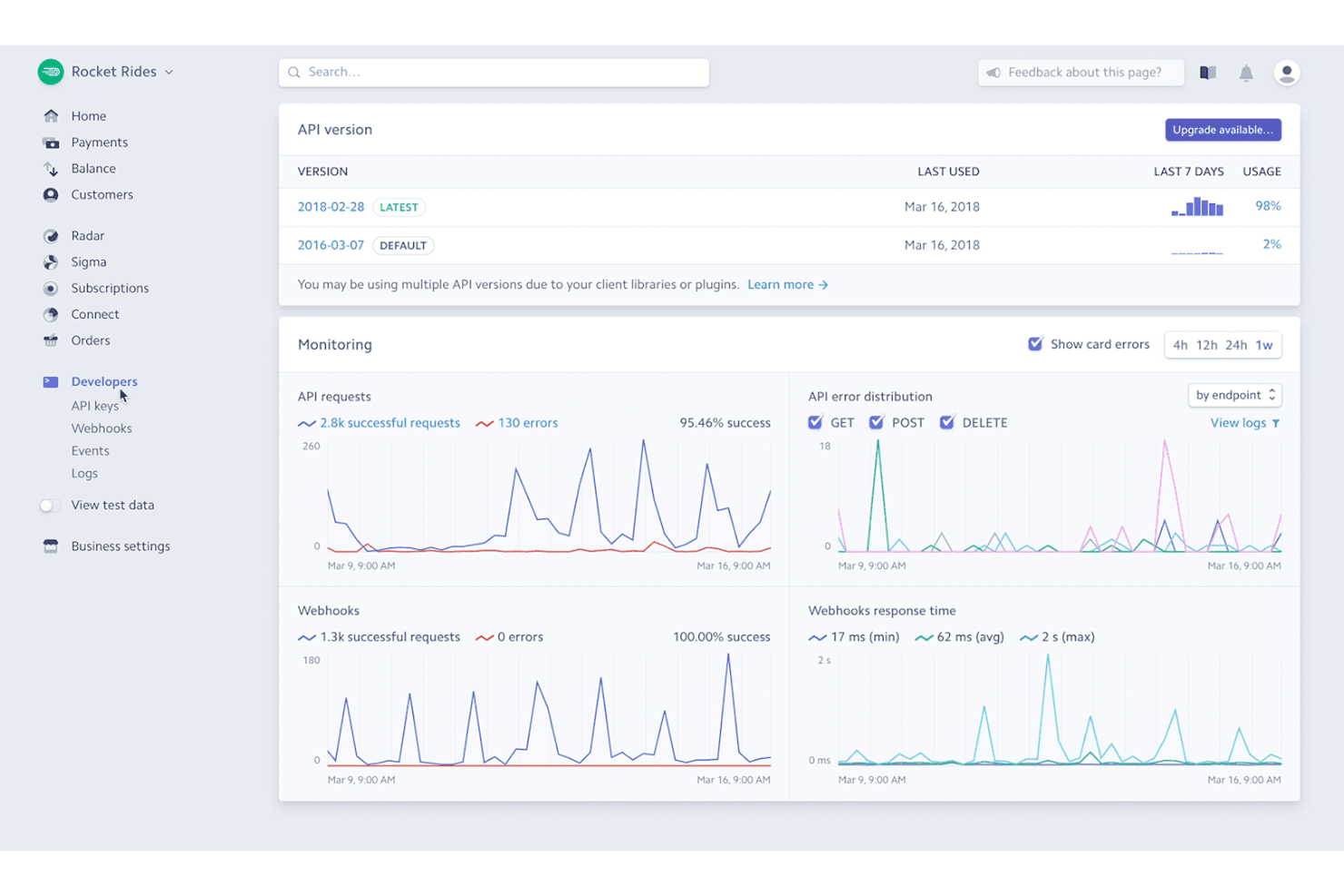
Stripe offers a developer dashboard with API version tracking, request monitoring, webhook stats, and error distribution charts. Stripe is a global payments platform that supports online, in-person, and embedded payment acceptance across 135+ currencies, paired with billing, tax automation, fraud detection, and financial reporting tools.
Who Is Stripe Best For?
Stripe is a strong fit for technology companies, SaaS businesses, and digital platforms that need developer-configurable payment infrastructure across multiple markets.
Why I Picked Stripe
I've included Stripe in my top picks because no other platform comes close to its breadth of global payment acceptance under one integration. Supporting 100+ payment methods across 195 countries (from iDEAL in the Netherlands to Alipay in China to BNPL options globally), Stripe lets enterprises accept payments the way local customers actually prefer. Its Managed Payments option also handles merchant-of-record responsibilities across 75+ countries, removing significant compliance overhead.
Stripe Key Features
- Revenue recognition compliance: Automates ASC 606 and IFRS 15 revenue recognition with built-in policy controls.
- ERP and financial data connectors: Integrates natively with NetSuite and synchronizes payment data to ERPs and analytics systems.
- Programmable workflows: Offers no-code automation with 600+ event triggers for payment and accounting processes.
- Data warehouse sync: Streams transaction and reporting data directly to Snowflake, Amazon Redshift, or BigQuery for analysis.
Stripe Integrations
Stripe offers native integrations with NetSuite, Salesforce, Xero, QuickBooks, and Snowflake, and provides an API for custom integrations.
Pros and Cons
Pros:
- Supports processor-agnostic card vaulting
- ML-based fraud detection adapts to real-time patterns
- Supports 135+ currencies and local payment methods
Cons:
- Complex chargeback management
- Limited outbound AP and disbursement capabilities
Learn more about Stripe: Best for global multi-entity payment automation
- Free demo available
- From $99/month
Visit WebsiteCustomer Rating:4.5/5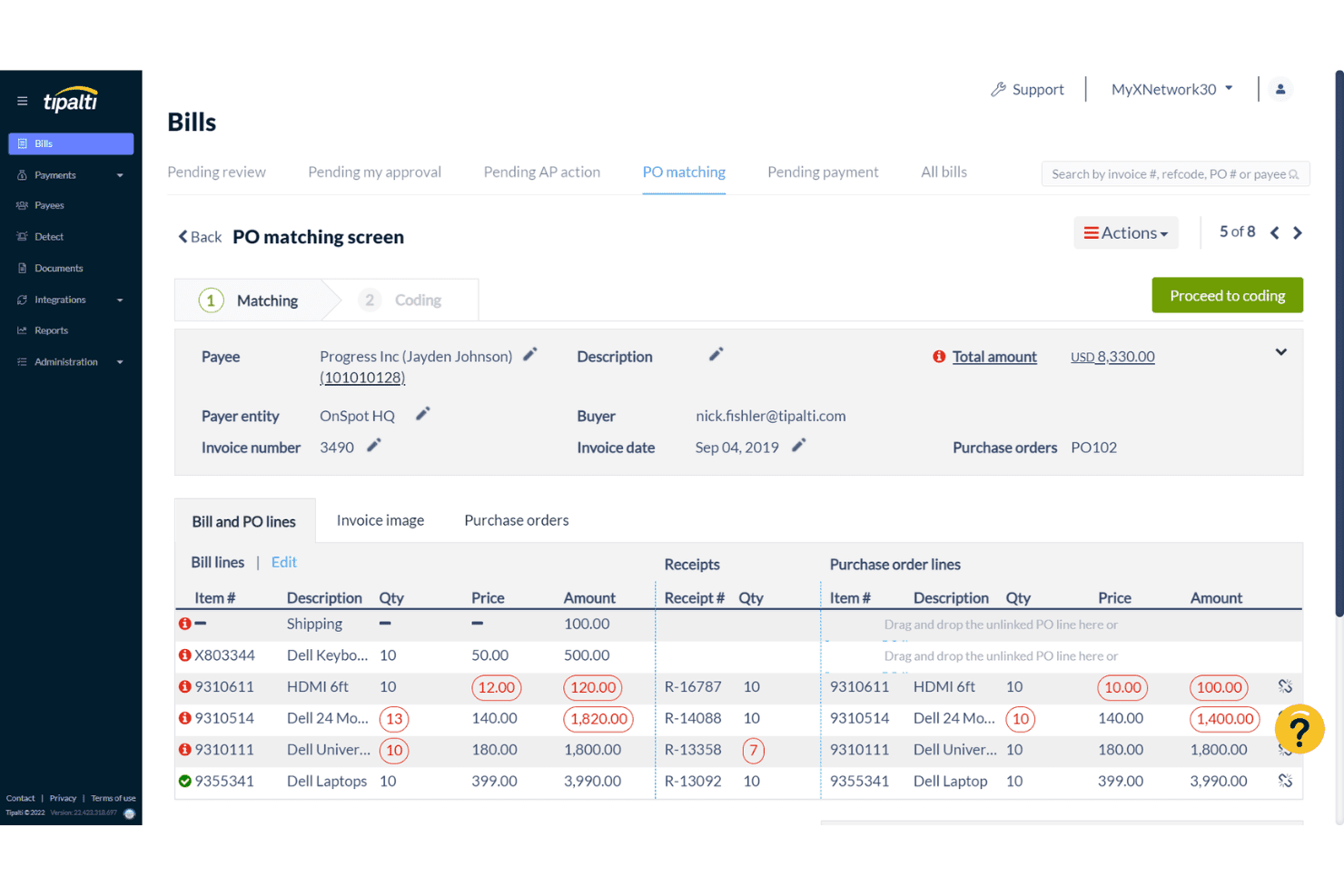
Tipalti offers a PO matching screen within its Bills module, allowing users to compare bill lines against purchase order lines and receipts for accurate invoice reconciliation. Tipalti is an AP automation and global payments platform that covers accounts payable, mass payments, procurement, expenses, and treasury across multiple entities and currencies.
Who Is Tipalti Best For?
Tipalti is a strong fit for mid-market and enterprise finance teams that manage AP and vendor payments across multiple legal entities and international markets.
Why I Picked Tipalti
I picked Tipalti as one of the best because its multi-entity architecture is built for real complexity. Each entity gets its own approval workflows, payment rules, and branded supplier communications, while I still see a consolidated view across all of them. What I find most useful is local payment rails across 200+ countries paired with tax ID validation across 62 countries, which cuts significant manual compliance work from cross-border vendor payments.
Tipalti Key Features
- AI-powered invoice capture and coding: Scan and code invoices automatically in 146 languages using built-in AI agents.
- Native ERP integrations: Sync with NetSuite, Sage, Microsoft Dynamics, SAP, Oracle, QuickBooks, and Xero through certified, bi-directional connectors.
- Global tax validation: Validate tax IDs in 62 countries against thousands of compliance rules for cross-border vendor onboarding.
- SAML/SSO and user permissions controls: Integrate with Okta, Azure, or Google Workspace for centralized role-based access and secure authentication.
Tipalti Integrations
Tipalti offers native integrations with NetSuite, Sage Intacct, Microsoft Dynamics 365 Business Central, QuickBooks Online, Xero, SAP S/4HANA, Oracle Fusion Cloud, and Workday. An API is available for custom integrations.
Pros and Cons
Pros:
- Built-in sanctions screening across 62 countries
- Supplier self-service onboarding portal included
- Strong multi-entity AP and payment controls
Cons:
- Custom reporting options are fairly limited
- Implementation takes several months to complete
Learn more about Tipalti: Best for treasury-led payment control
- Free demo available
- Pricing upon request
Visit WebsiteCustomer Rating:4.2/5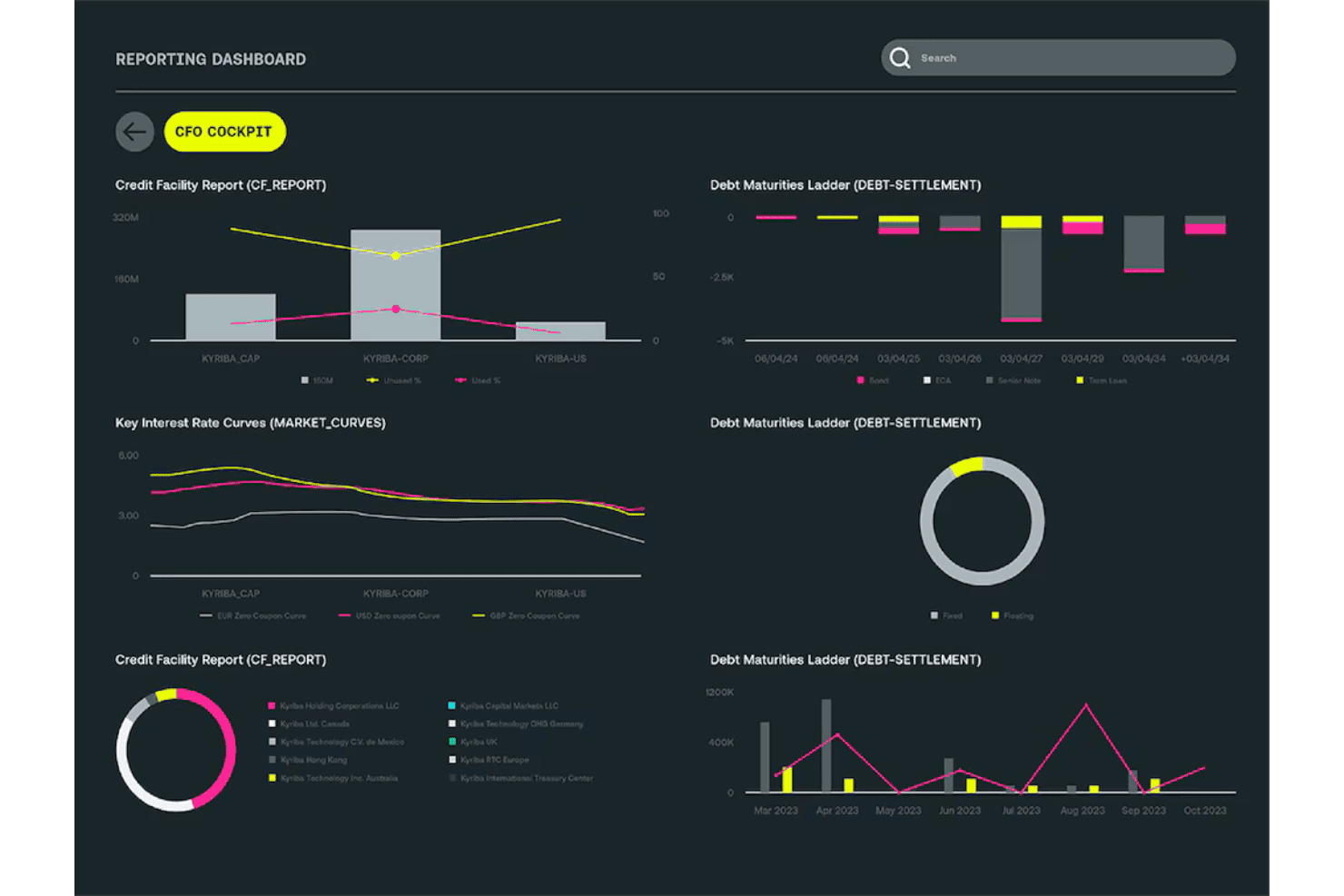
Kyriba offers a CFO Cockpit reporting dashboard featuring credit facility reports, debt maturities ladders, and key interest rate curves. Kyriba is a cloud-based treasury and payment platform that centralizes outbound payment execution, approval workflows, bank connectivity, fraud controls, and automated reconciliation across multiple entities and ERPs.
Who Is Kyriba Best For?
Kyriba is a strong fit for large enterprise organizations with complex, multi-entity treasury operations managed by a dedicated treasury or finance team.
Why I Picked Kyriba
Kyriba earns its spot on my shortlist because of how it handles payment control at the treasury level. I particularly like the multi-level, rule-based approval workflows with digital signatures that enforce segregation of duties across every entity and geography. On top of that, the AI-powered fraud detection and automated sanctions screening run on every payment before it clears, which is the kind of pre-execution control a global payment factory genuinely requires.
Kyriba Key Features
- Certified ERP integrations: Connect natively with SAP, Oracle, NetSuite, Workday, and Microsoft Dynamics for real-time data synchronization.
- Bank connectivity platform: Access over 9,900 banks worldwide using a library of 66,000+ payment formats and local payment rails.
- Automated reconciliation engine: Match payments to invoices and bank files automatically, supporting cash visibility and financial close.
- Multi-currency transaction support: Process payments and manage cash positions in 100+ currencies with FX exposure management.
Kyriba Integrations
Kyriba offers native integrations with SAP, Oracle, NetSuite, Workday, and Microsoft Dynamics, plus connects to over 9,900 banks worldwide. An API is available for custom integrations.
Pros and Cons
Pros:
- Connects to thousands of banks globally
- AI fraud detection flags payments pre-execution
- Granular approval rules enforce payment-level controls
Cons:
- Configuration requires significant technical involvement
- Long, complex implementation for new clients
Learn more about Kyriba: Best for cross-border transaction routing
- Free demo available
- Pricing upon request
Visit WebsiteCustomer Rating:3.8/5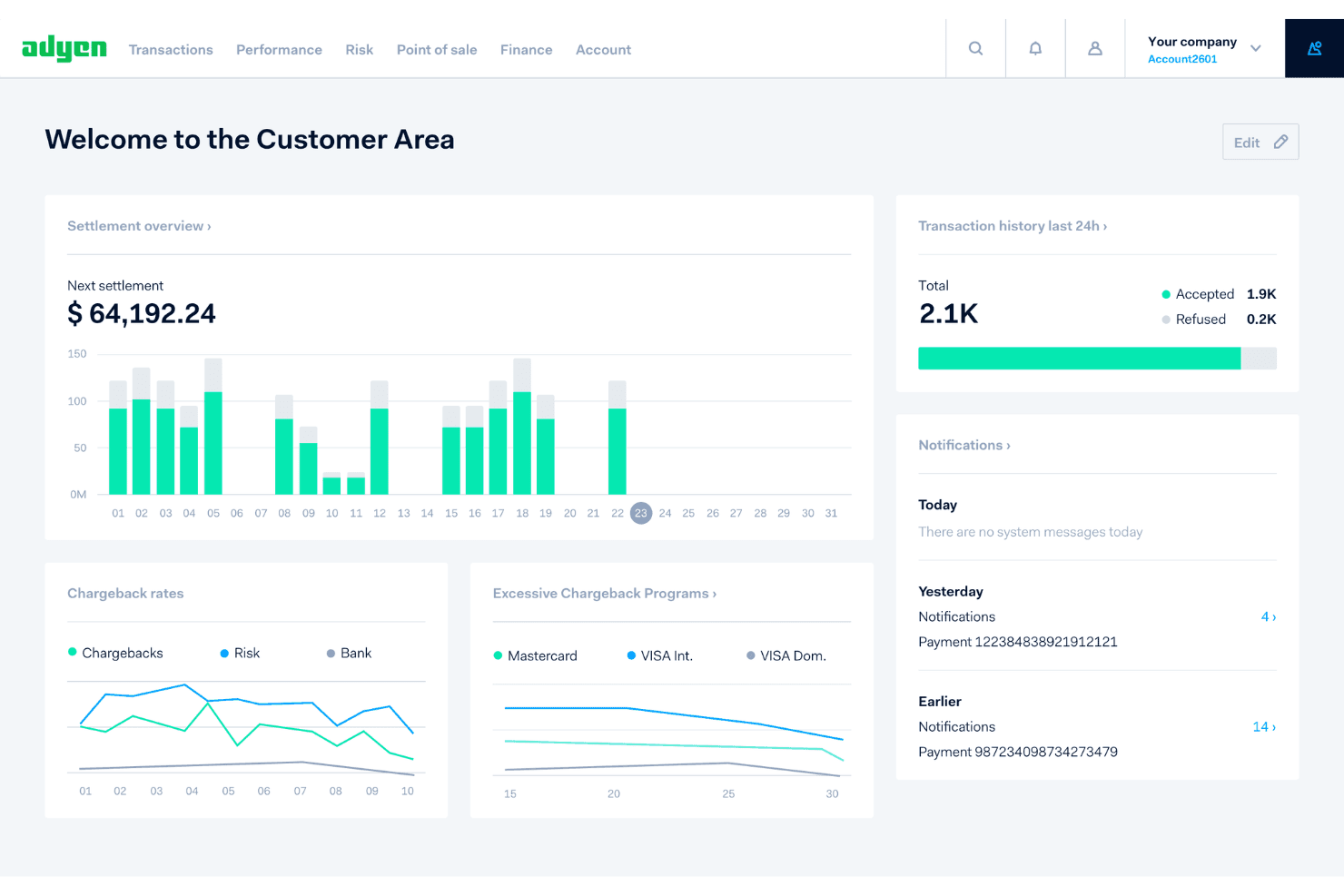
Adyen's Customer Area dashboard displays settlement overviews, chargeback rates, transaction history, and real-time notifications in one centralized interface. Adyen is a unified financial technology platform that combines payment acceptance across online, in-store, and mobile channels with built-in acquiring, multi-currency settlement, fraud prevention, and embedded financial products in a single integration.
Who Is Adyen Best For?
Adyen is a strong fit for large, global enterprises running high transaction volumes across multiple markets, currencies, and sales channels.
Why I Picked Adyen
I picked Adyen as one of the best because its cross-border routing logic is genuinely sophisticated. Rather than funneling every international transaction through a single hub, Adyen uses local acquiring in key markets, which meaningfully improves authorization rates across regions. I also appreciate the Interchange++ pricing model, which breaks down interchange and scheme fees at the individual transaction level, giving full visibility into exactly what cross-border processing costs across 150+ currencies.
Adyen Key Features
- Local payment method support: Accepts over 200 country-specific payment methods across online and in-person channels.
- Real-time reconciliation and reporting: Provides detailed transaction and settlement reporting with automated reconciliation tools.
- Integrated risk management suite: Includes configurable fraud filters, velocity checks, and PCI-compliant transaction monitoring by default.
- Single API for global payments: Enables payment acceptance, settlement, and disbursement through one integration for multiple regions and currencies.
Adyen Integrations
Adyen offers native integrations with platforms like Salesforce Commerce Cloud, Adobe Commerce, Shopify, WooCommerce, BigCommerce, SAP Commerce Cloud, Oracle Commerce Cloud, Wix, and PrestaShop. An API is available for custom integrations.
Pros and Cons
Pros:
- PCI DSS Level 1 certified by default
- Enables processor-agnostic vault portability
- High authorization rates via intelligent routing
Cons:
- Implementation requires significant developer resources
- No dedicated AP disbursement workflow tools
Learn more about Adyen:
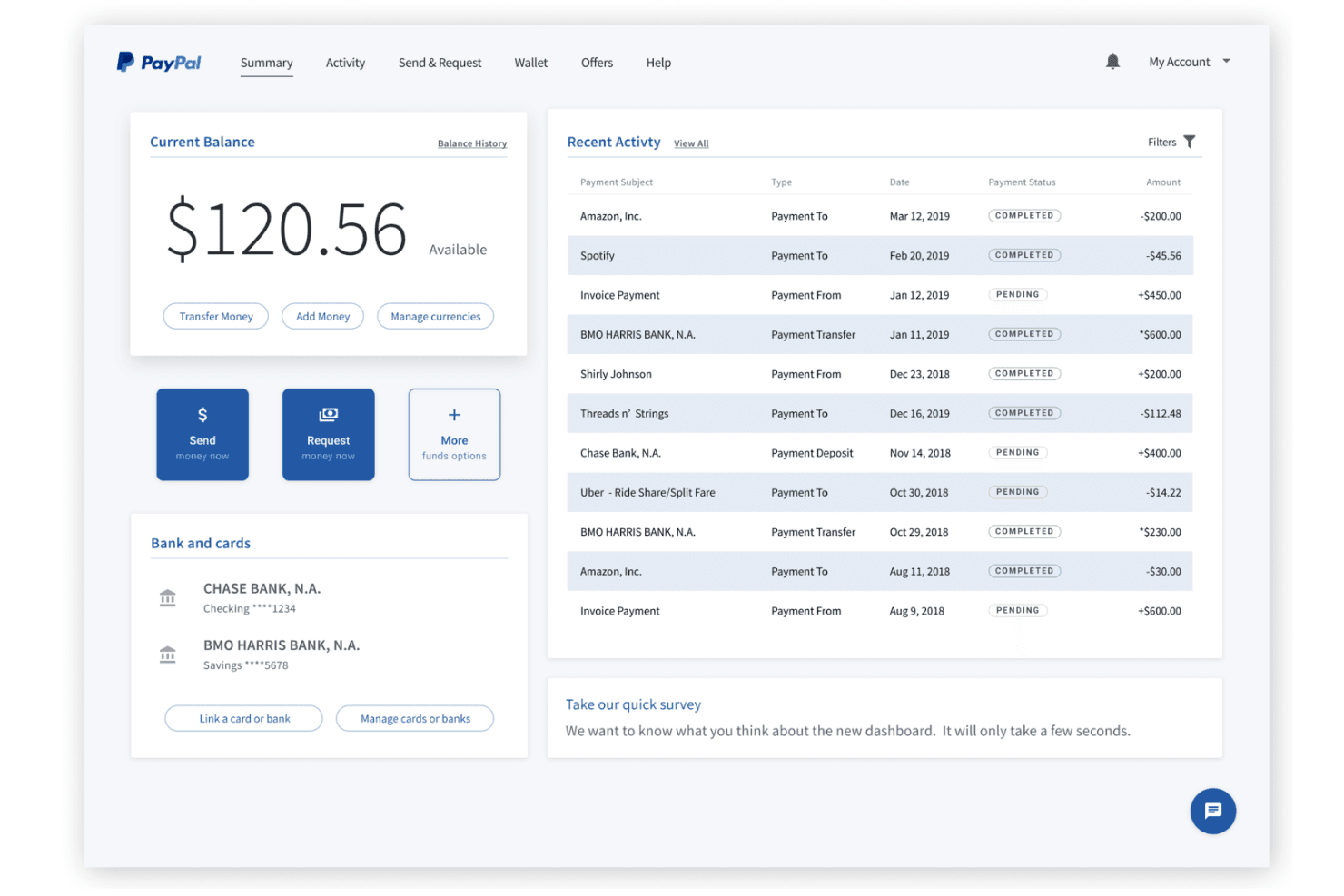
PayPal Open displays a summary dashboard with current balance, recent activity, and linked bank accounts for easy financial management. PayPal Open is a unified merchant payment platform that consolidates payment acceptance, global payouts, fraud protection, and payment orchestration across 200+ markets and 130+ currencies through a single integration.
Who Is PayPal Open Best For?
PayPal Open suits high-volume digital commerce businesses and marketplace platforms that need to send mass payouts to global recipients across PayPal and Venmo wallets.
Why I Picked PayPal Open
PayPal Open earns its spot on my shortlist because of its unmatched digital wallet payout reach. I can push payments directly to PayPal and Venmo wallets across 200+ markets in 50+ currencies using 30+ transfer methods. The batch payout capability is what I find most useful in practice: my team can send mass payouts to thousands of recipients simultaneously, which is genuinely hard to replicate at this scale through most competing platforms.
PayPal Open Key Features
- Enterprise payments platform: Offers unified payment acceptance and processing across cards, wallets, and local payment methods in 200+ markets.
- Fraud protection advanced: Delivers AI-powered risk screening, chargeback protection, and dispute automation to support compliance needs.
- Payment orchestration tools: Enables smart transaction routing, tokenization, and network token management for greater control and security.
- Omnichannel POS support: Includes in-person payment hardware options like Verifone terminals and PayPal card readers for retail and on-the-go sales.
PayPal Open Integrations
PayPal Open offers native integrations with Shopify, WooCommerce, BigCommerce, Magento, Salesforce Commerce Cloud, and Adobe Commerce. An API is available for custom integrations.
Pros and Cons
Pros:
- Broad consumer wallet recognition boosts payout acceptance
- Built-in fraud detection with chargeback protection
- Mass payouts reach 200+ global markets
Cons:
- Customer support response times frustrate high-volume users
- Limited ERP native connectors for enterprise finance
Learn more about PayPal Open:
Andre betalingsplattformer for virksomheter
Her er noen flere alternativer for betalingsplattformer for virksomheter som ikke kom med på kortlisten min, men som likevel er verdt å se nærmere på:
- 11ZuoraBest for subscription billing
- 12HighRadiusBest for AI-powered cash and bank reconciliation
- 13BILLBest for invoice-to-pay workflow integration
- 14StampliBest for AP team collaboration
- 15BilltrustBest for automated B2B payment matching
- 16CorpayBest for integrated AP payments and FX management
- 17PayoneerBest for mass payouts to global partners
- 18SerralaBest for embedded SAP payment workflows
- 19BottomlineBest for compliance-driven payment operations
- 20FlywireBest for global receivables and payer experience
How I Evaluate Enterprise Payment Platforms
I split my evaluation into must-have controls—like multi-rail execution and ERP sync—and the differentiators that separate tools built for global treasury complexity from basic AP automation.
Core Functionality (Table Stakes For This List)
When I'm selecting tools for my list, I rank each one on a scale from 0 (does not offer the functionality) to 5 (excels in this area) for each core functionality listed below. Then, I calculate the tool's total score into a percentage. Each tool needs to achieve a minimum total score of 65% to be considered for inclusion.
- Multi-rail payment execution: I check whether a platform supports ACH, wire, SWIFT, virtual card, and RTP from one interface so AP teams aren't juggling separate banking portals.
- ERP and accounting integration: Native connectors to SAP, Oracle, NetSuite, and Workday matter most. I look for bidirectional sync that keeps invoices, vendors, and GL data aligned.
- Cross-border payments: Currency coverage and FX handling are key, especially for teams disbursing to suppliers across dozens of countries simultaneously.
- Approval workflows: Configurable multi-tier approvals with role-based access let AP directors enforce segregation of duties across entities and payment thresholds.
- Fraud and compliance controls: I look for automated sanctions screening, payment validation, and full audit trails that hold up during internal controls reviews.
- Reconciliation and reporting: Auto-matching payments to invoices and bank feeds saves hours during close. I check for dashboards that surface exceptions quickly.
Once I have a list of tools that meet the criteria, I consider what sets each platform apart.
Differentiating Factors (What Sets Vendors Apart)
Here's how I compare and contrast different vendors:
Standout Features
Payment orchestration is a big differentiator—I look for platforms that dynamically route transactions across acquirers based on cost and geography, which directly impacts authorization rates. An embedded fraud engine matters too, especially one that adapts to transaction patterns using machine learning rather than static rules. I also evaluate tokenization and vault portability, since the ability to migrate processors without re-collecting card data gives your team real leverage during vendor negotiations.
Beyond Features
Compliance certifications like PCI DSS Level 1, SOC 2 Type II, and ISO 27001 are table stakes at enterprise scale—I check whether each vendor holds current attestations. Pricing transparency also matters: I evaluate whether a platform clearly breaks out FX markups, gateway fees, and chargeback costs so your team can model true total cost of ownership. For multi-entity organizations, I look at geographic coverage and whether the platform supports consolidated reporting across subsidiaries without requiring separate instances.
Slik velger du en betalingsplattform for virksomheter
Det er lett å gå seg vill i lange funksjonslister og komplekse prismodeller. For å hjelpe deg med å holde fokus mens du går gjennom den unike prosessen med å velge programvare, har vi satt sammen en sjekkliste over faktorer du bør ha i tankene:
| Faktor | Hva du bør vurdere |
|---|---|
| FaktorSkalerbarhet | Hva du bør vurdereKan plattformen håndtere økninger i transaksjonsvolumet og vekst på tvers av flere enheter uten omfattende vedlikehold? Ta hensyn til virksomhetens nåværende og forventede størrelse. |
| FaktorIntegrasjoner | Hva du bør vurdereKan plattformen kobles direkte til ERP-, regnskaps- og likviditetssystemene dine? Se etter ekte toveis synkronisering og støttede koblinger. |
| FaktorTilpasningsmuligheter | Hva du bør vurdereKan du tilpasse arbeidsflyter, godkjenningshierarkier og rapportering til de interne kontrollene dine? Rigide systemer kan skape flaskehalser eller mangler i regelverksetterlevelsen. |
| FaktorBrukervennlighet | Hva du bør vurdereHvor intuitiv er navigasjonen for både leverandørreskontroteam og ledere? Ta hensyn til tiden det tar å komme i gang, læringskurven og det løpende behovet for administrasjon. |
| FaktorImplementering og innføring | Hva du bør vurdereHvilke ressurser og hvilken tidsplan kreves for utrullingen? Spør om datamigrering, opplæring, tilgang til sandkassemiljø og støtte fra leverandørens team. |
| FaktorKostnad | Hva du bør vurdereHvor tydelig er gebyrstrukturen, inkludert valutapåslag eller minimumsbeløp? Sørg for at du kan beregne de totale kostnadene før du signerer en avtale. |
| FaktorSikkerhetstiltak | Hva du bør vurdereEr sertifiseringsnivåene og krypteringsstandardene oppdaterte? Vurder leverandørens dokumentasjon og kontroller om kravene (PCI DSS, SOC 2, ISO) er oppfylt. |
| FaktorEtterlevelseskrav | Hva du bør vurdereStøtter plattformen revisjonslogger, arbeidsdeling, sanksjonskontroll og regionsspesifikke krav? Vurder kontrollene som gjelder for bransjen din. |
Hva er betalingsplattformer for virksomheter?
Betalingsplattformer for virksomheter er programvaresystemer som lar virksomheter sende, motta og administrere store betalingsvolumer på tvers av flere metoder, valutaer og steder. Disse plattformene kobles direkte til ERP- og regnskapssystemer, automatiserer godkjenningsarbeidsflyter og håndhever etterlevelseskontroller for å hjelpe økonomiteam med å forenkle betalingsprosessene, redusere risiko og støtte globale virksomhetsbehov.
Funksjoner
Ved valg av en betalingsplattform for bedrifter bør du se etter følgende viktige funksjoner:
- Betalingsutførelse via flere kanaler: Lar teamet ditt sende betalinger via ACH, bankoverføring, SWIFT, sjekk, RTP og virtuelle kort fra ett enkelt grensesnitt, noe som reduserer kompleksiteten og behovet for flere bankportaler.
- ERP-integrasjon: Kobler seg direkte til vanlige ERP- og regnskapssystemer for å synkronisere leverandørregistre, fakturaer, godkjenninger og betalingsdata med de økonomiske prosessene dine.
- Støtte for flere valutaer: Håndterer globale betalinger og betalinger på tvers av landegrenser i dusinvis av valutaer, med innebygd valutastyring, kurslåsing og transparente konverteringsprosesser.
- Rollebaserte arbeidsflyter: Lar deg bygge trinnvise, konfigurerbare godkjenningsprosesser med egendefinerte roller og grenser for å opprettholde god kontroll og etterlevelse.
- Verktøy for svindelforebygging: Omfatter automatisert sanksjonsscreening, transaksjonsovervåking og revisjonsspor for å bidra til å forhindre uautoriserte betalinger og støtte etterlevelse av regelverket.
- Automatisert avstemming: Kobler automatisk betalinger mot fakturaer, kontoutskrifter og hovedbok, noe som reduserer manuelt arbeid ved månedlige og kvartalsvise avslutninger.
- Rapportering i sanntid: Gir oppdaterte dashbord og detaljert innsikt i transaksjoner, slik at økonomiteam kan følge med på betalingsstatus, avvik og utestående utbetalinger.
- Tilgangskontroller: Lar deg styre tillatelser nøye og begrense sensitive betalingsfunksjoner til de riktige personene på riktig tidspunkt.
- Dokumenthåndtering: Lagrer støttedokumenter og betalingsdetaljer sikkert i plattformen, slik at du er klar for revisjon og enkelt kan hente frem dokumenter under gjennomganger.
- Utvidbarhet via API: Støtter egendefinerte integrasjoner og automatisering av arbeidsflyter gjennom åpne API-er, slik at teknologiteamet kan koble plattformen til andre forretningssystemer.
Fordeler
Implementering av en betalingsplattform for bedrifter gir flere fordeler for teamet og virksomheten din. Her er noen av fordelene du kan se frem til:
- Sentralisert kontroll: Håndter alle betalingsprosesser, metoder og enheter fra én plattform, noe som gjør det enklere for økonomiledere å føre tilsyn og godkjenne betalinger.
- Bedre etterlevelse: Håndhev sanksjonsscreening, revisjonsspor og godkjenningsarbeidsflyter for å redusere risiko og oppfylle regulatoriske krav.
- Større effektivitet: Automatiser manuelle oppgaver som betalingsavstemming, godkjenninger og rapportering, slik at medarbeiderne kan konsentrere seg om analyser med høyere verdi.
- Bedre oversikt over kontantbeholdningen: Dashbord i sanntid og automatisk avstemming gir deg oppdatert innsikt i kontantbeholdningen og utgående betalinger.
- Lavere behandlingskostnader: Optimaliser betalingsruting og valutakonverteringer for å minimere transaksjonsgebyrer og unødvendige bankkostnader.
- Enkel skalering: Støtt vekst – enten det gjelder å legge til nye enheter, valutaer eller betalingsruter – uten å introdusere mer kompleksitet eller bytte system.
- Bedre leverandørrelasjoner: Raskere og mer nøyaktige betalinger samt transparent kommunikasjon bidrar til å opprettholde leverandørenes tillit og redusere tvister.
Kostnader og priser
Valg av en betalingsplattform for bedrifter krever en forståelse av de ulike prismodellene og abonnementene som er tilgjengelige. Kostnadene varierer basert på funksjoner, teamstørrelse, tillegg og mer. Tabellen nedenfor oppsummerer vanlige abonnementer, gjennomsnittsprisene deres og typiske funksjoner som er inkludert i betalingsplattformløsninger for bedrifter:
Sammenligningstabell for abonnementer
| Abonnementstype | Gjennomsnittspris | Vanlige funksjoner |
|---|---|---|
| AbonnementstypeGratisabonnement | Gjennomsnittspris$0 | Vanlige funksjonerBegrensede betalingsmetoder, grunnleggende rapportering og brukerstøtte på grunnleggende nivå. |
| AbonnementstypePersonlig abonnement | Gjennomsnittspris$10-$50/bruker/måned | Vanlige funksjonerTilgang for én bruker, flere betalingskanaler, grunnleggende godkjenningsarbeidsflyter og standard brukerstøtte. |
| AbonnementstypeBedriftsabonnement | Gjennomsnittspris$50-$150/bruker/måned | Vanlige funksjonerStøtte for flere brukere, ERP-integrasjon, funksjoner for flere valutaer, rollebaserte godkjenninger og moderate rapporteringsverktøy. |
| AbonnementstypeAbonnement for større virksomheter | Gjennomsnittspris$150+/bruker/måned | Vanlige funksjonerEgendefinerte integrasjoner, avansert etterlevelse, dedikert implementering, forbedret sikkerhet, full API-tilgang og brukerstøtte døgnet rundt. |
Vanlige spørsmål om betalingsplattformer for virksomheter
Her er noen svar på vanlige spørsmål om betalingsplattformer for virksomheter:
Hvordan håndterer betalingsplattformer for virksomheter globale betalinger?
De fleste plattformer støtter betalinger i flere valutaer og tilbyr innebygd valutakonvertering, slik at du kan sende penger til leverandører i ulike land uten å bruke separate systemer.
Ledende fintech-infrastruktur og teknologi for betalingsbehandling gjør det mulig å ta imot ulike betalingstyper på tvers av hele betalingsøkosystemet. Kontroller om lokale nettbaserte betalingsmetoder, støtte for internasjonale kreditt- og debetkort samt overholdelse av grensekryssende regelverk er inkludert, slik at du kan levere en friksjonsfri global betalingsopplevelse.
Hvilke integrasjonsalternativer bør jeg forvente?
Du bør finne integrasjonskoblinger for de største ERP-systemene, regnskapsplattformene og verktøyene fra de viktigste finansinstitusjonene dine. Moderne infrastruktur for digitale betalinger er basert på API-er og tilpassede integrasjoner som bidrar til å koble spesialiserte eller eldre betalingssystemer direkte til nettverket av finansielle tjenester.
Kan godkjenningsprosesser tilpasses?
Ja, ledende plattformer lar deg sette opp godkjenningskjeder med flere nivåer og rollebasert tilgang, tilpasset virksomhetens retningslinjer for pengebruk. Etter hvert som virksomheten vokser, gjør fleksible betalingsløsninger det mulig å angi beløpsgrenser, legge til kontrollører og administrere godkjenningsstadier gjennom hele transaksjonens livssyklus.
Hvor sikre er betalingsplattformer for virksomheter?
De fleste anerkjente leverandører har PCI DSS-, SOC 2- og ISO-sertifiseringer. Ende-til-ende-kryptering, revisjonsspor og regelmessig oppdaterte tilgangskontroller er standard for å beskytte kundedata og støtte overholdelse av regelverk. Ved å samarbeide med en etablert leverandør av tjenester for virksomheter – som Fiserv eller andre ledende betalingsbehandlere – sikrer du at strenge sikkerhetsstandarder opprettholdes i alle transaksjoner.
Hva bør jeg vite om løpende plattformkostnader?
Forvent variabel prising basert på antall brukere, betalingsvolum og bruk av funksjoner. Enten du driver en netthandelsplattform eller benytter en ny betalingsmodell, bør du være oppmerksom på valutapåslag, ekstra integrasjonsgebyrer og klausuler om minimumsforpliktelser som kan påvirke de totale eierkostnadene gjennom hele avtaleperioden. Optimalisering av disse vilkårene bidrar til økt driftseffektivitet og forbedrer den samlede kundeopplevelsen.