

Cin7-beoordeling: voor- en nadelen, functies en prijzen
Cin7 blinkt uit met geïntegreerde functies voor voorraadbeheer en boekhouding, waardoor het een uitstekende keuze is voor bedrijven die uitgebreide controle nodig hebben.

We review tools independently, and commissions help fund our testing. See our transparency policy, our methodology, or suggest a tool.
Cin7 is an inventory accounting software for product-based businesses that need to track stock levels, costs, and purchase orders across multiple sales channels and warehouse locations. I'd look at it over something like Fishbowl if your team needs a cloud-native platform with broader ecommerce and third-party logistics integrations, rather than a desktop-first system designed around a single warehouse setup.
Cin7 Evaluation Summary
4.3/5
- Pricing upon request
- Free demo available
Waarom u onze softwareaanbevelingen kunt vertrouwen
6,700+
Reviews
20
Industry experts
16+
Evaluation factors
14
Years
Onze reviews weerspiegelen ons onafhankelijke oordeel — geen verkooppraatje. Ontdek hoe we transparant blijven.
Voor deze gids hebben we tools geëvalueerd met behulp van praktijktests en onafhankelijk onderzoek, waarbij we tools beoordeelden aan de hand van onze selectiecriteria.
Onze reviews weerspiegelen ons menselijke redactionele oordeel, geen verkooppraatje.
Cin7 Overview
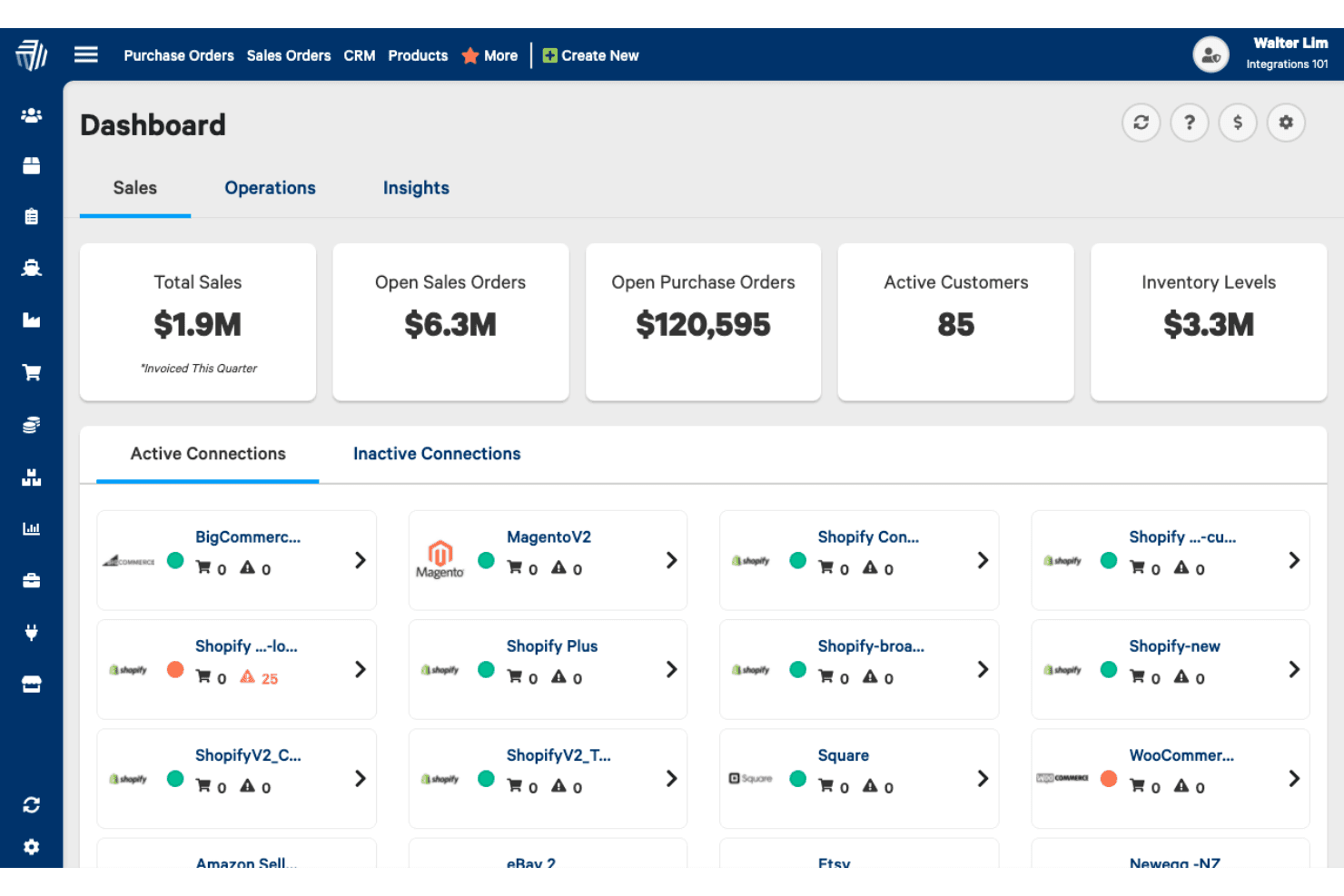
In my opinion, Cin7 is a solid choice for businesses that need a robust inventory management system that integrates with accounting. Its standout feature is the seamless integration across various sales channels, which helps businesses maintain accurate inventory levels. However, the learning curve can be steep, and the pricing might be a concern for smaller businesses. Cin7 excels in environments where multi-channel inventory tracking is crucial, such as retail and wholesale. It's best suited for teams that can leverage its comprehensive features despite the initial complexity. While it offers good customer support, some users might find the lack of integrations limiting compared to other software. If you're looking for ERP-like functionality without the cost and complexity of an ERP such as NetSuite, Cin7 is worth considering.
Pros
- It offers a comprehensive inventory tracking across multiple sales channels.
- Your team can benefit from real-time stock visibility.
- It supports efficient order management for retail and wholesale businesses.
Cons
- You might find the interface a bit complex at first.
- Some users report occasional bugs that can disrupt workflow.
- Your team may need extra time for onboarding and training.
Is Cin7 Right For Your Needs?
Who Would be a Good Fit for Cin7?
Cin7 is ideal for retail and wholesale businesses that manage inventory across multiple sales channels and marketplaces. If your team needs real-time stock visibility and efficient order management, Cin7's features can be a major asset. It helps businesses that handle complex supply chains by offering integrated inventory and accounting solutions. Teams in e-commerce, especially those with physical and online stores, will find Cin7's functionality aligns well with their operational needs.
- Retail BusinessesCin7 provides multi-channel inventory tracking and a point of sales (POS) system, making it perfect for retail businesses with both e-commerce platforms and physical stores.
- Wholesale DistributorsCin7's order management and stock visibility facilitate wholesale operations.
- E-Commerce TeamsCin7's real-time inventory updates ensure e-commerce teams can efficiently manage sales orders and stock across various platforms.
- Supply Chain DepartmentsCin7 integrates inventory and accounting, helping supply chain departments streamline operations and maintain accurate records.
- Inventory ManagersCin7's comprehensive tracking and reporting features simplify the management of large inventories.
- Operational ManagersCin7's capabilities in handling complex supply chains make it a valuable tool for operational managers in dynamic environments.
Who Would be a Bad Fit for Cin7?
Cin7 may not suit small businesses or startups with limited budgets and simple inventory needs. If your team lacks the capacity for extensive onboarding or doesn't require a multi-channel inventory system, Cin7's complexity and cost might outweigh its benefits. Businesses that don't have a dedicated IT or operations team may struggle with its setup and ongoing management. For those seeking straightforward, low-cost solutions, Cin7 might be more than what's needed.
- Small StartupsCin7's complexity and cost can be overwhelming for small startups with limited resources and straightforward inventory needs.
- Single-Store RetailersYour team might find Cin7's multi-channel features unnecessary if you're managing just one store.
- Budget-Constrained TeamsIf cost is a primary concern, Cin7's pricing could strain your financial resources.
- Simple OperationsFor businesses with simple, straightforward operations, Cin7's extensive features might be unnecessary.
- Teams That Aren't Tech-SavvyTeams that lack technical expertise may struggle with Cin7's setup and management.
- FreelancersFreelancers might find Cin7's capabilities excessive for managing inventory needs.
How We Test & Score Tools
We’ve spent years building, refining, and improving our software testing and scoring system. The rubric is designed to capture the nuances of software selection and what makes a tool effective, focusing on critical aspects of the decision-making process.
Below, you can see exactly how our testing and scoring works across seven criteria. It allows us to provide an unbiased evaluation of the software based on core functionality, standout features, ease of use, onboarding, customer support, integrations, customer reviews, and value for money.
Core Functionality (25% of final scoring)
The starting point of our evaluation is always the core functionality of the tool. Does it have the basic features and functions that a user would expect to see? Are any of those core features locked to higher-tiered pricing plans? At its core, we expect a tool to stand up against the baseline capabilities of its competitors.
Standout Features (25% of final scoring)
Next, we evaluate uncommon standout features that go above and beyond the core functionality typically found in tools of its kind. A high score reflects specialized or unique features that make the product faster, more efficient, or offer additional value to the user.
We also evaluate how easy it is to integrate with other tools typically found in the tech stack to expand the functionality and utility of the software. Tools offering plentiful native integrations, 3rd party connections, and API access to build custom integrations score best.
Ease of Use (10% of final scoring)
We consider how quick and easy it is to execute the tasks defined in the core functionality using the tool. High scoring software is well designed, intuitive to use, offers mobile apps, provides templates, and makes relatively complex tasks seem simple.
Onboarding (10% of final scoring)
We know how important rapid team adoption is for a new platform, so we evaluate how easy it is to learn and use a tool with minimal training. We evaluate how quickly a team member can get set up and start using the tool with no experience. High scoring solutions indicate little or no support is required.
Customer Support (10% of final scoring)
We review how quick and easy it is to get unstuck and find help by phone, live chat, or knowledge base. Tools and companies that provide real-time support score best, while chatbots score worst.
Customer Reviews (10% of final scoring)
Beyond our own testing and evaluation, we consider the net promoter score from current and past customers. We review their likelihood, given the option, to choose the tool again for the core functionality. A high scoring software reflects a high net promoter score from current or past customers.
Value for Money (10% of final scoring)
Lastly, in consideration of all the other criteria, we review the average price of entry level plans against the core features and consider the value of the other evaluation criteria. Software that delivers more, for less, will score higher.
Core Features
Inventory Tracking: Cin7 lets you monitor stock levels in real-time across multiple locations. Your team can avoid stockouts and overstocking, through automation of inventory management.
Order Management: Manage orders from various sales channels in one place. Cin7's EDI features simplify your work by streamlining order processing and order fulfillment.
Product Bundling: Create and manage product bundles with ease. This helps your team offer attractive deals without complicating inventory control.
Reporting and Analytics: Generate detailed reports on inventory performance and financials. Your team can make informed decisions based on accurate data insights.
Warehouse Management: Efficiently manage your warehouse operations with Cin7's tools, such as barcode scanning. Optimize space and improve picking and packing processes.
Supplier Management: Track supplier performance and manage purchase orders seamlessly. It enables your team to maintain strong supplier relationships and negotiate better deals.
Ease of Use
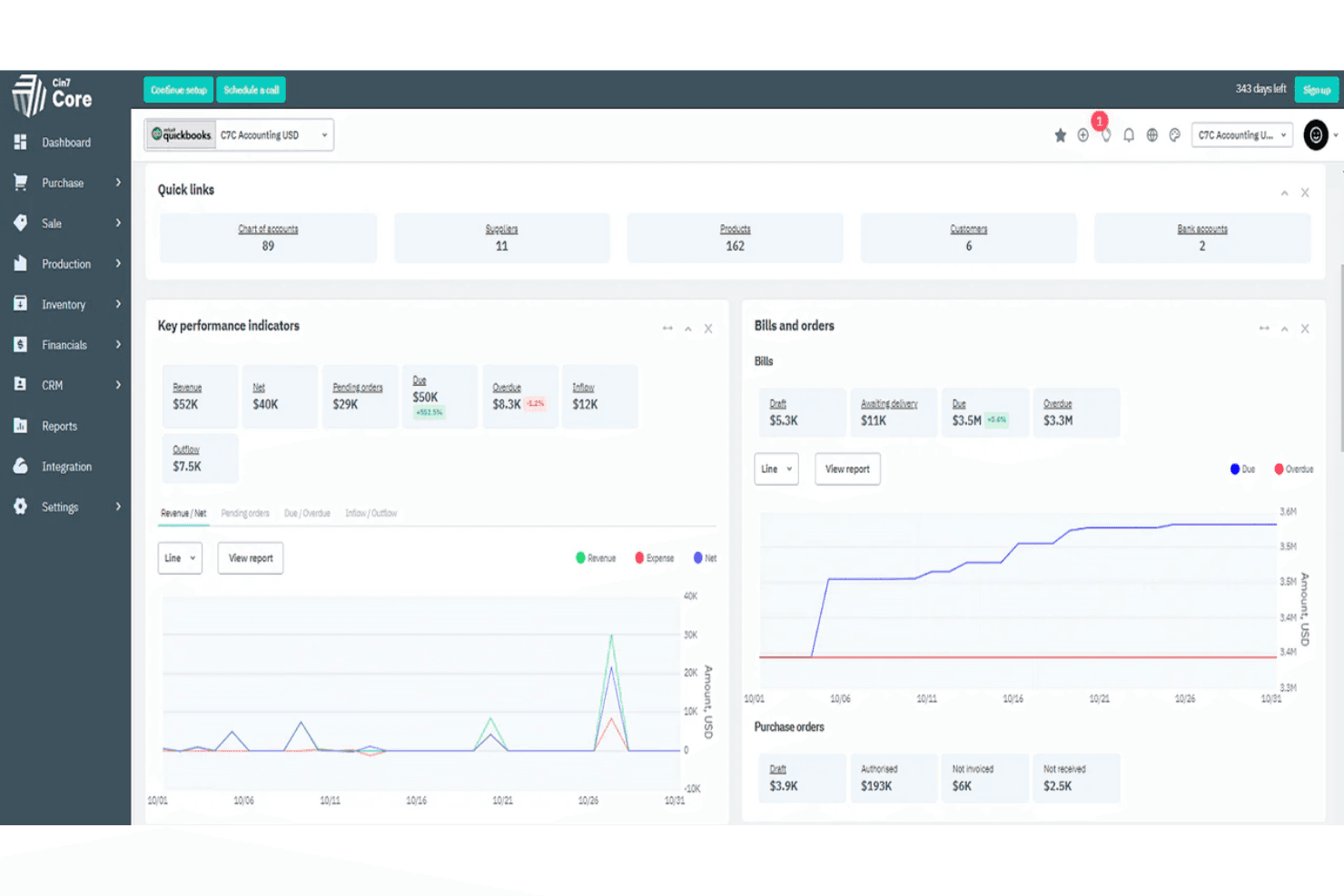
Cin7 can feel a bit complex at first, especially if your team isn't tech-savvy. Its multi-channel capabilities and extensive features require time to master. However, once you get the hang of it, Cin7's interface becomes manageable. The real-time updates and centralized data significantly enhance your team's efficiency. Despite the initial learning curve, the platform's comprehensive functionality ultimately supports inventory and accounting tasks well.
Integrations
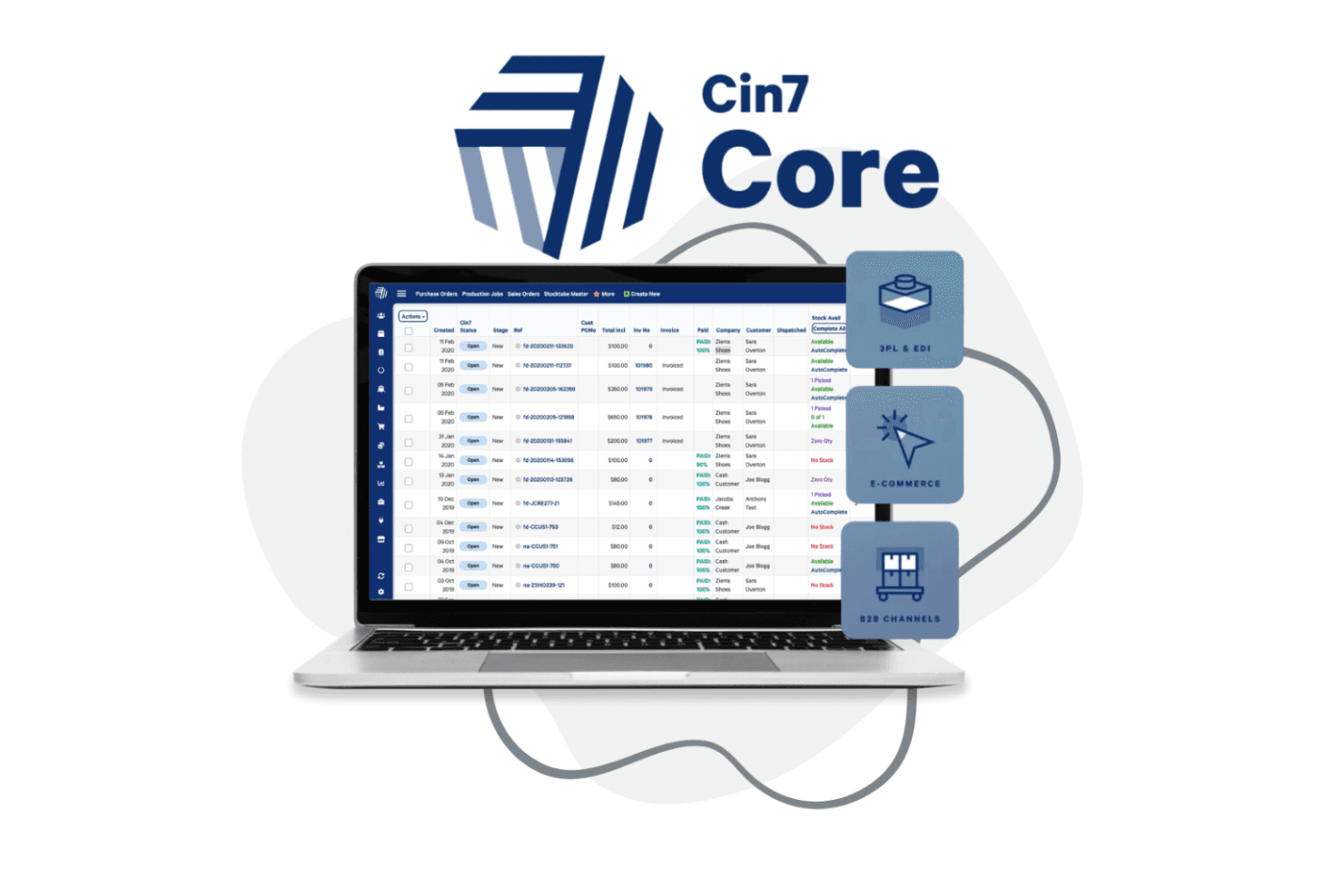
Cin7 integrates with applications for accounting, ecommerce, CRM, and more, including Amazon, Shopify, Intuit QuickBooks, Xero, Walmart Inc., BigCommerce, WooCommerce, eBay, ShipStation, and Avalara.
Cin7 also offers API and EDI connections that facilitate third-party integrations, further extending its capabilities.

Cin7 Specs
- 2-Factor Authentication: Yes
- A/B Testing: Yes
- Analytics: Yes
- API: Yes
- BitCoin: Yes
- Conversion Tracking: Yes
- Dashboard: Yes
- Data Export: Yes
- Data Import: Yes
- Data Visualization: Yes
- Design Templates: Yes
- External Integrations: Yes
- Inventory Tracking: Yes
- Keyword Tracking: Yes
- Marketing Automation: Yes
- Multi-User: Yes
- Notifications: Yes
- Order Management: Yes
- Payment Gateway Integration: Yes
- Payment Processor: Yes
- PayPal: Yes
- Product Catalog: Yes
- Review Monitoring: Yes
- SAP Integration: Yes
- Scheduling: Yes
- Stripe: Yes
- Third-Party Plugins/Add-Ons: Yes


