

A strong Cin7 alternative offers reliable inventory management, seamless order processing, and integrations that fit your sales channels and workflows. If you’re searching for Cin7 alternatives, you’re likely looking for software that matches your operational needs, supports your growth, or addresses gaps you’ve found with Cin7. This list will help you compare leading options, understand what sets each apart, and choose the right inventory management solution for your business in 2026.
What Is Cin7?
Cin7 is a cloud-based inventory management platform designed to help growing businesses manage stock, orders, and sales across multiple channels. It functions as an ERP solution by combining inventory systems, order management, and financial management tools into a single, user-friendly interface, making it easier to maintain control over operations as complexity increases.
Why Trust Our Software Recommendations
6,700+
Reviews
20
Industry experts
16+
Evaluation factors
14
Years
Our team has been testing and reviewing software since 2012. As finance leaders ourselves, we know how difficult—and important—it is to choose the right software.
For this guide, we evaluated tools using hands-on testing and independent research, scoring tools using our selection criteria.
Our reviews reflect our human editorial judgment, not a sales pitch.
Cin7 Alternatives Comparison Table
This comparison table highlights pricing and free trial options for my top Cin7 alternatives to help you find a solution that fits your budget and inventory management needs.
| Tool | Best For | Trial Info | Price | ||
|---|---|---|---|---|---|
| 1 | Best for privacy-focused management | 14-day free trial + free demo available | From $29/organization/month (billed annually) | Website | |
| 2 | Best for multichannel selling | Free demo available | From $1,349/month (billed annually) | Website | |
| 3 | Best for QuickBooks integration | Free demo available | From $229/month (billed annually) | Website | |
| 4 | Best for field sales and route accounting | 14-day free trial | From $200/month | Website | |
| 5 | Best for 3PL providers | Not available | Pricing upon request | Website | |
| 6 | Best for multi-location tracking | 14-day free trial available | From $99/month | Website | |
| 7 | Best for manufacturing oversight | Free plan + free demo available | From $299/month | Website | |
| 8 | Best for inventory accuracy | Free demo available | Pricing upon request | Website | |
| 9 | Best for unified supply chain execution platform with real-time inventory visibility | Free demo available | Pricing upon request | Website | |
| 10 | Best for channel integration | Free plan + free demo available | From $499/month | Website |


Cin7 Alternatives Reviews
Below are my detailed summaries of the best Cin7 alternatives that made it onto my shortlist. My reviews offer a detailed look at the features, integrations, and best use cases of each inventory management platform to help you find the best one for you.
 Best for privacy-focused management
- 14-day free trial + free demo available
- From $29/organization/month (billed annually)
Visit WebsiteCustomer Rating:4.3/5
Zoho Inventory displays an inventory dashboard with top items, stock levels, and sales by channel. Retailers and wholesalers managing sales across multiple channels may find Zoho Inventory especially useful. The platform brings together inventory, order, and shipping management with built-in automation for routine tasks. Zoho Inventory stands out for its deep integration with e-commerce platforms and shipping carriers, making it easier to coordinate orders from marketplaces, web stores, and offline sales in one place.
Why Zoho Inventory Is a Good Cin7 Alternative
For businesses that need to manage inventory across several sales channels, Zoho Inventory offers a strong alternative to Cin7. I like that Zoho Inventory provides built-in order automation, letting you set up workflows for tasks like order assignment, stock updates, and shipping label creation. The platform’s multi-channel management lets you sync inventory and orders from online marketplaces, web stores, and offline sales in real time. If you’re looking for a solution that keeps your inventory and order processes coordinated without manual intervention, Zoho Inventory is designed for that need.
Zoho Inventory Key Features
Some other features in Zoho Inventory can help you manage your stock and sales operations more efficiently:
- Serial Number Tracking: Track individual items through serial numbers for warranty and service management.
- Vendor Management: Store supplier details and manage purchase orders directly within the platform.
- Multi-Warehouse Support: Monitor and transfer stock across multiple warehouse locations.
- Customizable Invoices: Create and personalize invoices to match your business branding and requirements.
Zoho Inventory Integrations
Integrations include Shopify, Amazon, eBay, Etsy, QuickBooks Online, Xero, UPS, USPS, Zoho Books, and Zoho CRM.
Pros and Cons
Pros:
- Built-in purchase order and vendor management
- Automated workflows for order and shipping processes
- Multi-channel order syncing across online marketplaces
Cons:
- Limited support for advanced warehouse operations
- No native manufacturing or assembly features
Learn more about Zoho Inventory: Best for multichannel selling
- Free demo available
- From $1,349/month (billed annually)
Visit WebsiteCustomer Rating:4.2/5
Sellercloud is a multichannel e-commerce platform for inventory, orders, and shipping. If your business manages high sales volumes across multiple online channels, Sellercloud is built with your needs in mind. The platform centralizes inventory, order, and shipping management for retailers and distributors handling complex, multi-channel operations. Sellercloud stands out for its ability to unify data and workflows from dozens of marketplaces, making it easier to control stock, pricing, and fulfillment from one place.
Why Sellercloud Is a Good Cin7 Alternative
Sellercloud is a strong choice if you need centralized control over inventory and orders across many sales channels. I picked Sellercloud because it’s designed for high-volume sellers who want to manage listings, stock, and fulfillment from a single dashboard. The platform supports bulk product updates, consolidated order processing, and unified shipping management, which helps reduce manual work as your business scales. If you’re looking for a Cin7 alternative that can handle complex, multi-channel operations without losing visibility or control, Sellercloud is built for that purpose.
Sellercloud Key Features
Some other Sellercloud features can help you manage and optimize your retail operations:
- Kitting and Bundling: Group multiple products together to sell as a single SKU and manage inventory for kits and bundles.
- Reorder Management: Set automated reorder points and generate purchase orders when stock levels fall below thresholds.
- Returns Management: Process and track returns from multiple channels within a unified workflow.
- Customizable Reporting: Build and schedule detailed reports on sales, inventory, and fulfillment metrics.
Sellercloud Integrations
Integrations include Amazon, eBay, Walmart, Shopify, BigCommerce, WooCommerce, FedEx, UPS, QuickBooks, and NetSuite.
Pros and Cons
Pros:
- Built-in kitting and bundling management
- Supports bulk product updates across large catalogs
- Centralized control over multi-channel inventory and orders
Cons:
- Onboarding process requires vendor support
- Interface can feel dated and cluttered
Learn more about SellerCloud: Best for QuickBooks integration
- Free demo available
- From $229/month (billed annually)
Visit WebsiteCustomer Rating:4/5
Fishbowl Inventory offers an inventory dashboard with sales, revenue, profit trends, and order insights. Manufacturers and distributors who rely on QuickBooks often turn to Fishbowl Inventory for advanced inventory and production control. The platform is built to handle complex manufacturing workflows, multi-location inventory, and detailed work order management. Fishbowl Inventory stands out for its deep QuickBooks integration and manufacturing-specific features that go beyond what most inventory solutions offer.
Why Fishbowl Inventory Is a Good Cin7 Alternative
For businesses that need advanced manufacturing and inventory control tightly integrated with QuickBooks, Fishbowl Inventory is a strong option. I picked Fishbowl Inventory because it offers detailed work order management and bill of materials tracking, which are essential for manufacturers. The platform also supports multi-location inventory and production scheduling, helping teams manage complex operations from a single system. If your business relies on QuickBooks and needs manufacturing-specific controls, Fishbowl Inventory fills gaps that Cin7 and other inventory tools often leave open.
Fishbowl Inventory Key Features
Some other features in Fishbowl Inventory can help you manage inventory and operations more efficiently:
- Barcode Scanning: Scan items for faster receiving, picking, and inventory counts.
- Serial and Lot Number Tracking: Track products by serial or lot numbers for traceability and compliance.
- Automated Reordering: Set reorder points to trigger purchase orders automatically when stock runs low.
- Shipping Integration: Connect with major shipping carriers to generate labels and manage shipments directly from the platform.
Fishbowl Inventory Integrations
Integrations include QuickBooks, Xero, Shopify, Amazon, Salesforce, HubSpot, UPS Ready, DHL, eBay, and ShipStation.
Pros and Cons
Pros:
- Serial and lot tracking supports traceability requirements
- Supports multi-level bills of materials for manufacturing
- Deep QuickBooks integration for accounting alignment
Cons:
- Manufacturing features require separate modules
- Cloud version lacks some desktop functionality
Learn more about Fishbowl Inventory: Best for field sales and route accounting
- 14-day free trial
- From $200/month
Visit WebsiteCustomer Rating:4.4/5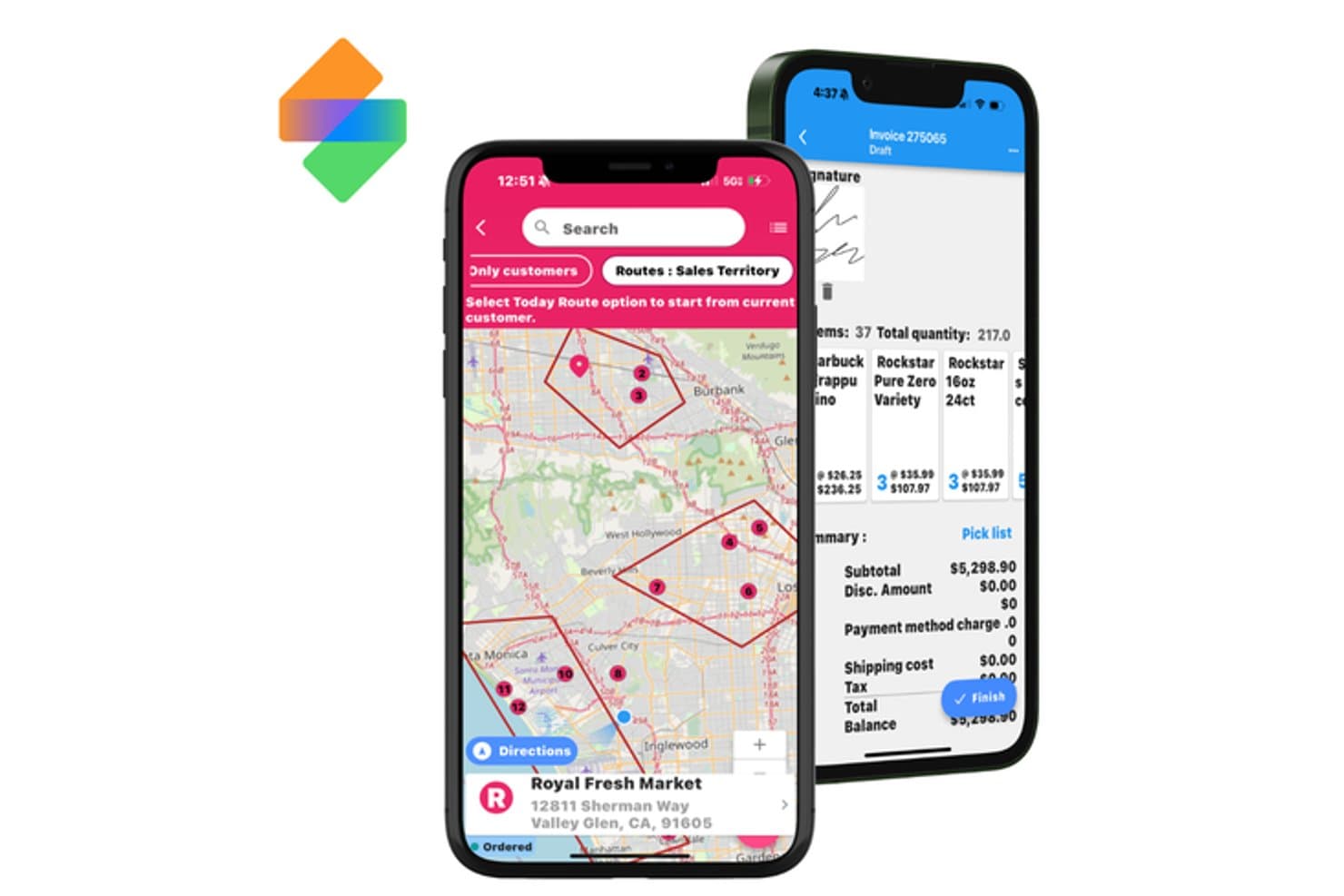
InSitu Sales offers a mobile sales app with route mapping, customer locations, and invoice management with order summaries and digital signatures. InSitu Sales is a mobile-first field sales and distribution platform built for wholesale distributors who need real-time inventory visibility, route management, and order capture outside the four walls of a warehouse.
Who Is InSitu Sales Best For?
Small to mid-sized food and beverage distributors whose sales reps work in the field and need mobile order capture, route planning, and QuickBooks sync in one place.
Why InSitu Sales Is a Good Cin7 Alternative
I picked InSitu Sales because it covers something Cin7 simply doesn't: the field sales layer. While Cin7 manages inventory inside your systems, InSitu Sales puts real-time stock levels, customer-specific pricing, and order capture directly into your reps' hands at the point of sale. The Dispatch app timestamps every delivery stop with GPS, and reps can print invoices on-site via a Bluetooth printer.
InSitu Sales Key Features
- Barcode scanning: Supports barcode scanning for faster, error-free order entry on mobile devices.
- Customer-specific pricing engine: Lets teams assign custom price lists and discounts for each customer or channel.
- Offline transaction support: Captures sales and inventory activity in areas without service, syncing data automatically when reconnected.
- QuickBooks and SAP integration: Provides pre-built connections for syncing orders, invoices, and customer info with accounting platforms.
InSitu Sales Integrations
InSitu Sales offers native integrations with QuickBooks Online, QuickBooks Desktop, Xero, SAP Business One, NetSuite, Epicor, Fishbowl, Sage, Odoo, and Zoho. An API is available for custom integrations.
Pros and Cons
Pros:
- Customer-specific pricing and terms in app
- GPS-based route and stop tracking
- Real-time inventory for mobile field teams
Cons:
- Lacks consolidated financial reporting tools
- No automated inventory valuation or COGS
Learn more about InSitu Sales:

Extensiv offers an inventory dashboard with bin-level tracking and detailed part views. For brands and 3PLs juggling inventory, orders, and warehouse operations, Extensiv brings everything together in one platform. The tool is designed for businesses that need to coordinate fulfillment across multiple warehouses and channels without losing visibility or control. Extensiv stands out for its unified approach, letting you manage inventory, orders, and warehouse workflows from a single dashboard.
Why Extensiv Is a Good Cin7 Alternative
If you’re looking for a platform that unifies inventory, order, and warehouse management, Extensiv is worth considering. I picked Extensiv because it’s built for brands and 3PLs that need to coordinate complex fulfillment operations across multiple locations. The platform offers real-time inventory visibility, centralized order management, and warehouse workflow automation, all from a single dashboard. For businesses that want to replace Cin7 with a solution that brings together these core functions, Extensiv delivers a tightly integrated experience.
Extensiv Key Features
Some other Extensiv features can help you manage and optimize your fulfillment operations:
- Automated Order Routing: Assign orders to the best warehouse or fulfillment center based on inventory and location.
- Returns Management Portal: Give customers and staff a dedicated portal to initiate and track returns.
- Carrier Rate Shopping: Compare shipping rates from multiple carriers directly within the platform.
- Customizable User Permissions: Set granular access controls for different team members and roles.
Extensiv Integrations
Integrations include Shopify, Amazon Seller Central, eBay, WooCommerce, BigCommerce, NetSuite, QuickBooks Online, ShipStation, and Salesforce.
Pros and Cons
Pros:
- Supports multi-client workflows for 3PL operations
- Automated order routing based on fulfillment logic
- Real-time inventory visibility across multiple warehouses
Cons:
- Occasional syncing delays with sales channels
- Reporting customization options are limited
Learn more about Extensiv:

Unleashed is a cloud inventory software for manufacturers, wholesalers, and distributors. If you need real-time inventory visibility and advanced analytics, Unleashed is worth a closer look. The platform is designed for manufacturers, wholesalers, and distributors who want granular control over stock, purchasing, and sales across multiple locations. Unleashed stands out for its live inventory tracking and built-in business intelligence tools that help you make faster, data-driven decisions.
Why Unleashed Is a Good Cin7 Alternative
Unleashed is a strong Cin7 alternative if you need real-time inventory management paired with advanced analytics. I like that Unleashed offers live stock updates across all locations, so you always know exactly what’s on hand and where. The built-in business intelligence dashboards let you analyze sales, margins, and purchasing trends without exporting data to another tool. For teams that want to make inventory decisions based on up-to-the-minute data and actionable insights, Unleashed delivers capabilities that go beyond what many other inventory platforms provide.
Unleashed Key Features
Some other features in Unleashed can help you manage inventory and operations more precisely:
- Batch and Serial Number Tracking: Assign and track batch or serial numbers for traceability and compliance.
- Supplier Management: Store supplier details, manage purchase orders, and track supplier performance in one place.
- Production Module: Build assemblies, manage components, and track finished goods through the manufacturing process.
- Mobile Sales App: Access inventory data and create sales orders from your mobile device.
Unleashed Integrations
Integrations include Amazon, Lightspeed, Mintsoft, Prospect, QuickBooks, Salesforce, Shiptheory, Shopify, SPS Commerce, and Xero.
Pros and Cons
Pros:
- Batch and serial tracking supports compliance workflows
- Built-in analytics dashboards for sales and margin insights
- Real-time inventory updates across multiple locations
Cons:
- Mobile app lacks full desktop functionality
- Limited warehouse automation capabilities
Learn more about Unleashed : Best for manufacturing oversight
- Free plan + free demo available
- From $299/month

Katana Cloud Inventory is a manufacturing and inventory software for SMB producers and makers. For manufacturers and makers who need visual production planning, Katana Cloud Inventory offers a unique approach. The platform is built for small to mid-sized manufacturers looking to manage inventory, production, and sales orders in one place. Katana stands out with its color-coded, drag-and-drop scheduling that gives you a clear, real-time view of your entire workflow.
Why Katana Cloud Inventory Is a Good Cin7 Alternative
If you’re looking for a Cin7 alternative that puts visual production planning front and center, Katana Cloud Inventory is worth considering. I appreciate how Katana’s color-coded, drag-and-drop scheduling board lets you manage production tasks and inventory in real time. The platform also automatically allocates materials to orders and updates stock levels as you work, so you always have a clear picture of what’s happening on your shop floor. For manufacturers who want to streamline production and keep workflows visible at a glance, Katana offers a focused solution.
Katana Cloud Inventory Key Features
Some other features in Katana Cloud Inventory can help you manage your manufacturing and inventory processes more efficiently:
- Shop Floor App: Give operators access to task lists and production details directly from tablets or mobile devices.
- Batch Tracking: Track raw materials and finished goods by batch number for traceability and compliance.
- Sales Order Management: Sync and manage sales orders from multiple channels in one dashboard.
- Purchase Order Automation: Automatically generate purchase orders when stock levels fall below set thresholds.
Katana Cloud Inventory Integrations
Integrations include Shopify, QuickBooks Online, HubSpot, BigCommerce, WooCommerce, Xero, ShipStation, Salesforce, Pipedrive, and Amazon.
Pros and Cons
Pros:
- Automatic material allocation to production orders
- Real-time tracking of raw materials and production stages
- Visual production planning with drag-and-drop scheduling
Cons:
- Limited reporting customization for advanced analytics
- No built-in barcode scanning functionality
Learn more about Katana Cloud Inventory:

SkuVault displays an Inventory dashboard with reorder alerts and order risk metrics. If you need real-time inventory tracking and detailed reporting, SkuVault is worth a look. This cloud-based platform is designed for retailers, wholesalers, and e-commerce businesses that want to reduce stockouts and improve order accuracy. SkuVault stands out for its barcode-driven workflows and deep integrations with online marketplaces and shipping solutions.
Why SkuVault Is a Good Cin7 Alternative
SkuVault’s real-time tracking and reporting set it apart for businesses that need up-to-the-minute inventory visibility. I picked SkuVault because its barcode-driven workflows help teams reduce picking errors and keep stock levels accurate across multiple locations. The platform’s reporting tools let you monitor inventory performance and identify trends quickly. For businesses that rely on precise inventory data to manage orders and avoid costly mistakes, SkuVault offers a focused solution.
SkuVault Key Features
Some other features in SkuVault can help you manage inventory and orders more efficiently:
- Kitting and Bundling: Create and manage product kits or bundles to simplify sales and fulfillment for grouped items.
- Cycle Counting: Schedule and perform regular cycle counts to maintain inventory accuracy without shutting down operations.
- Returns Management: Track and process product returns with workflows that update inventory and order records automatically.
- Supplier Management: Store supplier details and manage purchase orders directly within the platform for better procurement control.
SkuVault Integrations
Integrations include Amazon, eBay, Shopify, Walmart, BigCommerce, Etsy, QuickBooks Online, ShipBob, FedEx, and Shippo.
Pros and Cons
Pros:
- Detailed reporting surfaces inventory and sales trends
- Real-time inventory sync across multiple sales channels
- Barcode-driven workflows improve picking accuracy
Cons:
- Returns management setup can be complex
- Limited advanced manufacturing capabilities
Learn more about SkuVault: Best for unified supply chain execution platform with real-time inventory visibility
- Free demo available
- Pricing upon request

Deposco offers an orders dashboard with open, completed, and daily order trend metrics. Deposco brings together warehouse, order, and supply chain management in a single cloud platform. It’s a strong fit for retailers, distributors, and brands that need real-time visibility and control across complex fulfillment networks. What sets Deposco apart is its unified approach, letting you manage inventory, orders, and logistics from one place without juggling multiple disconnected systems.
Why Deposco Is a Good Cin7 Alternative
If you’re looking for a unified cloud platform to manage your entire supply chain, Deposco is worth considering as a Cin7 alternative. I like that Deposco combines warehouse, order, and supply chain management in one system, so you don’t have to switch between separate tools. The platform offers real-time inventory visibility and order orchestration across multiple locations, which helps you keep control as your operations grow. For businesses that want to centralize fulfillment and logistics, Deposco’s all-in-one approach stands out.
Deposco Key Features
Some other features in Deposco can help you manage fulfillment and supply chain operations more efficiently:
- Wave Picking: Group and release orders for picking in batches to optimize warehouse workflows.
- Returns Management: Track, process, and restock returned items with dedicated tools.
- EDI Integration: Connect with trading partners using built-in electronic data interchange capabilities.
- Customizable Dashboards: Build dashboards to monitor KPIs and operational metrics in real time.
Deposco Integrations
Integrations include NetSuite, Shopify, Amazon Seller Central, UPS, WooCommerce, QuickBooks, Lightning Pick, SPS Commerce, and ShipStation.
Pros and Cons
Pros:
- Wave picking supports high-volume warehouse operations
- Real-time inventory tracking across fulfillment locations
- Unified platform for inventory, order, and supply chain management
Cons:
- Advanced reporting requires additional configuration
- Implementation process can be time-consuming
Learn more about Deposco:

Goflow offers batch order fulfillment with hold, cancel, backorder, and purchase actions. Goflow is designed for multichannel sellers who need to centralize order and inventory management across platforms like Amazon, Walmart, and Shopify. It’s especially useful for businesses juggling high order volumes and complex fulfillment requirements. What makes Goflow different from Cin7 and similar tools is its focus on real-time syncing and automation for multichannel workflows, helping you avoid overselling and manual errors.
Why Goflow Is a Good Cin7 Alternative
For businesses managing orders and inventory across multiple sales channels, Goflow offers a centralized solution that stands out from Cin7. I appreciate how Goflow syncs inventory and order data in real time across platforms like Amazon, eBay, and Shopify, which helps prevent overselling and stockouts. The platform also automates order routing and fulfillment, so you can streamline operations without manual intervention. If you need a tool that brings all your multichannel workflows into one place, Goflow is a strong option to consider.
Goflow Key Features
Some other features in Goflow can help you manage your operations more efficiently:
- Purchase Order Management: Create, track, and manage purchase orders directly within the platform.
- Shipping Label Generation: Generate shipping labels for multiple carriers without leaving Goflow.
- Automated Reordering: Set reorder points and automate stock replenishment based on inventory levels.
- Sales Analytics Dashboard: Access real-time sales and inventory analytics to monitor business performance.
Goflow Integrations
Integrations include Amazon, Walmart, Shopify, eBay, Target, Macy's, WooCommerce, BigCommerce, QuickBooks Online, and FedEx.
Pros and Cons
Pros:
- Built-in purchase order management
- Automated order routing for multichannel fulfillment
- Real-time syncing across connected sales channels
Cons:
- Reporting customization options are restricted
- Limited advanced warehouse management functionality
Learn more about Goflow:
Other Cin7 Alternatives
Here are some additional Cin7 alternatives options that didn’t make it onto my shortlist, but are still worth checking out:
- 11ShipedgeBest for modular fulfillment
- 12ZentailBest for revenue growth
- 13LogiwaBest for high-volume fulfillment
- 14SumtrackerBest for small business inventory
- 15SortlyBest for visual inventory tracking
- 16CoreIMSBest for warehouse management
- 17Odoo InventoryBest for modular business apps
- 18PredikoBest for demand forecasting
- 19DOSS Operations CloudBest for cloud-based logistics
How I Evaluate Cin7 Alternatives
When evaluating whether a platform can handle landed cost allocation, COGS by channel, or real-time GL sync, I work from two layers: baseline requirements and the differentiators that set tools apart.
Core Functionality (Table Stakes For This List)
When I'm selecting tools for my list, I rank each one on a scale from 0 (does not offer the functionality) to 5 (excels in this area) for each core functionality listed below. Then, I calculate the tool's total score into a percentage. Each tool needs to achieve a minimum total score of 65% to be considered for inclusion.
- Inventory Valuation & GL Posting: I check whether the platform supports FIFO, average cost, or other valuation methods and can post journal entries to the ledger without manual workarounds.
- Accounting Platform Integration: The depth of native sync matters here, especially bi-directional data flow with tools like QuickBooks, Xero, or Sage Intacct for reconciliation during close.
- Order & Purchase Management: I evaluate whether sales orders, POs, and fulfillment workflows connect back to inventory counts and financial records in a single workflow.
- Multi-Channel & Multi-Location Stock Sync: Selling across Amazon, Shopify, and wholesale while managing three warehouses requires real-time stock and financial data sync across every node.
- Landed Cost & COGS Tracking: I look for the ability to allocate freight, duties, and handling costs at the SKU level and generate COGS breakdowns by channel or product line.
- Real-Time Financial Reporting: Finance teams running month-end close need live margin, inventory, and valuation reports they can drill into and export for audit documentation.
Once I have a list of tools that meet this criteria, I consider what sets each platform apart.
Differentiating Factors (What Sets Vendors Apart)
Here's how I compare and contrast different vendors:
Standout Features
Multi-entity consolidation matters when your business runs multiple brands or subsidiaries that need intercompany eliminations at month-end. I also evaluate BOM costing depth, since product businesses assembling goods need accurate cost roll-ups flowing into COGS. Audit trail granularity is another factor I weigh—change logs tied to specific users and transactions make a real difference when preparing for external audits or maintaining SOX-level controls.
Beyond Features
Implementation support is a big one—migrating historical inventory data and financial records mid-cycle can disrupt close processes, so I look at whether a vendor offers guided onboarding with realistic cutover timelines. Pricing transparency also gets close attention. Some platforms bury costs in per-channel fees or integration add-ons that inflate total cost of ownership fast. I also consider business model fit, since a tool built for DTC ecommerce sellers won't serve a wholesale distributor's invoicing and order workflows the same way.
Why Look For a Cin7 Alternative?
While Cin7 is a good choice of inventory and order management software, there are a number of reasons why some users seek out alternative solutions. You might be looking for a Cin7 alternative because…
- You need more advanced automation for product listings
- Your business requires native support for emerging marketplaces
- You want lower starting prices or more flexible plans
- You need deeper B2B or wholesale functionality
- Your team prefers a simpler, more modern interface
- You require integrations with specific ERP or accounting tools
If any of these sound like you, you’ve come to the right place. My list contains several inventory and order management options that are better suited for teams facing these challenges with Cin7 and looking for alternative solutions.
Cin7 Key Features
Here are some of the key features of Cin7, to help you contrast and compare what alternative solutions offer:
- Centralized inventory tracking across multiple sales channels
- Automated order management and fulfillment workflows
- Built-in point of sale (POS) system for retail locations
- Barcode scanning and batch tracking capabilities
- Integrated purchasing and supplier management
- Real-time stock level and sales reporting
- Native integrations with ecommerce platforms and marketplaces
- Support for warehouse management and stock transfers
- B2B portal for wholesale customers
- Customizable workflows and automation rules