

As contas multimoeda permitem que a sua empresa detenha, envie e receba pagamentos em diferentes moedas a partir de um único centro — eliminando os obstáculos das finanças globais. Se está à procura das melhores contas multimoeda, provavelmente pretende ter um maior controlo sobre os custos cambiais, pagamentos internacionais mais rápidos e visibilidade em tempo real dos seus saldos em todo o mundo.
Esta lista apresenta diretamente as plataformas concebidas para diretores financeiros e equipas de finanças com operações internacionais. Vou apresentar-lhe soluções que se integram com os seus sistemas financeiros, ajudam a gerir o risco cambial e reúnem a gestão da liquidez global num único painel — para que possa realmente concentrar-se em decisões estratégicas, e não apenas em pagamentos e reconciliações.
Why Trust Our Software Recommendations
6,700+
Reviews
20
Industry experts
16+
Evaluation factors
14
Years
Our team has been testing and reviewing software since 2012. As finance leaders ourselves, we know how difficult—and important—it is to choose the right software.
For this guide, we evaluated tools using hands-on testing and independent research, scoring tools using our selection criteria.
Our reviews reflect our human editorial judgment, not a sales pitch.
Tabela comparativa de contas multimoeda
Compare lado a lado os preços e as especificações das contas multimoeda que entraram na minha lista restrita:
Score legend (out of 5)
- Excellent4.5–5
- Good4–4.4
- Average3–3.9
- Below average2–2.9
- Poor1–1.9
Sorted by: Default
| Tool | Starting Price | Website | |||||||
|---|---|---|---|---|---|---|---|---|---|
Best for marketplace sellers paying global contractors | 3.8 out of 5 | 5 | 3 | 4 | 3 | 4 | 4 | Pricing upon request Not available | Website |
Best for embedded multi-currency infrastructure | 4.0 out of 5 | 5 | 3 | 5 | 5 | 1 | 5 | Pricing upon request Not available | Website |
Best for FX hedging within a global account | 4.0 out of 5 | 5 | 4 | 3 | 5 | 3 | 4 | $75/month Free plan + free trial available | Website |
Best for enterprise FX hedging across 60+ currencies | 4.0 out of 5 | 5 | 4 | 3 | 5 | 2 | 5 | Pricing upon request Not available | Website |
Best for European treasury with ERP integration | 4.2 out of 5 | 5 | 5 | 3 | 4 | 5 | 3 | €19/month 45-day free trial | Website |
Best for enterprise FX hedging and ERP sync | 4.5 out of 5 | 5 | 4 | 4 | 4 | 5 | 5 | Pricing upon request Free demo available | Website |
Best for batch payouts across 120+ countries | 4.8 out of 5 | 5 | 4 | 5 | 5 | 5 | 5 | $29/month Free plan + free demo available | Website |
Best for enterprise-scale multi-currency infrastructure | 4.2 out of 5 | 5 | 4 | 5 | 5 | 1 | 5 | Pricing upon request Not available | Website |
Best for interbank FX with treasury hedging tools | 4.5 out of 5 | 5 | 5 | 3 | 5 | 5 | 4 | £10/month Not available | Website |
Best for mid-market FX rates at scale | 4.7 out of 5 | 5 | 4 | 4 | 5 | 5 | 5 | From 0.23% per transaction Not available | Website |


Análises das melhores contas multimoeda
Apresento abaixo os meus resumos detalhados das melhores contas multimoeda que entraram na minha lista restrita. As minhas análises oferecem uma visão detalhada das funcionalidades, dos melhores casos de utilização e dos preços de cada plataforma, para o ajudar a encontrar a melhor opção para si.
 Best for marketplace sellers paying global contractors
- Not available
- Pricing upon request
Visit WebsiteCustomer Rating:3.2/5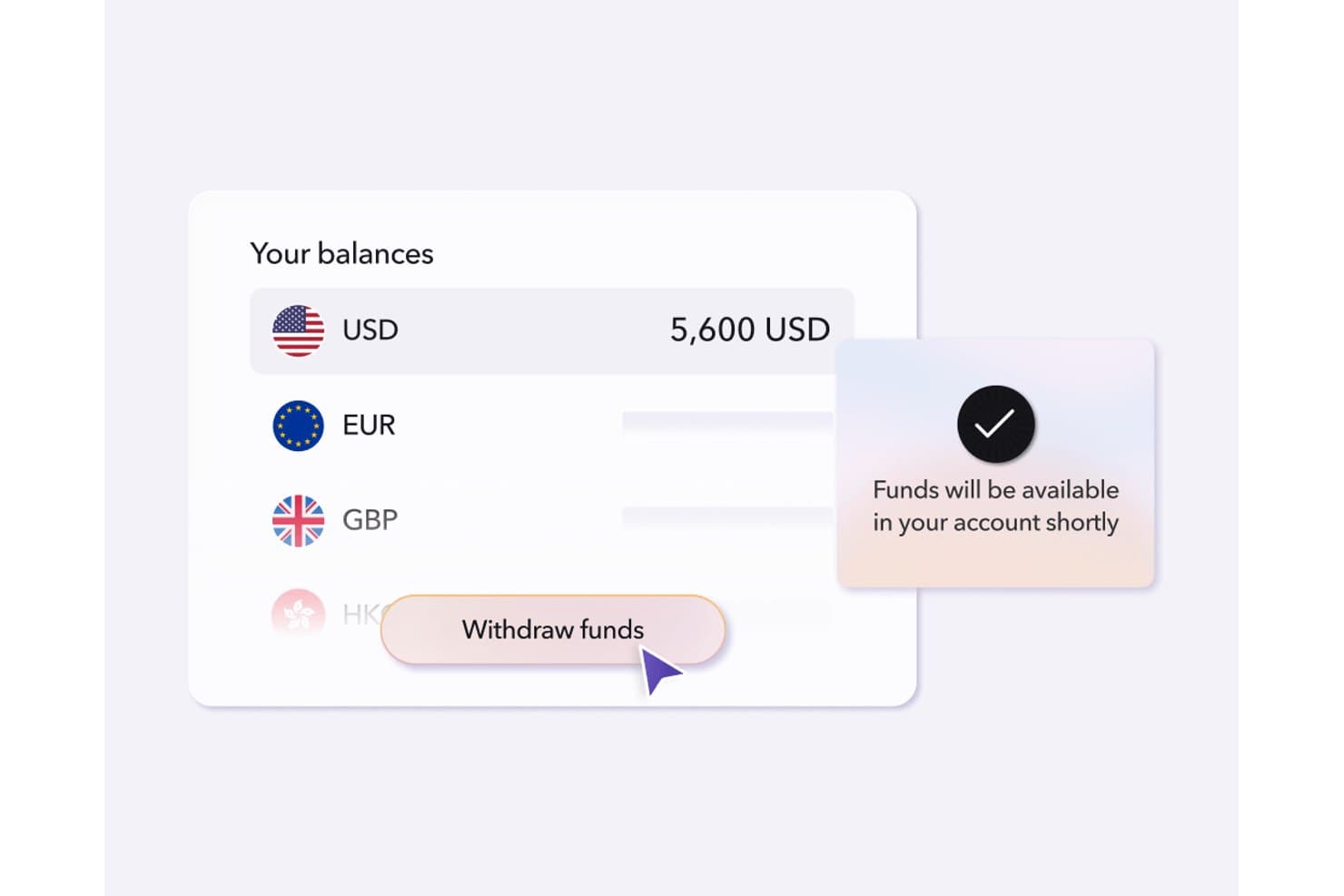
Payoneer lets users manage and withdraw multi-currency balances in one place. Payoneer is a cross-border payments platform that lets you hold balances in 10 currencies, collect payments via local receiving accounts in 13 currencies, and send mass payouts to recipients in 190+ countries across 70+ currencies.
Who Is Payoneer Best For?
Payoneer is a natural fit for marketplace sellers and businesses running large contractor or affiliate networks across multiple countries.
Why I Picked Payoneer
Payoneer earns its spot on my shortlist because of how well it handles high-volume payouts to global contractor and affiliate networks. I particularly like the Mass Payouts feature, which lets you disburse payments to recipients across 190+ countries via CSV upload or API, with built-in tax form collection (W-8, W-9, 1099, and 1042 filing) baked into the same workflow. Marketplace sellers running large contractor networks will also appreciate the local receiving accounts in 13 currencies, which let you collect payments like a local entity without setting up foreign subsidiaries.
Payoneer Key Features
- Smart FX target-rate auto-conversion: Set a target exchange rate and Payoneer automatically converts your balance when the market hits it, so you're not watching rates manually.
- Multi-currency corporate cards: Issue unlimited virtual and physical Mastercards funded directly from your Payoneer balances in USD, EUR, GBP, CAD, or JPY, with per-card spend limits and freeze controls.
- VAT payment support: Pay VAT authorities across multiple countries directly from your Payoneer account without needing separate local banking arrangements.
- Automated payee KYC: Payoneer handles identity verification for new payees in 25 languages using biometric ID checks, so you can onboard contractors globally without managing that compliance step yourself.
Payoneer Integrations
Payoneer offers native integrations with QuickBooks, Xero, and Zoho Books, plus connections to 100+ marketplaces, including Amazon, eBay, and Walmart. Its Payment API supports custom payout and payee-management integrations.
Pros and Cons
Pros:
- Target FX rate auto-conversion available
- Local account details in 13 currencies
- Mass payouts in 190+ countries supported
Cons:
- No mid-market FX or hedging options
- Reported account freezing and payment delays
Learn more about Payoneer: Best for embedded multi-currency infrastructure
- Not available
- Pricing upon request
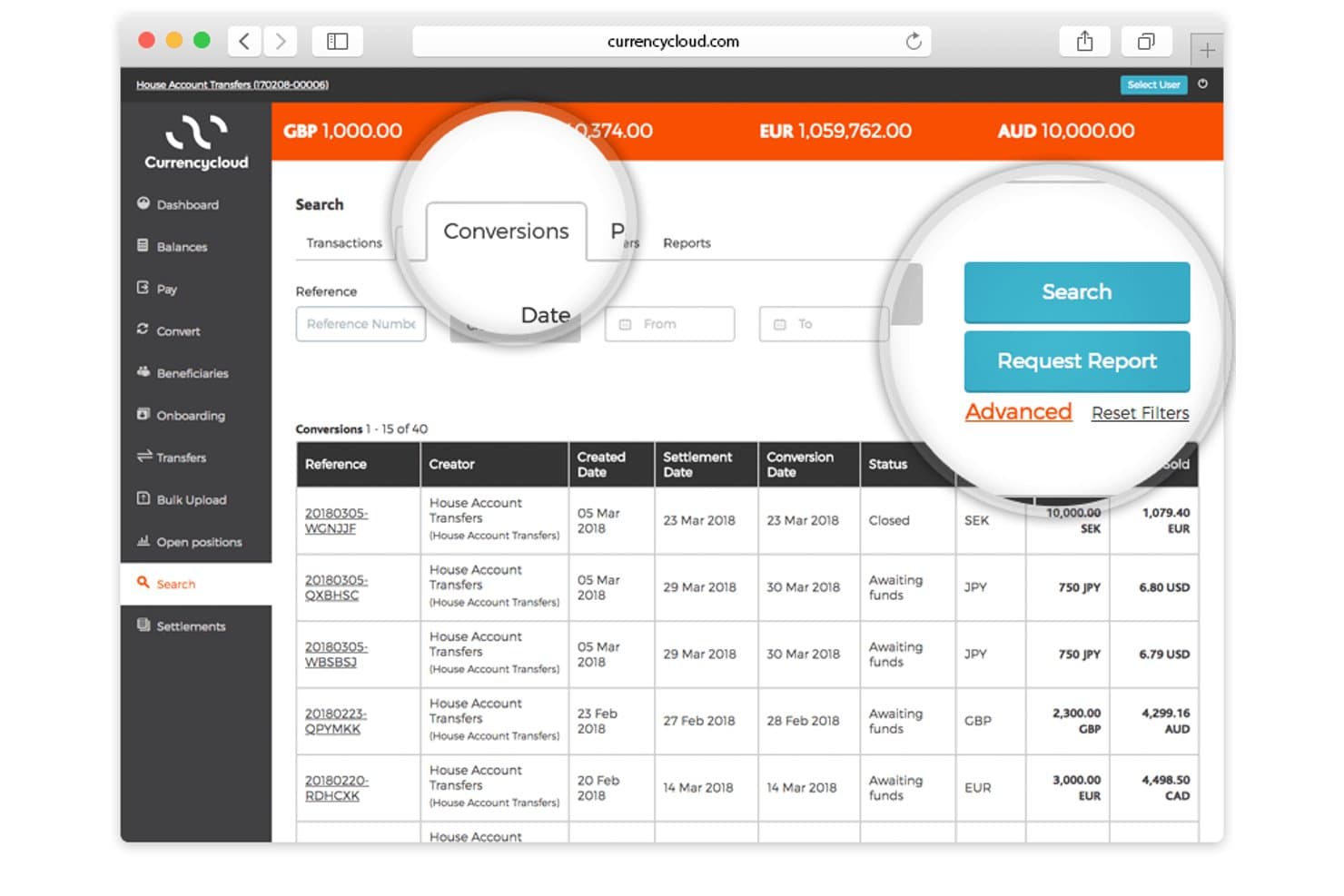
Currency Cloud lets users search and filter currency conversions by date and reference. Currencycloud is an API-first, embedded multi-currency infrastructure platform that supports holding balances in 35+ currencies, issuing named IBANs in 33 currencies, cross-border payments to 180+ countries, and FX conversion with forward contracts of up to 12 months.
Who Is Currencycloud Best For?
Currencycloud is a strong fit for fintechs, banks, and financial institutions with developer resources that need to embed multi-currency payment infrastructure into their own platforms.
Why I Picked Currencycloud
I've included Currencycloud in my top picks because it's genuinely the infrastructure layer that powers multi-currency operations at scale. What sets it apart is Currencycloud Spark's ability to issue named IBANs in 33 currencies, so businesses can receive funds locally in markets like the US, UK, EU, Singapore, and Mexico without routing everything through a single base currency. I also rate the forward contract feature highly: locking in exchange rates for up to 12 months is a real treasury tool for managing FX exposure on predictable outflows.
Currencycloud Key Features
- Batch payment processing: Send payments to multiple beneficiaries in bulk via API or Currencycloud Direct, supporting payroll, vendor, and marketplace disbursement workflows.
- Configurable FX markup: Set custom FX markups at the sub-account level, with markup profits aggregated to the house account and reconciled as monthly commissions.
- White-label UI via Currencycloud Direct: Deploy a brandable, ready-made interface for international payment operations without building full custom API infrastructure.
- Confirmation of Payee validation: Verify beneficiary account details before sending payments using Confirmation of Payee (UK) and Verification of Payee (EU) to reduce misdirected transfers.
Currencycloud Integrations
Native integrations are not publicly listed. Currencycloud supports custom connectivity through its REST API, webhooks, push notifications, CSV exports, and Currencycloud Direct.
Pros and Cons
Pros:
- Batch payments supported via API
- Forward contracts for FX hedging
- Named IBANs in 33 currencies
Cons:
- Customer support reviews are consistently poor
- No native accounting software integrations
Learn more about Currency Cloud:
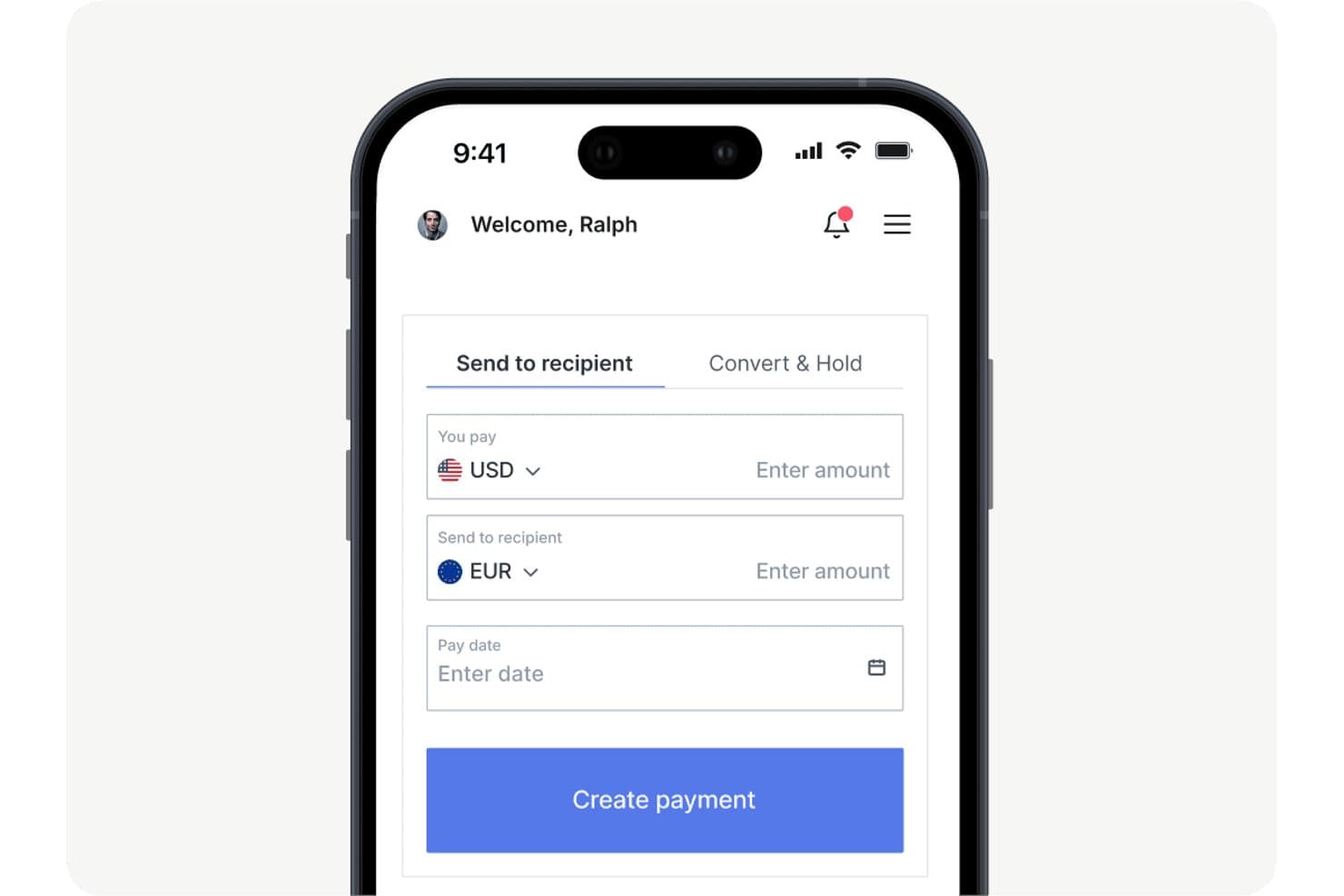
OFX lets users send money internationally with currency conversion. OFX is a multi-currency business account that combines multi-currency holding in 30+ currencies, cross-border payments to 170+ countries, FX hedging tools, corporate cards, and AP automation.
Who Is OFX Best For?
OFX is a strong fit for treasury managers and finance teams that need to actively manage FX risk alongside their cross-border payments.
Why I Picked OFX
I picked OFX as one of the best because it's the only multi-currency account on my shortlist that puts FX hedging tools front and center alongside everyday payments. I use Forward Contracts to lock in rates up to 12 months out, which matters when you're budgeting cross-border costs against volatile currencies. Limit Orders let me set a target rate and convert automatically when the market hits it, without watching screens all day.
OFX Key Features
- Multi-currency corporate cards: Issue unlimited physical and virtual cards tied directly to your multi-currency balances, with no foreign transaction fees and 1% cashback on everyday spend.
- Batch payments: Upload a CSV to pay up to 500 recipients across 170+ countries in 30+ currencies, with one-click bulk approval via built-in approval workflows.
- AP and bill automation: Capture invoices via OCR, auto-code them with AI, and route them through approval workflows with two-way sync to QuickBooks Online or Xero.
- 24/7 FX specialist access: Reach a live human FX specialist by phone or email around the clock, with dedicated account managers available on Full Suite and Custom plans.
OFX Integrations
OFX offers two native integrations, QuickBooks Online and Xero, plus marketplace integrations with Amazon and eBay. Its RESTful Payments API includes sandbox access for custom integrations.
Pros and Cons
Pros:
- Multi-currency cards with spend controls
- 24/7 access to human FX specialists
- FX hedging tools built into business account
Cons:
- FX rate margins not visible pre-login
- Limited local account details for collections
Learn more about OFX: Best for enterprise FX hedging across 60+ currencies
- Not available
- Pricing upon request
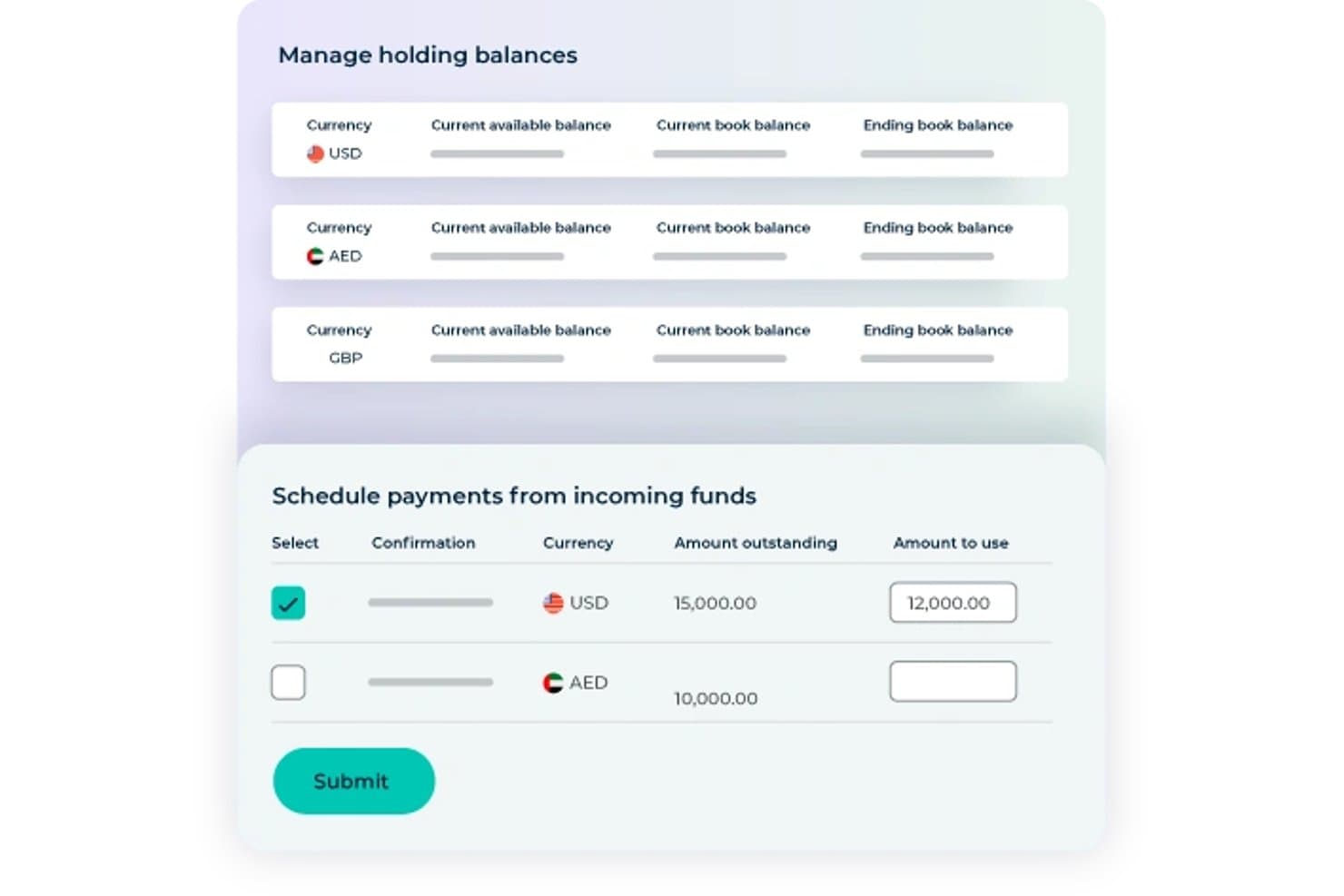
Convera lets users schedule payments from incoming multi-currency funds. Convera is a cross-border payments platform that lets businesses hold balances in 60+ currencies, send payments to 200+ countries, and manage FX exposure through forward contracts, options, swaps, and market orders.
Who Is Convera Best For?
Convera is a strong fit for treasury and finance teams at mid-to-large enterprises that need to actively manage FX exposure across multiple currencies, not just send and receive payments.
Why I Picked Convera
I've included Convera in my top picks because it's the only non-bank provider I know of that pairs 60+ currency holdings with a full FX hedging suite: forward contracts in 44 currencies lockable up to two years out, vanilla and structured options, and rate-triggered market orders that execute automatically when your target rate is hit. If your treasury team is managing supplier payments across volatile currency corridors, that combination is genuinely hard to replicate elsewhere at this scale.
Convera Key Features
- Bulk payment uploads: Submit up to 10,000 payment lines in a single CSV or XML file for high-volume AP runs, payroll cycles, or vendor disbursements.
- SWIFT GPI tracking: Monitor payments in real time across the full payment chain, with automated status alerts and proof-of-payment reporting.
- Multi-team approval workflows: Configure role-based user access, maker-checker controls, and audit trails across teams and entities for payment and FX conversion sign-off.
- Alternative payment method collection: Accept inbound payments via Klarna, AliPay, WeChat Pay, UnionPay, and other local methods across 230+ countries and territories.
Convera Integrations
Convera supports native integrations with Piteco TMS, GTreasury, and SAP Concur. It also offers REST APIs, webhooks, and CSV/XML file uploads for custom connections to ERP, accounting, treasury, AP, and payroll systems.
Pros and Cons
Pros:
- Handles high-volume cross-border payments
- Hold 60+ currencies without forced conversion
- Full FX hedging tools for enterprises
Cons:
- No corporate cards linked to balances
- FX rate spreads are not transparent
Learn more about Convera:
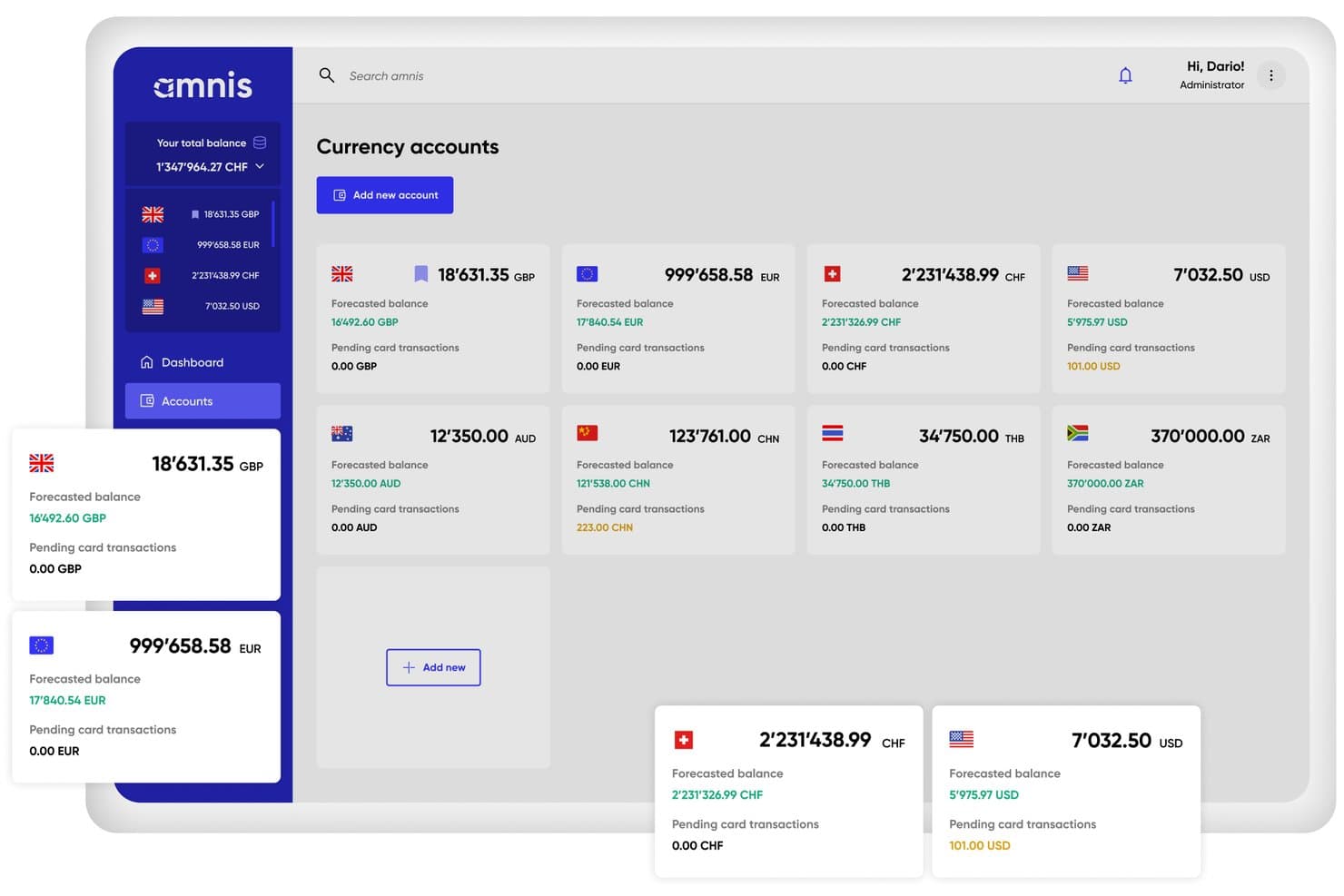
Amnis displays multiple currency account balances in one dashboard. Amnis is a multi-currency business account platform that lets you hold 20+ currencies, make cross-border payments to 200+ countries, manage FX with forward contracts and limit orders, and connect to ERP systems like SAP, NetSuite, and Xero.
Who Is Amnis Best For?
Amnis is a strong fit for European finance teams managing cross-border treasury operations who need deep ERP connectivity alongside multi-currency payment and FX tools.
Why I Picked Amnis
I've included Amnis in my top picks because it's built specifically for European treasury teams that need both multi-currency payment infrastructure and deep ERP connectivity in one place. I particularly like how it supports forward contracts and limit orders alongside 20+ currency holdings, so your team can hedge exposure without switching platforms. Native connections to SAP, NetSuite, and DATEV mean multi-currency transactions sync directly into your existing reporting environment.
Amnis Key Features
- Balance cashback: Amnis pays interest on safeguarded foreign currency balances held in EUR, USD, GBP, and CZK accounts.
- Payment AI: Upload invoices as PDFs or images and Amnis automatically extracts supplier details, IBAN, amount, currency, and due date for your review before payment.
- Unlimited multi-currency debit cards: Issue unlimited physical and virtual debit cards across all plans, with 0% FX fees on card transactions in supported currencies.
- Cash management automation rules: Configure up to 25 automated rules for FX execution, reconciliation, and fund movement, with rule limits scaling by plan tier.
Amnis Integrations
Amnis offers integrations with NetSuite, SAP, Xero, Odoo, Exact Online, DATEV, bexio, Abacus, and PayPal. It also provides a read/write REST API, webhooks, H2H/SFTP, and an MCP server for custom connectivity.
Pros and Cons
Pros:
- Native ERP integration with SAP and NetSuite
- Transparent FX markups with sub-0.5% rates
- Unlimited multi-currency virtual and physical cards
Cons:
- Limited SWIFT payments on basic plans
- EEA-only onboarding restricts global eligibility
Learn more about Amnis: Best for enterprise FX hedging and ERP sync
- Free demo available
- Pricing upon request
Visit WebsiteCustomer Rating:4.6/5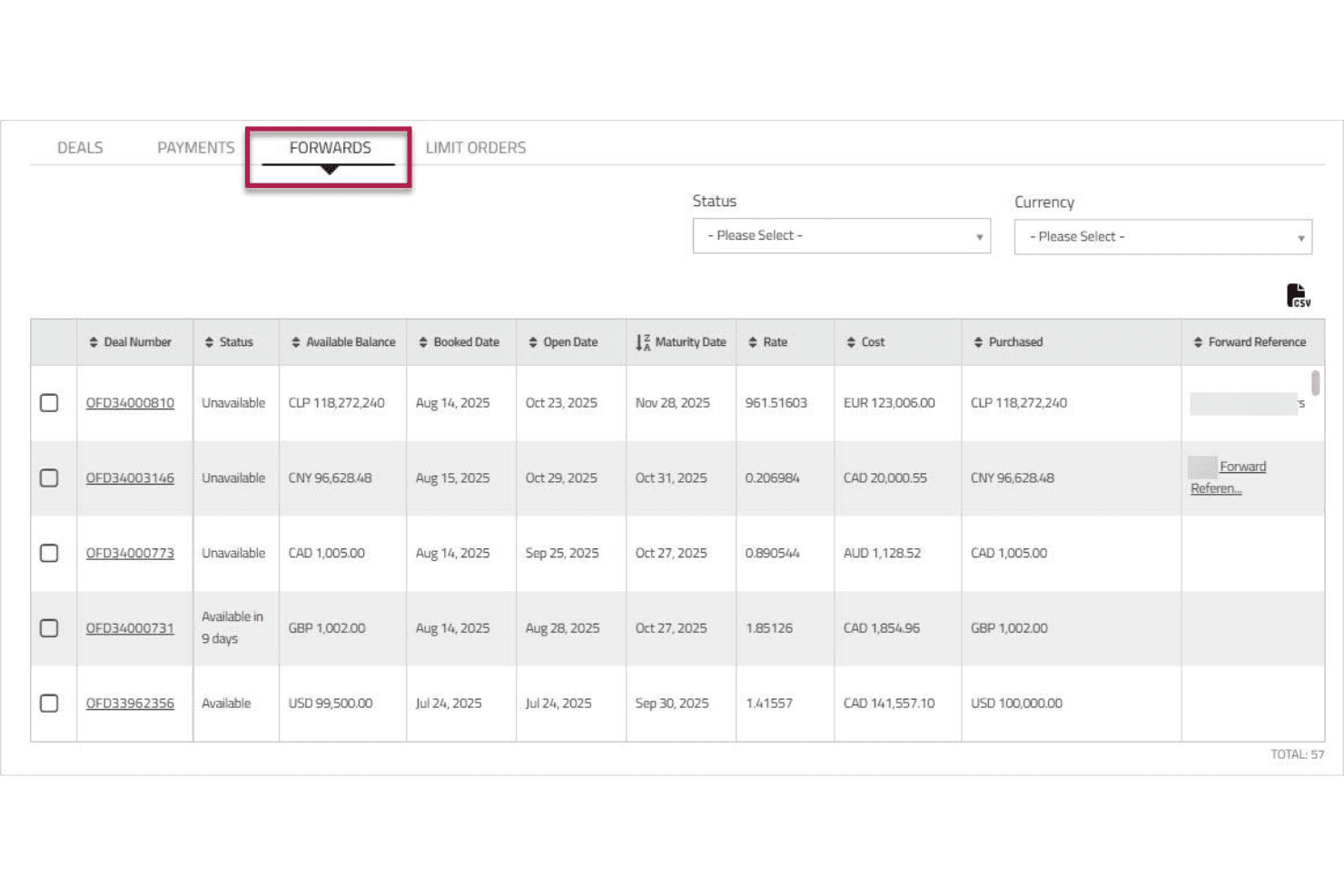
Corpay lets users track and manage forward currency contracts in one view. Corpay Cross-Border is a multi-currency accounts and cross-border payments platform that lets businesses hold balances in 25 currencies, send payments to 200+ countries, manage FX exposure through spot, forward, and options contracts, and sync transactions with 180+ ERP systems.
Who Is Corpay Best For?
Corpay Cross-Border is a strong fit for enterprise finance teams that need to manage FX exposure through hedging instruments while syncing multi-currency transactions with complex ERP environments.
Why I Picked Corpay
I picked Corpay as one of the best because its FX risk management toolkit goes well beyond basic spot conversion. I've used the Risk Visualizer to map open currency exposures in real time, then locked in rates using forward contracts or options strategies before a payment run. That combination of hedging instruments, paired with two-way sync across 180+ ERPs including a certified NetSuite SuiteApp, makes Corpay the clearest fit for enterprise treasury teams managing multi-currency exposure at scale.
Corpay Key Features
- Named accounts with unique IBANs: Hold and receive funds in your business's name with a dedicated IBAN or account number per currency, without opening local bank accounts abroad.
- Batch payment processing: Upload bulk payment files to execute mass vendor, payroll, or contractor disbursements across 145+ currencies in a single run.
- AI-powered OCR invoice capture: Extract header and line-item data from invoices automatically, feeding cross-border payables directly into your AP workflow.
- Configurable multi-level approval workflows: Set approval rules by vendor, invoice amount, department, or entity, with role-based permissions to enforce payment controls.
Corpay Integrations
Corpay supports 180+ ERP and accounting integrations, including NetSuite, Sage Intacct, QuickBooks Online, Microsoft Dynamics 365, SAP, and Xero. Its Cross-Border RESTful API and webhooks support custom payment and reconciliation workflows.
Pros and Cons
Pros:
- Real-time multi-currency ledger visibility
- Advanced FX risk management with hedging contracts
- Named IBANs support local currency collection
Cons:
- Named accounts not supported in all regions
- FX pricing not published for enterprise users
Learn more about Corpay: Best for batch payouts across 120+ countries
- Free plan + free demo available
- From $29/month
Visit WebsiteCustomer Rating:4.4/5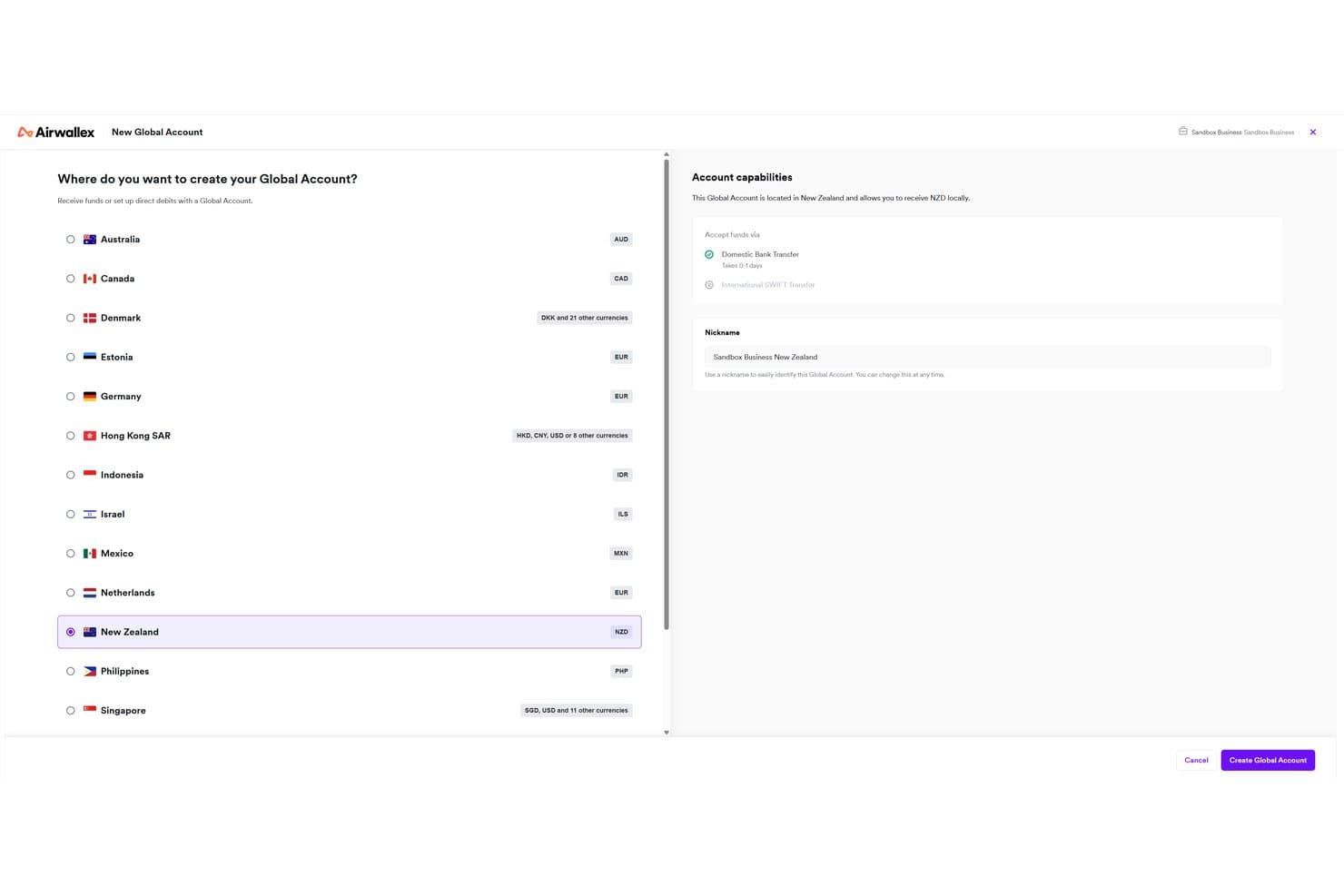
Airwallex lets users open global accounts in multiple countries and currencies. Airwallex is a multi-currency business account platform that lets you hold balances in 20+ currencies, collect funds via local account details in 16+ countries, convert FX at interbank-based rates, and send batch payments to 120+ countries.
Who Is Airwallex Best For?
Airwallex is a strong fit for finance teams at high-growth companies that manage vendor payments, payroll, or marketplace disbursements across multiple countries at once.
Why I Picked Airwallex
I picked Airwallex as one of the best because its Batch Transfers feature lets you pay up to 1,000 recipients across 120+ countries in a single file upload, which is genuinely rare at this scale. I also like that outbound local transfers go through local payment rails rather than SWIFT, so recipients get paid faster and without the $15–$25 SWIFT fee eating into each transaction. Pair that with a fully programmable Payouts API, and high-volume disbursements like vendor runs or contractor payroll become repeatable, automated workflows.
Airwallex Key Features
- Multi-currency wallets: Hold balances in 20+ currencies simultaneously without forced auto-conversion to a base currency.
- FX rate alerts: Set target rates on specific currency pairs and receive instant notifications when market rates hit your specified level.
- Approval workflows: Configure multi-condition approval rules by amount, department, entity, or payment type to control spend across your team.
- Yield on USD balances: Earn up to 3.49% APY on uninvested USD funds held in your account, with no lock-up period.
Airwallex Integrations
Airwallex offers native integrations with Xero, QuickBooks, NetSuite, Microsoft Dynamics 365 Business Central, Sage, Odoo, Shopify, and WooCommerce. It also supports custom connections through REST APIs and Zapier.
Pros and Cons
Pros:
- Customizable multi-condition approval workflows
- Holds 20+ currencies without forced conversion
- Batch payouts to 1,000 recipients worldwide
Cons:
- No dedicated forward contracts for US businesses
- Account freezes reported with little communication

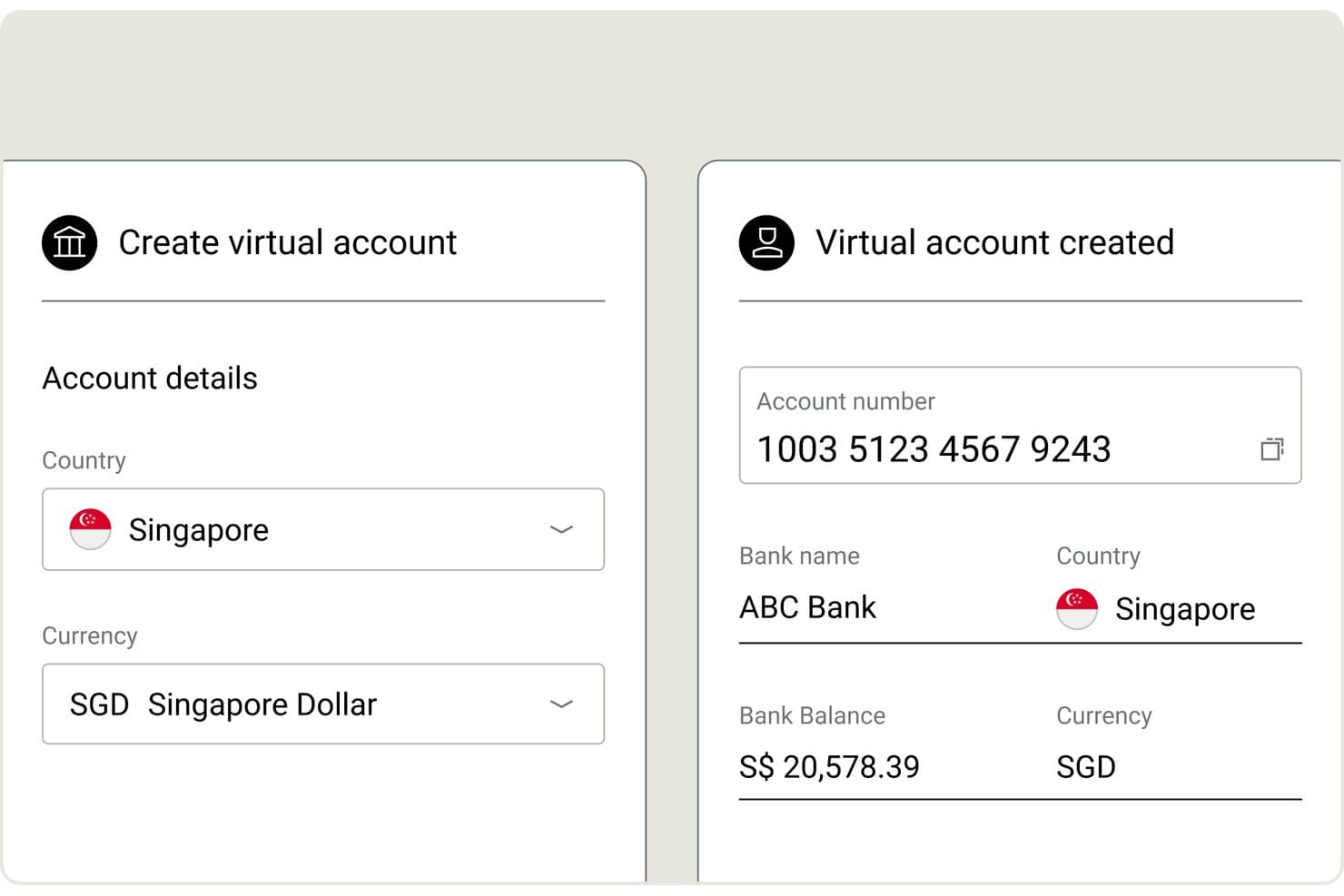
Nium lets users create virtual accounts in SGD with instant details. Nium is a B2B payments infrastructure platform built for enterprises, banks, and embedded finance providers, offering multi-currency account holding across 100+ currencies, cross-border payouts to 190+ countries, local account details in 20+ currencies, FX conversion at interbank rates, batch payouts, and virtual and physical card issuance.
Who Is Nium Best For?
Nium is a strong fit for enterprises, banks, and fintech platforms that need to embed multi-currency payment infrastructure at scale rather than access a ready-made account interface.
Why I Picked Nium
I've included Nium in my top picks because it operates at a scale most multi-currency account providers simply can't match: 100+ currencies held natively, payouts to 190+ countries, and 40+ regulatory licenses covering the FCA, MAS, and more. I particularly like the 24-hour FX rate lock across 125+ currencies, which lets treasury teams fix costs before running cross-border payroll without touching a forward contract. The no-code Batch Payouts feature adds maker/checker approval workflows and partial-batch processing, so large multi-currency disbursements don't require custom development to govern properly.
Nium Key Features
- Local virtual account numbers (VANs): Receive funds via local payment rails in 20+ currencies—including SEPA, ACH, Faster Payments, and FAST—without an in-country banking presence.
- Programmable FX rules: Define when and how currency conversions trigger by currency, counterparty, or transaction type, so funds aren't auto-converted at receipt.
- USDC stablecoin support: Hold treasury balances in USDC and fund cross-border payouts or payroll in stablecoin via Coinbase and Circle integrations.
- SWIFT GPI tracking: Monitor SWIFT transactions end-to-end in real time, with full payment status visibility throughout the transaction lifecycle.
Nium Integrations
Native integrations are not publicly listed. It supports custom integrations through its REST API and webhooks, plus connectivity with SWIFT, Visa, Mastercard, Coinbase, and Circle.
Pros and Cons
Pros:
- Enables batch payouts with maker/checker workflow
- Offers 24-hour FX rate lock
- Holds 100+ currencies with no forced conversion
Cons:
- Lacks native accounting software integrations
- No self-serve account onboarding available
Learn more about Nium: Best for interbank FX with treasury hedging tools
- Not available
- From £10/month
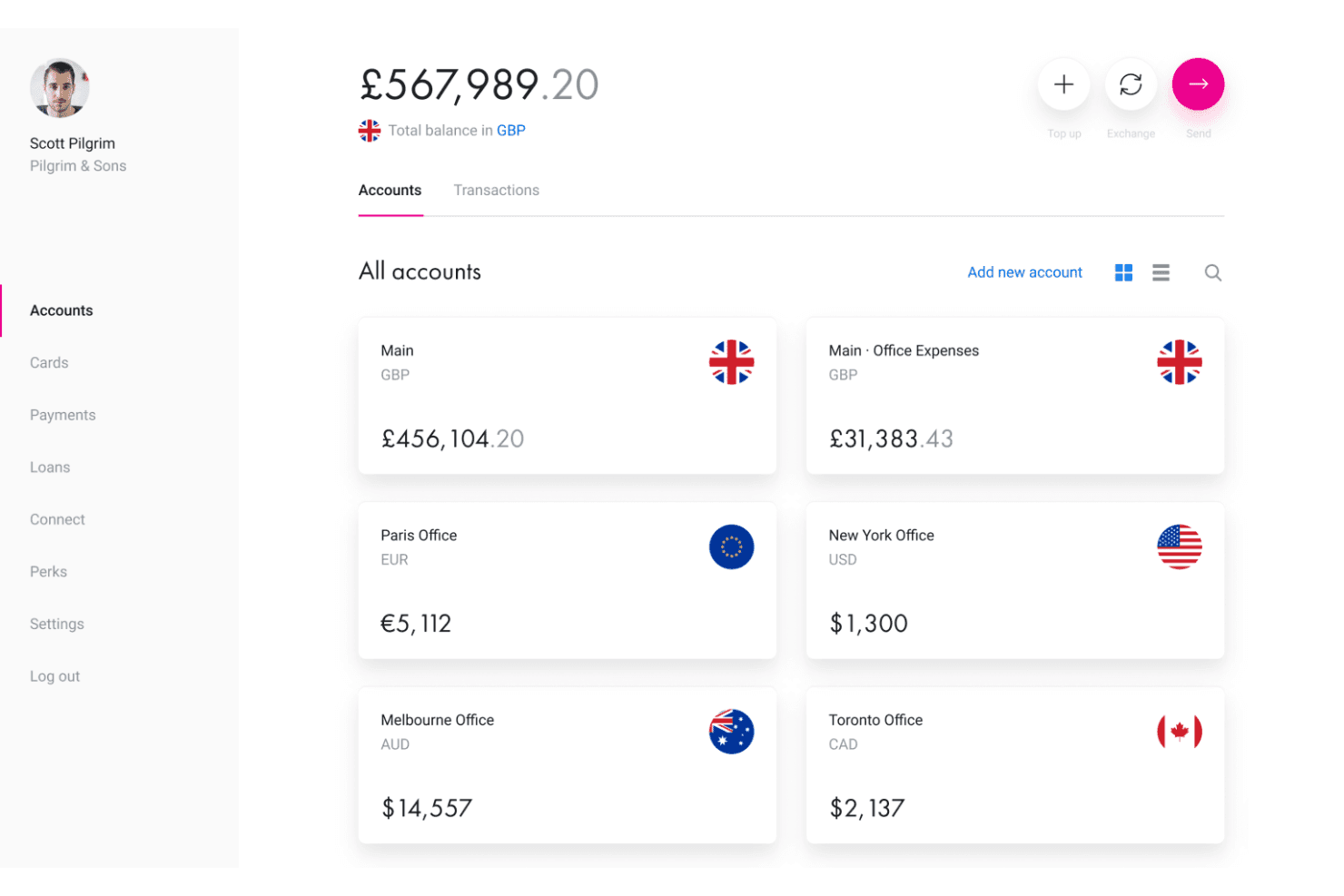
Revolut Business lets users manage multi-currency accounts across global offices. Revolut Business is a multi-currency business account that lets you hold balances in 25–35+ currencies, send payments to 100+ countries, issue corporate cards, manage FX conversions at interbank rates, and hedge currency exposure with forward contracts and limit orders.
Who Is Revolut Business Best For?
Revolut Business is a strong fit for finance and treasury teams that actively manage currency exposure and need hedging tools like forward contracts and limit orders alongside their multi-currency accounts.
Why I Picked Revolut Business
Revolut Business earns its spot on my shortlist because of how seriously it treats FX risk management, which most multi-currency account providers treat as an afterthought. I particularly like the combination of interbank-rate conversions within monthly allowances and the ability to lock in rates up to two years out using FX Forwards. Layer in limit and stop orders that trigger conversions automatically at a target rate, and treasury teams get real hedging tools, not just a currency wallet.
Revolut Business Key Features
- Bulk payment processing: Send payments to up to 1,000 recipients in a single batch, useful for payroll runs and multi-vendor disbursements.
- Multi-level approval workflows: Set maker-checker rules and role-based permissions to control who can authorize payments and FX conversions.
- Corporate card controls: Issue virtual and physical cards with per-card spending limits, category restrictions, and instant freeze/unfreeze via the app.
- Accounting integrations: Sync transactions automatically with Xero, QuickBooks, NetSuite, Sage, Dynamics 365, and 10+ other platforms.
Revolut Business Integrations
Revolut Business offers 45+ native integrations, including Xero, QuickBooks, Sage, Microsoft Dynamics 365, Zoho Books, FreshBooks, and Odoo. It also provides a Business API, webhook support, Make, and Zapier.
Pros and Cons
Pros:
- Bulk payments up to 1,000 recipients
- Hold 25–35+ currencies without forced conversion
- Interbank FX rates with limit and stop orders
Cons:
- FX forwards unavailable for US businesses
- Recurring account freezes and fund holds reported
Learn more about Revolut Business: Best for mid-market FX rates at scale
- Not available
- From 0.23% per transaction
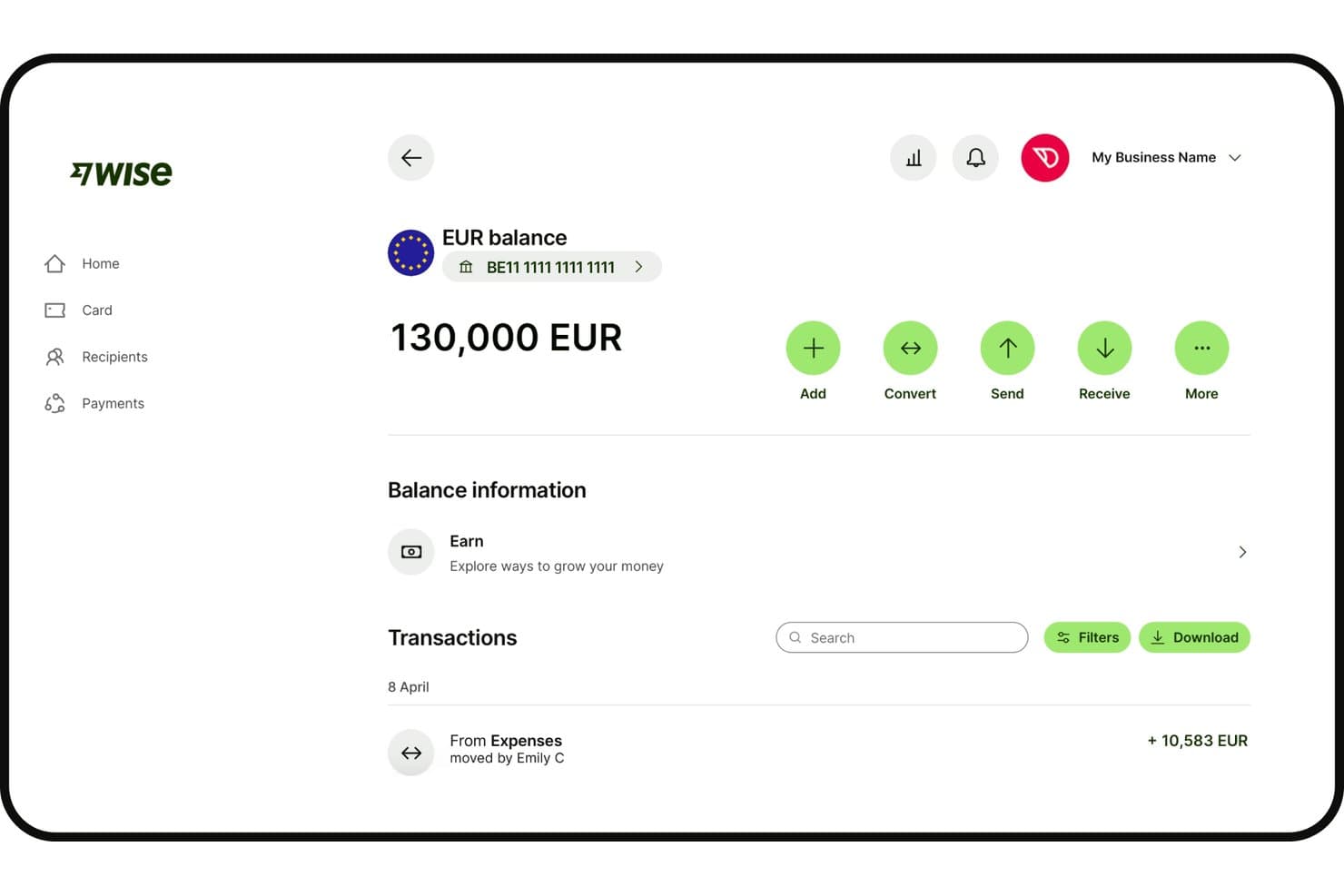
Wise Business displays EUR balance with multi-currency account details. Wise Business is a multi-currency account platform that lets you hold 40+ currencies, send payments to 160+ countries, collect funds via local account details in 10 regions, and sync transactions with your accounting stack through native and bank feed integrations.
Who Is Wise Business Best For?
Wise Business is a strong fit for finance teams at mid-market companies that run high-volume cross-border payments across multiple currencies and need clean accounting integration without paying bank-level FX markups.
Why I Picked Wise Business
Wise Business earns its spot on my shortlist because it passes payments through at the true mid-market rate, with fees starting from 0.23% and no hidden FX markup baked into the exchange rate. I've used BatchTransfer to push up to 1,000 international payee payments in a single CSV upload, which is a real advantage when running cross-border contractor payroll or marketplace disbursements at volume. Volume discounts kick in above $25,000 per conversion, so the rate advantage compounds as your payment runs scale.
Wise Business Key Features
- Multi-currency balance holding: Hold 40+ currencies simultaneously in a single account with full balance segregation and no automatic conversion between currencies.
- Role-based approval workflows: Assign Viewer, Payer, or Admin roles to team members and configure multi-level payment approvals before transactions execute.
- Opt-in interest on balances: Earn variable APY on USD, GBP, and EUR balances with instant access to funds, backed by pass-through FDIC insurance via JPMorgan Chase.
- Open API with sandbox environment: Automate recurring payments, payroll runs, and invoice disbursements via a REST API with full sandbox access for pre-live integration testing.
Wise Business Integrations
Wise Business offers native integrations with Xero, QuickBooks, and FreeAgent, plus bank-feed connections to 16 listed platforms, including NetSuite, Sage, Microsoft Dynamics 365, and DATEV. Its REST API includes a sandbox for custom integrations.
Pros and Cons
Pros:
- Batch pay up to 1,000 recipients
- Holds 40+ currencies with segregated balances
- No hidden markup on FX conversion
Cons:
- Account freezes reported in some reviews
- No forward contracts or FX hedging
Learn more about Wise Business:
Outras contas multimoeda
Eis algumas contas multimoeda adicionais que não entraram na minha lista restrita, mas que ainda vale a pena conhecer:
- 11WorldFirstBest for global e-commerce currency collection
- 12PayhawkBest for ERP-connected multi-currency spend management
- 13StripeBest for payment-led multi-currency settlement
- 14TipaltiBest for AP-driven global vendor disbursements
- 15AspireBest for SEA-based teams managing multi-currency ops
- 16iBanFirstBest for FX hedging with a dedicated specialist
- 17InstaremBest for APAC-anchored cross-border batch payouts
- 18Equals MoneyBest for UK treasury teams hedging in 35+ currencies
How I Evaluate Multi-Currency Accounts
I split my evaluation into baseline criteria—like holding 30+ currencies, local account details, and ERP sync—and differentiators like FX hedging tools, batch payment scale, and approval workflows.
Core Functionality (Table Stakes For This List)
When I'm selecting tools for my list, I rank each one on a scale from 0 (does not offer the functionality) to 5 (excels in this area) for each core functionality listed below. I then calculate the tool's total score into a percentage, using 65% as a benchmark to help assess its overall fit for the list.
- Multi-currency holding: I check how many currencies you can hold natively without forced conversion, and whether balances stay segregated so your treasury team controls when and how FX conversions happen.
- Local account details: Having IBANs, ACH routing numbers, or SWIFT details in-country matters for collecting payments like a local entity. I evaluate the breadth of countries and formats each platform supports.
- FX conversion and rates: I look for transparent, mid-market or near-mid-market rates with clearly disclosed markups, plus tools like forward contracts or rate alerts that give finance teams more control over hedging.
- Cross-border payments: The range of supported currencies, payment rails, and batch payment capabilities all factor in. Platforms that route through local rails instead of defaulting to SWIFT tend to deliver faster, cheaper transfers.
- Accounting integrations: I evaluate native connections to major accounting and ERP systems like QuickBooks, Xero, NetSuite, and Sage, focusing on whether multi-currency transactions sync automatically for reconciliation.
- Regulatory and security compliance: Licensing across key jurisdictions, fund safeguarding, and certifications like SOC 2 or PCI DSS signal the kind of operational trust a CFO expects before onboarding a treasury platform.
Once I have a list of tools that meet the criteria, I consider what sets each platform apart.
Differentiating Factors (What Sets Vendors Apart)
Here's how I compare and contrast different vendors:
Standout Features
Approval workflows matter a lot here. I look for multi-level maker-checker controls and role-based permissions that align with SOX requirements—especially when payments and conversions are initiated across distributed teams. Batch payment support is another separator. Some platforms handle bulk runs of thousands of payees in a single file, which is essential for scaling contractor payroll or marketplace disbursements. I also evaluate real-time FX alerts and forward contracts, since locking target rates on planned outflows can meaningfully reduce currency exposure between budget cycles.
Beyond Features
Fee transparency matters more than headline rates. I check whether FX markups are disclosed against the mid-market rate and whether correspondent bank deductions on SWIFT payments erode the value of outbound transfers. Regulatory licensing is just as important—I confirm each platform's coverage across the jurisdictions your business operates in, since gaps mean you can't legally hold or move funds there. I also evaluate ERP fit, specifically whether connectors to systems like NetSuite or Sage Intacct handle automatic multi-currency revaluation and gain/loss posting, not just transaction sync.
Como escolher uma conta multimoeda
Determinar qual é a conta multimoeda mais adequada para a sua empresa passa por alinhar as suas necessidades operacionais com as capacidades da plataforma em matéria de pagamentos, câmbio e integrações:
| Se a sua prioridade for... | Procure... |
|---|---|
| Se a sua prioridade for...Automatizar fluxos de trabalho contabilísticos e de ERP | Procure...Integrações nativas que sincronizem transações multimoeda |
| Se a sua prioridade for...Minimizar margens cambiais e comissões ocultas | Procure...Taxas de câmbio transparentes à taxa média de mercado, com margens publicadas |
| Se a sua prioridade for...Processar pagamentos globais a fornecedores ou prestadores de serviços | Procure...Funcionalidades de pagamentos em lote e suporte para redes de pagamento locais |
| Se a sua prioridade for...Gerir saldos globais sem conversões cambiais forçadas | Procure...Carteiras de moedas segregadas e ferramentas de conversão controladas |
| Se a sua prioridade for...Permitir cobranças em moeda local | Procure...IBAN, ACH ou dados de contas locais no país de origem |
Como avaliar a sua lista restrita
- Execute um teste de reconciliação: Ligue a conta ao seu sistema de ERP ou de contabilidade e sincronize mais de 20 transações multimoeda para confirmar a automatização.
- Solicite uma discriminação da taxa: Peça uma ficha da operação cambial que apresente a taxa média de mercado, a margem e a taxa final de liquidação de pelo menos três operações recentes.
- Teste um pagamento em lote: Envie um ficheiro de pagamentos em massa com mais de 10 beneficiários em pelo menos três moedas, para verificar o fluxo de trabalho em lote e as verificações de conformidade.
- Obtenha a documentação das licenças: Solicite licenças regulamentares e certificações atualizadas (como SOC 2 ou licenças regionais de moeda eletrónica).
- Compromisso — especialistas versus escalabilidade: Decida entre plataformas concebidas para o controlo de tesouraria (sincronização com ERP, permissões granulares) e plataformas orientadas para pagamentos rápidos e de elevado volume (pagamentos a mercados online ou prestadores de serviços em grande escala).
O que são contas multimoeda?
As contas multimoeda são contas financeiras que permitem deter, receber e enviar fundos em várias moedas a partir de uma única plataforma. São utilizadas pelas empresas para gerir pagamentos, cobranças e saldos em diferentes países — sem necessidade de converter automaticamente as moedas. Estas contas ajudam a controlar os custos cambiais, melhorar a visibilidade do dinheiro disponível e simplificar a reconciliação ao operar com fornecedores, clientes ou prestadores de serviços a nível global.
Funcionalidades
Ao selecionar contas multimoeda, tenha em atenção as seguintes funcionalidades essenciais:
- Manutenção de várias moedas: Detenha, gira e acompanhe saldos em dezenas de moedas sem conversões obrigatórias. Isto permite à sua equipa decidir quando converter os fundos com base no orçamento, no momento do pagamento e na estratégia cambial.
- Dados de conta locais: Obtenha informações bancárias locais — como IBAN, números de encaminhamento ACH ou códigos SWIFT — para vários países. Isto permite-lhe receber pagamentos e enviar transferências como se tivesse uma presença bancária física nessas regiões.
- Conversão cambial transparente: Tenha acesso a taxas de câmbio claras, de mercado médio ou próximas do mercado médio, com margens transparentes apresentadas antes da conversão. Isto ajuda a gerir os custos de conversão de moeda e a auditar as despesas em moeda estrangeira.
- Suporte para pagamentos em lote: Inicie pagamentos em massa a fornecedores, prestadores de serviços ou funcionários em diferentes moedas através de um único ficheiro ou fluxo de trabalho. Esta funcionalidade é essencial para expandir o processamento salarial global, os pagamentos de plataformas ou os pagamentos a fornecedores.
- Integrações contabilísticas nativas: Sincronize automaticamente as transações com sistemas ERP ou de contabilidade, como o QuickBooks, o Xero, o NetSuite ou o Sage. Isto simplifica a reconciliação e reduz a introdução manual de dados ou o risco de erros.
- Conformidade regulamentar e proteção dos fundos: As plataformas devem estar licenciadas em todas as regiões onde operam e os fundos devem ser mantidos em contas protegidas ou segregadas. Esta conformidade reduz o risco financeiro e garante que trabalha sempre dentro dos limites legais.
- Fluxos de aprovação e permissões: Defina processos de aprovação granulares e em várias etapas para pagamentos e conversões de moeda. Este controlo ajuda a cumprir as normas SOX ou de auditoria interna, especialmente no caso de equipas distribuídas ou transfronteiriças.
- Visibilidade do dinheiro em tempo real: Monitorize saldos, entradas, saídas e posições cambiais em todas as moedas a partir de um único painel. Esta visão em tempo real ajuda a otimizar o fundo de maneio e a gerir proativamente a liquidez.
- Ferramentas cambiais personalizáveis: Utilize alertas de taxas, contratos a prazo ou conversões agendadas para gerir a exposição cambial. Estas ferramentas permitem fixar taxas ou automatizar conversões de acordo com as suas previsões de despesas.
- Meios de pagamento flexíveis: Envie e receba fundos através de canais locais, e não apenas por SWIFT, reduzindo as taxas de transferência e acelerando as liquidações ao movimentar dinheiro internacionalmente. Isto torna os pagamentos transfronteiriços mais rápidos e económicos.
Funcionalidades comuns de IA
Para além das funcionalidades padrão das contas multimoeda indicadas acima, muitas destas soluções estão a incorporar IA através de funcionalidades como:
- Deteção de fraude baseada em IA: Utiliza aprendizagem automática para analisar padrões de transações e assinalar atividades suspeitas em tempo real, ajudando a sua equipa a reduzir o risco de transferências não autorizadas ou de intrusões nas contas.
- Otimização automatizada das taxas cambiais: Monitoriza continuamente os mercados cambiais globais e recomenda os melhores momentos para converter fundos, permitindo minimizar os custos cambiais sem acompanhamento manual.
- Análise preditiva do fluxo de caixa: Utiliza dados históricos de transações e sinais externos do mercado para prever as posições de tesouraria futuras em várias moedas, fornecendo alertas antecipados sobre possíveis défices de liquidez.
- Assistentes inteligentes de reconciliação: Aplicam processamento de linguagem natural e reconhecimento de padrões para associar pagamentos recebidos e enviados a faturas e registos contabilísticos, reduzindo o trabalho manual de reconciliação.
- Monitorização da conformidade baseada em IA: Analisa as transações em busca de sinais de alerta regulamentares e de alterações nas listas de sanções, alertando a sua equipa para possíveis problemas de conformidade antes de se agravarem.
- Informações e alertas personalizados: Fornece recomendações e notificações personalizadas com base no histórico de transações da sua empresa, ajudando a identificar tendências, anomalias ou oportunidades de poupança nas suas contas globais.
Benefícios
A implementação de contas multimoeda proporciona vários benefícios à sua equipa e à sua empresa. Eis alguns dos benefícios que pode esperar:
- Maior visibilidade da tesouraria: Obtenha uma visão em tempo real dos seus saldos em várias moedas, entradas e saídas globais num único painel.
- Controlo cambial flexível: Decida quando converter moedas utilizando funcionalidades como carteiras segregadas, alertas de taxas ou contratos a prazo, em vez de depender apenas de conversões automáticas.
- Redução dos custos de transação e cambiais: Minimize margens cambiais desnecessárias e evite comissões ocultas através de preços transparentes baseados na taxa média de mercado e do acesso a sistemas de pagamento locais.
- Pagamentos globais mais rápidos e económicos: Utilize dados bancários locais e vias de pagamento locais para liquidar transações internacionais mais rapidamente e a custos inferiores aos da utilização exclusiva da rede SWIFT.
- Sincronização automatizada com a contabilidade e o ERP: Reduza a reconciliação manual com integrações nativas que introduzem automaticamente as transações em várias moedas no seu sistema de contabilidade ou ERP.
- Maior segurança e confiança regulamentar: Cumpra os requisitos regulamentares e reduza os riscos trabalhando com plataformas licenciadas em jurisdições importantes e que disponham de controlos de proteção de nível empresarial.
- Maior controlo e governação dos pagamentos: Configure fluxos de trabalho de aprovação em várias camadas e permissões granulares para apoiar a conformidade com a SOX e proteger as operações de pagamento distribuídas.
Custos e preços
A seleção de contas em várias moedas exige uma compreensão dos diversos modelos de preços e planos disponíveis. Os custos variam consoante as funcionalidades, a dimensão da equipa, os complementos e outros fatores. A tabela abaixo resume os planos mais comuns, os seus preços médios e as funcionalidades normalmente incluídas nas contas em várias moedas:
Tabela comparativa de planos para contas em várias moedas
| Tipo de plano | Preço médio | Funcionalidades comuns |
|---|---|---|
| Tipo de planoPlano gratuito | Preço médio$0 | Funcionalidades comunsDetenção básica de várias moedas, opções de pagamento limitadas, relatórios básicos e acesso aos canais de suporte padrão. |
| Tipo de planoPlano pessoal | Preço médio$5–$15/mês | Funcionalidades comunsCarteiras em várias moedas, conversão cambial básica, transferências ACH e SWIFT e suporte por e-mail. |
| Tipo de planoPlano empresarial | Preço médio$25–$75/mês | Funcionalidades comunsAcesso de vários utilizadores, suporte para pagamentos em lote, dados de contas locais, taxas de câmbio médias de mercado, integrações contabilísticas e fluxos de trabalho de aprovação. |
| Tipo de planoPlano empresarial avançado | Preço médio$100–$300/mês | Funcionalidades comunsPermissões avançadas, controlos alinhados com a SOX, acesso à API, gestor de conta dedicado, integrações personalizadas e ferramentas reforçadas de segurança e conformidade. |
Perguntas frequentes sobre contas multimoeda
Aqui ficam algumas respostas a perguntas frequentes sobre contas multimoeda:
Como é que as contas multimoeda lidam com as taxas de câmbio?
As contas multimoeda utilizam normalmente taxas de câmbio FX em tempo real ou quase em tempo real, obtidas a partir de dados de mercado, mas a taxa que obtém pode incluir uma margem aplicada pela plataforma. Peça sempre ao seu fornecedor uma discriminação que apresente a taxa média de mercado, a margem aplicada e a taxa final de liquidação. Isto ajuda-o a fazer um orçamento mais preciso e a evitar surpresas ao converter montantes elevados.
Posso efetuar pagamentos locais a partir de uma conta multimoeda?
Sim, a maioria das contas multimoeda permite efetuar pagamentos locais utilizando dados do país, como IBAN ou números de encaminhamento ACH. Isto significa que pode pagar a vendedores, prestadores de serviços ou fornecedores como se a sua empresa tivesse presença nesse país, o que muitas vezes reduz o tempo e os custos das transferências em comparação com as transferências SWIFT transfronteiriças.
Que integrações com ERP e contabilidade devo esperar?
Procure contas multimoeda que ofereçam integrações nativas com plataformas de contabilidade líderes, como QuickBooks, Xero, NetSuite ou Sage. As melhores sincronizam diretamente as transações em várias moedas, automatizam as reavaliações e ajudam no registo de ganhos e perdas. Efetue sempre um teste de reconciliação antes de assumir um compromisso, especialmente se tiver fluxos de trabalho financeiros complexos.
Existem limitações relativamente às moedas ou aos países abrangidos?
Sim, cada fornecedor tem uma lista diferente de moedas e países suportados para deter, enviar e receber fundos. Consulte as listas atuais para confirmar que são suportadas as moedas e os países de que a sua empresa necessita. Alguns podem disponibilizar dezenas de opções, enquanto outros se concentram sobretudo em mercados importantes.
Qual é o nível de segurança e conformidade das plataformas de contas multimoeda?
As plataformas de contas multimoeda conceituadas investem na conformidade regulamentar — procure licenças de moeda eletrónica, SOC 2, PCI DSS e certificações regionais. Os fundos devem ser mantidos em contas protegidas ou segregadas. Peça documentação atualizada para garantir que as suas operações de tesouraria permanecem legalmente conformes e reduzir o risco financeiro.