

Uma plataforma de pagamentos empresariais é um sistema digital que permite à sua empresa enviar, receber e acompanhar pagamentos de elevado volume de forma segura, em grande escala e através de vários canais. Se procura as melhores opções, provavelmente enfrenta fluxos de trabalho de pagamentos complexos, pressão para cumprir os requisitos de conformidade e operações globais em expansão que as ferramentas antigas não conseguem suportar.
A solução certa pode ajudá-lo a ganhar controlo, cumprir os requisitos de auditoria e manter a sua equipa concentrada no negócio — e não apenas na resolução de problemas de pagamentos. Nesta lista, encontrará as principais plataformas de pagamentos empresariais para 2026, além das funcionalidades essenciais para as equipas financeiras.
Why Trust Our Software Recommendations
6,700+
Reviews
20
Industry experts
16+
Evaluation factors
14
Years
Our team has been testing and reviewing software since 2012. As finance leaders ourselves, we know how difficult—and important—it is to choose the right software.
For this guide, we evaluated tools using hands-on testing and independent research, scoring tools using our selection criteria.
Our reviews reflect our human editorial judgment, not a sales pitch.
Tabela comparativa das plataformas de pagamentos empresariais
Utilize esta tabela comparativa para consultar os detalhes de preços das minhas principais escolhas de plataformas de pagamentos empresariais.
Sorted by: Default
| Tool | Starting Price | Website | |
|---|---|---|---|
Best for AI-native global payout automation | 4.5 out of 5 | Pricing upon request Free plan + free demo available | Website |
Best for extensive supplier network reach | 4.4 out of 5 | Pricing upon request Free demo available | Website |
Best for SaaS payment operations | 4.3 out of 5 | $599/month Free demo available | Website |
Best for multi-currency international payments | 4.4 out of 5 | $29/month Free plan + free demo available | Website |
Best for payment insights | 4.2 out of 5 | Pricing upon request Free plan + 30-day free trial + free demo available | Website |
Best for unified global payment acceptance | 4.6 out of 5 | $0/month Free plan + Free demo available | Website |
Best for global multi-entity payment automation | 4.5 out of 5 | $99/month Free demo available | Website |
Best for treasury-led payment control | 4.2 out of 5 | Pricing upon request Free demo available | Website |
Best for cross-border transaction routing | 3.8 out of 5 | $0.13 + payment method fee Not available | Website |
Best for digital wallet payouts | Not rated | Pricing upon request Not available | Website |


Análises das melhores plataformas de pagamentos empresariais
Apresentamos abaixo os meus resumos detalhados das melhores plataformas de pagamentos empresariais que entraram na minha lista restrita. As minhas análises apresentam uma visão detalhada das funcionalidades, integrações e preços de cada plataforma, para o ajudar a encontrar a melhor opção para si.
 Best for AI-native global payout automation
- Free plan + free demo available
- Pricing upon request
Visit WebsiteCustomer Rating:4.5/5
Smart Payouts lets users execute bulk payments across multiple currencies at once. Payouts.com is an AI-native enterprise payment platform that consolidates global payouts, AP and AR automation, multi-currency treasury management, corporate card issuing, tax filing, and reconciliation across 40+ payment rails and 190+ countries.
Who Is Payouts.com Best For?
Payouts.com is a strong fit for enterprise finance teams managing high-volume, cross-border disbursements across multiple vendors, entities, or currencies.
Why I Picked Payouts.com
Payouts.com earns its spot on my shortlist because its AI-native architecture goes well beyond typical payment automation. I'm particularly impressed by how its AI Digital Employees autonomously handle invoice approvals, vendor onboarding, and payout releases across 40+ rails spanning ACH, SEPA, PIX, and crypto. The three-gate payout lifecycle (Approval, Authorization, Execution) enforces true separation of duties programmatically, so no single user can approve and release a $48M vendor batch.
Payouts.com Key Features
- Multi-currency wallet management: Hold, convert, and sweep funds across 40+ currencies in ring-fenced wallets per entity or agent.
- Vendor self-serve portal: Recipients manage their own payout methods, tax form submissions, and banking details without AP team involvement.
- 1099 and 1042-S tax filing: The platform collects W-9 and W-8BEN forms, verifies TINs in real time, and files contractor tax forms across 190+ jurisdictions.
- Batch payout API: Send payments to up to 50,000 recipients in a single API call across multiple rails simultaneously.
Payouts.com Integrations
Payouts.com lists 52 active connectors, including NetSuite, QuickBooks, Xero, SAP, Workday, Salesforce, Plaid, ComplyAdvantage, Persona, and Very Good Security. It also offers a REST API, webhooks, SFTP, and universal connectors for custom integrations.
Pros and Cons
Pros:
- Advanced compliance and fraud protections included
- AI automates invoice and payout workflows
- Handles 40+ payment rails worldwide
Cons:
- Mobile app only accessible in some regions
- Limited user and peer reviews available
Learn more about Payouts: Best for extensive supplier network reach
- Free demo available
- Pricing upon request
Visit WebsiteCustomer Rating:4.4/5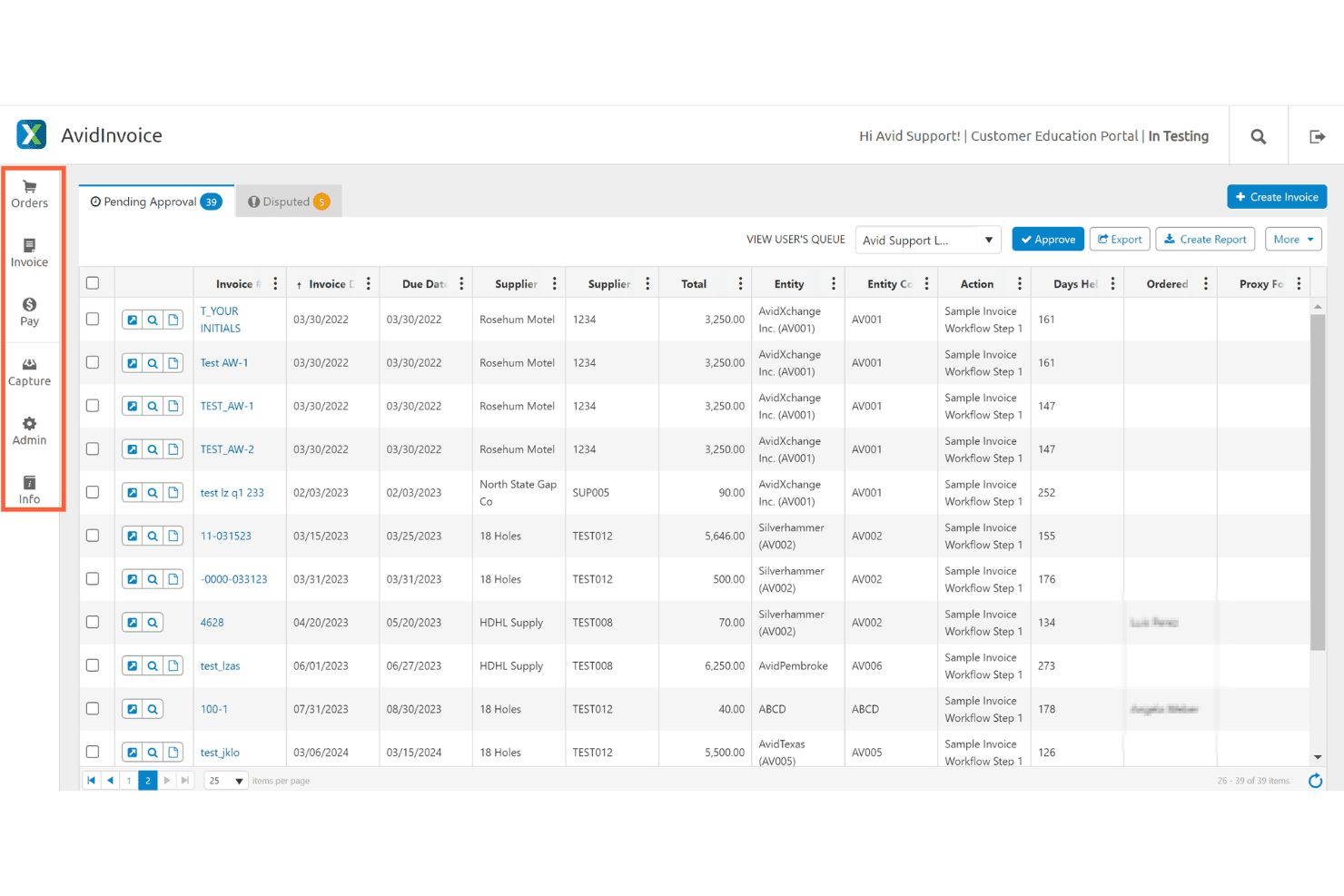
AvidXchange's AvidInvoice displays a pending approval queue with invoice details, supplier info, and workflow actions for accounts payable management. AvidXchange is an AP automation and payment platform that combines invoice capture, multi-tier approval workflows, and electronic payment execution across a supplier network of over 700,000 vendors.
Who Is AvidXchange Best For?
AvidXchange is a strong fit for middle-market AP teams in real estate, construction, and property management who handle high invoice volumes domestically.
Why I Picked AvidXchange
I picked AvidXchange as one of the best because its supplier network is genuinely unmatched in the middle market. The AvidPay Network connects over 700,000 suppliers who can receive payment via virtual card, AvidPay Direct, or check directly through the Supplier Hub portal. When a supplier isn't already enrolled, AvidXchange handles the outreach and onboarding, so my team isn't stuck chasing vendors to accept electronic payments.
AvidXchange Key Features
- Multi-tier approval workflows: Configure complex approval paths with role-based controls for invoice and payment processing.
- ERP and accounting integrations: Connect natively with NetSuite, Sage, QuickBooks, Microsoft Dynamics, Workday, and over 260 additional platforms.
- Invoice automation: Digitize invoice capture, coding, and approval using AI-powered data extraction.
- Audit trail and reporting dashboard: Track all AP activity with centralized logs and visualize metrics through a built-in dashboard.
AvidXchange Integrations
AvidXchange offers native integrations with NetSuite, Sage, Microsoft Dynamics, QuickBooks, Acumatica, MRI Software, Yardi, and Workday, with more than 260 total ERP and accounting system integrations. An API is available for custom integrations.
Pros and Cons
Pros:
- Strong domestic AP invoice automation and coding
- Configurable multi-tier payment approval workflows available
- Large pre-enrolled supplier base for electronic payments
Cons:
- Implementation and onboarding require significant time investment
- Limited cross-border and multi-currency payment options
Learn more about AvidXchange: Best for SaaS payment operations
- Free demo available
- From $599/month (billed annually)
Visit WebsiteCustomer Rating:4.3/5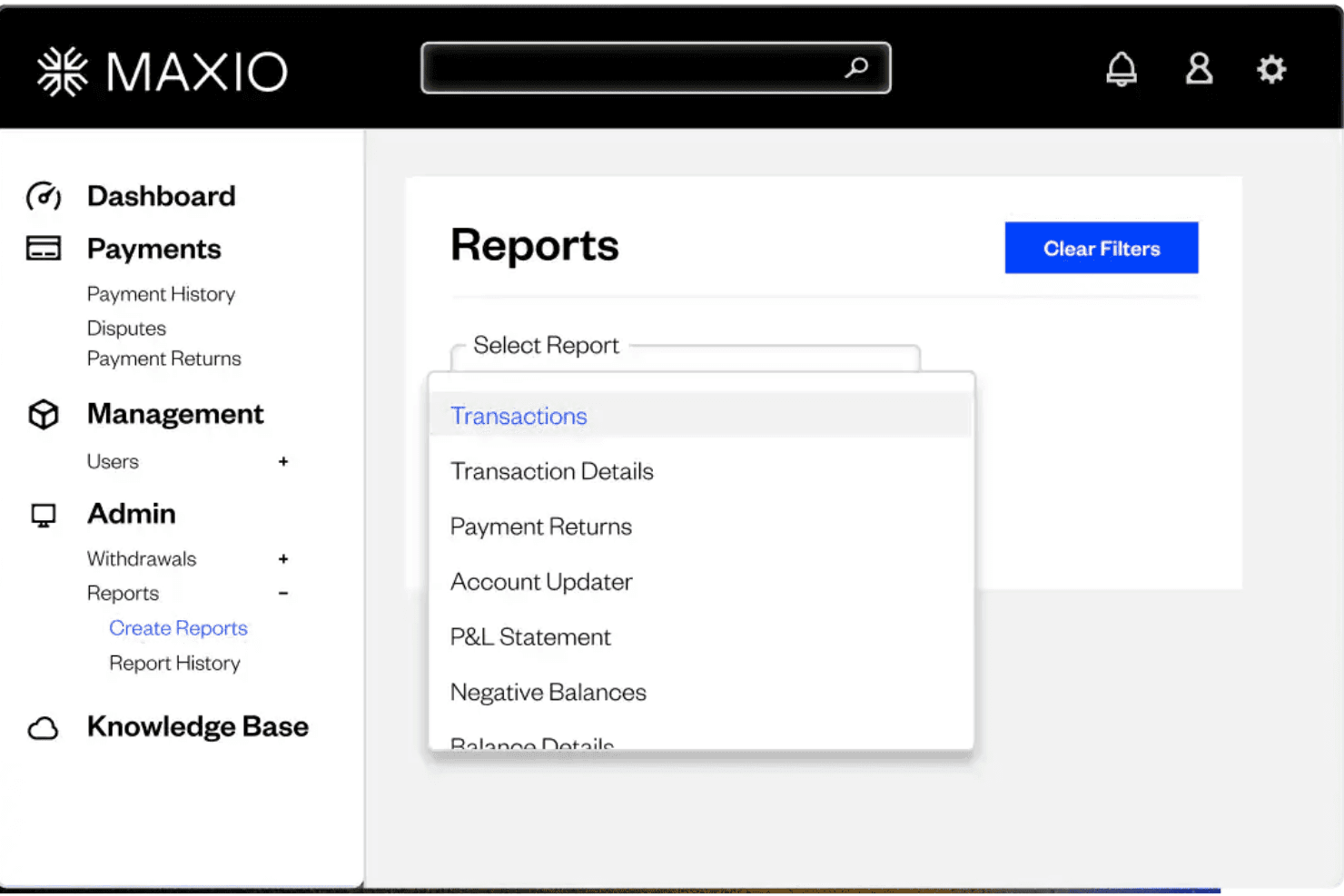
Maxio offers a Reports section with a dropdown menu featuring report types such as Transactions, Transaction Details, Payment Returns, Account Updater, P&L Statement, and Negative Balances. Maxio is a subscription billing and revenue management platform built for B2B SaaS and AI companies, combining usage-based billing, automated invoicing, revenue recognition, and SaaS metrics reporting in a single system.
Who Is Maxio Best For?
Maxio is a strong fit for finance teams at B2B SaaS and AI companies managing complex subscription models, particularly at the growth stage where billing and revenue recognition are becoming harder to handle manually.
Why I Picked Maxio
I picked Maxio as one of the best because of how it handles usage-based billing alongside traditional subscription models. I like that you can meter and rate live usage events, set minimum commitments, and trigger overages automatically, all without custom billing logic. The 30+ canned SaaS metrics reports, covering ARR, DSO, and deferred revenue, give finance teams real visibility into what's actually happening inside the subscription portfolio.
Maxio Key Features
- Multi-entity management: Configure separate catalogs, gateways, and settings for multiple subsidiaries from one central platform.
- Native NetSuite, QuickBooks, and Xero integration: Sync customer, contract, and revenue data directly with leading accounting and ERP systems.
- Automated dunning and collections: Create rules-based payment reminders and escalations to manage overdue receivables.
- Customizable financial reporting: Access a library of 30+ pre-built financial and SaaS metrics reports with drill-down and dashboard options.
Maxio Integrations
Maxio offers native integrations with NetSuite, QuickBooks Online, QuickBooks Desktop, Xero, Sage Intacct, Rillet, and Salesforce. An API is available for custom integrations.
Pros and Cons
Pros:
- Supports hybrid subscription and usage pricing
- Built-in SaaS revenue recognition reporting
- Handles complex usage-based billing natively
Cons:
- Not built for AP disbursement workflows
- Limited multi-currency and cross-border support
Learn more about Maxio: Best for multi-currency international payments
- Free plan + free demo available
- From $29/month
Visit WebsiteCustomer Rating:4.4/5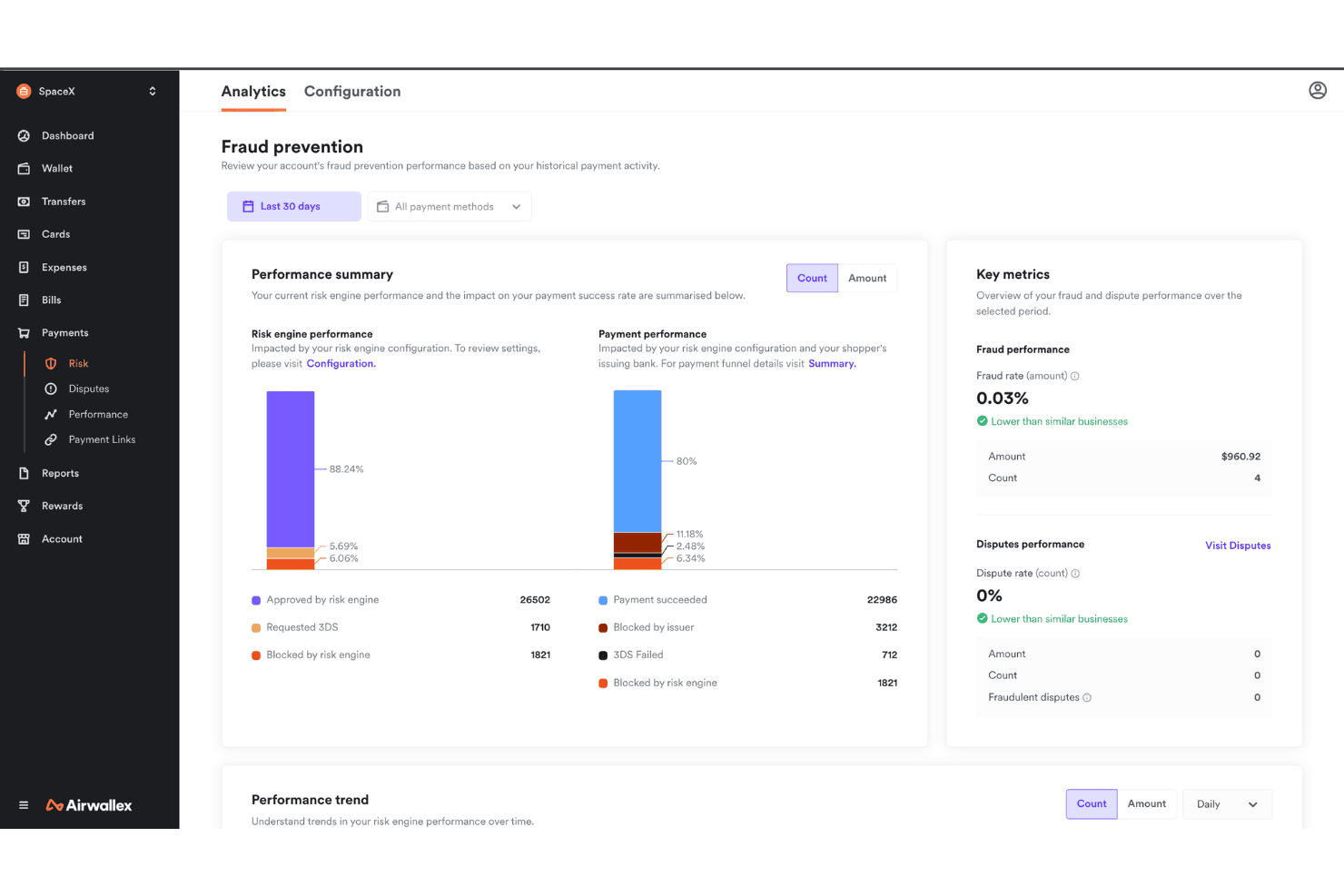
Airwallex offers a fraud prevention analytics dashboard that displays risk engine performance, payment success rates, and key fraud metrics. Airwallex is a global enterprise payments platform that combines multi-currency accounts, cross-border payment execution, AP automation, spend management, and embedded finance APIs in one unified system.
Who Is Airwallex Best For?
Airwallex is a strong fit for mid-market and enterprise finance teams managing payments across multiple countries, currencies, and legal entities.
Why I Picked Airwallex
I picked Airwallex as one of the best because of how it handles like-for-like currency settlement. Instead of forcing FX conversion on every incoming payment, my team can collect and hold funds in 20+ currencies, then pay out via local rails across 120+ countries at 0.5% above interbank rates. The Optimize 360 engine also routes card transactions through local acquiring in 35+ markets, which meaningfully improves authorization rates on international volume.
Airwallex Key Features
- Global payment method acceptance: Accepts 160+ local payment methods across 180+ countries through a single checkout.
- ERP integration suite: Provides native connectors for NetSuite, Microsoft Dynamics 365, Xero, and QuickBooks for synchronized accounting and spend data.
- AI-powered fraud engine: Uses machine learning for transaction monitoring, pattern analysis, and automated anomaly detection to reduce manual intervention.
- Multi-entity account management: Centralizes management of multiple legal entities with configurable permissions and consolidated reporting.
Airwallex Integrations
Airwallex offers native integrations with NetSuite, Microsoft Dynamics 365 Business Central, Xero, and QuickBooks. An API is available for custom integrations.
Pros and Cons
Pros:
- Multi-currency wallets without forced conversion
- Local acquiring in 35+ markets
- Competitive FX rates on cross-border payments
Cons:
- Onboarding verification can be slow
- Limited phone support for account issues
 Best for payment insights
- Free plan + 30-day free trial + free demo available
- Pricing upon request
Visit WebsiteCustomer Rating:4.2/5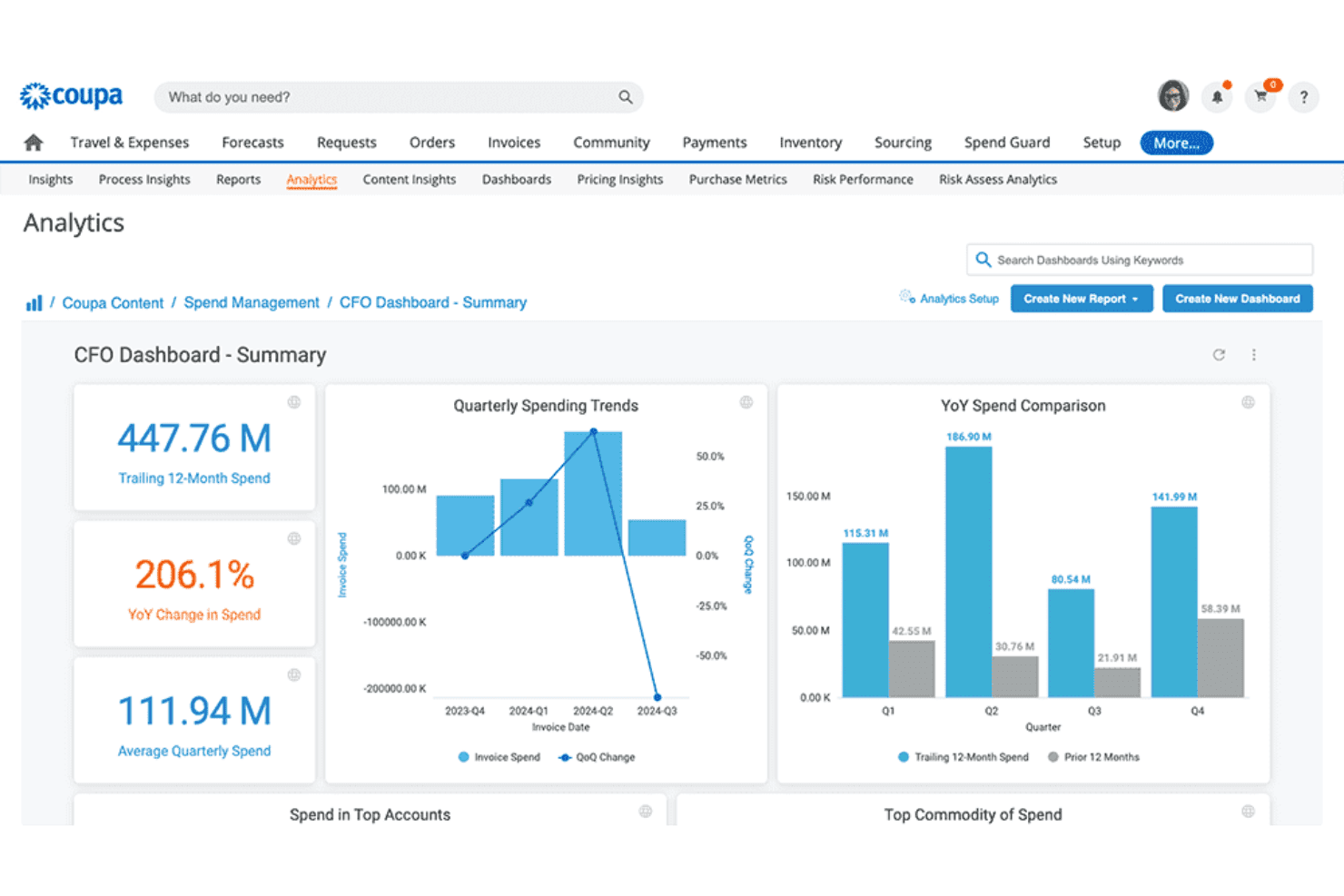
Coupa offers a CFO Dashboard with analytics including quarterly spending trends, YoY spend comparison, and key financial KPIs. Coupa Pay is an enterprise AP payments platform embedded within Coupa's spend management suite, supporting multi-rail disbursements, virtual cards, cross-border payments, fraud controls, and AI-driven invoice reconciliation across multiple entities and currencies.
Who Is Coupa Best For?
Coupa Pay is built for large enterprises managing high-volume, multi-entity AP operations where payment visibility, ERP integration, and working capital control are priorities.
Why I Picked Coupa
Coupa earns its spot on my shortlist because of how it surfaces payment data across the entire AP workflow. I love that real-time payment tracking and AI-driven document intelligence feed reconciled, enriched invoice data directly into a single dashboard, so my team can see where every payment stands without hunting through multiple systems. The fraud detection layer also flags suspicious transactions before they clear, adding a risk control dimension most standalone payment tools don't offer.
Coupa Key Features
- Multi-rail payment execution: Handle ACH, wires, checks, digital wallets, and virtual cards from a single unified workspace.
- ERP and accounting integration: Connect natively to major ERPs including SAP, Oracle, NetSuite, and Microsoft Dynamics.
- Working capital optimization tools: Leverage early pay discounts, dynamic discounting, and extend DPO with virtual card programs.
- Supplier risk and compliance management: Monitor supplier performance, run sanctions screening, and enforce audit trails directly within the payments flow.
Coupa Integrations
Coupa Pay provides native integrations with SAP, Oracle, NetSuite, Workday, and Microsoft Dynamics. An API is available for custom integrations.
Pros and Cons
Pros:
- Virtual card program extends supplier payment terms
- AI-driven fraud detection on outgoing payments
- Real-time payment visibility across all entities
Cons:
- Steep configuration requirements for multi-entity setups
- Long implementation timelines for enterprise rollouts
Learn more about Coupa: Best for unified global payment acceptance
- Free plan + Free demo available
- From $0/month
Visit WebsiteCustomer Rating:4.6/5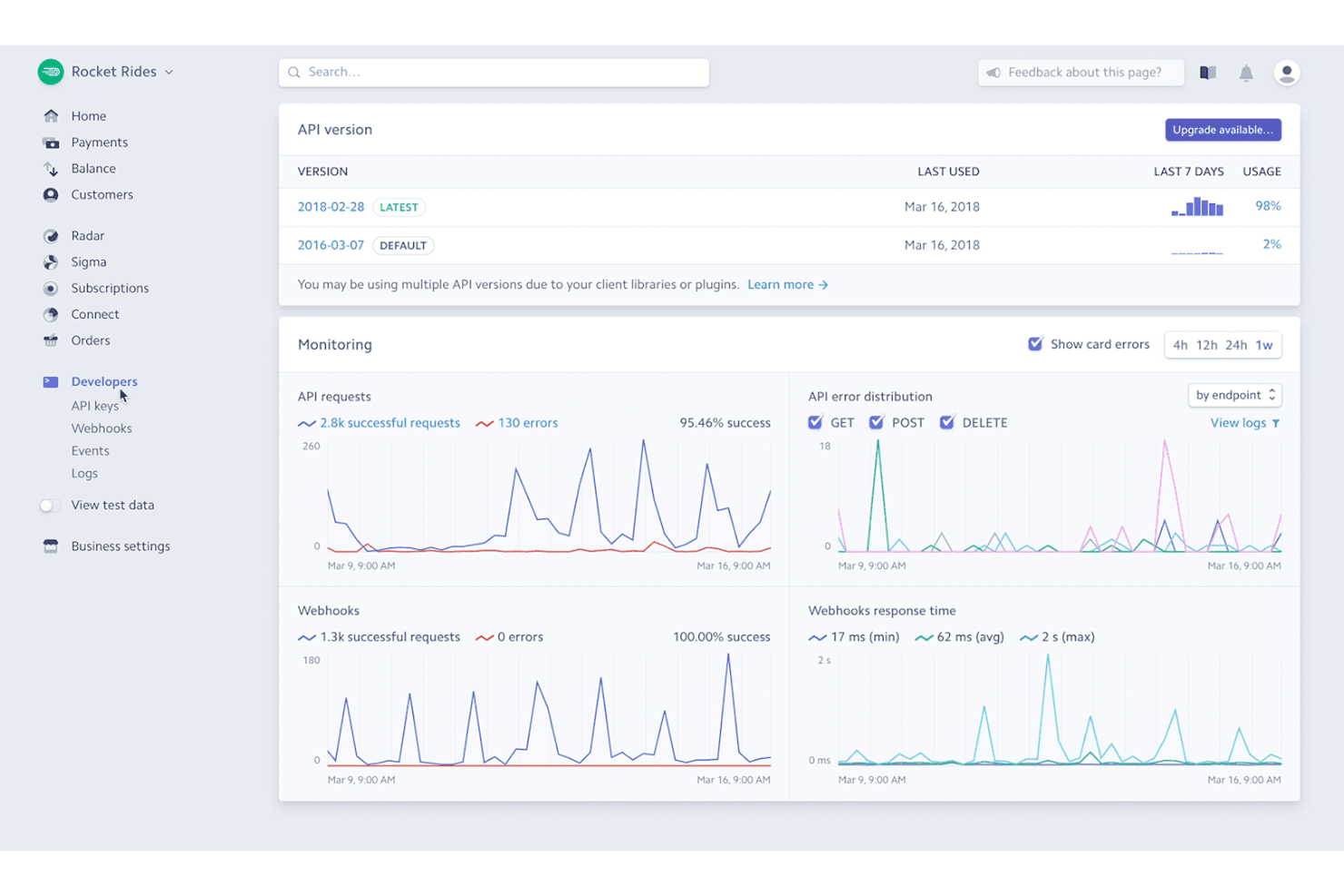
Stripe offers a developer dashboard with API version tracking, request monitoring, webhook stats, and error distribution charts. Stripe is a global payments platform that supports online, in-person, and embedded payment acceptance across 135+ currencies, paired with billing, tax automation, fraud detection, and financial reporting tools.
Who Is Stripe Best For?
Stripe is a strong fit for technology companies, SaaS businesses, and digital platforms that need developer-configurable payment infrastructure across multiple markets.
Why I Picked Stripe
I've included Stripe in my top picks because no other platform comes close to its breadth of global payment acceptance under one integration. Supporting 100+ payment methods across 195 countries (from iDEAL in the Netherlands to Alipay in China to BNPL options globally), Stripe lets enterprises accept payments the way local customers actually prefer. Its Managed Payments option also handles merchant-of-record responsibilities across 75+ countries, removing significant compliance overhead.
Stripe Key Features
- Revenue recognition compliance: Automates ASC 606 and IFRS 15 revenue recognition with built-in policy controls.
- ERP and financial data connectors: Integrates natively with NetSuite and synchronizes payment data to ERPs and analytics systems.
- Programmable workflows: Offers no-code automation with 600+ event triggers for payment and accounting processes.
- Data warehouse sync: Streams transaction and reporting data directly to Snowflake, Amazon Redshift, or BigQuery for analysis.
Stripe Integrations
Stripe offers native integrations with NetSuite, Salesforce, Xero, QuickBooks, and Snowflake, and provides an API for custom integrations.
Pros and Cons
Pros:
- Supports processor-agnostic card vaulting
- ML-based fraud detection adapts to real-time patterns
- Supports 135+ currencies and local payment methods
Cons:
- Complex chargeback management
- Limited outbound AP and disbursement capabilities
Learn more about Stripe: Best for global multi-entity payment automation
- Free demo available
- From $99/month
Visit WebsiteCustomer Rating:4.5/5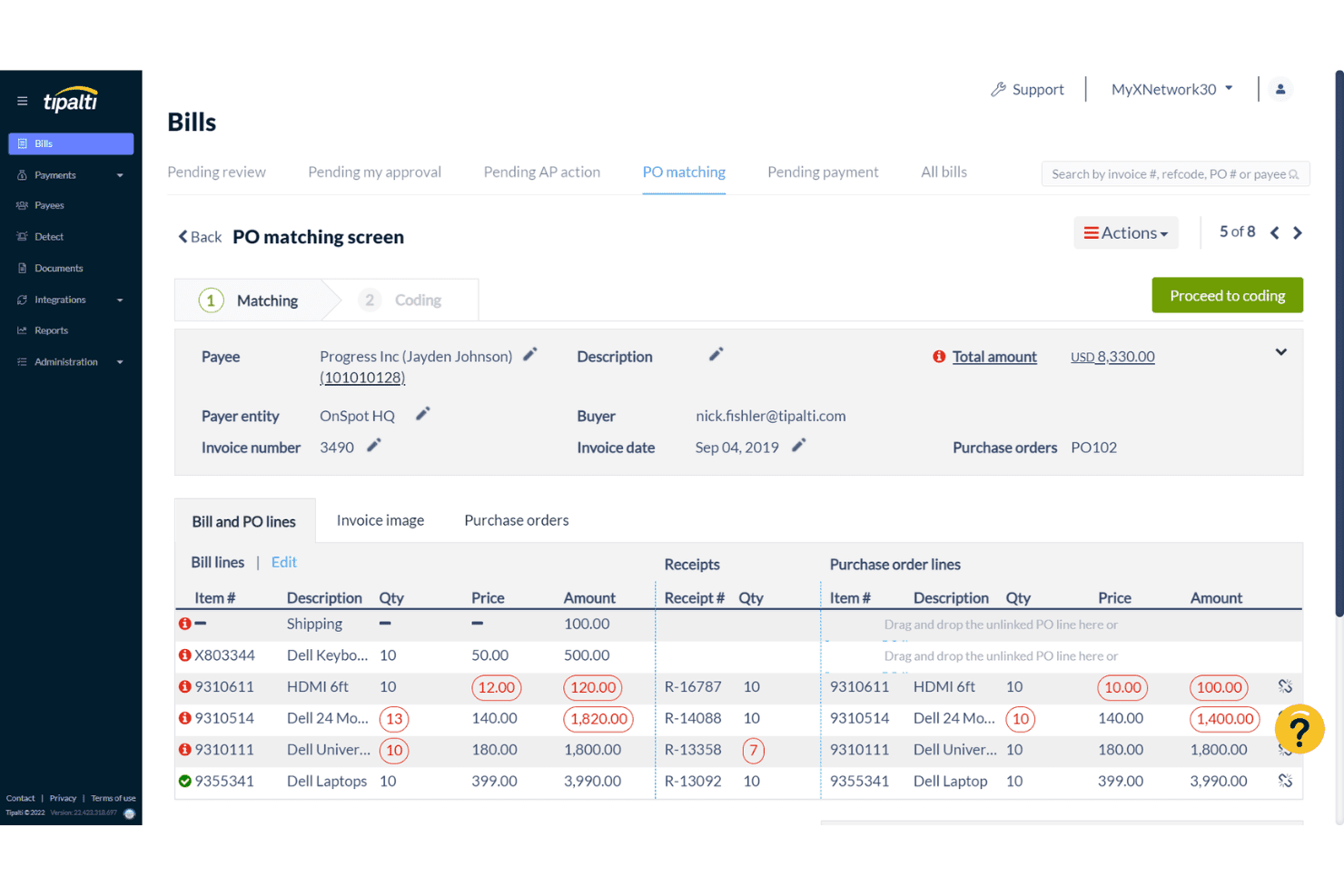
Tipalti offers a PO matching screen within its Bills module, allowing users to compare bill lines against purchase order lines and receipts for accurate invoice reconciliation. Tipalti is an AP automation and global payments platform that covers accounts payable, mass payments, procurement, expenses, and treasury across multiple entities and currencies.
Who Is Tipalti Best For?
Tipalti is a strong fit for mid-market and enterprise finance teams that manage AP and vendor payments across multiple legal entities and international markets.
Why I Picked Tipalti
I picked Tipalti as one of the best because its multi-entity architecture is built for real complexity. Each entity gets its own approval workflows, payment rules, and branded supplier communications, while I still see a consolidated view across all of them. What I find most useful is local payment rails across 200+ countries paired with tax ID validation across 62 countries, which cuts significant manual compliance work from cross-border vendor payments.
Tipalti Key Features
- AI-powered invoice capture and coding: Scan and code invoices automatically in 146 languages using built-in AI agents.
- Native ERP integrations: Sync with NetSuite, Sage, Microsoft Dynamics, SAP, Oracle, QuickBooks, and Xero through certified, bi-directional connectors.
- Global tax validation: Validate tax IDs in 62 countries against thousands of compliance rules for cross-border vendor onboarding.
- SAML/SSO and user permissions controls: Integrate with Okta, Azure, or Google Workspace for centralized role-based access and secure authentication.
Tipalti Integrations
Tipalti offers native integrations with NetSuite, Sage Intacct, Microsoft Dynamics 365 Business Central, QuickBooks Online, Xero, SAP S/4HANA, Oracle Fusion Cloud, and Workday. An API is available for custom integrations.
Pros and Cons
Pros:
- Built-in sanctions screening across 62 countries
- Supplier self-service onboarding portal included
- Strong multi-entity AP and payment controls
Cons:
- Custom reporting options are fairly limited
- Implementation takes several months to complete
Learn more about Tipalti: Best for treasury-led payment control
- Free demo available
- Pricing upon request
Visit WebsiteCustomer Rating:4.2/5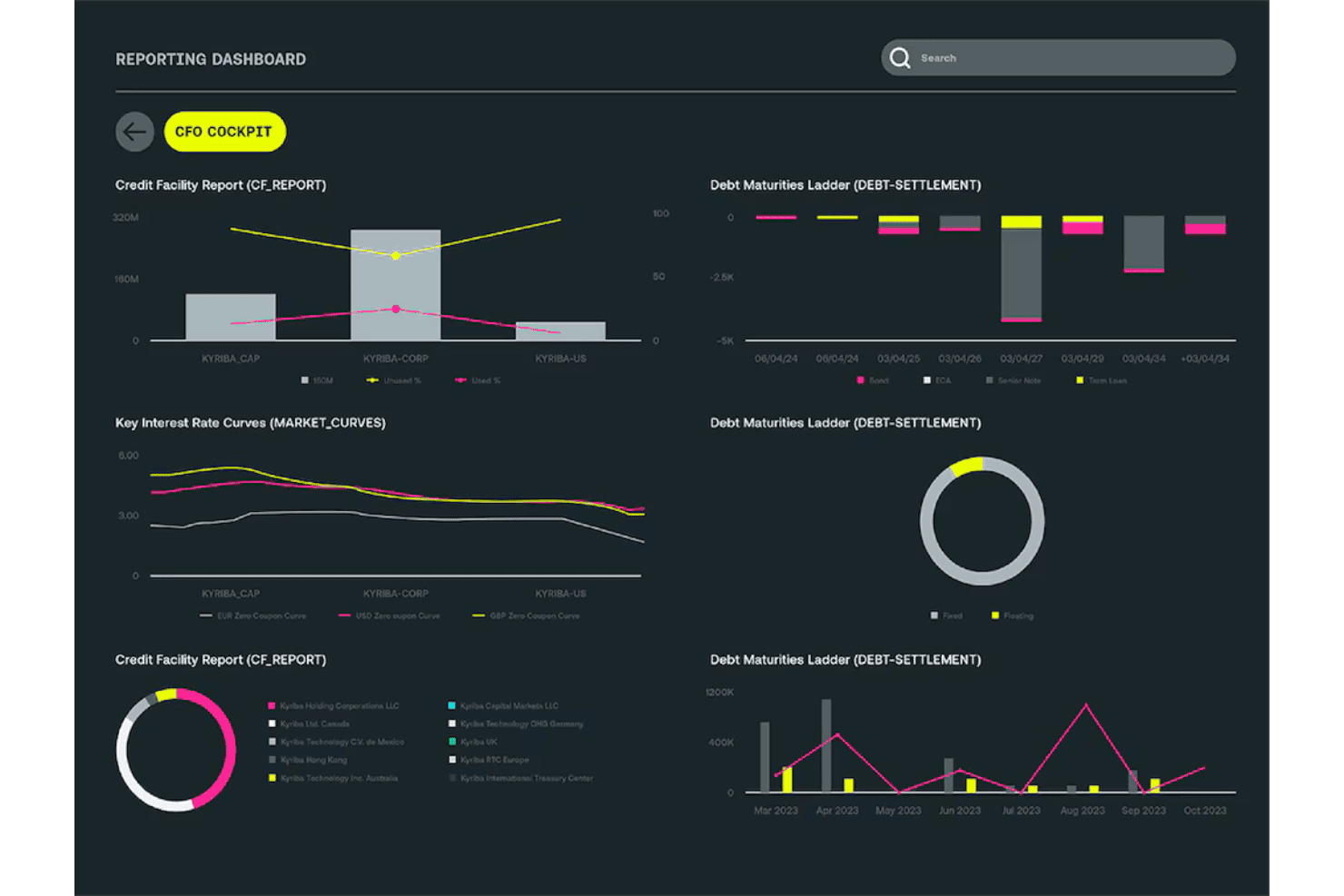
Kyriba offers a CFO Cockpit reporting dashboard featuring credit facility reports, debt maturities ladders, and key interest rate curves. Kyriba is a cloud-based treasury and payment platform that centralizes outbound payment execution, approval workflows, bank connectivity, fraud controls, and automated reconciliation across multiple entities and ERPs.
Who Is Kyriba Best For?
Kyriba is a strong fit for large enterprise organizations with complex, multi-entity treasury operations managed by a dedicated treasury or finance team.
Why I Picked Kyriba
Kyriba earns its spot on my shortlist because of how it handles payment control at the treasury level. I particularly like the multi-level, rule-based approval workflows with digital signatures that enforce segregation of duties across every entity and geography. On top of that, the AI-powered fraud detection and automated sanctions screening run on every payment before it clears, which is the kind of pre-execution control a global payment factory genuinely requires.
Kyriba Key Features
- Certified ERP integrations: Connect natively with SAP, Oracle, NetSuite, Workday, and Microsoft Dynamics for real-time data synchronization.
- Bank connectivity platform: Access over 9,900 banks worldwide using a library of 66,000+ payment formats and local payment rails.
- Automated reconciliation engine: Match payments to invoices and bank files automatically, supporting cash visibility and financial close.
- Multi-currency transaction support: Process payments and manage cash positions in 100+ currencies with FX exposure management.
Kyriba Integrations
Kyriba offers native integrations with SAP, Oracle, NetSuite, Workday, and Microsoft Dynamics, plus connects to over 9,900 banks worldwide. An API is available for custom integrations.
Pros and Cons
Pros:
- Connects to thousands of banks globally
- AI fraud detection flags payments pre-execution
- Granular approval rules enforce payment-level controls
Cons:
- Configuration requires significant technical involvement
- Long, complex implementation for new clients
Learn more about Kyriba: Best for cross-border transaction routing
- Not available
- From $0.13 + payment method fee
Visit WebsiteCustomer Rating:3.8/5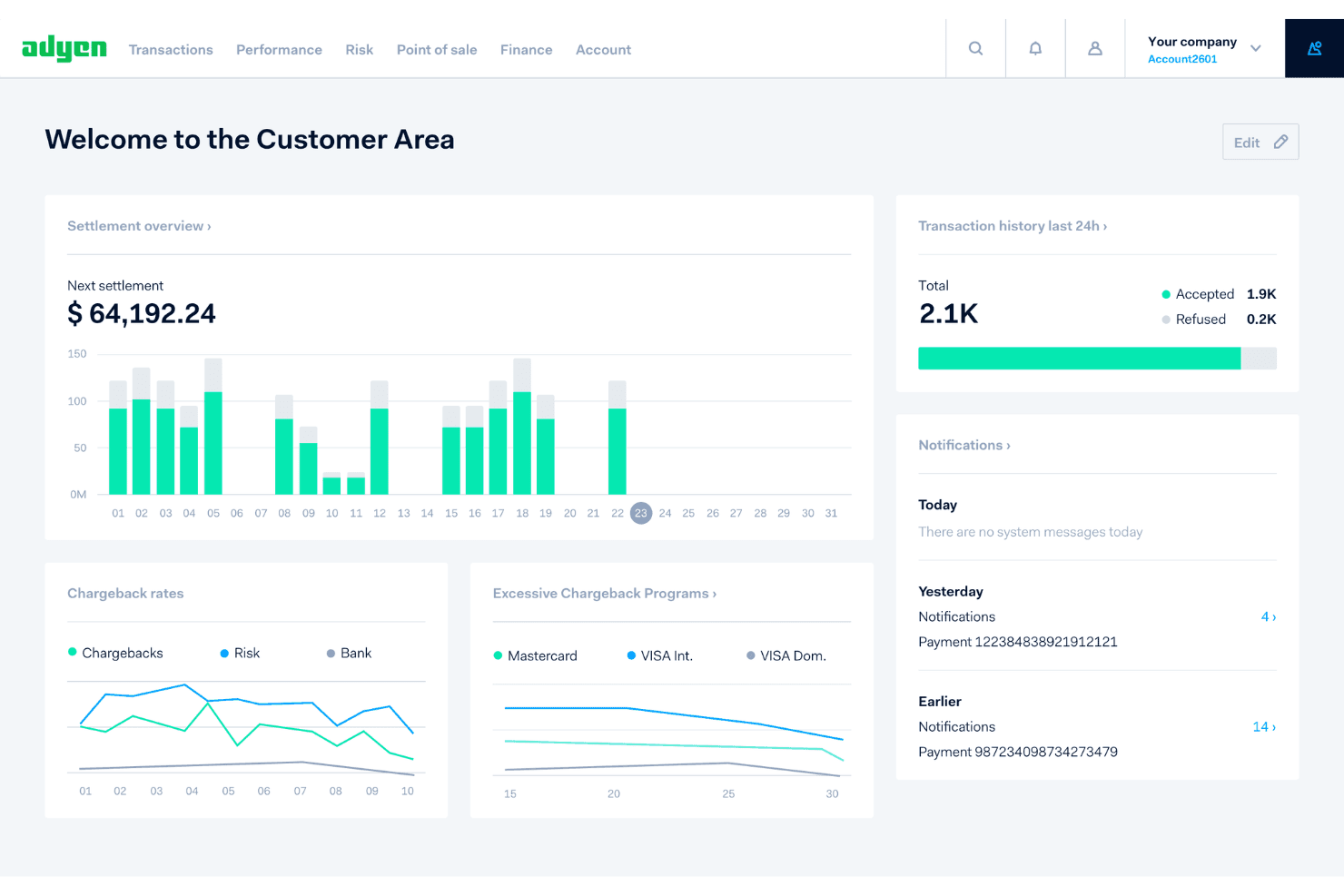
Adyen's Customer Area dashboard displays settlement overviews, chargeback rates, transaction history, and real-time notifications in one centralized interface. Adyen is a unified financial technology platform that combines payment acceptance across online, in-store, and mobile channels with built-in acquiring, multi-currency settlement, fraud prevention, and embedded financial products in a single integration.
Who Is Adyen Best For?
Adyen is a strong fit for large, global enterprises running high transaction volumes across multiple markets, currencies, and sales channels.
Why I Picked Adyen
I picked Adyen as one of the best because its cross-border routing logic is genuinely sophisticated. Rather than funneling every international transaction through a single hub, Adyen uses local acquiring in key markets, which meaningfully improves authorization rates across regions. I also appreciate the Interchange++ pricing model, which breaks down interchange and scheme fees at the individual transaction level, giving full visibility into exactly what cross-border processing costs across 150+ currencies.
Adyen Key Features
- Local payment method support: Accepts over 200 country-specific payment methods across online and in-person channels.
- Real-time reconciliation and reporting: Provides detailed transaction and settlement reporting with automated reconciliation tools.
- Integrated risk management suite: Includes configurable fraud filters, velocity checks, and PCI-compliant transaction monitoring by default.
- Single API for global payments: Enables payment acceptance, settlement, and disbursement through one integration for multiple regions and currencies.
Adyen Integrations
Adyen offers native integrations with platforms like Salesforce Commerce Cloud, Adobe Commerce, Shopify, WooCommerce, BigCommerce, SAP Commerce Cloud, Oracle Commerce Cloud, Wix, and PrestaShop. An API is available for custom integrations.
Pros and Cons
Pros:
- PCI DSS Level 1 certified by default
- Enables processor-agnostic vault portability
- High authorization rates via intelligent routing
Cons:
- Implementation requires significant developer resources
- No dedicated AP disbursement workflow tools
Learn more about Adyen:
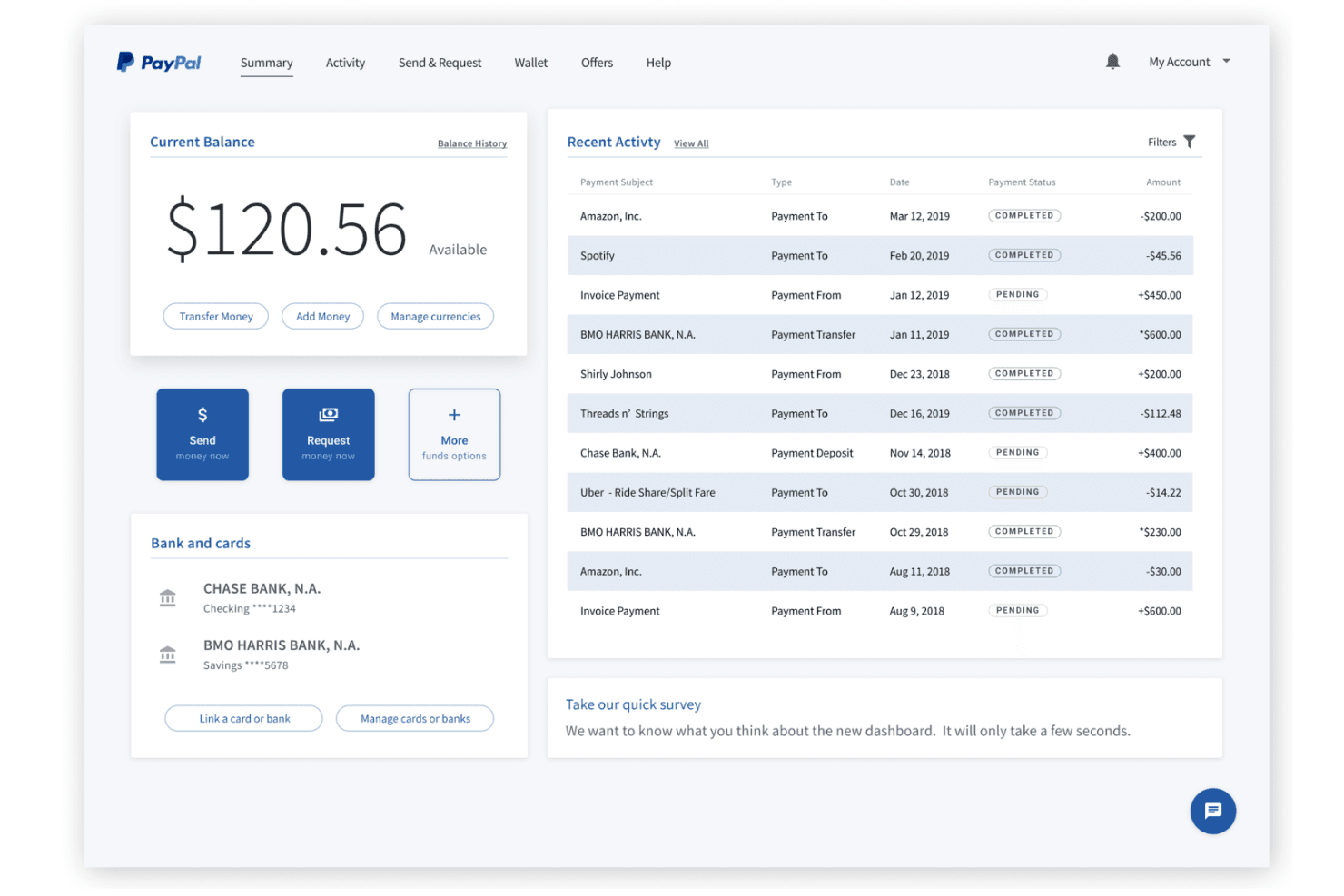
PayPal Open displays a summary dashboard with current balance, recent activity, and linked bank accounts for easy financial management. PayPal Open is a unified merchant payment platform that consolidates payment acceptance, global payouts, fraud protection, and payment orchestration across 200+ markets and 130+ currencies through a single integration.
Who Is PayPal Open Best For?
PayPal Open suits high-volume digital commerce businesses and marketplace platforms that need to send mass payouts to global recipients across PayPal and Venmo wallets.
Why I Picked PayPal Open
PayPal Open earns its spot on my shortlist because of its unmatched digital wallet payout reach. I can push payments directly to PayPal and Venmo wallets across 200+ markets in 50+ currencies using 30+ transfer methods. The batch payout capability is what I find most useful in practice: my team can send mass payouts to thousands of recipients simultaneously, which is genuinely hard to replicate at this scale through most competing platforms.
PayPal Open Key Features
- Enterprise payments platform: Offers unified payment acceptance and processing across cards, wallets, and local payment methods in 200+ markets.
- Fraud protection advanced: Delivers AI-powered risk screening, chargeback protection, and dispute automation to support compliance needs.
- Payment orchestration tools: Enables smart transaction routing, tokenization, and network token management for greater control and security.
- Omnichannel POS support: Includes in-person payment hardware options like Verifone terminals and PayPal card readers for retail and on-the-go sales.
PayPal Open Integrations
PayPal Open offers native integrations with Shopify, WooCommerce, BigCommerce, Magento, Salesforce Commerce Cloud, and Adobe Commerce. An API is available for custom integrations.
Pros and Cons
Pros:
- Broad consumer wallet recognition boosts payout acceptance
- Built-in fraud detection with chargeback protection
- Mass payouts reach 200+ global markets
Cons:
- Customer support response times frustrate high-volume users
- Limited ERP native connectors for enterprise finance
Learn more about PayPal Open:
Outras plataformas de pagamentos empresariais
Eis algumas opções adicionais de plataformas de pagamentos empresariais que não entraram na minha lista restrita, mas que vale a pena conhecer:
- 11ZuoraBest for subscription billing
- 12HighRadiusBest for AI-powered cash and bank reconciliation
- 13BILLBest for invoice-to-pay workflow integration
- 14StampliBest for AP team collaboration
- 15BilltrustBest for automated B2B payment matching
- 16CorpayBest for integrated AP payments and FX management
- 17PayoneerBest for mass payouts to global partners
- 18SerralaBest for embedded SAP payment workflows
- 19BottomlineBest for compliance-driven payment operations
- 20FlywireBest for global receivables and payer experience
How I Evaluate Enterprise Payment Platforms
I split my evaluation into must-have controls—like multi-rail execution and ERP sync—and the differentiators that separate tools built for global treasury complexity from basic AP automation.
Core Functionality (Table Stakes For This List)
When I'm selecting tools for my list, I rank each one on a scale from 0 (does not offer the functionality) to 5 (excels in this area) for each core functionality listed below. Then, I calculate the tool's total score into a percentage. Each tool needs to achieve a minimum total score of 65% to be considered for inclusion.
- Multi-rail payment execution: I check whether a platform supports ACH, wire, SWIFT, virtual card, and RTP from one interface so AP teams aren't juggling separate banking portals.
- ERP and accounting integration: Native connectors to SAP, Oracle, NetSuite, and Workday matter most. I look for bidirectional sync that keeps invoices, vendors, and GL data aligned.
- Cross-border payments: Currency coverage and FX handling are key, especially for teams disbursing to suppliers across dozens of countries simultaneously.
- Approval workflows: Configurable multi-tier approvals with role-based access let AP directors enforce segregation of duties across entities and payment thresholds.
- Fraud and compliance controls: I look for automated sanctions screening, payment validation, and full audit trails that hold up during internal controls reviews.
- Reconciliation and reporting: Auto-matching payments to invoices and bank feeds saves hours during close. I check for dashboards that surface exceptions quickly.
Once I have a list of tools that meet the criteria, I consider what sets each platform apart.
Differentiating Factors (What Sets Vendors Apart)
Here's how I compare and contrast different vendors:
Standout Features
Payment orchestration is a big differentiator—I look for platforms that dynamically route transactions across acquirers based on cost and geography, which directly impacts authorization rates. An embedded fraud engine matters too, especially one that adapts to transaction patterns using machine learning rather than static rules. I also evaluate tokenization and vault portability, since the ability to migrate processors without re-collecting card data gives your team real leverage during vendor negotiations.
Beyond Features
Compliance certifications like PCI DSS Level 1, SOC 2 Type II, and ISO 27001 are table stakes at enterprise scale—I check whether each vendor holds current attestations. Pricing transparency also matters: I evaluate whether a platform clearly breaks out FX markups, gateway fees, and chargeback costs so your team can model true total cost of ownership. For multi-entity organizations, I look at geographic coverage and whether the platform supports consolidated reporting across subsidiaries without requiring separate instances.
Como escolher uma plataforma de pagamentos empresariais
É fácil perder-se em listas extensas de funcionalidades e estruturas de preços complexas. Para o ajudar a manter-se concentrado enquanto realiza o seu processo de seleção de software específico, apresentamos uma lista de verificação dos fatores a ter em conta:
| Fator | O que considerar |
|---|---|
| FatorEscalabilidade | O que considerarA plataforma consegue lidar com picos no volume de transações e com o crescimento de várias entidades sem exigir manutenção excessiva? Tenha em conta a dimensão atual e prevista da empresa. |
| FatorIntegrações | O que considerarA plataforma liga-se de forma nativa ao seu ERP e aos seus sistemas de contabilidade e tesouraria? Verifique se existe sincronização bidirecional real e quais os conectores compatíveis. |
| FatorPersonalização | O que considerarPode adaptar os fluxos de trabalho, as hierarquias de aprovação e os relatórios aos seus controlos internos? Os sistemas rígidos podem criar estrangulamentos ou lacunas de conformidade. |
| FatorFacilidade de utilização | O que considerarA navegação é intuitiva tanto para as equipas de contas a pagar como para os executivos? Tenha em conta o tempo necessário para a integração, a curva de aprendizagem e as necessidades contínuas de administração. |
| FatorImplementação e integração | O que considerarQue recursos e prazos são necessários para a implementação? Informe-se sobre a migração de dados, a formação, o acesso a ambientes de teste e o apoio da equipa do fornecedor. |
| FatorCusto | O que considerarAté que ponto é clara a estrutura de taxas, incluindo margens cambiais ou valores mínimos? Certifique-se de que consegue estimar a despesa total antes de assinar um contrato. |
| FatorMedidas de segurança | O que considerarOs níveis de certificação e as normas de encriptação estão atualizados? Avalie a documentação do fornecedor e verifique se os requisitos (PCI DSS, SOC 2, ISO) são cumpridos. |
| FatorRequisitos de conformidade | O que considerarA plataforma suporta registos de auditoria, segregação de funções, rastreio de sanções e requisitos específicos de cada região? Avalie os controlos aplicáveis ao seu setor. |
O que são plataformas de pagamentos empresariais?
As plataformas de pagamentos empresariais são sistemas de software que permitem às empresas enviar, receber e gerir grandes volumes de pagamentos através de vários métodos, moedas e localizações. Estas plataformas ligam-se diretamente a ERPs e sistemas de contabilidade, automatizam os fluxos de trabalho de aprovação e aplicam controlos de conformidade para ajudar as equipas financeiras a simplificar as operações de pagamentos, reduzir os riscos e responder às necessidades das empresas globais.
Funcionalidades
Ao selecionar uma plataforma de pagamentos empresarial, tenha em atenção as seguintes funcionalidades essenciais:
- Execução através de múltiplos canais: Permite à sua equipa enviar pagamentos por ACH, transferência bancária, SWIFT, cheque, RTP e cartões virtuais a partir de uma única interface, reduzindo a complexidade e o número de portais bancários.
- Integração com ERP: Liga-se diretamente a sistemas ERP e de contabilidade comuns para sincronizar registos de fornecedores, faturas, aprovações e dados de pagamento com os seus processos financeiros.
- Suporte para várias moedas: Processa pagamentos globais e transfronteiriços em dezenas de moedas, com gestão cambial integrada, bloqueio de taxas e processos de conversão transparentes.
- Fluxos de trabalho baseados em funções: Permite criar processos de aprovação configuráveis e com vários níveis, com funções e limites personalizados, ajudando a manter controlos sólidos e a conformidade.
- Ferramentas de prevenção de fraude: Inclui verificação automatizada de sanções, monitorização de transações e registos de auditoria para ajudar a prevenir pagamentos não autorizados e apoiar a conformidade regulamentar.
- Reconciliação automática: Faz corresponder automaticamente os pagamentos a faturas, extratos bancários e ao razão geral, reduzindo o esforço manual durante os fechos mensais e trimestrais.
- Relatórios em tempo real: Disponibiliza painéis de controlo atualizados e informações detalhadas sobre as transações, ajudando as equipas financeiras a monitorizar o estado dos pagamentos, as exceções e os desembolsos pendentes.
- Controlos de acesso: Permite gerir rigorosamente as permissões e restringir as funções de pagamento sensíveis às pessoas certas e no momento adequado.
- Gestão de documentos: Armazena com segurança os documentos de suporte e os detalhes dos pagamentos na plataforma, garantindo a preparação para auditorias e uma recuperação fácil durante as revisões.
- Extensibilidade da API: Suporta integrações personalizadas e automatizações de fluxos de trabalho através de APIs abertas, ajudando a sua equipa tecnológica a ligar a plataforma a outros sistemas empresariais.
Vantagens
A implementação de uma plataforma de pagamentos empresarial proporciona várias vantagens à sua equipa e à sua empresa. Eis algumas das que pode esperar:
- Controlo centralizado: Gira todos os processos, métodos e entidades de pagamento a partir de uma única plataforma, facilitando a supervisão e a aprovação por parte dos responsáveis financeiros.
- Maior conformidade: Aplique a verificação de sanções, os registos de auditoria e os fluxos de aprovação para reduzir o risco e responder às exigências regulamentares.
- Maior eficiência: Automatize tarefas manuais, como a correspondência de pagamentos, as aprovações e os relatórios, libertando a equipa para se concentrar em análises de maior valor.
- Maior visibilidade sobre o dinheiro disponível: Os painéis de controlo em tempo real e a reconciliação automática fornecem informações atualizadas sobre a posição de tesouraria e os pagamentos efetuados.
- Custos de processamento mais baixos: Otimize o encaminhamento dos pagamentos e as conversões cambiais, minimizando as comissões de transação e os custos bancários desnecessários.
- Escalabilidade simplificada: Suporte o crescimento — quer implique adicionar novas entidades, moedas ou canais de pagamento — sem introduzir mais complexidade nem mudar de sistema.
- Melhores relações com os fornecedores: Pagamentos mais rápidos e precisos, bem como comunicações transparentes, ajudam a manter a confiança dos fornecedores e a reduzir conflitos.
Custos e preços
A seleção de uma plataforma de pagamentos empresarial exige uma compreensão dos vários modelos de preços e planos disponíveis. Os custos variam consoante as funcionalidades, a dimensão da equipa, os complementos, entre outros fatores. A tabela abaixo resume os planos comuns, os respetivos preços médios e as funcionalidades normalmente incluídas nas soluções de plataformas de pagamentos empresariais:
Tabela de comparação de planos
| Tipo de plano | Preço médio | Funcionalidades comuns |
|---|---|---|
| Tipo de planoPlano gratuito | Preço médio$0 | Funcionalidades comunsMétodos de pagamento limitados, relatórios básicos e apoio de nível inicial. |
| Tipo de planoPlano pessoal | Preço médio$10-$50/utilizador/mês | Funcionalidades comunsAcesso para um único utilizador, mais canais de pagamento, fluxos de aprovação básicos e apoio padrão. |
| Tipo de planoPlano empresarial | Preço médio$50-$150/utilizador/mês | Funcionalidades comunsSuporte para vários utilizadores, integração com ERP, capacidades para várias moedas, aprovações baseadas em funções e ferramentas de elaboração de relatórios moderadas. |
| Tipo de planoPlano corporativo | Preço médio$150+/utilizador/mês | Funcionalidades comunsIntegrações personalizadas, conformidade avançada, integração inicial dedicada, segurança reforçada, acesso total à API e apoio 24/7. |
Perguntas frequentes sobre plataformas de pagamentos empresariais
Eis algumas respostas a perguntas frequentes sobre plataformas de pagamentos empresariais:
Como lidam as plataformas de pagamentos empresariais com os pagamentos globais?
A maioria das plataformas suporta pagamentos em várias moedas e disponibiliza conversão cambial integrada, permitindo-lhe enviar fundos para fornecedores em diferentes países sem utilizar sistemas separados.
As principais tecnologias de infraestrutura fintech e de processamento de pagamentos permitem-lhe aceitar diversos tipos de pagamento em todo o ecossistema de pagamentos. Verifique se estão incluídos métodos de pagamento locais online, suporte para cartões de crédito e débito internacionais e conformidade com os regulamentos transfronteiriços, para proporcionar uma experiência de pagamento global sem entraves.
Que opções de integração devo esperar?
Deverá encontrar conectores nativos para os principais ERP, plataformas de contabilidade e ferramentas disponibilizadas pelas suas principais instituições financeiras. A infraestrutura moderna de pagamentos digitais baseia-se em APIs e integrações personalizadas para ajudar a ligar sistemas de pagamento especializados ou antigos diretamente à sua rede de serviços financeiros.
É possível personalizar os fluxos de trabalho de aprovação?
Sim, as principais plataformas permitem-lhe configurar cadeias de aprovação multinível e baseadas em funções, de acordo com as políticas de despesas da sua empresa. À medida que a sua empresa cresce, as soluções de pagamento flexíveis permitem-lhe definir limites em dólares, adicionar revisores e gerir as fases de aprovação ao longo de todo o ciclo de vida da transação.
Quão seguras são as plataformas de pagamentos empresariais?
A maioria dos fornecedores reputados mantém certificações PCI DSS, SOC 2 e ISO. A encriptação de ponta a ponta, os registos de auditoria e os controlos de permissões atualizados regularmente são padrões para proteger os dados dos clientes e garantir a conformidade. A parceria com um fornecedor de serviços empresariais estabelecido — como a Fiserv ou outros processadores líderes — garante a manutenção de padrões de segurança rigorosos em todas as transações.
O que devo saber sobre os custos contínuos da plataforma?
Conte com preços variáveis com base no número de utilizadores, no volume de pagamentos e na utilização das funcionalidades. Quer esteja a gerir uma plataforma de comércio eletrónico ou um novo modelo de pagamentos, esteja atento às margens cambiais, às taxas de integração adicionais e às cláusulas de compromisso mínimo que podem afetar o custo total de propriedade ao longo do contrato. A otimização destes termos ajuda a impulsionar a eficiência operacional e melhora a experiência geral do cliente.