

Software-ul de gestionare a deducerilor ajută echipele de conturi de încasat să identifice, să valideze, să conteste și să recupereze deducerile și debitele clienților. Cele mai bune instrumente automatizează capturarea cererilor, potrivirea documentelor, codificarea deducerilor, fluxurile de lucru pentru contestații și urmărirea recuperărilor. De asemenea, se pot conecta la sistemele ERP și la portalurile retailerilor. Am evaluat software-uri de top pentru gestionarea deducerilor din conturi de încasat, pentru diferite industrii, fluxuri de lucru și volume de deduceri.
Why Trust Our Software Recommendations
6,700+
Reviews
20
Industry experts
16+
Evaluation factors
14
Years
Our team has been testing and reviewing software since 2012. As finance leaders ourselves, we know how difficult—and important—it is to choose the right software.
For this guide, we evaluated tools using hands-on testing and independent research, scoring tools using our selection criteria.
Our reviews reflect our human editorial judgment, not a sales pitch.
Tabel comparativ al software-urilor de gestionare a deducerilor
Acest tabel comparativ rezumă detaliile privind prețurile pentru selecțiile mele de top de software-uri pentru gestionarea deducerilor:
Sorted by: Default
| Tool | Starting Price | Website | |
|---|---|---|---|
Best for invoice-to-cash dispute workflows | 4.5 out of 5 | Pricing upon request Free demo available | Website |
Best for claim trends by reason and outcome | 4.5 out of 5 | Pricing upon request Free demo available | Website |
Best for SAP chargeback management | 4.3 out of 5 | Pricing upon request Free demo available | Website |
Best for CPG deductions with expert support | Not rated | Pricing upon request Free demo available | Website |
Best for short-pay detection in cash application | Not rated | Pricing upon request Free demo available | Website |
Best for AI-driven deduction workflows | 4.5 out of 5 | Pricing upon request Free demo available | Website |
Best for AI-powered deduction validation | Not rated | Pricing upon request Free demo available | Website |
Best for autonomous deduction resolution | 3.5 out of 5 | Pricing upon request Free demo available | Website |
Best for retailer portal claim automation | Not rated | Pricing upon request Free demo available | Website |
Best for outsourced retail revenue recovery | Not rated | Pricing upon request Free demo available | Website |


Recenzii ale celor mai bune software-uri de gestionare a deducerilor
Mai jos sunt rezumatele mele detaliate ale celor mai bune software-uri de gestionare a deducerilor care au ajuns pe lista mea scurtă. Recenziile mele oferă o privire detaliată asupra funcțiilor, capacităților și integrărilor fiecărei platforme, pentru a vă ajuta să o găsiți pe cea mai potrivită pentru dumneavoastră.
 Best for invoice-to-cash dispute workflows
- Free demo available
- Pricing upon request
Visit WebsiteCustomer Rating:4.5/5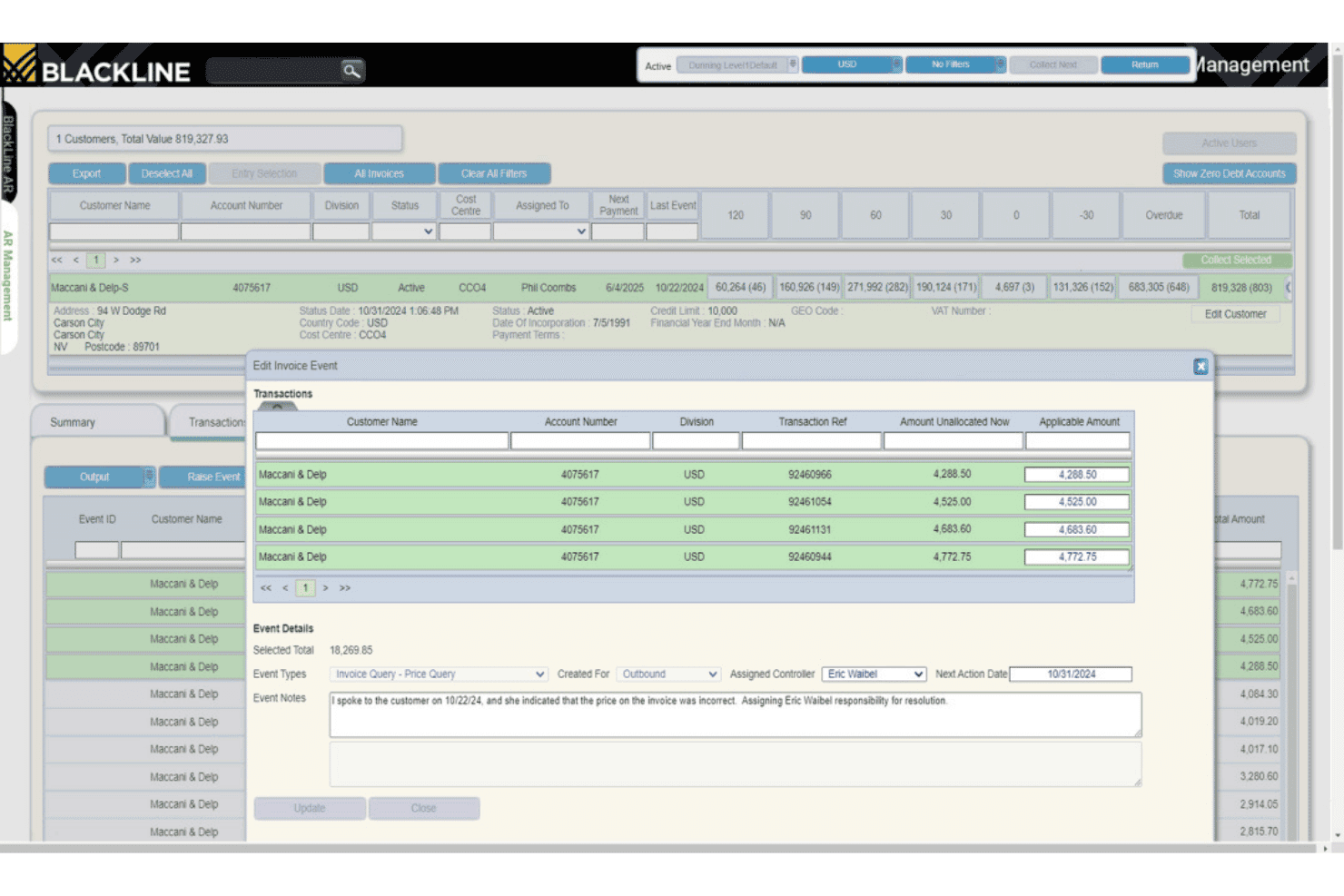
BlackLine lets users log invoice disputes and assign them for resolution. BlackLine Disputes & Deductions Management is an enterprise AR module that combines automated dispute workflows, AI-assisted claim summarization, SLA tracking, and ERP-integrated documentation management within a broader Invoice-to-Cash platform.
Who Is BlackLine Best For?
BlackLine suits mid-market to enterprise finance teams that manage high-volume invoice disputes within an existing ERP environment and need SLA-driven workflows with full audit trails.
Why I Picked BlackLine
I picked BlackLine as one of the best because its dispute workflow engine is built around measurable resolution cycles, not just task tracking. I love how Verity Summarize uses AI to instantly break down complex disputes and surface guided next steps, cutting the time I'd spend manually reviewing invoice histories. The SLA measurement layer ties directly into aged debt and provisioning reporting, so I can see exactly where disputes are stalling and which are putting cash at risk.
BlackLine Key Features
- ERP and CRM integration: Syncs deduction and dispute data directly with supported ERP and CRM platforms.
- Audit-ready documentation management: Centralizes and attaches all supporting documents to each dispute for compliance.
- KPI and SLA monitoring: Tracks dispute cycle times and resolution rates against service level agreements.
- Role-based workflow controls: Assigns, restricts, and manages user access and approval authority across AR, sales, and finance teams.
BlackLine Integrations
BlackLine offers native integrations with SAP, Oracle, NetSuite, Microsoft Dynamics 365, Salesforce, and Workday. An API is also available for custom integrations.
Pros and Cons
Pros:
- Strong audit trail supports SOX compliance requirements
- AI summarization cuts manual invoice review time
- SLA-driven dispute tracking with measurable resolution cycles
Cons:
- Implementation typically requires significant IT resource involvement
- Not purpose-built for CPG deduction workflows
Learn more about BlackLine: 2Best for claim trends by reason and outcome
Monk
- Free demo available
- Pricing upon request
Visit WebsiteCustomer Rating:4.5/5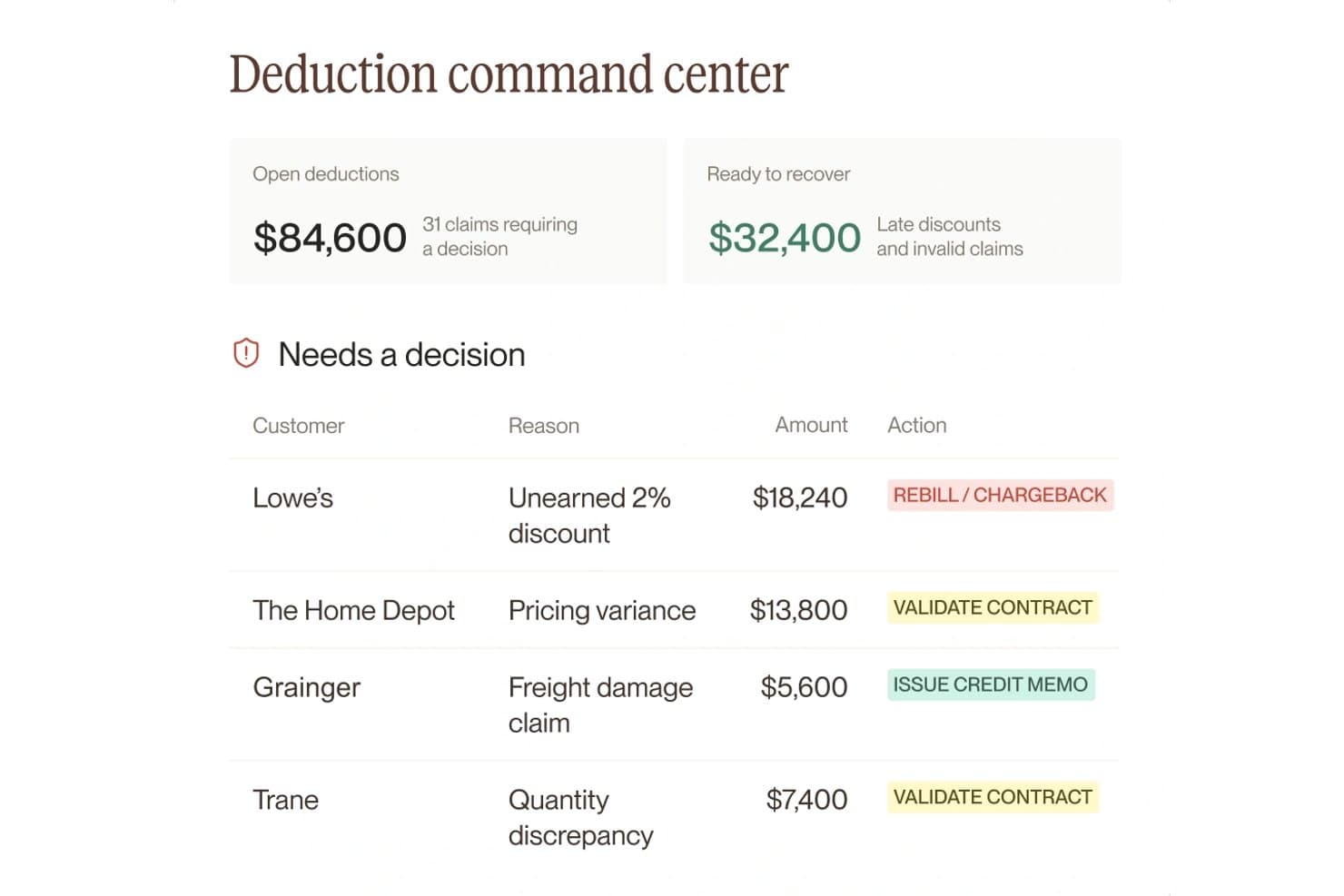
Monk centralizes open deductions and recovery actions in one dashboard. Monk is an AI-native accounts receivable platform that handles deduction matching, reason-code categorization, dispute routing, and claim tracking within a dedicated Deduction Command Center.
Who Is Monk Best For?
Monk is a strong fit for AR managers and deduction analysts who need a clear, structured view of deduction trends broken down by reason code, customer, and resolution outcome.
Why I Picked Monk
I picked Monk as one of the best because its Deduction Command Center gives you a genuinely structured view of every deduction sliced by reason code, customer, age, and resolution outcome. I love that short pays are flagged automatically at cash application and coded to your company's reason codes in the same motion, so you're not manually piecing together what happened after the fact. That combination means I can spot, say, a recurring pricing dispute with a specific customer before it compounds into a write-off pattern.
Monk Key Features
- Dispute case tracking: Each dispute opens a structured case with the invoice, reason, amount, and owner, then moves through open, in-review, and resolved statuses.
- Collections pause on contested invoices: Monk pauses outreach on a disputed invoice while continuing collections on the rest of that customer's account.
- Cash forecasting: The platform projects collections 30, 60, and 90 days out using customer payment behavior and open invoices, including a 13-week rolling forecast.
- ERP and portal sync: Monk integrates natively with NetSuite, SAP, QuickBooks, Dynamics, and 600+ AP portals, keeping your ERP as the system of record.
Monk Integrations
Monk offers native integrations with NetSuite, QuickBooks, SAP S/4HANA, Microsoft Dynamics 365, Sage Intacct, Xero, Salesforce, Stripe, and Plaid, plus support for more than 600 corporate AP portals. It also provides a REST API for custom integrations and connects to more than 12,000 banks.
Pros and Cons
Pros:
- Responsive support helps tune deduction workflows
- Trend reports expose reason, customer, age, outcome
- Short pays get flagged and reason-coded automatically
Cons:
- Dispute workflows lack confirmed SLA tracking
- No explicit recovery-rate tracking for deductions
Learn more about Monk: Best for SAP chargeback management
- Free demo available
- Pricing upon request
Visit WebsiteCustomer Rating:4.3/5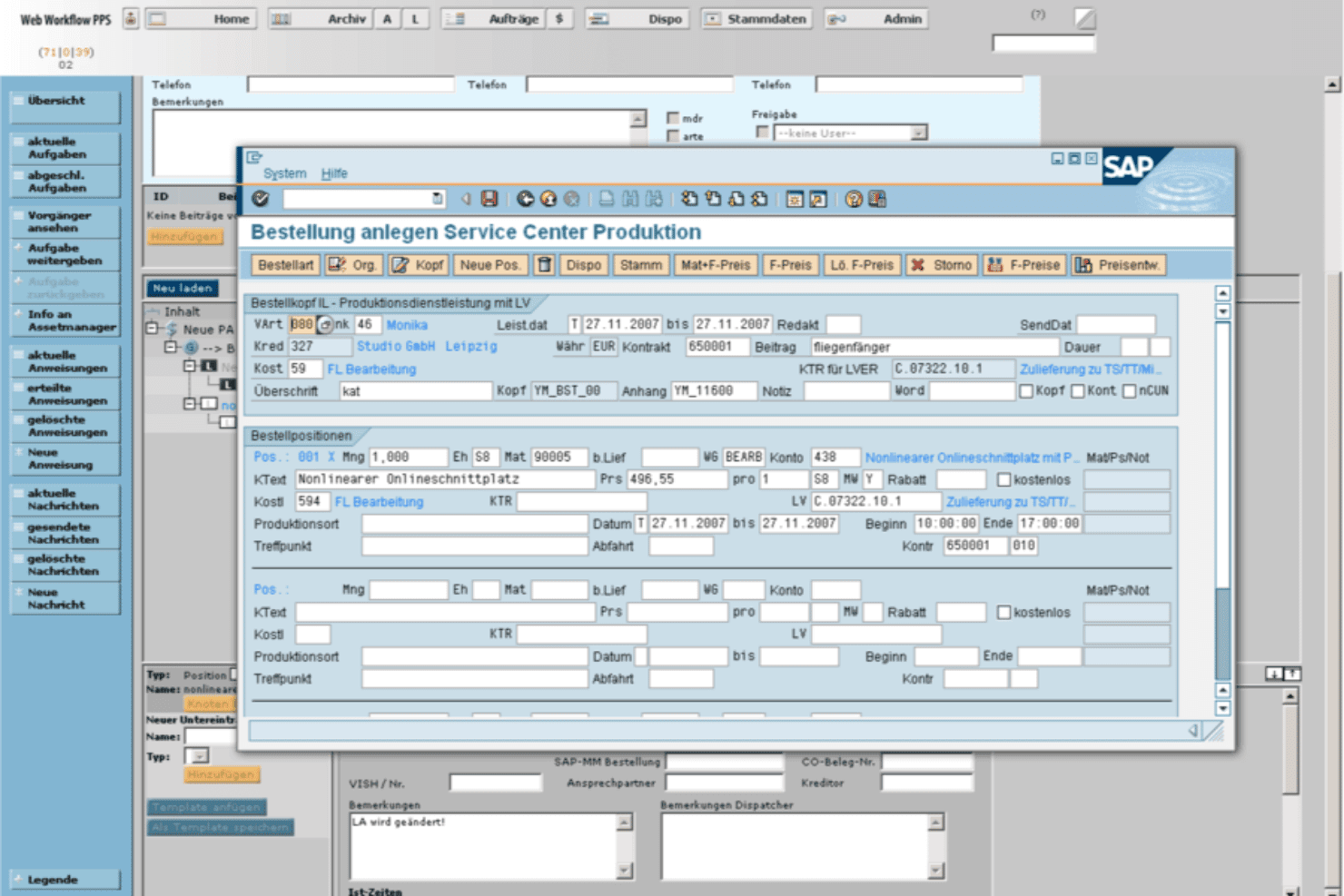
Vistex enables structured service order creation within SAP workflows. Vistex is an SAP-native chargeback and claims management platform that handles claim initiation, reason-code classification, reconciliation, accruals, and settlement—embedded directly within SAP S/4HANA and ECC environments.
Who Is Vistex Best For?
Vistex is a strong fit for large enterprise companies in CPG, manufacturing, or distribution that are already running SAP S/4HANA or ECC and managing high volumes of chargebacks.
Why I Picked Vistex
Vistex earns its spot on my shortlist because of how deeply it's embedded in SAP S/4HANA for chargeback management. I like that it handles the full claim lifecycle, from initiation through reconciliation and settlement, without requiring a separate data integration layer. The automated accrual and simulation tools also let my team forecast cost recovery before claims are submitted, which is a level of pre-claim visibility that's genuinely hard to find in a natively SAP-embedded tool.
Vistex Key Features
- SAP-native settlement workflows: Embedded directly in SAP S/4HANA and ECC for end-to-end claims processing and financial reconciliation.
- Rule-based deduction categorization: Classifies charges and deductions using customizable business rules tied to contract terms and agreement structures.
- Accruals and forecasting tools: Supports real-time accrual management and predictive modeling for upcoming cost recoveries.
- Granular audit trail: Captures detailed claim, settlement, and adjustment history for compliance and financial control purposes.
Vistex Integrations
Vistex is embedded in SAP S/4HANA and ECC environments and offers native integration with core SAP modules. An API is available for custom integrations.
Pros and Cons
Pros:
- Strong accrual management for cost recovery
- Full claim lifecycle tracking within SAP
- Native SAP settlement without third-party middleware
Cons:
- Long implementation timelines for enterprise deployments
- Not suited for non-SAP environments
Learn more about Vistex: Best for CPG deductions with expert support
- Free demo available
- Pricing upon request
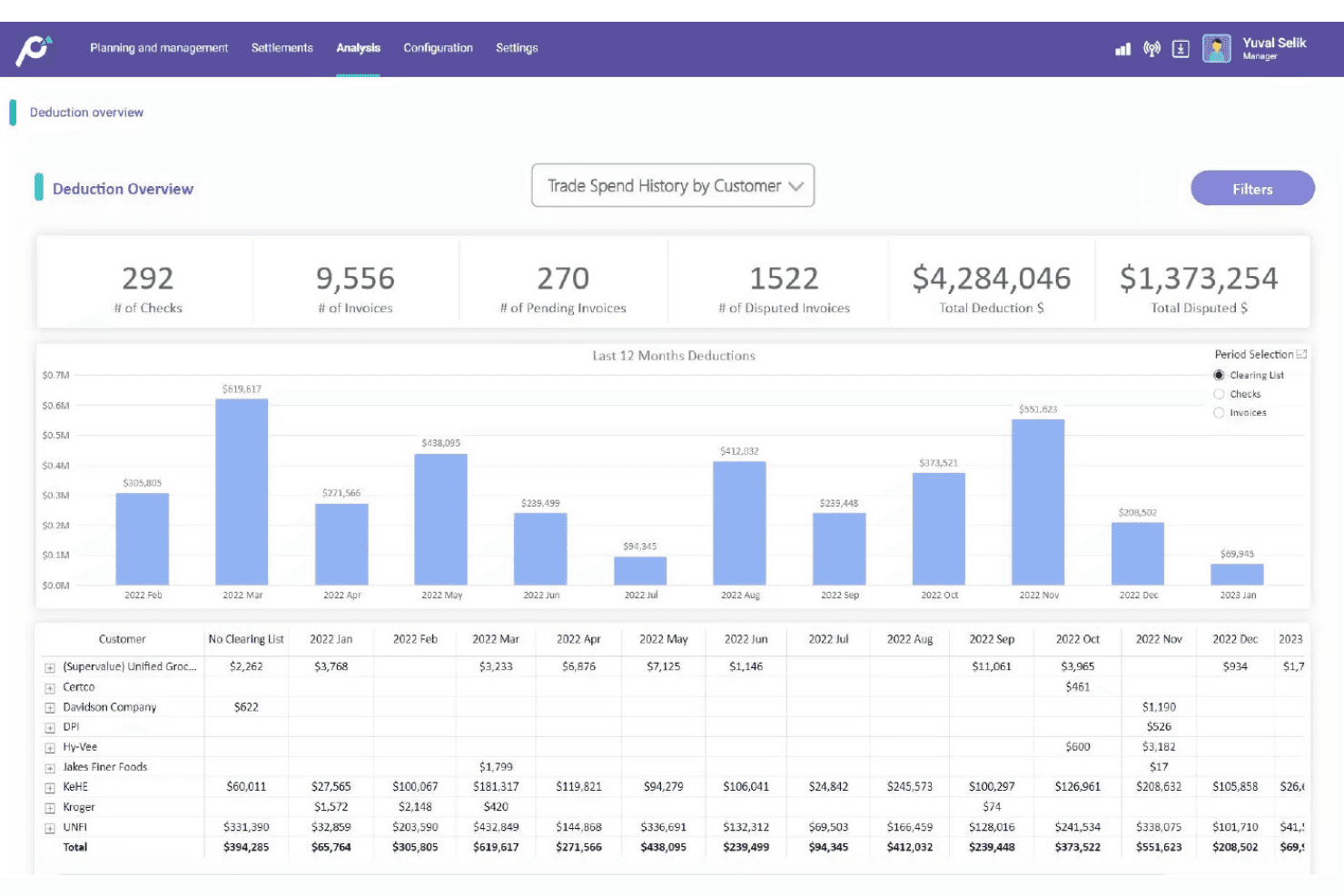
Promomash tracks trade spend deductions by customer over time. Promomash is a CPG-focused deduction management platform that combines AI-assisted deduction capture, coding, validation, and dispute recovery with a team of dedicated specialists who manage the full deduction lifecycle on your behalf.
Who Is Promomash Best For?
Promomash is a strong fit for growing CPG brands that sell through major retailers and distributors but don't have a dedicated in-house deduction management team.
Why I Picked Promomash
Promomash earns its spot on my shortlist because of how it handles the two most time-consuming parts of deduction management: coding and disputing. I love that the platform uses a proprietary catalog of reason codes built for CPG retailers and distributors, so deductions from Walmart, KEHE, and UNFI get categorized accurately without manual intervention. When an invalid deduction needs to be disputed, the CPGenius team steps in to build the case and submit it on your behalf.
Promomash Key Features
- Retailer and distributor integrations: Connects directly with leading portals like Walmart, Target, Amazon, UNFI, and KEHE for deduction data aggregation.
- Cash application add-on: Matches bank payments to open invoices and syncs payment activity with your ERP.
- Deduction analytics dashboard: Provides real-time dashboards to monitor deduction status, trends, and root cause breakdowns.
- Promotion-to-deduction matching: Automatically links deductions to specific trade promotions for proper validation and close-out.
Promomash Integrations
Promomash offers native integrations with NetSuite, QuickBooks, Sage Intacct, Microsoft Dynamics 365, Walmart Retail Link, Target Partners Online, Amazon Vendor Central, UNFI, and KEHE. An API is available for custom integrations.
Pros and Cons
Pros:
- Covers both trade and non-trade deduction types
- CPG-specific reason code library improves coding accuracy
- Managed dispute services reduce internal AR workload
Cons:
- Reporting customization requires support team involvement
- Limited fit for industries outside CPG and grocery
Learn more about Promomash: Best for short-pay detection in cash application
- Free demo available
- Pricing upon request
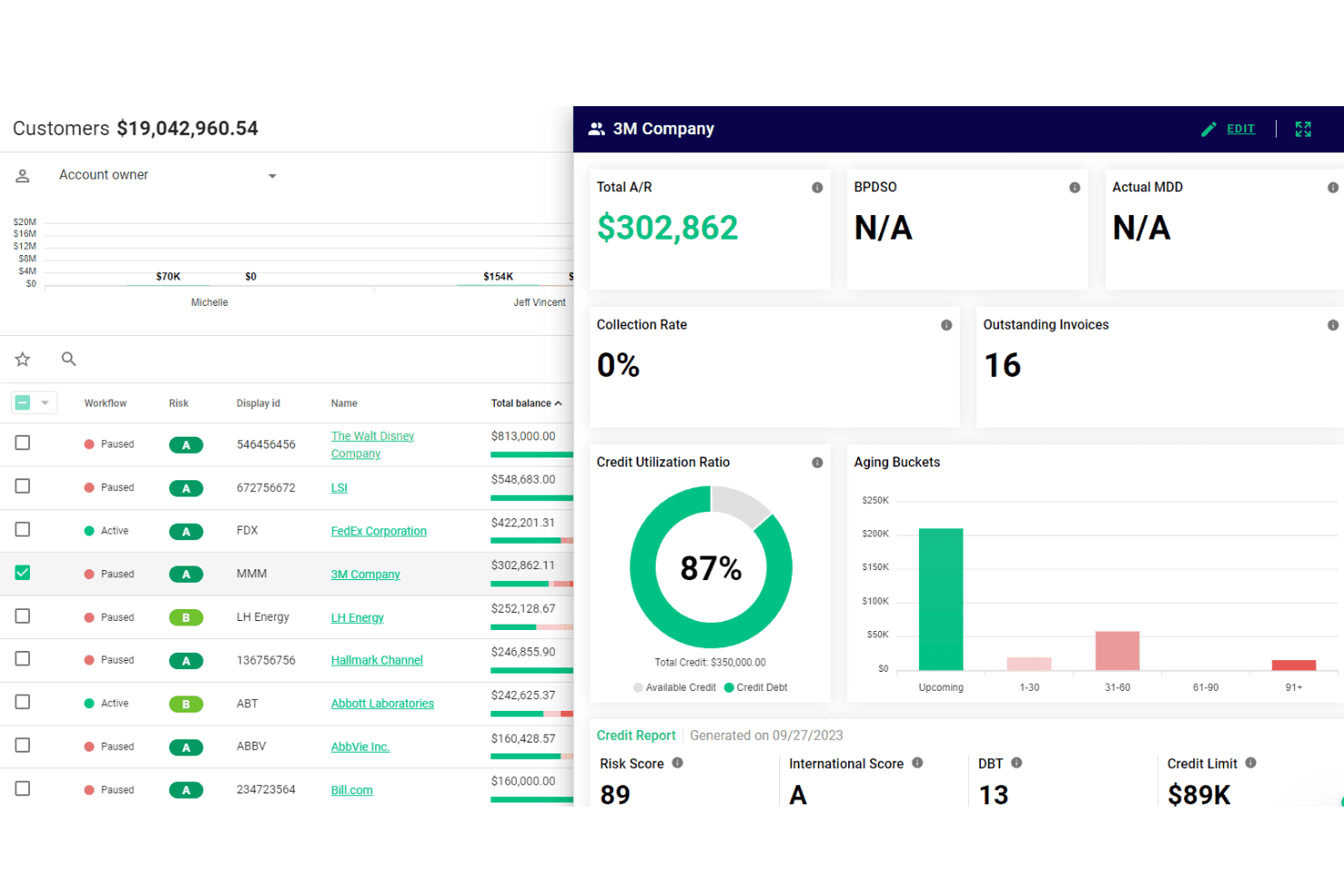
Cforia surfaces customer risk scores and A/R aging in one view. Cforia is an order-to-cash AR automation platform with modules for cash application, collections management, integrated dispute resolution, and deduction tracking built around short-pay detection.
Who Is Cforia Best For?
Cforia is a good fit for enterprise AR and collections teams that process high volumes of customer payments and need automated short-pay detection built into their cash application workflow.
Why I Picked Cforia
I picked Cforia as one of the best because its cash application module catches short-pays at the point of payment matching, not as a manual follow-up step. When a remittance comes in short, Cforia automatically flags it and creates a deduction and dispute record in the same motion. I also like the Customer Auto-Link feature, which matches payments across parent/child account hierarchies so multi-entity accounts don't generate false deduction flags.
Cforia Key Features
- Integrated dispute management: Lets teams log, track, and resolve deduction disputes directly within the platform.
- Customer auto-link matching: Connects payments and open invoices across parent and child account structures for accurate deduction capture.
- Real-time AR dashboards: Provides AR teams with configurable dashboards to monitor deduction status, activity history, and KPIs.
- Multi-source data ingestion: Supports the import of remittance, payment, and short-pay data from banks, lockbox files, and ERP systems.
Cforia Integrations
Native integrations are not clearly documented. Cforia offers an API for custom integrations and can connect to ERP systems through custom setup.
Pros and Cons
Pros:
- Dispute records created automatically at flagging
- Handles complex parent/child account structures
- Short-pay detection is built into cash application
Cons:
- Reporting customization requires vendor involvement
- Implementation timelines can run several months
Learn more about Cforia: Best for AI-driven deduction workflows
- Free demo available
- Pricing upon request
Visit WebsiteCustomer Rating:4.5/5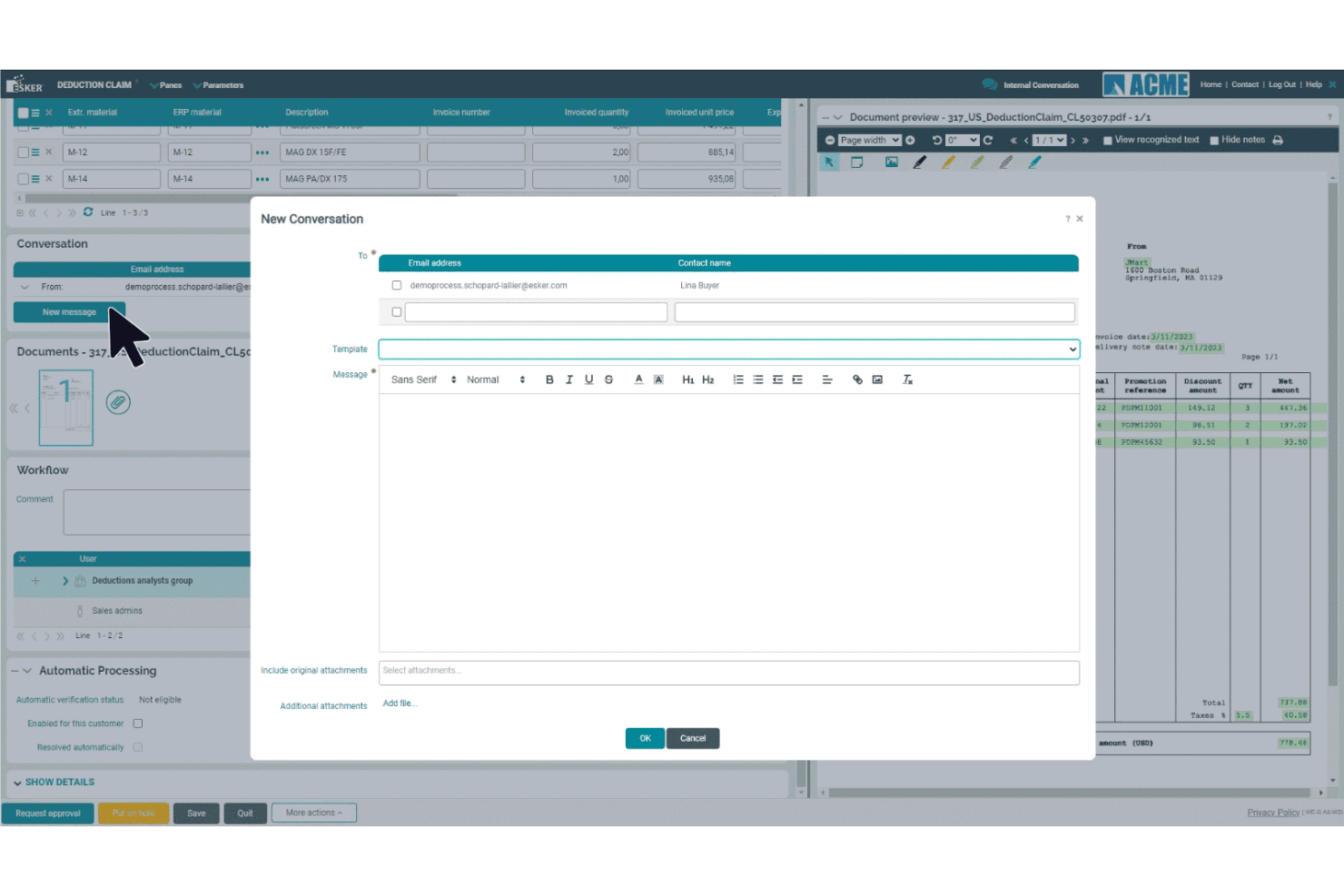
Esker lets users send internal conversations directly from a deduction claim. Esker is a cloud-based AR automation platform with a deductions management module that uses AI data capture, RPA document retrieval, and configurable workflows to handle both trade and non-trade customer deduction claims.
Who Is Esker Best For?
Esker is a strong fit for mid-market and enterprise manufacturers, CPG, and food and beverage companies that deal with high volumes of trade and non-trade customer deductions.
Why I Picked Esker
Esker earns its spot as one of the best on my shortlist because of how Esker Synergy AI handles the heaviest part of deductions work. I like that it automatically extracts and classifies deductions from remittances, debit notes, and promotional invoices into trade or non-trade categories. RPA bots retrieve supporting documents like PODs and BOLs directly from retailer portals. The AI also learns from analyst corrections over time, which sharpens auto-coding accuracy the more I use it.
Esker Key Features
- Multi-level workflow configuration: Set up custom approval processes by deduction type and value, involving AR, sales, and supply chain teams.
- RPA-driven document retrieval: Automate the sourcing of supporting documents directly from retailer and carrier portals.
- Integrated AR analytics dashboard: Monitor real-time KPIs such as DDO, deduction aging, and root cause breakdowns in a single view.
- Salesforce integration: Sync deduction case data and collaborate with sales teams through a direct API connection.
Esker Integrations
Esker offers native integrations with SAP, Oracle, Microsoft Dynamics 365, NetSuite, Sage, Salesforce, and QuickBooks, and provides an API for custom integrations.
Pros and Cons
Pros:
- Real-time DDO and deduction aging visibility
- Handles both trade and non-trade claims
- Auto-coding accuracy improves with analyst corrections
Cons:
- Full configuration requires dedicated admin support
- Implementation timelines can extend several months
Learn more about Esker: Best for AI-powered deduction validation
- Free demo available
- Pricing upon request
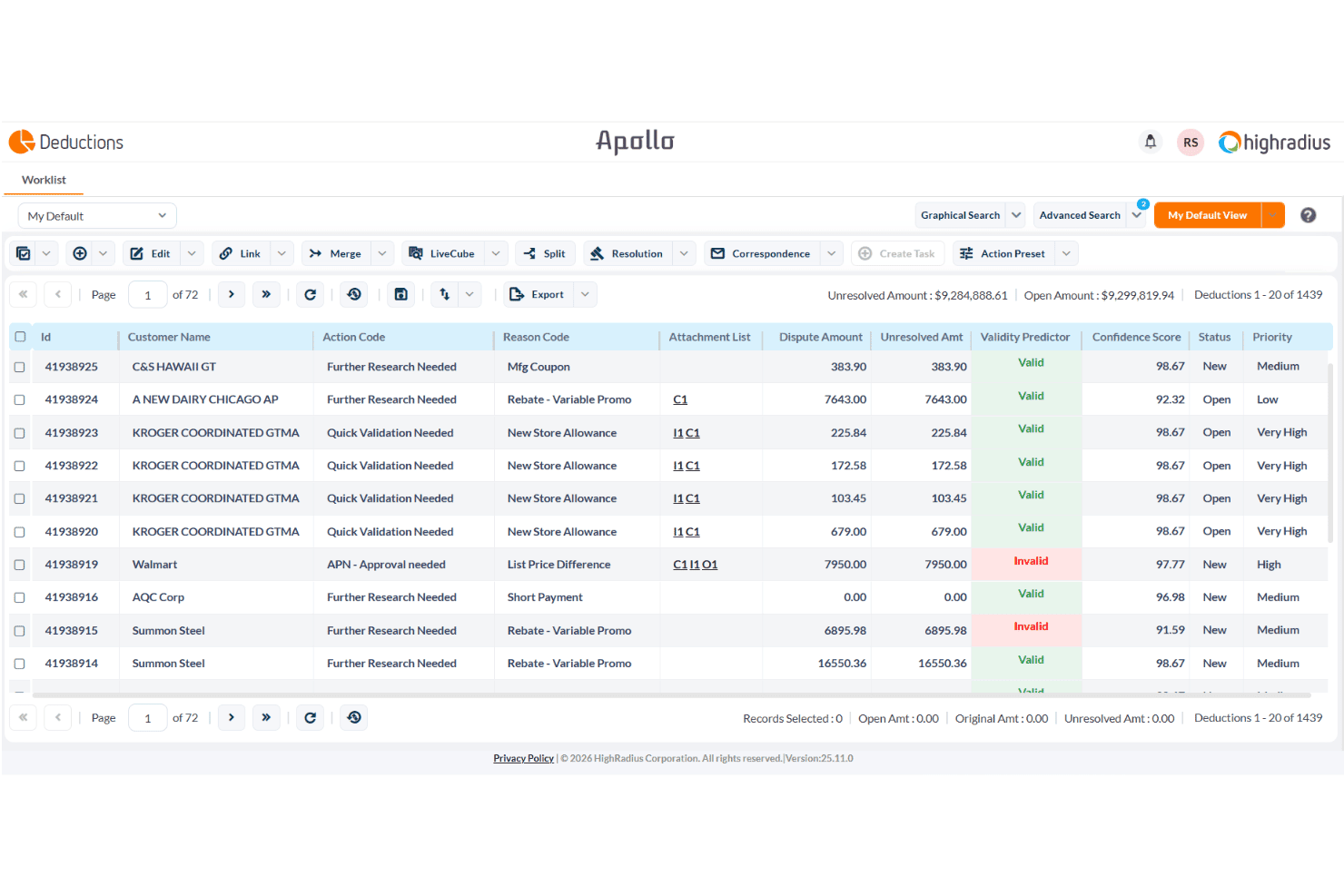
HighRadius helps users manage and prioritize deductions with AI validity predictions. HighRadius is an AI-powered deduction management platform that automates claim capture from retailer portals, backup document matching, deduction coding, and dispute resolution workflows across AR teams.
Who Is HighRadius Best For?
HighRadius is a strong fit for enterprise AR teams in CPG, food and beverage, and manufacturing dealing with high volumes of retailer-portal deductions.
Why I Picked HighRadius
HighRadius earns its spot as one of the best on my shortlist because of the Deductions Validity Predictor, which uses AI confidence scoring to flag whether a deduction is valid or invalid before anyone manually reviews it. I like that the Portal Claim Download agent auto-navigates major retailer portals like Amazon and Kroger to pull claim documents directly, cutting out the repetitive portal logins. The Trade Promotion Matching agent then cross-references those claims against SAP TPM data and POS records for multi-way validation.
HighRadius Key Features
- Shortage variance analysis: Aggregates proof-of-delivery and carrier documentation to link claims to shortages for validation.
- Worklist prioritization: Creates AI-driven, dynamic lists to organize and delegate deduction research tasks across AR teams.
- Invalid claim upload and dispute management: Auto-prepares dispute packets with attachments and submits them to retailer portals.
- Deductions backup linking: Automatically matches and attaches all relevant backup documentation to each open deduction record.
HighRadius Integrations
HighRadius provides native integrations with SAP, Oracle, NetSuite, Microsoft Dynamics 365, QuickBooks, and Sage ERP systems, and offers an API for custom integrations.
Pros and Cons
Pros:
- Multi-way trade promotion matching against TPM data
- Auto-navigates retailer portals for claim documents
- AI validity scoring before manual review begins
Cons:
- Reporting customization requires IT or vendor support
- Long implementation timelines for enterprise deployments
Learn more about HighRadius: Best for autonomous deduction resolution
- Free demo available
- Pricing upon request
Visit WebsiteCustomer Rating:3.5/5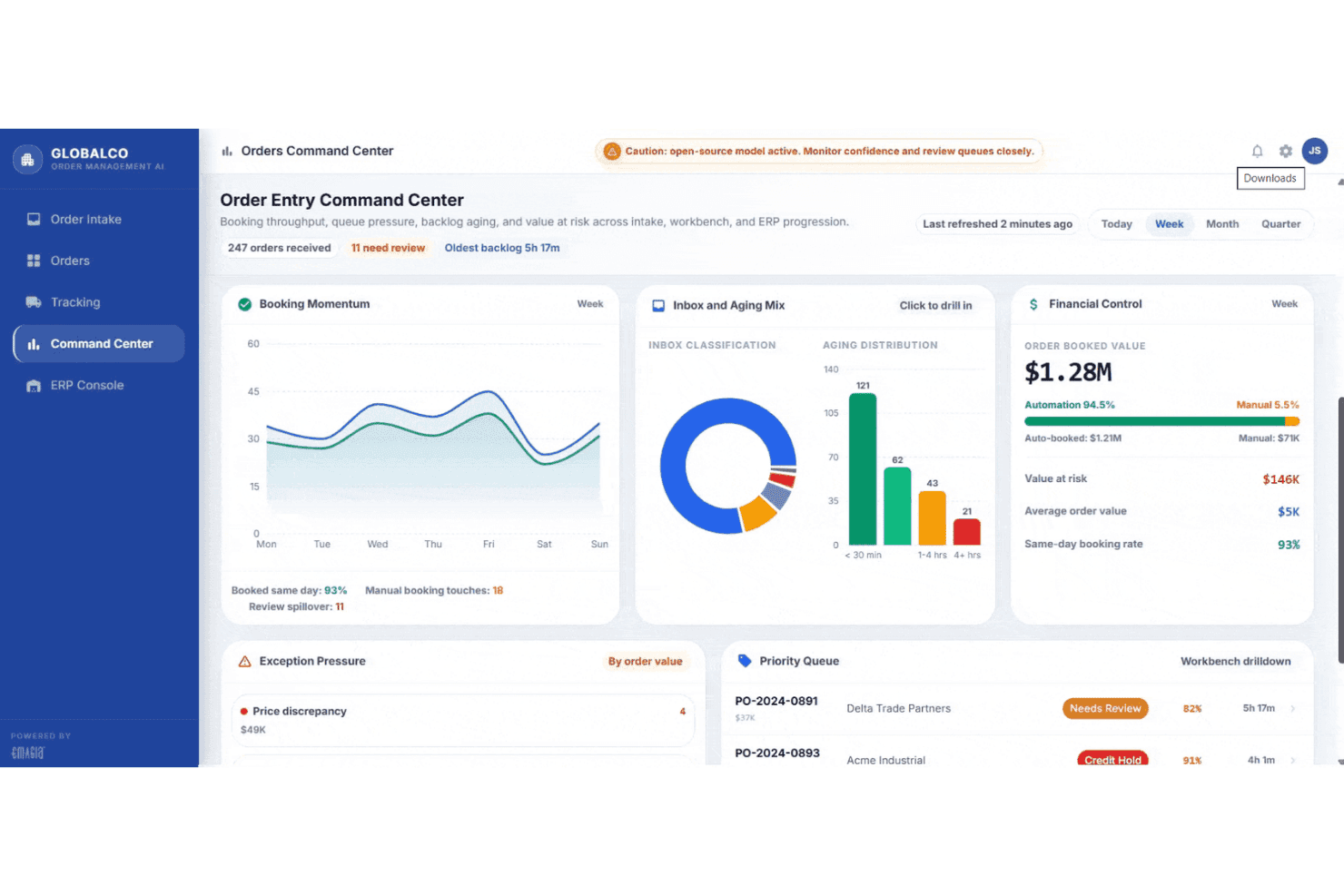
Emagia centralizes order management with AI-driven booking and exception tracking. Emagia is an AI-powered deduction management platform that automates short-pay identification, reason-code classification, dispute workflow routing, and resolution tracking across the accounts receivable function.
Who Is Emagia Best For?
Emagia is a strong fit for enterprise finance teams and shared service centers managing high volumes of deductions across multiple ERPs and business units.
Why I Picked Emagia
I picked Emagia as one of the best because of how far it pushes autonomous resolution in practice. The rules-based bulk claims processing auto-approves deductions based on predefined business decisions, with no analyst touch required. On top of that, Gia AI auto-identifies short pays and over pays, assigns reason codes, and routes each item through the correct workflow immediately, which means my team isn't manually triaging a backlog before resolution work can even begin.
Emagia Key Features
- Configurable reason code library: Build and manage custom deduction reason codes tailored to business needs.
- ERP and financial system integration: Connects with SAP, Oracle, Microsoft Dynamics, NetSuite, Sage, and other leading ERP platforms.
- Document aggregation and linking: Aggregates and attaches supporting documents like invoices, PODs, and BOLs to deduction cases for easy reference.
- Analytics dashboard: Tracks deduction aging, resolution rates, and trends by customer or root cause for management review.
Emagia Integrations
Emagia offers native integrations with SAP, Oracle, NetSuite, PeopleSoft, Workday, Microsoft Dynamics, and Sage. An API is available for custom integrations.
Pros and Cons
Pros:
- Delegation of authority matrix for approval workflows
- Dispute-level line item granularity for invoice disputes
- AI auto-resolves up to 80% of deductions
Cons:
- Implementation complexity for multi-ERP environments
- No self-serve pricing or trial access
Learn more about Emagia: Best for retailer portal claim automation
- Free demo available
- Pricing upon request
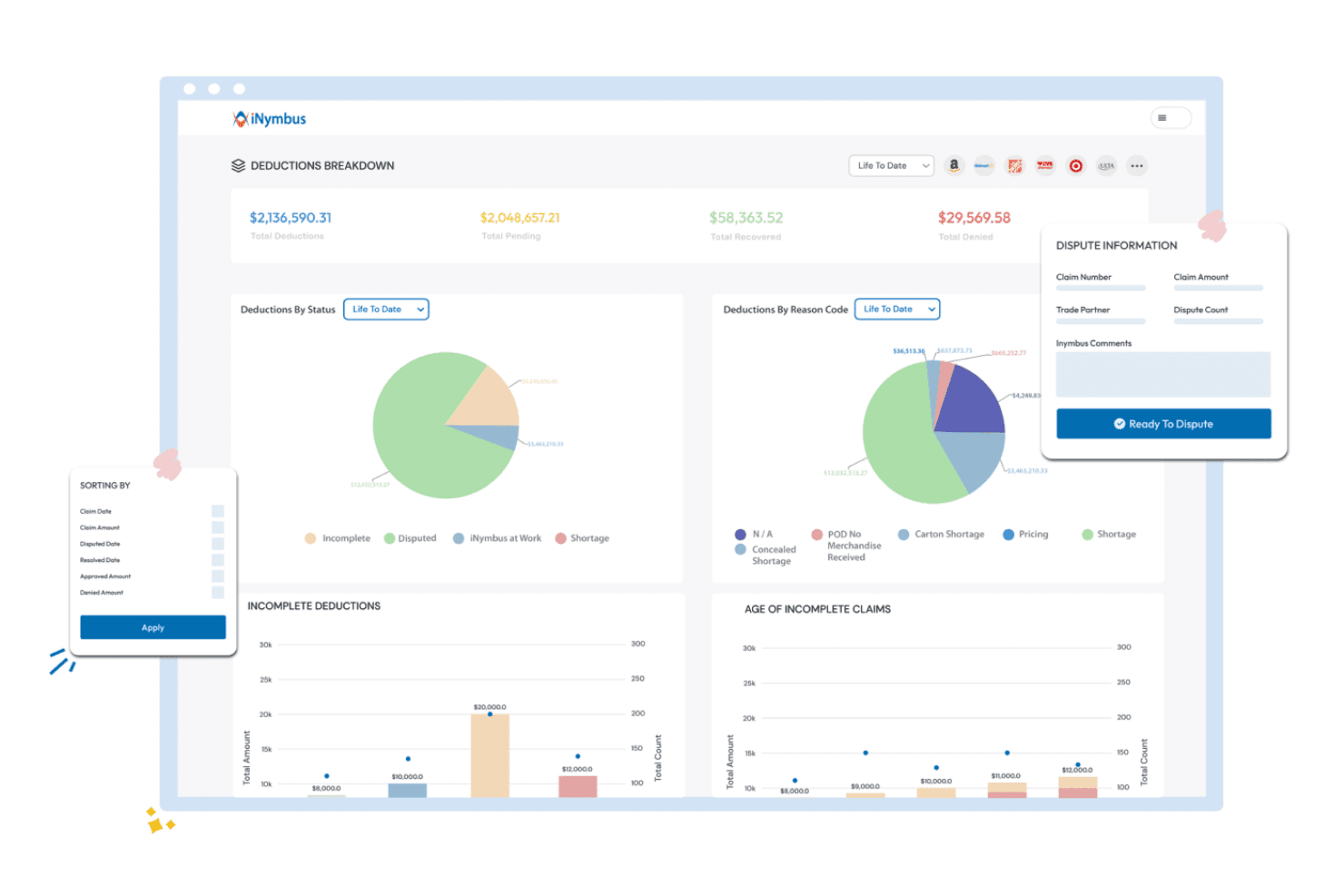
iNymbus DeductionXchange tracks and visualizes deductions by status and reason code. iNymbus DeductionXchange is a cloud-based deduction management platform that uses robotic process automation to capture, match, and dispute retailer chargebacks and claims across 50+ retailer portals, EDI transactions, and email-based channels.
Who Is iNymbus DeductionXchange Best For?
It's a strong fit for CPG manufacturers, distributors, and suppliers that deal with high volumes of retailer deductions from major accounts like Walmart, Amazon, or Target.
Why I Picked iNymbus DeductionXchange
I picked iNymbus DeductionXchange as one of the best because of how it handles retailer portal submission end to end. The RPA robots retrieve claim documents, assemble dispute packets, and auto-fill required portal fields across Walmart Retail Link, Amazon Vendor Central, and 50+ other portals without any manual login. I also appreciate the Walmart SQEP penny-perfect matching, which catches amount discrepancies before submission and reduces rejected disputes.
iNymbus DeductionXchange Key Features
- Centralized deduction dashboard: View and manage all deductions from multiple retailers in one place.
- Automated document aggregation: Pull supporting documents from EDI, ERP, email, and portal sources.
- Flexible file format support: Integrate customized file formats for seamless data processing across sources.
- Root cause analysis tools: Visualize deduction patterns and root causes with detailed analytics dashboards.
iNymbus DeductionXchange Integrations
iNymbus DeductionXchange offers native integrations with SAP, Oracle, NetSuite, Microsoft Dynamics, and QuickBooks, and connects to retailer platforms including Walmart Retail Link and Amazon Vendor Central. An API is available for custom integrations.
Pros and Cons
Pros:
- Cuts manual dispute prep time significantly
- Matches Walmart deductions to the penny
- Handles 50+ retailer portal submissions automatically
Cons:
- Implementation requires heavy retailer portal credential setup
- Reporting customization options are limited out of the box
Learn more about iNymbus DeductionXchange: Best for outsourced retail revenue recovery
- Free demo available
- Pricing upon request
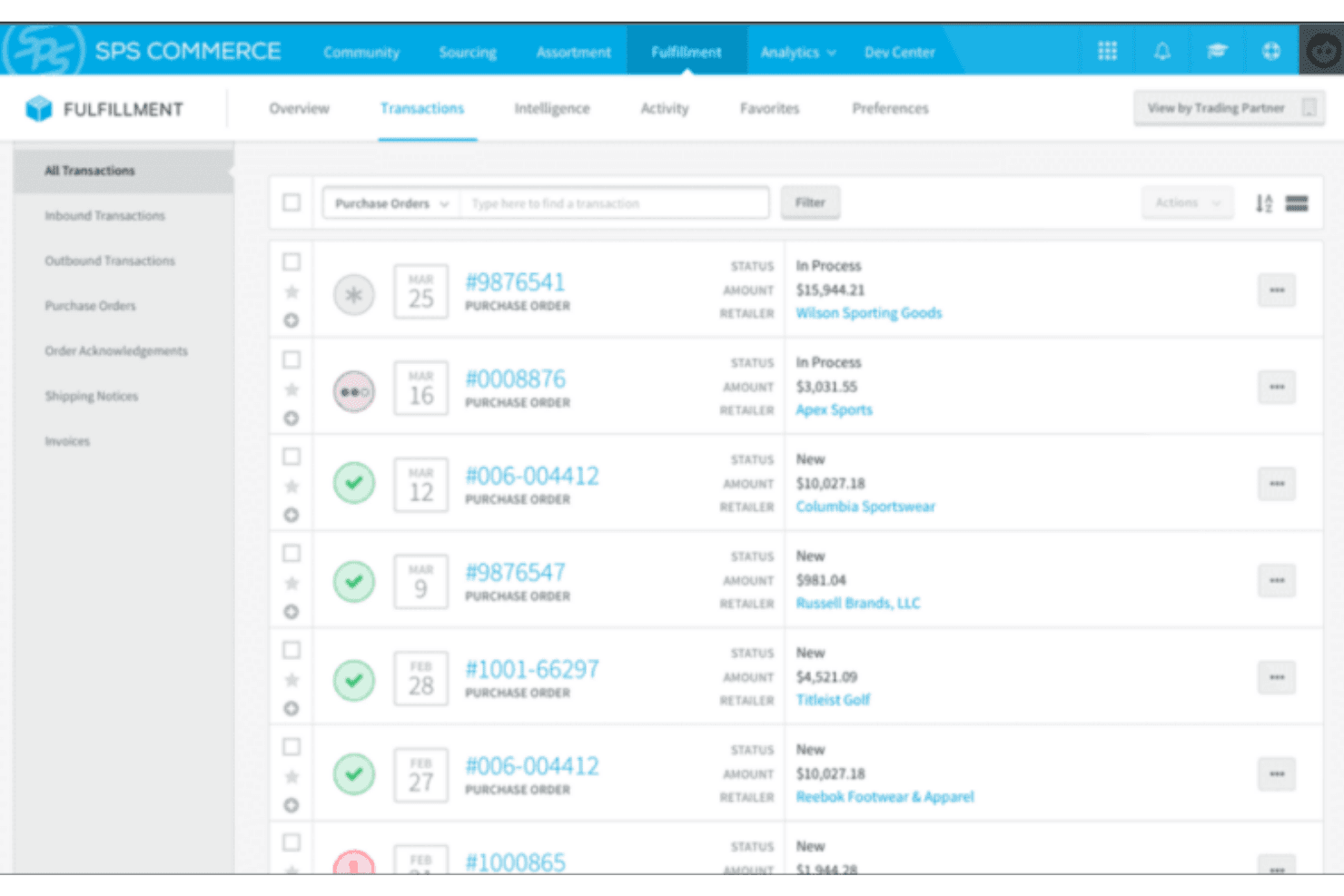
SPS Commerce centralizes purchase order tracking to catch revenue gaps. SPS Commerce Revenue Recovery is a retail deduction management platform that automates deduction capture, backup document retrieval, dispute submission, and root-cause reporting across major retailers, distributors, and marketplace channels.
Who Is SPS Commerce Revenue Recovery Best For?
CPG brands and consumer goods suppliers that sell through major retail chains and want a managed, expert-led approach to deduction recovery.
Why I Picked SPS Commerce Revenue Recovery
I've included SPS Commerce Revenue Recovery in my top picks because it's the only platform I know that offers a genuinely outsourced recovery model, where SPS experts handle the full dispute cycle on your behalf. I like that the platform automatically retrieves retailer-specific backup documents and attaches them to open deductions before submission. The prebuilt partner workflows for retailers like Walmart, Amazon, and Kroger ensure dispute packets are built to each retailer's exact specifications.
SPS Commerce Revenue Recovery Key Features
- Centralized deduction dashboard: View, track, and manage every deduction, dispute, and resolution in a single interface.
- Retailer-specific compliance mapping: Built-in logic addresses chargeback requirements for Walmart, Amazon, Kroger, CVS, and more.
- Automated root cause analysis: Surface deduction trends and patterns across customers, reason codes, and periods for targeted process fixes.
- SOC 2 Type II data security: Protect financial data with hourly backups, encryption, and role-based access management.
SPS Commerce Revenue Recovery Integrations
SPS Commerce Revenue Recovery offers native integrations with major retailer portals such as Walmart Retail Link, Amazon Vendor Central, Target Partners Online, Kroger Partners Portal, and CVS Supplier Portal. An API is available for custom integrations.
Pros and Cons
Pros:
- Root cause insights prevent recurring deduction types
- Up to 99% recovery rate on valid claims
- Fully managed dispute cycle reduces internal AR lift
Cons:
- Less suitable for non-retail or direct-to-consumer channels
- No self-serve pricing; requires a sales conversation
Learn more about SPS Commerce Revenue Recovery:
Alte software-uri de gestionare a deducerilor
Iată câteva opțiuni suplimentare de software pentru gestionarea deducerilor care nu au ajuns pe lista mea scurtă, dar care merită totuși verificate:
Related Reviews
How I Evaluate Deduction Management Software
I split my evaluation into baseline requirements—like automated deduction capture and dispute workflows—and the differentiators, like retailer coverage and ERP fit, that separate good from great.
Core Functionality (Table Stakes For This List)
When I'm selecting tools for my list, I rank each one on a scale from 0 (does not offer the functionality) to 5 (excels in this area) for every core functionality below. I then calculate the total score as a percentage. I use 65% as a benchmark to assess overall fit for the list.
- Deduction Capture: I check whether the tool pulls deduction data from ERP systems, bank remittances, EDI 812/820 feeds, and retailer portals without manual uploads.
- Document Matching: Automatic retrieval and matching of PODs, BOLs, and invoices to open claims saves hours of portal-hopping across retailer systems.
- Deduction Coding: I evaluate how the tool classifies deductions by reason code—shortages, pricing errors, promotional claims—to support root-cause analysis.
- Dispute Workflows: Multi-role workflows with audit trails matter here, especially when AR, sales, and trade teams all need to collaborate on approvals and escalations.
- Recovery Management: I look for automated chargeback packet assembly and submission, plus tracking through to repayment—manual packet building doesn't scale.
- Analytics & Reporting: Dashboards should track deduction aging, recovery rates, and root causes by customer or reason code to surface trends worth acting on.
Next, once I have a list of tools that meet the criteria, I consider what sets each platform apart.
Differentiating Factors (What Sets Vendors Apart)
Here's how I compare and contrast different vendors:
Standout Features
AI-powered deduction coding can automatically classify claims by reason code using historical patterns. This can cut triage time on high-volume accounts. Automated backup document retrieval is another key differentiator. Native retailer portal connectors can pull PODs and claim documents without manual downloads. For CPG brands, I also evaluate trade promotion matching. This helps validate deductions against TPM systems or promotional calendars.
Beyond Features
ERP integration depth also matters. I check whether a platform syncs with AR aging and cash application data in systems like SAP, NetSuite, or Oracle. Similarly, retailer coverage is important for companies selling through major retail or foodservice channels. Pricing models also vary across this space. Some vendors use SaaS subscriptions, while others charge contingency-based recovery fees.
Cum să alegeți software-ul pentru gestionarea deducerilor
Atunci când comparați software-uri pentru gestionarea deducerilor, concentrați-vă asupra gradului în care fiecare platformă se potrivește fluxului de lucru pentru conturi de încasat, volumului de deduceri, mediului ERP și surselor cererilor.
| Dacă prioritatea dumneavoastră este | Căutați |
| Potrivirea rapidă a documentelor | Conectori preconfigurați pentru portalurile retailerilor |
| Identificarea cauzei principale a deducerilor | Codificare bazată pe inteligență artificială și analize detaliate |
| Gestionarea combinației de EDI/portaluri ale retailerilor | Capturare automată din EDI 812 și portaluri care nu folosesc EDI |
| Recuperarea simplificată a debitelor | Transmiterea automată a dosarelor, cu urmărirea rambursărilor |
| Integrarea cu ERP și TPM | Sincronizare bidirecțională cu infrastructura financiară centrală |
Cum să vă evaluați lista scurtă
- Testați importarea automată cu documente de plată exemplificative: Încărcați cel puțin 3 fișiere variate cu deduceri de la retaileri și comparați capturările automate în termen de 48 de ore.
- Solicitați un raport exemplificativ privind atașamentele cererilor: Cereți o demonstrație live care să arate potrivirea automată a dovezii de livrare, facturii și conosamentului cu cererile unui retailer pentru un client actual.
- Corelați pașii fluxului de lucru cu procedura dumneavoastră standard: Solicitați modele de scrisori de contestație, roluri de utilizator și căi de escaladare, apoi corelați-le cu propriul proces pentru conturi de încasat.
- Insistați asupra unei piste de audit: Solicitați un exemplu de jurnal de audit care să includă toate acțiunile legate de deduceri, identificatorii utilizatorilor și marcajele temporale pentru validarea conformității.
- Compromis — automatizare bazată pe inteligență artificială versus personalizare: Decideți dacă aveți nevoie de automatizare de la un capăt la altul sau de o personalizare mai amplă. Instrumentele mai configurabile pot necesita o supraveghere suplimentară.
Ce este software-ul pentru gestionarea deducerilor?
Software-ul de gestionare a deducerilor este un instrument specializat pentru gestionarea creanțelor. Acesta automatizează capturarea, codificarea, asocierea documentelor și soluționarea reclamațiilor privind deducerile clienților. Aceste platforme se pot conecta la sistemul ERP, fluxurile EDI și portalurile comercianților. Astfel, contribuie la reducerea activității manuale, la îmbunătățirea duratei de soluționare a litigiilor și la identificarea cauzelor plăților parțiale sau a refuzurilor la plată. Drept urmare, echipele financiare pot utiliza aceste instrumente pentru a accelera recuperarea sumelor și pentru a monitoriza tendințele deducerilor.
Funcțiile software-ului de gestionare a deducerilor
Atunci când comparați software-urile pentru gestionarea reclamațiilor și deducerilor, căutați funcții care să susțină întregul proces, de la capturarea și validarea reclamațiilor până la soluționarea litigiilor și recuperarea sumelor:
- Capturarea și centralizarea deducerilor: Colectează automat datele privind deducerile din sistemele ERP, fluxurile EDI, avizele de plată și portalurile comercianților, eliminând colectarea manuală.
- Asocierea reclamațiilor cu documentele justificative: Preia, asociază și atașează dovezile de livrare, conosamentele și facturile la reclamațiile aferente privind deducerile, pentru o validare mai ușoară.
- Categorizarea după codul motivului: Atribuie fiecare deducere unor coduri specifice de motiv, precum lipsuri, prețuri sau conformitate, ajutând echipele de gestionare a creanțelor să analizeze și să abordeze cauzele principale.
- Flux de lucru pentru litigii și aprobări: Gestionează fiecare etapă de validare, escaladare, contestare sau anulare a deducerilor, utilizând piste de audit și trasee de aprobare clar definite.
- Generator de pachete pentru refuzuri la plată și recuperare: Reunește documentele și formularele relevante în pachete pentru refuzuri la plată. Echipele le pot transmite apoi clienților pentru a recupera deducerile nejustificate.
- Integrare cu comercianții și EDI: Se conectează nativ la principalele portaluri ale comercianților și acceptă formatele EDI 812/820. Astfel, echipele pot gestiona atât formatele electronice, cât și pe cele manuale ale reclamațiilor.
- Tablouri de bord și rapoarte configurabile: Oferă tablouri de bord care vizualizează tendințele deducerilor, vechimea acestora și ratele de recuperare, ajutând echipele să monitorizeze indicatorii-cheie de performanță și să identifice tipare.
- Permisiuni și roluri de utilizator: Vă permite să configurați diferite niveluri de acces, asigurând trasabilitatea și conformitatea pe măsură ce echipele din gestionarea creanțelor, vânzări și finanțe colaborează.
- Urmărirea jurnalului de audit: Înregistrează fiecare acțiune a utilizatorilor și fiecare modificare din platformă, facilitând urmărirea istoricului deciziilor și susținând controalele financiare.
- Notificări automate: Trimite alerte pentru reclamații noi, termene-limită de aprobare sau escaladări ale fluxului de lucru, astfel încât nimic să nu fie omis.
Funcții AI în software-ul de gestionare a deducerilor
Funcțiile AI din software-ul de gestionare a deducerilor pot ajuta echipele responsabile de creanțe să clasifice deducerile, să valideze reclamațiile, să asocieze documentele justificative, să prioritizeze litigiile și să identifice tipare care pot contribui la deduceri recurente. Consultați mai jos:
- Codificarea deducerilor cu ajutorul AI: Utilizează învățarea automată pentru a clasifica automat deducerile după codul motivului, pe baza tiparelor istorice ale reclamațiilor, reducând timpul necesar verificării manuale.
- Soluționarea predictivă a litigiilor: Analizează rezultatele anterioare pentru a sugera cele mai eficiente strategii de contestare și estimează probabilitatea unei recuperări reușite pentru fiecare reclamație.
- Asocierea automată a documentelor: Utilizează AI pentru a identifica, extrage și asocia documentele justificative — precum POD-urile și facturile — cu deducerea corectă, chiar și atunci când formatele sau convențiile de denumire diferă.
- Analiza tendințelor privind cauzele principale: Utilizează AI pentru a evidenția tiparele și anomaliile emergente din datele privind deducerile. Astfel, echipele pot aborda problemele recurente și pot preveni reclamațiile viitoare.
- Direcționarea inteligentă a fluxului de lucru: Atribuie dinamic cazurile de deducere membrilor potriviți ai echipei sau traseelor de escaladare, pe baza complexității reclamației, istoricului clientului și echilibrării volumului de lucru.
- Procesarea limbajului natural pentru verificarea reclamațiilor: Utilizează AI pentru a interpreta și rezuma descrierile nestructurate ale reclamațiilor sau documentația justificativă. Acest lucru poate facilita validarea și soluționarea deducerilor complexe.
Beneficiile software-ului de gestionare a deducerilor
Software-ul de gestionare a deducerilor ajută echipele responsabile de creanțe să reducă activitatea manuală, să soluționeze mai rapid deducerile, să îmbunătățească ratele de recuperare și să obțină o vizibilitate mai bună asupra cauzelor deducerilor clienților. Iată câteva beneficii la care vă puteți aștepta:
- Soluționarea mai rapidă a reclamațiilor: Capturarea automată a datelor, asocierea documentelor și urmărirea fluxului de lucru ajută echipele să proceseze mai rapid reclamațiile privind deducerile.
- Rate de recuperare îmbunătățite: Generarea pachetelor pentru refuzuri la plată și automatizarea litigiilor vă ajută să identificați și să recuperați mai multe deduceri nejustificate.
- Analiză mai aprofundată a cauzelor principale: Categorizarea, analiza datelor și informațiile oferite de AI facilitează identificarea tendințelor și abordarea problemelor recurente legate de deduceri.
- Mai puțin efort manual: Integrările cu sistemele ERP, EDI și portalurile comercianților reduc la minimum descărcările, încărcările și introducerea repetitivă a datelor.
- Colaborare mai bună între echipe: Fluxurile de lucru bazate pe roluri și pistele de audit conectează echipele responsabile de creanțe, vânzări și operațiuni comerciale, astfel încât nimic să nu fie omis sau duplicat.
- Mai multă siguranță în privința conformității: Jurnalele de audit și controalele permisiunilor facilitează aplicarea politicilor interne și respectarea reglementărilor financiare SOX sau similare.
- Vizibilitate financiară mai mare: Tablourile de bord personalizate și raportarea în timp real clarifică activitatea deducerilor, ratele de recuperare și riscurile restante pentru conducerea departamentului financiar.
Costuri și prețuri
Prețurile software-ului de gestionare a deducerilor sunt, de obicei, stabilite pe bază de ofertă. Costurile pot varia în funcție de volumul deducerilor, numărul de utilizatori, integrările ERP, acoperirea comercianților cu amănuntul și cerințele de implementare. Mulți furnizori axați pe întreprinderi nu publică prețuri standard. De obicei, va trebui să contactați furnizorul pentru o ofertă personalizată. Consultați mai jos câteva opțiuni de preț tipice:
Tabel comparativ al planurilor pentru software-ul de gestionare a deducerilor
| Tipul planului | Preț mediu | Funcții comune |
|---|---|---|
| Tipul planuluiPlan gratuit | Preț mediu$0 | Funcții comuneUrmărirea de bază a deducerilor, încărcări limitate de documente, acces pentru un singur utilizator și asistență prin e-mail. |
| Tipul planuluiPlan personal | Preț mediu$50-$150/utilizator/lună | Funcții comuneCapturarea standard a revendicărilor, potrivirea automată a documentelor, șabloane de fluxuri de lucru și tablouri de bord analitice de bază. |
| Tipul planuluiPlan de afaceri | Preț mediu$200-$700/utilizator/lună | Funcții comuneColaborare între mai mulți utilizatori, integrare ERP și EDI, rapoarte personalizate, fluxuri de lucru configurabile pentru aprobări și jurnale de audit. |
| Tipul planuluiPlan pentru întreprinderi | Preț mediu$1,000+/lună | Funcții comuneFuncții AI avansate, integrări nelimitate cu portalurile comercianților cu amănuntul, asistență premium, instrumente complete pentru conformitate și integrare cu sistemele TPM. |
Întrebări frecvente despre software-ul de gestionare a deducerilor
Iată câteva răspunsuri la întrebările frecvente despre software-ul de gestionare a deducerilor:
Cum gestionează software-ul de gestionare a deducerilor documentația aferentă reclamațiilor comercianților?
Software-ul de gestionare a deducerilor se conectează la portalurile comercianților și preia automat pachetele de documente aferente reclamațiilor, facturile și documentele justificative, astfel încât echipa dumneavoastră nu trebuie să descarce și să sorteze manual fișierele.
Se poate integra software-ul de gestionare a deducerilor cu sistemul nostru ERP sau de contabilitate?
Da, majoritatea soluțiilor oferă conectori nativi pentru ERP-uri precum NetSuite, SAP, Microsoft Dynamics și QuickBooks, permițând sincronizarea datelor despre deduceri cu sistemul dumneavoastră de contabilitate a clienților, aplicația de gestionare a încasărilor și registrul contabil general.
Cum sunt validate deducerile aferente promoțiilor comerciale în aceste platforme?
Aceste instrumente compară adesea reclamațiile comercianților cu sistemul dumneavoastră de gestionare a promoțiilor comerciale (TPM) sau cu calendarul promoțional, ajutându-vă să confirmați dacă deducerile corespund ofertelor promoționale aprobate sau trebuie contestate.
Care este primul pas pentru automatizarea fluxurilor de lucru privind deducerile?
Începeți prin a testa sistemul cu propriile date privind reclamațiile — încărcați fișiere eșantion și analizați modul în care sunt atribuite codurile deducerilor, documentele sunt asociate automat, iar contestațiile parcurg fluxul de aprobare.
Sunt disponibile jurnalul de audit și urmărirea conformității SOX?
Da, software-ul de top pentru gestionarea deducerilor oferă jurnale de audit detaliate pentru toate acțiunile utilizatorilor, modificările documentelor și evenimentele sistemului, pentru a sprijini conformitatea SOX și controalele financiare interne.
Ce este software-ul de gestionare a deducerilor din creanțe?
Software-ul de gestionare a deducerilor din creanțe ajută echipele de contabilitate clienți să identifice, valideze, urmărească, conteste și recupereze deducerile clienților. Acesta poate automatiza sarcini precum codificarea deducerilor, asocierea documentelor, validarea reclamațiilor, gestionarea contestațiilor și urmărirea recuperărilor, conectând în același timp fluxurile de lucru privind deducerile cu sistemele ERP și de contabilitate clienți.