

10 Best Cap Table Management Software Reviewed in 2026

Best Cap Table Management Software Shortlist


Managing equity and cap tables can be a hassle for any CFO. The accuracy, compliance, and time demands are enough to overwhelm even the most seasoned professional. That's where cap table management software comes in. These tools help you keep track of equity, shareholders, and compliance stress-free.
In my experience testing software, I've seen how these solutions can transform your workflow, making equity management less of a chore. I'll share my unbiased reviews of the top picks, highlighting what makes each one stand out.
You'll learn about features, pros, cons, and pricing so you can make an informed decision for your team. Let's dive into the best options on the market.
Why Trust Our Software Reviews
We’ve been testing and reviewing financial software since 2023. As finance specialists ourselves, we know how critical and difficult it is to make the right decision when selecting software.
We invest in deep research to help our audience make better software purchasing decisions. We’ve tested more than 2,000 tools for different finance use cases and written over 1,000 comprehensive software reviews. Learn how we stay transparent & our software review methodology.
Best Cap Table Management Software Summary
This comparison chart summarizes pricing details for my top cap table management software selections to help you find the best one for your budget and business needs.
| Tool | Best For | Trial Info | Price | ||
|---|---|---|---|---|---|
| 1 | Best for startups with complex needs | Free plan available | From $2/shareholder/month | Website | |
| 2 | Best for European companies | Free plan + free demo available | From €3,000/year | Website | |
| 3 | Best for startups needing scalability | Free demo available | Pricing upon request | Website | |
| 4 | Best for detailed financial reporting | Free demo available | Pricing upon request | Website | |
| 5 | Best for secure data handling | Free demo available | Pricing upon request | Website | |
| 6 | Best for small teams managing equity | Free plan + free demo available | From $42/30 stakeholders/month (billed annually) | Website | |
| 7 | Best for Asian markets | Free plan + free demo available | From $1,600/year | Website | |
| 8 | Best for cost-effective cap table management | Free plan available | From $11/stakeholder/year | Website | |
| 9 | Best for quick setup and use | Free demo + 14-day free trial available | From $1,200/year | Website | |
| 10 | Best for global compliance needs | Free demo available | Pricing upon request | Website |
Best Cap Table Management Software Review
Below are my detailed summaries of the best cap table management software that made it onto my shortlist. My reviews offer a thorough look at the key features, pros and cons, integrations, and ideal use cases of each tool to help you find the best one for you.

Eqvista
Best for startups with complex needs
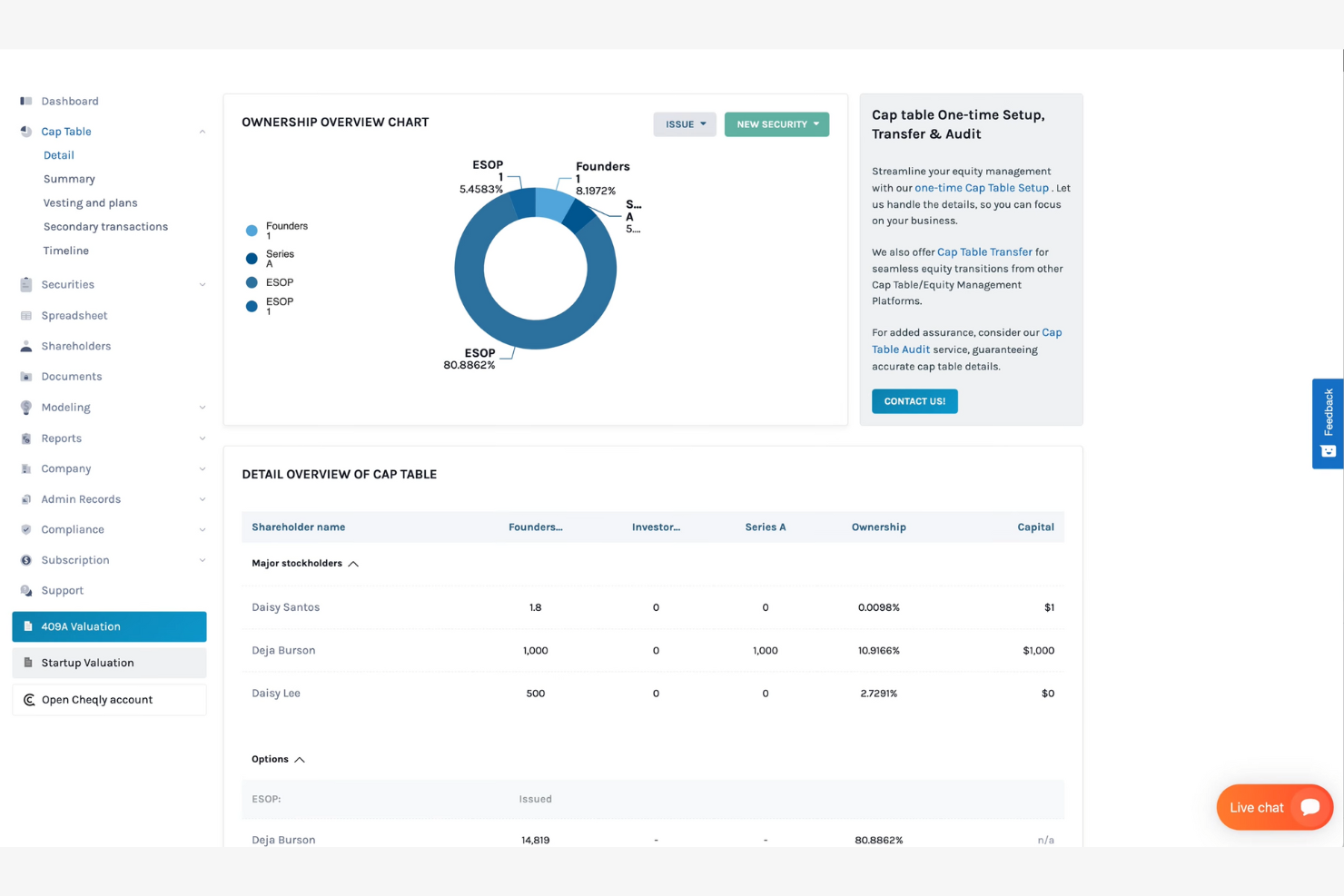
Eqvista is a cap table management software that offers startups solutions for equity management, valuations, and compliance. It helps founders and finance teams manage shares, options, and stakeholder relationships effectively.
Why I picked Eqvista: Eqvista is ideal for startups dealing with complex equity structures. It provides automated cap table updates and 409A valuations, keeping you audit-ready and in compliance. The software's detailed reporting tools ensure your team and stakeholders stay informed. Eqvista's focus on startups' unique challenges ensures you have the necessary tools to manage complicated equity structures effectively.
Standout Features and Integrations:
Features include automated cap table management to keep your equity data current, valuation tools to help you accurately assess your company's worth, and compliance monitoring to ensure you meet all legal requirements.
Integrations are not publicly listed.
Pros and Cons
Pros:
- Effective compliance monitoring
- Electronic share and stock certificate issuance
- Supports complex equity structures
Cons:
- Premium modules billed as separate add-ons
- Requires manual cap table data mapping

Ledgy
Best for European companies
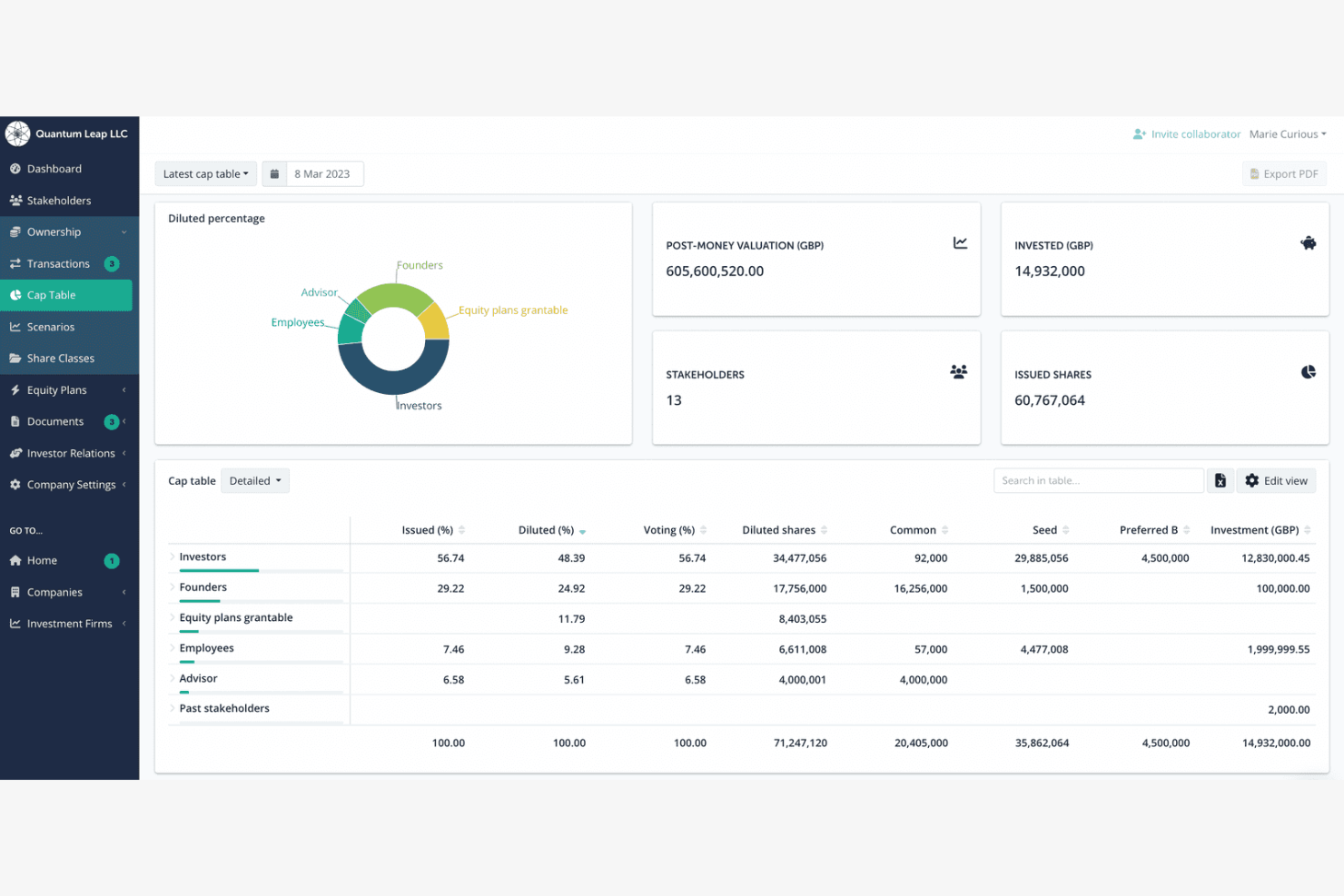
Ledgy is a cap table management software designed for European companies that need localized solutions. It supports equity management, compliance, and employee participation plans across regulatory environments.
Why I picked Ledgy: Ledgy is tailored to meet the specific needs of European companies, handling multiple currencies and languages and offering key features such as automated equity plan management and localized compliance support. Ledgy's detailed reporting tools help your team keep stakeholders informed, and its focus on European market requirements ensures your company can manage equity efficiently across borders.
Standout Features and Integrations:
Features include automated vesting schedules to help you manage employee equity plans efficiently, customizable dashboards for quick insights, and multilingual support for diverse teams.
Integrations include HiBob, Figures, BambooHR, Personio, Microsoft Entra ID, Google Workspace, Okta, Docusign, PayFit, and more.
Pros and Cons
Pros:
- Localized compliance features
- Detailed reporting options
- Automated vesting schedules
Cons:
- Manual non-European tax configuration
- No native US 409A valuation services

Carta
Best for startups needing scalability
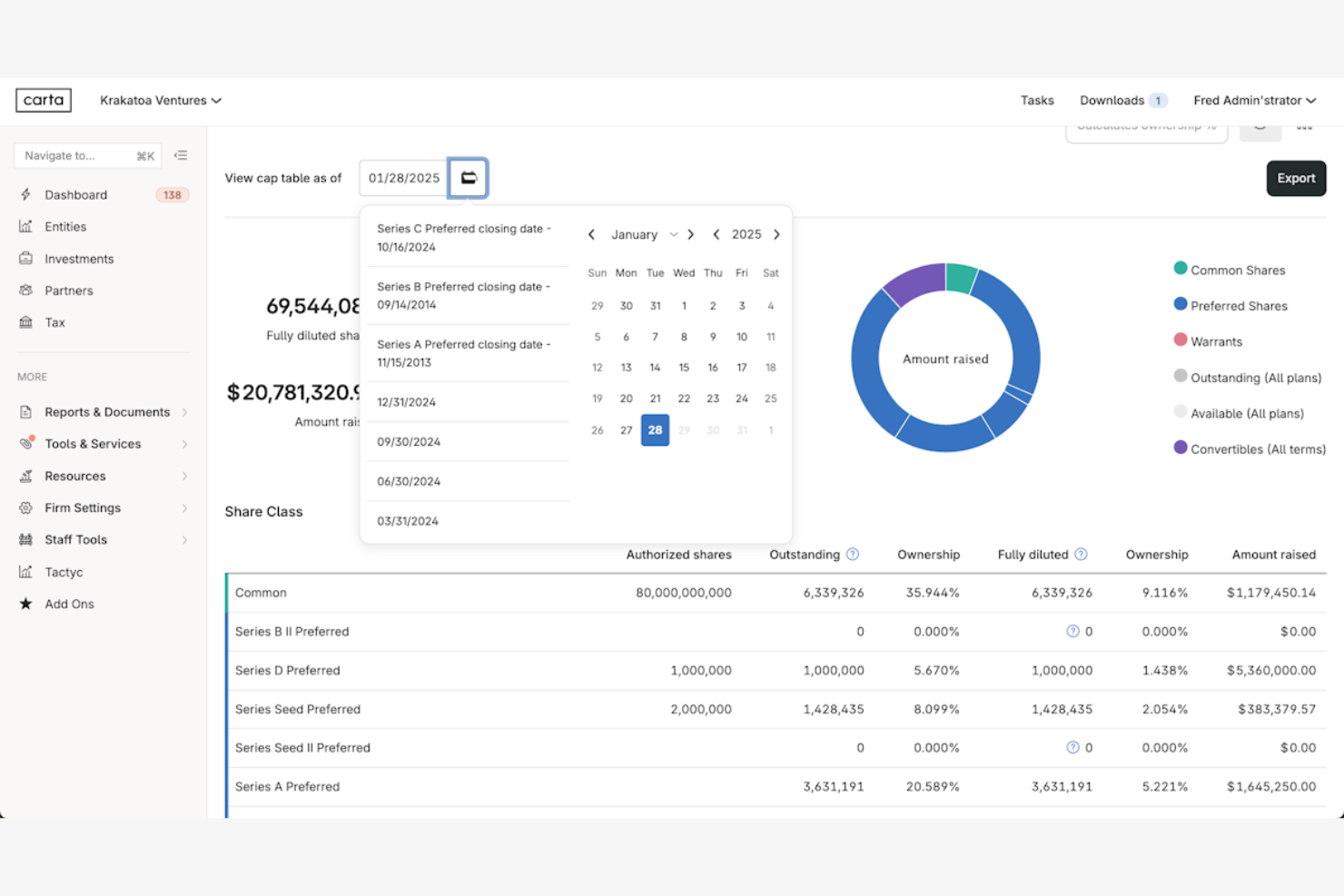
Carta is a cap table management software designed primarily for startups and growing companies. It handles equity management so your team can efficiently manage shares, option plans, and valuations.
Why I picked Carta: Carta excels in scalability, making it ideal for growing startups. It offers features like automated cap table updates and compliance tracking, which are necessary as your company expands. Carta's platform supports complex equity structures, making it easier to manage as you scale. Its user-friendly interface helps your team navigate equity management without a steep learning curve.
Standout Features and Integrations:
Features include automated equity management, compliance tracking, and real-time valuation updates. You can efficiently handle stock option exercises and manage employee equity plans. Carta also provides detailed reporting features to keep stakeholders informed.
Integrations include Xero, QuickBooks, BambooHR, HiBob, Pave, Equidam, FlowFi, CandorIQ, and more.
Pros and Cons
Pros:
- Real-time valuation updates
- Automated compliance features
- Scales easily with growing startups
Cons:
- Premium features require upgrades
- Volume-based enterprise pricing tiers

Best for detailed financial reporting
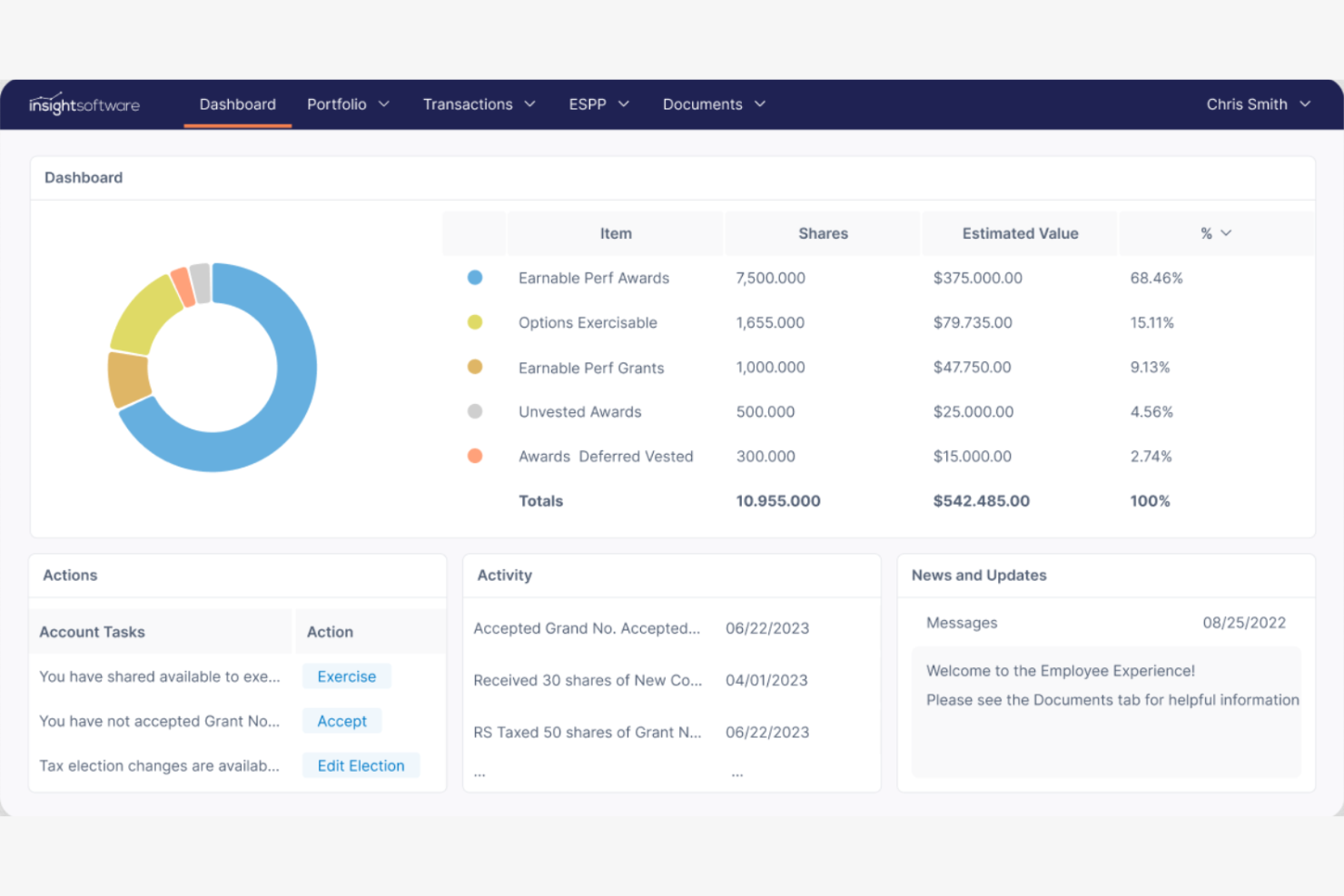
insightsoftware is a cap table management software designed for finance teams looking to improve their financial reporting capabilities. It helps manage equity, financial data, and compliance with precision.
Why I picked insightsoftware: insightsoftware excels at providing detailed financial reporting. It offers real-time data analytics and detailed financial dashboards to help you make informed decisions. insightsoftware's compliance tools ensure your team meets all regulatory standards, and its focus on financial reporting makes it a valuable tool for data-driven teams.
Standout Features and Integrations:
Features include real-time data analytics for up-to-date insights, financial dashboards for a clear overview of your equity, and compliance tools that help align your company with regulations, such as ASC 718.
Integrations include Oracle, SAP, Microsoft Dynamics, NetSuite, Snowflake, Databricks, Qlik, Google Analytics, and more.
Pros and Cons
Pros:
- Strong compliance tools
- Real-time data analytics
- Detailed financial dashboards
Cons:
- Requires human review
- 8-12 week implementation

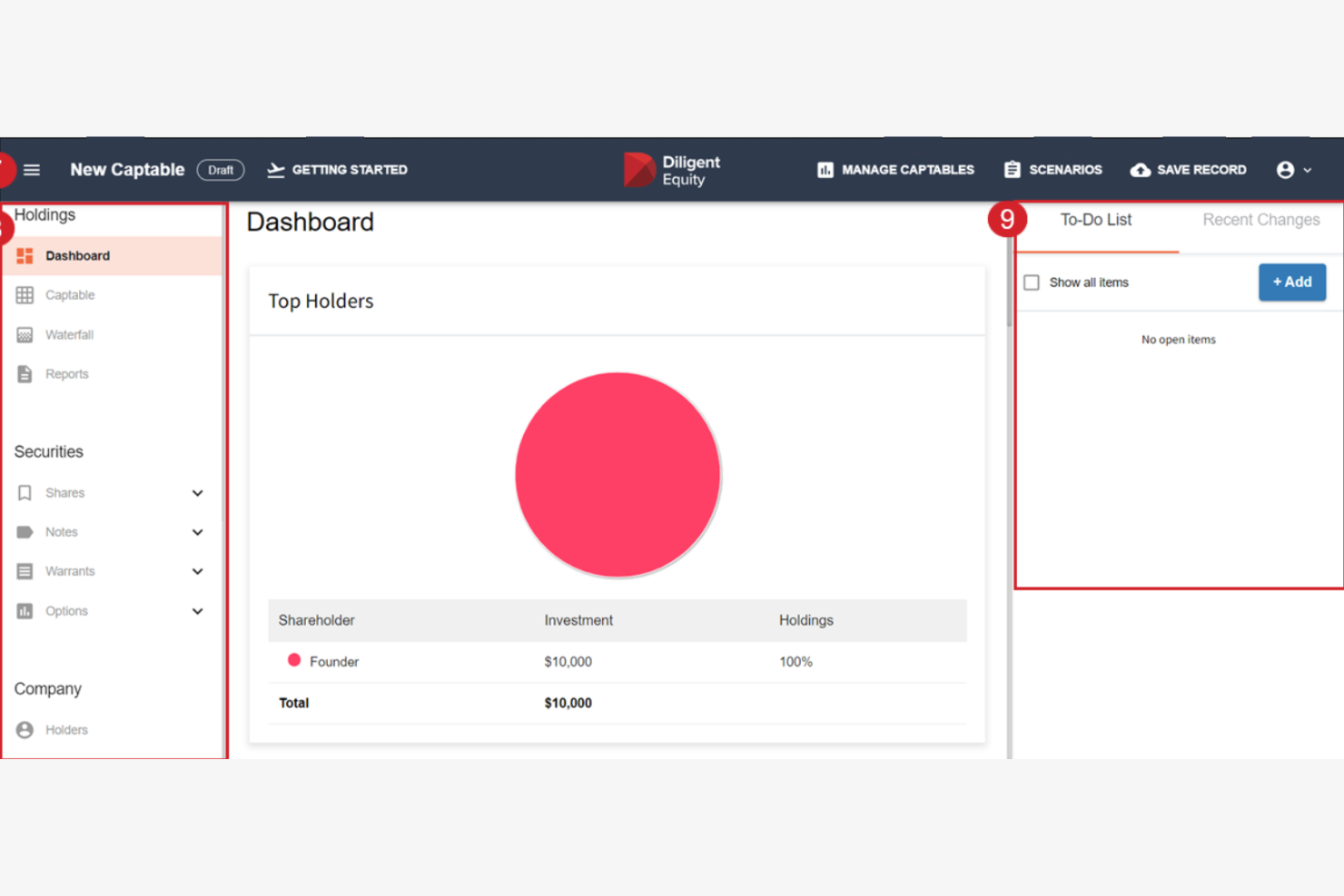
Diligent is a cap table management software designed for enterprises that prioritize data security and compliance. It helps manage equity, board communications, and governance processes effectively.
Why I picked Diligent: Diligent focuses on secure data handling, a non-negotiable if you manage sensitive information. It offers encrypted data storage and detailed access controls to keep your equity data safe. Diligent's compliance features ensure your team meets regulatory requirements, and its emphasis on security and governance makes it a reliable choice for companies with strict data protection needs.
Standout Features and Integrations:
Features include encrypted data storage to protect sensitive information, detailed access controls to manage your data, and compliance tracking to ensure your company meets all regulatory standards.
Integrations include Rayven, Google Workspace, and more.
Pros and Cons
Pros:
- Reliable data encryption
- Detailed access control features
- Strong focus on data security
Cons:
- Needs manual document replacement
- Requires technical training

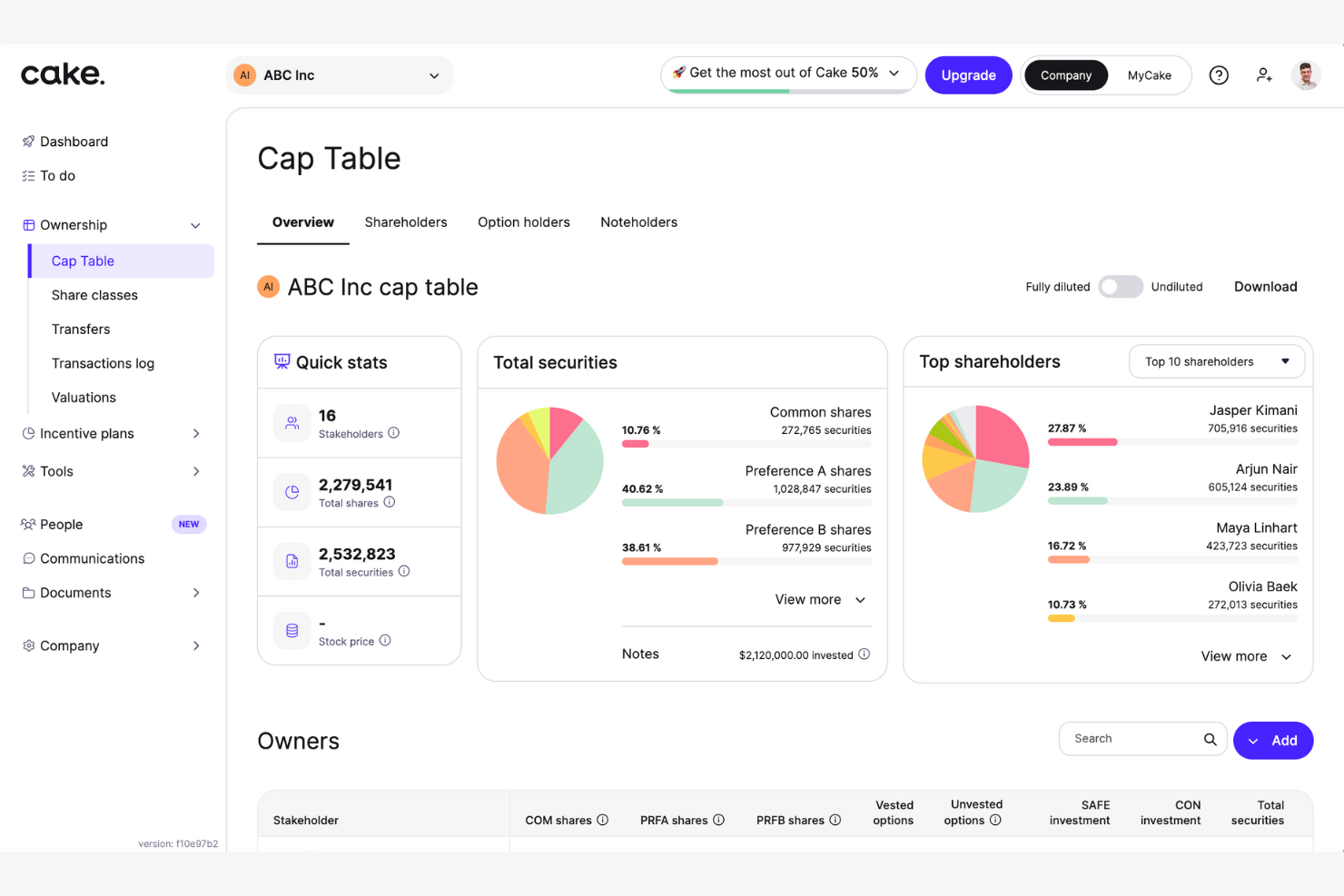
Cake is a cap table and equity management software designed for startups and small teams. It simplifies equity management, fundraising, and shareholder relations with a user-friendly platform.
Why I picked Cake: Also known as Cake Equity, this tool is tailored for small teams that need efficient equity management. It offers features like scenario modeling and compliance tracking, which are essential for startups. Cake's automated contract management and stock option issuance help your team manage equity, and its transparency and ease of use make it an ideal choice for small teams looking to improve efficiency.
Standout Features and Integrations:
Features include scenario modeling to visualize potential outcomes, compliance tracking to ensure your team meets all necessary regulations, and automated contract management to simplify administrative tasks.
Integrations are not publicly listed.
Pros and Cons
Pros:
- Efficient equity issuance
- Transparent pricing model
- Quick setup for small teams
Cons:
- Limited waterfall financial modeling
- Focused on simple early-stage equity

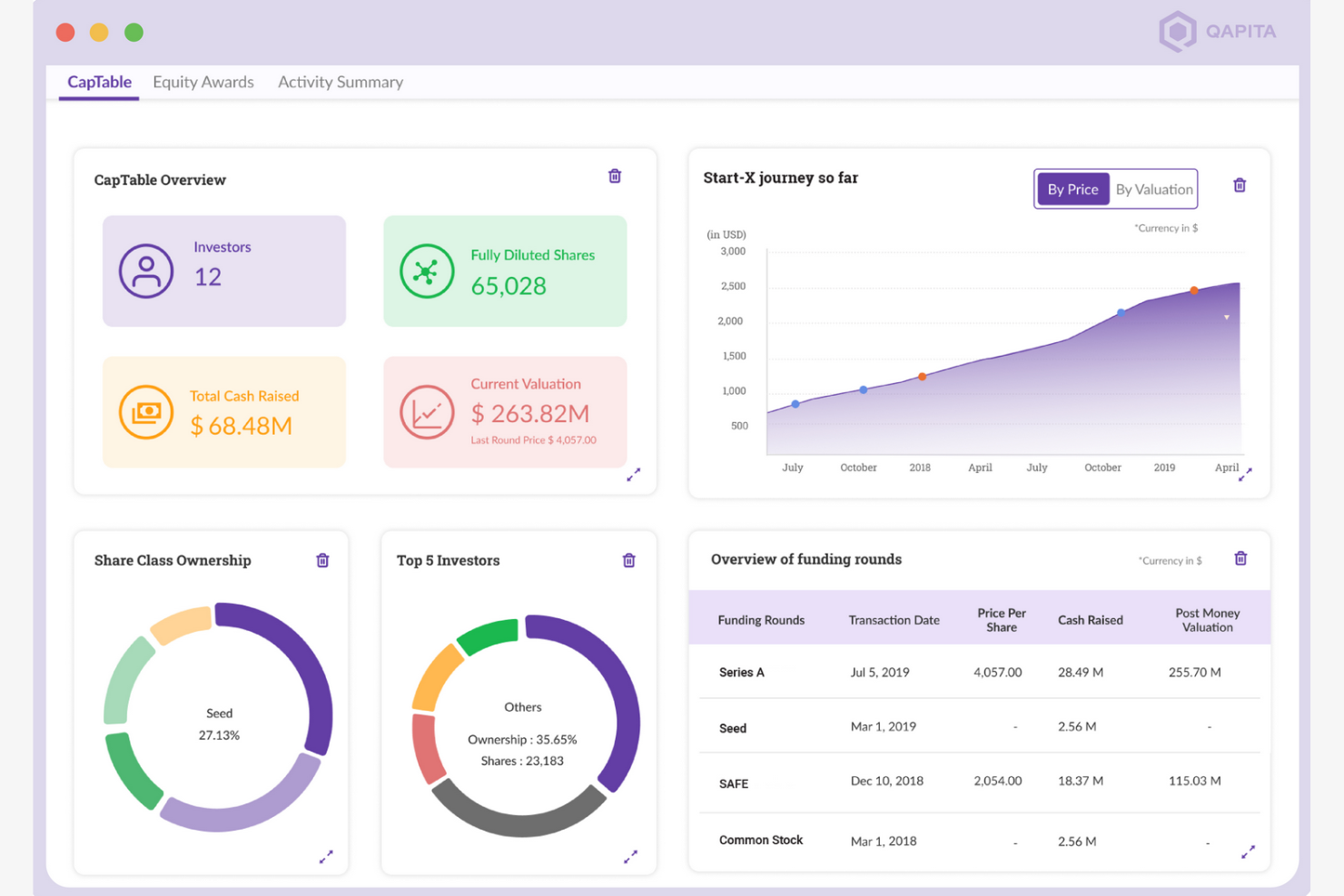
Qapita is a cap table management software that focuses on equity and fund management. It helps founders, investors, and employees manage complex equity structures with features such as equity tracking, employee stock plan management, and financial reporting.
Why I picked Qapita: Qapita is tailored for companies operating in the Asian market, offering localized solutions for complex equity management. It provides real-time visibility and compliance to navigate international regulations. Qapita's automated portfolio valuations and equity compensation advisory help your team manage equity efficiently, and its focus on the Asian market ensures you have the tools needed to handle regional equity challenges effectively.
Standout Features and Integrations:
Features include automated 409A valuations to improve compliance, detailed financial reporting tools to keep stakeholders informed, and tailored equity compensation advisory services to align equity programs with your company's goals.
Integrations are not publicly listed.
Pros and Cons
Pros:
- Supports complex equity structures
- Real-time compliance features
- Tailored for Asian markets
Cons:
- Lacks automated US GAAP reporting
- Limited Western market tax integrations

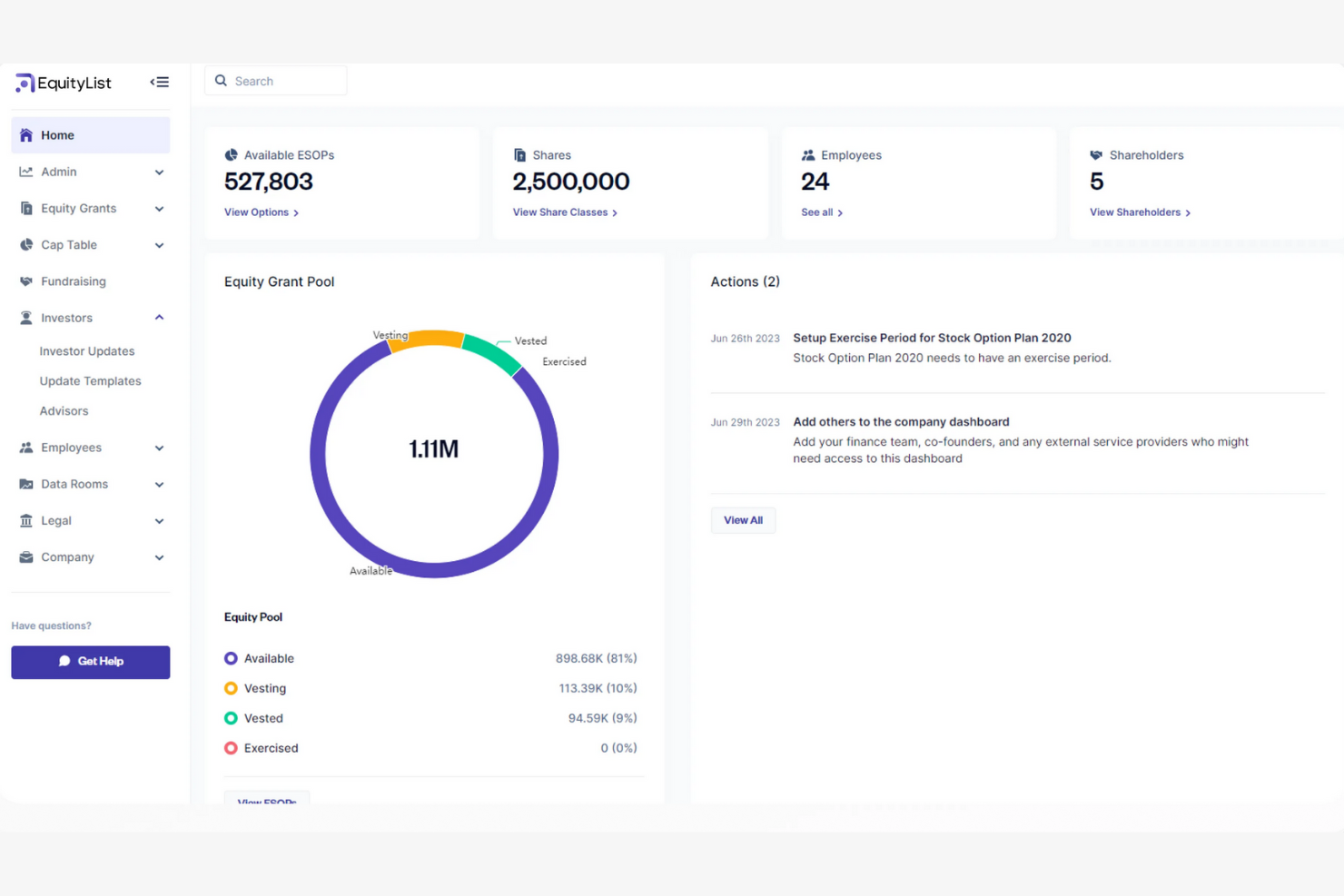
EquityList is a cap table management platform designed for startups and growing businesses seeking affordable equity management solutions. It focuses on simplifying equity tracking, compliance, and shareholder communications without breaking the bank.
Why I picked EquityList: EquityList is an economical choice for startups looking to improve efficiency. It offers valuable features such as automated equity tracking and compliance alerts, and its intuitive interface helps your team handle shareholder communications. EquityList's cost-effective approach ensures you can manage equity efficiently while saving on costs.
Standout Features and Integrations:
Features include automated equity tracking to update your cap table, compliance alerts to keep your team informed of regulatory changes, and tools for managing shareholder communications effectively.
Integrations are not publicly listed.
Pros and Cons
Pros:
- Simple, visually intuitive interface
- Automated equity tracking
- Cost-effective for startups
Cons:
- Manual reconciliation for complex US entities
- Limited support for non-Asian markets

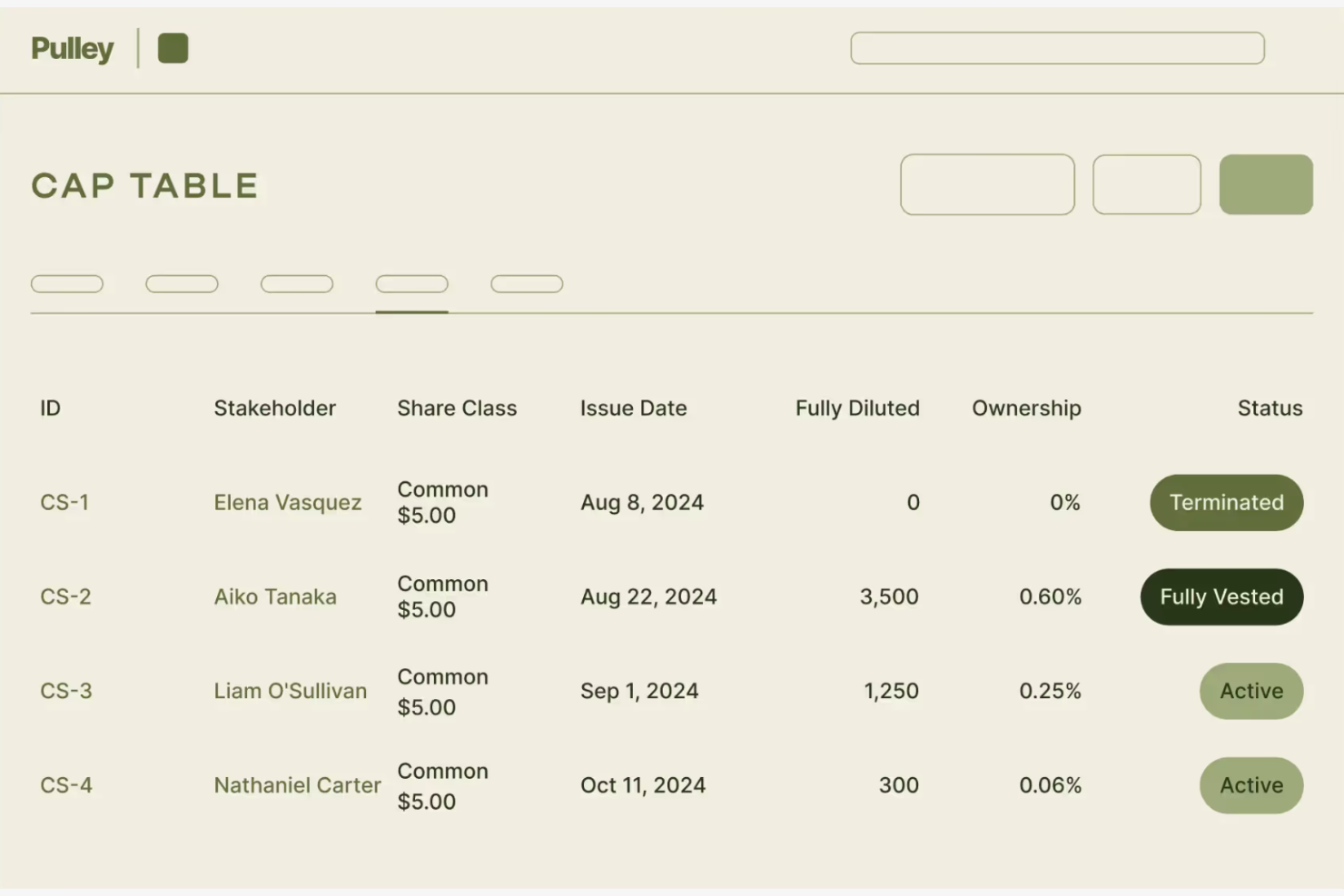
Pulley is a cap table management software designed for high-growth companies. It simplifies equity management by offering tools for compliance, fundraising, and employee RSUs.
Why I picked Pulley: Pulley excels at providing a quick setup and user-friendly experience, making it ideal for early-stage companies that need to get started fast. Its automated token distribution and real-time dilution modeling help founders and finance leaders manage complex equity structures. Pulley's integration with HRIS and payroll systems ensures your operations run smoothly, while its rapid 409A valuations and compliance support keep your company in good legal standing.
Standout Features and Integrations:
Features include automated token distribution to simplify digital asset management, real-time dilution modeling to monitor equity fluctuations, fast onboarding, and employee portals for easy access.
Integrations include QuickBooks, Gusto, Rippling, Namely, Paycom, BambooHR, Zenefits, Justworks, and more.
Pros and Cons
Pros:
- Compliance support included
- Automated equity processes
- Real-time dilution modeling
Cons:
- Lacks enterprise-grade global tax engines
- Fixed annual platform fee structure

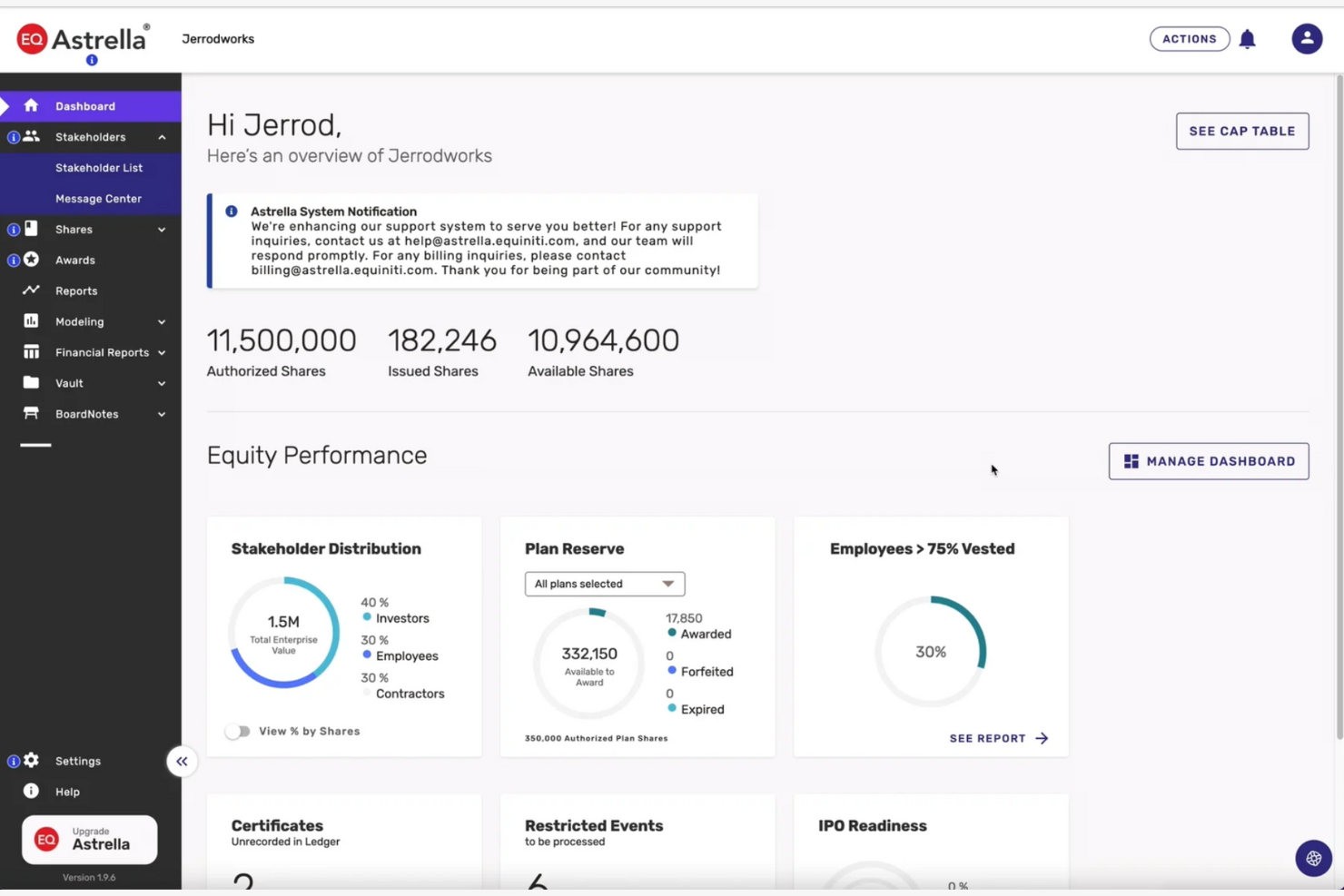
Astrella is a cap table management software designed for international businesses with complex equity needs. It handles global compliance, equity planning, and stakeholder management.
Why I picked Astrella: Astrella is tailored for companies that need global compliance management, offering essential features such as multicurrency support and compliance alerts. Astrella's automated equity planning tools help your team manage complex equity structures, and its focus on global compliance ensures your company meets regulations across borders.
Standout Features and Integrations:
Features include multicurrency support to simplify financial operations, compliance alerts to keep your team informed of regulatory changes, and detailed reporting tools for holistic equity insights.
Integrations are not publicly listed.
Pros and Cons
Pros:
- Automated equity planning
- Detailed compliance alerts
- Supports multiple currencies
Cons:
- High minimum annual contract investment
- Initial data migration assistance required
Other Cap Table Management Software
Here are some additional cap table management software options that didn’t make it onto my shortlist but are still worth checking out:
- Morgan Stanley at Work
For large enterprises
- Fidelity Private Shares
For private company equity
- SeedLegals
For legal compliance integration
- Orchestra
For automated employee equity plans


How I Evaluate Cap Table Management Software
I evaluate cap table tools across two layers: baseline requirements every contender must meet and differentiators that separate a seed-stage tool from one built for pre-IPO scale.
Core Functionality (Table Stakes For This List)
When I'm selecting tools for my list, I rank each one on a scale from 0 (does not offer the functionality) to 5 (excels in this area) for each core functionality listed below. Then, I calculate the tool's total score into a percentage. Each tool needs to achieve a minimum total score of 65% to be considered for inclusion.
- Equity Ledger Management: I check whether a tool tracks all security types—common, preferred, SAFEs, warrants, convertibles—with a full audit trail across rounds.
- Scenario & Waterfall Modeling: Each tool should let you model multiple funding rounds side by side, run exit waterfalls, and see per-stakeholder payout breakdowns.
- Equity Plan Administration: I look for end-to-end grant lifecycle support, from board-approved option pools through vesting schedules and exercise workflows for ISOs and RSUs.
- Compliance & Reporting: The platform should automate key filings like 409A snapshots, ASC 718 expense reports, and Form 3921—not just export raw data for manual prep.
- Stakeholder Portal & E-signature: Founders and HR leads benefit when shareholders can view holdings, accept grants, and sign documents without email chains or PDFs.
- Financial System Integration: I evaluate how each tool syncs equity data with general ledger and payroll platforms, since manual re-entry between systems invites errors.
Once I have a list of tools that meet this criteria, I consider what sets each platform apart.
Differentiating Factors (What Sets Vendors Apart)
Here's how I compare and contrast different vendors:
Standout Features
Integrated 409A valuations stand out because they eliminate the back-and-forth with third-party appraisers, speeding up refresh cycles before new grant issuances. I also evaluate global equity support for companies with distributed teams who need multi-jurisdictional tax calculations built into the platform. Secondary liquidity tooling is worth checking too—when a late-stage company wants to run a tender offer, having that workflow native to the cap table saves significant coordination overhead.
Beyond Features
Company stage matters here. A two-person startup with one share class has very different needs than a Series C company juggling preferred rounds, SAFEs, and an employee pool across entities. I look at whether each platform scales with that growth or locks you into a tier you'll outgrow. Data migration is another key factor—moving from spreadsheets mid-round is risky, so I check whether vendors offer white-glove migration with historical validation. Total cost of ownership also counts, since add-on fees for 409A reports or liquidity events can shift the real price well beyond the listed subscription.
How To Choose Cap Table Management Software
It's easy to get bogged down in long feature lists and complex pricing structures. To help you stay focused as you work through your unique software selection process, here's a checklist of factors to keep in mind:
| Factor | What To Consider |
|---|---|
| Scalability | Will the software grow with your company? Consider if it can handle increased users and data as your company expands. |
| Integrations | Does it connect with your existing tools, such as accounting software or HR systems? Check for compatibility to avoid workflow disruptions. |
| Customizability | Can you tailor the software to fit your specific needs? Look for options to adjust settings, reports, and user roles. |
| Ease of use | Is the interface intuitive for your team? Ensure it won't require extensive training, which can slow down adoption. |
| Implementation and onboarding | How long will it take to set up? Assess the resources required and the support provided during the transition period. |
| Cost | Does the pricing fit your budget? Review all fees, including setup and maintenance costs, and compare them to the value provided. |
| Security safeguards | How does the software protect your data? Verify encryption standards and data access controls to ensure your sensitive information is secure. |
| Compliance requirements | Does it help meet regulatory needs? Confirm it supports compliance with relevant laws for your industry and region. |
What Is Cap Table Management Software?
Cap table management software is a tool designed to simplify the management of a company's equity and shareholder information. Typically used by CFOs, finance teams, and startup founders, these tools provide value by organizing complex equity structures and ensuring compliance with regulations. Automated equity tracking, compliance alerts, and reporting capabilities help users manage shares and options efficiently. These tools save time and reduce errors, making equity management more straightforward and accurate.
Features of Cap Table Management Software
When selecting cap table management software, keep an eye out for the following key features:
- Automated equity tracking: Keeps your cap table up to date by automatically recording changes in equity and company ownership.
- Compliance alerts: Notify you of regulatory changes and deadlines to ensure your company remains compliant with legal requirements.
- Reporting tools: Provide detailed reports on equity distribution and shareholder data to help with decision-making and transparency.
- Valuation tools: Help assess your company's value, which is vital for fundraising rounds and financial planning.
- Shareholder communication: Facilitates efficient communication with stakeholders, keeping them informed about equity changes and company performance.
- Multicurrency support: Lets you manage equity in different currencies, which is essential for companies operating internationally.
- Customizable dashboards: Offer personalized views and metrics to help you focus on the most relevant data for your company.
- Integration capabilities: Connect with other business tools, such as accounting and HR software, to refine workflows and data management.
- Data security features: Protect sensitive financial information through encryption and access controls, ensuring data privacy and security within a single source of truth.
- Scenario modeling: Lets you simulate different equity scenarios to understand potential impacts on ownership structures, liquidity, and valuation.
Benefits of Cap Table Management Software
Implementing cap table management software provides several benefits for your team and your business. Here are a few you can look forward to:
- Increased accuracy: Automated equity tracking reduces manual errors, keeping your cap table up to date.
- Time savings: Simplified processes and compliance alerts free up your team from tedious manual tasks, letting them focus on strategic initiatives.
- Improved decision-making: Detailed reporting tools provide insights into equity distribution, helping you make informed business decisions.
- Improved transparency: Clear communication tools keep stakeholders informed, fostering confidence in your company.
- Regulatory compliance: Compliance alerts help your company meet legal requirements, reducing the risk of fines and penalties.
- Scalability: Multicurrency support and integration capabilities allow your company to grow and adapt to new markets without changing systems.
- Data security: Strong security features protect sensitive financial information, giving you peace of mind about data privacy.
Costs and Pricing of Cap Table Management Software
Selecting cap table management software requires an understanding of the various pricing models and plans available. Costs vary based on features, team size, add-ons, and more. The table below summarizes common plans, their average prices, and typical features included in cap table management software solutions:
Plan Comparison Table for Cap Table Management Software
| Plan Type | Average Price | Common Features |
|---|---|---|
| Free Plan | $0 | Basic equity tracking, limited reporting, and essential compliance alerts. |
| Personal Plan | $100-200/month | Improved equity tracking, customizable dashboards, and basic integration capabilities. |
| Business Plan | $250-$500/month | Advanced reporting tools, multicurrency support, and shareholder communication features. |
| Enterprise Plan | $600-$1,800/month | Full suite access, detailed compliance management, and premium support with dedicated account managers. |
Cap Table Management Software FAQs
Here are some answers to common questions about cap table management software:
How can cap table management software improve equity tracking for my company?
Cap table management software instantly organizes all your equity data in one place. You’ll track shares, option grants, and ownership changes without juggling spreadsheets. This makes it easy to see who owns what and reduces errors when reporting to stakeholders or auditors.
How do I know if my company needs cap table management software?
If your company has multiple shareholders, stock options, or funding rounds, cap table management software can be beneficial. It helps organize complex equity structures and provides transparency to shareholders. If you’re spending too much time managing spreadsheets or worried about compliance, consider this software.
Does cap table management software help with compliance and audit readiness?
Yes, most cap table management tools come with integrated compliance features. You can automate record-keeping, generate audit reports, and keep up with SEC and IRS requirements so you can rest assured that your equity records can stand up to due diligence or audits.
Can cap table management software integrate with other tools we use?
Yes, many cap table management tools integrate with accounting software, HR systems, and communication platforms. These integrations help simplify workflows and ensure your data is consistent across different systems. Before purchasing, check whether the software integrates with tools your team already uses, such as QuickBooks or Slack.
Is it difficult to switch to cap table management software from spreadsheets?
Switching from spreadsheets to cap table management software can be a straightforward process with the right support. Most software providers offer onboarding assistance, including data import tools and training resources. Make sure to choose a provider that offers complete onboarding services to help your team transition smoothly and minimize disruptions.
What's Next:
If you're in the process of researching cap table management software, connect with a SoftwareSelect advisor for free recommendations.
You fill out a form and have a quick chat where they get into the specifics of your needs. Then you'll get a shortlist of software to review. They'll even support you through the entire buying process, including price negotiations.