

A tokenization platform lets you convert real-world or digital assets into secure digital tokens on a blockchain. If you’re comparing tokenization platforms, you need solutions with strong compliance, asset management, and integration features you can trust. Picking the right provider helps you avoid regulatory risk while supporting faster, more transparent transactions.
In this guide, you’ll get clear insight into the most trusted tokenization platforms this 2026, so you can confidently evaluate which solution best supports your business, clients, and assets.
Why Trust Our Software Recommendations
6,700+
Reviews
20
Industry experts
16+
Evaluation factors
14
Years
Our team has been testing and reviewing software since 2012. As finance leaders ourselves, we know how difficult—and important—it is to choose the right software.
For this guide, we evaluated tools using hands-on testing and independent research, scoring tools using our selection criteria.
Our reviews reflect our human editorial judgment, not a sales pitch.
Tokenization Platforms Comparison Table
This comparison table summarizes pricing details for my top tokenization platform selections:
| Tool | Best For | Trial Info | Price | ||
|---|---|---|---|---|---|
| 1 | Best for digital securities trading access | Not available | Pricing upon request | Website | |
| 2 | Best for private market investment access | Not available | Pricing upon request | Website | |
| 3 | Best for institutional-grade tokenized funds | Not available | Pricing upon request | Website | |
| 4 | Best for real-world asset tokenization | Not available | Pricing upon request | Website | |
| 5 | Best for white-label real estate platforms | Free demo available | From $300/month | Website | |
| 6 | Best for modular compliance frameworks | Not available | From $3,250/month | Website | |
| 7 | Best for regulated digital asset solutions | Not available | Pricing upon request | Website | |
| 8 | Best for secure on-chain asset management | Free demo available | From $999/month | Website | |
| 9 | Best for enterprise blockchain tokenization | Free plan available | Pricing upon request | Website | |
| 10 | Best for integrated private asset infrastructures | Not available | Pricing upon request | Website |


Best Tokenization Platforms Reviews
Below are my detailed summaries of the best tokenization platforms that made it onto my shortlist. My reviews offer a detailed look at the features, compliance capabilities, and integrations of each platform to help you find the best one for you.

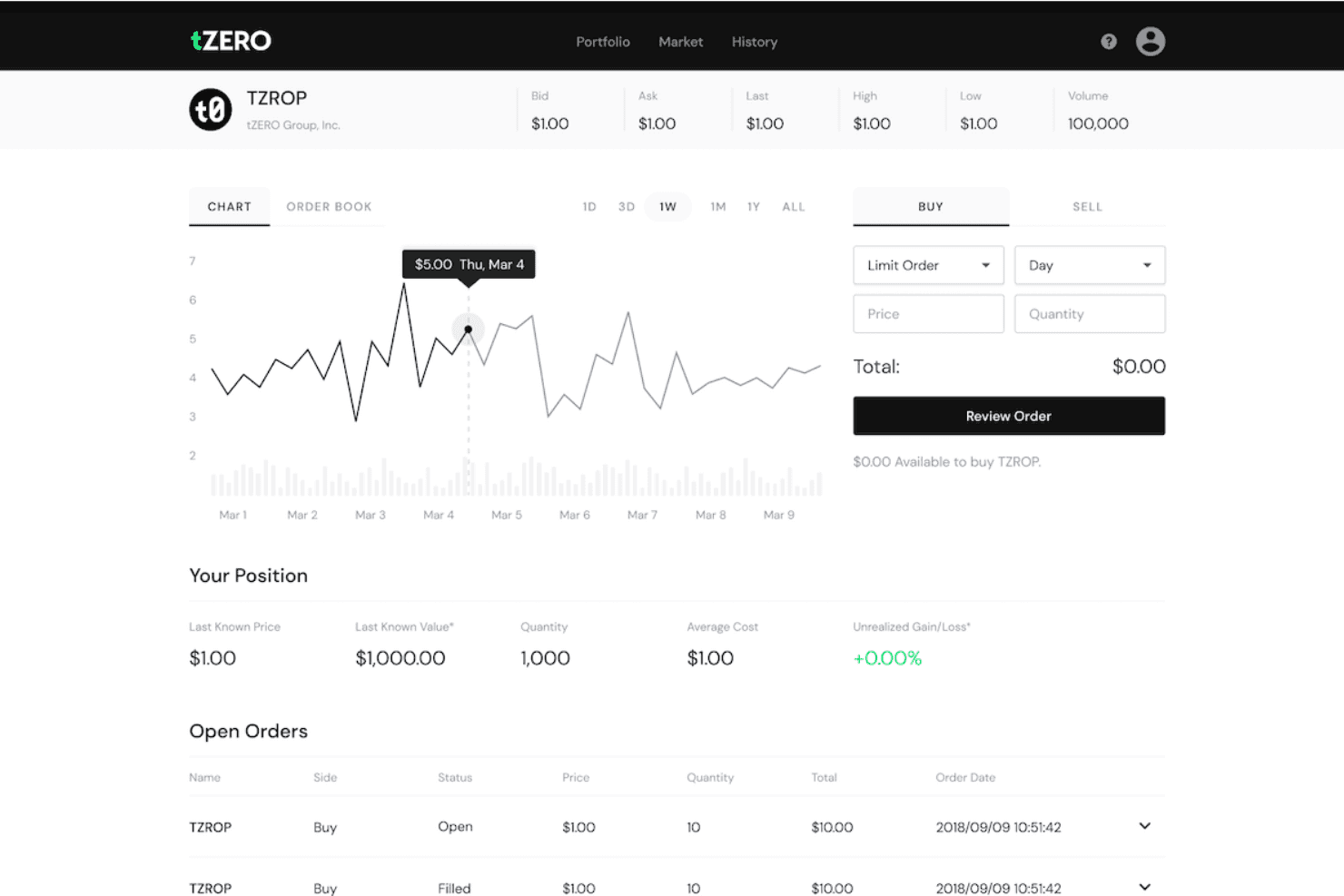
tZERO offers a trading interface for TZROP tokens with real-time charts, order placement, portfolio position, and open orders. tZERO is a regulated digital securities platform focused on tokenizing assets like real estate, funds, and private equity and providing integrated compliance, cap table management, and secondary trading through its alternative trading system.
Who Is tZERO Best For?
Institutional finance teams and asset managers needing regulated digital asset issuance and trading for US-based or SEC-compliant security token offerings.
Why I Picked tZERO
I picked tZERO as one of the best because I appreciate its regulated ATS, which lets my team trade security tokens compliantly. I can tokenize real estate and private equity, then enable digital secondary trading access, all on one platform.
tZERO Key Features
- Automated compliance screening: Built-in KYC and AML checks for onboarding and trading participants.
- On-chain cap table management: Real-time updates of token holder records and ownership changes.
- Smart contract-based transfer controls: Automated enforcement of transfer restrictions using blockchain rules.
- Issuer and investor dashboards: Centralized portals to track distributions, transactions, and corporate actions.
tZERO Integrations
tZERO offers native integrations with Zerohash, Fireblocks, Archax, Lynq, ArcaLabs, and Alphaledger. An API is available for custom integrations.
Pros and Cons
Pros:
- Real-time cap table and investor updates
- Automated on-chain compliance and transfer controls
- Regulated secondary market for security tokens
Cons:
- Smart contract customization options are restricted
- Global regulatory differences restrict availability
Learn more about tZERO:
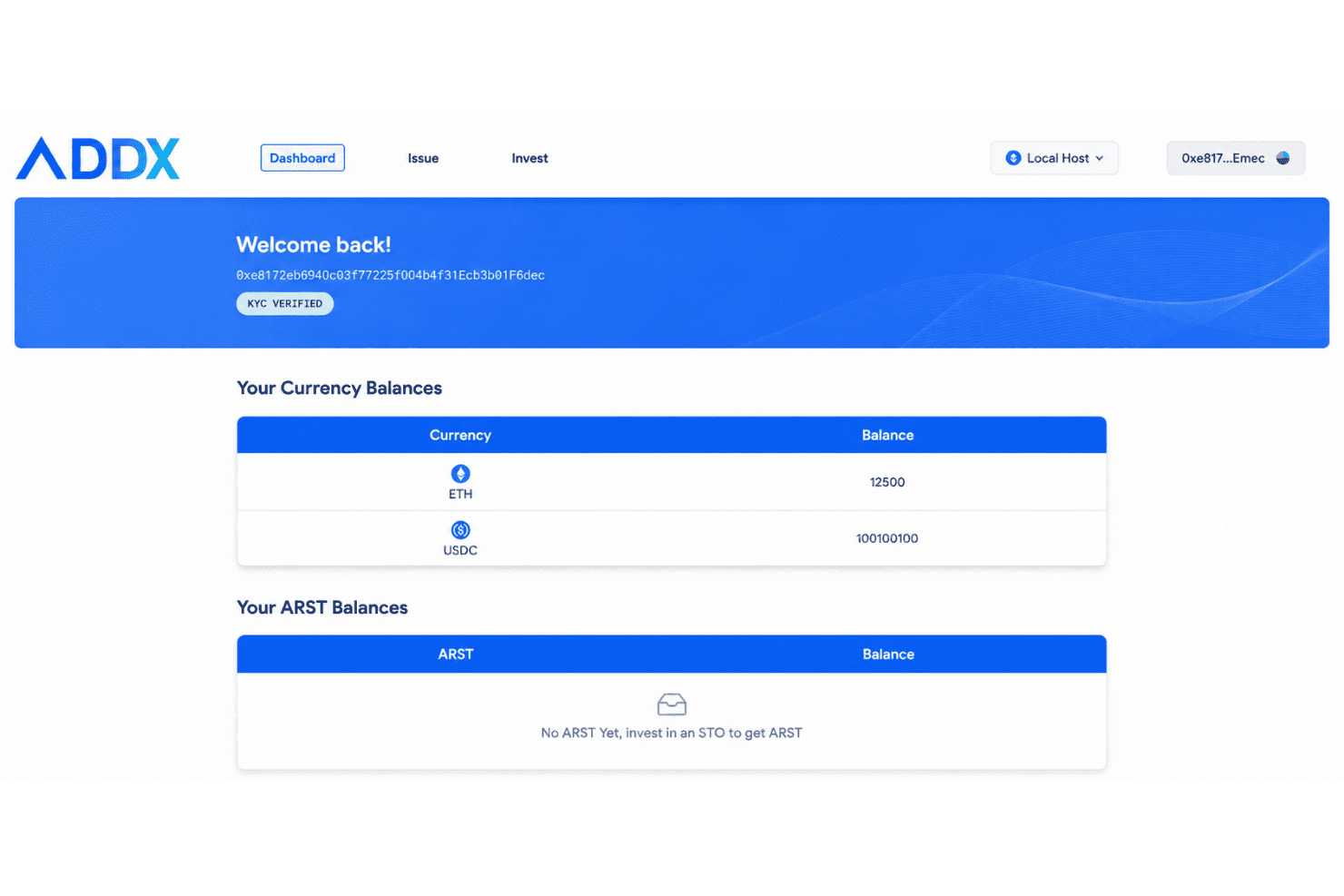
ADDX features a user dashboard showing currency balances in ETH and USDC, alongside an ARST token balance section for STO investors. ADDX is a regulated tokenization platform for private market assets that lets you fractionalize, issue, manage, and trade digital securities on blockchain rails with integrated compliance and settlement tools.
Who Is ADDX Best For?
Institutional investors, stakeholders, and finance teams who need regulated access to tokenized private market assets in Asia-Pacific.
Why I Picked ADDX
I picked ADDX as one of the best because I can tokenize and fractionalize private market assets, automate compliance for accredited investors, and enable secondary market access, which aligns with its focus on private market investment access.
ADDX Key Features
- On-chain investor registry: Tracks investor ownership and transactions directly on the blockchain.
- Regulatory licenses: Operates under MAS-regulated Recognised Market Operator and Capital Markets Services licenses.
- Automated smart contract settlements: Automates settlement processes for digital securities using smart contracts.
- Licensed custody partnerships: Safeguards assets with institutional-grade custody partners for fund segregation.
ADDX Integrations
Native integrations are not publicly listed.
Pros and Cons
Pros:
- Integrated compliance and investor onboarding workflows
- Secondary trading of fractionalized private assets
- Regulated by the Monetary Authority of Singapore
Cons:
- Secondary market liquidity can be inconsistent
- Limited to accredited and institutional investors
Learn more about ADDX: Best for institutional-grade tokenized funds
- Not available
- Pricing upon request
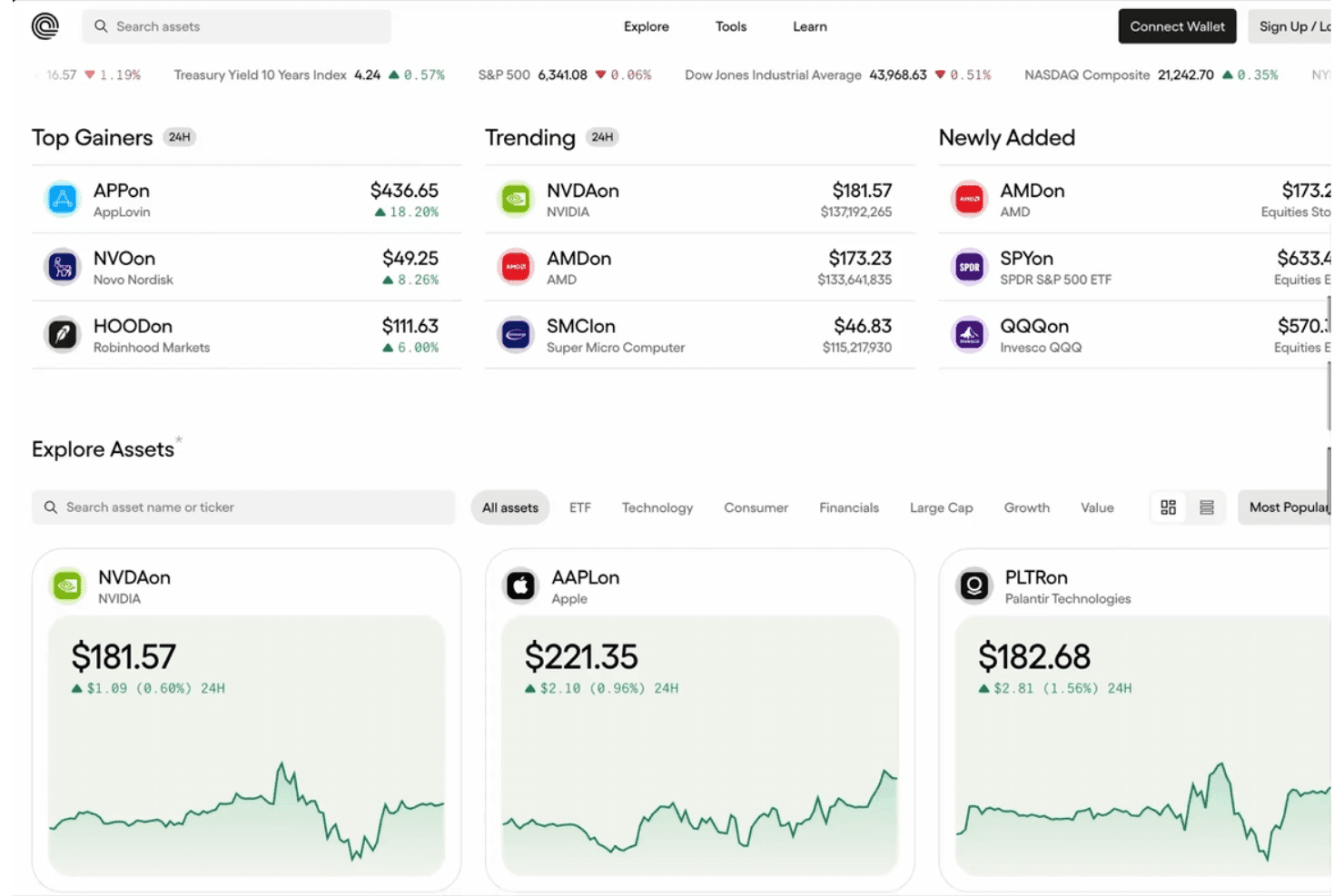
Ondo Finance offers stock and crypto asset tracking with top gainers, trending assets, and tokenized equities like NVDAon and AAPLon. Ondo Finance is a tokenization platform designed for institutions to issue, manage, and transfer blockchain-based fund tokens backed by regulated, real-world assets like U.S. Treasuries and money market instruments.
Who Is Ondo Finance Best For?
Institutional finance teams and asset managers seeking compliant, on-chain tokenization and administration of regulated fund products.
Why I Picked Ondo Finance
I picked Ondo Finance for my shortlist because I can issue and manage tokenized funds using on-chain smart contracts, with built-in regulatory compliance and smooth institutional custody that backs every asset in real time.
Ondo Finance Key Features
- On-chain cap table management: Maintain a real-time, blockchain-based registry of investor holdings and transfers.
- Jurisdictional transfer controls: Automatically enforce regional restrictions on token transfers within the platform.
- Automated interest distribution: Distribute yield and payments to token holders using programmable rules.
- Multiple custody integrations: Connect to institutional wallets and major custodians for secure asset storage.
Ondo Finance Integrations
Ondo Finance offers native integrations with Aptos, BitGo, BlackRock, Coinbase, Ethereum, Fireblocks, Gauntlet, Mantle, Noble, and Polygon, among others. An API is available for custom integrations.
Pros and Cons
Pros:
- Real-world asset backing with big-name partners
- Automated distributions and investor reporting
- On-chain compliance controls for institutional requirements
Cons:
- Heavy reliance on centralized administration
- High minimum investments for core products
Learn more about Ondo Finance:
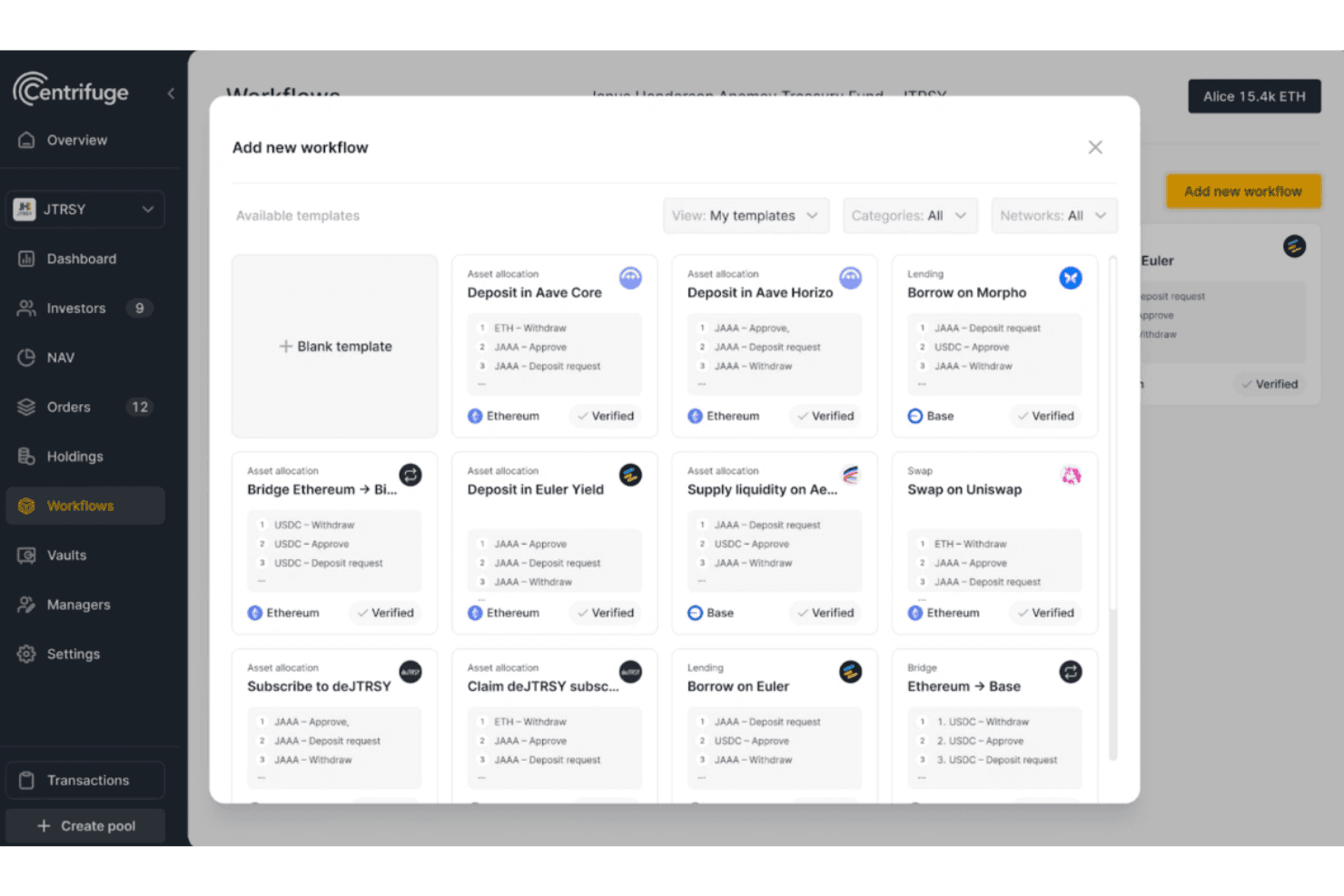
Centrifuge offers a workflow automation feature with pre-built templates for DeFi operations like lending, swapping, and asset allocation across networks. Centrifuge is a blockchain-based tokenization platform that lets you create, issue, and manage on-chain representations of real-world assets, including loans, invoices, and real estate investment opportunities.
Who Is Centrifuge Best For?
Centrifuge is a strong fit for asset managers and leaders in financial markets looking to tokenize and finance real-world assets on blockchain infrastructure.
Why I Picked Centrifuge
I picked Centrifuge as one of the best because I can tokenize real-world assets like invoices and property on a purpose-built blockchain, set smart contract-based compliance rules, and access on-chain liquidity pools specifically for asset-backed tokens.
Centrifuge Key Features
- On-chain cap table management: Manage investor ownership and changes on blockchain infrastructure.
- Integrated KYC/AML workflows: Automate onboarding compliance checks for all platform participants.
- Institutional wallet integrations: Connect to custodial wallets including Fireblocks and Ledger.
- Multi-chain interoperability: Operate assets across the Centrifuge Chain and Ethereum networks.
Centrifuge Integrations
Native integrations are not publicly listed. An API is available for custom integrations.
Pros and Cons
Pros:
- DeFi liquidity pools for asset-backed tokens
- Automated on-chain compliance and investor management
- Native support for tokenizing real-world assets
Cons:
- Underlying assets are highly illiquid
- No regulated built-in secondary marketplace
Learn more about Centrifuge: Best for white-label real estate platforms
- Free demo available
- From $300/month
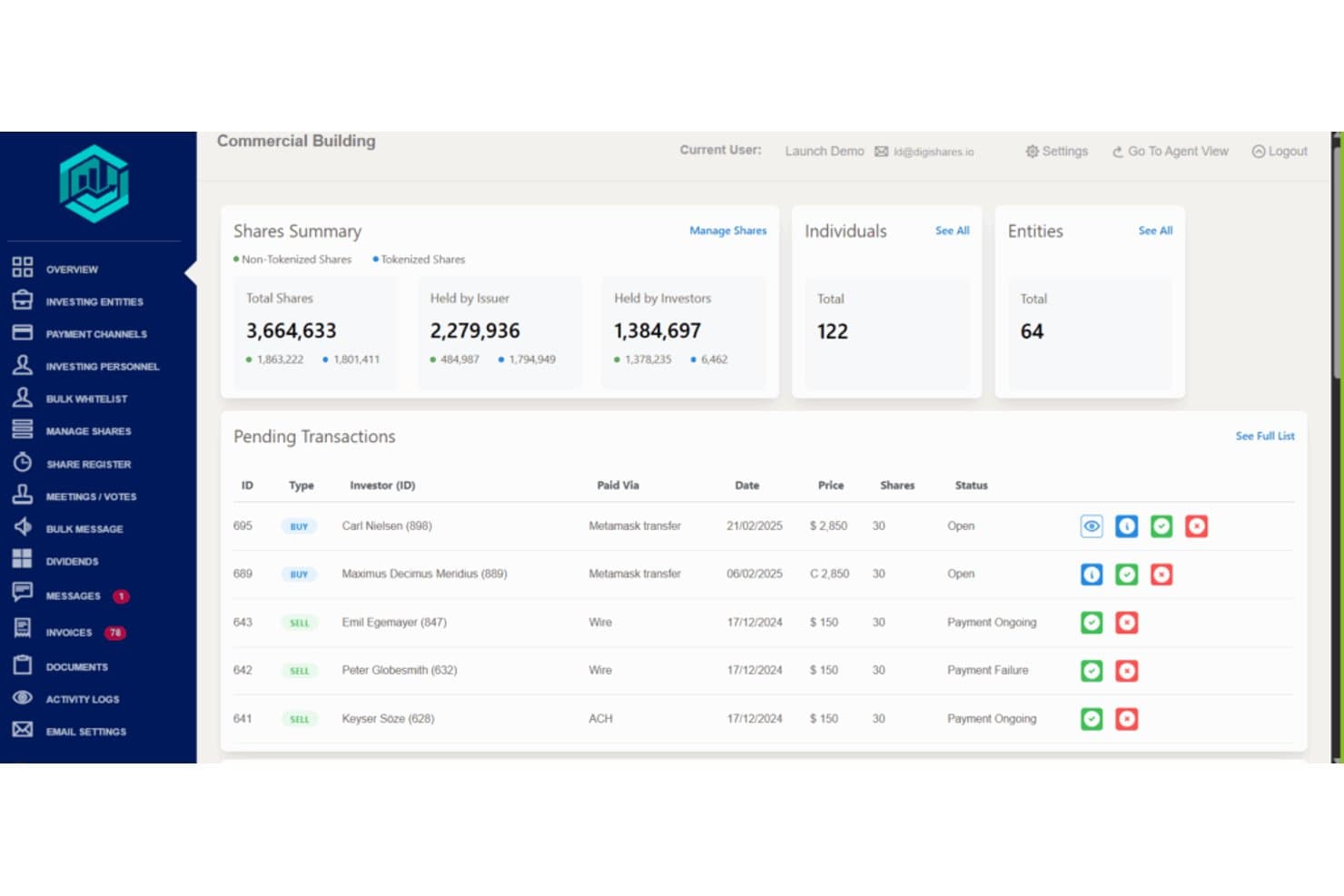
DigiShares offers a commercial building tokenization dashboard with shares summary, pending transactions, and investor management tools. DigiShares is a tokenization platform designed for real-world assets that lets you issue, manage, and trade digital securities through a white-label system tailored for asset classes like real estate and private funds.
Who Is DigiShares Best For?
Real estate issuers, fund administrators, and asset management firms seeking a customizable solution for digitalizing and managing fractional ownership.
Why I Picked DigiShares
I picked DigiShares as one of the best because it lets my team launch white-label real estate portals with asset tokenization, full compliance automation, and built-in investor onboarding tailored for real estate projects.
DigiShares Key Features
- On-chain cap table management: Tracks ownership and updates investor records in real time.
- Corporate actions automation: Executes dividend distributions and voting directly via smart contracts.
- Multi-wallet compatibility: Supports self-custody, institutional, and custodial wallets for asset holding.
- Secondary market connectivity: Integrates with external exchanges and ATS for post-issuance trading.
DigiShares Integrations
DigiShares offers native integrations with Stripe, DocuSign, Dwolla, Xendit, Dropbox Sign, Tangany, and WallerConnect, among others. An API is available for custom integrations.
Pros and Cons
Pros:
- On-chain cap table and corporate governance tools
- Automated investor onboarding and compliance workflows
- White-label portals for real estate tokenization
Cons:
- Custom API setup requires technical expertise
- Limited independent user reviews available
Learn more about DigiShares:
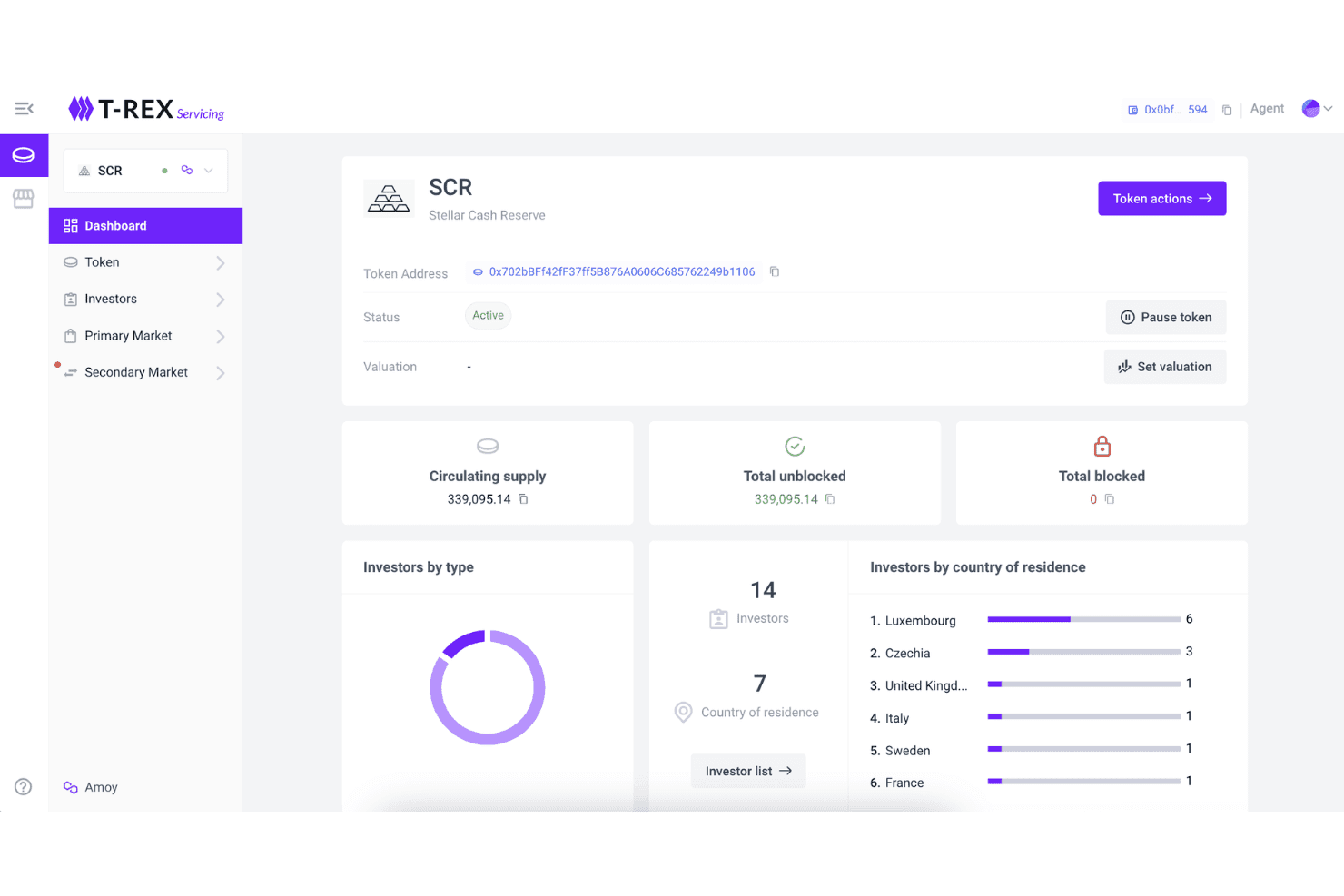
Tokeny's T-REX Servicing platform offers a token dashboard for SCR (Stellar Cash Reserve) with supply metrics and investor distribution data. Tokeny is an institutional-grade tokenization platform for financial assets, offering tools for asset tokenization, on-chain compliance, smart contract management, cap table maintenance, and integration with custodians and secondary markets.
Who Is Tokeny Best For?
Tokeny is a strong choice for financial institutions and asset managers seeking institutional-grade tokenization with built-in compliance controls.
Why I Picked Tokeny
I picked Tokeny as one of the best because I can set up compliance modules for each jurisdiction, use programmable transfer rules, and manage tokenized securities with customizable permission controls. I see this modular compliance framework as a real differentiator.
Tokeny Key Features
- On-chain cap table management: Maintain a real-time, blockchain-based register of security token ownership and movements.
- Multi-chain issuance support: Launch and manage tokens on Ethereum, Polygon, and other supported blockchains.
- API access for system integration: Connect to external financial, compliance, or fund administration systems using efficient APIs.
- Secondary market connectivity: Enable compliant transfers and peer-to-peer trading through integrations with regulated trading venues.
Tokeny Integrations
Tokeny offers native integrations with Fireblocks, Tangany, Inveniam, Moneirum, Artory, and Polygon, and provides an API for custom integrations.
Pros and Cons
Pros:
- On-chain cap table management with audit trails
- Smart contract programmability for lifecycle events
- Modular compliance rules engine for global jurisdictions
Cons:
- Minimum project size requirements for onboarding
- Requires identity verification for transfers
Learn more about Tokeny:
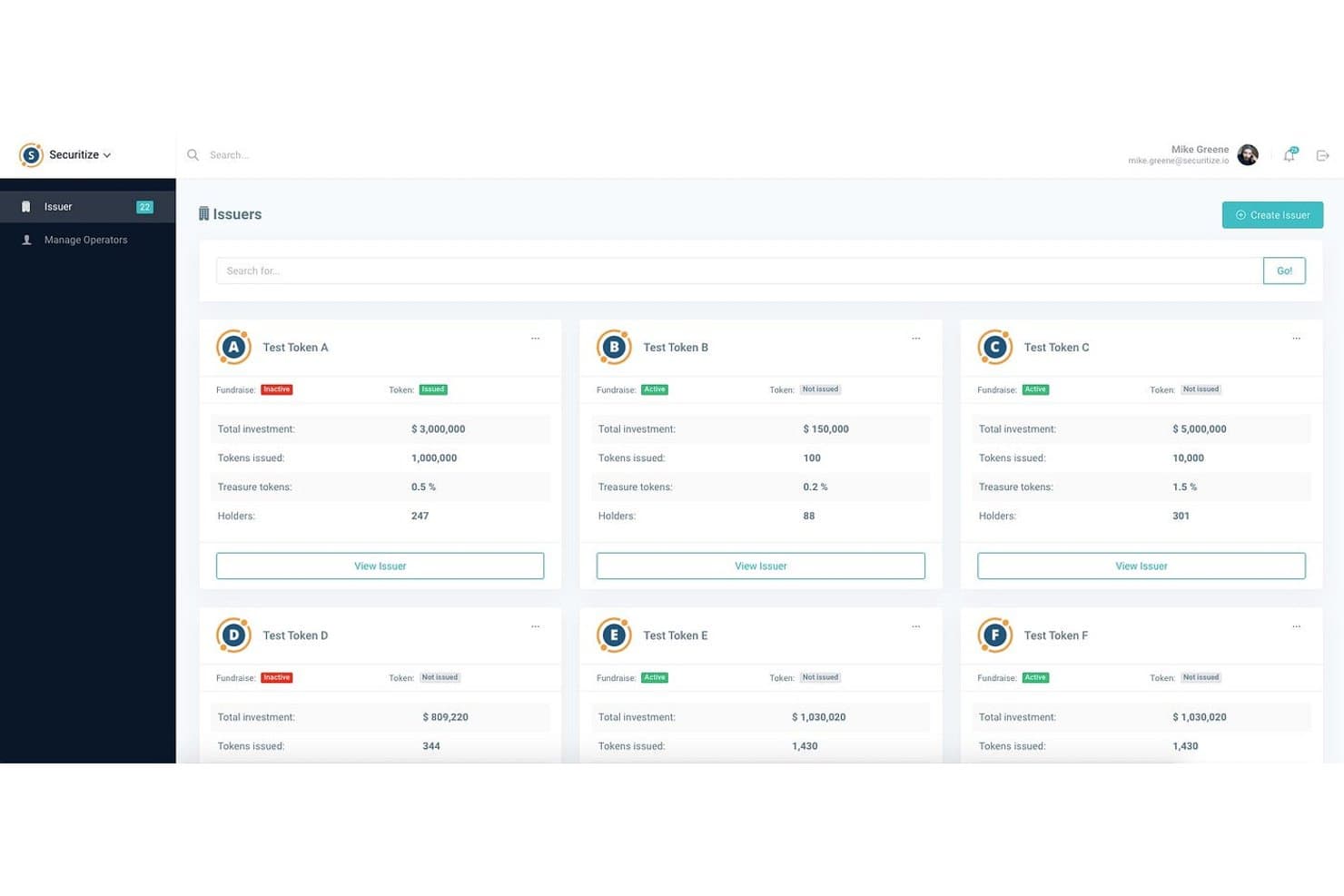
Securitize offers a multi-issuer dashboard where users can manage and monitor multiple tokenized asset issuers with investment and token metrics at a glance. Securitize is a tokenization platform focused on regulated digital assets, offering compliant asset issuance, investor onboarding, cap table management, and integrated secondary market trading for fund managers, enterprises, and capital markets teams.
Who Is Securitize Best For?
Securitize is a strong fit for institutional asset managers and fund administrators seeking compliant digital asset issuance and trading on regulated infrastructure.
Why I Picked Securitize
I picked Securitize as one of the best tokenization platforms because I can issue fully compliant digital securities, automate investor onboarding with built-in KYC, and connect assets to its regulated secondary market. That’s key for regulated digital asset solutions.
Securitize Key Features
- On-chain cap table management: View and update real-time shareholder records directly on blockchain infrastructure.
- Automated corporate actions: Handle distributions and voting events for digital securities within a single dashboard.
- Configurable smart contracts: Set custom rules for dividend flows, transfer restrictions, and lifecycle events.
- Flexible custody integrations: Support for multiple wallet types, including institutional custodians and multi-signature wallets.
Securitize Integrations
Securitize offers native integrations with Asana and integrates with Jira, Bitbucket, Confluence, Slack, and Logz.io through the Cortex ecosystem. It also connects with blockchain networks like TRON and Avalanche. An API is available for custom integrations.
Pros and Cons
Pros:
- Institutional-grade custody options available
- Automated on-chain compliance and investor onboarding
- Regulated secondary market for digital securities
Cons:
- Regulatory shifts present ongoing compliance risks
- The onboarding process can be complex
Learn more about Securitize: Best for secure on-chain asset management
- Free demo available
- From $999/month
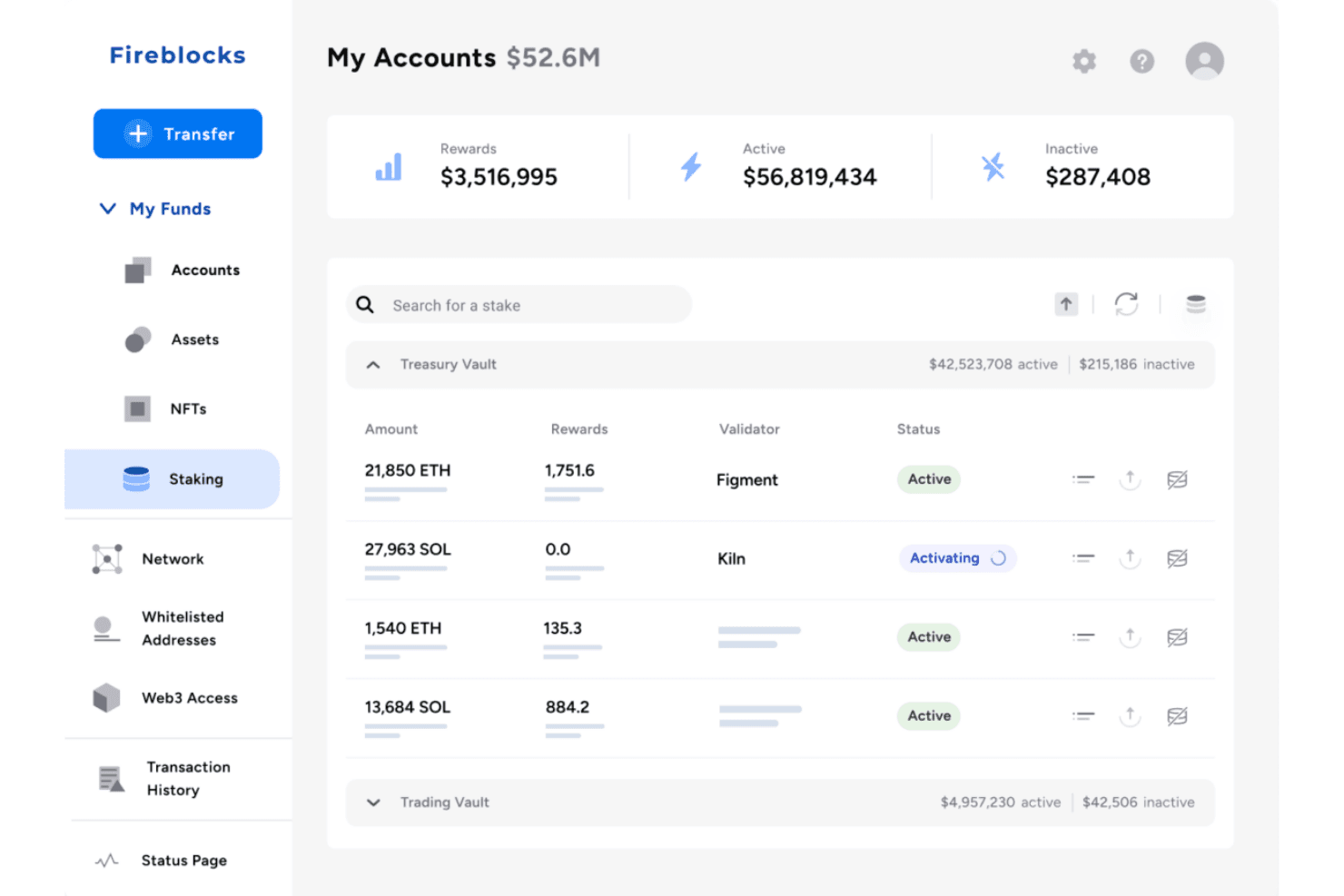
Fireblocks Tokenization offers a staking dashboard where users can monitor active and inactive assets, rewards, and validator statuses across multiple vaults. Fireblocks Tokenization is an institutional tokenization platform that lets you create, issue, and manage digital representations of assets across multiple blockchains with customizable smart contracts, compliance tools, and secure custody infrastructure.
Who Is Fireblocks Tokenization Best For?
Institutional asset managers and finance teams who need to tokenize and govern digital assets securely across multiple blockchain networks.
Why I Picked Fireblocks Tokenization
I picked Fireblocks Tokenization because I can securely tokenize and govern any asset on-chain, use its MPC wallet infrastructure, and control compliance workflows all from one platform. This is why I see it as best for secure on-chain asset management.
Fireblocks Tokenization Key Features
- Multi-chain deployment: Launch tokens and smart contracts across 35+ supported blockchains.
- Pre-built smart contract templates: Use ready-made, customizable templates for quick asset tokenization.
- Granular role-based user permissions: Set fine-grained access controls for different admin, governance, and operational roles.
- Real-time activity monitoring: Track all tokenization and transaction actions as they occur, with audit-ready logging.
Fireblocks Tokenization Integrations
Fireblocks Tokenization offers 150+ native integrations, including Solana, TRON, Polygon, Optimism, Cardano, Rootstock, Mantle, Base, Bitcoin, Ethereum, and more. An API is available for custom integrations and tokenization solutions.
Pros and Cons
Pros:
- Real-time on-chain activity monitoring
- Institutional-grade MPC wallet infrastructure
- Supports tokenization on 35+ major blockchains
Cons:
- Intricate developer API integration curve
- B2B contract minimums prevent small trials
Learn more about Fireblocks Tokenization: Best for enterprise blockchain tokenization
- Free plan available
- Pricing upon request
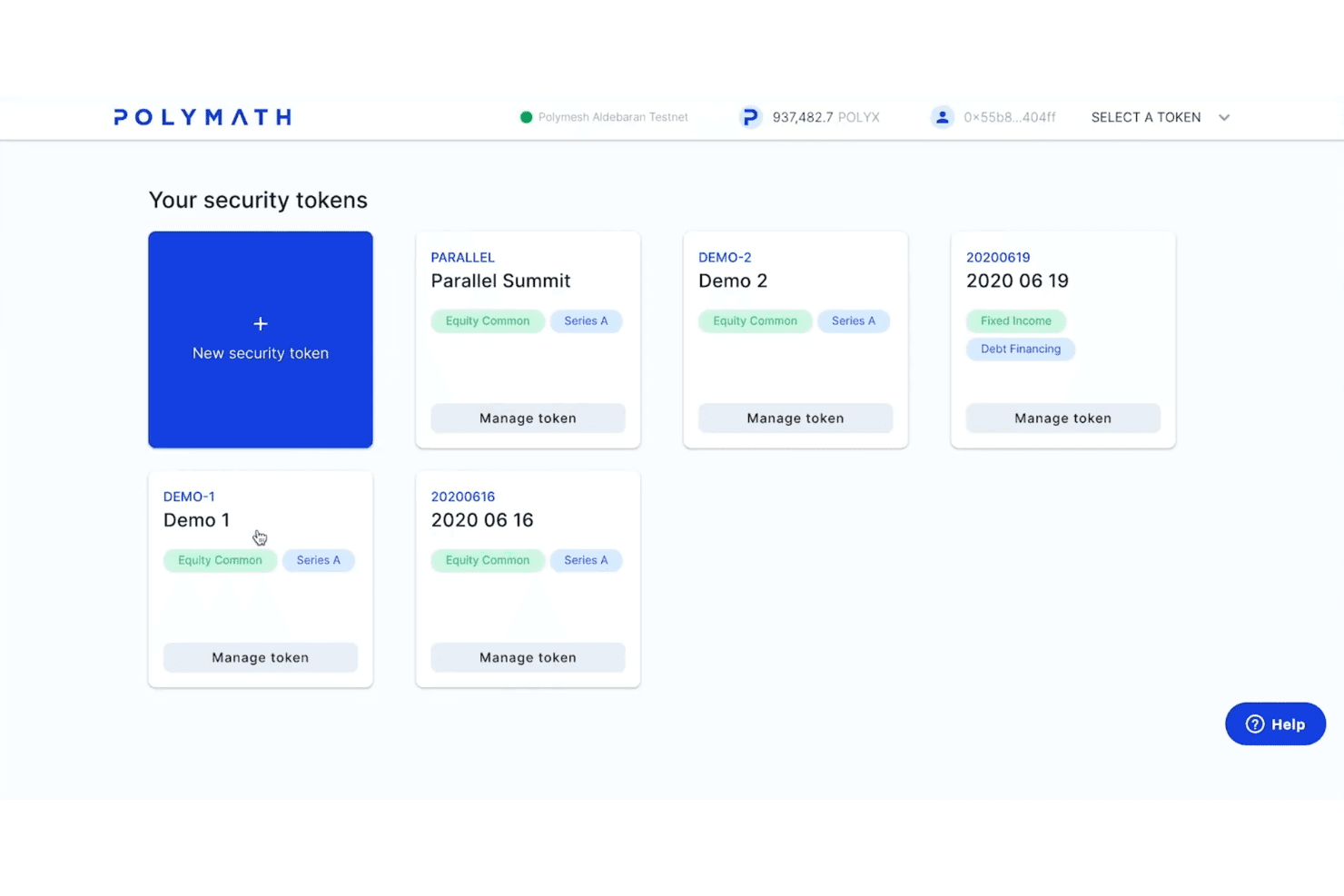
Polymath displays a security token dashboard where users can view and manage multiple tokenized assets on the Polymesh testnet. Polymath is an enterprise-focused tokenization platform purpose-built for creating, issuing, and managing blockchain-based digital securities with advanced compliance and asset management features.
Who Is Polymath Best For?
Polymath suits asset managers, fund administrators, and finance teams at enterprises or institutions that need compliance-driven digital asset workflows and tokenization services.
Why I Picked Polymath
I picked Polymath as one of the best because I can create and manage compliant security tokens for a wide range of assets, automate corporate actions with their smart contracts, and access integrations with regulated secondary markets for enterprise blockchain tokenization.
Polymath Key Features
- Confidential assets module: Enables privacy controls for on-chain data and transactions on Polymesh.
- On-chain identity verification: Requires all participants to complete KYC to transact, increasing compliance.
- Role-based permission controls: Lets enterprises restrict platform access by role and responsibility.
- Automated dividend distributions: Supports programmable, compliant dividend payments directly to token holders.
Polymath Integrations
Polymath offers native integrations with SAP, Adyen, PipeDrive, Vertex, AWS, Microsoft Azure, MySQL, Kubernetes, Docker, and more. An API is available for custom integrations.
Pros and Cons
Pros:
- Wide asset type support for tokenization
- On-chain cap table and investor registry
- Deep protocol-level compliance automation
Cons:
- Limited public third-party reviews and feedback
- Focuses heavily on institutional clients
Learn more about Polymath:
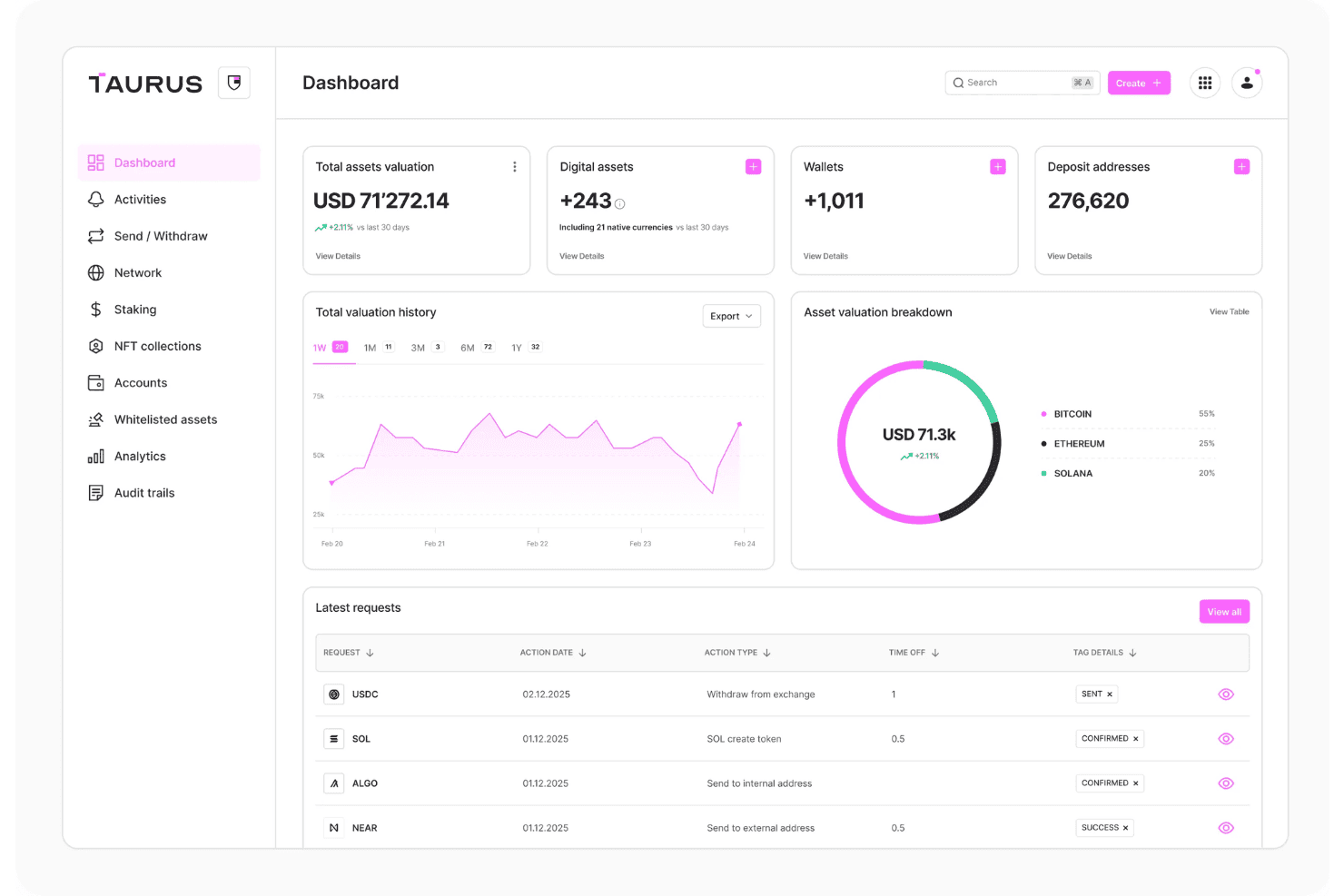
Taurus provides a comprehensive digital asset management dashboard displaying total asset valuation, wallet counts, and transaction history. Taurus is an enterprise-grade digital asset infrastructure platform that covers tokenization, custody, trading, and settlement for financial assets across both public and permissioned blockchains.
Who Is Taurus Best For?
Taurus is built for regulated financial institutions — banks, broker-dealers, CSDs, and asset servicers — that need to bring traditional financial assets on-chain at an institutional scale.
Why I Picked Taurus
I picked Taurus as one of the best because no other platform bundles tokenization, institutional custody, and a regulated secondary market under one natively connected infrastructure. Taurus-CAPITAL lets me deploy audited smart contracts across 10+ blockchains, while Taurus-PROTECT handles HSM and MPC-backed custody in the same environment. A fund tokenized in CAPITAL is already secured and settleable on TDX, Taurus's own FINMA-regulated trading facility, without any external bridging.
Taurus Key Features
- Multi-protocol issuance: Issue assets across Ethereum, Polygon, Avalanche, Solana, Stellar, Tezos, ICP, and permissioned blockchains.
- Any-standard smart contract support: Upload and interact with ERC1400, ERC3643, SPL, custom ERC20, ERC721, and more.
- Lifecycle automation: Automate and execute corporate actions directly on-chain through configurable workflows.
- Detailed audit trails: Track all transactions and user actions with real-time logs and exportable reporting.
Taurus Integrations
Taurus offers native integrations with Temenos for core banking and operates unified API connectivity with 10+ public and permissioned blockchains, including Ethereum, Polygon, Solana, Tezos, ICP, Stellar, Hyperledger BESU, and Quorum. An API is available for custom integrations.
Pros and Cons
Pros:
- Granular on-chain compliance and permissioning options
- Native support for multiple public and private blockchains
- Regulated secondary market built into the platform
Cons:
- KYC/AML features depend on third-party providers
- Investor lifecycle tooling not fully native
Learn more about Taurus:
Other Tokenization Platforms
Here are some additional tokenization platform options that didn’t make it onto my shortlist, but are still worth checking out:
- 11InvestaXBest for digital securities issuance
- 12ZoniqxBest for lifecycle management automation
- 13KaleidoBest for modular network infrastructure
- 14BitbondBest for no-code institutional asset coverage
- 15DTCC Digital AssetsBest for post-trade settlement integration
- 16AlphaPointBest for policy-enforced issuance controls
- 17SpydraBest for configurable enterprise deployments
- 18SuperstateBest for onchain mutual and ETF tokenization
- 19Maple FinanceBest for governance-driven protocol management
- 20STOKRBest for direct tokenized investment access
How I Evaluate Tokenization Platforms
I split my evaluation into baseline acceptance criteria—KYC, smart contracts, cap table management—and the differentiators that distinguish the best platforms.
Core Functionality (Table Stakes For This List)
When I'm selecting tools for my list, I rank each one on a scale from 0 (does not offer the functionality) to 5 (excels in this area) for each core functionality listed below. Then, I calculate the tool's total score into a percentage. Each tool needs to achieve a minimum total score of 65% to be considered for inclusion.
- Asset Tokenization Engine: I evaluate how many asset classes a platform supports and whether it can handle equity, debt, real estate, and fund tokens across multiple blockchains.
- Smart Contract Management: Configurable contracts matter. I look for templates that automate dividend distributions, transfer restrictions, and corporate actions.
- Compliance & KYC/AML: I check whether the platform enforces jurisdiction-based transfer rules and automates investor accreditation during onboarding workflows.
- Cap Table & Investor Management: A reliable on-chain registry should track ownership changes, support corporate actions, and produce audit-ready reports in real time.
- Custody & Wallet Integration: I look for flexible custody options, including MPC and multi-sig wallets, plus integrations with qualified institutional custodians.
- Secondary Market Connectivity: Post-issuance liquidity is key. I evaluate whether the platform connects to regulated ATS venues, exchanges, or peer-to-peer transfer channels.
Once I have a list of tools that meet the criteria, I consider what sets each platform apart.
Differentiating Factors (What Sets Vendors Apart)
Here's how I compare and contrast different vendors:
Standout Features
Vaultless tokenization generates tokens algorithmically without storing sensitive data in a centralized vault. That approach cuts your attack surface and lowers infrastructure overhead. Multi-cloud key management is another factor I weigh. Platforms that integrate with AWS KMS, Azure Key Vault, or Google Cloud KMS give you more flexibility across hybrid environments. I also check for Tokenization-as-a-Service APIs that let your team embed tokenization into custom apps and CI/CD pipelines via RESTful endpoints and SDKs.
Beyond Features
Compliance certifications are a major differentiator. I look for independent attestations like SOC 2 Type II, ISO 27001, and FIPS 140-2 validated modules—these tell you the platform can reduce your PCI DSS or HIPAA audit scope in practice. Deployment flexibility matters too, especially if your organization needs regional data residency or air-gapped environments. Ecosystem integrations are worth evaluating closely. Platforms that connect natively to ERPs like SAP or Oracle and data platforms like Snowflake save your team from building custom middleware.
How to Choose a Tokenization Platform
It’s easy to get bogged down in long feature lists and complex pricing structures. To help you stay focused as you work through your unique software selection process, here’s a checklist of factors to keep in mind:
| Factor | What to Consider |
|---|---|
| FactorScalability | What to ConsiderDoes the platform align with your anticipated asset volume and transaction growth? Will it require a major migration as your business expands? |
| FactorIntegrations | What to ConsiderWhich essential systems (ERP, CRM, custodians) need to connect? Will the platform reduce manual work and fit your broader tech stack easily? |
| FactorCustomizability | What to ConsiderHow much flexibility do you need for asset types, compliance rules, or smart contract logic? Are no-code workflows sufficient or will you need custom dev work? |
| FactorEase of use | What to ConsiderCan your team manage core tasks—token issuance, compliance workflows, investor management—without specialist blockchain knowledge? |
| FactorImplementation and onboarding | What to ConsiderHow much internal effort will onboarding require? Ask about migration tooling, data mapping, and training resources for your admin and ops teams. |
| FactorCost | What to ConsiderWhat pricing model fits best: per-asset, per-transaction, or usage tier? Look for hidden charges and clarify SLAs, support, and de-tokenization costs. |
| FactorSecurity safeguards | What to ConsiderWhat encryption, access controls, and audit trails are included? Are independent certifications available to illustrate enterprise-class security practices? |
| FactorCompliance requirements | What to ConsiderDoes the platform support your reporting jurisdictions and investor types? Can it keep pace as regulations or cross-border needs shift? |
What are Tokenization Platforms?
A tokenization platform is software that lets you convert real-world or digital assets into secure digital tokens on a blockchain. These platforms support compliant asset issuance, investor onboarding, and management of ownership records for financial assets like equity, debt, or funds. They often include built-in compliance tools, smart contract management, and secondary market connectivity to facilitate the entire asset lifecycle securely and transparently.
Features
When selecting a tokenization platform, keep an eye out for the following key features:
- Asset tokenization engine: Enables you to create and issue digital tokens that represent shares, funds, real estate, or other assets directly on a blockchain.
- Smart contract management: Lets you configure, deploy, and manage smart contracts that automate ownership rights, transfers, dividends, and compliance events.
- Compliance and KYC/AML tools: Automates investor onboarding by verifying identities, enforcing jurisdictional rules, and supporting required documentation for regulatory compliance.
- Cap table and investor management: Tracks token holders, ownership changes, and corporate actions in real time, simplifying audits and reporting across the asset lifecycle.
- Custody and wallet integration: Supports connections to digital wallets and custodians, allowing secure storage and transfer of digital asset tokens for investors and issuers.
- Secondary market access: Facilitates the trading and transfer of tokens post-issuance by integrating with regulated exchanges, peer-to-peer solutions, or ATS platforms.
- Audit trails and reporting: Provides detailed logs of all transactions, permissions, and changes, making regulatory reviews and investor communications transparent and efficient.
- Role-based permissions: Allows you to define access levels for different types of users—such as admins, issuers, or investors—to safeguard sensitive workflows and data.
- Workflow automation: Improves routine processes like investor accreditation, dividend distributions, and compliance checks by automating complex, multi-step tasks.
- API connectivity: Enables integration with your other business systems—such as ERPs, CRMs, or data platforms—so you can manage and synchronize information smoothly.
Tokenization platform solutions do not typically include AI as part of their feature offering.
Benefits
Implementing a tokenization platform provides several benefits for your team and your business. Here are a few you can look forward to:
- Fractional ownership enablement: Tokenization lets you divide real-world assets into smaller, tradable shares, making previously illiquid assets accessible to a broader set of investors.
- Improved compliance workflows: Built-in KYC/AML and jurisdictional controls automate regulatory checks and enforcement, reducing manual effort and compliance risk.
- Operational efficiency: Automated smart contracts and workflow tools simplify tasks like dividend payouts, recordkeeping, and investor onboarding for your finance and operations teams.
- Improved security: Features like custody integration, multi-cloud key management, and audit trails help protect asset data and support enterprise security standards.
- Real-time cap table accuracy: On-chain registries provide live ownership tracking and full transparency for corporate actions and investor communications.
- Access to secondary markets: Integration with regulated marketplaces and ATS platforms can give investors new liquidity options for their digital assets.
- Smooth ecosystem integration: API connectivity and flexible deployment models make it easier to fit tokenization into your existing systems and workflows.
Costs and Pricing
Selecting a tokenization platform requires an understanding of the various pricing models and plans available. Costs vary based on features, team size, add-ons, and more. The table below summarizes common plans, their average prices, and typical features included in tokenization platform solutions:
Plan Comparison Table for Tokenization Platform
| Plan Type | Average Price | Common Features |
|---|---|---|
| Plan TypeFree Plan | Average Price$0 | Common FeaturesBasic asset tokenization, simple investor registry, and limited API calls. |
| Plan TypePersonal Plan | Average Price$20-$100/user/month | Common FeaturesSingle-user access, asset issuance tools, basic compliance modules, standard reporting, and community support. |
| Plan TypeBusiness Plan | Average Price$500-$2,000/month | Common FeaturesMulti-user management, automated smart contracts, Improved compliance, advanced integrations, and priority email support. |
| Plan TypeEnterprise Plan | Average Price$3,000+/month | Common FeaturesCustom SLAs, on-prem or hybrid deployment, multi-cloud integrations, advanced governance, dedicated CSM, and 24/7 premium support. |
Tokenization Platforms FAQs
Here are some answers to common questions about tokenization platforms:
How does a tokenization platform support regulatory compliance?
A tokenization platform often includes built-in tools for KYC, AML, and jurisdictional controls. This helps your team automate document collection, verify investor identities, and enforce regional restrictions, making it easier to stay compliant as regulations evolve.
Can a tokenization platform integrate with our existing systems?
Yes, most tokenization platforms offer API connectivity and pre-built integrations for systems like ERPs, CRMs, custodians, and data warehouses. This allows you to sync ownership, automate reporting, and Improve workflows without major disruptions.
What are the typical deployment options?
Deployment options usually include SaaS, private cloud, on-premise, or hybrid setups. This flexibility lets you align the platform with your data residency, risk, and compliance needs—especially if you operate in multiple regions or serve highly regulated industries.
How do tokenization platforms ensure data and asset security?
Platforms use encryption, strong access controls, and detailed audit logs to protect tokenized assets and sensitive data. Many also offer integrations with HSMs and cloud key management services that meet industry standards for security and auditability.
What kind of support is available for enterprise users?
Enterprise users typically get dedicated customer success managers, migration services, training resources, and 24/7 technical support. This helps ensure smooth onboarding, daily operations, and prompt issue resolution as your tokenized asset program grows.