


Dext vs. Apron: Comparison and Expert Reviews for 2026
Dext and Apron both reduce manual accounting work across document processing, expenses, approvals, and payments, but they differ in their broader focus. Learn how they compare on bookkeeping automation, payment workflows, usability, and financial control.

We review tools independently, and commissions help fund our testing. See our transparency policy, our methodology, or suggest a tool.
Capturing invoice data is only half the job. Finance teams still need to review coding, route approvals, pay suppliers, and keep the ledger accurate without creating another chain of manual handoffs.
For teams comparing bookkeeping automation software, Dext and Apron overlap across document processing, expenses, approvals, and payments, but differ in their broader focus. Dext supports end-to-end workflows spanning document capture, data extraction, bookkeeping automation, approvals, publishing, and payments, while Apron takes a payments-first approach that connects invoice processing with supplier payments, payroll, employee expenses, expense cards, and approval workflows.
In this comparison, I’ll assess their features, pricing, usability, security, strengths, limitations, and best-fit use cases so you can determine which platform better supports your accounting operations.
Dext
4.5/5
- 14-day free trial
- Pricing upon request
Apron
3.6/5
- Free plan available + 31-day free trial
- From $38/month
Why Trust Our Software Recommendations
6,700+
Reviews
20
Industry experts
16+
Evaluation factors
14
Years
Our team has been testing and reviewing software since 2012. As finance leaders ourselves, we know how difficult—and important—it is to choose the right software.
For this guide, we evaluated tools using hands-on testing and independent research, scoring tools using our selection criteria.
Our reviews reflect our human editorial judgment, not a sales pitch.
| Dext | Apron | |
|---|---|---|
| Free Trial | 14-day free trial | Free plan available + 31-day free trial |
| Pricing | Pricing upon request | From $38/month |
Dext vs. Apron Pricing & Hidden Costs
Dext uses separate subscriptions for businesses and accounting practices, with costs scaling by document and user capacity, client count, and optional tools. Extra charges may come from advanced extraction, AI Assist, Data Health & Insights, Commerce Lite, storage, or usage beyond included limits. Meanwhile, Apron uses per-company monthly tiers for businesses, while accounting practices use a separate Capture subscription alongside company plans assigned to clients. Added costs may include extra payments, physical cards, ATM withdrawals, international transfers, FX, and credit card-funded payments.
Ultimately, the better value depends on your workflow. Dext may be easier to justify for teams that want deeper bookkeeping automation, broad accounting connectivity, and payment workflows in the same system, while Apron may make more sense when expense cards, international payments, and its broader payments toolkit are priorities.
Dext and Apron both reduce manual accounting work through AI-powered document capture, data extraction, expense management, approval workflows, payments, and accounting integrations. Dext combines these capabilities with deeper bookkeeping automation, AI-assisted coding, Vault storage, practice oversight, and broad connectivity across accounting platforms.
Apron also connects capture through payment, with bill approvals, supplier and payroll payments, employee expenses, cards, payment tracking, and accounting reconciliation. In practice, Dext is better suited to teams that need deeper bookkeeping automation and practice oversight alongside payments, while Apron leans more heavily into payment and spend-management workflows.
| Dext | Apron | |
|---|---|---|
| 2-Factor Authentication | Yes | Yes |
| API | Yes | No |
| Approval Workflows | Yes | Yes |
| Audit Trail | Yes | Yes |
| Balance Sheet | Yes | No |
| Billing/Invoicing | Yes | No |
| Calendar Management | No | No |
| Compliance Tracking | No | No |
| Contact Management | Yes | No |
| Custom Reports | No | No |
| Customer Management | Yes | No |
| Dashboard | Yes | Yes |
| Data Export | Yes | Yes |
| Data Import | Yes | Yes |
| Data Visualization | Yes | No |
| Document Management | Yes | Yes |
| Expense Tracking | Yes | Yes |
| External Integrations | Yes | Yes |
| Multi-Currency | Yes | Yes |
| Notifications | Yes | Yes |
| Risk Assessment | No | No |
| Workflow Management | Yes | Yes |
| Integration | Dext | Apron |
|---|---|---|
| IntegrationXero | Dext✅ | Apron✅ |
| IntegrationQuickBooks Online | Dext✅ | Apron✅ |
| IntegrationSage Business Cloud | Dext✅ | Apron❌ |
| IntegrationApprovalMax | Dext✅ | Apron❌ |
| IntegrationKashFlow | Dext✅ | Apron❌ |
| IntegrationZoho Books | Dext✅ | Apron❌ |
| IntegrationTwinfield | Dext✅ | Apron❌ |
| IntegrationBill.com | Dext✅ | Apron❌ |
| IntegrationAPI | Dext✅¹ | Apron❌² |
| IntegrationZapier | Dext✅ | Apron❌ |
¹ Product-specific APIs
² No public API listed
❌ No direct integration publicly listed
Both Dext and Apron support core accounting connectivity, but their integration ecosystems reflect different priorities. Dext offers broader bookkeeping flexibility across a wider range of accounting platforms, approval tools, automation services, and product-specific APIs, while Apron keeps its setup more focused around its core accounting connections. Overall, Dext is better suited to firms managing varied client systems, whereas Apron fits teams that prefer a simpler, more concentrated payables workflow.
| Factor | Dext | Apron |
|---|---|---|
| FactorCertifications & Regulation | DextCertified under ISO/IEC 27001:2022 and ISO 9001:2015, with GDPR-compliant data processing and published security documentation. | ApronISO 27001 certified and regulated by the UK Financial Conduct Authority as an authorised electronic money institution. |
| FactorEncryption & Data Protection | DextUses encryption, secure information-transfer controls, cloud safeguards, and restricted internal access to protect financial data. | ApronEncrypts data in transit and at rest, with restricted access and regular security reviews. |
| FactorAccess & Authentication | DextSupports user roles, permissions, SSO, passkeys, and 2FA through an authenticator app, SMS, or email. | ApronProvides user roles, payment permissions, and 2FA controls for account access and payment release. |
| FactorPayments & Auditability | DextDext Payments uses safeguarded funds, supplier verification, approval controls, payment limits, and fraud-risk warnings for eligible UK Xero customers. | ApronUses safeguarded customer accounts, controlled payment permissions, and audit logs for supplier and payroll payments. |
| FactorReliability & Continuity | DextReports 99.97% uptime and publishes a live status page, alongside backup, continuity, and disaster-recovery controls. | ApronUses infrastructure monitoring, database backups, and documented incident-response and continuity procedures, but does not publish a formal uptime rate. |
Overall, Dext emphasizes certified information-security controls, transparent uptime reporting, and layered safeguards across document, bookkeeping, and payment workflows. Apron leans more heavily on regulated payment infrastructure, safeguarded customer funds, controlled payment permissions, and audit-ready transaction records. Both provide strong security and compliance foundations, but Dext prioritizes broader accounting-data protection and operational reliability, while Apron focuses more on secure payment execution and financial oversight.
| Factor | Dext | Apron |
|---|---|---|
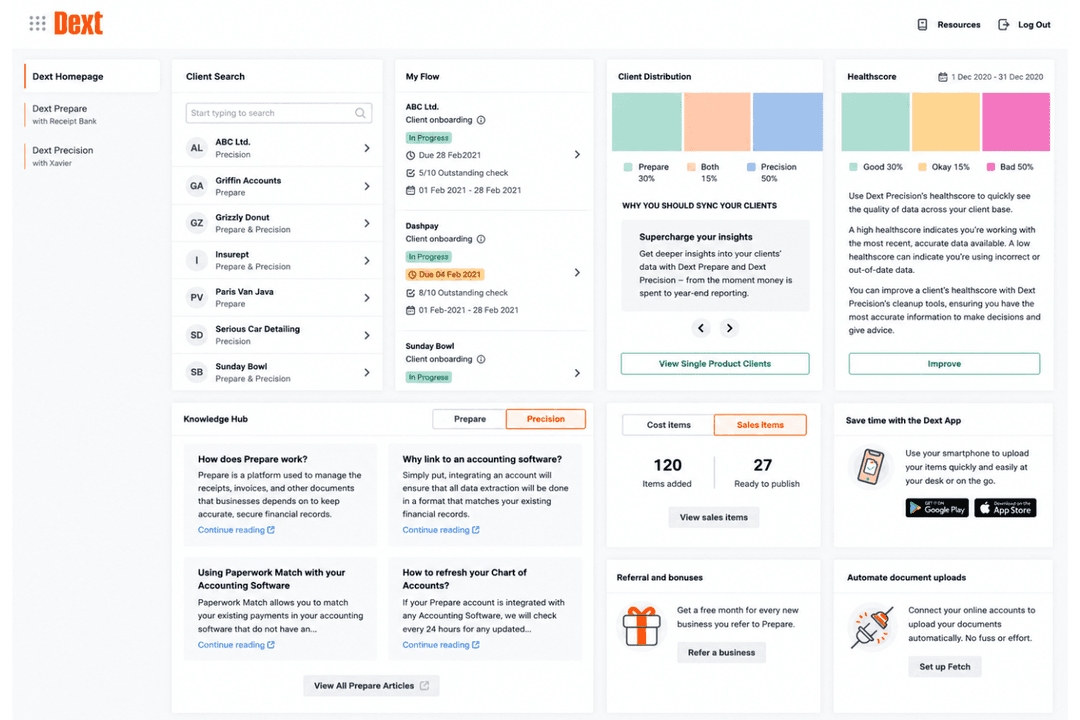
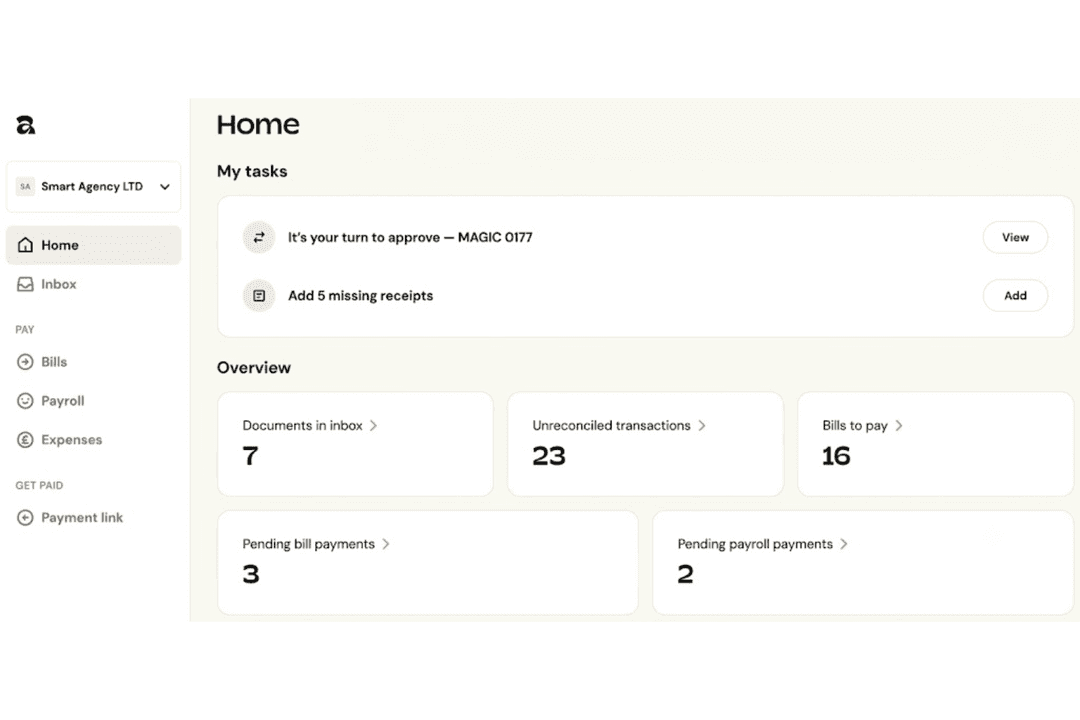
| FactorUser Interface | DextDedicated business and practice dashboards organize document capture, expenses, publishing, client activity, and bookkeeping workflows. | ApronA clean, focused interface brings invoices, approvals, suppliers, payments, payroll, and expenses into a connected workflow. |
| FactorOnboarding | DextAutomated checklists, product tours, videos, and role-based guidance support adoption, although advanced practice tools require more configuration. | ApronGuided setup helps teams connect their accounting software, add payment details, assign roles, and configure approval workflows. |
| FactorSetup & Configuration | DextCore capture tools are quick to adopt, while firms can gradually configure Supplier Rules, Auto-Publish, permissions, client assignments, and recurring workflows. | ApronTeams can configure approval logic, payment permissions, supplier records, cards, and spend controls, with more setup required for complex payment processes. |
| FactorSupport Options | DextProvides 24/5 human support, Fin AI assistance, an extensive Help Centre, and plan-dependent access to training and customer success guidance. | ApronOffers onboarding guidance, a detailed Help Centre, and customer support for payment, expense, and account-management questions. |
| FactorMobile & Workflow Experience | DextNative iOS and Android apps support receipt capture, expense claims, mileage, and client submissions alongside web-based bookkeeping controls. | ApronIts native mobile app supports invoice and receipt capture, cards, reimbursements, mileage claims, approvals, and payment visibility alongside its desktop workflows. |
Overall, Dext emphasizes guided adoption, dedicated mobile tools, and structured workflows for document-heavy bookkeeping and client oversight. Meanwhile, Apron offers a focused payment experience that connects invoice capture, approvals, supplier management, expenses, and payment execution. Both offer capable mobile tools, but Dext may feel more natural for accounting practices and client bookkeeping, while Apron better suits teams whose daily work centers on payables, reimbursements, and payment execution.
Dext
- Proprietary AI and automation rules reduce manual bookkeeping across high document volumes.
- Practice Advanced adds smart workflows, team controls, and firm-wide performance visibility.
- Data Health & Insights helps Xero and QuickBooks Online users catch and fix errors faster.
- Plans, allowances, and overage charges can make pricing difficult to predict.
- Firms may still spend time chasing clients for missing receipts and invoices.
- Fetch, Sage Line 50, and complex ecommerce setups offer more limited automation.
Apron
- Automates invoice capture and categorization with AI extraction
- Streamlines bill approvals and multi-step workflows
- Provides real-time payment tracking and status updates
- Accounting integrations are currently limited to Xero and QuickBooks Online
- Supplier statement reconciliation is not currently available
- William AI is limited to eligible accounting partner tiers
Dext
- Accounting FirmsMulti-client dashboards, automation rules, workflows, and data-quality tools help firms manage more client work without adding the same amount of manual processing.
- Small and Mid-Sized BusinessesReceipt capture, automated extraction, and expense workflows reduce the time internal teams spend entering and organizing bookkeeping data.
- Multi-Entity Businesses and FranchisesConsistent rules, centralized document collection, and accounting integrations support businesses managing several entities, branches, or locations.
- Retail and Ecommerce BusinessesDext helps process supplier invoices, employee expenses, and ecommerce sales data for businesses with relatively straightforward online selling setups.
- Real Estate and Construction BusinessesMobile capture and expense approvals make it easier to collect receipts and invoices from properties, job sites, employees, and contractors.
- Hospitality and Wellness BusinessesBusinesses handling frequent supplier bills and staff expenses can use Dext to keep documents organized and move data into their bookkeeping software faster.
Apron
- Small BusinessesApron’s pay-as-you-go model and simple setup help small teams eliminate manual invoice and payment hassle without technical expertise.
- Accounting FirmsBatch payment, multi-client management, and audit-ready logs let accountants process payables at scale for multiple clients in one dashboard.
- Nonprofit OrganizationsClear audit trails and spend tracking support grant reporting and compliance for mission-driven teams with limited resources.
- AP DepartmentsAutomated invoice capture, approvals, and audit logs streamline repetitive workflow for accounts payable staff and reduce entry errors.
- Service AgenciesManaging vendor payments and keeping track of multiple supplier relationships becomes faster and clearer, ideal for agencies with many contractors.
- Remote-First CompaniesSupplier self-service onboarding and automated approvals help distributed teams manage global payables efficiently with strong controls.
Who Should Use Dext, and Who Should Use Apron?
Dext is best suited to accountants, bookkeepers, accounting practices, and small or mid-sized businesses that need reliable document capture, expense management, bookkeeping automation, approvals, and supported payment workflows. It is particularly useful for teams handling high receipt and invoice volumes, multiple clients or entities, and workflows that need to move from capture and coding through review, publishing, and payment.
Meanwhile, Apron is a better fit for growing businesses, AP departments, accounting firms, nonprofits, service agencies, and remote-first teams that want to connect invoice processing with supplier payments and approvals. Its workflow is especially valuable for organizations managing distributed suppliers, moderate to high invoice volumes, and multi-step payment decisions without requiring complex IT setup.
| Dext | Apron | |
|---|---|---|
| Accounting Ecosystem | Dext Connects with more than 36 accounting platforms, publishing tools, Zapier, and product-specific APIs, supporting firms with varied client systems. | Apron Connects directly with Xero and QuickBooks Online, keeping payment, invoice, and reconciliation workflows closely tied to the ledger. |
| Core Workflow | Dext Automates receipt and invoice capture, extraction, categorization, expenses, approvals, publishing, recurring bookkeeping, and supported payment workflows for businesses and accounting practices. | Apron Connects invoice capture with approval routing, supplier payments, payroll, employee expenses, payment tracking, and accounting reconciliation. |
| Operational Focus | Dext Primarily serves accountants, bookkeepers, accounting practices, and finance teams managing document-heavy bookkeeping, multiple clients, and recurring accounting work. | Apron Primarily serves finance teams, AP departments, and accounting firms managing invoices, suppliers, payroll, employee expenses, and payment approvals. |
| Payment Scope & Availability | Dext For UK clients using Xero or QuickBooks Online, Dext Payments supports supplier invoices and employee expenses through payment runs and approval workflows; payroll payments are currently available for UK Xero-integrated clients. | Apron Supports supplier, payroll, and employee-expense payments through scheduled pay runs, approval workflows, payment tracking, and ledger updates. |
| Practice Oversight | Dext Practice Advanced adds client assignments, deadlines, smart workflows, team controls, and reporting, while Data Health & Insights adds data-quality monitoring. | Apron Practice Hub centralizes client access, team assignments, permissions, company-plan management, and visibility across client payment workflows. |
| Accounting Synchronization | Both connect with Xero and QuickBooks Online to transfer approved accounting data, update payment information, and reduce duplicate ledger entry. |
|---|---|
| Approval Workflows | Both support role-based approval steps that route documents, expenses, or payments to the appropriate reviewers before processing is completed. |
| Document Capture | Both let users upload receipts and invoices digitally, then extract key details such as supplier, date, amount, tax, and payment information to reduce manual entry. |
| Expense Management | Both support employee expense and mileage workflows, including digital submission, review, accounting publication, and reimbursement or payment processing. |
| Team Access | Both provide configurable user roles and permissions so practices and businesses can control document access, publishing rights, approvals, and payment responsibilities. |