
Microsoft Dynamics GP Review: Pros, Cons, Features, and Pricing
Microsoft Dynamics GP excels in flexibility, making it ideal for businesses seeking a versatile ERP solution tailored to diverse needs.

We review tools independently, and commissions help fund our testing. See our transparency policy, our methodology, or suggest a tool.
Microsoft Dynamics GP is a CFO ERP software built for mid-sized businesses that need mature financial management across general ledger, accounts payable and receivable, payroll, and inventory. I'd consider it if your organization relies on on-premises infrastructure or wants tight integration with other Microsoft tools. If you're weighing it against a cloud-native option like NetSuite, Dynamics GP is the stronger choice when you need greater control over your deployment environment and data residency rather than a fully hosted, subscription-based model.
Microsoft Dynamics GP Evaluation Summary

4.6/5
- Pricing upon request
- Free trial available
Why Trust Our Software Recommendations
6,700+
Reviews
20
Industry experts
16+
Evaluation factors
14
Years
Our team has been testing and reviewing software since 2012. As finance leaders ourselves, we know how difficult—and important—it is to choose the right software.
For this guide, we evaluated tools using hands-on testing and independent research, scoring tools using our selection criteria.
Our reviews reflect our human editorial judgment, not a sales pitch.
Microsoft Dynamics GP Overview
In my opinion, despite being in the end of life stage, Microsoft Dynamics GP stands out for its detailed financial management features, making it ideal for finance-focused businesses. While its pricing and lack of extensive integrations might deter some, it excels in usability. It's best for small to mid-sized companies that require robust accounting capabilities to handle their business processes. These processes can be as varied as managing everything from fixed assets to a purchase order. However, it might not suit those needing broad third-party integrations.
Pros
- Offers strong financial management tools for your team.
- It is easy to navigate, even for those new to ERP systems.
- Customer support is reliable and responsive to your needs.
Cons
- Your team might find the onboarding process a bit lengthy.
- Does not offer as many standout features as some competitors.
- Updates and new features will be discontinued.
Is Microsoft Dynamics GP Right For Your Needs?
Who Would be a Good Fit for Microsoft Dynamics GP?
Microsoft Dynamics GP suits small to mid-sized businesses, especially in manufacturing and distribution. If your team needs strong financial management, this could be your go-to enterprise resource planning solution. Its easy navigation makes it accessible to those new to ERP systems. For example, finance departments will appreciate its detailed accounting features, while operations teams can benefit from its inventory management capabilities.
- Manufacturing CompaniesYour team will benefit from its detailed warehouse management and financial tracking features.
- Distribution BusinessesIt helps streamline your inventory, supply chain management, and order management.
- Finance DepartmentsYou get robust tools for managing your company's financials and forecasting its future state.
- Small to Mid-sized BusinessesIt's a solid choice for operations and financial management for small business operations.
- Accounting TeamsYou can easily track and manage your financial transactions, like accounts payable and bank reconciliation.
- Operations ManagersIt aids in efficiently managing your team's day-to-day processes.
Who Would be a Bad Fit for Microsoft Dynamics GP?
Microsoft Dynamics GP might not suit large enterprises or tech-heavy industries that need extensive integrations and advanced features. Your team may find it limiting if you rely heavily on third-party integrations or rapid feature updates. Its onboarding process can be cumbersome for those needing quick implementation. If your business requires cutting-edge tech solutions or operates on a large scale, you might want to consider other ERP options, or stay within the Microsoft family by migrating to Microsoft Dynamics 365 Business Central.
- Large EnterprisesYour team might struggle with its limited scalability and integration options.
- Tech StartupsIt won't meet your need for rapid innovation and advanced features.
- Highly Regulated IndustriesYou might find its compliance features lacking for complex regulations.
- E-commerce BusinessesIt doesn't offer the required flexibility for your dynamic operations.
- Fast-growing CompaniesYou may find its slow updates and onboarding process a hindrance, especially as no further enhancements are expected for this software.
- Global CorporationsIt may not support your need for multi-national operations and compliance.
How We Test & Score Tools
We’ve spent years building, refining, and improving our software testing and scoring system. The rubric is designed to capture the nuances of software selection and what makes a tool effective, focusing on critical aspects of the decision-making process.
Below, you can see exactly how our testing and scoring works across seven criteria. It allows us to provide an unbiased evaluation of the software based on core functionality, standout features, ease of use, onboarding, customer support, integrations, customer reviews, and value for money.
Core Functionality (25% of final scoring)
The starting point of our evaluation is always the core functionality of the tool. Does it have the basic features and functions that a user would expect to see? Are any of those core features locked to higher-tiered pricing plans? At its core, we expect a tool to stand up against the baseline capabilities of its competitors.
Standout Features (25% of final scoring)
Next, we evaluate uncommon standout features that go above and beyond the core functionality typically found in tools of its kind. A high score reflects specialized or unique features that make the product faster, more efficient, or offer additional value to the user.
We also evaluate how easy it is to integrate with other tools typically found in the tech stack to expand the functionality and utility of the software. Tools offering plentiful native integrations, 3rd party connections, and API access to build custom integrations score best.
Ease of Use (10% of final scoring)
We consider how quick and easy it is to execute the tasks defined in the core functionality using the tool. High scoring software is well designed, intuitive to use, offers mobile apps, provides templates, and makes relatively complex tasks seem simple.
Onboarding (10% of final scoring)
We know how important rapid team adoption is for a new platform, so we evaluate how easy it is to learn and use a tool with minimal training. We evaluate how quickly a team member can get set up and start using the tool with no experience. High scoring solutions indicate little or no support is required.
Customer Support (10% of final scoring)
We review how quick and easy it is to get unstuck and find help by phone, live chat, or knowledge base. Tools and companies that provide real-time support score best, while chatbots score worst.
Customer Reviews (10% of final scoring)
Beyond our own testing and evaluation, we consider the net promoter score from current and past customers. We review their likelihood, given the option, to choose the tool again for the core functionality. A high scoring software reflects a high net promoter score from current or past customers.
Value for Money (10% of final scoring)
Lastly, in consideration of all the other criteria, we review the average price of entry level plans against the core features and consider the value of the other evaluation criteria. Software that delivers more, for less, will score higher.
Core Features
Financial Management: You get tools to manage your books, track expenses, and handle payroll. It's essential for keeping your team's finances in order through managing your general ledger and accounts receivable.
Inventory Control: This feature helps you keep track of stock levels and manage orders efficiently. Your team can minimize shortages and overstock situations.
Sales Order Processing: You can streamline sales from order to delivery. It ensures your customers get what they need on time.
Purchasing Management: This feature lets you manage vendor relationships and track orders. Your team can ensure the timely procurement of necessary materials.
Reporting and Analytics: You get access to detailed reports and insights into your business performance. It helps your team make informed decisions.
Project Management: This allows you to plan, execute, and monitor projects effectively. Your team can keep projects on track and within budget.

Ease of Use
Microsoft Dynamics GP is fairly user-friendly, especially for those familiar with ERP systems. Its intuitive interface makes navigation straightforward, letting your team focus on their work rather than figuring out the software. While it may take some time to master all features, once you're familiar with it, it becomes a powerful tool. User reviews often praise its layout and functionality, which help streamline daily tasks and operations. If you're looking for ease of use, this software won't disappoint.
Integrations
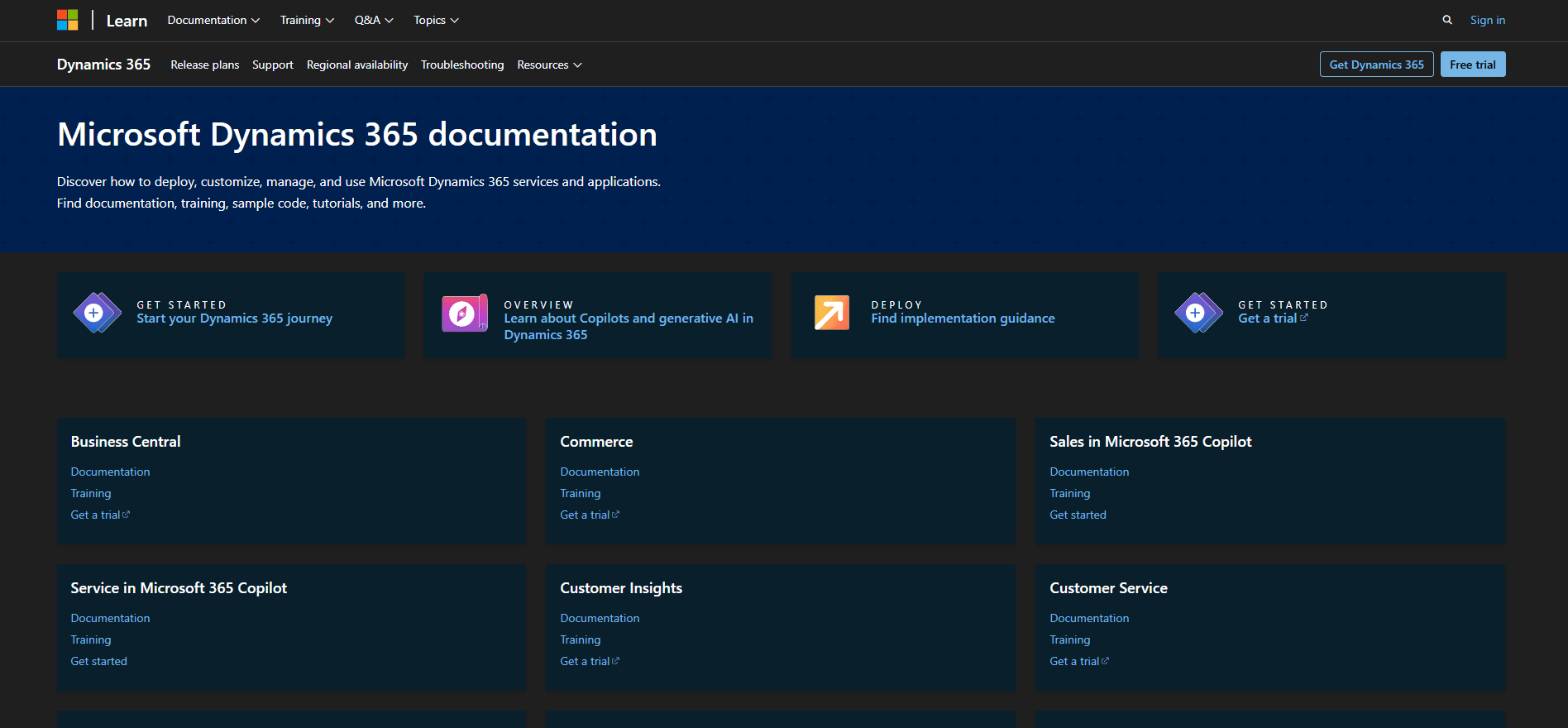
As part of the larger Microsoft ecosystem, Microsoft Dynamics GP offers seamless integration with Microsoft Office, SharePoint, Outlook, Power BI, Azure, SQL Server, OneDrive, Dynamics CRM, Teams, and Excel.
Microsoft Dynamics GP also has an API and connects with selected third-party integration tools.

Microsoft Dynamics GP Specs
- Accounts Payable: Yes
- Accounts Receivable: Yes
- API: Yes
- Budgeting: Yes
- Calendar Management: No
- Compliance Tracking: No
- Customer Management: Yes
- Dashboard: Yes
- Data Export: Yes
- Data Import: Yes
- Data Visualization: Yes
- Expense Tracking: No
- External Integrations: Yes
- Financial Analysis: Yes
- Forecasting: No
- Inventory Tracking: Yes
- Multi-Currency: Yes
- Multi-User: Yes
- Notifications: Yes
- Order Management: Yes
- Payroll: Yes
- Project Management: Yes
- Purchase Orders: Yes
- Resource Management: No
- Scheduling: No
- Supplier Management: Yes
- Task Scheduling/Tracking: No
- Third-Party Plugins/Add-Ons: Yes
- Warehouse Management: Yes
- Workflow Management: Yes


