


SAS Viya Review: Pros, Cons, Features and Pricing



SAS Viya is a statistical analysis software built for organizations that need to run advanced analytics, machine learning, and AI models at scale. I'd consider it if your team works with large, complex datasets and needs a single platform that handles data preparation, model development, and deployment together. If you're evaluating IBM SPSS, Viya gives you that same statistical depth but with stronger cloud-native infrastructure and built-in support for open-source languages like Python and R alongside native SAS code—making it a better fit for teams that want flexibility without leaving the SAS ecosystem.
SAS Viya Evaluation Summary

- Pricing upon request
- Free demo available
Why Trust Our Software Recommendations
Our team has been testing and reviewing software since 2012. As finance leaders ourselves, we know how difficult—and important—it is to choose the right software.
For this guide, we evaluated tools using hands-on testing and independent research, scoring tools using our selection criteria.
Our reviews reflect our human editorial judgment, not a sales pitch.
SAS Viya Overview
SAS Viya is well-suited for large enterprises in industries like finance and healthcare, where handling massive datasets is crucial. If your team needs advanced analytics to drive insights from complex data, SAS Viya's capabilities can support those needs. Its powerful data processing and collaborative environment make it a strong choice for organizations focused on data-driven decision-making.
pros
-
SAS Viya offers powerful data processing capabilities for large datasets.
-
The software provides advanced analytics tools for detailed insights.
-
It supports collaboration among your team with its shared environment.
cons
-
The learning curve can be steep for new users.
-
Your team might find the interface less intuitive compared to others.
-
It requires significant time investment for effective onboarding.
Is SAS Viya Right For Your Needs?
Who Would be a Good Fit for SAS Viya?
SAS Viya is well-suited for large enterprises in industries like finance and healthcare, where handling massive datasets is crucial. If your team needs advanced analytics to drive insights from complex data, SAS Viya's capabilities can support those needs. Its powerful data processing and collaborative environment make it a strong choice for organizations focused on data-driven decision-making.
-
Financial Services
SAS Viya excels in managing financial data for detailed risk analysis and forecasting.
-
Healthcare Analytics
It supports large-scale patient data processing for improved healthcare delivery and outcomes.
-
Large Enterprises
Your team can benefit from its scalability and advanced analytics in big corporate settings.
-
Research Departments
SAS Viya offers robust tools for handling complex datasets in academic and scientific research.
-
Marketing Teams
It provides insights into consumer behavior through detailed data analysis and reporting.
-
IT Departments
Your IT team can leverage its data integration capabilities for seamless data management.
Who Would be a Bad Fit for SAS Viya?
SAS Viya might not be ideal for small businesses or startups with limited budgets and resources. If your team isn't dealing with large datasets or complex analytics, the software's advanced capabilities may be excessive and its cost prohibitive. Companies with limited technical expertise might struggle with its steep learning curve and complex interface, making it less suitable for those without dedicated IT support.
-
Small Startups
The high cost and complexity make it unsuitable for startups with limited resources.
-
Non-Technical Teams
Your team might find the software too complex without IT support.
-
Budget-Conscious Firms
High costs can be a barrier for companies focused on tight budget constraints.
-
Basic Data Analysis
For simple analytics needs, SAS Viya's advanced features are unnecessary.
-
Freelancers
The scale and cost don't align with individual or freelance work.
-
Short-Term Projects
For temporary needs, the investment in SAS Viya may not be justified.
How We Test & Score Tools
We’ve spent years building, refining, and improving our software testing and scoring system. The rubric is designed to capture the nuances of software selection and what makes a tool effective, focusing on critical aspects of the decision-making process.
Below, you can see exactly how our testing and scoring works across seven criteria. It allows us to provide an unbiased evaluation of the software based on core functionality, standout features, ease of use, onboarding, customer support, integrations, customer reviews, and value for money.
Core Functionality (25% of final scoring)
The starting point of our evaluation is always the core functionality of the tool. Does it have the basic features and functions that a user would expect to see? Are any of those core features locked to higher-tiered pricing plans? At its core, we expect a tool to stand up against the baseline capabilities of its competitors.
Standout Features (25% of final scoring)
Next, we evaluate uncommon standout features that go above and beyond the core functionality typically found in tools of its kind. A high score reflects specialized or unique features that make the product faster, more efficient, or offer additional value to the user.
We also evaluate how easy it is to integrate with other tools typically found in the tech stack to expand the functionality and utility of the software. Tools offering plentiful native integrations, 3rd party connections, and API access to build custom integrations score best.
Ease of Use (10% of final scoring)
We consider how quick and easy it is to execute the tasks defined in the core functionality using the tool. High scoring software is well designed, intuitive to use, offers mobile apps, provides templates, and makes relatively complex tasks seem simple.
Onboarding (10% of final scoring)
We know how important rapid team adoption is for a new platform, so we evaluate how easy it is to learn and use a tool with minimal training. We evaluate how quickly a team member can get set up and start using the tool with no experience. High scoring solutions indicate little or no support is required.
Customer Support (10% of final scoring)
We review how quick and easy it is to get unstuck and find help by phone, live chat, or knowledge base. Tools and companies that provide real-time support score best, while chatbots score worst.
Customer Reviews (10% of final scoring)
Beyond our own testing and evaluation, we consider the net promoter score from current and past customers. We review their likelihood, given the option, to choose the tool again for the core functionality. A high scoring software reflects a high net promoter score from current or past customers.
Value for Money (10% of final scoring)
Lastly, in consideration of all the other criteria, we review the average price of entry level plans against the core features and consider the value of the other evaluation criteria. Software that delivers more, for less, will score higher.
Core Features
Data Management: SAS Viya offers robust tools to manage and organize your data efficiently. It ensures your team can access and process large datasets seamlessly.
Advanced Analytics: The software provides sophisticated analytics capabilities for in-depth data analysis. Your team can leverage predictive modeling and machine learning for accurate insights.
Interactive Data Visualization: SAS Viya allows you to create interactive visualizations that make data interpretation easier. This feature helps your team present findings in a clear, impactful way.
Collaboration Tools: With shared environments, your team can collaborate effectively on data projects. It fosters teamwork and improves productivity in data analysis tasks.
Scalability: SAS Viya scales with your business, handling growing data needs effortlessly. It supports your evolving analytics requirements without compromising performance.
Security: The platform offers strong security measures to protect your data. This ensures your sensitive information remains safe and compliant with industry standards.

Standout Features
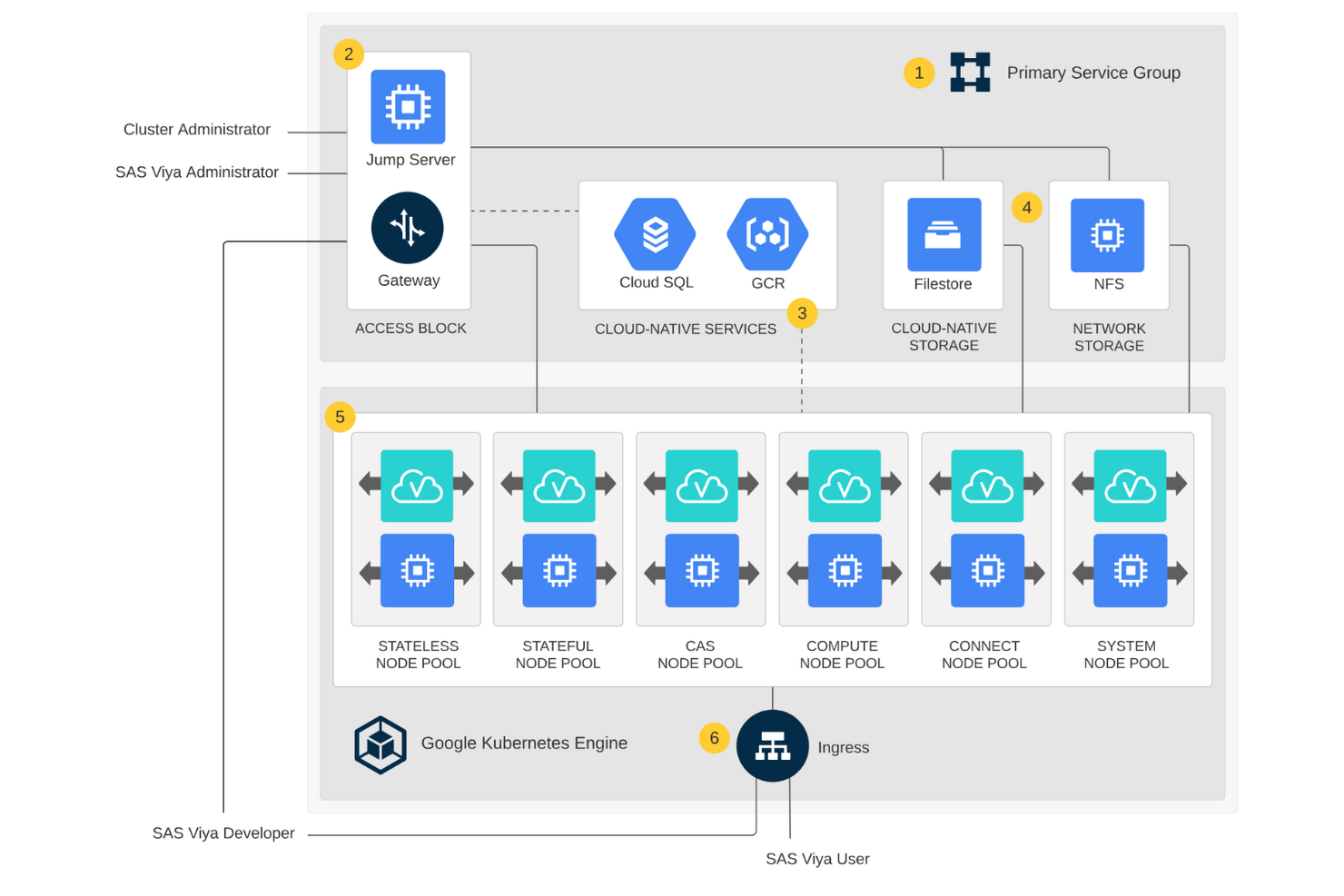
Cloud-Native Architecture: SAS Viya's cloud-native design offers flexibility and scalability for your analytics needs. It allows your team to access data and analytics tools from anywhere, enhancing remote collaboration.
AI and Machine Learning Integration: The platform provides integrated AI and machine learning features for advanced data analysis. Your team can automate complex analytics processes, saving time and improving accuracy.
Ease of Use
SAS Viya can be challenging for new users due to its complex interface and advanced features. Your team might find the initial learning curve steep, particularly if they lack technical expertise. However, once you get the hang of it, the platform's powerful analytics capabilities become more accessible and valuable for your work. Compared to others, its usability might require more investment in training, but it pays off with its robust data processing and analysis tools.

Onboarding
SAS Viya's onboarding experience can be daunting for your team due to its complexity and the time required to master it. The platform provides documentation and support resources, but you might find them insufficient for quick adoption. While the initial setup and learning curve are steep, once you navigate through the onboarding process, the software's powerful analytics become more accessible, offering significant value for your work. Investing in training can help you unlock its full potential.
Customer Support
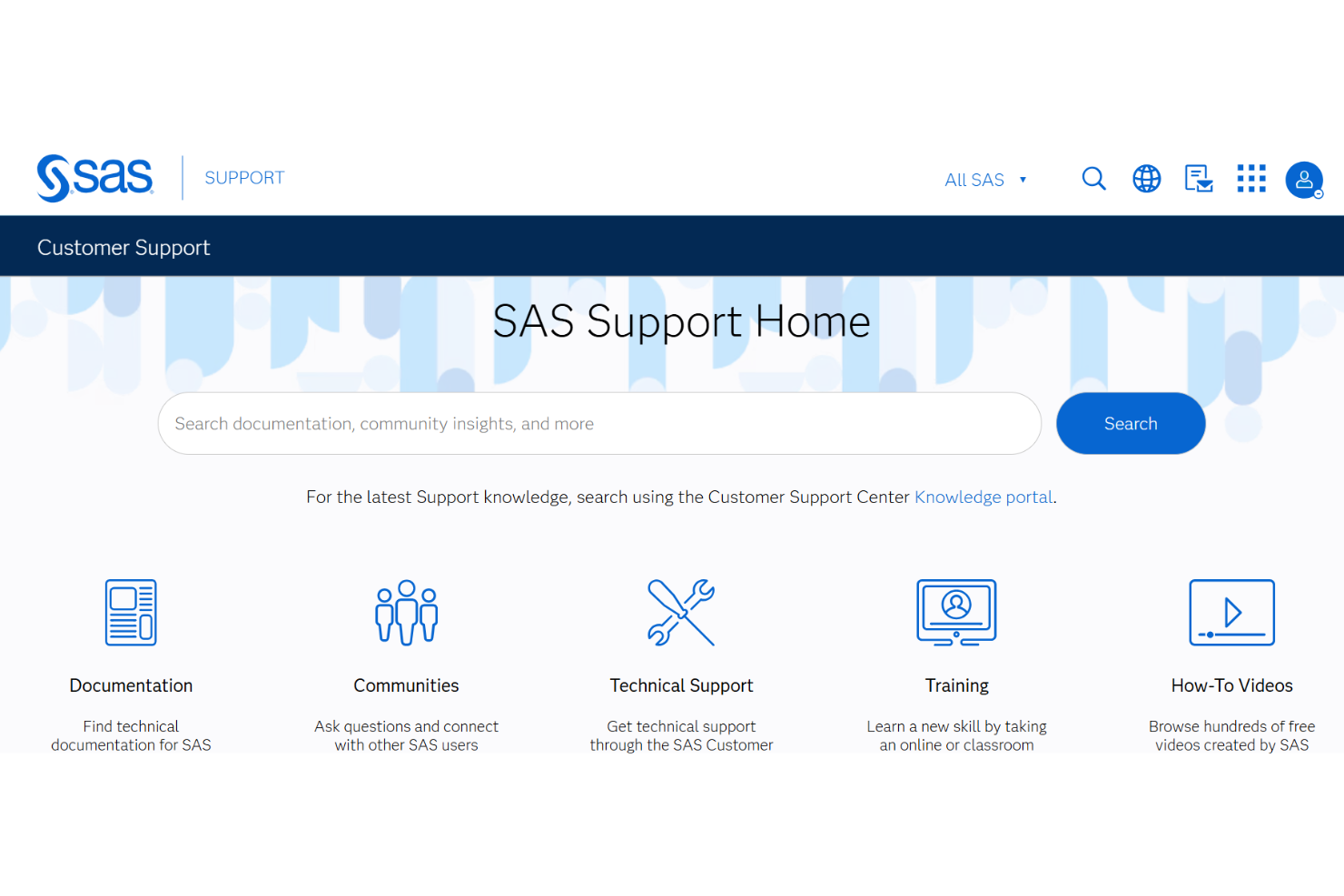
SAS Viya offers solid customer support with multiple channels to assist your team. Users generally appreciate the responsiveness and helpfulness of the support staff. However, some find the documentation lacking in detail, which might require you to rely on direct support more frequently. The availability of knowledgeable representatives helps smooth out challenges, ensuring your team can resolve issues effectively and continue leveraging the platform's powerful analytics for your work.
Integrations
SAS Viya integrates with various platforms, including Python, R, SAS, Hadoop, Apache Spark, Microsoft Azure, AWS, Google Cloud, Kubernetes, and OpenShift.
SAS Viya also provides a REST API, allowing for integration with third-party tools and systems to enhance its functionality and interoperability.

Value for Money
SAS Viya uses a quote-based, modular pricing model that scales with your analytics needs. Users often see value in its advanced analytics, automation, and enterprise-grade governance, especially for large datasets and complex use cases. Pricing isn’t publicly listed, but SAS offers demos and private trial environments so teams can evaluate the platform before committing.
SAS Viya Specs
- 2-Factor Authentication
- Accounts Payable
- Accounts Receivable
- API
- Balance Sheet
- Billing/Invoicing
- BitCoin
- Budgeting
- Calendar Management
- Contact Management
- CRM Integration
- Customer Management
- Dashboard
- Data Export
- Data Import
- Data Visualization
- Expense Tracking
- External Integrations
- Forecasting
- General Account Ledger
- Inventory Tracking
- Multi-Currency
- Multi-User
- Notifications
- P&L
- PayPal
- Payroll
- SAP Integration
- Stripe
- Supplier Management
- Tax Management
SAS Viya FAQs
How does SAS Viya ensure data security and compliance?
What support options are available for SAS Viya users?
How scalable is SAS Viya for growing businesses?
Can SAS Viya handle large datasets efficiently?
How does SAS Viya support collaboration among teams?
Is SAS Viya suitable for non-technical users?
What are the deployment options for SAS Viya?
Does SAS Viya offer integration with third-party tools?
SAS Viya Company Overview & History
SAS Viya, developed by SAS Institute and launched in 2016, is a cloud-native platform for AI, analytics, and data management. Headquartered in Cary, North Carolina, SAS Institute is a leader in the analytics market, known for its innovative solutions across various industries. SAS Viya has notable clients such as JPMorgan Chase and AstraZeneca, reflecting its strong presence in sectors like banking and healthcare. The platform's integration with major cloud providers like AWS and Azure further enhances its appeal to large enterprises.
SAS Viya Major Milestones
2016: SAS Viya was launched as a cloud-native platform.
2020: Introduction of Viya 4 with containerized architecture.
2023: SAS Health, a healthcare data model, was introduced.
2023: Partnerships with AstraZeneca and the University of Cambridge for healthcare analytics.