

Yardi Breeze Review: Pros, Cons, Features & Pricing
Yardi Breeze offers a user-friendly interface and efficient property management tools, making it a standout choice for streamlining financial reporting and workflow processes.

We review tools independently, and commissions help fund our testing. See our transparency policy, our methodology, or suggest a tool.
Yardi Breeze is an accounting software built for property managers who need leasing, tenant tracking, and financial reporting in one place. I'd consider it if you're running a small to mid-sized residential or commercial portfolio and want a purpose-built platform rather than a generic accounting tool. Compared to AppFolio, Yardi Breeze is a stronger fit for smaller portfolios, since it's easier to get started with and comes with a simpler pricing structure that doesn't penalize you for having fewer units.
Yardi Breeze Evaluation Summary
.png&w=1920&q=75)
4.1/5
- From $1/unit/month (billed annually)
- Free demo available
Why Trust Our Software Recommendations
6,700+
Reviews
20
Industry experts
16+
Evaluation factors
14
Years
Our team has been testing and reviewing software since 2012. As finance leaders ourselves, we know how difficult—and important—it is to choose the right software.
For this guide, we evaluated tools using hands-on testing and independent research, scoring tools using our selection criteria.
Our reviews reflect our human editorial judgment, not a sales pitch.
Yardi Breeze Overview
From my perspective, Yardi Breeze offers a solid choice for property management and real estate accounting needs. Its user-friendly interface and ease of use simplify tasks, making it ideal for teams new to digital management tools. The software combines essential features with a reasonable pricing structure, providing good value for money. However, its accounting capabilities may not match those of more specialized platforms. If your team requires advanced accounting features, you might want to consider alternatives like QuickBooks or Buildium. For small- to medium-sized firms seeking integrated rent collection, reporting, and tenant communication, consider Yardi Breeze.
Its more advanced edition, Yardi Breeze Premier, offers additional capabilities for growing property management needs.
Pros
- Yardi Breeze offers an intuitive interface and strong functionality that make property management and financial reporting simpler for your team.
- It provides efficient tools for tracking and managing financial reports, helping to keep your work organized.
- Customer support is responsive and helpful, ensuring your issues are addressed quickly.
- It integrates seamlessly with tools like RentCafe and supports online payment via ACH or Credit Card, helping streamline rent collection through its built-in tenant portal.
Cons
- Some users find the reporting features lack advanced customization options within templates or financial reports, which your team might need.
- The software may not offer as many integrations with third-party applications as other tools.
- Advanced users may find the feature set somewhat limited compared to higher-end platforms.
Is Yardi Breeze Right For Your Needs?
Who Would be a Good Fit for Yardi Breeze?
Small to mid-sized property management companies, real estate professionals, or managers of affordable housing are well-suited for Yardi Breeze. Your team will appreciate its user-friendly interface and efficient financial tracking tools. For those managing housing, HOA communities, or self-storage, Yardi Breeze's ability to simplify tasks and provide clear financial reports makes it a valuable asset.
If your work involves frequent tenant interactions and property maintenance, its intuitive design and responsive support can help you manage these aspects smoothly.
- Property ManagersYardi Breeze simplifies tenant management and financial tracking, making it ideal for your property management tasks.
- Real Estate AgentsUse its web-based dashboard to monitor listings and when tenants pay rent.
- Small BusinessesFor small teams, Yardi Breeze helps manage accounts payable, receivables, and financial reporting without needing deep accounting expertise.
- Residential ComplexesYardi Breeze's features help you manage tenant information and maintenance requests efficiently.
- Commercial PropertiesIts financial tools assist in tracking expenses and revenue for your commercial property management.
- Accounting TeamsUse Yardi Breeze’s built-in accounting for smooth general ledger updates and financial reporting.
Who Would be a Bad Fit for Yardi Breeze?
Large enterprises or corporations with complex financial needs may find Yardi Breeze lacking. If your team requires advanced customization and integration with multiple third-party apps, this software might not meet your expectations. Businesses needing intricate financial modeling or extensive reporting features could feel limited by its capabilities. Yardi Breeze's straightforward design is great for simplicity but may not suit your needs if you're looking for highly specialized tools.
- Large CorporationsYardi Breeze's limited customization and integration options might not support your complex operations.
- Finance DepartmentsIf your work involves detailed financial modeling, Yardi Breeze's basic features might not suffice.
- Tech CompaniesFor teams needing extensive integrations, Yardi Breeze may not offer the connectivity you require.
- High-Growth StartupsRapidly scaling businesses might outgrow Yardi Breeze's feature set quickly.
- Advanced AnalystsIf you rely on deep data analysis, Yardi Breeze's reporting tools may not meet your needs.
- Specialized IndustriesIndustries with unique accounting requirements might find Yardi Breeze too generic for their specific needs.
How We Test & Score Tools
We’ve spent years building, refining, and improving our software testing and scoring system. The rubric is designed to capture the nuances of software selection and what makes a tool effective, focusing on critical aspects of the decision-making process.
Below, you can see exactly how our testing and scoring works across seven criteria. It allows us to provide an unbiased evaluation of the software based on core functionality, standout features, ease of use, onboarding, customer support, integrations, customer reviews, and value for money.
Core Functionality (25% of final scoring)
The starting point of our evaluation is always the core functionality of the tool. Does it have the basic features and functions that a user would expect to see? Are any of those core features locked to higher-tiered pricing plans? At its core, we expect a tool to stand up against the baseline capabilities of its competitors.
Standout Features (25% of final scoring)
Next, we evaluate uncommon standout features that go above and beyond the core functionality typically found in tools of its kind. A high score reflects specialized or unique features that make the product faster, more efficient, or offer additional value to the user.
We also evaluate how easy it is to integrate with other tools typically found in the tech stack to expand the functionality and utility of the software. Tools offering plentiful native integrations, 3rd party connections, and API access to build custom integrations score best.
Ease of Use (10% of final scoring)
We consider how quick and easy it is to execute the tasks defined in the core functionality using the tool. High scoring software is well designed, intuitive to use, offers mobile apps, provides templates, and makes relatively complex tasks seem simple.
Onboarding (10% of final scoring)
We know how important rapid team adoption is for a new platform, so we evaluate how easy it is to learn and use a tool with minimal training. We evaluate how quickly a team member can get set up and start using the tool with no experience. High scoring solutions indicate little or no support is required.
Customer Support (10% of final scoring)
We review how quick and easy it is to get unstuck and find help by phone, live chat, or knowledge base. Tools and companies that provide real-time support score best, while chatbots score worst.
Customer Reviews (10% of final scoring)
Beyond our own testing and evaluation, we consider the net promoter score from current and past customers. We review their likelihood, given the option, to choose the tool again for the core functionality. A high scoring software reflects a high net promoter score from current or past customers.
Value for Money (10% of final scoring)
Lastly, in consideration of all the other criteria, we review the average price of entry level plans against the core features and consider the value of the other evaluation criteria. Software that delivers more, for less, will score higher.
Core Features
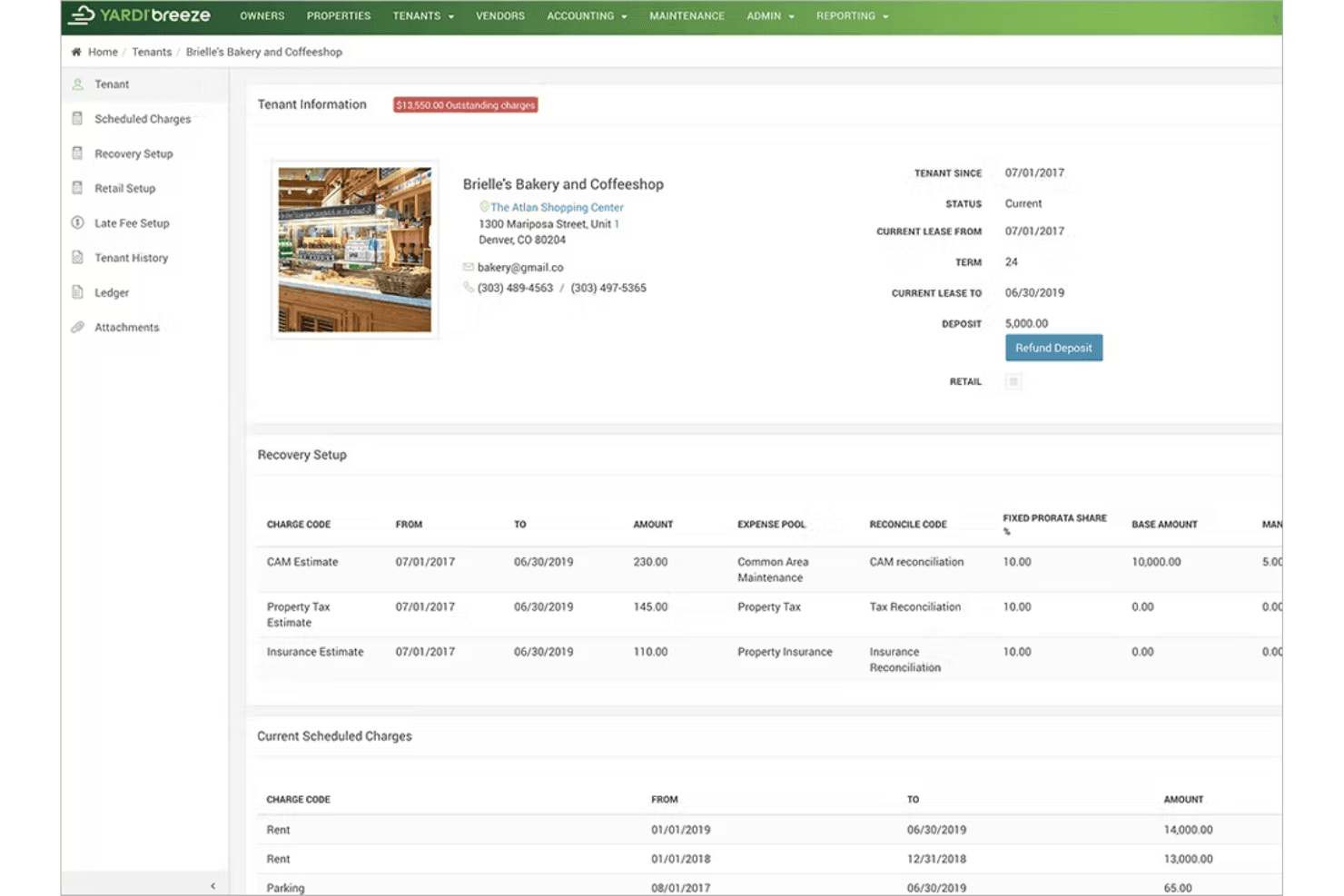
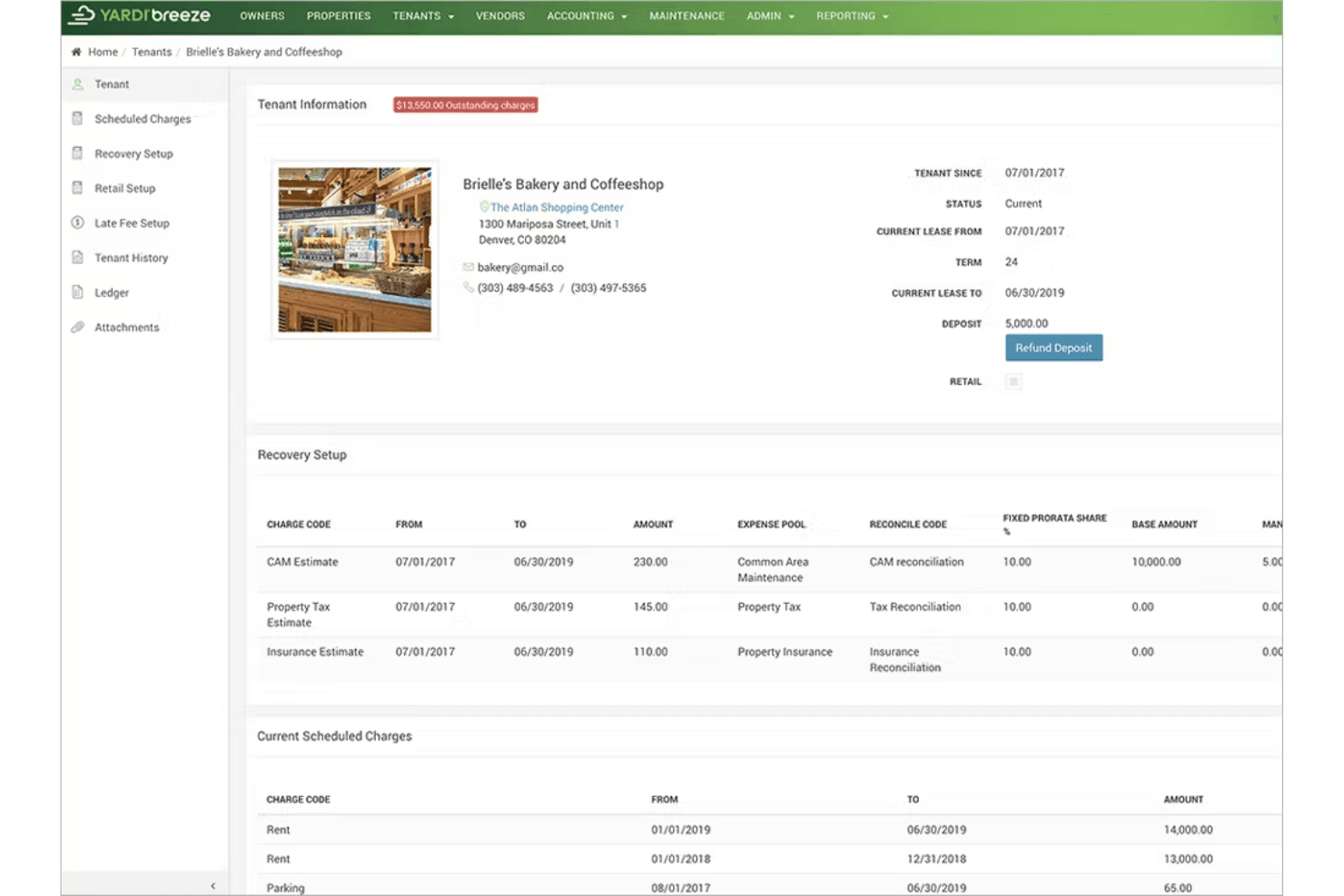
Tenant Management: Yardi Breeze centralizes tenant communications, lease records, and service requests in one place, keeping workflows organized and responsive..
Multi-Property Type Support: Works across residential, commercial, and manufactured housing from one system.
Financial Reporting: With Yardi Breeze, generate clear and concise financial reports. This tool helps you understand your financial status quickly, aiding in better decision-making.
Expense Tracking: Track your expenses effortlessly to maintain accurate financial records. This feature ensures you can monitor spending and keep budgets in check.
Maintenance Requests: Manage and respond to maintenance requests efficiently. Your team can handle property issues promptly, enhancing tenant satisfaction.
Lease Management: Yardi Breeze simplifies lease tracking, permissions, and renewals. This ensures you never miss important lease dates or terms, keeping your operations smooth.
Payment Processing: Yardi Breeze offers multiple payment processing options, including ACH, credit card, and online payment features for seamless rent collection.
Investment Management: For property owners with diversified portfolios, Yardi Breeze Premier provides visibility across commercial properties, affordable housing, and self storage assets.
Standout Features
User-Friendly Interface: Yardi Breeze boasts an intuitive interface that's easy for anyone to navigate. Whether you manage commercial real estate or residential properties, the design enhances ease of use, allowing your team to get up and running quickly.
Responsive Customer Support: Get help when you need it with Yardi Breeze's dedicated support team. Their quick response ensures your issues are resolved without disrupting your work.
Ease of Use
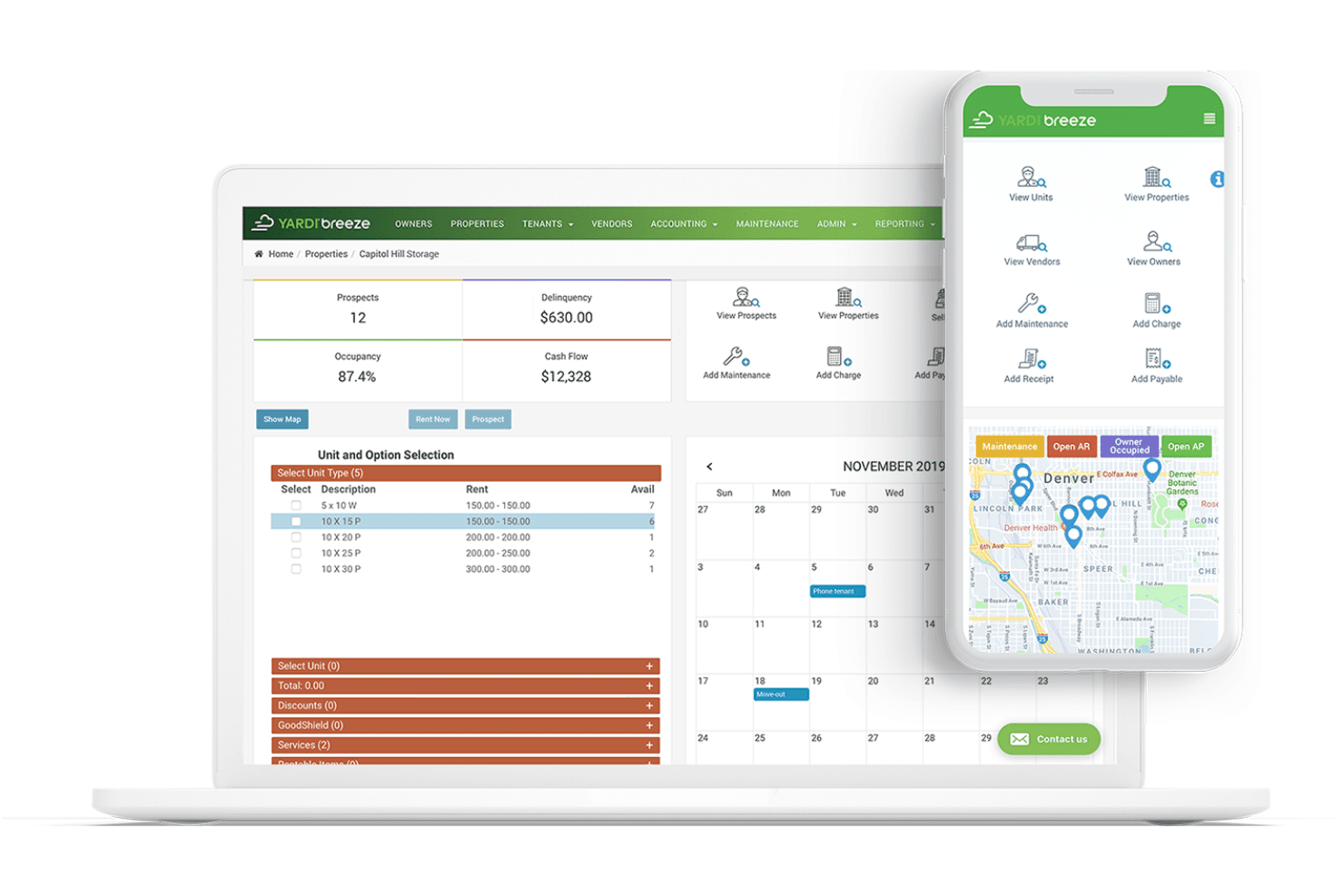
Yardi Breeze stands out for its user-friendly design, making it easy for your team to navigate and manage tasks. Its straightforward interface allows you to quickly access essential features like tenant management and financial reporting.
Unlike more complex platforms, Yardi Breeze reduces the learning curve, so you can focus on your work without getting bogged down in technical details. Its intuitive layout ensures that even those with minimal tech experience can handle their property management duties efficiently.
Once configured, notifications and automated workflow tools streamline day-to-day management.
Onboarding
Yardi Breeze offers a smooth onboarding experience, making it easy for your team to get started quickly. The cloud-based platform provides clear guides and responsive support to help you navigate initial setup. Users appreciate the straightforward instructions, which minimize downtime and let you focus on your property management tasks. The available resources ensure you can access help when needed, allowing you to see value from the software without unnecessary delays.
.png&w=3840&q=75)
Customer Support
Yardi Breeze provides reliable customer support that ensures your team gets help when they need it. Users often praise the quick response times and knowledgeable assistance, which can make a big difference in resolving issues promptly. The support team is available through multiple channels, offering flexibility in how you reach out for help. This level of support helps keep your work running smoothly, minimizing disruptions and allowing you to focus on managing your properties effectively.
Integrations
Yardi Breeze is part of the broader Yardi ecosystem, which supports hundreds of standard third-party interfaces. Yardi Breeze integrates with AmRent, RentPrep, AMS Billing, DashQ, PayLease, Facilgo, SuiteSpot, and Rentana.
Yardi Breeze also offers an API for custom integrations and connects with third-party integration tools. It connects seamlessly with Yardi Voyager, ensuring data consistency between commercial properties, residential properties, and affordable housing portfolios.
.png&w=3840&q=75)
Value for Money
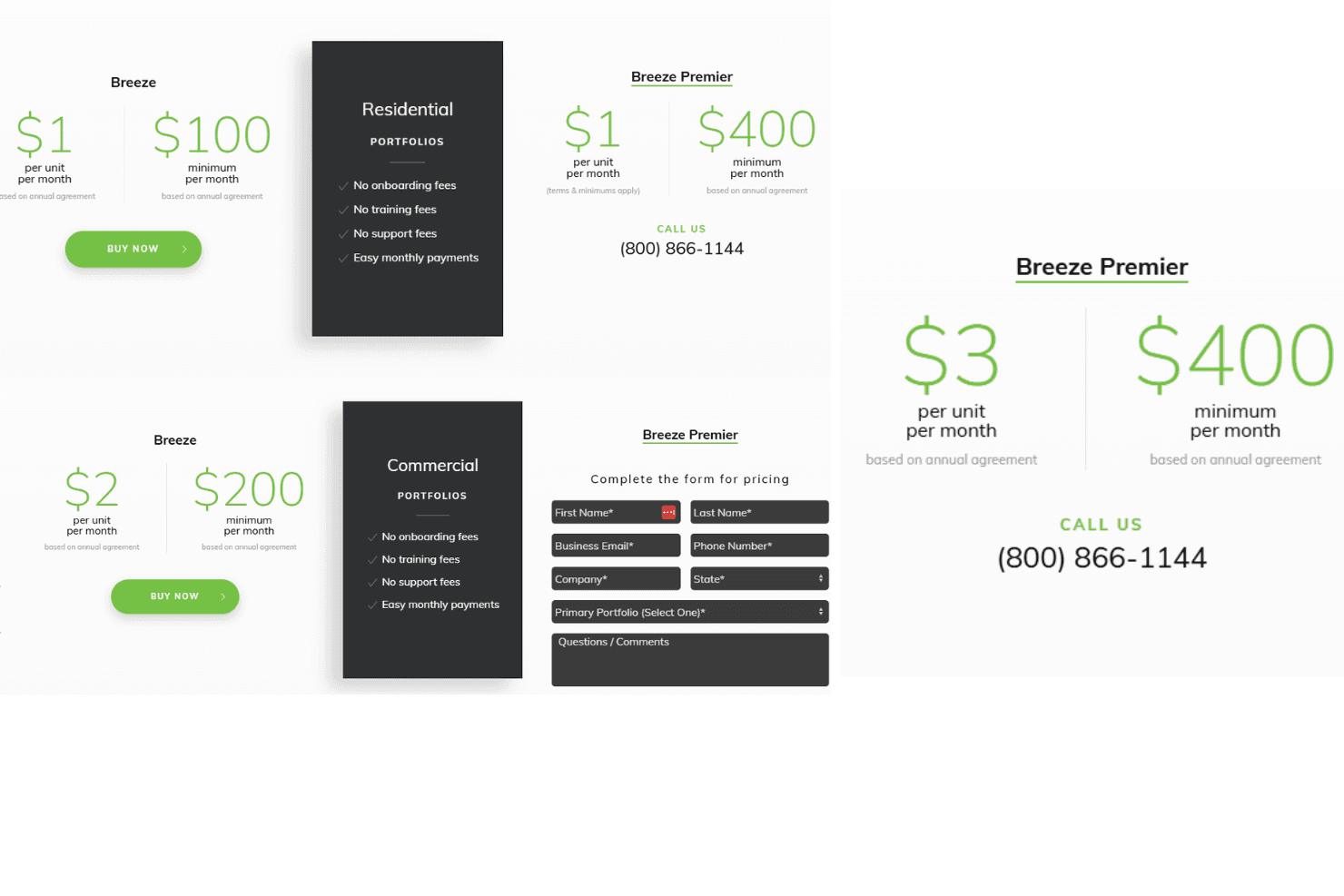
Yardi Breeze offers a pricing model that balances cost with functionality, making it a reasonable choice for property management needs. Yardi Breeze pricing starts at $1 per unit per month, with a $100 monthly minimum for residential plans, and offers free implementation, training, and support. Breeze Premier starts at $400 monthly, offering more advanced features. A free trial or demo isn't mentioned, but contacting Yardi Breeze for more details is recommended.
- Breeze (Residential): Starts at $1 per unit per month; $100 monthly minimum.
- Breeze Premier (Residential): $1 per unit per month; $400 monthly minimum.
- Breeze Premier (Affordable Housing): $3 per unit per month; $400 monthly minimum.
- Commercial Pricing: Begins at $2 per unit per month; $200 monthly minimum.
Yardi Breeze Specs
- 2-Factor Authentication: No
- Accounts Payable: Yes
- Accounts Receivable: Yes
- API: Yes
- Balance Sheet: No
- Billing/Invoicing: No
- BitCoin: No
- Budgeting: No
- Calendar Management: Yes
- Contact Management: No
- CRM Integration: No
- Customer Management: No
- Dashboard: Yes
- Data Export: Yes
- Data Import: No
- Data Visualization: No
- Expense Tracking: No
- External Integrations: Yes
- Forecasting: No
- General Account Ledger: Yes
- Inventory Tracking: No
- Multi-Currency: No
- Multi-User: Yes
- Notifications: Yes
- P&L: No
- PayPal: No
- Payroll: No
- SAP Integration: No
- Stripe: No
- Supplier Management: No
- Tax Management: No
Yardi Breeze FAQs
Yardi Breeze Company Overview & History
Yardi Breeze is a property management software developed by Yardi, headquartered in Santa Barbara, California. Founded in 1984, Yardi has grown into a global leader in real estate technology. The company serves diverse real estate sectors, including multifamily, commercial, and senior living. Thousands of businesses globally rely on Yardi's software solutions to streamline their operations and enhance efficiency.
Yardi Breeze Major Milestones
- 1984: Yardi was founded in Santa Barbara, California.
- 2016: Yardi was named to the inaugural Forbes Cloud 100 (first-ever list).
- 2018: Yardi Breeze was launched as a property management software solution.
- 2023: Scaled to 9,000+ employees worldwide as Yardi expanded its real estate technology offerings.