

Brex Review: Pros, Cons, Features, and Pricing
Brex excels in flexibility and integration, making it a top choice for teams needing a scalable expense management solution.

We review tools independently, and commissions help fund our testing. See our transparency policy, our methodology, or suggest a tool.
Brex is an expense management software built for startups and fast-growing companies that need corporate cards, spend controls, and expense reporting in one connected system. I'd consider it over Expensify if you want native corporate cards alongside your expense tracking—Brex issues its own cards, so spend data flows into the platform in real time. Finance teams get live budget visibility without waiting on employee submissions or end-of-month reconciliation.
Brex Evaluation Summary
4.5/5
- From $12/user/month
- Free plan available
Why Trust Our Software Recommendations
6,700+
Reviews
20
Industry experts
16+
Evaluation factors
14
Years
Our team has been testing and reviewing software since 2012. As finance leaders ourselves, we know how difficult—and important—it is to choose the right software.
For this guide, we evaluated tools using hands-on testing and independent research, scoring tools using our selection criteria.
Our reviews reflect our human editorial judgment, not a sales pitch.
Brex Overview
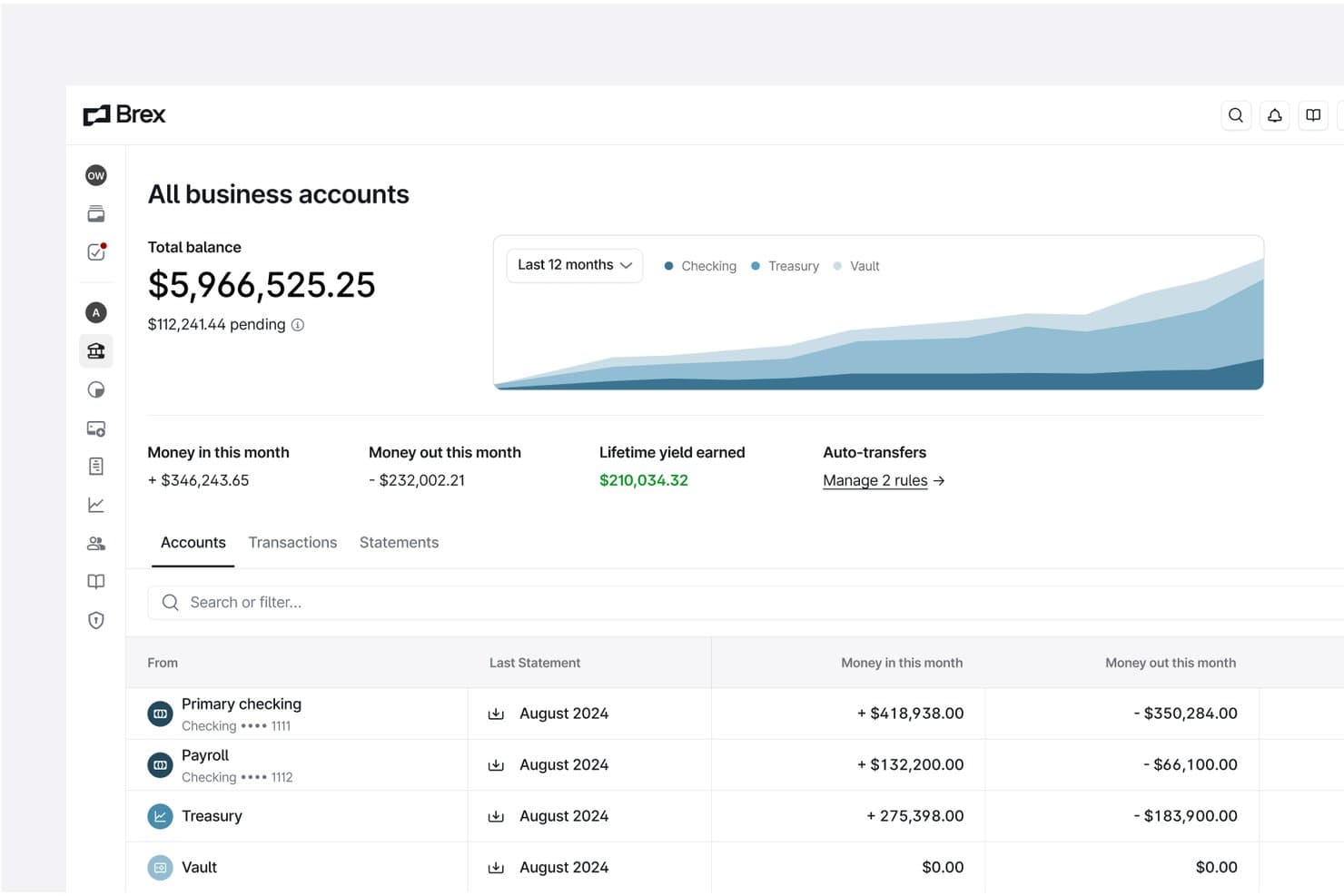
In my opinion, Brex excels as an expense management software for its excellent integration and real-time tracking. It shines at serving tech startups and e-commerce businesses with its user-friendly interface and robust integrations with tools such as QuickBooks and NetSuite. Compared to others, such as Ramp, Brex's onboarding is intuitive, making it an excellent choice for teams that need quick adoption. However, its value for money might not be the best for smaller or budget-conscious teams, given its pricing. If your team values seamless integration and efficient expense tracking tied to a modern business bank account or checking account, Brex is worth considering.
Pros
- Strong AI automation streamlines expense tracking, approvals, and invoice processing.
- Real-time budgeting and reporting improve financial visibility and spending control.
- Extensive integrations support seamless workflows across finance and HR systems.
Cons
- International transactions may incur costly foreign exchange markup fees.
- Not ideal for sole proprietors and many international-only businesses.
- Brex's approval workflow can be frustrating for larger teams.
Is Brex Right For Your Needs?
Who Would be a Good Fit for Brex?
Brex is a great fit for tech startups and e-commerce businesses that need efficient expense tracking across corporate credit cards, virtual cards, and physical cards. Its real-time monitoring and user-friendly interface make it easy for your team to adopt. If your work involves frequent spending and you need clear visibility into expenses, especially via a Brex card tied to a Brex business account, Brex's functionalities can help you manage finances effectively without requiring a personal guarantee. It is particularly useful for finance teams who value quick onboarding and responsive support backed by years of experience.
- Tech StartupsBrex helps fast-growing startups manage corporate cards, approvals, budgets, and reimbursements within one scalable platform.
- Global and Multi-Entity BusinessesBrex supports local-currency cards, reimbursements, and multi-entity spend management for internationally distributed companies.
- Finance TeamsAI-powered automation, ERP integrations, and real-time reporting help finance teams streamline expense and bill workflows.
- Remote WorkforcesMobile expense management and virtual cards simplify spending controls for employees working across multiple locations.
- Companies Seeking Unified Financial OperationsBrex combines cards, expense management, bill pay, travel, and reporting within one centralized finance platform.
- Scaling Mid-Market CompaniesAdvanced approvals, policy controls, and live budgets help growing businesses manage increasingly complex financial operations.
Who Would be a Bad Fit for Brex?
Brex might not suit small businesses or freelancers who need cost-effective solutions due to its pricing structure. If your team requires extensive customization in reporting, Brex's limitations might frustrate you. Larger companies with complex approval workflows may find Brex cumbersome to manage. Additionally, if you rely heavily on mobile functionality, you might find Brex's mobile app lacking in features compared to its desktop version.
- Small Local BusinessesVery small businesses may not need Brex’s advanced automation, approvals, and multi-entity financial controls.
- Sole Proprietors and FreelancersBrex is not designed for independent contractors or unincorporated businesses without formal company structures.
- Non-U.S. CompaniesBrex primarily supports U.S.-based businesses, limiting accessibility for international-only organizations without U.S. entities.
- Manufacturing CompaniesBrex may not cater to the unique expense tracking requirements in manufacturing environments.
- Heavy Mobile UsersBrex's mobile app lacks advanced features, making it less ideal for teams relying on mobile access for reimbursements or in-person spending.
How We Test & Score Tools
We’ve spent years building, refining, and improving our software testing and scoring system. The rubric is designed to capture the nuances of software selection and what makes a tool effective, focusing on critical aspects of the decision-making process.
Below, you can see exactly how our testing and scoring works across seven criteria. It allows us to provide an unbiased evaluation of the software based on core functionality, standout features, ease of use, onboarding, customer support, integrations, customer reviews, and value for money.
Core Functionality (25% of final scoring)
The starting point of our evaluation is always the core functionality of the tool. Does it have the basic features and functions that a user would expect to see? Are any of those core features locked to higher-tiered pricing plans? At its core, we expect a tool to stand up against the baseline capabilities of its competitors.
Standout Features (25% of final scoring)
Next, we evaluate uncommon standout features that go above and beyond the core functionality typically found in tools of its kind. A high score reflects specialized or unique features that make the product faster, more efficient, or offer additional value to the user.
We also evaluate how easy it is to integrate with other tools typically found in the tech stack to expand the functionality and utility of the software. Tools offering plentiful native integrations, 3rd party connections, and API access to build custom integrations score best.
Ease of Use (10% of final scoring)
We consider how quick and easy it is to execute the tasks defined in the core functionality using the tool. High scoring software is well designed, intuitive to use, offers mobile apps, provides templates, and makes relatively complex tasks seem simple.
Onboarding (10% of final scoring)
We know how important rapid team adoption is for a new platform, so we evaluate how easy it is to learn and use a tool with minimal training. We evaluate how quickly a team member can get set up and start using the tool with no experience. High scoring solutions indicate little or no support is required.
Customer Support (10% of final scoring)
We review how quick and easy it is to get unstuck and find help by phone, live chat, or knowledge base. Tools and companies that provide real-time support score best, while chatbots score worst.
Customer Reviews (10% of final scoring)
Beyond our own testing and evaluation, we consider the net promoter score from current and past customers. We review their likelihood, given the option, to choose the tool again for the core functionality. A high scoring software reflects a high net promoter score from current or past customers.
Value for Money (10% of final scoring)
Lastly, in consideration of all the other criteria, we review the average price of entry level plans against the core features and consider the value of the other evaluation criteria. Software that delivers more, for less, will score higher.
Core Features
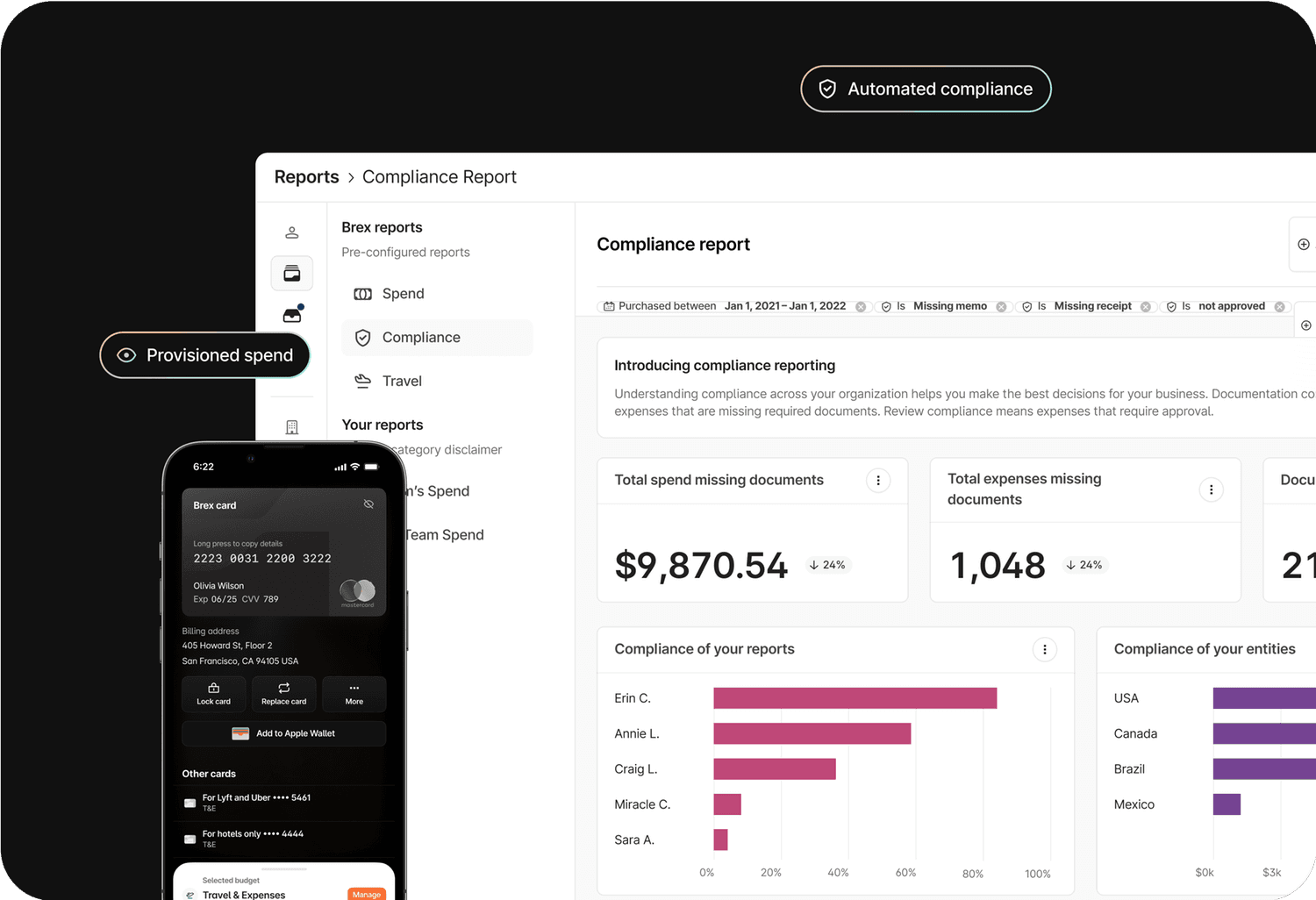
Real-Time Expense Tracking: This feature lets you see expenses as they happen, giving your team immediate financial visibility. It helps you make informed decisions with up-to-date data across all business credit cards.
Automated Expense Reporting: Brex simplifies your reporting process by automatically categorizing and compiling expense data, helping automate expense reports tied to your Brex account.
Spend Management Controls: You can set limits and rules to manage your team’s spending effectively. This keeps your budgets in check and prevents overspending by tying spend controls to specific cards.
Receipt Capture: Snap a photo of your receipts, and Brex will attach them to transactions. It streamlines documentation and keeps your records organized for later reimbursements.
Multi-Currency Support: You can handle international expenses with ease, as Brex supports multiple currencies and international wires.
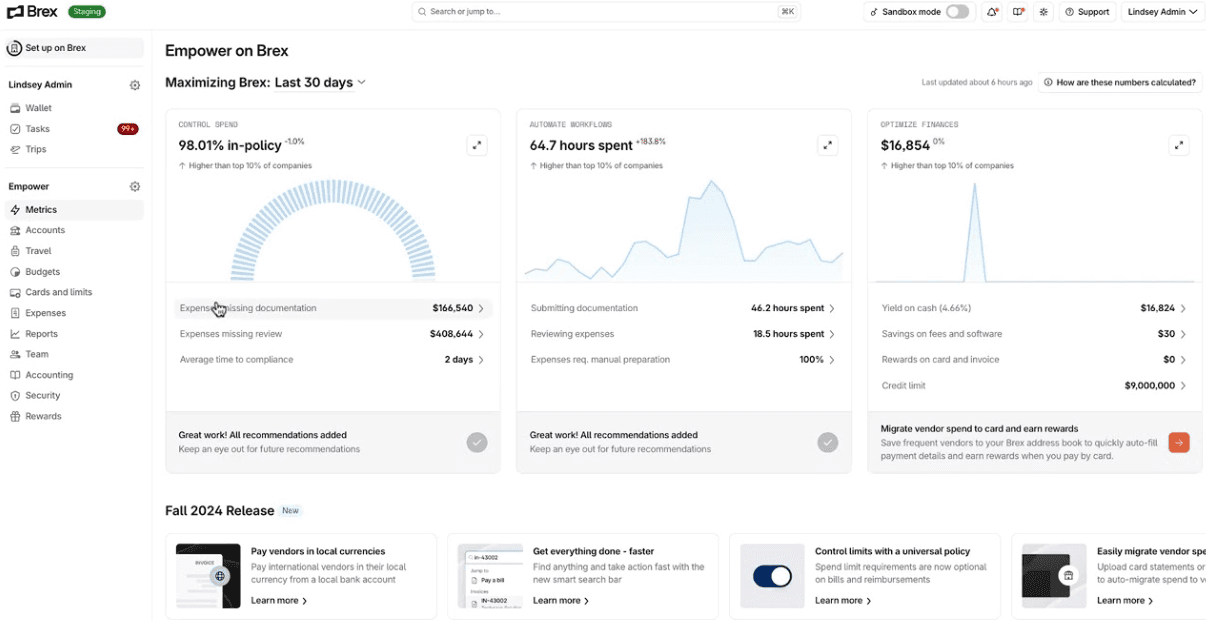
User-Friendly Dashboard: The intuitive dashboard gives you a clear overview of your expenses and budgets. It makes tracking and managing finances straightforward for your team.
Ease of Use
Brex excels in user-friendliness with its intuitive interface that makes navigation a breeze for your team. Its dashboard provides clear insights into expenses, making financial management straightforward. You’ll appreciate the ease of capturing receipts and automating reports, saving time and reducing errors. Compared to competitors like Ramp, Brex’s simplicity stands out, allowing you to focus on your work without getting bogged down by complex processes. Overall, it’s a user-friendly solution for efficient expense management.
Integrations
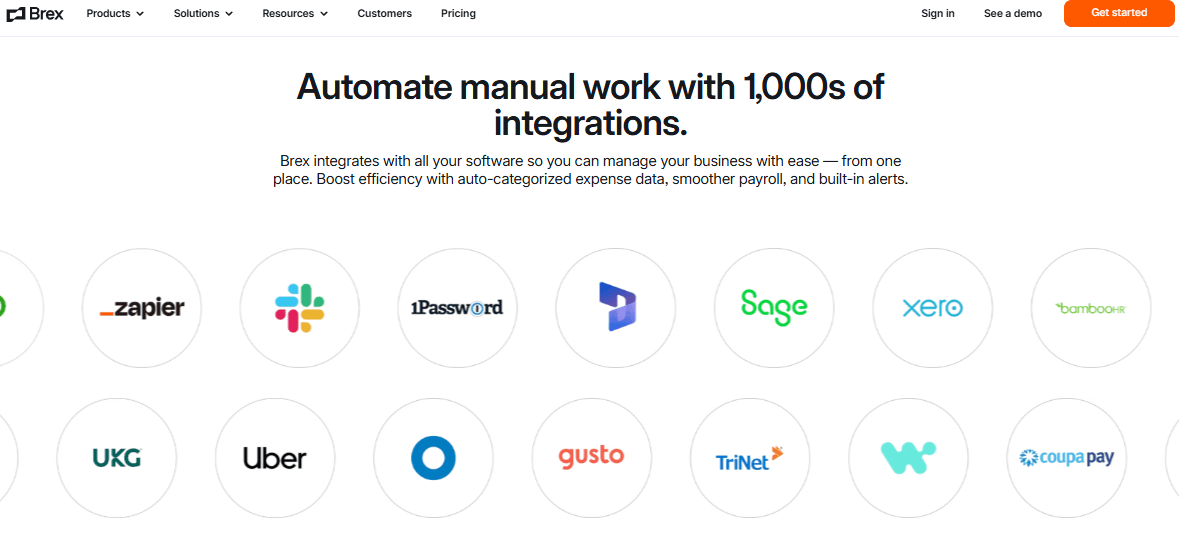
Brex integrates with NetSuite, QuickBooks, and Xero. Brex also offers an API and connects with third-party integration tools to enhance its functionality.
Brex Specs
- 2-Factor Authentication: No
- Accounts Payable: Yes
- Accounts Receivable: Yes
- API: Yes
- Balance Sheet: No
- Billing/Invoicing: Yes
- BitCoin: No
- Budgeting: Yes
- Calendar Management: No
- Contact Management: Yes
- CRM Integration: Yes
- Customer Management: Yes
- Dashboard: Yes
- Data Export: Yes
- Data Import: Yes
- Data Visualization: Yes
- Expense Tracking: Yes
- External Integrations: Yes
- Forecasting: Yes
- General Account Ledger: No
- Inventory Tracking: No
- Multi-Currency: No
- Multi-User: Yes
- Notifications: Yes
- P&L: No
- PayPal: No
- Payroll: No
- SAP Integration: No
- Stripe: No
- Supplier Management: Yes
- Tax Management: Yes


