
Monk vs. Tabs: Comparison & Expert Reviews for 2026
Monk and Tabs approach accounts receivable automation differently. I compare their features, pricing, and strengths to help you choose the right fit for your finance team.
We review tools independently, and commissions help fund our testing. See our transparency policy, our methodology, or suggest a tool.
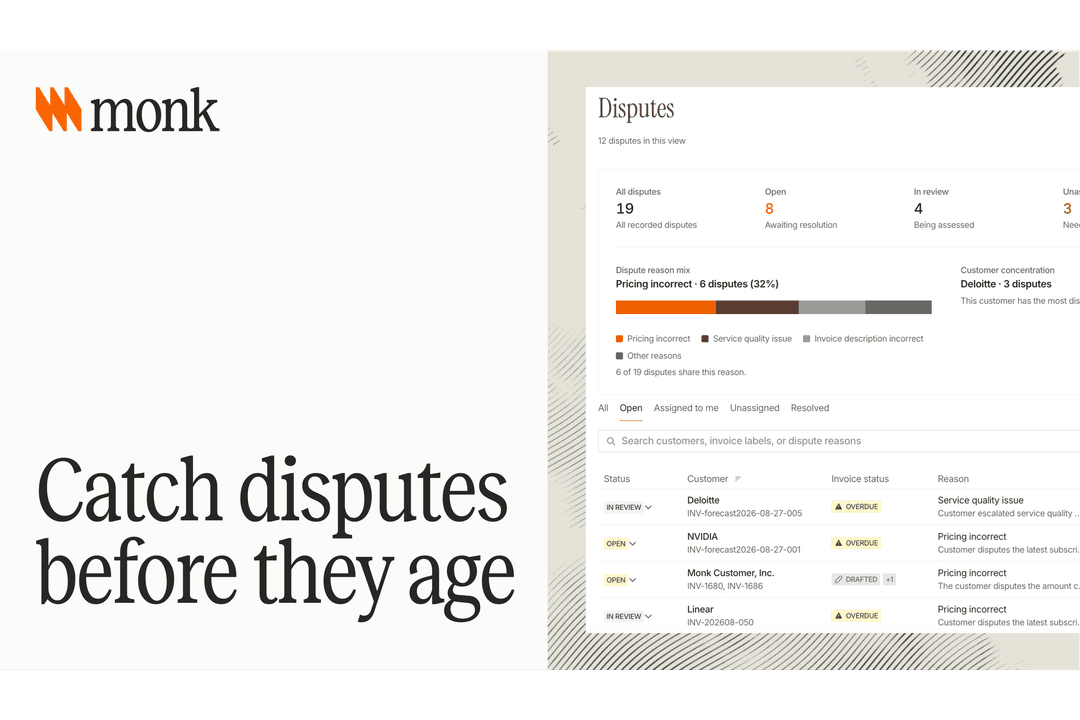
Getting invoices out the door doesn't always mean getting paid on time. Between customer disputes, missing remittance details, and invoices stuck in AP portals, finance teams can spend hours chasing payments and reconciling accounts instead of focusing on cash flow.
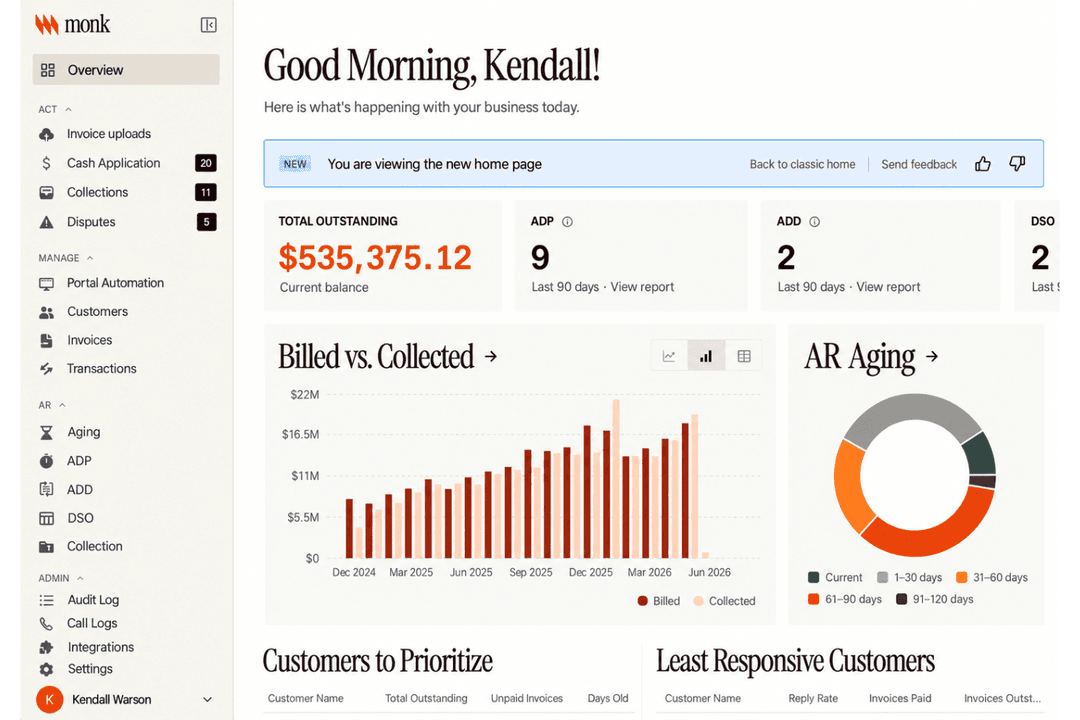
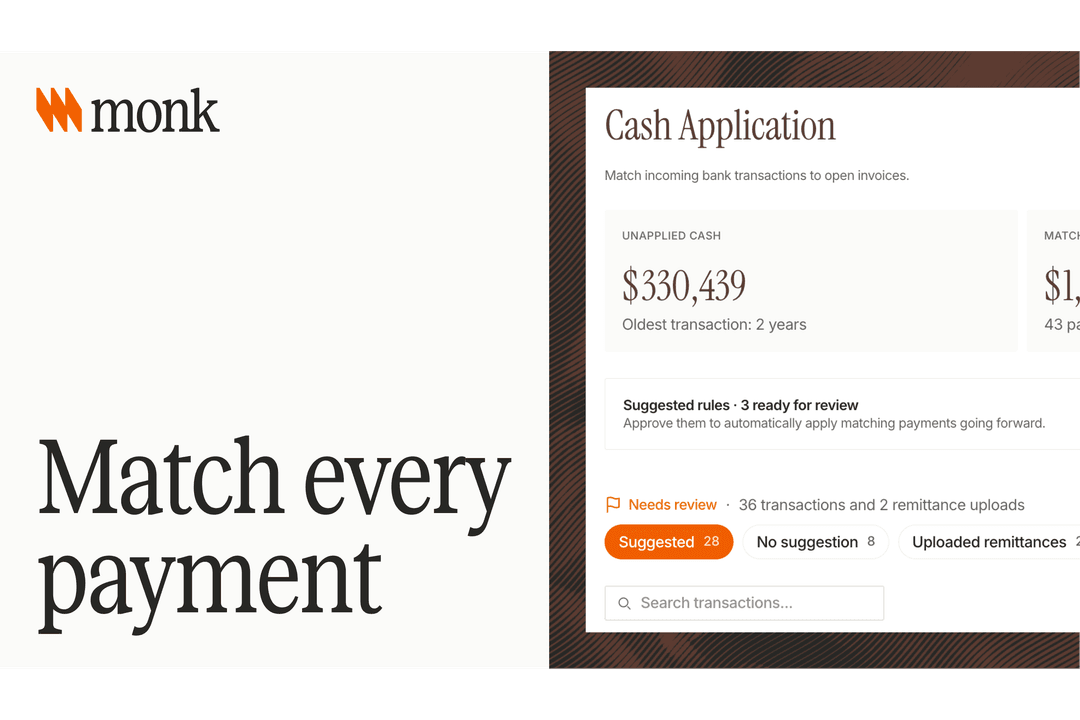
Monk and Tabs approach these challenges from different angles. Monk focuses on AI-native invoice-to-cash automation, while Tabs connects collections and payment workflows with contract-based billing and revenue recognition. Both offer AI-powered automation, but choosing the right accounts receivable automation platform depends on where your team needs the most support.
In this comparison, I'll break down Monk vs. Tabs across features, pros and cons, pricing, security, usability, and best use cases to help you decide which platform makes the most sense for your finance team.
Monk


4.5/5
- Demo upon request
- Pricing upon request
Tabs


4.6/5
- Free demo available
- From $2000/month
Why Trust Our Software Recommendations
6,700+
Reviews
20
Industry experts
16+
Evaluation factors
14
Years
Our team has been testing and reviewing software since 2012. As finance leaders ourselves, we know how difficult—and important—it is to choose the right software.
For this guide, we evaluated tools using hands-on testing and independent research, scoring tools using our selection criteria.
Our reviews reflect our human editorial judgment, not a sales pitch.
| Monk | Tabs | |
|---|---|---|
| Free Trial | Demo upon request | Free demo available |
| Pricing | Pricing upon request | From $2000/month |
Monk vs. Tabs Pricing & Hidden Costs
Monk uses a quote-based platform fee that scales with invoice volume, without implementation fees or a percentage of collections. This makes costs relatively predictable, although fees may increase as invoice volumes grow. Meanwhile, Tabs uses tiered pricing based on annual revenue and active contracts, with AI included across its plans. Access to advanced billing capabilities and certain accounting integrations may depend on the tier, while tier-based implementation fees and optional add-ons can increase the total cost.
Choosing between the two comes down to whether you prefer Monk's invoice-volume-based pricing or Tabs' revenue- and contract-based structure. Consider how your business growth affects pricing, which features are included, and whether additional costs apply to implementation or integrations before comparing long-term value.
| Monk | Tabs | |
|---|---|---|
| 2-Factor Authentication | Yes | Yes |
| API | Yes | Yes |
| Accounts Receivable | Yes | Yes |
| Balance Sheet | No | No |
| Billing/Invoicing | Yes | Yes |
| Calendar Management | No | No |
| Contact Management | Yes | Yes |
| Customer Management | Yes | Yes |
| Dashboard | Yes | Yes |
| Data Export | Yes | Yes |
| Data Import | Yes | Yes |
| Data Visualization | Yes | Yes |
| Expense Tracking | No | No |
| External Integrations | Yes | Yes |
| Multi-Currency | Yes | Yes |
| Notifications | Yes | Yes |
| PayPal | No | No |
| Payment Gateway Integration | Yes | Yes |
| Payment Processor | No | Yes |
| Stripe | Yes | Yes |
| Tax Management | No | No |
| Integration | Monk | Tabs |
|---|---|---|
| IntegrationQuickBooks | Monk✅ | Tabs✅ |
| IntegrationNetSuite | Monk✅ | Tabs✅ |
| IntegrationSalesforce | Monk✅ | Tabs✅ |
| IntegrationGmail | Monk✅ | Tabs✅ |
| IntegrationXero | Monk✅ | Tabs❌ |
| IntegrationAcumatica | Monk✅ | Tabs❌ |
| IntegrationDocusign | Monk✅ | Tabs✅ |
| IntegrationAnrok | Monk✅ | Tabs✅ |
| IntegrationHubSpot | Monk✅ | Tabs✅ |
| IntegrationAPI | Monk✅ | Tabs✅ |
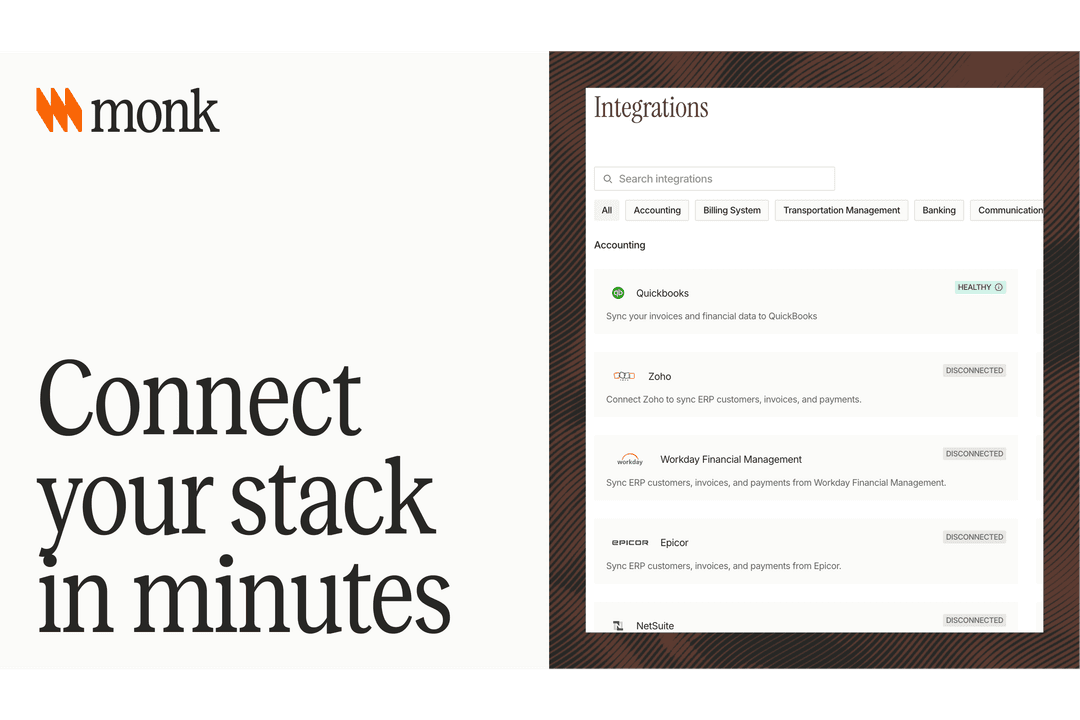
Both Monk and Tabs integrate with major accounting, CRM, and financial systems to support accounts receivable automation. Monk emphasizes connectivity across existing ERP, payment, and communication tools, helping finance teams manage collections and reconciliation without replacing their current systems. Meanwhile, Tabs connects contract management, billing, and tax workflows to support broader revenue operations. Both offer API access, although Monk provides broader compatibility across the integrations compared.
| Factor | Monk | Tabs |
|---|---|---|
| FactorCompliance | MonkSOC 2 Type II attestation covering Security, Availability, and Confidentiality; ISO/IEC 27001:2022 certified; reports GDPR compliance. | TabsSOC 2 Type I and Type II compliance, with audit-ready controls for financial workflows. |
| FactorEncryption | MonkUses AES-256 encryption at rest, TLS in transit, zero-trust networking, and endpoint security. | TabsEncrypts data at rest and in transit, with regular security testing and enterprise security controls. |
| FactorData Privacy & Deployment | MonkIsolates customer data, prohibits shared AI model training, and offers US cloud hosting, on-premises, and bring-your-own-cloud deployment options. | TabsProtects customer data through contractual privacy safeguards, retention policies, and deletion procedures. |
| FactorAccess Controls | MonkProvides mandatory 2FA, SSO, role-based permissions, least-privilege access, and audit logging. | TabsSupports MFA, SSO, SCIM provisioning, granular permissions, and audit trails for financial workflows. |
| FactorReliability | MonkMaintains SOC 2 availability controls, security monitoring, and audit trails, with audit and penetration test reports available on request. | TabsProvides automated backups, audit trails, enterprise SLAs, and approval controls for financial operations. |
Overall, Monk emphasizes customer-data isolation, AI training restrictions, and flexible deployment options, backed by SOC 2 Type II and ISO 27001 certification. Tabs focuses on enterprise access controls, audit trails, and data protection measures that support secure billing and revenue operations. Both provide strong security and compliance foundations, but Monk prioritizes data privacy, AI governance, and deployment flexibility, while Tabs emphasizes access management and financial workflow traceability.
| Factor | Monk | Tabs |
|---|---|---|
| FactorSetup | MonkGuided onboarding typically takes less than a week, with no internal engineering required and an initial AI agent tuning period. | TabsHands-on implementation covers workflow mapping, data migration, integrations, and training. |
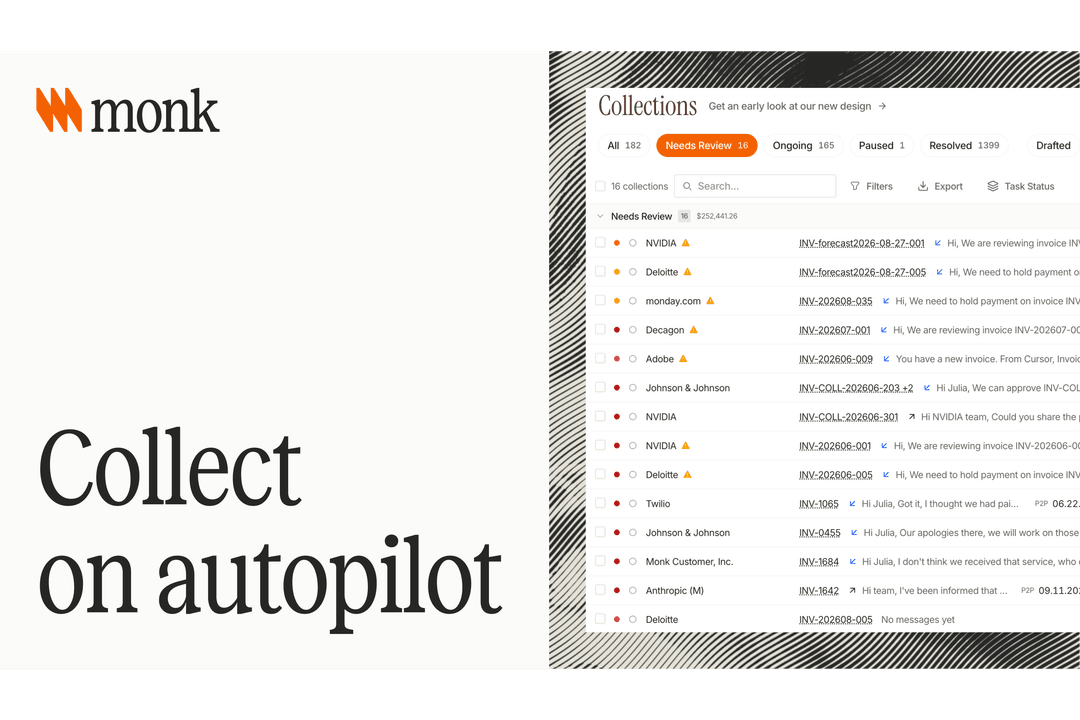
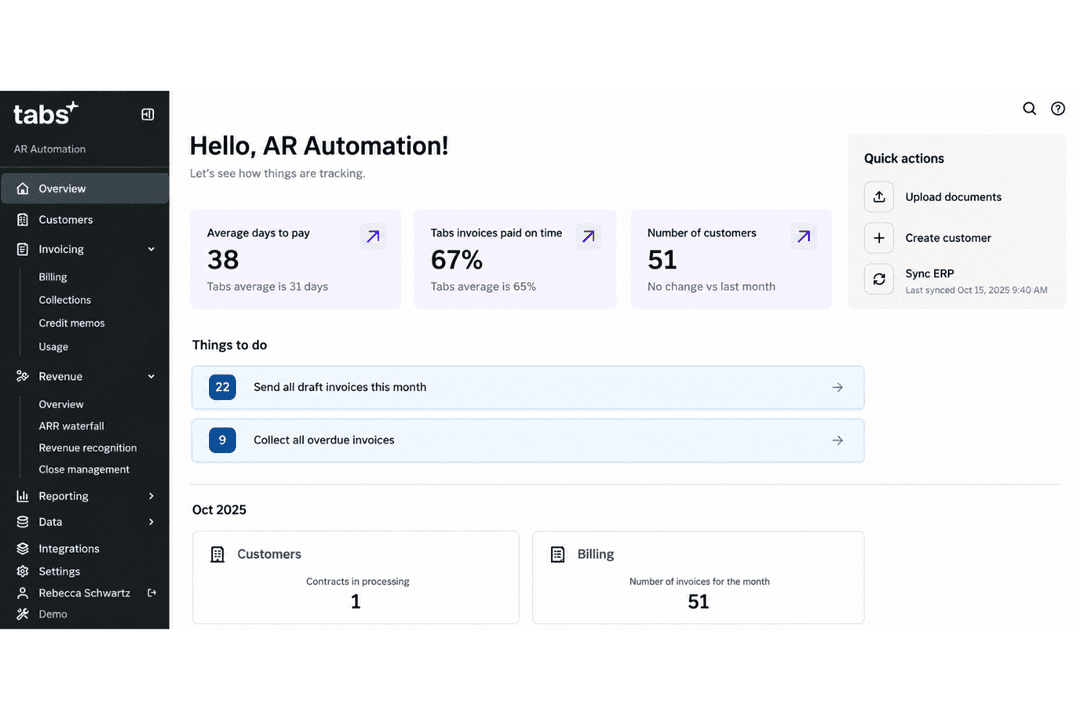
| FactorInterface | MonkNatural-language Playbooks, customizable dashboards, and a Needs Review queue simplify collections and exception handling. | TabsCentralized views organize contracts, billing schedules, invoices, and customer collections activities. |
| FactorWorkflow Fit | MonkContext-aware email and voice agents handle customer follow-ups, while cash application and AP portal automation manage reconciliation and invoice submissions. | TabsCollections Agent triages customer replies and submits invoices through AP portals, alongside contract-driven billing, cash application, and revenue recognition. |
| FactorSupport | MonkDedicated implementation lead, agent strategist, and engineer, plus seven-day Slack or Teams support and a stated four-hour response-time SLA. | TabsProvides implementation assistance, customer success support, and a shared Slack channel for support requests. |
From an ease-of-use perspective, Monk emphasizes quick deployment and straightforward AR automation, with natural-language Playbooks and AI agents that handle routine collections work. Tabs, meanwhile, connects billing, collections, and revenue recognition through contract-driven workflows, with hands-on implementation to configure the broader process. For finance teams prioritizing fast adoption and autonomous invoice-to-cash execution, Monk is particularly appealing, while Tabs may suit organizations looking to manage billing and revenue operations together.
Monk
- AI email and voice agents answer customer questions, share invoices, track payment promises, and pause follow-ups during disputes.
- Three-tier cash application combines custom rules, exact matching, and AI suggestions to reconcile partial payments and complex remittances.
- AP portal automation submits invoices and monitors their status daily to catch rejections and stalled approvals.
- Doesn't replace an ERP, general ledger, or dedicated revenue recognition software, and unsupported billing integrations may require extra steps.
- AI agents typically need one to two weeks in draft mode, with collections reaching full volume around week four.
- Sensitive disputes, legal escalations, and uncertain payment matches still require human judgment, while portal exceptions may also need review.
Tabs
- Contract parsing supports usage-based and bundled invoice generation.
- Automated dunning and cash application support invoice follow-up.
- Users praise responsive support and clear invoicing workflows.
- Partial payments require manual tracking instead of invoice application.
- Users report onboarding delays and longer-than-expected implementations.
- Contract processing and automation sometimes need manual follow-up.
Monk


- Manufacturing and DistributionManufacturers and wholesalers can automate collections, submit invoices through customer AP portals, and reconcile bulk payments. This helps manage high invoice volumes and complex customer accounts.
- Trucking and LogisticsTrucking and logistics companies can automate customer follow-ups, monitor invoice approvals, and reconcile payments across multiple accounts. This helps reduce collection delays and manual AR work.
- Staffing AgenciesStaffing firms can automate collections for recurring invoices, track payment commitments, and manage billing disputes. This helps maintain cash flow while handling frequent billing cycles.
- Food and Beverage SuppliersFood and beverage businesses can reconcile distributor payments, identify short payments, and manage pricing disputes. Automated cash application helps reduce manual reconciliation and track outstanding deductions.
- Medical Device CompaniesMedical device suppliers can automate invoice submissions through buyer AP portals, monitor approval statuses, and manage payment disputes. This helps reduce delays caused by complex purchasing processes.
- SaaS and AI CompaniesGrowing SaaS and AI businesses can connect existing billing systems, including Stripe, to automate collections and payment matching. Customizable Playbooks also support different customer segments and payment terms.
Tabs


- Contracted SaaSSaaS businesses with recurring customer contracts can use Tabs’ contract parsing, billing schedules, invoicing, and collections in one workflow.
- Usage-Based ServicesProviders that bill for customer usage can use Tabs’ usage billing capabilities alongside contract ingestion and invoicing.
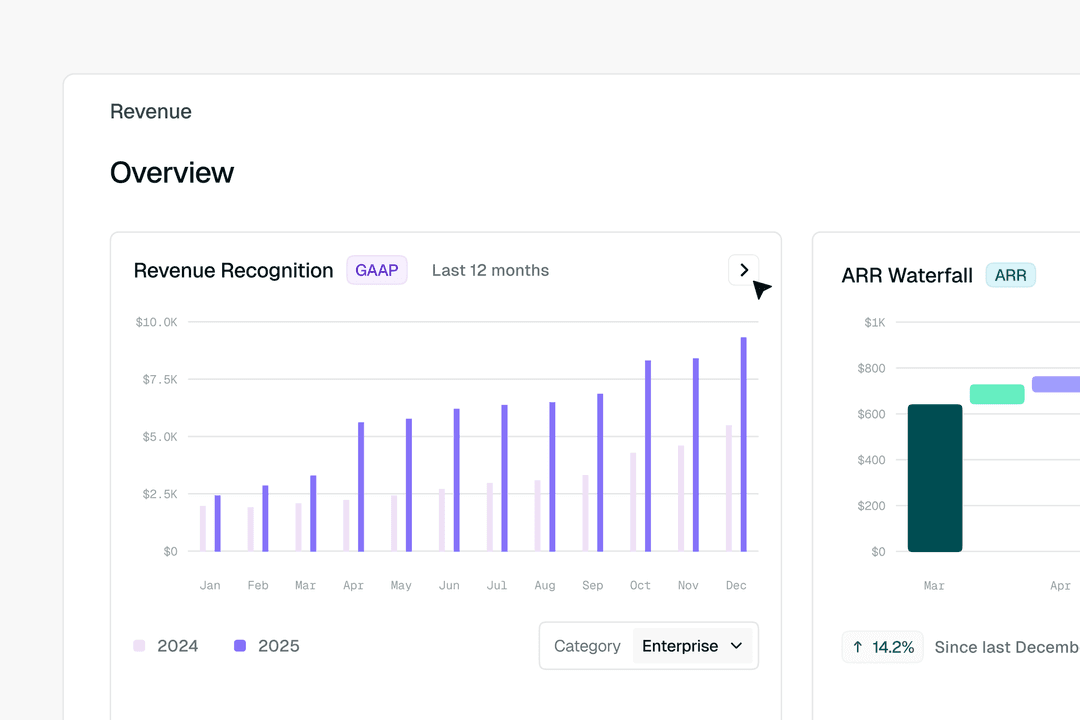
- Finance TeamsFinance teams that handle billing and revenue reporting can use Tabs’ invoicing, collections, revenue recognition, and reporting features.
- Growing CompaniesGrowing businesses can use Tabs’ Launch plan to manage contract ingestion, billing, collections, revenue recognition, and reporting as their operations expand.
- Midmarket OperationsBusinesses with increasing contract volumes and complex billing requirements can assess Growth or Scale, which support up to 500 or 2,000 active contracts, respectively.
- NetSuite UsersEnterprises that need NetSuite integration can consider Tabs’ Enterprise plan, which is designed for complex revenue operations.
Who Should Use Monk, and Who Should Use Tabs?
If you're looking for an AI-native accounts receivable platform that automates collections, cash application, and AP portal workflows, Monk is a strong fit. It's particularly useful for B2B companies in manufacturing, distribution, logistics, staffing, and SaaS that manage high invoice volumes and complex payment reconciliation. Its context-aware AI agents, customizable Playbooks, and guided onboarding make it appealing to finance teams that want to reduce manual work without replacing existing billing systems.
If your priority is connecting customer contracts to billing and revenue operations, Tabs may suit your team. It's designed for contracted SaaS businesses, usage-based services, and growing companies managing complex billing requirements. Its contract parsing, automated invoicing, collections, and revenue recognition capabilities help finance teams manage these processes through connected workflows.
| Monk | Tabs | |
|---|---|---|
| AI Agent Approach | Monk Context-aware email and voice agents handle customer conversations through customizable Playbooks, with deterministic checks and audit logs. | Tabs AI agents process contracts, generate invoices, and personalize collections follow-ups using customer context. |
| AP Portal Management | Monk Uses APIs and browser agents for invoice submission, vendor registration, and daily monitoring across 600+ portal touchpoints. | Tabs Automates invoice submissions, tracks portal statuses, and flags rejections and disputes for follow-up. |
| Cash Application Method | Monk Three-tier matching combines customer-specific rules, deterministic matching, and AI reasoning, with configurable approval thresholds. | Tabs AI-powered matching reconciles payments with open invoices, including partial payments and exceptions. |
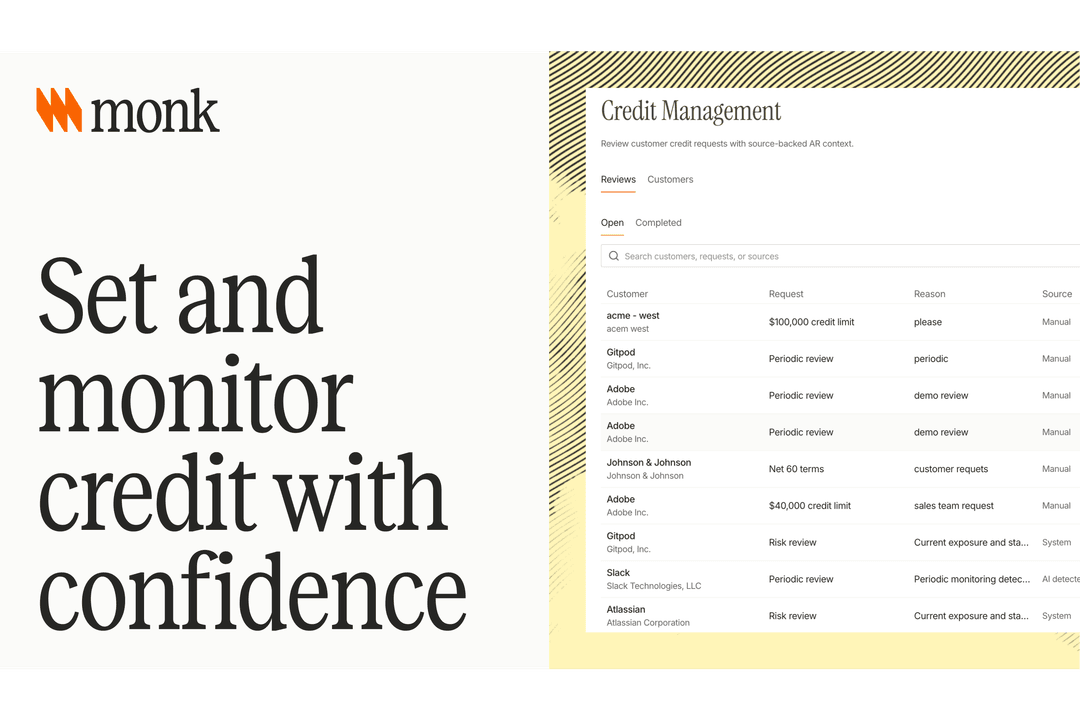
| Platform Focus | Monk AI-native invoice-to-cash automation covering collections, cash application, disputes, credit management, and forecasting alongside existing billing systems. | Tabs Contract-driven revenue automation spanning billing, collections, revenue recognition, and reporting. |
| Pricing Model | Monk Custom platform fee based on invoice volume, without implementation fees or a percentage of collections. | Tabs Tiered pricing based on annual revenue and active contracts, with custom quotes for higher tiers. |
| AR Reporting and Visibility | Both offer invoice aging, payment tracking, DSO metrics, and collections reporting to help finance teams monitor outstanding receivables and payment performance. |
|---|---|
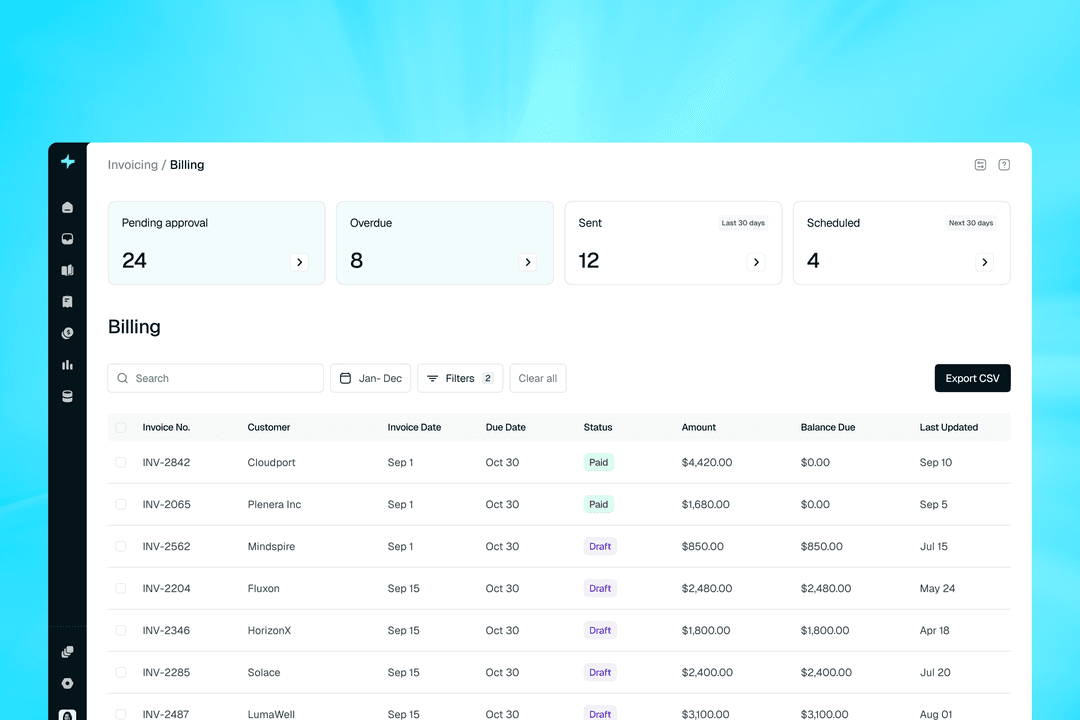
| Automated Invoicing | Both automate invoice creation and management, supporting contract-based billing, usage calculations, and recurring invoicing to reduce manual billing work. |
| Customer Payments | Both provide customer payment portals that support cards and ACH, allowing customers to access invoices and settle outstanding balances online. |
| Financial Integrations | Both integrate with major ERP, accounting, and CRM systems and provide API access to synchronize financial data and connect existing business workflows. |
| Security and Access Controls | Both maintain SOC 2 compliance, encrypt data at rest and in transit, and provide access controls and audit trails to protect sensitive financial information. |