

Odoo Buchhaltungssoftware im Test: Vorteile, Nachteile, Funktionen und Preise
Odoo Buchhaltung zeichnet sich durch anpassbare Module und Kosteneffizienz aus, was sie zu einer vielseitigen Wahl für kleine und mittlere Unternehmen macht.

Wir bewerten Tools unabhängig; Provisionen helfen, unsere Tests zu finanzieren. Siehe unsere Transparenzrichtlinie und unsere Methodik.
Odoo Accounting is an accounting software built into a modular ERP platform, making it a natural fit for growing businesses that want financials, inventory, purchasing, and sales managed in one connected system. I'd consider it over QuickBooks if your team needs accounting that's natively tied to other business operations—rather than patching together integrations to make separate tools talk to each other.
Odoo Accounting Evaluation Summary
4.2/5
- Free plan available
- Free trial available
Warum Sie unseren Software-Empfehlungen vertrauen können
6,700+
Reviews
20
Industry experts
16+
Evaluation factors
14
Years
Unsere Bewertungen spiegeln unser unabhängiges Urteilsvermögen wider – keine Verkaufsstrategie. Erfahren Sie, wie wir transparent bleiben.
Für diesen Leitfaden haben wir Tools mithilfe von praktischen Tests und unabhängiger Recherche bewertet und dabei unsere Bewertungskriterien angewendet.
Unsere Bewertungen spiegeln unser menschliches redaktionelles Urteilsvermögen wider, keine Verkaufsstrategie.
Odoo Accounting Overview
Odoo Accounting offers a solid set of features that caters well to small business owners and medium-sized businesses alike. Its user-friendly interface and integration capabilities make it an attractive choice for teams looking to streamline business management. The pricing is competitive, especially given the breadth of functionality.
Some users might find the lack of automation in reconciliations and occasional system crashes to be drawbacks. Compared to other software, Odoo excels in customization and modularity but may fall short in providing seamless automation. It's best suited for businesses that value flexibility and are willing to invest time in setting up the system to match their specific needs.
Pros
- You can customize modules to fit your team's needs.
- It's user-friendly, making it easy for your team to adopt.
- The all-in-one interface is intuitive, simplifying your workflow.
Cons
- Your team might experience occasional system crashes.
- It lacks automation in reconciliations, which could slow your work.
- Customer support response times may not meet your expectations.
Is Odoo Accounting Right For Your Needs?
Who Would be a Good Fit for Odoo Accounting?
Odoo Accounting is a great fit for small to medium-sized businesses that need flexibility and customization. If your team values an intuitive interface and the ability to tailor accounting management tools to specific workflows, this software could be a strong match. Its modular nature supports industries like retail and manufacturing, where diverse accounting needs exist. The user-friendly design helps your team quickly adapt and efficiently manage finances.
- Small RetailersOdoo Accounting's customizable modules help you with inventory management and sales needs.
- Manufacturing CompaniesThe software supports complex cost accounting, which benefits your production and supply chain management.
- Service ProvidersIts intuitive interface simplifies billing and invoicing, making it ideal for your client-based projects.
- Finance TeamsOdoo Accounting's user-friendly setup makes it easier for your team to manage budgets and financial reports.
- StartupsThe cost-effective pricing and flexibility are attractive for growing businesses. Odoo may be perfect for your startup's evolving financial needs.
- NonprofitsCustomizable features help you track donations and grants, aligning with your specific financial goals.
Who Would be a Bad Fit for Odoo Accounting?
Odoo Accounting may not suit large enterprises with complex financial structures that need advanced automation. If your team relies heavily on automated workflows and requires extensive customer support, you might find Odoo lacking in these areas. Businesses that need seamless reconciliation processes or those with high transaction volumes could face challenges due to the software's occasional system crashes and limited automation features.
- Large CorporationsThe software's limited automation might not meet your complex financial processing needs.
- High-Volume RetailersFrequent system crashes could hinder your ability to manage high transaction volume.
- Financial InstitutionsYou might need more advanced features than Odoo offers for intricate financial services.
- Tech-Savvy TeamsIf you rely on automation, Odoo's manual processes could slow your work.
- Multi-National CompaniesHandling diverse international operations can be challenging with Odoo's limited features.
- Heavily Regulated IndustriesOdoo might not meet the strict compliance requirements you need for industry standards.
Wie wir Tools testen und bewerten
Wir haben jahrelang daran gearbeitet, unser System zur Softwarebewertung zu entwickeln, zu verfeinern und stetig zu verbessern. Der Bewertungsleitfaden wurde entworfen, um die Feinheiten der Softwareauswahl und die Qualitätskriterien eines effektiven Tools präzise zu erfassen, mit Fokus auf entscheidende Aspekte im Auswahlprozess. Im Folgenden sehen Sie genau, wie unsere Prüfungen und Bewertungen nach sieben Kriterien funktioniert. So können wir eine objektive Bewertung der Software auf Grundlage der Kernfunktionalitäten, herausragenden Eigenschaften, Benutzerfreundlichkeit, Einführung, Kundensupport, Integrationen, Kundenbewertungen sowie Preis-Leistungs-Verhältnis bieten.
Kernfunktionalität (25 % der Gesamtbewertung)
Der Ausgangspunkt unserer Bewertung ist immer die Kernfunktionalität des Tools. Verfügt es über die grundlegenden Features und Funktionen, die ein Nutzer erwarten würde? Sind einige dieser Kernfunktionen auf höherpreisige Tarife beschränkt? Im Kern erwarten wir, dass ein Tool mit den Basisfunktionen seiner Wettbewerber mithalten kann.
Herausragende Funktionen (25 % der Gesamtbewertung)
Im nächsten Schritt bewerten wir ungewöhnliche, herausragende Funktionen, die über die üblichen Kernfunktionen vergleichbarer Tools hinausgehen. Eine hohe Punktzahl erhält, wer spezialisierte oder einzigartige Funktionen bietet, die das Produkt schneller, effizienter oder besonders wertvoll für den Nutzer machen. Wir prüfen auch, wie einfach sich das Tool mit anderen Programmen des typischen Tech-Stacks integrieren lässt, um den Funktionsumfang und die Nützlichkeit der Software zu erweitern. Vielseitige native Integrationen, Drittanbieter-Anbindungen sowie API-Zugänge für individuelle Integrationen schneiden am besten ab.
Benutzerfreundlichkeit (10 % der Gesamtbewertung)
Wir bewerten, wie schnell und einfach sich die wichtigsten Aufgaben im Tool erledigen lassen. Hoch bewertete Software ist gut gestaltet, intuitiv bedienbar, bietet mobile Apps, Vorlagen und macht selbst komplexere Aufgaben handhabbar.
Einführung (10 % der Gesamtbewertung)
Wir wissen, wie wichtig eine rasche Teamakzeptanz bei neuen Plattformen ist. Deshalb prüfen wir, wie einfach sich ein Tool mit minimalem Trainingsaufwand erlernen und bedienen lässt. Wir bewerten auch, wie schnell ein Teammitglied ohne vorherige Erfahrung startklar ist. Hoch bewertete Lösungen benötigen wenig oder gar keinen Support.
Kundensupport (10 % der Gesamtbewertung)
Wir prüfen, wie leicht und schnell Sie mit Telefon, Live-Chat oder Wissensdatenbank Hilfe erhalten können. Tools und Unternehmen, die Echtzeit-Support bieten, erzielen die besten Ergebnisse, während Chatbots am schlechtesten abschneiden.
Kundenbewertungen (10 % der Gesamtbewertung)
Neben unseren eigenen Tests berücksichtigen wir den Net-Promoter-Score aktueller und ehemaliger Kunden. Wir prüfen, wie wahrscheinlich sie sich erneut für das Tool entscheiden würden, basierend auf der Kernfunktionalität. Hoch bewertete Software spiegelt einen hohen Net-Promoter-Score wider.
Preis-Leistungs-Verhältnis (10 % der Gesamtbewertung)
Abschließend vergleichen wir alle Kriterien und bewerten den Durchschnittspreis der Einstiegstarife im Verhältnis zu den Kernfunktionen und dem Nutzen der weiteren Bewertungskriterien. Software, die mehr für weniger bietet, erhält die besten Bewertungen.
Core Features
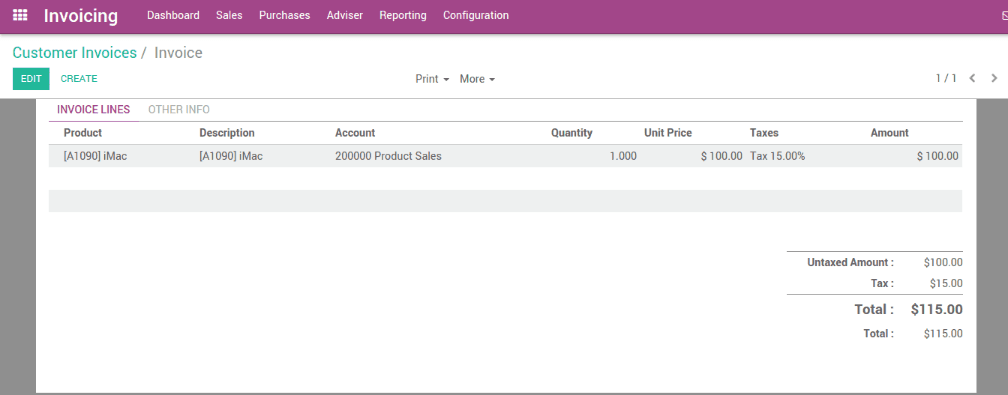
Invoicing: Easily create and send professional invoices to your clients. It lets you track payments and manage your billing efficiently.
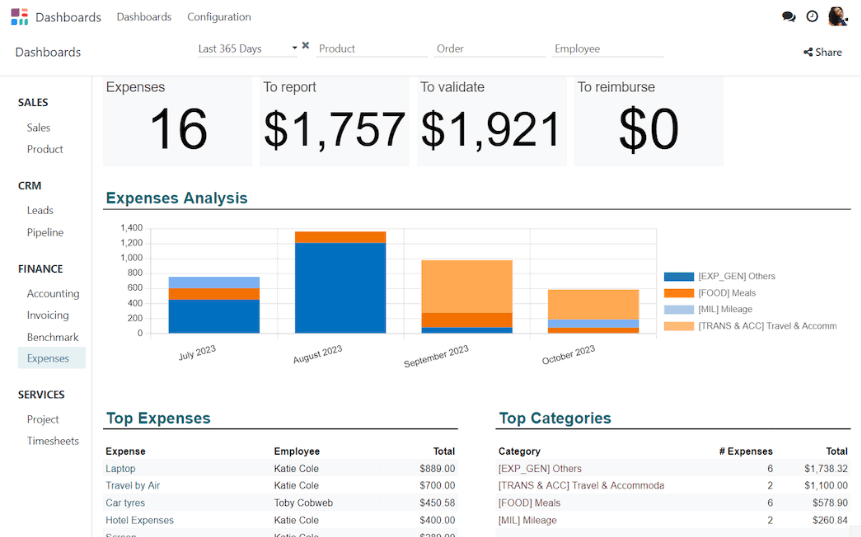
Expense Management: Track and manage your team's expenses with ease. This feature simplifies reimbursement and helps you stay on budget.
Bank Reconciliation: Match transactions with bank statements to ensure accuracy. It saves you time and reduces errors in your financial records.
Reporting: Generate detailed financial reports to analyze your business performance. It provides insights into your sales orders, revenue, expenses, and cash flow.
Tax Management: Calculate and file taxes accurately with built-in tax rules. This feature helps you stay compliant with local regulations.
Multi-Currency Support: Handle transactions in different currencies if your business operates globally. It ensures you manage international finances without hassle.
Website Builder: Odoo includes a fully native, built-in website builder that seamlessly integrates with the rest of its business management ecosystem.
Ease of Use
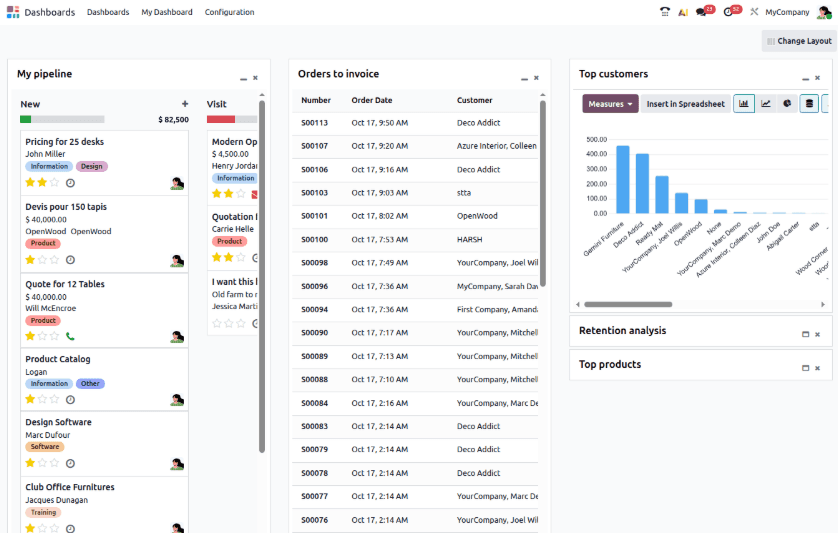
Odoo Accounting is user-friendly, making it easy for your team to adopt. The intuitive interface helps you quickly navigate features such as invoicing and reporting. Its customizable dashboards let you tailor the experience to fit your workflow, enhancing usability.
While some users report occasional system crashes, the overall design simplifies financial management, especially for small- to medium-sized businesses. You’ll find it straightforward to manage tasks without needing extensive training.
Integrations
Odoo Accounting integrates with various systems, including CRM, Microsoft, inventory management, sales management, warehouse management, human resources, e-commerce platforms, project management tools, email marketing services, payment gateways, shipping carriers, and point-of-sale systems. They can also integrate with various accounting software, such as QuickBooks Online and Xero.
Odoo Accounting also has an API offering flexible options, including connectors and custom code, to tailor integrations to specific business needs.
Odoo Accounting Specs
- 2-Factor Authentication: No
- Accounts Payable: Yes
- Accounts Receivable: Yes
- API: Yes
- Balance Sheet: Yes
- Billing/Invoicing: Yes
- BitCoin: No
- Budgeting: Yes
- Calendar Management: Yes
- Contact Management: Yes
- CRM Integration: Yes
- Customer Management: Yes
- Dashboard: Yes
- Data Export: Yes
- Data Import: Yes
- Data Visualization: No
- Expense Tracking: Yes
- External Integrations: Yes
- Forecasting: Yes
- General Account Ledger: Yes
- Inventory Tracking: Yes
- Multi-Currency: Yes
- Multi-User: Yes
- Notifications: No
- P&L: Yes
- PayPal: Yes
- Payroll: No
- SAP Integration: No
- Stripe: Yes
- Supplier Management: Yes
- Tax Management: Yes


