

El software fiscal internacional ayuda a tu equipo a gestionar el cumplimiento tributario transfronterizo, automatizar las declaraciones y hacer un seguimiento de las obligaciones fiscales globales desde un solo lugar. Si buscas el mejor software fiscal internacional, probablemente te enfrentas a requisitos de información complejos, normativas cambiantes y la necesidad de respaldar el crecimiento de tu empresa en varios países. Esta guía destaca herramientas revisadas por expertos, diseñadas para ayudarte a cumplir la normativa, reducir el trabajo manual y mantenerte al día con la evolución de las normas fiscales internacionales, para que puedas centrarte en elaborar informes precisos y tomar decisiones estratégicas. Esto es lo que necesitas saber para elegir la solución adecuada para tu empresa.
Por qué confiar en nuestras recomendaciones de software
6,700+
Reviews
20
Industry experts
16+
Evaluation factors
14
Years
Nuestras reseñas reflejan nuestro criterio independiente, no un discurso de ventas. Descubra cómo mantenemos la transparencia.
Para esta guía, evaluamos las herramientas mediante pruebas prácticas e investigación independiente, puntuando las herramientas según nuestros criterios de selección.
Nuestras reseñas reflejan nuestro criterio editorial humano, no un discurso de ventas.
Tabla comparativa de software fiscal internacional
Esta tabla comparativa resume los detalles de precios de mis principales selecciones de software fiscal internacional:
| Tool | Best For | Trial Info | Price | ||
|---|---|---|---|---|---|
| 1 | Ideal para el IVA indirecto y la facturación electrónica a gran escala | Demostración gratuita disponible | Precio bajo solicitud | Website | |
| 2 | Ideal para cálculos automáticos de IVA | Demo gratuita disponible | Precios bajo solicitud | Website | |
| 3 | Ideal para la automatización de impuestos sobre ventas digitales | Prueba gratuita de 7 días disponible | Desde $29/mes | Website | |
| 4 | Ideal para el cumplimiento del Pilar Dos a escala | Demostración gratuita disponible | Precios disponibles previa solicitud | Website | |
| 5 | Lo mejor en herramientas de investigación fiscal global | Demostración gratuita disponible | Precio bajo consulta | Website | |
| 6 | Mejor para actualizaciones regulatorias en tiempo real | Demo gratuita disponible | Precios bajo solicitud | Website | |
| 7 | Mejor compatibilidad con sistemas ERP | Demostración gratuita disponible | Precio a consultar | Website | |
| 8 | Ideal para la gestión fiscal de ingresos SaaS | Demo gratuita disponible | Desde $100/mercado/mes | Website | |
| 9 | Mejor para soporte de cumplimiento transfronterizo | Demo gratuita disponible | Precio a consultar | Website | |
| 10 | Ideal para informes de entidades multinacionales | Demo gratuita disponible | Precio bajo solicitud | Website |


Análisis del mejor software fiscal internacional
A continuación se incluyen mis resúmenes detallados del software fiscal internacional que entró en mi selección. En mis análisis encontrarás una revisión detallada de las funciones, los casos de uso más adecuados y las integraciones de cada software para ayudarte a encontrar el mejor para ti.
 Ideal para el IVA indirecto y la facturación electrónica a gran escala
- Demostración gratuita disponible
- Precio bajo solicitud
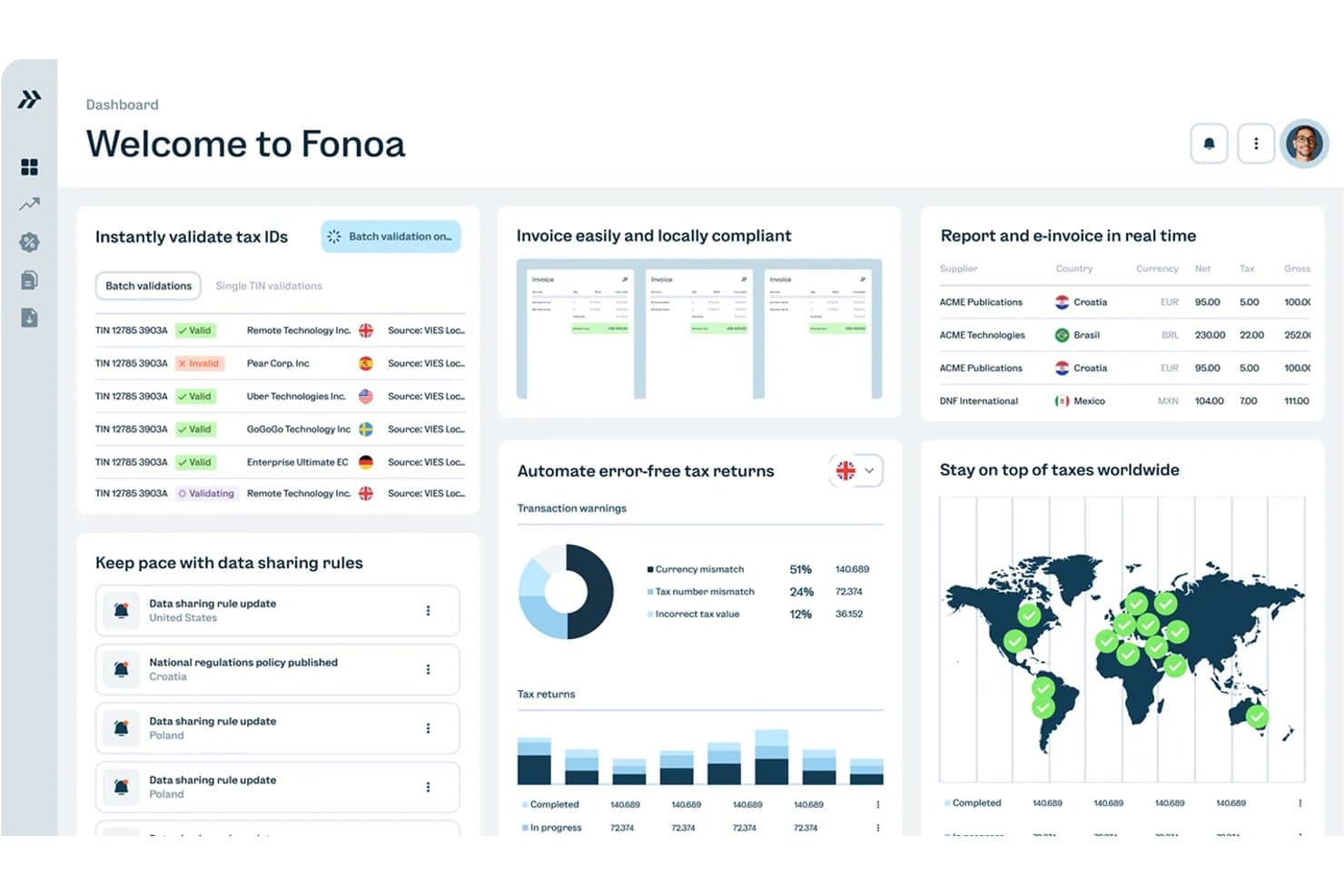
Fonoa centraliza la validación fiscal, la facturación y las declaraciones en un solo panel. Fonoa es una plataforma de automatización de impuestos indirectos con prioridad en la API que gestiona el IVA, el GST y los impuestos sobre las ventas durante todo el ciclo de cumplimiento, incluida la validación de identificaciones fiscales, el cálculo en tiempo real, la facturación electrónica y la presentación de declaraciones en más de 100 jurisdicciones.
¿Para quién es mejor Fonoa?
Fonoa es una opción ideal para los equipos financieros y fiscales de empresas digitales con un alto volumen de operaciones —empresas de SaaS, mercados digitales y plataformas— que necesitan automatizar el IVA, el GST y la facturación electrónica en docenas de jurisdicciones sin crear una infraestructura de cumplimiento desde cero.
Por qué elegí Fonoa
He incluido Fonoa entre mis principales opciones porque gestiona todo el ciclo de vida de los impuestos indirectos —validación, cálculo, facturación electrónica y presentación de declaraciones— mediante un único modelo de datos, algo poco habitual a esta escala. Me gusta que el motor fiscal procese cada transacción en tiempo real (en menos de 200 ms) y actualice automáticamente las reglas en más de 100 jurisdicciones, por lo que tu equipo no tiene que mantener manualmente las tablas de tipos impositivos. El módulo de facturación electrónica se conecta directamente con las autoridades fiscales mediante conexiones API acreditadas y cubre tanto las facturas emitidas como las recibidas en más de 50 países.
Funciones clave de Fonoa
- Validación de identificaciones fiscales: Comprueba las identificaciones fiscales en tiempo real frente a registros gubernamentales actualizados de más de 120 países, con coincidencia aproximada para corregir datos incorrectos y procesamiento por lotes de hasta 50.000 registros.
- Automatización del registro de auditoría: Recopila cada determinación fiscal, modificación y aprobación por jurisdicción y periodo en evidencias versionadas y protegidas contra manipulaciones para respaldar la gobernanza de SOX y SOC 2.
- Alertas normativas: Envía alertas de cumplimiento adaptadas al perfil de tu empresa, clasificadas por importancia y vinculadas directamente con la plataforma fiscal para que los cambios normativos puedan implementarse de inmediato.
- Cobertura fiscal de cuentas por pagar y por cobrar: Aplica la misma lógica de cálculo tanto a las transacciones de venta como a las de compra, lo que proporciona a tu equipo un tratamiento coherente de los impuestos indirectos en las cuentas por cobrar y las cuentas por pagar.
Integraciones de Fonoa
Las integraciones de Fonoa incluyen SAP, Oracle Fusion Cloud y NetSuite, aunque la profundidad de las conexiones no se detalla públicamente. Su API admite conexiones personalizadas con sistemas de pago, facturación, emisión de facturas y cuentas por pagar y por cobrar.
Pros and Cons
Pros:
- Cobertura de IVA/GST en tiempo real en todas las jurisdicciones
- Los registros de auditoría respaldan SOX y SOC 2
- Sólido soporte para transacciones de gran volumen
Cons:
- No ofrece lógica de precios de transferencia ni de tratados
- No ofrece provisión fiscal ni consolidación de entidades
Learn more about Fonoa: Ideal para cálculos automáticos de IVA
- Demo gratuita disponible
- Precios bajo solicitud
Visit WebsiteCustomer Rating:4/5
Avalara automatiza los cálculos de impuestos y el cumplimiento normativo entre regiones. Avalara ofrece herramientas automatizadas para el cálculo y cumplimiento del IVA para empresas que venden a través de fronteras. La plataforma es especialmente útil para compañías de comercio electrónico, equipos financieros y profesionales fiscales que necesitan gestionar reglas complejas de IVA en varios países. Sus funciones de determinación de impuestos en tiempo real y presentación de declaraciones ayudan a reducir errores manuales y mantener las transacciones internacionales en regla.
Por qué elegí Avalara
Cuando se trata de manejar cálculos automáticos de IVA, Avalara ofrece un nivel de precisión y cobertura difícil de igualar. La plataforma aplica automáticamente las tasas y reglas de IVA correctas para cada transacción, incluso cuando las regulaciones cambian entre países. Valoro que Avalara también soporte el registro de IVA y la presentación digital de declaraciones, lo que ayuda a que las empresas mantengan el cumplimiento sin intervención manual. Estas características la convierten en una opción sólida para compañías que gestionan grandes volúmenes de ventas transfronterizas y obligaciones de IVA complejas.
Características clave de Avalara
Otras funciones que hacen destacar a Avalara incluyen:
- Determinación de impuestos transfronterizos: Calcula los impuestos para transacciones internacionales según la ubicación en tiempo real y los datos del producto.
- Preparación y presentación de declaraciones: Genera y envía declaraciones de IVA a las autoridades fiscales en varios países.
- Gestión de documentos: Almacena y recupera documentos fiscales, certificados y registros de cumplimiento en un portal centralizado.
- Gestión de certificados de exención fiscal: Recoge, valida y administra certificados de exención para clientes elegibles.
Integraciones de Avalara
Las integraciones incluyen Shopify, NetSuite, QuickBooks, Magento, Salesforce, Epicor, Sage y Microsoft Dynamics.
Pros and Cons
Pros:
- Gran biblioteca de integraciones
- Cálculo de tasas en tiempo real
- Asignación HS incorporada
Cons:
- Se enfoca solo en impuestos indirectos
- La configuración puede ser complicada
Learn more about Avalara: Ideal para la automatización de impuestos sobre ventas digitales
- Prueba gratuita de 7 días disponible
- Desde $29/mes
Visit WebsiteCustomer Rating:4.8/5
Quaderno automatiza el cumplimiento de impuestos sobre ventas, IVA y GST para los vendedores. Quaderno está diseñado para negocios digitales y empresas SaaS que necesitan automatizar el cumplimiento fiscal de ventas en mercados globales. La plataforma rastrea los umbrales fiscales, aplica las tasas correctas y genera facturas conformes con la normativa tributaria para cada venta. Esto lo hace especialmente útil para vendedores online que gestionan IVA, GST e impuestos sobre las ventas en Estados Unidos en múltiples países.
Por qué elegí Quaderno
Para las empresas digitales, Quaderno destaca por su capacidad para automatizar el cumplimiento de impuestos sobre ventas a nivel internacional. La plataforma detecta automáticamente cuando superas los umbrales fiscales en diferentes países y aplica las tasas correctas de IVA, GST o impuesto sobre ventas de EE. UU. a cada transacción. Valoro cómo Quaderno genera facturas conformes con la normativa fiscal y mantiene registros detallados de cada venta, lo cual es especialmente importante para empresas SaaS y de comercio electrónico que venden internacionalmente. Este enfoque en la automatización fiscal para ventas digitales lo convierte en una opción sólida para equipos que necesitan mantenerse en cumplimiento sin intervención manual.
Características clave de Quaderno
Otras características de Quaderno que pueden ser valiosas para vendedores internacionales incluyen:
- Soporte multimoneda: Emite facturas y procesa pagos en múltiples monedas para clientes globales.
- Generación automática de notas de crédito: Crea y envía notas de crédito automáticamente cuando se requieren reembolsos o ajustes.
- Plantillas de facturas personalizables: Diseña y personaliza facturas según los requisitos locales y de tu empresa.
- Informes fiscales en tiempo real: Accede a resúmenes fiscales actualizados y exporta datos para las declaraciones en cualquier momento.
Integraciones de Quaderno
Las integraciones incluyen Stripe, PayPal, Shopify, WooCommerce, Amazon, Zapier, Xero y QuickBooks Online.
Pros and Cons
Pros:
- Interfaz de usuario atractiva
- Integración sencilla con Stripe
- Envía recibos conformes
Cons:
- Carece de sincronización profunda con ERP
- No tiene herramientas de precios de transferencia
Learn more about Quaderno: Ideal para el cumplimiento del Pilar Dos a escala
- Demostración gratuita disponible
- Precios disponibles previa solicitud
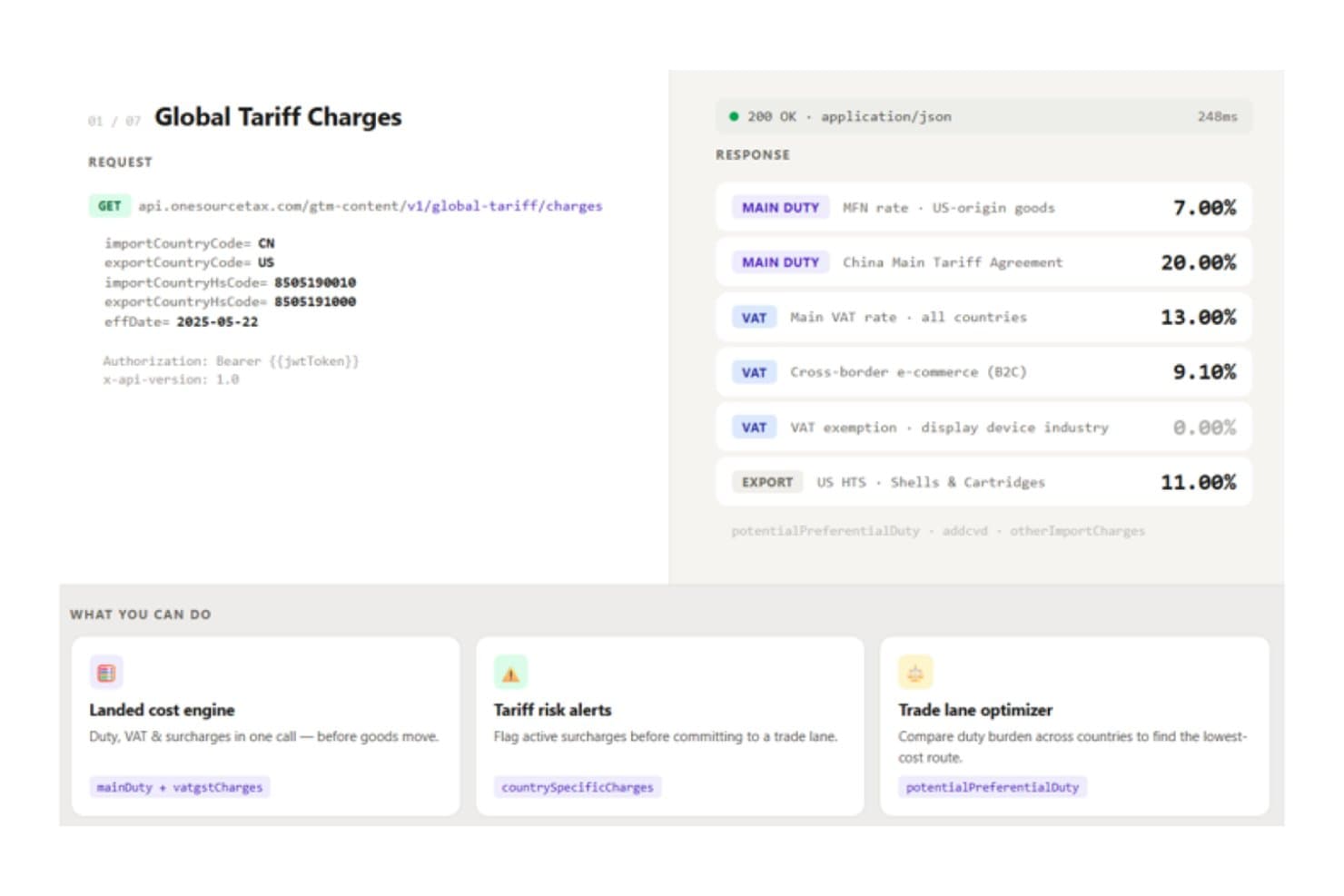
ONESOURCE ofrece tipos arancelarios globales en tiempo real mediante API para el cumplimiento comercial. ONESOURCE es una suite tributaria empresarial modular de Thomson Reuters que abarca el cumplimiento de impuestos directos, la provisión fiscal, el cálculo y la presentación de impuestos indirectos, la facturación electrónica, la presentación de informes legales y el cumplimiento del Pilar Dos (GloBE) en entidades multinacionales.
¿Para quién es más adecuado ONESOURCE?
ONESOURCE es una excelente opción para equipos fiscales multinacionales que necesitan gestionar el cumplimiento del Pilar Dos, la automatización de impuestos indirectos y la provisión para múltiples entidades con un único proveedor empresarial.
Por qué elegí ONESOURCE
He incluido ONESOURCE entre mis principales opciones porque su profundidad en el cumplimiento del Pilar Dos no se parece a nada de lo que he visto a escala empresarial. La integración con el impuesto mínimo global de Orbitax automatiza los cálculos de GloBE y el análisis de refugios seguros en más de 190 países, y se conecta directamente con la provisión fiscal para que las asignaciones de datos existentes se transfieran. También me gusta que la herramienta registrara más de 1.700 declaraciones de información GloBE en 34 jurisdicciones en menos de un año, lo que me indica que esta cobertura no es meramente teórica.
Características clave de ONESOURCE
- Determinación de impuestos indirectos: Calcula el impuesto sobre las ventas, el IVA, el GST y los impuestos especiales en tiempo real en más de 205 países y más de 60.000 jurisdicciones, procesando hasta 10 millones de transacciones por hora.
- Presentación de informes legales: Genera estados financieros legales en más de 45 jurisdicciones mediante plantillas en los idiomas locales, con pistas de auditoría y traducción automática con un solo clic.
- Automatización de declaraciones de IVA: Prepara y concilia declaraciones de IVA/GST, informes digitales SAF-T/SII y comparaciones con declaraciones precompletadas en más de 38 países mediante el cumplimiento indirecto.
- Cumplimiento de la facturación electrónica: Admite los requisitos de facturación electrónica en más de 80–85 países mediante la red integrada de Pagero, con coincidencia a nivel de línea entre las facturas electrónicas y las declaraciones.
Integraciones de ONESOURCE
ONESOURCE cuenta con 12 integraciones de SAP, incluidas SAP ERP, S/4HANA y Ariba, además de conectores certificados para Oracle ERP Cloud, Oracle Cloud Infrastructure y Microsoft Dynamics 365 F&O. Determination ofrece más de 60 integraciones prediseñadas, mientras que las API REST, OData y SFTP permiten conexiones de datos personalizadas.
Pros and Cons
Pros:
- Automatización del Pilar Dos en más de 190 países
- Actualizaciones frecuentes del contenido fiscal en todas las jurisdicciones
- La provisión para múltiples entidades permite la presentación de informes globales
Cons:
- La documentación de precios de transferencia requiere otro proveedor
- La presentación de declaraciones del impuesto sobre la renta fuera de Estados Unidos sigue sin estar clara
Learn more about ONESOURCE: Lo mejor en herramientas de investigación fiscal global
- Demostración gratuita disponible
- Precio bajo consulta

Bloomberg Tax ayuda a las empresas a gestionar la planificación y el cumplimiento fiscal global. Con Bloomberg Tax, los profesionales fiscales y los equipos financieros multinacionales obtienen acceso a una amplia biblioteca de herramientas de investigación fiscal global. La plataforma está diseñada para quienes necesitan navegar regulaciones fiscales internacionales complejas y mantenerse al día con los estándares de cumplimiento en constante evolución. Su fortaleza única radica en ofrecer análisis expertos, guías país por país y seguimiento legislativo actualizado para operaciones transfronterizas.
Por qué elegí Bloomberg Tax
Lo que diferencia a Bloomberg Tax para mí es su incomparable conjunto de herramientas de investigación fiscal global, esenciales para los profesionales que gestionan asuntos fiscales internacionales. La plataforma ofrece detalladas guías fiscales país por país y comentarios de expertos, ayudando a los usuarios a interpretar regulaciones complejas en múltiples jurisdicciones. Valoro el seguimiento y análisis legislativo en tiempo real, que mantiene a su equipo informado sobre cambios que pueden afectar el cumplimiento transfronterizo. Estas funciones centradas en la investigación hacen de Bloomberg Tax una opción sólida para organizaciones que necesitan inteligencia fiscal autorizada y actualizada a nivel global.
Funciones clave de Bloomberg Tax
Otras características que me llamaron la atención incluyen:
- Herramienta de comparación de tratados fiscales: Compare disposiciones en varios tratados fiscales internacionales en una sola vista.
- Gráficos fiscales interactivos: Visualice tasas de impuestos y reglas clave de diferentes países.
- Sistema de gestión de documentos: Organice, almacene y recupere de manera segura documentos de investigación y cumplimiento.
- Alertas de noticias personalizadas: Reciba actualizaciones sobre novedades fiscales adaptadas a las jurisdicciones y temas seleccionados.
Integraciones de Bloomberg Tax
Las integraciones incluyen Advantax, Vertex, Avalara, y varios sistemas ERP a través de Advantage Fixed Assets.
Pros and Cons
Pros:
- Sigue las redes de tratados
- Fuente de datos altamente confiable
- Potentes herramientas de planificación
Cons:
- Se centra principalmente en investigación
- Excesivo para empresas pequeñas
Learn more about Bloomberg Tax: Mejor para actualizaciones regulatorias en tiempo real
- Demo gratuita disponible
- Precios bajo solicitud

Sovos automatiza el cumplimiento del IVA para empresas en diversas regiones. Sovos está diseñado para equipos financieros y profesionales fiscales que necesitan mantenerse al día con las regulaciones fiscales globales en constante cambio. La plataforma se especializa en ofrecer actualizaciones regulatorias en tiempo real y automatizar el cumplimiento en múltiples jurisdicciones. Esto la hace especialmente útil para empresas multinacionales que enfrentan cambios frecuentes en las normas fiscales y requisitos de informes.
Por qué elegí Sovos
Lo que diferencia a Sovos es su enfoque en las actualizaciones regulatorias en tiempo real, esenciales para las empresas que operan en varios países. La plataforma supervisa los cambios en las leyes fiscales globales y actualiza automáticamente los procesos de cumplimiento, para que tu equipo pueda responder rápidamente a los nuevos requisitos. Me gusta que Sovos también cuente con funciones de informes automatizados y facturación electrónica que te ayudan a anticiparte a las obligaciones fiscales internacionales cambiantes. Esto lo convierte en una gran opción para organizaciones que necesitan minimizar el riesgo de incumplimiento en un entorno regulatorio dinámico.
Características clave de Sovos
Otras funciones de Sovos que pueden resultar útiles para equipos fiscales internacionales incluyen:
- Determinación fiscal en múltiples jurisdicciones: Calcula impuestos para transacciones en diferentes países y regiones en tiempo real.
- Preparación automática de declaraciones de IVA: Genera declaraciones de IVA para varias jurisdicciones dentro de la plataforma.
- Registro de auditoría y documentación de cumplimiento: Mantén un registro detallado de los cálculos y presentaciones fiscales para soporte de auditoría.
- Panel de análisis de datos fiscales: Visualiza y analiza las tendencias de los datos fiscales en tus operaciones globales.
Integraciones de Sovos
Las integraciones incluyen SAP, NetSuite, Microsoft Dynamics, Magento, QuickBooks, Shopify y Oracle.
Pros and Cons
Pros:
- Sincronización regulatoria en tiempo real
- Bueno para empresas a gran escala
- Procesamiento de alto volumen
Cons:
- Carece de funciones para impuestos directos
- Servicio de atención al cliente lento
Learn more about Sovos: Mejor compatibilidad con sistemas ERP
- Demostración gratuita disponible
- Precio a consultar

Vertex automatiza el cálculo y el cumplimiento fiscal para grandes empresas. Vertex está diseñado para organizaciones que necesitan gestionar requisitos fiscales complejos en múltiples países y sistemas empresariales. La plataforma destaca por su profunda compatibilidad con los principales sistemas ERP, lo que la convierte en una opción sólida para empresas con finanzas y operaciones integradas. Esto ayuda a los equipos fiscales a automatizar cálculos, mantener el cumplimiento y adaptarse rápidamente a los cambios en la normativa fiscal internacional.
Por qué elegí Vertex
Para las empresas que dependen de sistemas ERP para gestionar operaciones globales, Vertex ofrece un nivel de compatibilidad difícil de igualar en el ámbito del software fiscal internacional. Elegí Vertex porque se integra directamente con las principales plataformas ERP, permitiendo que los cálculos de impuestos y los procesos de cumplimiento se ejecuten dentro de los flujos de trabajo financieros existentes. La plataforma soporta la determinación de impuestos en tiempo real y actualizaciones automáticas de las normas fiscales a través de múltiples jurisdicciones. Esto la hace especialmente valiosa para organizaciones que necesitan que los procesos fiscales estén estrechamente alineados con su infraestructura financiera y operativa general.
Funciones clave de Vertex
Otras funciones que hacen de Vertex una excelente opción para la gestión fiscal internacional incluyen:
- Base de datos global de contenido: Proporciona tarifas y normas fiscales actualizadas para más de 19,000 jurisdicciones en todo el mundo.
- Panel analítico de datos fiscales: Ofrece visualizaciones y herramientas de informes para monitorear la exposición y el cumplimiento fiscal.
- Gestión automatizada de certificados de exención: Permite rastrear, almacenar y validar certificados de exención para impuestos sobre ventas y uso.
- Capacidades de procesamiento por lotes: Maneja grandes volúmenes de transacciones para cálculos fiscales masivos y presentaciones.
Integraciones de Vertex
Las integraciones incluyen SAP, Oracle, NetSuite, Microsoft Dynamics, Salesforce y Workday.
Pros and Cons
Pros:
- Reglas de IVA/IGV precisas
- Maneja cargas masivas de datos
- Reglas altamente personalizables
Cons:
- Requiere soporte de TI
- Mantenimiento costoso
Learn more about Vertex: Ideal para la gestión fiscal de ingresos SaaS
- Demo gratuita disponible
- Desde $100/mercado/mes

Anrok automatiza el cumplimiento del impuesto sobre las ventas para empresas SaaS. Anrok está diseñado específicamente para empresas SaaS que necesitan gestionar el cumplimiento fiscal sobre los ingresos recurrentes de software en mercados globales. Es especialmente relevante para los equipos de finanzas y operaciones que navegan por complejas normativas fiscales digitales, como el IVA, el GST y el impuesto sobre las ventas en EE. UU. La plataforma automatiza los cálculos de impuestos, el registro y la presentación de informes para los ingresos SaaS, ayudando a mantener el ritmo con los requisitos internacionales cambiantes.
Por qué elegí Anrok
Para las empresas SaaS que gestionan ingresos recurrentes, Anrok aborda los desafíos fiscales únicos que acompañan las ventas de productos digitales a través de fronteras. Elegí Anrok porque se especializa en automatizar los cálculos y presentaciones fiscales para software basado en suscripción, que a menudo está sujeto a normativas fiscales internacionales complejas y cambiantes. La plataforma rastrea los umbrales fiscales, gestiona registros en múltiples jurisdicciones y genera facturas conformes adaptadas a los modelos de facturación SaaS. Estas funciones hacen de Anrok una excelente opción para los equipos financieros que necesitan mantenerse en cumplimiento mientras expanden su negocio de software a nivel global.
Características clave de Anrok
Otras características que hacen que Anrok sea útil para la gestión fiscal SaaS incluyen:
- Panel de control de obligaciones fiscales en tiempo real: Te ofrece una visión en vivo de las obligaciones fiscales en todas las jurisdicciones.
- Gestión automatizada de certificados de exención: Recoge, valida y almacena certificados de exención de clientes.
- Herramientas de informes listas para auditoría: Prepara informes detallados para respaldar auditorías y revisiones regulatorias.
- Soporte multimoneda: Gestiona cálculos de impuestos y facturación en diferentes monedas para clientes globales.
Integraciones de Anrok
Las integraciones incluyen Stripe, Chargebee, Recurly, Zuora, NetSuite y QuickBooks Online.
Pros and Cons
Pros:
- Sincronización con sistemas de facturación
- Alertas de umbral global sencillas
- Interfaz moderna y limpia
Cons:
- Sin funciones fiscales para empleados
- Caso de uso global limitado
Learn more about Anrok: Mejor para soporte de cumplimiento transfronterizo
- Demo gratuita disponible
- Precio a consultar

Forte International Tax responde a las necesidades globales de nómina y cumplimiento fiscal. Forte International Tax ofrece soluciones personalizadas para empresas que navegan el complejo cumplimiento fiscal transfronterizo. Es especialmente relevante para corporaciones multinacionales, equipos financieros y profesionales de impuestos que gestionan reportes y requerimientos regulatorios en varias jurisdicciones. La plataforma destaca por su enfoque en la gestión proactiva del cumplimiento y el soporte ante la evolución de las leyes fiscales internacionales.
Por qué elegí Forte International Tax
Lo que me atrajo de Forte International Tax es su enfoque especializado en el soporte para el cumplimiento transfronterizo, que es una preocupación principal para las organizaciones que operan en múltiples países. La plataforma proporciona orientación detallada sobre regulaciones fiscales internacionales y ayuda a los usuarios a gestionar el cumplimiento con reglas y plazos específicos de cada país. Valoro que Forte International Tax ofrezca monitoreo continuo de los cambios regulatorios, para que tu equipo pueda anticiparse a los nuevos requerimientos. Estas características la convierten en una opción sólida para empresas que necesitan reducir riesgos y mantener el cumplimiento en diferentes jurisdicciones.
Características clave de Forte International Tax
Además de su monitoreo de cumplimiento y orientación regulatoria, también encontré que estas características merecen mención:
- Plantillas de informes personalizables: Genera informes fiscales específicos por país adaptados a las necesidades de tu organización.
- Gestión segura de documentos: Almacena, organiza y recupera documentos fiscales sensibles en un entorno protegido.
- Gestión multi-entidad: Supervisa el cumplimiento fiscal de varias filiales o unidades de negocio desde un solo panel.
- Acceso directo a asesores fiscales: Conéctate con expertos fiscales internacionales para preguntas y soporte específicos de cada caso.
Integraciones de Forte International Tax
Las integraciones incluyen Oracle, SAP, Microsoft Dynamics 365 y Corptax.
Pros and Cons
Pros:
- Gestiona precios de transferencia
- Bueno para empresas de tamaño medio
- Rastrea créditos fiscales extranjeros
Cons:
- La interfaz puede parecer anticuada
- La implementación requiere tiempo
Learn more about Forte International Tax: 10Ideal para informes de entidades multinacionales
Orbitax
- Demo gratuita disponible
- Precio bajo solicitud

Orbitax respalda la planificación fiscal y el cumplimiento global para empresas. Orbitax está diseñado para equipos financieros y profesionales fiscales que gestionan la presentación de informes y el cumplimiento de entidades multinacionales. La plataforma se especializa en automatizar los cálculos fiscales globales, la documentación y la recopilación de datos en diferentes jurisdicciones. Su enfoque único ayuda a las organizaciones a centralizar requerimientos de informes complejos y reducir el esfuerzo manual en la gestión fiscal transfronteriza.
Por qué elegí Orbitax
Para las organizaciones que gestionan informes de entidades multinacionales, Orbitax destaca por sus capacidades especializadas de automatización y gestión de datos. La plataforma centraliza los datos fiscales globales, facilitando la preparación y presentación de informes en múltiples jurisdicciones. Me gusta que Orbitax ofrezca informes país por país automatizados y gestión documental, lo que ayuda a reducir errores manuales y agiliza el cumplimiento. Estas funciones lo convierten en una opción ideal para equipos financieros que deben coordinar requerimientos de informes complejos para entidades que operan en varios países.
Características clave de Orbitax
Otras funciones que llamaron mi atención incluyen:
- Base de datos de tasas impositivas globales: Acceso a tasas fiscales actualizadas de varios países en un solo lugar.
- Generador de documentación de precios de transferencia: Crea informes de precios de transferencia conformes a las regulaciones locales.
- Gestión de calendario fiscal: Haz seguimiento de plazos importantes de presentación y fechas de cumplimiento en diferentes jurisdicciones.
- Funcionalidad de seguimiento de auditoría: Mantén un registro detallado de los cambios y acciones de los usuarios para fines de cumplimiento y revisión.
Integraciones de Orbitax
Las integraciones incluyen SAP, Oracle, Microsoft Dynamics 365, Workday, NetSuite, Thomson Reuters ONESOURCE, Wolters Kluwer CCH, Vertex, Avalara y Xero.
Pros and Cons
Pros:
- Excelentes indicadores visuales
- Diseñado para equipos fiscales globales
- Buenas capacidades de API
Cons:
- No apto para pequeñas empresas
- Puede ser abrumador de usar
Learn more about Orbitax:
Otros programas de software fiscal internacional
Estas son algunas opciones adicionales de software fiscal internacional que no entraron en mi selección, pero que merece la pena consultar:
- 11PwC SightlineLa mejor para integraciones a escala empresarial
- 12CCH IntegratorLa mejor opción para la provisión fiscal del grupo y la presentación de Pilar Dos
- 13SAP Tax ComplianceHet beste voor uitlegbare churnvoorspelling in e-commerce
- 14Longview TaxIdeal para la presentación de informes CbCR basados en provisiones y del Pilar Dos
- 15CCH TagetikIdeal para la provisión fiscal de grupos y el cierre en una sola plataforma
- 16CSC CorptaxIdeal para datos fiscales globales consolidados
- 17TaxuallyIdeal para la marca blanca de empresas de IVA y facturación electrónica
Cómo evalúo el software de fiscalidad internacional
Divido mi evaluación en tres partes, dando mayor peso a la funcionalidad principal: calcular y declarar impuestos transfronterizos entre entidades, divisas y jurisdicciones. Después, busco integraciones con ERP y modelado de escenarios, como probar la aplicación de un tratado. Por último, considero la incorporación, el soporte, la seguridad y la relación calidad-precio.
Funcionalidad principal (requisitos básicos para esta lista)
Al seleccionar herramientas para mi lista, califico cada una en una escala de 0 (no ofrece la funcionalidad) a 5 (sobresale en esta área) para cada funcionalidad principal indicada a continuación. Después convierto el total en un porcentaje para ayudar a evaluar la adecuación general de cada herramienta, con un peso adicional para las funcionalidades que he considerado esenciales.
- Cumplimiento fiscal global (esencial): Busco cálculos a nivel de país, declaraciones, presentaciones, formularios y soporte para entidades que operan en varias jurisdicciones.
- Motor fiscal transfronterizo (esencial): Evalúo la aplicación de tratados, las normas de retención, las operaciones entre empresas del grupo y los cálculos fiscales en distintas divisas y jurisdicciones.
- Actualizaciones normativas: Compruebo con qué rapidez actualizan las herramientas los tipos, las normas, los requisitos de presentación y las directrices cuando cambian las regulaciones fiscales.
- Gestión de impuestos indirectos: Evalúo los cálculos, la validación, la declaración y los resultados listos para presentar del IVA y el GST en operaciones digitales y físicas.
- Soporte para precios de transferencia: Busco documentación de operaciones entre empresas del grupo, métodos de fijación de precios, soporte para la comparación de referencias y registros preparados para auditorías entre entidades relacionadas.
- Consolidación de entidades y divisas: Evalúo la declaración fiscal consolidada entre entidades jurídicas, divisas, fuentes de ingresos y estructuras organizativas.
Una vez que tengo una lista de herramientas que cumplen los criterios, considero qué diferencia a cada plataforma.
Factores diferenciadores (lo que distingue a los proveedores)
Así es como comparo y contrasto distintos proveedores:
Funciones destacadas
Busco un modelado de escenarios que permita a los equipos fiscales simular reestructuraciones o elecciones de tratados antes de comprometerse, ya que detectar una exposición al Pilar Dos en una previsión es preferible a descubrirla al presentar la declaración. La automatización del registro de auditoría es igual de importante: compruebo si los papeles de trabajo se generan automáticamente con un nivel de detalle defendible, porque responder a una consulta de una autoridad fiscal no debería implicar reconstruir una hoja de cálculo desde cero. También evalúo la extensibilidad basada en API, especialmente en organizaciones que necesitan enviar datos fiscales a almacenes de datos internos o herramientas de inteligencia empresarial que se encuentran fuera del ecosistema del proveedor.
Más allá de las funciones
Evalúo cómo gestiona cada plataforma las reestructuraciones de entidades y la entrada en nuevos mercados, ya que añadir una filial después de una adquisición no debería obligar a volver a implementar el sistema. Los modelos de licenciamiento también son importantes: compruebo si los costes aumentan de forma predecible a medida que crecen las jurisdicciones y las entidades. También analizo la profundidad normativa del proveedor: si mantiene equipos internos de investigación fiscal o colabora con entidades como IBFD para garantizar la precisión del contenido, porque una cobertura obsoleta o superficial en jurisdicciones menos habituales genera una exposición real al incumplimiento.
Cómo elegir un software fiscal internacional
Es fácil perderse entre largas listas de funciones y complejas estructuras de precios. Para ayudarte a mantener la atención mientras avanzas en tu proceso particular de selección de software, aquí tienes una lista de factores que debes tener en cuenta:
| Factor | Qué debes considerar |
|---|---|
| FactorEscalabilidad | Qué debes considerar¿El software gestionará tus volúmenes de transacciones actuales y previstos, el crecimiento de entidades y los nuevos mercados sin necesidad de actualizaciones importantes? |
| FactorIntegraciones | Qué debes considerar¿La herramienta se conecta de forma nativa con tu ERP y tus sistemas de facturación y contabilidad, o necesitarás desarrollo personalizado o un sistema intermediario? |
| FactorCapacidad de personalización | Qué debes considerar¿Puedes adaptar las normas fiscales, los formatos de los informes y los flujos de trabajo a tu modelo de negocio y a tus necesidades de cumplimiento, o estás limitado a configuraciones predefinidas? |
| FactorFacilidad de uso | Qué debes considerar¿Tu equipo financiero y los usuarios no técnicos podrán navegar por el sistema, actualizarlo y solucionar problemas sin contar con asistencia continua del departamento de TI? |
| FactorImplementación e incorporación | Qué debes considerar¿Cuánto tiempo llevará ponerlo en marcha y qué recursos, internos o proporcionados por el proveedor, se necesitan para migrar los datos y formar a los usuarios? |
| FactorCoste | Qué debes considerar¿Todos los módulos necesarios están incluidos en el precio indicado, o hay cargos adicionales por países, usuarios o declaraciones adicionales? |
| FactorMedidas de seguridad | Qué debes considerar¿El proveedor cumple los estándares de tu organización en materia de privacidad de datos, cifrado y control de acceso, especialmente para datos fiscales confidenciales? |
| FactorRequisitos de cumplimiento | Qué debes considerar¿El software es compatible con las jurisdicciones, los tipos de impuestos y los estándares de información específicos que tu empresa debe cumplir ahora y en el futuro? |
¿Qué es el software fiscal internacional?
El software fiscal internacional es una solución digital que ayuda a las empresas a gestionar, calcular y declarar impuestos en varios países y jurisdicciones. Automatiza tareas complejas como los cálculos del IVA, el GST y el impuesto sobre las ventas, realiza un seguimiento de los requisitos de cumplimiento y genera informes listos para auditorías. Los equipos financieros utilizan estas herramientas para reducir los errores manuales, mantenerse al día con los cambios normativos y garantizar declaraciones precisas para las operaciones transfronterizas.
Funciones
Estas son las funciones principales que debería tener cualquier buen software fiscal internacional:
- Cálculo automatizado de impuestos: Calcula el IVA, el GST y el impuesto sobre las ventas de cada transacción según las normas más recientes de cada jurisdicción pertinente, lo que reduce el trabajo manual y los errores.
- Compatibilidad con múltiples jurisdicciones: Gestiona el cumplimiento fiscal en varios países, estados o provincias, lo que permite administrar las operaciones globales desde una sola plataforma.
- Seguimiento de umbrales: Supervisa las ventas y los volúmenes de transacciones para avisarle cuando se aproxime o supere los umbrales de registro fiscal en distintas regiones.
- Automatización de declaraciones fiscales: Prepara y presenta las declaraciones de impuestos electrónicamente ante las autoridades correspondientes, lo que ayuda a cumplir los plazos y reducir el riesgo de incumplimiento.
- Informes listos para auditorías: Genera informes detallados y exportables que facilitan las auditorías y las revisiones internas, con registros claros de los cálculos y las declaraciones.
- Gestión de certificados de exención: Recopila, valida y almacena los certificados de exención de los clientes, garantizando la aplicación de los tipos impositivos correctos y el cumplimiento de la normativa.
- Paneles en tiempo real: Ofrece visibilidad en directo de las obligaciones fiscales, las declaraciones y el estado de cumplimiento en todas las jurisdicciones.
- Compatibilidad con múltiples divisas: Gestiona transacciones, facturación e informes en varias divisas, algo esencial para las empresas con clientes internacionales.
- Capacidades de integración: Se conecta directamente con los sistemas ERP, contables y de facturación para sincronizar los datos de las transacciones y agilizar los flujos de trabajo.
- Actualizaciones normativas: Incorpora automáticamente los cambios en las leyes y los tipos impositivos, para que los cálculos y las declaraciones sigan siendo precisos a medida que evoluciona la normativa.
Ventajas
La implementación de un software fiscal internacional ofrece varias ventajas para su equipo y su empresa. Estas son algunas de las que puede esperar:
- Reducción del riesgo de incumplimiento: Los cálculos automatizados y las actualizaciones normativas ayudan a evitar errores y sanciones costosos en varias jurisdicciones.
- Ahorro de tiempo: Las declaraciones fiscales, los informes y el seguimiento de umbrales automatizados liberan a su equipo de tareas manuales y repetitivas.
- Mayor precisión: Los paneles en tiempo real y los informes listos para auditorías garantizan que sus datos fiscales sean precisos y fáciles de verificar.
- Operaciones globales escalables: La compatibilidad con múltiples jurisdicciones y divisas facilita la expansión a nuevos mercados sin tener que rediseñar los procesos fiscales.
- Gestión fiscal centralizada: La integración con sus sistemas ERP, contables y de facturación le permite gestionar todas las obligaciones fiscales desde una sola plataforma.
- Mejor preparación para auditorías: El mantenimiento detallado de registros y la gestión de certificados de exención simplifican la respuesta a auditorías y revisiones normativas.
- Mayor visibilidad: La información en directo sobre las obligaciones fiscales y el estado de cumplimiento le ayuda a tomar decisiones fundamentadas y a planificar de forma proactiva.
Costes y precios
Para seleccionar un software fiscal internacional es necesario comprender los distintos modelos de precios y planes disponibles. Los costes varían según las funciones, el tamaño del equipo, los complementos y otros factores. La siguiente tabla resume los planes habituales, sus precios medios y las funciones que suelen incluir las soluciones de software fiscal internacional:
Tabla comparativa de planes de software fiscal internacional
| Tipo de plan | Precio medio | Funciones habituales |
|---|---|---|
| Tipo de planPlan gratuito | Precio medio$0 | Funciones habitualesCálculo básico de impuestos, compatibilidad limitada con jurisdicciones, introducción manual de datos e informes básicos. |
| Tipo de planPlan personal | Precio medio$30-$100/usuario/mes | Funciones habitualesCálculo automatizado de impuestos, acceso para un solo usuario, herramientas básicas de cumplimiento y asistencia estándar. |
| Tipo de planPlan empresarial | Precio medio$150-$1500/mes | Funciones habitualesAcceso para varios usuarios, compatibilidad con múltiples jurisdicciones, declaraciones automatizadas, opciones de integración e informes de auditoría. |
| Tipo de planPlan corporativo | Precio medio$2,000+/mes | Funciones habitualesGestión avanzada del cumplimiento, integraciones personalizadas, asistencia exclusiva para la cuenta, análisis avanzados y ayuda para la incorporación. |
Preguntas frecuentes
Estas son algunas respuestas a preguntas frecuentes sobre el software fiscal internacional:
¿Cómo gestiona el software fiscal internacional los cambios en la normativa tributaria?
El software fiscal internacional actualiza automáticamente los tipos impositivos y las normas a medida que cambia la normativa. Esto ayuda a tu equipo a cumplir la normativa sin realizar investigaciones ni actualizaciones manuales, lo que reduce el riesgo de errores y de incumplir plazos.
¿Puede el software fiscal internacional integrarse con mis sistemas de contabilidad o ERP existentes?
Sí, la mayoría de los programas de software fiscal internacional ofrecen integraciones con plataformas populares de contabilidad, ERP y facturación. Esto te permite sincronizar los datos de las transacciones, automatizar los flujos de trabajo y evitar la introducción duplicada de datos.
¿Qué debo tener en cuenta al evaluar un software fiscal internacional para una empresa en crecimiento?
Busca escalabilidad, compatibilidad con múltiples jurisdicciones y precios flexibles. Asegúrate de que el software pueda gestionar un mayor volumen de transacciones, nuevos mercados y usuarios adicionales a medida que tu empresa crece.
¿Suelen incluirse la incorporación y la formación con el software fiscal internacional?
La mayoría de los proveedores ofrecen recursos de incorporación, como guías de configuración, vídeos de formación y asistencia en directo. Algunos ofrecen visitas guiadas interactivas del producto o seminarios web para ayudar a tu equipo a empezar rápidamente y con confianza.
¿Cómo facilita el software fiscal internacional la preparación para auditorías?
El software fiscal internacional genera informes detallados y exportables, y mantiene registros claros de los cálculos, las declaraciones y los certificados de exención. Esta documentación facilita la respuesta a auditorías y revisiones normativas.