

Reseña de MATLAB: Ventajas, Desventajas, Características y Precios
MATLAB destaca en el análisis de datos financieros gracias a sus potentes herramientas computacionales, lo que lo convierte en una de las principales opciones para la toma de decisiones complejas y en tiempo real.

Revisamos las herramientas de forma independiente, y las comisiones ayudan a financiar nuestras pruebas. Consulta nuestra política de transparencia, nuestra metodología o sugiere una herramienta.
MATLAB is a statistical analysis software built for technical computing, numerical analysis, and custom algorithm development. It's a strong fit for finance and data teams that need to build, test, and deploy complex quantitative models—not just run standard statistical reports. If you're weighing MATLAB against SAS, MATLAB gives you more flexibility through its open programming environment and an extensive library of specialized toolboxes, making it the better pick when your analysis workflows require custom-built solutions rather than predefined procedures.
MATLAB Evaluation Summary

4.6/5
- From $1,050/individual license/year
- Free trial available
Por qué confiar en nuestras recomendaciones de software
6,700+
Reviews
20
Industry experts
16+
Evaluation factors
14
Years
Nuestras reseñas reflejan nuestro criterio independiente, no un discurso de ventas. Descubra cómo mantenemos la transparencia.
Para esta guía, evaluamos las herramientas mediante pruebas prácticas e investigación independiente, puntuando las herramientas según nuestros criterios de selección.
Nuestras reseñas reflejan nuestro criterio editorial humano, no un discurso de ventas.
MATLAB Overview
In my opinion, MATLAB is a robust choice for financial data analysis, particularly for users who need advanced computational capabilities such as optimization, iteration, and large-scale prototyping. It excels in handling intricate data models and numerical computation, making it ideal for analysts and data scientists in finance and engineering, as well as researchers in higher education. However, onboarding can be challenging due to its specialized syntax and technical depth. Compared to competitors, MATLAB's computational power stands out, though its GUI might seem less intuitive to beginners. For teams that require high-powered data analysis and have the resources to invest in training, MATLAB offers significant value.
Pros
- MATLAB offers powerful computational capabilities.
- The software provides advanced visualization tools.
- MATLAB's functions support a wide range of applications.
Cons
- MATLAB's syntax and GUI can be less intuitive for beginners.
- Your team might face a steep learning curve during initial use.
- Onboarding and training can take longer than with other tools.
Is MATLAB Right For Your Needs?
Who Would be a Good Fit for MATLAB?
MATLAB is a strong fit for industries and teams requiring advanced data analysis, such as finance, engineering, and academia. If your work involves intricate data modeling or simulations, MATLAB's extensive library of functions and significant computational capabilities support these tasks well. Data scientists and financial analysts who need precise and customizable tools for in-depth analysis will find MATLAB beneficial. Its ability to handle large datasets makes it ideal for research institutions and companies that prioritize robust data analysis.
- Financial AnalystsMATLAB's advanced computational tools make it ideal for analyzing complex financial models and performing statistical analysis.
- Data ScientistsData scientists can leverage MATLAB's extensive library for precise data manipulation, debugging, and algorithm testing.
- Engineering TeamsMATLAB supports intricate simulations and modeling, which are crucial for engineering projects.
- Research InstitutionsMATLAB's ability to handle large datasets aids in comprehensive analysis to support research.
- AcademiaStudents and professors can use MATLAB in coursework and when conducting research in quantitative fields.
- Quantitative AnalystsThe software's high-powered tools help develop and test financial algorithms efficiently using iteration and optimization techniques.
Who Would be a Bad Fit for MATLAB?
MATLAB isn't ideal for small businesses or teams with limited technical expertise that need simple data analysis tools. Its complexity can be overwhelming for users who don't require advanced computational features. If your work focuses on straightforward data processing with minimal customization, MATLAB's extensive capabilities may be unnecessary and cumbersome. Additionally, startups with limited resources may find the onboarding process and time investment too demanding.
- Small BusinessesThe complexity of MATLAB may overwhelm teams needing simple, quick data solutions.
- StartupsLimited resources make MATLAB's steep learning curve and time investment impractical.
- Nontechnical TeamsMATLAB's advanced tools, syntax, and modeling focus can be too complicated for users without technical backgrounds.
- Retail CompaniesRetailers requiring straightforward sales data analysis won't benefit from MATLAB's advanced features.
- Marketing DepartmentsMarketing teams focused on basic analytics and reporting may find MATLAB unnecessarily complex.
- Customer Service TeamsCustomer service teams typically require simpler tools for tracking and analyzing customer interactions.
Cómo probamos y puntuamos las herramientas
Hemos dedicado años a construir, perfeccionar y mejorar nuestro sistema de evaluación y puntuación de software. La rúbrica está diseñada para capturar los matices de la selección de software y lo que hace que una herramienta sea efectiva, enfocándose en los aspectos críticos del proceso de toma de decisiones. A continuación, puedes ver exactamente cómo funcionan nuestras pruebas y puntuación en siete criterios. Esto nos permite proporcionar una evaluación imparcial del software basada en la funcionalidad principal, características destacadas, facilidad de uso, onboarding, atención al cliente, integraciones, opiniones de clientes y relación calidad-precio.
Funcionalidad principal (25% de la puntuación final)
Nuestro punto de partida siempre es la funcionalidad principal de la herramienta. ¿Tiene las funciones básicas que un usuario esperaría ver? ¿Alguna de estas características principales está limitada a planes de precios superiores? En esencia, esperamos que una herramienta esté a la altura de las capacidades básicas de sus competidores.
Características destacadas (25% de la puntuación final)
A continuación, evaluamos las características únicas y sobresalientes que van más allá de la funcionalidad principal normalmente encontrada en herramientas de este tipo. Una puntuación alta refleja funciones especializadas o únicas que hacen el producto más rápido, eficiente o que aportan valor adicional al usuario. También evaluamos lo fácil que es integrarse con otras herramientas que normalmente forman parte del stack tecnológico para ampliar la funcionalidad y utilidad del software. Las herramientas que ofrecen numerosas integraciones nativas, conexiones con terceros y acceso API para crear integraciones personalizadas obtienen la mejor puntuación.
Facilidad de uso (10% de la puntuación final)
Consideramos cuán rápido y fácil es ejecutar las tareas definidas en la funcionalidad principal usando la herramienta. El software que obtiene la puntuación más alta está bien diseñado, es intuitivo, ofrece aplicaciones móviles, proporciona plantillas y hace que tareas relativamente complejas parezcan simples.
Onboarding (10% de la puntuación final)
Sabemos lo importante que es una adopción rápida del equipo para una nueva plataforma, por lo que evaluamos cuán sencillo es aprender y utilizar una herramienta con una formación mínima. Analizamos lo rápido que un miembro del equipo puede configurarse y empezar a usar la herramienta sin experiencia previa. Las soluciones con alta puntuación indican que se requiere poco o ningún soporte.
Atención al cliente (10% de la puntuación final)
Revisamos cuán rápido y sencillo es salir de un atasco y encontrar ayuda por teléfono, chat en vivo o base de conocimiento. Las herramientas y empresas que proporcionan soporte en tiempo real obtienen la mejor puntuación, mientras que los chatbots obtienen la peor.
Opiniones de clientes (10% de la puntuación final)
Además de nuestras propias pruebas y evaluaciones, consideramos el net promoter score de clientes actuales y anteriores. Revisamos la probabilidad de que, de tener la opción, elijan nuevamente la herramienta por su funcionalidad principal. Un software con alta puntuación refleja un alto net promoter score de clientes presentes o pasados.
Relación calidad-precio (10% de la puntuación final)
Por último, considerando todos los demás criterios, revisamos el precio medio de los planes de entrada frente a las funciones principales y analizamos el valor de los demás criterios de evaluación. El software que ofrece más por menos obtiene una puntuación superior.
Core Features
Data Analysis Tools: MATLAB provides a range of tools for mathematical analysis and data modeling, allowing you to perform complex calculations involving matrices. These tools are essential for users needing detailed insights from large datasets.
Visualization Capabilities: The software's advanced plotting and visualization functions help you present data clearly. You can create customized graphs and charts that make your findings easy to understand.
Algorithm Development: You can develop and test algorithms directly within MATLAB, making it valuable for research and analysis. This feature supports iterative testing and refinement of models.
Data Import and Export: MATLAB supports various file formats, enabling you to easily import and export data. This flexibility ensures smooth integration with your existing datasets.
Custom Scripting: With MATLAB, you can write custom scripts to automate repetitive tasks, saving you time and effort. This is particularly useful for users who need tailored solutions.
Statistical Functions: The software includes a comprehensive set of built-in functions for analyzing data trends and patterns. These tools are crucial for making informed decisions based on your data analysis.

Ease of Use
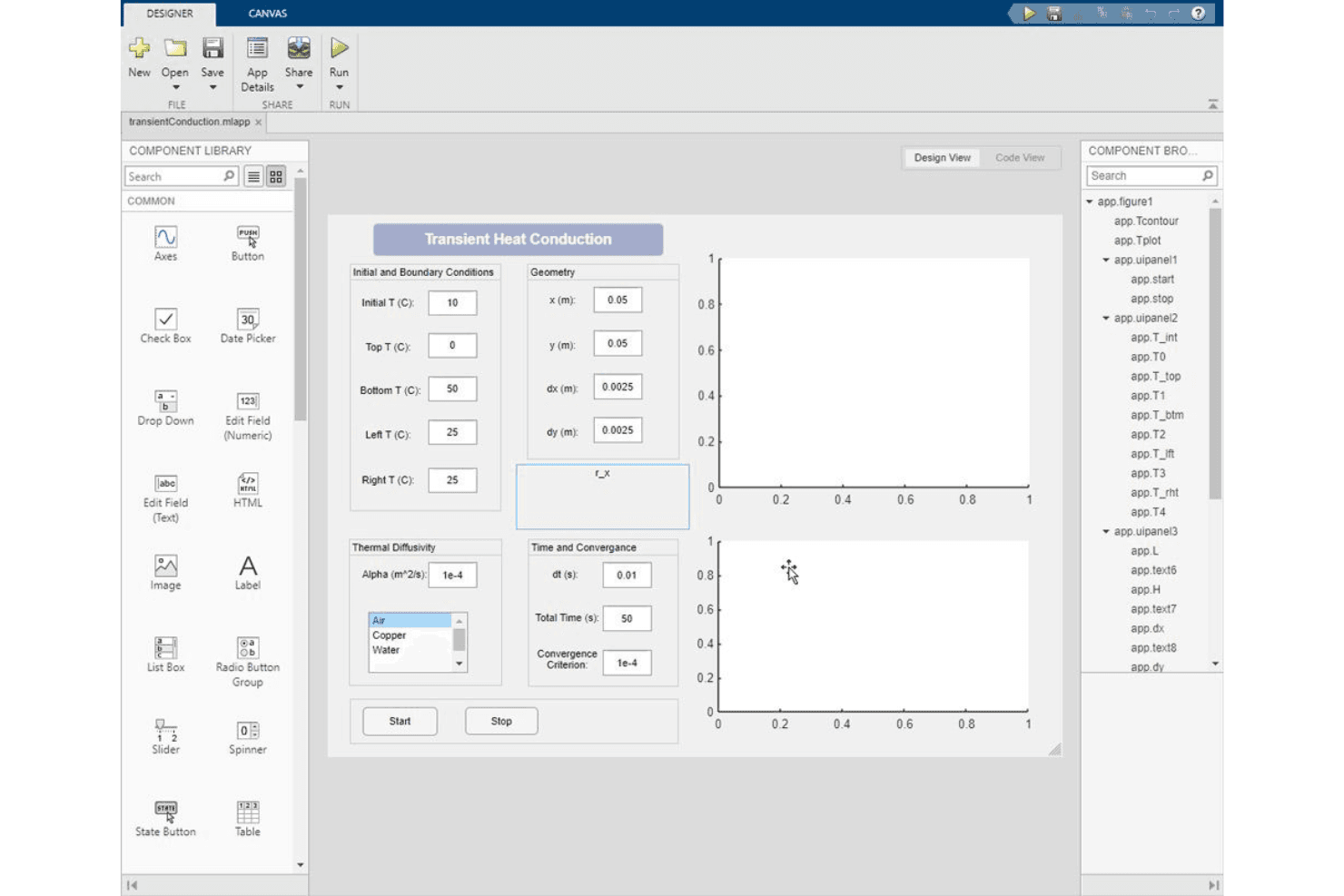
MATLAB can be challenging to use for beginners due to its specialized syntax, dense GUI, and extensive feature set. The software's powerful tools have a steep learning curve for those without technical backgrounds. While its capabilities are impressive, users may need significant time and training to understand how to navigate the workspace and effectively use MATLAB functions. However, once familiar with its functionalities, the efficiency and precision it offers in numerical computation are unmatched.
Integrations
MATLAB is integrated with Simulink, MathWorks' simulation software. This allows you to use MATLAB algorithms in simulations and export simulation results into MATLAB for further analysis.
Regarding APIs and third-party integration tools, MATLAB offers integration with many other programming languages, including C/C++, Python, and Fortran, allowing you to expand its functionality.

MATLAB Specs
- A/B Testing: Yes
- API: Yes
- Automated Testing: Yes
- Browser Compatibility Testing: Yes
- Bug Tracking: Yes
- Calendar Management: Yes
- CI/CD Integration: Yes
- Dashboard: Yes
- Data Export: Yes
- Data Import: Yes
- Data Visualization: Yes
- Developer Tools: Yes
- External Integrations: Yes
- History/Version Control: Yes
- Manual Testing: Yes
- Multi-User: Yes
- Notifications: Yes
- Performance Testing: Yes
- Regression Testing: Yes
- Scheduling: Yes
- Status Notifications: Yes
- Third-Party Plugins/Add-Ons: Yes


