

I 10 migliori software gratuiti per la fatturazione per piccole imprese nel 2026

10 Elenco dei migliori software gratuiti per la fatturazione per piccole imprese


Gestire una piccola impresa non è un compito semplice, soprattutto quando si tratta di amministrare le finanze. In qualità di CFO, probabilmente devi destreggiarti tra budget limitati e cercare soluzioni convenienti. È qui che entra in gioco il software online gratuito per la fatturazione. Ti aiuta a tenere traccia delle fatture senza aumentare le spese.
In base alla mia esperienza, questi strumenti di contabilità possono alleviare lo stress legato alla fatturazione e alla gestione del flusso di cassa. Offrono funzioni essenziali per mantenere la tua attività operativa senza costi elevati.
In questo articolo condividerò le mie scelte principali tra le migliori opzioni di software gratuito per la fatturazione disponibili. Troverai recensioni imparziali e informazioni utili per aiutarti a scegliere l'app di fatturazione più adatta al tuo team. Esaminiamo insieme le soluzioni che semplificano la gestione finanziaria.
Perché fidarsi dei nostri consigli sui software
Le nostre recensioni riflettono il nostro giudizio indipendente, non un discorso di vendita. Scopri come manteniamo la trasparenza.
Per questa guida, abbiamo valutato gli strumenti attraverso test pratici e ricerche indipendenti, assegnando un punteggio agli strumenti in base ai nostri criteri di selezione.
Le nostre recensioni riflettono il nostro giudizio editoriale umano, non un discorso di vendita.
Riepilogo dei migliori software gratuiti per la fatturazione per piccole imprese
Sebbene tutte le opzioni di software per la fatturazione per piccole imprese presenti nel mio elenco offrano piani gratuiti, la maggior parte dispone anche di piani a pagamento, qualora desiderassi effettuare un upgrade. Ecco i costi di base di ciascuno degli strumenti inclusi nel mio elenco:
| Tool | Best For | Trial Info | Price | ||
|---|---|---|---|---|---|
| 1 | Ideale per il monitoraggio dell'inventario | Prova gratuita di 30 giorni disponibile | Da $9/utente/mese | Website | |
| 2 | Ideale per fatture illimitate | Piano gratuito disponibile | Da $14/mese | Website | |
| 3 | Ideale per freelance | Prova gratuita di 30 giorni | A partire da $23/mese | Website | |
| 4 | Ideale per aziende in crescita | Prova gratuita di 30 giorni | Da $30/mese | Website | |
| 5 | Ideale per più valute | Piano gratuito disponibile | Da $9.99/mese | Website | |
| 6 | Ideale per la contabilità integrata | Piano gratuito disponibile | Da $19/mese | Website | |
| 7 | Ideale per strumenti di automazione | Gratuito | Gratuito | Website | |
| 8 | Ideale per la fatturazione da mobile | Piano gratuito disponibile | Da $35/mese | Website | |
| 9 | Ideale per pagamenti semplici | Piano gratuito disponibile | Da 3,49% + $0,49/transazione (checkout online) | Website | |
| 10 | Ideale per interfaccia semplice | Prova gratuita + piano gratuito disponibili | Da $150/anno (fatturato annualmente) | Website |
Recensione dei migliori software gratuiti per la fatturazione per piccole imprese
Di seguito sono riportati i miei riepiloghi dettagliati dei migliori software gratuiti per la fatturazione per piccole imprese inclusi nel mio elenco. Le mie recensioni offrono un’analisi dettagliata delle funzioni principali, dei vantaggi e degli svantaggi, delle integrazioni e degli scenari di utilizzo ideali di ogni strumento, per aiutarti a trovare quello più adatto a te. Sebbene alcuni di questi strumenti offrano una versione completamente gratuita, altri mettono a disposizione un periodo di prova gratuito. In ciascuna recensione ho aggiunto una nota su ciò che è gratuito.

OneUp
Ideale per il monitoraggio dell'inventario
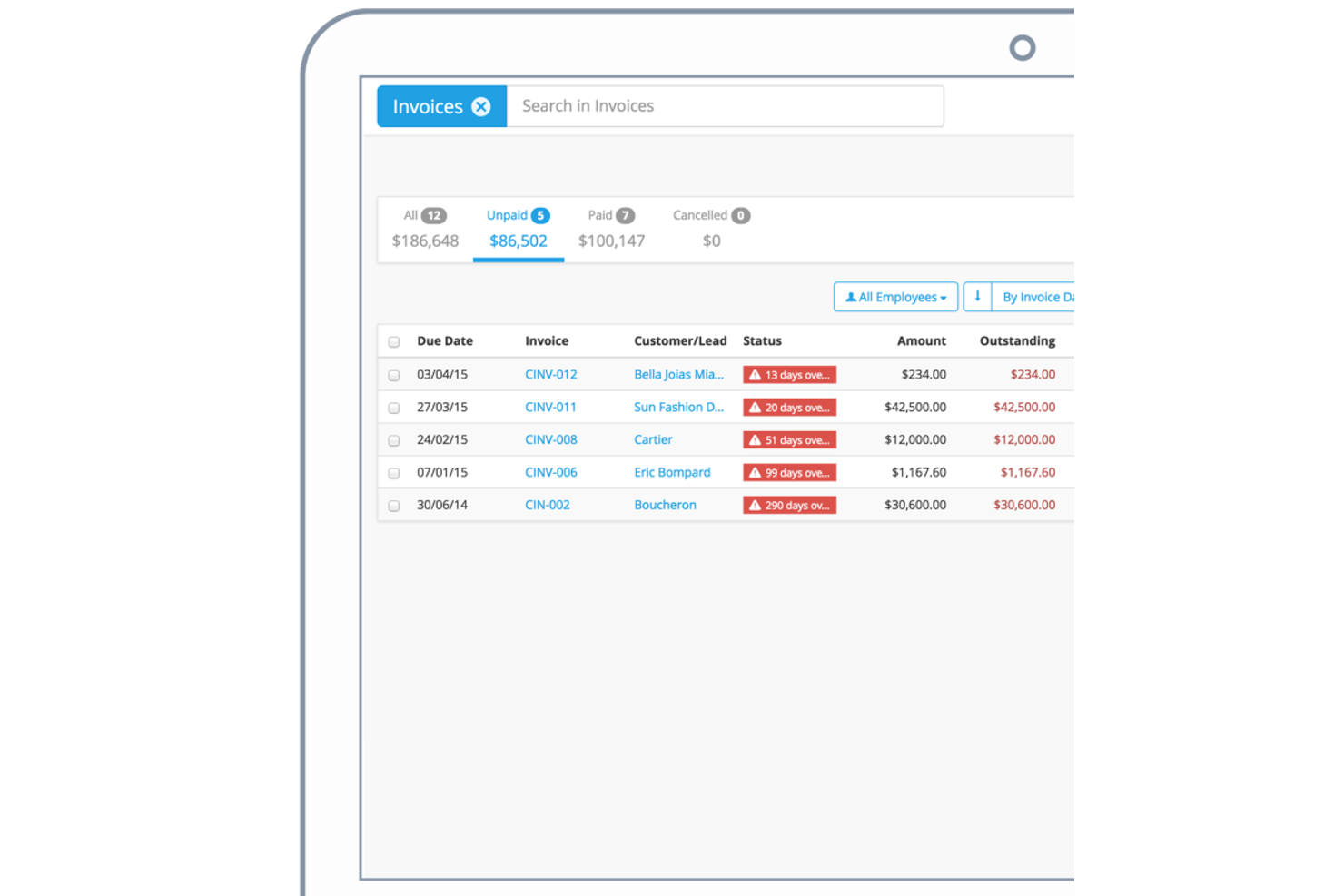
OneUp è un software di gestione aziendale progettato per le piccole imprese, focalizzato su contabilità, fatturazione e gestione dell'inventario. I suoi strumenti aiutano le aziende a supervisionare le proprie operazioni e a tenere traccia della situazione finanziaria e delle giacenze di magazzino.
Perché ho scelto OneUp: La prova gratuita ti permette di esplorare le capacità di tracciamento dell'inventario, ideale per le aziende con prodotti fisici. Puoi gestire i livelli di stock e monitorare i movimenti dell'inventario facilmente. Il software offre anche funzioni di fatturazione integrate con l'inventario, garantendo una fatturazione accurata. Sono disponibili filtri per le fatture non pagate, una funzionalità di ricerca e chiari indicatori di stato di scadenza per monitorare i pagamenti dei clienti. Grazie all'attenzione sulla gestione dell'inventario, supporta le aziende che puntano a ottimizzare il controllo delle scorte.
Funzionalità principali e integrazioni:
Funzionalità includono la riconciliazione bancaria automatica, che semplifica le attività contabili. È possibile generare report finanziari dettagliati per ottenere informazioni sulle prestazioni aziendali. Inoltre, lo strumento offre funzionalità CRM, aiutandoti a gestire efficacemente le relazioni con i clienti.
Integrazioni non sono elencate pubblicamente.
Cosa è gratis? La prova gratuita di OneUp consente l'accesso a tutte le funzionalità, permettendoti di esplorare tutte le potenzialità prima di passare a un piano a pagamento.
Pros and Cons
Pros:
- Potenti funzionalità di gestione inventario
- Riconciliazione bancaria automatica
- Funzionalità CRM incluse
Cons:
- Un solo gateway di pagamento
- Automatizza la fatturazione insieme alla contabilità integrata

Ideale per fatture illimitate

Invoice Ninja è un software di fatturazione gratuito pensato per freelance, professionisti dei servizi e piccoli imprenditori. Offre funzionalità essenziali, come la gestione delle spese, la fatturazione, la gestione dei progetti e il monitoraggio del tempo, che aiutano gli utenti a gestire le proprie finanze in modo efficiente e a ricevere pagamenti rapidamente.
Perché ho scelto Invoice Ninja: L'offerta gratuita include fatture illimitate per un massimo di cinque clienti, una soluzione pratica per freelance e piccoli team che gestiscono pochi clienti. Il supporto della piattaforma per vari metodi di pagamento offre utilità alle piccole imprese.
Funzionalità principali e integrazioni:
Funzionalità includono strumenti di gestione progetti che consentono di tracciare tempo e spese. I modelli di fattura personalizzabili del software permettono di mantenere l'identità del proprio marchio. Il cruscotto dispone di colonne ordinabili per stato, numero, cliente, importo, saldo, data e data di scadenza. Inoltre è possibile automatizzare i promemoria di fatturazione, rendendo più semplice la gestione dei pagamenti in ritardo.
Integrazioni includono Zapier, Integrately, Make e altri.
Cosa è gratuito? Invoice Ninja offre un piano gratuito per sempre con fino a cinque clienti attivi.
Pros and Cons
Pros:
- Supporta la fatturazione ricorrente automatizzata
- Supporta diversi metodi di pagamento
- Accesso tramite app mobile
Cons:
- Nessun supporto telefonico
- Le funzionalità avanzate richiedono un piano a pagamento

Ideale per freelance
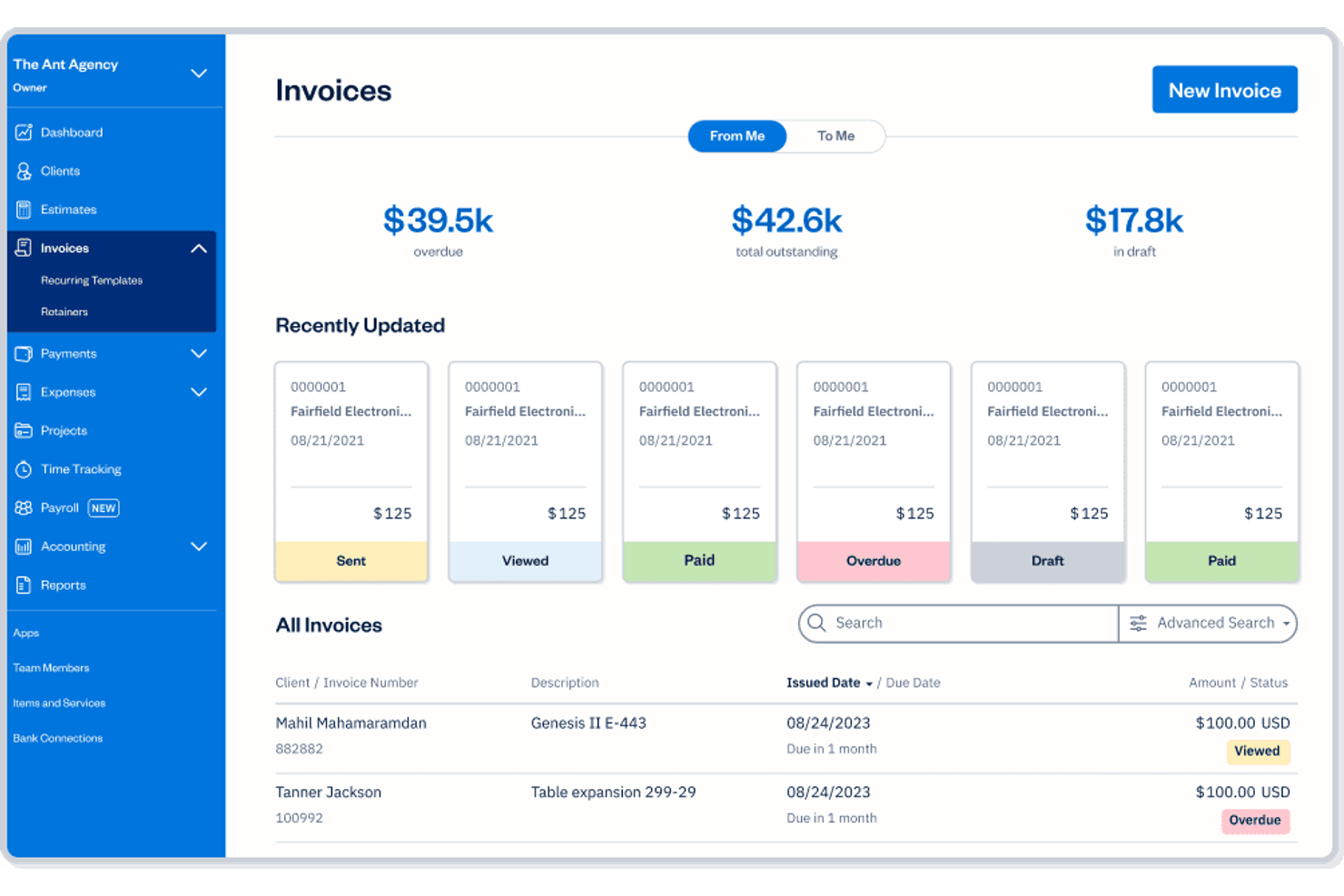
FreshBooks è un software di contabilità e fatturazione progettato principalmente per liberi professionisti e piccoli imprenditori. Funzionalità come il monitoraggio delle spese, la rilevazione del tempo e la fatturazione lo rendono uno strumento completo per la gestione delle finanze.
Perché ho scelto FreshBooks: La prova gratuita offre ai freelance l'opportunità di esplorare le capacità di fatturazione dello strumento, comprese le recenti schede fatture aggiornate e l'elenco fatture ricercabile. Puoi creare fatture professionali e monitorare le ore fatturabili con facilità. Il software consente anche di gestire le spese, il che è utile per i freelance che gestiscono più progetti. Con un focus sulla semplicità, integra fatturazione e contabilità in un'unica piattaforma.
Caratteristiche principali e integrazioni:
Caratteristiche includono modelli di fattura personalizzabili che ti permettono di mantenere l'identità del tuo marchio. I promemoria automatici di pagamento della piattaforma ti aiutano a farti pagare più velocemente. Inoltre, puoi generare report finanziari che offrono informazioni sulle prestazioni della tua attività.
Integrazioni includono Mailchimp, Zapier, HubSpot CRM, Gusto e altri.
Cosa è gratuito? La prova gratuita di FreshBooks ti offre accesso a tutte le funzionalità, permettendoti di esplorare tutte le sue capacità prima di impegnarti in un piano a pagamento.
Pros and Cons
Pros:
- Ideale per freelance
- Gestione delle spese semplice
- Promemoria di pagamento automatici
Cons:
- Nessun supporto telefonico durante la prova
- Prova limitata a un solo utente

Ideale per aziende in crescita
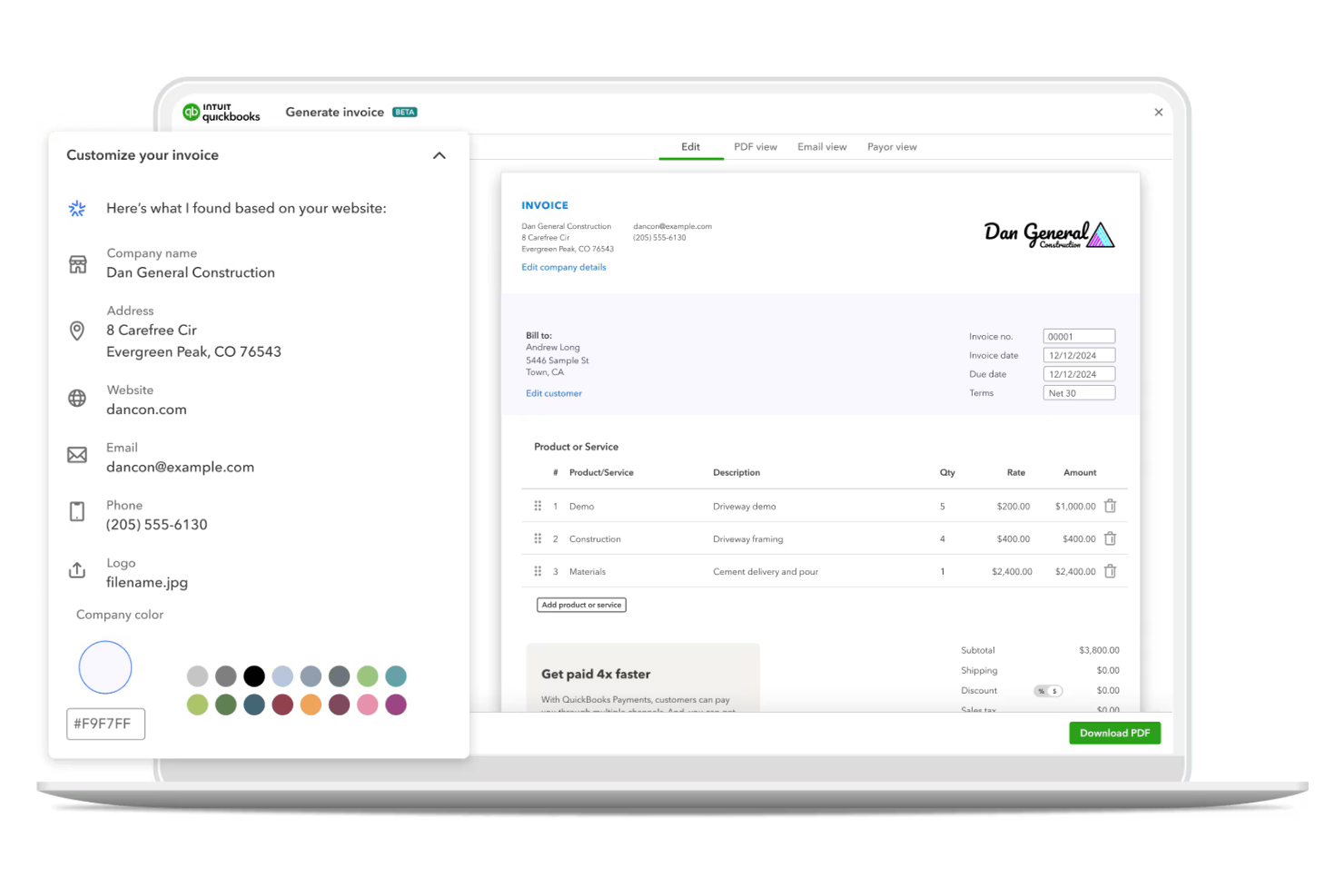
QuickBooks è una soluzione software contabile rivolta a piccole e medie imprese e liberi professionisti. Offre una gamma di funzionalità come la fatturazione, la gestione delle spese e la reportistica finanziaria, rendendolo uno strumento adatto per la gestione delle finanze aziendali.
Perché ho scelto QuickBooks: La prova gratuita consente alle piccole aziende di sperimentare l'intera gamma di funzionalità contabili dello strumento. È possibile creare e inviare fatture professionali, monitorare le spese e generare dettagliati report finanziari. L'interfaccia intuitiva della piattaforma aiuta a gestire le finanze in modo semplice. Con il supporto per utenti multipli, si rivolge sia a team ristretti che desiderano organizzare i processi contabili sia a squadre in fase di espansione.
Funzionalità e integrazioni principali:
Funzionalità includono il calcolo automatico delle imposte, un grande risparmio di tempo durante il periodo fiscale. Il software offre anche strumenti per la gestione del flusso di cassa per aiutarti a monitorare la salute finanziaria della tua azienda. Inoltre, QuickBooks fornisce una dettagliata categorizzazione delle spese, permettendoti di tenere traccia di dove vengono destinati i soldi.
Integrazioni includono PayPal, Shopify, Square, Gusto e altro ancora.
Cosa è gratuito? La prova gratuita di QuickBooks garantisce l'accesso a tutte le funzionalità, permettendoti di esplorarne le potenzialità prima di passare a un piano a pagamento.
Pros and Cons
Pros:
- Funzionalità contabili avanzate
- Calcolo automatico delle imposte
- Categorizzazione delle spese
Cons:
- Supporto clienti limitato durante la prova
- Alcune funzionalità richiedono competenze tecniche

Ideale per più valute

Invoicely è uno strumento di fatturazione versatile progettato per freelance e piccole imprese. Aiuta gli utenti a gestire la fatturazione, monitorare le spese e creare fatture in diverse valute, rendendolo adatto per operazioni commerciali internazionali.
Perché ho scelto Invoicely: La versione gratuita permette di creare e inviare cinque fatture al mese in più valute, ideale per piccoli team che lavorano con clienti internazionali. Puoi anche monitorare le spese di base e accedere agli strumenti di reportistica essenziali. La piattaforma offre opzioni di personalizzazione delle fatture per dettagli del cliente, voci, calcoli delle tasse e condizioni di pagamento per aiutarti a mantenere l'identità del tuo marchio.
Caratteristiche principali e integrazioni:
Caratteristiche includono strumenti di reportistica dettagliati che ti aiutano a monitorare la salute finanziaria. La piattaforma offre inoltre la fatturazione ricorrente, che fa risparmiare tempo sulle attività ripetitive. Inoltre, puoi gestire più aziende da un unico account, offrendo flessibilità agli imprenditori.
Integrazioni includono PayPal, Stripe, Authorize.net, Mollie e altri.
Cosa è gratuito? Invoicely offre un piano gratuito per sempre che supporta cinque fatture mensili e clienti internazionali, con limitazioni su alcune funzionalità avanzate.
Pros and Cons
Pros:
- Supporta più valute
- Monitoraggio delle spese di base
- Gestione di più aziende
Cons:
- Il piano gratuito contiene pubblicità
- Funzionalità di reportistica limitate

Wave
Ideale per la contabilità integrata
Wave è uno strumento di gestione finanziaria ricco di risorse, pensato per piccole imprese e liberi professionisti. Offre funzionalità di fatturazione, contabilità e scansione delle ricevute, aiutando gli utenti a gestire le proprie finanze in un unico luogo.
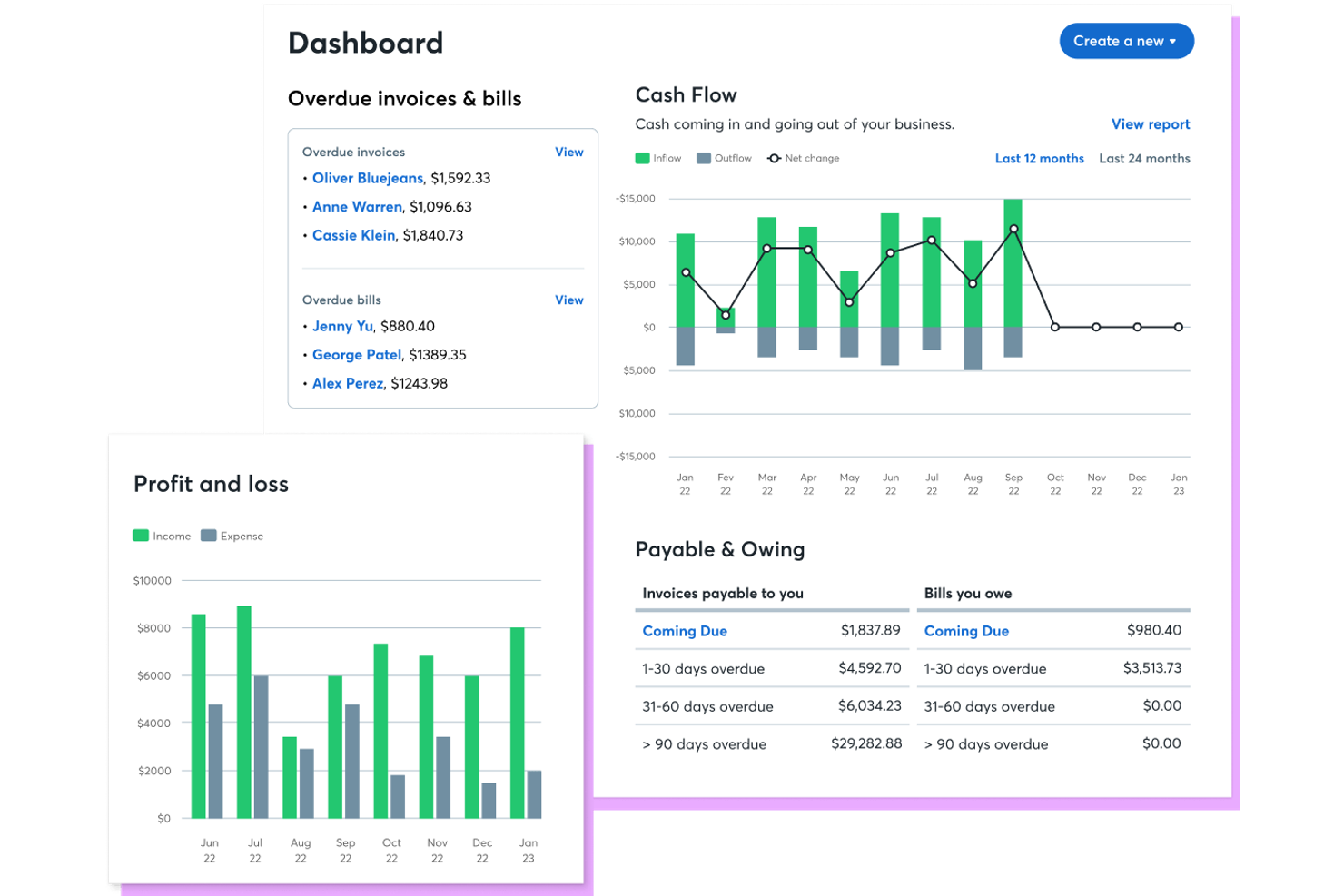
Perché ho scelto Wave: L'account gratuito include funzionalità di contabilità integrate, rendendolo ideale per chi vuole tenere in ordine i propri registri senza costi aggiuntivi. Puoi inviare fatture illimitate e monitorare i pagamenti. La scansione delle ricevute consente di digitalizzare e organizzare le spese. Grazie al pannello di controllo intuitivo, puoi tenere sotto controllo la tua situazione finanziaria a colpo d'occhio.
Funzionalità e integrazioni principali:
Funzionalità comprendono opzioni di fatturazione che permettono di personalizzare i modelli in base al proprio marchio. Puoi anche gestire le informazioni dei clienti e visualizzare lo storico dei pagamenti in un'unica posizione. La piattaforma offre inoltre monitoraggio del flusso di cassa, grafici di utili e perdite e riepiloghi di debiti e crediti per fornire approfondimenti sulle prestazioni dell’attività.
Integrazioni includono Zapier e altre.
Cosa è gratuito? Wave offre un piano gratuito per sempre senza limiti alle funzionalità di fatturazione o contabilità.
Pros and Cons
Pros:
- Contabilità integrata con fatturazione
- Dashboard intuitiva
- Strumenti di reportistica finanziaria
Cons:
- Nessuna integrazione gratuita
- Commissioni per l'elaborazione dei pagamenti online

Ideale per strumenti di automazione
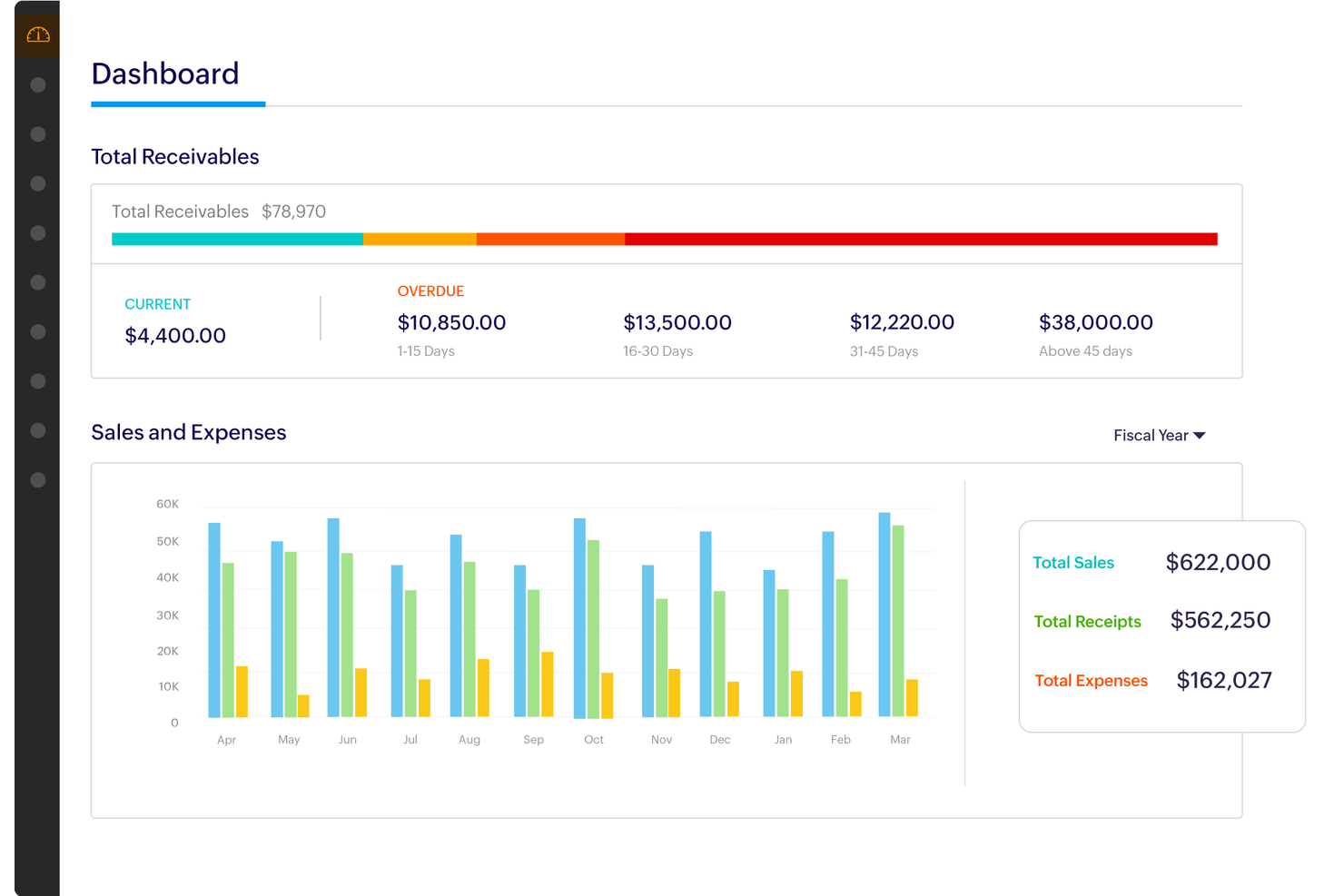
Zoho Invoice è uno strumento di fatturazione basato sul cloud progettato per liberi professionisti e piccoli imprenditori. Offre fatturazione automatizzata, gestione delle spese e monitoraggio del tempo per un approccio semplificato alle attività finanziarie.
Perché ho scelto Zoho Invoice: La versione gratuita include strumenti di automazione che velocizzano il processo di fatturazione. Puoi impostare fatture ricorrenti e automatizzare i promemoria di pagamento per risparmiare tempo e ridurre il lavoro manuale. Il monitoraggio del tempo è utile per fatturare i clienti in modo accurato. La sua interfaccia intuitiva si rivolge a liberi professionisti e piccoli team con un focus sulla produttività.
Funzionalità principali e integrazioni:
Funzionalità tra cui monitoraggio dettagliato delle spese, che consente di categorizzare e gestire comodamente le spese aziendali. Mostra inoltre i crediti totali suddivisi per periodo di scadenza e un grafico comparativo vendite e spese per anno fiscale. Il software offre anche il supporto multivaluta, rendendolo adatto alle transazioni internazionali. Inoltre, fornisce un portale clienti dove i tuoi clienti possono visualizzare e pagare le fatture online.
Integrazioni includono Zoho CRM, PayPal, Stripe, QuickBooks, Dropbox, WhatsApp, Slack e altro ancora.
Cosa è gratuito? Zoho Invoice offre un piano gratuito per sempre, che ti permette di creare fatture conformi alle normative fiscali e automatizzare i promemoria di pagamento.
Pros and Cons
Pros:
- Supporta transazioni in più valute
- Portale clienti per pagamenti semplici
- Monitoraggio del tempo per fatturazione precisa
Cons:
- Nessun supporto telefonico
- I modelli mancano di flessibilità nel design


Square è uno strumento di fatturazione pensato per piccole imprese e liberi professionisti che hanno bisogno di un software di fatturazione in mobilità. Offre fatturazione mobile, pagamenti con carta e elaborazione pagamenti ACH, rendendolo comodo per gli utenti che necessitano di flessibilità nelle proprie operazioni finanziarie.
Perché ho scelto Square: Il piano gratuito consente di inviare fatture direttamente dal proprio dispositivo mobile, perfetto per chi è sempre in movimento. È possibile accettare pagamenti tramite vari metodi online e POS, incluse carte di credito e portafogli digitali. La piattaforma offre il monitoraggio in tempo reale dello stato delle fatture e opzioni di filtraggio, così sai sempre a che punto sei. Senza costi mensili, è una soluzione pratica per le aziende che vogliono mantenere bassi i costi.
Funzionalità e integrazioni principali:
Funzionalità includono la possibilità di creare fatture ricorrenti e risparmiare tempo su attività ripetitive. È anche possibile personalizzare i modelli di fattura in base al proprio marchio. Inoltre, lo strumento offre report di vendita dettagliati, fornendo una visione delle prestazioni della tua attività.
Integrazioni disponibili con QuickBooks, Xero e altri.
Cosa è gratuito? Square offre un piano gratuito per sempre senza costi mensili, ma si applicano commissioni sulle transazioni elaborate tramite la piattaforma.
Pros and Cons
Pros:
- Funzionalità di fatturazione mobile
- Monitoraggio in tempo reale delle fatture
- Permette pagamenti istantanei delle fatture online
Cons:
- Nessuna personalizzazione nel piano gratuito
- Funzionalità avanzate limitate

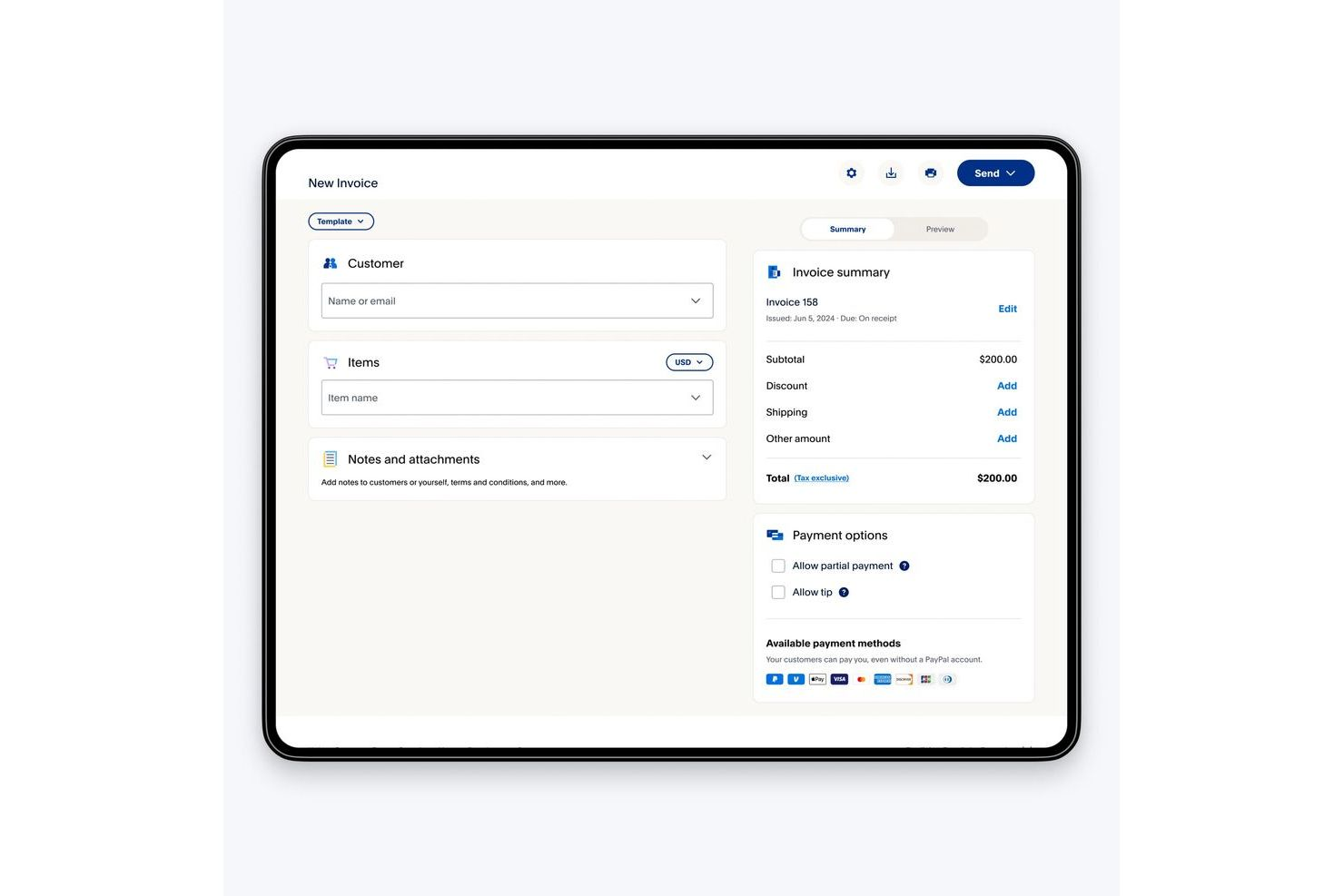
PayPal Open è una piattaforma di pagamento online ampiamente utilizzata che si rivolge a privati, freelance e piccole imprese. Facilita transazioni semplici e sicure, rendendola una scelta popolare per inviare e ricevere pagamenti a livello globale.
Perché ho scelto PayPal Open: La facilità nell’impostare e gestire i pagamenti lo distingue da altri strumenti di fatturazione. Puoi inviare fatture e ricevere pagamenti comodamente tramite email, una funzione utile per i titolari di piccole imprese. La piattaforma supporta più valute, consentendoti di effettuare transazioni internazionali senza complicazioni. Accetta anche vari metodi di pagamento, tra cui carte di debito, conti bancari e portafogli digitali. Senza costi di attivazione, è accessibile alle aziende che desiderano gestire i pagamenti in modo efficiente.
Funzionalità e integrazioni uniche:
Funzionalità includono la possibilità di configurare pagamenti in abbonamento, ideale per le aziende con fatturazione ricorrente. Puoi anche creare e inviare fatture direttamente dal tuo account, con opzioni per dettagli cliente, fatturazione dettagliata e modalità di pagamento. Inoltre, PayPal Open offre protezione contro le frodi, garantendo la sicurezza delle tue transazioni.
Integrazioni includono Zapier e altro.
Cosa è gratuito? PayPal Open offre un piano gratuito per sempre per la fatturazione e la gestione dei pagamenti di base, con commissioni di transazione applicate a ogni pagamento ricevuto.
Pros and Cons
Pros:
- Supporta la fatturazione dettagliata
- Transazioni sicure con protezione dalle frodi
- Opzioni di pagamento in abbonamento
Cons:
- Commissioni sulle transazioni
- Design avanzati di fatturazione limitati

Invoice Master è uno strumento completo per la gestione aziendale, progettato per piccole imprese, appaltatori e freelance. Offre funzionalità di fatturazione, CRM, gestione dell'inventario e monitoraggio dei progetti, fornendo agli utenti un approccio tutto-in-uno per la gestione delle proprie attività.
Perché ho scelto Invoice Master: Il piano gratuito si concentra su un'interfaccia semplice che consente una navigazione facile. Puoi creare e inviare fatture professionali con modelli personalizzabili, che includono sezioni di fatturazione dettagliata, metodi di pagamento e opzioni per il branding aziendale. La piattaforma supporta la fatturazione in più valute, ideale per clienti internazionali. Con le funzionalità integrate di gestione progetti, mantiene le attività organizzate senza aggiungere complessità.
Funzionalità principali e integrazioni:
Funzionalità includono una dashboard di analisi dettagliata che offre approfondimenti sulla performance finanziaria. Puoi anche gestire l'inventario con controlli e tracciamento dettagliati. Inoltre, lo strumento offre un sistema CRM completo per gestire i contatti e le interazioni di vendita.
Integrazioni includono Stripe e altro ancora.
Cosa è gratuito? Invoice Master offre un piano gratuito per sempre che dà accesso a fatturazione, CRM e funzionalità base di gestione inventario, con alcune restrizioni sulle funzionalità avanzate.
Pros and Cons
Pros:
- Supporto multi-valuta per la fatturazione
- Supporta fatturazione ricorrente automatizzata
- Strumenti di gestione progetti integrati
Cons:
- Gestione inventario complessa
- Personalizzazione limitata per il CRM
Altri software gratuiti per la fatturazione per piccole imprese
Ecco alcune opzioni aggiuntive di software per la fatturazione per piccole imprese che offrono anch’esse piani o periodi di prova gratuiti. Sebbene questi strumenti non siano stati inclusi nel mio elenco, vale comunque la pena prenderli in considerazione:


Come Valuto il Software di Fatturazione Gratuito
Valuto il software di fatturazione gratuito su due livelli: le funzionalità di base di cui un libero professionista o una piccola azienda ha bisogno per fatturare i clienti e ricevere pagamenti, e i fattori che differenziano uno strumento dall'altro.
Funzionalità di Base (Requisiti Fondamentali per Questa Lista)
Quando seleziono gli strumenti per la mia lista, ne valuto ciascuno su una scala da 0 (funzionalità non presente) a 5 (eccellente in quest'area) per ogni funzionalità di base elencata di seguito. Poi converto il punteggio totale di ogni strumento in una percentuale. Ogni strumento deve raggiungere una percentuale totale minima del 65% per essere considerato.
- Creazione e Personalizzazione delle Fatture: Controllo se puoi aggiungere il tuo logo, modificare le voci delle fatture e applicare sconti o tasse così che le fatture appaiano professionali e rispecchino il tuo marchio.
- Disponibilità di un Piano Gratuito: Lo strumento deve disporre di un piano gratuito permanente, non una semplice prova. Valuto se consente abbastanza fatture e clienti per il reale volume mensile di un freelance.
- Integrazione con Sistemi di Pagamento: Ricevere i pagamenti velocemente è importante, quindi valuto a quali gateway si connette ogni strumento—Stripe, PayPal, Square—e se i clienti possono pagare con carta o bonifico bancario.
- Tracciamento e Stato delle Fatture: Verifico che sia chiaro se una fattura è stata inviata, visualizzata o pagata, un dettaglio utile per chi si occupa di crediti per rincorrere i saldi scaduti.
- Fatture Ricorrenti e Promemoria: Per consulenti che fatturano in abbonamento o imprese che operano con pagamenti ricorrenti, controllo che lo strumento possa generare fatture automatiche secondo una pianificazione e sollecitare chi è in ritardo con i pagamenti.
- Gestione Tasse e Multivaluta: Valuto come ogni strumento gestisce aliquote fiscali come IVA o GST e se consente di fatturare clienti internazionali nella loro valuta locale.
Una volta raccolti gli strumenti che soddisfano questi criteri, considero cosa distingue ciascuna piattaforma dalle altre.
Fattori di Differenziazione (Cosa Distingue i Fornitori)
Ecco come confronto i diversi fornitori:
Funzionalità Distintive
Monitoraggio delle spese e del tempo è importante per consulenti e freelance che fatturano a ore. Cerco strumenti che permettano di registrare il tempo su un progetto e inserire queste voci in fattura. Anche la conversione da preventivo a fattura è rilevante, dato che molti titolari di piccole imprese iniziano con un preventivo. Un passaggio rapido dal preventivo approvato alla fattura definitiva fa risparmiare davvero tempo. Controllo inoltre se uno strumento si sincronizza con piattaforme come QuickBooks o Xero così i dati delle fatture finiscono in contabilità senza doverli reinserire.
Oltre le Funzionalità
La trasparenza del piano gratuito è la prima cosa che valuto. Alcuni strumenti limitano funzioni essenziali come esportazione PDF o accettazione pagamenti solo ai piani a pagamento, vanificando il vantaggio. Considero anche quanto ogni piattaforma si integri con la tua infrastruttura—se si connette al tuo CRM, a strumenti di gestione progetti o alla tua piattaforma ecommerce tramite integrazioni native o Zapier. La sicurezza conta, visto che le fatture contengono dati sensibili su clienti e pagamenti. Controllo la conformità PCI-DSS e la presenza di opzioni come l'autenticazione a due fattori (2FA) anche nel piano gratuito, per proteggere il tuo account.
Come scegliere un software gratuito per la fatturazione per piccole imprese
Gli elenchi complessi di funzioni e le strutture tariffarie possono rendere difficile capire che cosa si ottiene realmente da un software gratuito per la fatturazione per piccole imprese. Per aiutarti a rimanere concentrato mentre valuti le diverse soluzioni software, ecco alcuni fattori da tenere a mente:
| Fattore | Cosa considerare |
| Ambito dell'offerta gratuita | Verifica cosa è incluso nel piano gratuito. Assicurati che copra le funzionalità essenziali, come la fatturazione e il monitoraggio dei pagamenti, senza limitazioni nascoste. |
| Scalabilità | Considera se il software può crescere insieme alla tua attività. Cerca strumenti che offrano opzioni di aggiornamento convenienti con l'espansione delle tue esigenze di fatturazione. |
| Integrazioni | Assicurati che il software si integri con gli strumenti che già utilizzi, come i sistemi di contabilità o CRM. Questo contribuirà a consolidare i tuoi processi e a risparmiare tempo. |
| Semplicità d'uso | Scegli un software con un'interfaccia intuitiva. Provalo con il tuo team per assicurarti che sia facile da usare e riduca la curva di apprendimento per tutti. |
| Assistenza clienti | Valuta il livello di assistenza fornito. L'accesso alla chat dal vivo o all'assistenza telefonica può essere fondamentale quando hai bisogno di aiuto rapido con i problemi di fatturazione. |
| Personalizzazione | Cerca opzioni di personalizzazione, come i modelli di fattura. Questo aiuta a mantenere l'identità del tuo marchio e garantisce che le tue fatture soddisfino le esigenze specifiche della tua attività. |
| Sicurezza | Verifica le misure di sicurezza del software. Assicurati che sia conforme alle normative sulla protezione dei dati per tutelare le informazioni sensibili tue e dei tuoi clienti. |
| Accesso da dispositivi mobili | Considera se il software offre un'app mobile. È utile per gestire le fatture ovunque ti trovi e ti permette di seguire la tua attività dappertutto. |
Che cos'è un software gratuito per la fatturazione per le piccole imprese?
Il software gratuito per la fatturazione delle piccole imprese è uno strumento digitale progettato per aiutare le attività a creare e gestire fatture senza costi. Questi prodotti offrono in genere versioni gratuite o periodi di prova che includono funzionalità di base per la fatturazione e il monitoraggio dei pagamenti. I titolari di piccole imprese, i freelance e i contabili utilizzano spesso questi strumenti per la loro convenienza e la loro efficienza. Offrono valore semplificando il processo di fatturazione, risparmiando tempo e migliorando la gestione del flusso di cassa. Funzionalità come modelli personalizzabili, promemoria dei pagamenti e supporto per più valute aiutano gli utenti a mantenere la professionalità, garantire pagamenti puntuali e gestire le transazioni internazionali.
Funzionalità del software gratuito per la fatturazione per le piccole imprese
Esaminiamo le funzionalità comunemente presenti nei software di fatturazione per le piccole imprese, nonché quelle generalmente incluse nei piani gratuiti e in quelli a pagamento.
Funzionalità generalmente incluse nei software gratuiti per la fatturazione delle piccole imprese
- Creazione di fatture: consente di creare e inviare fatture professionali ai clienti, aiutando a organizzare il processo di fatturazione.
- Monitoraggio dei pagamenti: aiuta a controllare i pagamenti ricevuti e quelli in sospeso, permettendo di tenere sotto controllo il flusso di cassa.
- Gestione dei clienti: memorizza le informazioni sui clienti per un facile accesso, semplificando il CRM.
- Modelli personalizzabili: consente di adattare i moduli al proprio marchio, mantenendo un aspetto professionale.
- Supporto per più valute: permette di fatturare in diverse valute, una funzione essenziale per le attività con clienti internazionali.
- Reportistica di base: fornisce informazioni sui dati finanziari, aiutando a prendere decisioni aziendali consapevoli.
- Accesso da dispositivi mobili: consente di gestire le fatture ovunque ci si trovi, offrendo flessibilità e praticità.
- Promemoria automatici: invia notifiche ai clienti sui pagamenti in scadenza o scaduti, contribuendo a migliorare la riscossione.
Funzionalità generalmente incluse nei software a pagamento per la fatturazione delle piccole imprese
- Report avanzati: offre analisi e approfondimenti dettagliati, aiutandoti a comprendere la tua situazione finanziaria complessiva.
- Contabilità integrata: combina la fatturazione con gli strumenti contabili, centralizzando i processi di gestione finanziaria.
- Monitoraggio del tempo: tiene traccia delle ore fatturabili, semplificando la fatturazione accurata dei clienti per i servizi basati sul tempo.
- Gestione dell'inventario: aiuta a monitorare e gestire i livelli delle scorte, un aspetto fondamentale per le aziende che vendono prodotti fisici.
- Integrazione CRM: si connette ai sistemi CRM, supportando la gestione delle interazioni con i clienti.
- Funzionalità fiscali automatizzate: calcola automaticamente le imposte, facendo risparmiare tempo e riducendo gli errori durante la stagione fiscale.
- Fatturazione degli abbonamenti: supporta i pagamenti ricorrenti per i servizi basati su abbonamento, semplificando il processo di fatturazione dei servizi continuativi.
- Accesso multiutente: consente a più membri del team di accedere alla fatturazione e collaborare, migliorando l'efficienza del team.
Vantaggi dei software di fatturazione gratuiti per le piccole imprese
L'implementazione di un software di fatturazione gratuito per una piccola impresa offre diversi vantaggi al tuo team e alla tua azienda. Ecco alcuni dei vantaggi che puoi aspettarti:
- Risparmio sui costi: i piani gratuiti ti aiutano a gestire la fatturazione senza aumentare le spese, rendendoli ideali per le aziende attente al budget.
- Aspetto professionale: i modelli personalizzabili ti consentono di mantenere un'immagine del marchio coerente, rafforzando la professionalità della tua azienda.
- Miglioramento del flusso di cassa: i promemoria automatici assicurano pagamenti puntuali, aiutandoti a gestire e migliorare il flusso di cassa.
- Accessibilità: l'accesso da dispositivi mobili ti consente di gestire le fatture ovunque, garantendo flessibilità e praticità al tuo team.
- Efficienza del tempo: funzionalità come la creazione delle fatture e il monitoraggio dei pagamenti fanno risparmiare tempo nelle attività amministrative, liberando risorse per altre attività aziendali.
- Portata globale: il supporto per più valute consente di fatturare comodamente i clienti internazionali, ampliando il mercato potenziale.
- Informazioni sui dati: i report di base forniscono informazioni preziose sui dati finanziari, favorendo decisioni informate.
Costi e prezzi dei software di fatturazione gratuiti per le piccole imprese
Mi rendo conto che sei arrivato a questo articolo cercando opzioni disponibili gratuitamente per il miglior software di fatturazione per le piccole imprese. Tuttavia, poiché i piani gratuiti offrono solo funzionalità limitate, è probabile che in futuro dovrai passare a un piano superiore.
La tabella seguente riassume i piani più comuni, i relativi prezzi medi e le funzionalità tipicamente incluse nelle soluzioni software di fatturazione per le piccole imprese:
Tabella comparativa dei piani per i software di fatturazione per le piccole imprese
| Tipo di piano | Prezzo medio | Funzionalità comuni |
| Piano gratuito | $0 | Crea fatture, monitora i pagamenti, gestisci i clienti e visualizza report di base. |
| Piano personale | $5-$20/utente/mese | Modelli personalizzabili, promemoria automatici, accesso da dispositivi mobili e supporto per più valute. |
| Piano aziendale | $20-$60/utente/mese | Report avanzati, contabilità integrata, monitoraggio del tempo e integrazione CRM. |
| Piano aziendale avanzato | $60-$150+/utente/mese | Fatturazione degli abbonamenti, gestione dell'inventario, accesso multiutente e assistenza dedicata. |
Domande frequenti sul software gratuito per la fatturazione per piccole imprese
Ecco alcune risposte alle domande più comuni sul software gratuito per la fatturazione per piccole imprese:
Posso usare un software gratuito per la fatturazione per clienti internazionali?
Certamente, molte opzioni di software gratuito per la fatturazione supportano la fatturazione in più valute. Questa funzionalità consente di creare fatture in valute diverse, semplificando la collaborazione con clienti internazionali. È importante verificare che il software che stai valutando includa questa funzionalità nel piano gratuito.
Quali sono i limiti del software gratuito per la fatturazione?
Il software gratuito per la fatturazione presenta spesso alcune limitazioni, come un limite al numero di fatture che puoi inviare o al numero di clienti che puoi gestire. Anche alcune funzionalità, come la reportistica avanzata o le integrazioni, potrebbero essere soggette a restrizioni. Assicurati di esaminare le limitazioni specifiche del piano gratuito prima di scegliere uno strumento.
Quanto è sicuro il software gratuito per la fatturazione?
La maggior parte dei fornitori affidabili di software gratuito per la fatturazione dà priorità alla sicurezza e rispetta le normative sulla protezione dei dati. Utilizza la crittografia per proteggere i tuoi dati e offre opzioni sicure per l’elaborazione dei pagamenti. È importante verificare le misure di sicurezza di qualsiasi software scelto per assicurarti che le tue informazioni siano al sicuro.
Posso integrare il software gratuito per la fatturazione con altri strumenti?
Molte soluzioni di software gratuito per la fatturazione offrono integrazioni con strumenti diffusi, come software di contabilità, gateway di pagamento e sistemi CRM. Tuttavia, la disponibilità delle integrazioni può variare a seconda del fornitore e potrebbe essere limitata nei piani gratuiti. Verifica le opzioni di integrazione per assicurarti che soddisfino le esigenze della tua attività.
Dovrò passare prima o poi da un piano gratuito a uno a pagamento?
A seconda della crescita e delle esigenze della tua attività, potresti dover passare prima o poi da un piano gratuito a uno a pagamento. I piani gratuiti sono ideali per le startup o le piccole attività, ma con l’aumento delle esigenze di fatturazione potresti aver bisogno delle funzionalità più avanzate disponibili nei piani a pagamento. Considera il percorso di crescita della tua attività quando scegli una soluzione.
Cosa succede ora:
Se stai cercando un software gratuito per la fatturazione per una piccola impresa, contatta gratuitamente un consulente di SoftwareSelect per ricevere consigli.
Compila un modulo e fai una breve conversazione durante la quale il consulente approfondirà le tue esigenze specifiche. Poi riceverai una selezione ristretta di software da valutare. Ti supporterà anche durante l'intero processo di acquisto, comprese le negoziazioni sul prezzo.