

Recensione Crunch: Pro, Contro, Funzionalità e Prezzi
Crunch si distingue per la sua interfaccia intuitiva e la convenienza, rendendolo ideale per piccole imprese e liberi professionisti che cercano soluzioni di contabilità efficienti.

Recensiamo gli strumenti in modo indipendente e le commissioni aiutano a finanziare i nostri test. Consulta la nostra politica sulla trasparenza, la nostra metodologia, oppure suggerisci uno strumento.
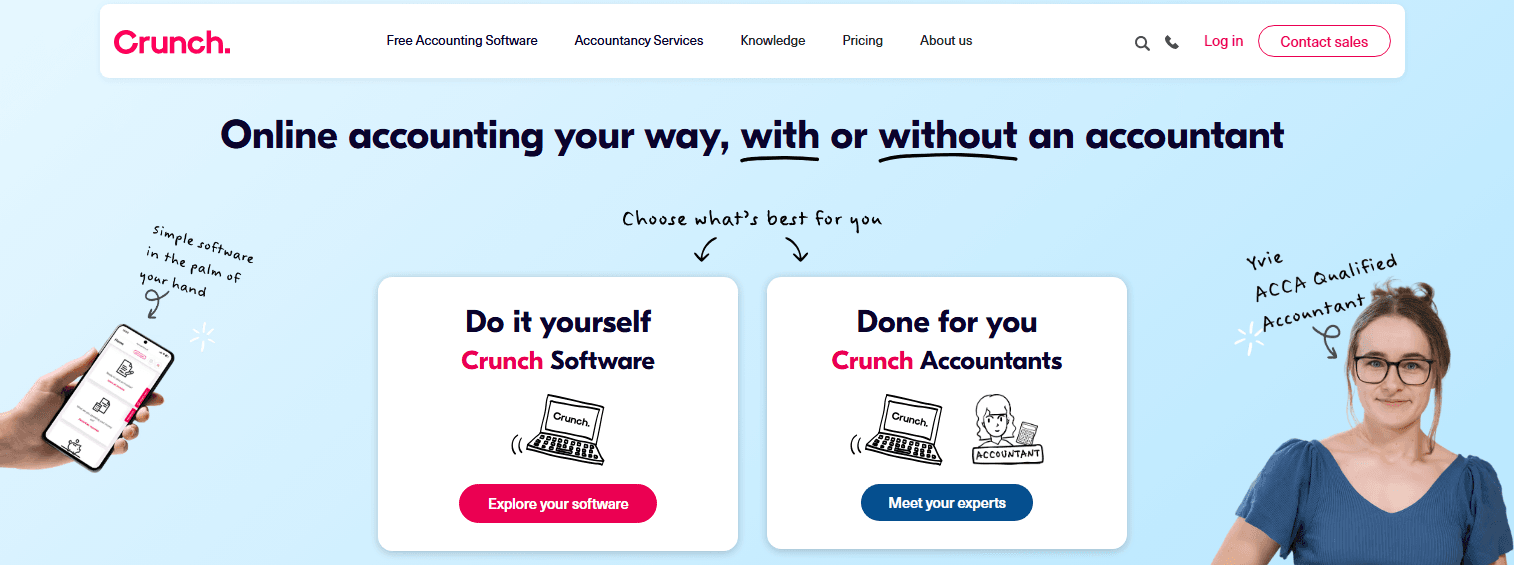
Crunch is an accounting software built for freelancers, contractors, and small business owners who need invoicing, expenses, payroll, and tax filing in one place. What sets it apart is optional access to a dedicated accountant team, built directly into the platform. If you're weighing it against something like FreeAgent, Crunch makes more sense when you want that accountant support layer included rather than managing a separate engagement alongside your software.
Crunch Evaluation Summary
4.4/5
- From £27/month + VAT p/m
- 14-day free trial
Perché fidarsi dei nostri consigli sui software
6,700+
Reviews
20
Industry experts
16+
Evaluation factors
14
Years
Le nostre recensioni riflettono il nostro giudizio indipendente, non un discorso di vendita. Scopri come manteniamo la trasparenza.
Per questa guida, abbiamo valutato gli strumenti attraverso test pratici e ricerche indipendenti, assegnando un punteggio agli strumenti in base ai nostri criteri di selezione.
Le nostre recensioni riflettono il nostro giudizio editoriale umano, non un discorso di vendita.
Crunch Overview
In my opinion, Crunch provides a solid foundation for small-to-medium-sized businesses looking for reliable accounting software. Its core features are robust enough to handle typical accounting needs, but don’t expect it to surprise you with any innovative standout features.
While it is fairly straightforward to use, some users might find the platform a bit clunky during initial setup. Customer support is competent, though not extraordinary. The onboarding process is adequate but could benefit from more personalized guidance.
If you’re considering Crunch, you’ll find it offers decent value for money, especially if your team requires straightforward accounting functionalities without paying for unnecessary extras.
However, if seamless integration and advanced features are critical for your operations, you might want to explore other options. Crunch is best suited for teams that prioritize cost-effectiveness and fundamental accounting tasks without the need for extensive customization or advanced support services.
Pros
- User-friendly interface
- Robust customer support to guide you through any challenges
- A range of accounting features that simplify your bookkeeping tasks
Cons
- Limited customization options
- Could be less intuitive for those unfamiliar with accounting tools
- Occasional glitches may disrupt your workflow
Is Crunch Right For Your Needs?
Who Would be a Good Fit for Crunch?
If you're a freelancer or a small business owner, Crunch could be a great fit for you. Its straightforward features cater to those who need to manage accounting without the complexity of larger systems. Features like automated invoicing, bank reconciliation, and expense tracking allow you to focus on other work, while the user-friendly interface makes adoption a breeze.
- FreelancersCrunch simplifies accounting for freelancers, offering automated invoicing and easy expense tracking.
- Small BusinessesSmall businesses benefit from Crunch's straightforward accounting features, which handle invoicing and help file tax returns.
- ConsultantsConsultants can use Crunch to manage their financial records with ease, thanks to its intuitive dashboard.
- StartupsStartups will appreciate Crunch's cost-effective solution for managing finances without needing a full-time traditional accountant.
- Remote WorkersRemote workers can track their expenses and invoices effortlessly with Crunch's mobile-friendly platform.
- Sole TradersSole traders find Crunch ideal for managing their own accounts, with features tailored to individual business needs.
Who Would be a Bad Fit for Crunch?
Large enterprises or businesses with complex accounting needs might not be the best fit for Crunch. The software is designed with small businesses and freelancers in mind, focusing on simplicity rather than extensive, customizable features. If your operations require advanced financial reporting, multi-currency support, or intricate inventory management, Crunch's feature set may fall short.
- Large EnterprisesCrunch lacks the robust, scalable features needed to manage the complexities of large-scale operations.
- Manufacturing SectorThe software doesn't support extensive inventory management, which is crucial for manufacturing businesses.
- Retail ChainsIf you need multi-location support and advanced point-of-sale integration, Crunch might not meet your requirements.
- Financial Services FirmsFirms that require detailed financial analytics and reporting may find Crunch's capabilities limited.
- NonprofitsCrunch doesn't offer specialized features for managing grants or fund accounting, which nonprofits often need.
- International BusinessesWithout multi-currency support, Crunch isn't ideal for businesses operating in multiple countries. I couldn't find specific details about Crunch's core and standout features. If you have any other questions or need further assistance, reach out to their sales team.
Come testiamo e valutiamo gli strumenti
Abbiamo impiegato anni a costruire, perfezionare e migliorare il nostro sistema di test e valutazione dei software. Il nostro schema è progettato per cogliere le sfumature della scelta del software e ciò che rende uno strumento efficace, concentrandosi sugli aspetti critici del processo decisionale. Di seguito puoi vedere esattamente come funzionano i nostri test e le nostre valutazioni in base a sette criteri. Questo ci permette di offrire una valutazione imparziale del software basata su funzionalità di base, caratteristiche distintive, facilità d’uso, onboarding, assistenza clienti, integrazioni, recensioni dei clienti e rapporto qualità-prezzo.
Funzionalità principali (25% del punteggio finale)
Il punto di partenza della nostra valutazione è sempre la funzionalità principale dello strumento. Dispone delle funzionalità base che un utente si aspetterebbe di trovare? Alcune di queste funzionalità sono riservate ai piani a pagamento più elevati? In sostanza, ci aspettiamo che uno strumento sia all’altezza delle capacità minime dei concorrenti.
Caratteristiche distintive (25% del punteggio finale)
Successivamente, valutiamo le caratteristiche distintive che vanno oltre la funzionalità principale normalmente presente negli strumenti di questo tipo. Un punteggio elevato riflette funzionalità specializzate o uniche che rendono il prodotto più rapido, efficiente o offrono valore aggiunto all’utente. Valutiamo inoltre quanto sia semplice integrare il software con altri strumenti tipicamente presenti nello stack tecnologico, per estenderne la funzionalità e l’utilità. Gli strumenti che offrono numerose integrazioni native, connessioni di terze parti e accesso API per creare integrazioni personalizzate ottengono il punteggio migliore.
Facilità d’uso (10% del punteggio finale)
Consideriamo quanto sia rapido e semplice eseguire le attività fondamentali previste dallo strumento. Un software con punteggio elevato è ben progettato, intuitivo da usare, offre app mobile, modelli predefiniti e semplifica operazioni complesse.
Onboarding (10% del punteggio finale)
Sappiamo quanto sia importante l’adozione rapida da parte del team quando si introduce una nuova piattaforma: per questo valutiamo quanto sia facile imparare e utilizzare lo strumento con una formazione minima. Valutiamo la rapidità con cui un membro del team può impostare e iniziare a utilizzare lo strumento senza esperienza pregressa. Le soluzioni con punteggio alto richiedono poco o nessun supporto.
Assistenza clienti (10% del punteggio finale)
Analizziamo quanto sia semplice e veloce ottenere aiuto tramite telefono, live chat o knowledge base. Gli strumenti e le aziende che offrono supporto in tempo reale ottengono i punteggi migliori, mentre i chatbot ricevono i punteggi più bassi.
Recensioni dei clienti (10% del punteggio finale)
Oltre ai nostri test e valutazioni, consideriamo il net promoter score dei clienti attuali e passati. Verifichiamo la probabilità che i clienti scelgano nuovamente lo strumento per le funzionalità di base. Un software con punteggio elevato riflette un net promoter score alto da parte dei clienti vecchi e attuali.
Rapporto qualità-prezzo (10% del punteggio finale)
Infine, considerando tutti gli altri criteri, valutiamo il prezzo medio dei piani base rispetto alle funzionalità principali e agli altri criteri di valutazione. I software che offrono di più, a un costo inferiore, ottengono punteggi migliori.
Core Features
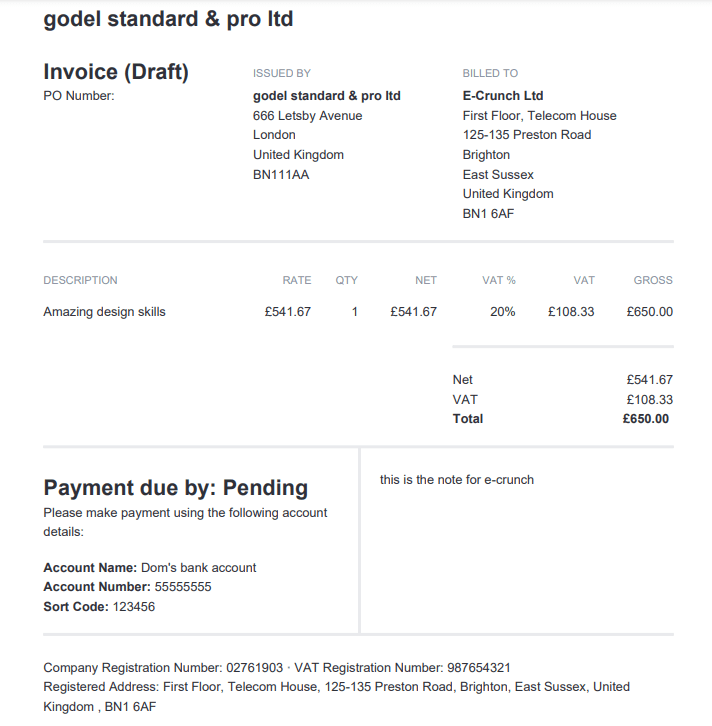
Invoicing: Crunch lets you easily create and send professional invoices. You can track what's been paid and what's outstanding, giving you a clear view of your cash flow.
Expense Management: Record and categorize your expenses with ease. This helps you keep track of where your money is going and simplifies tax time.
Bank Integration: Connect your bank accounts to automatically import transactions. This saves you time and reduces manual entry errors.
Tax Calculations: Crunch calculates your tax liabilities, so you know how much to set aside. This feature helps you avoid unpleasant surprises come tax season.
Reporting: Generate financial reports to understand your business's performance. These insights can inform your decisions and help you plan for the future.
Client Portal: Your clients can view their invoices and statements online. This transparency builds trust and streamlines communication.
Ease of Use
Crunch is user-friendly overall but has its quirks. For example, users appreciate its comprehensive dashboard, but the lack of a back button can make browsing tedious.While many find its customer support team helpful in overcoming these challenges, some might feel the learning curve is steeper than expected.
Integrations
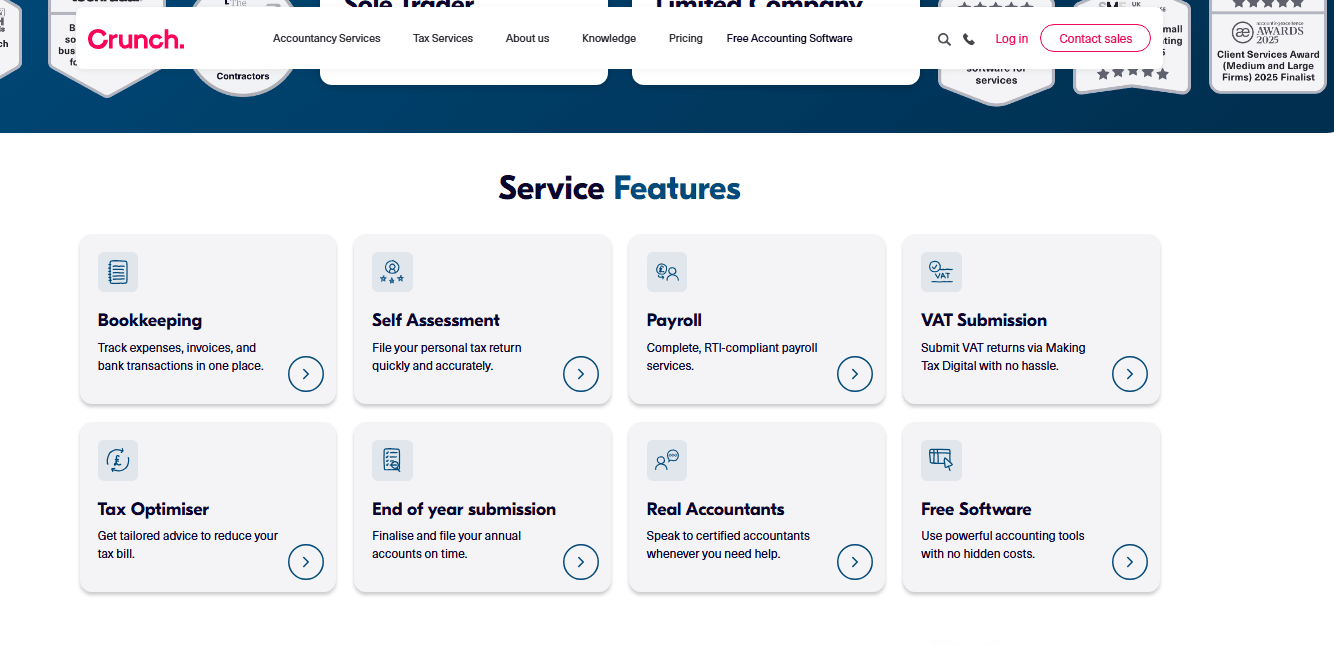
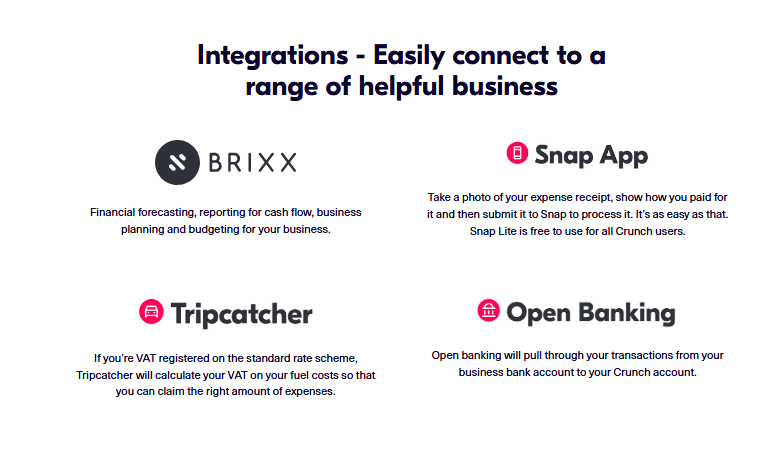
Crunch integrates natively with PayPal, GoCardless, Stripe, FreeAgent, Tide, Starling Bank, Monzo, HMRC, Companies House, and Google Drive.
Crunch also offers an API and connects with third-party integration tools like Zapier.
Crunch Specs
- 2-Factor Authentication: No
- Accounts Payable: Yes
- Accounts Receivable: Yes
- API: Yes
- Balance Sheet: Yes
- Billing/Invoicing: Yes
- BitCoin: No
- Budgeting: Yes
- Calendar Management: No
- Contact Management: No
- CRM Integration: No
- Customer Management: No
- Dashboard: Yes
- Data Export: Yes
- Data Import: Yes
- Data Visualization: Yes
- Expense Tracking: Yes
- External Integrations: No
- Forecasting: Yes
- General Account Ledger: Yes
- Inventory Tracking: No
- Multi-Currency: No
- Multi-User: Yes
- Notifications: Yes
- P&L: Yes
- PayPal: No
- Payroll: Yes
- SAP Integration: No
- Stripe: No
- Supplier Management: No
- Tax Management: Yes


