

Recensione MATLAB: Pro, Contro, Caratteristiche e Prezzi
MATLAB eccelle nell'analisi dei dati finanziari grazie ai suoi potenti strumenti computazionali, rendendolo una scelta privilegiata per decisioni complesse in tempo reale.

Recensiamo gli strumenti in modo indipendente e le commissioni aiutano a finanziare i nostri test. Consulta la nostra politica sulla trasparenza, la nostra metodologia, oppure suggerisci uno strumento.
MATLAB is a statistical analysis software built for technical computing, numerical analysis, and custom algorithm development. It's a strong fit for finance and data teams that need to build, test, and deploy complex quantitative models—not just run standard statistical reports. If you're weighing MATLAB against SAS, MATLAB gives you more flexibility through its open programming environment and an extensive library of specialized toolboxes, making it the better pick when your analysis workflows require custom-built solutions rather than predefined procedures.
MATLAB Evaluation Summary

4.6/5
- From $1,050/individual license/year
- Free trial available
Perché fidarsi dei nostri consigli sui software
6,700+
Reviews
20
Industry experts
16+
Evaluation factors
14
Years
Le nostre recensioni riflettono il nostro giudizio indipendente, non un discorso di vendita. Scopri come manteniamo la trasparenza.
Per questa guida, abbiamo valutato gli strumenti attraverso test pratici e ricerche indipendenti, assegnando un punteggio agli strumenti in base ai nostri criteri di selezione.
Le nostre recensioni riflettono il nostro giudizio editoriale umano, non un discorso di vendita.
MATLAB Overview
In my opinion, MATLAB is a robust choice for financial data analysis, particularly for users who need advanced computational capabilities such as optimization, iteration, and large-scale prototyping. It excels in handling intricate data models and numerical computation, making it ideal for analysts and data scientists in finance and engineering, as well as researchers in higher education. However, onboarding can be challenging due to its specialized syntax and technical depth. Compared to competitors, MATLAB's computational power stands out, though its GUI might seem less intuitive to beginners. For teams that require high-powered data analysis and have the resources to invest in training, MATLAB offers significant value.
Pros
- MATLAB offers powerful computational capabilities.
- The software provides advanced visualization tools.
- MATLAB's functions support a wide range of applications.
Cons
- MATLAB's syntax and GUI can be less intuitive for beginners.
- Your team might face a steep learning curve during initial use.
- Onboarding and training can take longer than with other tools.
Is MATLAB Right For Your Needs?
Who Would be a Good Fit for MATLAB?
MATLAB is a strong fit for industries and teams requiring advanced data analysis, such as finance, engineering, and academia. If your work involves intricate data modeling or simulations, MATLAB's extensive library of functions and significant computational capabilities support these tasks well. Data scientists and financial analysts who need precise and customizable tools for in-depth analysis will find MATLAB beneficial. Its ability to handle large datasets makes it ideal for research institutions and companies that prioritize robust data analysis.
- Financial AnalystsMATLAB's advanced computational tools make it ideal for analyzing complex financial models and performing statistical analysis.
- Data ScientistsData scientists can leverage MATLAB's extensive library for precise data manipulation, debugging, and algorithm testing.
- Engineering TeamsMATLAB supports intricate simulations and modeling, which are crucial for engineering projects.
- Research InstitutionsMATLAB's ability to handle large datasets aids in comprehensive analysis to support research.
- AcademiaStudents and professors can use MATLAB in coursework and when conducting research in quantitative fields.
- Quantitative AnalystsThe software's high-powered tools help develop and test financial algorithms efficiently using iteration and optimization techniques.
Who Would be a Bad Fit for MATLAB?
MATLAB isn't ideal for small businesses or teams with limited technical expertise that need simple data analysis tools. Its complexity can be overwhelming for users who don't require advanced computational features. If your work focuses on straightforward data processing with minimal customization, MATLAB's extensive capabilities may be unnecessary and cumbersome. Additionally, startups with limited resources may find the onboarding process and time investment too demanding.
- Small BusinessesThe complexity of MATLAB may overwhelm teams needing simple, quick data solutions.
- StartupsLimited resources make MATLAB's steep learning curve and time investment impractical.
- Nontechnical TeamsMATLAB's advanced tools, syntax, and modeling focus can be too complicated for users without technical backgrounds.
- Retail CompaniesRetailers requiring straightforward sales data analysis won't benefit from MATLAB's advanced features.
- Marketing DepartmentsMarketing teams focused on basic analytics and reporting may find MATLAB unnecessarily complex.
- Customer Service TeamsCustomer service teams typically require simpler tools for tracking and analyzing customer interactions.
Come testiamo e valutiamo gli strumenti
Abbiamo impiegato anni a costruire, perfezionare e migliorare il nostro sistema di test e valutazione dei software. Il nostro schema è progettato per cogliere le sfumature della scelta del software e ciò che rende uno strumento efficace, concentrandosi sugli aspetti critici del processo decisionale. Di seguito puoi vedere esattamente come funzionano i nostri test e le nostre valutazioni in base a sette criteri. Questo ci permette di offrire una valutazione imparziale del software basata su funzionalità di base, caratteristiche distintive, facilità d’uso, onboarding, assistenza clienti, integrazioni, recensioni dei clienti e rapporto qualità-prezzo.
Funzionalità principali (25% del punteggio finale)
Il punto di partenza della nostra valutazione è sempre la funzionalità principale dello strumento. Dispone delle funzionalità base che un utente si aspetterebbe di trovare? Alcune di queste funzionalità sono riservate ai piani a pagamento più elevati? In sostanza, ci aspettiamo che uno strumento sia all’altezza delle capacità minime dei concorrenti.
Caratteristiche distintive (25% del punteggio finale)
Successivamente, valutiamo le caratteristiche distintive che vanno oltre la funzionalità principale normalmente presente negli strumenti di questo tipo. Un punteggio elevato riflette funzionalità specializzate o uniche che rendono il prodotto più rapido, efficiente o offrono valore aggiunto all’utente. Valutiamo inoltre quanto sia semplice integrare il software con altri strumenti tipicamente presenti nello stack tecnologico, per estenderne la funzionalità e l’utilità. Gli strumenti che offrono numerose integrazioni native, connessioni di terze parti e accesso API per creare integrazioni personalizzate ottengono il punteggio migliore.
Facilità d’uso (10% del punteggio finale)
Consideriamo quanto sia rapido e semplice eseguire le attività fondamentali previste dallo strumento. Un software con punteggio elevato è ben progettato, intuitivo da usare, offre app mobile, modelli predefiniti e semplifica operazioni complesse.
Onboarding (10% del punteggio finale)
Sappiamo quanto sia importante l’adozione rapida da parte del team quando si introduce una nuova piattaforma: per questo valutiamo quanto sia facile imparare e utilizzare lo strumento con una formazione minima. Valutiamo la rapidità con cui un membro del team può impostare e iniziare a utilizzare lo strumento senza esperienza pregressa. Le soluzioni con punteggio alto richiedono poco o nessun supporto.
Assistenza clienti (10% del punteggio finale)
Analizziamo quanto sia semplice e veloce ottenere aiuto tramite telefono, live chat o knowledge base. Gli strumenti e le aziende che offrono supporto in tempo reale ottengono i punteggi migliori, mentre i chatbot ricevono i punteggi più bassi.
Recensioni dei clienti (10% del punteggio finale)
Oltre ai nostri test e valutazioni, consideriamo il net promoter score dei clienti attuali e passati. Verifichiamo la probabilità che i clienti scelgano nuovamente lo strumento per le funzionalità di base. Un software con punteggio elevato riflette un net promoter score alto da parte dei clienti vecchi e attuali.
Rapporto qualità-prezzo (10% del punteggio finale)
Infine, considerando tutti gli altri criteri, valutiamo il prezzo medio dei piani base rispetto alle funzionalità principali e agli altri criteri di valutazione. I software che offrono di più, a un costo inferiore, ottengono punteggi migliori.
Core Features
Data Analysis Tools: MATLAB provides a range of tools for mathematical analysis and data modeling, allowing you to perform complex calculations involving matrices. These tools are essential for users needing detailed insights from large datasets.
Visualization Capabilities: The software's advanced plotting and visualization functions help you present data clearly. You can create customized graphs and charts that make your findings easy to understand.
Algorithm Development: You can develop and test algorithms directly within MATLAB, making it valuable for research and analysis. This feature supports iterative testing and refinement of models.
Data Import and Export: MATLAB supports various file formats, enabling you to easily import and export data. This flexibility ensures smooth integration with your existing datasets.
Custom Scripting: With MATLAB, you can write custom scripts to automate repetitive tasks, saving you time and effort. This is particularly useful for users who need tailored solutions.
Statistical Functions: The software includes a comprehensive set of built-in functions for analyzing data trends and patterns. These tools are crucial for making informed decisions based on your data analysis.

Ease of Use
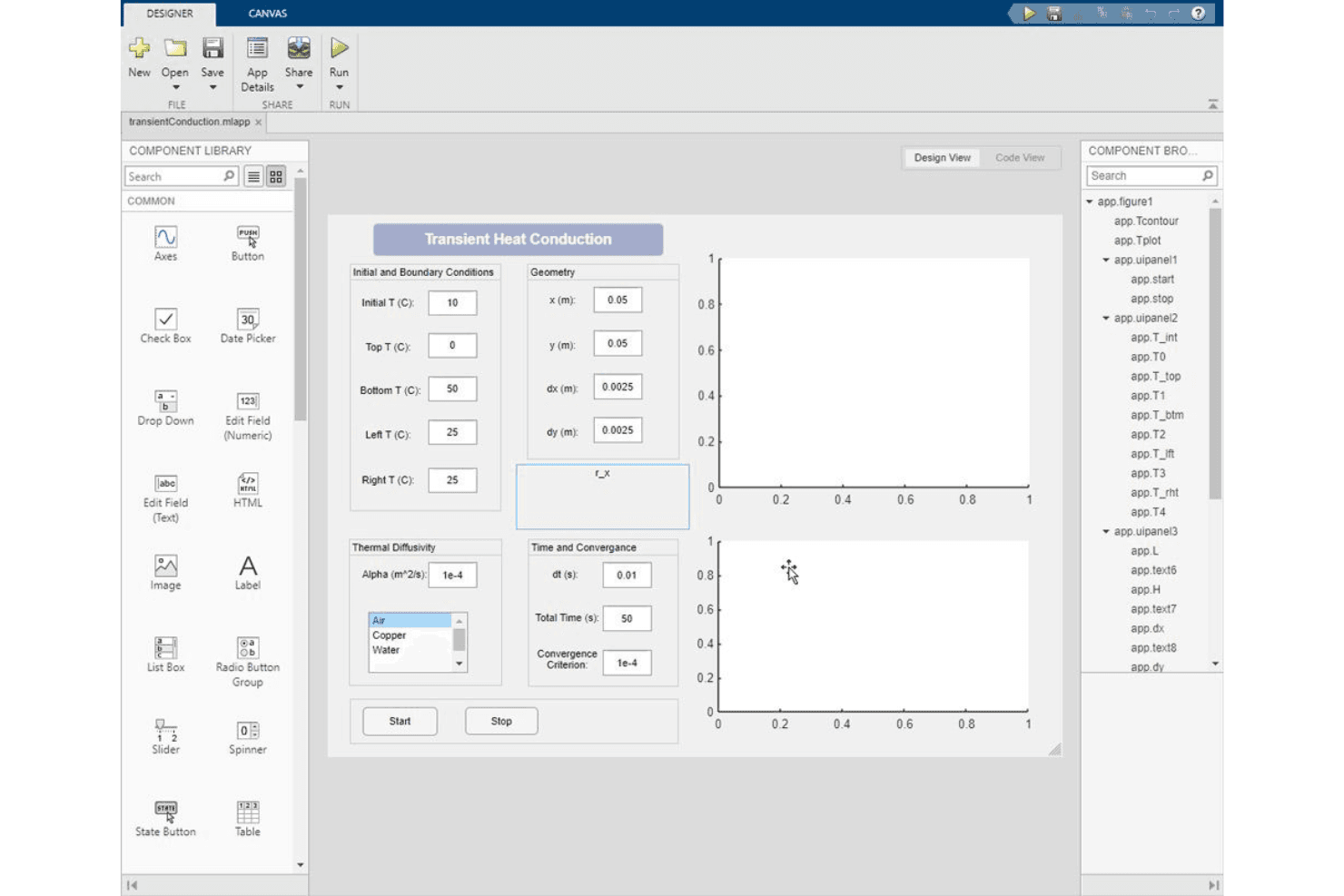
MATLAB can be challenging to use for beginners due to its specialized syntax, dense GUI, and extensive feature set. The software's powerful tools have a steep learning curve for those without technical backgrounds. While its capabilities are impressive, users may need significant time and training to understand how to navigate the workspace and effectively use MATLAB functions. However, once familiar with its functionalities, the efficiency and precision it offers in numerical computation are unmatched.
Integrations
MATLAB is integrated with Simulink, MathWorks' simulation software. This allows you to use MATLAB algorithms in simulations and export simulation results into MATLAB for further analysis.
Regarding APIs and third-party integration tools, MATLAB offers integration with many other programming languages, including C/C++, Python, and Fortran, allowing you to expand its functionality.

MATLAB Specs
- A/B Testing: Yes
- API: Yes
- Automated Testing: Yes
- Browser Compatibility Testing: Yes
- Bug Tracking: Yes
- Calendar Management: Yes
- CI/CD Integration: Yes
- Dashboard: Yes
- Data Export: Yes
- Data Import: Yes
- Data Visualization: Yes
- Developer Tools: Yes
- External Integrations: Yes
- History/Version Control: Yes
- Manual Testing: Yes
- Multi-User: Yes
- Notifications: Yes
- Performance Testing: Yes
- Regression Testing: Yes
- Scheduling: Yes
- Status Notifications: Yes
- Third-Party Plugins/Add-Ons: Yes


