

Recensione Odoo: Pro, Contro, Funzionalità e Prezzi
Odoo offre una suite completa di applicazioni aziendali che possono essere personalizzate per soddisfare le esigenze uniche del tuo team, rendendolo una scelta di spicco tra le soluzioni software ERP.

Recensiamo gli strumenti in modo indipendente e le commissioni aiutano a finanziare i nostri test. Consulta la nostra politica sulla trasparenza, la nostra metodologia, oppure suggerisci uno strumento.
Odoo is a modular CFO ERP software built for finance teams that need accounting, procurement, inventory, and operations management in one connected platform. I'd consider it if you need something more affordable and customizable than NetSuite, without sacrificing the financial controls and reporting depth that mid-market organizations actually need. It's a strong fit if your team is outgrowing entry-level tools but isn't ready—or willing—to take on the cost and complexity of a legacy enterprise ERP.
Odoo Evaluation Summary
4.2/5
- From $8.95/user/month (billed annually)
- Free plan available
Perché fidarsi dei nostri consigli sui software
6,700+
Reviews
20
Industry experts
16+
Evaluation factors
14
Years
Le nostre recensioni riflettono il nostro giudizio indipendente, non un discorso di vendita. Scopri come manteniamo la trasparenza.
Per questa guida, abbiamo valutato gli strumenti attraverso test pratici e ricerche indipendenti, assegnando un punteggio agli strumenti in base ai nostri criteri di selezione.
Le nostre recensioni riflettono il nostro giudizio editoriale umano, non un discorso di vendita.
Odoo Overview
What makes Odoo stand out is its modular design and high level of customization. You can build the system around your specific needs, adding apps as your business grows. This flexibility is great for companies that don’t fit neatly into one-size-fits-all software. While the platform can be complex without technical support, its broad capabilities, integrations, and competitive pricing make it a strong option for growing businesses.
Pros
- You can customize Odoo to fit your team's specific needs.
- It offers a wide range of modules for different business functions.
- All Odoo apps are natively integrated, reducing data silos.
Cons
- Your team might find the initial setup a bit complex.
- For some setups, Odoo can be resource-intensive.
- Some third-party apps or modules may lack polish or support.
Is Odoo Right For Your Needs?
Who Would be a Good Fit for Odoo?
Odoo is a great fit for small to medium-sized businesses in industries like retail, manufacturing, and services where you need a flexible and customizable ERP software. If your team values the ability to tailor modules to specific business operations, Odoo's extensive range of applications can efficiently meet those needs. Its user-friendly interface makes it ideal for teams that want to streamline their workflow without extensive training.
- Retail BusinessesOdoo's inventory and sales modules streamline your operations, helping you manage stock efficiently.
- Manufacturing CompaniesYou’ll benefit from Odoo’s production planning and quality control features to optimize your processes.
- Service ProvidersOdoo's project management and CRM tools help you manage client relationships and projects seamlessly.
- Ecommerce StoresYou can integrate Odoo with your online platforms to manage orders and customer interactions effectively.
- Finance TeamsOdoo’s accounting features allow you to track financial performance and automate routine tasks easily.
- Human Resources DepartmentsOdoo’s HR tools enable you to manage employee records, payroll, and recruitment in one place.
Who Would be a Bad Fit for Odoo?
Odoo might not suit large enterprise with highly complex and specialized processes that require extensive customization and dedicated support. If your team relies on rapid response times from customer support or needs highly specialized features not covered by Odoo’s modules, you might face challenges. Additionally, businesses with limited IT resources might struggle with the initial setup and maintenance.
- Large EnterprisesOdoo may fall short in handling extensive customization and complex processes required by large enterprises.
- Highly Regulated IndustriesIndustries needing specific compliance features might find Odoo lacking in built-in regulatory tools.
- Tech-averse TeamsIf your team isn’t tech-savvy, the initial setup and configuration might be overwhelming.
- Specialized ManufacturingHighly specialized manufacturers might find Odoo’s production modules too generic for their needs.
- Healthcare ProvidersHealthcare providers may struggle with Odoo’s lack of specific healthcare management features.
- Government AgenciesGovernment agencies needing specialized reporting and compliance features might find Odoo insufficient.
Come testiamo e valutiamo gli strumenti
Abbiamo impiegato anni a costruire, perfezionare e migliorare il nostro sistema di test e valutazione dei software. Il nostro schema è progettato per cogliere le sfumature della scelta del software e ciò che rende uno strumento efficace, concentrandosi sugli aspetti critici del processo decisionale. Di seguito puoi vedere esattamente come funzionano i nostri test e le nostre valutazioni in base a sette criteri. Questo ci permette di offrire una valutazione imparziale del software basata su funzionalità di base, caratteristiche distintive, facilità d’uso, onboarding, assistenza clienti, integrazioni, recensioni dei clienti e rapporto qualità-prezzo.
Funzionalità principali (25% del punteggio finale)
Il punto di partenza della nostra valutazione è sempre la funzionalità principale dello strumento. Dispone delle funzionalità base che un utente si aspetterebbe di trovare? Alcune di queste funzionalità sono riservate ai piani a pagamento più elevati? In sostanza, ci aspettiamo che uno strumento sia all’altezza delle capacità minime dei concorrenti.
Caratteristiche distintive (25% del punteggio finale)
Successivamente, valutiamo le caratteristiche distintive che vanno oltre la funzionalità principale normalmente presente negli strumenti di questo tipo. Un punteggio elevato riflette funzionalità specializzate o uniche che rendono il prodotto più rapido, efficiente o offrono valore aggiunto all’utente. Valutiamo inoltre quanto sia semplice integrare il software con altri strumenti tipicamente presenti nello stack tecnologico, per estenderne la funzionalità e l’utilità. Gli strumenti che offrono numerose integrazioni native, connessioni di terze parti e accesso API per creare integrazioni personalizzate ottengono il punteggio migliore.
Facilità d’uso (10% del punteggio finale)
Consideriamo quanto sia rapido e semplice eseguire le attività fondamentali previste dallo strumento. Un software con punteggio elevato è ben progettato, intuitivo da usare, offre app mobile, modelli predefiniti e semplifica operazioni complesse.
Onboarding (10% del punteggio finale)
Sappiamo quanto sia importante l’adozione rapida da parte del team quando si introduce una nuova piattaforma: per questo valutiamo quanto sia facile imparare e utilizzare lo strumento con una formazione minima. Valutiamo la rapidità con cui un membro del team può impostare e iniziare a utilizzare lo strumento senza esperienza pregressa. Le soluzioni con punteggio alto richiedono poco o nessun supporto.
Assistenza clienti (10% del punteggio finale)
Analizziamo quanto sia semplice e veloce ottenere aiuto tramite telefono, live chat o knowledge base. Gli strumenti e le aziende che offrono supporto in tempo reale ottengono i punteggi migliori, mentre i chatbot ricevono i punteggi più bassi.
Recensioni dei clienti (10% del punteggio finale)
Oltre ai nostri test e valutazioni, consideriamo il net promoter score dei clienti attuali e passati. Verifichiamo la probabilità che i clienti scelgano nuovamente lo strumento per le funzionalità di base. Un software con punteggio elevato riflette un net promoter score alto da parte dei clienti vecchi e attuali.
Rapporto qualità-prezzo (10% del punteggio finale)
Infine, considerando tutti gli altri criteri, valutiamo il prezzo medio dei piani base rispetto alle funzionalità principali e agli altri criteri di valutazione. I software che offrono di più, a un costo inferiore, ottengono punteggi migliori.
Core Features
Accounting Management
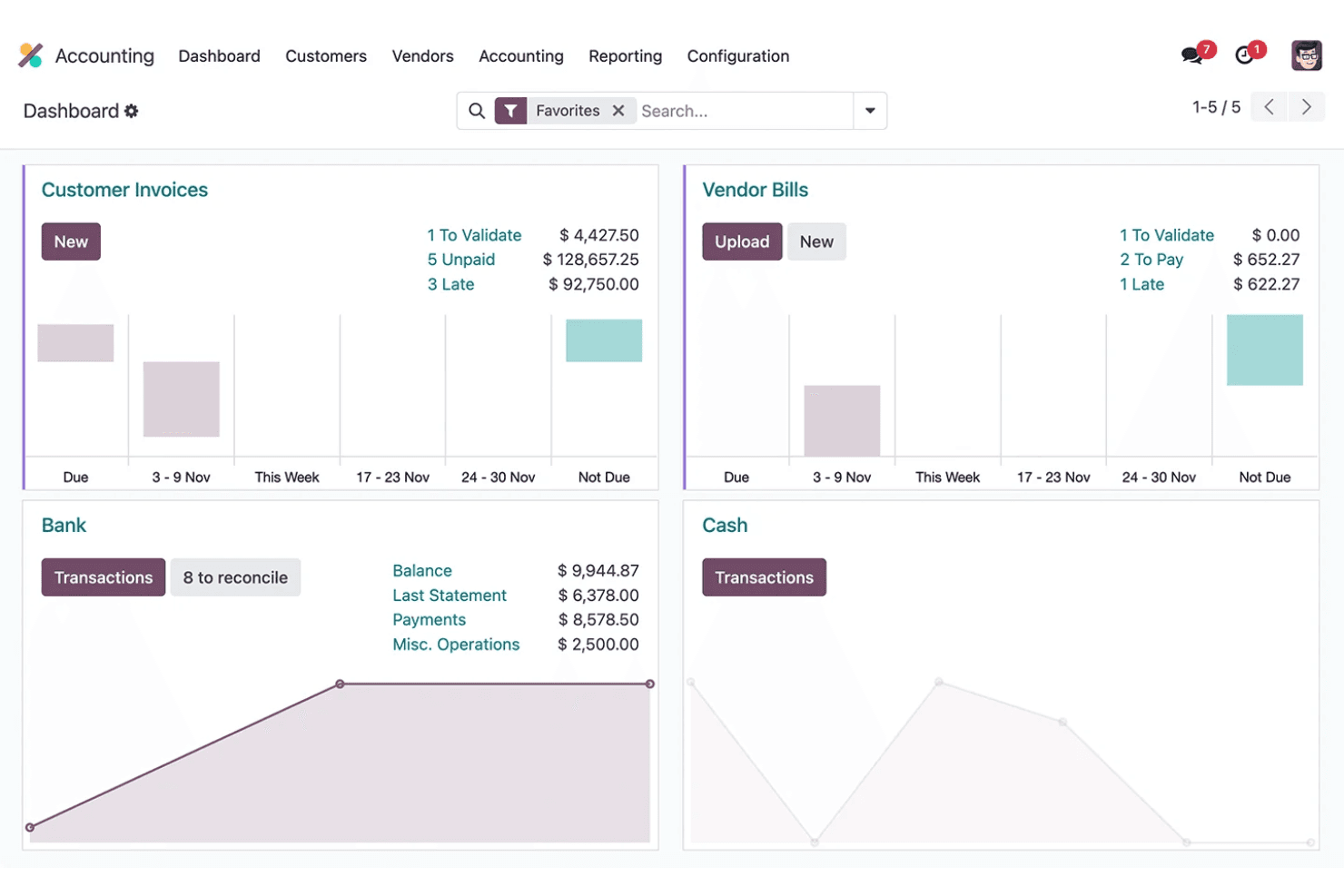
Odoo's accounting software features automate your invoicing, billing, and financial reporting, helping you stay on top of your finances. It stands out for its ability to integrate with other modules for seamless financial operations.
Inventory Management
With Odoo, you can track stock levels, manage warehouses, and automate restocking. This feature helps you maintain optimal inventory levels and reduce waste.
Sales Management
Odoo’s sales module allows you to manage your sales pipeline, track leads, and close deals efficiently. It integrates with CRM to enhance your sales team's productivity.
Human Resources Management
You can handle employee records, payroll, and recruitment processes with Odoo's HR tools. It simplifies HR tasks, allowing your team to focus on strategic initiatives.
Project Management
Odoo’s project management feature lets you plan, track, and collaborate on projects in real-time. It helps your team meet deadlines and improve project outcomes.
Manufacturing Management
This feature supports production planning, work orders, and quality control. It ensures your manufacturing processes are efficient and meet quality standards.
E-commerce Integration
With Odoo, businesses can merge their online stores, maintaining a constant synchronization between inventory and sales.
Ease of Use
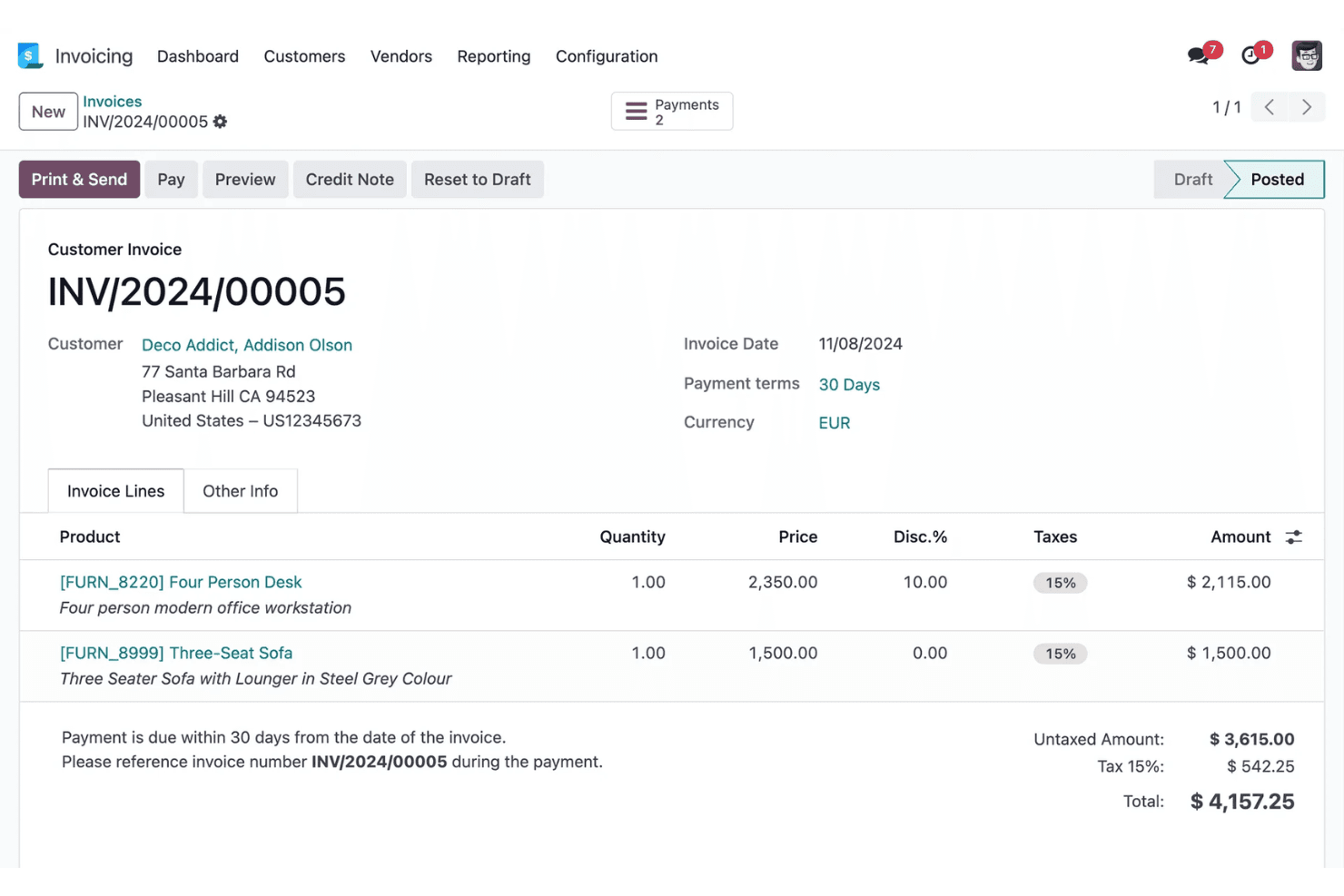
Odoo offers a clean and intuitive interface with drag-and-drop functionality. However, given the platform’s vast capabilities, some users might experience a steep learning curve. While the initial setup might be complex, once configured, Odoo's system simplifies your daily tasks with its seamless integration across functions.
Integrations
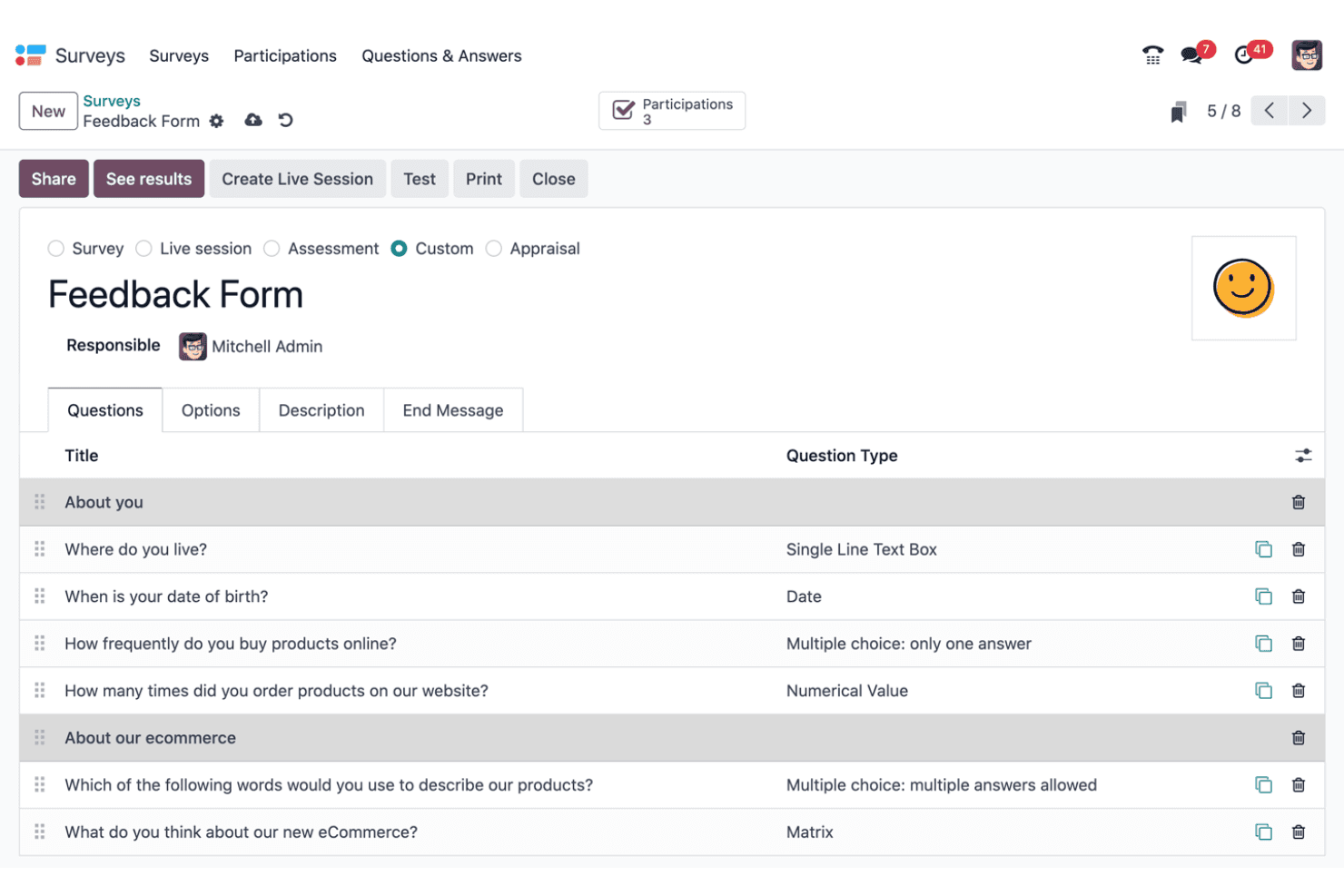
All Odoo apps are natively integrated. Third-party integrations must be paid for and include a range of apps, such as Tap Payment Acquirer, Pipedrive, Website Google reCAPTCHA, Zendesk, Zoho, QuickBooks, and Freshdesk.

Odoo Specs
- 360 Degree Feedback: Yes
- API: Yes
- Attendance Tracking: Yes
- Batch Permissions & Access: Yes
- Budgeting: Yes
- Calendar Management: Yes
- Dashboard: Yes
- Data Export: Yes
- Data Import: Yes
- Data Visualization: Yes
- Employee Database: Yes
- Employee Engagement: Yes
- Employee Incentive Management: Yes
- Employee Onboarding: Yes
- Expense Tracking: Yes
- External Integrations: Yes
- Feedback Management: Yes
- Forecasting: Yes
- Multi-Currency: Yes
- Multi-User: Yes
- Notifications: Yes
- Scheduling: Yes
- Timesheets: Yes
- Travel Management: Yes
- Vacation & Absence Calendar: Yes
Odoo FAQs
E ora?
Pronto a potenziare le tue capacità come professionista della finanza? Iscriviti alla nostra newsletter gratuita per ricevere consigli, guide e approfondimenti dagli esperti della finanza che stanno dando forma al settore tecnologico.