

Programvare for fradragshåndtering hjelper reskontroteam med å identifisere, validere, bestride og kreve tilbake kundefradrag og belastninger. De beste verktøyene automatiserer registrering av krav, dokumentmatching, fradragskoding, tvisteløsing og oppfølging av tilbakebetalinger. De kan også kobles til ERP-systemer og forhandlerportaler. Jeg evaluerte ledende programvare for AR-fradragshåndtering for ulike bransjer, arbeidsflyter og fradragsvolumer.
Hvorfor du kan stole på våre programvareanbefalinger
6,700+
Reviews
20
Industry experts
16+
Evaluation factors
14
Years
Teamet vårt har testet og anmeldt programvare siden 2012. Vi er selv økonomiledere, så vi vet hvor vanskelig og hvor viktig det er å velge riktig programvare.
I denne guiden har vi vurdert verktøyene gjennom praktisk testing og uavhengig research og gitt dem poeng ut fra våre utvelgelseskriterier.
Anmeldelsene våre bygger på vår egen redaksjonelle vurdering. De er ikke et salgsargument.
Sammenligningstabell for programvare for fradragshåndtering
Denne sammenligningstabellen oppsummerer prisopplysninger for mine beste utvalgte løsninger for programvare for fradragshåndtering:
| Tool | Best For | Trial Info | Price | ||
|---|---|---|---|---|---|
| 1 | Best for invoice-to-cash dispute workflows | Free demo available | Pricing upon request | Website | |
| 2 | Best for SAP chargeback management | Free demo available | Pricing upon request | Website | |
| 3 | Best for CPG deductions with expert support | Free demo available | Pricing upon request | Website | |
| 4 | Best for short-pay detection in cash application | Free demo available | Pricing upon request | Website | |
| 5 | Best for CPG deduction workflow automation | Free demo available | Pricing upon request | Website | |
| 6 | Best for AI-driven deduction workflows | Free demo available | Pricing upon request | Website | |
| 7 | Best for AI-powered deduction validation | Free demo available | Pricing upon request | Website | |
| 8 | Best for autonomous deduction resolution | Free demo available | Pricing upon request | Website | |
| 9 | Best for retailer portal claim automation | Free demo available | Pricing upon request | Website | |
| 10 | Best for outsourced retail revenue recovery | Free demo available | Pricing upon request | Website |


Anmeldelser av den beste programvaren for fradragshåndtering
Nedenfor finner du mine detaljerte sammendrag av den beste programvaren for fradragshåndtering som kom med på kortlisten min. Anmeldelsene mine gir et detaljert innblikk i funksjonene, egenskapene og integrasjonene til hver plattform, slik at du kan finne den beste løsningen for deg.
 Best for invoice-to-cash dispute workflows
- Free demo available
- Pricing upon request
Visit WebsiteCustomer Rating:4.5/5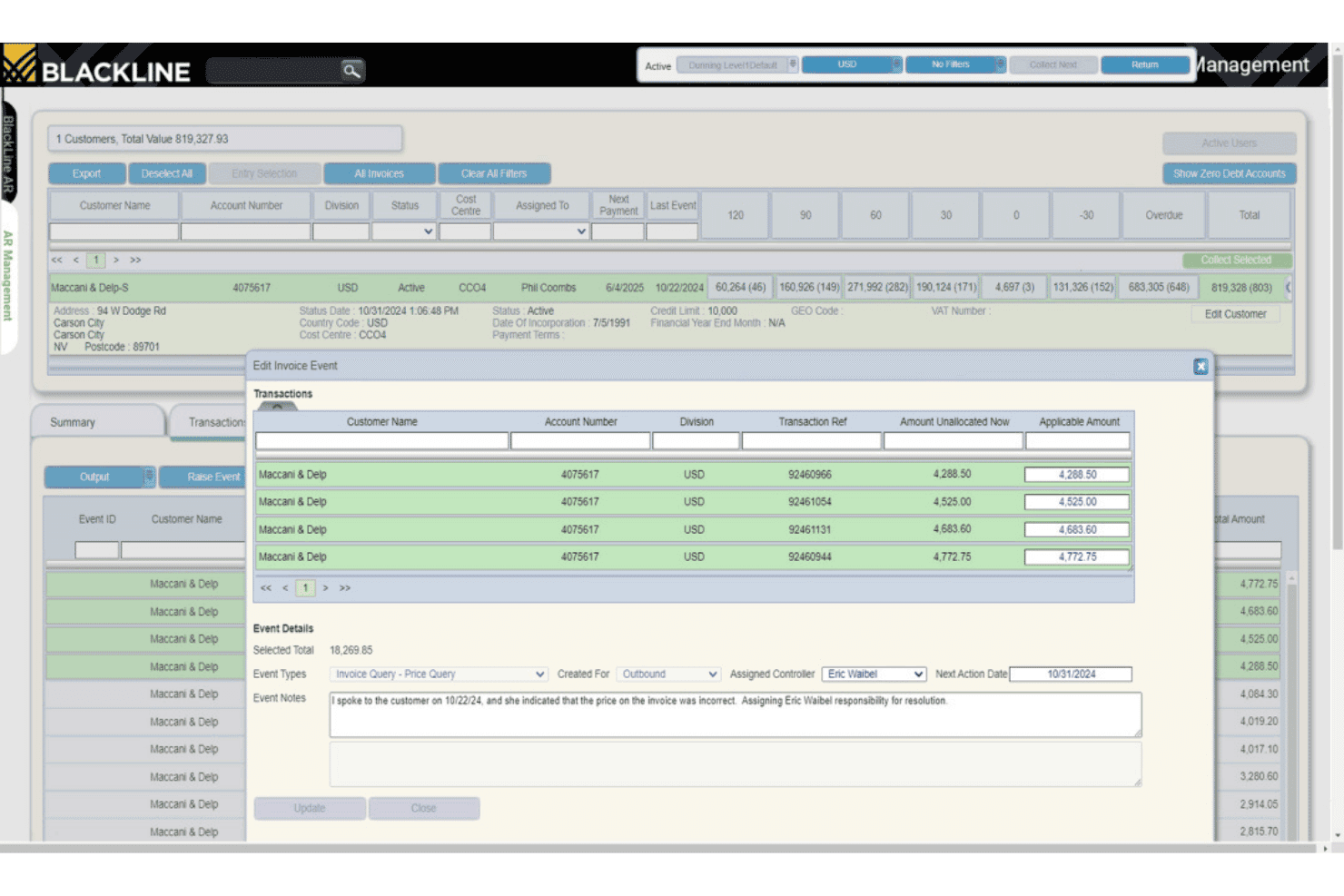
BlackLine lets users log invoice disputes and assign them for resolution. BlackLine Disputes & Deductions Management is an enterprise AR module that combines automated dispute workflows, AI-assisted claim summarization, SLA tracking, and ERP-integrated documentation management within a broader Invoice-to-Cash platform.
Who Is BlackLine Best For?
BlackLine suits mid-market to enterprise finance teams that manage high-volume invoice disputes within an existing ERP environment and need SLA-driven workflows with full audit trails.
Why I Picked BlackLine
I picked BlackLine as one of the best because its dispute workflow engine is built around measurable resolution cycles, not just task tracking. I love how Verity Summarize uses AI to instantly break down complex disputes and surface guided next steps, cutting the time I'd spend manually reviewing invoice histories. The SLA measurement layer ties directly into aged debt and provisioning reporting, so I can see exactly where disputes are stalling and which are putting cash at risk.
BlackLine Key Features
- ERP and CRM integration: Syncs deduction and dispute data directly with supported ERP and CRM platforms.
- Audit-ready documentation management: Centralizes and attaches all supporting documents to each dispute for compliance.
- KPI and SLA monitoring: Tracks dispute cycle times and resolution rates against service level agreements.
- Role-based workflow controls: Assigns, restricts, and manages user access and approval authority across AR, sales, and finance teams.
BlackLine Integrations
BlackLine offers native integrations with SAP, Oracle, NetSuite, Microsoft Dynamics 365, Salesforce, and Workday. An API is also available for custom integrations.
Pros and Cons
Pros:
- Strong audit trail supports SOX compliance requirements
- AI summarization cuts manual invoice review time
- SLA-driven dispute tracking with measurable resolution cycles
Cons:
- Implementation typically requires significant IT resource involvement
- Not purpose-built for CPG deduction workflows
Learn more about BlackLine: Best for SAP chargeback management
- Free demo available
- Pricing upon request
Visit WebsiteCustomer Rating:4.3/5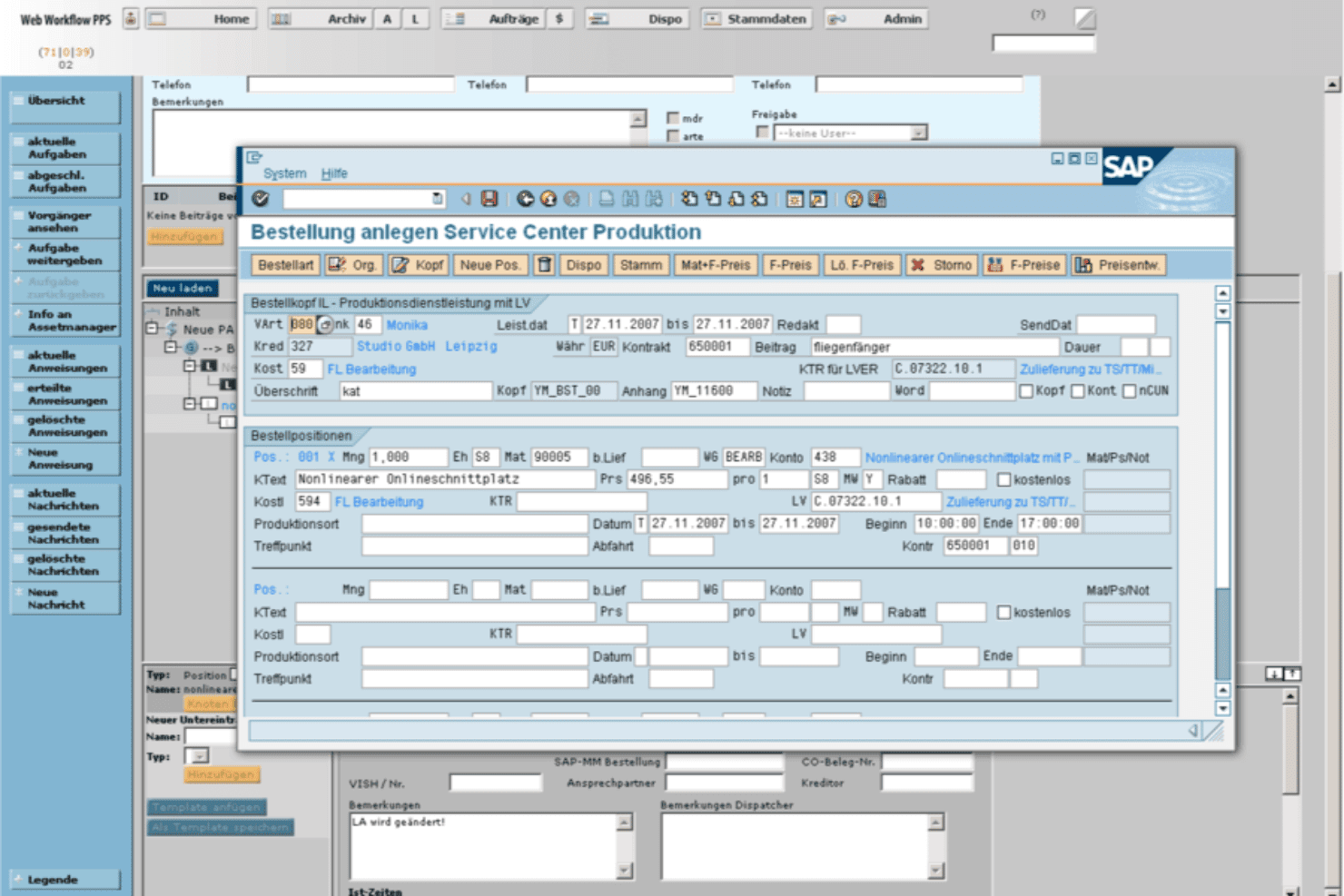
Vistex enables structured service order creation within SAP workflows. Vistex is an SAP-native chargeback and claims management platform that handles claim initiation, reason-code classification, reconciliation, accruals, and settlement—embedded directly within SAP S/4HANA and ECC environments.
Who Is Vistex Best For?
Vistex is a strong fit for large enterprise companies in CPG, manufacturing, or distribution that are already running SAP S/4HANA or ECC and managing high volumes of chargebacks.
Why I Picked Vistex
Vistex earns its spot on my shortlist because of how deeply it's embedded in SAP S/4HANA for chargeback management. I like that it handles the full claim lifecycle, from initiation through reconciliation and settlement, without requiring a separate data integration layer. The automated accrual and simulation tools also let my team forecast cost recovery before claims are submitted, which is a level of pre-claim visibility that's genuinely hard to find in a natively SAP-embedded tool.
Vistex Key Features
- SAP-native settlement workflows: Embedded directly in SAP S/4HANA and ECC for end-to-end claims processing and financial reconciliation.
- Rule-based deduction categorization: Classifies charges and deductions using customizable business rules tied to contract terms and agreement structures.
- Accruals and forecasting tools: Supports real-time accrual management and predictive modeling for upcoming cost recoveries.
- Granular audit trail: Captures detailed claim, settlement, and adjustment history for compliance and financial control purposes.
Vistex Integrations
Vistex is embedded in SAP S/4HANA and ECC environments and offers native integration with core SAP modules. An API is available for custom integrations.
Pros and Cons
Pros:
- Strong accrual management for cost recovery
- Full claim lifecycle tracking within SAP
- Native SAP settlement without third-party middleware
Cons:
- Long implementation timelines for enterprise deployments
- Not suited for non-SAP environments
Learn more about Vistex: Best for CPG deductions with expert support
- Free demo available
- Pricing upon request
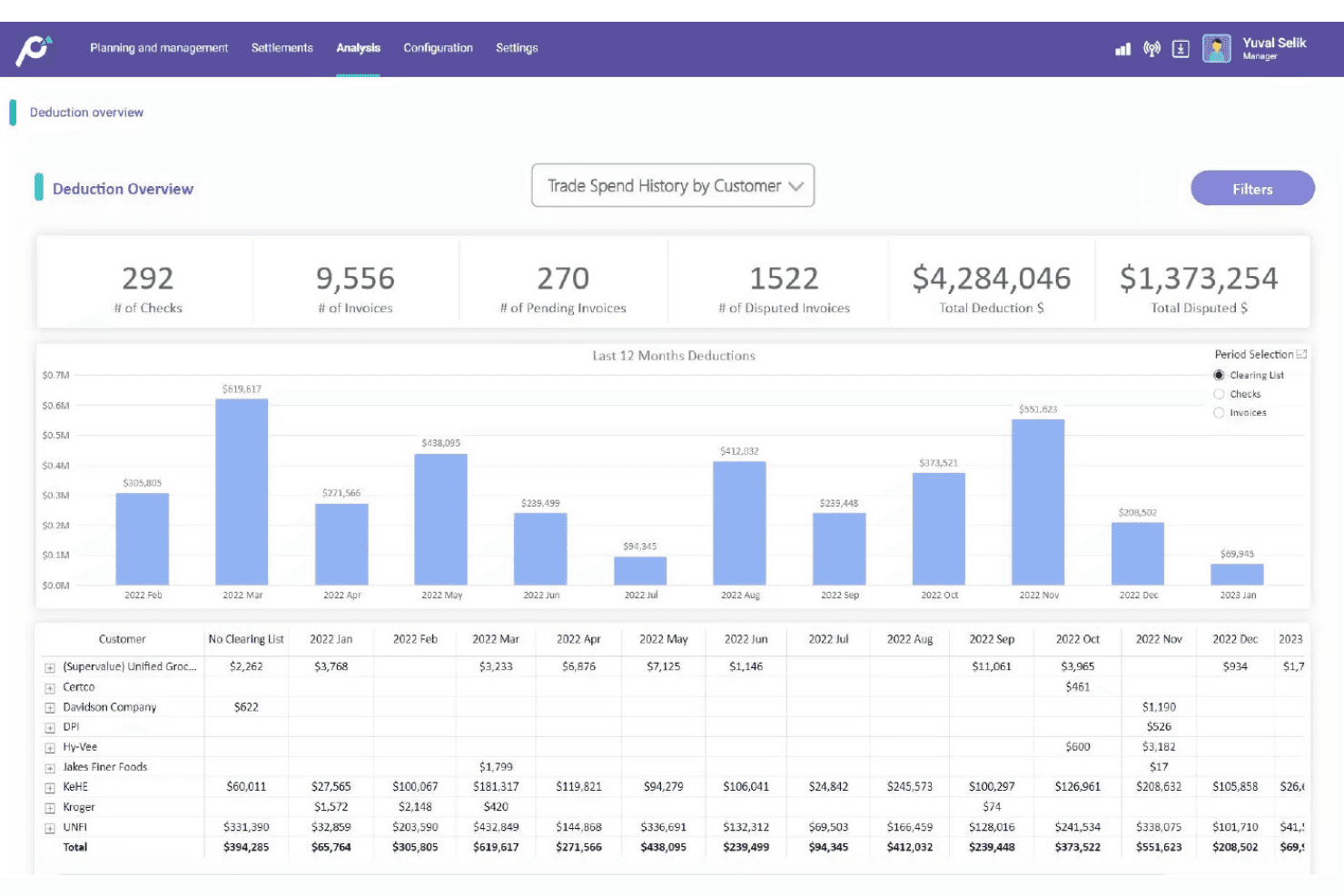
Promomash tracks trade spend deductions by customer over time. Promomash is a CPG-focused deduction management platform that combines AI-assisted deduction capture, coding, validation, and dispute recovery with a team of dedicated specialists who manage the full deduction lifecycle on your behalf.
Who Is Promomash Best For?
Promomash is a strong fit for growing CPG brands that sell through major retailers and distributors but don't have a dedicated in-house deduction management team.
Why I Picked Promomash
Promomash earns its spot on my shortlist because of how it handles the two most time-consuming parts of deduction management: coding and disputing. I love that the platform uses a proprietary catalog of reason codes built for CPG retailers and distributors, so deductions from Walmart, KEHE, and UNFI get categorized accurately without manual intervention. When an invalid deduction needs to be disputed, the CPGenius team steps in to build the case and submit it on your behalf.
Promomash Key Features
- Retailer and distributor integrations: Connects directly with leading portals like Walmart, Target, Amazon, UNFI, and KEHE for deduction data aggregation.
- Cash application add-on: Matches bank payments to open invoices and syncs payment activity with your ERP.
- Deduction analytics dashboard: Provides real-time dashboards to monitor deduction status, trends, and root cause breakdowns.
- Promotion-to-deduction matching: Automatically links deductions to specific trade promotions for proper validation and close-out.
Promomash Integrations
Promomash offers native integrations with NetSuite, QuickBooks, Sage Intacct, Microsoft Dynamics 365, Walmart Retail Link, Target Partners Online, Amazon Vendor Central, UNFI, and KEHE. An API is available for custom integrations.
Pros and Cons
Pros:
- Covers both trade and non-trade deduction types
- CPG-specific reason code library improves coding accuracy
- Managed dispute services reduce internal AR workload
Cons:
- Reporting customization requires support team involvement
- Limited fit for industries outside CPG and grocery
Learn more about Promomash: Best for short-pay detection in cash application
- Free demo available
- Pricing upon request
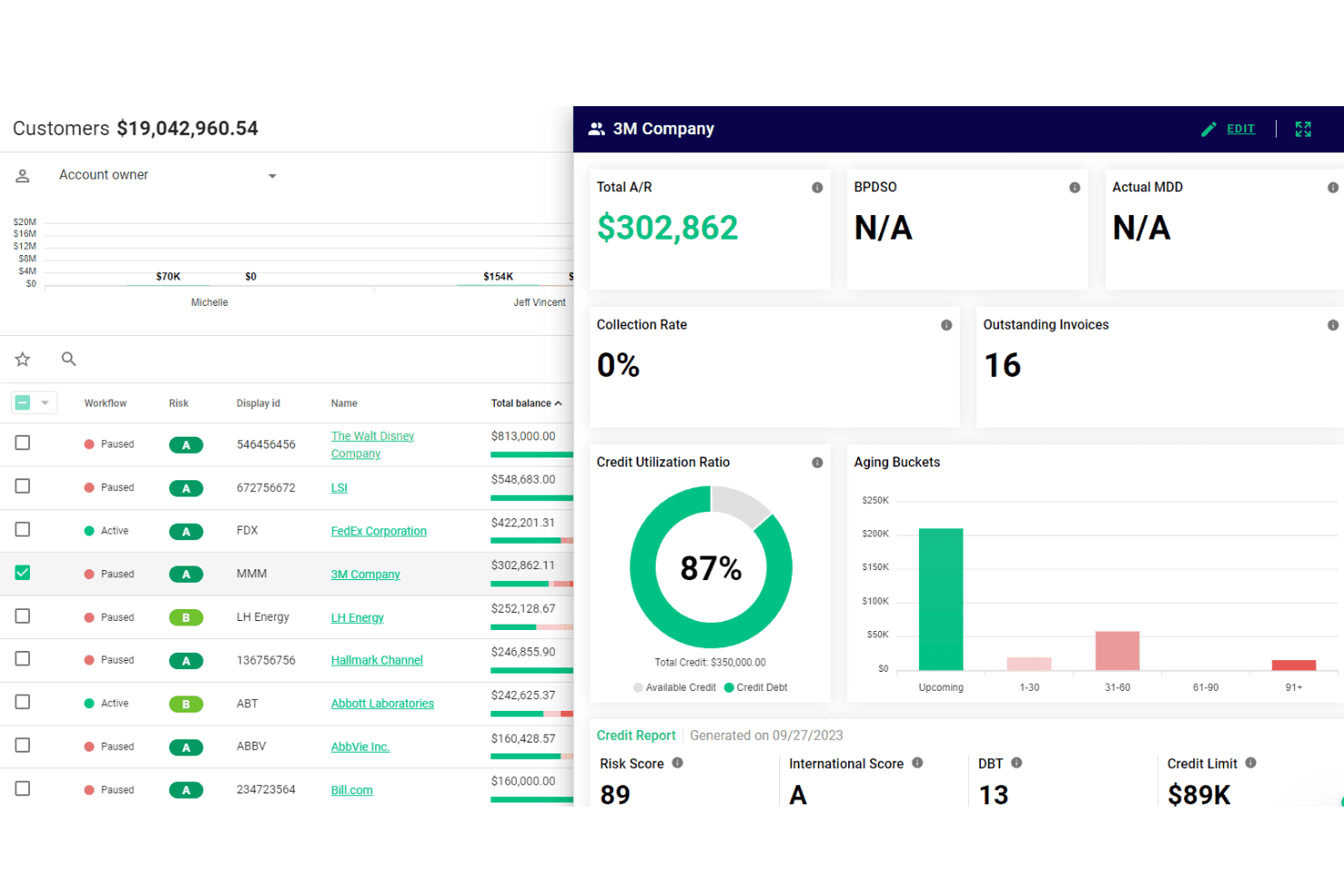
Cforia surfaces customer risk scores and A/R aging in one view. Cforia is an order-to-cash AR automation platform with modules for cash application, collections management, integrated dispute resolution, and deduction tracking built around short-pay detection.
Who Is Cforia Best For?
Cforia is a good fit for enterprise AR and collections teams that process high volumes of customer payments and need automated short-pay detection built into their cash application workflow.
Why I Picked Cforia
I picked Cforia as one of the best because its cash application module catches short-pays at the point of payment matching, not as a manual follow-up step. When a remittance comes in short, Cforia automatically flags it and creates a deduction and dispute record in the same motion. I also like the Customer Auto-Link feature, which matches payments across parent/child account hierarchies so multi-entity accounts don't generate false deduction flags.
Cforia Key Features
- Integrated dispute management: Lets teams log, track, and resolve deduction disputes directly within the platform.
- Customer auto-link matching: Connects payments and open invoices across parent and child account structures for accurate deduction capture.
- Real-time AR dashboards: Provides AR teams with configurable dashboards to monitor deduction status, activity history, and KPIs.
- Multi-source data ingestion: Supports the import of remittance, payment, and short-pay data from banks, lockbox files, and ERP systems.
Cforia Integrations
Native integrations are not clearly documented. Cforia offers an API for custom integrations and can connect to ERP systems through custom setup.
Pros and Cons
Pros:
- Dispute records created automatically at flagging
- Handles complex parent/child account structures
- Short-pay detection is built into cash application
Cons:
- Reporting customization requires vendor involvement
- Implementation timelines can run several months
Learn more about Cforia: Best for CPG deduction workflow automation
- Free demo available
- Pricing upon request
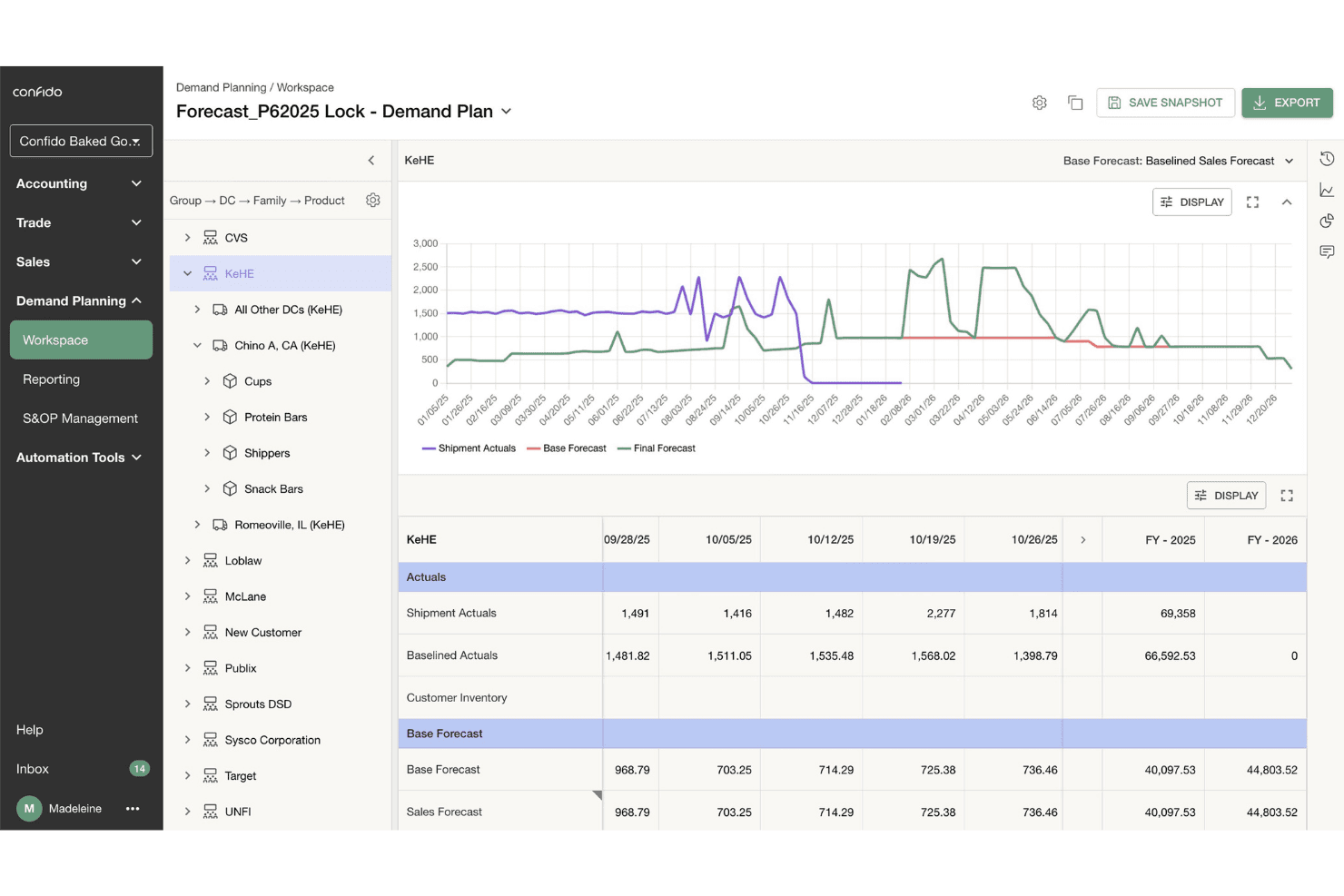
Confido lets users forecast demand with visual charts and weekly data. Confido is a deduction management platform built specifically for CPG brands, combining automated deduction capture, AI-driven classification, dispute submission workflows, and direct integrations with major retailers, distributors, and ERP systems.
Who Is Confido Best For?
Confido is a strong fit for AR and finance teams at CPG brands that sell through brick-and-mortar retail and regularly manage high deduction volumes from major retailers and distributors.
Why I Picked Confido
I picked Confido as one of the best because its automated deduction workflow is built specifically around how CPG brands interact with major retailers. I like how it automatically flags deductions that fall outside approved deals, so my team can prioritize disputes without manually reviewing every line. The approval workflow routes deductions directly to the right stakeholders across finance, sales, and broker teams, cutting the back-and-forth that slows down resolution.
Confido Key Features
- Automated backup document extraction: Confido auto-extracts invoices, deductions, and remittance details from retailer emails and portals.
- Trade promotion deduction matching: It matches deductions to specific promotions or deals using built-in trade data connectors.
- Multi-channel ERP and retailer integrations: The platform connects with NetSuite, QuickBooks, SAP, Sage, Microsoft Dynamics 365, and over 40 retailer portals.
- Role-based approval workflows: Assigns, escalates, and tracks deduction items with configurable team-specific permissions and centralized discussion threads.
Confido Integrations
Confido offers native integrations with NetSuite, QuickBooks, SAP, Sage, Microsoft Dynamics 365, Walmart, Kroger, Target, KeHE, UNFI, and Meijer. An API is available for custom integrations.
Pros and Cons
Pros:
- SOC 2 certified for financial and retailer data
- Scales from small lean teams to larger brands
- Auto-matches deductions directly to promotions and reason codes
Cons:
- Pricing and ROI benchmarks not publicly available
- Purpose-built for CPG only, not other industries
Learn more about Confido: Best for AI-driven deduction workflows
- Free demo available
- Pricing upon request
Visit WebsiteCustomer Rating:4.5/5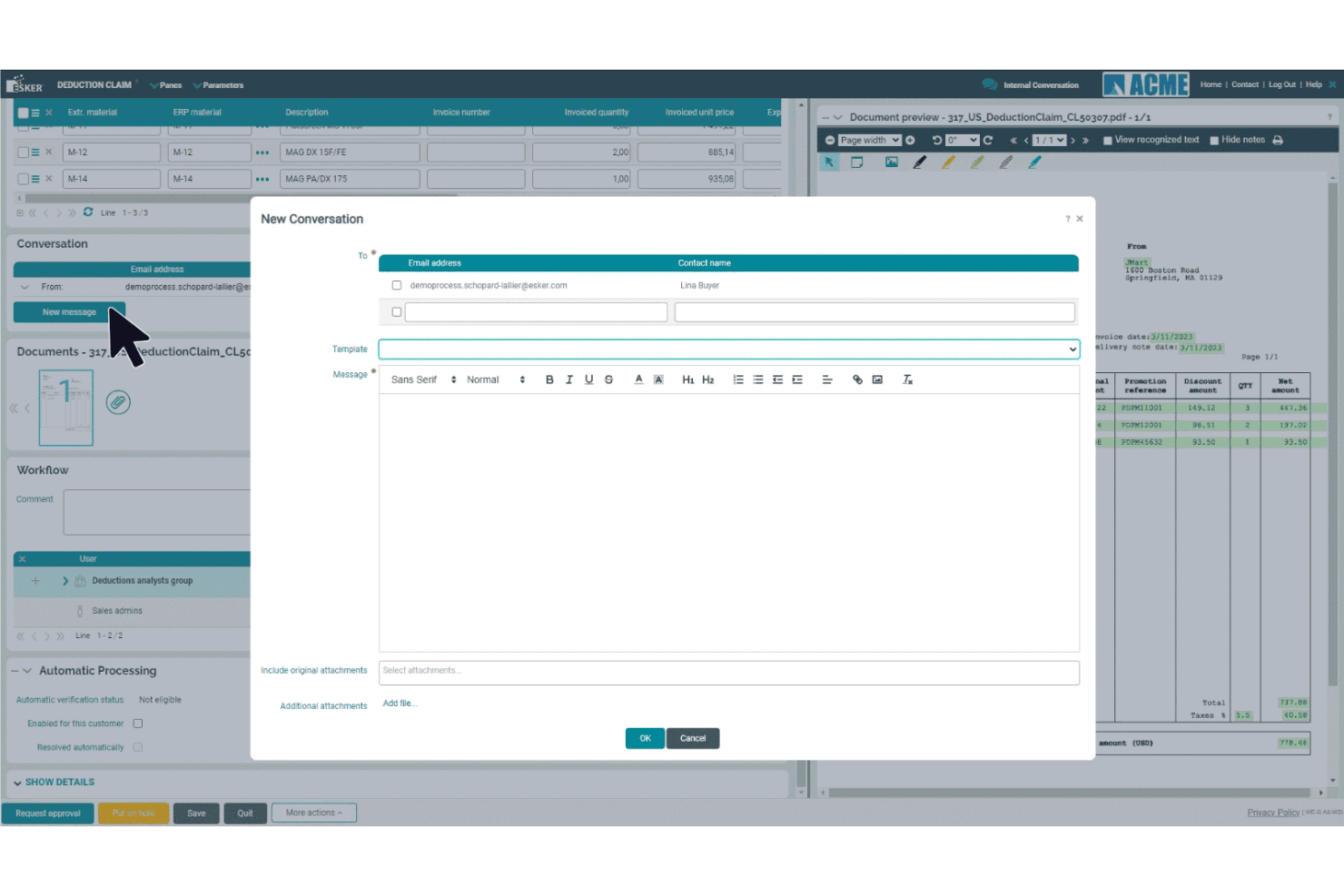
Esker lets users send internal conversations directly from a deduction claim. Esker is a cloud-based AR automation platform with a deductions management module that uses AI data capture, RPA document retrieval, and configurable workflows to handle both trade and non-trade customer deduction claims.
Who Is Esker Best For?
Esker is a strong fit for mid-market and enterprise manufacturers, CPG, and food and beverage companies that deal with high volumes of trade and non-trade customer deductions.
Why I Picked Esker
Esker earns its spot as one of the best on my shortlist because of how Esker Synergy AI handles the heaviest part of deductions work. I like that it automatically extracts and classifies deductions from remittances, debit notes, and promotional invoices into trade or non-trade categories. RPA bots retrieve supporting documents like PODs and BOLs directly from retailer portals. The AI also learns from analyst corrections over time, which sharpens auto-coding accuracy the more I use it.
Esker Key Features
- Multi-level workflow configuration: Set up custom approval processes by deduction type and value, involving AR, sales, and supply chain teams.
- RPA-driven document retrieval: Automate the sourcing of supporting documents directly from retailer and carrier portals.
- Integrated AR analytics dashboard: Monitor real-time KPIs such as DDO, deduction aging, and root cause breakdowns in a single view.
- Salesforce integration: Sync deduction case data and collaborate with sales teams through a direct API connection.
Esker Integrations
Esker offers native integrations with SAP, Oracle, Microsoft Dynamics 365, NetSuite, Sage, Salesforce, and QuickBooks, and provides an API for custom integrations.
Pros and Cons
Pros:
- Real-time DDO and deduction aging visibility
- Handles both trade and non-trade claims
- Auto-coding accuracy improves with analyst corrections
Cons:
- Full configuration requires dedicated admin support
- Implementation timelines can extend several months
Learn more about Esker: Best for AI-powered deduction validation
- Free demo available
- Pricing upon request
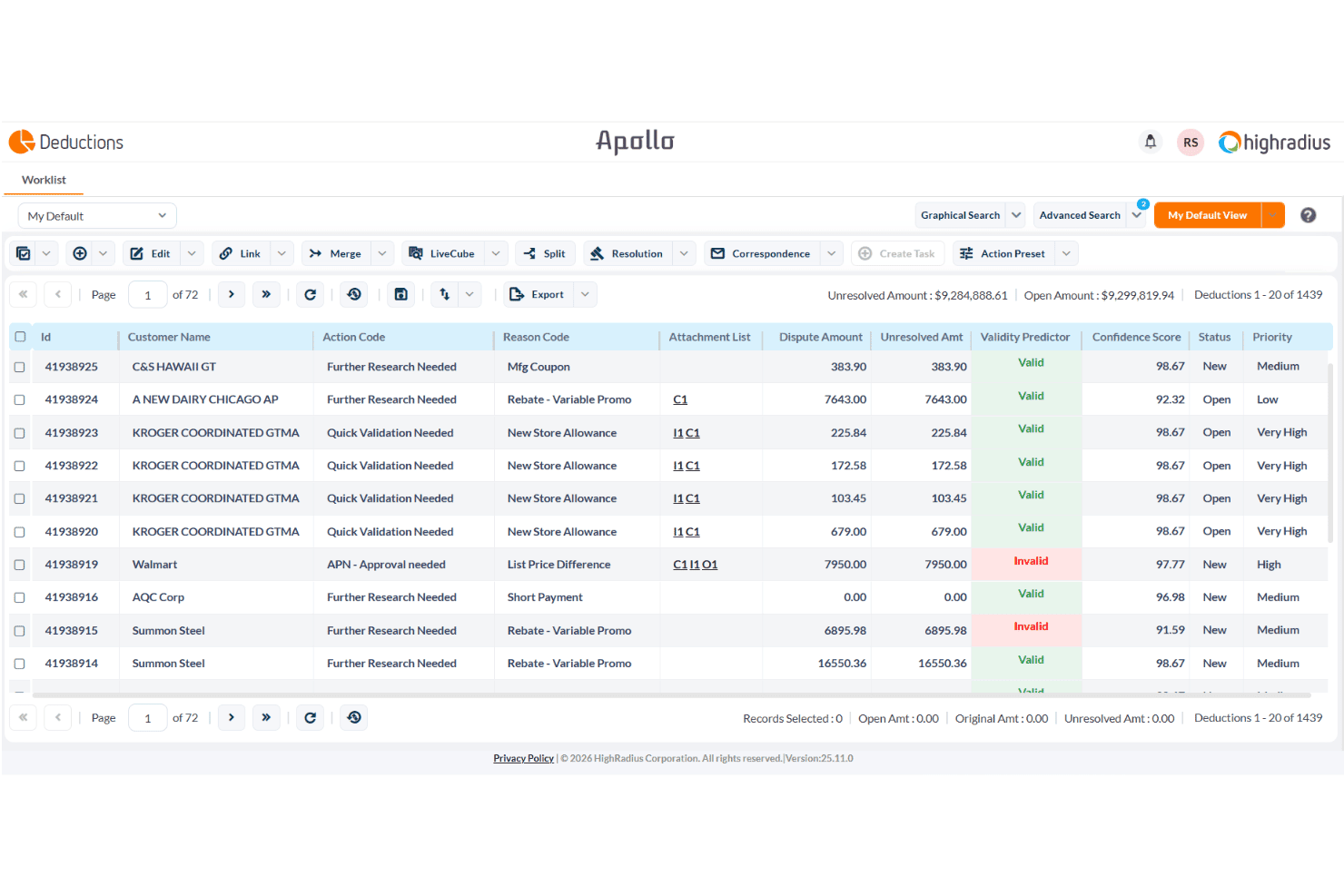
HighRadius helps users manage and prioritize deductions with AI validity predictions. HighRadius is an AI-powered deduction management platform that automates claim capture from retailer portals, backup document matching, deduction coding, and dispute resolution workflows across AR teams.
Who Is HighRadius Best For?
HighRadius is a strong fit for enterprise AR teams in CPG, food and beverage, and manufacturing dealing with high volumes of retailer-portal deductions.
Why I Picked HighRadius
HighRadius earns its spot as one of the best on my shortlist because of the Deductions Validity Predictor, which uses AI confidence scoring to flag whether a deduction is valid or invalid before anyone manually reviews it. I like that the Portal Claim Download agent auto-navigates major retailer portals like Amazon and Kroger to pull claim documents directly, cutting out the repetitive portal logins. The Trade Promotion Matching agent then cross-references those claims against SAP TPM data and POS records for multi-way validation.
HighRadius Key Features
- Shortage variance analysis: Aggregates proof-of-delivery and carrier documentation to link claims to shortages for validation.
- Worklist prioritization: Creates AI-driven, dynamic lists to organize and delegate deduction research tasks across AR teams.
- Invalid claim upload and dispute management: Auto-prepares dispute packets with attachments and submits them to retailer portals.
- Deductions backup linking: Automatically matches and attaches all relevant backup documentation to each open deduction record.
HighRadius Integrations
HighRadius provides native integrations with SAP, Oracle, NetSuite, Microsoft Dynamics 365, QuickBooks, and Sage ERP systems, and offers an API for custom integrations.
Pros and Cons
Pros:
- Multi-way trade promotion matching against TPM data
- Auto-navigates retailer portals for claim documents
- AI validity scoring before manual review begins
Cons:
- Reporting customization requires IT or vendor support
- Long implementation timelines for enterprise deployments
Learn more about HighRadius: Best for autonomous deduction resolution
- Free demo available
- Pricing upon request
Visit WebsiteCustomer Rating:3.5/5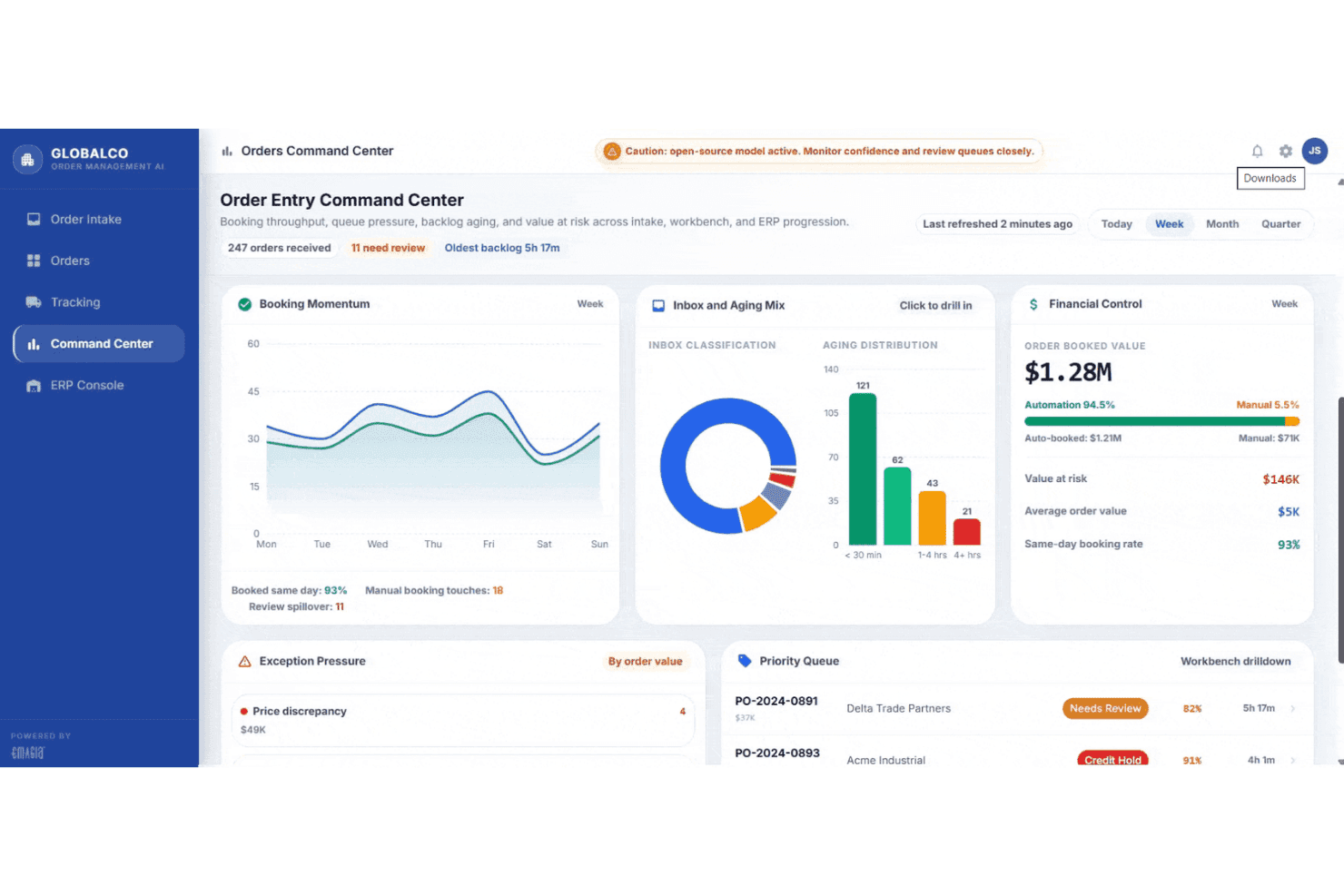
Emagia centralizes order management with AI-driven booking and exception tracking. Emagia is an AI-powered deduction management platform that automates short-pay identification, reason-code classification, dispute workflow routing, and resolution tracking across the accounts receivable function.
Who Is Emagia Best For?
Emagia is a strong fit for enterprise finance teams and shared service centers managing high volumes of deductions across multiple ERPs and business units.
Why I Picked Emagia
I picked Emagia as one of the best because of how far it pushes autonomous resolution in practice. The rules-based bulk claims processing auto-approves deductions based on predefined business decisions, with no analyst touch required. On top of that, Gia AI auto-identifies short pays and over pays, assigns reason codes, and routes each item through the correct workflow immediately, which means my team isn't manually triaging a backlog before resolution work can even begin.
Emagia Key Features
- Configurable reason code library: Build and manage custom deduction reason codes tailored to business needs.
- ERP and financial system integration: Connects with SAP, Oracle, Microsoft Dynamics, NetSuite, Sage, and other leading ERP platforms.
- Document aggregation and linking: Aggregates and attaches supporting documents like invoices, PODs, and BOLs to deduction cases for easy reference.
- Analytics dashboard: Tracks deduction aging, resolution rates, and trends by customer or root cause for management review.
Emagia Integrations
Emagia offers native integrations with SAP, Oracle, NetSuite, PeopleSoft, Workday, Microsoft Dynamics, and Sage. An API is available for custom integrations.
Pros and Cons
Pros:
- Delegation of authority matrix for approval workflows
- Dispute-level line item granularity for invoice disputes
- AI auto-resolves up to 80% of deductions
Cons:
- Implementation complexity for multi-ERP environments
- No self-serve pricing or trial access
Learn more about Emagia: Best for retailer portal claim automation
- Free demo available
- Pricing upon request
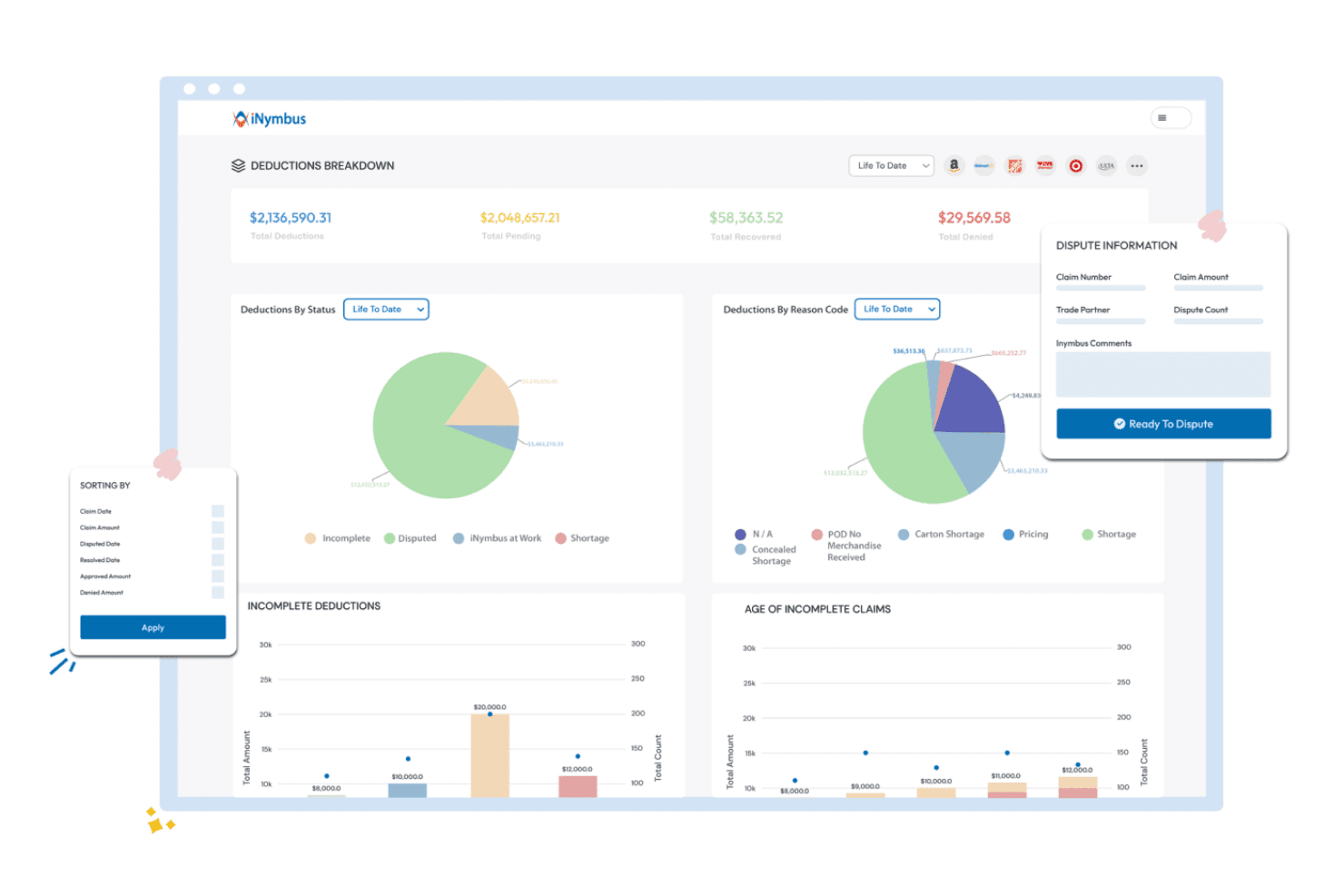
iNymbus DeductionXchange tracks and visualizes deductions by status and reason code. iNymbus DeductionXchange is a cloud-based deduction management platform that uses robotic process automation to capture, match, and dispute retailer chargebacks and claims across 50+ retailer portals, EDI transactions, and email-based channels.
Who Is iNymbus DeductionXchange Best For?
It's a strong fit for CPG manufacturers, distributors, and suppliers that deal with high volumes of retailer deductions from major accounts like Walmart, Amazon, or Target.
Why I Picked iNymbus DeductionXchange
I picked iNymbus DeductionXchange as one of the best because of how it handles retailer portal submission end to end. The RPA robots retrieve claim documents, assemble dispute packets, and auto-fill required portal fields across Walmart Retail Link, Amazon Vendor Central, and 50+ other portals without any manual login. I also appreciate the Walmart SQEP penny-perfect matching, which catches amount discrepancies before submission and reduces rejected disputes.
iNymbus DeductionXchange Key Features
- Centralized deduction dashboard: View and manage all deductions from multiple retailers in one place.
- Automated document aggregation: Pull supporting documents from EDI, ERP, email, and portal sources.
- Flexible file format support: Integrate customized file formats for seamless data processing across sources.
- Root cause analysis tools: Visualize deduction patterns and root causes with detailed analytics dashboards.
iNymbus DeductionXchange Integrations
iNymbus DeductionXchange offers native integrations with SAP, Oracle, NetSuite, Microsoft Dynamics, and QuickBooks, and connects to retailer platforms including Walmart Retail Link and Amazon Vendor Central. An API is available for custom integrations.
Pros and Cons
Pros:
- Cuts manual dispute prep time significantly
- Matches Walmart deductions to the penny
- Handles 50+ retailer portal submissions automatically
Cons:
- Implementation requires heavy retailer portal credential setup
- Reporting customization options are limited out of the box
Learn more about iNymbus DeductionXchange: Best for outsourced retail revenue recovery
- Free demo available
- Pricing upon request
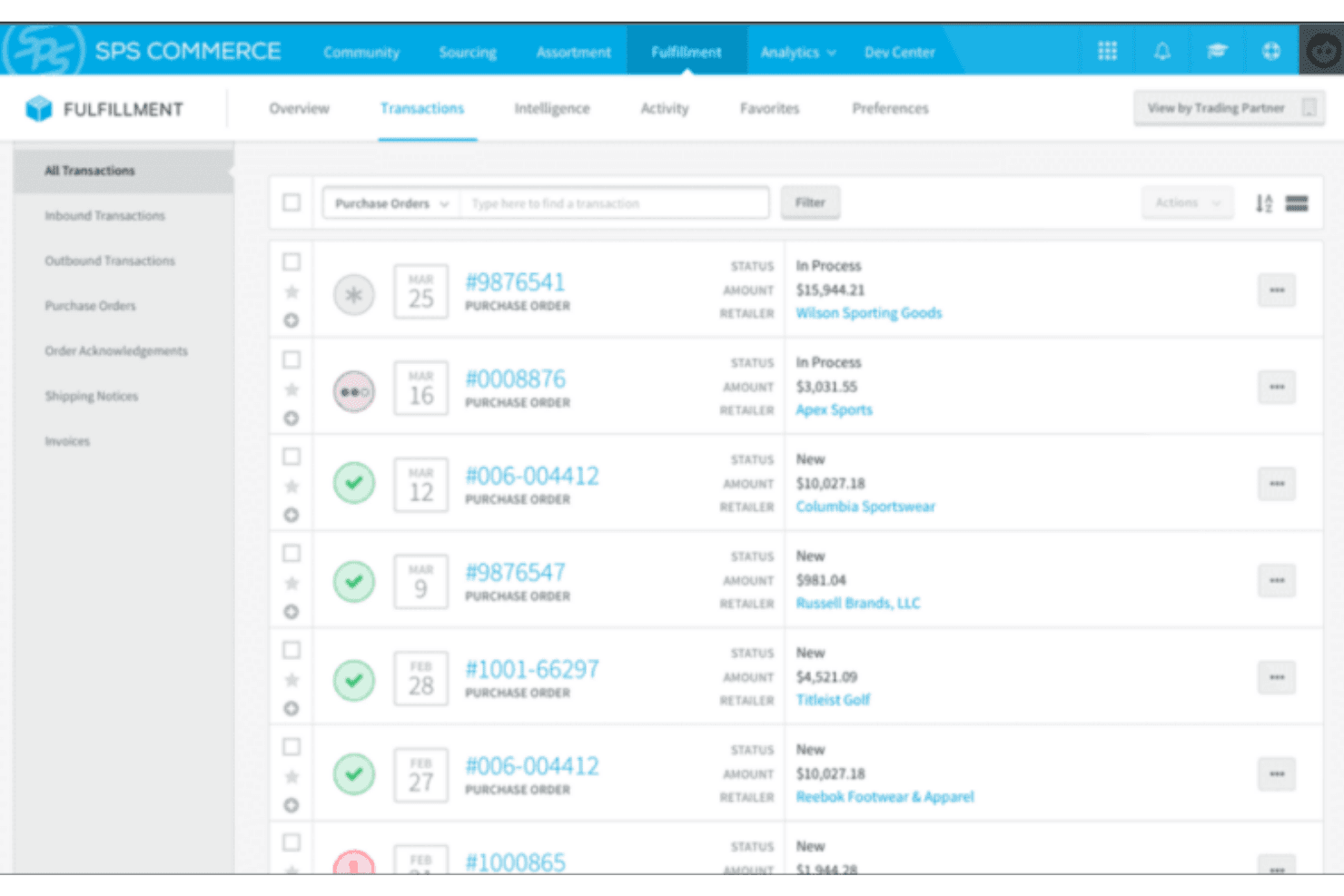
SPS Commerce centralizes purchase order tracking to catch revenue gaps. SPS Commerce Revenue Recovery is a retail deduction management platform that automates deduction capture, backup document retrieval, dispute submission, and root-cause reporting across major retailers, distributors, and marketplace channels.
Who Is SPS Commerce Revenue Recovery Best For?
CPG brands and consumer goods suppliers that sell through major retail chains and want a managed, expert-led approach to deduction recovery.
Why I Picked SPS Commerce Revenue Recovery
I've included SPS Commerce Revenue Recovery in my top picks because it's the only platform I know that offers a genuinely outsourced recovery model, where SPS experts handle the full dispute cycle on your behalf. I like that the platform automatically retrieves retailer-specific backup documents and attaches them to open deductions before submission. The prebuilt partner workflows for retailers like Walmart, Amazon, and Kroger ensure dispute packets are built to each retailer's exact specifications.
SPS Commerce Revenue Recovery Key Features
- Centralized deduction dashboard: View, track, and manage every deduction, dispute, and resolution in a single interface.
- Retailer-specific compliance mapping: Built-in logic addresses chargeback requirements for Walmart, Amazon, Kroger, CVS, and more.
- Automated root cause analysis: Surface deduction trends and patterns across customers, reason codes, and periods for targeted process fixes.
- SOC 2 Type II data security: Protect financial data with hourly backups, encryption, and role-based access management.
SPS Commerce Revenue Recovery Integrations
SPS Commerce Revenue Recovery offers native integrations with major retailer portals such as Walmart Retail Link, Amazon Vendor Central, Target Partners Online, Kroger Partners Portal, and CVS Supplier Portal. An API is available for custom integrations.
Pros and Cons
Pros:
- Root cause insights prevent recurring deduction types
- Up to 99% recovery rate on valid claims
- Fully managed dispute cycle reduces internal AR lift
Cons:
- Less suitable for non-retail or direct-to-consumer channels
- No self-serve pricing; requires a sales conversation
Learn more about SPS Commerce Revenue Recovery:
Annen programvare for fradragshåndtering
Her er noen andre alternativer for programvare for fradragshåndtering som ikke kom med på kortlisten min, men som fortsatt er verdt å undersøke:
- 11UpClear BluePlannerBest for trade promotion deduction matching
- 12VividlyBest for CPG deduction tracking
- 13BilltrustBest for centralized AR dispute cases
- 14VersapayBest for customer-facing invoice disputes
- 15GavitiBest for deductions in AR workflows
How I Evaluate Deduction Management Software
I split my evaluation into baseline requirements—like automated deduction capture and dispute workflows—and the differentiators, like retailer coverage and ERP fit, that separate good from great.
Core Functionality (Table Stakes For This List)
When I'm selecting tools for my list, I rank each one on a scale from 0 (does not offer the functionality) to 5 (excels in this area) for every core functionality below. I then calculate the total score as a percentage. I use 65% as a benchmark to assess overall fit for the list.
- Deduction Capture: I check whether the tool pulls deduction data from ERP systems, bank remittances, EDI 812/820 feeds, and retailer portals without manual uploads.
- Document Matching: Automatic retrieval and matching of PODs, BOLs, and invoices to open claims saves hours of portal-hopping across retailer systems.
- Deduction Coding: I evaluate how the tool classifies deductions by reason code—shortages, pricing errors, promotional claims—to support root-cause analysis.
- Dispute Workflows: Multi-role workflows with audit trails matter here, especially when AR, sales, and trade teams all need to collaborate on approvals and escalations.
- Recovery Management: I look for automated chargeback packet assembly and submission, plus tracking through to repayment—manual packet building doesn't scale.
- Analytics & Reporting: Dashboards should track deduction aging, recovery rates, and root causes by customer or reason code to surface trends worth acting on.
Next, once I have a list of tools that meet the criteria, I consider what sets each platform apart.
Differentiating Factors (What Sets Vendors Apart)
Here's how I compare and contrast different vendors:
Standout Features
AI-powered deduction coding can automatically classify claims by reason code using historical patterns. This can cut triage time on high-volume accounts. Automated backup document retrieval is another key differentiator. Native retailer portal connectors can pull PODs and claim documents without manual downloads. For CPG brands, I also evaluate trade promotion matching. This helps validate deductions against TPM systems or promotional calendars.
Beyond Features
ERP integration depth also matters. I check whether a platform syncs with AR aging and cash application data in systems like SAP, NetSuite, or Oracle. Similarly, retailer coverage is important for companies selling through major retail or foodservice channels. Pricing models also vary across this space. Some vendors use SaaS subscriptions, while others charge contingency-based recovery fees.
Slik velger du programvare for fradragshåndtering
Når du sammenligner programvare for fradragshåndtering, bør du fokusere på hvor godt hver plattform passer til arbeidsflyten for reskontro, fradragsvolumet, ERP-miljøet og kildene til kravene.
| Hvis prioriteten din er | Se etter |
| Rask dokumentmatching | Ferdigbygde koblinger til forhandlerportaler |
| Innsikt i de underliggende årsakene til fradrag | AI-drevet koding og detaljert analyse |
| Håndtering av en blanding av forhandler-EDI og portaler | Automatisk registrering fra EDI 812 og portaler uten EDI |
| Effektiv tilbakekreving av belastninger | Automatisert innsending av dokumentasjon med sporing av tilbakebetalinger |
| ERP- og TPM-integrasjon | Toveis synkronisering med den sentrale økonomisystemporteføljen din |
Slik vurderer du kortlisten din
- Test automatisk innhenting med eksempeloppgjør: Last opp minst tre ulike filer med fradrag fra forhandlere, og sammenlign den automatiske registreringen innen 48 timer.
- Be om en eksempelrapport for vedlegg til krav: Få en direktedemo som viser POD, faktura og BOL automatisk koblet til kundekrav for en aktuell kunde.
- Kartlegg arbeidsflyttrinn mot SOP-en din: Be om maler for bestridelsesbrev, brukerroller og eskaleringsbaner, og sammenlign dem deretter med din egen AR-prosess.
- Krev et revisjonsspor: Be om et eksempel på en revisjonslogg som inkluderer alle handlinger knyttet til trekk, brukeridentifikatorer og tidsstempler for validering av samsvar.
- Avveining – AI-automatisering kontra tilpasning: Finn ut om du trenger ende-til-ende-automatisering eller større grad av tilpasning. Mer konfigurerbare verktøy kan kreve ytterligere oppfølging.
Hva er programvare for håndtering av trekk?
Programvare for håndtering av trekk er et spesialisert verktøy for kundefordringer. Den automatiserer registrering, koding, dokumentkobling og løsning av kundekrav knyttet til trekk. Disse plattformene kan kobles til ERP-systemet ditt, EDI-feeder og forhandlerportaler. Dette bidrar til å redusere manuelt arbeid, forbedre behandlingstiden for tvister og avdekke årsakene til underbetalinger eller tilbakebelastninger. Dermed kan økonomiteam bruke disse verktøyene til å fremskynde innkrevingen og følge utviklingen i trekk.
Funksjoner i programvare for håndtering av trekk
Når du sammenligner programvare for håndtering av krav og trekk, bør du se etter funksjoner som støtter hele prosessen, fra registrering og validering av krav til tvisteløsning og innkreving:
- Registrering og sammenstilling av trekk: Samler automatisk inn data om trekk fra ERP-systemer, EDI-feeder, remitteringer og forhandlerportaler for å eliminere manuell innsamling.
- Kobling av krav og støttedokumenter: Henter, kobler og legger ved leveringsbevis, fraktdokumenter og fakturaer til relaterte krav om trekk for enklere validering.
- Kategorisering etter årsakskode: Tilordner hvert trekk til spesifikke årsakskoder, for eksempel mangler, prising eller samsvar, slik at AR-team kan analysere og håndtere de underliggende årsakene.
- Arbeidsflyt for tvister og godkjenninger: Håndterer hvert trinn for validering, eskalering, bestridelse eller avskrivning av trekk ved hjelp av revisjonsspor og tydelig definerte godkjenningsbaner.
- Verktøy for utarbeiding av tilbakebelastnings- og innkrevingspakker: Samler relevant dokumentasjon og skjemaer i pakker for tilbakebelastning. Team kan deretter sende dem til kunder for å kreve inn ugyldige trekk.
- Integrasjon med forhandlere og EDI: Kobler seg direkte til store forhandlerportaler og støtter EDI-formatene 812/820. Dette hjelper team med å håndtere både elektroniske og manuelle kravsformater.
- Konfigurerbare dashbord og rapporter: Tilbyr dashbord som visualiserer utviklingen i trekk, aldersfordeling og innkrevingsgrad, slik at team kan følge KPI-er og identifisere mønstre.
- Brukertillatelser og roller: Lar deg konfigurere ulike tilgangsnivåer, slik at sporbarhet og samsvar ivaretas når team på tvers av AR, salg og økonomi samarbeider.
- Sporing av revisjonslogg: Registrerer alle brukerhandlinger og endringer i plattformen, noe som gjør det enklere å følge beslutningshistorikken og støtte økonomiske kontrolltiltak.
- Automatiserte varsler: Sender varsler om nye krav, frister for godkjenning eller eskaleringer i arbeidsflyten, slik at ingenting blir oversett.
AI-funksjoner i programvare for håndtering av trekk
AI-funksjoner i programvare for håndtering av trekk kan hjelpe team som arbeider med kundefordringer, med å klassifisere trekk, validere krav, koble støttedokumenter, prioritere tvister og identifisere mønstre som kan bidra til gjentatte trekk. Se nedenfor:
- AI-drevet trekkoding: Bruker maskinlæring til automatisk å klassifisere trekk etter årsakskode basert på historiske mønstre i krav, noe som reduserer tiden som brukes på manuell gjennomgang.
- Prediktiv tvisteløsning: Analyserer tidligere resultater for å foreslå de mest effektive tvistestrategiene og anslå sannsynligheten for vellykket innkreving for hvert krav.
- Automatisk dokumentkobling: Bruker AI til å identifisere, hente ut og koble støttedokumenter – som POD-er og fakturaer – til riktig trekk, selv når formater eller navnekonvensjoner varierer.
- Analyse av trender i rotårsaker: Bruker kunstig intelligens til å avdekke fremvoksende mønstre og avvik i fradragsdata. Dette hjelper team med å håndtere tilbakevendende problemer og forebygge fremtidige krav.
- Smart arbeidsflytruting: Tildeler dynamisk fradragssaker til de riktige teammedlemmene eller eskaleringsløpene basert på kravets kompleksitet, kundehistorikk og balansering av arbeidsmengde.
- Naturlig språkbehandling for gjennomgang av krav: Bruker kunstig intelligens til å tolke og oppsummere ustrukturerte kravbeskrivelser eller underlagsdokumentasjon. Dette kan gjøre komplekse fradrag enklere å validere og løse.
Fordeler med programvare for fradragshåndtering
Programvare for fradragshåndtering hjelper reskontroteam med å redusere manuelt arbeid, løse fradrag raskere, forbedre innkrevingsgraden og få bedre oversikt over årsakene til kundenes fradrag. Her er noen fordeler du kan forvente:
- Raskere løsning av krav: Automatisert datafangst, dokumentmatching og sporing av arbeidsflyt hjelper team med å behandle fradragskrav raskere.
- Forbedret innkrevingsgrad: Generering av tilbakebelastningspakker og automatisering av tvister hjelper deg med å identifisere og få tilbake flere ugyldige fradrag.
- Grundigere analyse av rotårsaker: Kategorisering, analyse og innsikt basert på kunstig intelligens gjør det enklere å oppdage trender og håndtere tilbakevendende fradragsproblemer.
- Mindre manuelt arbeid: Integrasjoner med ERP, EDI og forhandlerportaler minimerer tidkrevende nedlastinger, opplastinger og gjentatt dataregistrering.
- Bedre samarbeid på tvers av team: Rollebaserte arbeidsflyter og revisjonsspor knytter sammen reskontro-, salgs- og handelsavdelinger, slik at ingenting blir oversett eller duplisert.
- Større trygghet rundt etterlevelse: Revisjonslogger og tilgangskontroller gjør det enklere å håndheve interne retningslinjer og overholde SOX eller tilsvarende finansielle regler.
- Bedre økonomisk oversikt: Tilpassede kontrollpaneler og rapportering i sanntid tydeliggjør fradragsaktivitet, innkrevingsgrad og utestående risikoer for økonomiledelsen.
Kostnader og priser
Prisen på programvare for fradragshåndtering er vanligvis basert på et pristilbud. Kostnadene kan variere avhengig av fradragsvolum, antall brukere, ERP-integrasjoner, forhandlerdekning og implementeringskrav. Mange leverandører som fokuserer på større virksomheter, publiserer ikke standardpriser. Du må vanligvis kontakte leverandøren for å få et tilpasset pristilbud. Se noen typiske prisalternativer nedenfor:
Sammenligningstabell for planer for programvare for fradragshåndtering
| Plantype | Gjennomsnittlig pris | Vanlige funksjoner |
|---|---|---|
| PlantypeGratisplan | Gjennomsnittlig pris$0 | Vanlige funksjonerGrunnleggende fradragssporing, begrenset opplasting av dokumenter, tilgang for én bruker og brukerstøtte via e-post. |
| PlantypePersonlig plan | Gjennomsnittlig pris$50-$150/bruker/måned | Vanlige funksjonerStandardisert registrering av krav, automatisert dokumentmatching, arbeidsflytmaler og grunnleggende analysepaneler. |
| PlantypeForretningsplan | Gjennomsnittlig pris$200-$700/bruker/måned | Vanlige funksjonerSamarbeid for flere brukere, ERP- og EDI-integrasjon, tilpasset rapportering, konfigurerbare godkjenningsflyter og revisjonslogger. |
| PlantypeVirksomhetsplan | Gjennomsnittlig pris$1,000+/måned | Vanlige funksjonerAvanserte funksjoner basert på kunstig intelligens, ubegrensede integrasjoner med forhandlerportaler, prioritert brukerstøtte, komplette verktøy for etterlevelse og integrasjon med TPM-systemer. |
Vanlige spørsmål om programvare for fradragshåndtering
Her er noen svar på vanlige spørsmål om programvare for fradragshåndtering:
Hvordan håndterer programvare for fradragshåndtering dokumentasjon av krav fra forhandlere?
Programvare for fradragshåndtering kobler seg til forhandlerportaler og henter kravspakker, fakturaer og støttedokumenter automatisk, slik at teamet ditt slipper å laste ned og sortere filer manuelt.
Kan programvare for fradragshåndtering integreres med ERP- eller regnskapssystemet vårt?
Ja, de fleste løsninger tilbyr innebygde koblinger til ERP-systemer som NetSuite, SAP, Microsoft Dynamics og QuickBooks, slik at fradragsdata kan synkroniseres med reskontro for kundefordringer, innbetalinger og hovedbok.
Hvordan valideres fradrag for handelskampanjer i disse plattformene?
Disse verktøyene sammenligner ofte krav fra forhandlere med systemet for handelsfremmende tiltak (TPM) eller kampanjekalenderen din. Det hjelper deg med å bekrefte om fradragene samsvarer med godkjente kampanjeavtaler, eller om de må bestrides.
Hva er det første steget for å automatisere fradragsarbeidsflyter?
Begynn med å teste systemet med dine egne kravdata – last opp eksempelfiler og gjennomgå hvordan fradragskoder tildeles, dokumenter kobles sammen automatisk, og tvister går gjennom godkjenningsprosessen.
Er revisjonsspor og sporing av SOX-samsvar tilgjengelig?
Ja, ledende programvare for fradragshåndtering gir detaljerte revisjonslogger over alle brukerhandlinger, dokumentendringer og systemhendelser for å støtte SOX-samsvar og interne økonomiske kontroller.
Hva er programvare for håndtering av fradrag i kundefordringer?
Programvare for håndtering av fradrag i kundefordringer hjelper team som arbeider med kundefordringer, med å identifisere, validere, spore, bestride og kreve inn kunders fradrag. Den kan automatisere oppgaver som fradragskoding, dokumentsammenkobling, kravvalidering, tvistehåndtering og sporing av innkreving, samtidig som den kobler fradragsarbeidsflyter sammen med ERP- og kundefordringssystemer.