

Programvare for styring av innkjøpsutgifter gir deg ett sted der du kan spore, analysere og kontrollere alle virksomhetens kjøp – fra registrering til endelig utbetaling. Men med så mange plattformer som tilbyr AI-funksjoner og ERP-tilkoblinger, kan det bli overveldende å finne den rette løsningen.
I denne veiledningen deler jeg mine beste valg for 2026, forklarer hvordan de fungerer for ulike virksomhetsbehov, og fremhever viktige funksjoner som bidrar til å kontrollere kostnader og redusere risiko.
Hvorfor du kan stole på våre programvareanbefalinger
6,700+
Reviews
20
Industry experts
16+
Evaluation factors
14
Years
Teamet vårt har testet og anmeldt programvare siden 2012. Vi er selv økonomiledere, så vi vet hvor vanskelig og hvor viktig det er å velge riktig programvare.
I denne guiden har vi vurdert verktøyene gjennom praktisk testing og uavhengig research og gitt dem poeng ut fra våre utvelgelseskriterier.
Anmeldelsene våre bygger på vår egen redaksjonelle vurdering. De er ikke et salgsargument.
Sammenligningstabell for programvare for styring av innkjøpsutgifter
Sammenlign priser og spesifikasjoner side ved side for programvaren for styring av innkjøpsutgifter som kom med på kortlisten min.
| Tool | Best For | Trial Info | Price | ||
|---|---|---|---|---|---|
| 1 | Best for fast mid-market budget tracking | Free demo available | From $499/month (billed annually) | Website | |
| 2 | Best for AI-driven global source-to-pay automation | Not available | Pricing upon request | Website | |
| 3 | Best for AP automation with built-in fraud checks | Free demo available | Pricing upon request | Website | |
| 4 | Best for high-volume touchless invoice processing | Free demo available | Pricing upon request | Website | |
| 5 | Best for predictive AI spend classification | 30-day free trial OR Free demo available | From $12/user/month | Website | |
| 6 | Best for end-to-end total spend control | Free demo available | Pricing upon request | Website | |
| 7 | Best for direct and indirect spend management | Free demo available | Pricing upon request | Website | |
| 8 | Best for enterprise supply network connectivity | Free demo available | Pricing upon request | Website | |
| 9 | Best for Oracle ERP-native S2P with AI agents | Free demo available | Pricing upon request | Website | |
| 10 | Best for highly configurable source-to-pay workflows | Free demo available | Pricing upon request | Website |


Anmeldelser av programvare for styring av innkjøpsutgifter
Nedenfor finner du mine detaljerte sammendrag av den beste programvaren for styring av innkjøpsutgifter som kom med på kortlisten min. Anmeldelsene mine gir en detaljert gjennomgang av funksjonene, de beste bruksområdene og egenskapene til hver plattform, slik at du kan finne den beste løsningen for deg.
 Best for fast mid-market budget tracking
- Free demo available
- From $499/month (billed annually)
Visit WebsiteCustomer Rating:4.8/5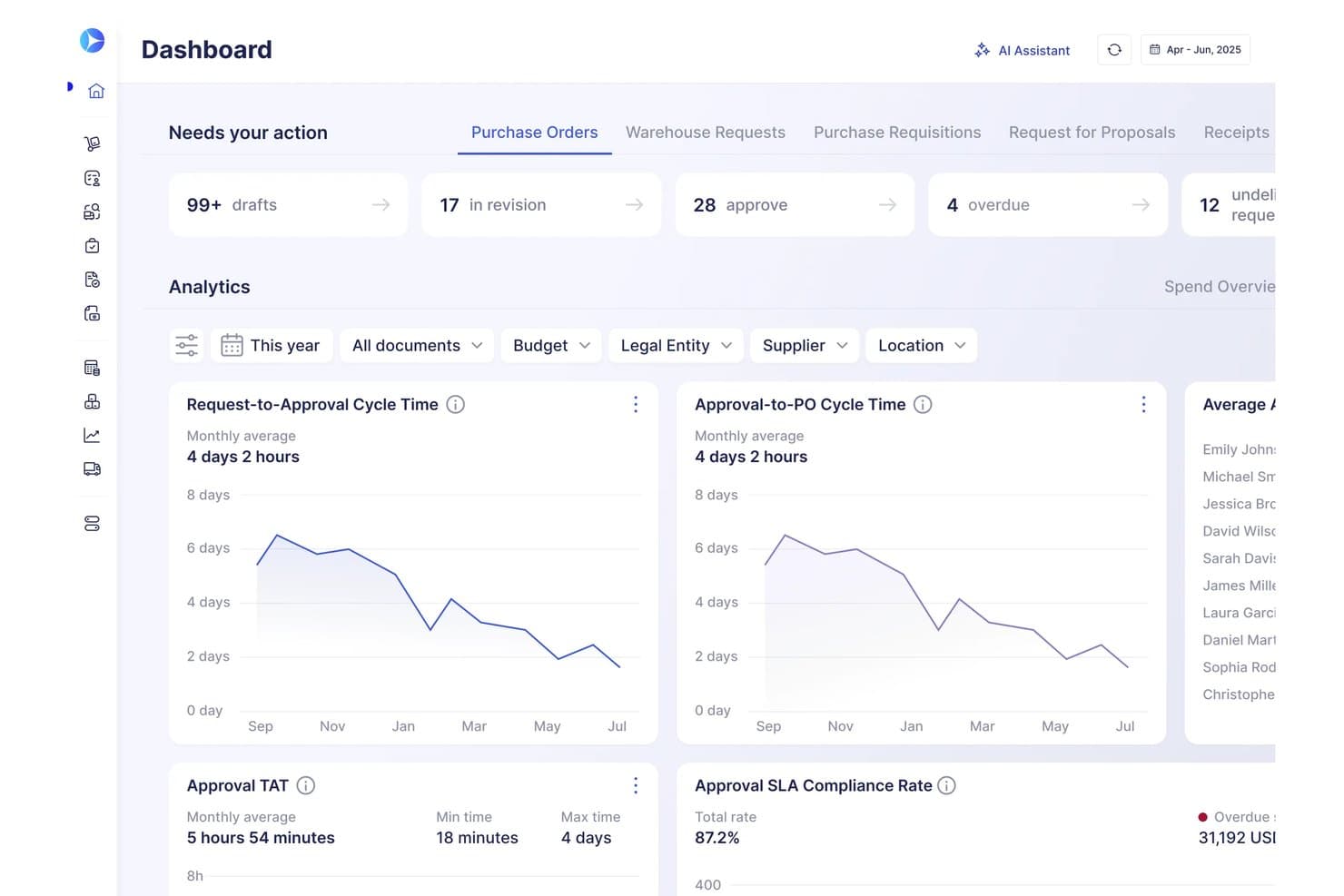
Precoro integrates procurement approvals and cycle-time analytics into a single workspace. Precoro is a procure-to-pay platform that covers purchase requisitions, PO management, supplier catalogs, contract tracking, invoice matching, and AP automation in one system.
Who Is Precoro Best For?
Precoro is a strong fit for mid-market finance and procurement teams that need full procure-to-pay coverage without the implementation complexity of enterprise suites.
Why I Picked Precoro
I picked Precoro as one of the best because it tracks budget consumption in real time, at a pace I haven't seen matched in the mid-market. As soon as a purchase requisition hits an approval queue, Precoro checks it against your department or project budget and blocks it if it crosses a set threshold. Pair that with actual-vs-planned dashboards that drill down by supplier, category, or entity, and your finance team always knows exactly where spend stands, not where it stood last week.
Precoro Key Features
- AI-powered invoice capture: Scans and extracts invoice data in under 3 seconds with 96%+ accuracy, including PDFs, scans, and low-quality photos.
- Supplier Portal: Vendors self-manage their profiles, catalog uploads, RFP responses, and invoice submissions directly through a dedicated portal.
- AI Contract Agent: Reviews supplier agreements to extract key terms, flag risk clauses, and send renewal alerts before contracts lapse.
- Real-time budget tracking: Flags over-budget requests by tracking spend against pre-set limits at the department, project, or organizational level.
Precoro Integrations
Precoro offers native integrations with QuickBooks Online, Xero, NetSuite, Slack, Power BI, and BILL, plus PunchOut connections for Amazon Business, Staples Advantage, Home Depot, and Grainger. REST API and SFTP connectors support custom integrations.
Pros and Cons
Pros:
- Vendor self-service supplier portal available
- AI-powered invoice capture and matching
- Fast, real-time budget checks on requisitions
Cons:
- Approval progress tracking can be unclear
- Virtual cards still in limited release
Learn more about Precoro: Best for AI-driven global source-to-pay automation
- Not available
- Pricing upon request
Visit WebsiteCustomer Rating:4.4/5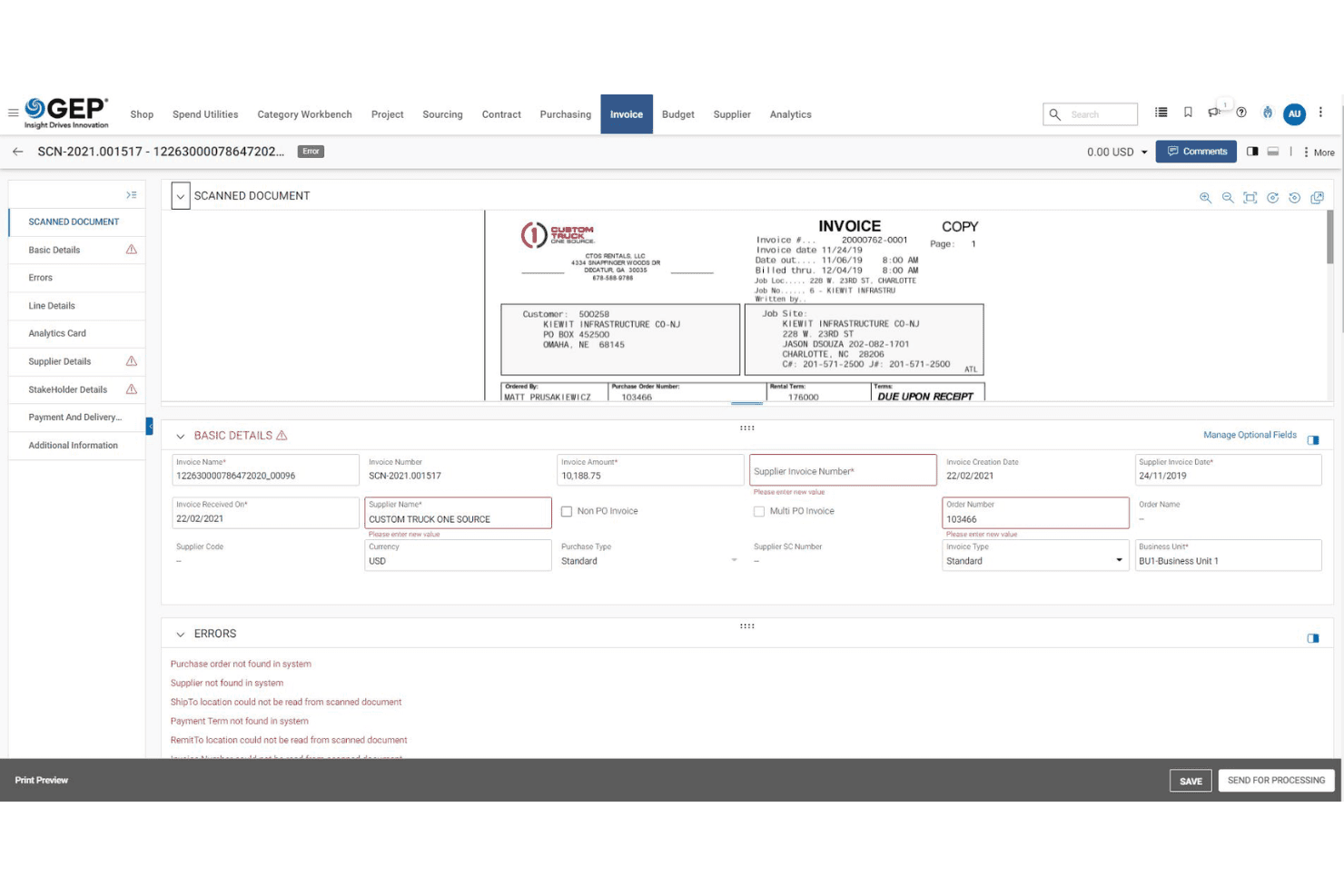
GEP SMART flags invoice errors and missing fields for resolution. GEP SMART is an enterprise procurement software that unifies spend analysis, strategic sourcing, contract lifecycle management, supplier management, and AP invoice automation in a single AI-native system.
Who Is GEP SMART Best For?
GEP SMART is built for large enterprises and multinationals that need a unified platform covering the full source-to-pay lifecycle across multiple business units, ERPs, and geographies.
Why I Picked GEP SMART
GEP SMART earns its spot on my shortlist because no other platform I've used runs the full source-to-pay cycle through a coordinated layer of 30+ AI agents the way this one does. I'm impressed by the Intelligent Buying Agent, which steers requestors toward in-contract items before spend is committed, and the Invoice N-Way Matching Agent, which auto-processes invoices against POs, contracts, and receipts with configurable tolerances. That kind of pre- and post-commitment coverage in a single platform is what makes GEP SMART the right call for large, multi-ERP enterprises.
GEP SMART Key Features
- Conversational reporting agent: Query spend data and get instant dashboard insights using natural language questions.
- Contract clause risk agent: Reviews contract language and suggests alternate clauses to reduce legal and compliance exposure.
- Supplier risk assessment agent: Monitors vendor performance risks, financial, and ESG on a continuous basis.
- Dynamic discounting: Automates early-payment discount management to support working-capital objectives across your AP workflows.
GEP SMART Integrations
GEP SMART connects with SAP, Oracle, Workday, NetSuite, and Power BI across multi-ERP environments.
Pros and Cons
Pros:
- Unified direct and indirect spend in one platform
- Full contract lifecycle and clause risk management
- AI agents automate sourcing and invoice matching
Cons:
- Too complex and costly for smaller businesses
- Core transactional procurement capabilities are less mature
Learn more about GEP SMART: Best for AP automation with built-in fraud checks
- Free demo available
- Pricing upon request
Visit WebsiteCustomer Rating:4.3/5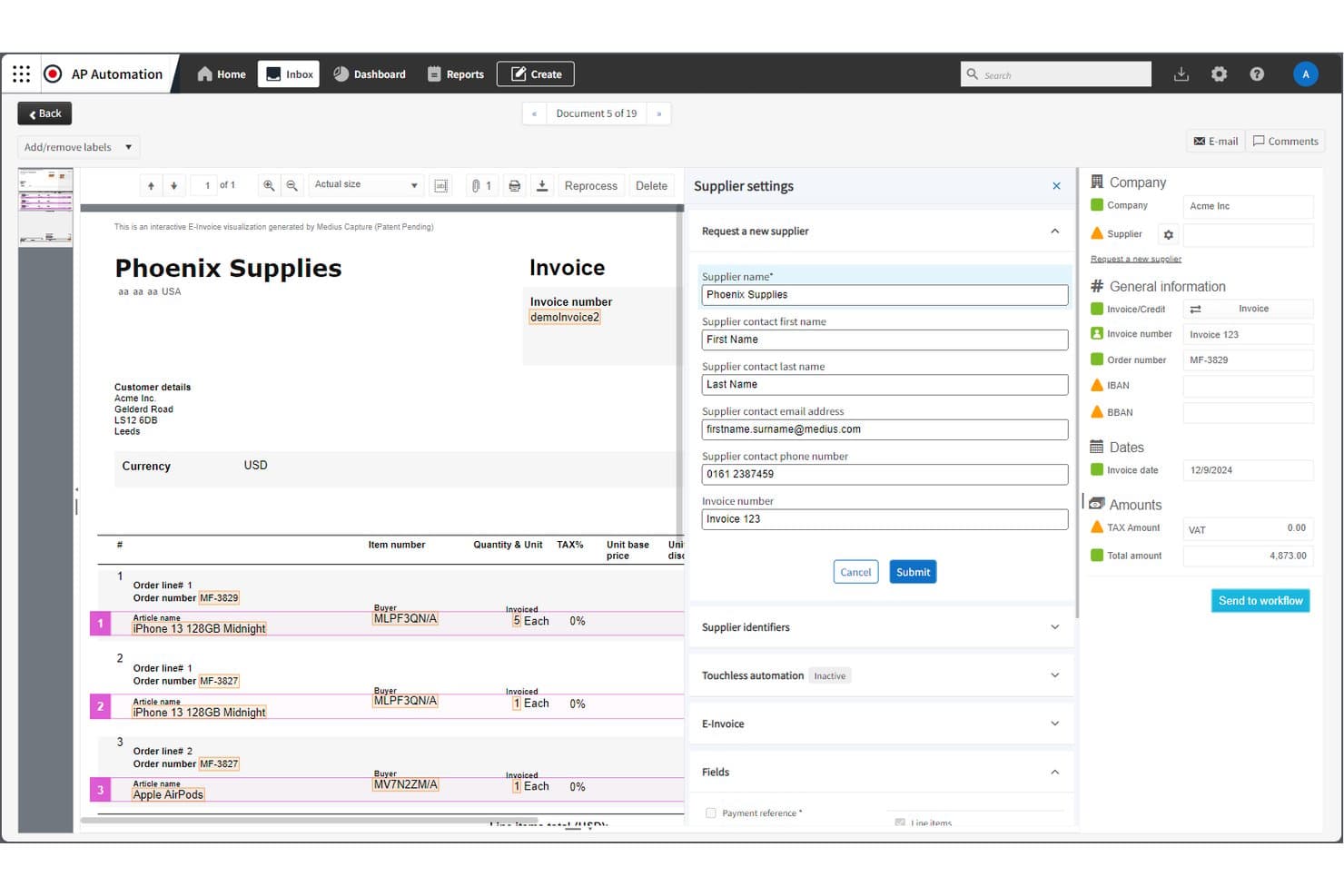
Medius lets users onboard new suppliers from an invoice capture workflow. Medius is a source-to-pay platform covering AP automation, procurement, sourcing, contract management, supplier onboarding, expense management, and payment execution.
Who Is Medius Best For?
Medius is a strong fit for mid-market and enterprise finance teams that need tight AP controls and fraud detection built directly into their invoice-to-pay workflow.
Why I Picked Medius
Medius earns its spot on my shortlist because of how tightly fraud detection is woven into the AP workflow. I'm impressed by its machine learning layer, which flags suspicious supplier bank account changes, duplicate invoices, and anomalous payment patterns in real time before any money moves. Paired with 95% touchless invoice processing through Medius Capture, the system reaches that precision after processing as few as two invoices from a new supplier.
Medius Key Features
- Supplier Conversations AI: Drafts and sends responses to incoming supplier invoice and payment inquiries, reducing AP inbox management.
- Medius Sourcing: Runs RFX events, eAuctions, and quick quotes with configurable multi-round templates and automatic supplier scoring.
- Medius Contract Management: Centralizes contract lifecycles with eSignature, renewal alerts, parent-child contract linking, and red-line capture.
- Statement Reconciliation: Cross-references supplier account statements against received invoices to detect missing items, discrepancies, or unrecorded liabilities.
Medius Integrations
Medius connects with Oracle NetSuite, Oracle Fusion, Microsoft Dynamics 365, and Power BI. It also supports Microsoft Teams, DocuSign, and a REST API.
Pros and Cons
Pros:
- Configurable approval policies for spend control
- 95% straight-through invoice processing rate
- AI-driven fraud detection in AP workflow
Cons:
- Procurement modules require separate purchase
- Virtual cards limited to EEA businesses
Learn more about Medius: Best for high-volume touchless invoice processing
- Free demo available
- Pricing upon request
Visit WebsiteCustomer Rating:4.1/5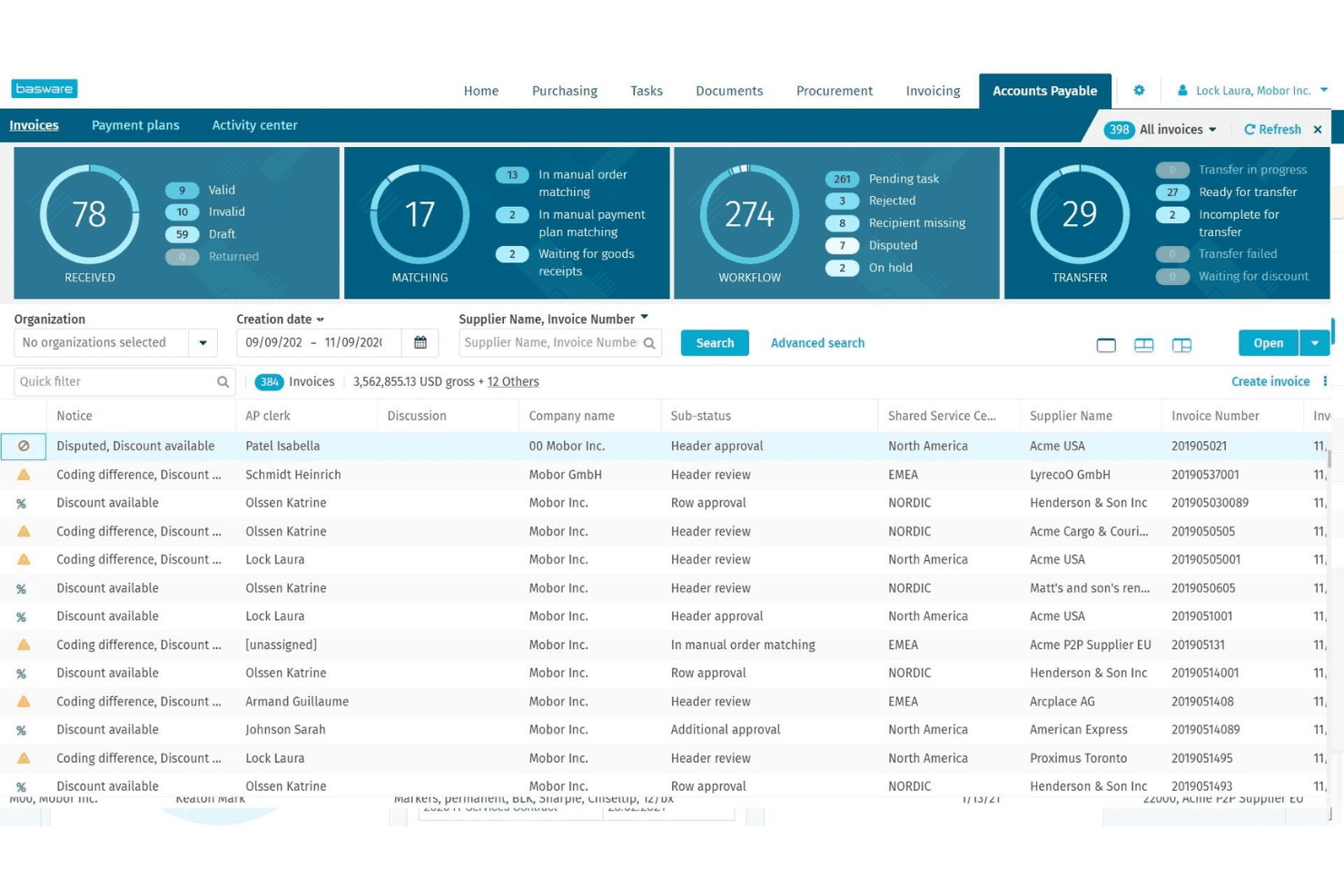
Basware consolidates invoice tracking across workflow stages in one view. Basware is an enterprise procure-to-pay platform built around AI-powered invoice processing, purchase requisition and PO management, catalog and supplier network access, spend analytics, and AP automation across complex, multi-ERP environments.
Who Is Basware Best For?
Basware is built for enterprise finance and AP teams processing high invoice volumes across multiple entities, ERPs, or countries.
Why I Picked Basware
Basware earns its spot on my shortlist because of its InvoiceAI suite, which is trained on over 2.3 billion invoices and delivers an 89% touchless processing rate. I'm impressed by SmartCoding and SmartWorkflow, which handle GL coding and approval routing for non-PO invoices without manual input. In practice, that means high-volume AP teams can process invoices at scale across multiple ERPs and entities without building out a proportionally large team.
Basware Key Features
- Guided purchasing: Routes requisitions to preferred suppliers and negotiated contract pricing before an order is placed.
- AP Protect fraud detection: Monitors invoices in real time and flags duplicates, currency discrepancies, and suspicious activity before posting.
- Committed Spend Analytics dashboard: Surfaces 100% of open POs, payment plans, and non-PO invoices in a single forward-looking view.
- Dynamic discounting: Lets suppliers offer early payment discounts, giving AP teams a tool to capture savings on approved invoices.
Basware Integrations
Basware supports 250+ ERP integrations, including SAP, Oracle, Microsoft Dynamics, and NetSuite, plus REST APIs with webhooks for custom integrations.
Pros and Cons
Pros:
- Deep multi-ERP integration for global entities
- AI-driven fraud detection and anomaly monitoring
- Exceptionally high touchless invoice processing rates
Cons:
- Invoice rejection process can create workflow confusion
- Full contract management requires an external partner system
Learn more about Basware: Best for predictive AI spend classification
- 30-day free trial OR Free demo available
- From $12/user/month
Visit WebsiteCustomer Rating:3.6/5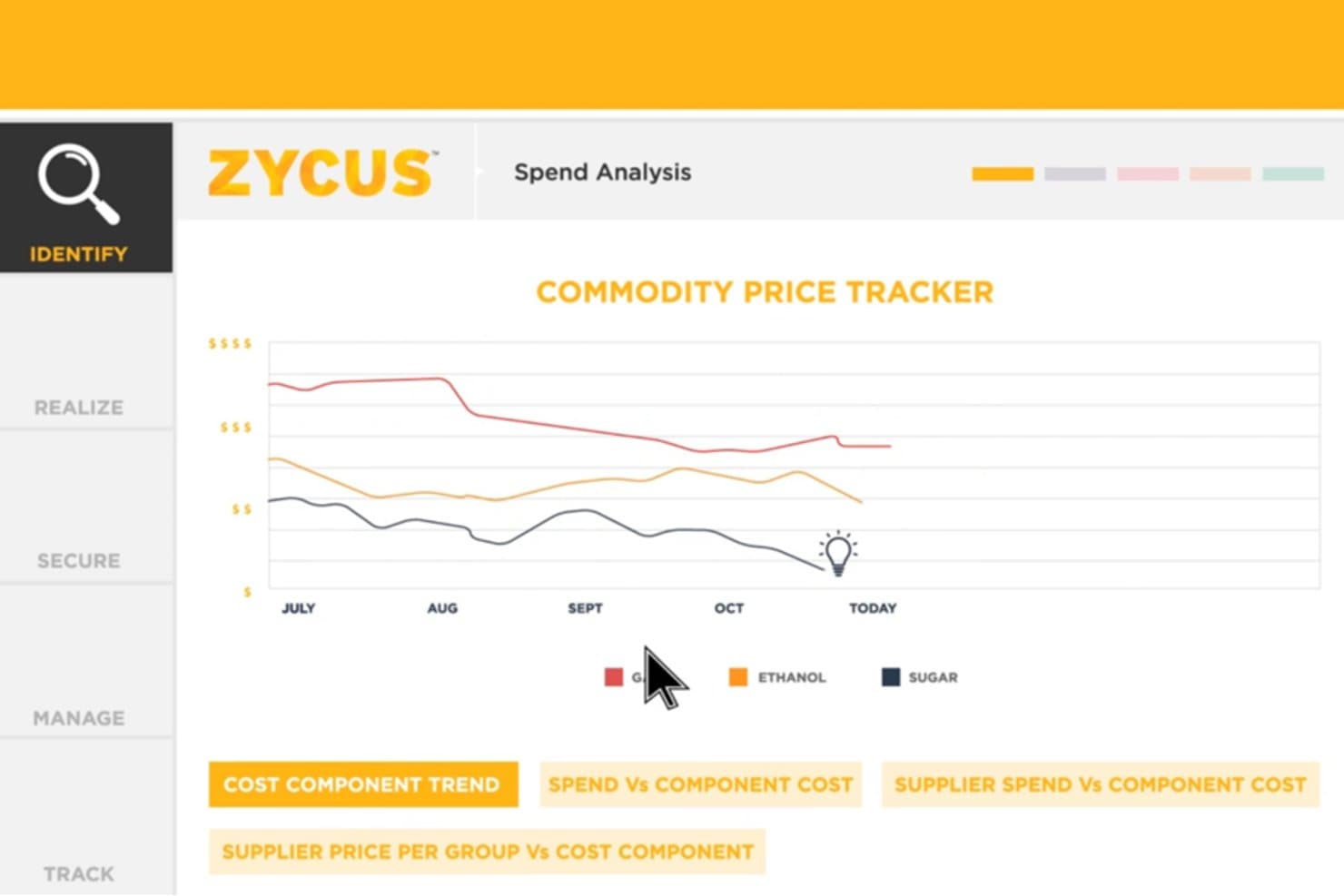
Zycus tracks commodity price trends to support smarter sourcing decisions. Zycus is a source-to-pay suite that covers spend analysis, eProcurement, eSourcing, supplier management, contract lifecycle management, and accounts payable automation on a single AI-driven platform.
Who Is Zycus Best For?
Zycus is a strong fit for mid-to-large enterprises managing high-volume, cross-category procurement that need native AI-driven spend classification.
Why I Picked Zycus
I picked Zycus as one of the best because its AI-driven spend classification is best-in-class, reaching 99% accuracy through the Merlin Analytics Agent, which classifies spend continuously. I've found the conversational analytics particularly valuable as you can query spend by category, supplier, or department in plain language and get results in under 15 seconds. The Merlin Intake Agent adds another layer by enforcing policy at the exact moment a request is submitted, so classification and compliance happen together.
Zycus Key Features
- Merlin Autonomous Negotiation Agent: Negotiates price and non-price terms with suppliers for tail spend items without human intervention.
- iSupplier portal: Allows suppliers to upload documents and AI auto-populates profile data for faster qualification.
- Obligation Extract Genie: Scans contracts to extract key terms, renewal dates, pricing tiers, and SLAs from your contract repository.
- AP SmartDesk: Handles 2-way and 3-way PO matching, exception routing, and AP queries autonomously.
Zycus Integrations
Zycus integrates with SAP S/4HANA, NetSuite, Oracle, Workday, Microsoft Dynamics, and Slack. Native connectors and APIs are also available.
Pros and Cons
Pros:
- Supplier onboarding with auto-populated data
- High spend classification accuracy at 99 percent
- AI agents automate intake and negotiations
Cons:
- No native virtual card or payment solution
- Requires process changes to fit workflows
Learn more about Zycus: Best for end-to-end total spend control
- Free demo available
- Pricing upon request
Visit WebsiteCustomer Rating:4.2/5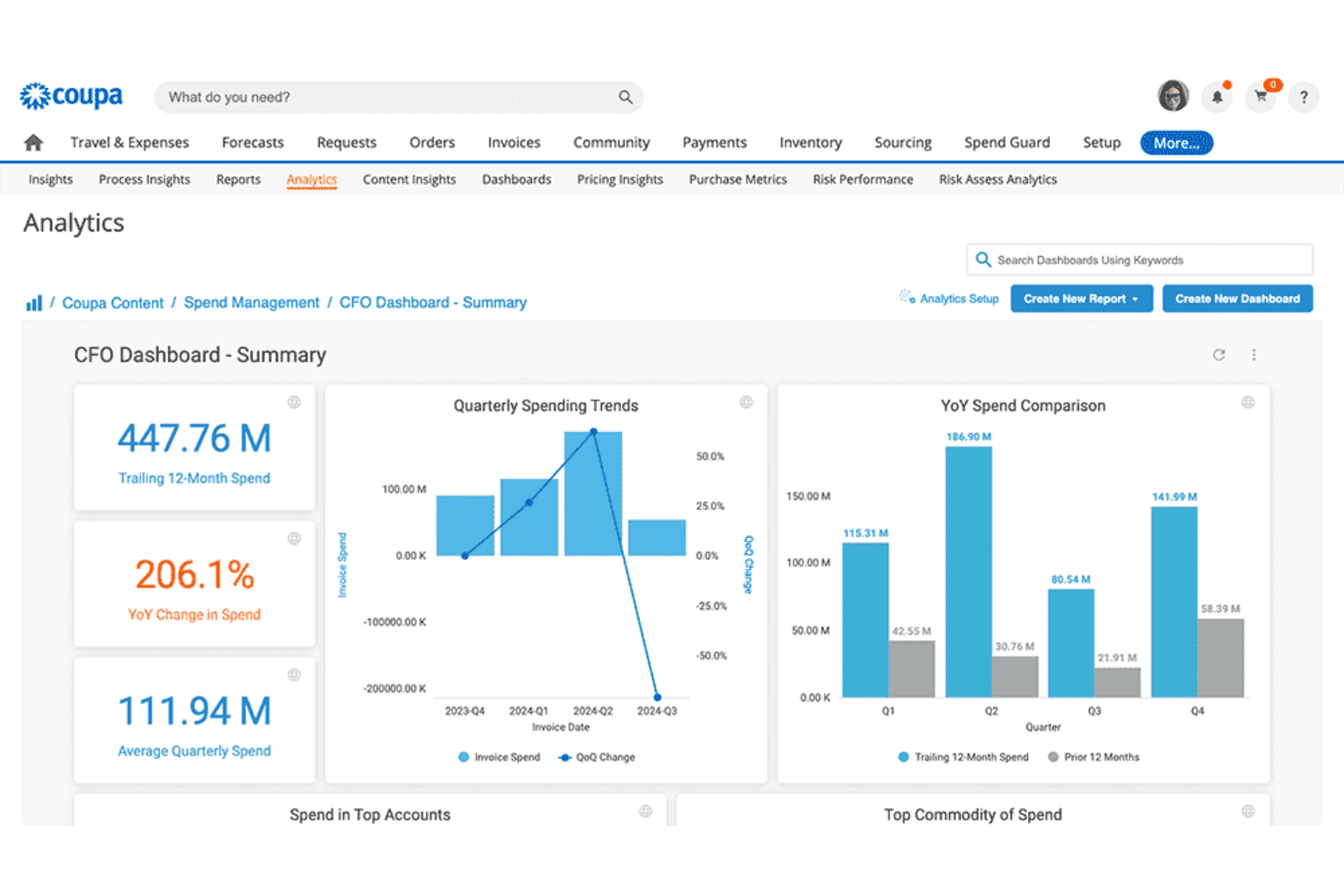
Coupa delivers real-time spend analytics and trends. Coupa is an enterprise procure-to-pay platform that covers purchase requisitions, PO management, supplier catalogs, contract lifecycle management, AP automation, and payment execution in a single system.
Who Is Coupa Best For?
Coupa is built for mid-to-large enterprises where finance and procurement teams need to manage complex, high-volume spend across multiple entities, regions, and supplier networks from a single platform.
Why I Picked Coupa
Coupa earns its spot on my shortlist because it offers visibility and control across the full spend lifecycle in one place. I'm particularly impressed by SpendGuard, which uses AI to flag duplicate invoices, split requisitions, and policy violations in real time, before a payment ever goes out. Combined with benchmarking against $10 trillion in real transaction data from the Coupa Community, this ensures your spend decisions are based on actual peer performance, not guesswork.
Coupa Key Features
- Coupa Supplier Portal (CSP): Suppliers self-register, maintain certifications, and manage their profiles within a dedicated portal.
- Contract lifecycle management: Use approved clauses to create contracts, extract key terms with AI, and link contracts to purchasing.
- Multi-rail payment execution via Coupa Pay: Process payments across ACH, wire, check, and virtual card rails, with automatic reconciliation.
- Services Procurement (SOW): Specialized controls for managing contingent labor, Statement of Work (SOW) projects, and milestone-based deliverables.
Coupa Integrations
Coupa integrates with SAP, Oracle Cloud ERP, NetSuite, Microsoft Dynamics, QuickBooks, and Xero. It also supports REST APIs and webhooks.
Pros and Cons
Pros:
- Embedded SpendGuard for real-time fraud alerts
- Community benchmarking with $10T real transaction data
- AI-driven intake with policy-aware routing
Cons:
- Supplier portal often difficult for vendors
- Implementation can take up to 18 months
Learn more about Coupa: Best for direct and indirect spend management
- Free demo available
- Pricing upon request
Visit WebsiteCustomer Rating:4.1/5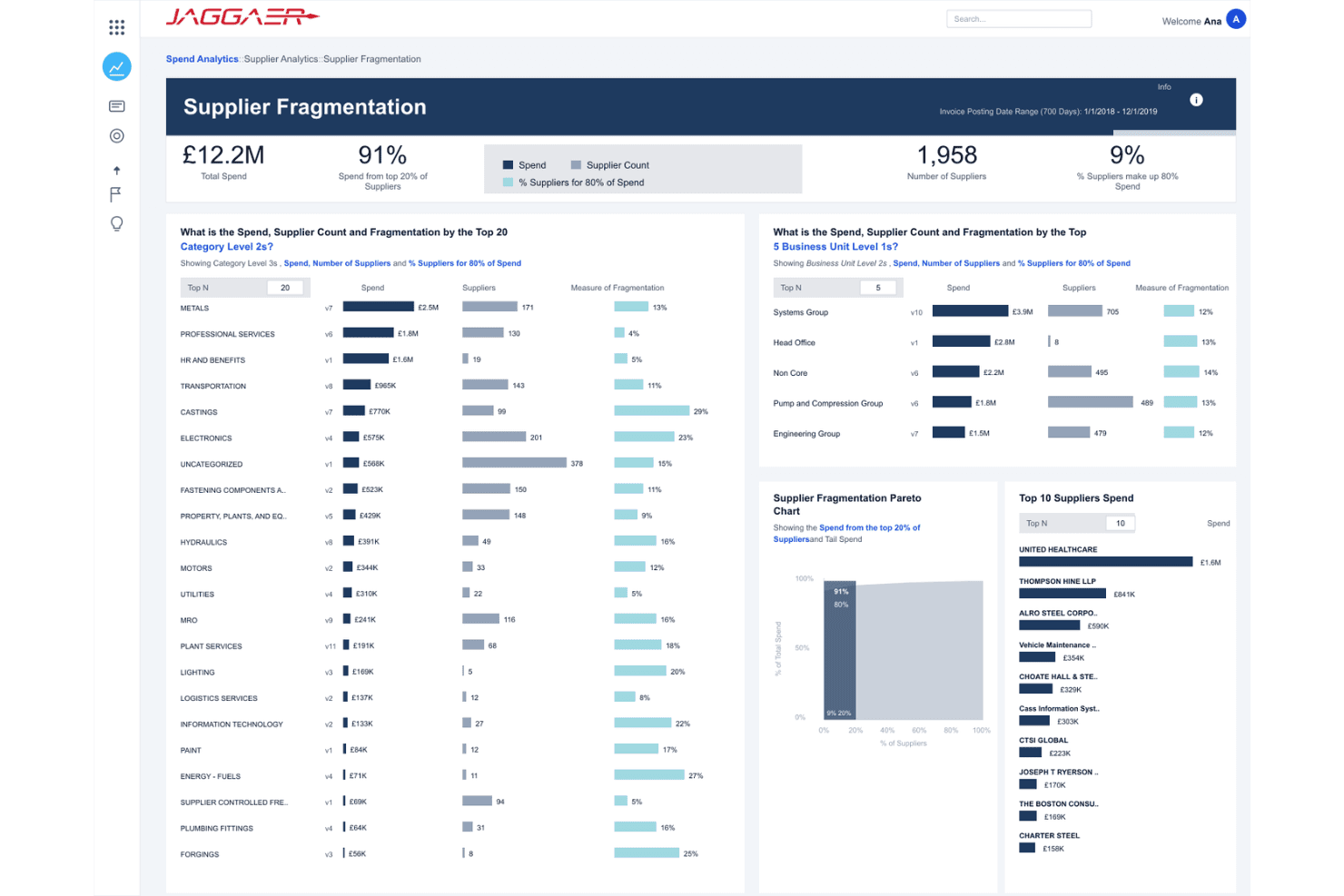
JAGGAER's dashboard shows spend concentration across suppliers. JAGGAER is a source-to-pay platform that covers sourcing, contract lifecycle management, supplier management, eProcurement, invoicing, and spend analytics for both direct and indirect spend.
Who Is JAGGAER Best For?
JAGGAER is built for enterprise and upper-mid-market organizations that need a single platform to manage both direct and indirect spend across complex, multi-entity procurement environments.
Why I Picked JAGGAER
JAGGAER earns its spot on my shortlist because it's one of the few platforms that handles both direct and indirect spend natively, without bolting on a separate solution for manufacturing. I particularly like the AI-powered Purchase Requisition Approval Recommendations, which use historical PO data to fast-track low-risk requisitions while flagging anomalies before they reach an approver.
JAGGAER Key Features
- Supplier intelligence module: Access enriched profiles for 13M+ suppliers, with integrated risk signals and ESG scoring from providers like D&B and EcoVadis.
- Multi-channel invoice capture: Collect invoices through portals, email, EDI, cXML, OCR, and PEPPOL, then match them with POs and receipts.
- Spend analytics dashboard: View spend breakdowns by supplier, category, department, and entity, with AI-automated classification and anomaly detection.
- JAI AI copilot: Get AI-assisted drafting, summarization, and risk flagging across sourcing, contracts, eProcurement, and invoicing.
JAGGAER Integrations
JAGGAER offers 40+ ready integrations with SAP, Oracle, Workday, and more. Connectivity is supported via JAGGAER Link, REST APIs, EDI, cXML, and OCI.
Pros and Cons
Pros:
- Deep supplier risk and ESG monitoring
- Single data layer for direct and indirect spend
- AI-driven requisition and invoice approval recommendations
Cons:
- User interface can be complex to navigate
- Long implementation timeline for full suite
Learn more about Jaggaer: Best for enterprise supply network connectivity
- Free demo available
- Pricing upon request
Visit WebsiteCustomer Rating:3.9/5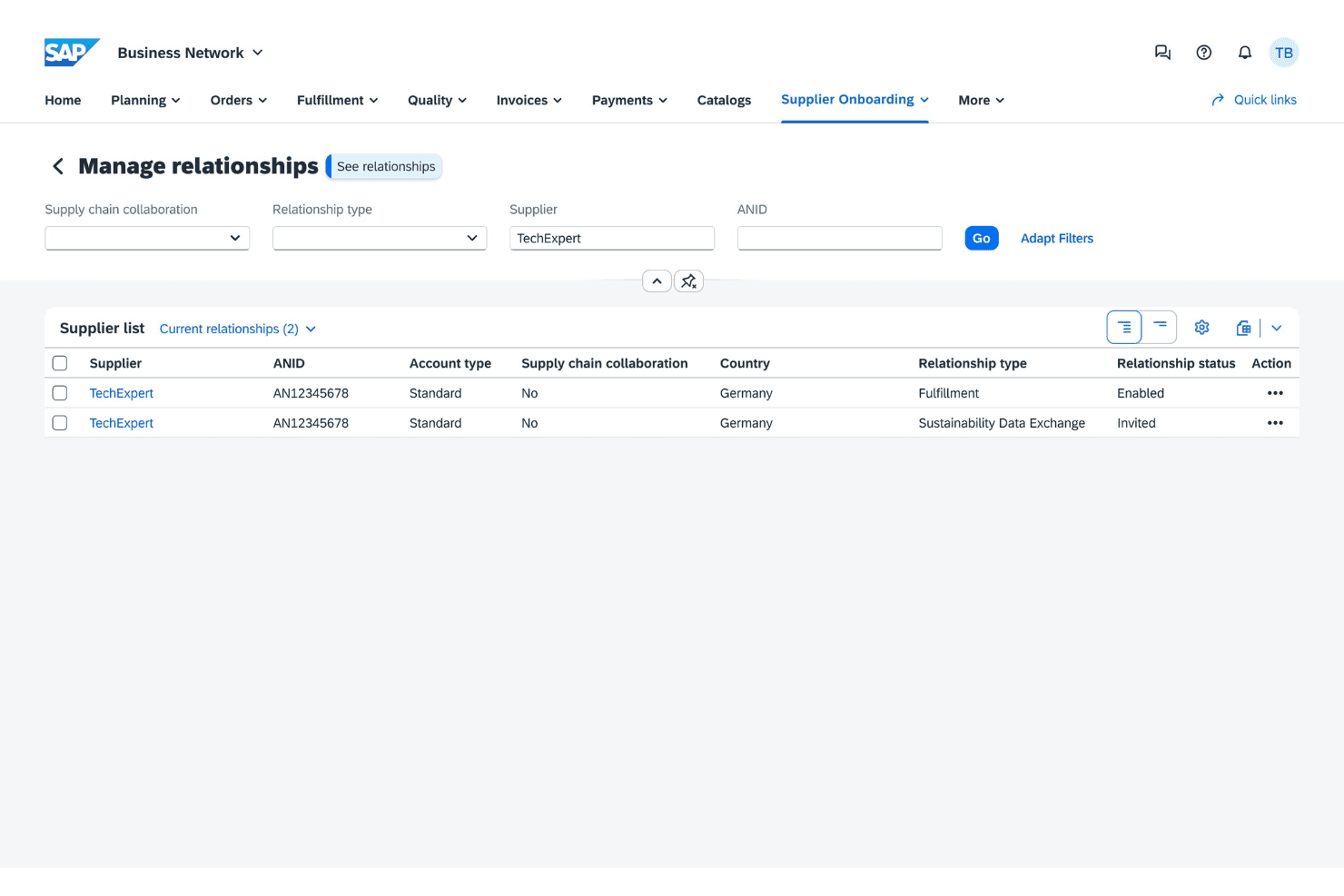
SAP Ariba lets users manage and monitor supplier relationships. SAP Ariba is a cloud-based source-to-pay platform that covers sourcing, contract management, guided buying, invoicing, supplier lifecycle management, and spend analytics across a global B2B commerce network.
Who Is SAP Ariba Best For?
- SAP Ariba is built for mid-to-large enterprises running SAP ERP environments that need to align procurement spend with overall supply chain management across complex, global supplier networks.
Why I Picked SAP Ariba
SAP Ariba earns its spot on my shortlist because no other platform connects buyers to a supplier network at the scale SAP Business Network does, with millions of trading partners already transacting electronically. I find the combination of guided buying with embedded policy guardrails and Spot Buy marketplace integrations (Amazon Business, Unite) especially practical for steering spend toward contracted suppliers. On top of that, the nine Joule AI agents cover sourcing, supplier risk, and invoicing in ways that genuinely reduce manual intervention across the procurement cycle.
SAP Ariba Key Features
- Supplier lifecycle management: Manage the full supplier journey including onboarding, performance tracking, and risk monitoring.
- Global e-invoicing compliance: Process electronic invoices in 41 countries with country-specific tax rules and PEPPOL support.
- Virtual cards: Offer virtual cards, each with spending limits and expiration dates to make managing expenses easier.
- Spend classification: Categorizes and enriches spend data from SAP and non-SAP sources to surface savings opportunities across categories and suppliers.
SAP Ariba Integrations
SAP Ariba integrates with SAP S/4HANA, SAP ECC, SAP Concur, and SAP Fieldglass, as well as Amazon Business, Unite, and Microsoft Dynamics via gateways and APIs.
Pros and Cons
Pros:
- Embedded virtual card payments for purchases
- AI-guided buying with real-time policy checks
- Connects buyers to millions of suppliers
Cons:
- High cost and complexity to set up and use
- Interface is often difficult to use
Learn more about SAP Ariba: Best for Oracle ERP-native S2P with AI agents
- Free demo available
- Pricing upon request
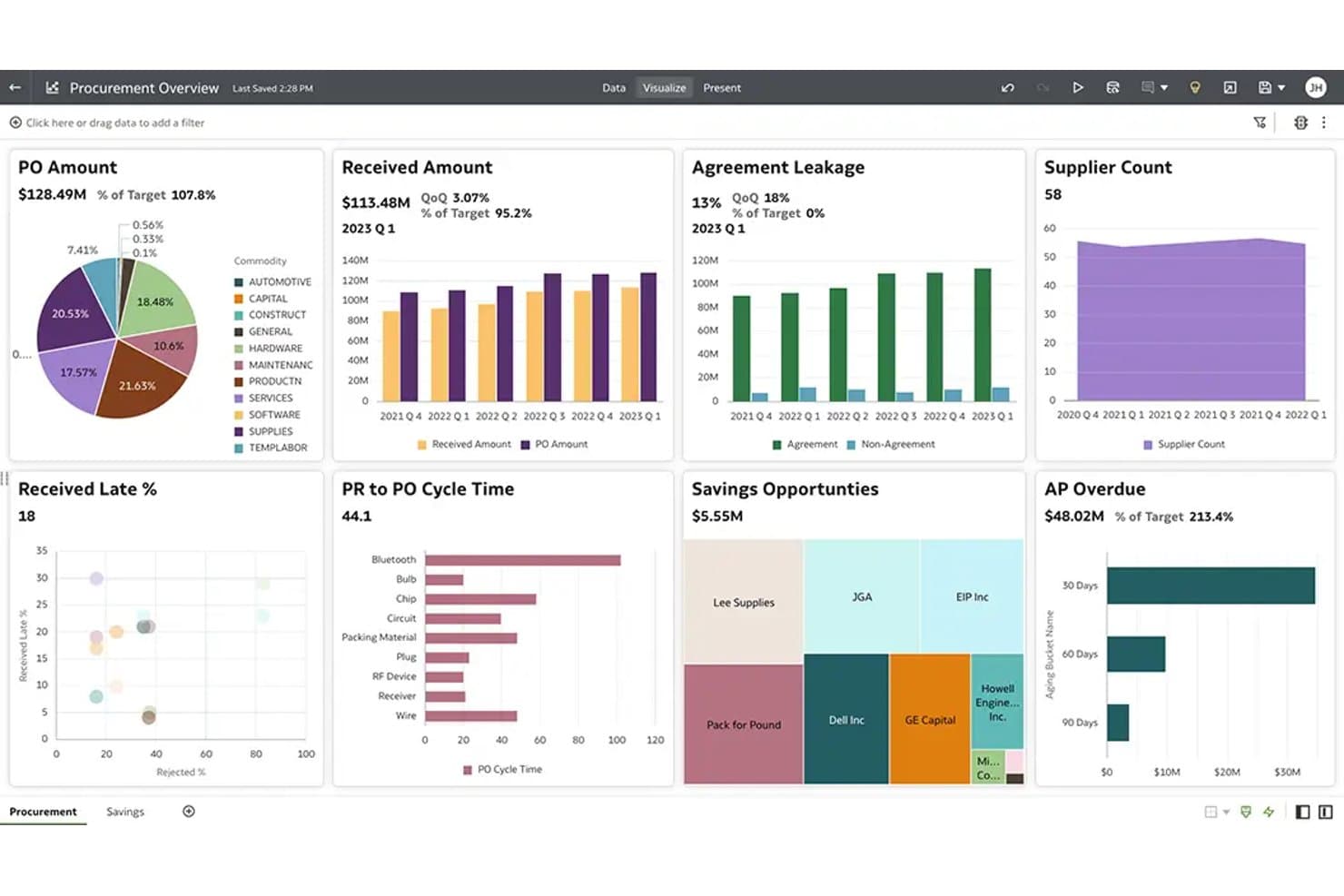
Oracle Fusion Cloud Procurement shows spend KPIs across suppliers. Oracle Fusion Cloud Procurement is an enterprise source-to-pay suite that covers strategic sourcing, contract lifecycle management, purchase requisitions, supplier management, AP automation, and spend analytics within the Oracle Fusion Cloud ecosystem.
Who Is Oracle Fusion Cloud Procurement Best For?
Oracle Fusion Cloud Procurement is built for mid-to-large enterprises that are already on Oracle Fusion Cloud ERP and need a fully native source-to-pay suite without stitching together third-party tools.
Why I Picked Oracle Fusion Cloud Procurement
I've included Oracle Fusion Cloud Procurement in my top picks because it's the only source-to-pay suite that runs natively inside Oracle Fusion Cloud ERP, meaning procurement data, AP invoices, and GL entries share the same data model with zero reconciliation gaps. I especially like the Procurement Policy Advisor AI agent, which flags off-contract purchases at the moment a requisition is created, and the Quote-to-Requisition Assistant, which converts supplier quotes directly into requisitions without manual re-keying.
Oracle Fusion Cloud Procurement Key Features
- Supplier self-service portal: Suppliers submit invoices, review POs, complete onboarding questionnaires, and upload compliance documents directly through a dedicated portal.
- Strategic sourcing with RFx management: Run guided sourcing requests, manage supplier bids, compare responses side by side, and generate AI-assisted award recommendations.
- Contract lifecycle management: Author, collaborate on, approve, and store buy-side contracts in a centralized repository with obligation tracking and AI-powered clause extraction.
- Sustainability tracking: Calculates greenhouse gas emissions and energy, water, and waste consumption from AP invoice and item data, feeding directly into enterprise sustainability reporting.
Oracle Fusion Cloud Procurement Integrations
Oracle Fusion Cloud Procurement natively integrates with Oracle Suite. It also supports Microsoft Word, cXML punchout catalogs, and REST APIs.
Pros and Cons
Pros:
- Supplier portal makes onboarding and compliance easy
- Native Oracle ERP integration for unified data
- AI agents flag off-contract requisitions instantly
Cons:
- Report customization requires specialized IT knowledge
- Implementation usually takes 12–24 months
Learn more about Oracle Fusion Cloud Procurement:
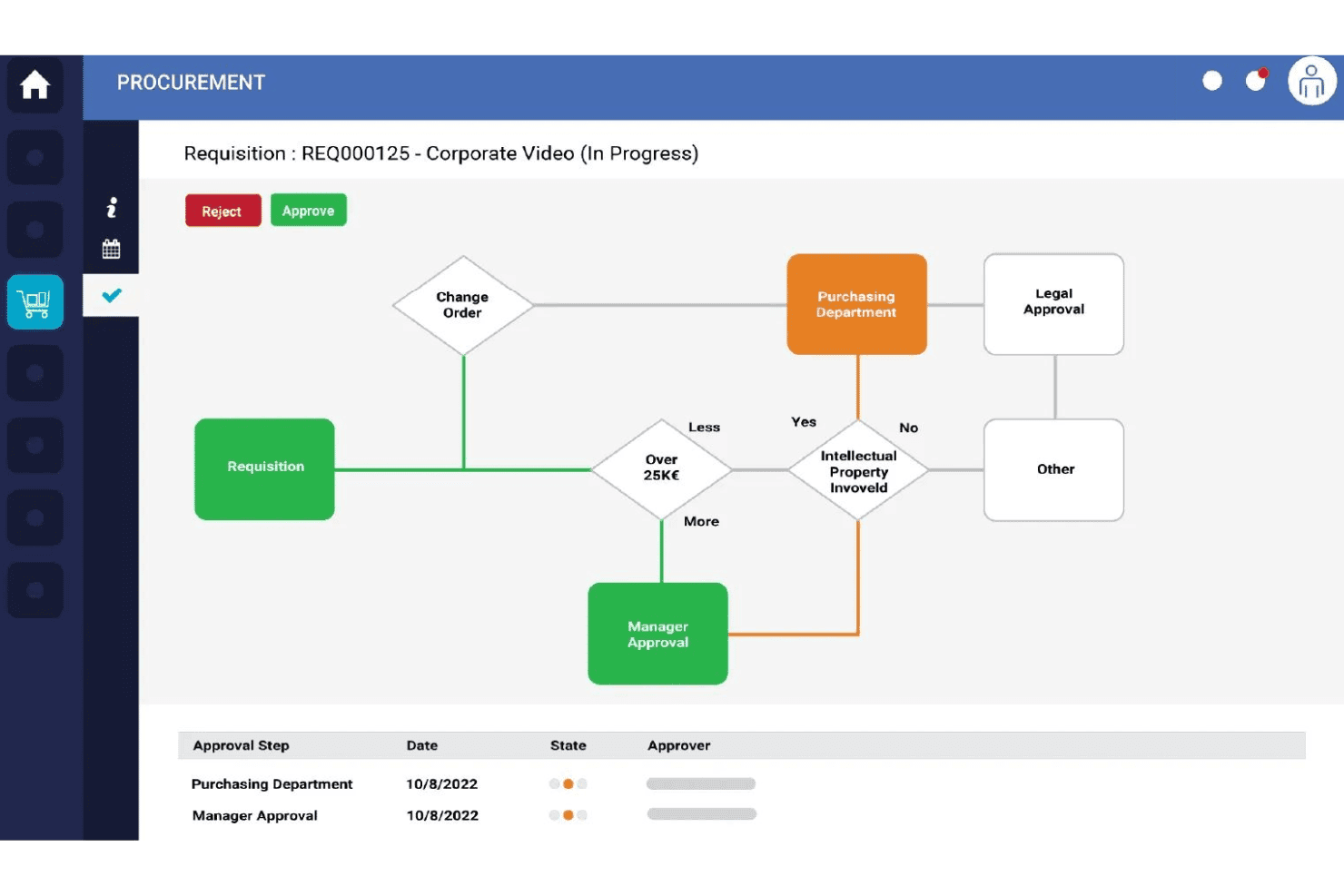
Ivalua visualizes procurement approval workflows with real-time status tracking. Ivalua is a source-to-pay platform that covers intake management, sourcing, contract lifecycle management, supplier management, eProcurement, AP automation, and spend analysis across both direct and indirect spend categories.
Who Is Ivalua Best For?
Ivalua is built for mid-market and enterprise procurement and finance teams that need to manage both direct and indirect spend across complex, multi-ERP environments.
Why I Picked Ivalua
Ivalua earns its spot on my shortlist because no other platform I've used matches its depth of workflow configurability across the full source-to-pay cycle. Its no-code Design Mode lets procurement teams build conditional, role-based approval hierarchies, and the AI-powered Intake Management routes any procurement request, whether it's a new supplier, a contract, or a purchase, through the right backend process automatically. I also love that it handles both direct and indirect spend in one data model, which is genuinely rare at this level.
Ivalua Key Features
- Spend Analysis: Automates data aggregation, categorizes data, and applies AI-driven spend classification to uncover savings and manage tail spend.
- AP Automation (eInvoicing): Captures invoice data and runs automated 2-way, 3-way, or 4-way matching against POs and receipts.
- BOM & Direct Materials Sourcing: Manages multi-level Bills of Materials (BOMs), tracks target costing, and processes engineering change orders.
- Real-time analytics: Helps with real-time expense tracking and monitors spend by category, supplier, business unit, and region.
Ivalua Integrations
Ivalua supports 60+ ERP and backend integrations, including SAP, Oracle, and NetSuite. It also supports API, ETL, EDI, cXML, and PEPPOL.
Pros and Cons
Pros:
- AI-powered procurement intake with chat interface
- Fully configurable no-code workflow engine
- Handles direct and indirect spend together
Cons:
- Analytics require manual dashboard exploration
- Requires system integrators for custom setups
Learn more about Ivalua:
Annen programvare for styring av innkjøpsutgifter
Her er noen flere alternativer for programvare for styring av innkjøpsutgifter som ikke kom med på kortlisten min, men som likevel er verdt å se nærmere på:
- 11ZipBest for cross-department intake-to-procure routing
- 12VrooziBest for mobile-first B2B catalog purchasing
- 13StampliBest for collaborative AI invoice exception resolution
- 14Sage IntacctBest for real-time ledger budget control
- 15PlanergyBest for audit-ready multi-entity spend tracking
- 16TipaltiBest for global multi-subsidiary supplier payouts
- 17RampBest for card-first SMB real-time spend limits
- 18Order.coBest for multi-vendor checkout aggregation
- 19ProcureDeskBest for simple SMB purchasing and PO matching
- 20FraxionBest for strict pre-purchase approval governance
How I Evaluate Procurement Spend Management Software
I split my evaluation into two layers: core functionality every tool must meet—like PO workflows, spend visibility, and ERP integration—and differentiating factors that separate leaders from the rest.
Core Functionality (Table Stakes For This List)
When I'm selecting tools for my list, I rank each one on a scale from 0 (does not offer the functionality) to 5 (excels in this area) for each core functionality listed below. I then calculate the tool's total score into a percentage, using 75% as a benchmark to help assess its overall fit for the list.
- Purchase requisition and PO management: I evaluate how each tool handles multi-step approval routing, mobile approvals, and PO change orders across departments.
- Spend visibility and analytics: Real-time dashboards that let you drill into spend by supplier, category, or entity are what I look for here.
- Supplier and catalog management: I check whether the platform supports punch-out catalogs, supplier onboarding workflows, and contract storage in one place.
- Budget controls and policy enforcement: Pre-commitment budget checks and automated flags on out-of-policy requests show me a tool takes spend governance seriously.
- Invoice matching and AP integration: I look at whether the tool can automate 2- and 3-way matching and route exceptions without manual handoffs to your AP team.
- Accounting software and ERP integrations: Bi-directional sync with your GL, vendor records, and transaction data across systems like SAP, Oracle, or NetSuite is what I evaluate.
Once I have a list of tools that meet the criteria, I consider what sets each platform apart.
Differentiating Factors (What Sets Vendors Apart)
Here's how I compare and contrast different vendors:
Standout Features
I evaluate whether a platform offers AI-powered intake that routes requesters to the right catalog or policy path before a purchase is made—this is where rogue spend gets stopped early. Tail spend automation matters just as much; I check for guided buying flows and marketplace punch-outs that keep high-frequency, low-value purchases compliant. I also look at automated PO-based accrual reporting, since finance controllers need audit-ready spend cutoffs that feed directly into month-end close without manual spreadsheet work.
Beyond Features
I evaluate total cost of ownership by comparing per-user, per-transaction, and percentage-of-spend pricing models against how fast requester and supplier counts grow. Supplier enablement support matters just as much—getting vendors onto catalogs and e-invoicing rails is often the biggest adoption bottleneck, so I check whether the vendor provides onboarding resources or leaves that lift to your team. I also look at ERP connector depth, confirming real-time, bi-directional sync with GL, vendor master, and cost-center data across systems like SAP, Oracle, NetSuite, or Sage Intacct.
Slik velger du programvare for styring av innkjøpsutgifter
Å velge riktig programvare for styring av innkjøpsutgifter handler om å finne en plattform som passer teamets behov for oversikt, rapporteringskrav og integrasjoner. Spør deg selv: Hva er det avgjørende behovet for innkjøps- og økonomiprosessene deres?
| Hvis prioriteten din er … | Se etter … |
|---|---|
| Hvis prioriteten din er …Sanntidsinnsikt i utgifter på tvers av enheter | Se etter …Tilpassbare analysedashbord |
| Hvis prioriteten din er …Vanntette budsjettkontroller for hvert kjøp | Se etter …Godkjenningsflyter før forpliktelse |
| Hvis prioriteten din er …Rask innføring blant brukere i virksomheten | Se etter …Veiledet innkjøp og intuitive inntaksskjemaer |
| Hvis prioriteten din er …Ingen manuelt arbeid for leverandørreskontroen | Se etter …Automatisert fakturamatching og ruting av avvik |
| Hvis prioriteten din er …Omfattende ERP-integrasjon | Se etter …Sertifiserte koblinger til ERP- eller hovedbokssystemet ditt |
Slik vurderer du kortlisten din
- Test sanntidsanalyse: Be om tilgang til et demonstrasjonsdashbord med direkte- eller eksempeldata innen den første uken.
- Kontroller dybden i godkjenningsrutingen: Kartlegg en flertrinns arbeidsflyt for godkjenning av innkjøpsordrer i en sandkasse, og noter eventuelle mangler innen to dager.
- Bekreft integrasjonskvaliteten: Be om en liste over sertifiserte ERP-koblinger, og avtal en teknisk spørsmål-og-svar-økt med leverandørens integrasjonsteam.
- Bekreft støtten for leverandørregistrering: Be om en kopi av leverandørens materiell eller dokumentasjon for aktivering av leverandører.
- Velg mellom fleksibilitet og hastighet: Bestem om du helst vil ha ubegrensede muligheter for tilpasning av arbeidsflyter (fleksibilitet), eller rask innføring med ferdige funksjoner (hastighet).
Hva er programvare for styring av innkjøpsutgifter?
Programvare for styring av innkjøpsforbruk er digitale verktøy som hjelper organisasjoner med å føre tilsyn med virksomhetens innkjøp, leverandørforhold, forbruk og etterlevelse. Disse plattformene gir økonomi- og innkjøpsteam oversikt over sourcing, rekvisisjoner, godkjenninger, innkjøpsordrer og fakturabehandling.
Ved å sentralisere innkjøpsaktiviteter støtter programvaren kostnadskontroll, risikostyring, revisjonsberedskap og integrasjon med regnskapssystemer, noe som gjør den avgjørende for sporing og styring av virksomhetens samlede forbruk.
Funksjoner i programvare for styring av innkjøpsforbruk
Når du velger programvare for styring av innkjøpsforbruk, bør du se etter følgende nøkkelfunksjoner:
- Håndtering av innkjøpsrekvisisjoner og innkjøpsordrer: Lar deg sette opp arbeidsflyter for godkjenning i flere trinn for forespørsler og ordrer. Dette gir deg en tydelig, etterprøvbar oversikt, slik at du kan håndheve fullmakter for forbruk og etterlevelse på tvers av avdelinger.
- Oversikt over forbruk og analyse: Gir dashbord og rapporteringsverktøy for å spore forbruk etter leverandør, kategori, avdeling og mer. Dette hjelper deg med å oppdage trender, overvåke budsjettbruk og identifisere muligheter for forhandlinger.
- Leverandør- og katalogstyring: Sentraliserer leverandørdata, registrering, kontrakter og varekataloger/punch-out-løsninger. Dette reduserer antallet dupliserte leverandører, gjør det enklere å overvåke etterlevelse og samler prisavtaler.
- Budsjettkontroller og håndheving av retningslinjer: Overvåker budsjetter, markerer forespørsler som ikke følger retningslinjene, og håndhever kontroller før forpliktelser inngås. Denne funksjonen styrker styringen av forbruket og hjelper deg med å unngå uautoriserte eller utilsiktede overskridelser.
- Fakturasamsvar og integrasjon med leverandørreskontro: Automatiserer 2-veis eller 3-veis samsvarskontroll av fakturaer, innkjøpsordrer og kvitteringer for å sikre nøyaktighet før betalinger godkjennes. Dette reduserer manuelt arbeid i leverandørreskontroen og forhindrer doble eller ugyldige utbetalinger.
- Integrasjoner med regnskaps- og ERP-systemer: Kobler seg til regnskaps- og ERP-systemer for å synkronisere leverandørregistre, hovedbokskoder og transaksjonsdata. Dette holder økonomidataene konsistente på tvers av plattformer og reduserer datasiloer.
- Veiledet innkjøp og arbeidsflyter for forespørsler: Veileder ansatte gjennom forespørselsskjemaer og beslutningstrær, og sender dem videre til riktige kataloger eller godkjenningsløp. Dette hjelper brukere utenfor innkjøpsavdelingen med å følge retningslinjer og fremforhandlede priser.
- Håndtering av kontrakters livssyklus: Sentraliserer lagring og sporing av kontrakter samt påminnelser om fornyelse. Dette gir proaktiv risikoreduksjon, bidrar til å opprettholde revisjonsberedskapen og sikrer at du drar nytte av fremforhandlede vilkår.
- Revisjonsspor og rapportering av etterlevelse: Opprettholder detaljerte logger over alle innkjøpsaktiviteter, godkjenninger og endringer. Denne funksjonen støtter interne og eksterne revisjoner og hjelper deg med å oppfylle regulatoriske eller virksomhetsspesifikke krav.
- Registrering og tilrettelegging for leverandører: Tilbyr verktøy for registrering av leverandører, spørreskjemaer og elektronisk fakturering. Dette reduserer flaskehalser og gjør det mulig å skalere leverandørforhold uten økt administrativ belastning.
Fordeler med programvare for styring av innkjøpsforbruk
Implementering av programvare for styring av innkjøpsforbruk gir flere fordeler for teamet og virksomheten din. Her er noen av fordelene du kan se frem til:
- Bedre oversikt over forbruket: Gir rapportering i sanntid som lar deg spore forbruk etter leverandør, kategori eller enhet, slik at du kan oppdage trender og håndtere overforbruk.
- Bedre håndheving av retningslinjer: Håndhev budsjettkontroller og forhåndsgodkjente kontroller med arbeidsflyter for godkjenning og automatiserte markeringer av forespørsler som ikke følger retningslinjene.
- Bedre leverandørstyring: Sentraliser registrering av leverandører, katalogstyring og lagring av kontrakter for å redusere duplisering og øke etterlevelsen av bruk av foretrukne leverandører.
- Raskere prosesser for leverandørreskontro: Bruk funksjoner for fakturasamsvar og integrasjon med leverandørreskontro til å automatisere 2-veis eller 3-veis samsvarskontroll, redusere manuelt arbeid og minske betalingsfeil.
- Dyp integrasjon med ERP- og regnskapssystemer: Koble toveis til ERP- og hovedbokssystemene dine, slik at du opprettholder én pålitelig kilde for økonomidata og reduserer risikoen ved manuell registrering.
- Åpenhet som er klar for revisjon: Oppretthold detaljerte revisjonsspor og logger over etterlevelse for alle innkjøpsaktiviteter. Dette gjør det enklere å forberede seg til revisjoner og dokumentere at retningslinjene følges.
- Forenklet veiledet innkjøp: Bruk intuitive arbeidsflyter for forespørsler som leder ansatte til riktige kataloger eller godkjenningsløp, og øk etterlevelsen av innkjøpsreglene og bruken på tvers av virksomheten.
Kostnader og priser for programvare for styring av innkjøpsforbruk
Å velge programvare for styring av innkjøpsforbruk krever en forståelse av de ulike prismodellene og abonnementene som er tilgjengelige. Kostnadene varierer basert på funksjoner, teamstørrelse, tillegg og mer. Tabellen nedenfor oppsummerer vanlige abonnementer, gjennomsnittsprisene deres og typiske funksjoner som er inkludert i programvare for styring av innkjøpsforbruk:
Sammenligningstabell for abonnementer for programvare for styring av innkjøpsforbruk
| Abonnementstype | Gjennomsnittspris | Vanlige funksjoner |
|---|---|---|
| AbonnementstypeGratisabonnement | Gjennomsnittspris$0 | Vanlige funksjonerGrunnleggende innkjøpsrekvisisjon, begrenset rapportering, grunnleggende godkjenningsarbeidsflyter og leverandørregister. |
| AbonnementstypePersonlig abonnement | Gjennomsnittspris$15–$40 per bruker per måned | Vanlige funksjonerStandard håndtering av innkjøpsordrer, utgiftsanalyse, grunnleggende leverandørregistrering og grunnleggende integrasjoner. |
| AbonnementstypeForretningsabonnement | Gjennomsnittspris$35–$90 per bruker per måned | Vanlige funksjonerAvansert godkjenningsflyt, tilpassede dashbord, fakturamatching, støtte for flere enheter og API- eller ERP-integrasjon. |
| AbonnementstypeForetaksabonnement | Gjennomsnittspris$100–$250+ per bruker per måned | Vanlige funksjonerTilpassbare arbeidsflyter, budsjettkontroller i sanntid, kontraktsstyring, revisjonsspor og avansert kundestøtte. |
Vanlige spørsmål om programvare for styring av innkjøpsutgifter
Her er noen svar på vanlige spørsmål om programvare for styring av innkjøpsutgifter:
Hvordan velger du riktig programvare for styring av innkjøpsutgifter for et økonomiteam i vekst?
Begynn med å tilpasse programvaren til de mest presserende behovene dine for oversikt og rapportering – for eksempel utgiftssynlighet, budsjettkontroller og integrasjonsdybde. Test demodashbord, kartlegg godkjenninger av innkjøpsordrer i flere trinn, og bekreft integrasjonskvaliteten før du bestemmer deg.
Kan programvare for styring av innkjøpsutgifter integreres med ERP- og regnskapssystemer?
Ja, de fleste anerkjente plattformer kobler seg toveis til større ERP- og regnskapssystemer. Se etter sertifiserte koblinger, synkronisering i sanntid med leverandør- og hovedbokdata og muligheter for tilpasset integrasjon hvis du har komplekse arbeidsflyter. Integrasjonskvaliteten avgjør hvor pålitelige utgiftsdataene dine er, og hvor mye manuelt arbeid teamet ditt kan unngå.
Hva bør jeg prioritere: rask innføring uten tilpasninger eller tilpasning av arbeidsflyter?
Vanligvis må du velge én av dem som hovedprioritet. Verktøy som fungerer uten tilpasninger, lar deg komme raskt i gang, noe som er ideelt for mindre team eller automatisering for første gang. Hvis virksomheten din har komplekse godkjenningsbaner eller regelverk, kan en mer tilpasningsdyktig plattform være verdt den ekstra innsatsen ved oppsettet. Avvei hastighet mot fleksibilitet basert på behovene dine innen etterlevelse og drift.
Hvor viktig er leverandørregistrering og tilrettelegging for leverandører i programvare for styring av innkjøpsutgifter?
Det er avgjørende hvis du ønsker høy bruk og nøyaktige data. Gode verktøy for leverandørregistrering hjelper deg med å sentralisere leverandørdata, håndtere spørreskjemaer og få leverandører over på e-fakturering. Når registreringen oppleves som krevende, går innføringen saktere – og det påvirker nøyaktigheten i rapporteringen og etterlevelsen.
Finnes det rimelige alternativer for små bedrifter eller team som nettopp har kommet i gang?
Ja, mange plattformer tilbyr gratis eller rimeligere personlige abonnementer med grunnleggende funksjoner for rekvisisjoner, godkjenninger og leverandørregister. Disse abonnementene fungerer for team med enkle innkjøpsbehov, men begrenset budsjett. Etter hvert som dere vokser, kan dere oppgradere for avansert analyse, mer omfattende godkjenningsflyter eller ERP-integrasjon. Sjekk alltid hva hvert abonnement omfatter før du binder deg.